
Category: Schools / Schooling / Education / Libraries
Peace & Justice History for 9/4:
https://www.peacebuttons.info/E-News/peacehistoryseptember.htm#september4
| September 4, 1949 |
| Paul Robeson, scholar, athlete, musician and leader, defying a racist and red-baiting mob, sang to 15,000 at a Labor Day gathering in Peekskill, New York. |  |
| Paul Robeson (at microphone) singing to the Labor Day gathering in Peekskill, New York |
| The story and photographs of what happened |
| September 4, 1954 The Peace Pledge Union (PPU) organized a demonstration against the H-Bomb in London’s Trafalgar Square. The PPU dates back to October 1934.  Young Peace Pledge Union members today. Young Peace Pledge Union members today.The PPU today |
| September 4, 1957 Elizabeth Eckford and eight other young Negroes were blocked from becoming the first black student at Central High School in Little Rock, Arkansas.  Governor Orval Faubus had called out the National Guard to prevent the court-ordered integration of the public schools in the state’s capital. President Dwight Eisenhower eventually sent in federal troops to guarantee the law was enforced.  Elizabeth Eckford Elizabeth Eckford Read more Elizabeth Eckford followed and taunted by mob, 1957. A very interesting related story: |
| September 4, 1970 Vietnam Veterans Against the War (VVAW) began Operation RAW (Rapid American Withdrawal). Over the following three days more than 200 veterans, assisted by the Philadelphia Guerilla Theater, staged a march from Morristown, New Jersey, to Valley Forge, Pennsylvania, reenacting the invasion of small rural hamlets along the way.      Operation Rapid American Withdrawal 1970-2005: An Exhibition: |
| September 4, 1978 Simultaneous demonstrations in Moscow’s Red Square and in front of the White House in Washington, D.C. were organized by the War Resisters League, calling for nuclear disarmament. |
 |
Some Awesome Ladies Of The Labor Movement
Happy Labor Day! Let’s Talk About Some Awesome Ladies Of The Labor Movement by Rebecca Schoenkopf Read on Substack
Because it was not actually just a bunch of flannel-wearing white dudes.
A version of this article was initially published on May 1, 2019. Happy Labor Day, we’re taking the day off!
When we talk about the history of feminism, we tend to think about the causes and struggles of middle class white women. When we talk about labor history, we tend to think about the causes and struggles of white working class men.
And that is some absolute bullshit.
Working class women, very often women of color and immigrant women, were, are and always have been the backbone of the labor movement. They were working and organizing well before Second Wave Feminism “made it possible” for women to enter the workforce. They’re the ones who first fought for equal pay, and they’re the ones who were doing the bulk of feminist work and activism during the years in between getting the right to vote and The Feminine Mystique. They are still fighting today.
So, since it’s Labor Day, let’s celebrate the hell out of them, starting with the woman who started it all.
Lucy Parsons
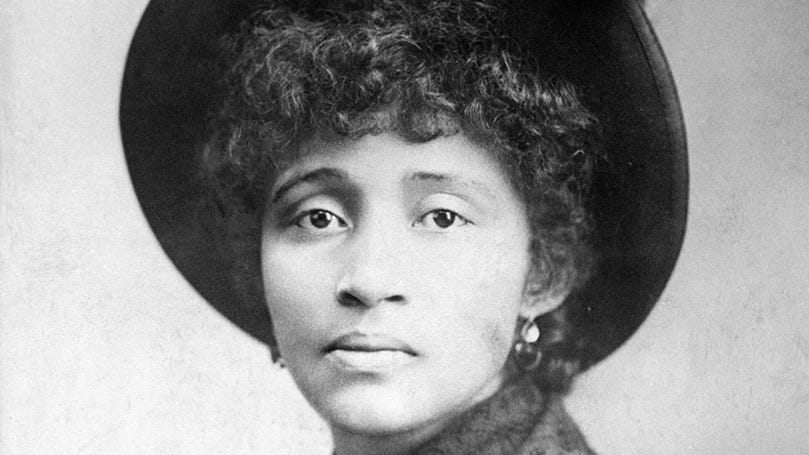
“More dangerous than a thousand rioters,” anarchist Lucy Eldine Gonzalez Parsons was a writer, orator, one of the founders of the Industrial Workers of the World, and tireless campaigner for the rights of people of color, all women, and all workers. Her husband, Albert Parsons, was one of the Haymarket martyrs.
We, the women of this country, have no ballot even if we wished to use it … but we have our labor. We are exploited more ruthlessly than men. Wherever wages are to be reduced, the capitalist class uses women to reduce them, and if there is anything that you men should do in the future, it is to organize the women.
Though Parsons and Emma Goldman were widely regarded as the most prominent female anarchists of the day, they very notably did not get along so well. Parsons believed that oppression based on gender and race was a function of capitalism and would be eliminated when capitalism was eliminated, whereas Goldman believed such oppression was inherent in all things. Parsons was all class struggle all the time, and felt that the “intellectual anarchists” like Goldman spent too much time bothering with appealing to the middle class.
One of her most important contributions to the labor movement was the concept of factory takeovers.
“My conception of the strike of the future is not to strike and go out and starve, but to strike and remain in, and take possession of the necessary property of production.”
Parsons is best known for being the woman who really started the celebration of May Day as a day for workers’ rights — leading a parade to commemorate the anniversary of the Haymarket Affair. Soon, nearly every other country in the world followed suit and proclaimed this day International Worker’s Day. Alas, here in America, we go with the less radical and more picnic-y Labor Day that we are celebrating today, because Grover Cleveland thought a federal holiday commemorating the Haymarket Affair would encourage people to become anarchists and socialists, and no thank you, he did not want that.
Anna LoPizzo

Not much is known about Anna LoPizzo, other than that she was a 34-year-old mill worker who was murdered by police officer Oscar Benoit during the 1912 Lawrence Textile Strike — also known as the Bread and Roses Strike. Initially, police tried to charge two IWW organizers who were miles away for her murder, even though literally everyone there had seen Benoit shoot her.
The reason for the strike in the first place was that the textile mills of Lawrence, Massachusetts, cut worker pay after the state cut the number of hours women could legally work from 56 down to 54. The Industrial Workers of the World, led by Elizabeth Gurley Flynn (we’ll get to her in a minute), organized more than 20,000 workers of more than 40 different nationalities to demand they get their fair wages. One of the primary tactics used in the strike was sending the starving families of the mill workers on a tour to New York City so that people there could see for themselves what these low wages were doing to children. Between that and LoPizzo’s death, sympathy was on the side of the workers. Congressional hearings into the conditions of the mills were held, and the mills themselves ended up settling the strike by giving all workers across New England a 20 percent raise.
Lillian Wald

Susan B. Anthony isn’t the only important feminist buried in the Mount Hope Cemetery in my hometown of Rochester, New York. There is another. Her name was Lillian Wald, and she was a total fucking bad ass. She wasn’t just a suffragist — she was also an early advocate for healthcare for all people regardless of economic class or citizenship, a founding member of the NAACP, lobbied against child labor, advocated for the rights of immigrants, helped to found the Women’s Trade Union League, and was an anti-war activist. Wald also founded the Henry Street Settlement House in New York City, which provides — to this day — social services, education, and health care to the impoverished. And she was active in the ACLU.
WHY THE HELL IS SHE NOT MORE FAMOUS? I am legitimately bothered by this and bring it up often.
Elizabeth Gurley Flynn
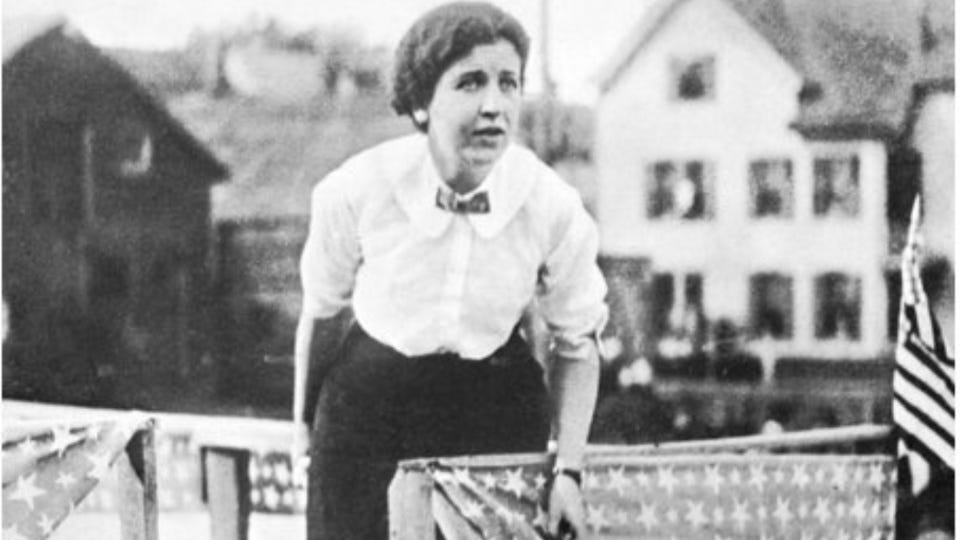
Hey! You know who was super freaking awesome? Elizabeth Gurley Flynn. As previously mentioned, she was an organizer with Industrial Workers of the World who helped organize the Lawrence Textile Strike. She also organized a hell of a lot of other strikes across the country, helped found the ACLU, and was known for the creative tactics she used to elicit sympathy and support for the American worker.
Hattie Canty
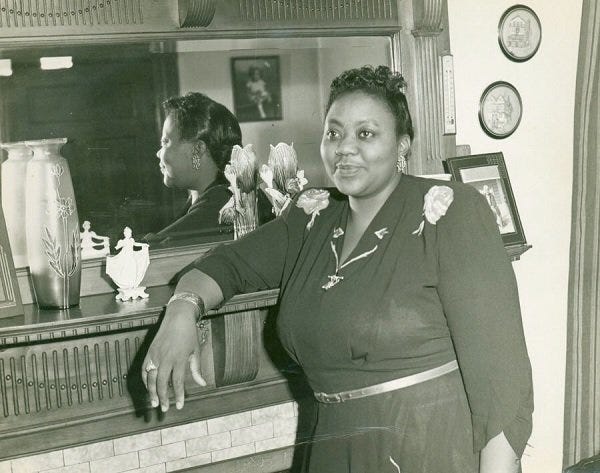
When Hattie Canty’s husband died in 1972, she found herself supporting eight children on her own. She found work as a maid at a Las Vegas hotel where she joined the Las Vegas Hotel and Culinary Workers Union Local 226. By 1990, she was president of that union, leading one of the longest strikes in American history — a six year strike of hospitality workers which, happily, ended in victory.
The Women of The Atlanta Washerwomen’s Strike

Back in the 1880s, only two decades after the Civil War ended, the most common occupation for Black women was as laundresses — this was largely because if poor white families were going to hire anyone to do chores for them at all, they were going to hire someone to do their laundry. These women were independent workers, often working from their own homes and making their own soap, and they only made about $4 a month. (Average non-Black-woman laborers earned about $35 a month in 1880.)
One day in 1881, about 20 of them got together and decided that $4 a month was some bullshit for all the work they were doing and decided to go on strike and demand wages of $1 for every 12 pounds of washing. Three weeks later, 3,000 other women joined them. Unsurprisingly, the city freaked out. They fined any participants $25 — which was a lot of money when you only made $4 a month — and they offered tax breaks to any corporation that would come down there to start a commercial steam cleaning business. Still, the women did not back down.
Eventually, people got really sick of doing their own laundry, and the city decided to back down on the fines, and accede to their demands for fear that the unrest would spread to other industries.
Dolores Huerta

Dolores Huerta, along with Cesar Chavez, helped to organize the National Farmworkers Association, which later became United Farm Workers. She wasn’t a farmworker herself — rather, she was an elementary school teacher who was tired of seeing the children she taught living in poverty because their parents were not making enough money as farmworkers.
I couldn’t tolerate seeing kids come to class hungry and needing shoes. I thought I could do more by organizing farm workers than by trying to teach their hungry children.
Together with Chavez, Huerta organized the successful Delano Grape Strike (or as your mom calls it, “that time we couldn’t eat grapes for five years” or as Rebecca’s mom calls it “serious people don’t care if a boycott ‘ends'”), which led to better wages and working conditions for farmworkers, and she has continued working as an activist and an organizer ever since.
Angela Bambace
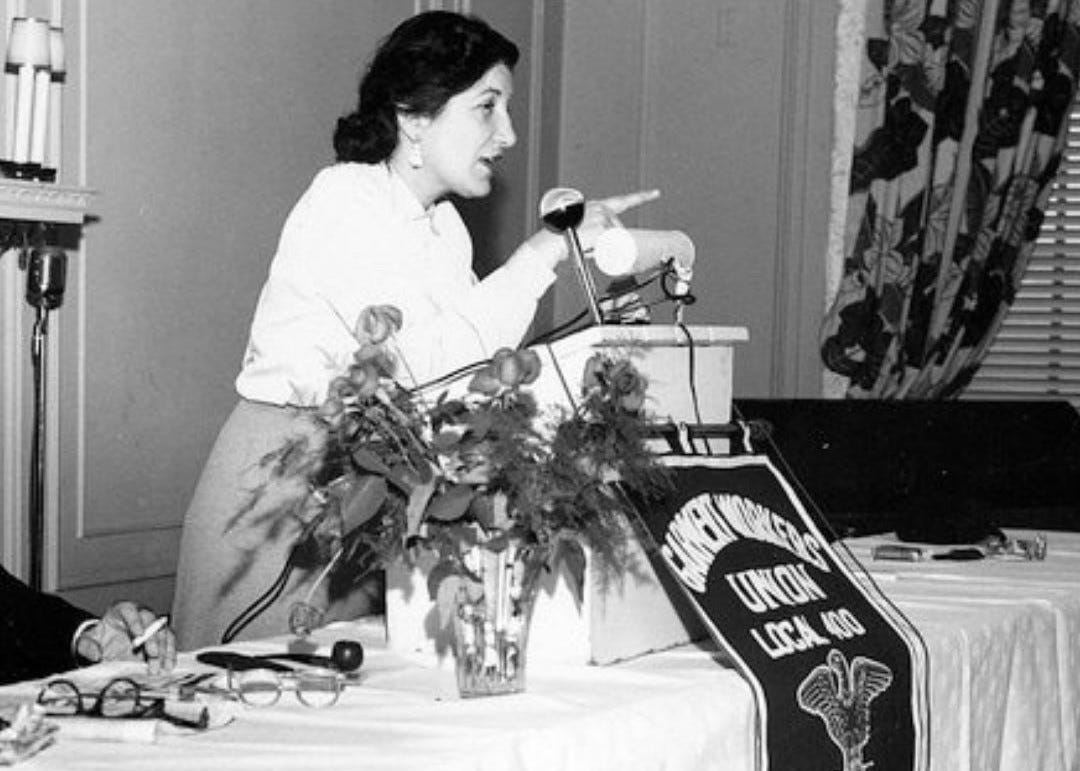
Though she’s not as well known as some of the other women on here, Angela Bambace, an organizer for the International Ladies Garment Worker’s Union who started unionizing her fellow shirtwaist factory workers at age 18, is a personal hero of mine, along with her sister Maria. Angela was known to punch strikebreakers in the nose, which was pretty freaking badass.
She also left her husband and a traditional marriage in which she was confined to “making tomato sauce and homemade gnocchi” — and lost her parental rights in doing so, because back then, women didn’t have any — to fight for workers’ rights on the front lines. She was the first woman woman elected Vice-President of the ILGWU, which previously only had male leadership, where she worked from 1936 until 1972.
May Chen

May Chen, also of the International Ladies Garment Worker’s Union, led the New York Chinatown strike of 1982 — 20,000 workers strong and one of the largest strikes in American history. As a result of the strike, employers cut back on wage cuts, gave workers time off for holidays and hired bilingual interpreters in order to accommodate the needs of immigrant workers.
Lucy Randolph Mason

Lucy Randolph Mason was an interesting one. She was a well-off Southern lady from Virginia, related to George Mason (author of the Virginia Declaration of Rights), Supreme Court Justice John Marshall, and, uh, Robert E. Lee. So, you know, you might have an idea in your head about what her deal might be. And you would be so wrong.
So, despite being from this very fancy family, Lucy goes and gets a job as a secretary for the YWCA at 20. In 1918, she gets into the whole suffragette thing. Women get the vote, but Lucy’s not done. She starts organizing for labor rights and integration and ending white supremacy in the South. She organizes interfaith, integrated unions in the South, which you can imagine was a pretty big deal at that time. She does it through the YWCA. She writes a pamphlet telling consumers to boycott companies that don’t treat their workers well. Eventually, she becomes the CIO’s ambassador to the South and spends the next 16 years of her life going to all these small towns where bad things would happen to anyone who tried to unionize, and explaining workers’ rights and why integration is good and racism is bad to pretty much anyone with any kind of power. Neat!
Emma Goldman
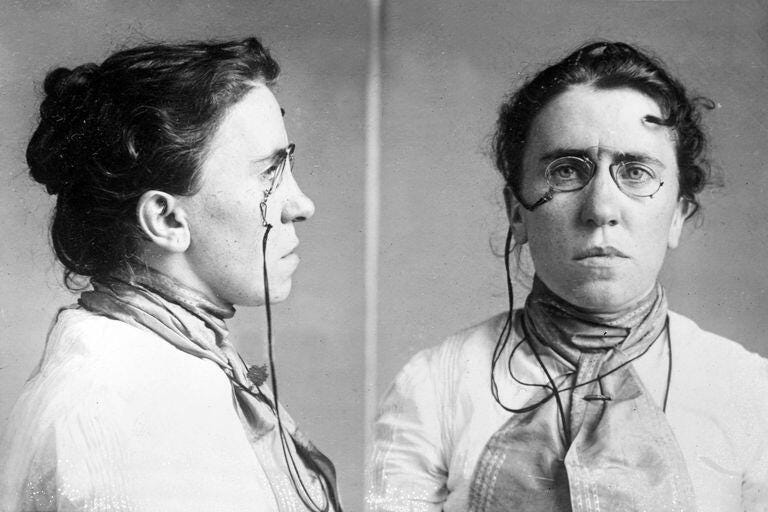
Though not a union organizer by trade, anarcha-feminist Emma Goldman’s advocacy for workers’ rights and human dignity and freedom empowered workers and organizers throughout the country, and motivated them to stand up for their own rights. She was considered the most dangerous woman in America for a reason.
She was a feminist, an anti-racist, an atheist, an advocate of free love, an opposer of the institution of marriage and — very unusually for the time (she pretty much started right after Haymarket, which was 1886, and continued until her death in 1940) — one of the first advocates of gay rights.
“It is a tragedy, I feel, that people of a different sexual type are caught in a world which shows so little understanding for homosexuals and is so crassly indifferent to the various gradations and variations of gender and their great significance in life.”
I could probably go on about Emma Goldman forever, but I have to get to other people and also this is not my sophomore year in college.
Rosina Tucker
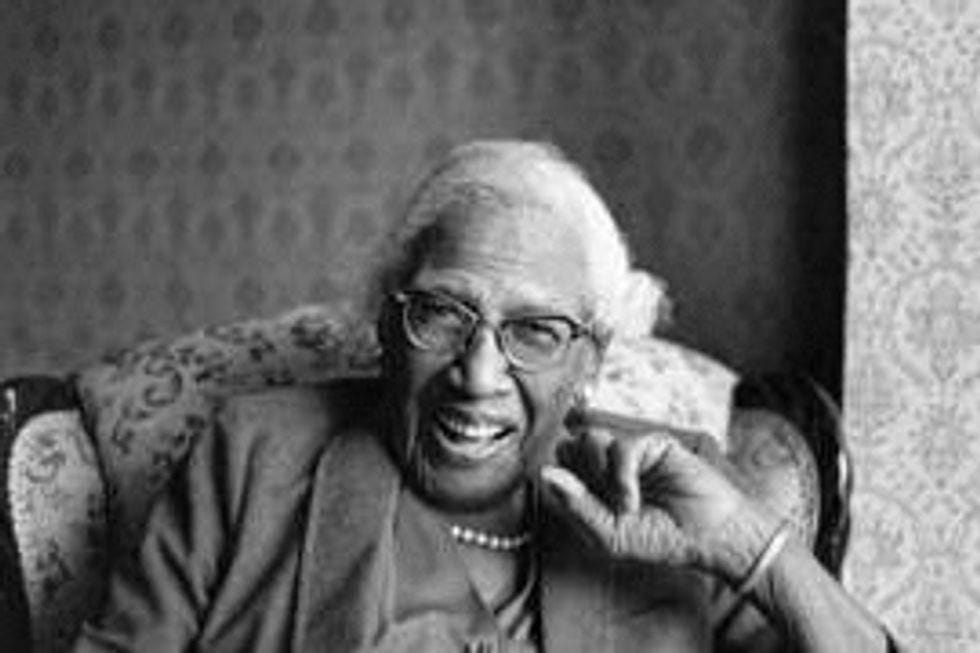
Rosina Tucker is best-known for helping to organize the first Black labor union, The Brotherhood of Sleeping Car Porters, started by A. Philip Randolph in 1925. A Brotherhood? But she was a woman, you say! Well, the Pullman porters wanted to organize, but they were afraid of losing their jobs — with good reason, because their bosses kept trying to fire them for trying to unionize. So Rosina and other wives of the porters got together and started the Ladies Auxiliary of the Brotherhood of Sleeping Car Porters in order to raise funds to start the union.
In 1963, along with A. Philip Randolph of the BSCP, she helped organize the March on Washington for Jobs and Freedom, and continued to be active in civil rights and labor rights until she passed away in 1987, at the age of 105.
The women on this list, along with the many others who also fought for labor rights in this country and others, didn’t only fight a fight for workers. They fought a feminist fight, they fought for civil rights, they fought for human rights — they understood the interconnectedness of it all, they understood that without economic justice there is no social justice and without social justice there is no economic justice. They understood the way that the labor movement could be used as a catalyst for making social change possible at a time when they didn’t have any political support or power — and that’s a thing we could all do well to remember ourselves.
Happy Labor Day!
Georgia moves forward with bills to outlaw Pride events & trans people
This is what the fundamentalist religious / maga right want to do in the US notice the reason why they feel they need to pass this law. Because it is changing tradition. Tradition is peer pressure from dead people. The right wing straight cis people like the way things are and don’t want to include other ideas or ways. Just a warning. Hugs. Scottie
 TBILISI, GEORGIA – MAY 17, 2018: Family day. People attend a rally marking the Day of Family Purity and opposing the International Day Against Homophobia and TransphobiaPhoto: Shutterstock
Georgia’s parliament on Thursday pushed ahead a sweeping package of bills that would effectively outlaw LGBTQ+ identity in the former Soviet republic.
The set of bills proposed by the ruling pro-Putin Georgian Dream party bans depictions of same-sex relationships in the media, outlaws gender-affirming surgery, and will make Pride events and the public display of the Pride flag in Georgia a thing of the past.
Parliamentary speaker Shalva Papuashvili describes the bills as necessary to control “LGBT propaganda,” which he said was “altering traditional relations.”
The first reading of the bill titled “On the Protection of Family Values and Minors,” which draws heavily from Russia’s anti-LGBTQ+ “propaganda” law passed last year, drew widespread support among Georgia Parliament deputies. The bill is scheduled for second and third readings in the fall.
In addition to outlawing public gatherings “promoting” same-sex relationships, the legislation would also limit adoption to heterosexuals, ban gender changes on official identification, and outlaw “LGBT propaganda” in education.
Georgian Dream MPs have also proposed introducing “genetic” requirements in establishing legal marriage, whereby marriage would be a union of a “genetic woman” and a “genetic man.”
The Constitution already bans same-sex marriage in Georgia, where the deeply conservative Orthodox Church holds outsized influence in the government and public sphere.
Georgia enjoyed decades of progress on human and LGBTQ+ rights following the Rose Revolution in 2003, as a majority of citizens supported a pro-Western turn and integration into the European Union and NATO.
The rise of the Georgian Dream party in the last ten years, however, has seen the government reorienting toward Russia, with the Church encouraging the rapprochement.
Georgia’s version of Putin’s draconian “LGBT propaganda” law seems designed not only to roll back progress on LGBTQ+ rights but to scuttle any hope of Georgia entering the European Union, with its strict requirements upholding civil liberties and personal freedoms.
The introduction of the anti-LGBTQ+ legislation follows the Georgia Parliament’s passage of another Russian-inspired law to label Western NGOs “foreign agents,” teeing up a harassment campaign aimed at expelling human rights and other groups that far-right conservatives and the Orthodox Church have accused of infecting Georgia and other countries with “degeneracy.”
Speaking of opponents of the nascent legislation in March, Mamuka Mdinaradze, leader of the Georgian Dream parliamentary majority, said, “Even if they brand the law against LGBT ‘propaganda’ not Russian, but Soviet, we will follow it through, given that it is the biggest challenge of modern times.”
Anti-LGBTQ+ sentiment runs high among extremists in the onetime Soviet vassal. In 2021 and 2023, violent mobs shut down Pride marches in the capital Tbilisi.
Organizers say foreign agents, delivered by Russian President Vladimir Putin, joined far-right fascist political gangs and members of the Georgian Orthodox church to sabotage the peaceful demonstration. Hundreds were injured in the two incidents.
Rights groups and supporters described the attacks as “pogroms.”
Got a Republican State Legislature? Watch out carefully for this…
This is an opinion piece that contains news, and cites. Also, all Republicans are not Magas, but they’re still Republicans. This is important.
Snippet (it’s not a long piece, and it’s full of info.)
Let’s be clear about what Kansas Republican legislative leaders are doing with their planned overhaul of budgeting: They are launching a personal and political power grab against Gov. Laura Kelly.
They have never accepted or respected her mandate. Despite Kelly winning a second term and having two years left to go, they have continually attempted to usurp the executive branch’s authority. They have tried a constitutional amendment and prohibiting her ability to negotiate Medicaid contracts. Now they’re going after her yearly state budget proposal.
Usually, the Legislature begins its yearly budget process with a proposal from the governor. Her office submits it when lawmakers arrive for the annual session, in January. Now an interim committee wants to start the process earlier, as soon as October of the previous year.
In this new process, the governor’s budget would be a suggestion, not a starting point.
And never mind that it’s a direct attack on Kelly. House Speaker Dan Hawkins, R-Wichita, assured the audience that these changes had nothing to do with the governor.
“This process has nothing to do with the governor,” he said at the meeting earlier this month, according to Kansas Reflector reporter Tim Carpenter. “If you’re going to focus on the governor, probably not the wisest thing to do, because this process has happened over time with many, many different governors.”
He was contradicted by Senate President Ty Masterson, R-Andover, who let the proverbial cat out of the figurative bag.
“You’ll have a Republican governor, for example, or somebody you trust, and you trust the administration to build the budgets, and then you kind of rubber stamp stuff,” Masterson said. “And, then, you switch, and you have (the) opposition party and then there’s all that same power.”
Oh. So it’s like that, then.
(snip-More; also a vid of the sausage becoming sausage)
News Headlines and My Thoughts 4
News coverage 1 8 28 2024
‘Legislators don’t see me as human’: Missouri trans youth fight to survive anti-LGBTQ+ bills
GOP lawmakers have made the state hostile for trans youth. These teens and their parents vow to ‘assert themselves’
https://www.theguardian.com/us-news/article/2024/aug/24/missouri-trans-youth-anti-lgbtq-bills
Some parents have stockpiled medications in hidden locations. Some have stopped socializing with neighbors. Some have made plans to flee the state.
In Missouri, transgender youth and their families are grappling with an onslaught of attacks on their rights. Last year, Republican lawmakers outlawed critical healthcare treatments for trans youth and banned many trans athletes from school sports. Local school districts worked to censor LGBTQ+ books and prohibit trans children from using bathrooms that match their gender identity.
And the state’s attorney general has become a national leader in anti-trans policy, seeking to gain access to trans kids’ medical records, fighting to restrict trans adults’ healthcare and attacking trans adults who use public locker rooms.
The state is one of the epicenters of the moral panic and anti-trans rhetoric that have dominated campaigns and media cycles during the presidential election. Under the guise of fighting the “indoctrination of our children”, Republicans have made restricting trans rights a focus of their platforms. Donald Trump has vowed to stop “the leftwing gender insanity” while a leading Missouri Republican has celebrated residents leaving the state due to anti-trans policies, saying: “We are better if they are gone.”
The toxic discourse has fomented fear and anger among conservatives about trans people’s increasing visibility in society and created deep anxiety and distress for queer and trans people and their families.
Parents of trans youth across the St Louis region interviewed for this article said they were desperately trying to protect their kids’ health and wellbeing as politicians have zeroed in on their children. They are rationing medications and traveling hours out of state for care. Some are counting the days until their kids turn 18 and the laws don’t apply; “We are truly doing what we can to keep our children alive,” said one mother of a trans boy.
“Kids are being told by their government that they have to be eradicated from public life,” said Chelsea Freels, a recent high school graduate from St Louis, who has become a vocal advocate for trans youth like herself. “I’m 18 now. I can handle it – ish. But I have to help the kids who are younger. It’s like Sisyphus pushing a boulder up a hill. You can help them get better, but then it’s gonna go back down.”
‘Legislators don’t see me as human’
Republicans in nearly every region of the US began introducing anti-trans legislation in 2021 as Joe Biden took office and the GOP and conservative legal groups made trans people a central target of their culture wars. The campaigns were fueled by false claims that trans girls were taking over women’s sports and kids were regularly undergoing “mutilating” surgeries to transition.
In Missouri, less than 1% of young people identify as trans, but lawmakers have made control over their lives an increasing priority.
“It’s stressful and physically and mentally exhausting,” said Corey Hyman, an 18-year-old trans man who has been testifying against anti-trans bills for roughly five years. “These legislators really didn’t take me seriously as a young kid, and they don’t see me as human. I just wish they’d give up.”
Republicans have long sought prohibitions on puberty blockers and hormone therapy, treatments that allow children to medically transition, which families can consider when trans youth are persistent and consistent about their gender identities. The treatments are part of the gender-affirming care model, which is endorsed by the American Academy of Pediatrics, American Medical Association and other major US medical groups. There has been growing global scrutiny of the medications, including in the UK, which recently adopted restrictions, but they remain part of the recommended standards of care in America.
In Missouri, Republicans’ efforts were boosted last year by a media firestorm at a St Louis clinic for trans youth. Jamie Reed, a former caseworker at the Washington University (WashU) transgender center at St Louis Children’s Hospital, publicly denounced the clinic in February 2023, alleging youth who might not actually be trans were being rushed into treatments. A group of patients publicly rebutted the claims, saying the care was methodical and vital. Families argued lawmakers should stay out of their private medical decisions, but the GOP governor last June adopted a law banning gender-affirming treatments for minors.
The law said youth already receiving treatments could continue. WashU, however, ceased prescribing medications to all trans youth, meaning families could no longer continue treatment at a top children’s hospital.
Christine Hyman, Corey’s mom, recalled listening to the Senate hearing in her car when the ban passed: “I’ll never forget that feeling. First I was screaming, then I was crying. I sat in my car for half an hour when I got home, thinking, ‘How do I tell my son?’”
Living under the anti-trans laws
In the backyard of their St Louis house, Danielle Meert and James Thurow have a luscious garden of herbs and fruit trees that has become their oasis – a respite from the anxiety of trying to raise a trans boy in Missouri. “To be in the garden, not distracted by the bullshit that has consumed us for the past four years has been wonderful,” Thurow said, sitting in his living room one recent afternoon.
“Then there’s the guilt.”
That guilt, the couple said, comes from feeling they could always be doing more to stop anti-trans bills and protect their son Miles, who was turning 18 the following day.
WashU prescribed Miles hormones at age 15, and the treatment had obvious benefits, he said: “I feel comfortable in public. I don’t feel out of place with my friends who are dudes. It just feels good for people to view you as you are.”
Meert said the family was prepared for the healthcare ban. “We’ve been stockpiling medication and hiding it around town with friends and families in case child services shows up and raids our house. People say we’re overreacting or being hysterical, but these Republicans think I belong in jail, that my child is the downfall of America … He’s just a happy kid living his best life.”
They had rationed Miles’s medications so he had enough for his final year underage, but during that time, he lost access to his doctor; the law threatens revoked licenses for practitioners.
Miles said he had become adept at managing stress from anti-trans bills, joking of the sports bans: “It’s not like trans and gay people are known for their athleticism.” He knows how to calm his mother when she suffers panic attacks. He extends grace to those who oppose his rights, saying he understands people have questions about something unfamiliar.
He felt “very relieved” to turn 18, making his care lawful again. But he worries about younger kids.
One St Louis mother of a 12-year-old trans boy has spent months talking to clinics in Illinois, Maryland, Minnesota and Michigan to try to find care for her son, who had been seen by WashU.
At a young age, the boy had repeatedly spoken of dying. “He didn’t want to grow up because he knew what that would look like,” said the mother, who requested anonymity to protect her son’s privacy. Once he started living as a boy and received gender-affirming treatment, his anger issues dissipated and he excelled at school, she added.
She scoffed at the media narrative that parents were trying to turn their kids trans. “You wouldn’t wish this upon anyone – for your child to feel uncomfortable in their body. But you do have to give freedom to children to tell you if something is wrong. You have to be loving and affirming and open to your child’s journey.”
In November, WashU sent her a letter expressing “deep regret” that a former staffer had publicly discussed her family’s treatment – an apparent reference to Reed, the former caseworker, who seemed to suggest in the media that this mother was rushing treatments.
“I was working with world-class doctors and the brightest minds in this science – how can that be wrong, how can that be illegal, how can that be bad parenting? I’m not denying my child medical care. I’m making sure I comply with the best practices,” said the mother, who provided records indicating there were roughly three years of appointments before her son got puberty blockers, which doctors recommended.
Her boy will soon need additional treatment. She has scheduled an initial appointment in Chicago, but she is anxious about travel costs and worried she will have to take medical leave. “This has robbed us of joy,” she said. “I hate counting the years until my son is 18 and he can move where he wants and go get care. I hate that I’m rushing his young, beautiful life to beat the legislative actions mandating what he can do.”
Reed declined to comment on the mother’s story and criticisms of her efforts, but has previously stood by her claims and continued to argue that the “clinic was harming kids” with medical interventions.
A ‘nightmare’ at schools
Missouri Republicans’ efforts have not stopped at healthcare. Earlier this year, lawmakers proposed bills to end legal recognition of trans people, prevent trans people from using facilities that match their gender identity in schools and workplaces and criminalize teachers who use trans students’ pronouns.
The bills did not pass, but LGBTQ+ families say the demeaning debates and news cycles have taken a toll. Some said they encountered bullying at school, hateful comments from neighbors and casual transphobia at social gatherings. Others said they were forced to cut off relatives who had absorbed misinformation or refused to use correct names and pronouns. Some outspoken advocates said they feared for their safety. Several parents said the stress had made them physically ill.
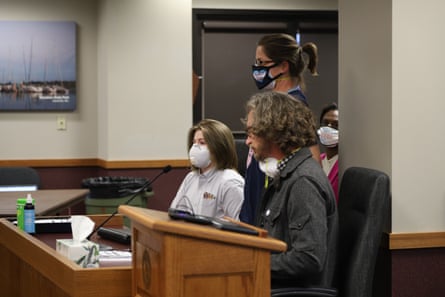
At one school board meeting last month in St Charles county, a more conservative county neighboring St Louis, queer and trans youth and their supporters sat through a lengthy discussion surrounding a proposal to make it easier for civilians to challenge potentially “obscene” materials – a move seen as an effort to increase censorship of LGBTQ+ content. Some attendees held “trust our teachers and librarians” signs and a trans pride flag, applauding when a student criticized the removal of queer characters from shelves; another speaker said kids shouldn’t be exposed to “sexual scenes”.
Toward the end of the meeting, a board member gave a speech about her disdain for trans youth using locker rooms, an item not on the agenda.
Youth protesters and parents of trans kids gathered at the end of the meeting to commiserate.
“The trans community is burning to the ground here. It’s a nightmare. Where are the national LGBTQ+ organizations?” said Kim Hutton, who has a trans son.
“They frame these policies as ‘protecting the children’, but they’re really just hurting specific marginalized groups. It’s not fun to see when you’re part of those marginalized groups,” said Hannah Yurkovich, a 17-year-old St Louis high schooler at the meeting. “I grew up here, I love St Louis, but I can’t be part of it, if it’s going to keep being against who I am.”
Her friend, Rohan Webb, 18, attended a neighboring high school that adopted gender-neutral bathrooms to better support LGBTQ+ students and had queer support groups. “To see this school district move in the exact opposite direction is saddening,” they said. “To see them getting to make students’ lives so much worse is infuriating.”
‘Will Democrats throw us to the fire?’
Trans Missourians and their families say they have endured by leaning on each other. Families carpool to government hearings. A regional summer camp provides a safe haven for LGBTQ+ youth. Rene and Kyle Freels, the parents of Chelsea, the recent high school graduate, run a support group for trans kids and parents, and they have organized “Transgiving” potlucks for Thanksgiving.
Chelsea has dedicated significant time to supporting trans youth who don’t have the resources she has had. Over breakfast at a queer-friendly cafe with her parents, she described how she assists others in legally changing their name, saying she had just received a court alert about a case she was managing.
“It’s all in the bucket of preventing suicidality,” Chelsea said matter-of-factly. “That is what worries me the most about going to college, because sometimes I have to talk them down … What happens if I’m not in St Louis?” She said she has been fighting to stop friends’ suicides since she was 15 and learned to always gets friends’ addresses in cases of emergencies.
“The public only hears from trans people in the positions of the highest of privileges. I have supportive parents, I’m white, I’m 18, I got healthcare – later than I needed it, but I got it. But my story is one aspect of the trans story, and it’s one of the better ones, and even it is filled with sadness.”
Chelsea, who is leaving the state for college and is interested in coding and liberal arts, said she felt disillusioned with politics. On the Republican side, people were using “genocidal rhetoric” to talk about trans people, she said, referencing calls for the “eradication of transgenderism” at last year’s Conservative Political Action Conference and demonization of trans people in the Trump-aligned Project 2025.
On the Democratic side, candidates defend trans rights, but it feels fragile, she said.
“The Democrats in Missouri are our allies, they’re the best support we have in the chamber, but there’s an anxiety they won’t always be that way. When shit hits the fan, they’ll say, is it worse to be out of office and standing on your morals, or is better to just throw a little bit to the fire? But the thing they’re throwing to the fire are my friends and family.”
The Freels considered relocating to Illinois last year, but couldn’t afford it.
“There will always be trans kids and they will be out and asserting themselves,” Rene Freels said. “We’re part of this leftover crew that is super mad and stubborn and wants to see this resolved and want our kids to have full civil rights.”

Miles, who hopes to become a teacher or work with youth, said leaving is not an option: “I’ve always wanted to stay here. It sounds weird, but I really love Missouri. I have so many memories here and I could see myself raising my kids here.”
Missouri is where he spent his whole life, where his favorite restaurants and hiking trails are, where his girlfriend and her family live, where he had his first date, he said.
He can’t imagine moving away from his elderly grandparents, who he stays with on a weekly basis. “I have a plan for my life,” he said, “and I couldn’t imagine doing it somewhere else.”
Throughout Meert and Thurow’s home are objects they have repurposed from friends who left the state due to anti-trans laws.
In the garden, the couple recently put up a sign saying they had planted beans “in remembrance of the 50+ families we know that have left Missouri”. But the number of departures is greater, she said. They’ve lost count.
The Shinbone Star
I read these whenever I get ’em. I think everyone should, so give it a try when you get a few minutes. Well, unless you already did; I’m a few days late reading this one! 🌞
Oklahoma state superintendent confirms new student test results are ‘very different’
Ryan Walters said his agency is explaining the new data to schools. District leaders deny there has been any explanation from the state.
By: Nuria Martinez-Keel – August 22, 2024 4:55 pm
(It’s very interesting. Well-written, but there are still little gold nuggets or Easter Eggs scattered throughout. It’s worth the click. Read it on my phone last night.)
 Scottie's Playtime