Some Awesome Ladies Of The Labor Movement

Happy Labor Day! Let’s Talk About Some Awesome Ladies Of The Labor Movement by Rebecca Schoenkopf Read on Substack

Because it was not actually just a bunch of flannel-wearing white dudes.

A version of this article was initially published on May 1, 2019. Happy Labor Day, we’re taking the day off! 

When we talk about the history of feminism, we tend to think about the causes and struggles of middle class white women. When we talk about labor history, we tend to think about the causes and struggles of white working class men.

And that is some absolute bullshit.

Working class women, very often women of color and immigrant women, were, are and always have been the backbone of the labor movement. They were working and organizing well before Second Wave Feminism “made it possible” for women to enter the workforce. They’re the ones who first fought for equal pay, and they’re the ones who were doing the bulk of feminist work and activism during the years in between getting the right to vote and The Feminine Mystique. They are still fighting today.

So, since it’s Labor Day, let’s celebrate the hell out of them, starting with the woman who started it all.

Lucy Parsons
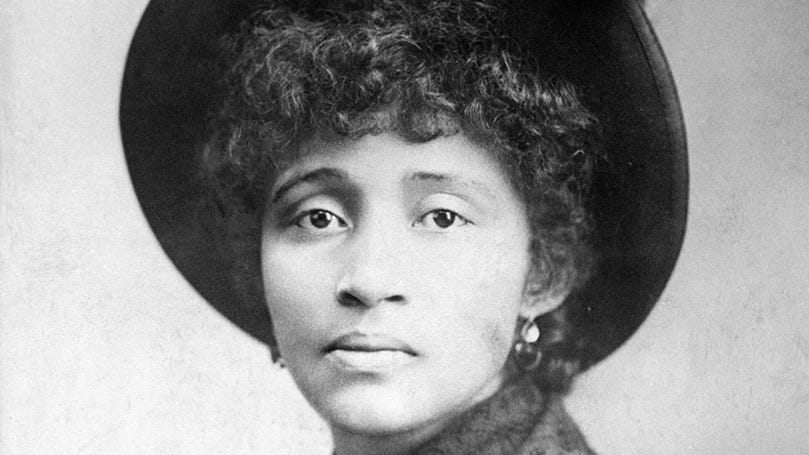
‘Governments never lead; they follow progress. When the prison, stake or scaffold can no longer silence the voice of the protesting minority, progress moves on a step, but not until then.’  

“More dangerous than a thousand rioters,” anarchist Lucy Eldine Gonzalez Parsons was a writer, orator, one of the founders of the Industrial Workers of the World, and tireless campaigner for the rights of people of color, all women, and all workers. Her husband, Albert Parsons, was one of the Haymarket martyrs.

We, the women of this country, have no ballot even if we wished to use it … but we have our labor. We are exploited more ruthlessly than men. Wherever wages are to be reduced, the capitalist class uses women to reduce them, and if there is anything that you men should do in the future, it is to organize the women.

Though Parsons and Emma Goldman were widely regarded as the most prominent female anarchists of the day, they very notably did not get along so well. Parsons believed that oppression based on gender and race was a function of capitalism and would be eliminated when capitalism was eliminated, whereas Goldman believed such oppression was inherent in all things. Parsons was all class struggle all the time, and felt that the “intellectual anarchists” like Goldman spent too much time bothering with appealing to the middle class.

One of her most important contributions to the labor movement was the concept of factory takeovers. 

“My conception of the strike of the future is not to strike and go out and starve, but to strike and remain in, and take possession of the necessary property of production.”

Parsons is best known for being the woman who really started the celebration of May Day as a day for workers’ rights — leading a parade to commemorate the anniversary of the Haymarket Affair. Soon, nearly every other country in the world followed suit and proclaimed this day International Worker’s Day. Alas, here in America, we go with the less radical and more picnic-y Labor Day that we are celebrating today, because Grover Cleveland thought a federal holiday commemorating the Haymarket Affair would encourage people to become anarchists and socialists, and no thank you, he did not want that.

Anna LoPizzo

‘Hearts starve as well as bodies, give us bread but give us roses too’  

Not much is known about Anna LoPizzo, other than that she was a 34-year-old mill worker who was murdered by police officer Oscar Benoit during the 1912 Lawrence Textile Strike — also known as the Bread and Roses Strike. Initially, police tried to charge two IWW organizers who were miles away for her murder, even though literally everyone there had seen Benoit shoot her.

The reason for the strike in the first place was that the textile mills of Lawrence, Massachusetts, cut worker pay after the state cut the number of hours women could legally work from 56 down to 54. The Industrial Workers of the World, led by Elizabeth Gurley Flynn (we’ll get to her in a minute), organized more than 20,000 workers of more than 40 different nationalities to demand they get their fair wages. One of the primary tactics used in the strike was sending the starving families of the mill workers on a tour to New York City so that people there could see for themselves what these low wages were doing to children. Between that and LoPizzo’s death, sympathy was on the side of the workers. Congressional hearings into the conditions of the mills were held, and the mills themselves ended up settling the strike by giving all workers across New England a 20 percent raise.

Lillian Wald

‘Human interest and passion for human progress break down barriers centuries old.’

Susan B. Anthony isn’t the only important feminist buried in the Mount Hope Cemetery in my hometown of Rochester, New York. There is another. Her name was Lillian Wald, and she was a total fucking bad ass. She wasn’t just a suffragist — she was also an early advocate for healthcare for all people regardless of economic class or citizenship, a founding member of the NAACP, lobbied against child labor, advocated for the rights of immigrants, helped to found the Women’s Trade Union League, and was an anti-war activist. Wald also founded the Henry Street Settlement House in New York City, which provides — to this day — social services, education, and health care to the impoverished. And she was active in the ACLU.

WHY THE HELL IS SHE NOT MORE FAMOUS? I am legitimately bothered by this and bring it up often.

Elizabeth Gurley Flynn
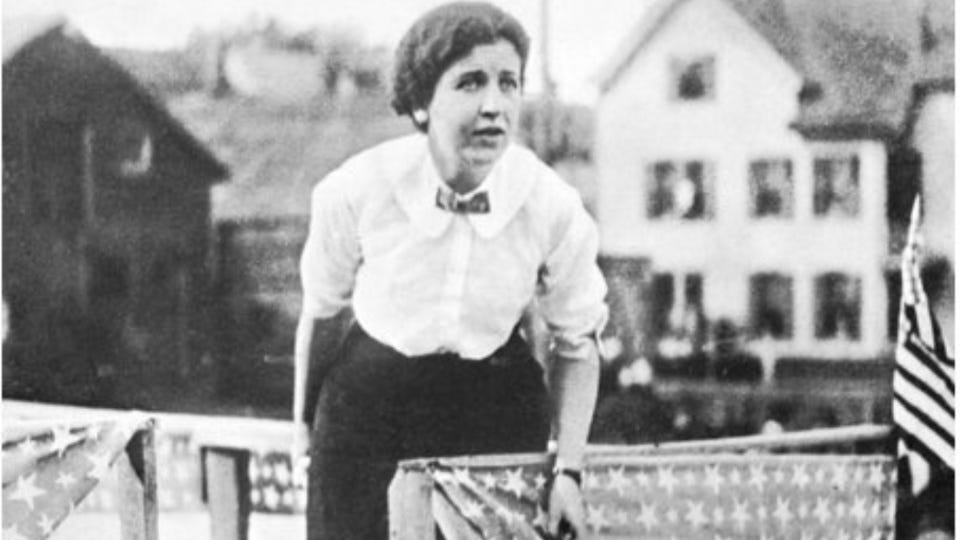
‘The IWW has been accused of pushing women to the front. This is not true. Rather, the women have not been kept in back, and so they have naturally moved to the front.’

Hey! You know who was super freaking awesome? Elizabeth Gurley Flynn. As previously mentioned, she was an organizer with Industrial Workers of the World who helped organize the Lawrence Textile Strike. She also organized a hell of a lot of other strikes across the country, helped found the ACLU, and was known for the creative tactics she used to elicit sympathy and support for the American worker.

Hattie Canty
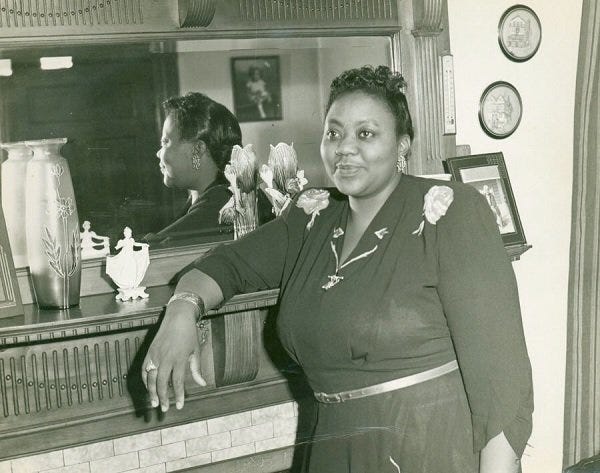
’Coming from Alabama, this seemed like the civil rights struggle … the labor movement and the civil rights movement, you cannot separate the two of them.’ 

 When Hattie Canty’s husband died in 1972, she found herself supporting eight children on her own. She found work as a maid at a Las Vegas hotel where she joined the Las Vegas Hotel and Culinary Workers Union Local 226. By 1990, she was president of that union, leading one of the longest strikes in American history — a six year strike of hospitality workers which, happily, ended in victory.

The Women of The Atlanta Washerwomen’s Strike
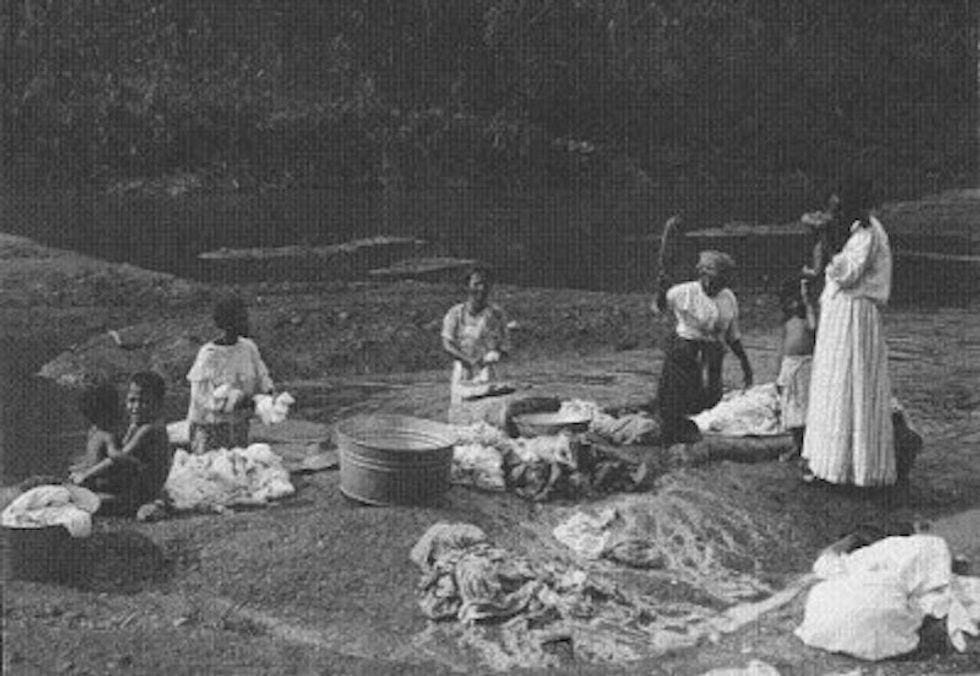
We mean business this week or no washing!  

Back in the 1880s, only two decades after the Civil War ended, the most common occupation for Black women was as laundresses — this was largely because if poor white families were going to hire anyone to do chores for them at all, they were going to hire someone to do their laundry. These women were independent workers, often working from their own homes and making their own soap, and they only made about $4 a month. (Average non-Black-woman laborers earned about $35 a month in 1880.)

One day in 1881, about 20 of them got together and decided that $4 a month was some bullshit for all the work they were doing and decided to go on strike and demand wages of $1 for every 12 pounds of washing. Three weeks later, 3,000 other women joined them. Unsurprisingly, the city freaked out. They fined any participants $25 — which was a lot of money when you only made $4 a month — and they offered tax breaks to any corporation that would come down there to start a commercial steam cleaning business. Still, the women did not back down.

Eventually, people got really sick of doing their own laundry, and the city decided to back down on the fines, and accede to their demands for fear that the unrest would spread to other industries.

Dolores Huerta

‘Every minute a chance to change the world.’

Dolores Huerta, along with Cesar Chavez, helped to organize the National Farmworkers Association, which later became United Farm Workers. She wasn’t a farmworker herself — rather, she was an elementary school teacher who was tired of seeing the children she taught living in poverty because their parents were not making enough money as farmworkers.

I couldn’t tolerate seeing kids come to class hungry and needing shoes. I thought I could do more by organizing farm workers than by trying to teach their hungry children.

Together with Chavez, Huerta organized the successful Delano Grape Strike (or as your mom calls it, “that time we couldn’t eat grapes for five years” or as Rebecca’s mom calls it “serious people don’t care if a boycott ‘ends'”), which led to better wages and working conditions for farmworkers, and she has continued working as an activist and an organizer ever since.

Angela Bambace
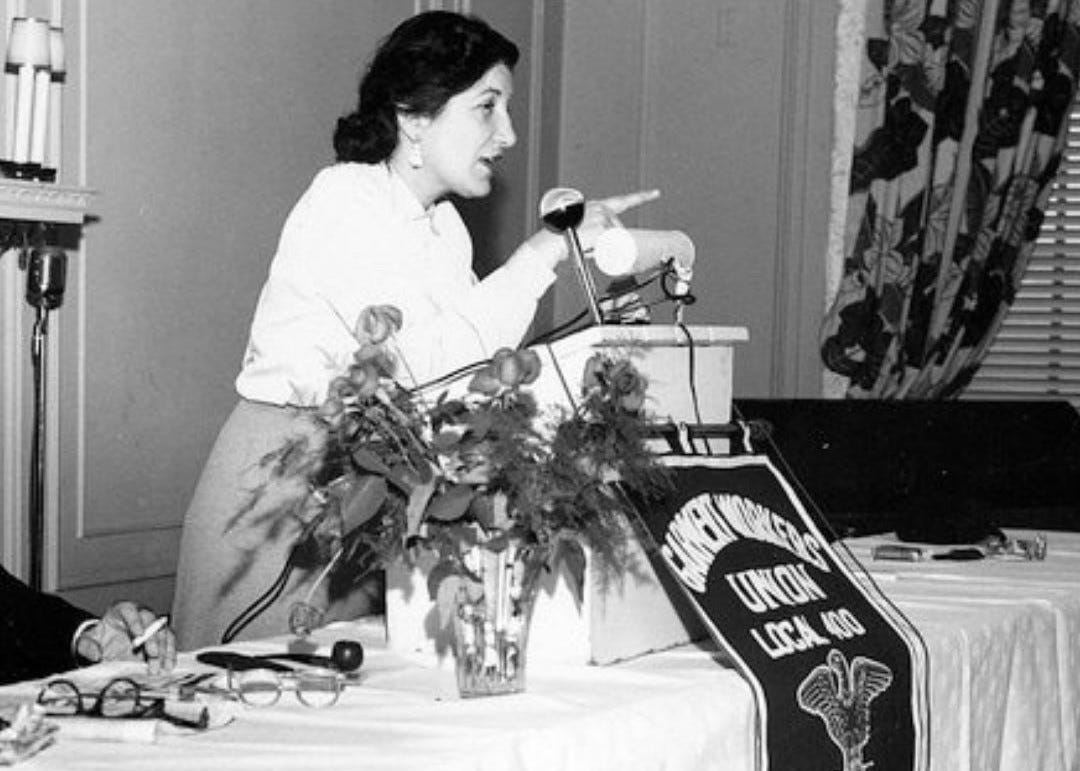
‘We did it with fear.’

Though she’s not as well known as some of the other women on here, Angela Bambace, an organizer for the International Ladies Garment Worker’s Union who started unionizing her fellow shirtwaist factory workers at age 18, is a personal hero of mine, along with her sister Maria. Angela was known to punch strikebreakers in the nose, which was pretty freaking badass.

She also left her husband and a traditional marriage in which she was confined to “making tomato sauce and homemade gnocchi” — and lost her parental rights in doing so, because back then, women didn’t have any — to fight for workers’ rights on the front lines. She was the first woman woman elected Vice-President of the ILGWU, which previously only had male leadership, where she worked from 1936 until 1972.

May Chen

’The Chinatown community then had more and more small garment factories and the Chinese employers thought they could play on ethnic loyalties to get the workers to turn away from the union. They were very, very badly mistaken.’ 

May Chen, also of the International Ladies Garment Worker’s Union, led the New York Chinatown strike of 1982 — 20,000 workers strong and one of the largest strikes in American history. As a result of the strike, employers cut back on wage cuts, gave workers time off for holidays and hired bilingual interpreters in order to accommodate the needs of immigrant workers.

Lucy Randolph Mason
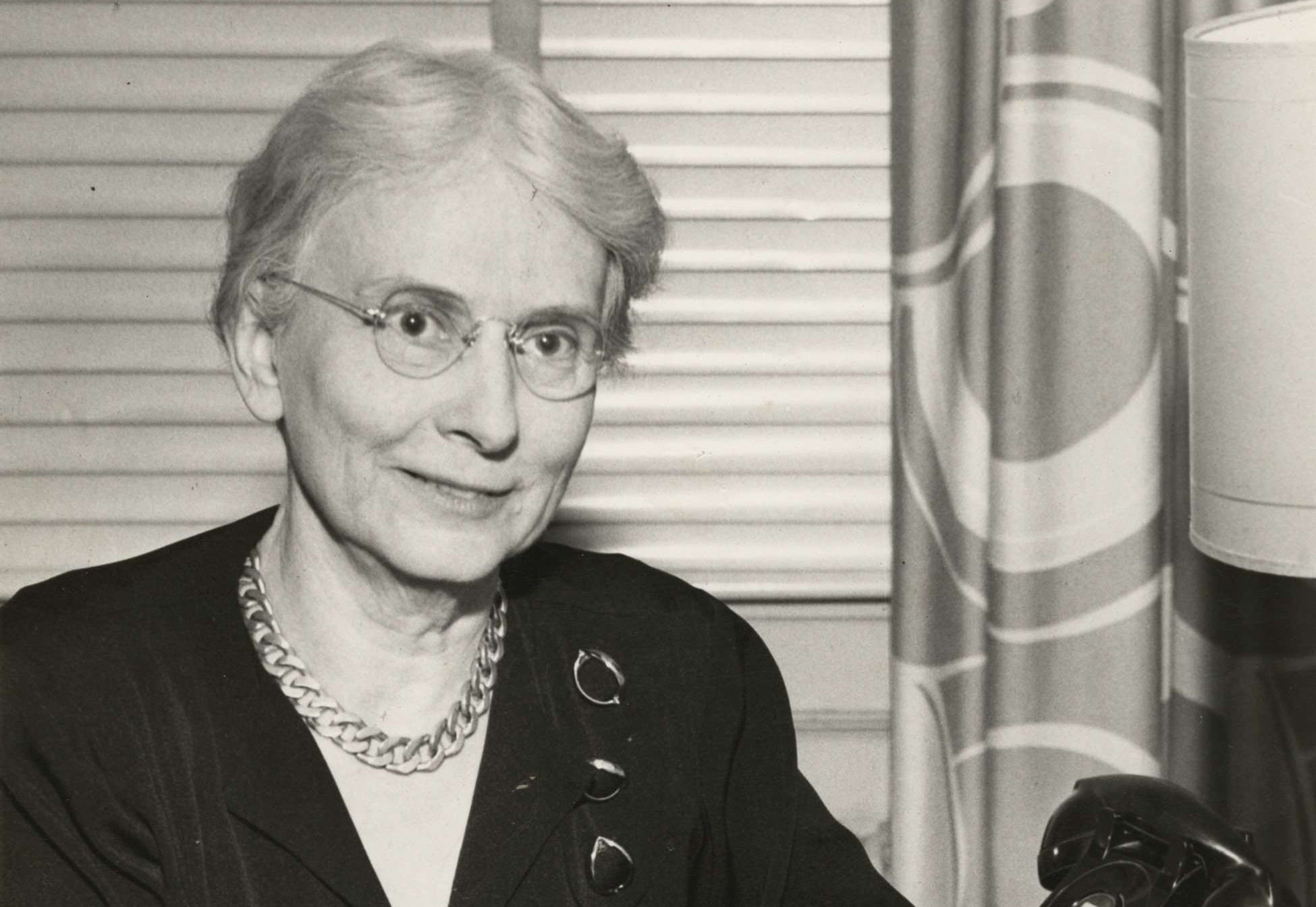
‘When I came South I had no idea of the frequency of attacks on people peacefully pursuing legitimate purposes, I am appalled at the disregard of the most common civil rights and the dangers of bodily harm to which organizers often are exposed”‘

Lucy Randolph Mason was an interesting one. She was a well-off Southern lady from Virginia, related to George Mason (author of the Virginia Declaration of Rights), Supreme Court Justice John Marshall, and, uh, Robert E. Lee. So, you know, you might have an idea in your head about what her deal might be. And you would be so wrong. 

So, despite being from this very fancy family, Lucy goes and gets a job as a secretary for the YWCA at 20. In 1918, she gets into the whole suffragette thing. Women get the vote, but Lucy’s not done. She starts organizing for labor rights and integration and ending white supremacy in the South. She organizes interfaith, integrated unions in the South, which you can imagine was a pretty big deal at that time. She does it through the YWCA. She writes a pamphlet telling consumers to boycott companies that don’t treat their workers well. Eventually, she becomes the CIO’s ambassador to the South and spends the next 16 years of her life going to all these small towns where bad things would happen to anyone who tried to unionize, and explaining workers’ rights and why integration is good and racism is bad to pretty much anyone with any kind of power. Neat!

Emma Goldman
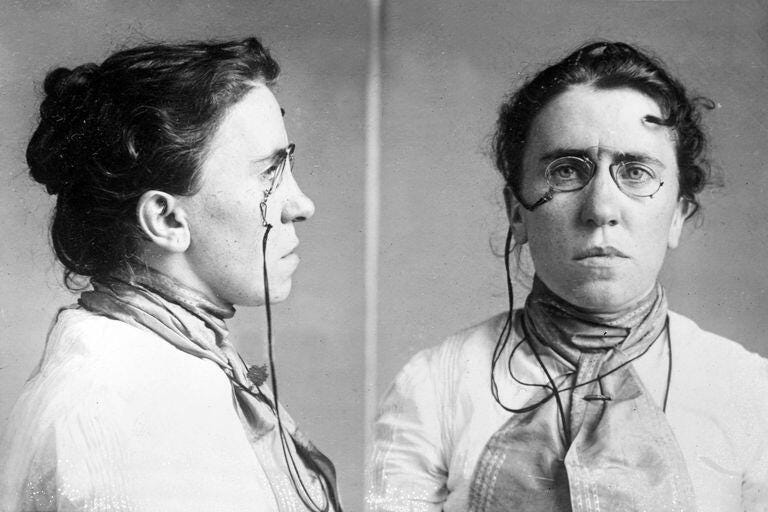
‘Ask for work, if they do not give you work, ask for bread, if they will not give you bread, steal bread.’

 Though not a union organizer by trade, anarcha-feminist Emma Goldman’s advocacy for workers’ rights and human dignity and freedom empowered workers and organizers throughout the country, and motivated them to stand up for their own rights. She was considered the most dangerous woman in America for a reason.

She was a feminist, an anti-racist, an atheist, an advocate of free love, an opposer of the institution of marriage and — very unusually for the time (she pretty much started right after Haymarket, which was 1886, and continued until her death in 1940) — one of the first advocates of gay rights.

“It is a tragedy, I feel, that people of a different sexual type are caught in a world which shows so little understanding for homosexuals and is so crassly indifferent to the various gradations and variations of gender and their great significance in life.”

I could probably go on about Emma Goldman forever, but I have to get to other people and also this is not my sophomore year in college.

Rosina Tucker
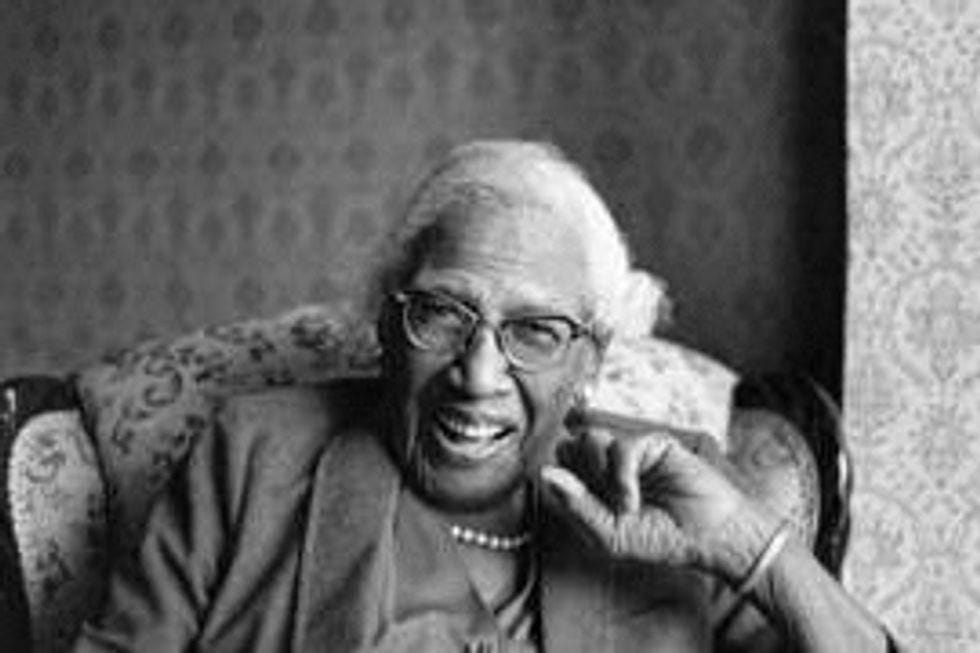
 ‘I looked him right in the eye and banged on his desk and told him I was not employed by the Pullman company and that my husband had nothing to do with any activity I was engaged in … I said, ‘I want you to take care of this situation or I will be back.’ He must have been afraid … because a black woman didn’t speak to a white man in this manner. My husband was put back on his run.’

Rosina Tucker is best-known for helping to organize the first Black labor union, The Brotherhood of Sleeping Car Porters, started by A. Philip Randolph in 1925. A Brotherhood? But she was a woman, you say! Well, the Pullman porters wanted to organize, but they were afraid of losing their jobs — with good reason, because their bosses kept trying to fire them for trying to unionize. So Rosina and other wives of the porters got together and started the Ladies Auxiliary of the Brotherhood of Sleeping Car Porters in order to raise funds to start the union.

In 1963, along with A. Philip Randolph of the BSCP, she helped organize the March on Washington for Jobs and Freedom, and continued to be active in civil rights and labor rights until she passed away in 1987, at the age of 105.

The women on this list, along with the many others who also fought for labor rights in this country and others, didn’t only fight a fight for workers. They fought a feminist fight, they fought for civil rights, they fought for human rights — they understood the interconnectedness of it all, they understood that without economic justice there is no social justice and without social justice there is no economic justice. They understood the way that the labor movement could be used as a catalyst for making social change possible at a time when they didn’t have any political support or power — and that’s a thing we could all do well to remember ourselves.

Happy Labor Day!

Palestinian villages see increase in illegal settler attacks

Palestinian villages in the West Bank are seeing an increase in illegal settler attacks since October 7, 2023, the start of the Israel-Hamas war. Some of the settlers are attacking farms and killing livestock. NBC News’ Hala Gorani has more on the increase in violence.

Israeli settlers accused of using cover of war to build more settlements

Violence has flared in the Occupied West Bank. At least five Palestinians, including two children, have been killed in an Israeli air strike on a refugee camp, and one Palestinian man was shot dead in an attack by Israeli settlers near Bethlehem. 

Western Media BURIES Sickening Israeli Abuse of Palestinian

Messed up doesn’t even begin to sum this up.

Israel Invades West Bank – Declares Will Be Treated Like Gaza

When Israel threatens to turn the West Bank into the new Gaza, believe them.

Trump charged in superseding indictment in election interference case following SCOTUS ruling

The new indictment adjusts the charges to the Supreme Court’s immunity ruling.

ByAlexander MallinKatherine Faulders, and Peter Charalambous

Special counsel Jack Smith has charged former President Donald Trump in a superseding indictment in his federal election interference case that charges him with the same offenses in the original indictment, but is adjusted to the Supreme Court’s recent presidential immunity ruling.

“The superseding indictment, which was presented to a new grand jury that had not previously heard evidence in this case, reflects the Government’s efforts to respect and implement the Supreme Court’s holdings and remand instructions,” a Justice Department spokesperson said Tuesday.

Trump last August pleaded not guilty to federal charges of undertaking a “criminal scheme” to overturn the results of the 2020 election to remain in power. Last month, in a blockbuster decision, the U.S. Supreme Court ruled that Trump is entitled to immunity from criminal prosecution for official acts undertaken while in office, and sent the case back to the trial court to sort out which charges against him can stand.

In a separate filing Tuesday, the special counsel said he does not oppose waiving Trump’s appearance for an arraignment on the superseding indictment.

While the original indictment laid out five ways Trump allegedly obstructed the function of the federal government — having state election officials change electoral votes, arranging fraudulent slates of electors, using the Department of Justice to conduct “sham” investigations, enlisting the Vice President to obstruct the certification of the election, and exploiting the chaos of the Jan. 6 riot — the new indictment removes mention of his use of the Department of Justice, which was explicitly mentioned in the Supreme Court’s ruling as falling within his official duties.

While the original indictment mentions the Justice Department on over 30 occasions, the new indictment makes no mention of the DOJ.

It also reframes the portion of the original indictment outlining that Trump allegedly knew his claims of election fraud were false. (snip)

In multiple places, Smith’s new indictment adds clarifying language to state when he believes Trump was clearly acting outside of his official duties, saying, for instance, that Trump “had no official responsibilities related to any state’s certification of the election results” and highlighting when Trump was allegedly acting “not as President but in his capacity as a candidate for office.”

The superseding indictment also removes key allegations about Trump’s refusal to act as rioters stormed the Capitol.

The new indictment no longer includes allegations that Trump refused advisers’ requests to send a message calling off rioters and that Trump later refused to withdraw his objections to the certification despite the plea of his White House counsel.

The new indictment is 36 pages, while the original indictment was 45.

It comes just days after Smith, in a filing, urged the Eleventh Circuit Court of Appeals to reverse a federal judge’s surprise dismissal of Trump’s classified documents case, which Smith is also overseeing.

https://abcnews.go.com/Politics/donald-trump-charged-superseding-indictment-federal-election-subversion/story?id=113193224

George Orwell Reviews Mein Kampf: “He Envisages a Horrible Brainless Empire” (1940)

in History, Literature | August 22nd, 2024

It’s an informative yet short read, with a link to the full review at the end of this article. Points are well made within this one.

Peace & Justice History

for 8/22

August 22, 1958
President Dwight Eisenhower announced a voluntary moratorium on nuclear weapons testing. A report outlining a system for monitoring and verifying compliance of a complete ban on such testing had been released just the day before. The Conference of Experts, as it was known, had been meeting in Geneva, Switzerland, to work out the details on detection of violations of such a treaty. The U.S. delegation was led by Nobel physics laureate Ernest Lawrence from the University of California (the Lawrence Livermore National Laboratory is named after him).
Eisenhower predicated his moratorium on U.S.S.R. and U.K. agreement to the same limitations. All three countries agreed to the one-year halt in testing and to begin negotiations on a complete test ban at the end of October; all three performed last-minute (atmospheric) tests before the opening of talks.
August 22, 1964
Fannie Lou Hamer, leader of the Mississippi Freedom Democratic Party (MFDP), testified in front of the Credentials Committee at the Democratic National Convention. She was challenging the all-white delegation that the segregated regular Mississippi Democrats had sent to the presidential nominating convention.

Singing at a boardwalk demonstration: Hamer (with microphone), Stokely Carmichael (in hat), Eleanor Holmes Norton, Ella Baker
.
Mississippi’s Democratic Party excluded African Americans from participation. The MFDP, on the other hand, sought to create a racially inclusive new party, signing up 60,000 members.
The hearing was televised live and many heard Hamer’s impassioned plea for inclusion of all Democrats from her state.The hearing was televised live and many heard Hamer’s impassioned plea for inclusion of all Democrats from her state. In her testimony she spoke about black Mississippians not only being denied the right to register to vote, but being harassed, beaten, shot at and arrested for trying. Concerned about the political reaction to her statement, President Lyndon Johnson suddenly called an impromptu press conference, thereby interrupting television broadcast of the hearing.

Hear her testimony   Link to photo gallery 
August 22, 1971

The FBI (Federal Bureau of Investigation) arrested twenty in Camden, New Jersey, and five in Buffalo, New York, for conspiracy to steal and destroy draft records. Eventually known as the Camden 28, most were Roman Catholic activists, including four priests, and a Lutheran minister. “We are not here because of a crime committed in Camden but because of a war committed in Indochina….” Cookie Ridolfi The Camden 28 
August 22, 1972
Rhodesia’s team was banned from competing in the Olympic Games with just four days to go before the opening ceremony in Munich, Germany. The National Olympic Committees of Africa had threatened to pull out of the games unless Rhodesia was barred from competing. Though the Rhodesian team included both whites and blacks, the government was an illegal one, controlled by whites though they represented just 5% of the country’s population. It had broken away from the British Commonwealth over demands from Commonwealth member nations that power be yielded to the majority.
Read more 
August 22, 1986

The Kerr-McGee Corporation agreed to pay the estate of the late Karen Silkwood $1.38 million ($2.68 in 2008), settling a 10-year-old nuclear contamination lawsuit. She had been active in the Oil, Chemical and Atomic Workers union, specifically looking into radiation exposure of workers, and spills and
leaks of plutonium.

The story of Karen Silkwood 

Radio personality gets emotional while reading open letter to men by his female co-host

“To the good men out there, do something more.”

Jacalyn Wetzel 08.21.24

08.21.24

domestic violence; Australia violence against women; violence against women; radio host reads letter; woman's emotional plea to men

Photo credit: Canva

Radio host tears up reading open letter to men by female co-host

All across the globe, men and women have different experiences from childhood through adulthood. We are socialized differently which causes us to walk through the world differently. Since much of the world is still patriarchal, women’s lived experiences are vastly different than men’s. These different experiences can make it feel nearly impossible to understand what it feels like to move through the world as the opposite gender.

In Australia there has been an increase in violence against women. This prompted a popular radio show host, Carrie, from the “Carrie and Tommy Show” to write an open letter to men in Australia. But instead of reading it herself, she asked her co-host, Tommy to read her words.

“I wondered whether it’s time for you guys to stand up and speak up and speak loudly. And I think sometimes men don’t think about what it’s like to walk in the shoes of a woman. So I’m thinking if you read out the thoughts that I wrote down. I don’t know if it might mean more people will listen or if it might give a different perspective of what it feels like to be a woman in this country at the moment,” Carrie says to her co-host.

Tommy immediately obliges Carrie’s request and begins to read the letter. The co-host doesn’t make it too far into the letter before beginning to look visibly uncomfortable and before long he’s choking back tears.

“Not only do we have to sleep in fear of what possible man outside, or the man inside, or the taxi driver, the Uber driver, a former partner, a current partner, a man we’ve never met, we now have to be the ones to fix the issue too. No not all men are monsters but we live in fear of the ones who are. We change our behaviors for the bad men not the good ones because the risk is too high for us not to,” Tommy reads while attempting to hold back emotions.

The open letter is raw and full of struggles women face on a daily basis. Hearing it read by a man made some commenters feel appreciative of the way the two co-hosts used their platform to spread the message as well as being thankful that Tommy agree to read the letter.

“Thank you for using your platform to raise awareness of the severity of this issue,” someone writes.

“Extremely powerful.. I wish I had been more vocal… I wish I had left sooner, I wish I had him reported.… I wish a lot of things. I was scared, but I am alive.. and I will always protect and teach my daughters moving forward. Thank you for putting such a powerful message out there,” another person shares.

Turns out this moment was an amazing teaching moment for parents of boys, “my 14 year old son was in silence and almost in tears listening to your words. We had a fabulous conversation afterwards. Teaching our boys now, is such an important part.”

One woman is joining the chorus of asking the good men to help women advocate, “Carrie hit the nail on the head. I love the idea of having men we trust speaking for us to help us advocate even further. Us women worry every single day, multiple times during the day for our safety, without even realizing we’re doing it. Lock the car as soon as you get in it. Always making sure you’re not being followed. So so so many things we do for our safety that most men don’t even think about, ever. This video is so important.”

https://www.upworthy.com/violence-against-women-open-letter

Peace & Justice History for 8/19

August 19, 1791

Benjamin Banneker, the first recognized African-American scientist, a son of former slaves, sent a copy of his just-published Almanac to Secretary of State Thomas Jefferson, along with an appeal about 
“the injustice of a state of slavery.”
More about Benjamin Banneker, his achievements and his letter to the president
August 19, 1953
Prime Minister Dr. Mohammed Mosaddeq
Royalist troops surrounded, bombarded and burned the residence of the Mohammed Mosaddeq, the recently dismissed elected Iranian Prime Minister. After having briefly fled his country for Italy due to the rioting over his unconstitutional dismissal of Mosaddeq, Shah Mohammed Reza Pahlavi was returned to the Peacock throne with dictatorial power. All this was done with the planning, financing and assistance of the CIA and its British counterpart, MI6.

Background on Mosaddeq
Stephen Kinzer on the U.S.-Iran relationship in perspective 
August 19, 1958
The NAACP (National Association for the Advancement of Colored People) Youth Council in Oklahoma City, led by Clara Luper, a high school history teacher, began sit-ins to desegregate lunch counters, inspired by success in Wichita, Kansas.
[see August 11, 1958].


Clara Luper
TV interview with Clara Luper  More about Clara 
August 19, 1970
The U.S. deployed Minuteman III intercontinental ballistic missiles near Greeley, Colorado. It was the first missile with multiple (then three-170 kiloton) nuclear warheads known as MIRVs (Multiple Independently targetable Re-entry Vehicles).

The MIRV: each cone is a warhead
All the details about this fearsome armament 
August 19, 1989

Anglican Bishop and Nobel Peace Prize-winner Desmond Tutu was among hundreds of black demonstrators, members of Mass Democratic Movement who were whipped and blasted with sand stirred up by helicopters as they attempted to picnic on a “whites-only” beach near Cape Town, South Africa.