And now that the rage of thy rapture is satiate with revel and ravin and spoil of the snow, And the branches it brightened are broken, and shattered the tree-tops that only thy wrath could lay low, Algernon Charles Swinburne – “March: An Ode”
I’ll be honest, I’m not really sure yet what that poem is trying to say – I just know that ”-satiate with revel and ravin and spoil of the snow,” is just a badass phrase. The kind of phrase I hope I’m smart enough to understand someday!
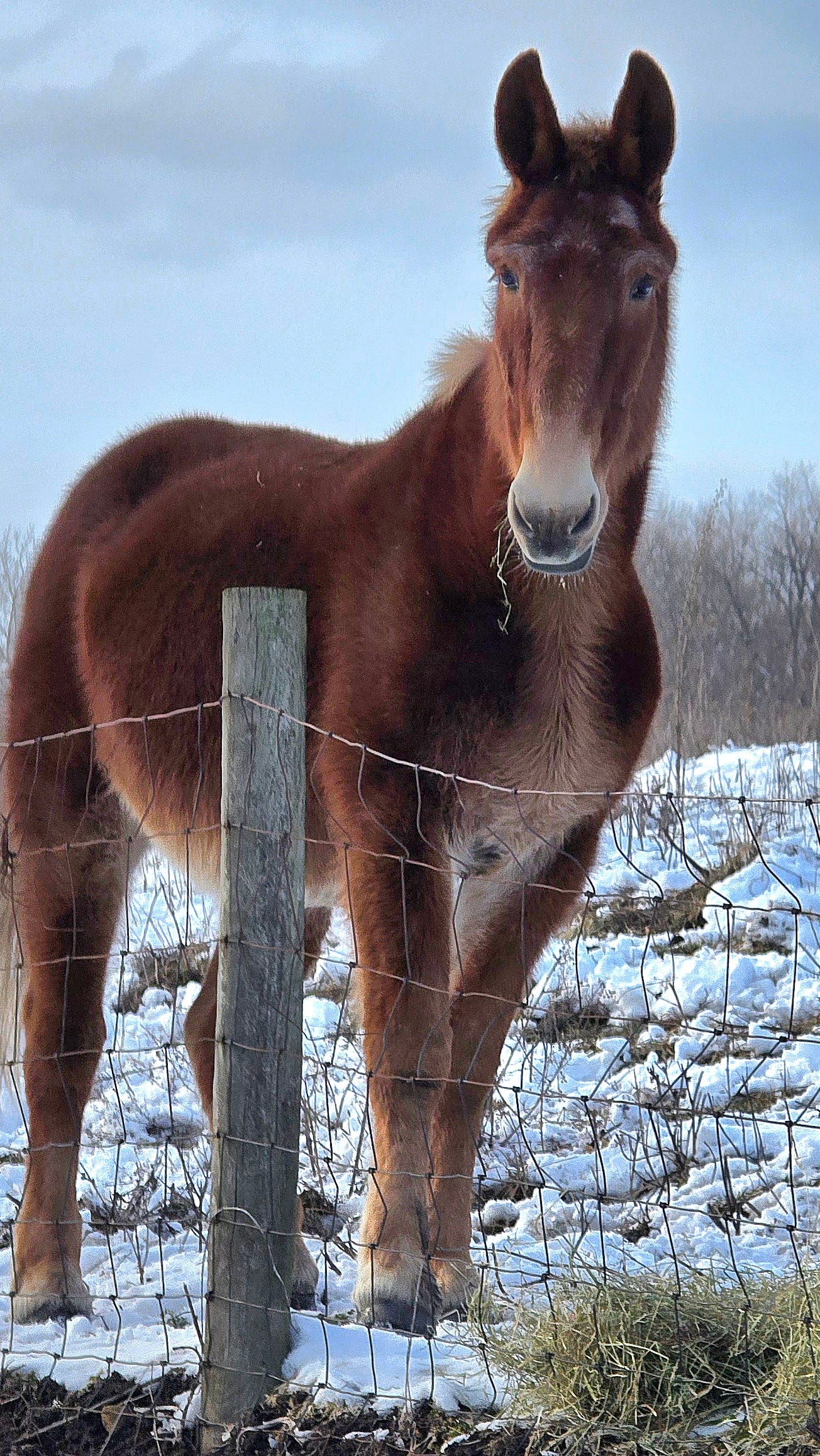
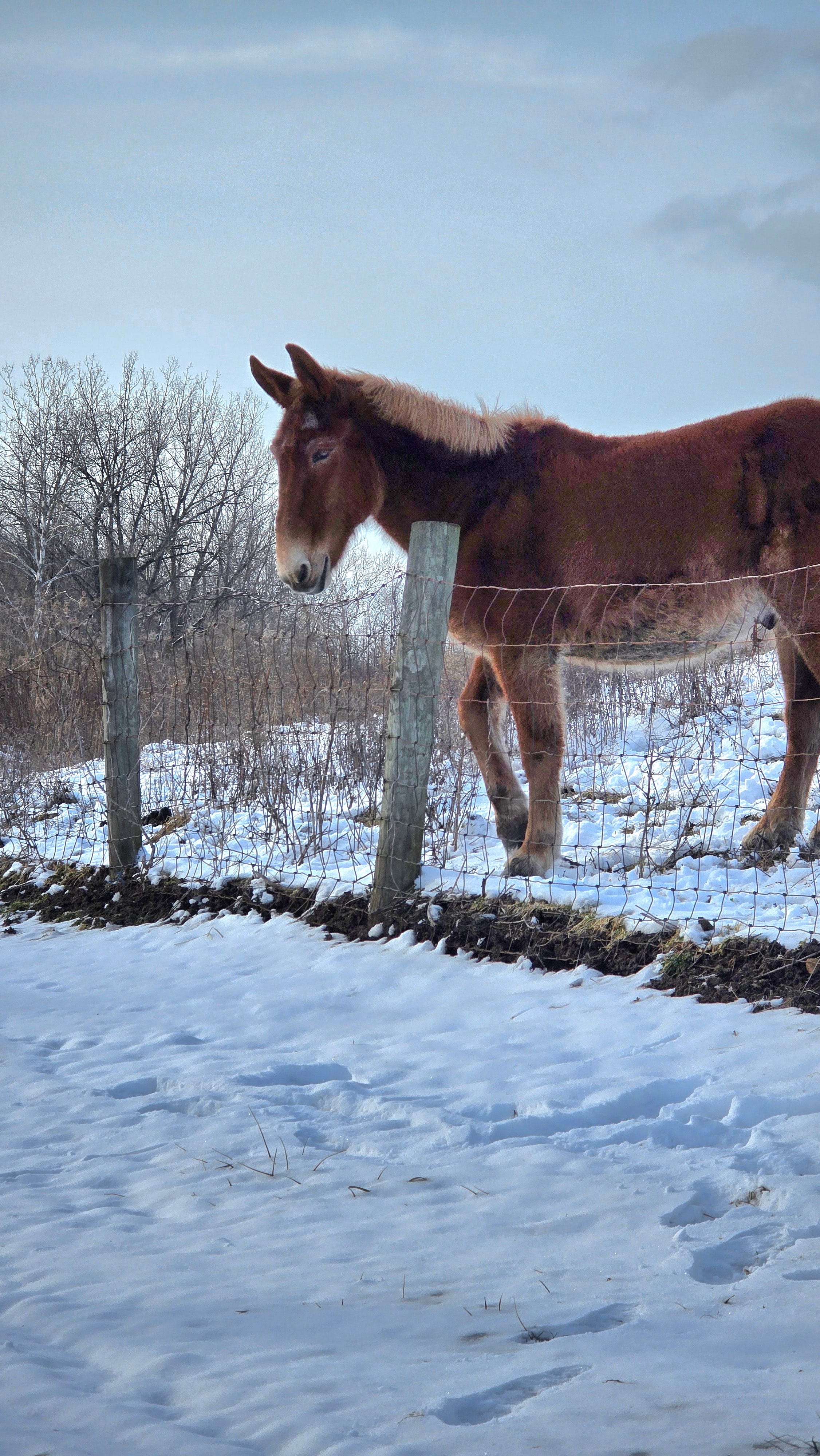
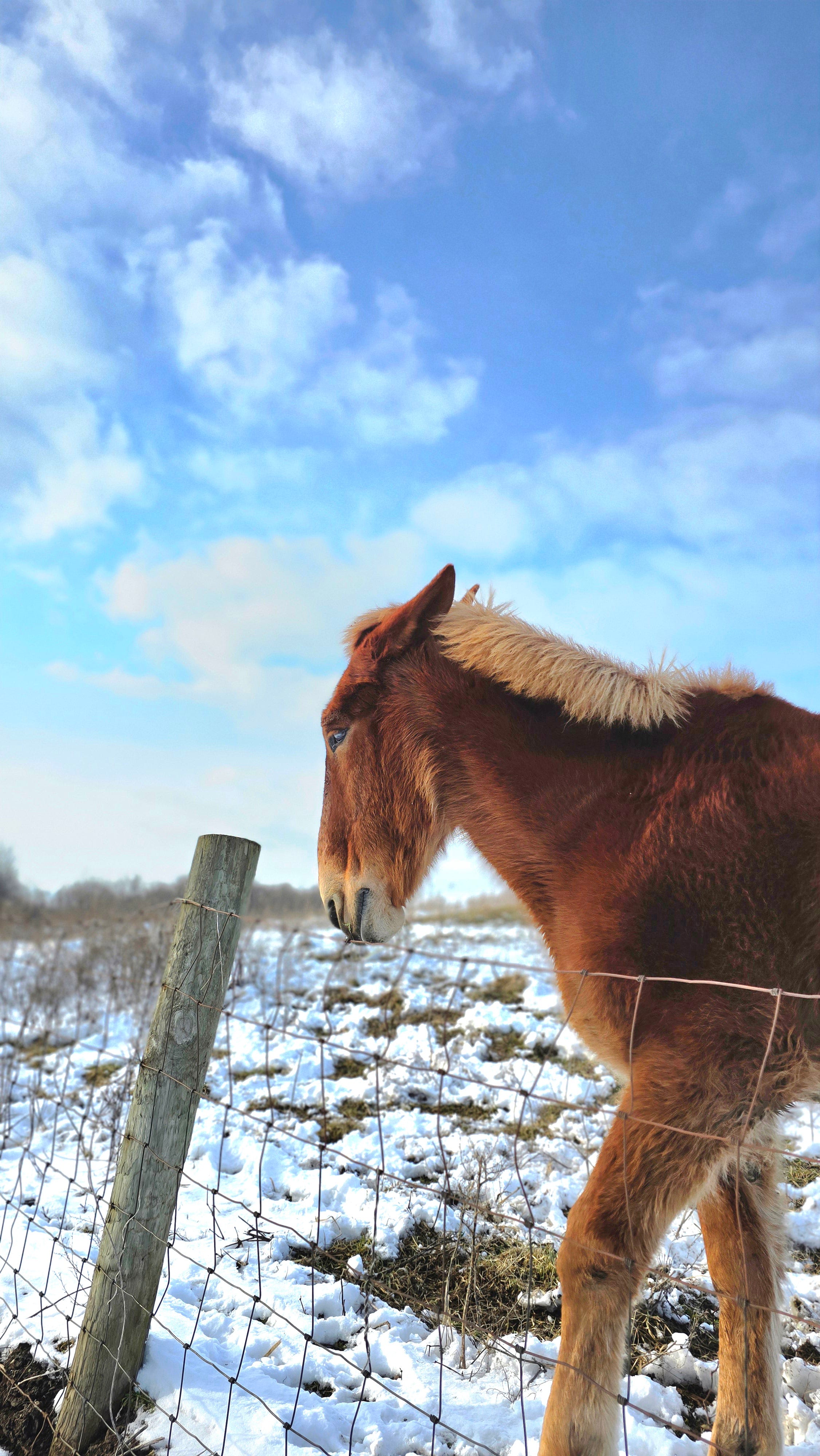
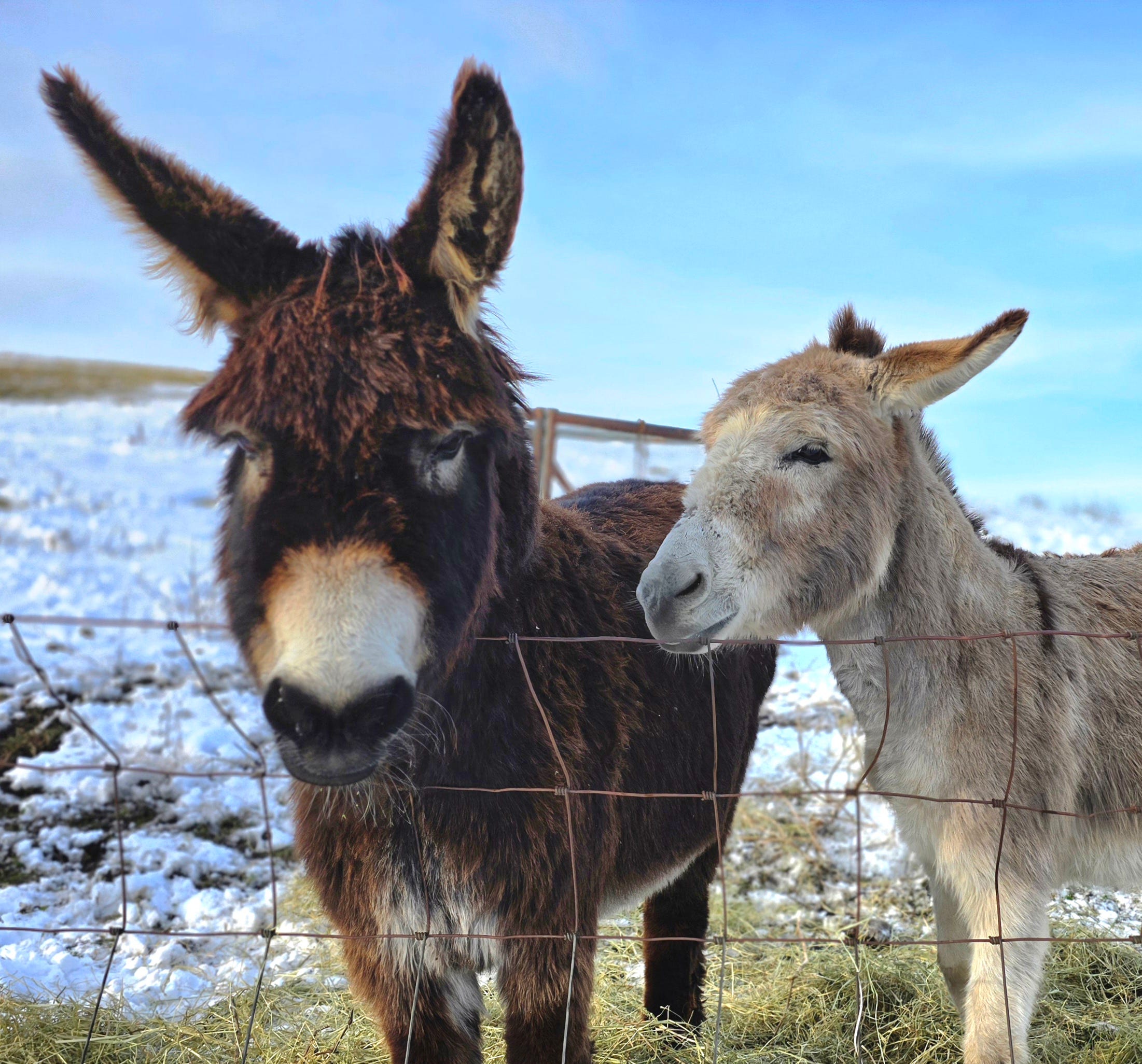
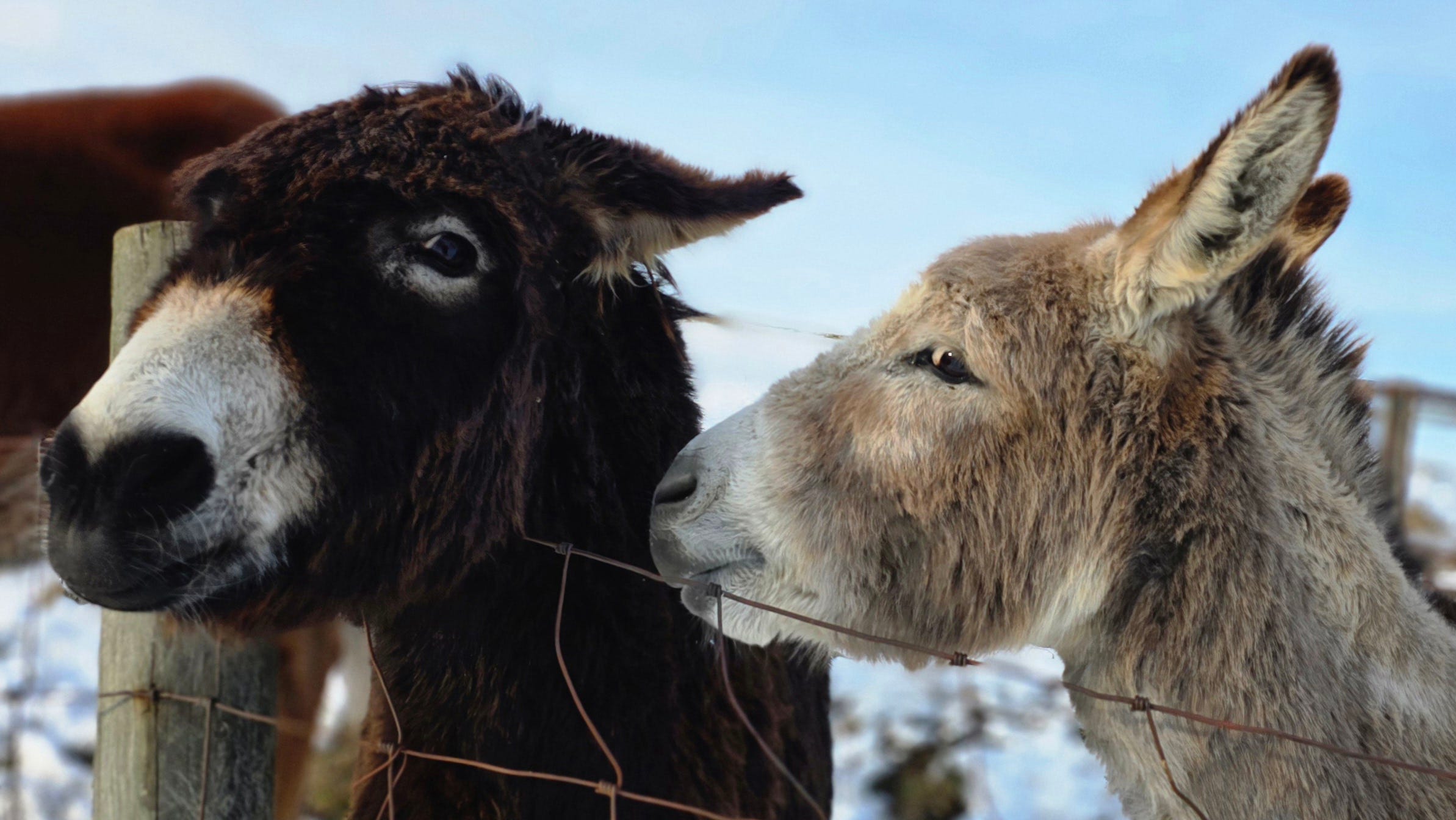
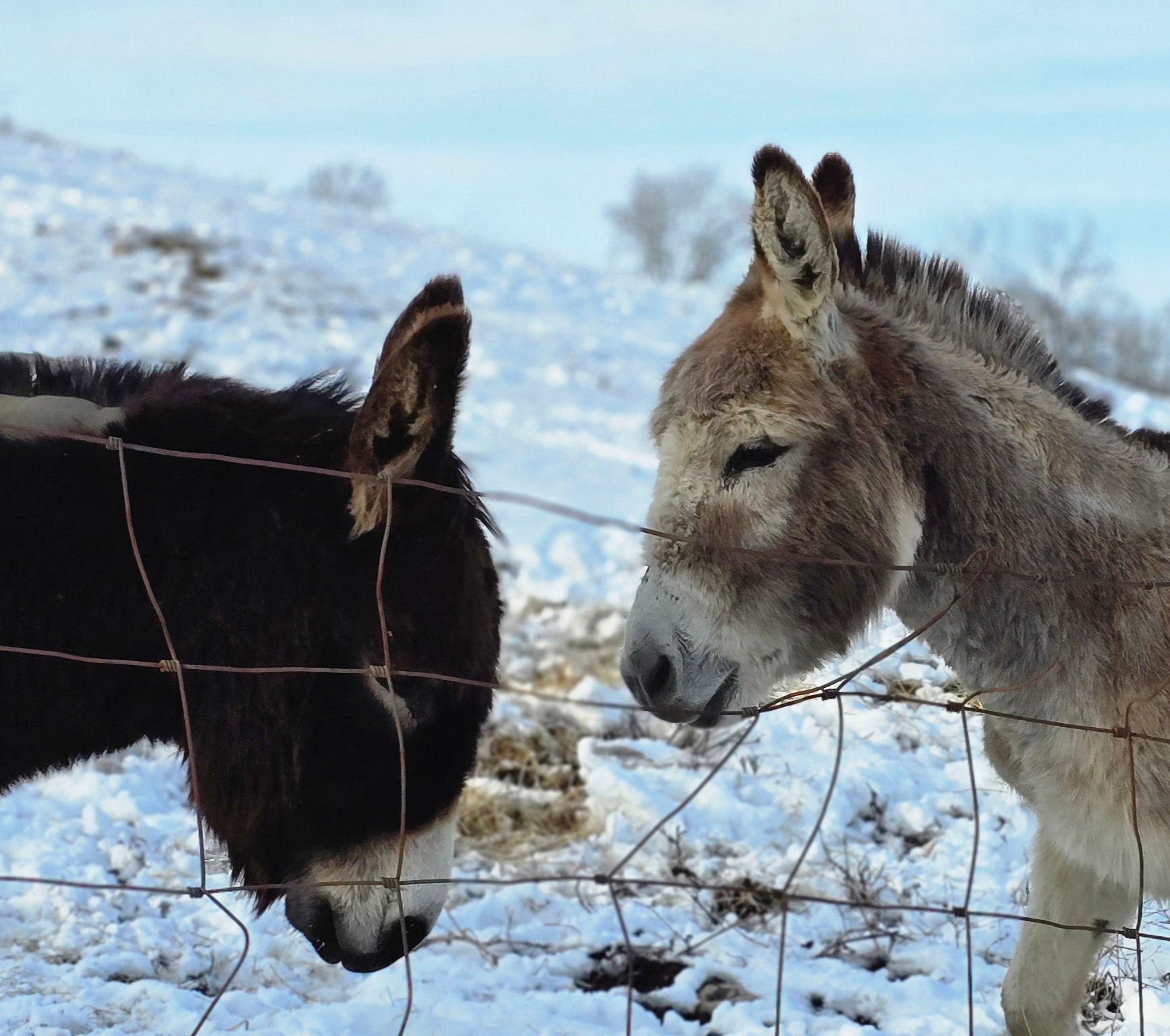
Today is going to be really good pictures of flowers and really good pictures of a mule and some donkeys. What can I say? It’s what I’m good at and I’m lucky to have found my calling.
It was cold when I took these pictures yesterday. 14° with a dozen mile an hour wind. The wind chill was somewhere around “cold as hell” verging on “What the F*#k?!” I couldn’t wear gloves and still work the camera so I took pictures until my fingers hurt.
I’m going to have to work until I die so I have an inexhaustible source of amaryllis.
That’s all I got room for – Thanks for dropping by! (snip)
Ocean acidification now looms as a direct challenge to oysters. Experts warn that more acidic conditions can alter the sex balance in these shellfish. Some oysters start life as male, then switch to female later. Shifts in pH threaten to speed that switch.
These shifts could upend aquaculture and coastal ecosystems everywhere.
Researchers note that an oyster population with too many females might see future reproduction problems, since a balanced sex ratio helps keep populations stable.
Photo: Pexels
Oysters rely on environmental cues to decide their sex. (snip-MORE)
Proposal calls on company to prepare reports on ‘macroeconomic costs’ of health insurer’s practices
UnitedHealth Group is attempting to swat down a non-binding shareholder proposal that asked the company to prepare reports on the costs of delayed and denied healthcare.
The proposal, filed by members of the Interfaith Center on Corporate Responsibility (ICCR), represents a new frontier in seeking to hold insurance companies accountable for the “macroeconomic costs” of denied care – arguing they eventually hurt the bottom line of large investors.
The proposal asks UnitedHealth Group to prepare reports on the “public health-related costs and macroeconomic risks created by the company’s practices that limit or delay access to healthcare”.
“The investors we work with are interested in long-term value creation,” said Meg Jones-Monteiro, senior director of health equity at ICCR. The coalition represents primarily institutional investors, such as pensions and foundations.
“When you think about the investment portfolios our members have, they are very diverse,” Jones-Monteiro. “What happens in one sector impacts another.”
The proposal is non-binding, but UnitedHealth Group is nevertheless fighting to stop it. In a filing with the Securities and Exchange Commission in January, UnitedHealth Group attempted to exclude the proposal from proxy statements on technical grounds, arguing in part that the terms “public-health related costs” and “macroeconomic risks” are vague and subject to interpretation. (snip-MORE)
Last month I asked to hear from trans-friendly employers who sponsor visas, and provided a simple form for interested employers to reach out. In the process, I heard from many individuals: people who were hoping to find new employment in another country, and people who worked for companies that were aligned, who were encouraging their bosses to fill in the form.
A quick reminder before we dive in: I’m not providing formal legal or financial advice. I’m just trying to point people in the right direction and provide some ideas for relocation for people who want it.
The bad news
Here’s the bad news: today, that form sits empty. While the post was shared far and wide, not a single person has filled it in.
I think there are a few reasons for this. First and foremost, in the current environment, being listed in such a database presents a significant risk, particularly if you’re doing business with US entities. In an environment where the administration is firing employees and cutting contracts for even the barest mention of support for trans people, there’s every reason to believe that the current administration will penalize people and organizations who work with trans people.
So, that’s not great. I’m very sorry to everyone who got their hopes up that I would be able to make direct connections.
The good news
The good news: some countries actively sponsor visas, welcome trans people, and are hiring.
In my personal conversations with people, what jumped out again and again was that emigrating to the Netherlands was a viable route for many people — and particularly those with tech skills (engineering, IT, product management, design, research, and so on).
Reasons include:
Dutch tech companies tend to sponsor visas. (Look for job vacancies written in English and/or on boards like Tech Me Abroad and Relocate.me.)
You can relocate with a self-employment visa if you have a skilled background, can demonstrate at least one Dutch-based contract or that you’ll start a tech-based business, and can show that you’ll independently make €1,613 (~$1,700) per month.
The DAFT visa lowers the barrier to entry for US entrepreneurs who can commit to invest €4,500 (~$4,700).
The Netherlands is also kind of just a neat country: excellent social safety net, great support for culture and the arts, good connectivity to other European countries, and a strong grant support network for mission-driven tech. Amsterdam is a first-class cosmopolitan city, but other centers in the Netherlands are not to be sniffed at, and the country is so small that you can easily take public transit from one to another in less time than it might take you to commute to work by car in the US.
It is not, however, perfect. Much like the US, the Netherlands has had its own racial reckoning; unlike the US, the discourse has often centered on the idea that racism doesn’t happen there. That’s a rich claim from a society where racist tropes like Zwarte Piet are still commonplace, and where women of color are often marginalized. There’s work to be done — although it’s worth asking if this is truly any worse than the US.
Not everybody can relocate, and not everybody has these skills. I’m aware that this is a privileged route that not everybody can take advantage of. It would be better if there was a defined route for everybody who needed to find a safer place to live; it would be better still if a safe place to live was the place they already call home. This situation is sick and sad, and I truly wish that everything was different.
It also comes with an attendant cost. It’s estimated that moving to the Netherlands will set you back between $6-10K. That’s a lot less than one might expect, but it’s obviously a significant barrier for many people. Unfortunately, very little financial support exists for these moves. If you know of grants, mutual aid funds, or community resources that help trans people relocate, please share them. Funding and guidance from those who’ve navigated the process could make all the difference.
Please reach out
In the meantime, I’ll keep looking. If you are a company in a country that is safe for trans people, and you’re looking to hire people from the US who need visa sponsorship, please fill out this form or reach out to me via email. I’m not giving up.
==========
I once had a wonderful experience with tens of thousands of pansies. by Worriedman
Plant the green side up and give it a good drink of water a couple of times a week…
Pansies are Viola hybrids, Viola x wittrockiana. (“wittrockiana” sounds like a mountainous region in the south of the Duchy of Grand Fenwick) The common names, pansy, viola and violet are used interchangeably. “Pansies” are usually larger and taller than true violas, with large showy blooms. Violas are usually smaller plants, with smaller blooms, more plentiful than find on pansies. If you want to be a real nerd you can look at the petals. Both kinds of blooms have five petals . On the pansy, four petals point up, one points down. On the viola, two petals point up and three point down.
We ask for peace. We, at the bound O life, are weary of the round In search of Truth. We know the quest Is not for us, the vision blest Is meant for other eyes. Uncrowned, We go, with heads bowed to the ground, And old hands, gnarled and hard and browned. Let us forget the past unrest,— We ask for peace.
Our strainéd ears are deaf,—no sound May reach them more; no sight may wound Our worn-out eyes. We gave our best, And, while we totter down the West, Unto that last, that open mound,— We ask for peace.
This poem is in the public domain. Published in Poem-a-Day on February 8, 2025, by the Academy of American Poets.
I do not care for sleep, I’ll wait awhile For Love to come out of the darkness, wait For laughter, gifted with the frequent fate Of dusk-lit hope, to touch me with the smile Of moon and star and joy of that last mile Before I reach the sea. The ships are late And mayhap laden with the precious freight Dawn brings from Life’s eternal summer isle.
And should I find the sweeter fruits of dream— The oranges of love and mating song— I’ll laugh so true the morn will gayly seem Endless and ships full laden with a throng Of beauty, dreams and loves will come to me Out of the surge of yonder silver sea.
This poem is in the public domain. Published in Poem-a-Day on February 9, 2025, by the Academy of American Poets.
Throughout the 1970s I was in love with Keith McDermott, ten years younger than me. When I first met him, I was living in a third-floor walk-up studio on Horatio Street in the West Village. He was living across the street with Larry Kert (he’s dead), the original young male lead in West Side Story. I was one of Larry’s rainy-day fucks—he’d call me midday or early evening when he was horny and the weather forbade open-air cruising (snow, rain, or tropical heat).
Maybe I met Keith at Larry’s or through someone else; I don’t remember. Keith was living rent-free with Larry. They’d started out as lovers but now, after a year, Keith was expected to help in maintaining their big, luxurious apartment by cleaning and doing chores—and disappearing when Larry had a trick he was bringing home.The sound of the whirring wheels as he came racing around the corner and glided to a halt became the very whisper of desire for me.
Keith wanted to move and I had a lead on an eight-room prewar apartment on the Upper West Side, a block away from Central Park and just four hundred dollars a month. The landlady lived downstairs from us and had decided to rent only to gays—but, what narrowed the field, gay men without dogs. In those days gay couples had dogs, not yet children. We were too poor and unsettled to think of wanting a dog. It never crossed our minds.
Keith was a famous beauty (famous in the West Village and Fire Island among gay men). He was blond, blue-eyed, just twenty-one, and perfectly formed (an expert gymnast). In good weather he rode his bike everywhere. The sound of the whirring wheels as he came racing around the corner and glided to a halt became the very whisper of desire for me. He was fleet, funny, and so handsome that Bruce Weber, the most famous photographer of handsome men back then (Abercrombie & Fitch, GQ, Calvin Klein), took his picture. Weber’s men, often nude or in wet white underpants, were twenty-something, athletic, Ivy League, and passably heterosexual—perfect eye candy for gay men of the period, who liked their men to be iconic and unobtainable, i.e. straight.
Of course I wanted to sleep with this beauty, but he found a way to forestall my lust. He said he was sick of “meaningless” sex and invited me to join his chastity club. We could sleep side by side as long as we never touched. I was content to have that constant access to his beauty and company—and he was happy, I guess, to reap the devotion of a fit, charming, bewitched man in his early thirties who was just publishing his first novel. Before long we were living in our vast eight-room apartment. Whenever I would buy an ugly but big dining room table and six high-backed chairs at Goodwill, Keith would be so outraged that he would drag the furniture out the front door into the hallway. He was a resolute artist and had a horror of looking or being middle-class.
Keith was careful with his “instrument,” i.e., his body. He drank tiny cups of liquid buffalo grass, ate sparingly, mainly vegetables, and visited the gym daily for two hours, where he’d twist and turn on the exercise rings, climb ropes, and strengthen his arms and core, his shoulders and legs, but he never wanted to become a heavily built muscleman. He was a Peter Pan, the puer aeternus. I was abject in my longing for him. I can’t bear to recall the scenes of my crawling toward him, arms outstretched, or the moment when I saw him as an emanation of God. Once I organized an orgy of several guys I dragged back from the Candle Bar in the neighborhood, hoping to be able to touch Keith in the melee. It worked.I can’t bear to recall the scenes of my crawling toward him, arms outstretched, or the moment when I saw him as an emanation of God.
Larry Kert had had a cruel streak—maybe that had rubbed off on Keith. Or maybe my idolatry was just that absurd and I needed vinegar poured in my wounds. I suppose some of the mystical strains in Nocturnes for theKing of Naples, the book I was writing then, were a spillover from my almost religious love for Keith.
And then Keith was cast in the Broadway hit Equus, in which he was naked onstage eight performances a week for years. Dirty old men would sit with binoculars in the front row night after night. A pimple on his ass would send Keith into an anxiety attack. He was brilliant in the role; I saw him in the play dozens of times opposite Richard Burton or Anthony Perkins. It was such a titanic strain (no colds, no hemorrhoids, no weight gain or perceptible loss), thousands of lines, gymnastic feats blinding the “horses” (dancers dressed as stylized horses), rowdy adolescents seated in the cheap seats onstage making wisecracks, kids who were so used to TV that they thought these performers, too, couldn’t hear their remarks. His life became one of iron discipline. I like to think he even came to appreciate our domestic life.
He moved to Los Angeles but was a little too openly, rebelliously gay for Hollywood in those days (no one wanted to see the fag kiss the girl and there were almost no gay roles in the seventies). Then I moved to Paris for sixteen years. When I came back to New York in the late nineties, Keith was living with a sweet, talented Israeli painter; he’d mellowed, was just as funny as ever, became a close associate of the avant-garde director Robert Wilson.
Keith himself directed plays at La MaMa and had published a book. We’re great friends. He insists that I helped form some of his tastes in music and literature. His own curiosity and experience in so many domains of the arts, however, didn’t need my influence, I’m sure. When I told him I’d be writing about him in my sex memoir, he said, “Just say I have a big dick.” That’s easy—his dick is huge.
My country, ’tis of thee, Sweet land of liberty, Would I could sing; Its land of Pilgrim’s pride Also where lynched men died With such upon her tide, Freedom can’t reign.
My native country, thee The world pronounce you free Thy name I love; But when the lynchers rise To slaughter human lives Thou closest up thine eyes, Thy God’s above.
Let Negroes smell the breeze So they can sing with ease Sweet freedom’s song; Let justice reign supreme, Let men be what they seem Break up that lyncher’s screen, Lay down all wrong.
Our fathers’ God, to Thee, Author of liberty, To Thee we sing; How can our land be bright? Can lynching be a light? Protect us by thy might, Great God our king!
This poem is in the public domain. Published in Poem-a-Day on February 1, 2025, by the Academy of American Poets.
As always, click the title to get more about the poet and their work.Today’s background is especially poignant, and work the click.
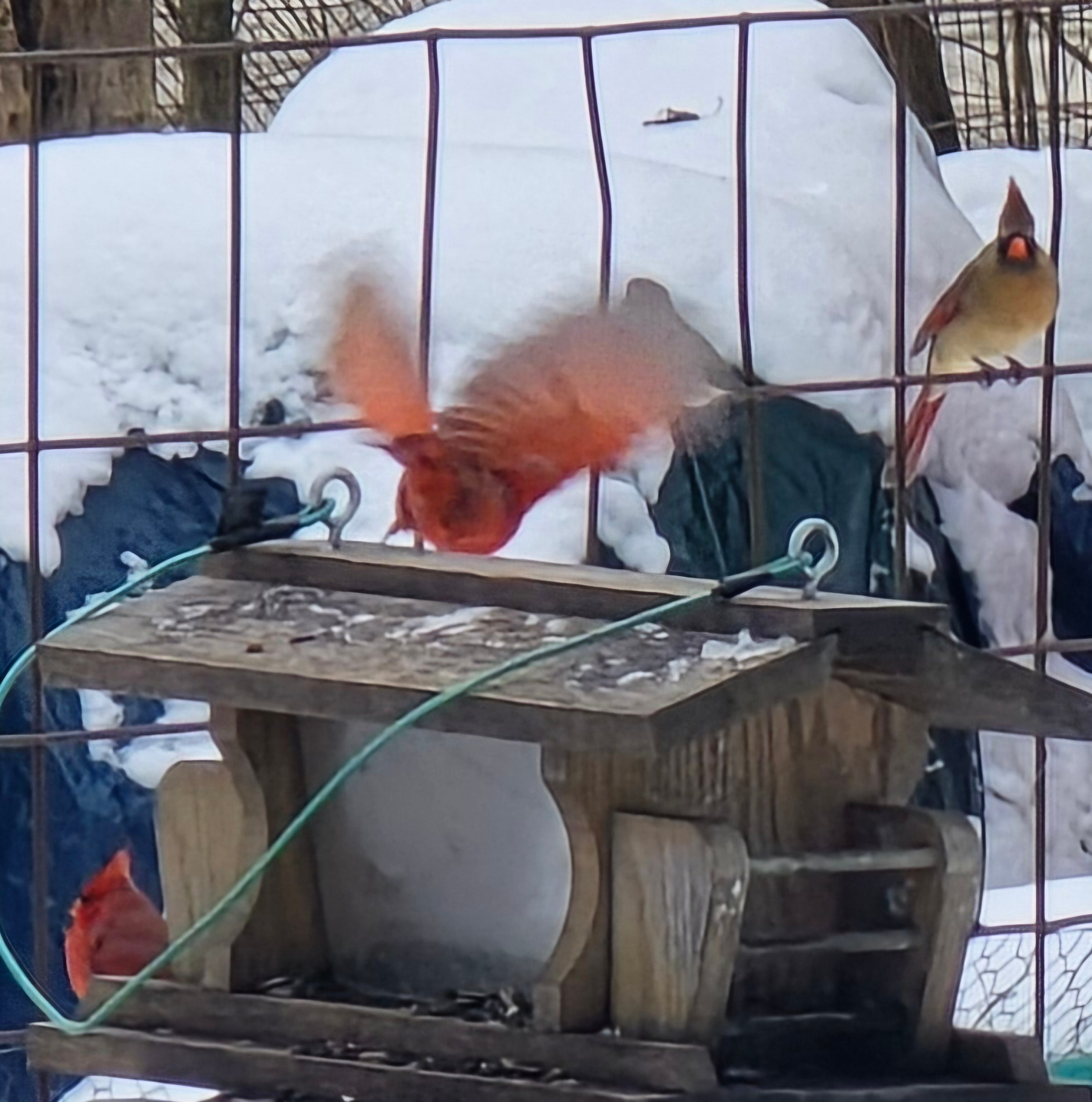
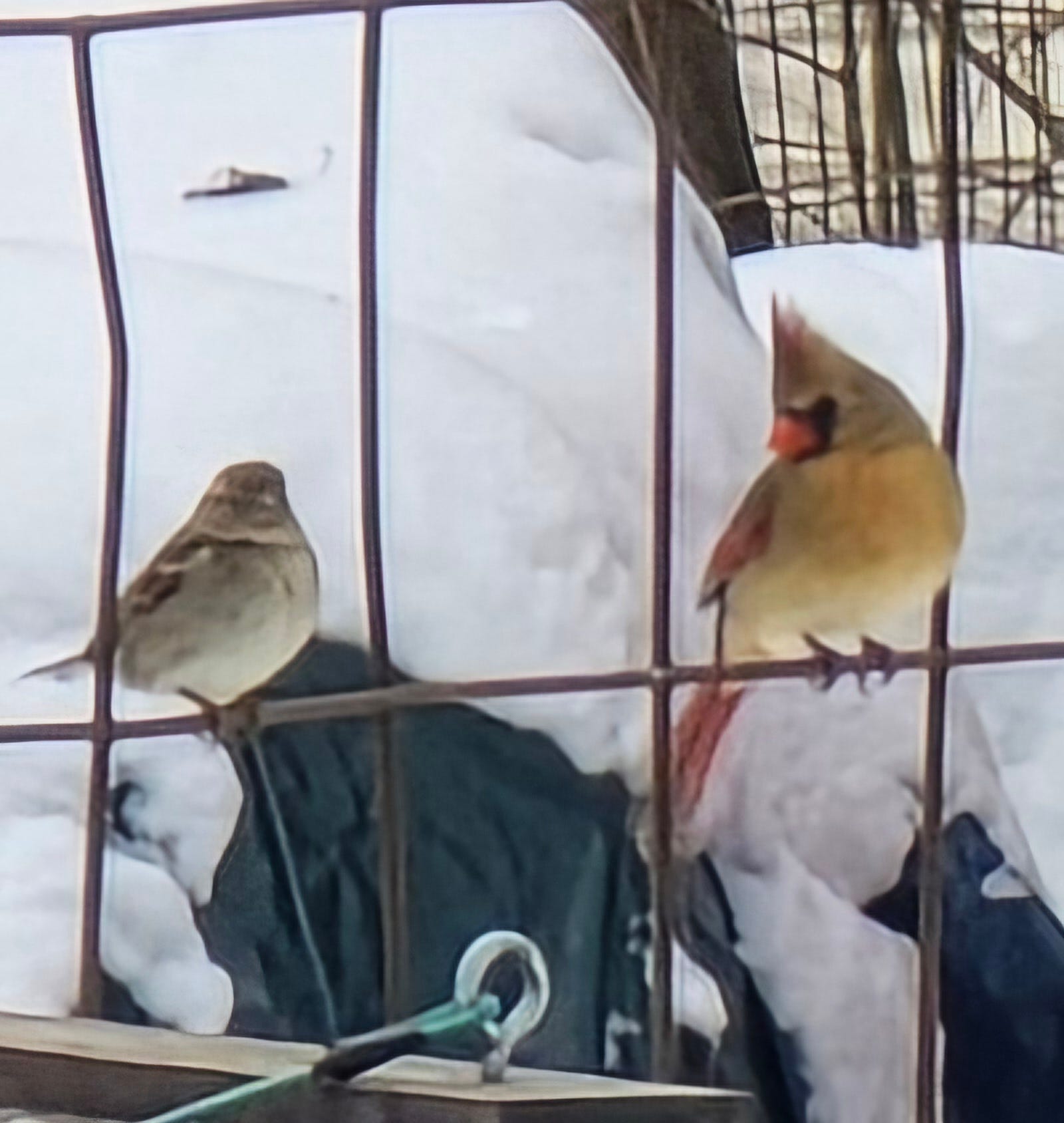
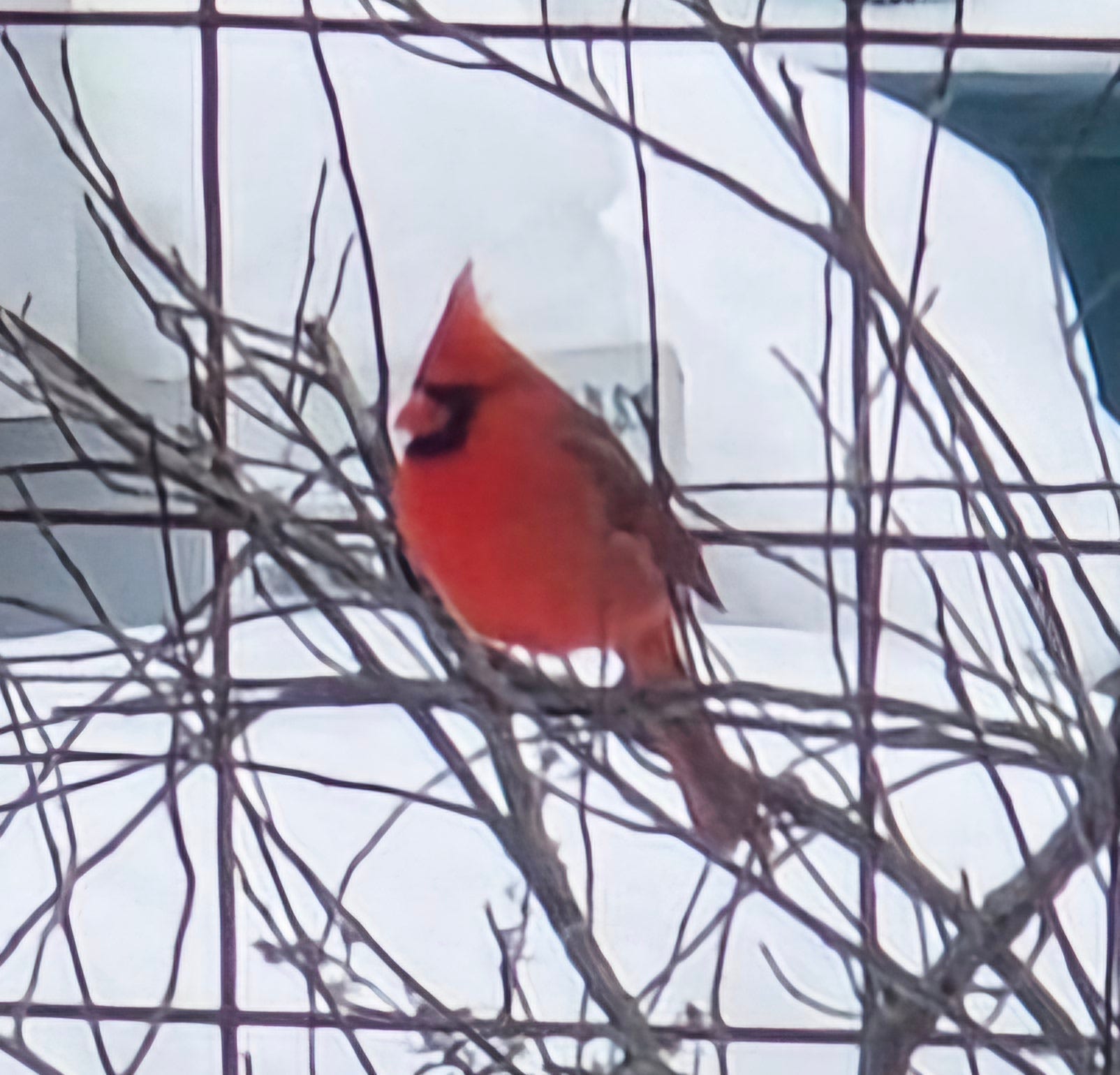
I was really happy to take these photographs today! I filled the feeders yesterday. By this morning the word had spread! Places full of birds. I’m out of bird food now. It’ll be a week before I can get to Costco. I was hoping the Cardinals would show up when I put the food out yesterday! I love the one in the lower left that’s all puffed up.
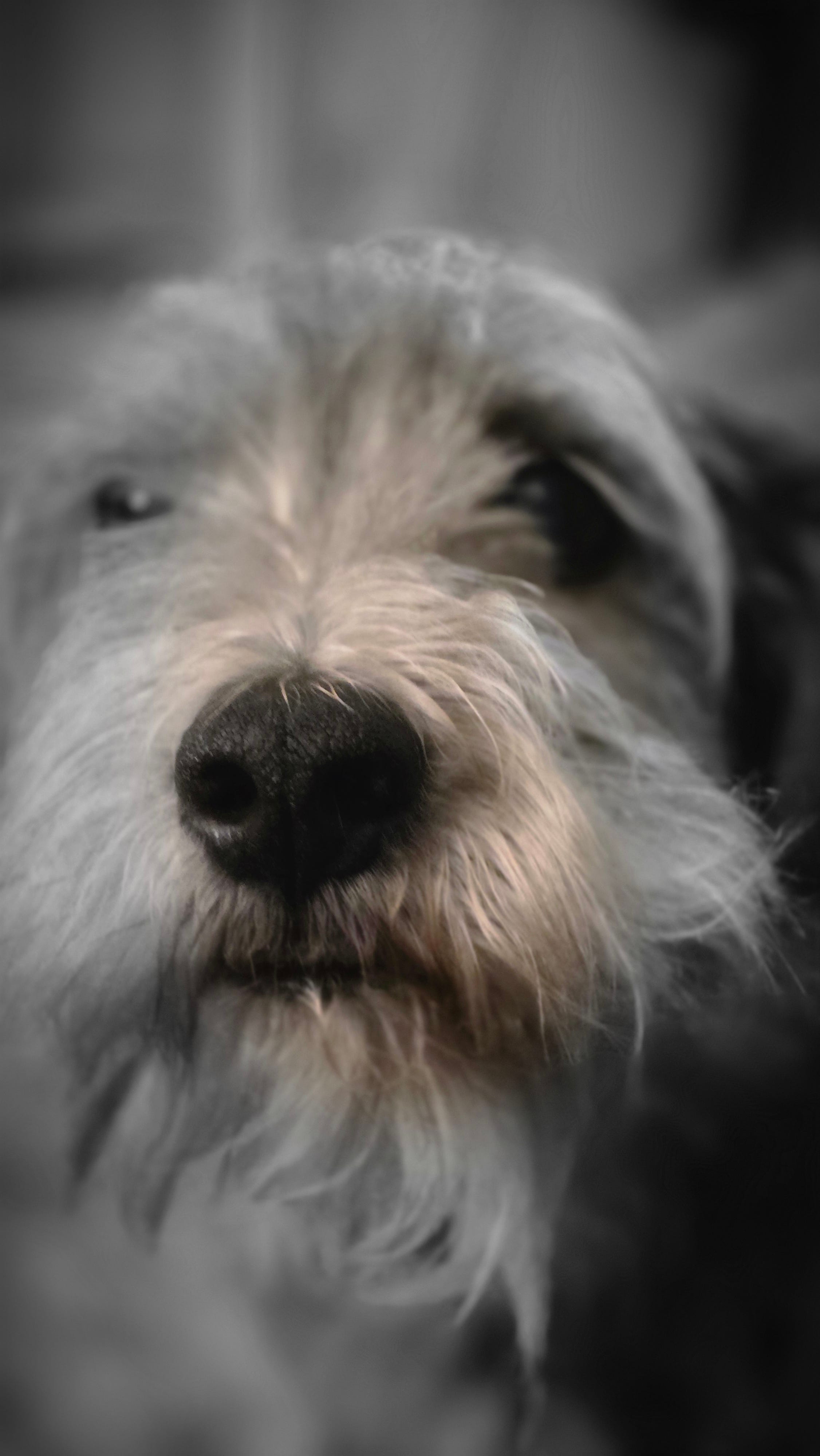
Huck!
He has space issues.
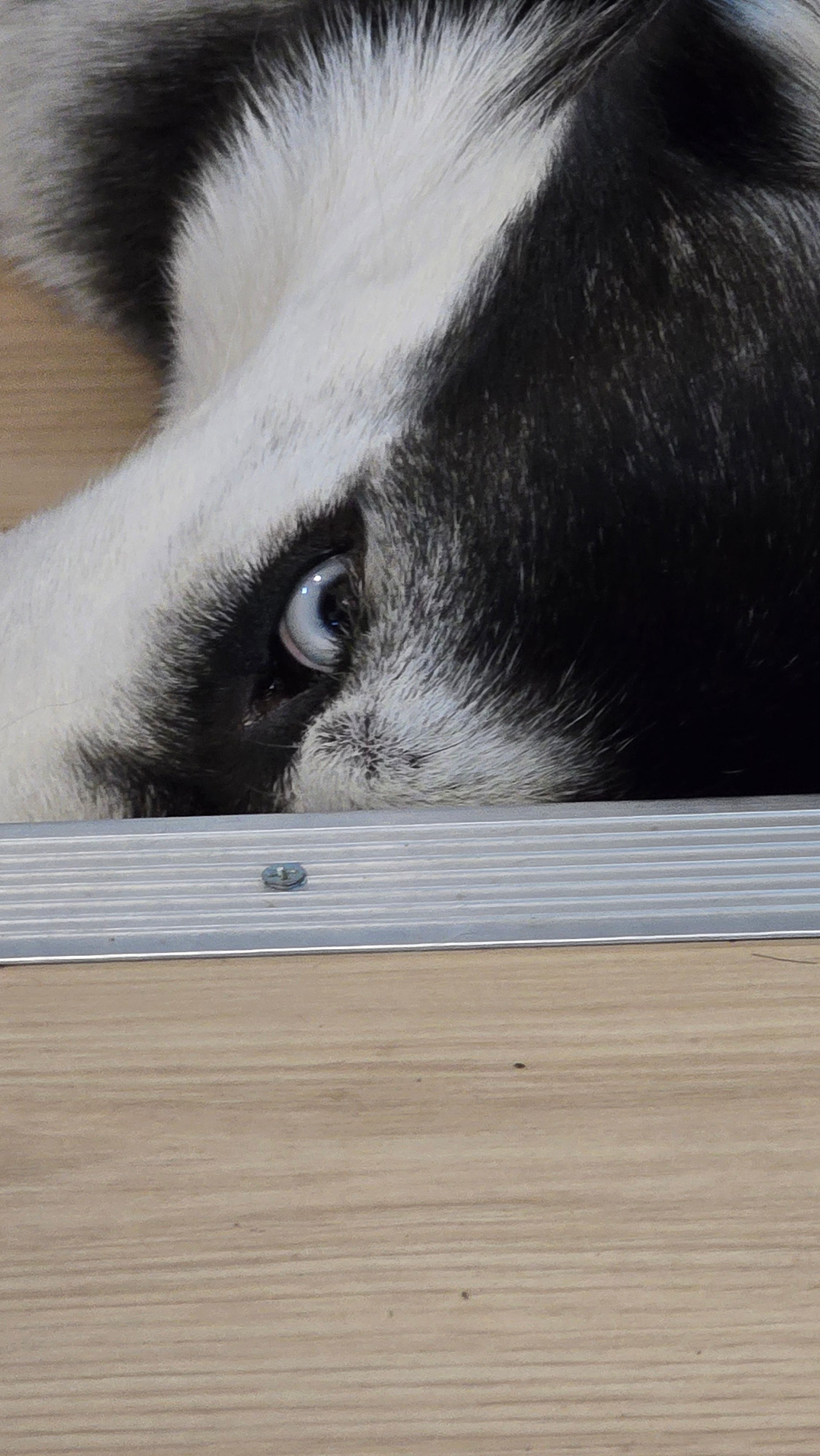
Paulo! It’s hard to go wrong taking pictures of him. The trick is to put the Pale Blue Eye of Judgement right in the center of the photograph.
Can you feel him looking into your soul?
This is Fenn pretending she didn’t take a bite of my lemon bar while I went to get a fork.
She was guilty. Guilty as Hell. Her breath smelled like lemon curd.
Sam is obviously quite wise. He’s very much against Bitcoin.
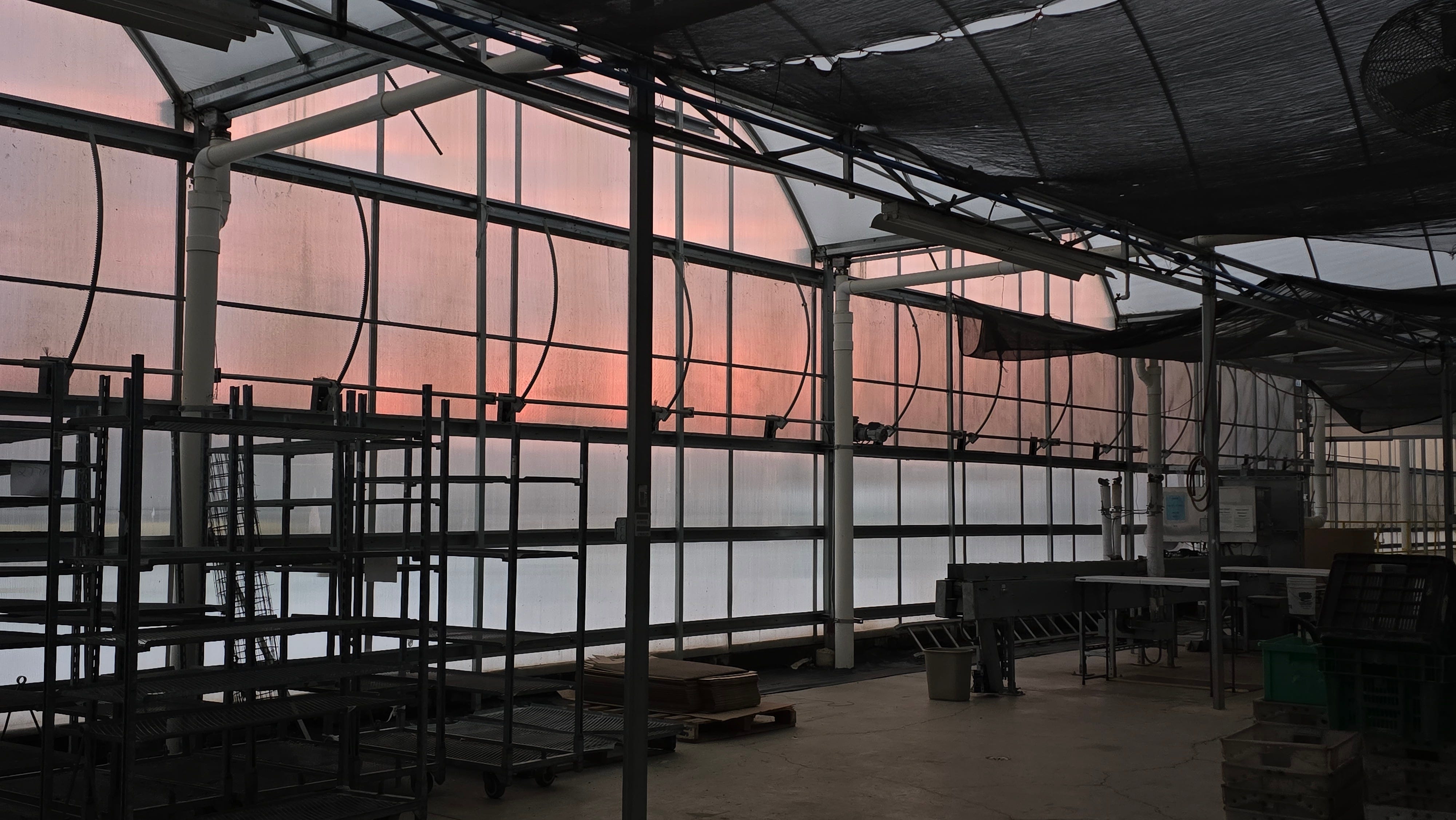
I had the greenhouse to myself this weekend. It was nice! It was snowing pretty hard at sunrise on Saturday. Today was mostly clear when the sun came up. A few clouds to shed some color.
That’s all I got room for – thanks for dropping by! (snip)
I made green chips in order to avoid salty and sweet treats for a while. Maybe I’ll post about that, but in the meantime, here is a bit about observing Yule. Solstice is my favorite night of the year, mostly because Winter is my favorite season, though so short. I am not pagan, but I love reading about Solstice and Yule. Maybe you’ll like this, too.
and just got home. I decided to eat one of the donuts I bought while out (there was a sale! As the shoppe will be closed until 1/5. Yay…) Anyway, the 1st page I open online every day is the NASA APOD, and here is what they put up today. Such a wonderful thing to see when I sit down to break my fast with a forbidden food and tea!! and relax a little reading blogs. I hope you enjoy it as much as I have.
Discover the cosmos! Each day a different image or photograph of our fascinating universe is featured, along with a brief explanation written by a professional astronomer.
(I don’t get why WP won’t accept these photos. I thought it was my puter, but I have a new one, and the pic is still not here. It’s a quick click, and a really nice page today, so please go see it. After all, SPACE-X’s photos are likely to be poor, if they even do this for us.)