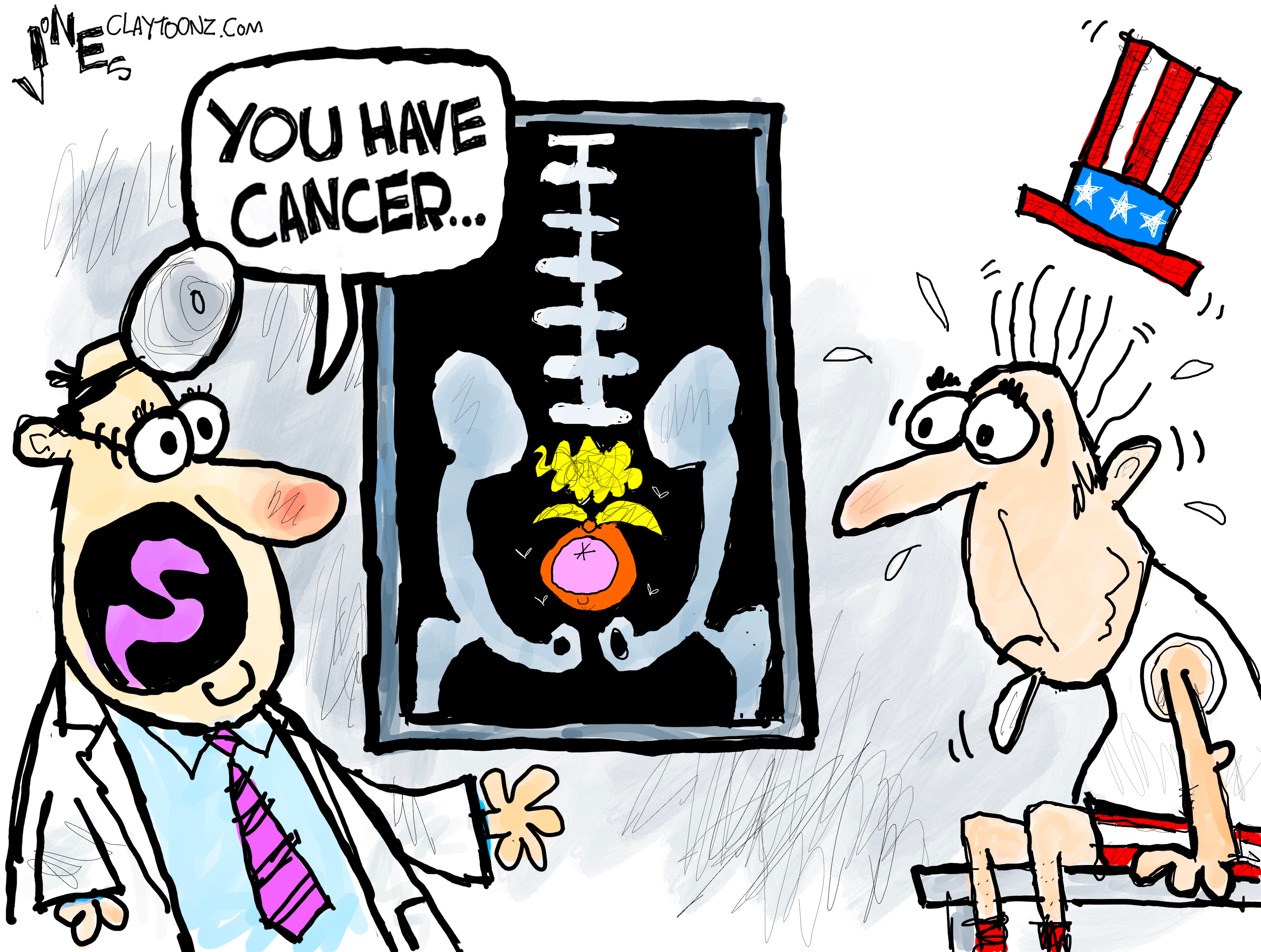
The Trump Cancer isn’t new. We got an early prognosis before he even ran in the 2016 presidential election, back when he began his birtherism campaign. He was a cancer before he went into the White House with Putin’s assistance in 2016, he was a cancer during the Biden administration, and he’s a cancer now.
Instead of 86ing this cancer (see what I did there?), nearly half of this nation let it rot and fester. This cancer will do what cancer does if not combated. It will destroy us.
Creative note: I got this idea while drawing my weather cartoon this morning. After yesterday’s Biden/Democrat cartoon, I felt good about it. I even nearly stopped the weather cartoon to do this instead (but I really loved “Old Man Yells at Cloud).
I was finally able to get to the post office today (your print is finally on the way, Greg, and Kathy…I got your check. Thank you), and started drawing this at a coffee shop downtown on Caroline. It didn’t take long to draw, and I colored it at home after taking the Fred Bus.
I didn’t know if this would work when I first thought of it. I didn’t know if the image would be clear. I didn’t know if a tiny Trump in the rump would be clear. But now, I do think it works.
Music note: I listened to Counting Crows, which isn’t a band I’m super crazy about, but Anna Begins reminds me of a past relationship. She talked in her sleep, she changed her mind, she changed my mind, and then she faded away.
We studied the Hays code and its effects on cinema in high school drama class during the film module, but Wendy has more info than we got! Turner Classics ran a day or two of films last year which had ended up withdrawn after the Hays Code; they ran them during Pride. I don’t get that channel anymore, but maybe someone else does and can catch one or more of these gems during Pride. -A Language alert, of course.
Queer History 114: Before The Fucking Hay’s Code, The Golden Era by Wendy🏳️⚧️🏳️🌈🌈
The Queer Golden Age: LGBTQ+ Representation Before Hollywood’s Great Erasure: The forgotten era when queer characters thrived on screen before censorship killed the party Read on Substack
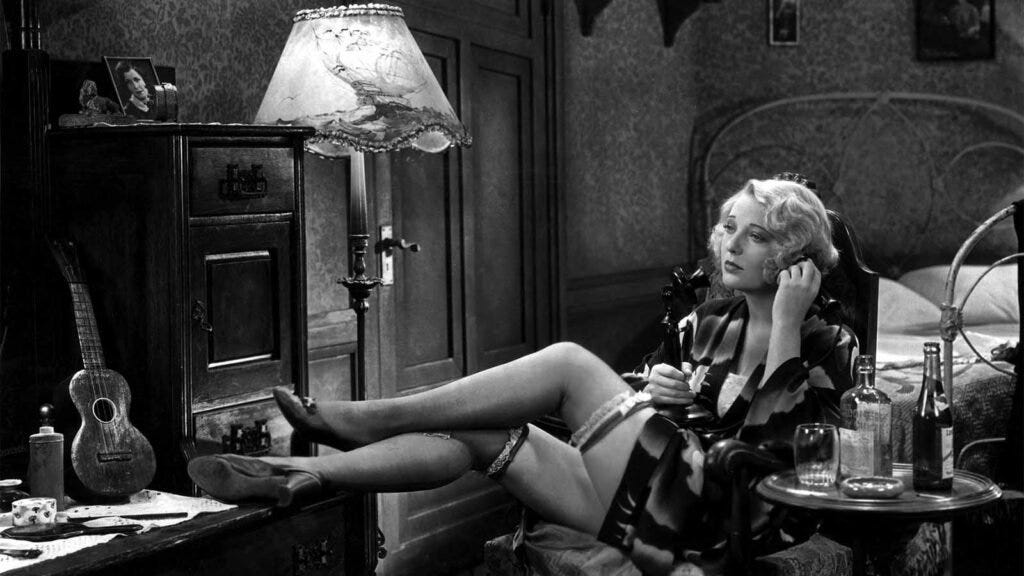
You think the 1930s was all straight-laced puritanism and sexual repression? Think a-fucking-gain. Before Will Hays and his moral crusaders stormed the gates with their production code in 1934, early Hollywood was a goddamn queer paradise compared to what came after. For a brief, glorious moment in cinematic history—roughly 1927 to 1934, known as the “Pre-Code era”—American films featured openly gay characters, gender-bending performances, same-sex kisses, drag performances, and discussions of homosexuality that wouldn’t be seen again until decades later. This wasn’t some underground cinema movement either—this was mainstream Hollywood, baby, playing in theaters across America to audiences who apparently weren’t clutching their pearls nearly as hard as history would have us believe.
Let me be crystal clear about something: the systematic LGBTQ+ erasure caused by the Hays Code didn’t correct some temporary deviation from the norm. It violently interrupted what was becoming a remarkably progressive trajectory in early cinema. The Code didn’t “restore morality”—it fucking killed the natural evolution of queer representation just as it was beginning to flourish. And that makes the story of Pre-Code Hollywood’s queer characters and themes not just interesting cinema history, but a painful reminder of what might have been if censorship hadn’t set LGBTQ+ representation back by half a century.
The Wild Fucking West of Early Cinema
The early days of Hollywood—particularly the silent era and the first years of sound—operated like an artistic Wild West. With few formal regulations and before conservative religious groups had mobilized their substantial political power against the film industry, filmmakers explored themes, characters, and stories that would soon be ruthlessly purged from American screens.
“Early Hollywood was far more sexually progressive than most people realize,” explains film historian Clara Rodriguez. “There was no central censoring authority with real teeth until the Hays Code enforcement in 1934, which meant filmmakers were relatively free to explore topics that would later become forbidden.”
This freedom allowed for a surprising amount of LGBTQ+ representation, often done with remarkable frankness for the era. Silent films like “Algie the Miner” (1912) featured sissy characters played for laughs but not necessarily contempt. “Manslaughter” (1922) included a lesbian party scene with women in tuxedos dancing together. “Wings” (1927)—which won the first Academy Award for Best Picture—contained a scene where two male fight-
er pilots share a kiss that’s played not for laughs but for genuine emotion.
When sound arrived in 1927, rather than becoming more conservative, Hollywood initially pushed boundaries even further. The pre-Code talkies of 1929-1934 featured not just coded queer characters but explicitly gay, lesbian, and gender-nonconforming figures who weren’t always punished for their identities.
The Gender-Bending Superstars Who Didn’t Hide
Marlene Dietrich wasn’t just flirting with gender boundaries—she was taking a fucking sledgehammer to them. In “Morocco” (1930), Dietrich performs in a man’s tuxedo, kisses a woman full on the lips, and portrays a character with explicitly fluid sexuality. This wasn’t hidden or coded—it was right there on the mainstream screen, and audiences ate it up. Dietrich’s gender-bending performances made her more popular, not less.
“Dietrich in a tuxedo kissing a woman wasn’t scandalized—it was eroticized and celebrated,” notes film scholar B.D. Grant. “She won an Academy Award nomination for ‘Morocco.’ This wasn’t career suicide; it was career-defining.”
Dietrich wasn’t alone. Greta Garbo played a cross-dressing queen in “Queen Christina” (1933), in which her character openly discusses her disinterest in marriage and her preference for dressing in men’s clothing. The film strongly implies Christina’s romantic feelings for her lady-in-waiting. Again, this wasn’t some art-house curiosity—it was a major MGM production starring one of the biggest names in Hollywood.
Mae West built her entire early film career on sexual innuendo and characters who openly acknowledged and enjoyed sex outside marriage. In “She Done Him Wrong” (1933), West’s character flirts with a woman, suggesting she might “be able to do something” with her, a line delivered with unmistakable sexual undertones.
These weren’t bit parts or villains—these were the fucking stars, the box office draws, the roles that made careers rather than ending them.
Explicitly Queer Spaces and Characters On Screen
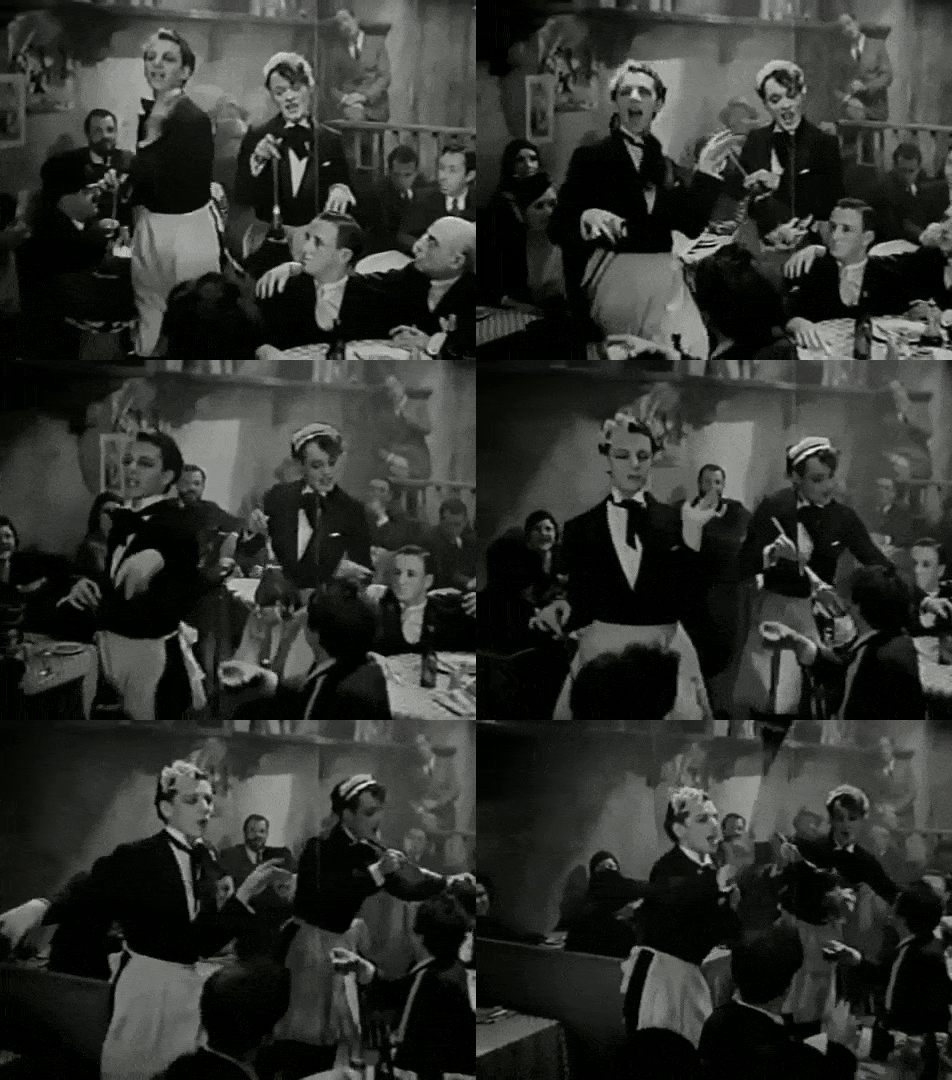
One of the most jaw-dropping aspects of pre-Code cinema is how openly it depicted queer spaces and communities. “Call Her Savage” (1932) features what may be the first gay bar depicted in American cinema, complete with effeminate male performers singing to tables of men clearly coded as gay. This scene isn’t brief or hidden—it’s an extended sequence in a major Fox Film production starring Clara Bow, the “It Girl” herself.
“Our Betters” (1933) features an openly gay character referred to as the “fairy designer” who speaks with a lisp and displays stereotypically effeminate mannerisms—problematic by today’s standards, certainly, but remarkable for presenting a gay character whose sexuality is acknowledged rather than punished.
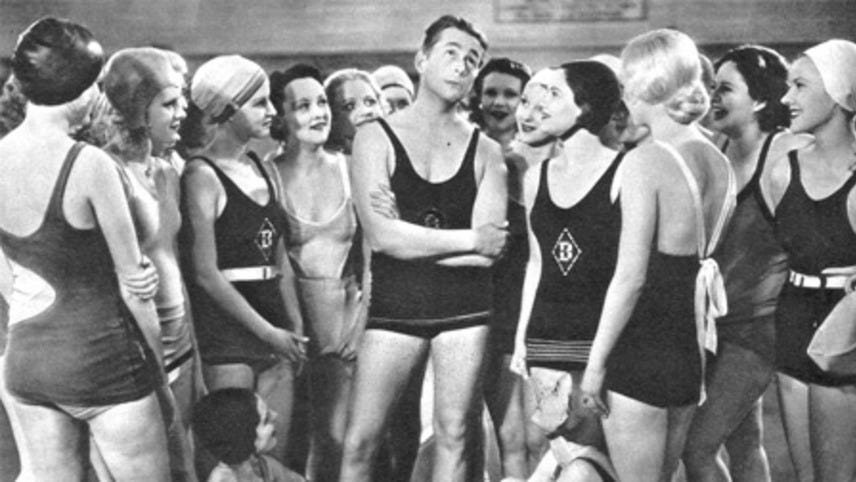
“Sailor’s Luck” (1933) includes a landlady who is clearly coded as lesbian and whose sexuality is treated as unremarkable by the other characters. “Wonder Bar” (1934) features a brief scene where two men are dancing together, and when a woman tries to cut in, one man says, “No, I think you’re barking up the wrong tree”—an explicit acknowledgment of homosexuality
“Hell’s Highway” (1932) includes a fairly sympathetic portrayal of an effeminate prisoner called “Sneeze,” while “This Is the Night” (1932) features a fashion designer character who is flamboyantly gay and, remarkably for the time, not portrayed as villainous.
“These weren’t just quick scenes that censors missed,” explains film historian Parker Tyler. “These were deliberate inclusions that suggest filmmakers and studios understood there was an audience for these representations.”
The Trans Pioneering You Never Knew About
Perhaps most surprising to modern viewers is pre-Code Hollywood’s exploration of transgender themes. While the language and understanding of transgender identity was different in the 1930s, several films explored gender transition and identity in ways that were remarkably forward-thinking.
“Viktor und Viktoria” (1933), a German film that played in American art houses, centered on a woman living as a man who performs as a female impersonator—a complex exploration of gender performance that wouldn’t be attempted again in mainstream cinema for decades.
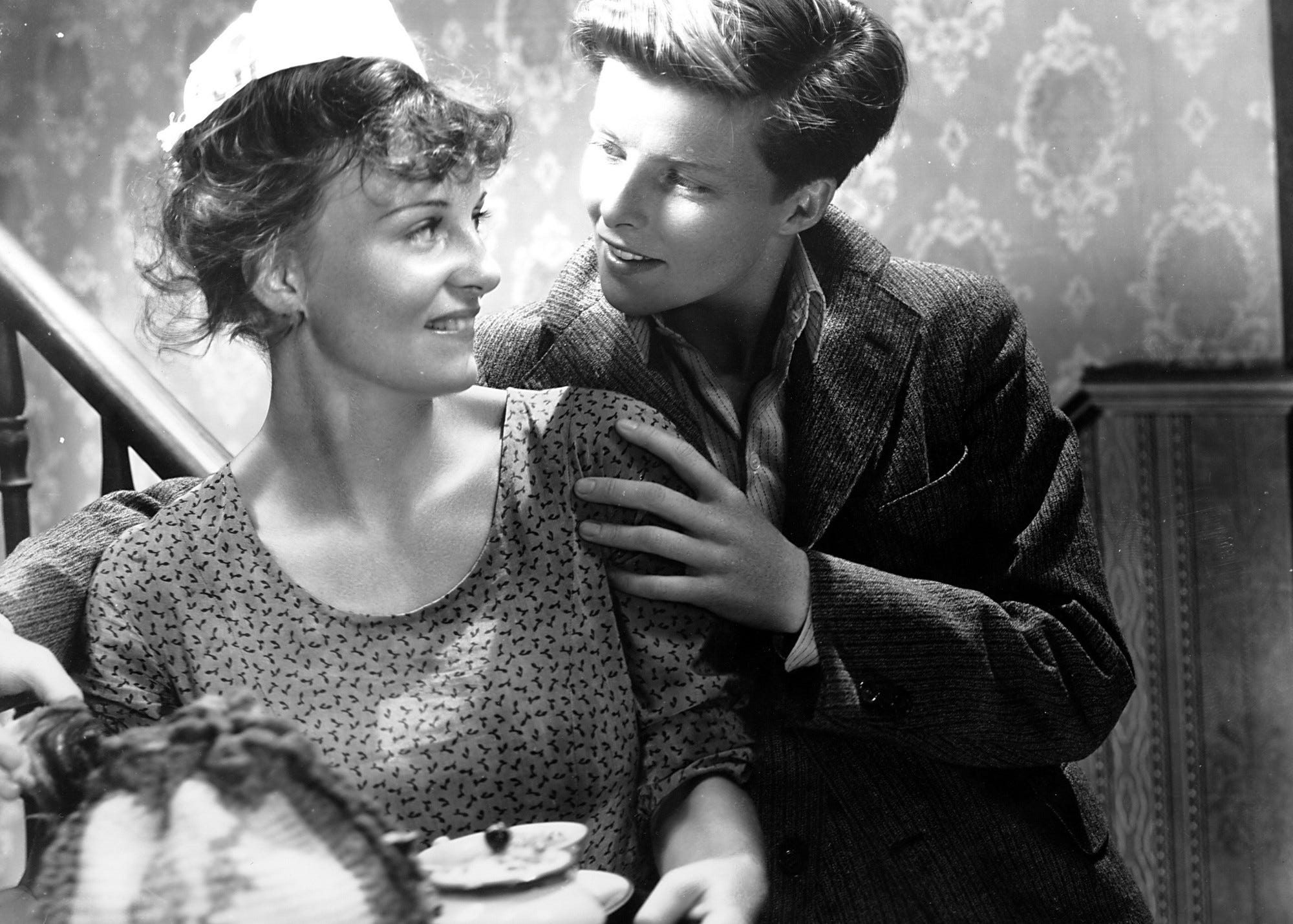
The American film “Sylvia Scarlett” (1935), released just as the Code was tightening its grip, stars Katharine Hepburn as a woman who lives as a man through much of the film. While ostensibly she does this for practical rather than identity reasons, the film explores her comfort in male identity and the romantic complications that arise when she develops feelings for a man while presenting as male.
“These weren’t just cross-dressing comedies,” argues transgender film historian Susan Stryker. “They were genuine explorations of gender identity that asked questions about how clothing and presentation relate to our inner sense of self. For the 1930s, that’s fucking revolutionary.”
Sex, Violence, and the Moral Panic That Killed Queer Cinema
It wasn’t just LGBTQ+ content that thrived in pre-Code Hollywood. Films openly depicted adultery, prostitution, drug use, and violence in ways that would be forbidden for decades after. Women’s sexuality was portrayed with remarkable frankness, with female characters who openly desired and pursued sex outside of marriage without necessarily being punished for it.
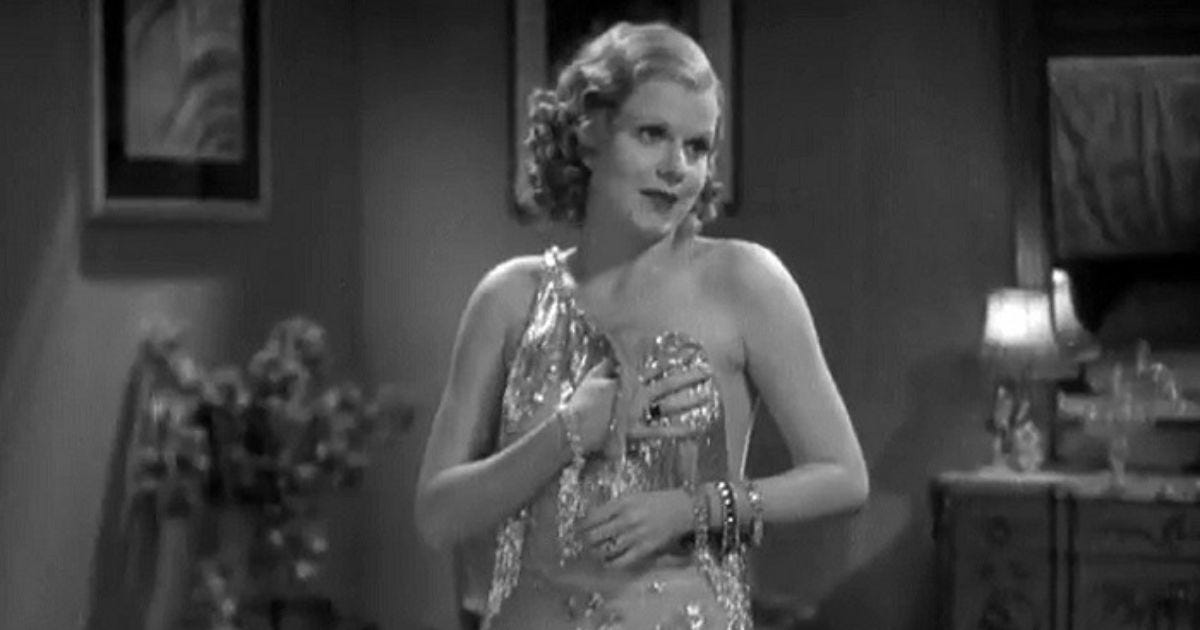
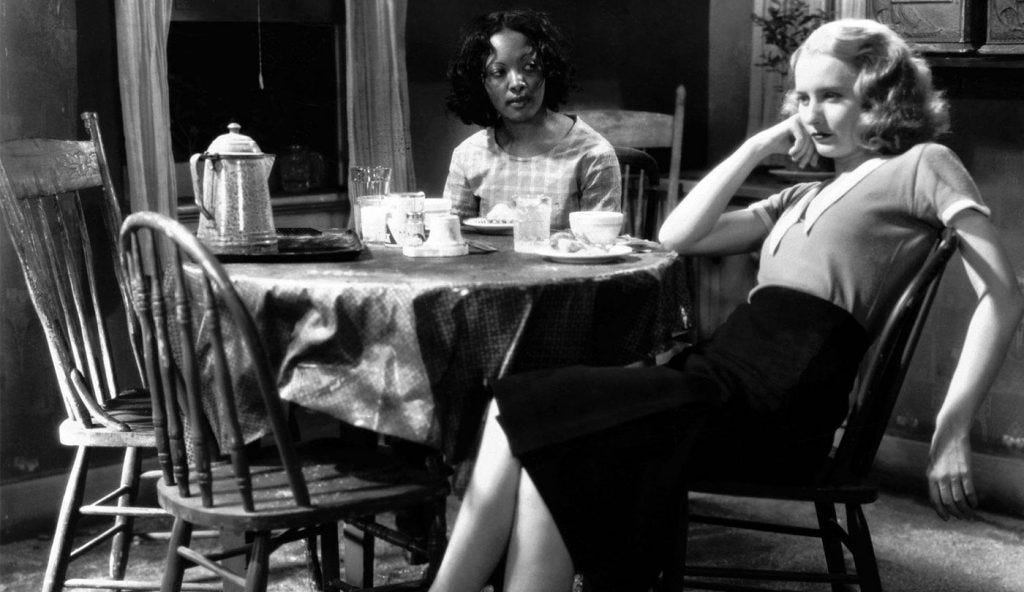
“Baby Face” (1933) stars Barbara Stanwyck as a woman who explicitly sleeps her way to the top of a corporation, floor by floor. “Red-Headed Woman” (1932) features Jean Harlow as an unrepentant home-wrecker who faces no significant consequences for her actions. “Safe in Hell” (1931) centers on a prostitute on the run after killing her abusive client.
This sexual frankness extended to the depiction of gay and lesbian characters, who were often presented as part of this sexually liberated landscape rather than as cautionary tales or villains.
“The overall sexual openness of pre-Code films created space for queer characters to exist without automatic condemnation,” explains film scholar Molly Haskell. “When straight sexuality isn’t being repressed on screen, queer sexuality doesn’t stand out as dramatically different.”
This openness eventually triggered a massive backlash from religious groups, particularly the Catholic Legion of Decency, which threatened boycotts of “immoral” films. Studio heads, terrified of losing audience dollars during the Great Depression, capitulated to these demands by agreeing to strict enforcement of the Production Code starting in July 1934.
“The moral panic wasn’t organic—it was orchestrated,” argues media historian Kathryn Fuller-Seeley. “Conservative religious groups deliberately framed Hollywood as a corrupting influence, and studios chose profit over artistic freedom.”
The Great Erasure Begins
Once the Hays Code enforcement kicked in during 1934, the change was dramatic and immediate. Films in production had scenes cut, storylines altered, and dialogue changed. Characters who might have been openly gay were either eliminated entirely or transformed into heterosexual figures.
The original script for “The Thin Man” (1934) contained clearly gay characters who were either cut or de-gayified before filming. “Dracula’s Daughter” (1936) had its lesbian overtones significantly watered down from the original script. Projects with prominent LGBTQ+ themes were canceled entirely or morphed beyond recognition.
“It was a systematic purge,” says film preservationist Robert Gitt. “Studios went through their own back catalogs and many pre-Code films were literally locked away in vaults, deemed too risqué for re-release under the new standards.”
This erasure didn’t just affect new productions—it altered our cultural memory of what early cinema had been. As pre-Code films were withdrawn from circulation, later generations grew up believing that early Hollywood had always been sexually conservative, when the exact opposite was true.
What We Lost: The Alternative Timeline of American Film
Perhaps the most tragic aspect of the Code’s implementation is contemplating what might have happened if this early progressive trajectory had been allowed to continue. If Hollywood hadn’t been forced into 30+ years of censorship right as it was beginning to explore LGBTQ+ themes with relative openness, how might American attitudes have evolved differently?
“The timing couldn’t have been worse,” laments film historian Thomas Doherty. “Sound technology had matured, allowing for more complex storytelling. The Depression had created an appetite for films that addressed social realities frankly. Studio systems were at their creative peak. And then—boom—the Code slammed the door shut, particularly on queer representation.”
If LGBTQ+ characters had remained visible in mainstream cinema throughout the 1930s, 40s, and 50s, how might that have changed public perception? Would the lavender scare of the McCarthy era have gained the same traction? Would the gay rights movement have had to start from scratch in the late 1960s?
“We’re still living with the consequences of that erasure,” argues activist and film historian Jenni Olson. “The Code didn’t just remove queer people from films—it removed them from the public’s understanding of American life. It created a false narrative that LGBTQ+ people suddenly ‘appeared’ in the 1960s rather than having always been part of the social fabric.”
Subversive Survival: How Queer Cinema Went Underground
When the Code slammed the door on explicit representation, filmmakers didn’t entirely give up—they just got sneakier. The era of “queer coding” began, with characters who couldn’t be explicitly identified as LGBTQ+ but who conveyed their queerness through mannerisms, costuming, interests, and subtle dialogue.
“Suddenly, filmmakers had to learn the art of the double entendre,” explains film critic Drew Casper. “They developed a sophisticated visual and verbal language that straight audiences might miss but that queer viewers would recognize.”
Alfred Hitchcock became a master of slipping queer-coded characters past the censors. The villains in “Rope” (1948) are clearly coded as a gay couple. “Strangers on a Train” (1951) features an antagonist whose queerness is conveyed through his style, mannerisms, and obsession with the protagonist.
“Ben-Hur” (1959) screenwriter Gore Vidal has revealed that he and Stephen Boyd (who played Messala) agreed that their character’s relationship had a romantic history, but never told Charlton Heston, creating a homoerotic subtext that the censors missed completely.
These coded representations were a double-edged sword. They provided some visibility, however limited, but they also established the harmful pattern of associating queerness with villainy, mental instability, or tragedy—tropes that outlived the Code itself.
The Forgotten Drag Kings and Queens of Early Film
Another fascinating aspect of pre-Code cinema was its relative comfort with drag and gender play. While often played for comedy, these performances weren’t always mean-spirited or contemptuous.
Julian Eltinge was one of the most famous female impersonators of the early 20th century and appeared in several silent and early sound films, including “The Isle of Love” (1922) and “Maid to Order” (1931). Rather than being portrayed as deviant, Eltinge was celebrated for his artistry and precision in female impersonation.
On the flip side, stars like Marlene Dietrich frequently performed in male dress without it being treated as scandalous or perverse. When Dietrich wore a tuxedo in “Morocco,” it was presented as the height of sophisticated sexiness, not as a joke or a perversion.
“Early film had a more fluid relationship with gender performance,” explains historian Judith Weisenfeld. “Drag wasn’t necessarily seen through the lens of sexual deviance until conservative forces deliberately constructed that association.”
This comfort with gender play extended beyond star performances. Films like “Their First Mistake” (1932) with Laurel and Hardy include casual cross-dressing played for laughs but not disgust. “The Warrior’s Husband” (1933) features Katharine Hepburn as a spear-carrying, athletic Amazon who kisses another woman on the lips.
After the Code, drag would be permitted only under very specific circumstances: if it was a temporary disguise used for practical purposes (like “Some Like It Hot”), if it was played entirely for laughs, or if it was eventually punished or “corrected” within the narrative.
The Queer Actors Who Couldn’t Be Themselves On Screen
The tightening grip of the Hays Code didn’t just affect fictional characters—it had profound implications for queer actors in Hollywood. Before the Code’s strict enforcement, there existed a certain “don’t ask, don’t tell” approach to actors’ personal lives. While few stars were openly gay, many lived in what were known as “lavender marriages” (marriages of convenience between gay men and lesbian women) or maintained relatively open secret lives within Hollywood circles.
William Haines, one of MGM’s top stars of the late 1920s and early 1930s, refused to hide his relationship with his partner Jimmy Shields. When Louis B. Mayer demanded Haines get married to a woman for appearances, Haines chose to end his film career rather than deny his relationship. Before the Code’s enforcement, his career had flourished despite industry insiders knowing about his sexuality. After 1934, that became impossible.
“The Code created a culture of terror for queer actors,” says historian William Mann. “Not only could they not play gay characters on screen, but their personal lives became subject to extreme scrutiny and control. The studios developed complex systems to hide actors’ sexualities, including arranged dates, fake engagements, and forced marriages.”
Actors like Cary Grant, Randolph Scott, Katharine Hepburn, Marlene Dietrich, and dozens of others had their queer relationships erased from public view. Studio publicity departments crafted heterosexual narratives for stars regardless of their actual lives.
“It was a double erasure,” explains Mann. “Queer characters disappeared from screens at the same time that queer actors were forced deeper into closets.”
The Birth of Camp: Rebellion Through Exaggeration
One of the most fascinating responses to the Hays Code was the development of camp as an aesthetic strategy. Unable to show explicit homosexuality, some filmmakers turned to exaggerated femininity, over-the-top performances, and stylistic excess as a form of coded representation.
“All About Eve” (1950) is filled with dialogue and performances that play as camp, particularly the character of Addison DeWitt. Films starring stars like Bette Davis, Joan Crawford, and later performers like Judy Garland and Liza Minnelli became touchstones for gay audiences precisely because they deployed camp as a strategy to communicate queerness without naming it.
“Camp became a survival strategy,” explains cultural theorist David Bergman. “If you couldn’t be explicit, you could be excessive. And that excess created spaces within mainstream culture where queer sensibilities could find expression despite censorship.”
This strategy created a peculiar cultural phenomenon: films that seemingly conformed to heteronormative standards while simultaneously winking at queer audiences who could read between the lines. “Johnny Guitar” (1954), with its intense rivalry/attraction between Joan Crawford and Mercedes McCambridge, became a lesbian cult classic despite containing no explicit lesbian content.
The International Contrast: European Cinema Kept Queer Characters Alive
While American cinema was forced into a heterosexual straitjacket, European filmmaking continued to explore LGBTQ+ themes with greater freedom. Films like “Mädchen in Uniform” (1931, Germany) depicted lesbian attraction between a student and teacher with remarkable sensitivity. “Michael” (1924, German) portrayed a gay relationship between an artist and his model.
Even after the rise of fascism curtailed some of this exploration in Germany and Italy, other European countries continued producing films with queer content. French cinema, in particular, maintained a more open approach to sexuality, with films like “Club des femmes” (1936) and later “Les enfants terribles” (1950) exploring same-sex desire.
“The contrast between American and European cinema during this period is stark,” notes film historian Patricia White. “While Hollywood was systematically erasing queer people, European filmmakers were continuing the exploration that American pre-Code cinema had begun.”
This international contrast created a bizarre situation where sophisticated American audiences might see European films featuring LGBTQ+ characters at art house theaters while mainstream Hollywood productions remained rigidly heteronormative.
The Painful Path Back: How We Slowly Recovered What Was Lost
When the Hays Code finally collapsed in 1968, replaced by the MPAA rating system, LGBTQ+ representation didn’t immediately bounce back to pre-Code levels. The damage had been done. Generations of filmmakers had been trained under the Code’s restrictions, and audiences had been conditioned to expect certain narratives.
The first post-Code films to feature gay characters, like “The Boys in the Band” (1970), often reinforced negative stereotypes of gay men as self-loathing and miserable. Lesbian characters remained primarily predatory or tragically doomed. Trans characters were portrayed as psychotic (as in “Psycho”) or as jokes.
“The legacy of the Code outlived its formal existence by decades,” argues film critic K. Austin Collins. “When you spend more than 30 years teaching filmmakers and audiences that queer people can only exist as villains, victims, or jokes, that doesn’t disappear overnight.”
It would take until the 1990s and early 2000s for mainstream American cinema to begin approaching the relative openness toward LGBTQ+ themes that had existed in pre-Code films of the early 1930s. Even today, certain types of queer representation remain controversial or limited in mainstream cinema.
“It’s mind-blowing to think that in some ways, films from 90 years ago were more progressive about LGBTQ+ representation than many films made in the last 20 years,” notes film preservationist Kassandra Harris. “We’re still catching up to where we could have been if the Code hadn’t interrupted the natural evolution of film.”
The Queer Archaeology Project: Rediscovering What Was Buried
One of the most exciting developments in recent film history has been the rediscovery and restoration of pre-Code films, many of which had been effectively buried for decades. Organizations like the UCLA Film & Television Archive, the Library of Congress, and the Queer Film Heritage Project have been working to restore these films and bring them back into public view.
“It’s like conducting archaeology,” explains film preservationist Dave Kehr. “We’re digging up evidence of a queer cinematic past that most people don’t realize existed.”
These restoration efforts have revealed just how extensive and explicit queer representation was in early cinema. Films that had been dismissed as minor or forgotten have been rediscovered as containing important LGBTQ+ content. Silent films once thought lost have been found in archives around the world, some containing surprising depictions of same-sex desire or gender nonconformity.
Turner Classic Movies, streaming services, and specialized distributors like Kino Lorber have begun making these restored pre-Code films available to contemporary audiences, allowing modern viewers to see for themselves how the Hays Code didn’t “maintain standards” but rather reversed an emerging progressive trend.
“When people actually see these films, they’re shocked,” says film historian David Pierce. “They’ve been told that old movies were naive and sexless, especially regarding LGBTQ+ themes. Seeing the reality challenges everything they thought they knew about film history and American cultural attitudes.”
Why This Forgotten History Still Fucking Matters
Understanding pre-Code cinema’s relative openness to LGBTQ+ themes isn’t just about correcting the historical record—it’s directly relevant to contemporary battles over representation. When conservatives claim that LGBTQ+ visibility in media is a recent “trend” or “agenda,” they’re erasing the fact that queer people have always been part of American culture and its artistic expressions.
The history of pre-Code cinema demonstrates that the systematic removal of LGBTQ+ people from American screens wasn’t an accident or a reflection of audience preferences—it was a deliberate act of cultural censorship driven by religious pressure groups and institutionalized through industry self-regulation.
“When people try to remove LGBTQ+ books from libraries or pressure streaming services to reduce queer content in children’s programming, they’re reading directly from the Hays Code playbook,” argues media scholar Melinda Hsu. “It’s the same moral panic, the same rhetoric, and the same goal: making queer people invisible.”
The pre-Code era stands as proof that American audiences were perfectly capable of accepting LGBTQ+ characters and themes until they were told not to. Films featuring gay characters, lesbian kisses, or gender-bending performances were commercially successful and critically acclaimed before censorship artificially constrained what could be shown.
“The most powerful weapon against those who want to erase LGBTQ+ people from media today is showing that we were there from the beginning,” concludes film historian B. Ruby Rich. “We weren’t added to American cinema—we were forcibly removed from it. And every push for representation since has been an attempt to reclaim what was taken from us.”
References
Russo, V. (1987). The Celluloid Closet: Homosexuality in the Movies.
Barrios, R. (2003). Screened Out: Playing Gay in Hollywood from Edison to Stonewall.
Mann, W. J. (2001). Behind the Screen: How Gays and Lesbians Shaped Hollywood, 1910-1969.
Doherty, T. (1999). Pre-Code Hollywood: Sex, Immorality, and Insurrection in American Cinema, 1930-1934.
Vieira, M. A. (1999). Sin in Soft Focus: Pre-Code Hollywood.
Lugowski, D. M. (2007). “Queering the (New) Deal: Lesbian and Gay Representation and the Depression-Era Cultural Politics of Hollywood’s Production Code.” Cinema Journal.
White, P. (1999). Uninvited: Classical Hollywood Cinema and Lesbian Representability.
Horak, L. (2016). Girls Will Be Boys: Cross-Dressed Women, Lesbians, and American Cinema, 1908-1934.
Stryker, S. (2008). Transgender History: The Roots of Today’s Revolution.
May 18, 1872 Bertrand Russell Birthday of Sir Bertrand Russell, British philosopher, logician, essayist, and social critic, a leading figure in his country’s anti-nuclear movement. In 1954 he delivered his “Man’s Peril [from the Hydrogen Bomb]” broadcast on the BBC, condemning the Bikini H-bomb tests, and warning of the threat to humanity from the development of nuclear weapons: “. . . as a human being to other human beings: remember your humanity, and forget the rest.” A year later, together with Albert Einstein nine other scientists, he released the Russell-Einstein Manifesto calling for the curtailment of nuclear weapons. Text of the Russell-Einstein Manifesto He became the founding president of the Campaign for Nuclear Disarmament in 1958. He resigned in 1960, however, and formed the more militant Committee of 100 with the overt aim of inciting mass civil disobedience, and he himself with Lady Russell led mass sit-ins in 1961 that brought them a two-month prison sentence, at the age of 89. Bertrand Russell in front of the British Ministry of Defence, Whitehall, London
May 18, 1896 Supreme Court endorsed “separate but equal” facilities for those of different races with its Plessy v. Ferguson decision, a ruling that was overturned 58 years later.
May 18, 1972 Margaret (Maggie) Kuhn founded the Gray Panthers (originally called the Consultation of Older and Younger Adults for Social Change) to consider the common problems faced by retirees — loss of income, loss of contact with associates, and loss of one of society’s most distinguishing social roles, one’s job. The members discovered a new kind of freedom in their retirement — the freedom to speak personally and passionately about what they believed in, such as their collective opposition to the Vietnam War.
May 18, 1974 In the Rajasthan Desert in the state of Pokhran, India successfully detonated its first nuclear weapon, a fission bomb similar in explosive power to the U.S. atomic bomb dropped on Hiroshima, Japan. The test fell on the traditional anniversary of the Buddha’s enlightenment, and Indian Prime Minister Indira Gandhi received the message “Buddha has smiled” from the exuberant test-site scientists after the detonation. The test, which made India the world’s sixth nuclear power, broke the nuclear monopoly of the five members of the U.N. Security Council—the United States, the Soviet Union, Great Britain, China, and France. Detailed background on India’s nuclear weapons program and its first test
May 18, 1979 A jury in a federal court in Silkwood v. Kerr-McGee established a company’s responsibility for damage to the health of a worker in the nuclear industry. Karen Silkwood worked for the Kerr-McGee Nuclear Corporation at their Cimmaron, Texas, plant where plutonium was manufactured. Silkwood had become the first female member of the Oil, Chemical and Atomic Workers bargaining committee, focusing on worker safety issues, but had suffered radiation exposure in a series of unexplained incidents. The jury in Judge Frank G. Theis’s court awarded her estate $505,000 in actual damages, and $10 million punitive damages. Karen Silkwood’s sisters and parents She had died in a car accident on her way to a meeting with a The New York Times reporter five years earlier. Karen Silkwood remembered The Supreme Court upheld the decision and the award
Ann Arbor (Informed Comment) – Abu Dhabi-based Erem News reports that the Prime Minister of Libya’s internationally recognized Government of National Unity (GNU) in Tripoli, Abdul Hamid al-Dbeibeh, has vehemently denied the report in the “American Thinker” by what Libya called the “notorious conspiracy theorist” Jerome Corsi that the Trump administration is negotiating with the Libyan government to take one million Palestinians. It is an absurd allegation on the face of it. Libyans have long been extremely pro-Palestinian and any leader that cooperated with the extremist government of Israeli Prime Minister Benjamin Netanyahu in ethnically cleansing so many Palestinians from …
May 17, 1919 The Women’s International League for Peace and Freedom (WILPF) was formally established in Zurich, Switzerland.
May 17, 1954 In a major civil rights victory, the U.S. Supreme Court handed down a unanimous decision in Brown v. Board of Education, ruling “separate but equal” public education to be unconstitutional under the 14th Amendment, which guarantees equal treatment under the law. The historic decision, bringing an end to federal tolerance of racial segregation, specifically dealt with Linda Brown, a young African American girl denied admission to her local elementary school in Topeka, Kansas, because of the color of her skin. Read more and more Above: Nettie Hunt and her daughter Nickie on the steps of the U.S. Supreme Court, 1954. George E. C. Hayes, Thurgood Marshall and James M. Nabrit (left to right), the successful legal team, celebrate the Brown decision. . . three years later . . .
May 17, 1957 Martin Luther King, Jr. led 30,00 on a Prayer Pilgrimage to Washington, D.C. to mark the third anniversary of Brown vs. Board of Education decision in which the Supreme Court declared racial segregation in education unconstitutional.
May 17, 1968 A group of anti-war activists who came to be known as the “Catonsville Nine,” including Philip and Daniel Berrigan, broke into the Catonsville, Maryland, draft board center and burned over 600 draft files. The Catonsville Nine in a picture taken in the police station minutes after the action. From left to right (standing) George Mische, Philip Berrigan, Daniel Berrigan, Tom Lewis. From left to right (seated) David Darst, Mary Moylan, John Hogan, Marjorie Melville, Tom Melville. photo Jean Walsh Read more about the Catonsville Nine
May 17, 1970 100 protesters staged a silent “die-in” at Fifth Avenue and Pine Street in downtown Seattle to protest shipment through their city of Army nerve gas being transported from Okinawa, Japan, to the Umatilla Army Depot in eastern Oregon. Outrage and Rebellion
May 17, 1973 In Washington, D.C., the Senate Select Committee on Presidential Campaign Activities, headed by Senator Sam Ervin of North Carolina, began televised hearings on the escalating Watergate affair. One week later, Harvard Law Professor Archibald Cox was sworn in as Watergate special prosecutor. Flashback: On June 17, 1972, five men were arrested for breaking into the Democratic National Committee headquarters in the Watergate complex in Washington, D.C. with the intent to set up wiretaps. One of the suspects, James W. McCord, Jr., was revealed to be the salaried security coordinator for President Richard Nixon’s reelection committee.
May 17, 2004 Marcia Kadish, 56, and Tanya McCloskey, 52, of Malden, Massachusetts, were married at Cambridge City Hall in Massachusetts, becoming the first legally married same-sex partners in the United States. Over the course of the day, 77 other such couples tied the knot across the state, and hundreds more applied for marriage licenses. The day was characterized by much celebration and only a few of the expected protests materialized. Read more
I think there’s a blurb about this on Peace History, but I could be misrecalling. Anyway, here is far more of the story. Language alert, from the beginning.
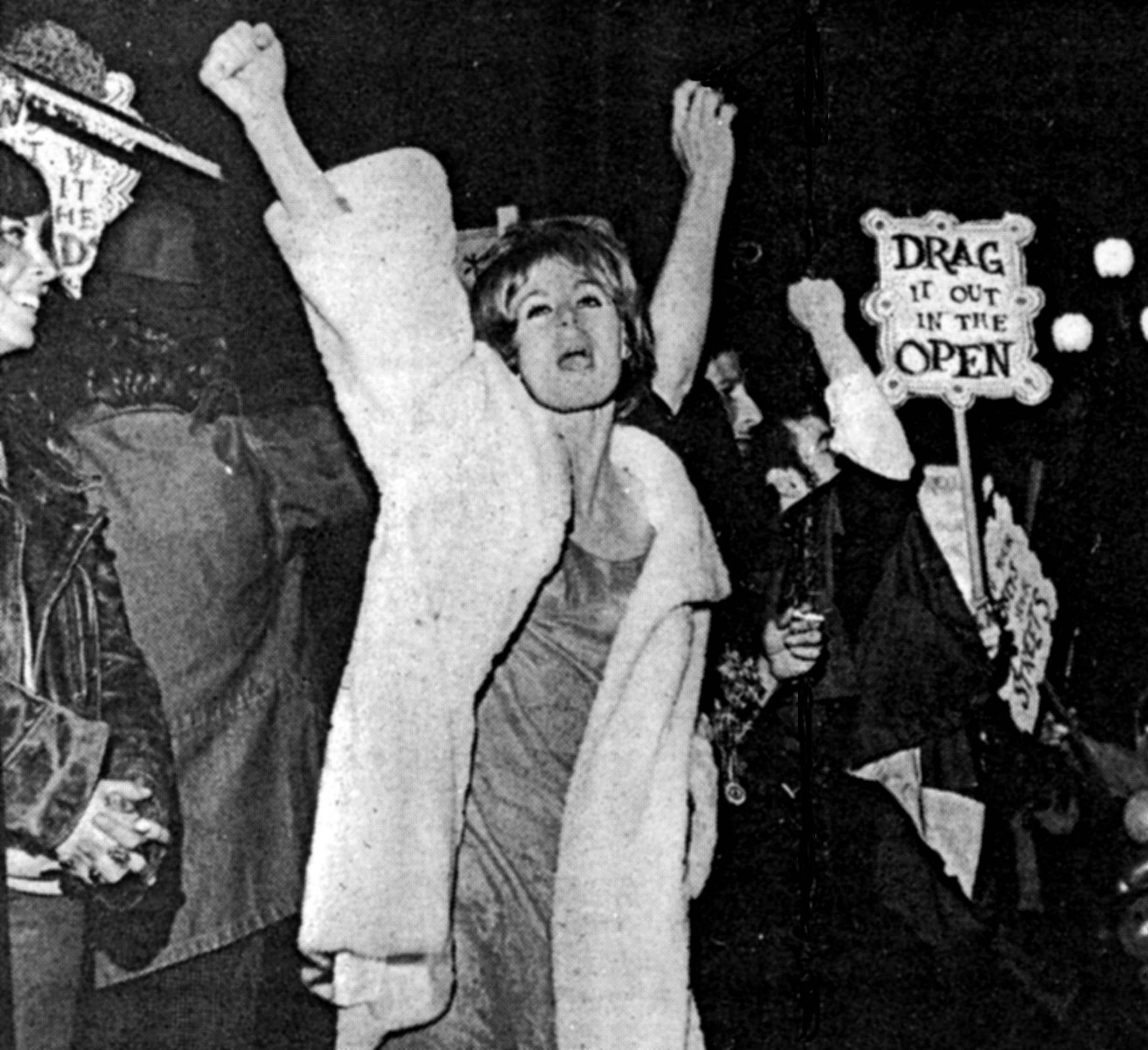
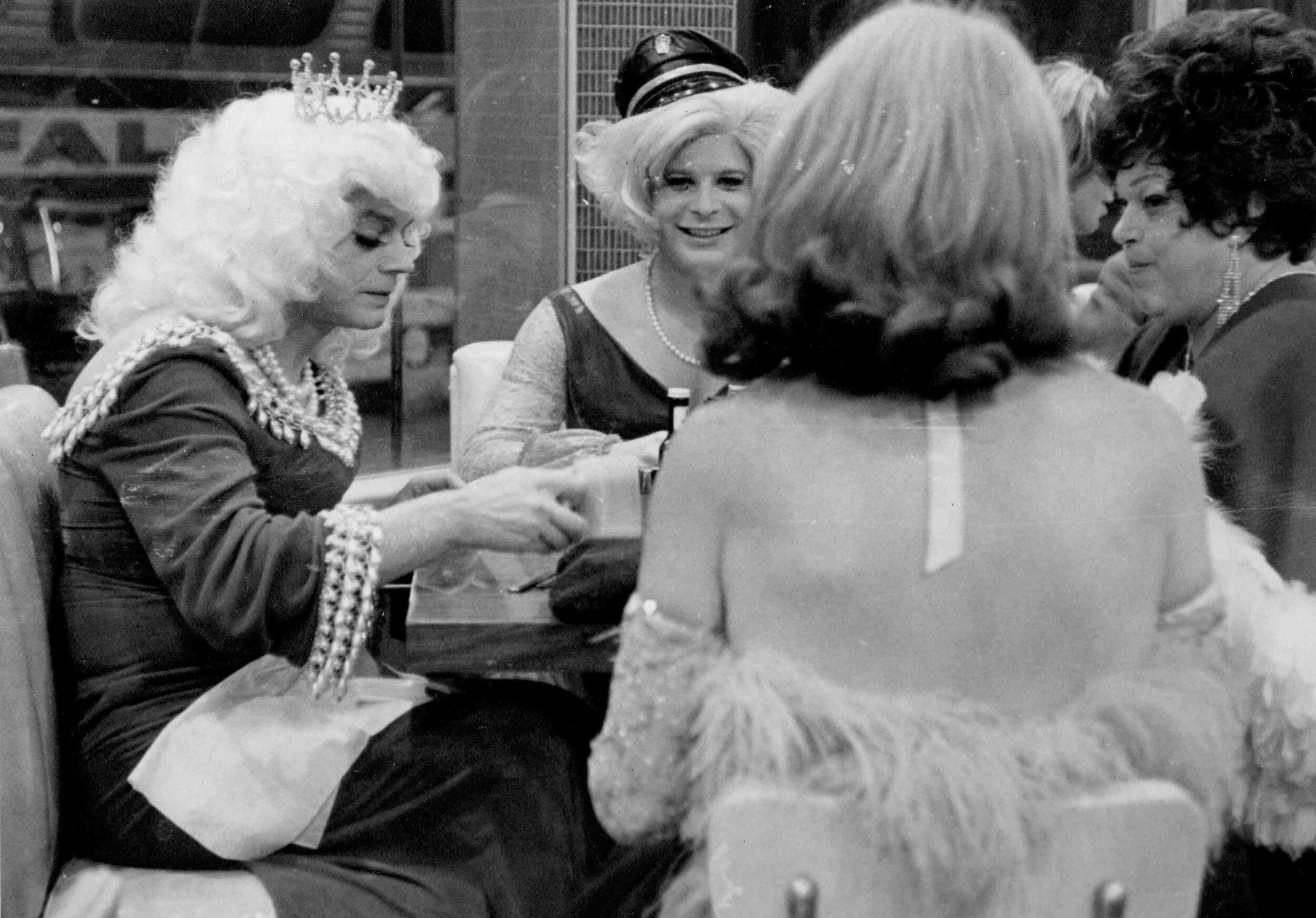
Queer History 111: Before the Stonewall Riots, There Was Compton’s Cafeteria by Wendy🏳️⚧️🏳️🌈🌈 Read on Substack
You’ve heard about Stonewall—everyone has. It’s become the sanitized, rainbow-washed origin story of the LGBTQ+ rights movement that gets trotted out every Pride month by corporations selling overpriced merchandise. But three years before Stonewall rocked New York City, a group of fierce-as-fuck transgender women and drag queens in San Francisco’s gritty Tenderloin district had already thrown the first punch in the fight for queer liberation. The Compton’s Cafeteria Riot of 1966 wasn’t just a footnote in history—it was a goddamn declaration of war against police brutality and societal oppression that’s been deliberately erased from our collective memory.
Let me tell you something straight up: these women weren’t politely asking for their rights with carefully worded petitions. They were fighting for their very existence in a society that treated them like garbage. And when pushed to their absolute limit one hot August night, they didn’t just push back—they burned the whole system down. Literally throwing coffee in cops’ faces, smashing windows, and lighting a police car on fire. This wasn’t a “disturbance” or an “incident”—it was a motherfucking riot, and it’s time we remember it for what it was.
The Tenderloin: Where Society Dumped Its “Undesirables”
San Francisco’s Tenderloin district in the 1960s wasn’t the gentrified hipster paradise it’s becoming today. It was a last-resort neighborhood—the only place that would accept the people society had discarded. Transgender women, particularly trans women of color, found themselves with precious few options for survival. Denied employment, housing, and basic human dignity, many turned to sex work simply to eat and keep a roof over their heads.
“We couldn’t get jobs, couldn’t get housing, couldn’t even walk down the street without being arrested,” recalled Amanda St. Jaymes, a trans woman who lived in the Tenderloin during this era. “The cops would book us as ‘female impersonators’ and throw us in the men’s jail. Do you have any fucking idea what happened to us in there?”
The brutal reality was that transgender women faced constant police harassment under California’s “masquerade laws,” which made it illegal to dress in clothing of the “opposite sex.” Cops could and did arrest trans women for the crime of simply existing in public. These weren’t occasional incidents—this was systematic persecution backed by the full force of the law.
Gene Compton’s Cafeteria, a 24-hour diner at the corner of Taylor and Turk, was one of the few places trans women could gather safely—or so they thought. Open all night, it became an unofficial community center for transgender women, drag queens, gay hustlers, and other marginalized folks who had nowhere else to go. But the management often called the police when too many “queens” gathered, leading to regular harassment and arrests.
“The Night I Got Tired of Being Bullied”
On a hot night in August 1966 (the exact date has been lost to history), the simmering tension finally boiled over. When police attempted to arrest a transgender woman at Compton’s for the “crime” of being there, she threw her coffee in the officer’s face. What followed was an explosion of rage that had been building for decades.
“It wasn’t planned,” said Felicia Elizondo, a transgender activist who frequented Compton’s. “It was just the night I got tired of being bullied. We all got tired at the same fucking moment.”
The cafeteria erupted. Cups, saucers, and trays became projectiles. The plate glass windows of the restaurant were smashed. A newsstand was set on fire. The women fought back with everything they had—high heels, heavy purses, and righteous fury. When a police car pulled up outside, it was immediately surrounded, its windows broken and, according to some accounts, set ablaze.
“Those queens fought like hell,” remembered one witness. “You’d think a bunch of ‘girls’ couldn’t do much damage, but honey, when you’ve been beaten and raped by cops, when you’ve been refused medical care, when your own family has thrown you out like trash—you fight like someone with nothing left to lose.”
The riot spilled into the streets and continued through the night. Unlike at Stonewall, there were no photographers present, no reporters to document what happened. The next day, more transgender women and supporters returned to picket the cafeteria, which had banned transgender customers in response to the riot. This marked one of the first known instances of organized transgender direct action in U.S. history.
The Cover-Up and Erasure
Here’s where the story gets even more fucked up: this watershed moment was almost completely erased from history. No major newspapers covered it. Police records of the incident mysteriously disappeared. For decades, Compton’s Cafeteria Riot existed only in the memories of those who were there, many of whom didn’t survive the AIDS crisis of the 1980s and ’90s.
“They didn’t want people to know we fought back,” explained historian Susan Stryker, whose groundbreaking documentary “Screaming Queens” finally brought the riot to public attention in 2005. “Transgender resistance didn’t fit the narrative they wanted to tell about passive victims who needed saving.”
The erasure was so complete that even many LGBTQ+ historians were unaware of the riot until nearly 40 years after it occurred. When Stryker discovered a brief reference to the “uprising of drag queens” in the archives of gay liberation periodicals, she had to piece together what happened through painstaking interviews with survivors and witnesses.
Why was this history buried? Simple: it centered transgender women—particularly trans women of color—as the vanguard of the LGBTQ+ liberation movement. It challenged the comfortable narrative that the movement began with Stonewall and was led primarily by white gay men. The Compton’s story was inconvenient for those who wanted to sanitize queer history for mainstream consumption.
The Aftermath: Real Fucking Change
What makes the Compton’s Cafeteria Riot even more remarkable is that it actually led to concrete changes in San Francisco. In the aftermath, a network of transgender support services emerged. The city established the Tenderloin Health Clinic, which provided hormones and healthcare to transgender people—the first of its kind in the nation. The police department even initiated the first-ever training on interacting with transgender people.
Sergeant Elliott Blackstone, the SFPD’s first liaison to the “homophile community,” became an unlikely ally. After the riot, he worked with transgender activists to stop police harassment and helped establish programs to support transgender residents. “I just treated them like human beings,” Blackstone later said, “which nobody else was doing.”
The riot also galvanized the formation of organizations like Vanguard, one of the first gay youth organizations in the U.S., and the National Transsexual Counseling Unit, the first peer-run support organization for transgender people. These laid the groundwork for the transgender rights movement that continues today.
“We built something from nothing,” said Tamara Ching, a Tenderloin activist who lived through this era. “We created community when the whole damn world wanted us dead or invisible.”
The Women Who Led the Charge
The heroes of Compton’s didn’t get streets named after them or Hollywood biopics made about their lives. Many died in obscurity, their contributions uncelebrated. Women like Alexis Miranda, who later became an influential transgender activist; Tamara Ching, who fought for the rights of transgender sex workers; and Amanda St. Jaymes, who established support services for transgender women in the Tenderloin.
“Some of the fiercest women I ever knew didn’t live to see their impact,” recalls Felicia Elizondo, one of the few surviving veterans of the Tenderloin scene. “They died from violence, from AIDS, from the sheer exhaustion of fighting every day just to exist.”
Unlike Stonewall, where key figures like Marsha P. Johnson and Sylvia Rivera eventually received some recognition (though still not enough), many of the women who fought at Compton’s remain nameless in historical records. Their revolutionary act was nearly lost to history, remembered only by those who were there.
The anonymity of many Compton’s participants speaks to the precarious nature of transgender life in the 1960s—and still today. Many lived under assumed names, without identification documents, invisible to official records. They existed in the margins, which made their uprising all the more remarkable and all the more easily erased.
Why This Matters Now More Than Ever
If you think this is just ancient history, wake the fuck up. In 2023, we’re seeing the most aggressive legislative assault on transgender rights in modern history. Over 500 anti-trans bills have been introduced in state legislatures in recent years. Access to healthcare is being restricted. Transgender people are being banned from public spaces. Sound familiar?
“It’s the same playbook,” says Miss Major Griffin-Gracy, a transgender elder who has been fighting for rights since the 1960s. “Criminalize our existence, push us out of public spaces, make it impossible to live authentically. They’ve just dressed it up in fancier language.”
The courage of the women at Compton’s Cafeteria provides a powerful template for resistance in the face of overwhelming oppression. They didn’t wait for permission to fight back. They didn’t seek respectability. They recognized that when a system is designed to destroy you, sometimes you have to break the whole damn thing and start over.
“We’ve been here before,” warns historian Jules Gill-Peterson. “And the lesson from Compton’s isn’t to write polite letters to politicians. It’s that direct action gets the goods. It’s that sometimes you have to throw the first punch—or the first coffee cup.”
The Legacy: From Shadows to Celebration
Today, the corner of Taylor and Turk in the Tenderloin bears a plaque commemorating the riot. In 2017, the city of San Francisco renamed a section of Turk Street as “Compton’s Transgender Cultural District”—the first legally recognized transgender district in the world. It’s a belated recognition of the community that has called this area home for over half a century and the uprising that marked its coming of age.
But the real legacy of Compton’s isn’t in plaques or street names—it’s in the radical tradition of transgender resistance it established. From Compton’s to Stonewall to the modern movements against police brutality, the thread of transgender leadership in liberation struggles remains unbroken, even when unacknowledged.
“Those girls didn’t have Twitter or TikTok or any way to document what they did,” reflects contemporary transgender activist Raquel Willis. “But they changed the world anyway. Imagine what we can do now with all the tools and visibility we have.”
The next time you celebrate Pride, remember that it wasn’t born from corporate sponsorships and rainbow capitalism. It was born from a coffee cup thrown in a cop’s face by a transgender woman who had decided she wasn’t going to take any more shit. It was born from the broken windows of a cafeteria in the Tenderloin and the fiery determination of women who fought back when the world told them they shouldn’t even exist.
That’s the legacy of Compton’s Cafeteria Riot—not just a historical footnote, but a battle cry that still echoes today: We have always been here. We have always fought back. And we’re not going anywhere.
References
Stryker, S. (2008). Transgender History: The Roots of Today’s Revolution.
Stryker, S., & Silverman, V. (Directors). (2005). Screaming Queens: The Riot at Compton’s Cafeteria [Documentary].
Transgender Law Center. (2017). Compton’s Transgender Cultural District Report.
Dzodan, F. (2021). Before Stonewall: The Trans Women Who Sparked a Revolution.
Armstrong, E. A., & Crage, S. M. (2006). Movements and Memory: The Making of the Stonewall Myth.
Williams, C. (2014). Transgender History in the United States: A Special Unabridged Version of a Book Chapter.
Elizondo, F. (2015, August 26). Personal interview by Nicole Pasulka for Vice: “Ladies in the Streets: Before Stonewall, Transgender Uprising Changed Lives.”
How does Trump sleep? Probably with a lot of fartin’ and snorin’. Read on Substack
Donald Trump loves asskissers because he is an asskisser. That explains why his lips are constantly puckered.
That’s just disturbing
During his speech in Saudi Arabia at the Investment Forum, he spent a good portion of it waxing non-eloquently about the awesomeness of Mohammed Bin Salman, the Crown Prince.
Trump said, “Riyadh is becoming not just a seat of government but a major business, cultural, and high-tech capital of the entire world.”
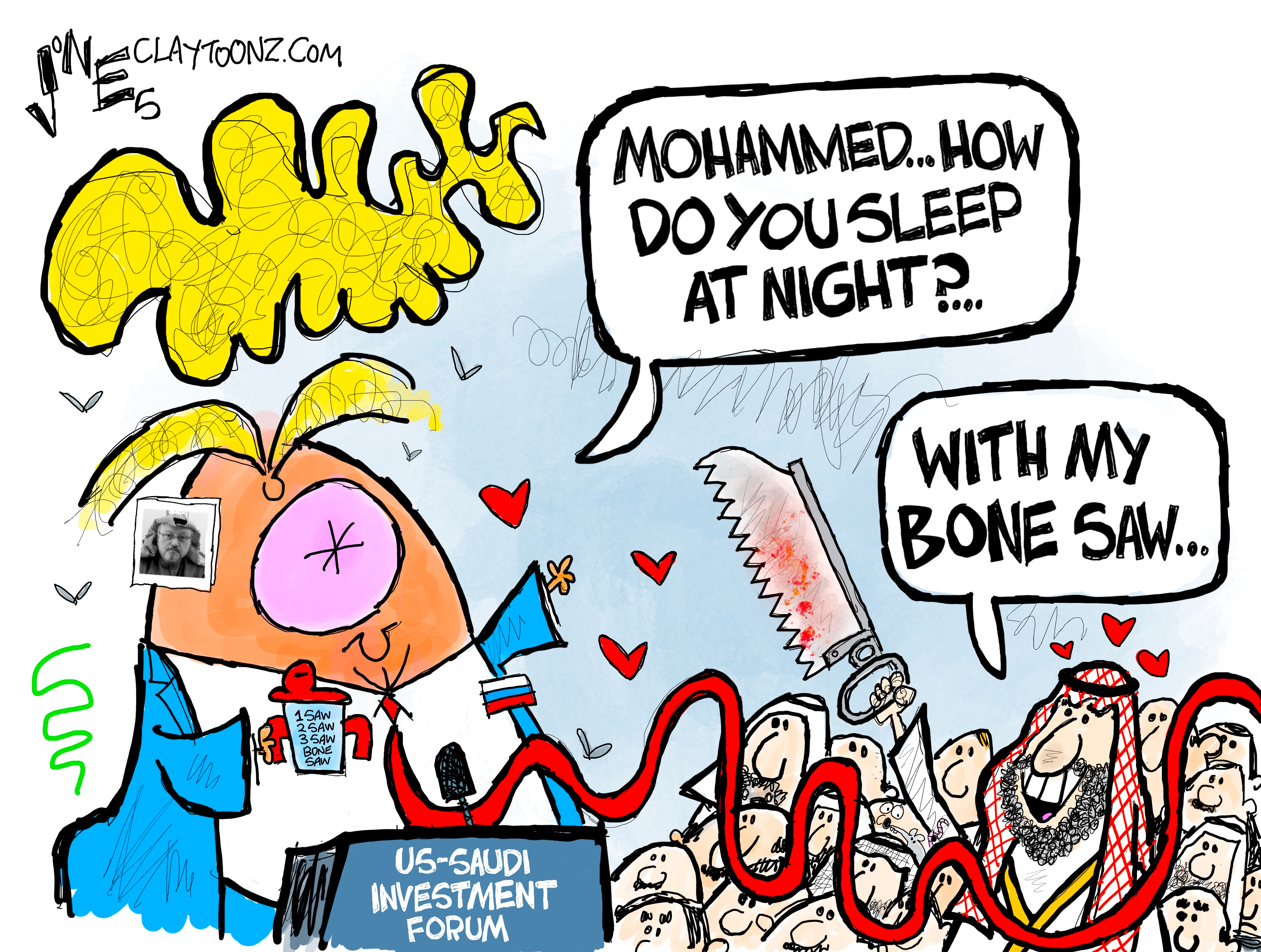
MBS was sitting in the audience directly across from Trump, and Trump asked rhetorically, “Mohammed, do you sleep at night? How do you sleep? Critics doubted that it was possible, what you’ve done, but over the past eight years, Saudi Arabia has proved the critics totally wrong.”
“He’s your greatest representative, greatest representative. And if I didn’t like him, I’d get out of here so fast. You know that, don’t you? He knows me well. I do — I like him a lot. I like him too much.”
The crowd applauded and giggled as Trump flirted with the man who directed the murder of Jamal Khashoggi, a Saudi journalist living in the United States for his safety. The crowd was made up of the world’s most powerful CEOs, like Jensen Huang, Larry Fink, and Sir Shit-for-Brains Elon Musk. So naturally, this audience lacked morals and integrity. What’s a little murder when it comes to making billions of dollars? These people, like Trump and MBS, aren’t the biggest fans of journalists.
I shouldn’t have to refresh your memory, but just in case, in 2018, Jamal Khashoggi was lured into the Saudi consulate in Istanbul, Turkey, murdered and hacked up with bone saws by Saudi agents on the orders of Trump’s buddy, Mohammed Bin Salman.
After the murder, Trump said it was a “bad event,” and went on to defend MBS. He said, “Nobody has directly pointed a finger.” That’s a lie. Our intelligence agencies have “directly pointed a finger at him.” The United Nations has “directly pointed a finger at him.”
Trump also said that MBS is “innocent until proven guilty.” But MBS will never be proven guilty because they don’t have fair trials in Saudi Arabia. The nation doesn’t have due process, freedom of speech, human rights, or elections. Those are things Trump hates, which is probably why he spent another portion of his speech whining and lying about our elections. He lied that he won the 2020 election to people who don’t hold elections.
There will never be an investigation into Khashoggi’s death in Saudi Arabia. MBS will never stand trial. This man didn’t just order the murder, but that Khashoggi be cut into pieces with bone saws. Mohammed Bin Salman is a sick murderous fuck.
When Jared Kushner, who worked directly with MBS as a White House adviser, was asked about the murder last year, he said, “Are we really still doing this?” Jared said he hadn’t seen the US Intelligence report that concluded MBS ordered the murder of Khashoggi, finding fault with it because it was made during the Biden administration.
Of course, not reading the report made it a lot easier for Jared to accept $2 billion from MBS. Jared acts like being made to feel uncomfortable about accepting a $2 billion gift from a murderer is worse punishment than being sliced apart by a bone saw.
Under the Trump regime, our nation feels it’s more important to secure arms deals with Saudi Arabia than to stand up for our American principles. Plus, those arms deals deliver a quid pro quo as the Saudi Government will conduct golf tournaments at Trump golf courses, and invest in new Trump resorts in their nation.
Just remember that all the money Trump and Jared take from MBS is blood money.
How does Donald Trump sleep at night? Probably in a bed full of KFC and Big Mac crumbs.
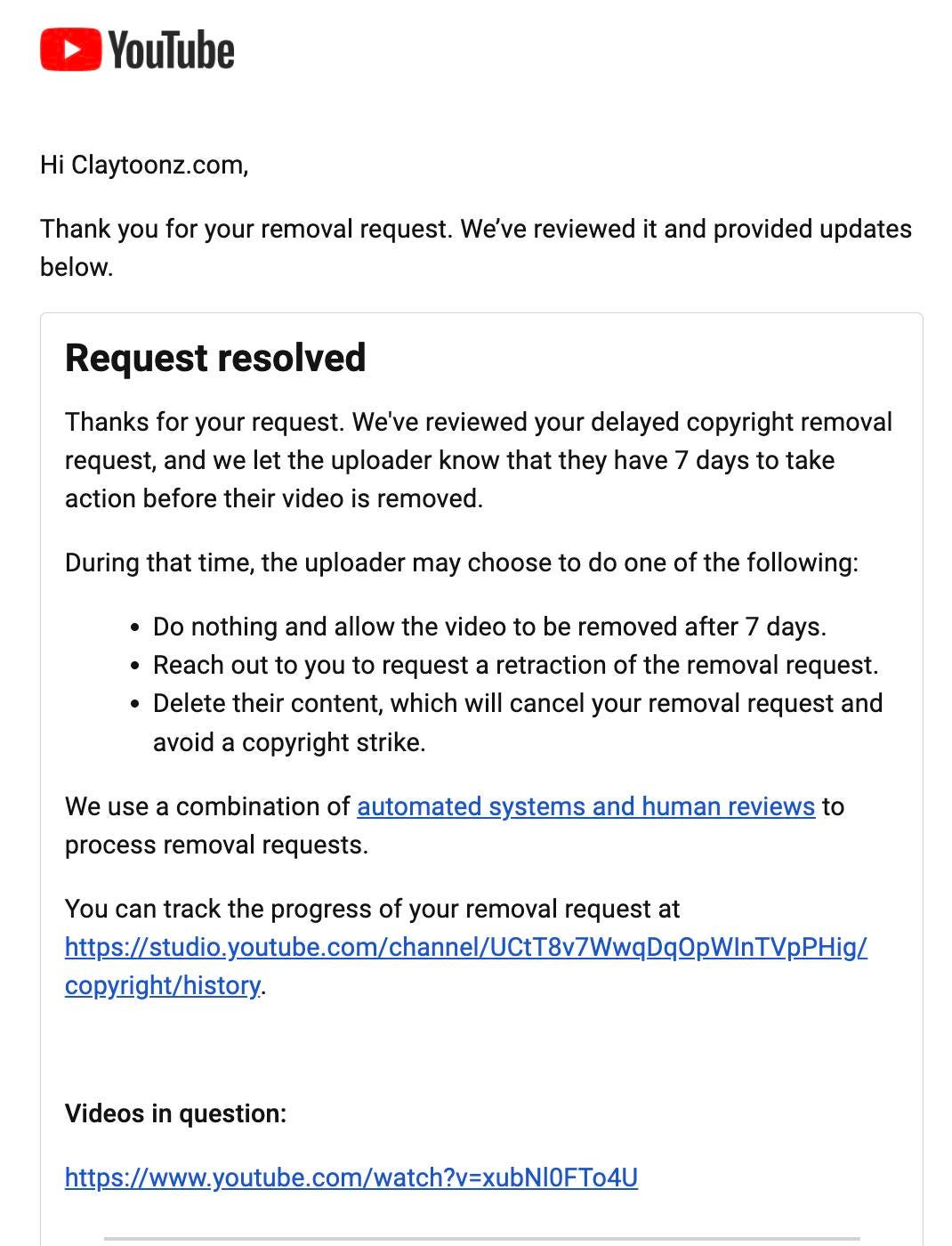
Did I do that? ToonAmerica, the site using AI to steal my cartoons, is down.
Why is it down? Because of this.
The thieves can’t fight my reports or those from my colleagues, so they remove the videos, avoiding copyright strikes and saving their channel from deletion. They saved the channel, but now there’s no content because all their content was stolen copyright. That’s all they had.
I’m not declaring victory yet because I don’t know if the ToonAmerica YouTube channel will start over, create a new channel, find another scam to fuck people over with, or give up. But for now, they can’t monetize the cartoons they stole, at least not on YouTube.
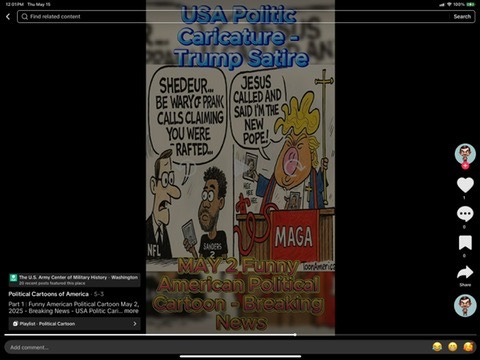
But TikTok is something else.
Now I have to take them down on TikTok.
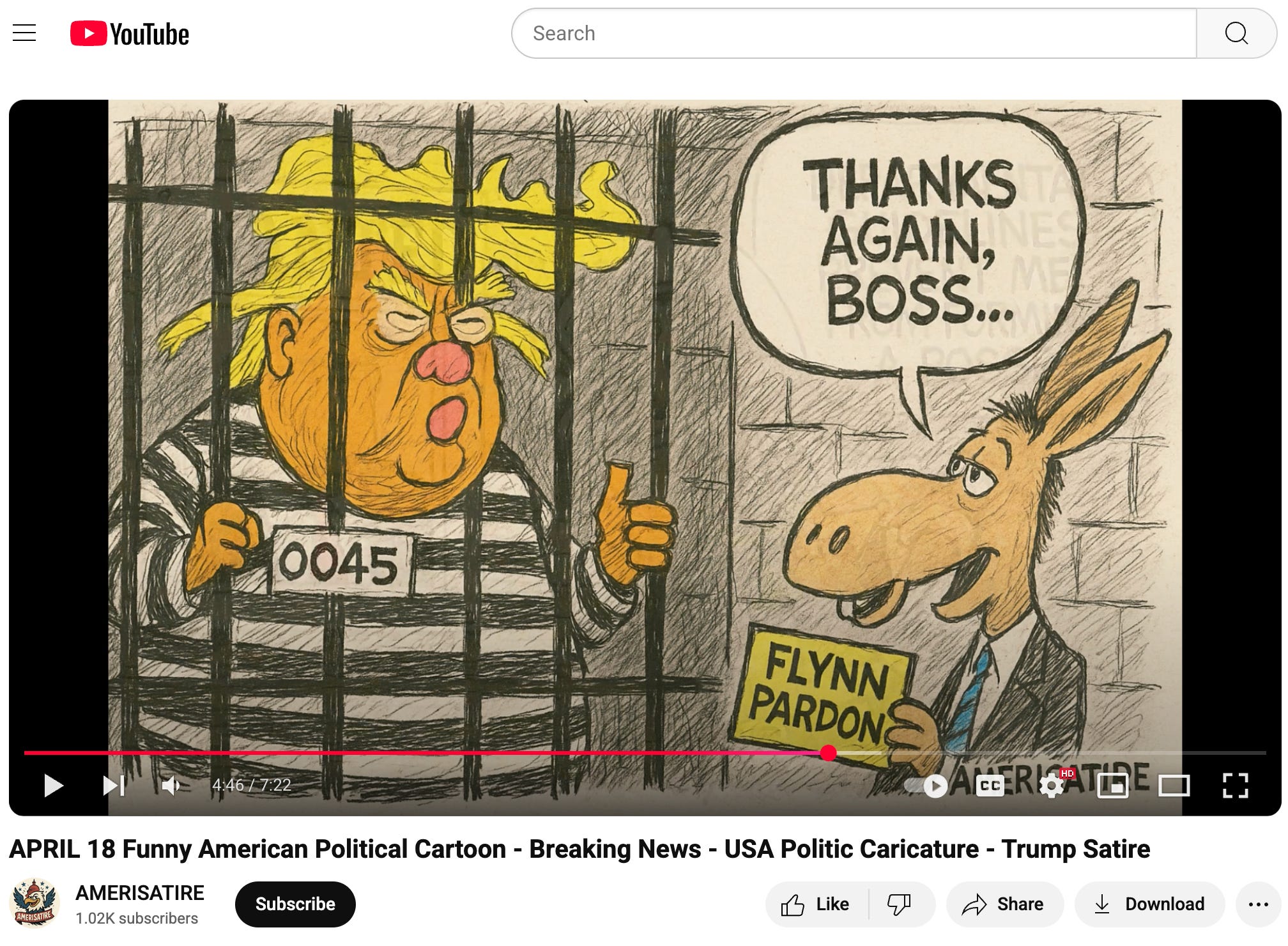
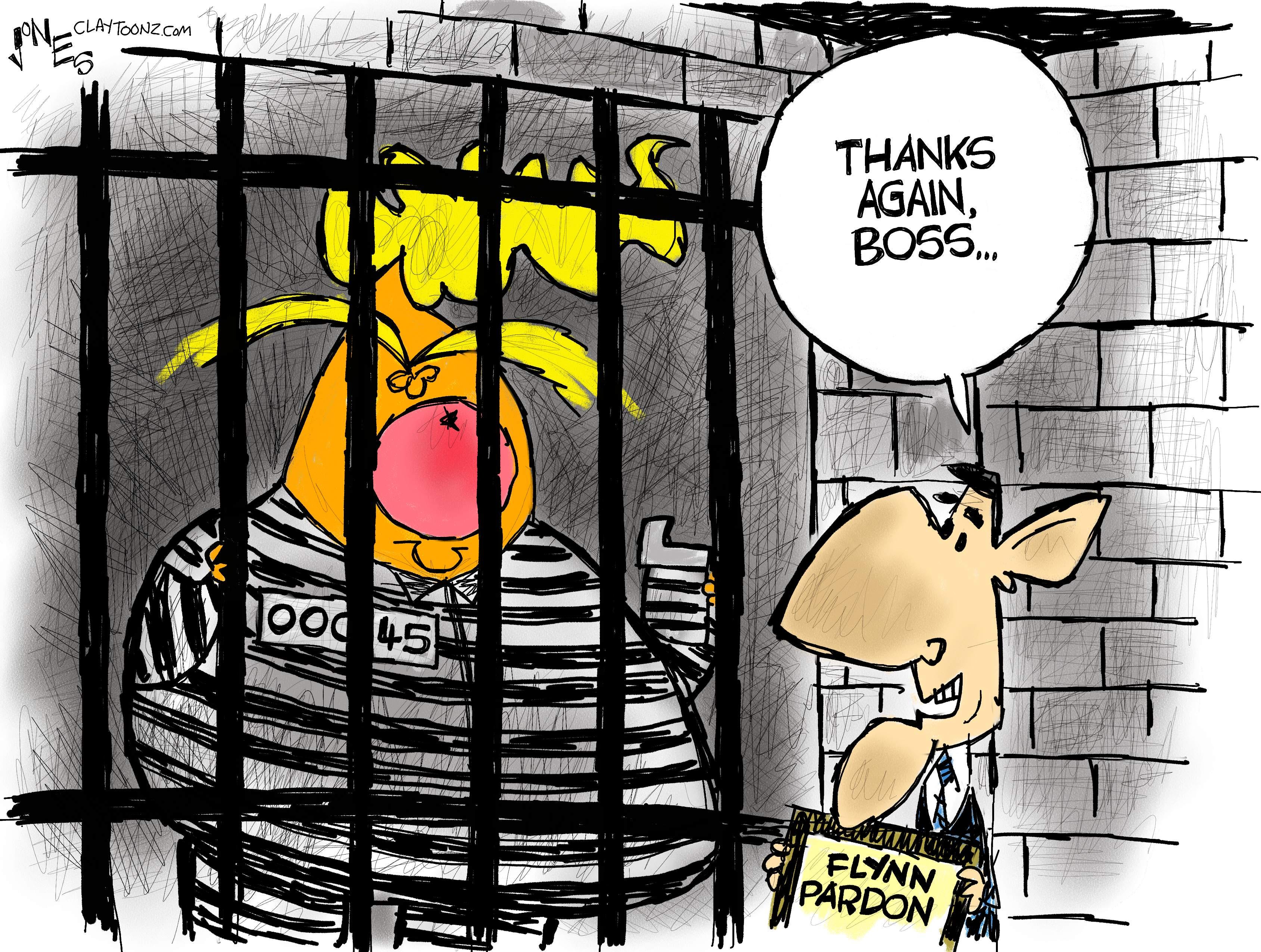
AmeriSatire, the other one stealing cartoons with AI, is still up, but they’re next on my target. Thanks to my friend and colleague, Pedro Molina, I now know that they’ve stolen one of my cartoons.
That means I can file a report on them. And why did AI make Flynn a donkey?
Creative note: I almost did my bone saw cartoon yesterday, but went for the Pete Rose one instead. I think this cartoon is better and more important.








 Scottie's Playtime