As usual, that is omitted, then people believe it when other people say Dems do nothing. Elected Dems are doing all they can. Sen. Rand Paul is also involved, as Libertarians will be in matters of war.
Amid a wave of U.S. military strikes in the Caribbean and plans for covert operations in Venezuela, Sen. Tim Kaine, D-Va., is leading a bipartisan effort to force a vote to stop President Trump from unilaterally declaring war on the South American nation.
Kaine, a longtime proponent of Congress’ powers to declare war, filed the resolution late Thursday, a move that will force the Senate to take up the legislation after a 10-day waiting period. Sens. Adam Schiff, D-Calif., and Rand Paul, R-Ky., co-sponsored the plan.
Kaine said concerns about war in the Latin American region are growing.
“The pace of the announcements, the authorization of covert activities and the military planning makes me think there’s some chance this could be imminent,” Kaine told reporters.
Sen. Tim Kaine, D-Va., speaks to reporters outside the Senate chamber on Oct. 1. Kaine is hoping to prevent President Trump from unilaterally waging war on Venezuela without approval from Congress.Anna Moneymaker/Getty Images
This week, Trump said the U.S. had conducted another military strike on an alleged drug boat in the Caribbean and announced that he had authorized CIA operations in Venezuela. He also said he was considering land operations in the country.
“We’ve almost totally stopped it by sea. Now we’ll stop it by land,” Trump said from the Oval Office on Wednesday about alleged drug smuggling.
Last week, Kaine and Schiff forced a Senate vote to limit Trump’s war powers in the Caribbean. While that vote failed 48-51, two Republicans, Paul and Sen. Lisa Murkowski of Alaska, joined Democrats in support.
Paul has been a vocal critic of the new military strikes, saying they set a precedent for the U.S. to shoot first without asking questions.
“The American people do not want to be dragged into endless war with Venezuela without public debate or a vote,” Paul said in a statement. “We ought to defend what the Constitution demands: deliberation before war.”
Kaine, Paul and Schiff are hoping more Republican members will vote in favor of the new limits. Several Republicans have voted for other war powers and use of military force resolutions led by Kaine in the past.
“I think it’s probably 10 or so [Republicans] who voted yes on at least one of them,” he said. “So we’ll start to work that.”
It remains unclear whether there are enough Republican votes for the measure to succeed.
Kaine said Congress continues to face a “black hole” of information related to action against Venezuela. Lawmakers say the administration still has not shared evidence to justify the boat strikes, which Kaine and others believe are illegal and unconstitutional.
Since September, Trump has ordered at least five U.S. military strikes on boats that the administration has claimed were smuggling illegal drugs. So far, at least 27 people have been reported killed, but their identities have yet to be shared.
October 18, 1648 I. Marc Carlson The Shoemakers Guild of Boston became the first labor union in the American colonies. Labor organization in colonial times —————————————————– October 18, 1929 The Persons Case, a legal milestone in Canada, was decided. Five women from Alberta, later known as the Famous Five, asked the Supreme Court of Canada to rule on the legal status of women. Some decisions of Magistrate Emily Murphy had been challenged on the basis that she was not a legal person, and she was a candidate for appointment to the Canadian Senate. After the Supreme Court ruled against them, they appealed to the British Privy Council.The Privy Council found for the women on this day (eight years after the case began and eleven years after women received the federal vote), declaring that women were persons under the law. October 18 has since been celebrated as Persons Day in Canada, and October as Women’s History Month.
Sculpture by Barbara Paterson of the Famous Five in Ottawa, first on Parliament Hill to honor women The other women activists in the Famous Five: Henrietta Muir Edwards, Nellie McClung, Louise McKinney, and Irene Parlby. The Persons Case
Despite repeatedly promising not to cut Social Security, the Trump Administration is reportedly preparing a proposed rule that could reduce the share of applicants who qualify for Social Security Disability Insurance (SSDI) by up to 20 percent, according to an Urban Institute report that cites writing by a former Trump Administration official and interviews with former staff at the Social Security Administration (SSA). This would be the largest cut in SSDI history.
SSDI is an integral part of Social Security. It provides essential benefits to workers who cannot support themselves through earnings due to severe and long-lasting disabilities that significantly impede their ability to work, and it helps to prevent beneficiaries and their families from experiencing poverty.
The rule would make it much more difficult to qualify for both SSDI and Supplemental Security Income (SSI). Because it would dramatically change the eligibility criteria for older applicants, the losses among people over age 50 would be much deeper.
The rule is likely to be the largest-ever cut to Social Security Disability Insurance. A 20 percent cut in the share of applicants who qualify for SSDI would be larger than any previous change to the program. It would be even larger than the Reagan-era disability cuts, which the Reagan Administration was forced to reverse amid fierce opposition from governors, courts, beneficiaries, and advocates. According to an Urban Institute analysis, even a cut half the size of what the Trump Administration is considering would mean 750,000 fewer people would receive SSDI benefits within ten years. In addition to reducing the share of applicants who receive benefits, some current beneficiaries could see their benefits taken away when their eligibility is reviewed.
The rule would particularly hurt older workers. Like the rest of Social Security, SSDI serves largely older people; nearly 80 percent of disabled workers are aged 50 or older. SSDI benefits provide vital support to people whose careers are cut short by severe medical impairments. The rule is expected to target older applicants already determined to have significant medical impairments by discounting the barriers they face due to their age in continuing to do substantial work — despite the law’s requirement that the Social Security Administration (SSA) consider how age, education, and skills might make working harder, in addition to considering health conditions.
It’s already difficult at any age to qualify for disability benefits, given their stringent rules. Research shows applicants whose impairments are not severe enough to qualify for SSDI fare poorly in their attempts to return to work — especially if they’re older. Rejecting more older applicants will cause more hardship for people who would be eligible for benefits under the existing rules.
The rule will likely cause disproportionate harm to people living in the South and Appalachia. Some states have a higher share of people receiving disability benefits, particularly those with more older workers with fewer years of formal education, and who are more likely to have worked in physical jobs like manufacturing or mining. That is true of many Southern and Appalachian states, as well as Maine and the Rust Belt states of Michigan, Ohio, and Pennsylvania. The proposed rule drafted during the first Trump Administration would reportedly change the way SSA considers education as well as age, and because residents of these states are on average older and less educated, these changes will hit them doubly hard.
In addition to cutting Social Security and SSI, the rule would threaten retirement security, access to health care, and other supports. Workers who become disabled and qualify for SSDI are significantly worse off in retirement: they are poorer, experience more hardship, and have lower savings. Disabled workers will fare even worse in retirement if their eligibility for disability benefits is stripped. They would be forced to spend any retirement savings faster and claim their Social Security retirement benefits at a younger age, permanently reducing their — and possibly their family’s — monthly Social Security retirement benefits by up to 30 percent. For hundreds of thousands of older people, this rule would create long-term financial insecurity as they age.
In addition, applicants who do not qualify for disability benefits may face significant challenges accessing health care. SSDI recipients typically receive Medicare 24 months after they begin to receive benefits; if someone no longer qualifies for these benefits, they won’t be able to get Medicare until they turn 65. And, SSI recipients receive Medicaid, so those who lose SSI benefits may also lose Medicaid (particularly in states that have not adopted the Medicaid expansion). Most rejected applicants under the new standard will have very significant medical impairments, and many will struggle to access health care without those benefits — particularly after the steep Medicaid cuts in the Republican megabill.
Finally, restricting eligibility for disability benefits will make it more difficult for rejected applicants to access other key supports, such as food assistance, which has increasingly strict time limits for most non-elderly individuals without younger children who are not receiving disability benefits. New Medicaid work requirements could also pose significant impediments to people who lose disability benefits.
This rule is the latest in a series of harmful actions by the Trump Administration that threaten access to Social Security. This year, the Administration has forced SSA through a radical downsizing that has disrupted services for the largely older and severely disabled people who rely most on the agency, indiscriminately pushing out 7,000 workers in the largest staff cut in SSA’s history. This realignment has resulted in fewer staff serving Social Security applicants and beneficiaries, and huge cuts to staff supporting the agency’s customer service mission. These cuts have been coupled with inexplicable new restrictions — some of which have already been partially rolled back — for how the public can engage with SSA for assistance, creating additional access barriers.
At the same time, the Administration is working to advance changes that would make it harder for hundreds of thousands of eligible people to receive or continue receiving SSI, creating additional red tape for beneficiaries and more work for depleted and overburdened SSA staff.
is today in Peace & Justice History. Feeding people is my main “thing,” so I’m featuring it today. There is so very much that has happened on October 16, and it can all be seen on this page.
October 16th every year
United Nations’ World Food Day is recognized every year.
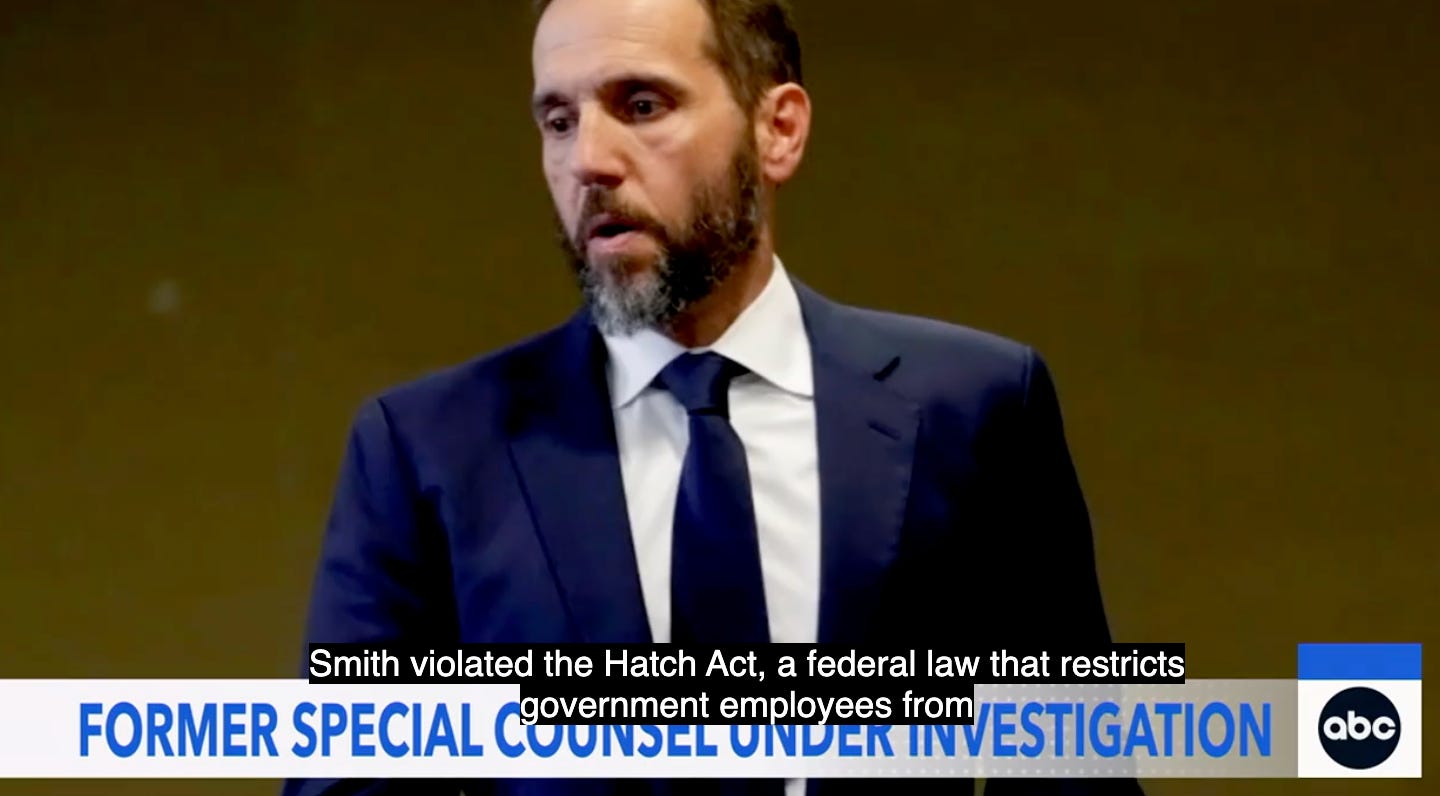
ABC reported today that the House Judiciary Committee wants to have former special counsel Jack Smith testify—behind closed doors—about investigating the Mar-a-Lago, January 6, and Donald Trump. Jim Jordan, the Ohio Republican who chairs the Committee, wants an interview by October 28. He is calling for Smith to turn over documents and communications too.
Why now? Last week, there was reporting (very unsurprising to anyone who has ever investigated a federal case) that Smith’s probe obtained phone records regarding a number of Republican lawmakers as part of the January 6 case investigation. Jordan wrote to Smith, “As the Committee continues its oversight, your testimony is necessary to understand the full extent to which the Biden-Harris Justice Department weaponized federal law enforcement.”
Republican Senator Josh Hawley of Missouri complained that “The F.B.I. tapped my phone.” He said he’d been wiretapped.
Not so fast, though. Obtaining phone records means getting call information—that can mean which phone number called which other phone number, when, and possibly, how long the call lasted. It’s easy to understand why prosecutors would want that information in virtually any case they’re investigating. Here, given reports that Trump had numerous calls leading up to and on January 6 (for instance, one with brand new Alabama Senator Tommy Tuberville), it would be surprising if they hadn’t done so. The New York Times reported that “The calls were scrutinized because at the time, prosecutors were trying to identify relevant communications between the president and his inner circle with members of Congress on the key days surrounding the violence.”
Call information, which frequently produces investigative leads, is acquired routinely by investigators. But it is not the same thing as a wiretap, which lets law enforcement listen in on a target’s phone calls. To get a wiretap, prosecutors and agents have to get an order from a federal judge in compliance with the strict requirements of Title III of the Omnibus Crime Control and Safe Streets Act of 1968. They have to establish probable cause and show that less intrusive investigative methods were tried and failed. A wiretap only lasts for 30 days, and prosecutors must go back to the judge, with fresh proof, in order to reup the wiretap for an additional 30 days.
Jordan’s allegation that this is the weaponization of the DOJ should fall on deaf ears. Jack Smith was investigating one of the most serious situations our country has ever faced—an effort to interfere with the smooth transfer of power between two American administrations, with involvement by the outgoing president who had lost the election—using routine investigative techniques. Jordan and other Republicans should be able to differentiate between that and wiretaps, since these are statutory creatures and Congress sets the requirements for when they can be used.
Jordan admonished Smith that he was “ultimately responsible for the prosecutorial misconduct and constitutional abuses of your office,” a comment that is a not-too-veiled threat in the era of revenge prosecutions.
Smith spoke out earlier this week, in an interview in London with Andrew Weissmann. Smith praised the integrity, competence, and selflessness of professionals at DOJ and the FBI—many of whom were subsequently fired by the Trump administration. Why prosecute Trump for classified documents when Biden didn’t get prosecuted, Smith was asked. He responded that it was simple because the facts were starkly different; with Trump, there was evidence of willfulness and intent to violate the law regarding protection of classified documents. Trump obstructed justice, even lying and saying he had returned all the documents he retained. Of course, when the search warrant was executed at Mar-a-Lago, it conclusively proved that was a lie.
At a talk he gave last month at George Mason University in Washington, D.C., Smith said, “The heart of the Rule of Law is treating people equally under the rule of law. Good prosecutors do not care about politics. They bring cases that are supported by facts.”
That’s what good prosecutors do. What is the difference between the prosecution of Donald Trump for possessing classified documents and the decision not to prosecute Joe Biden? It’s evidence. Evidence of willfulness and intent and of Trump’s effort to obstruct justice by keeping classified documents from being recovered by the government after claiming his lawyers claimed he’d returned everything in his possession. What makes the prosecution of Jim Comey a perversion of our criminal justice system? It’s the absence of evidence that he committed a crime and the clear direction from the President of the United States to his Attorney General to go after him. We do not need to engage in bothsidesism here; one of these things is not like the other. The people who are complaining that the prior administration weaponized the Justice Department are, in fact, the ones who are doing exactly that, but all of the noise can get confusing and exhausting.
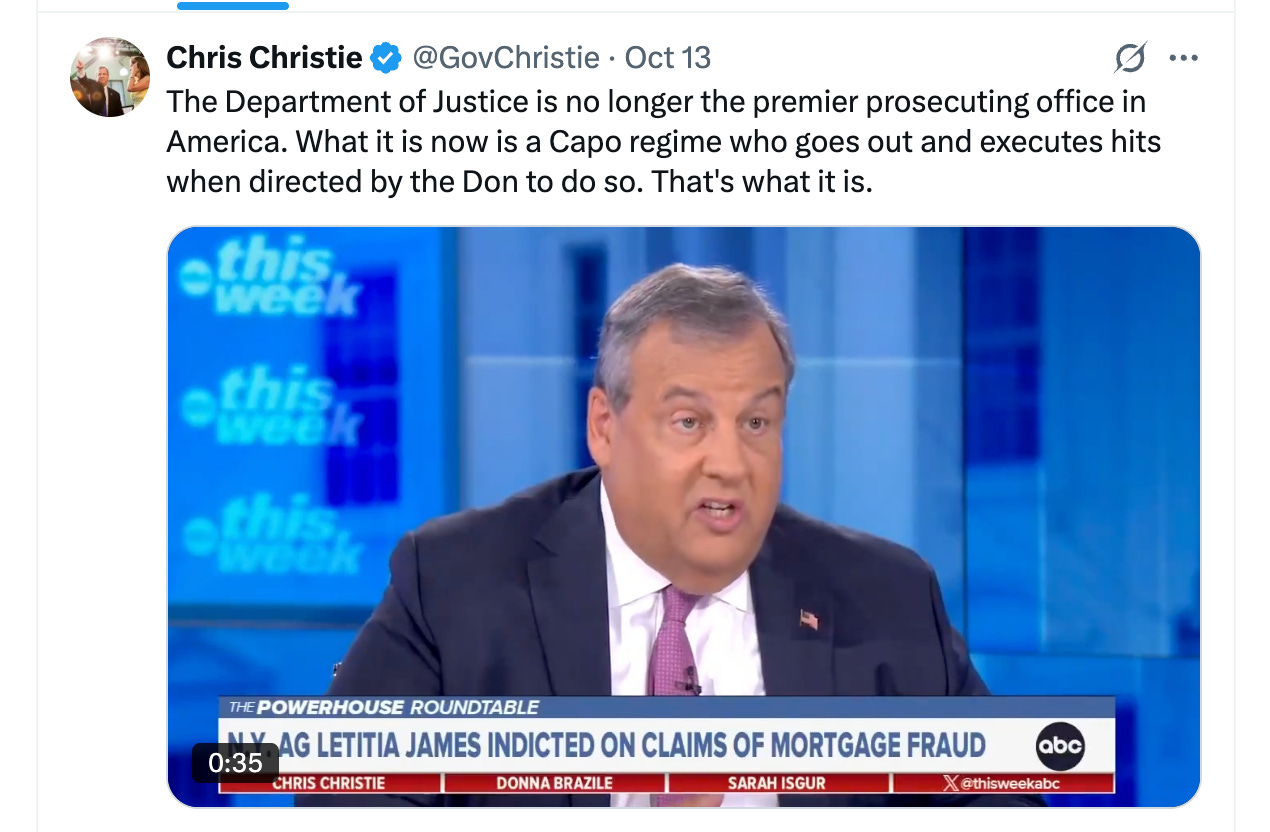
But this is no “he said, she said” controversy. When even Chris Christie, the former New Jersey U.S. Attorney and Governor, who is no stranger to legal controversy like the Bridgegate Scandal, condemns what is happening in this administration, there is every reason to pay attention.
It was the ranking Democratic member of the House Judiciary Committee, Maryland Representative Jamie Raskin, who got it just right, as he so frequently does. With his sarcasm font on full blast, Raskin congratulated Jordan for also “demand[ing] the release of Smith’s full report, and all accompanying records, from his investigation into Donald Trump’s hoarding of classified documents and obstruction of justice at Mar-a-Lago” after “an extraordinary years-long MAGA cover-up has deprived the American public of the opportunity to read this special counsel report that the taxpayers paid for.” Republicans, of course, have not. This is not about a commitment to transparency. This is not about being the party of law and order. It’s certainly not about following the rule of law.
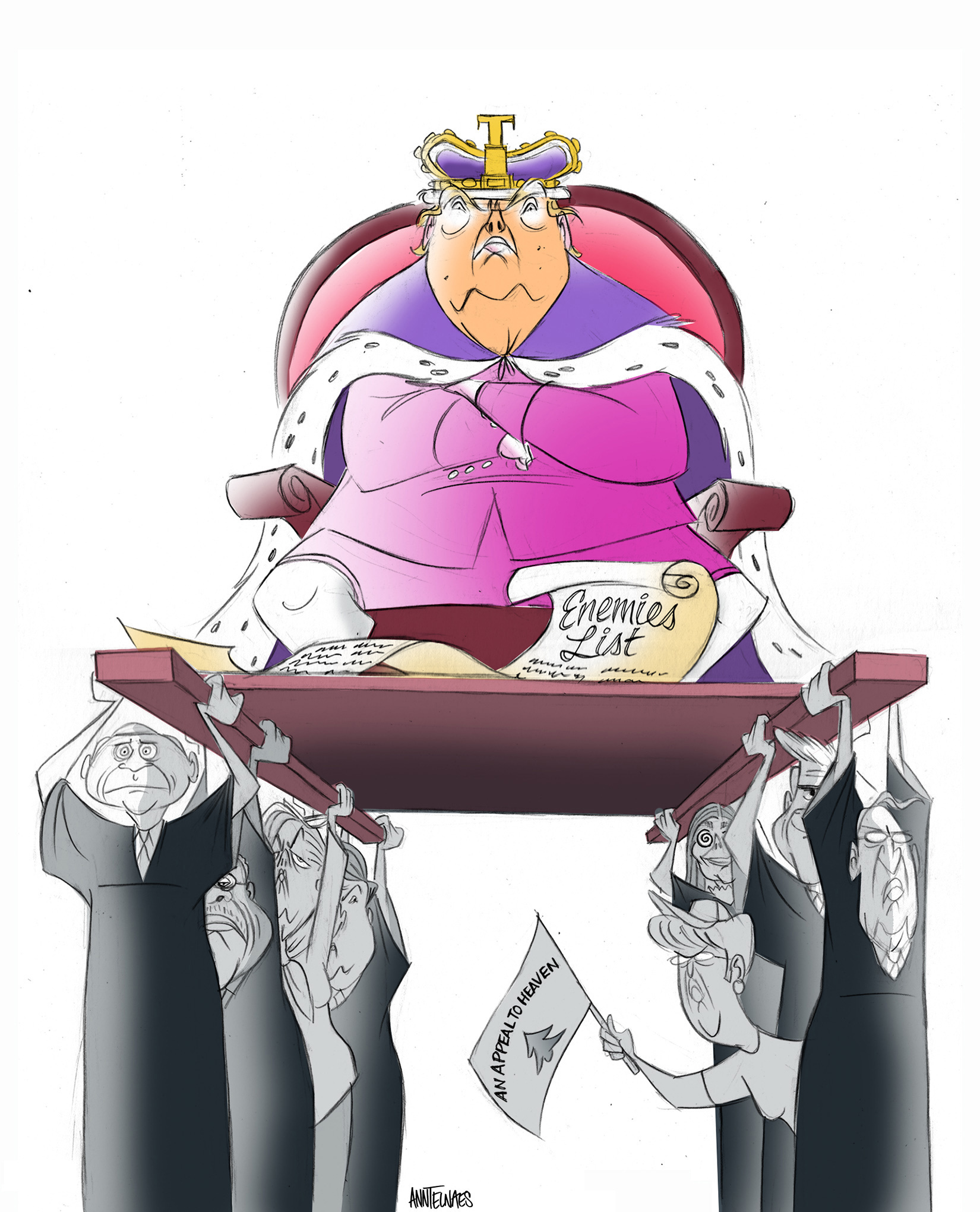
The details about the documents Trump took with him to Mar-a-Lago, and for all we know, keeps there to this day, remain largely undisclosed. Just like the Epstein files are still being kept secret. Donald Trump is committed to an all-powerful presidency. It’s easy to understand why he thinks that’s so desirable—it’s not about doing justice.
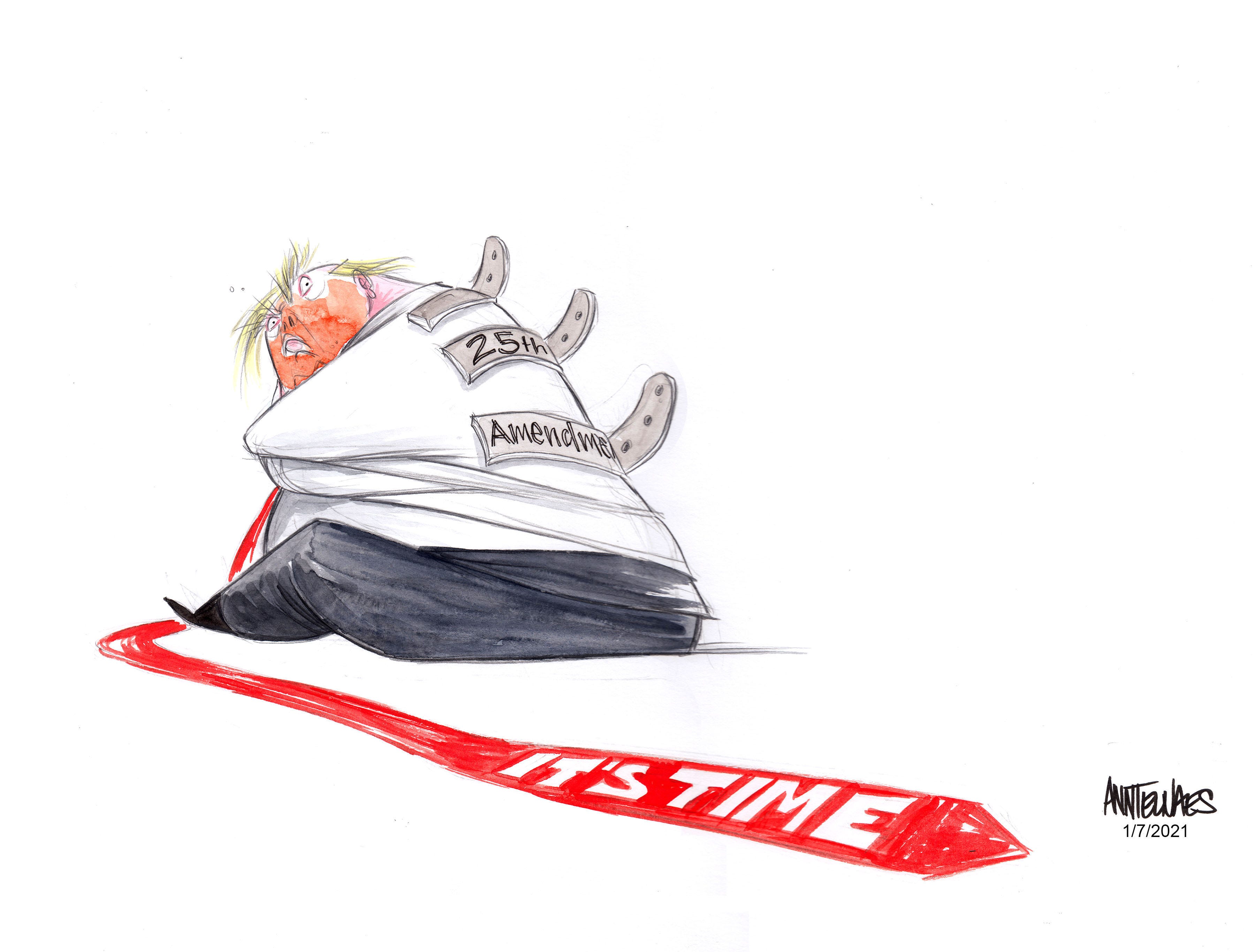
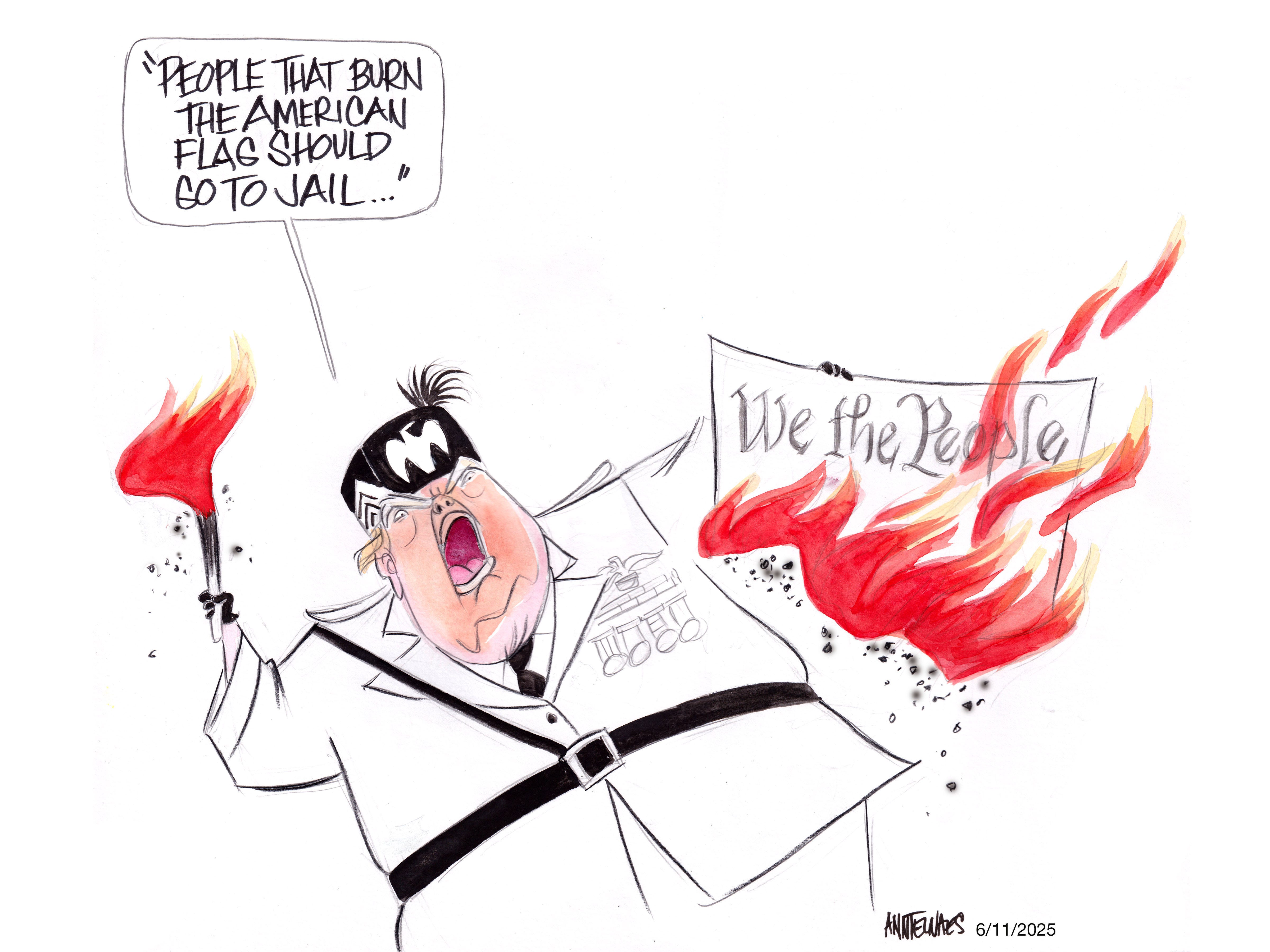
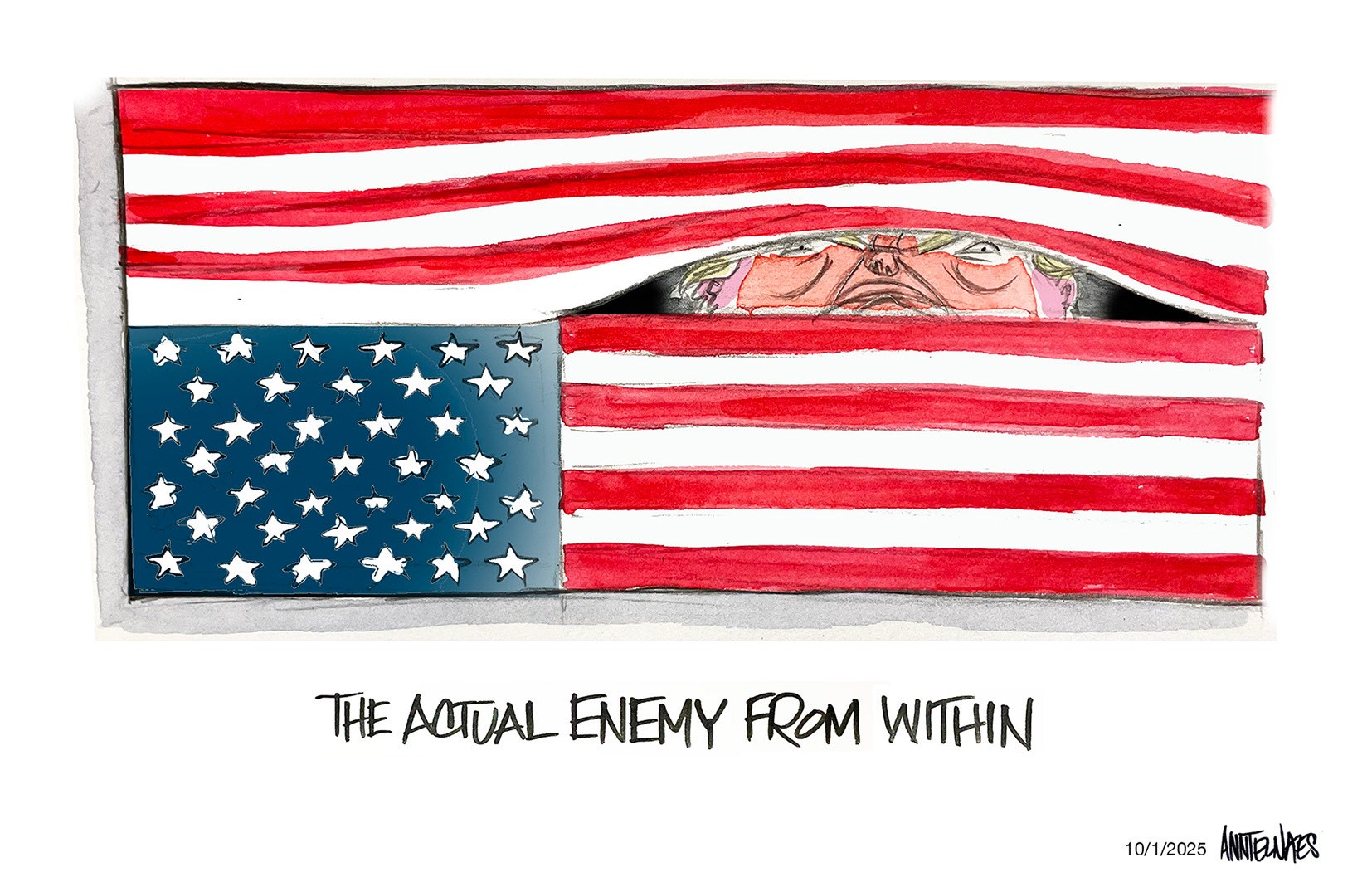
As I’ve said before, please feel free to use my cartoons for your posters (just no altering text or images, please). Contact me either in the comments or email for the hi-res file (atelnaes@anntelnaes.com) . Here’s also a few suggestions from my archives if you don’t have a particular one in mind.
Stay safe and be loud with your First Amendment Rights.
UPDATE: Thank you for all your requests and my apologies for not being able to respond to your added kind messages. Even if you’re only getting the attached file, I’ve read and appreciated them all.
***Liza Donnelly and Steve Brodner are both offering their excellent editorial cartoons to download for posters.
Following public outcry, the Department of Education has reversed its decision to cut funding for students who have both hearing and vision loss, opting instead to reroute grants to an organization that will provide funding to these students.
Following public outcry, the U.S. Department of Education has restored funding for students who have both hearing and vision loss, about a month after cutting it.
But rather than sending the money directly to the four programs that are part of a national network helping students who are deaf and blind, a condition known as deafblindness, the department has instead rerouted the grants to a different organization that will provide funding for those vulnerable students.
The Trump administration targeted the programs in its attacks on diversity, equity and inclusion; a department spokesperson had cited concerns about “divisive concepts” and “fairness” in explaining the decision to withhold the funding.
ProPublica and other news organizations reported last month on the canceled grants to agencies that serve these students in Oregon, Washington and Wisconsin, as well as in five states that are part of a New England consortium.
Programs then appealed to the Education Department to retain their funding, but the appeals were denied. Last week, the National Center on Deafblindness, the parent organization of the agencies that were denied, told the four programs that the Education Department had provided it with additional grant money and the center was passing it on to them.
“This will enable families, schools, and early intervention programs to continue to … meet the unique needs of children who are deafblind,” according to the letter from the organization to the agencies, which was provided to ProPublica. Education Department officials did not respond to questions from ProPublica; automatic email replies cited the government shutdown. (snip-MORE)
The American Federation of Labor (AFL) voted to boycott all German-made products as a protest against Nazi antagonism to organized labor within Germany.




 Scottie's Playtime