Peace & Justice History for 10/28:

Things it’s important we remember, and things to Never Forget.

October 28, since 304
Catholics celebrate the feast of St. Fidelis of Como.  According to one legend, Fidelis deserted the Roman Army’s Theban Legion during Emperor Maximian’s persecution of Christians.  In another legend, he was assigned to guard Christian prisoners at Milan and secured freedom for five of them.
October 28, 1818
Abigail Adams, former First Lady of the United States, died. 
Many of her ideas, documented in her correspondance with her husband, John (later elected president), influenced the government of the United States.  She was politically active to the point where opponents referred to her as “Mrs. President” [see March 31, 1776]

Abigail Adams
More about Abigail Adams 
October 28, 1886

The Statue of Liberty, a gift of friendship from the people of France to the people of the United States, is dedicated in New York Harbor by President Grover Cleveland.
Originally known as “Liberty Enlightening the World,” the statue was proposed by the French historian Edouard de Laboulaye to commemorate the Franco-American alliance during the American Revolution. Designed by French sculptor Frederic-Auguste Bartholdi, the 151-foot statue was the form of a woman with an uplifted arm holding a torch.
In 1903, a bronze plaque mounted inside the pedestal’s lower level was inscribed with “The New Colossus,”a sonnet by American poet Emma Lazarus that welcomed immigrants to the United States with the declaration,“Give me your tired, your poor, / Your huddled masses yearning to breathe free,/ The wretched refuse of your teeming shore. / Send these, the homeless, tempest-tost to me. / I lift my lamp beside the golden door.” 
Read more 
October 28, since 1940
In Greece, Ohi Day (meaning Day of No) marks the refusal of Greece to submit to the Axis Powers.
October 28, 1950

Birth of Sihem Bensedrine, Tunisian human rights activist and journalist.  In 2008, she was awarded the Danish Peace Fund Prize for her commitment to democracy and the rule of law in the Arab world.
About Sinem Bensefrine  
October 28, 1962
Soviet leader Nikita Khrushchev announces the removal of Soviet missle bases in Cuba, ending the Cuban Missile Crisis.
October 28, 1984

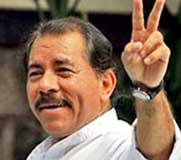
Sandinista Daniel Ortega won the general election for president of Nicaragua, and later attempted to make peace with the United States. 
The United States replied by continuing to support the Contras
.

https://www.peacebuttons.info/E-News/peacehistoryoctober.htm#october28

Own Jones and Israel and Gaza

‘ERASE All Palestinians’ – Popular Israeli Podcasters Claim Most Share Their Genocidal Fantasy

Putin Rues Soviet Collapse as Demise of ‘Historical Russia’

https://www.usnews.com/news/world/articles/2021-12-12/putin-rues-soviet-collapse-as-demise-of-historical-russia

Reuters

FILE PHOTO: Russian President Vladimir Putin speaks during a joint news conference with Greek Prime Minister Kyriakos Mitsotakis following their meeting at the Bocharov Ruchei state residence in Sochi, Russia December 8, 2021. Sputnik/Evgeny Odinokov/Kremlin via REUTERSREUTERS

President Vladimir Putin has lamented the collapse of the Soviet Union three decades ago as the demise of what he called “historical Russia” and said the economic crisis that followed was so bad he was forced to moonlight as a taxi driver.

Putin’s comments, released by state TV on Sunday, are likely to further fuel speculation about his foreign policy intentions among critics, who accuse him of planning to recreate the Soviet Union and of contemplating an attack on Ukraine, a notion the Kremlin has dismissed as fear-mongering.

“It was a disintegration of historical Russia under the name of the Soviet Union,” Putin said of the 1991 breakup, in comments aired on Sunday as part of a documentary film called “Russia. New History”, the RIA state news agency reported.

“We turned into a completely different country. And what had been built up over 1,000 years was largely lost,” said Putin, saying 25 million Russian people in newly independent countries suddenly found themselves cut off from Russia, part of what he called “a major humanitarian tragedy”.

Putin also described for the first time how he was affected personally by the tough economic times that followed the Soviet collapse, when Russia suffered double-digit inflation.

“Sometimes (I) had to moonlight and drive a taxi. It is unpleasant to talk about this but, unfortunately, this also took place,” the president said.

Putin, who served in the Soviet-era KGB, has previously called the collapse of the Soviet Union, which was ruled from Moscow, as the “greatest geopolitical catastrophe” of the 20th century, but his new comments show how he viewed it specifically as a setback for Russian power.

Ukraine was one of 15 Soviet republics and Putin used a lengthy article published on the Kremlin website this year to set out why he believed Russia’s southern neighbor and its people were an integral part of Russian history and culture. This view is rejected by Kyiv as a politically motivated and over-simplified version of history.

The West has accused Russia of massing tens of thousands of troops near Ukraine in preparation for a possible attack as soon as January. The Group of Seven wealthy democracies warned Moscow on Sunday of massive consequences and severe costs if it attacked Ukraine.

The Kremlin has said Russia has no plans to launch a fresh attack on Ukraine and that the West appears to have convinced itself of Moscow’s aggressive intentions based on what it calls false Western media stories.

Russia annexed Ukraine’s Crimea region in 2014 and has backed separatists who took control of a swath of eastern Ukraine that same year and who continue to fight Ukrainian government forces.