March 3, 1863 In the midst of the Civil War, President Abraham Lincoln signed a conscription act that created the first draft lottery of American citizens. The act called for registration of all males between the ages of 20 and 35, and unmarried men up to 45, including aliens with the intention of becoming citizens, by April 1. Exemptions from the draft could be bought for $300 or by finding a substitute draftee. Many objected to this provision describing the war as a “rich man’s war, but poor man’s fight.” Black Americans were also not eligible for the draft because they weren’t considered citizens. Bounties for New York military “volunteers” during the Civil War
March 3, 1913 The day before Woodrow Wilson’s inauguration as president, 8000 from the National American Woman Suffrage Association (NAWSA), representing every state, marched in Washington, D.C. to call for a constitutional amendment granting women the right to vote. Organized by Alice Paul and Lucy Burns, who had been inspired by the parades, pickets and speeches of the British suffragists, the march drew hundreds of thousands of spectators. Though some of the marchers were attacked by onlookers, the march focused attention on the suffrage issue. [see March 4, 1917 ] More about Alice Paul
March 3, 1961 The village council in the Inupiat Eskimo town of Point Hope, Alaska, formally protested, in a letter to President Kennedy, the proposed chain explosion of three atomic bombs in the nearby above-ground “Project Chariot” tests. The project entailed using atomic explosions to create a harbor near Point Hope, above the Arctic Circle in northwest Alaska. The excavation never happened due to public opposition and inspired native peoples in Alaska to assert their rights and legitimate land claims. Edward Teller “Father of the hydrogen bomb” arrives to promote plans for Project Chariot. Read more about Project Chariot
March 3, 2003 In the first-ever worldwide theatrical act of dissent, there were at least 1029 stagings of Lysistrata, the 2400-year-old anti-war comedy by Greek playwright Aristophanes. Conceived and organized in just two months by Kathryn Blume and Sharron Bower, the performances all occurred on the same day to express opposition to the U.S. invasion of Iraq. Staged in 59 countries (including Iraq), the bawdy play tells of Athenian and Spartan women who unite to deny their lovers sex in order to stop the 22-year-long Peloponnesian War between the two city-states. Desperate for intimacy, the men finally agree to lay down their swords and see their way to achieving peace through diplomacy. More about how it happened
I have strong feelings about women’s restrooms, too, as we all know; so many thoughts about so many women’s bathroom issues. I’m in agreement with this essay. Stick with it, you’ll see. You might want a tissue.
A Trans Girl Approached Me in the Ladies’ Bathroom and It Bothered Me. Here’s Why. by Natalie S. Ohio
Why the girls’ bathroom is a sacred space for women and how we must seek to keep it that way.Read on Substack
Ugh, no hand soap. Again.
If there’s one thing living in Spain will teach you, it’s that hand washing isn’t priority número uno in public spaces.
Luckily, as someone who grew up here, this is no surprise to me. As Gang Starr once said, “I’m not new to this, I’m true to this.”
In other words, I carry soap sheets wherever I go.
As I was washing my hands in the shopping mall bathroom last week, the door cracked open and a head peeked around.
Big brown eyes appeared from under a blunt-cut fringe. A smattering of adolescent acne decorated soft, rounded cheeks and a set of metallic braces twinkled between glossy pink lips.
Either retro makeup is back in style or rubbing my hands together had sent me ricocheting back to the mid-80s…
We regarded each other for a moment.
“¿Puedo pasar?” May I come in?
Her delicate, childlike voice softly penetrated the silence of the empty bathroom.
“Sí, claro.” Of course.
I smiled and gestured to the vacant stalls and the rows of mirrored sinks behind me.
I wondered if she mistakenly believed from the outside that this was a single-person bathroom. Or maybe she thought I was a cleaner. It wouldn’t be the first time a Spaniard had seen my complexion and automatically assumed I was the help.
I was otherwise a little perplexed as to why she would ask.
She hesitated slightly as she stepped around the door.
“Bueno, es que… soy trans.”
Well, it’s just that… I’m trans.
What I’m about to say may sound strange to some, but here goes:
The ladies’ bathroom plays a surprisingly significant role in girlhood.
I’m not talking about the one at Grandma’s house with its peach-coloured wall tiles, nor the ones in fancy restaurants where you go to check your appearance on a date.
I’m talking about the public toilets that double as makeshift community hubs for women — grubby little social sinkholes you find in nightclubs, bars, and airports that offer a brief moment of tranquillity as the commotion fades behind the closing door.
Restrooms with precarious toilet seats, broken flushes, and “love urself babe ur perfect” scribbled in eyeliner on the inside of the stall.
I’m willing to bet that anybody who has used a public ladies’ room has had at least one memorably positive encounter with someone they’ve met inside.
What’s so special about it? I hear you cry. Men have bathrooms too and nobody bats an eyelid. If anything, the less said about those, the better.
On a functional level, nothing at all.
In fact, the ladies’ very often sucks in comparison to the men’s. A victim of long queues, scarce toilet paper, and the most unflattering lighting known to man.
However, we’re not talking about serviceability. If we were, we wouldn’t have a leg to stand on.
What I’m referencing is much deeper than that. Much more visceral.
I once undid a drunken stranger’s bodysuit in a nightclub bathroom so she could relieve herself before going back out to tear up the dancefloor. If you’ve any idea what a bodysuit is and where its fastening is located, you’ll understand why that’s a tall order.
I’ve witnessed countless girls take their drinks inside and leave them unattended by the sink without any concerns over getting roofied.
There’s nearly always someone giving an empowering pep talk to a broken-hearted friend who needs a boost of confidence.
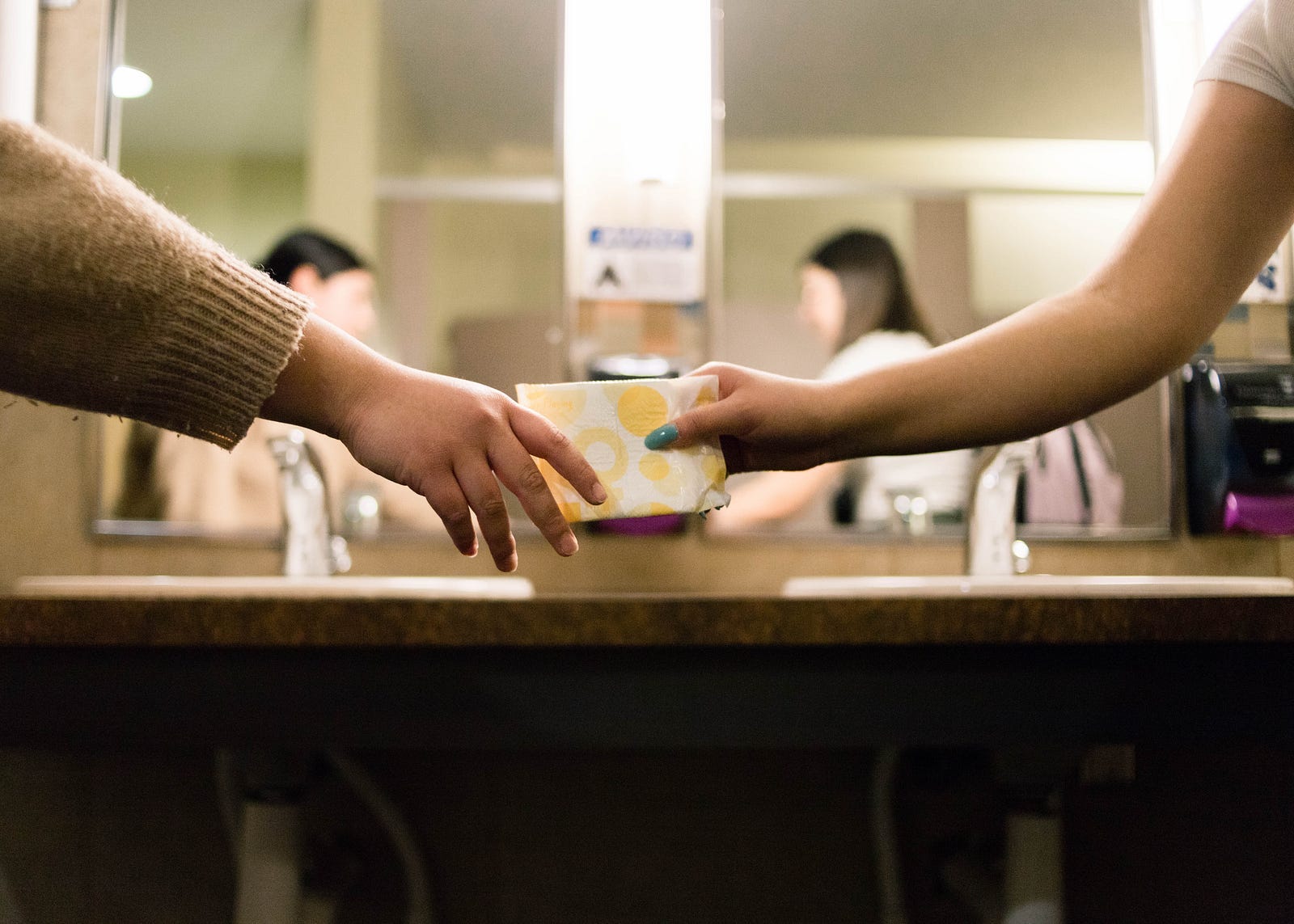
Blister plasters, boob tape, and tampons are handed out like Werther’s Originals at a Women’s Institute meeting. Pleasant conversation dapples the air. Strangers become new best friends.
Outfits are readjusted, hair is coiffed, perfume is shared, and doors with faulty locks are guarded to prevent accidental walk-ins. Those who are desperate are permitted to jump the line.
It’s where the power of sorority is comfortably displayed.
The girls’ bathroom is one of the few places where female vulnerability isn’t preyed upon.
Conversely, it’s often bolstered and allowed to exist without any need for justification.
Sure, it’s where you go when nature calls. But it also acts as a cocoon-like environment — somewhere you can retreat to when you want to feel… safe.
Nat, why are you waxing lyrical about the loo?
Well, because this recent encounter brought about a bracing realisation for me — a conventional woman with an uncomplicated identity who fits comfortably within the margins of the archetype.
I realised that the person peeking her head around the door wasn’t merely asking for permission to enter the room.
She was asking for permission to belong.
She was giving me the power to accept or reject her appeal to exist freely in a space that—for people like me—is a place of comfort, and for people like her, is commonly associated with hostility and consternation.
The alignment of my biological sex and gender identity affords me the confidence to take up space in social settings where others, with less streamlined identities, may feel reluctant.
Of course, uncertainty is a perfectly natural phenomenon in adolescence — kids are constantly trying to make sense of themselves and explore how and where they best fit in a world governed by grown-ups. And this kid, who looked to be some 14 or 15 years old, is no different.
However, this situation was unique because it didn’t focus on the implicit social hierarchy that comes with a significant age gap.
Instead, our respective positions on the spectrum of womanhood forced us to weigh up the other’s existence.
It was as though she believed that within a shared space her identity would encroach on mine; so announcing that she was trans and verbally acknowledging our differences would help me to legitimise her humanity some.
She asked me if she could come in because there may have been a chance that I wouldn’t have wanted her to.
And that is devastating to me.
“Bueno, hija, ¿qué más da? Pasa, pasa.” So what, kiddo? Come on in.
I headed over to the hand dryer.
“Ay, muchas gracias!”
She smiled sweetly and walked past me in her fishnet tights and patent Dr. Martens.
Transphobia is not an alien concept in countries that operate under organised religion or have a traditional set of social values, such as Spain.
Vox—a prominent far-right political party—has been consistently vocal about its disdain towards transgender people and its desire to prevent their access to base-level human rights. Transgender people are persecuted by conservative political parties and their followers all across the nation.
Adults berating other adults is one thing, but what happens when this toxic, nefarious behaviour falls upon the shoulders of children?
Children are sacred
“Los niños son sagrados” (children are sacred) is a phrase you see and hear typically in response to the mistreatment of children in any form.
Children are revered in Hispanic culture, so why was this particular child so acutely aware of the controversy surrounding her identity? Shouldn’t the innocence we try so hard to preserve in children include transgender children too?
Shouldn’t she be able to exist as comfortably as her peers do?
Had I voiced an issue with her coming into the bathroom, there is no doubt in my mind that she would’ve turned away and left. And that’s what bothered the hell out of me. It upset me that she felt the need to even mention it.
Because who am I? I’m not important. I have no authority over public spaces or gender identity whatsoever.
I don’t care what people do in the privacy of a bathroom stall. I don’t stop to intimidate them or pass judgement.
I’m just a stranger washing her hands at the sink. But luckily for this girl, I’m a kind stranger. Someone whose cup of compassion and understanding runneth over.
The fact that she felt the need to ask stirred up feelings of pity and rage in equal measure.
It disgusts me that this harmless individual possibly has and probably will suffer at the hands of narrow-minded losers who mind other people’s business more than their own.
As if growing up isn’t already fraught with insecurity and a heightened awareness of your differences from others. Being a teenager in today’s world is like wandering into the seventh circle of hell with gasoline shorts on.
Sure, the world is a big, scary place. But the girls’ bathroom is something else entirely, and it should stay that way.
I felt a wave of protectiveness wash over me as I thought about how she must feel on a regular basis. Physically, she was long-limbed and lofty, yet she seemed so small and defenceless.
A kid.
Just figuring herself out, one day at a time.
When she came into the sink area, she told me she liked my outfit — I told her that I have my own clothing line and was wearing one of my newest designs. I offered her a soap sheet and asked her about her makeup — her parents had bought her an eyeshadow palette for her birthday recently. I’ve never been any good with eyeshadow. She doesn’t go a day without it.
So there we were.
Just two gals chopping it up in the girls’ bathroom, enjoying pleasant conversation with someone we’ll probably recall warmly once or twice before returning to the monotony of our everyday affairs.
I suppose that these are the situations we need more of. Just witnessing humans being humans and doing human things.
So often bigots behave as though those they’re prejudiced towards are a subhuman entity that needs to be exterminated to restore a sense of harmony and order to the world.
In reality, we’re all just people. Trying to get by and get on with things before we shuffle off this mortal coil once our number is up.
Coexisting peacefully really isn’t as complicated as it’s made out to be. Being kind to others is far from difficult.
We’re all different, and that’s fine — it doesn’t need to be fire and brimstone and bloodbaths and battalions.
So when you meet someone different from you, just share the soap.
March 2, 1807 The U.S. Congress sought to end international slave trade by passing an act to make it unlawful “to import or bring into the United States or the territories thereof from any foreign kingdom, place, or country, any negro, mulatto, or person of colour, with intent to hold, sell, or dispose of such negro, mulatto, or person of colour, as a slave, or to be held to service or labour.” Domestic traffic in slaves, however, was still legal and unregulated. Article I, Sec. 9 of the Constitution had set 1808 as the end to the individual states’ control of immigration..
The first shipload of African captives to North America had arrived at Jamestown, Virginia, in August 1619, and the first American slave ship, named Desire, sailed from Marblehead, Massachusetts, in 1637. In total, nearly 15 million Africans were transported as slaves to the Americas. The African continent, meanwhile, lost approximately 50 million human beings to slavery and related deaths. Despite the federal prohibition and because the slave trade was so profitable, an additional 250,000 slaves would be “imported” illegally by the time the Civil War began in 1861. African slave trade timeline
March 2, 1955 Nine months before Rosa Parks made headlines, teenager Claudette Colvin was arrested in Montgomery, Alabama, for refusing to give up her bus seat to a white person. She was active in the Youth Council of the local NAACP (National Association for the Advancement of Colored People). Though the Montgomery Bus Boycott was begun after Ms. Parks’s arrest, Clovin’s legal case became part of the basis for a federal court challenge to Alabama’s segregation laws. Colvin became one of four plaintiffs in Browder v. Gayle, in which the Supreme Court ultimately struck down the law under which she was arrested for merely taking her seat on a bus. Claudette Colvin More about Claudette Colvin
March 2, 2011 British, French and Tunisian planes began airlifting to Cairo some 85,000 mostly Egyptians who had been guest workers in Libya. Made refugees by the civil war being raged against the four-decade-long dictatorship of Muammar Qadaffi, they had fled to Djerba on the Libya-Tunisia border. Tunisia, just recently convulsed by the first stirrings of the so-called Arab Spring, was unable to deal with the potential humanitarian crisis at their border. Iraqi security forces close a bridge leading to the heavily guarded Green Zone in Baghdad. Photo: Khalid Mohammed/AP
March 1, 1943 A huge rally in New York City’s Madison Square called on the U.S. government to reconsider its refusal to offer sanctuary to Jewish refugees of Nazi Germany.
March 1, 1954 Nuclear Free and Independent Pacific Day, or Bikini Day, marks the anniversary of the explosion of the largest-ever U.S. nuclear weapon which contaminated major parts of the Marshall Islands [see February 28, 1954]. The land and people of the south Pacific have been exposed to numerous nuclear bomb tests and their radioactive aftermath. In addition to the 67 atmospheric U.S. tests at Bikini and Eniwetok Atolls, France tested 193 weapons in French Polynesia, 46 in theatmosphere. The U.K. exploded 34 devices on Malden and Christmas Islands.The day is also intended to call attention to the potential danger of the increasing trans-oceanic shipment of hazardous nuclear materials, and the need of nuclear and shipping nations to consider the rights and health of the indigenous peoples of the region. The proposed South Pacific Nuclear-Free Zone Treaty
March 1, 1956 The University of Alabama permanently expelled Autherine Lucy, the first African-American person ever admitted to the University (following a federal court’s ordering her admission).She was met with rioting by thousands of students (none of whom were disciplined) and others. She charged in court that University officials had been complicit in allowing the disorder, as a means of avoiding compliance with the court order. The trustees expelled her for making such “ baseless, outrageous and unfounded charges of misconduct on the part of the university officials.” Burning desegregation litgerature at the University of Alabama. Students, adults and even groups from outside of Alabama shouted racial epithets, threw eggs, sticks and rocks, and generally attempted to block her way. Autherine Lucy Foster receives her master’s degree from University of Alabama in 1992. Autherine Lucy Foster ultimately received her master’s degree from the University of Alabama in library science in 1991, the same year her daughter, Grazia, earned her undergraduate degree. The University now grants an endowed scholarship annually in Lucy Foster’s name.
March 1, 1961 President John F. Kennedy issued Executive Order 10924 establishing the Peace Corps as a new agency within the Department of State. The same day, he sent a message to Congress asking for permanent funding for the agency, which would send trained American men and women to foreign nations to assist in development efforts. The Peace Corps captured the imagination of the U.S. public, and during the week following its creation, thousands of letters poured into Washington from young Americans hoping to volunteer. What is the Peace Corps today?(A happy surprise; the website is still up and functioning at 7:54 PM 2/28/25. -A)
March 1, 1974 Former top Nixon White House aides H.R. Haldeman and John D. Ehrlichman, and former Attorney General John Mitchell, were indicted on obstruction of justice charges related to the Watergate break-in.
February 28, 1919 Gandhi, 1919 Mohandas Gandhi launched his campaign of non-cooperation with Imperial British control of India. He called his overall method of nonviolent action Satyagraha, formed from satya (truth) and agraha, used to describe an effort or endeavor. This translates roughly as “Truth-force.” A fuller rendering, though, would be “the force that is generated through adherence to Truth.” More on Satyagraha (civil disobedience) Excerpt from The Core of Gandhi’s Philosophy by Unto Tahtinen on the concept of Satyagraha
February 28, 1946 Ho Chi Minh, the leader of the newly formed Democratic Republic of Vietnam, facing re-imposition of French colonial rule over his country, sent a telegram to President Harry Truman: “. . . I most earnestly appeal to you personally and to the American people to interfere urgently in support of our independence and help making the negotiations more in keeping with the principles of the Atlantic and San Francisco charters [founding documents of the League of Nations and United Nations].”
February 28, 1954 The U.S. detonated its largest thermonuclear blast ever, in a test of a new hydrogen (fusion) weapon design in the atmosphere at Bikini Atoll, part of the Marshall Islands. Castle Bravo had an explosive yield of 15 megatons (equivalent to 15,000,000 tons of TNT), it was double the maximum possible expected by the Atomic Energy Commission. Carried out in spite of adverse weapon conditions (the monitoring station was downwind at the time of detonation), the unexpected yield created a radioactive fallout plume that contaminated three other atolls of the 29 in the Marshall chain. Though too late to avoid their contamination, hundreds of Marshallese and U.S. servicemen were evacuated.To avoid another such radiological disaster, future tests required an exclusion zone 1370 km in diameter (850 miles), an area equal to about 1% of the earth’s surface. Because Bikini had been essentially destroyed, subsequent test weapons were detonated from barges. All about Castle Bravo
February 28, 1958 The Campaign for Nuclear Disarmament (CND) was founded in London by philosopher Sir Bertrand Russell, then 86 years old, and the Reverend Canon (Lewis) John Collins of St. Paul’s Cathedral.The peace symbol was originally developed for CND. History of the CND The CND today
February 28, 1989 The Nevada-Semipalatinsk Movement to Stop All Nuclear Testing was founded in the USSR (Union of Soviet Socialist Republics). Olzhas Suleimenov, a popular Kazakh poet, was chosen to lead this first anti-nuclear non-governmental organization in Kazakhstan, formerly part of the USSR. Nevada-Semipalatinsk ended nuclear arms tests at the Semipalatinsk Polygon. Organizers had been inspired by the large Nevada Test Site anti-nuclear demonstrations and encampments outside Las Vegas in the mid-to-late 1980s. a Semipalatinsk test demo at Semipalatinsk, 1990 Read more
February 29, 1968 The National Advisory Commission on Civil Disorders (Kerner Commission) warned that racism was causing America to move “toward two societies, one black, one white – separate and unequal.” Former Illinois Governor Otto Kerner and his commission were charged by President Lyndon Johnson to look into the causes of the many riots that had taken place in recent years. The 1968 Kerner Commission Got It Right, But Nobody Listened
February 29, 1984 U.S. District Judge Miles W. Lord held the officers of A.H. Robins Company personally liable for the injuries caused by the intrauterine contraceptive device they had produced and sold, the Dalkon Shield. Eighteen women had died, and more than 300,000 ultimately claimed injury. The top three executives had to pay $4.6 million personally, and the company paid out $220 million in compensatory and $13 million in punitive damages to thousands of women.
Judge Miles W. Lord Judge Lord: “The whole cost-benefit analysis is warped. They say, well you can kill so many people if the benefits are great enough . . . Once they put a price on human life, all is lost. Life is sacred. Life is priceless.” He also criticized Robins’s legal strategy of requiring witnesses to discuss their sex lives: ”You exposed these women, and ruined families and reputations and careers, in order to intimidate those who would raise their voices against you,” he said. “You introduced issues that had no relationship whatsoever to the fact that you implanted in the bodies of these women instruments of death, mutilation and of disease.” Judge Lord was called before a review panel for his professional and judicial conduct in the case but the charges were dismissed and he continued to serve until retirement. Read about the case
The Naming of Cats is a difficult matter, It isn’t just one of your holiday games;
You may think at first I’m as mad as a hatter
When I tell you, a cat must have THREE DIFFERENT NAMES.
First of all, there’s the name that the family use daily,
Such as Peter, Augustus, Alonzo, or James,
Such as Victor or Jonathan, George or Bill Bailey—
All of them sensible everyday names.
There are fancier names if you think they sound sweeter, Some for the gentlemen, some for the dames:
Such as Plato, Admetus, Electra, Demeter—
But all of them sensible everyday names,
But I tell you, a cat needs a name that’s particular,
A name that’s peculiar, and more dignified,
Else how can he keep up his tail perpendicular,
Or spread out his whiskers, or cherish his pride?
Of names of this kind, I can give you a quorum,
Such as Munkustrap, Quaxo, or Coricopat,
Such as Bombalurina, or else Jellylorum— Names that never belong to more than one cat.
But above and beyond there’s still one name left over,
And that is the name that you never will guess;
The name that no human research can discover—
But THE CAT HIMSELF KNOWS, and will never confess.
When you notice a cat in profound meditation, The reason, I tell you, is always the same: His mind is engaged in a rapt contemplation
Of the thought, of the thought, of the thought of his name: His ineffable effable Effanineffable Deep and inscrutable singular name.
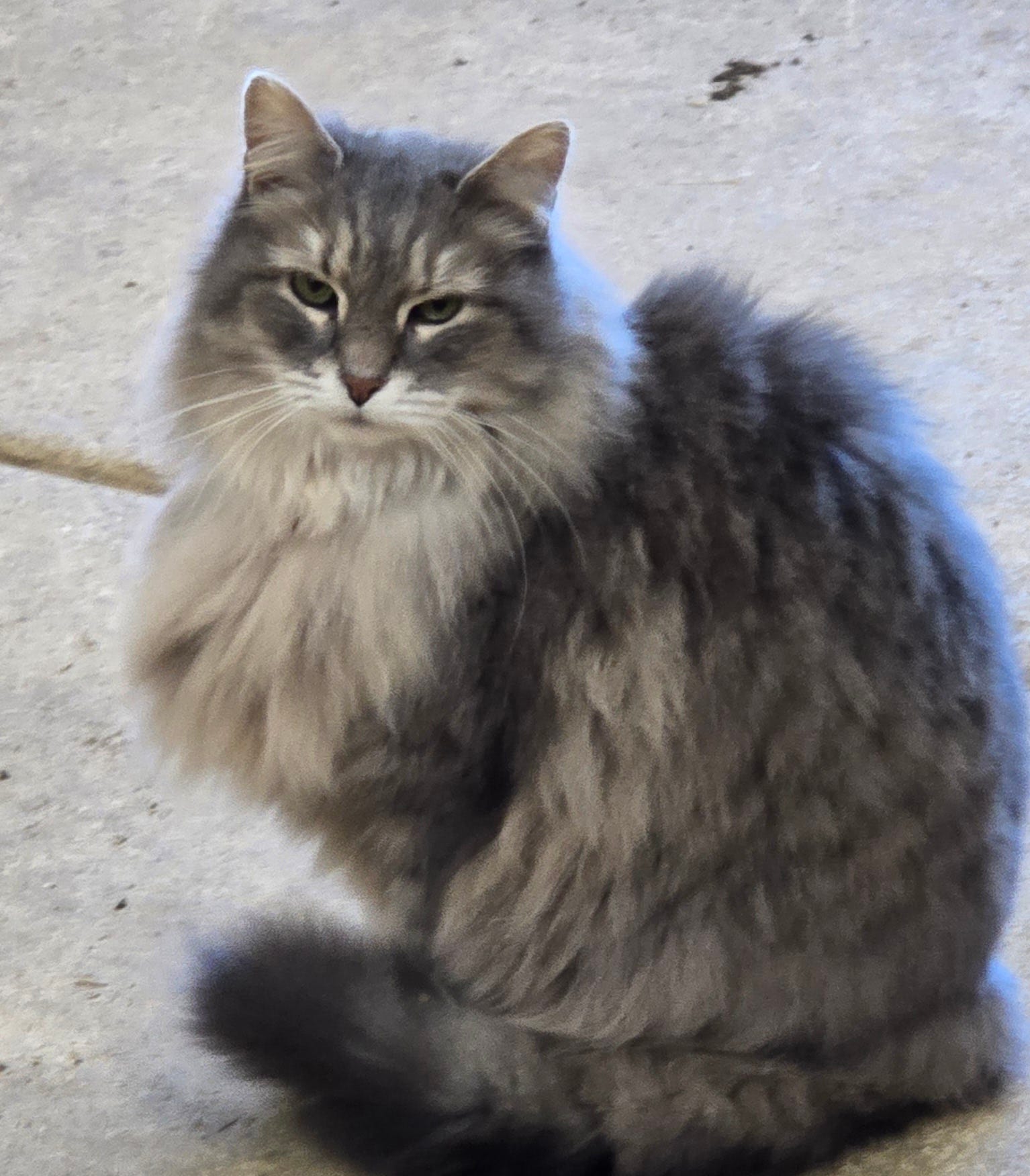
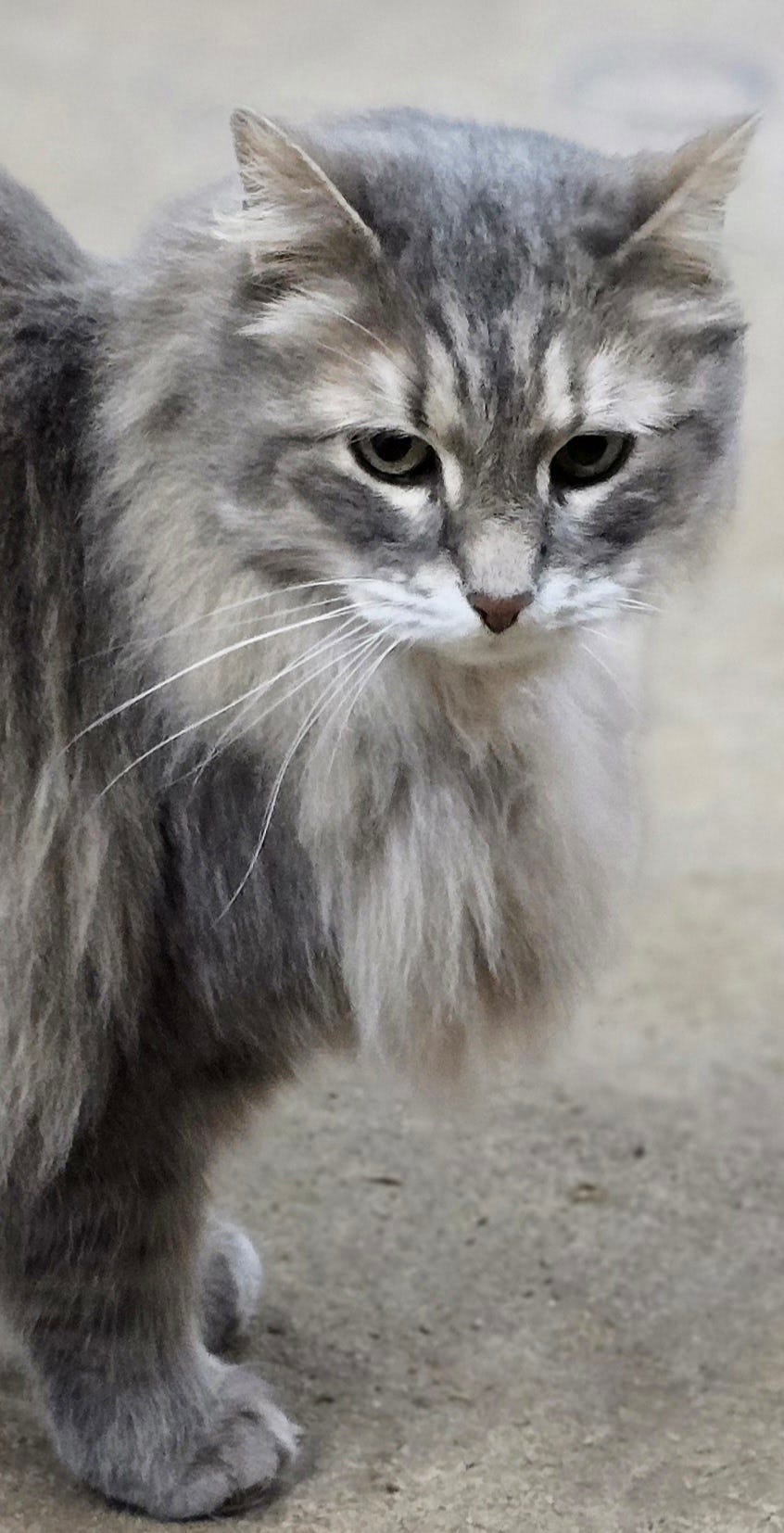
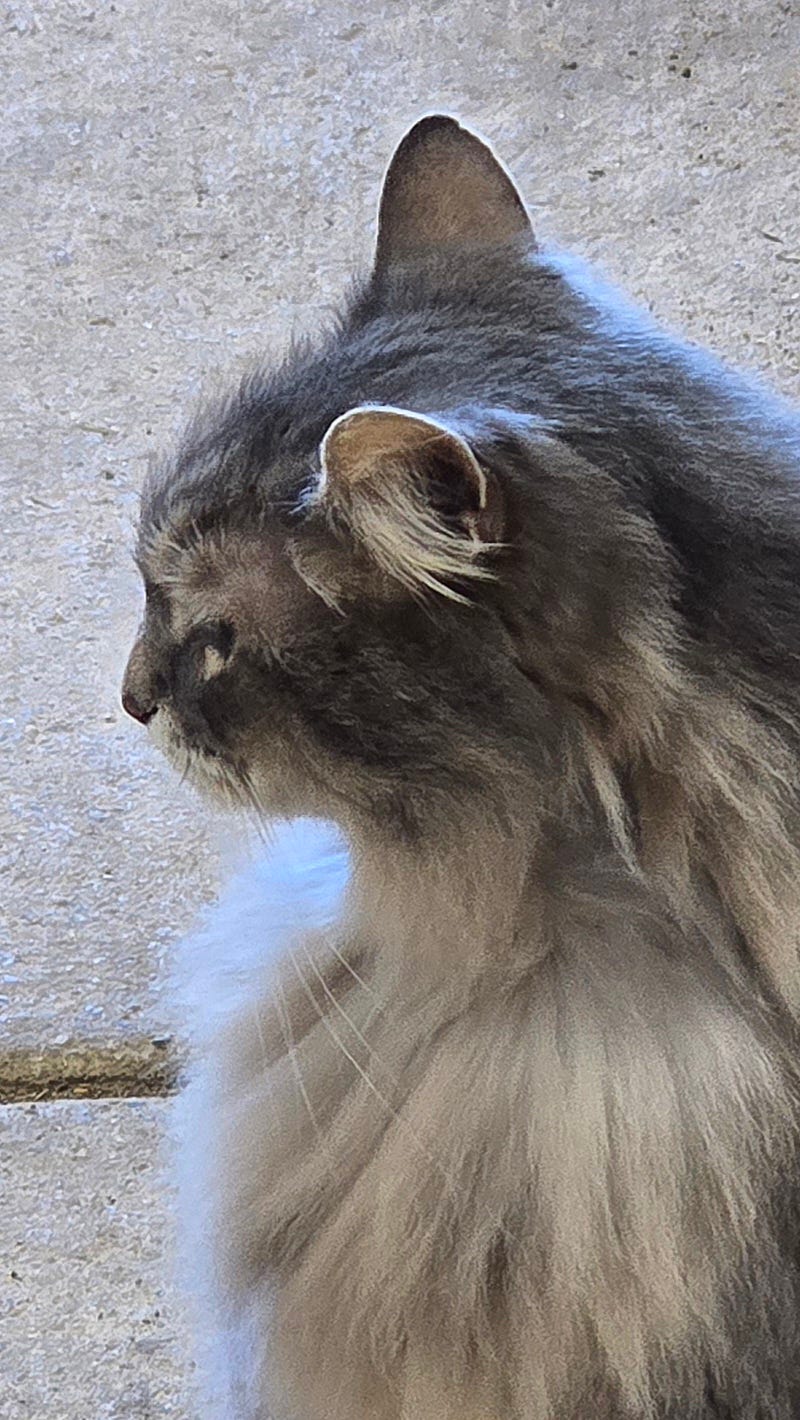
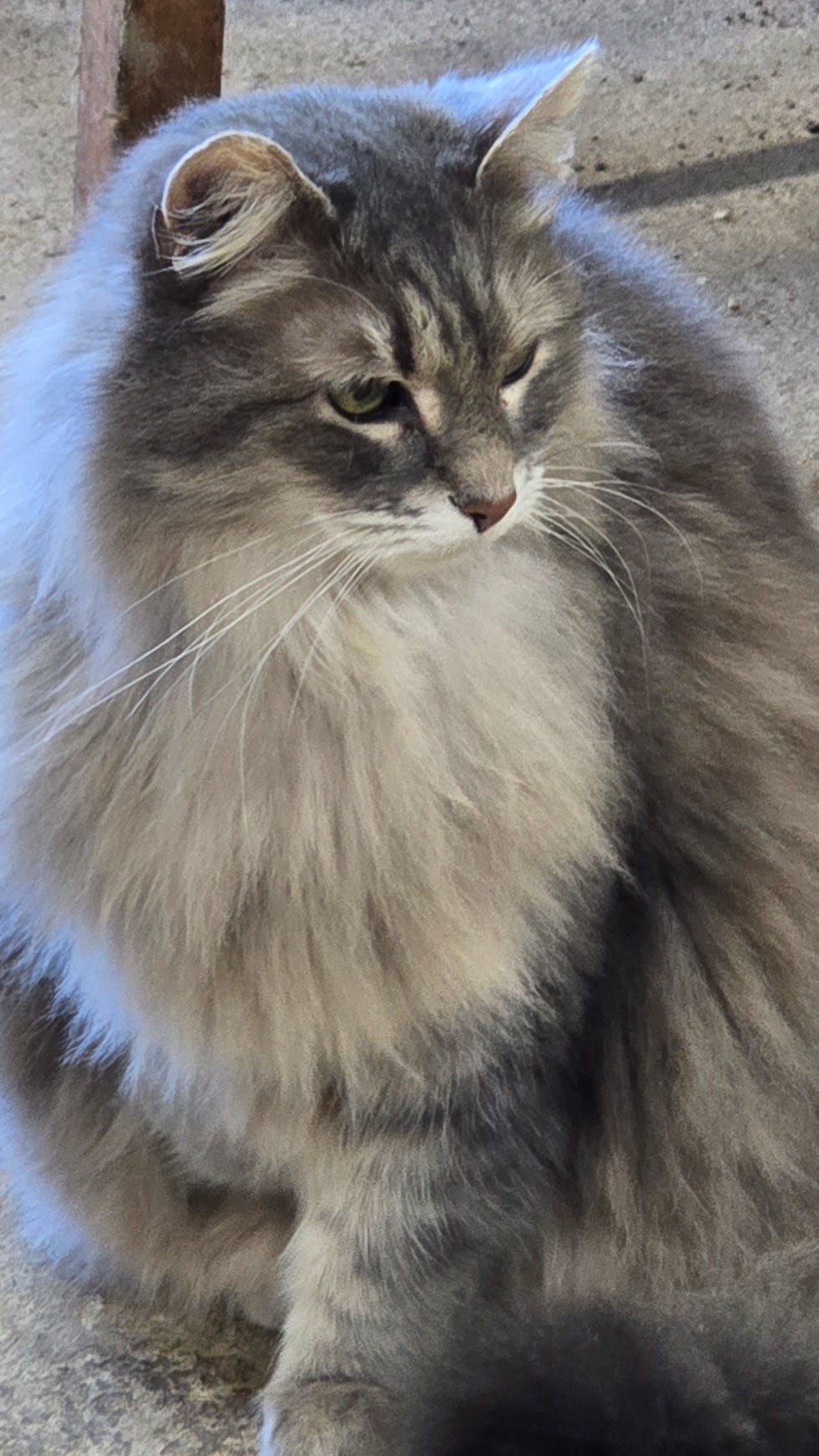
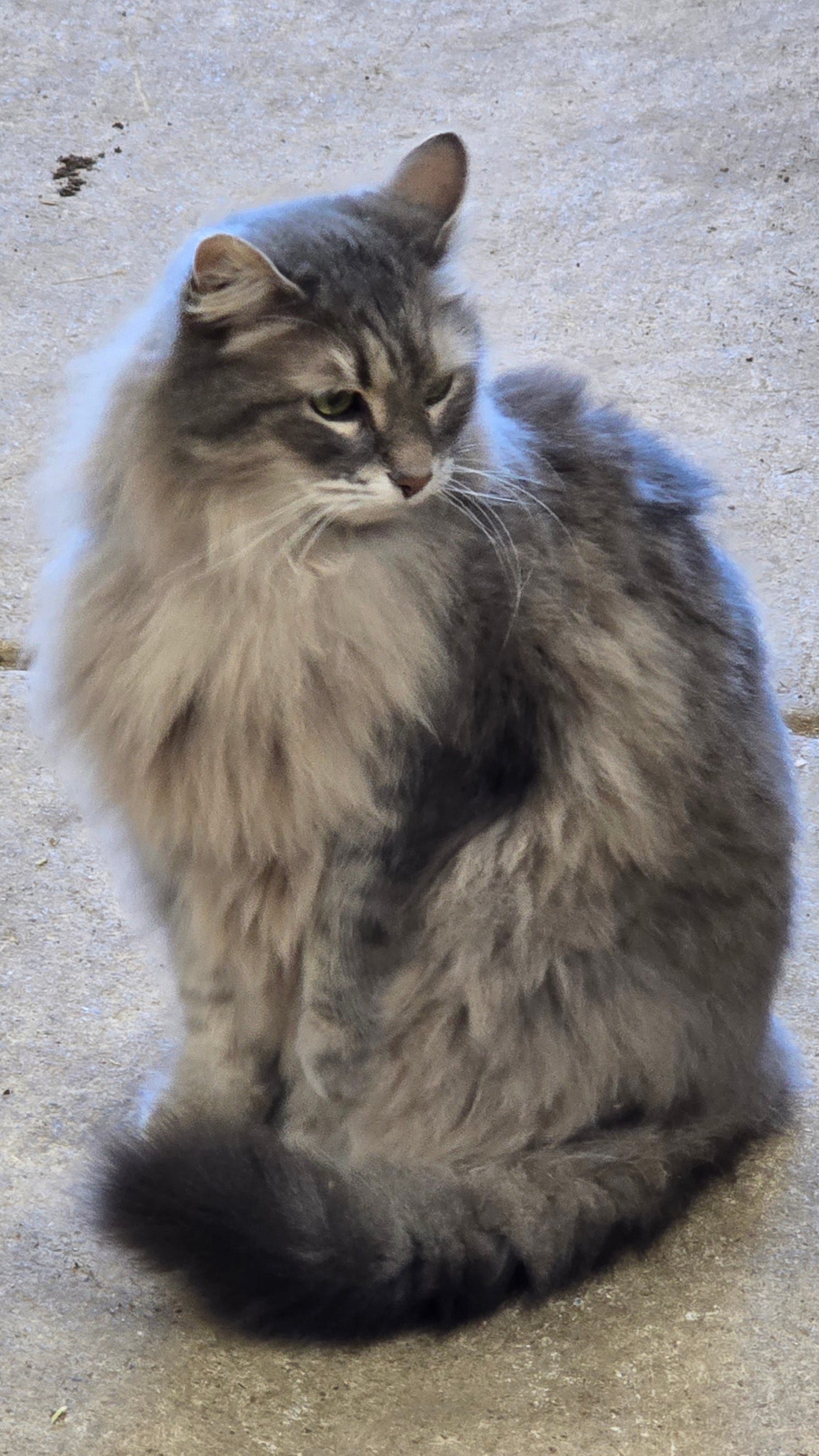
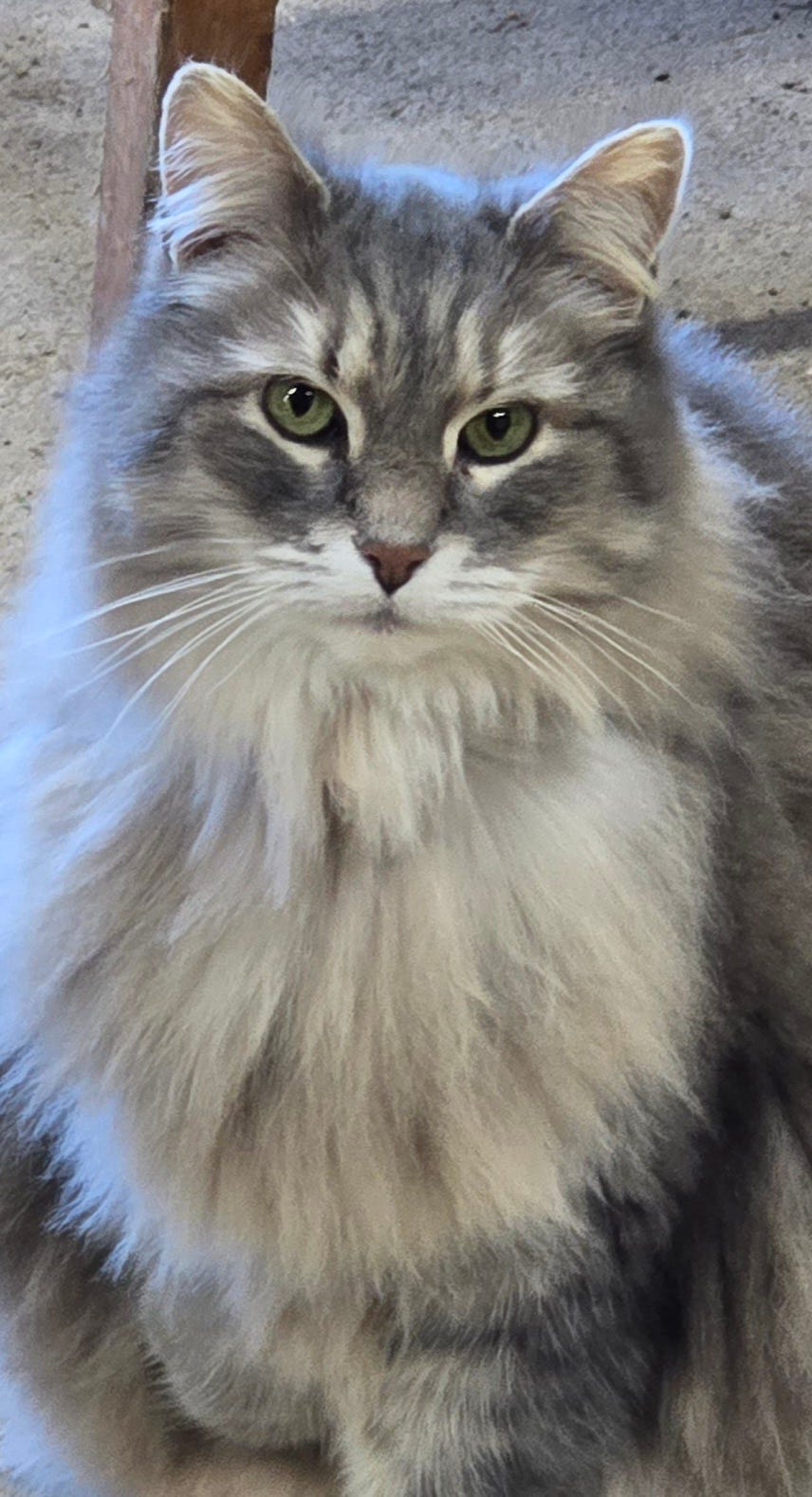
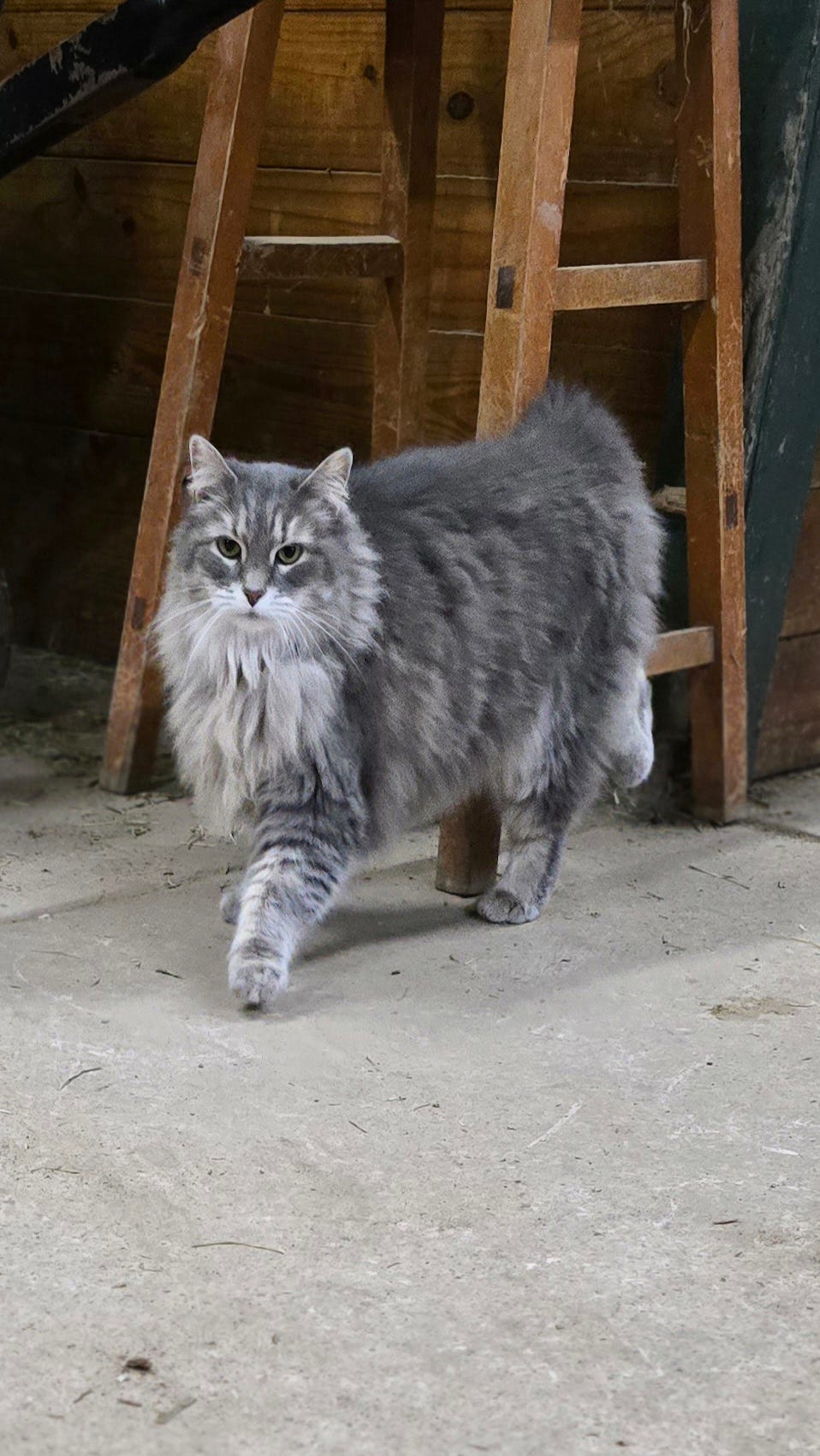
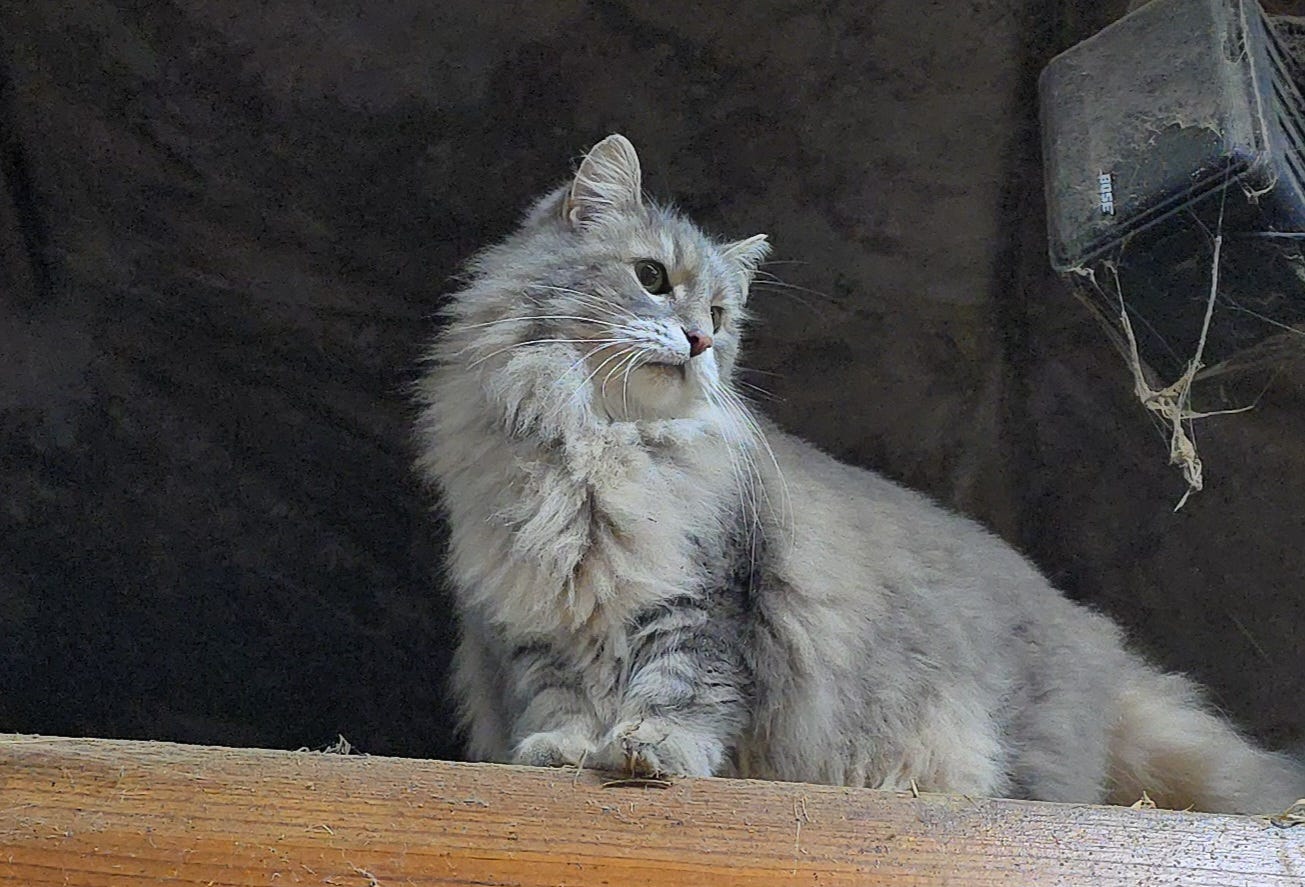
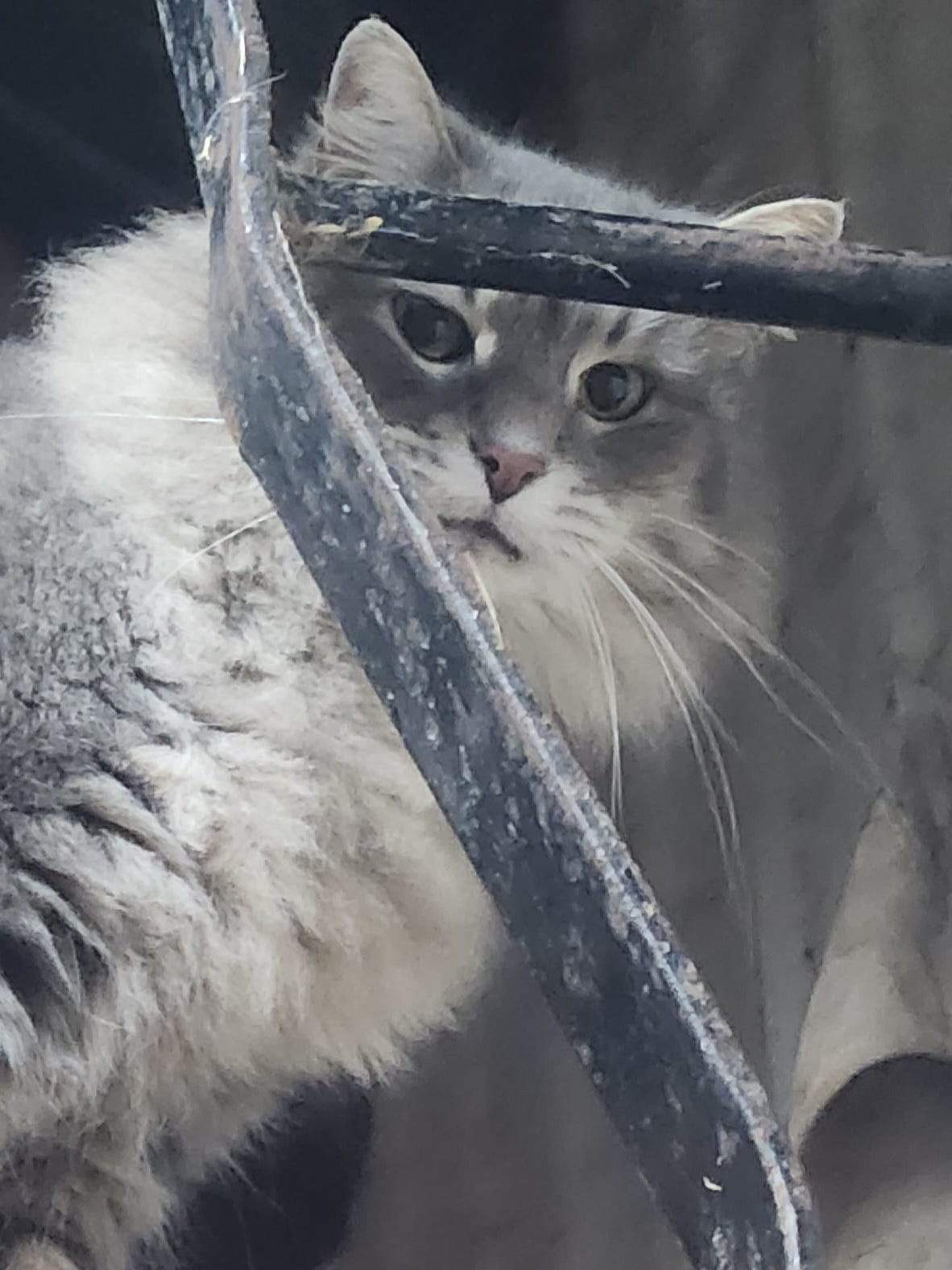
Barn cat is a righteous little storm of constant movement. I have to take four pictures to everyone I can use – sometimes more. Here’s the first nine pictures I took for this session.
February 27, 1939 Flint sit-down strikers, 1937 The Supreme Court outlawed sit-down strikes in its decision NLRB v. Fansteel Metallurgical Corp. Such strikes had become a very effective strategy employed by workers to organize unions. The 1937 Flint sit-down strike of autoworkers against General Motors forced GM to recognize the United Auto Workers as the representative of its hourly employees, and negotiate wages and working conditions. The text of the Supreme Court’s decision:
February 27, 1973 Hundreds of Oglala Lakota Sioux and members of the American Indian Movement (AIM) occupied the village of Wounded Knee, South Dakota. Angered over a long history of violated treaties, mistreatment, family dismemberment, cultural destruction, discrimination, and impoverishment through confiscation of resources, they particularly demanded the U.S. live up to the terms of the 1868 Fort Laramie Treaty. That treaty recognized the Sioux as an independent nation in the western half of South Dakota. Additionally, there had been a recent campaign of harassment and violence by tribal and FBI officials. Wounded Knee was chosen because of the 1890 massacre there of several hundred men, women and children by U.S. troops. The occupation lasted until May.
February 25, 1941 A general strike was called in Amsterdam to protest Nazi persecution of Jews under the German Nazi occupation. The previous weekend 425 Jewish men and boys had been imprisoned (only two survived the war). Truck drivers, dock and metal workers, civil servants and factory employees — Christians, Liberals, Social Democrats and Communists — answered the call and brought the city to a standstill. The work stoppages spread to Zaanstreek, Kennemerland and Utrecht. Two days later the strike was called off: nine people were dead, 50 injured and another 200 arrested, some of whom were to die in the concentration camps. “The Dokwerker” is a statue by sculptor Mari Andriessen in Amsterdam’s Jonas Daniel Meyer Square commemorating the February 1941 strike. It is frequently the rallying point for demonstrations against racism. Read more (pdf)
February 25, 1968 Discussing the war capacity of North Vietnam, a country that had been fighting for its independence for 23 years and had just staged the massive, successful Tet Offensive, U.S. General William C. Westmoreland stated, “I do not believe Hanoi can hold up under a long war.” He was replaced as commander in Vietnam less than four months later. Vietnam commander General William Westmoreland meeting with President Lyndon Johnson Westmoreland’s life and career (It’s NYT’s obit.)
February 25, 1971 Legislation was introduced in both houses of Congress to forbid U.S. military support of any South Vietnamese invasion of North Vietnam without prior congressional approval. This bill was a result of the controversy that arose following the invasion of Laos by South Vietnamese forces. On February 8, the Army of the Republic of Vietnam had launched a major cross-border operation into Laos to interdict activity along the Ho Chi Minh Trail and destroy the North Vietnamese supply dumps in the area. The Ho Chi Minh Trail, named for the leader of North Vietnam, was an informal network of jungle trails down which supplies came from the north, supplying insurgents and troops in the south.
February 25, 1986 The newly elected Philippine president, Corazón Aquino, was sworn in, bringing to an end years of dictatorship under Ferdinand Marcos. In the face of massive demonstrations against his rule, President Ferdinand Marcos and his entourage had been airlifted from the presidential palace in Manila by U.S. helicopters.
February 25, 2011 A Day of Rage saw demonstrations across the Middle East. Protesters in Iraq, Yemen, Egypt, Tunisia, Jordan, and Bahrain showed their support variously for an end to corruption and income inequality, political reform and better public services, and the replacement of long-running dictatorships with democratic regimes. Day of Rage in Taiz, Yemen Reports from throughout the region
I just saw this, over supper just now. I’m a big fan of Roberta Flack’s talent.
Roberta Flack, the Grammy-winning soul singer best known for her celebrated interpretations of romantic ballads like “Killing Me Softly With His Song,” as well as her professional collaborations and social activism, has died, according to a statement from her publicist.
She was 88.
Flack died Monday at her home, surrounded by her family, Elaine Schock, her publicist, told CNN. Her death followed several years of health challenges, including a diagnosis, revealed publicly in late 2022, of amyotrophic lateral sclerosis, or ALS. The progressive condition, often referred to as Lou Gehrig’s disease, made it impossible for Flack to sing, her representatives said at the time.
From George Orwell to Hannah Arendt and John le Carré, thousands of blacklisted books flooded into Poland during the cold war, as publishers and printers risked their lives for literature
The volume’s glossy dust jacket shows a 1970s computer room, where high priests of the information age, dressed in kipper ties and flares, tap instructions into the terminals of some ancient mainframe. The only words on the front read “Master Operating Station”, “Subsidiary Operating Station” and “Free Standing Display”. Is any publication less appetising than an out-of-date technical manual?
Turn inside, however, and the book reveals a secret. It isn’t a computer manual at all, but a Polish language edition of Nineteen Eighty-Four, George Orwell’s famous anti-totalitarian novel, which was banned for decades by communist censors in the eastern bloc.
This copy lives now in the library of Warsaw University, but for much of the cold war it belonged to the Polish writer and dissident Teresa Bogucka. It was Teresa’s father, the art critic Janusz Bogucki, who first brought it to Poland. In 1957, during a window of liberalisation that opened after Stalin’s death, Janusz picked up the Orwell translation from a Polish bookshop in Paris, smuggled it back through the border and gave it to his daughter. Teresa was only 10 or 11 years old then, but she was a precocious reader, and recognised the ways in which communist Poland mirrored Orwell’s fictional dystopian state: “It absolutely traumatised me,” she remembered.
Years later, in 1976, when Bogucka joined the emerging Polish opposition movement, she decided to create a library of books that had bypassed the state censor, and donated her own small collection, including this Nineteen Eighty-Four. The SB security service, Poland’s KGB, kept continual watch on her, eavesdropping on her conversations, arresting her and searching her apartment, so she asked neighbours to store the forbidden books. Much of the time, though, they would be circulating among readers, since this would be a “Flying Library”, which rarely touched the ground.
Bogucka’s system of covert lending ran through a network of coordinators, each of whom was responsible for their own tight group of readers. She sorted the books into categories – politics, economics, history, literature – and divided them into packages of 10, before allocating each coordinator a particular day to pick up their parcel, which they carried away in a rucksack. The coordinator would drop the books back the following month at a different address, before picking up a new set.
The demand for Bogucka’s books was such that soon she needed more, and these could only come from the west. Activist friends passed word to London, where émigré publishers arranged shipments of 30 or 40 volumes at a time, smuggling them through the iron curtain aboard the sleeper trains that shuttled back and forth between Paris and Moscow, stopping in Poland along the way. By 1978, Teresa Bogucka’s Flying Library had a stock of 500 prohibited titles.
How many people read her copy of Orwell’s book in those crucial cold war years? Hundreds, probably thousands. And this was just one of millions of titles that arrived illegally in Poland at that time. As well as via trains, books arrived by every possible conveyance: aboard yachts; in secret compartments built into vans and trucks; by balloon; in the post. Mini-editions were slipped into the sheet music of touring musicians, or packed into food tins or Tampax boxes. In one instance, a copy of Aleksandr Solzhenitsyn’s The Gulag Archipelago was carried on a flight to Warsaw hidden in a baby’s nappy.
What some in the east suspected, but very few knew for sure, was that the uncensored literature flooding the country wasn’t reaching Poles by chance. It was sent as part of a decades-long US intelligence operation, known in Washington as the “CIA book program”, designed, in the words of the programme’s leader, George Minden, to assault the eastern bloc with an “offensive of free, honest thinking”. Minden believed that “truth is contagious”, and if they could only deliver it to the oppressed peoples of the Soviet zone, it was certain to have an effect.
From today’s vantage point, when disinformation threatens western liberal democracy as never before, and censorship and book bans are once again turning schools and libraries into ideological battlegrounds, the CIA literary programmes appear almost quaint. Although they had political goals, they must rank among the most highbrow of psychological warfare operations. Along with copies of the Manchester Guardian Weekly and the New York Review of Books, the CIA sent works by blacklisted authors such as Boris Pasternak, Czesław Miłosz and Joseph Brodsky, anti-totalitarian writings by Hannah Arendt and Albert Camus, literary fiction from Philip Roth and Kurt Vonnegut, writing advice from Virginia Woolf, the plays of Václav Havel and Bertolt Brecht, and the spy thrillers of John le Carré.
Later, as well as smuggling books, the CIA would fund and ship presses and printing equipment into Poland, so that the banned titles could be reproduced in huge quantities by underground printers in situ. Few individuals were more central to these latter operations than the dissident publisher Mirosław Chojecki, known to the CIA by the cryptonym QRGUIDE.
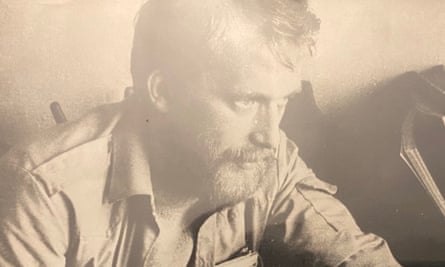
On a Tuesday evening in March 1980, the police came to arrest Chojecki for the 43rd time. Chojecki was 30 years old that night – a tall man, with a mane of red-brown hair. He lived with his family in a third-floor apartment in Żoliborz, a suburb of northern Warsaw, and was cooking dinner for his young son and talking to his father-in-law when they heard the door. There were three men outside, a local cop in the jackboots and grey tunic of the citizen’s militia, and two plainclothes SB agents. They flashed their badges and told him to get his coat. There was no explanation. He had just enough time to calm his crying son, grab a toothbrush and a pack of cigarettes, then they clapped handcuffs on his wrists and took him down to the police Fiat waiting on the road below.
They brought him to Mokotów jail, a house of terror to rival the KGB’s Lubyanka headquarters in Moscow, and put him in block III, a wing reserved for political prisoners. He had been here before, once for “vilifying the Polish People’s Republic” and again for “organising a criminal group with the aim of distributing illegal publications” – at least then he had known the reason for his detention. As the days dripped by, he and his cellmates talked politics and played chess with a set made from heavy black prison bread. He wasn’t allowed a lawyer.
At Easter, when he had been locked up for 10 days without being summoned to court or allowed to contact his family, he decided to take the path chosen by political prisoners everywhere: he would go on a hunger strike. Eight days later, when he had lost 8kg (17lb), the prison doctor announced that they would force-feed him. They inserted a hose into his mouth, pushing it in deep so that it scratched his oesophagus and made him gag, and poured in a sweet, fatty mush. Tears ran down his face, of helplessness, rage, revulsion. When the food was gone, the doctor whipped out the tube and left without a word.
Chojecki had not yet recovered when the guards returned and forced him to climb three landings to an interrogation room, where an intelligence officer was waiting. It was Lieutenant Chernyshevsky, an old sparring partner.
How was he feeling, Chernyshevsky asked?
“Bad.”
“Do you know that there is a printing house on Reymonta Street?”
Chojecki didn’t answer.
“Do you have Jan Nowak’s book Courier from Warsaw? If so, where, when and how did you come into possession of it and what is your relationship with the author?”
There were more questions in this vein, all about the underground press. Chojecki gave the same response to each: as long as he didn’t know what the evidence was against him, they had nothing to discuss.
Realising the interrogation was pointless, Chernyshevsky brought it to an end. He offered the prisoner a cigarette, then the guards took Chojecki back to his cell.
Of course he knew all about Nowak’s outlawed text. His publishing house had just printed it. It was, he said later, one of the best books they had ever produced.
Unlike the Nazis, who burned books as a public ritual, in the Soviet system the destruction of literature was designed to be invisible. The lists of banned titles sent round to libraries and bookstores every year were secret. Works were pulped covertly. Allusions to censorship were not allowed. A list of prohibited publications from 1951 details 2,482 items, including 238 works of “outdated” sociopolitical literature and 562 books for children. Mostly these were proscribed for ideological reasons, but some rulings made little sense even within the bizarre logic of the party: a book about growing carrots was destroyed for implying that vegetables could sprout in individuals’ gardens, as well as in those run by collectives.
Chojecki was introduced to the idea of uncensored literature by Krystyna Starczewska, a teacher at his high school. “She got me interested,” he remembered. “She got me reading.” It wasn’t hard for Chojecki to find banned books, as his parents – war heroes who fought against the Nazis – were already plugged into dissident intellectual circles. He was never allowed much time with these publications as they had to be passed on to other readers. But the fragments he read, often overnight, were enough to sow the seeds of dissent.
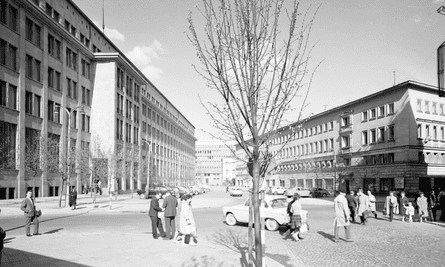
The Main Office for the Control of the Press, Publications and Public Performances in Warsaw. Photograph: Zbyszko Siemaszko/National Digital Archive
In 1976, when the government announced drastic increases in the state-controlled prices of food, workers went on strike, and the party responded as it always did, with violence. One victim recalled waking up from a beating with a broken nose and no teeth; another remembered seeing men beat a pregnant woman. The 1976 events turned a group of bookish young graduates into hardened opposition activists, and it didn’t take them long to realise they needed a public voice.
In spring 1977, Chojecki decided to focus on underground publishing. He wasn’t the only pioneer of illicit printing techniques, but the operation he led, the Independent Publishing House NOWa, grew to be the biggest and most successful in the underground. By Christmas they had published short runs of half a dozen books by blacklisted writers in Poland. Crucially, they also began to reprint editions of titles that were arriving from the west. The same books that were actively pushed by the CIA.
By the third week of his hunger strike, Chojecki’s body was shutting down. On 27 April 1980, the warden came to see him. This was a first: he had never heard of the head of the prison visiting an inmate in their cell before.
“How’s the starvation?” the warden asked.
“Very well.”
“Do you intend to starve for a long time?”
“Until I leave prison.”
“That’s five years.”
“Less.”
“Four and a half years?”
“A few days, Citizen Warden.”
The warden was wrong, as it turned out. Two weeks later, on Saturday 10 May, the order came through that Chojecki was to be released. He had been arrested in the snow; now the season had turned. As he squinted out from the shadow cast by the prison wall at the sunshine blazing down, he could pick out green shoots on the branches of the trees.
He had no appetite, but he knew he needed to eat. He struggled round the corner to a cafe, where he bought a small coffee and two doughnuts, and sat at a window table. He ate very slowly, savouring the sweet pastry with absolute delight. People passed by on the other side of the glass.
“They think they are free,” he thought.
The regime might have released him, but it was still determined to prosecute Chojecki. As he prepared for his moment in the dock, it was more important than ever for the dissidents to show that underground publishing operations would not be stopped. Five days before the court date, two young NOWa printers set out on a job that would turn into a cat-and-mouse game with the secret police.
The night before leaving for work, Jan Walc went through his pockets. In this line of business, you had to assume you would be caught, searched and interrogated, and he couldn’t be found with anything that would incriminate him or his friends. Next he packed a few essentials and took a long bath, knowing it would be his last for some time.
He knew where to meet his partner, Zenek Pałka. The only extra piece of information he needed was the time, and Pałka had given him that over the phone. Without saying his name, he had announced that they should get together at 11am on Monday 9 June. Walc recognised the voice. He also knew what the wiretap sergeant listening in didn’t: namely, that he had to subtract two from everything, so the rendezvous was set for 9am on Saturday 7 June. That morning, he said goodbye to his wife and young son and walked out into a humid Warsaw day.
Dissident publisher Mirosław Chojecki. Photograph: Chojecki family
Leaving the building, Walc discreetly scanned the street. As a rule the secret police liked to watch your apartment or place of work and follow you from there, so if you didn’t pick up a tail right away, the prospects of avoiding one were good. All the same, he kept checking until he reached the cafe. Soon Pałka, a giant of a man with frizzy red hair, was settling into the seat next to him.
“Is the place far away?” Walc asked. Pałka took a paper serviette and wrote down an address before burning through the words with his cigarette. Then he passed on a few more details. Water came from a well, but they would need a week’s worth of food, since they couldn’t risk leaving the job to go shopping. The printing machine was a mimeograph made by AB Dick of Chicago. It had already been delivered to the house, along with a tonne and a half of paper, six full carloads. The job was to print several thousand copies of the civil society newsletter Information Bulletin, plus some pages for NOWa’s literary journal Pulse. They would need to buy 10 bottles of turpentine to run and clean the press.
By the time they’d packed all the food, they had no room for the solvent, so they stopped by at a friend’s place to borrow an extra bag. They didn’t realise he was under surveillance, and when they left his building they spotted a boxy grey Fiat saloon with three men inside which shadowed them as they walked along the road.
Reaching a tram stop, they saw the Fiat pull into a side road and park illegally, a sure sign it was the secret police, and when the tram arrived and the printers boarded, two plainclothes agents jumped out of the car and ran across the street, climbing up behind them. All four men now sat in the same streetcar as it rattled towards Zawisza Square. The Fiat kept pace alongside.
How to get rid of them? As they reached a stop, the printers saw the Fiat was boxed in at the traffic lights, and they took their chance, leaving the tram at the last minute. When the lights changed and the unmarked car had to pull away, Walc and Pałka were hurrying in a different direction, towards the railway station. A part of their tail was lost, but the other two agents had been alert and were keeping pace behind them as they ran down the station platform.
The agents were close as they boarded a train for Warsaw Central. Walc made a show of placing his bags on the luggage rack, but as the doors closed Pałka jammed his leg between them and slipped out. Walc now had the two remaining agents to himself. His job was to drag them around long enough for Pałka to prepare the next move. The men were behind him as he left the train at Warsaw Central and ducked into the warren of passages beneath the station. He knew police radios wouldn’t work down here. He ordered a Coke at a bar, bought some cigarettes, browsed the shops. When 20 minutes had passed, he emerged and headed for the taxi rank. He could see one of the men talking into his lapel as he climbed into a cab.
Warsaw’s Poniatowski Bbridge is as much a viaduct as a river crossing, the roadway linked to the streets below by a series of stone staircases. Speeding east, Walc gave the driver his instructions. Midway along the viaduct, the taxi came to a sudden halt, and the printer dived out and ran down the steps to the street below.
The chasing agents pulled up behind and raced down in pursuit, but as they reached the lower level Walc was already climbing into another cab, where Pałka was waiting. The policemen watched as their quarry pulled away. Knowing they would now be radioing in the cab’s licence plate, a few hundred yards up the road the printers swapped into another taxi. They transferred their bags, left a generous tip and gave the new driver an address on the far side of the city.
Around 3pm, they caught the train to Rembertów The place looked ideal. It was set back from the street, at the far end of a large, overgrown garden. The printing machine and the paper were hidden in an outhouse, 500 reams stacked almost to the roof. The paper was damp, which was far from ideal, but they would make it work somehow.
By evening their small room was filled with the fumes of cigarettes and turpentine, and the sound of the duplicating machine beating out its regular, soporific rhythm, bad-dum bad-dum bad-dum bad-dum. Underground printing was filthy, exhausting work. The duplicators were old and the paper was poor. Bibula, the Polish word for uncensored publications, means “blotting paper”, which reflected the stock they had to work with, which had to be hand-fed into the machine, three pages a second, hour upon hour. This meant they worked round the clock, in shifts, for days, until the job was done.
Pałka had brought along a transistor. They tuned it to Radio Free Europe, which maintained a regular commentary on Chojecki’s upcoming trial. American printers and British lawyers were protesting at what they called a show trial. Amnesty International was sending a legal representative. “A great day is coming,” Walc thought, “and we are stuck in a printing shop!” If they hurried the job, they might still be able to get to court.
Early on Thursday morning they had 20 reams left to print. By 8pm, Pałka was finishing the last stencil and Walc was burning misprints in the garden. Before leaving they had to strip down the machine, wash all the parts and lubricate them.
At last, carrying 50 copies of the Bulletin, they found a taxi and gave the driver the address of the apartment where they had been told to collect their pay. They arrived around 11pm. It was crowded with people, including half the Bulletin’s editors. Walc asked about the trial. He was astonished to hear it was already over. The sentence had been read an hour ago. One of the editors had just come back from the court, where they saw Chojecki deliver an excoriating indictment of the communist system. He told the court that his flat had been searched 17 times in the past four years, on a litany of pretexts: they were looking for a murderer, they had said, or a poisoner or a thief, but all they ever took away for evidence were books, typewriters and manuscripts.
“Why are such accusations levelled against people who fight against the pillaging of our culture? Officially, half of our recent history is erased from textbooks, studies, encyclopedias,” said Chojecki. It was the same in literature, where the state gave itself a “monopoly of thought” and a “monopoly of the word”. The lists of banned authors contained some of world’s best writers, he said. That was why he and his colleagues had set up NOWa, to fill the silences and correct the falsification.
Reaching a rousing finale, Chojecki announced that the trial was not about the accused at all, but about “free speech and thought, about Polish culture, about the dignity of society”.
Of course, none of this would change the verdict. The court duly convicted Chojecki and his co-defendants of theft of state property. He was sentenced to 18 months in prison, suspended for three years. But to everyone gathered in the editors’ apartment, this was a tremendous victory and Chojecki was a hero.
“Everybody around us rejoices,” Walc wrote in his account of that week’s events, which would be published in the following month’s Bulletin.
Someone pressed a cold beer into his hand. It was midnight.
Chojecki’s parents had fought for Polish independence with guns and bullets. He continued the struggle through literature and publishing. At times, his father, Jerzy was sceptical of his son’s tactics. “Do you think, Mirek, that you’ll be able to bring down the communist system with your little books?” he would ask. “Do you think your little words will make a difference?”
In fact, the impact of the CIA-sponsored literary tide was huge. By the mid-1980s the so-called “second circulation” of illicit literature in Poland grew so large that the system of communist censorship began to break down. Poland was the most crucial of eastern bloc nations: when communism collapsed in 1989, this was the first domino to fall. As the leading Polish dissident Adam Michnik put it: “It was books that were victorious in the fight. A book is like a reservoir of freedom, of independent thought, a reservoir of human dignity. A book was like fresh air. We should build a monument to books … they allowed us to survive and not go mad.”
Teresa Bogucka didn’t know for sure who was paying for the literature she received from the west, but she was aware that the Polish regime claimed that American intelligence supported émigré publishers, and the idea didn’t concern her at all.
“I thought, wow, a secret service supporting books,” she said. “That’s fantastic.”
This is an edited extract from The CIA Book Club: The Best Kept Secret of the Cold War by Charlie English, published by William Collins on 13 March.














 Scottie's Playtime