Peace & Justice History for 10/28:

Things it’s important we remember, and things to Never Forget.

October 28, since 304
Catholics celebrate the feast of St. Fidelis of Como.Β  According to one legend, Fidelis deserted the Roman Army’s Theban Legion during Emperor Maximian’s persecution of Christians.Β  In another legend, he was assigned to guard Christian prisoners at Milan and secured freedom for five of them.
October 28, 1818
Abigail Adams, former First Lady of the United States, died.Β 
Many of her ideas, documented in her correspondance with her husband, John (later elected president), influenced the government of the United States.Β  She was politically active to the point where opponents referred to her as “Mrs. President” [seeΒ March 31, 1776]

Abigail Adams
More about Abigail AdamsΒ 
October 28, 1886

TheΒ Statue of Liberty, a gift of friendship from the people of France to the people of the United States, is dedicated inΒ New YorkΒ Harbor by PresidentΒ Grover Cleveland.
Originally known as β€œLiberty Enlightening the World,” the statue was proposed by the French historian Edouard de Laboulaye to commemorate the Franco-American alliance during theΒ American Revolution. Designed by French sculptor Frederic-Auguste Bartholdi, the 151-foot statue was the form of a woman with an uplifted arm holding a torch.
In 1903, a bronze plaque mounted inside the pedestal’s lower level was inscribed with β€œThe New Colossus,”a sonnet by American poet Emma Lazarus that welcomed immigrants to the United States with the declaration,β€œGive me your tired, your poor, / Your huddled masses yearning to breathe free,/ The wretched refuse of your teeming shore. / Send these, the homeless, tempest-tost to me. / I lift my lamp beside the golden door.” 
Read moreΒ 
October 28, since 1940
In Greece, Ohi Day (meaning Day of No) marks the refusal of Greece to submit to the Axis Powers.
October 28, 1950

Birth of Sihem Bensedrine, Tunisian human rights activist and journalist.Β  In 2008, she was awarded the Danish Peace Fund Prize for her commitment to democracy and the rule of law in the Arab world.
About Sinem BensefrineΒ Β 
October 28, 1962
Soviet leader Nikita Khrushchev announces the removal of Soviet missle bases in Cuba, ending the Cuban Missile Crisis.
October 28, 1984

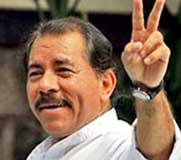
Sandinista Daniel Ortega won the general election for president of Nicaragua, and later attempted to make peace with the United States.Β 
The United States replied by continuing to support the Contras
.

https://www.peacebuttons.info/E-News/peacehistoryoctober.htm#october28

Peace & Justice History for 10/27:

October 27, 1659
William Robinson and Marmaduke Stevenson, two Quakers (formally, members of the Society of Friends) who came from England in 1656 to escape religious persecution, were executed in the Massachusetts Bay Colony for their religious beliefs. The two had violated a law, passed by the Massachusetts General Court the year before, banning Quakers from the colony under penalty of death.

Quakers opposed central church authority, preferring to seek spiritual insight and consensus through egalitarian Quaker meetings. They advocated sexual equality and became some of the most outspoken opponents of slavery in early America.
October 27, 1967
Phillip Berrigan, artist Tom Lewis, poet David Eberhardt, and United Church of Christ minister James Mengel, members of the Baltimore Interfaith Peace Mission, entered the draft board at the United States Customs House and poured duck’s blood on several hundred draft records.
Phillip Berrigan pouring blood on draft files
The Baltimore Four, as they became known, were arrested and later tried and convicted for the action which they saw as a symbolic act of civil disobedience β€” a nonviolent attack on the machinery of war. This day later became known as Plowshare Action Remembrance Day.
Berrigan in his jail cellΒ drawning by Tom Lewis
Read more about Phillip BerriganΒ 
October 27, 1967
120,000 marched against the Vietnam War in London. Violence erupted when a 6,000-strong Maoist splinter group broke away and charged the police outside the United States Embassy in Grosvenor Square.

Read moreΒ 
October 27, 1969
Ralph Nader set up a consumer organization with young lawyers and researchers (often called “Nader’s Raiders”) who produced systematic exposΓ©s of industrial hazards, pollution, unsafe products, and governmental neglect of consumer safety laws.
Β Ralph Nader (center)Β 
Nader is widely recognized as the founder of the consumer rights movement. He played a key role in the creation of the Environmental Protection Agency, the Occupational Safety and Health Administration, the Freedom of Information Act, the National Highway Traffic Safety Administration, and the Consumer Product Safety Commission.

Read moreΒ 
October 27, 2002
Luiz Inacio Lula da Silva
Luiz Inacio Lula da Silva was elected president of Brazil in a runoff, becoming the country’s first elected leftist leader.
Read moreΒ 

https://www.peacebuttons.info/E-News/peacehistoryoctober.htm#october27

Peace & Justice History for 10/26:

October 26, 1916
Margaret Sanger and her sister were arrested for disseminating birth control information at her Brownsville Clinic in Brooklyn; she was arrested again a few weeks later for the same reason and the police shut the clinic down within 10 days.
Margaret Sanger

October 26, 1970

Garry Trudeau, 1976
“Doonesbury”, a cartoon series addressing political and social issues written by Garry Trudeau, and initially published in a theΒ Yale Daily NewsΒ when Trudeau was a student, debuted in 28 newspapers.
October 26, 1986
President Ronald Reagan vetoed a bill passed by the Congress that would have imposed trade sanctions on the racially separatist apartheid regime of South Africa.
October 26, 1994
Israeli Prime Minister Yitzak Rabin and Jordanian Prime Minister Abdelsalam al-Majali, with President Clinton in attendance, formally signed a peace treaty ending 46 years of war at a ceremony in the desert area of Wadi Araba on the Israeli-Jordanian border. President of Israel Ezer Weizman shook hands with Jordan’s King Hussein.

Read moreΒ 

https://www.peacebuttons.info/E-News/peacehistoryoctober.htm#october26

Peace & Justice History for 10/25:

October 25, 1955
Sadako SasakiSadako Sasaki, following the Japanese custom of folding paper cranes – symbols of good fortune and longevity – persisted daily in folding cranes, hoping to create senbazuru (1000 paper cranes strung together) when a person’s dream is believed to come true, died.
The Sadako storyΒ Β Β Β 
Sadako was two years old when the atom bomb was dropped on Hiroshima and at 12 was diagnosed with Leukemia, “the atom bomb” disease.Β 
Children’s Peace Monument in Hiroshima showing Sadako holding a golden craneΒ Β Photo: Mark Bledstein

https://www.peacebuttons.info/E-News/peacehistoryoctober.htm#october241981

Peace & Justice History for 10/24:

October 24, 1935
Langston Hughes’s first play, “Mulatto,” opened on Broadway. It was the longest-running play (373 performances) by an African-American until Lorraine Hansberry’s “A Raisin in the Sun” which premiered in 1959.
Langston Hughes
First-rate bio of Langston HughesΒ 
October 24, 1940
The 40-hour workweek went into effect under the Fair Labor Standards Act of 1938, requiring employers to pay overtime and restricting the use of child labor.
Decades of labor agitation and a considerable number of lives made this change possible.


More on The Fair Labor Standards Act of 1938:Β 
October 24, 1945

The United Nations World Security Organization came into being when the Soviet Union (Union of Soviet Socialist Republics or USSR) in mid-afternoon deposited its instrument of ratification of the U.N. Charter.
The USSR became the last of the five major powers and the 29th of 51 nations, the minimum necessary to bring this about. James F. Byrnes, U.S. Secretary of State, then signed the protocol formally attesting that the Charter of the United Nations had come into force.This is now considered United Nations Day.

Read moreΒ  (no paywall.)
October 24, 1970
Salvador Allende Gossens, an avowed Marxist and head of the Unidad Popular Party, became the president of Chile after being elected and confirmed by the Chilean Congress.For the next three years, the United States exerted tremendous pressure to destabilize and unseat the Allende government. In 1958, and again in 1964, Allende had run on a socialist /communist platform. In both elections, the United States government (as well as U.S. businesses such as International Telephone and Telegraph (ITT), which had significant investments in Chile) worked to defeat Allende by sending millions of dollars of assistance to his political opponents.

Allende and supporters
More on AllendeΒ 
October 24, 1981

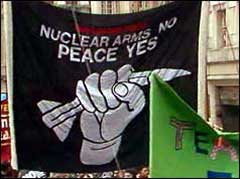
More than 250,000 people, organized by the Committee for Nuclear Disarmament (CND), marched through London to protest the siting of American nuclear missiles in the United Kingdom.
More background and video

https://www.peacebuttons.info/E-News/peacehistoryoctober.htm#october24

Starbox Dachshunds

The Black one looks just like our Chrissy, who lived to 21 yo before passing during April of 2020. This riff is so awful, yet so cute, and has the holiday spirit.

Peace & Justice History for 10/23:

October 23, 1915
33,000 women marched in New York City demanding the right to vote. Known as the “banner parade” because of the multitude of flags and banners carried, it began at 2 o’clock in the afternoon and continued until long after dark, attracting a record-breaking crowd of spectators. Motor cars brought up the rear decorated with Chinese lanterns; once darkness fell, Fifth Avenue was a mass of moving colored lights.
The history of women’s suffrage in the U.S.
October 23, 1945
Jackie Robinson and pitcher John Wright were signed by Branch Rickey, president of the Brooklyn Dodgers Baseball Club, to play on a Dodger farm team, the Montreal Royals of the International League.Robinson became the first black baseball player to play on a major league team.
Jackie Robinson
October 23, 1947
The NAACP filed formal charges with the United Nations accusing the United States of racial discrimination. “An Appeal to the World,” edited by W.E.B. DuBois, was a factual study of the denial of the right to vote, and grievances against educational discrimination and lack of other social rights. This appeal spurred President Truman to create a civil rights commission.
October 23, 1956
The Hungarian revolution began with tens of thousands of people taking to the streets to demand an end to Soviet rule. More than 250,000 people, including students, workers, and soldiers, demonstrated in Budapest in support of the insurrection in Poland, demanding reforms
in Hungary.

Hungarian students,1956
Hungarian revolution monument
The day before, the students had produced a list of sixteen demands, including the removal of Soviet troops, the organization of multi-party democratic elections, and the restoration of freedom of speech. On the evening of the 23rd a large crowd pulled down the statue of Josef Stalin in FelvonulΓ‘si Square.
Hungary 1956 and the Political RevolutionΒ Β 
More
October 23, 1984
The Fact-Finding Board looking into the assassination of Filipino democratic leader Benigno Aquino confirmed that his death was the result of a military conspiracy, and indicted Chief-of-Staff General Fabian Ver, the first cousin of dictator Ferdinand Marcos.
Marcos had blamed the chair of the Communist Party for the assassination, despite the fact that Aquino had been in the custody of the Aviation Security Command and surrounded by military personnel as he disembarked from the plane returning him to the Philippines. The chair of the Board, Corazon J. Agrava, was pressured into submitting a minority report clearing General Ver. He and the 25 other military officials charged were all acquitted.

https://www.peacebuttons.info/E-News/peacehistoryoctober.htm#october23

Peace & Justice History for 10/22:

October 22, 1963
200,000 students boycotted Chicago schools to protest
de facto segregation.

Why MLK Encouraged 225,000 Chicago Kids to Cut Class in 1963Β 
October 22, 1968
More than 300,000 protesters marked International Antiwar Day
in Japan.
The U.S. war in Vietnam and the ongoing (since the end of World War II) and massive American military presence on the Japanese island of Okinawa helped swell the ranks of the demonstrators; nearly 1400 were arrested.
October 22, 1979

The deposed Shah of Iran, Mohammed Reza Pahlavi, arrived in New York for medical treatment from Mexico. He received permission to do so from the U.S. government (which had installed him as shah in a 1954 coup) despite warning from the newly established Islamic republic in Iran demanding that the Shah be turned over to them for trial.
More on the Shah
October 22, 1983
Capping a week of protests, more than two million people in six European cities marched against U.S. deployment of Cruise and Pershing nuclear missiles: 1.2 million Germans, including 180,000 in Bonn; a 64-mile human chain between Stuttgart and New Ulm (and Hamburg, W. Berlin); 350,000 Rome; 100,000 Vienna; 25,000 Paris; 20,000 Stockholm; 4000 Dublin; plus 140 sites in U.S.
In London, the Campaign for Nuclear Disarmament (CND) held its biggest protest ever against nuclear missiles with an estimated one million people taking part.

Read moreΒ 

https://www.peacebuttons.info/E-News/peacehistoryoctober.htm#october22

Peace & Justice History for 10/21:

October 21, 1837

Osceola painted by George Catlin, 1838
The U.S. Army, enforcing President Andrew Jackson’s 1830 Indian Removal Act, captured Seminole Indian leader Osceola (meaning “Black Drink”) by inviting him to a peace conference and then seizing him and nineteen others, though they had come under a flag of truce. Under the law, they and the others of the β€œFive Tribes” (Choctaws, Chickasaws, Creeks and Cherokees) were to be moved, by force if necessary, west of the Mississippi to Indian Territory (Arkansas and Oklahoma). The Seminole had moved to Florida (then under the control of Spain) from South Carolina and Georgia as they were forced from their ancestral lands, then forced further south into the Everglades where they settled.
Read more about OsceolaΒ 
October 21, 1967
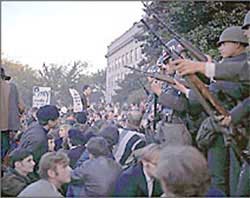
In Washington, D.C., more than 100,000 demonstrators from all over the country surrounded the reflecting pool between the Washington and Lincoln monuments in a largely peaceful protest to end the Vietnam War.It was organized by “the Mobe,” the National Mobilization Committee to End the War in Vietnam. Some then marched on, encircled and attempted to storm the Pentagon in what some considered to be civil disobedience; 682 were arrested and dozens injured.
This protest was paralleled by demonstrations in Japan and Western Europe, the most violent of which occurred outside the U.S. Embassy in London where 3,000 demonstrators attempted to storm the building.

at the Pentagon
Read two different accounts of the day with photographs:Β 
October 21, 1983
In the first public action of the new Seattle Nonviolent Action Group (SNAG), 12 people blockaded the Boeing Cruise Missile plant in Kent, Washington; none were arrested.
October 21, 1994
In an “Agreed Framework” to “freeze” North Korea’s nuclear program, the United States and North Korea (Democratic Peoples’ Republic of Korea or DPRK) agreed over the next 10 years to construct two new proliferation-resistant light water-moderated nuclear power reactors (LWRs) in exchange for the shutdown of all their existing nuclear facilities.
The DPRK also agreed to allow 8,000 spent nuclear reactor fuel elements to be removed to a third country; to remain a party to the Nuclear Non-Proliferation Treaty (NPT); and to allow inspections by the International Atomic Energy Agency.
In the deal negotiated by Ambassador at Large Robert Gallucci, the U.S. agreed to normalize economic and diplomatic relations with Pyongyang and to provide formal assurances against the threat or use of nuclear weapons by the United States.

The details of the agreement and what has followedΒ 
Interview with Robert Gallucci, Dean, Walsh School of Foreign Service, Georgetown U.

https://www.peacebuttons.info/E-News/peacehistoryoctober.htm#october21

Peace & Justice History for 10/20:

October 20, 1947

The House Un-American Activities Committee (HUAC) opened public hearings into alleged Communist influence in Hollywood. To counter what they claimed were reckless attacks by HUAC, a group of motion picture industry luminaries, led by actor Humphrey Bogart and his wife, Lauren Bacall, John Huston, William Wyler, Gene Kelly and others, established the Committee for the First Amendment (CFA).Β  Read more
=================

October 20, 1962
A folk music album, “Peter, Paul and Mary,” hit No. 1 on U.S. record sales charts. The group’s music addressed real issues – war, civil rights, poverty – and became popular across the United States.
The trio’s version of “If I Had A Hammer” (originally recorded by The Weavers, which included the song’s composers, Pete Seeger and Lee Hays) was not only a popular single, but was also embraced as an anthem by the civil rights movement.

About Peter, Paul and Mary

==================

October 20, 1967

The biggest demonstration to date against American involvement in the Vietnamese War took place in Oakland, California. An estimated 5,000-10,000 people poured onto the streets to demonstrate in a fifth day of massive protests against the conscription of soldiers to serve in the war. [seeΒ October 16, 1967] Read moreΒ 
================

October 20, 1973

In what was immediately called the “Saturday Night Massacre,” President Richard Nixon’s Press Secretary, Ron Ziegler, announced that Special Watergate Prosecutor Archibald Cox had been dismissed. Cox had been investigating Nixon, his administration and re-election campaign. Nixon had demanded that he rescind his subpoena for White House recordings.
Archibald Cox Richard Nixon
Earlier in the day, Attorney General Elliot Richardson had resigned, and Deputy Attorney General William Ruckelshaus had been fired, both for refusing to dismiss Cox. Solicitor General Robert Bork, filling the vacuum left by the departure of his two Justice Department superiors, fired Cox at the president’s direction.

https://www.peacebuttons.info/E-News/peacehistoryoctober.htm#october20