May Day Is Tomorrow!

May 1 3:30 – 5:30 PM ET Community Hosted

May Day! Workers over Billionaires: A Nationwide Day of Action

The next National Day of Action is right around the corner, May Day, Friday, May 1st.

The national call is for no business as usual. This will look different in different places. In some locations, it will mean no work, no school, and no shopping. (snip)

May Day Actions

This May Day, we’re flexing our economic power as workers, students, and everyday people to send a clear message to the Trump regime: we will not do business as usual while they trample our rights, terrorize our communities, and drag us into a senseless war in Iran. 

So on May 1st we are taking action by: 

  1. Hosting or joining a local May Day event
  2. Participating in No Work, No School*, No Shopping

The first step: pledge to build power and take collective action with us on May Day

Note: A core principle behind all May Day events is a commitment to nonviolent action. We expect all participants to seek to de-escalate any potential confrontation with those who disagree with our values and to act lawfully at these events. No weapons are permitted under any circumstances. (snip)

Mayday Protest – National Day of Action

It’s time for the conditions and standard of living that the working class deserves. We’re beginning a year of action on May 1st with a series of protests, strikes, and other direct action opportunities.

MAY 1 NATIONAL DAY OF ACTIONS:

THRIVING WAGES
The working class people have been taken advantage of for far too long! Join us as we mobilize to create worldwide plans of action for THRIVING WAGES. We are demanding at least $20/hr as well as better union laws, the ease of information for organizing co-ops, and better working conditions. But wait, there’s more! We are also demanding mandatory PTO, paternal leave, and good benefits.

Why do we want these demands?
Inflation over the last year has risen over 7% and continues to climb.
Rents and housing costs have skyrocketed.
The costs of consumer goods as greatly increased.
Yet corporations and billionaires have doubled their wealth in 2 years as the working class has struggled during a pandemic that has killed over 850,000 Americans and counting. (snip-MORE)
May 1, 1886

May Day was called Emancipation Day in 1886 when 340,000 went on strike (though it was Saturday it was a regular day of work) in Chicago for the 8-hour workday.

May 1, 1890
May Day labor demonstrations spread to thirteen other countries; 30,000 marched in Chicago as the newly prominent American Federation of Labor threw its weight behind the 8-hour day campaign.

May 1, 1933

Dorothy Day
The Catholic Worker newspaper was founded by Dorothy Day and Peter Maurin. Dorothy Day said, “God meant things to be much easier than we have made them,” and Peter Maurin wanted to build a society “where it is easier for people to be good.”

Peter Maurin


May 1, 1948

Senator Glen Hearst Taylor (D-Idaho) was arrested in Birmingham, Alabama, for trying to enter a meeting through a door marked for “Negroes” rather than using the “whites only” door, and convicted of disorderly conduct.
Taylor was the Progressive Party candidate for Vice President, running mate of Henry Wallace. He was in Birmingham to address the Southern Negro Youth Congress.
May 1, 1965
Second Factory for Peace opened in Onllwyn, Dulais Valley, in south Wales, employing disabled miners. Tom McAlpine, active in the Committee for Nuclear Disarmament, and a supporter of cooperatives and industrial democracy, established Rowen Engineering in both Wales and Glasgow, Scotland.
May 1, 1967
Soviet youths openly defied police and danced the twist in Moscow’s Red Square during May Day celebrations. In the early ‘60s the Twist had been banned in Buffalo, New York, and Tampa, Florida. The religious right claimed the Twist was actually a pagan fertility dance.


Are you old enough to remember Chubby Checker?


May 1, 1971

Five days of anti-war May Day protests began in Washington, D.C., resulting in over 14,000 arrests—the largest mass civil disobedience in U.S. history.


May 1, 1986


One million South Africans demonstrated their opposition to apartheid in a strike organized by the Congress of South African Trade Unions (COSATU)

Advance Advice For May Day

May 1 General Strike: The Very Best Reason to Stay Home and Read

by Carrie S · Apr 23, 2026 at 2:00 am · View all 3 comments

NB: originally this post was published under Sarah’s byline. This post is by CarrieS.

On May 1, you can fight fascism by staying home with a good book. A coalition of organizations across the country is calling for a general strike. This strike calls for no school, no work, and no shopping.

May Day Strong is made up of a coalition including but not limited to Indivisible, 50501, Sunrise Movement, and MoveOn. Many of the coalitions joining May Day Strong are local, so in addition to visiting the May Day Strong website, you should also keep an eye on your local groups.

In addition to withdrawing your labor and your commerce, you can join your community to make the strike even more visible. There will be a lot of demonstrations around the country and local sources are often the best places to get information about them. Because this is a one-day strike, it’s important to be as visible as possible and demonstrate just how many workers, students, and shoppers are on the side of democracy.

Here’s what the strike demands (taken from the main webpage):

  • That we tax the rich so our families, not their fortunes, come first,
  • No ICE. No war. No private army serving authoritarian power.
  • Expand democracy. Hands off our vote.

How is this relevant to the SBTB community? In addition to the fact that we support the causes that this strike promotes, strikes are an important part of feminist history. Women have been crucial in the success of the labor movement in the U.S.A., as leaders, strikers, volunteers, and educators. Here a just a few examples:

  • I’ve previously written about Dolores Huerta, who co-founded the United Farm Workers Association.
  • Our Kickass Woman coming up in May will be Emma Tenayuca, a Mexican-American woman from Texas, who led a strike of 12,000 pecan shellers in 1938.
  • The Mink Brigade was the name given to wealthy society women who supported the garment workers’ strikes in the early 1900’s. By marching and picketing along with workers, they lent prestige and respectability to the cause, and their presence tended to reduce violence from police.
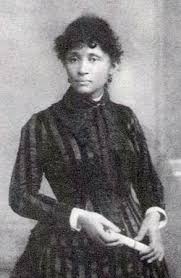
  • Black and white photo of Lucy Parsons, a dark-skinned woman in a striped dress with curly black hair
  • Lucy Parsons
  • Lucy Parsons led a march of 80,000 people in 1886 in the first May Day Parade. Among other causes, she championed the 8-hour workday.
  • Ai-jen Poo has been organizing domestic workers since 1996 and is currently the president of National Domestic Workers Alliance and the director of Caring Across Generations. Domestic workers had been considered too difficult to organize, making Ai-jen Poo’s success all the more remarkable.
  • My personal favorite, Emma Goldman, was a Russian Jewish immigrant who was described as “The most dangerous woman in America.” Despite dedicating her life to her work, she always prioritized joy. She is credited as saying, “If I can’t dance, I don’t want to be part of your revolution,” but what she actually said was:
    I did not believe that a Cause which stood for a beautiful ideal, for anarchism, for release and freedom from conventions and prejudice, should demand the denial of life and joy. . . If it meant that, I did not want it.

The Zinn Education Project has a wonderful list of women in the U.S.A. labor movement. You can also find stories of women in the labor movement at the National Park Service website.

I’m closing with my favorite version of “Bread and Roses,” performed by Judy Collins and choir. In 1911, Helen Todd, a suffragist and labor rights activist, used the phrase “Bread and roses” in one of her speeches:

Not at once; but woman is the mothering element in the world and her vote will go toward helping forward the time when life’s Bread, which is home, shelter and security, and the Roses of life, music, education, nature and books, shall be the heritage of every child that is born in the country, in the government of which she has a voice.

Rose Schneiderman

Rose Schneiderman, a remarkable woman who was born in Poland, came to America as a child, and campaigned for suffrage as well as improved safety condition for workers, used the phrase in her speeches, including this one from 1912:

What the woman who labors wants is the right to live, not simply exist — the right to life as the rich woman has the right to life, and the sun and music and art. You have nothing that the humblest worker has not a right to have also. The worker must have bread, but she must have roses, too. Help, you women of privilege, give her the ballot to fight with.

In 1911, James Oppenheim wrote a poem inspired by the slogan. Mimi Farina set to music in 1974. The song will forever be associated with the Lawrence Textile Strike, also known as the Bread and Roses Strike, of 1912. This strike was largely organized and conducted by women, who, along with children, made up the majority of the workforce in the mills.

Women have always been crucial to the success of strikes in America and worldwide. Why stop now? On May 1, protest, march, or stay home and read, but if you are able, join the strike.

No work, no school, and no shopping: by ceasing these three actions, we honor our past and our future.