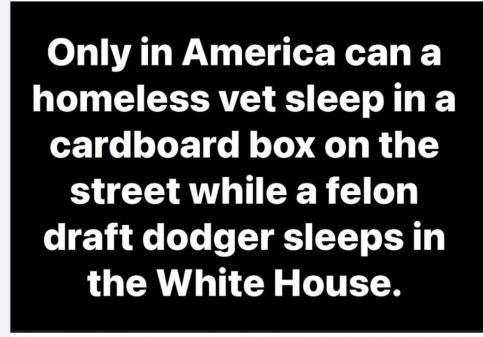
Following Trump’s ban on transgender people in the military, Jordan Klepper met with a panel of esteemed service members to discuss the president’s rejection of their qualifications, which stand in stark contrast to Trump’s own bone spur excuses
Tag: US Politics
Sunday’s Political cartoons / memes / and news items. I may started doing these a third day as they get too long.


You know, many of the grievances against King George III that Thomas Jefferson and others listed in the Declaration of Independence seem to apply to Trump:
–>He has refused his Assent to Laws, the most wholesome and necessary for the public good.
–>He has endeavoured to prevent the population of these States; for that purpose obstructing the Laws for Naturalization of Foreigners; refusing to pass others to encourage their migrations hither, and raising the conditions of new Appropriations of Lands.
–>He has obstructed the Administration of Justice, by refusing his Assent to Laws for establishing Judiciary powers.
–>He has made Judges dependent on his Will alone, for the tenure of their offices, and the amount and payment of their salaries.
–>For cutting off our Trade with all parts of the world
–>For imposing Taxes on us without our Consent
–>For depriving us in many cases, of the benefits of Trial by Jury
–>For transporting us beyond Seas to be tried for pretended offences
–>For taking away our Charters, abolishing our most valuable Laws, and altering fundamentally the Forms of our Governments.


Kash Patel was ATF director and never showed up for the job. Now he is skipping out at FBI?
MAGA are literally, and you don’t often get to use literally with such precision, the worst people for the job.
Patel wanted power and clout, not the responsibility attached. Destroying agencies through embarrassingly unqualified leadership is Patel’s one skill.
It’s a theme with this administration.
https://liberalsarecool.com/post/783102346059186176/kash-patel-was-atf-director-and-never-showed-up


Yes, this is EXACTLY what you voted for.
You voted for a clown sleep farting through his court case. A convicted felon and lifelong rapist. The swamp incarnate. A narcissist and fraud willing to do anything to enrich himself.
Voting for Harris/Walz was clearly better considering your kids’ student debt and husband’s job situation.
You picked the unserious choice. You lost.
https://liberalsarecool.com/post/783004389932777472/yes-this-is-exactly-what-you-voted-for-you

It’s not illegal to be here. It’s a misdemeanor.
Kidnappings and shipping innocent people to foreign prisons is a crime.
https://liberalsarecool.com/post/782996630928506881
Nancy Mace is such an imbicile. All gender is men and women. Any gender can use the bathroom. I have all gender bathrooms in my house. So does Nancy Mace.
Conservatives are unabashed losers.
Posting a POS by a bathroom door is very meta.
Nancy Mace is trying to make a career out of manipulated outrage and cringe morals.
https://liberalsarecool.com/post/782991026728140800/nancy-mace-is-such-an-imbicile-all-gender-is-men


Central Park Pride Concert Cancelled Over “Security Concerns” About Singer Accused Of Being Anti-Israel
Pride events are very expensive to put on. Most of the cost is security and insurance. The more threats from haters, normally fundamentalist religious people, the more security needed and the more costly insurance is. It is another weapon the haters of the LGBTQ+ community have learned to use to shut down events for people they hate. So much for freedoms these people keep demanding for themselves but want to deny to others. Hugs
May 7, 2025
New York City’s NBC affiliate reports:
Kehlani ‘s planned concert in Central Park next month has been canceled after New York City’s mayor raised security concerns about the R&B star’s performance during Pride month, organizers announced Monday.
The “After Hours” singer had been set to headline a June 26 concert billed as “Pride with Kehlani” at the Manhattan park as part of SummerStage, an annual slate of free concerts at parks across the city.
But organizers, in their announcement, cited concerns from Mayor Eric Adams’ administration about the “controversy surrounding Cornell University’s decision to cancel Kehlani’s concert at the University, as well as security demands in Central Park and throughout the City for other Pride events during that same period.”
The Cornell Sun reports:
Following the April 10 announcement of Kehlani as the original Slope Day headliner, some students and parents criticized the artist’s anti-Israel rhetoric and social media presence. Cornellians for Israel also launched a petition against the selection of Kehlani as the Slope Day headliner that accumulated over 5,000 signatures.
Cornell revoked Kehlani’s invitation to headline Slope Day over what President Michael Kotlikoff labeled “antisemitic, anti-Israel sentiments.”
But the cancellation sparked criticism from student groups about freedom of speech and institutional neutrality. The Community Slope Day Instagram account urged students to “boycott Slope Day,” writing that Kehlani’s “opposition to the genocide in Palestine isn’t hateful” and that the decision was made “without representative input of the student body.”
It doesn’t appear that Kehlani has any affiliation with NYC Pride itself. The cult is celebrating the cancellation. The recent single below has 32 million views on YouTube.
They’re doing it again, they are so messed up and hurtful. They are destroying everything they touch Part 2

The Upcoming Republican Tax Bill
This is long, but the material is useful for lobbying at town halls, etc., and when writing to our congresscritters.
Ten Questions on House Republicans’ Upcoming Tax Bill
May 8, 2025
| By Chuck Marr, Samantha Jacoby and Kris Cox
As the House Ways and Means Committee prepares to mark up a major tax bill, it is important to step back and consider which priorities it will reflect — whether it will prioritize tax policies that help families meet basic needs, require corporations and the wealthy to pay a fairer share of tax, and strengthen the nation’s fiscal outlook to allow us to meet existing commitments and make high-value investments.
Numerous independent analyses have shown that the 2017 tax law, which the bill is expected to extend, was skewed to the rich, drove up deficits and debt, and failed to deliver on its economic promises.[1] It also has proved unpopular with the public.[2] The 2025 bill should be held to a much higher standard than the 2017 bill, given its poor record of achievement, the higher risks the country now faces due to higher levels of debt, and the more uncertain economic outlook.
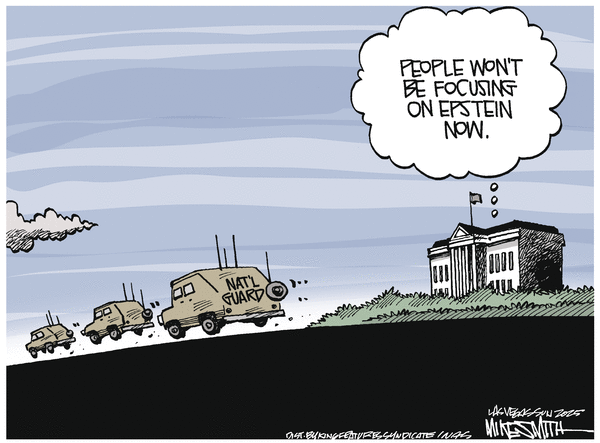
President Trump’s extreme and chaotic tariff policies pose a major threat of recession and are already raising consumer prices.[3] The President’s attacks on the rule of law, scientific and medical research, top universities and law firms, and the functioning of the federal government — including its ability to collect revenue and deliver core services — pose large additional economic risks, over both the short and long term.
Any forthcoming Ways and Means bill should respond to the current economic moment and the growing risks that families face: rising costs, increasing risks of job loss, and high uncertainty about their future financial stability. The bill also must be examined in connection with the other central pieces of the Republican economic agenda: massive cuts in health coverage, food assistance, and other forms of help for families and communities to partially offset the cost of the bill’s tax cuts.[4]

The answers to the following ten questions will illuminate what House Republicans prioritized as they put together their signature tax bill.
Prioritizing Tax Policies That Help Families Meet Basic Needs
1. Do House Republicans block the President’s reckless global tariffs to protect their constituents and stop a potential recession?
The tariffs’ impact on consumers and the economy is already impossible to ignore. Importantly, the Ways and Means Committee has jurisdiction not only over tax policy but also over Congress’ constitutional trade policy authority.[5] Thus, the committee can and should respond to the President’s destructive tariff policy.
Unless they are stopped, tax increases due to the tariffs are likely to more than erase any forthcoming tax cuts for households in all income groups except the top 10 percent, whose incomes are above $317,000. (See Figure 1.) Moreover, while the 2017 tax cuts won’t expire until the end of this year, households and businesses are already feeling the impact of the tariffs on prices, supply chains, and business viability.[6]

Soon after President Trump imposed the highest tariffs since the Smoot-Hawley tariffs of the 1930s on more than 100 countries, a number of states and businesses filed lawsuits challenging his legal authority.[7] Yet House Republicans, despite their constitutional responsibility over tariff policy and the obvious risks the tariffs pose to their constituents, have failed to act. Meanwhile, the tariffs and the frequent shifts in the Administration’s tariff policies are paralyzing businesses, raising costs on consumers, and sharply increasing the risk of recession, which could lead to a rise in unemployment and the number of people who need help to afford the basics, just as those supports are slated for cuts.
A major question for the committee markup is whether House Republicans will, in parallel with the tax bill, assert their constitutional trade policy authority to stop these destructive policies and protect the country from a potential self-inflicted recession.
Furthermore, as Figure 1 shows, these historic tariffs represent major tax increases on households with low or moderate incomes.[8] Given that extending the 2017 tax law would give the biggest benefits to high-income households, it will be important to see if Republicans modify the upcoming bill to reflect the current economic situation, including through measures discussed below.
2. Do House Republicans extend enhanced premium tax credits for marketplace health coverage to protect millions of people, including many small business owners, from sharp premium increases?
While the Ways and Means bill is expected to extend many other expiring tax provisions, it may not extend the premium tax credit enhancements, which are critical to making health coverage in the Affordable Care Act (ACA) marketplace more affordable.
Failing to extend them would drive up health care premiums by an average of 79 percent for over 20 million people, including 3 million small business owners.[9] (Figure 2 shows the average premium increases nationally for a family of four at different income levels; in some states the increases would be far higher.)[10] Roughly 4 million people would then be expected to lose their health insurance as its cost rose to unaffordable levels.[11] As a result, they would be more likely to forgo necessary care or to incur medical debt.

3. Do House Republicans expand the Child Tax Credit for children in working families who get less than the full credit, whom 169 House Republicans voted to help last year?
Under the Child Tax Credit now in place, 17 million children receive less than the full credit, or none at all, because their families’ earnings are too low; the large majority of these children live in families with earnings.[12] Last year, Ways and Means Chair Jason Smith negotiated and championed legislation to expand the credit for the vast majority of these children. The bill, which passed the House, would have corrected many (but not all) key flaws in the credit’s design.[13]
First, the bill would have improved how the credit phases in with earnings. As it stands now, higher-income families get a $2,000 credit for each child, but because of the way the phase-in works for low-income families, many families with two or three children receive roughly the same total credit as a family with one child at the same earnings level. Not allowing lower-income families to claim the credit on a per-child basis harms the roughly three-quarters of children in lower-income families who live in a family with more than one child.
Second, the bill would have treated families with low or moderate incomes the same as higher-income families when it comes to the maximum credit they can receive. Currently, these families are restricted to a smaller maximum credit. The lower maximum credit for families who don’t owe income taxes means that when they are able to increase their earnings, they often receive no additional Child Tax Credit, as they remain stuck at the lower maximum credit. This is seemingly at odds with Republicans’ rhetorical focus on increasing returns to work.
If Republicans simply increase the $2,000 maximum credit, or index it for inflation, not one of the 17 million children or their families would benefit from the change. The children who wouldn’t benefit include an estimated 650,000 children in veterans’ families, as well as millions of children whose parents work important jobs for low pay, such as truck drivers, cooks and waiters, nursing assistants, home health aides, construction workers, cashiers, and others. These children should be the top priority, not the lowest.
Some prior Republican proposals to expand the Child Tax Credit would offset the cost by cutting the Earned Income Tax Credit (EITC) for families with children and eliminating the head-of-household filing status for single parents.[14] In effect, this would increase income support for single parents with one hand while taking away part or all of that added support with the other. The Ways and Means bill should boost the incomes of single parents, an economically precarious group — not take away support.
4. Do House Republicans prevent low-paid working adults not raising children in their homes from being taxed into poverty?
More than 6 million working adults aged 19 and older who aren’t raising children at home will be taxed into, or deeper into, poverty by federal income and payroll taxes in 2026 if House Republicans do not improve the very limited EITC for this group.[15]
Republicans should increase the paltry size of their EITC, expand the income range for people to qualify, and expand the age range (currently 25-64) to include anyone aged 19 or older. This would help young adults entering the workforce, who currently do not qualify for any EITC, and adults aged 65 and over, many of whom continue to work but aren’t eligible for any EITC. And it would provide a larger credit for currently eligible adults aged 25 to 64.
These changes would also be consistent with the President’s attention during the campaign to the economic circumstances of young men, especially those who don’t go to college.
5. Do House Republicans protect energy tax credits that help families lower their utility bills and create economic opportunities for struggling communities?
Tax credits for investments in clean, affordable energy have spurred tremendous growth in the solar, wind, and geothermal energy industries, and they are bringing new economic opportunities to areas of the country facing underinvestment and hardship, including many rural areas.[16] But House Republicans are reportedly considering large cuts to energy tax credits, which risks upending this progress.[17]
Repealing these credits would result in higher utility bills for households and businesses (increases of 7 percent and 10 percent, respectively)[18] at a time when consumers already face higher costs from the President’s tariffs. Repeal could also add up to $49 billion in annual health care costs and lost productivity.[19]
Requiring Corporations and Wealthy Households to Pay a Fairer Share of Tax
6. Do House Republicans end costly tax cuts targeted to high-income households?
Extending the expiring individual income and estate tax provisions of the 2017 law would benefit households with considerable wealth and high incomes far more than households with low or moderate incomes. Roughly half the cost of extending the expiring tax cuts would flow to households with incomes in the top 5 percent (those with incomes over around $320,000).[20]
This tilt to the top reflects several costly provisions that primarily benefit the most well-off:
- Lower top rate. The 2017 law cut the top individual income tax rate, which now applies to taxable incomes over roughly $730,000 for married couples, from 39.6 percent to 37 percent. Some House Republicans have reportedly considered including a higher top rate in their bill — such as 40 percent for people with taxable incomes over $1 million — but President Trump and House Speaker Mike Johnson have both rejected the idea.[21]Allowing the top rate to revert to 39.6 percent while extending all of the 2017 law’s other expiring provisions would still give households in the top 1 percent a $40,000 average annual tax cut, according to the Tax Policy Center.[22] That’s because most high-income households receive large tax cuts from the law’s other provisions, like the pass-through deduction (see below), and also benefit from the law’s rate cuts that apply to the lower tax brackets. Still, even this modest change would be a welcome departure from the failed “trickle-down” approach to tax policy.
- Pass-through deduction. The 2017 law adopted a special 20 percent deduction for certain income that owners of pass-through businesses (partnerships, S corporations, and sole proprietorships) report on their individual tax returns. Over half of the benefits go to 200,000 business owners with incomes over $1 million, who now face a lower top rate (29.6 percent) than their employees (37 percent).[23] Research finds the deduction had no trickle-down benefits for workers’ wages or business investment.[24]At a minimum, Republicans can follow through on their rhetorical support for small business owners by letting the deduction expire for millionaires, which would reduce the deduction’s cost by over $350 billion from 2025-2034, and instead extending enhanced premium tax credits that help 3 million business owners (see above) for a somewhat lower cost.[25]
- Tax break for large estates. The 2017 law doubled the estate tax exemption to $22 million per couple and indexed it for inflation going forward; today a couple can pass on an estate worth up to $28 million tax free. Extending this generous exemption amounts to a $5.7 million tax cut for the wealthiest 1 in 1,000 estates, whose value consists largely of unrealized capital gains income that has never been taxed.House Republicans may double down on this costly estate tax break, with some even calling for permanently repealing the estate tax altogether.[26] Providing tax breaks to multi-million-dollar estates would be especially egregious given that Republicans also appear poised to steeply cut vital health care and food assistance, while the President’s sweeping tariffs will cost families with low or moderate incomes hundreds if not thousands of dollars a year and drive up the likelihood of a recession.
7. Do House Republicans revisit the 2017 law’s permanent and steep cut in the corporate tax rate?
The centerpiece of the 2017 law was a deep, permanent cut in the corporate tax rate — from 35 percent to 21 percent — that cost $1.3 trillion from 2018-2027 and is tilted even more heavily toward wealthy people than the expiring individual tax cuts.[27] (See Figure 3.) Rigorous research shows that the corporate rate cut did not produce the promised economic benefits: a study by economists from the Joint Committee on Taxation and the Federal Reserve Board found that workers in the bottom 90th percentile of their firm’s income scale saw no change in earnings from the rate cut.[28]
Rather than revisit this costly, skewed rate cut, which was even deeper than corporate lobbyists had expected to achieve in the 2017 law,[29] House Republicans are likely to go in the opposite direction: reverse scheduled business tax increases that Congress added to the 2017 law to partially offset the cost of the corporate rate cut. Reversing these increases without a corresponding increase in the corporate rate would amount to hundreds of billions in additional tax cuts for corporations.[30]

8. Do House Republicans reject additional unwise tax cuts?
The House-passed budget resolution calls for $4.5 trillion of tax cuts over fiscal years 2025-2034, which leaves room for $1.2 trillion in additional tax cuts on top of extending the 2017 individual and estate tax cuts. In addition to the likely business tax cuts discussed above, House Republicans may include some costly new tax cuts that disproportionately benefit high-income households.
Notably, Republicans appear poised to weaken the 2017 law’s $10,000 cap on deductions for state and local taxes (SALT). The SALT cap has received outsized public attention, potentially creating the mistaken impression that the affected filers fared relatively poorly under the 2017 law. Even with the SALT cap, the 2017 law delivered the biggest average tax cut, measured as a share of pre-tax income, to households with incomes in the 95-99th percentiles, a group making roughly between $400,000 and $1 million.
These households would also be the biggest winners from most proposals to expand the SALT cap. For example, increasing the cap to $25,000 for married couples would mean an additional $5,550 to high-income couples, or 12 times as much as households with incomes in the bottom 60 percent would receive from extending the entire 2017 law.
The Ways and Means bill also will likely include other tax cuts President Trump proposed during the campaign, such as exempting Social Security income and tips from income taxes. But these policies would do little for households with low incomes and would add significantly to the cost.
For example, repealing the taxation of Social Security benefits would weaken the financing of Social Security and Medicare and make the Social Security system less progressive.[31] About half of Social Security beneficiaries already pay no tax on their benefits, primarily because their incomes fall below the specified thresholds. Similar proposals, like retaining the tax on benefits but fully offsetting it with an equal income tax credit, would still dig a large and growing hole in the federal budget (costing well over $1 trillion over ten years) without benefiting low-income seniors.[32]
The President’s proposal to eliminate taxes on tips would help only a small minority of low-paid workers and barely add to the tax cuts going to families with low and moderate incomes.[33] It also could open up significant tax gaming opportunities as people with high incomes seek to reclassify their income as tips to avoid tax.
Strengthening the Fiscal Outlook to Meet Existing Commitments and Make High-Value Investments
9. Do House Republicans offset the cost of their tax cuts with sound revenue proposals?
Despite rising needs due to the aging of the baby boom generation and underinvestment in public services and the economy, policymakers have enacted tax cuts in the past two decades that have eroded the revenue base.[34] This has undermined investments and driven up deficits and debt, increasing future risks to the economy.
Instead of raising revenues, many congressional Republicans have used the increase in debt to push for deep cuts in Medicaid and SNAP even as they seek to extend costly tax cuts and add a trillion dollars or more in new cuts on top.
Republicans could cut the cost of extending the 2017 law by more than half, from $4.2 trillion to $1.8 trillion over 2026-2035, by reversing the tax cuts for anyone with income above $400,000.[35] Moreover, sound tax policies are readily available for Republicans to pay for the tax cuts they want to extend.[36]
10. Do House Republicans avoid gimmicks and timing shifts that prior tax bills (such as the 2017 law) have used to hide their true cost?
The 2017 law relied on budget tricks such as making many tax cuts temporary or having tax increases phase in later to make its tax cuts appear less costly, which allowed Republican lawmakers to squeeze in a larger corporate rate cut. They may do so again this year, despite authorizing an even more costly bill than the original 2017 law.
For example, House Republicans are reportedly considering limiting any new tax cuts — that is, those other than extensions of the 2017 law, such as eliminating tax on tips — to just four years.[37] This would lower the bill’s official cost relative to permanent new tax cuts but would mask the true cost of those provisions, because lawmakers could be expected to push for their extension later, likely without offsetting the cost. An even more egregious gimmick would be for House Republicans to copy Senate Republicans in adopting a “current policy” baseline, where the expiring tax cuts are simply assumed to continue after 2025 and thus that they would have zero cost.[38]
Copy link
Copy link
Copy link
Topics:
Federal Tax, Personal Taxes, Business Taxes, Tax Credits for Individuals and Families
Share
PDF of this report (12 pp.)
Report
The 2017 Trump Tax Law Was Skewed to the Rich, Expensive, and Failed to Deliver on Its Promises
June 13, 2024
Report
Republican Agenda’s “Triple Threat” to Low- and Moderate-Income Family Well-Being
April 17, 2025
Report
Premium Tax Credit Improvements Must Be Extended to Prevent Steep Rise in Health Care Costs
November 14, 2024
Policy Basics
Federal Tax
- Federal Payroll Taxes
- Federal Tax Expenditures
- Fiscal Stimulus
- Marginal and Average Tax Rates
- Tax Exemptions, Deductions, and Credits
- The Child Tax Credit
- The Earned Income Tax Credit
- The Federal Estate Tax
- Where Do Federal Tax Revenues Come From?
- Where Do Our Federal Tax Dollars Go?
End Notes
[1] Chuck Marr, Samantha Jacoby, and George Fenton, “The 2017 Trump Tax Law Was Skewed to the Rich, Expensive, and Failed to Deliver on Its Promises,” CBPP, updated June 13, 2024, https://www.cbpp.org/research/federal-tax/the-2017-trump-tax-law-was-skewed-to-the-rich-expensive-and-failed-to-deliver; Gbenga Ajilore, “The 2017 Tax Law Did Not Boost the Economy,” CBPP, April 8, 2025, https://www.cbpp.org/blog/the-2017-tax-law-did-not-boost-the-economy.
[2] Navigator Research, November 2019, https://navigatorresearch.org/wp-content/uploads/2019/11/Navigator-Taxes-Final-2.pdf; Hart Research, “Voters Overwhelmingly Oppose Extending Tax Cuts for Wealthy Individuals and Corporations,” February 24, 2025, https://www.familiesoverbillionaires.org/wp-content/uploads/2025/02/ME-14964-Families-Over-Billionaires-02-24-25.pdf.
[3] Alberto Cavallo, Paola Llamas, and Franco Vazuez, “Tracking the Short-Run Price Impact of U.S. Tariffs,” May 5, 2025, https://pricinglab-rw7gfm.s3.us-east-1.amazonaws.com/tariffs/TrackingTariffs_Cavallo_Llamas_Vazquez.pdf
[4] Brendan Duke and Gbenga Ajilore, “Republican Agenda’s ‘Triple Threat’ to Low- and Moderate-Income Family Well-Being,” CBPP, April 17, 2025, https://www.cbpp.org/research/federal-tax/republican-agendas-triple-threat-to-low-and-moderate-income-family-well-being.
[5] The House Ways and Means Committee has jurisdiction over “Revenue measures generally,” including tariffs. See Clause 1(t)(3) of House Rule X. Other committees, including the House Foreign Affairs Committee, have jurisdiction over export controls.
[6] Cavallo, Llamas, and Vazuez; Paul Berger, “Cargo Shipments from China to U.S. Slide Toward a Standstill,” Wall Street Journal, April 25, 2025, https://www.wsj.com/business/logistics/cargo-shipments-from-china-to-the-u-s-dwindle-9877596a.
[7] “Complaint: Three-Judge Court Requested,” State of Oregon et al., v. Trump et al., Case No. 1:25-cv-00077-N/A, April 23, 2025, https://www.doj.state.or.us/wp-content/uploads/2025/04/Multistate-Tariffs-0077-PLD-Complaint-4.23.25.pdf; “Complaint for Declaratory and Injunctive Relief,” State of California et al. v. Trump et al., Case 3:25-cv-03372, April 16, 2025, https://www.gov.ca.gov/wp-content/uploads/2025/04/FILE_8502.pdf; “Complaint,” V.O.S. Selections, Inc. et al. v. Trump et al., Case No. 25-00066, April 14, 2025, https://libertyjusticecenter.org/wp-content/uploads/002-VOS-Selections-v.-Trump-Compl-2025.04.14-1.pdf.
[8] Duke and Ajilore.
[9] Jared Ortaliza et al., “Inflation Reduction Act Health Insurance Subsidies: What is Their Impact and What Would Happen if They Expire?” KFF, July 26, 2024, https://www.kff.org/affordable-care-act/issue-brief/inflation-reduction-act-health-insurance-subsidies-what-is-their-impact-and-what-would-happen-if-they-expire/; Treasury Department, “U.S. Department of the Treasury Releases New Data Showing 3.3 Million Small Business Owners and Self-Employed Workers Covered by Affordable Care Act Marketplaces in 2022,” September 25, 2024, https://home.treasury.gov/news/press-releases/jy2608.
[10] Gideon Lukens and Elizabeth Zhang, “Premium Tax Credit Improvements Must Be Extended to Prevent Steep Rise in Health Care Costs,” CBPP, November 14, 2024, https://www.cbpp.org/research/health/premium-tax-credit-improvements-must-be-extended-to-prevent-steep-rise-in-health.
[11] Both the Urban Institute and the Congressional Budget Office estimate around 4 million people becoming uninsured. See Jessica Banthin et al., “Who Benefits from Enhanced Premium Tax Credits in the Marketplace?” Urban Institute, June 17, 2024, https://www.urban.org/research/publication/who-benefits-enhanced-premium-tax-credits-marketplace; Congressional Budget Office, letter from Phillip L. Swagel to Chairman Wyden, Ranking Member Neal, Senator Shaheen, and Congresswoman Underwood, December 5, 2024, https://www.cbo.gov/system/files/2024-12/59230-ARPA.pdf.
[12] Kris Cox and Stephanie Hingtgen, “Policymakers Should Expand the Child Tax Credit for the 17 Million Children Currently Left Out of the Full Credit,” CBPP, February 5, 2025, https://www.cbpp.org/blog/policymakers-should-expand-the-child-tax-credit-for-the-17-million-children-currently-left-out.
[13] For details on the legislation, see Kris Cox et al., “About 16 Million Children in Low-Income Families Would Gain in First Year of Bipartisan Child Tax Credit Expansion,” CBPP, updated January 22, 2024, https://www.cbpp.org/research/federal-tax/about-16-million-children-in-low-income-families-would-gain-in-first-year-of.
[14] Rep. Blake Moore, Family First Act, H. R. 353, January 13, 2025, https://www.congress.gov/bill/119th-congress/house-bill/353/text/ih; Chuck Marr et al., “Romney Child Tax Credit Proposal Is Step Forward But Falls Short, Targets Low-Income Families to Pay for It,” CBPP, updated July 6, 2022, https://www.cbpp.org/research/federal-tax/romney-child-tax-credit-proposal-is-step-forward-but-falls-short-targets-low.
[15] Chuck Marr et al., “What a Better Tax Bill Would Look Like,” CBPP, April 23, 2025, https://www.cbpp.org/research/federal-tax/what-a-better-tax-bill-would-look-like.
[16] U.S. Department of Energy, “How Tax Credits Are Driving Clean Energy Growth Two Years into Inflation Reduction Act,” August 16, 2024, https://www.energy.gov/policy/articles/how-tax-credits-are-driving-clean-energy-growth-two-years-inflation-reduction-act.
[17] Kelsey Brugger and Andres Picon, “Republicans Scramble on Tax Credits, Climate Cuts,” E&E News, May 2, 2025, https://www.eenews.net/articles/republicans-scramble-on-tax-credits-climate-cuts/.
[18] Sugandha Taludhar et al., “Electricity Price Impacts of Technology-Neutral Tax Incentives With Incremental Electricity Demand from Data Centers,” NERA, February 10, 2025, https://cebuyers.org/wp-content/uploads/2025/02/CEBA_Electricity-Price-Impacts-of-Technology-Neutral-Tax-Incentives-With-Incremental-Electricity-Demand-From-Data-Centers_February-2025.pdf.
[19] Jeremy Proville, “The Economic Case for Preserving Clean Energy Tax Incentives,” Environmental Defense Fund, May 1, 2025, https://blogs.edf.org/markets/2025/05/01/the-economic-case-for-preserving-clean-energy-tax-incentives/.
[20] Department of the Treasury, Office of Tax Analysis, “The Cost and Distribution of Extending Expiring Provisions of the Tax Cuts and Jobs Act of 2017,” January 10, 2025, https://home.treasury.gov/system/files/131/The-Cost-and-Distribution-of-Extending-Expiring-Provisions-of-TCJA-01102025.pdf.
[21] Ed Kilgore, “Trump Slams Door on Higher Tax Rate for the Rich,” New York Magazine, April 24, 2025, https://nymag.com/intelligencer/article/trump-slams-door-on-higher-tax-rate-for-the-rich.html.
[22] Tax Policy Center, “T25-0023: Retain Current Law Top Individual Income Tax Rate of 39.6 Percent, Distribution of Federal Tax Change by ECI Percentile, 2026,” February 25, 2025, https://taxpolicycenter.org/model-estimates/t25-0023-retain-current-law-top-individual-income-tax-rate-396-percent-distribution.
[23] Joint Committee on Taxation, “Tables Related to the Federal Tax System as in Effect 2017 through 2026,” JCX-32r-18, April 24, 2018, https://www.jct.gov/publications/2018/jcx-32r-18/.
[24] Lucas Goodman et al., “How Do Business Owners Respond to a Tax Cut? Examining the 199A Deduction for Pass-through Firms,” NBER Working Paper 28680, revised January 2024, https://www.nber.org/system/files/working_papers/w28680/w28680.pdf.
[25] Samantha Jacoby, “Congress Should End Pass-Through Tax Break for Millionaire Business Owners, Extend Tax Credit That Helps Small Businesses Buy Health Coverage,” CBPP, March 28, 2025, https://www.cbpp.org/blog/congress-should-end-pass-through-tax-break-for-millionaire-business-owners-extend-tax-credit.
[26] Chuck Marr, “Yet Another Estate Tax Cut on Massive Inheritances Is a Poor Choice,” CBPP, March 11, 2025, https://www.cbpp.org/blog/yet-another-estate-tax-cut-on-massive-inheritances-is-a-poor-choice.
[27] CBO, “The Distribution of Household Income, 2018,” August 4, 2021, https://www.cbo.gov/publication/57061.
[28] Patrick J. Kennedy et al., “The Efficiency-Equity Tradeoff of the Corporate Income Tax: Evidence from the Tax Cuts and Jobs Act,” March 21, 2024, https://patrick-kennedy.github.io/files/TCJA_KDLM_2024.pdf.
[29] Prior to the debate around the 2017 tax law, business groups supported a 25 percent corporate tax rate — in line with the OECD average. See Laura Tyson, “Modernizing Corporate Taxation,” Alliance for Competitive Taxation, June 26, 2013, https://actontaxreform.com/media-center/archived-news/posts/modernizing-corporate-taxation/.
[30] Chuck Marr and Samantha Jacoby, “Policymakers Should Focus on the True Cost of an Item on Corporate Lobby’s Tax Break Wish List,” CBPP, November 7, 2023, https://www.cbpp.org/blog/policymakers-should-focus-on-the-true-cost-of-an-item-on-corporate-lobbys-tax-break-wish-list; Chuck Marr and Samantha Jacoby, “Corporate Lobby’s New Math Doesn’t Add Up for Kids,” CBPP, December 8, 2022, https://www.cbpp.org/research/federal-tax/corporate-lobbys-new-math-doesnt-add-up-for-kids.
[31] Paul Van de Water, “Eliminating Taxation of Social Security Benefits Would Be Unwise,” CBPP, February 27, 2025, https://www.cbpp.org/blog/eliminating-taxation-of-social-security-benefits-would-be-unwise/.
[32] Penn Wharton Budget Model, “Eliminating Income Taxes on Social Security Benefits,” February 10, 2025, https://budgetmodel.wharton.upenn.edu/issues/2025/2/10/eliminating-income-taxes-on-social-security-benefits.
[33] Chuck Marr, 10:50 a.m., March 12, 2025, https://x.com/ChuckCBPP/status/1899835459598983416.
[34] Richard Kogan et al., “More Revenue Is Required to Meet the Nation’s Commitments, Needs, and Challenges,” CBPP, June 17, 2024, https://www.cbpp.org/research/federal-budget/more-revenue-is-required-to-meet-the-nations-commitments-needs-and.
[35] Treasury, “The Cost and Distribution of Extending Expiring Provisions.” Treasury’s analysis reflects the Biden Administration’s pledge not to raise taxes for people making up to $400,000 a year. Its estimates of reversing the tax cuts for people with incomes above $400,000 include certain tax changes that would modestly increase tax rates for households in the top 1 percent (those with incomes over $743,247) relative to allowing all the tax cuts to fully expire. For example, the 2017 tax law’s revenue-raising provisions are assumed to be extended for all income levels rather than being allowed to expire.
[36] Chuck Marr and Samantha Jacoby, “Principles for the 2025 Tax Debate: End High-Income Tax Cuts, Raise Revenues to Finance Any Extensions or New Investments,” CBPP, September 25, 2024, https://www.cbpp.org/research/federal-tax/principles-for-the-2025-tax-debate-end-high-income-tax-cuts-raise-revenues-to.
[37] Nicholas Ballasy, “GOP leaders mull 4-year sunset provisions for Trump tax benefits in reconciliation bill,” Just the News, April 27, 2025, https://justthenews.com/government/congress/gop-leaders-mull-4-year-sunset-provisions-trump-tax-benefits-reconciliation.
[38] Sharon Parrott, “New Budget Resolution Is Upside Down, Hurting Families the President Pledged to Serve to Shower Tax Cuts on the Wealthy and Powerful,” CBPP, April 2, 2025, https://www.cbpp.org/press/statements/new-budget-resolution-is-upside-down-hurting-families-the-president-pledged-to.
Support for the LGBTQ+ in the tRump hate era.

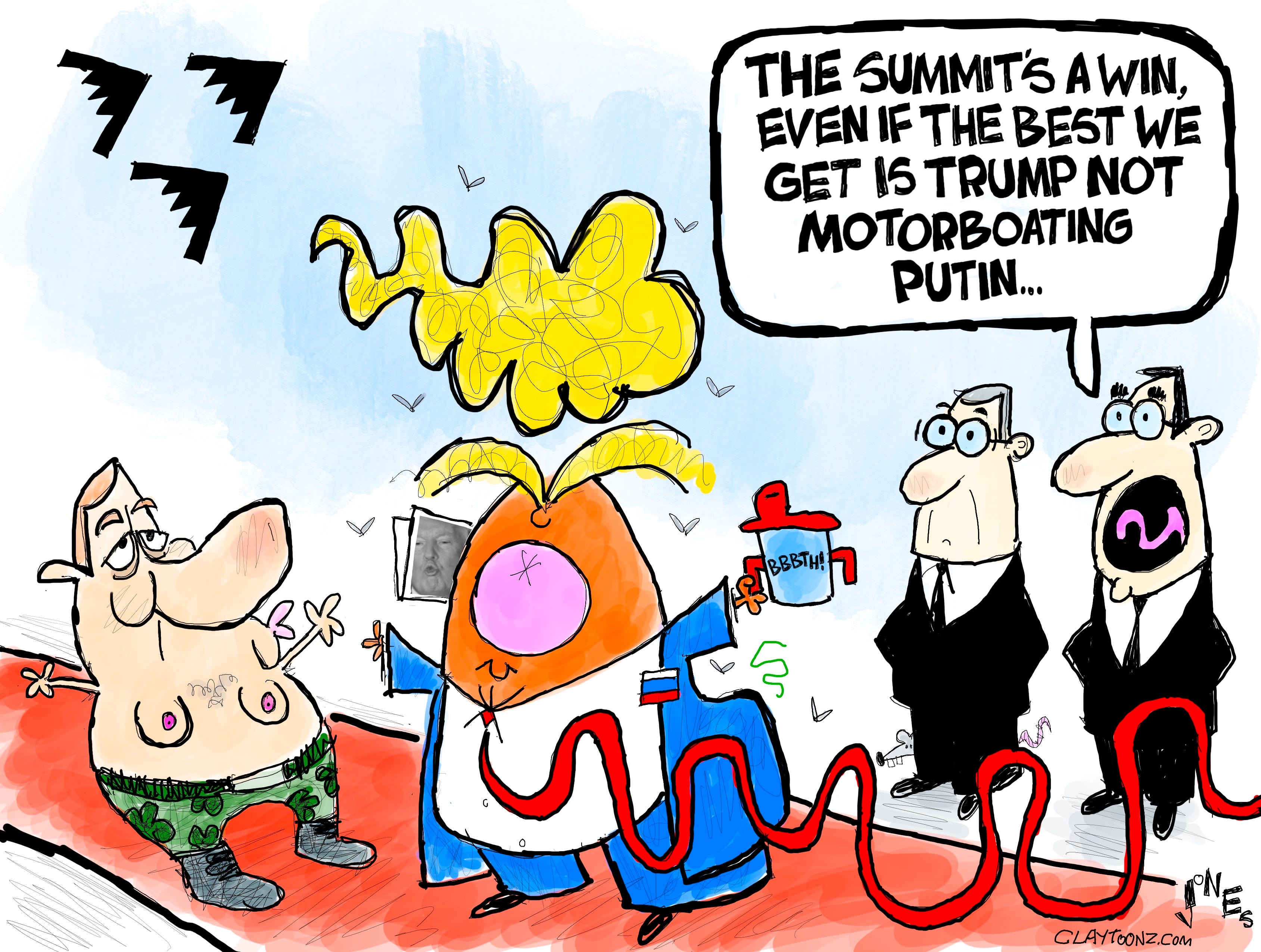
Clay Jones, & Open Windows
A funny thing happened on the way to the airport… by Ann Telnaes
Wow. I won the 2025 Pulitzer Prize for Illustrative Reporting and Commentating. Read on Substack
Thank you so much for all your comments and notes of congratulations!
I feel like I am late to my own party but I’m traveling overseas to to do presentations about Press Freedom and the time zones are really messing with me. Once I head again to the airport for the next leg of my trip, I’ll post some thoughts and photos for paid subscribers. And yes, I was in my lyft heading to the airport when I got the Pulitzer news.
Meanwhile, here’s what my lovely Norwegian hosts had waiting when I checked into my room.

*** and some more great news! Due to you all, my Substack Open Windows has reached 100,000 subscribers!!
==================================
New Pope by Clay Jones
America needs a president, not a troll Read on Substack

The news that we had a new Pope hit just as I was wrapping up this cartoon, so I quickly finished and posted it on social media before the name was announced, even before I sent it to my clients. I don’t know what I was thinking, that the cartoon would have an extra ten minutes of shelf life? As Trump said about the Constitution, I don’t know. Is this cartoon still relevant?
Trump posted an AI-created image of him as Pope. He’s really big about fake photos right now. I think Trump was trying to troll Democrats, but what he ended up doing was insulting Catholics. Catholics can take a joke, but they also know an insult when they see one.
Instead of doing presidential things like lowering egg prices, ending either of the two wars he promised would be over by now, or negotiating tariffs and legislation, Trump was trolling. Later, he denied it.
He said he didn’t know how the AI image ended up being tweeted from his or the White House’s official Twitter accounts. What happened? Did he lose control of his presidency (sic), Twitter account, and bladder all on the same day? Of course not. He lost control of his bladder years ago.
Trump also claimed that the AI image didn’t upset Catholics, but it did, with one priest calling him a “clown.” (snip-MORE)
They’re doing it again, they are so messed up and hurtful. They are destroying everything they touch Part1
In November, Dhillon appeared on Tucker Carlson’s podcast to recount “all the crimes committed by Kamala Harris.”
Other estimates have placed the cost of the parade at twice the $45 million cited by NBC.


Official City Emblems Aren’t Flags! 🏳🌈
Salt Lake City and Boise make pride flags official city emblems, skirting flag ban laws

By HANNAH SCHOENBAUM and REBECCA BOONE Updated 6:57 PM CDT, May 7, 2025
SALT LAKE CITY (AP) — The Democratic controlled cities of Salt Lake City and Boise adopted new city flags this week showing support for LGBTQ+ people in defiance of their states’ Republican-controlled Legislatures, which have banned traditional rainbow pride flags at schools and government buildings.

The newly adopted city flags are displayed at the Salt Lake City and County building showing support for LGBTQ+ in defiance of their state’s Republican controlled Legislature, Wednesday, May 7, 2025, in Salt Lake City. (AP Photo/Melissa Majchrzak)
Utah’s capital of Salt Lake City created new flag designs while Boise, the capital of Idaho, made the traditional pride flag one of its official city flags. The move in Utah came hours before a ban on unsanctioned flag displays took effect Wednesday.
The cities’ mayors spoke Tuesday morning to discuss their individual plans and offer each other support, said Andrew Wittenberg, a spokesperson for Salt Lake City Mayor Erin Mendenhall’s office.
(snip-MORE, go see it!)
“The Daily Reid”
Yes, Joy Reid has a Substack, bless her for doing it! Anyway, I’ve been watching/reading coverage of the Met Gala from various POVs. I’ve probably gotten the most substantive coverage from this post, so here it is, plus more generally topical (non-Gala) coverage, from our beloved Joy Reid! -A
The Daily Reid: the resistance is fly and dandy by Joy-Ann Reid
Art and fashion stood its ground at the Met Gala … while the warnings about the technofeudalist autocrats are ringing louder and louder Read on Substack

At its best, art is subversive and loud, even when it is silent and mainly visual. Fashion, at its best, is art that’s like that. The Met Gala 2025 was about that life. And while there was some criticism that not enough Black designers got to take part (too much Louis Vuitton, plenty of Sergio but not enough of everyone else… one wonderful exception being Hanifa…) and many of the looks were more elegant than Met Gala over-the-top, the overall impact of the night was deliciously subversive, in just the way art should be. From the Times:
Last October, when the Metropolitan Museum of Art’s Costume Institute announced its next fashion show, “Superfine: Tailoring Black Style,” the political landscape looked very different.
Kamala Harris, the first female vice president and the first Black woman ever to top a major-party ticket, was in the final weeks of her campaign for the White House. The show, the culmination of five years of work by Andrew Bolton, the Costume Institute’s curator in charge, to diversify the department’s holdings and shows in the wake of the racial reckoning brought about by George Floyd’s murder, seemed long overdue.
On Monday, however, when it finally opens to the starry guests at its signature gala, the splashiest party of the year, it will do so in a very different world. One in which the federal government has functionally declared war on diversity, equity and inclusion, as well as programming related to race — especially in cultural institutions.
In February, President Trump seized control of the Kennedy Center, promising to make its programming less “woke.” Then, in late March, he signed an executive order targeting what the administration described as “improper, divisive, or anti-American ideology” at the Smithsonian museums and threatened to withhold funds for exhibits that “divide Americans by race.”
Against that backdrop, the Met’s show, one devoted for the first time entirely to designers of color, which focuses on the way Black men have used fashion as a tool of self-actualization, revolution and subversion throughout American history and the Black diaspora, has taken on an entirely different relevance.
Suddenly the Met, one of the world’s wealthiest and most established museums, has begun to look like the resistance. And the gala, which in recent years has been criticized as a tone-deaf display of privilege and fashion absurdity, is being seen as what Brandice Daniel, the founder of Harlem’s Fashion Row, a platform created to support designers of color, called a display of “allyship.”
Especially because Anna Wintour, the Met Gala’s mastermind, a powerful Democratic fund-raiser and the chief content officer of Condé Nast, said on “The Late Late Show” in 2017 that the one person she would never invite back to the fete was Mr. Trump.
The collision of cultural and current events means the Met is now sitting at the red-hot “center of where fashion meets the political economy,” said Tanisha C. Ford, a history professor at the City University of New York Graduate Center.
“This feels way bigger than just fashion,” said Louis Pisano, a cultural critic and the writer of the newsletter Discoursted. “Putting Black style front and center sends a real message.”
And that it did. That Ms. Wintour and the the organizers didn’t shift course even a little bit, or invite the garish Trump gang or administration or maga people (unless you count Kim Kardashian) was a bold statement in itself. I think seeing J.D. Vance and his complicit wife or garish, lip-plumped Lara Trump on that blue carpet would end the credibility of the Met Gala forever. (Long live the memory of Andre Leon Talley!)
Instead, what we got was a feast of celebration, of classic Black elegance and style, of Black boldness in the face of social, economic and political catastrophe, and just a lot of fun. Made a little video about it, wanna see it? Here it goes!
There were a number of meaningful statements, reflecting the history of Black formality, which was subversive in its own way, in the early 20th century when Black men and women were socially discarded by white society as little more than servants and footstools to white lives. Black people in their church lives and social lives were often really dressy, and that’s a tradition that has lingered, particularly in Southern states, where even a trip to the supermarket or to the polls means getting fully dressed — and formality is seen as a sign of pride and regality, even in the face of discrimination. That’s the piece of Africa that stayed with every enslaved captive.
Not only was the Met Gala a visual blockbuster, it was also a record-setting fundraiser:
Five hundred people RSVP-ed to Monday morning’s media preview for “Superfine: Tailoring Black Style” at the Metropolitan Museum of Art; the majority appeared to show up to tour the show before it bows to the public on Saturday.
Beforehand, attendees got a primer about dandyism, the exhibition’s undercurrent. They also were reminded by the Met’s director and chief executive officer Max Hollein that the museum is “having a little party tonight aka the Met Gala.” And this year’s annual fundraiser for the Costume Institute is a record-breaker at $31 million.
That was “quite a jump” compared to last year’s total of $26 million, Hollein said after the program. As for how that happened in such economically and geopolitically shaky times, he said, “The level of support, enthusiasm and importance of what we do is significant, especially this show, which is not only a celebration of Black designers, but it’s also a statement. It’s an important exhibition about history. That all comes to the fore. That’s what a lot of our supporters felt — that it is meaningful and important.”

Because Black people, and Black Americans in particular, have always been fashion and cultural trendsetters. (I’d note that there is also a long Dandy tradition in my late father’s home country, the Democratic Republic of Congo, where dandyism is a whole thing…
Diasporic Black dandyism mirrors the Congolese sapeur movement—a fashion subculture that emerged in the 1920s when Congolese soldiers returned from World War I with foreign attire. These Congolese dandies, known as sapeurs, often inherit the tradition from parents and community role models. For them, dandyism resembles a religion. They revere style and derive power from being impeccably dressed.
Poverty, unemployment, and avant-garde exploitation from the superpowers of the West, East, and neighbouring nations, including Uganda and Rwanda imprison the Republic of Congo. Despite hardship and grim surroundings, Congolese dandies choose to live joyfully. They dance, celebrate, and express themselves with flair, as captured in Solange’s “Losing You” and Kendrick Lamar and SZA’s “All the Stars.”
Both movements grew out of the 1920s — the age of the Harlem Renaissance, when Black Americans were perfecting a unique post-enslavement culture that drew on the rich heritage of African music, ornamentation, dance and style, coupled with evocative literature — poetry, fiction and nonfiction — that spoke to the ache of being an African trapped in America, yet with little or no memory of where your people originally came from. Your timely reminder that some of us Black Americans are immigrants, but even most of us are immigrants whose people were unwilling workers in the so-called “new world.” Very few Black people in America are here by choice. Instead, it was grace, determination and sheer force of will that built a culture that has come to be globally dominant and largely determinative of what the world considers “American culture.”
Here’s Vogue’s piece on the history of Black Dandyism.
And here’s TheGrio’s take on which stars stole the show at last night’s gala and Kamala Harris’ Met Gala debut.
Great article here on some of the artists who capture the essence of Black Dandyism.
Also peep this article at BET.com on the Black designers who laid the groundwork.
A warning…
I came across this powerful TED Talk by investigative journalist Carole Cadwalladr of the Observer, best known for breaking the story in 2018 that Facebook was allowing a British tech company called Cambridge Analytica to steal millions of users’ data without their consent. Her new warning about the rising tech “broligarchy” that are using their global digital platforms and hijacking our data (including via “doge”) to amass unprecedented political power and dismantle our democracies in the U.S. and abroad and replace them with authoritarian rulers, is chilling. But she also reminds us that we have more power than we think to slow the tech bros down. This Talk recorded April 8th at TED2025 is well worth the 17 minute listen, to receive her bleak but powerful warning:
Set your cookies to “performance only.”
Another relatively long listen: on a very popular episode of Diary of a CEO, tariff expert, investor and bestselling author Morgan Housel explains not just the danger of tariffs, but succinctly lays out why we cannot rebuild the power manufacturing era of post World War II America. The podcast goes on for more than an hour after his excellent explanation but it’s worth diving into the first 20 minutes or so in the link below:
The tariff situation, and the futility of Trump’s “back to manufacturing” dream are important to unpack, because what’s happening beyond our shores ain’t good.
Everybody hates Trumpmerica…
In Europe, consumers are developing an aversion to U.S. products, or at minimum, they’re getting used to ignoring them. From the New York Times:
For motorcycle lovers in Sweden, Harley-Davidson is the hottest brand on the road. Jack Daniels whiskey beckons from the bar at British pubs. In France, Levis jeans are all about chic.
But in the tumult of President Trump’s trade war with Europe, many European consumers are starting to avoid U.S. products and services in what appears to be a decisive and potentially long-term shift away from buying American, according to a new assessment by the European Central Bank.
In April, Mr. Trump imposed a 10 percent blanket tariff on America’s trading partners, and threatened “reciprocal tariffs” on many of those, including the European Union. Companies like Tesla and McDonald’s are seeing customers in Europe put off by “Made in America.”
“The newly imposed U.S. trade tariffs on European products are causing European consumers to think twice about what’s in their shopping cart,” the E.C.B. wrote in a blog post about its research on consumer behavior. “Consumers are very willing to actively move away from U.S. products and services.”
Europeans had already begun testing grass-roots boycotts on American products, including Heinz ketchup and Lay’s potato chips, shortly after Mr. Trump took office. His threats to take over Greenland, part of Denmark, energized Danes to organize no-buy campaigns on Facebook. Tesla owners in Sweden slapped “shame” bumper stickers on their cars to distance themselves from Elon Musk, the Tesla chief executive who is one of Mr. Trump’s top advisers.
But Europeans’ anguish over Mr. Trump’s treatment of America’s longtime allies has hardened as he has moved to rewire world trade with steep global tariffs, the central bank found. …
… And even if a trade deal is reached, Europe’s newfound wariness of its longtime ally will not easily be unwound. The E.C.B. study found that even if a mere 5 percent tax were placed on American products sold in Europe, Europeans would still be inclined to shun them.
What is new, the central bank said, is a “preference” among European consumers “to move away from U.S. products and brands altogether,” no matter what the cost. That was the case even for households that could bear the brunt of higher prices.
“Even though they could afford more expensive U.S. products and services, they consciously choose alternatives,” the bank said. “This suggests that consumers’ reactions may not just be a temporary response to tariff increases, but instead signal a possible long-term structural shift in consumer preferences away from U.S. products and brands.”
In Germany and Italy, developers have created apps that scan grocery and clothing items for people who want to make sure they are not buying American. The top app, BrandSnap, even suggests European alternatives.
On a French-run “Boycott USA!” Facebook channel with 31,000 members, people boast about buying Adidas, a German brand, over Nike and New Balance, and post stories about avoiding travel to the United States.
In a Danish Facebook group with 95,000 members, people try to help each other figure out if products like Gillette Mach 3 razor blades or Schweppes soda are from the United States. One run from Sweden promotes alternatives to Airbnb and is calling for a European boycott on Meta platforms for a week in May.
Europeans have also posted online to say they have begun canceling subscriptions to U.S. streaming giants, including Netflix, Disney+ and Amazon Prime Video.
Some consumers who have boycotted Amazon have gone online to lament that delivery from alternate e-commerce platforms in their countries are slower or less reliable, but say that they are staying the course.
Millions of people still buy American goods and services worldwide, but U.S. companies and investors are keeping a close eye on international markets for signs of anti-American sentiment related to Mr. Trump’s policies.
Thanks a lot, Donald.
This as Europe is wooing our fired scientists…
As the Trump administration slashes support to research institutions and threatens to freeze federal funding to universities like Harvard and Columbia, European leaders are offering financial help to U.S.-based researchers and hoping to benefit from what they are calling a “gigantic miscalculation.”
“Nobody could imagine a few years ago that one of the great democracies of the world would eliminate research programs on the pretext that the word ‘diversity’ appeared in its program,” President Emmanuel Macron of France said on Monday.
He was speaking at the Sorbonne University in Paris during an event called Choose Europe for Science that was organized by the French government and the European Union.
It was unthinkable, Mr. Macron said, alluding also to the withdrawal of researchers’ visas in the United States, that a nation whose “economy depends so heavily on free science” would “commit such an error.”
Ursula von der Leyen, president of the European Commission, announced an investment of 500 million euros, or $566 million, at the conference to “make Europe a magnet for researchers” over the next two years.
Although that amount is not much compared to the billions in cuts American universities face, it comes on top of the $105 billion international research program called Horizon Europe that supports scientific breakthroughs, like genome sequencing and mRNA vaccines, Ms. Von der Leyen said.
She did not mention the United States by name, but she described a global environment where “fundamental, free and open research is questioned.”
“What a gigantic miscalculation!” she said.
In Europe, there is a widespread feeling that Mr. Trump has abandoned America’s traditional support for liberty, free speech and democracy through his embrace of autocrats and the assault on science and academia. That has created strains but also a sense of opportunity on the continent, where attracting the best scientific minds to vigorous and independent universities is seen as part of a broader campaign to “rearm” Europe as an independent power.
Over the longer term, the European Commission, the executive arm of the European Union, plans to double grants for researchers who relocate and to enshrine freedom of scientific research into a law called the European Research Area Act.
“The first priority is to ensure that science in Europe remains open and free. That is our calling card,” Ms. von der Leyen said.
Well it should certainly remain open and free somewhere…
Not invited to the Star Wars party
Another thing about culture — either you’re part of it, or you’re not. And the immigrant-hating Christofascists currently running are government certainly are NOT. They’re not even decent nerds. Item: whoever posted the latest AI Trump cosplay on the official White House social media in order to demonize immigrants (while creating hilarious maga entertainment) whiffed it … badly. Here’s the ridiculous AI image, posted on May 4th, AKA Star Wars Day, when actual franchise fans cry out: “may the Fourth be with you…” as a nod to that famous line about the “force…”

Note the color of the laser. Come on, magas… you’re so close to getting it … and not just the absolute absurdity of presenting your elderly, possibly senile, portly, big-bellied God-king as some kind of roided up demigod whom y’all really seem to have a creepy visual-almost-sexual fantasy life over … or the ginormous eagles hovering over him … The color of the laser … I’m just gonna let y’all figure it out on your own.
You can’t help everybody…