Management at a Kid Rock-themed restaurant and bar in Nashville reportedly rushed non-citizen employees off the premises during the weekend over fears of an impending ICE raid.
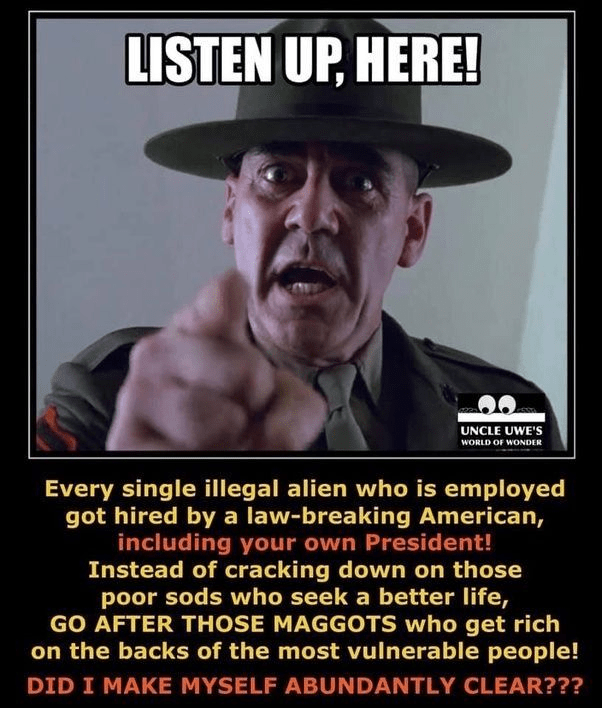
Hey, isn’t it illegal to hire people who you know are not legal to work in the United States? Why, that’s a crime!
During the busy Saturday service, non-citizen employees at three restaurants owned by Nashville businessman Steve Smith were told to leave, including Kid Rock’s Big Ass Honky Tonk Rock N’ Roll Steakhouse.
Hey, didn’t someone just arrest a judge for not turning over non-citizens to ICE?
“We were already understaffed because of the ICE raids throughout the weekend,” an employee at one restaurant told the outlet. “Then, around 9:30 p.m. on Saturday, our manager came back and told anyone without legal status to go home.”
I mean, it’s almost like they don’t mind breaking the law whenever it suits them. Who would ever have thought it?
Did you ever get the feeling that this whole immigration issue is nothing more than a bullshit issue used to divide us? Asking for a friend.
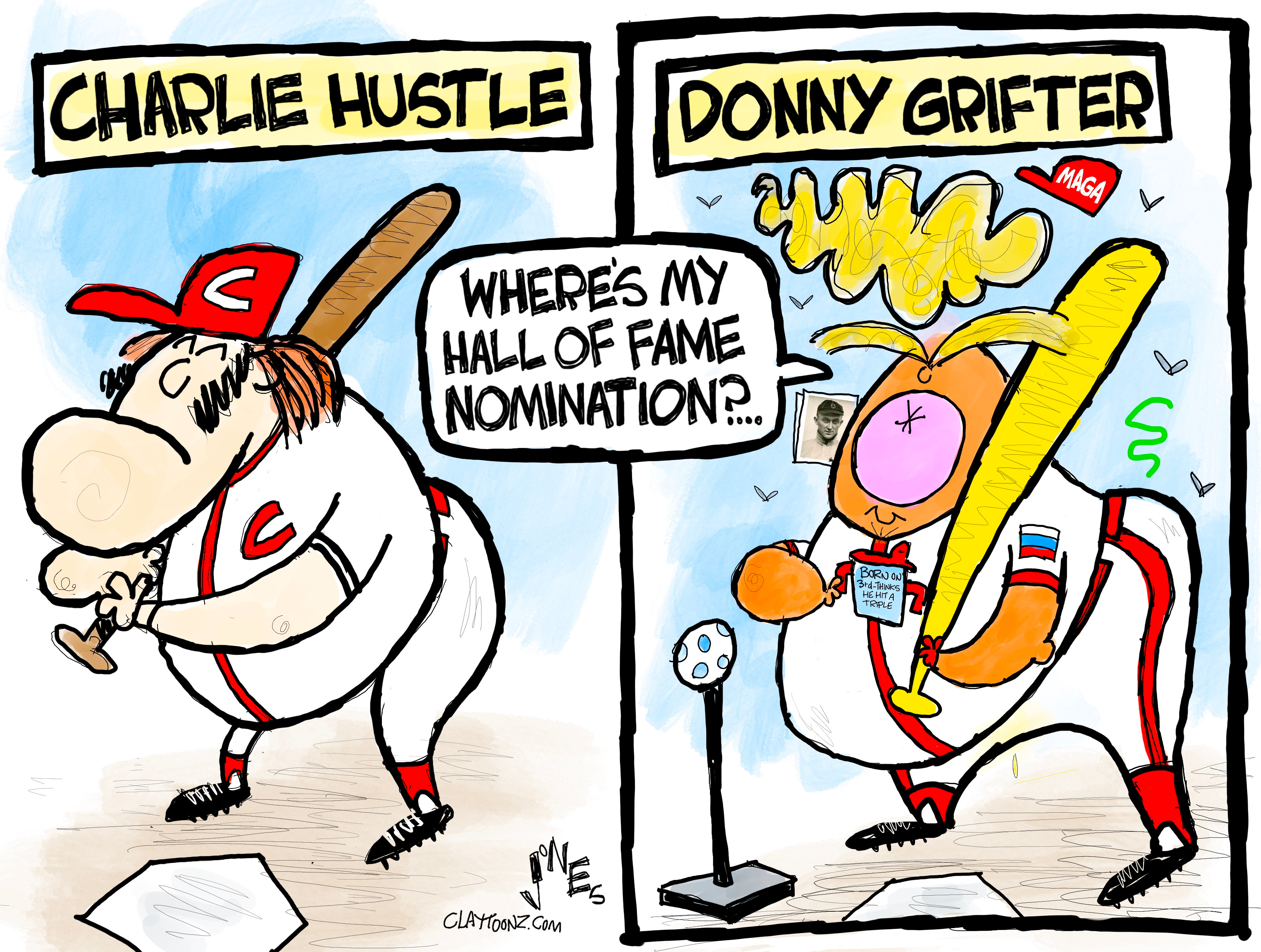
After being banned from Major League Baseball for life, gambler Pete Rose and others like Shoeless Joe Jackson are now eligible to be voted into the Baseball Hall of Fame.
Rose was banned in 1989 and spent the rest of his life crying about it instead of offering repentance. He didn’t even stop gambling. He never helped his case, even when it seemed Baseball wanted to bring him back.
Commissioner Rob Manfred made the ruling and said, “In my view, once an individual has passed away, the purposes of Rule 21 have been served. Obviously, a person no longer with us cannot represent a threat to the integrity of the game. Moreover, it is hard to conceive of a penalty that has more deterrent effect than one that lasts a lifetime with no reprieve.”
If Rose hadn’t bet on baseball, or if he hadn’t been caught, he would have been voted into the HoF as soon as he was eligible, which is five years after retirement. His 4,256 hits, 3,562 games played, and 15,890 plate appearances are still unbroken records. Across 24 seasons, Rose made 17 All-Star teams, won three batting titles, won the 1973 NL MVP, and won three World Series trophies. Rose earned the nickname “Charlie Hustle” for his aggressive style of play. Rose always seemed to find himself on base, and then the next, and then the next, until he was across home plate. He is a baseball legend. Even his gambling addiction couldn’t take away his legend.
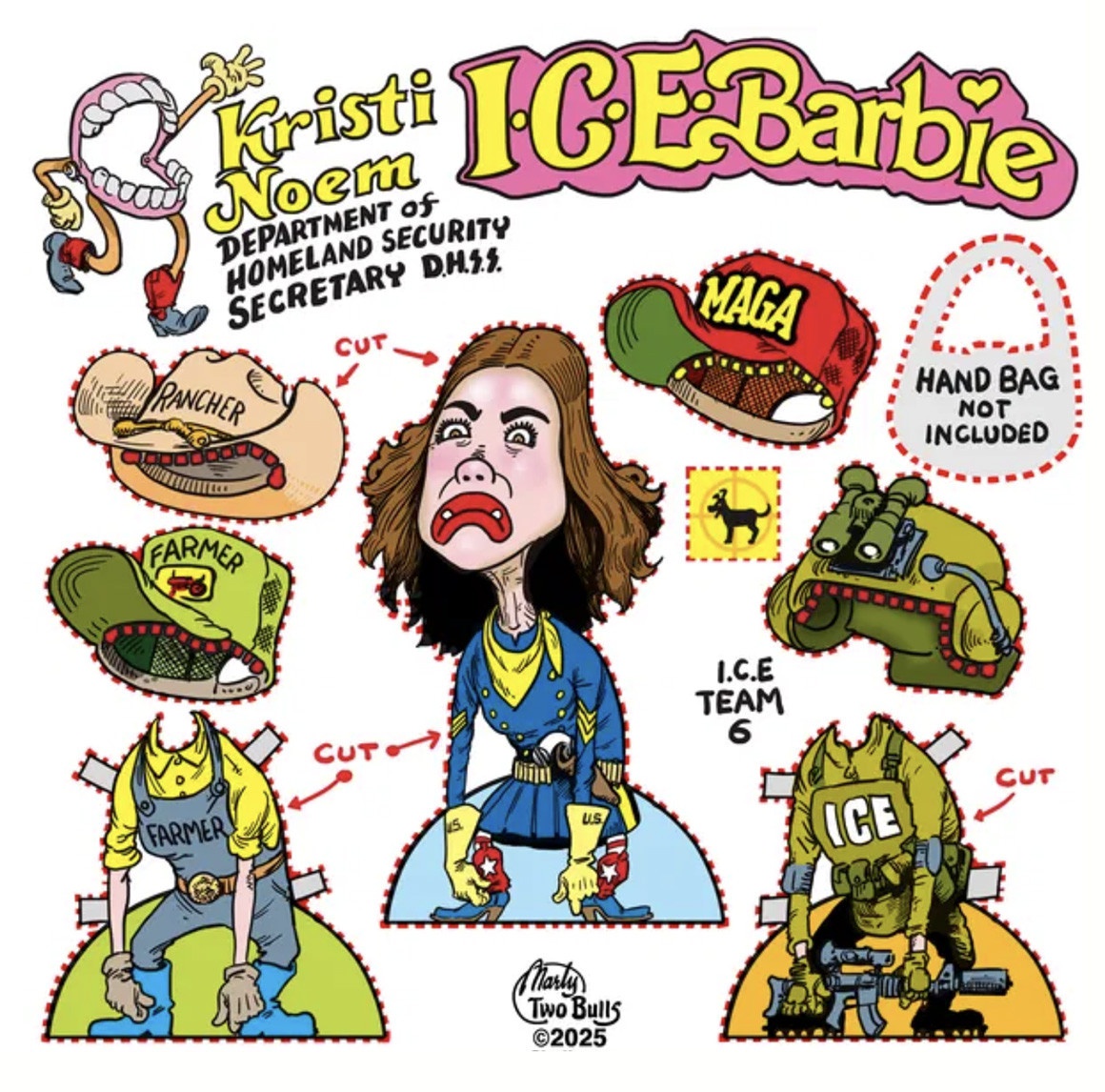
I was excited when I heard this, not because I am a baseball fan and am in Rose’s corner. I’ve always had mixed views about Rose’s ban, and Shoeless Joe Jackson’s, for that matter. I was excited because I thought that here’s a chance I can do a cartoon that’s not about Donald Trump. And then I read how this ban was lifted.
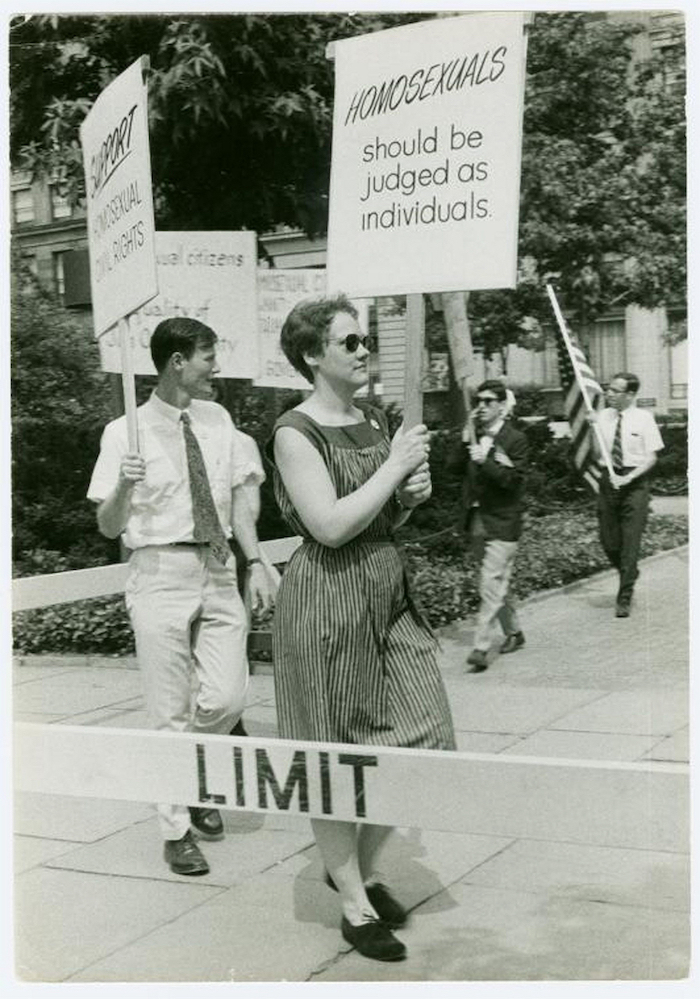
Among those transgender service members that Hegseth is kicking out is Commander Emily Shilling, who has served in the Navy for almost two decades. A naval aviator with over 60 combat missions under her belt, she is the lead plaintiff suing the administration to overturn the ban. Shilling told Women Rule that it’s her duty not only to follow lawful orders but to challenge those she believes to be unlawful.
She has proved that Transgender people are no different to anyone else that serves and in many cases their service is over the top.
Hegseth a National Guard weekend warrior and Trump the draft dodger are not good enough to lick the boots of the commander. I say this as a retired US army disabled vet. I hope the two of them die in their travels and the world and country would be better off.
I have bitterly wondered why people wouldn’t just go vote for whoever they had to, but to just vote, especially in the 2024 election. I’ve had a hard time with the non-voters. But, turns out, some of them have legitimate reasons (I’ve spoken with none,) but it turns out that not all the non-voters are asses. -A
Political tension and fears of violence may have depressed voter turnout in 2024
Women and gender-nonconforming people were more likely than men to fear violence and harassment while voting in the 2024 election, and those who expressed concerns about safety were more likely not to vote at all, new research shows.
The study, released Monday and shared first with The 19th, was conducted by States United Democracy Center, a nonpartisan organization focused on promoting fair and secure elections and upholding the rule of law.
“Tens of millions of Americans ultimately cast their ballots in 2024 without incident,” the report said. “But voting was not straightforward and safe for all Americans. Many were harassed, and a limited number were subjected to physical violence.”
The study found that the 2024 election was, as a whole, safe, fair and securely conducted, with voters overwhelmingly reporting feeling safe at the polls and confident in the safety and security of the election. But rising incidents of political violence, heightened political polarization and gender-based harassment had a measurable impact on how women and gender-noncomforming people especially viewed the safety of voting in the 2024 election — and whether they turned out to vote at all, the study says.
Researchers surveyed voters before and after the 2024 election in partnership with research data and analytics group YouGov and held a series of seven focus groups before the election — with three groups of White women, three groups of women of color and one made up of gender-nonconforming participants. They also fielded surveys of state lawmakers, election administrators and law enforcement officials in partnership with the nonprofit CivicPulse. The study is also one of the first of its kind to study the voting experiences of gender-nonconforming voters, who are subject to gender-based discrimination and harassment at the polls.
Women, people of color and gender-nonconforming people were more likely to have perceived the election environment as being unsafe, reported experiencing higher rates of voting-related harassment and were more likely to take precautionary measures when going to the polls. The study also compared pre-election survey responses to voting records and found that higher expectations of experiencing violence or harassment at the polls was correlated with lower voting rates.
“Concerns about violence or harassment depressed turnout, likely turning millions of voters into non-voters,” the report said.
The pre-election survey, conducted September 23 to 30, 2024, surveyed 4,016 American adults with a margin of error of plus or minus 1.7 points. The post-election survey, conducted November 7 to 19, surveyed a separate group of 4,017 registered voters with a margin of error of plus or minus 1.6 points. The researchers asked a series of questions to identify gender-nonconforming respondents in its surveys with YouGov, resulting in a sample of 81 gender-nonconforming voters in the pre-election survey and 103 in the post-election survey.
To measure fears of harassment and violence, researchers asked respondents how likely they thought it was to experience events ranging from verbal or written harassment to property damage and acts of physical violence. While all gender groups provided average responses of “somewhat unlikely” across all five, gender-nonconforming respondents had a higher expected likelihood of harassment or violence.
Overall, 91 percent of men, 89 percent of women and 73 percent of gender-nonconforming respondents said in the post-election survey that they felt safe voting. But respondents’ perceptions and feelings of safety varied by race among women and gender-nonconforming people. In the post-election survey, 92 percent of White respondents said they felt completely or mostly safe voting, compared with 85 percent of Black voters and 84 percent of Hispanic voters.
In pre-election surveys, women and voters of color were more likely than men and White respondents to view voting as unsafe and to say they were taking precautions as a result. Among women, the most common safety precaution respondents said they were likely to take was not bringing their children to the polls (32 percent), while the most common safety precaution for gender-nonconforming people was not interacting with others at the polls (46 percent). About a quarter of women and gender-nonconforming respondents said they were likely to vote by mail.
Several women voters in focus groups cited the potential of gun violence as a concern.
“I don’t go to the polls, because you never know what you will encounter there,” said a White independent woman voter who participated in one of the focus groups. “It seems like everybody in Arizona has a gun. We vote by mail, because it’s safer. Everybody has an opinion; you get in line, and you hear it all. You never know, if they don’t agree with you, they’ll shoot you. People are crazy.”
Others spoke to the heightened political climate and general political tensions around the election as a reason they feared threats, harassment and even heated conversations in line.
“I go early, or late, when I won’t run into anybody I know, and there won’t be any conversation,” said a Black Republican woman focus group participant. “I don’t want to deal with the emotional, ‘Who did you vote for?’ And me saying, ‘I don’t want to discuss it.’ So there are no issues, fighting, cussing, yelling. Save my peace of mind.”
People who feared violence and harassment at higher levels were less likely to vote, researchers found by comparing survey responses to verified voting records. When controlling for turnout differences based on demographic considerations, the study still found an average three percentage point decline in the likelihood of voting.
“For context, differences in voter behavior based on education level, one of the strongest predictors of turnout, are only half as large as differences explained by expectations of violence or harassment,” the report said. “Put another way, generalizing our results to the nationwide electorate, roughly 6 million Americans may have decided not to vote in 2024 because of concerns about violence or harassment.”
Gender-nonconforming voters face particularly unique challenges and barriers when it comes to voting.
A rise in anti-transgender political rhetoric from the right has been accompanied by a slew of laws targeting transgender people in Republican-controlled states. Some of these laws have sought to create strict definitions of gender and bar transgender individuals from changing the sex listed on their official identification to align with their gender identity. In states that require voters to show photo identification at the polls, that could open up transgender and gender-nonconforming individuals to scrutiny and potential harassment. In the pre-election survey, a third of gender-nonconforming voters said they were likely to dress differently at the polls.
“I’ve been a registered voter for decades. When I attempted to vote last time, they had a hard time ‘finding’ my registration,” said a gender-nonconforming Black independent who participated in a focus group. “I could tell I was being judged. The attitude of the person looking at your information to give you the voting packet can be intimidating. My documents have been submitted, I have my ID, what’s the problem? I felt there was judgment as far as was my information correct or was it fraudulent.”
In the post-election survey, over half of gender-nonconforming respondents said they took at least one safety precaution when voting, compared with about a third of men and women who said they took at least one precaution. Thirteen percent of gender-nonconforming respondents reported experiencing verbal harassment, intimidation and threats compared to 5.2 percent of men and 4.8 percent of women. In all, 18 percent of gender-nonconforming voters reported experiencing violence or harassment during the 2024 election season.
“I am obviously queer when you look at me, and I’ve been harassed for it,” said another focus group participant, an Asian-American Democratic voter. “Depending on how I do my hair or what I wear [on election] day, it’s a higher chance I’ll get harassed. If I was girly, I would be afraid someone could see through that and do me harm.”
This story has been updated to clarify support and funding for the report.