Kickass Women in History: Tarenorerer
by Carrie S · Apr 4, 2026 at 2:00 am
Please be advised that this post contains the names of deceased persons. In lieu of images of the deceased, which are offensive to Aboriginal persons, this post contains images of art by contemporary Aboriginal artists.
TW: genocide, slavery, exile, sexual violence, imprisonment, forced labor
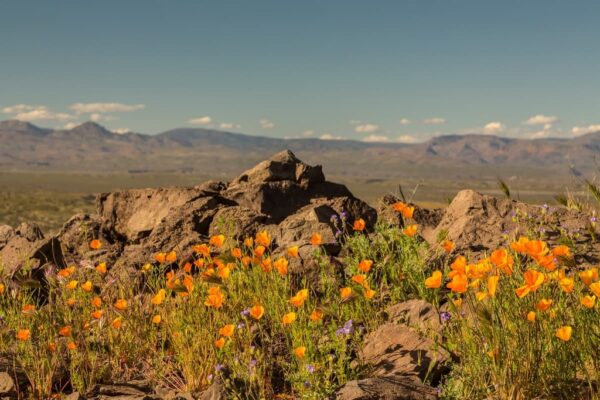
For this month’s Kickass Women in History, we go to Tasmania, an island state of Australia, home of the Palawa people. The Palwala people called their home Lutruwita, and early British colonizers referred to it as Van Diemen’s Land. From 1803 to 1853, Van Dieman’s Land was Australia’s primary penal colony. Later on, the island’s name was changed to Tasmania to avoid the stigma of its penal colony history.
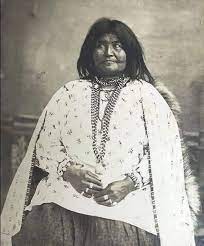
Tarenorerer was a Tommeginne woman born around 1800. Between 1800 and 1850, more than 70,000 people were exiled from England and forcibly deported to Van Diemen’s land and subjected to forced labor. This was an incredibly violent time in Tasmania. The convicts were disproportionately male and sexual violence against women was pervasive, while the convicts in general struggled to survive a harsh environment and harsh treatment from their overseers.
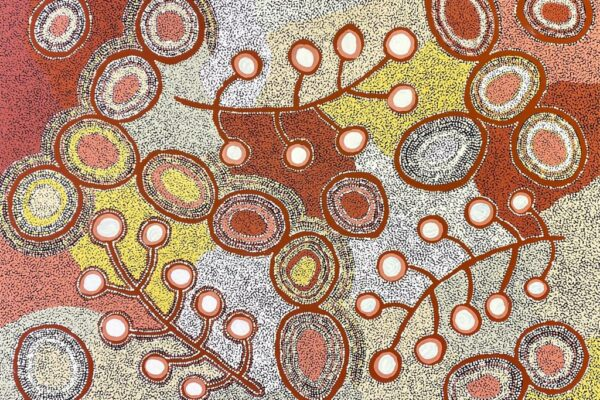
Two Women, by Alison Munti Riley
While life was difficult for the convicts, it was worse for the Aboriginal people who were murdered on sight. The convicts and their overseers carried out systemic genocide against Aboriginal Tasmanians during a conflict known as ‘The Black Wars.’ While most of the genocide focused on mass murder, George Augustus Robinson developed the “Friendly Mission,” a plan to forcibly deport Aboriginal Tasmanians to Flinders Island.
When Tarenorerer was in her teens, she was captured and taken from her family by another clan and sold to White sealers on the Bass Strait Islands. During her captivity, she learned to speak English and to use guns.
Tarenorerer escaped in 1828 and became the leader of the Plairhekehillerplue clan of Emu Bay. She led them in a guerilla war against the colonizers. (snip-a bit MORE)
Kickass Women in History: Queen Himiko
by Carrie S · Mar 7, 2026 at 2:00 am ·
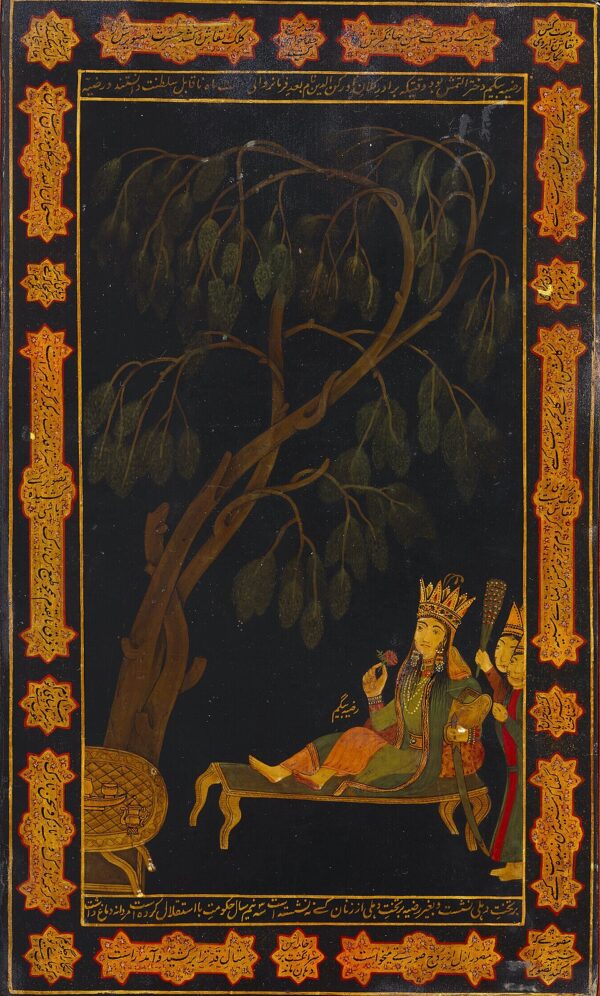
For this month’s kickass woman, we turn our attention to Japan and the legendary life of Queen Himiko, the first recorded ruler of ancient Japan – not only the first female ruler, but the first ruler, period. I’m going to do a little summarizing here, but I’m also going to be very link-heavy. So much legend surrounds Queen Himiko that I am waaay over my head in terms of describing her life, but I do want to give you some links to explore so that you can learn about this fascinating woman.
Once upon a time, before Japan was a country, in the Yayoi (300BC-300AD) and Kofun (250-538AD) periods, there were all these island city-states. Rulers were also religious figures, and female shamans were highly regarded.
The written records of this period come from Chinese historians, who referred to this region as “The Land of Wa”, home of the “Eastern Barbarians.” We also have writings from Korean historians. As summed up in the article “Queen Himiko: Badass Women in Japanese History” by Chelsea Bernard:
During the second half of the 2nd century (ca. 147-190 AD), the lack of a capable leader plunged the Land of Wa into political turmoil and violent upheaval. Finally, in 190 AD the unmarried shamaness was chosen by the people to rule. Installed in a palace with armed guards and watch towers, she was served by “1,000” female attendants while her “brother” acted as a medium of communication, transmitting her instructions and pronouncements to the outside world. After ascending to the throne, she went on to restore order and maintain peace like a boss for the next 50 or 60 years.
Queen Himiko pulled about 100 kingdoms and confederacies and clans together. She sent diplomatic missions to China, which formally recognized her rule. This video explains her role as a verifiable person in written record and archeology. It’s pretty dry but also very detailed.
(snip-a little MORE on the page)
Kickass Women in History: Arnarulunnguaq
Feb 07, 2026 02:00 am | Carrie S
I don’t know why, but I am a total sucker for books about Arctic and Antarctic exploration. Bring me your frostbite, your scurvy, your long marches, and, above all, bring me my warmest pajamas and a hot cup of tea and we have what I consider to be the perfect ingredients for a cosy night in.
The Heroic Age of Antarctic Exploration (1897ish – 1922ish) and the many efforts to locate the Northwest Passage in the Arctic are simply crammed with stoic imperialist White men who suffer terribly for what, frankly, does not strike me as terribly good reasons. Perhaps my ability to read of their sufferings with ghoulish fascination stems from the fact that none of these guys needed to be either North or South in the first place. To borrow and bend a common phrase: you live by the poorly sealed canned goods, you die by the poorly sealed canned goods*.

Of course, in the case of the Arctic, people were already living there long before any White explorers staggered upon the scene. Yu’pik and Inuit peoples were instrumental in exploratory expeditions in the Arctic and, less directly, the Antarctic. I’ve already written about Ada Blackjack, an Inupiaq woman who survived on Wrangel Island alone for eight months after the other members of her party died.
Other Indigenous women often supported expeditions, especially Arctic ones, by sewing, skinning and preserving fur and leather and cooking. Taqulittuq (also known as Tookoolito and as Hannah), an Inupiaq woman, accompanied Charles Francis Hall on many expeditions including one in which she and some crew members were marooned for months and survived because of the skills of Taqulittuq and her husband. Many other Indigenous women accompanied and supported expeditions and were never formally recognized for their valor.
Arnarulunnguaq, the first woman to travel from Greenland to the Pacific, was born in Greenland in 1896. She related that when she was six or seven, her father, a hunter, died and the family became so desperate for food that they prepared to sacrifice Arnarulunnguaq so the the rest of the family could live, having one less mouth to feed. However, at the very last minute, her brother started crying and her mother decided not to kill Arnarulunnguaq after all. Arnarulunnguaq was (of course) powerfully changed by this experience. According to the explorer Knud Ramussen:
She says herself that the gratitude that she came to feel many years later, and the life she had almost received as a gift, has made her placid towards people.
Arnarulunnguaq married a hunter named Iggiannguaq (allegedly she had a previous marriage that failed because she was “too lazy,” a trait which truly does not match the historical records of her life!). The two planned to accompany Knud Rasmussen on his Fifth Thule Expedition (1921 – 1924). This trip involved travelling from Greenland to Siberia via dogsled. Iggiannguaq died before the trip commenced, and Arnarulunnguaq asked to be allowed to continue with the trip. Her cousin, Qaavigarsuaq Miteq, filled the role of hunter.
(snip-MORE on the page)