WNV linked each of these. Here are the original pages with snippets.
After No Kings, It’s Time to Escalate by Eric Blanc
We need bigger—and more disruptive—nonviolent campaigns that can go viral and peel away Trump’s pillars of support Read on Substack
American democracy is on the ropes. Trump and his billionaire backers are doing everything possible to transform our country into an authoritarian state like Hungary or Russia, where the trappings of institutional democracy mask brazen autocratic rule.
Our president’s sinking popularity numbers might not matter so much if his administration is either able to ignore electoral results or to distort the electoral map so badly that there’s almost no way to vote Republicans out.
Far too many Democrats and union leaders naively hoped that the courts would save us. But the Supreme Court has given a green light to Trump’s power grab, and it appears poised to overturn Section 2 of the Voting Rights Act, the last major legal roadblock to prevent Republicans from disenfranchising millions of Democrats and Black voters across the South.
Are we cooked? Trump would certainly like us to believe he’s unstoppable. Faced with the administration’s relentless offensive against immigrants, free speech, public services, and majoritarian rule, it’s normal to sometimes succumb to despair. But there’s no need to throw in the towel — and there are concrete next steps we can all take to win back the country through nonviolent resistance. As Chicago Teachers Union (CTU) president Stacy Davis Gates reminds us, Trumpism “won’t be stopped just in the courts or at the ballot box.” (snip-there is MORE on the page linked at “Read on Substack” above)
=====
The introvert’s guide to fighting for democracy by Protect Democracy
Six ways to protect democracy — without attending a protest Read on Substack
If you’re reading this, you’re concerned about our democracy’s slide into authoritarianism — and you want to do something about it. Wahoo! You’ve taken the first and most difficult step: committing to action.
Now come the fun parts.
I want to be really clear on a couple things to start out. First, there is no one-size-fits-all best way to exercise your First Amendment rights of speech and association. Every successful social movement has employed a wide variety of tactics and repeatedly adjusted to respond to facts on the ground. Opt for action over agonizing about optimal tactics.
Second, be realistic. We are all busy. Reflect on the commitments you can actually sustain with room to grow. It is far better to regularly move the ball forward on a smaller effort than to dive into and never complete an ambitious one.
Third, be unique! You have unique talents, skills, and passions. Let those guide your advocacy. Focus on projects that bring you joy, things you actually look forward to engaging with week after week. Lean into the comparative skills and expertise you bring to the movement.
With all that in mind, here’s a short list of six ways everyone can protect democracy — even (especially) if going to a protest or some other more public form of engagement isn’t for you.
1. Check in with your local library
Local libraries are the backbone of an informed democratic citizenry, and they provide crucial resources for underserved communities. But their funding is under attack by the administration, which has cut critical funds nationwide.
So, give the library in your neighborhood a call. See how they are doing in relation to funding cuts and if there are ways you can support them. Do they take book donations? Need volunteers? See if there are teach-in or reading groups you can join — or even lead. Offer to help curate pro-democracy reading lists for various ages. Many libraries are open to suggestions for books to add to the collection — here are some recommendations from our team.
2. Fill the gaps left by government programs
Taking care of one another is essential movement building. Check in on your food pantry and community kitchen — many of which have faced funding cuts — to see how you can help. (snip-MORE at the page linked above: “Read on Substack”)
suze mentioned a great song, and I’m happy to play it today. It’s a rocker! Here’s what Bee shared; there is some personal history, plus her chosen song.
Tze-gu-juni, also known as Huera, was a woman whom Geronimo called “The Bravest of Apache Women.” She was a woman of intensely powerful inner strength who survived captivity, a trek across the desert, and mountain lion attack to serve her tribe as a shaman.
Tze-gu-juni was born around 1847. As a child, she survived a lightning strike that killed her mother and sister. She seems to have lived an otherwise peaceful life until October 14, 1880, the day of the Battle of Tres Castillos, the battle that killed Chiricahua Chief Vittorio and ended Vittorio’s War, a war Vittorio waged against U.S. and Mexican Army soldiers in New Mexico, Texas, and Mexico. Tze-gu-juni was captured along with approximately seventy other women and children and taken to Mexico City, where she was enslaved and given the name ‘Huera’.
During her captivity, Tze-gu-juni became fluent in Spanish and secured a role as a translator at an Apache reservation in Arizona. She and about five others planned an escape and fled into the desert. They had one knife and one blanket and would have to walk for approximately 1300 miles to reach safety. They foraged for food and water in the desert.
The land near San Carlos Reservation
Along the way, Tze-gu-juni was attacked by a mountain lion. She tightened the blanket around her neck which saved her, and fought off the mountain lion. She was badly wounded but managed to reach San Carlos Reservation, where Geronimo and Tze-gu-juni’s future husband, Mangas, were living. Her hands and face were scarred for the rest of her life and she had limited use of her hands thereafter. (snip-MORE; go read it!)
Tze-gu-juni, Image from History.net, provenance unknown
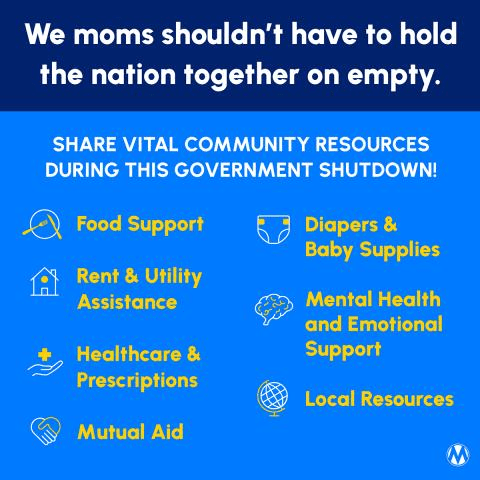
These are among the truest words ever spoken. From Momsrising’s blog, here are resources: we should share them far and wide so that people can at least get by. I write letters and make phone calls with Momsrising; this is good and vital information. And, you don’t have to be a mom to use, share, or help anyone with this info! It’s for all. -A
We moms shouldn’t have to hold the nation together on empty.
Yet here we are in the middle of a government shutdown that has thrown families into chaos. SNAP benefits are being cut; air traffic controllers,
We moms shouldn’t have to hold the nation together on empty.
Yet here we are in the middle of a government shutdown that has thrown families into chaos. SNAP benefits are being cut; air traffic controllers, military school teachers, families in several states are losing child care as Head Start centers start to close; and other federal employees are facing another missed paycheck (while still showing up every day, keeping our country running!). WIC is barely hanging on by thread, and rising costs are pushing families past the brink.
Moms are holding it all together and we see you!!
We see your strength. We see your exhaustion. And we know that love shouldn’t have to come with this kind of struggle.
While the Trump Administration continues to play politics with families’ livelihoods, we want to make sure you have support right now while we keep up the fight.
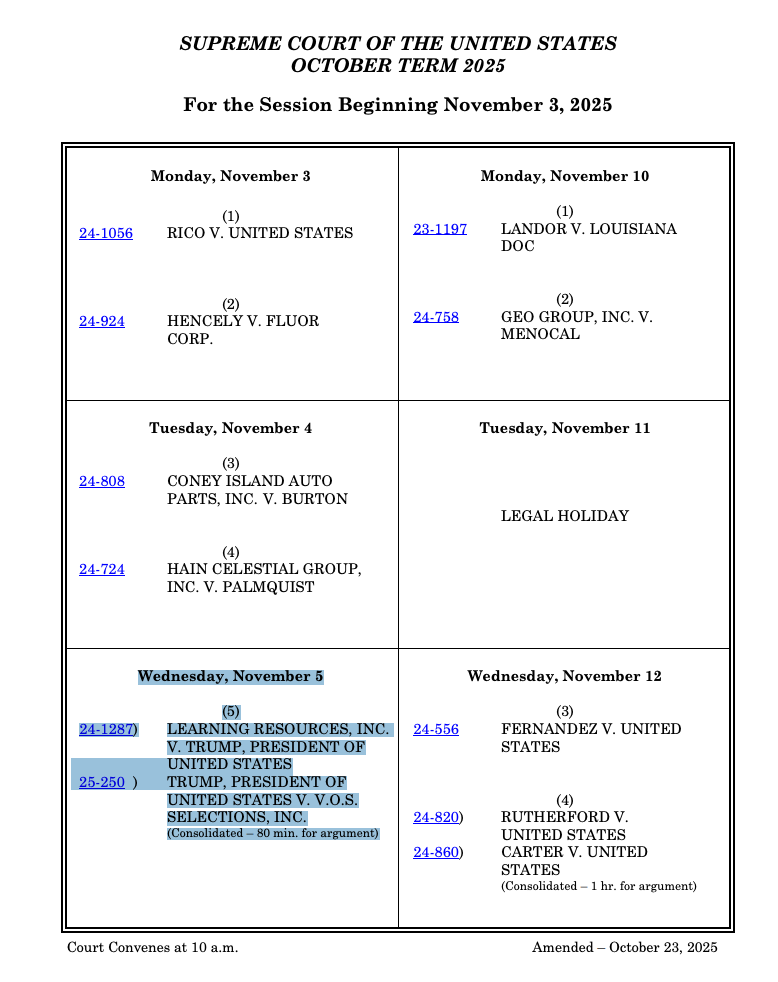
This Wednesday, the Supreme Court will hear the Trump tariffs case, arguably one of the most important cases it will hear all term.
But, it’s important to understand that this is not a case about tariffs in general or about whether they are good policy. It’s a case about specific tariffs that President Trump imposedin February and whether he had the statutory authority to impose them. In other words, this is yet another example of Trump attempting to seize power that neither the Constitution nor our laws grant him and going to the Supreme Court in hopes they will validate it nonetheless. After argument, the Supreme Court will decide whether Trump had the legal authority to impose these tariffs in two cases.
We’ve been tracking this issue since Trump first threatened to impose tariffs, waffling back and forth seemingly from minute to minute. We studied the U.S. Court of Appeals for the Federal Circuit’s decision that rejected Trump’s effort to impose tariffs using IEEPA (I-E-Pa), the 1977 International Emergency Economic Powers Act, for the very simple reason that the Act, unlike other statutes that do give a president the right to impose tariffs, doesn’t mention tariffs at all. It does not give the president any authority to impose them under the statute that he has expressly said he used to do so. This is the kind of textualist argument conservative justices have backed in other cases, and to abandon that approach here would be a sharp and hypocritical departure for them. Last term, Justice Gorsuch wrote that the justices’ primary focus should be on the text of the statute.
The Constitution gives the power to impose taxes, which includes tariffs, to Congress. Because IEEPA doesn’t extend that power to the president, his use of it here is just a power grab, the kind of practice the Supreme Court should push back against if it intends to remain relevant to the American experiment. The Federal Circuit’s decision pointed out that while other laws expressly give the president the power to impose tariffs, IEEPA does not. Congress knows how to give the president the power to impose tariffs when it wants to and because it did not do so here, that should be the end of the inquiry. The administration should lose here. So what we hear in oral argument, even though it won’t necessarily signal where individual judges will end up, is worth following closely to see what tea leaves can be read for this case. It may also give us some sense of whether the Court intends to act as a check in other cases involving Trump’s power grabs.
The “major questions” will also be in play on Wednesday. You may recall it from recent terms of Court, where a conservative majority has recently used it to say there must be clear guidance from Congress before a federal agency can act on a major question of economic or political significance. Here’s the wrinkle: The Court has only used the doctrine to hamstring the Biden administration, and not to hinder Trump.
In 2022, the Court decided West Virginia v. Environmental Protection Agency, rejecting the EPA’s authority to regulate greenhouse gas emissions from coal-fired power plants because Congress had not specifically authorized a regulation with such major political and economic consequences.
In 2023, the Court rejected Biden’s student loan relief package in Biden v. Nebraska, holding that even though a federal statute allowed the Secretary of Education to “waive or modify” student loan debt, that authorization was insufficient for the Biden policy because this was a major question.
The Federal Circuit used these cases as precedent against the Trump administration. “Tariffs of unlimited duration on imports of nearly all goods from nearly every country with which the United States conducts trade” is “both ‘unheralded’ and ‘transformative,’” the court wrote, concluding that as a result, the administration needed to be able to “point to clear congressional authorization” for its tariffs. The absence of any language in the statute authorizing them was fatal to Trump’s case in the lower court. But the sardonic joke among appellate lawyers has been that the major questions doctrine only applies to Democratic administrations. On Wednesday, we will see whether that holds up and if the Court’s conservative majority is willing to twist itself into pretzel logic to support this administration’s political objectives.
There are other issues to look at this week:
As the Trump administration continues its extraterritorial strikes on supposed drug traffickers, there is increasing concern about the legality of that conduct. Georgetown law professor Steve Vladeck and I will take up that issue on Monday evening at 9 p.m. ET/8 CT in a Substack Live (if you subscribe to Civil Discourse, you’ll receive an email inviting you to join us when we go live, so mark your calendars and be ready).
As we head into the week, there are billboards up on the expressway heading toward U.S. Southern Command, in Doral, Florida, that tell troops “Don’t let them make you break the law” in response to those attacks.
New billboards are going up near Miami, Chicago, and Memphis, Tennessee, as well, a warning to troops being deployed in American cities. The billboards are part of a campaign by veterans to support and encourage the troops to uphold military order.
If you’ve forgotten about DOGE, unfortunately, it’s time to remember. There are reports that the Pentagon’s DOGE unit “is leading efforts to overhaul the U.S. military drone program, including streamlining procurement, expand homegrown production, and acquire tens of thousands of cheap drones in the coming months.” And the Bulwark reported that Rear Admiral Kurt Rothenhaus was recently removed from his post as chief of naval research, the top post at the Office of Naval Research (ONR), and replaced by Rachel Riley, who has been working in DOGE-related roles in the Trump administration. Although she was a Rhodes Scholar, Riley, 33, has “no apparent naval experience.”
There are also reports of DOGE interfering with the Department of Agriculture. Senator Dick Durbin tweeted that “President Trump and the DOGE cowboys want to close and diminish critical agricultural research at the University of Illinois. The only other soybean lab like that in the world is in…China. Our President is ceding our agriculture research leadership to China.”
Remember back in February, when Trump floated the idea that everyone could get a $5,000 check from all of DOGE’s “savings”? That didn’t work out so well, did it? You may want to remember this for Thanksgiving dinner.
Tuesday is election day. There is the Virginia governor’s race and the New York City mayoral race. Also, the governorship is at issue in New Jersey. A California ballot initiative will determine whether that state will engage in defensive redistricting designed to offset the aggressive way the Trump administration has demanded Republican states use it to spike the balance between the two parties in the House in their favor, effectively letting politicians choose their voters, instead of the other way around. There is also a race in Pennsylvania, where three Democratic members of the state Supreme Court face retention votes that could be highly significant in the potential 2028 battleground state.
Vote.org, a nonpartisan voter registration and engagement platform, announced a “huge spike” in voter registration ahead of the elections, with their online registration platform being used more than twice as many times as they were during the comparable 2021 election cycle.
They reported that:
More than 80% of those users are under the age of 35
Nearly half (46%) are just 18 years old
Compared to 2021, there are more young voters, more women, and more voters of color using the platform
It’s good news for pro-democracy Americans.
The house will remain out of session, yet again this week.
Epstein. Epstein. Epstein.
But as we all know, that means SNAP is still in danger, which means many of our fellow citizens could begin to go hungry this week if the administration tries to skirt compliance with or obtains an injunction staying decisions by a court in Massachusetts, and a more specific one in Rhode Island, which require the administration to use emergency dollars to fund SNAP. There, Chief Judge John J. McConnell Jr. ordered the USDA to distribute contingency funds and to report to the Court on its progress by 12:00 p.m. on Monday, November 3. Expect more litigation this week.
ICE agents are still engaging in “enforcement actions” in American communities and residential neighborhoods. Stories of abuses are circulating; it’s a critical moment for using our skills to ferret out misinformation and focus on the truth. This photo is from a Day of the Dead celebration in New Orleans.
It is clear that this is a week that will require us to summon our courage and continue to pay close attention. The times are far too important for us to look away. Remind yourself that dictators use overwhelm as a tactic for getting people to give up and submit to their rule. Let’s not do that to us.
While the challenge is simple and explained in Bee’s posts, all one need do is either reblog/post on your own blog, answer in comments, or go to Bee’s, and tell us of the peace song you particularly love, or want to hear. Link it if you can. That’s all! Let’s ripple world peace all across the universe! 🕊 ☮ ✌
I just found 3 comments in Spam from a newer subscriber. The comments are fine, but I am unable to approve or release these comments from Spam. When you get a chance, you’ll see them. Thanks!
I hope today is treating you kinder than days have been, Scottie!
This will be up early on Nov. 2nd, which puts us a day behind though I’m doing this on Nov. 1st. Anyway, today I choose “I Declare World Peace,” lyrics by Lawrence R. Gelber, performed by Win Thompkins. Enjoy an obscure bit of music, and be sure to click through to Bee’s to see her peace music, too, and share your own peace music!
unless someone’s able to override an override of an override. I’m not familiar with this publication; this was another story I read during a jog, but the story seems feasible. Experts here will know. I’m just tossing it in here.
The smart vacuum cleaner was remotely bricked for not collecting data.
An engineer got curious about how his iLife A11 smart vacuum worked and monitored the network traffic coming from the device. That’s when he noticed it was constantly sending logs and telemetry data to the manufacturer — something he hadn’t consented to. The user, Harishankar, decided to block the telemetry servers’ IP addresses on his network, while keeping the firmware and OTA servers open. While his smart gadget worked for a while, it just refused to turn on soon after. After a lengthy investigation, he discovered that a remote kill command had been issued to his device.
He sent it to the service center multiple times, wherein the technicians would turn it on and see nothing wrong with the vacuum. When they returned it to him, it would work for a few days and then fail to boot again. After several rounds of back-and-forth, the service center probably got tired and just stopped accepting it, saying it was out of warranty. Because of this, he decided to disassemble the thing to determine what killed it and to see if he could get it working again.
Since the A11 was a smart device, it had an AllWinner A33 SoC with a TinaLinux operating system, plus a GD32F103 microcontroller to manage its plethora of sensors, including Lidar, gyroscopes, and encoders. He created PCB connectors and wrote Python scripts to control them with a computer, presumably to test each piece individually and identify what went wrong. From there, he built a Raspberry Pi joystick to manually drive the vacuum, proving that there was nothing wrong with the hardware.
From this, he looked at its software and operating system, and that’s where he discovered the dark truth: his smart vacuum was a security nightmare and a black hole for his personal data. First of all, it’s Android Debug Bridge, which gives him full root access to the vacuum, wasn’t protected by any kind of password or encryption. The manufacturer added a makeshift security protocol by omitting a crucial file, which caused it to disconnect soon after booting, but Harishankar easily bypassed it. He then discovered that it used Google Cartographer to build a live 3D map of his home.
This isn’t unusual, by far. After all, it’s a smart vacuum, and it needs that data to navigate around his home. However, the concerning thing is that it was sending off all this data to the manufacturer’s server. It makes sense for the device to send this data to the manufacturer, as its onboard SoC is nowhere near powerful enough to process all that data. However, it seems that iLife did not clear this with its customers. Furthermore, the engineer made one disturbing discovery — deep in the logs of his non-functioning smart vacuum, he found a command with a timestamp that matched exactly the time the gadget stopped working. This was clearly a kill command, and after he reversed it and rebooted the appliance, it roared back to life.
So, why did the A11 work at the service center but refuse to run in his home? The technicians would reset the firmware on the smart vacuum, thus removing the kill code, and then connect it to an open network, making it run normally. But once it connected again to the network that had its telemetry servers blocked, it was bricked remotely because it couldn’t communicate with the manufacturer’s servers. Since he blocked the appliance’s data collection capabilities, its maker decided to just kill it altogether. “Someone—or something—had remotely issued a kill command,” says Harishankar. “Whether it was intentional punishment or automated enforcement of ‘compliance,’ the result was the same: a consumer device had turned on its owner.”
Unfortunately, many other smart vacuum brands use similar hardware, so it’s not far-fetched to think that they have the same setup. This is likely especially true for cheaper devices that have less capable hardware and aren’t capable of edge computing, meaning they’ll have to send the data to some faraway server for processing. But because your information is being offboarded to another device outside of your control, you really have no idea what’s happening to it, giving the manufacturer free rein to use it as it pleases.
In the end, the owner was able to run his vacuum fully locally without manufacturer control after all the tweaks he made. This helped him retake control of his data and make use of his $300 software-bricked smart device on his own terms. As for the rest of us who don’t have the technical knowledge and time to follow his accomplishments, his advice is to “Never use your primary WiFi network for IoT devices” and to “Treat them as strangers in your home.” (snip)







 Scottie's Playtime