News From Rest Of The World

U.S. news, too; scroll past what you’ve seen. I like to know what’s happening outside the U.S. as well as here; I loved to read newspapers when they were big and full of news from everywhere. I don’t make time to read this often enough.

Everything Briefing

February 18, 2026

Talks and Passing

Jacob Redman

Good morning, everyone!

https://substack.com/embedjs/embed.js“>(snip-embedded note on the page; click this or the title above)

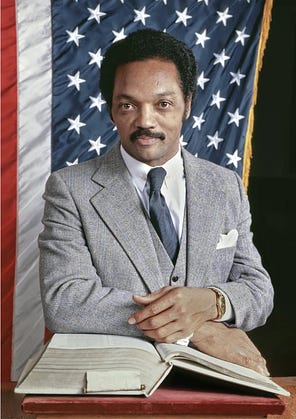
In 1984, Jesse Jackson became the first Black candidate to win a presidential primary contest and qualify for the ballot in all 50 states.

Campaigning under the slogan “Now Is The Time,” Jackson won more than three million votes and four contests in the Democratic primary.

Four years later, he placed second for the nomination, winning 11 c…
576

Today, we will look at a series of U.S. political developments, Ukrainian peace talks, and U.S.-Iranian nuclear talks.

Let’s get to it.
♻️ Help this post reach more readers: like, repost, and share 📬

Share


United States

-Congressional negotiations on a spending bill to reopen the Department of Homeland Security (DHS) have stalled, as Democratic and Republican leaders remain divided on changes to immigration enforcement practices.

DHS, which houses the Immigration and Customs Enforcement (ICE) agency, entered a partial shutdown on Saturday after Congress failed to pass a funding bill amid the standoff.

Earlier this month, President Donald Trump and Senate Democratic Leader Chuck Schumer agreed to a compromise bill to fund all government agencies except for DHS through September as they negotiated changes to immigration enforcement tactics.

Ahead of the funding lapse, congressional Democrats called the White House’s counterproposals insufficient.

-Americans’ approval of Trump’s immigration policies has fallen to a new low, according to a Reuters/Ipsos poll.

-Stephen Colbert said that CBS forced him to not air an interview with Texas Democratic Senate candidate James Talarico on his late-night show, saying that executives were fearful that the appearance could draw ire from the Federal Communications Commission.

The interview was posted to The Late Show’s YouTube page. View it here:

Earlier this month, the FCC opened an investigation into ABC’s The View after an appearance by Talarico.

The latest move came just as early voting began in Texas, where Talarico, a State Representative, is facing off against Congresswoman Jasmine Crockett in the Democratic primary.

The election will be held on March 3.

-Arizona Senator Mark Kelly said he will “seriously consider” a bid for the 2028 Democratic presidential nomination.

-In a Presidents’ Day message, former President George W. Bush paid tribute to George Washington, saying he “ensured America wouldn’t become a monarchy, or worse.”

Read the full message on Substack here:

In Pursuit

George Washington by George W. Bush

Read more

2 days ago · 1386 likes · 291 comments · In Pursuit and George W. Bush

-Measles cases in South Carolina have surged.

-Speculation has swirled around whether Supreme Court Justice Samuel Alito plans to retire this year.

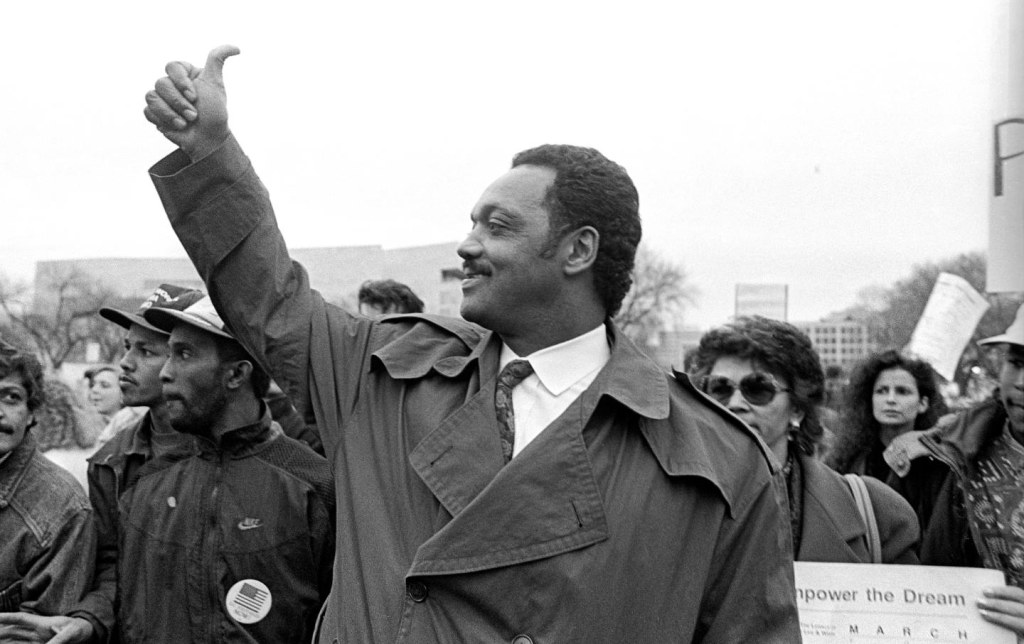
-Jesse Jackson, the longtime civil rights activist and two-time presidential candidate, died yesterday at the age of 84.

Tributes poured in following the news of his passing.

View them here.
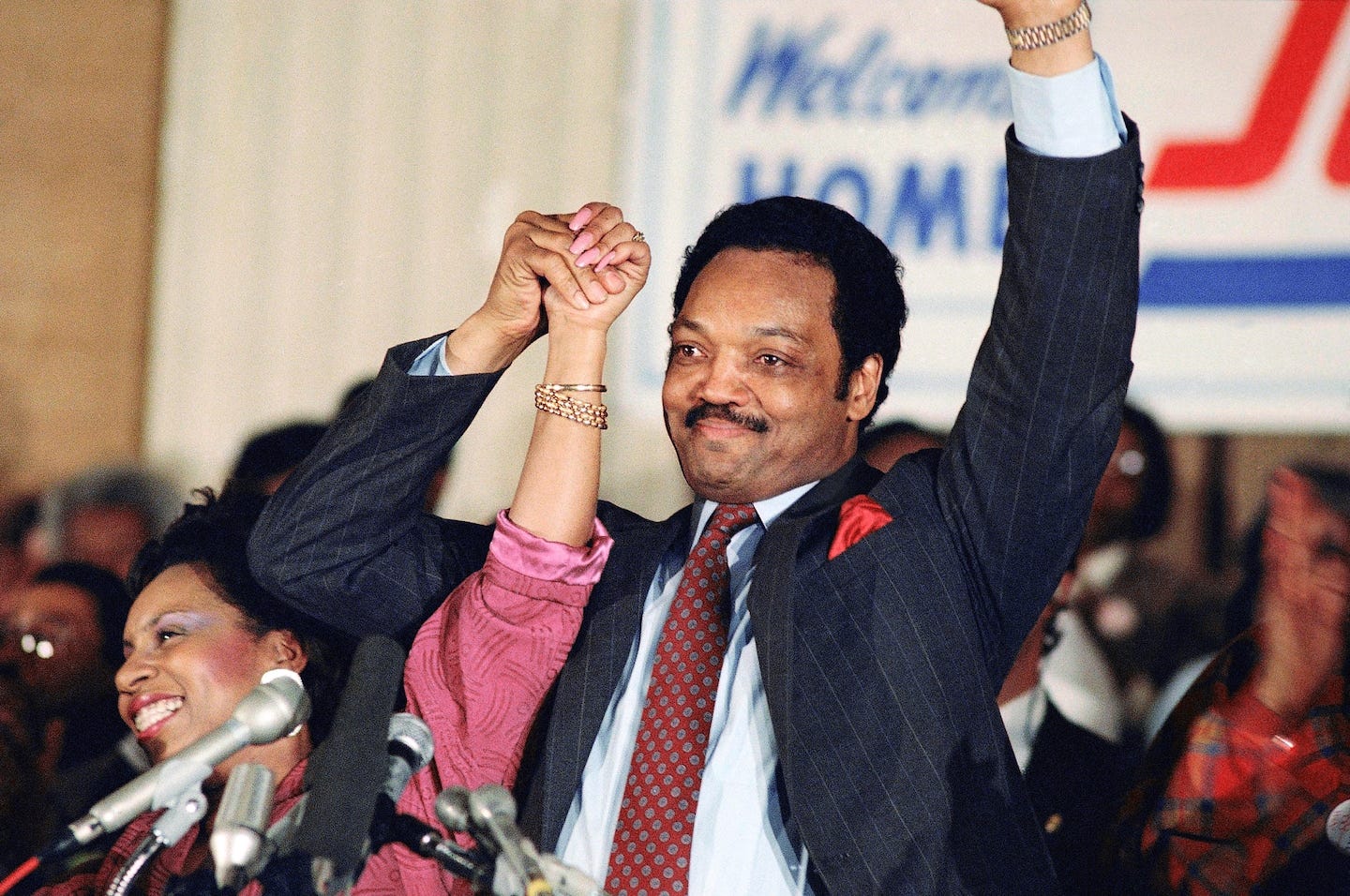
Jesse Jackson exposed racism and rifts in politics - The Washington Post

-On this day in 1931, Pulitzer Prize-winning author Toni Morrison was born in Lorain, Ohio.
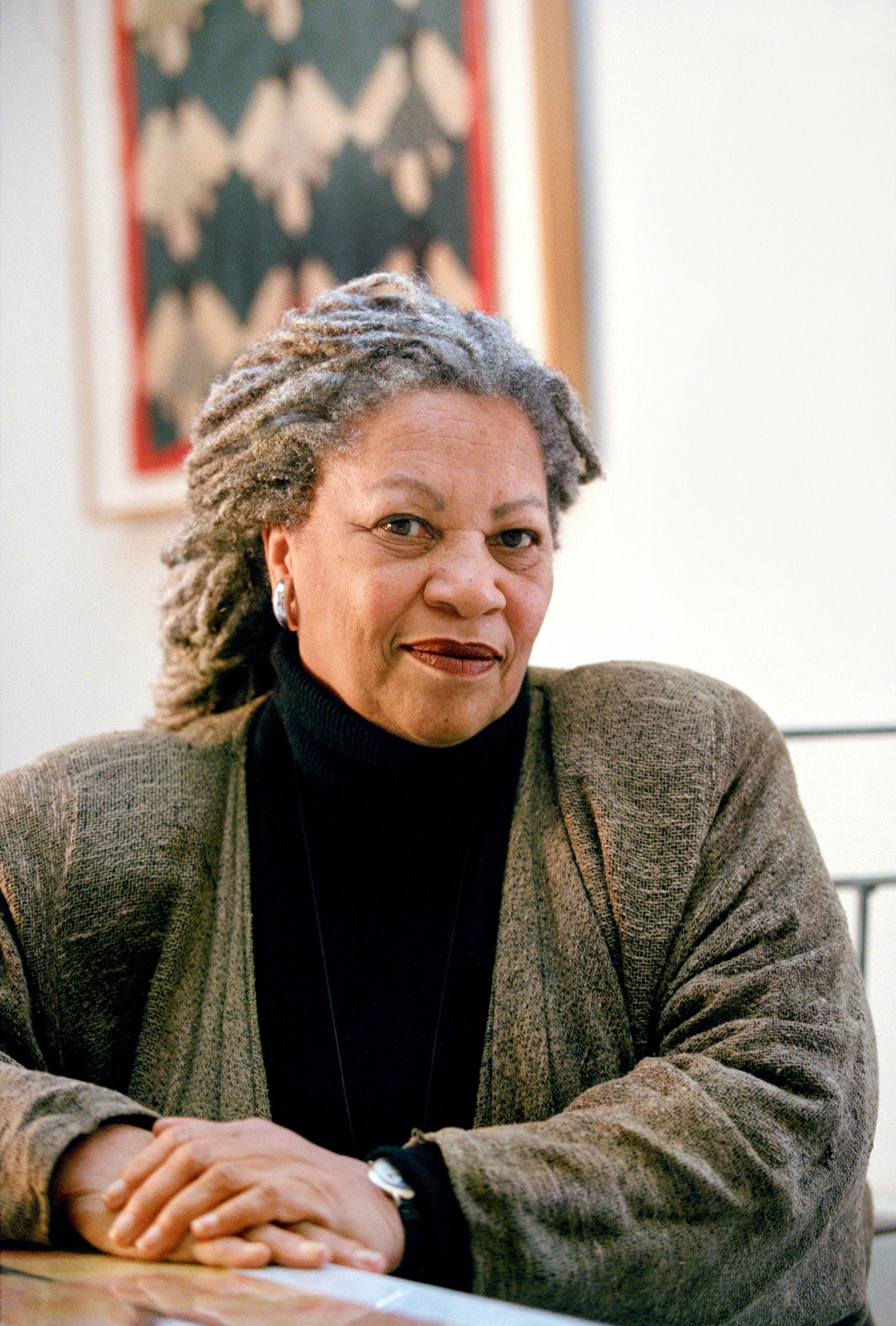
Toni Morrison, the Teacher | The New Yorker

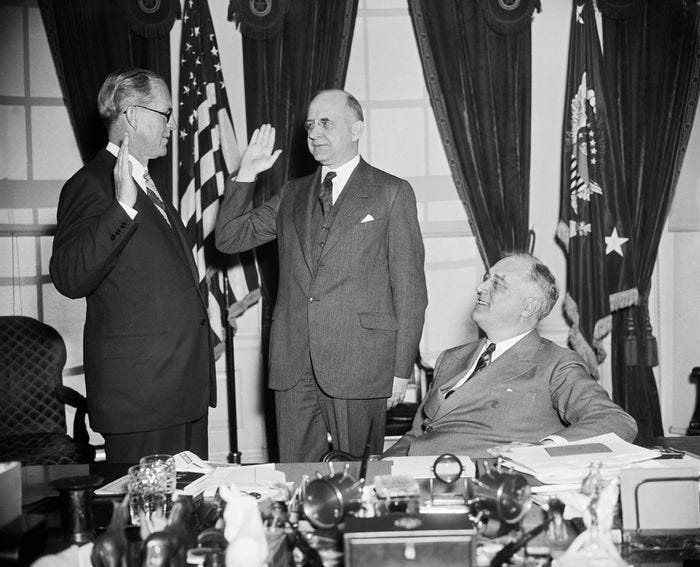
In 1938, Joseph Kennedy Sr., the father of future President John F. Kennedy, was sworn in as U.S. Ambassador to the Court of St. James’s in the Oval Office as President Franklin Roosevelt looked on.
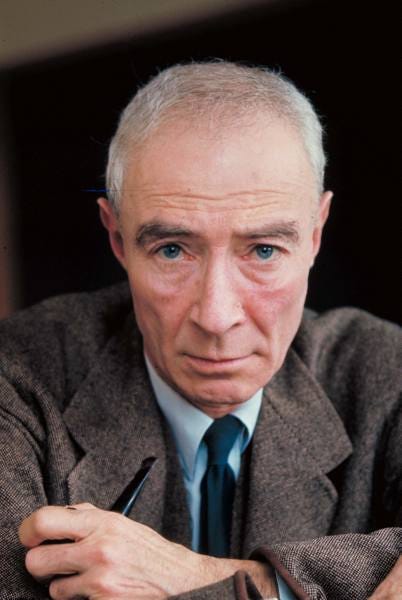
In 1967, J. Robert Oppenheimer, the “father of the atomic bomb,” died at the age of 62.
In 1988, Anthony Kennedy was seated as an Associate Justice on the Supreme Court.

Nominated by President Ronald Reagan, Kennedy would go on to serve as the Court’s crucial swing vote on issues of abortion, affirmative action, and gay marriage.
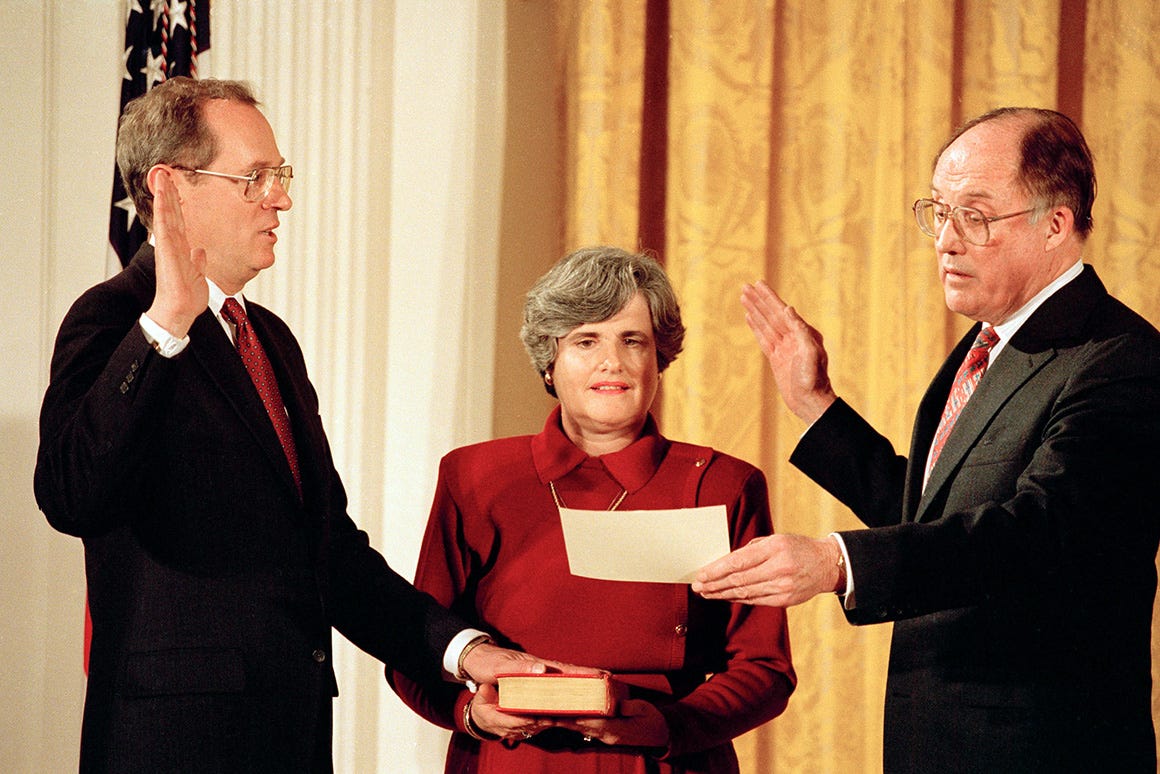
Anthony Kennedy's Supreme Court tenure, in photos (and one drawing) -  POLITICO

In 2010, President Barack Obama signed an executive order establishing the Fiscal Responsibility Commission, tasking Republican Alan Simpson and Democrat Erskine Bowles with identifying strategies to improve the country’s long-term fiscal outlook.

The body, known as the Simpson-Bowles Commission, issued a report titled “The Moment of Truth,” later that year, calling for a combination of spending cuts, tax and entitlement reforms, and other measures to reduce the deficit.
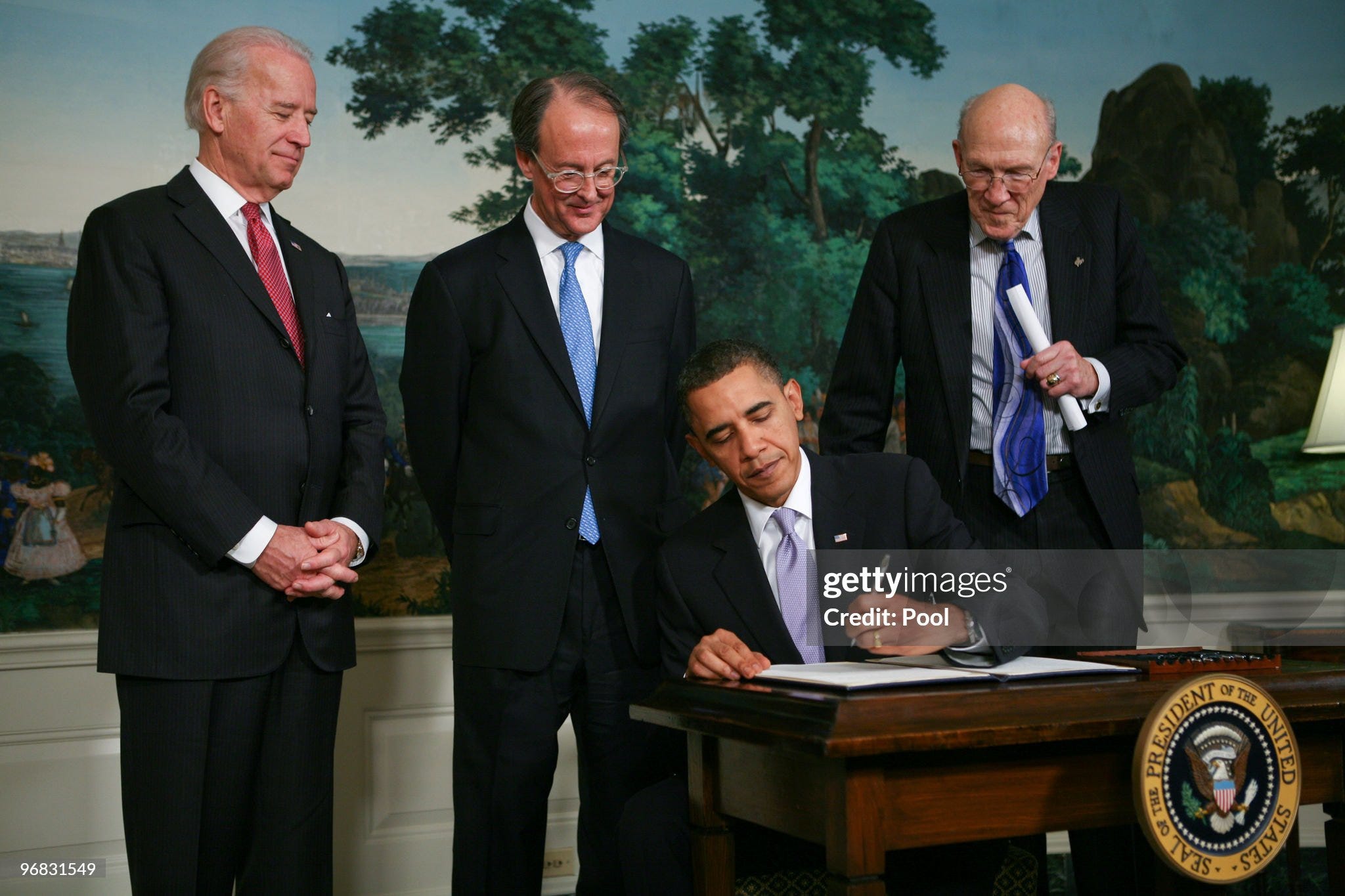
Obama Signs Executive Order To Create Fiscal Responsibility Commission
Other Links:
Hillary Clinton accuses Trump administration of a ‘cover-up’ over its handling of Epstein documents – CNN
Epstein survivor Juliette Bryant says she was trafficked from South Africa and soon realized it was “not a modeling opportunity, I’ve been kidnapped” – CBS
Federal judge rules Kilmar Abrego Garcia can’t be re-detained by immigration authorities – AP
Maryland bans partnerships with ICE, citing ‘unaccountable agents’ – Washington Post
Top DHS spokesperson who became a face of Trump immigration policy is leaving – NPR
Minnesota’s Legislature braces for a federal immigration fight as the enforcement surge winds down – AP
Senate clamps down on DC tax bill – Politico
Republican congressman’s anti-Muslim remark prompts calls for his resignation – NBC

Africa

-Turkish President Recep Tayyip Erdoğan scorned Israel’s recent recognition of Somaliland, the breakaway region of Somalia, saying the move did not benefit the Horn of Africa region.

Israel officially recognized the Republic of Somaliland as an independent and sovereign state in December, becoming the first member of the United Nations to do so.

In response, Somalia called the move an “existential threat,” with President Hassan Sheikh Mohamud saying that his country would “fight in its capacity” to prevent an Israeli military presence in the region.

Somaliland declared independence in 1991 following a five-year civil war.
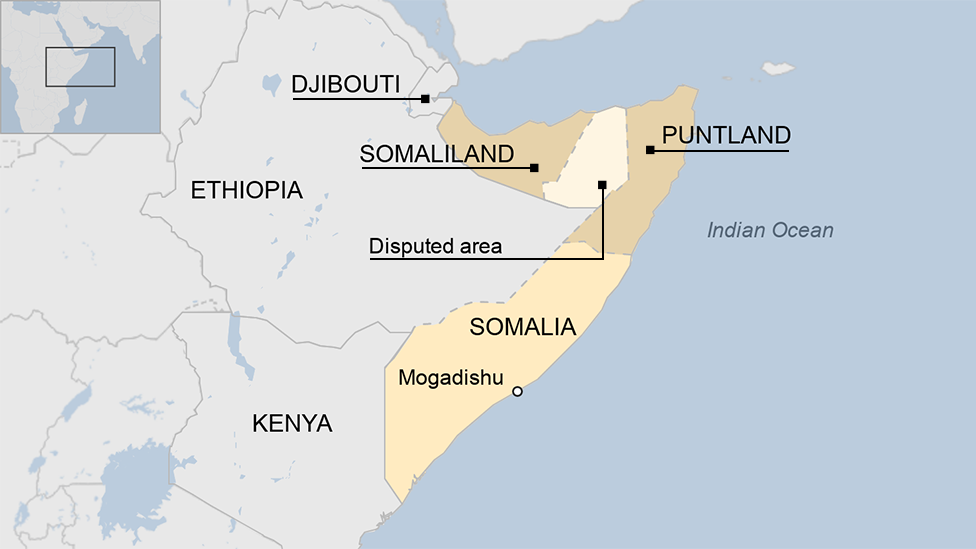
Somaliland profile - BBC News

-Nigeria’s defense ministry said yesterday that 100 more U.S. military personnel had arrived in the country as part of a mission to counter Islamist militant groups in the West African country.

President Trump ordered strikes on Islamic State targets in the country on Christmas Day and has accused the government of failing to protect Christians in its northwestern region, a claim it rejects.

-The new U.S. Ambassador to South Africa, conservative activist and writer Leo Brent Bozell III, arrived in the country yesterday amid strained bilateral ties.

-Unemployment in South Africa declined to 31.4% in the fourth quarter, a five-year low.

The jobless rate in the country has remained above 20% since the mid-1990s and remains one of the highest in the world.

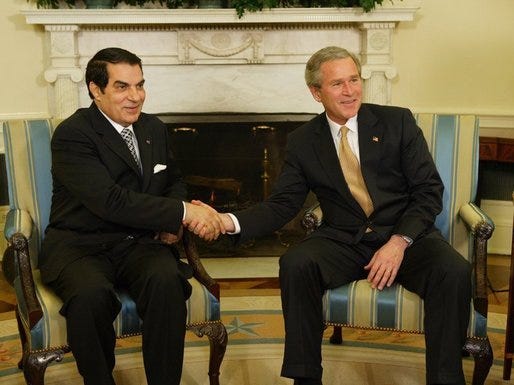
-On this day in 2004, President Bush hosted Tunisian President Zine El Abidine Ben Ali in the Oval Office as Washington sought the North African country’s cooperation in its war against terrorist organizations.

According to press reports, Bush also urged Ben Ali to adopt democratic reforms.

Ben Ali ruled Tunisia with an iron fist from 1987 until 2011 when he was ousted by a pro-democracy movement that would sweep the region, which would become known as the Arab Spring.
Other Links:
At least 6,000 killed over 3 days during RSF attack on Sudan’s el-Fasher, UN says – AP
Prominent Angolan journalist targeted with Predator spyware – Reuters
Zimbabwe war veterans challenge Mnangagwa term extension in court – Reuters
Ex-Zambian President Edgar Lungu’s family dismiss allegations he was poisoned – lawyers – BBC
South Africa cashes in on adventure tourism – Semafor

Americas and the Caribbean

-Peru’s Congress voted to remove interim President Jośe Jorí from office yesterday over undisclosed meetings he held with Chinese business executives.
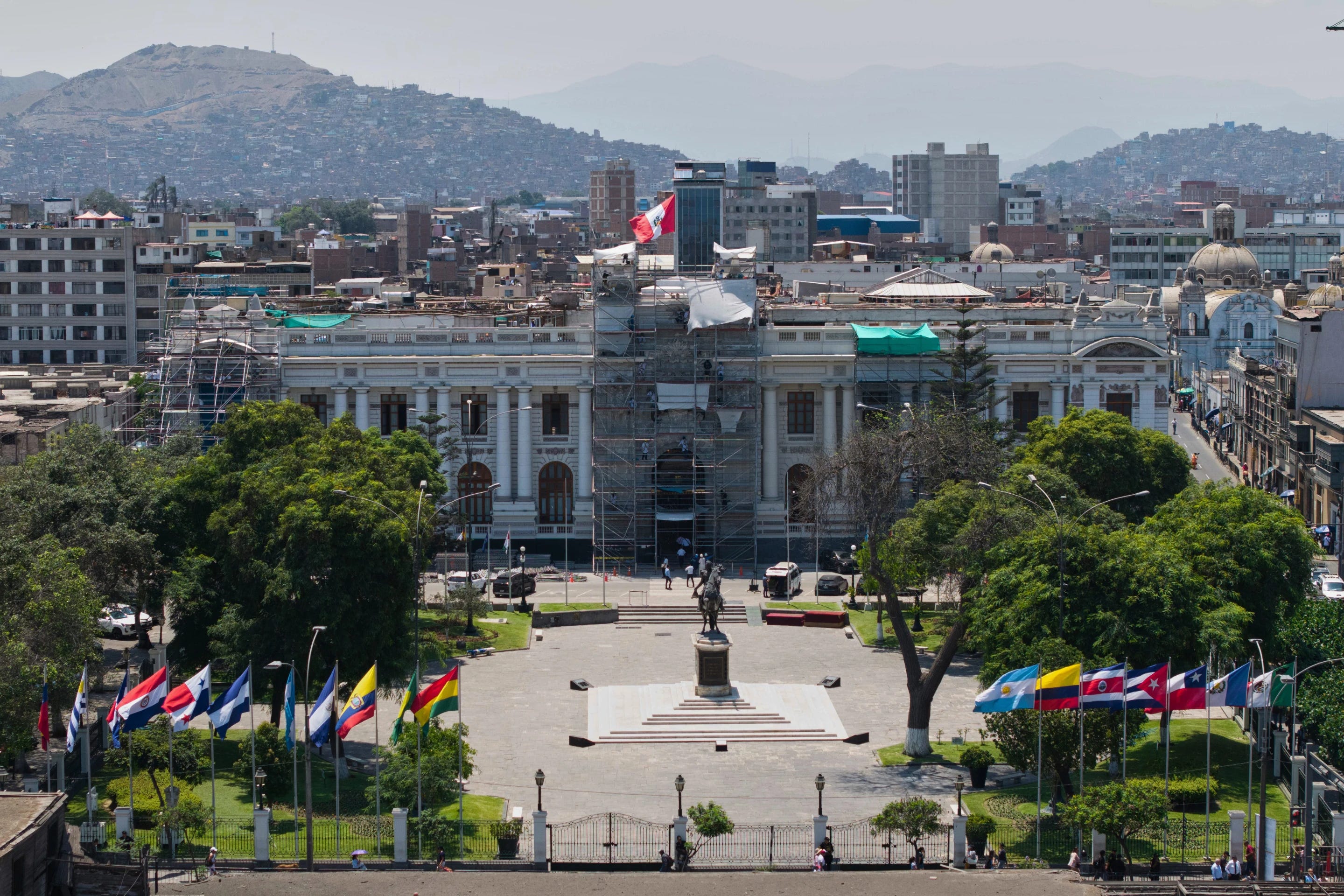
Peru’s Congress in Lima on February 16, 2026.

Jorí had just assumed office in October. His removal comes just ahead of a presidential election in April and as the public expresses outrage over rising crime in the Andean nation.

The country has had seven presidents since 2016.

-Guatemala lifted a state of emergency one month after the killing of 10 police officers by suspected gang members.

-The Colombian government said yesterday it would resume peace talks with the country’s largest illegal armed group.

-Prison deaths have continued to rise in Ecuador despite President Daniel Noboa’s strategy to rein them in, according to Reuters.

-Qatar’s prime minister arrived in Venezuela yesterday.

The Gulf nation has often acted as an intermediary between the United States and the government in Caracas.

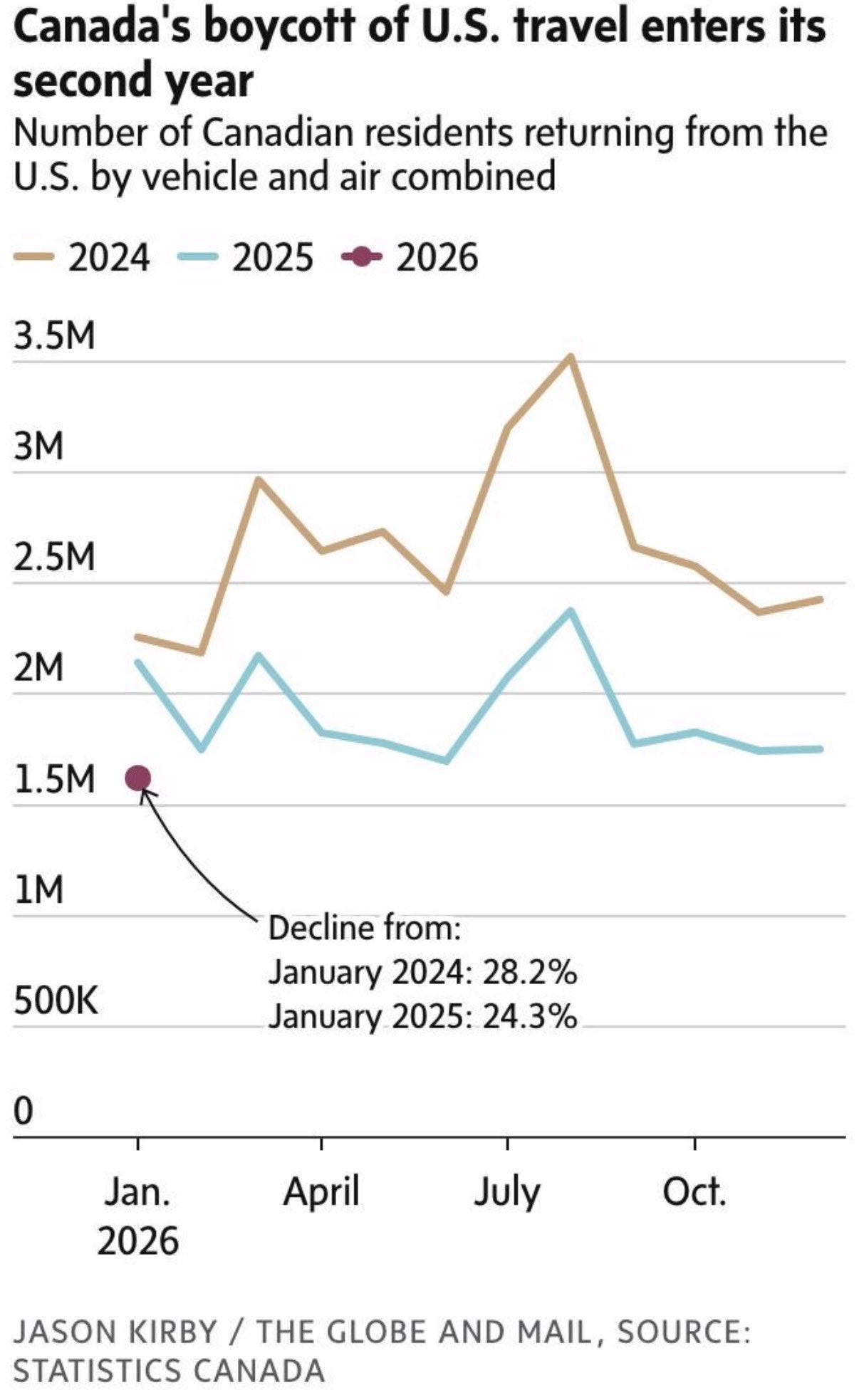
-Canadians have cut their travel to the United States for a second consecutive year, according to new data.
-Annual inflation in Canada slowed to 2.3% in January, according to government data released yesterday. The decline was fueled by a steep drop in gasoline prices, offsetting a rise in food and clothing costs.

-On this day in 1940, President Roosevelt visited the Panama Canal Zone as part of an inspection tour.
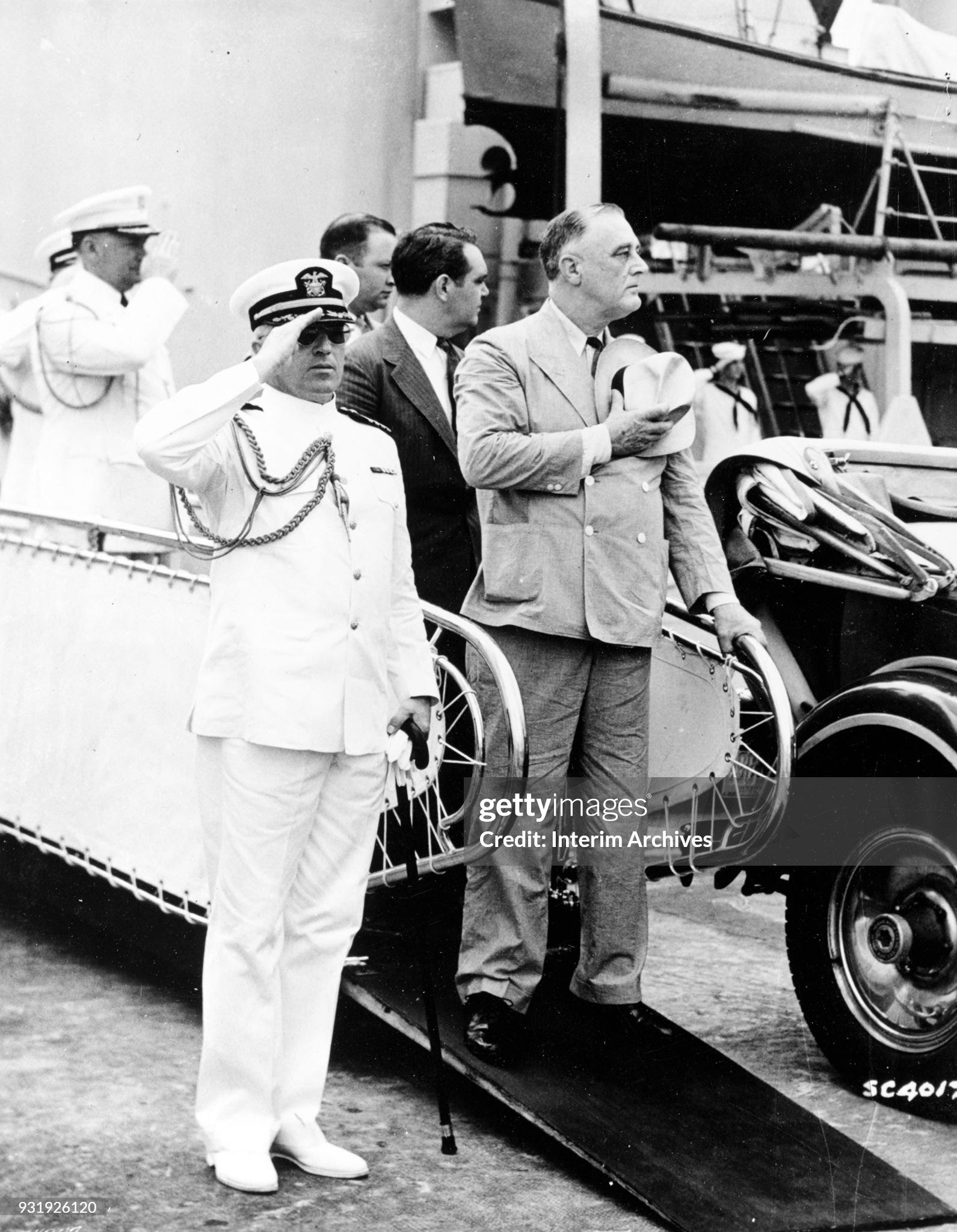
FDR In Panama
Other Links:
Strikes on 3 more alleged drug boats kill 11 people, US military says – AP
Trump says Venezuela’s acting leader ‘has to say’ Nicolás Maduro is the legitimate president – NBC
Prices Jump as Venezuelans Abroad Consider Buying Property Back Home – The New York Times
Colombia identifies remains of rebel group priest killed in 1966 – Reuters
Costa Rican authorities investigate killing of a US citizen in an apparent robbery – AP

Asia/Indo-Pacific

-Bangladesh Nationalist Party (BNP) leader Tarique Rahman was sworn in as prime minister yesterday, capping two years of political instability in the South Asian nation.
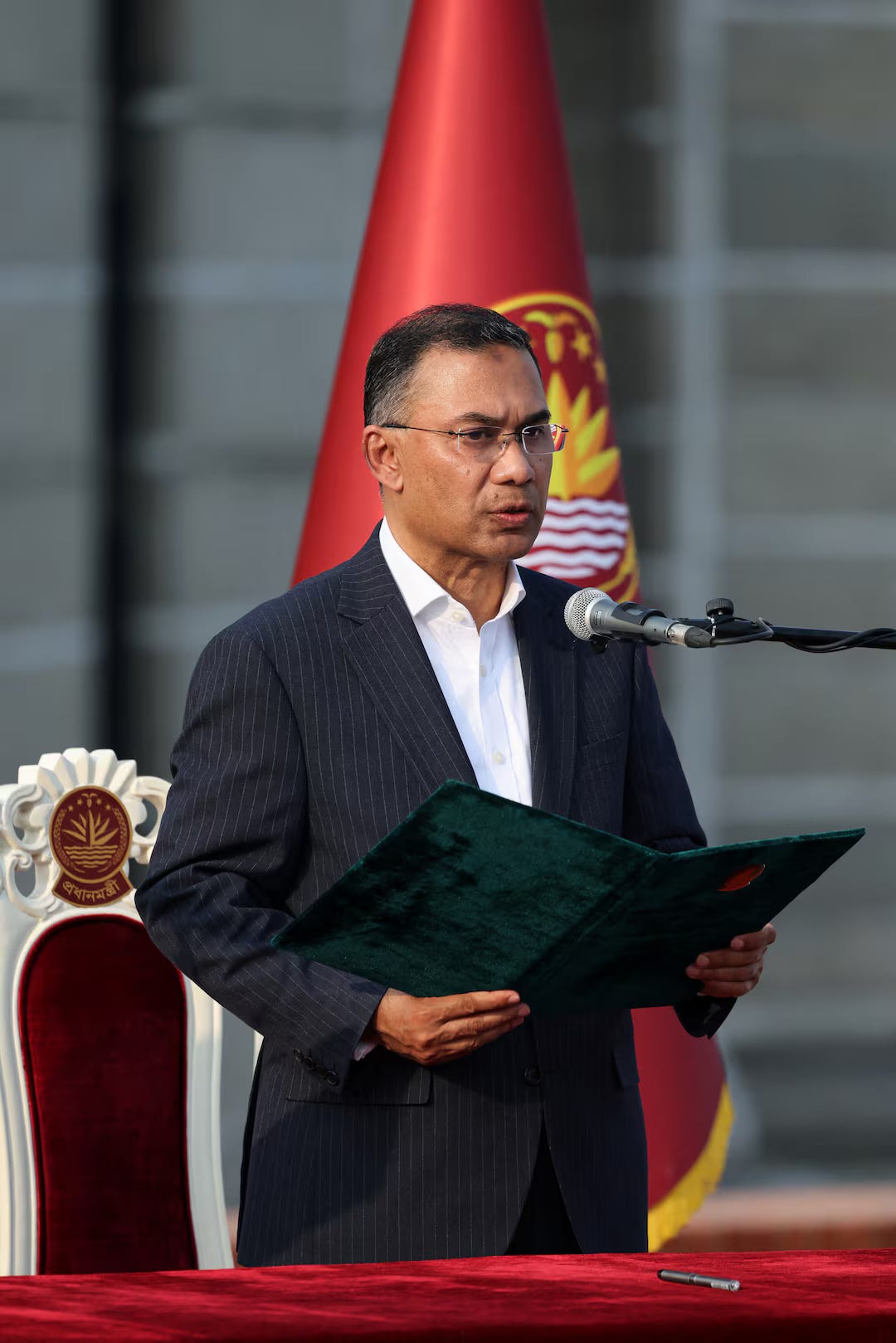
The BNP secured a landslide election victory in last week’s parliamentary vote—the first since the ouster of authoritarian Prime Minister Sheikh Hasina in 2024.

Hasina resigned her post following massive student-led protests against a job quota system. After a harsh crackdown by her government, protesters marched on her official residence, forcing her to flee to India.

For decades, the BNP acted as the primary opposition to Hasina’s ruling Awami League, facing persistent targeting by the government.

The country was led by a transitional government headed by Nobel Peace Prize laureate Muhammad Yunus since Hasina’s ouster.
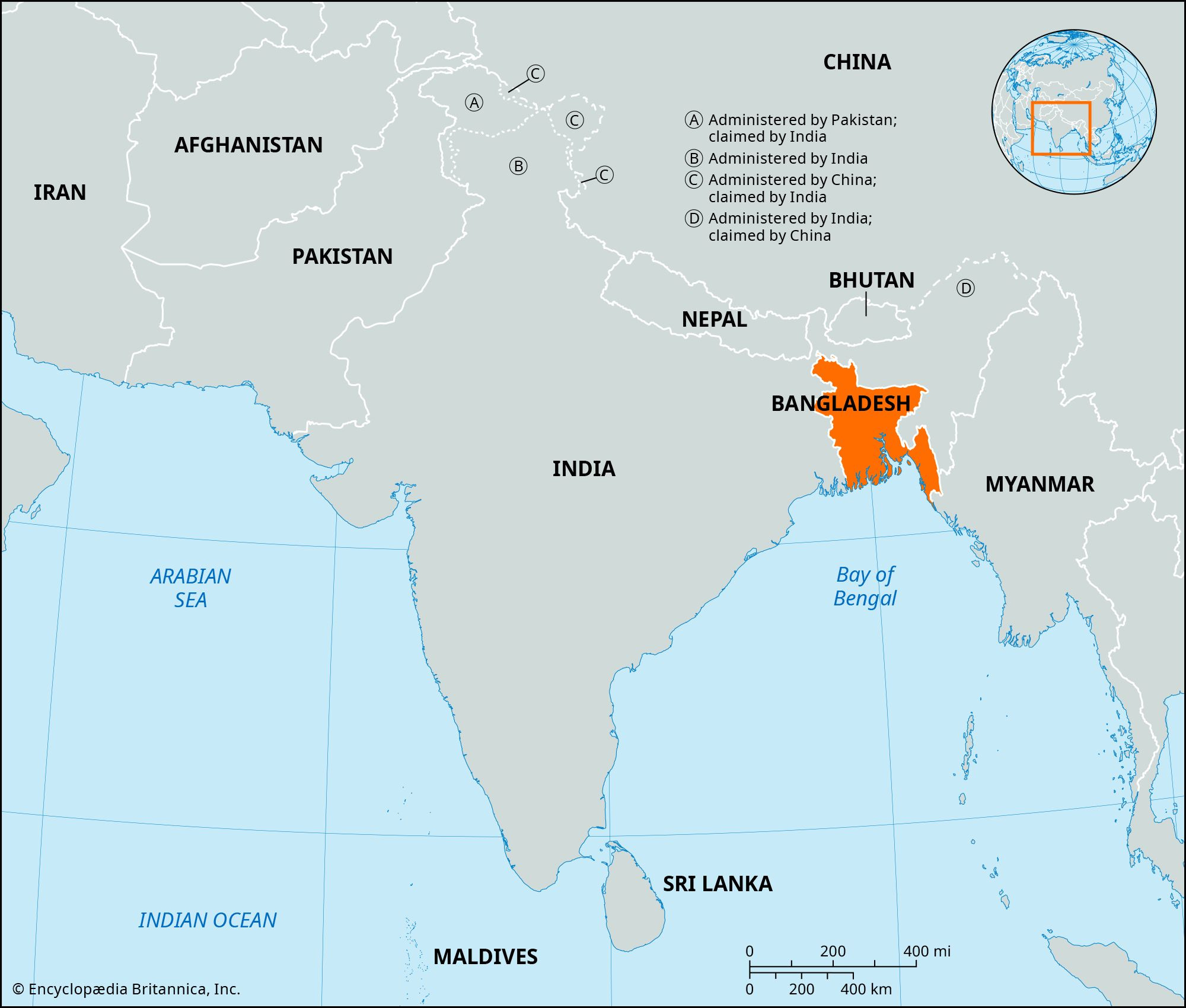
Bangladesh | History, Capital, Map, Flag, Population, Pronunciation, &  Facts | Britannica
With a population of 285 million, Bangladesh is the eighth-most populous country in the world.

-Japan’s lower house of parliament, known as the Diet, will meet today to formally elect Japanese Prime Minister Sanae Takaichi.

Earlier this month, Takaichi’s ruling Liberal Democratic Party secured a landslide election victory following a snap parliamentary vote.

-President Trump said yesterday that Japan plans to invest $36 billion for industrial projects in Georgia, Ohio, and Texas.

Other Links:
US plans to deploy more missile launchers to the Philippines despite China’s alarm – AP
Philippines says takes exception to Chinese Embassy comment on job losses – Reuters
China’s humanoid robots take center stage at Lunar New Year show – NBC
Afghanistan says it has released 3 Pakistani soldiers captured during October cross-border fighting – AP
Imran Khan’s sons seek visas to visit him in Pakistan – Reuters

Europe

-Negotiators from Ukraine and Russia will meet today for a second round of U.S.-mediated talks as President Trump pushes Kyiv to agree to a settlement to end the nearly four-year-long war.
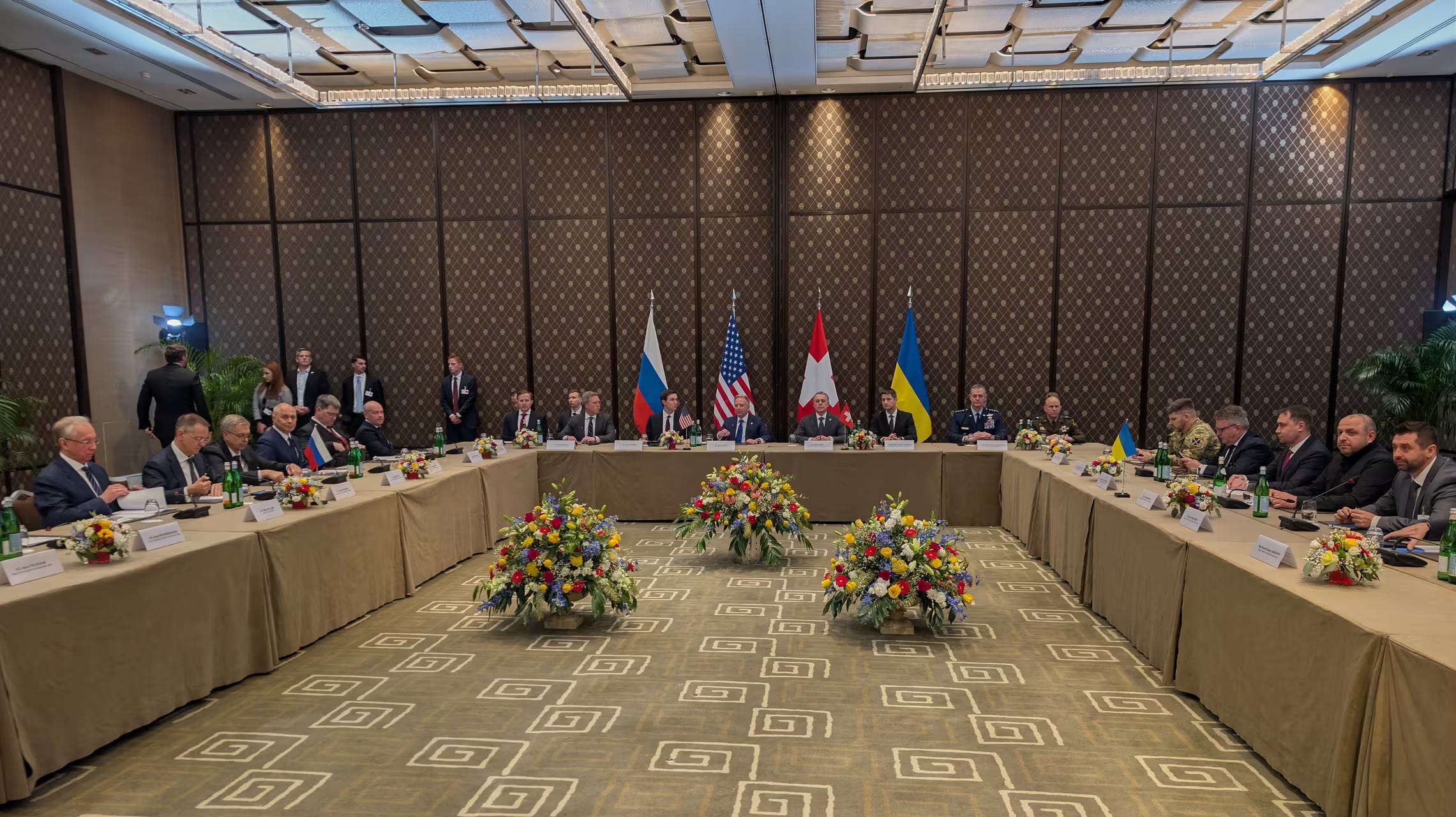
Just ahead of the talks in Geneva, Switzerland, Russia launched strikes across Ukraine, damaging the power network in the southern port city of Odesa.

Ukrainian President Volodymyr Zelenskyy said the persistent overnight attacks have left tens of thousands of residents without heat and water amid freezing temperatures.

Next week, the war will enter its fifth year. On February 24, 2022, Russia launched a full-scale military invasion of the country, seeking to quickly capture the capital, but was met by resistance from Ukrainian forces.

Since then, Russia has captured roughly 20% of Ukraine’s internationally recognized territory, with fighting stalling along the frontlines in recent months.
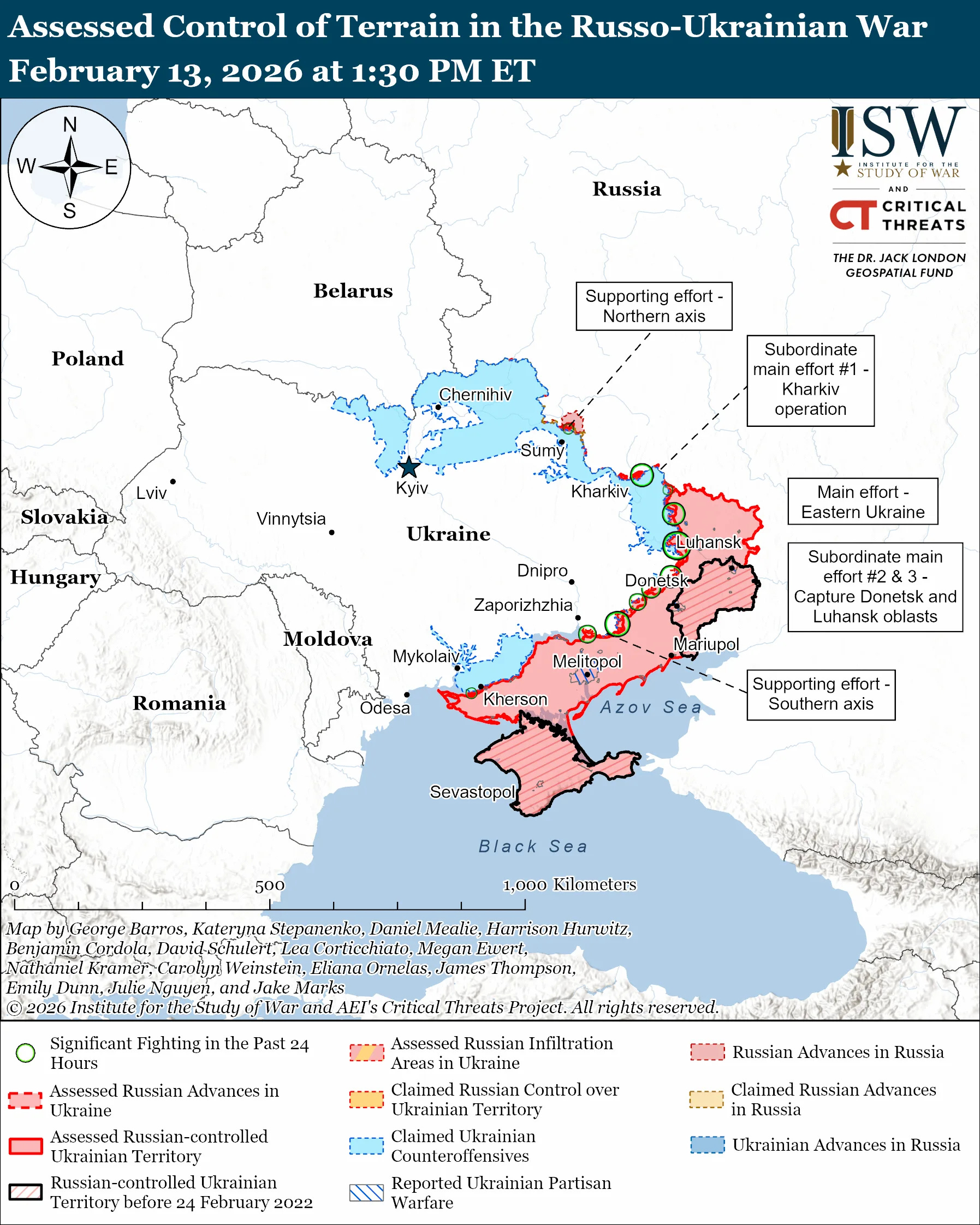
Russian Offensive Campaign Assessment, Feb. 13, 2026 | ISW

Meanwhile, an estimated 100,000 to 140,000 Ukrainian soldiers have been killed, compared with 275,000 to 325,000 Russian troops.

-Russia sentenced a U.S. citizen to four years in prison.

-According to a new poll, one in five Europeans say dictatorship is preferable to democratic rule.

-On this day in 1971, President Richard Nixon hosted Italian Prime Minister Emilio Colombo at the White House.

Colombo, who served as premier from 1970 to 1972, was the last surviving member of the Constituent Assembly that drafted the 1948 Italian Constitution and abolished the country’s monarchy.

Today, he is regarded as a “founding father” of what would become the European Union.
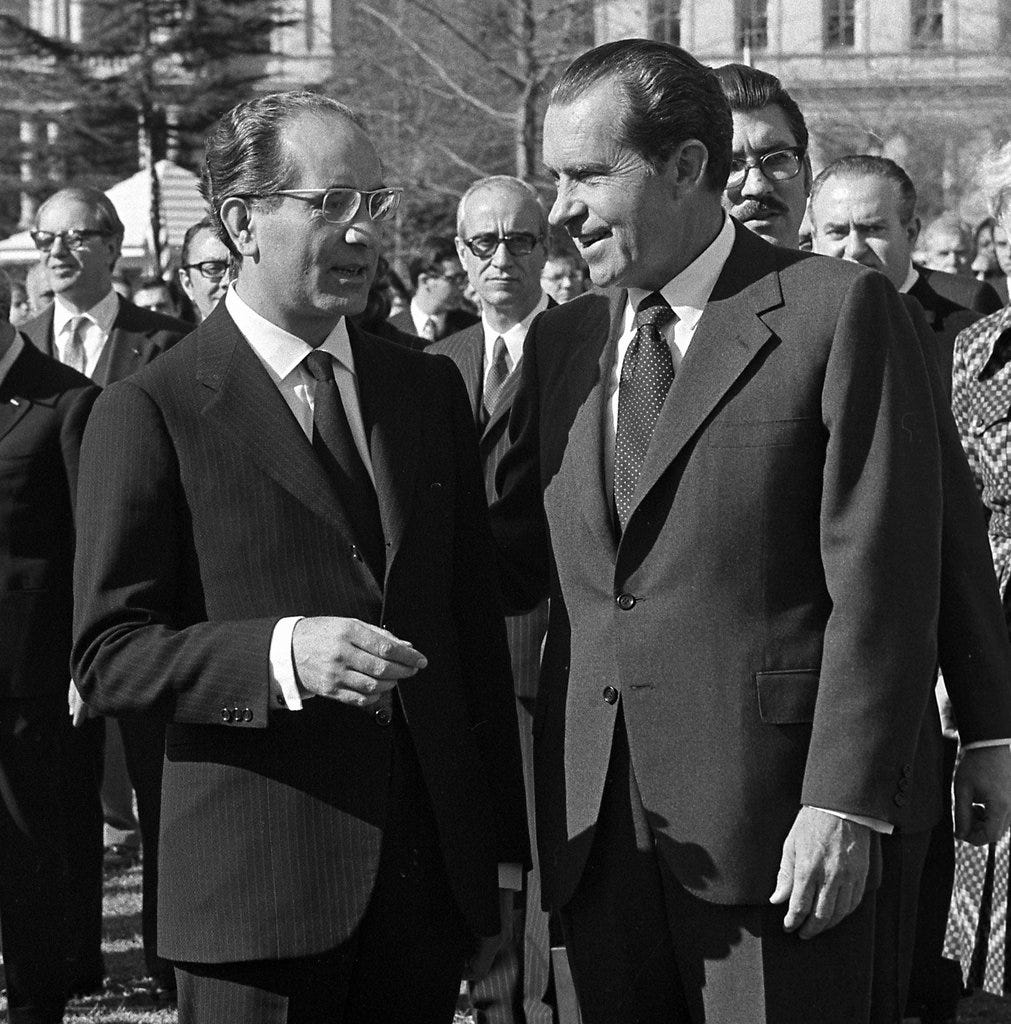
No photo description available.
Other Links:
Ukraine’s Zelenskiy says Trump exerting undue pressure on him – Reuters
Russian woman carried Ukraine placard at Winter Olympics opening ceremony – AP
EU won’t ‘shy away’ from new sanctions on Russia if G7 deal fails – Euronews
Six companies directed by former British duchess to shut down amid Epstein controversies – CNN
France arrests nine in right-wing activist’s death – DW

Middle East

-The United States and Iran held a second round of talks in Geneva, Switzerland, yesterday, with Iranian Foreign Minister Abbas Araqchi saying the two sides agreed to “guiding principles.”

The talks come as President Trump seeks to get Iran to agree to limit its nuclear program, threatening military action if it does not.

In June, Trump ordered strikes on three Iranian nuclear facilities in a bid to disable its nuclear program. Tehran insists the program is for peaceful purposes, which Washington and European capitals reject.

In his first term, Trump withdrew Washington from the pact struck by his predecessor, Barack Obama, that placed curbs on Tehran’s then-nascent nuclear program. The Biden administration sought to bring Iran back into compliance with the terms of the deal, formally known as the Joint Comprehensive Plan of Action (JCPOA), but was unsuccessful.

According to the International Atomic Energy Agency (IAEA), Iran possesses a substantial stockpile of enriched uranium, the fissile material needed to build a nuclear bomb. The watchdog reports that Iran has over 400 kg of 60% enriched uranium, which is just a short step from 90% weapons-grade.
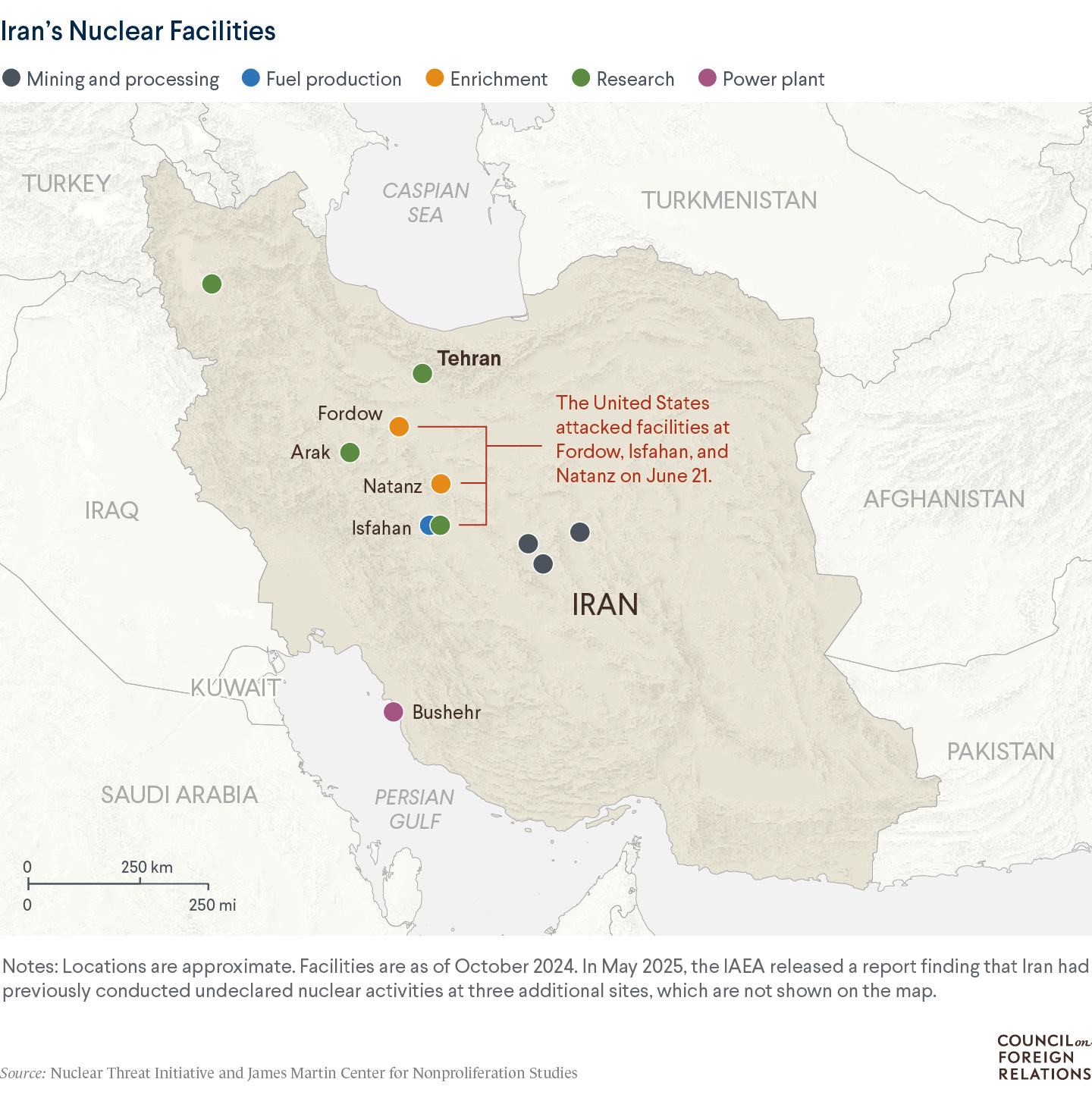
U.S., Israel Attack Iranian Nuclear Targets—Assessing the ...

-Israel’s cabinet has approved a plan that would mandate land registration in the West Bank, a move Palestinians regard as “de facto annexation.”

-Hezbollah rejected a plan by the government for the terrorist group to disarm.

-On this day in 1952, Turkey joined the North Atlantic Treaty Organization (NATO) as the western military alliance’s 12th member state alongside Greece.

Today, the Middle Eastern country contributes the second-largest army in the bloc.
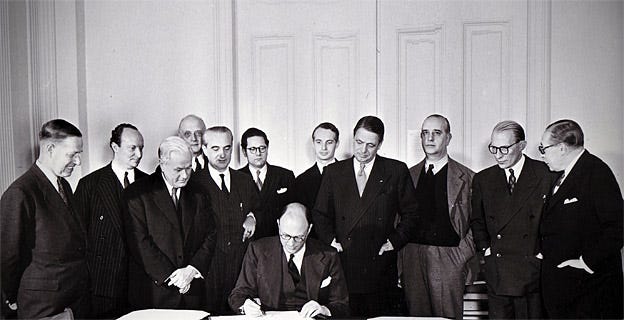
18 Feb.1952 – 18 Feb.2012 : Marking 60 years of Turkey's NATO membership |  YERELCE
Other Links:
Iran says it temporarily closed the Strait of Hormuz as it held more indirect talks with the US – AP
Trump says he will be involved indirectly in Iran talks – Reuters
Trump’s ‘Board of Peace’ Presses Hamas on Disarmament, Officials Say – The New York Times
Ramadan arrives in Gaza under shaky ceasefire deal, but the festive spirit eludes many Palestinians – AP
Australia rules out helping families of IS militants leave Syrian camp – Reuters

That’s all for today. See you tomorrow.

Arting (Or Not!) With Jenny Lawson

Posting especially because of the final photo, with which many of us can identify … 🤭

Unfinished business

Jenny Lawson (thebloggess) Feb 16, 2026

Hello, friend!

Okay, confession time.

Last week I recorded the audiobook for How To Be Okay When Nothing Is Okay and then I collapsed in a limp pile of exhaustion, which is embarrassing because why is “just talking” for two days so hard? Regardless, I spent several nights that I would have normally been drawing while watching 90-Day-Fiance (don’t judge me) instead just hiding under the covers and recovering from being human in public for too long. And that’s why this week’s doodle is unfinished:

But the good news is that because it’s unfinished you can print it out and color it or draw on it and then you can share your version in the comments if you want. EVERYONE WINS.

Here’s a fun tip: I sometimes use the recolor app to upload my drawings and color them:

(PS. I’m not getting paid to plug them. It’s just a free app I stumbled on.)

So anyway…this is just to remind you that it’s okay to not hit every deadline (or any deadline) because you are so much more than your output. And so am I.

Thank goodness.

Hugs,

me

PS. As tax for not having a finished drawing, please accept this picture of a very sleepy Dorothy Barker intentionally laying on my art so that I will pet her instead of drawing.

Everyone’s a critic.

Your Josh Day, Next Day

Jesse Jackson Tribute From “The Nation”

Jesse Jackson Gave Peace a Chance

The iconic civil rights leader, who has died at 84, made anti-war and pro-diplomacy politics central to his presidential bids and his lifelong activism.

John Nichols

Jesse Jackson at a rally against the Gulf War in Washington, DC, on January 18, 1991.
(Ricky Flores / Getty Images)

he Rev. Jesse Jackson Jr., the iconic champion of racial, economic, and social justice whose work as a young aide to the Rev. Martin Luther King Jr. began a public life that would eventually see him mount a pair of transformative presidential bids, died Tuesday morning at age 84.

Jackson’s legacy is so rich, and extends across so many generations and struggles, that it cannot be contained in one reflection. He was, as the Rev. Al Sharpton said Tuesday, “a movement unto himself.”

Over seven decades in the public arena, Jackson emerged as one of the most multifaceted figures in American history: a legendary civil rights leader, a knowing and caring defender of the disenfranchised, a vital advocate for voting rights and voter mobilization, a savvy media critic who recognized the importance of challenging narratives that promoted discrimination and division, an essential ally of labor unions, a reformer of the Democratic Party, a friend to struggling family farmers and urban workers alike, and a counselor to presidents and prime ministers. He was, as well, a man of deep faith, who expressed that faith in his ardent advocacy for peace.

That dedication to peace was central to both his 1984 and 1988 presidential bids, a fact that is too frequently neglected in cursory reflections on those seismic Rainbow Coalition campaigns.

Political historians recognize Minnesota Senator Eugene McCarthy and New York Senator Robert F. Kennedy as the great anti–Vietnam War candidates of the 1968 presidential campaign. George McGovern, the Democratic presidential nominee in 1972, is often recalled as the most ardent foe of a US military intervention to be nominated by a major American political party since Democrats ran William Jennings Bryan in 1900. Former Vermont governor Howard Dean and former Ohio representative Dennis Kucinich are remembered for seeking the Democratic presidential nod in 2004 as sharp critics of the Iraq War. Barack Obama’s prescient opposition to the Bush-Cheney administration’s war of choice, which he voiced as early as 2002, did much to advance his successful bid for the presidency in 2008. And Vermont Senator Bernie Sanders, whose 2020 presidential bid Jackson supported, reframed foreign policy debates by explicitly rejecting the elite consensus about the US role in the Middle East and so many other parts of the world.

Jackson’s two 1980s campaigns deserve a key place in this proud history—both because they were uniquely dynamic and because they had a profound and lasting impact on progressive thinking about foreign policy. That’s one of the many reasons, when veterans of the Jackson campaigns got together, we often reflected on this too-frequently-neglected aspect of his political legacy. His was a powerful and transformative message that resonates to this day.

groundbreaking advocacy on behalf of economic, social, and racial justice at home, but Jackson also outlined what was then a fresh foreign policy vision, rooted in what has come to be known as progressive internationalism. He advanced a comprehensive—and morally coherent—argument for shifting American foreign policy away from military interventionism, nuclear brinksmanship, and Cold War posturing and toward diplomacy, cooperation, and dramatically reduced Pentagon spending.

Jackson understood precisely what was at stake, and he declared in a voice so resonant that it inspired a new generation of activists, “Peace is worth the risk!

And he was taking a risk. It is important to recall how—as Ronald Reagan was ramping up the Cold War around the world and pouring US resources into heated conflicts in El Salvador and on the border of Nicaragua—Jackson boldly broke not just with the Republican president but also with many Democrats to make opposition to war a focal point of his bid.

After it was revealed that the Central Intelligence Agency had mined three harbors in Central America, as part of an effort to destabilize the country’s left-wing government, Jackson declared in April 1984 that “the undeclared war against the people of Nicaragua…must be stopped.” In addition to criticizing the Reagan administration and the CIA, Jackson took issue with Walter Mondale and Gary Hart, the front-runners for the Democratic nomination that year, for failing to clearly deliver a message that the US must “stop our funding of terror in Nicaragua and El Salvador now and to withdraw all our troops from Central America.”

“It is not enough for Walter Mondale to call mining the harbors a clumsy and ill-conceived act,” argued Jackson. “It is not enough to imply that the main problem was not informing Congress adequately. Our foreign policy in Central America is wrong. We are standing on the wrong side of history. We are engaged in killing people, and starving people who are trying to work out their own destiny.”

Jackson’s 1984 Rainbow Coalition campaign shocked pundits by winning primaries and caucuses in key states, and by collecting roughly 20 percent of the Democratic primary vote. Jackson also made a historic trip to Central America and the Caribbean, where he met with regional leaders—including Cuban President Fidel Castro—and warned, “The signs of war are rising. We see the military buildup throughout the region. We see the United States taking sides instead of helping to reconcile the conflict. We cannot allow another Vietnam.”

The bitter legacy of the Vietnam War, which Jackson had opposed as a young aide to Dr. King, weighed heavily on his mind during the 1984 campaign. At the Democratic National Convention in San Francisco, Jackson delivered a renowned, electrifying speech, in which he recalled,

Twenty years ago, our young people were dying in a war for which they could not even vote. Twenty years later, young America has the power to stop a war in Central America and the responsibility to vote in great numbers. Young America must be politically active in 1984. The choice is war or peace.

Jackson’s focus in 1984 and in 1988 extended beyond concerns about the “dirty wars” in Central America. He campaigned as an outspoken advocate for nuclear disarmament, embracing the “nuclear freeze” movement to halt the testing, production, and deployment of nuclear weapons by the United States and the Soviet Union. He called for a rethinking of US military and economic alliances in order to advance democracy and human rights, argued for an end to US aid to the violent apartheid regime in South Africa, and proposed a new approach to Middle East relations that respected the rights of both Israelis and Palestinians.

As a 42-year-old first-time candidate in the fall of 1983, Jackson met with Arab Americans, urged the US to use diplomacy so that the Middle East would no longer be a ”flashpoint for both hot and cold war,” and said that any path to peace had to include a ”homeland and a state for Palestine.”

”It is a tragedy to see the lack of talk and dialogue in the Middle East, but it is even worse not to see it here,” said Jackson. ”The first step for peace in the Middle East is for black Americans, Arab-Americans and Jewish-Americans to start talking here.”

A young James Zogby, then the director of the Arab-American Antidiscrimination Committee, cheered Jackson’s inclusion of Palestinian rights in his campaign platform. ”He challenged us on 50 issues and not just one,” said Zogby, who would go on to place Jackson’s name in nomination at the 1984 Democratic National Convention. ”He respected us as Arab-Americans and didn’t pander to us. This is the first time ever that a presidential candidate has come before an Arab-American audience, and we don’t feel disenfranchised anymore.”

At the end of 1983, Jackson traveled to the Middle East and visited the Jaramana refugee camp in Syria, where on New Year’s Day in 1984, he told a group of Palestinian children, “Keep your dreams high. Don’t let anyone break your spirit. You’ll be free one day.” It was on that same journey that he secured the release of US Navy airman Lt. Robert Goodman, whose plane had been shot down over Lebanon and who had been captured and held by Syrian forces.

Jackson remained actively engaged with Middle East peace issues through the rest of his life. Among the memorials posted on Tuesday was one from former British Labour Party leader Jeremy Corbyn, who wrote, “It was an honor to march alongside him against the Iraq War in 2003. May his legacy inspire us to strive for a world of dignity and peace for all.” More than two decades later, one of an ailing Jackson’s last great initiatives was an emergency conference—held at the headquarters of the Rainbow-Push Coalition in Chicago in early 2024—to demand a ceasefire in Gaza.

Jackson’s faith in diplomacy and negotiation was part of a broader commitment to creating the circumstances for peace to thrive. Just like his mentor King, the Nobel Peace Prize recipient who linked his nonviolent civil rights activism in the US to the global anti-war movement—and who took his own huge risk for peace by standing against the Vietnam War—Jackson recognized the political courage that was required to advance that commitment.

As a presidential candidate, he showed that courage by talking about cutting as much as 25 percent from the Pentagon budget. In response to critics who claimed his ideas were too radical, Jackson told New Hampshire primary voters in February of 1984, “We are so strong militarily that we can afford to take measures such as these in the pursuit of peace.… We must fight for peace and give peace a chance.”

At the close of his 1988 campaign, in which he was endorsed by The Nation and won more than a dozen statewide primary and caucus contests, securing 6.9 million votes, Jackson pulled all the threads together in an epic address to that year’s Democratic National Convention in Atlanta. He spoke movingly of tackling poverty and inequality within the United States, but he was just as compelling in his discussion of foreign policy, which included a stirring call for disarmament that is as relevant today as it was 35 years ago.

Jackson told the cheering delegates:

The nuclear war build-up is irrational. Strong leadership cannot desire to look tough and let that stand in the way of the pursuit of peace. Leadership must reverse the arms race. At least we should pledge no first use. Why? Because first use begets first retaliation. And that’s mutual annihilation. That’s not a rational way out.

No use at all. Let’s think it out and not fight it out because it’s an unwinnable fight. Why hold a card that you can never drop? Let’s give peace a chance.

=====

Also see: https://www.lgbtqnation.com/2026/02/jesse-jacksons-rainbow-coalition-was-as-political-as-it-was-poetic/

Update-It’s Tonight! TV Alert For Black History

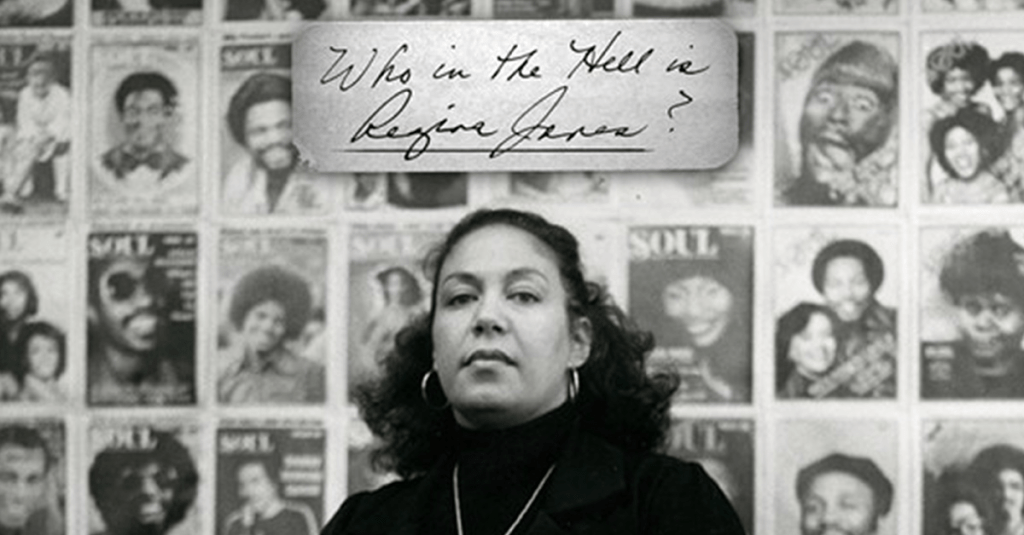
Start TV to premiere award-winning documentary, ”Who in the Hell is Regina Jones?” in February

By: Start TV Staff Posted: January 14, 2026, 1:17PM 

Start TV is set to premiere the award-winning documentary, Who in the Hell is Regina Jones?, on Monday, February 16 at 8P | 7C with a special encore immediately after at 10P | 9C.

The stellar production from Weigel Productions Corp. shines a light on legendary journalist Regina Jones. The documentary, which won the Outstanding Documentary Feature Award at the Greater Cleveland Urban Film Festival, turns a lens on Jones’ historical journey – the invisible labor, turmoil, struggle, and joy of a modern-day Black woman, who emerged as publisher and founder of the groundbreaking SOUL newspaper. On this nationwide platform, Black artists could get coverage long before other publications entered the arena.

Pregnant and married at 15, Regina Jones experienced the Watts Rebellion of 1965, raised five children, stepped into places where she was not wanted, and navigated a world that offered her no favors. SOUL was the first publication devoted specifically to Black musicians and perspectives in music, published from 1966 to 1982. During its run, the publication profiled some of the era’s most prominent Black artists, including Aretha Franklin, James Brown, Diana Ross, Gladys Knight, and Stevie Wonder.

Who in the Hell is Regina Jones? was produced by Weigel Productions Corp and directed by Soraya Sélène and Billy Miossi, edited by Nancy Novack A.C.E., co-edited by Alisa Selman, produced by Alissa Shapiro, and executive produced by Academy Award nominee Sam Pollard.

Check out the trailer.

https://www.starttv.com/stories/start-tv-to-premiere-award-winning-documentary-who-in-the-hell-is-regina-jones-in-february

A President’s Day Post

from John Lustig, whose email helped me make up my mind what to post to acknowledge the day, and did a far better post than I would have done.

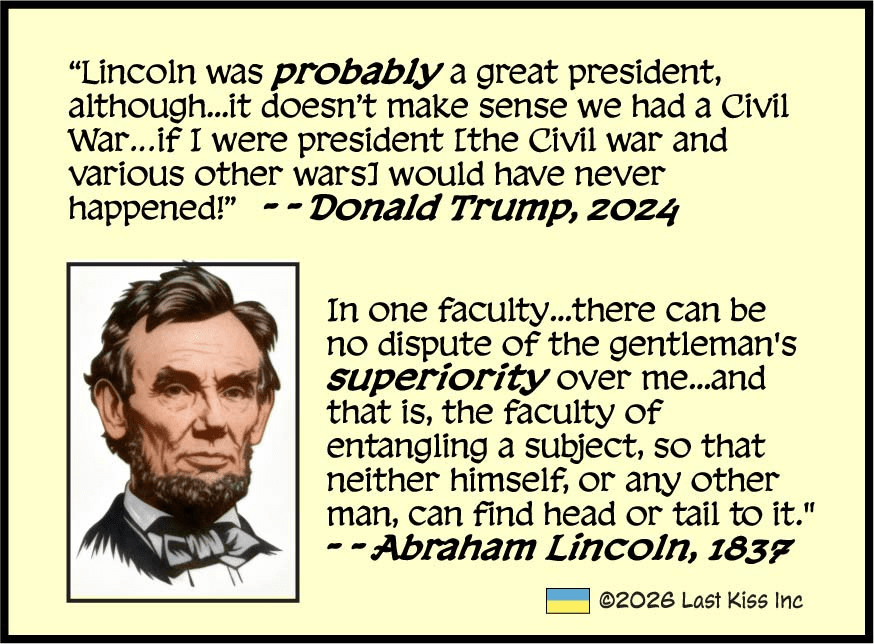
About Today’s Comic
The ellipses in today’s comic are where I abridged the quotes to make them a little more readable. (In general, I try to keep text as brief as possible in every Last Kiss comic.) Below are the full quotes.

Donald Trump (on Fox News, Oct. 18, 2024, answering a 10-year-old boy who asked Trump who his favorite president was when he was “little.”

Trump initially said that Reagan was his favorite. (Note: Trump was 34 when Reagan first took office, and 42 when he left.) So next Trump mentioned Lincoln as a possibility.

“Great presidents?” Trump said. “Lincoln was probably a great president, although I’ve always said, why wasn’t that settled? You know, I’m a guy that—it doesn’t make sense we had a Civil War….You’d almost say, like, why wasn’t that [settled]? As an example, Ukraine would have never happened, and Russia, if I were president. Israel would have never happened; October 7 would have never happened, as you know.”

Abraham Lincoln. This Jan. 11, 1837 quote from our 16th president can be found on the website for his presidential website here:

“In one faculty, at least, there can be no dispute of the gentleman’s superiority over me, and most other men; and that is, the faculty of entangling a subject, so that neither himself, or any other man, can find head or tail to it.”

https://www.lastkisscomics.com/

From W. Kamau Bell In Minneapolis:

Listen, read, or both; click through to hear it.

ICE Created a Restaurant That is 100% Free (And They Aren’t Allowed to Eat There)

Episode 4 of I SPENT THREE DAYS IN MINNEAPOLIS!

W. Kamau Bell

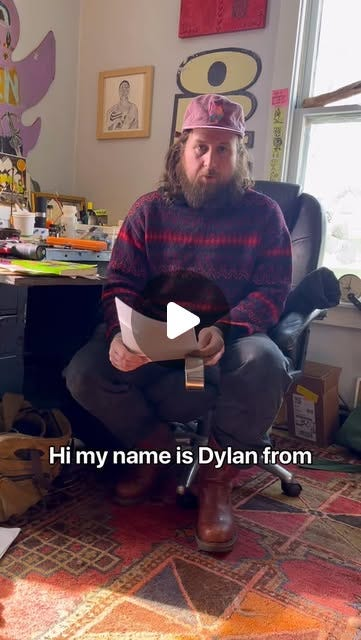
In the days after federal agents killed ICU nurse Alex Pretti (only days after other federal agents killed Renee Good), I saw a video of a haggard Minneapolis restaurant owner saying that he was going to give food away until the federal government’s occupation of Minnesota ends. His restaurant, Modern Times Cafe, was going to be 100% free… for everyone. It wasn’t just going to be free for people who proved they needed free food or for folks who asked for free food. It was going to be FREE. FOR. EVERYONE. Dylan Alverson, owner of the now-renamed Post Modern Times Cafe, was mad as hell, and he was not going to charge for pancakes anymore!

(Full Instagram bit on the page; above is a photo)

Actor and singer Mandy Patinkin’s son Gideon had shared Dylan’s video with me. Gideon runs Mandy’s verified Instagram account. The Patinkins’ IG page is filled with hopeful political messages, righteous leftist anger, and—most importantly—ways to help. At some point our Internet paths crossed, and we have tagged each other in posts ever since. Seeing Dylan’s video was yet another battery in my back that gave me the juice to go to Minneapolis. I saw the video on Monday, January 26, and by that Thursday, January 29 I was on a Zoom with the McKnight Foundation to figure out how we could work together to get me to the Twin Cities. Once we decided that I would go, I quickly put a visit to Post Modern Times on the agenda. I didn’t go there for McKnight. I went there for me. I really wanted to meet Dylan. He reminded me of people I met in Berkeley, back in the day. True believers who are more than excited to go against the grain. Luckily, Dylan was down to talk. As we discuss in the episode, he is not one for attention. He just wants to help his neighbors. I also found out that since he shared that initial video, he has decided that having a free restaurant feels so good that he wants to keep Post Modern Times Cafe free, even after Trump’s government leaves (which they finally announced they are going to do).

(Snip)

Dylan plans to turn his restaurant into a nonprofit organization. This just shows, yet again, that the effect this occupation has had on Minnesota is permanent. It doesn’t matter if the feds leave today, they have:

  • killed two people,
  • shot at least one more,
  • made schoolchildren afraid to go to school,
  • made some people (especially Latino restaurant workers) afraid to go to work,
  • hurt local business across Minnesota, because consumers are afraid to shop (or are too broke shop because they aren’t working), and
  • generally traumatized the state.

None of that gets erased, fixed, or healed just because the goons get gone. I truly hope that more people are able to sue the federal government like the teachers union, Education Minnesota, did. The only thing that has stopped the people of the Twin Cities and beyond from folding completely is that there are many, many, MANY people like Dylan Alverson who are committed to community. Like Dylan, they are committed above and beyond their own self-interest… or even their own commonsense.

While Dylan’s free restaurant may seem like a gimmick or a naive idea, Dylan sees it as part of a larger way to fight back against our authoritarian government. Dylan put it best in our interview:

“The world is watching, and they should. This could be the start of a revolution. We don’t know. But to me, it feels like it. And I’m willing to go as far as I need to if I can make that happen.”

Post Modern Times will only be able to keep up its anti-capitalistic “gamble” (gamble is Dylan’s word for what they are doing) if they also have community support. If you can, donate or spread the word about Post Modern Times Cafe’s bold plan.

(snip-MORE, including a podcast with Mandy Patinkin & Katherine Grody, helping MN teachers, and yet more!)

How Cool Is This?

Chart Shows Widespread Side Effect to Bad Bunny Performing in Spanish

By Melissa Fleur Afshar Life and Trends Reporter


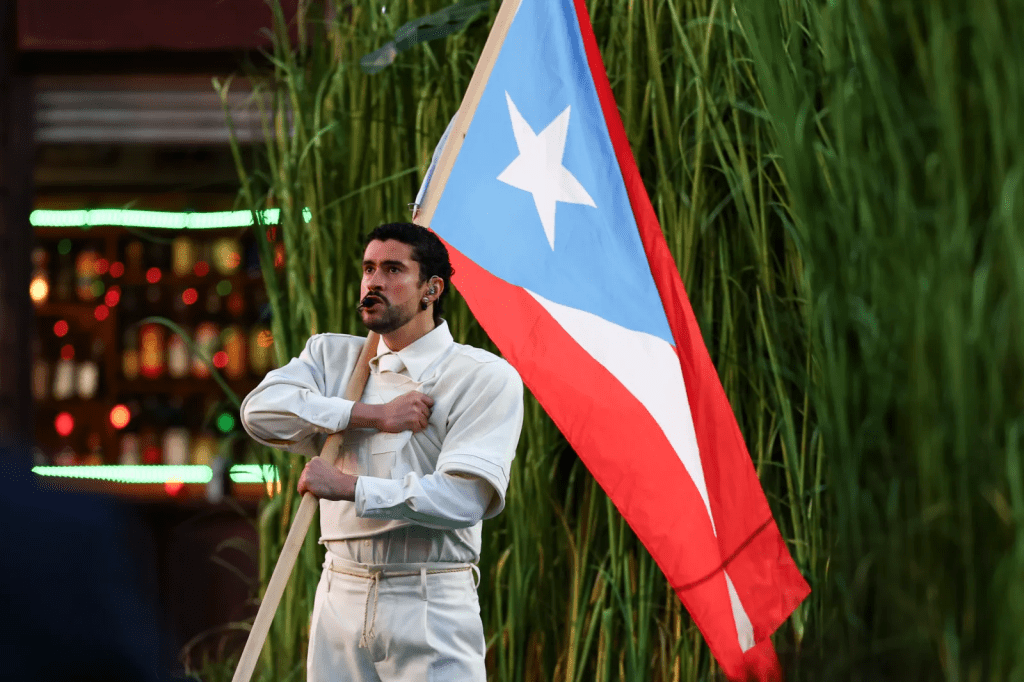
Duolingo saw a sharp rise in Spanish learners following Bad Bunny’s Super Bowl Halftime Show, according to a post shared by the language-learning app on social media.

“Duolingo saw a 35 percent increase in Spanish learners last night. Better late than never,” the company wrote on Threads on February 9, under its official account, @duolingo. The post, which included a graph showing a clear spike in Spanish lessons, has been liked more than 7,500 times to date.

The surge followed Bad Bunny’s history‑making performance at the Super Bowl Halftime Show, where he became the first artist to sing primarily in Spanish during the most-watched sporting event in the U.S. Duolingo’s official Threads account shared the data shortly after the night ended, highlighting the immediate impact the performance appeared to have on language learning behavior.

Bad Bunny’s Super Bowl appearance came months after he used a Spanish-language monologue on Saturday Night Live (SNL) to tell audiences they had “four months to learn” Spanish ahead of the game. Despite online backlash from some commentators at the time, the data shared by Duolingo suggests many viewers embraced the message, with interest in learning Spanish rising sharply during the Halftime Show.

Snip-MORE

Joy

His wife joins him during this dance.

Today In History/Black History

From LitHub.

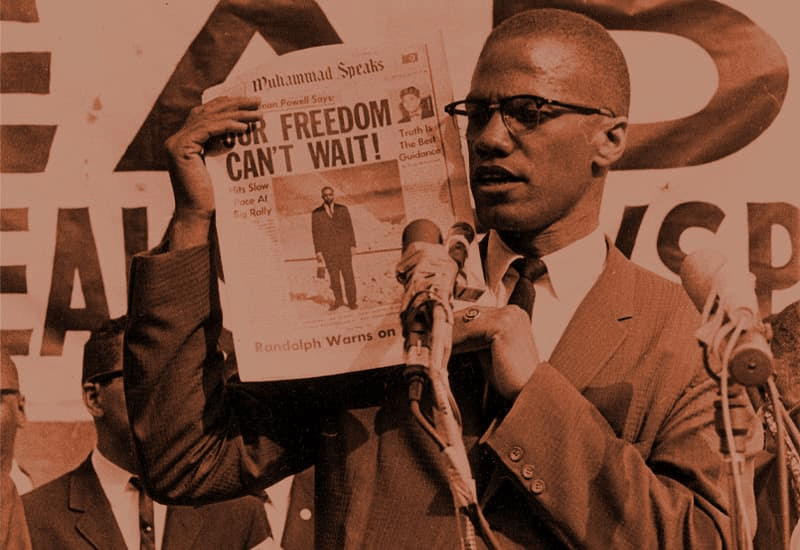
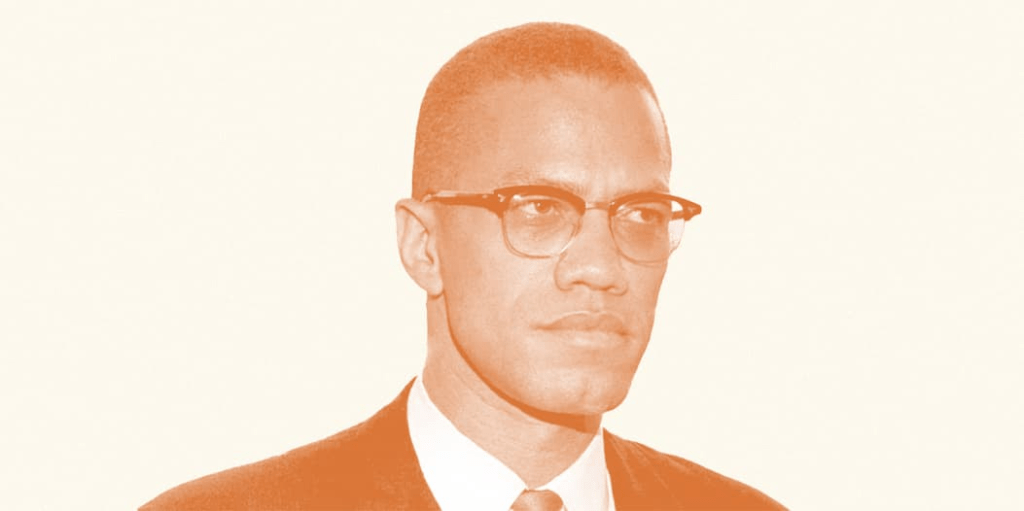
Malcolm X is assassinated in New York City.

On Sunday, February 21, 1965, a little after 3pm, as he was preparing to address his Organization of Afro-American Unity in New York’s Audubon Ballroom, the controversial civil rights leader and revolutionary Malcolm X was shot dead by members of the Nation of Islam, the religious group X had broken from the year before. He was 39.

“In the aftermath, rivers of ink spilled across New York City’s many newspapers,” wrote Ted Hamm. The legendary journalist Jimmy Breslin was callous and dismissive; Langston Hughes “somewhat cryptic.”  

James Baldwin, who was in London at the time, famously shouted at the reporters who found him after X’s death: “You did it! It is because of you—the men that created this white supremacy—that this man is dead. You are not guilty, but you did it. … Your mills, your cities, your rape of a continent started all this.” 
Later, Baldwin told the story this way:

“There we were, at the table, all dressed up, and we’d ordered everything, and we were having a very nice time with each other. The headwaiter came, and said there was a phone call for me, and Gloria rose to take it. She was very strange when she came back—she didn’t say anything, and I began to be afraid to ask her anything. Then, nibbling at something she obviously wasn’t tasting, she said, ‘Well, I’ve got to tell you because the press is on its way over here. They’ve just killed Malcolm X.’ The British press said that I accused innocent people of this murder. What I tried to say then, and will try to repeat now, is that whatever hand pulled the trigger did not buy the bullet. That bullet was forged in the crucible of the West, that death was dictated by the most successful conspiracy in the history of the world, and its name is white supremacy.”

“I was certainly saddened by the shocking and tragic assassination of your husband,” Martin Luther King, Jr. wrote to Betty Shabazz, X’s wife, after the murder. 

“While we did not always see eye to eye on methods to solve the race problem, I always had a deep affection for Malcolm and felt that he had a great ability to put his finger on the existence and root of the problem. He was an eloquent spokesman for his point of view and no one can honestly doubt that Malcolm had a great concern for the problems that we face as a race.”

More than sixty years later, some details about the assassination remain unclear. But Malcolm X has endured as a cultural icon, death being, in the end, not quite enough to silence him.
MORE WHERE THAT CAME FROM

 How Two of America’s Biggest Columnists Reacted to the Assassination of Malcolm X  

Fatima Bhutto on Channeling the Fearlessness of Malcolm X 

Naming the Unnamed:On the Many Uses of the Letter X
EVERGREEN QUOTE:“You’re not supposed to be so blind with patriotism that you can’t face reality. Wrong is wrong no matter who does it or who says it.”–Malcolm X