What To Look For This Week:

Sitck with it; some is technical, but one can get the info one needs from context, and it’s important.

The Week Ahead by Joyce Vance

October 19, 2025 Read on Substack

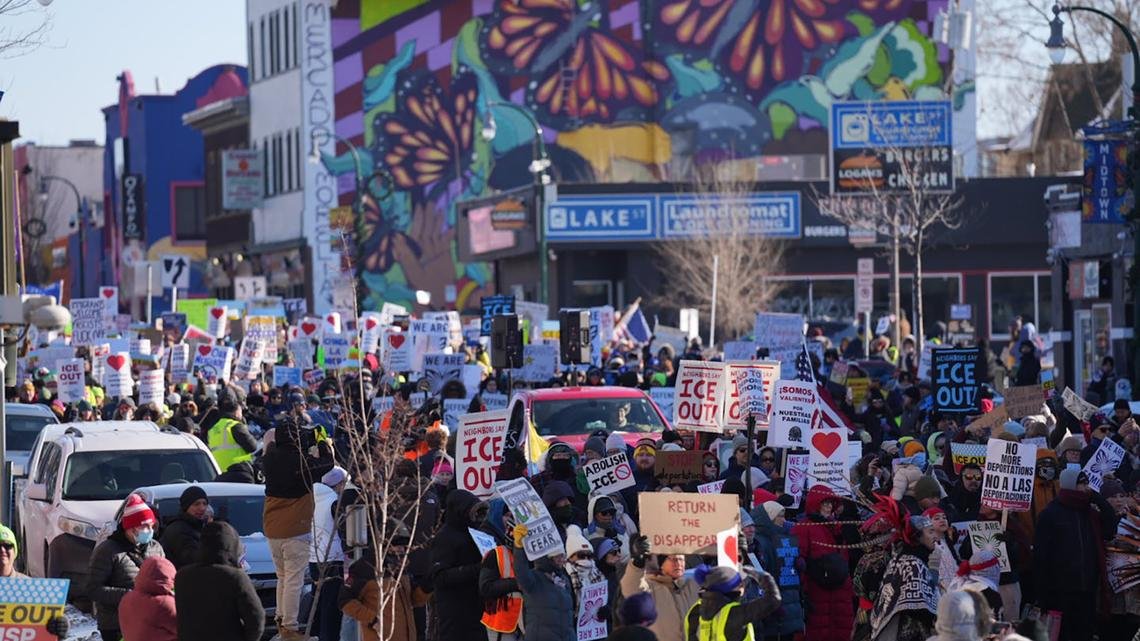
What comes after No Kings?

Apparently, Donald Trump felt threatened by a successful, peaceful protest and by seeing millions of us out in the streets protesting against him. Saturday night, he posted a childish, petulant video, portraying himself as the king of sh*t. Then, this morning, he resorted to a temper tantrum, insisting he would use his “absolute power” to invoke the Insurrection Act.

Of course, 50% of presidents have not invoked the Act. Wrong again.

Trump’s renewed focus on the Insurrection Act comes on the heels of a Seventh Circuit decision last week declining to permit Trump to deploy troops to Chicago. “Political opposition is not rebellion,” wrote a panel of the Seventh Circuit Court of Appeals, affirming District Judge April Perry. You can read the court’s order here. The panel consisted of appointees from the administrations of Presidents George H.W. Bush, Barack Obama, and Donald Trump.

That case is not about the Insurrection Act, however. Trump has, so far, stopped short of invoking it, instead using related authority that the administration maintains allows it to federalize National Guard troops, even over a governor’s objection.

The appellate judges in the Chicago case affirmed the portion of Judge Perry’s order that temporarily enjoined the administration from deploying the Guard within Illinois. They held that even affording Trump the substantial deference owed to a president’s decisions, Trump had failed to show he met the predicates for doing so. Under 10 U.S.C. § 12406, the administration had to establish that there was either (1) a rebellion or a danger of one or (2) that the situation on the ground made it impossible for the President to execute the laws of the United States with regular forces.

Among their justifications for that decision: “Despite President Trump’s federalization of Guard troops as necessary to enforce federal immigration law, DHS and ICE have touted the success of Operation Midway Blitz. In an October 3 press release, DHS stated that ICE and CBP have effected more than 1,000 immigration arrests since the start of the Operation. In a September 26 DHS press release, the Department declared that protests had not slowed ICE down, and, in fact, ICE has significantly increased its deportation and arrest numbers year over year.” The government contradicted its own case in its self-congratulatory press releases.

There is a technical legal point here. Because the plaintiffs had asked the court to prevent Trump both from federalizing the Guard and from deploying them, the panel looked at those two separately. To obtain an injunction, one of the elements plaintiffs have to establish is that they will be irreparably injured without it. The court held that “the administration’s likely violation of Illinois’s Tenth Amendment rights by deploying Guard troops in the state over the state’s objection ‘constitutes proof of an irreparable harm’” and enjoined their deployment. But it made a different finding when it came to Trump’s ability to federalize Guard troops, holding that it would not enjoin that action because the injury “appears to be relatively minimal.” This effectively gives the state the relief it sought, while interestingly, putting federalized state National Guard troops on the federal payroll during the shutdown, perhaps a topic for another day.

A key point we’ve been tracking in these cases reemerged in this one: Trump’s inexorable march towards obtaining more power for himself. The administration argued, as it has before, that a president’s decision to federalize National Guard troops under § 12406 cannot be reviewed by a judge. That really would make Trump a king. But the panel dismissed the argument, at least at this stage in the proceedings, rejecting the administration’s attempt to use an older case, Martin v. Mott, which we’ve discussed here and here, as going too far. That case involved an effort by militia men to override a presidential decision during a time of open war, and the panel said that did not suggest that the judicial branch of government could not review decisions by the executive branch. They concluded that nothing in the statute “makes the president the sole judge” of whether the reason for invoking it passes muster.

The Solicitor General filed an emergency appeal to the Supreme Court, which means we’ll spend at least part of the week ahead court watching.

All of that legal wrangling explains why Trump returns to threats to invoke the Insurrection Act whenever courts step in to check his authority. With the National Guard, there are clearly some limits on presidential power. Trump seems to believe none of them come into play when the Insurrection Act is involved. The first parts of the Act became law in 1792. It permits the president to deploy the military on domestic soil and use American soldiers against American citizens, making it the chief exception to the Posse Comitatus Act, which would otherwise prohibit that. There are exceptional circumstances where that sort of extreme action is necessary—the opening moments of the Civil War involved President Lincoln using it for just that purpose. But the law has been described by experts as “dangerously overbroad and ripe for abuse.”

Chief among its problems is language that could easily be interpreted as giving the president sole authority to determine when it should be invoked, without resort to the courts for constitutional review. This is why the Supreme Court’s decision about the reach of Martin v. Mott in Chicago and other cases will be so important. Whether the Court will finally take steps to curtail Trump’s attempt to consolidate all power in his own hands remains to be seen.

For the record, even Twitter AI Grok says that Trump got it wrong when it came to the number of presidents who’ve invoked the Insurrection Act: “15 U.S. presidents have invoked the Insurrection Act since its passage in 1807, including Thomas Jefferson, Abraham Lincoln, Dwight D. Eisenhower, and George H.W. Bush. It has been used about 30 times total for events like the Civil War, civil rights enforcement, and riots. That’s roughly a third of presidents, not half as claimed.” And a far better question is, how many times has it been invoked over the objection of the governor, which is a much smaller number.

The most recent use of the Act happened at the request of California’s governor, when sustained riots broke out following the April 29, 1992, acquittal of four Los Angeles police officers who were captured on videotape brutally beating Rodney King, a Black motorist. President George H.W. Bush deployed the National Guard and U.S. troops to restore order after both the governor and the mayor requested federal assistance to help stop the shootings, arson, looting, and other violence in the city that resulted in the deaths of more than 50 people, thousands of injuries and arrests, and property damage of more than $1 billion. That’s the sort of situation the Act is meant for. Not ones where a president trumps up baseless claims of out-of-control crime and violence to serve his own political purposes.

There is no good faith basis underlying Trump’s asserted justification for bringing in the Guard or potentially invoking the Insurrection Act. But that doesn’t matter if you’ve decided you’re a king.

Image

So, when has the Insurrection Act been used absent a request for the governor and local officials? That happened during the Civil Rights Movement in a few extreme situations where the state was interfering with the enforcement of Supreme Court decisions. And in Alabama, George Wallace’s threatened stand in the schoolhouse door to prevent school integration faded away when President Kennedy sent in federal troops using a measure related to the Insurrection Act.

It’s important to understand that Trump is using a fictitious basis for invoking a statute designed for use in only the most serious of situations. There is no rampant crime that local law enforcement can’t handle as well without federal troops as they could with them, and certainly no rebellion. Trump has no plans to use federal forces to enforce Americans’ civil rights. Instead, it’s the same theme we’ve seen since he took office: An effort to seize more and more power and create a lopside executive branch that can rule over the rest of government—and the American people. (snip)

There is more going on this week, although that feels like enough.

The Courts. As the shutdown continues, the federal courts are preparing to run out of funding on Monday. They will maintain “limited operations necessary to perform the Judiciary’s constitutional functions” for as long as the shutdown continues. Constitutional litigation and criminal cases will continue to move forward, but staff will be furloughed and much of the courts’ civil work will slow down to a snail’s pace.

Abrego Garcia. A hearing on Abrego Garcia’s motions for selective and vindictive prosecution in the Tennessee-based criminal case the Justice Department charged him in after his return from deportation has been scheduled for November 4 and 5. In advance, we are learning some information about the evidence he plans to put on.

Abrego Garcia wants to call at least seven witnesses to testify. The government is apparently preparing to attempt to quash subpoenas for high-level officials at DHS and DOJ, and possibly someone from the White House. Abrego Garcia has also identified a series of emails between the U.S. Attorney’s Office and main Justice that he requests access to, to see if they shed any light on the decision to indict him for old crimes, which required obtaining the cooperation of a more culpable individual by promising to terminate his deportation proceedings. Abrego Garcia complains that he’s received very little information from the government in discovery because the local U.S. Attorney believes what he has requested is protected by a number of government privileges including deliberative process and attorney work product. This case, which has dropped off the radar screen in recent weeks, is about to return in a big way, setting the stage for similar motions in the Trump revenge cases as well.

Comey Motions. This case is still scheduled for trial on January 5, 2026, because the Eastern District of Virginia is the rocket docket. Comey’s first round of motions are due on Monday. The government will have two weeks to respond. It’s unclear which motions we will see, but there will likely be several to dismiss the case entirely, including ones arguing the U.S. Attorney was appointed improperly, rendering the indictment invalid, along with selective and vindictive prosecution motions.

Book tour. Also, this week I’m off on my book tour. Giving Up Is Unforgivable will officially be on sale on Tuesday. If you haven’t already, grab your copy here. If you’re in New York City, Preet Bharara and I will be at the 92nd Street Y, and they’ve moved us to a larger space, so there are more tickets available, if you weren’t able to get them earlier. I’d love to get to see you!

There may be lighter posting than usual this week and next while I’m traveling, but I’ll be here for all the important developments, and I’ll try to share pictures from the road with you too! Please make sure you say hi if you’re able to join me at one of our other tour locations.

We’re in this together,

Joyce

(snip)

“Are You Now, Or Have You Ever…”, The Saturday Night Massacre, & More In Peace & Justice History for 10/20

October 20, 1947

The House Un-American Activities Committee (HUAC) opened public hearings into alleged Communist influence in Hollywood. To counter what they claimed were reckless attacks by HUAC, a group of motion picture industry luminaries, led by actor Humphrey Bogart and his wife, Lauren Bacall, John Huston, William Wyler, Gene Kelly and others, established the Committee for the First Amendment (CFA). 
Read more
October 20, 1962
A folk music album, “Peter, Paul and Mary,” hit No. 1 on U.S. record sales charts. The group’s music addressed real issues – war, civil rights, poverty – and became popular across the United States.
The trio’s version of “If I Had A Hammer” (originally recorded by The Weavers, which included the song’s composers, Pete Seeger and Lee Hays) was not only a popular single, but was also embraced as an anthem by the civil rights movement.

About Peter, Paul and Mary
October 20, 1967
The biggest demonstration to date against American involvement in the Vietnamese War took place in Oakland, California. An estimated 5,000-10,000 people poured onto the streets to demonstrate in a fifth day of massive protests against the conscription of soldiers to serve in the war. [see October 16, 1967]
Read more 
October 20, 1973
In what was immediately called the “Saturday Night Massacre,” President Richard Nixon’s Press Secretary, Ron Ziegler, announced that Special Watergate Prosecutor Archibald Cox had been dismissed. Cox had been investigating Nixon, his administration and re-election campaign. Nixon had demanded that he rescind his subpoena for White House recordings.

Archibald Cox

Richard Nixon
Earlier in the day, Attorney General Elliot Richardson had resigned, and Deputy Attorney General William Ruckelshaus had been fired, both for refusing to dismiss Cox. Solicitor General Robert Bork, filling the vacuum left by the departure of his two Justice Department superiors, fired Cox at the president’s direction.

https://www.peacebuttons.info/E-News/peacehistoryoctober.htm#october20

Pretty Cool!

Ypsilanti, named for a Greek Freedom Fighter against Tyranny, Rallies against Trump on “No Kings” Day

Juan Cole 10/19/2025

Ann Arbor (Informed Comment) – In the 1820s Greece waged a successful war of independence against an authoritarian king, the Ottoman Emperor Mahmoud II. The American public, enthralled with this saga of a quest for liberty, idolized the revolutionaries, who were led for a few years by Demetrios Ypsilantis. They took his name for the name of their town, Ypsilanti. The people here therefore have a very long history of despising tyrants, and they demonstrated it again on Saturday.

Some 3,500 demonstrators came out for a march against Trump policies on No Kings Day, October 18 in Ypsilanti, Michigan, according to Lilly Kujawski. People chanted “What does democracy look like? This is what democracy looks like!” and “Hey, hey, ho, ho, Donald Trump has got to go.”

Ypsilanti is a majority white, predominantly Democratic town of about 20,000 residents in the southeast corner of the state, with several factories (including the Rawsonville Ford plant) and Eastern Michigan University, with its WEMU NPR jazz station.

As a blue collar town, it shows that the slight swing to Trump among working class families nationally did not happen everywhere. Trump’s workers often don’t have a high school degree or are evangelicals. In 2024, he “lost majorities of blue-collar blacks, Latinos, and non-evangelical whites,” according to Brookings. The roughly one quarter of the residents in the town who are of African-American heritage suffer from the openly racist discrimination of Trump’s minions.

Trump policies favoring the rich fat cats and harming blue collar workers hurt Ypsilanti residents. His tariffs will raise the cost of the things they buy. His attack on their health care will put up their doctor and hospital costs. For those between jobs, the cuts to SNAP, medicaid and other benefits hurt.

When Demetrios Ypsilantis mounted his rebellion against the Ottoman Empire, among his goals were a rule of law and a constitutional order. The Ottoman Empire was an absolute monarchy that in the 1820s had no constitution, no legislature, and the judges in which were Muslim clerics appointed by and paid by the state, so that they had no independence of the sultan.

The French political philosopher Montesquieu (d. 1755) had laid out the problem in his Spirit of the Laws, which deeply influenced the American Founding Fathers. He wrote,

“There would be an end of everything, were the same man or the same body, whether of the nobles or of the people, to exercise those three powers, that of enacting laws, that of executing the public resolutions, and of trying the causes of individuals.

Most kingdoms in Europe enjoy a moderate government because the prince who is invested with the two first powers leaves the third to his subjects. In Turkey, where these three powers are united in the Sultan’s person, the subjects groan under the most dreadful oppression.”

These Are Democratic Senators

As usual, that is omitted, then people believe it when other people say Dems do nothing. Elected Dems are doing all they can. Sen. Rand Paul is also involved, as Libertarians will be in matters of war.

Politics

Senators will force a vote to prevent war on Venezuela without approval from Congress

October 17, 2025 5:00 AM ET

Claudia Grisales

Amid a wave of U.S. military strikes in the Caribbean and plans for covert operations in Venezuela, Sen. Tim Kaine, D-Va., is leading a bipartisan effort to force a vote to stop President Trump from unilaterally declaring war on the South American nation.

Kaine, a longtime proponent of Congress’ powers to declare war, filed the resolution late Thursday, a move that will force the Senate to take up the legislation after a 10-day waiting period. Sens. Adam Schiff, D-Calif., and Rand Paul, R-Ky., co-sponsored the plan.

Kaine said concerns about war in the Latin American region are growing.

“The pace of the announcements, the authorization of covert activities and the military planning makes me think there’s some chance this could be imminent,” Kaine told reporters.

Reporters holding their smartphones surround Senator Tim Kaine as he speaks to them outside the Senate chamber on October 1.

Sen. Tim Kaine, D-Va., speaks to reporters outside the Senate chamber on Oct. 1. Kaine is hoping to prevent President Trump from unilaterally waging war on Venezuela without approval from Congress. Anna Moneymaker/Getty Images

This week, Trump said the U.S. had conducted another military strike on an alleged drug boat in the Caribbean and announced that he had authorized CIA operations in Venezuela. He also said he was considering land operations in the country.

“We’ve almost totally stopped it by sea. Now we’ll stop it by land,” Trump said from the Oval Office on Wednesday about alleged drug smuggling.

Last week, Kaine and Schiff forced a Senate vote to limit Trump’s war powers in the Caribbean. While that vote failed 48-51, two Republicans, Paul and Sen. Lisa Murkowski of Alaska, joined Democrats in support.

Paul has been a vocal critic of the new military strikes, saying they set a precedent for the U.S. to shoot first without asking questions.

“The American people do not want to be dragged into endless war with Venezuela without public debate or a vote,” Paul said in a statement. “We ought to defend what the Constitution demands: deliberation before war.”

Kaine, Paul and Schiff are hoping more Republican members will vote in favor of the new limits. Several Republicans have voted for other war powers and use of military force resolutions led by Kaine in the past.

“I think it’s probably 10 or so [Republicans] who voted yes on at least one of them,” he said. “So we’ll start to work that.”

It remains unclear whether there are enough Republican votes for the measure to succeed.

Kaine said Congress continues to face a “black hole” of information related to action against Venezuela. Lawmakers say the administration still has not shared evidence to justify the boat strikes, which Kaine and others believe are illegal and unconstitutional.

Since September, Trump has ordered at least five U.S. military strikes on boats that the administration has claimed were smuggling illegal drugs. So far, at least 27 people have been reported killed, but their identities have yet to be shared.

Holy Cow, What A Story!

I think I remember an ABC Movie of the Week back in the 70s, about something like this. I’m not rooting for bad acts, and this is a bad act. But what an entertaining story: man, oh, man!

World News

Thieves steal crown jewels in 4 minutes from Louvre Museum

PARIS (AP) — In a minutes-long strike Sunday inside the world’s most-visited museum, thieves rode a basket lift to the Louvre, forced a window into the Galerie d’Apollon — while tourists pressed shoulder-to-shoulder in the corridors — smashed display cases and fled with priceless Napoleonic jewels, officials said.

It was among the highest-profile museum thefts in recent memory and comes as Louvre employees have complained of worker and security understaffing.

One object was later found outside the museum, according to Culture Minister Rachida Dati. French daily Le Parisien reported it was the emerald-studded crown of Napoleon III’s wife Empress Eugénie — gold, diamonds and sculpted eagles — recovered just beyond the walls, broken.

The theft unfolded just 250 meters (270 yards) from the Mona Lisa, in what Dati described as “a four-minute operation.” No one was hurt.

Images from the scene showed confused tourists being steered out of the glass pyramid and adjoining courtyards as officers closed nearby streets along the Seine.

Also visible was a lift braced to the Seine-facing facade near a construction zone — an extraordinary vulnerability at a palace-museum.

A museum already under strain

Around 9:30 a.m., several intruders forced a window, cut panes with a disc cutter and went straight for the vitrines, officials said. Interior Minister Laurent Nuñez said the crew entered from outside using a basket lift.

The choice of target compounded the shock. The vaulted Galerie d’Apollon in the Denon wing, capped by a ceiling painted for Louis XIV, displays a selection of the French Crown Jewels. The thieves are believed to have approached via the riverfront facade, where construction is underway, used a freight elevator to reach the hall, took nine pieces from a 23-item collection linked to Napoleon and the Empress, and made off on motorbikes, according to Le Parisien.

Daylight robberies during public hours are rare. Pulling one off inside the Louvre — with visitors present — ranks among Europe’s most audacious since Dresden’s Green Vault museum in 2019, and the most serious in France in more than a decade.

It also collides with a deeper tension the Louvre has struggled to resolve: swelling crowds and stretched staff. The museum delayed opening during a June staff walkout over overcrowding and chronic understaffing. Unions say mass tourism leaves too few eyes on too many rooms and creates pressure points where construction zones, freight routes and visitor flows meet.

Security around marquee works remains tight — the Mona Lisa is behind bulletproof glass in a bespoke, climate-controlled case.

It’s unclear whether staffing levels played any role in Sunday’s breach.

The Louvre has a long history of thefts and attempted robberies. The most famous came in 1911, when the Mona Lisa vanished from its frame, stolen by Vincenzo Peruggia and recovered two years later in Florence.

Today the former royal palace holds a roll call of civilization: Leonardo’s Mona Lisa; the armless serenity of the Venus de Milo; the Winged Victory of Samothrace, wind-lashed on the Daru staircase; the Code of Hammurabi’s carved laws; Delacroix’s Liberty Leading the People; Géricault’s The Raft of the Medusa. More than 33,000 works — from Mesopotamia, Egypt and the classical world to Europe’s masters — draw a daily tide of up to 30,000 visitors even as investigators now begin to sweep those gilded corridors for clues.

Politics at the door

The heist spilled instantly into politics. Far-right leader Jordan Bardella used it to attack President Emmanuel Macron, weakened at home and facing a fractured parliament.

“The Louvre is a global symbol of our culture,” Bardella wrote on X. “This robbery, which allowed thieves to steal jewels from the French Crown, is an unbearable humiliation for our country. How far will the decay of the state go?”

The criticism lands as Macron touts a decade-long “Louvre New Renaissance” plan — about €700 million to modernize infrastructure, ease crowding and give the Mona Lisa a dedicated gallery by 2031. For workers on the floor, the relief has felt slower than the pressure.

What we know — and don’t

Forensic teams are examining the site of the crime and adjoining access points while a full inventory is taken, authorities said. Officials have described the haul as of “inestimable” historical value.

Recovery may prove difficult. “It’s unlikely these jewels will ever be seen again,” said Tobias Kormind, managing director of 77 Diamonds. “Professional crews often break down and re-cut large, recognizable stones to evade detection, effectively erasing their provenance.”

The Louvre closed for the rest of Sunday as police sealed gates, cleared courtyards and shut nearby streets along the Seine.

Key questions still unanswered are how many people took part in the theft and whether they had inside assistance, authorities said. According to French media, there were four perpetrators: two dressed as construction workers in yellow safety vests on the lift, and two each on a scooter.

Investigators are reviewing CCTV from the Denon wing and the riverfront, inspecting the basket lift used to reach the gallery and interviewing staff who were on site when the museum opened, authorities said.

___

Associated Press writer Jill Lawless in London contributed to this report.

Well, I Didn’t Get My Post Newsletter Until Yesterday. Belated National Dictionary Day:

In a Word: National Dictionary Day

Why dictionary lovers celebrate Noah Webster’s birthday.

Andy Hollandbeck

Senior managing editor and logophile Andy Hollandbeck reveals the sometimes surprising roots of common English words and phrases. Remember: Etymology tells us where a word comes from, but not what it means today.

On October 16, 1758, Noah Webster and his wife Mercy Steel Webster welcomed a new son into their lives. They named him after his father. Noah Sr. was a farmer and weaver, and Mercy was a homemaker, and by all outward appearances, they lived a rather normal life in the West Division of Hartford — what would become West Hartford, Connecticut.

Though the elder Webster had never attended college himself, he placed great value on education, so from an early age, Mercy taught the younger Noah what she could of spelling, mathematics, music, and other subjects. At age 6, he began attending a one-room schoolhouse; later in life, he described his untrained teachers there as the “dregs of humanity.”

Regardless, Noah took to learning like a fish to water, eventually outgrowing the educational opportunities of his hometown. When he was 16, Noah Sr. mortgaged the family farm so that they could afford to send the younger Noah to Yale University to continue his studies; he graduated four years later in 1778, in the midst of the American Revolution.

After Yale, Noah wanted to study law, but his family couldn’t afford it. Remembering the deficiencies and horrors of his grade school days, he recognized that education might be a better place to make his mark. So he became a teacher.

Most of the books used in American classrooms at the time still came from England — some even included pledges to King George. There was also the matter of patriotism. There was a scarcity of American textbooks for American children, and Noah Webster decided he could help.

So in 1783, he published his own textbook, A Grammatical Institute of the English Language. Because it was printed with blue covers, it was known colloquially as the Blue-Backed Speller, and it became one of the most popular American books of the late 18th century, helping teach children to read, spell, and pronounce words.

But the words themselves were still anchored in Great Britain, and the lexicography coming out of England didn’t encompass the American experience. This realization set Webster on a course that would change the language. In 1801, he began collecting words and their definitions with the aim of creating an American dictionary.

His first edition, published in 1806, was called A Compendious Dictionary of the English Language, and it contained the spellings and brief definitions of 37,000 English words, including thousands of new words that originated on the left side of the Atlantic, words like skunk and raccoon and moccasin (entered as “Moccason or Moggason”).

Webster wasn’t the first to refer to his word hoard as a dictionary. That word had been used in English to describe a reference work at least since the early 16th century, including in the titles of Henry Cockeram’s The English Dictionarie (1623), Thomas Blount’s Glossographia; or, a dictionary interpreting the hard words of whatsoever language, now used in our refined English tongue (1656), Samuel Johnson’s Dictionary of the English Language (1755), and Francis Grove’s A Classical Dictionary of the Vulgar Tongue (1788).

The word was apparently coined by John of Garland, a 13th-century English teacher, from the Latin dictio “speech, word.” There are quite a few dict words in English from the same source, such as edict (“to speak out”), contradict (“to speak against”), and benediction (“to speak well”). The adjectival form of dictio is dictionarius, meaning “of words.” In Medieval Latin, a book containing an ordered list of words was called a dictionarium (which might be a shortening of dictionarius liber), whence the English dictionary sprang.

Compendious is an interesting word. It traces to the Latin preposition com “with, together” and pendere “to hang, to weigh.” Compendium is literally “that which is weighed together,” but in Latin it meant “a shortening, a shortcut.” A compendium is a concise summary of a larger work or, more generally, a compilation of related things. The adjective compendious, then, was chosen to indicate Webster’s attempt to be both comprehensive but also brief.

And brief is a good word to describe the entries in Webster’s Compendious Dictionary, especially when compared with all the information found in dictionary entries today. The vast majority of entries are a single line on pages arranged in two columns. And while they are technically accurate definitions, they don’t always help the reader understand how to use the word. For example:

Definite, n. a thing defined or explained

Sailing, n. the act or art of sailing

Stoic, n. a philosopher of the sect of Zeno

Webster continued to collect, define, and compile words, and in 1828, at the age of 70, he published what is considered his magnum opus: An American Dictionary of the English Language, containing definitions for about 70,000 words. That the word American replaced Compendious in the title says a lot about his motivations. He was working toward a new edition when he died in 1843.

Webster famously simplified (corrected is the word he used) the common spellings of some entries based primarily on pronunciation, creating the separation between British English and American English that exists today. For example, his dictionary dropped the u from words like colour and honour. He also favored -ize over ­-ise in words like crystalize and emphasize, though he wasn’t wholly consistent.

Though Webster’s dictionary was widely popular in the United States, not everything he included was universally welcomed or adopted. Some of his spelling reforms simply didn’t take: For instance, he entered the word bedclothes into his dictionary as bedcloathssleigh as sley, and tongue as tung. He also included words that some found objectionable. In the December 27, 1828, issue of The Saturday Evening Post can be found this bit of snark:

Webster’s Dictionary has been issued from the press of Mr. Converse, the publisher. It is contained in two large quarto volumes, and is executed in a manner highly creditable to the press of our country. He introduces into his new dictionary as legitimate, the word lengthy. We should like to know whether his reasons for so doing are breadthy and strengthy.

Regardless of the criticisms, Webster’s lexical toils set the foundation for American dictionary scholarship that extends into modern times; the dictionaries of Merriam-Webster are the direct descendants of Noah Webster’s An American Dictionary of the English Language.

And that’s why October 16 — the anniversary of Noah Webster’s birth — is today celebrated by lexicographers, linguists, and logophiles as National Dictionary Day.

Whatcha Readin’?

Here could be a thing. 📚

Rebellion, Activism, Imagination: Why We Need Witches More Than Ever

Witches teach us how to push back — and raise hell — in the face of authoritarianism.

By Asa West

If you want to find a witch these days, you don’t have to look far. Elphaba, better known as the Wicked Witch of the West, is barreling down on us in Wicked: For Good, the sequel to last year’s blockbuster adaptation of WickedWednesday is back on Netflix, and Yellowjackets finished up its third season earlier this fall. Last year’s Agatha All Along was a phenomenon, and the witchy Sanrio character Kuromi, currently co-starring in another Netflix series, makes weird concoctions and sports an adorable devil tail. Hell, even Marvel’s Ironheart—a show centered on a high-tech suit with an AI navigator—managed to work a teen witch into its plot.

In the book world, witches are even more prevalent. In the tiny neighborhood branch library where I work, a catalog search for “witch” produces over 300 results. Look at any Halloween display in a bookstore, and you might find a few werewolves and vampires alongside a metric ton of witches. I’d say witches are having a moment.

Except… hasn’t that moment been going on for a while now? Robert Eggers’ The Witch (or The VVitch, for purists) came out in 2015. Chilling Adventures of Sabrina is about the same age as my third grader. Then there’s the steady diet of witches that ’90s teens like me grew up on: Nancy Downs from The Craft, Willow Rosenberg from Buffy the Vampire Slayer, Melissa Joan Hart’s Sabrina, the central trio in Charmed. People aren’t just hungry for stories about witches right now—we’ve been hungry for years. And no matter how many witchy movies, shows, and books come out, that hunger seems bottomless. (Did you know, for instance, that they’re making a Practical Magic sequel? Look it up! I’m not lying!)

Genre fads come and go, and you could argue that witches are just an extremely long-lived one, but it seems like their popularity has increased even more over the past few years. Meanwhile, real life in the U.S. is getting worse and worse, as Trump and the MAGA movement launch wave after wave of attacks on women, queer folks, immigrants, and other marginalized people. It’s interesting that the faster the U.S. slides into right-wing authoritarianism, the more witches seem to burst from the seams of American media and culture. What if stories about witches aren’t just a form of spooky escapism? What if they’re providing a much-needed counterpoint to fascist thought—and even offering us a way to imagine what resistance could look like?

The day before I began the final draft of this essay, Jimmy Kimmel Live! was pulled from the air after Kimmel very mildly criticized Republicans’ response to the death of Charlie Kirk. (Thankfully, the cancellation was reversed after public outcry, although local stations owned by Nexstar and Sinclair are still refusing to air the show as I’m writing this.) In the city where I live, masked gangs of ICE agents are jumping out of trucks and grabbing people off the streets. I can’t tell you how many Gazans will have been killed, with American-made bombs, by the time you read this. American fascism isn’t just a specter on the horizon. It’s here.

Most people recognize fascism by its biggest, most obvious signs: ultra-nationalist displays like military parades; one-party systems and dictatorships, with or without sham elections; secret police and concentration camps; genocides. Anyone who’s already marginalized, like immigrants, are fascism’s first targets. By the time they work their way up to challenging wealthy white men like Jimmy Kimmel, you know you’re already pretty far down the road to an authoritarian state.

What helps keep all this machinery humming, though, is a war on the imagination.

In 1937, after the Nazis had risen to power in Germany, they put on a now-infamous art exhibition: Entartete Kunst, or Degenerate Art. The exhibition displayed abstract and expressionist works by artists including Pablo Picasso and Paul Klee, along with art by Jewish artists like Marc Chagall. The point of the exhibition was to mock and ridicule modern art, encouraging the public to reject it. The art itself was hung haphazardly, accompanied by slogans like “Revelations of the Jewish racial soul” and “An insult to German womanhood.”

Meanwhile, another art exhibition nearby, called the Great German Art Exhibition, showed off the only kind of art that Hitler himself was capable of producing: aggressively bland landscapes and nudes.

If this kind of propaganda strikes you as ham-fisted and silly, then congrats: you’ve unlocked the deepest secrets of the fascist mind. Fascists are oafs. They’re scared of smart things and repulsed by nuance. Hitler himself denounced modern art as “works of art which cannot be understood in themselves but need some pretentious instruction book to justify their existence.” To understand how a fascist works, imagine the loudest, most obnoxious dude you can think of, standing in the Met and screaming at a Jackson Pollack painting, “I don’t like it! I don’t get it! Anyone could do that!” We think of fascists as diabolical masterminds, but really they’re just big enough bullies to get a critical mass of other bullies to follow them.

You can probably see the parallels to the Trump regime by now. Within the first few weeks of his term, Trump forcibly took over the Kennedy Center for the Performing Arts, ousting its board of trustees and installing himself as chair, even though he’d boasted about never attending a performance there. He fired Carla Hayden, Librarian of Congress. He’s begun censoring signs and exhibits in national parks and the Smithsonian under the guise of “restoring truth and sanity to American history,” which apparently means removing all references to Black history and white supremacy. Meanwhile, right-wing book bans have increased to a number not seen since the McCarthy era. The MAGA movement has made a war on “woke” art and history foundational to their ideology.

So what kind of art does Trump like? Why, soulless AI slurry, of course. As The Atlantic pointed out in 2024, AI memes seem to be MAGA’s preferred aesthetic. Trump’s social media accounts have posted AI-generated pictures of him as a Jedi and the Pope. MAGA Facebook groups abound with AI images of sobbing immigrants being arrested, and of Jesus lovingly endorsing various right-wing figures. Perhaps the most putrid MAGA AI meme yet is “Trump Gaza,” a video depicting Trump and Elon Musk being showered with money at a luxury resort on a Gazan beach after a successful genocide. What better aesthetic to capture the fascist imagination than art that involves no actual artist (other than the ones whose work is poached in order to train the AI), and has no point other than to glorify the fascists themselves? In MAGA art, all marginalized people—BIPOC, queer folks, immigrants, disobedient women—can be conveniently demonized, erased, and replaced with white Evangelical monoculture.

Outside of art, MAGA is managing to make reality itself increasingly weird. Trump has taken to wearing a variation on the MAGA hat that says “TRUMP WAS RIGHT ABOUT EVERYTHING!” to press events, in his official capacity as the literal President of the actual United States. Reporters and pundits struggle to make sense of speeches and sound bites that are now routinely nonsensical (one of my favorite lines from a recent New York Times article: “[Trump] did not specify who or what he was talking about”). Republicans have launched a frenzied campaign to anoint an openly racist podcaster as some kind of saint, and one of the latest right-wing talking points is that empathy is a weakness and a sin. These are all very weird things to do, and the national conversation has largely drifted away from how deeply weird they are. The more fascists can forcibly normalize bizarre behavior, the more they destabilize everyone’s reality. The more they destabilize reality, the more they can control it. Basic decency starts to feel like a hazy, unattainable fantasy.

19th-century occultist Aleister Crowley defined magic as “the art of causing change to occur in conformity with the Will.” You don’t have to believe in metaphysics to see this phenomenon play out in politics, although if you’re not paying attention, the process can certainly look like magic. The twin forces of propaganda and censorship erode the public imagination so that all that’s left—on the surface, anyway—is the fascist worldview. In an authoritarian regime, the dictator’s imagination is the public imagination; there is not, and cannot be, any distinction between the two. After all, if the public can imagine a different, better reality, then they can make it happen.

Enter the witch.

I probably don’t need to give you a beginner course on why the witch is such a potent archetype. The witch is unruly, rebellious, and powerful. The witch is Baba Yaga from Slavic folklore: a frightening and ambivalent figure who lives on the fringe of society, capable of both healing and cursing. The witch is Billy from Agatha All Along: a queer teen searching not just for magical skill, but identity and belonging. The witch is Tituba from The Crucible, later reimagined by novelist Maryse Condé in I, Tituba, Black Witch of Salem: an enslaved healer and mystic who helps her fellow slaves revolt. The witch bucks all the strictures that society places on them, refusing to bow to arbitrary authority, seeking nourishment in the wild and profane. Author Bri Luna puts it thusly in her book Blood Sex Magic: “The Witch, bruja, healer, mother, sister, daughter, lover, artist, creative, bitch, wild woman, visionary, goddess. Transcendent of time and space. Reclaiming power, and ancestral bloodlines of magick from the heavens and the Earth. I come from dirt and blood, jewels and bones, moon and sun […] I am birthed of fire and lava and death and decay.”

To put it another way: if fascism is a tightly controlled lawn that’s sprayed with herbicides and mowed into uniformity, then witches are the thorned and flowering weeds that won’t stop sprouting up.

If we’re lucky, the depictions of witches we get on the page or screen are positive, with writers and directors who do their research and approach the subject with respect. But as I wrote in my recent book Witch Blood Rising, even if a depiction isn’t positive, we grasp at the crumbs we’re given because we can see something more powerful underneath.

Consider, for instance, the ’90s movie The Craft, which tells the story of the rise and fall of a teenage coven. The girls worship a deity named Manon, using invocations and rituals taken from actual Wiccan sources. At first, everything goes great, and the girls get revenge on the bullies, rapists, and abusers who are making their lives miserable. Then they get greedy and things go south. By the end of the movie, Nancy is raving in a psychiatric hospital, Bonnie and Rochelle lose their powers, and Sarah ends up bitter and alone. The moral of the story is clear: messing around with witchcraft will fuck you up. Female power is dangerous, the movie tells us, and it will ruin the life of any teen girl who tries to tap into it.

Or how about The Witch, in which a Puritan family is exiled from their community for being too pious, and find themselves at the mercy of a coven of witches? The family’s only survivor is the young Thomasin, who watches Satan and the witches pick off her family one by one until her only option for survival is to sign over her soul. There’s no way you can construe the witches in that film to be the good guys, but Eggers doesn’t hide his fascination with witchcraft as a practice, and neither do the filmmakers behind The Craft. In both movies, viewers are treated to firelit rituals on rocky coasts, in oak woodlands, and in dark forests. Thomasin loses her whole family, but once she follows Black Phillip into the forest, she gets to live deliciously.

Around the time The Witch came out, I was at a public Beltane ritual when a group of young girls dressed all in black showed up. They giggled happily, took selfies, and called themselves baby witches, telling us that this was their very first ritual. They reminded me of myself after I’d seen The Craft as a teenager, living in a heavily Evangelical suburb where megachurches were the norm and witches were only ever the villains in cartoon fairy tales. Holy crap, I remember thinking, watching Nancy and the others prick their fingers at an altar in the dappled shade of an oak tree. What is this? I’ve gotta try it!

When I think of those girls, I think about Zelma, the teen witch in Ironheart, and not just because she’s one of my favorite characters in Marvel comics. Her introductory scene is lovingly rendered, with an herb-filled sanctuary, magical goggles, and a good-natured argument with her mother (also a magic worker) about where she should train in sorcery. I keep thinking about Elphaba, for whom power doesn’t involve getting a makeover to make her more palatable to the powers that be, but a fierce embrace of the very qualities that made her an outcast. She refuses to hide her green skin; when she finds out the black hat Glinda gave her was a prank, she adopts it as her signature look. She aligns herself with the oppressed Animal citizens of Oz and rebels without hesitating. If storytelling—especially speculative stories—function partly as wish fulfillment, then the wish here is clear. Audiences want the beauty of the margins, of tangled and feral places, of power that doesn’t need to be mediated through an authority figure.

And the more authoritarians try to sterilize the media landscape, the more popular witches seem to become.

It’s one thing if a fascist monoculture makes people crave stories of witches, rebellion, and magic. But can these stories actually do any good? Are they just a release valve for frustration, or can they lead to real, tangible change?

Art has always been a powerful force against authoritarianism, of course. If it wasn’t, Hitler would never have felt the need to put on his exhibitions, and MAGA wouldn’t be waging its war on books and art and cultural institutions. Maia Kobabe’s graphic memoir Gender Queer, for instance, was the most challenged book of 2021 precisely because it revealed a reality that right-wing politicians wanted buried. “People told me they related to Gender Queer more than any other book they’d ever read,” Kobabe told NPR in 2023. “They told me it made them feel less alone. They told me they had shared the book with a parent, or a partner, or a friend, and it had opened up conversations they’d never been able to have before.” These kinds of revelations, the blossoming of empathy and the unfolding of new ways of being, are poison to fascism.

But what about witches specifically?

The most well-known example of the witch archetype being tied explicitly to activism is W.I.T.C.H., short for Women’s International Terrorist Conspiracy from Hell, a movement in the ’60s that worked to tie feminism into broader social causes like the labor and anti-war movements. W.I.T.C.H. wholeheartedly embraced aspects of witchcraft like hexes and covens, so much so that the movement is believed to be one of the precursors to modern Wicca and neo-Paganism. Like Elphaba, W.I.T.C.H. leaned hard into everything that they were taught was undesirable. “By choosing this symbol,” writes researcher Cynthia Eller, “feminists were identifying themselves with everything women were taught not to be: ugly, aggressive, independent, and malicious.”

Photo of Members of W.I.T.C.H. Boston holding signs counterprotesting the Boston Free Speech on August 19, 2017
Credit: GorillaWarfare (CC BY 4.0)

More recently, in 2015, the Russian feminist punk band Pussy Riot released a music video called “Witches of Pussy Riot Clean Manezhka,” in which the members dressed as witches ahead of the protests in Manezhnaya Square against the imprisonment of Russian opposition leader Alexei Navalny. The band had already become notorious in Russia for their performance in Moscow’s Cathedral of Christ the Savior, for which two members were imprisoned.

Even if you don’t bring obvious witchy themes into your activist work, those themes can plant the seeds of resistance, or even offer thinly veiled how-to guides on how to protest. Witches, in fiction and often in real life, tend to embrace nature and mysticism, which flies in the face of industrialization and right-wing Christianity. Stories of witches feature independent women sticking up for themselves, queer people being unapologetically queer, and marginalized people fighting back against authority. In the fantasy novels The Fifth Sacred Thing by Starhawk and The Once and Future Witches by Alix E. Harrow, witchcraft is a vehicle for movements like ecojustice and women’s suffrage. In the horror novels Goddess of Filth by V. Castro and Slewfoot by Brom, what at first seems to be a malevolent demon turns out to be a deity who grants a young woman the power to fight back against her oppressors. These themes are powerful, even (or especially?) when they’re explored in a fun way, and once they take hold in the imagination, it’s hard to keep them from spilling out into real life.

To which I say: good. Let our stories be Pandora’s box, unleashing all the things fascists fear the most.

There’s one question I keep coming back to and not knowing how to answer: Will the MAGA regime start censoring stories about witchcraft? Or feminism, social justice, climate change, or any of the other subjects that witches, real or fictional, tend to be into? (snip; a little bit more. Refill your cup, click through on the title, enjoy, then look around the magazine for more you’ll like!)

“Insect Picker”

1st Labor Union Formed in the American Colonies, & The Persons Case Is Decided In Canada in Peace & Justice History for No Kings Day:

October 18, 1648

I. Marc Carlson  
The Shoemakers Guild of Boston became the first labor union in the American colonies. 
Labor organization in colonial times 
—————————————————–
October 18, 1929

The Persons Case, a legal milestone in Canada, was decided.
Five women from Alberta, later known as the Famous Five, asked the Supreme Court of Canada to rule on the legal status of women.
Some decisions of Magistrate Emily Murphy had been challenged on the basis that she was not a legal person, and she was a candidate for appointment to the Canadian Senate. After the Supreme Court ruled against them, they appealed to the British Privy Council.The Privy Council found for the women on this day (eight years after the case began and eleven years after women received the federal vote), declaring that women were persons under the law. October 18 has since been celebrated as Persons Day in Canada, and October as Women’s History Month.


Sculpture by Barbara Paterson of the Famous Five in Ottawa, first on Parliament Hill to honor women
The other women activists in the Famous Five: Henrietta Muir Edwards, Nellie McClung, Louise McKinney, and Irene Parlby.
The Persons Case 

https://www.peacebuttons.info/E-News/peacehistoryoctober.htm#october18

Some Stuff From Around & About

I didn’t think I could love Martha Plimpton more until I saw this earlier today:

==========

Nick Offerman on The Daily Show:

==========

Open Secrets on campaign finance for the NYC mayoral race:

Former New York Gov. Andrew Cuomo (I) established a new 2025 benchmark for the most dollars received from private contributions in one day on Sept. 29, receiving over $244,000 from individual contributors, a day after New York Mayor Eric Adams announced his departure from the 2025 mayoral race. 

But Cuomo still trails Democratic nominee Zohran Mamdani in total fundraising, thanks to Mamdani’s massive lead in public funds received, with just a few weeks to go until Election Day.

Mamdani, a state assemblyman and self-described democratic socialist, defeated Cuomo and Adams in the Democratic primary. The ex-governor and outgoing mayor continued to run as independents but trail Mamdani in fundraising and the polls.

After reaching fundraising and spending caps, Mamdani has stopped soliciting donations. His campaign has raised $16.8 million and spent $10.7 million, and the New York City Campaign Finance Board estimates Mamdani has around $6.1 million left to spend, the most of any candidate.

Cuomo’s campaign has raised about $12.6 million and spent $8.9 million, leaving it with about $3.7 million. That fundraising total includes about $69,000 that was transferred in from one of Cuomo’s previous campaigns. In the last public funds payout on Oct. 9, Cuomo received $2.3 million, more than twice the payout for either Mamdani or Republican nominee Curtis Sliwa. 

Sliwa didn’t receive any public payments during the primary since his race wasn’t competitive. He’s received $4.5 million in public funds for the general election and is estimated to have around $3.4 million to spend, not far behind Cuomo.

The Campaign Finance Board denied Adams public funds 12 times because his campaign failed to submit requested documents and may have violated election law, contributing to his departure from the race.

“Despite all we’ve achieved, I cannot continue my reelection campaign. The constant media speculation about my future and the Campaign Finance Board’s decision to withhold millions of dollars have undermined my ability to raise the funds needed for a serious campaign,” Adams said in his departure announcement.

His campaign still has about $3.3 million remaining. Adams’ campaign received the most private contributions of all candidates, but he also had a head start. By the time Mamdani, the first general election candidate other than Adams to raise funds, received his first contribution in October 2024, Adams’ campaign had already raised more than 60 percent of its $6.7 million in private contributions.

Adams may use some of the remaining funds to wrap up his campaign and pay any outstanding bills. Beyond that, his options are limited for the remaining money. He could save it for a future city race or transfer it into a state campaign fund that he could use to pay his legal expenses. He is strictly prohibited from contributing it to another campaign or organization.

With Adams out of the race, Cuomo’s campaign insists that the contest has shifted in his favor, and that the race is now a match-up between him and Mamdani, and the former governor did see a significant increase in financial support. (snip-MORE on the page linked above the story; worth the click to get the info.)

==========

Pot, kettle (kettle being Trump.)

John Bolton by Joyce Vance Read on Substack

John Bolton has been charged by a grand jury in the District of Maryland with 18 counts of mishandling classified information in violation of the Espionage Act, 18 USC 793. He is charged with eight counts of unlawfully transmitting national defense information and 10 counts of unlawfully retaining it in his possession. The information Bolton is charged in connection with was classified at the secret and top secret levels. (snip-MORE)