
Category: Animals / Insects / Water Life / Plants / Nature
China cancels 12,000 metric tons of US pork shipments
by Filip Timotija – 04/24/25 4:32 PM ET
China canceled 12,000 metric tons of United States pork shipments amid a high-stakes trade standoff between the superpowers, according to data released Thursday.
China, one of the biggest U.S. trading partners, axed 12,000 metric tons of U.S. pork orders, the data from the U.S. Department of Agriculture (USDA) shows.
The move represents the biggest cancellation of pork orders since the COVID-19 pandemic disrupted supply chains and stalled economies around the world, Bloomberg News reported.
China, behind Mexico and Japan, was the U.S.’s third-biggest market for pork in 2024, importing some 475,000 metric tons valued at more than $1.1 billion.
China is the world’s biggest producer of pork, accounting for nearly 50 percent of global supply at around 57 million metric tons, according to the USDA. The U.S. was ranked third at 11 percent with 12 million metric tons.
President Trump shook the global trading system by imposing sweeping tariffs earlier this month on dozens of countries. He slapped a 145 percent tariff on Chinese goods coming into the U.S., prompting China to fire back with its own 125 percent duty.
China said Thursday that the U.S. is not engaged in talks to come up with a new trade deal, a characterization that Trump rejected later in the day.
“They had meetings this morning, and we’ve been meeting with China. And, so I think you have … as usual, I think you have your reporting wrong,” Trump told reporters Thursday.
After the tariff hikes, China inked two agricultural trade agreements with Spain, for pork and cherries, as Beijing looks to strengthen relations with European countries, Reuters reported.
U.S. pork imports are now facing a 172 percent tariff, the U.S. Meat Export Federation said, according to Bloomberg News.
Indeed, Why Not? Makes Good Sense To Me!
AOC 2028: Because Why The Hell Not? by Oliver Willis
Just Do It Read on Substack
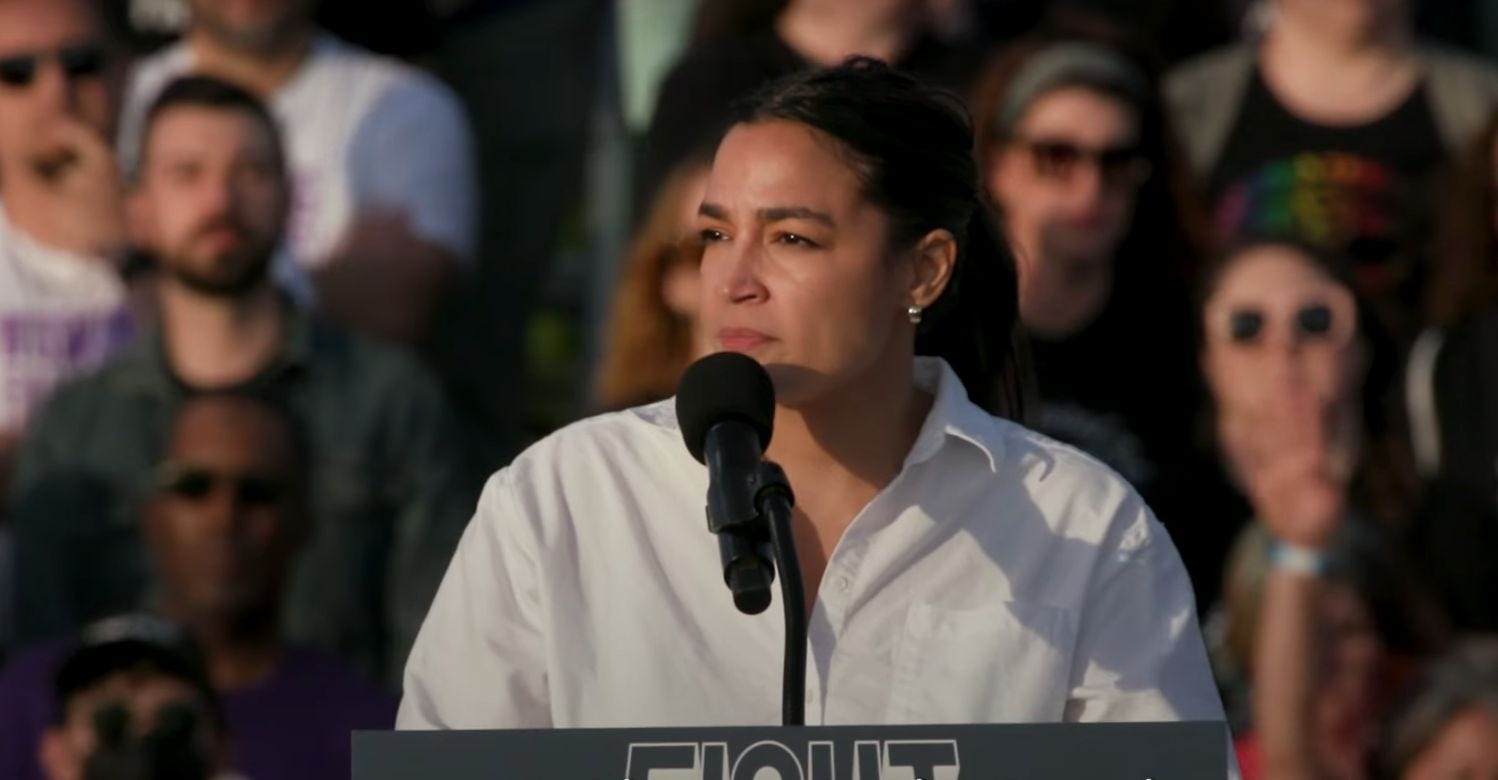
I think Rep. Alexandria Ocasio-Cortez should run for president in 2028. Honestly, it is hard to look at the turnout for her “Fight Oligarchy” tour with Sen. Bernie Sanders and the extremely slick videos her campaign is pushing out and come away thinking she isn’t running. This doesn’t feel like someone merely running for another term in Congress or even as a challenger for Sen. Chuck Schumer’s Senate seat. This feels like something more on the level of the 2007-2008 Obama campaign, or even Barry Goldwater’s 1964 crusade.
Personally, I think Ocasio-Cortez should run because the Democratic Party and America overall needs it to happen. Right now, under Donald Trump we are in the vice grips of a racist, authoritarian cult. But Trump didn’t come out of nowhere. Trump’s actions are built on decades of conservative groundwork, from the aforementioned Goldwater campaign to the Reagan presidency, to the Bush presidency, and yes – including the Romney and McCain campaigns. All of it.
In response to this multi-decade assault facilitated via operations like Fox News, Democrats have been tepid at best. The party simply does not know how to fight, and it constantly promotes from the ranks of the “don’t fight” caucus. Just a few weeks ago, still coasting from his attachment to Bill Clinton in a campaign that was conducted nearly four decades ago, James Carville told Democrats to lie down and play dead in a New York Times op-ed. Carville’s world view is not an outlier. Democrats have been playing dead for most of my adult life and I’m just a few years short of fifty.
Coming off of the Clinton 2016 and Harris 2024 losses, the party needs a come to Jesus moment, a full-throated fight to determine what, if anything, it stands for and how it intends to conduct itself in the future. The recent DNC chair race solved none of this, because DNC chair is not an ideological position – it’s all about basic party function. The ideology of the party is still determined by leaders like Schumer, former Speaker Nancy Pelosi, and Minority Leader Hakeem Jeffries. Right now that ideology is – to be blunt – weak shit.
Ocasio-Cortez is a progressive and to be sure that is why I like her, but what I like about her even more is that she isn’t afraid of it. I’m tired of liberalism that is afraid to say what it is out loud, or that insists that every celebration of liberal ideology has to be balanced by some mealy-mouthed statement acknowledging the purported legitimacy of the conservative world view. It isn’t legitimate and more Democrats need to act that way.
The arguments against Ocasio-Cortez running for president don’t feel very compelling to me.
She’s a woman. This is the weakest counterargument and the most un-American. America is all about doing the big thing that hasn’t been done before and fighting for it. Simply because two women lost the election after getting the nomination, we’re just supposed to stop? If, after a robust primary process the voters within the Democratic Party decide that a woman is the best person to do the job, then she deserves the nomination – but we can’t simply let misogyny win out again because we are unwilling to fight.
She’s a progressive/socialist. The Democratic Party has been nominating centrists for decades. If political ideology was all about matching the candidate to the country, we would be discussing the easy presidential wins from former Presidents Gore, Kerry, Clinton, and Harris. Democrats should pick the best candidate who appeals to the world they believe in – because that kind of pure belief is far better than playing fantasy campaign manager, selecting a nominee based on what you think is most acceptable to some mythical middle America voter.
She needs more experience. This is a really ridiculous one. Back in 2007 when Obama was first debating entering the race, I prayed he would do it because I fear what the Senate does to the mind of a human being. Look at Kerry and his Republican counterpart in terminal Senate brain, John McCain. I look at the Senate as a zombie that sucks the charisma out of people and turns them into near-automatons spouting nonsense about an amendment they offered in committee and other things normal people don’t understand.
Ocasio-Cortez understands the inner workings of the government far more than the average person. Several years of getting stifled by the Senate won’t change that. Similarly, I don’t see the logic in letting her linger in the House, even if she eventually ends up in a senior leadership position like Speaker.
To use a sports analogy, in the past NFL teams would draft a quarterback and let them sit on the sidelines, purportedly learning the ropes from a veteran signal caller. But in the modern NFL, a guy is drafted and immediately thrown into the deep end to see if they can sink or swim. To be certain, many times that leads to a spectacular bust – or, like in the case of my favorite team the Washington Commanders – a rookie takes you to within one game of the Super Bowl in his first year.
Both Obama and Trump jumped into their races when they had grassroots momentum. They both beat back the establishment candidate (Clinton for Obama, Jeb! for Trump). The rallies, along with years of well received rhetoric and attacks from the right-wing machine say to me that Ocasio-Cortez has that “juice” and it would be a shame to let it wither.
I’m not arguing that she would win the nomination or even the general election. Who even knows if we can have free and fair elections anymore? But the fact that this cornerstone of American democracy is even in question at this point sort of makes the case that the same old, same old cannot continue to be the answer.
Something more needs to be done, and as Ocasio-Cortez keeps saying “a better world is possible.” So maybe let’s try it. (snip-MORE + photo of the cutest dachshund doggy ever)
As To The Cats:
Pussy-cat -What are vices? Catching rats And eating mices! by Worriedman
Spike Milligan Read on Substack
I love when the whole poem fits in the title box. I had a different poem I was trying to use but I couldn’t figure out an excerpt that made sense. Go read the whole poem, you’ll see what I mean. Plus, it’s a terrific poem!
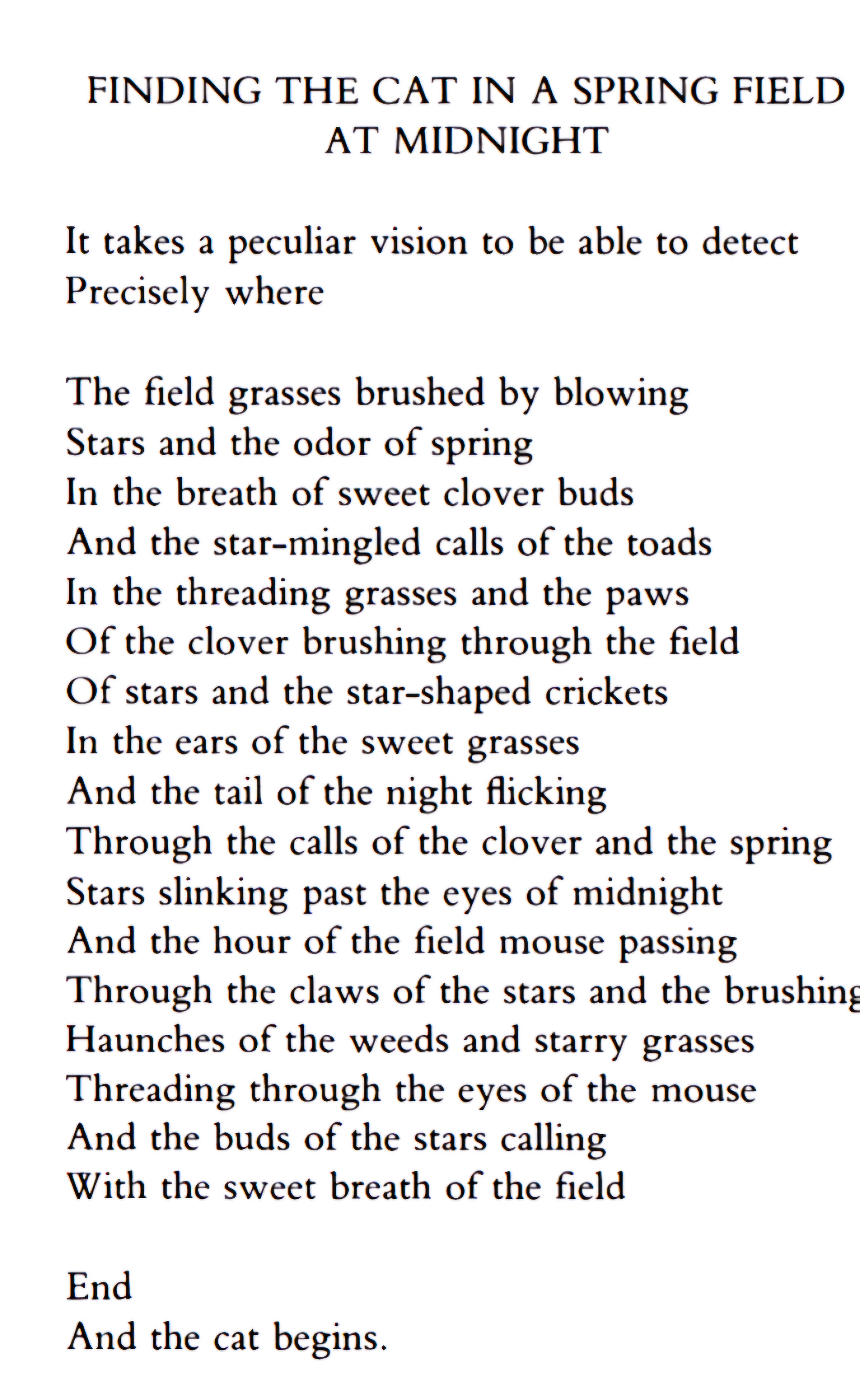
The author, Pattiann Rogers, is great !
A Multi-Post
of some stuff I ran across yesterday.
Let’s All Watch Liz Warren Tariffsplain To Inattentive Dunderhead On CNBC by Rebecca Schoenkopf
Ma’am, you need to use your listening skills. Read on Substack
Snippet-go read this, the videos are delightful- Sen. Prof. Warren remains outstanding!

Professor Senator Elizabeth Warren stopped by CNBC’s “Squawk on the Street” on Friday for some chattin’ and some rantin’ and some tarriffsplainin’ for the benefit of the show’s blow-dried hosts. We don’t normally watch financial news shows, because what are we, the Vanderbilts? But put Warren on anytime, and we’ll consider tuning in more. She can be entertaining!
Especially if your anchor isn’t following her argument, which sends her into her professorial did-you-not-do-the-reading voice. Which is what happened to Sara Eisen, who must have thought for one moment that she was back at the Medill School and had skipped that week’s assignment. (snip)
===============================================================
Not to pick up the is-it-blue-or-green thing again, but-
Scientists Learned How to Trick Our Eyes Into Seeing an Entirely New Color
By stimulating thousands of individual cone cells, researchers made volunteers see a blue-green color of “unprecedented saturation.”
By Ed Cara Published April 18, 2025

Black Mirror, eat your heart out. Researchers have apparently just figured out how to make people see a color completely new to humanity.
Scientists at the University of California, Berkeley conducted the research, published Friday in Science Advances. Using a technique called Oz, the research team induced human volunteers into seeing a color beyond the “natural human gamut.” Oz could allow scientists to conduct experiments previously not possible before, the authors say, and the lessons we learn from it might even someday help color-blind people regain their missing color vision.
Our retinas contain certain photoreceptive cells, known as cones, that allow us to see color. There are three cone types that correspond to different wavelengths of light: short-wavelength (S) cones, medium-wavelength (M) cones, and long-wavelength (L) cones.
Typically, when we try to reproduce color in front of someone’s eyes, we do so by manipulating the spectrum of light seen by the retina’s cones. But since some of our cones, particularly M cones, share overlap in how they respond to certain wavelengths, there are theoretically colors out there that our eyes can never truly see. The UC Berkeley researchers, based on their earlier work studying cone cells, say they’ve found a way around this limitation. (snip)
===============================================================
South Africa’s Ambitious Renewable Energy Masterplan involves Solar Manufacturing
The Conversation 04/19/2025
By Ricardo Amansure, Stellenbosch University
(The Conversation) – About 85% of South Africa’s electricity is produced by burning coal. The country’s move to renewable energy means that the coal industry will be phased out. To this end, the South African cabinet recently approved the country’s first renewable energy masterplan, which sets out what’s needed to establish new renewable energy industries. Ricardo Amansure of the Centre for Sustainability Transitions researches the move towards renewable energy and how communities can benefit from this. He explains what the masterplan aims to achieve, what problems it might face, and how it can succeed.
What is the South African Renewable Energy Masterplan?
It is an industrial strategy that sets out how South Africa can set up a new manufacturing industry in renewable energy and battery storage value chains.
The masterplan was developed by the government, some sections of organised labour, a non-profit organisation advocating for renewable energy, and representatives of the renewable energy industries. It sets out a framework to produce renewable technologies locally. These include solar photovoltaic panels, wind turbines and batteries.
The masterplan has been drawn up so that it aligns with South Africa’s existing national target of adding 3–5 gigawatts of renewable energy capacity each year to 2030. This is a scale that can support the development of local manufacturing hubs. (One gigawatt can supply electricity to about 700,000 average homes.) This steady supply will be enough to give businesses and investors the confidence to commit to long-term investments in local manufacturing hubs. These are zones where renewable systems and components are produced or assembled for domestic and export markets.
The state-owned electricity company, Eskom, has not directly guaranteed that it will buy 3-5 gigawatts of renewable energy each year. But the government’s national electricity plan (the Integrated Resource Plan) provides a strong indication of future demand. (snip)
Reblogging, and Joining in This Message
“Unique Endemic”
Reblog From The Bee
I probably should have reblogged each of these-Sherky is a fine tour guide! But they’re all available at Bee’s blog.
Stuff I Ran Across Yesterday
How Crocodile Ancestors Survived The Dinosaur Extinction
Evrim Yazgin Cosmos science journalist
Crocodiles are often thought of as living fossils – unchanged over millions of years. New research has shown that their evolutionary history is a lot more complicated than that.
Crocodilia is the surviving family of a lineage which emerged about 230 million years ago (mya) called crocodylomorphs. This group split from other reptilian species including those that eventually became dinosaurs. Today, the crocodilia include crocodiles, alligators, caiman and gharials.
Ancestors of modern crocodilians survived through 2 mass extinctions, including the one which spelled the end of the “Age of Dinosaurs” 66 mya.

The new study, published in the journal Palaeontology, shows that the secret to success of crocodylomorphs was their adaptability to new food sources and habitats.
“Lots of groups closely related to crocodilians were more diverse, more abundant, and exhibited different ecologies, yet they all disappeared except these few generalist crocodilians alive today,” says lead author Keegan Melstrom from the University of Central Oklahoma.
Today’s crocodilians are semi-aquatic generalists. The thrive in different habitats and aren’t picky eaters.
It was a different story with ancient crocodylomorphs.

The palaeontologists visited museum collections in 7 countries, across 4 continents to understand the evolution of crocodilian ancestors. They examined the skulls of 99 extinct crocodylomorph species and 20 living crocodilians.
Crocodylomorphs exploded after the end-Triassic mass extinction 201 mya which killed off ancient lineages of hypercarnivores and land-based predators.
“After that, it goes bananas,” says Melstrom. “Aquatic hypercarnivores, terrestrial generalists, terrestrial hypercarnivores, terrestrial herbivores – crocodylomorphs evolved a massive number of ecological roles throughout the time of the dinosaurs.”
Toward the end of the time of the dinosaurs, however, crocodylomorphs started to decline.
Most of the specialised crocodylomorphs had died off by the end of the Cretaceous. Almost all 26 remaining species today are semi-aquatic generalists.

“When we see living crocodiles and alligators, rather than thinking of ferocious beasts or expensive handbags, I hope people appreciate their amazing 200+ million years of evolution, and how they’ve survived so many tumultuous events in Earth history,” says co-author Randy Irmis from the Natural History Museum of Utah. “Crocodilians are equipped to survive many future changes – if we’re willing to help preserve their habitats.”
“Extinction and survivorship are 2 sides of the same coin,” Melstrom says. “Through all mass extinctions, some groups manage to persist and diversify. What can we learn by studying the deeper evolutionary patterns imparted by these events?” (snip-More)
==============================================================
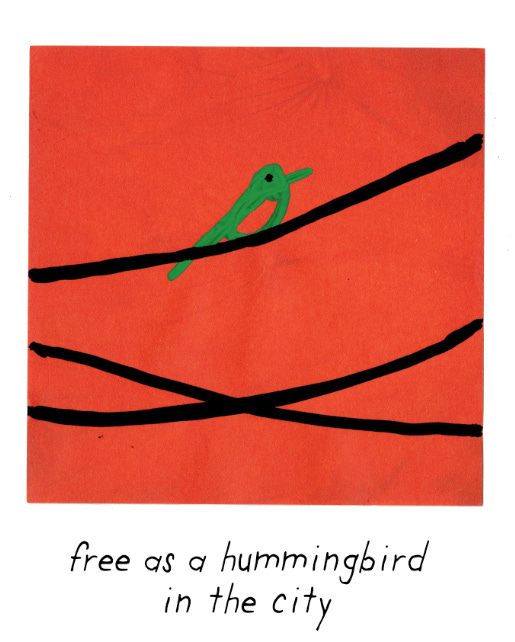
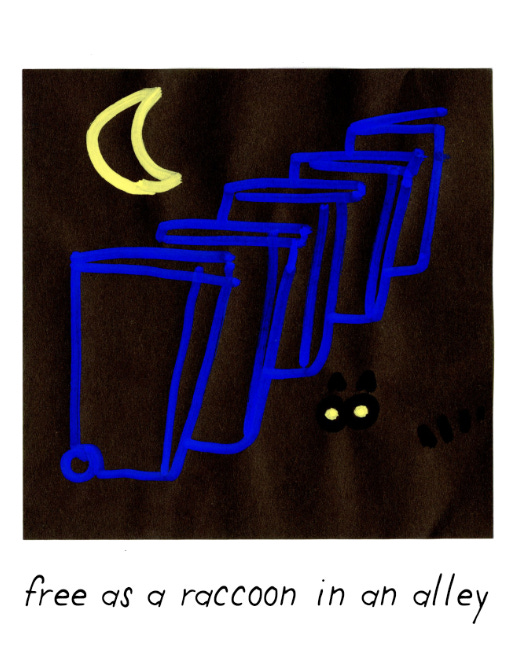
Free by Grant Snider
A poem in pictures Read on Substack


















==============================================================
More Library Tidbits (+ a way to be an impediment to the strangling of libraries.)
US blocks Canadian access to cross-border library, sparking outcry
US officials claim move was to curb drug trafficking while Quebec town says it ‘weakens collaboration’ among nations
View image in fullscreen A young girl walks over the Canada-US border line from the Haskell Free Library and Opera House in Derby Line, Vermont, on Friday. Photograph: Christinne Muschi/The Canadian Press via AP
The US has blocked Canadian access to a library straddling the Canada-US border, drawing criticism from a Quebec town where people have long enjoyed easy entry to the space.
The Haskell Free Library and Opera House is located between Stanstead, Quebec, and Derby Line, Vermont. It was built deliberately to straddle the frontier between the two countries – a symbol of cooperation and friendship between Canada and the US. (snip)
Fairhope Public Library supporters raise money to replace funds state plans to withhold
By: Ralph Chapoco – March 25, 2025 11:49 am
A nonprofit says it has raised enough money for Fairhope Public Library to cover state funds that the Alabama Public Library Service Board cut off last week.
Read Freely Alabama, a grassroots free speech advocacy organization that has fought restrictions on library content, said it had collected almost $39,000 from about 550 donors through Tuesday morning. Read Freely is organizing the campaign with EveryLibrary, an Illinois-based organization that promotes library funding and fights restrictions.
“We were trying to figure out what was the amount that they were pausing,” said Cheryl Corvo, a member of Read Freely Alabama and Fairhope resident. “Then, we found out it was $42,000 that they were pausing, and how it would affect our library.”
The Fairhope Public Library said it will have access to funding without interference from the state or any outside groups.
“We had a meeting with EveryLibrary, which is the group that has control of this particular fundraiser, and they take 10% and 90% of it comes to us,” said Randal Wright, a board member of the Fairhope Public Library.
The amount was not enough to severely debilitate the library’s operations, Corvo said. But it is enough to affect “some very vital resources that the library provided.” Corvo said the campaign should also make APLS aware of the magnitude of local support for the library.
Wright said that if the state continues to withhold money, the funds will go toward computers, books for the collection and paying for guest speakers. (snip)
 Scottie's Playtime