By LIUDAS DAPKUS Updated 7:46 PM CDT, August 24, 2025
VILNIUS, Lithuania (AP) — Cute and adorable Welsh corgis, widely known for their association with the British royal family, are in fact a breed of passionate racers.
That’s at least according to the 120 teams from around Europe taking part in the Corgi Race Vilnius, in Lithuania’s capital, which drew an international bunch of furballs and their owners from countries including Poland, Latvia, Germany, Austria and Italy.
Thousands of Lithuanians gathered in the capital’s largest park on Saturday and Sunday to watch the events — a solo sprint, a contest for the “mightiest voice,” costume challenges, and group racing.
The event is set to culminate on Sunday with the so-called World Corgi Meetup, where dogs in Lithuania will be connected via a live broadcast with their peers in the United States, Ireland and Poland.
“This is so much fun and great emotion for the entire family, something bright that many people are craving for these days,” said retired teacher Janina Stoniene, who attended the race with her three grandchildren. The children said they admired the costume challenge as dogs were dressed in eye-catching outfits like Batman, a princess or an airplane.
A corgi named Amigo, sporting a factory-themed costume complete with two tiny chimneys and “Fur Factory” lettering, was named the proud winner of that contest.
Another called Mango, whose owners are from Lithuania, was the champion of the solo race.
“So this is a mango, like a fruit mango, and we are participating (for the) second time in Corgi Race 2025,” said Ignas Klimaika, a proud corgi lover from Vilnius. “Last year we didn’t manage to end the race perfectly. We had a really good training. We had trained every day, but this year we decided we just go without training, just to participate, just to enjoy all the lots of corgis,” he said.
A corgi dog participates in a fashion show during a international event Corgi Race Vilnius 2025 in Vilnius, Lithuania, Saturday, Aug. 23, 2025. (AP Photo/Mindaugas Kulbis)A corgi dog participates in a fashion show during a international event Corgi Race Vilnius 2025 in Vilnius, Lithuania, Saturday, Aug. 23, 2025. (AP Photo/Mindaugas Kulbis)
But this year, Mango won the racing competition, while his owners screamed and waved to try to inspire him to triumph.
“He knows what he did and he’s really proud of himself,” said Ignas, who is already planning for 2026.
In a groundbreaking global mission, researchers have identified 866 new marine species, offering fresh insights into ocean biodiversity. The discovery comes after a two-year collaboration among scientists, governments, and research institutions.
This large-scale effort combines data from 400 institutions and more than 800 scientists to accelerate the cataloguing of life beneath the waves. The study confirms that much of the ocean remains unexplored, with only about 10% of marine species currently documented, leaving a vast number of creatures to be discovered, Faharas reports.
Photo YouTube / Your Wyoming Link
The Guitar Shark was found 200 meters deep off Africa.
Breakthrough Discoveries: Guitar Shark and Venomous Harpoon Snail
Among the newly identified species, the Guitar Shark stands out. Found at depths of approximately 200 meters off the coasts of Mozambique and Tanzania, this elusive shark adds to a critically endangered group, Afloat.ie reports. With only 38 known guitar shark species worldwide and a significant proportion threatened, its discovery sparks urgent calls for conservation measures.
Equally intriguing is the discovery of a venomous marine gastropod, Turridrupa magnifica. This creature, encountered in the South Pacific near New Caledonia and Vanuatu, possesses a specialized predatory mechanism. It employs harpoon-like teeth to inject toxins into its prey, a feature that opens potential avenues for developing novel pain relief and cancer treatments, according to Ocean Census. The promising medical applications of these peptides highlight the unforeseen benefits that emerging species can offer.
Photo YouTube / Your Wyoming Link
Scientists discovered 866 new marine species.
A Collaborative Effort Across the Globe
The ambitious mission, led by the Nippon Foundation and Nekton, kicked off in April 2023. It involved 10 global expeditions and 8 Species Discovery Workshops, creating an international network dedicated to marine research, IFL Science reports. By deploying divers, remotely operated vehicles, and submersibles, teams explored depths ranging from near-surface waters to nearly 5,000 meters below sea level. Such an extensive range allows researchers to capture a diverse snapshot of ocean life, from colorful reef fish to mysterious deep-sea creatures that dwell in near-total darkness.
The traditional process of species registration is lengthy, sometimes taking up to 13.5 years. This delay means that many species face extinction before they can be formally documented. Accelerated efforts, like the Ocean Census, aim to reduce this gap and develop conservation strategies rapidly, CBS News reports. The initiative has already facilitated a series of Species Discovery Awards, encouraging taxonomists worldwide to share their findings and enrich our understanding of marine ecosystems.
Photo YouTube / Your Wyoming Link
Discoveries inspire hope for future biotechnology advances.
Implications for Marine Conservation
The revelations extend beyond the thrill of new discoveries. They serve as a stark reminder that the ocean still holds many secrets critical to the health of our planet. With climate change, overfishing, and pollution increasingly threatening marine environments, the need for protective measures has never been more urgent.
A unified treaty reached by over 100 nations now aims to conserve 30% of the world’s oceans by 2030, CBS News reports. This commitment underscores the pivotal role that newly discovered species play in advancing marine conservation, as each new creature contributes to the broader ecological balance.
The comprehensive data gathered during these expeditions are now accessible through an online biodiversity platform. This initiative not only supports ongoing research but also informs policy decisions aimed at safeguarding marine habitats, according to Faharas. As more species become known, conservationists can design more effective strategies to protect fragile ecosystems. The discovery of species such as the Guitar Shark and Turridrupa magnifica becomes a clarion call for further exploration and immediate action to preserve oceanic life.
Charting a Course for Future Discoveries
This monumental effort in marine exploration opens the door to new scientific questions. Researchers now face the challenge of studying the biology, behavior, and ecological roles of these species. The data collected will fuel future expeditions and drive technological innovations in underwater research. A sustained commitment to cataloguing and conserving ocean life will help protect the planet’s largest ecosystem against ongoing environmental threats.
The Ocean Census project represents a major step forward in understanding marine biodiversity. Its findings remind us that the ocean remains a vast and vibrant frontier, rich with life forms that continue to captivate scientific curiosity and drive innovation. As nations work together to expand marine protected areas, these discoveries will serve as a cornerstone for global conservation efforts.
there are people who find it in order to share it with people who need it. There is a fine video in this post, and a link to another blog that is oh-so-nice; I saw great news about bottle-nose porpoises, and even a headline for a story in the US. Please care for your health, and let yourself see there are good things happening. Some of them, readers can support. 💖
Cosmos: Cosmos is a quarterly science magazine. We aim to inspire curiosity in ‘The Science of Everything’ and make the world of science accessible to everyone.
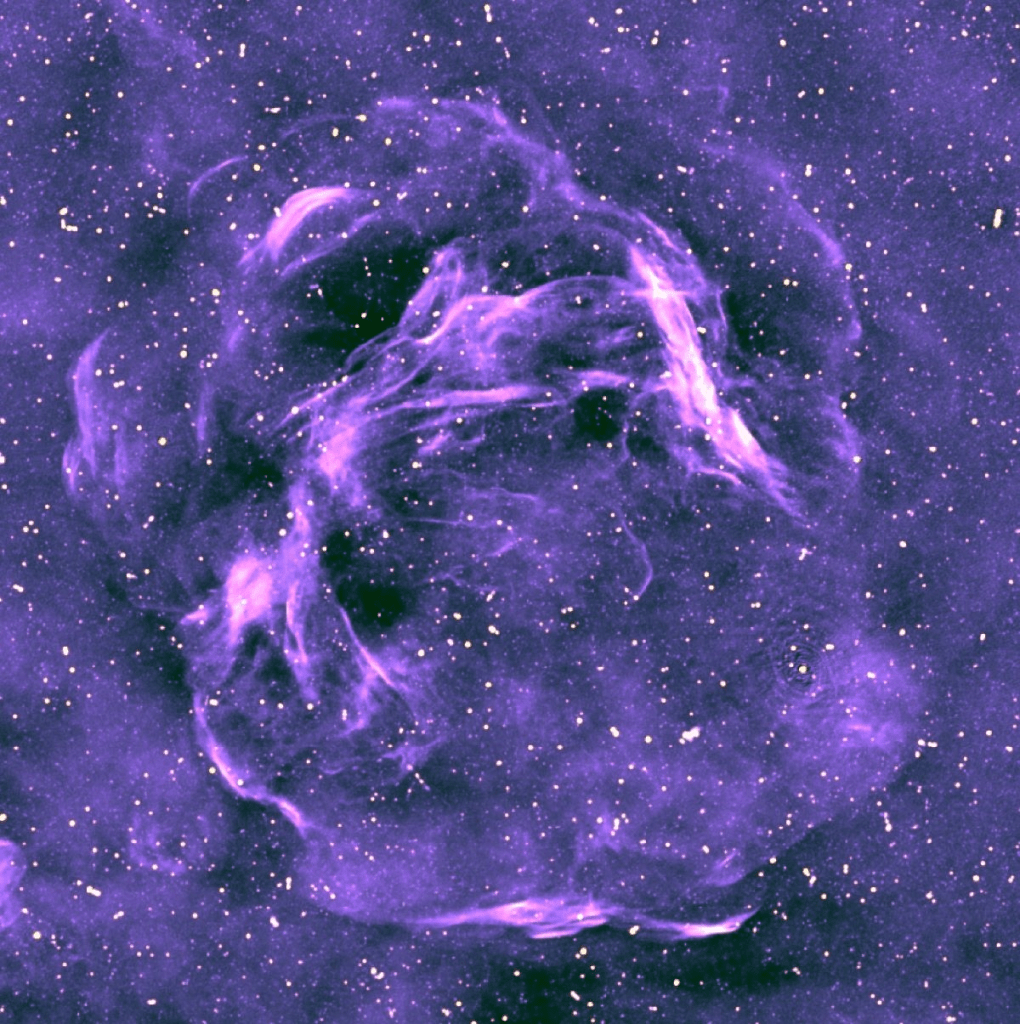
Supernova remnant G278.94+1.35, dubbed ‘Diprotodon’, captured by CSIRO’s ASKAP radio telescope. Credit: Sanja Lazarević
Supernova remnants are some of the most visually impressive objects in space. Astronomer Kovi Rose offers us a unique window into these violent and powerful celestial events.
Something explosive always seems to be happening in space. We often see headlines in the news about dramatic events like a flaring star, a gravitational wave from colliding neutron stars, or the latest supernova erupting in a galaxy far, far away.
The stories normally tend to focus on the peak periods of these energetic events, which generate in a week roughly a trillion-trillion times as much energy as we generated on Earth last year. But what remains after a star’s collapse – a supernova remnant, as astronomers call it – is both spectacular and scientifically interesting.
Supernova remnant G295.5+09.7 captured by the ASKAP radio telescope at Inyarrimanha Ilgari Bundara, CSIRO’s Murchison Radio-astronomy Observatory. Cloud-like ripples and filaments of interstellar gases are illuminated along the boundaries of the supernova remnant. Credit: ASKAP Evolutionary Map of the Universe (EMU) Team & Kovi Rose
The end of a star
Stars are endlessly collapsing under gravity. This immense pressure drives a fusion reaction, where hydrogen particles join together into heavier elements. The energy produced by this fusion reaction pushes outwards, stopping the star from collapsing in on itself. However, when a star starts to run out of fuel for its fusion engine, the balance breaks down and things get interesting.
For stars roughly the size of our Sun, there is no big explosion as they reach their final years. Instead, when they run out of fuel, they gently shrink into a glowing lump of carbon and oxygen called a white dwarf. White dwarfs don’t collapse entirely under the force of gravity, because the electrons in the remaining atoms are strong enough to push back. This is thanks to a quirky quantum effect called electron pressure.
A white dwarf can produce a supernova, but only under very specific circumstances, when the white dwarf is orbiting another star. When a white dwarf gets too close to the other star – which could even be another white dwarf – its gravitational influence will start to pull in material from the other star. This breaks the balance between gravity and those simmering electrons, ultimately causing the white dwarf to explode!
Bigger stars do end their lives in a supernova, and usually without any outside help. These stars – with more than 8 times the mass of our Sun – live fast and die young. They burn through their nuclear fuel faster than their smaller cousins, with lifetimes of millions (not billions) of years. These stars start by fusing hydrogen into helium in the core. As that runs out, they start fusing helium atoms together instead. And so it continues up the periodic table. The heavier the element, the faster the star runs out of fuel – with carbon and oxygen burning for mere years and months, respectively. But this can’t go on forever.
Once the core is made of iron, the fusion process grinds to a halt. With no new energy keeping the star inflated, its layers suddenly collapse. The rush of material inwards hits the remaining iron core and produces a shockwave that moves outwards at speeds nearing a quarter of the speed of light. These aptly named core-collapse supernovae usually leave their densely packed remains behind in the form of a neutron star – or, depending on how massive they were, a black hole.
Tuning the radio
For both classes of supernova, the stellar matter from the explosion is launched out across space at thousands, or even tens of thousands, of kilometres per second. Moving at these speeds, the leading front of the supernova can take tens of thousands of years to slow down, usually after spreading out across several light-years of space (one light-year is about 9.5 trillion kilometres) and sweeping up any additional material they encounter along the way. This is a supernova remnant: an interstellar bubble created by the wake of one of nature’s most energetic explosions.
This powerful blast wave contains fast-moving electrons that interact with nearby material in a fascinating way. The space around a supernova is filled with magnetised matter, and because of the special relationship between electricity and magnetism, the electrons curve rather than flying straight. As their paths change, the electrons are forced to slow down. Some of their energy is converted into light – but not always as light our eyes can see.
Supernova remnant SN1006 captured by CSIRO’s ASKAP radio telescope. SN1006 is the remnant of a supernova that was observed in the year 1006 by astronomers all over the world, from Egypt to China. It was first recognised as a supernova remnant in 1965, following radio observations at Murriyang (the Parkes radio telescope). Credit: Dr Emil Lenc & Kovi Rose.
Visible light is just one window into the full spectrum of electromagnetic waves. It has a short wavelength of a few hundred nanometres; for context, the average width of a single human hair is nearly 100,000 nanometres. Most of the light in supernova ‘bubbles’ has much less energy, with a wavelength of tens of centimetres or even metres. This particular type of light is called radio.
Radio astronomers have built just the right instruments to detect this kind of light emitted by supernovae. From the initial blast to the giant bubble-like structures they create as the explosion moves out through space, radio telescopes can detect these explosive supernova ‘bubbles’ expanding and eventually slowing down as they become a remnant.
We also see the brightness and energy of the light changing depending on how much material the shockwave sweeps up as it expands, or how strongly magnetised the surrounding material is. By studying the radio light generated by supernova remnants, we can learn when and how they formed, as well as what kind of dense objects the explosion left behind.
Australia’s view
Radio astronomy has a long, continuous history in Australia. We were one of the first countries in the world to use radio instruments to study celestial objects. The American radio engineer Karl Jansky, widely considered the founder of radio astronomy, first detected radio emission in 1933 from a dense region somewhere in the Milky Way. However, in 1954, CSIRO astronomers in Sydney figured out that the source of Jansky’s detection was located right at the centre of our galaxy.
As the field of radio astronomy developed, astronomers and engineers began exploring different types of telescopes that could be used to study a range of objects in the sky. Depending on the design of the instrument, we can use them to detect point-like radio sources – like the centres of distant galaxies – or diffuse clouds and filaments, like the boundaries of a supernova remnant. And using advanced image-processing techniques and modern telescopes like CSIRO’s ASKAP radio telescope, we can create images that show the beauty of the radio sky at both small and large scales.
This 24-metre-wide ‘hole-in-the-ground’, originally dug out by a few radio astronomers during their lunch breaks, was used to locate Sagittarius A. At the time it was the second-largest radio telescope in the world. Credit: CSIROCSIRO’s ASKAP is a telescope made of 36 smaller (12-metre) dish-like antennas spread over a large area on Wajarri Yamaji Country in Western Australia. Credit: Laura Driessen
Exploring our galaxy
Supernova remnants are stunning markers of the explosive history of our galaxy. And luckily for astronomers, we’ve already discovered hundreds of them. Observations of that white road of stars that runs across the sky, the Milky Way, have revealed a foamy sea of interstellar bubbles created by ancient supernovae.
The shapes of supernova remnants reflect the circumstances of their formation and their encounters with neighbouring objects, including cosmic clouds of gas and dust. Some appear symmetrical, while others take on distorted forms, moulded by interactions with nearby material or overlapping with other expanding bubbles. In fact, our whole solar system sits near the centre of a ‘superbubble’ – a vast cavity containing most of the stars visible to the naked eye. Scientists reckon the superbubble was carved out by the cumulative explosions of multiple supernovae over millions of years.
Radio astronomers estimate that as many as 1,500 supernova remnants may be still hiding in our galaxy undiscovered. New observations with highly sensitive radio instruments like ASKAP and the upcoming SKA telescopes will help us uncover these elusive interstellar bubbles, and reveal more details about the energetic processes that shaped the Milky Way.
The central band of the Milky Way seen at radio wavelengths. This image combines observations from the Parkes and ASKAP radio telescopes to reveal the network of supernova remnants and gas clouds in the central region of our galaxy. Credit: R Kothes (NRC) and the PEGASUS team.
Kovi Rose is an astrophysics PhD candidate at the University of Sydney who studies the radio light from nearby dwarf stars and distant supernovae.
A group of Little Corellas (Cacatua sanguinea), a species of white cockatoo native to Australia and southern New Guinea, perch on a suburban TV antenna. Credit: Lea Scaddan / Moment / Getty Images Plus.
A new study shows cockatoos in captivity dance more often than expected, with the birds pulling out moves like the “body roll” and the “moving jump”.
The researchers observed cockatoos showing off a total of 30 distinct dance moves. Some stylish birds showed off unique moves not seen in any other bird.
“The work suggests that playing music to parrots may provide a useful approach to enrich their lives in captivity, with positive effects on their welfare,” says lead researcher Natasha Lubke from Charles Sturt University, Australia.
Lubke and colleagues analysed 45 videos of cockatoos dancing that had been posted to social media.
Across the videos, the researchers established 30 distinct dance moves like the “headbang” or the “sidestep”. Of these dance moves, 17 had not been previously described scientifically.
The “downward movement” was the most common motion, appearing in 50% of the birds’ repertoire. Routines involving just wings, like “flapping” and “wings back”, were the least common.
Each cockatoo species had a unique top 10 most common dance moves, and the researchers observed that closely related species did not display similar dances.
Illustration of the 10 most common recorded dance movements. Ethogram descriptors based on Keehn et al. [3] and illustrations by Zenna Lugosi. Credit: Lubke et al., 2025, PLOS One, CC-BY 4.0.
The researchers then followed up their initial video analysis by investigating the behaviour of 6 cockatoos at Wagga Wagga Zoo in Australia.
The cockatoos were then played either music, an audio podcast or no audio at all. All cockatoos performed dance moves whether there was music playing or not.
“I showed that dancing behaviour is more common in cockatoos than previously thought and was seen in 10 of the 21 cockatoo species,” says Lubke.
“My analysis also indicated that dancing is far more complex and varied than previously thought, recording 30 different movements seen in multiple birds and a further 17 movements that were seen in only one bird.”
Some of the dance moves observed were similar to those displayed by wild parrots when they are in the process of courtship. This suggests captive cockatoos may have redirected their courting dance toward their owners.
More research is needed to understand whether the cockatoos actually enjoy dancing in order to improve the welfare of captive cockatoos.
“The similarities with human dancing make it hard to argue against well-developed cognitive and emotional processes in parrots, and playing music to parrots may improve their welfare,” says Rafael Freire, a professor in animal behaviour and welfare at Charles Sturt University.
“Further research would be beneficial to determine if music can trigger dance in captive birds and serve as a form of environmental enrichment.”
All 30 of the cockatoos’ groovy dance moves are listed in the research paper published in PLOS One.
The weekend before this last one Odie started throwing up and he was not eating as well as he normally did. On Monday last week Ron took him to the vet. After 800 dollars the vet said she felt he had no blockage and most likely he had an ulcer. She gave us several medications and told us to get him some over the counter Pepcid. We managed to give him his medications in a syringe.
But on Thursday we took him back to the vet for a bolus of fluid because he still was not eating nor drinking. We increased his new make him hungry ear rub. All weekend we tried hard to entice him to eat or drink. On Monday I had a doctor’s appointment. When I got home I suggested that Ron call the vet. He told me he got Odie to drink something and said he heard cats can make huge turn a round after not eating or drinking for days. I felt what it really was a cry for more time. As Odie seemed stable and not in pain I let things be, after all Ron watches a lot of animal vet shows and I hoped he was correct.
For the first time since Odie got ill he did not leave his safe space which is Ron’s closet that day. Ron tried hard to get him to drink or eat. This morning (Tuesday 8-5-2025) I told Ron he needed to call the vet and he agreed, he had faced the fact of Odie’s situation and realized that Odie was passing and not able to get better.
The vet told us to bring him in around 4 pm or 1600 for those on a 24 hour clock. All day both Ron and I checked on him and Ron kept trying to get him to eat or drink. The veterinarian hospital is only like five or 7 minutes away from us. At about 3:50 pm Ron set the carrier on the counter and put a fresh blanket in it. I picked Odie up from the closet and realized he had no strength to even support himself anymore. Once I got him in the carrier he did not even try to turn around and we struggled to get his tail completely in the carrier. I ended up having to reach around him to pull the blanket further in so we could secure the door.
I needed Ron to carry the carrier to the vet’s office, but while I had been with every furry family member when they walked the rainbow bridge, Ron has not joined me during the procedure as his feelings are so strong and he has struggled with the death of each one. I feel it is the last act of love I can do for them. My last duty for them.
The vet asked if we both wanted to stay and I said yes. I was surprised Ron did also. The vet assistant took Odie to have an IV inserted. I asked Ron if he was sure he wanted to stay instead of going to the waiting room or the car. He wanted to stay. When they brought Odie back we petted him until the doctor came in to do the finial step. As first the sedative and then the last medication was injected Ron sat near him and talked to him. I stood next to him and gently rubbed his head and neck fur. I said a few things verbally and a lot more mentally. I could see Ron was doing the same. I was proud of how he handle a very painful experience. The one who was crying the most was the vet, she said that her cat was a ginger and she really liked Odie when he was visiting them.
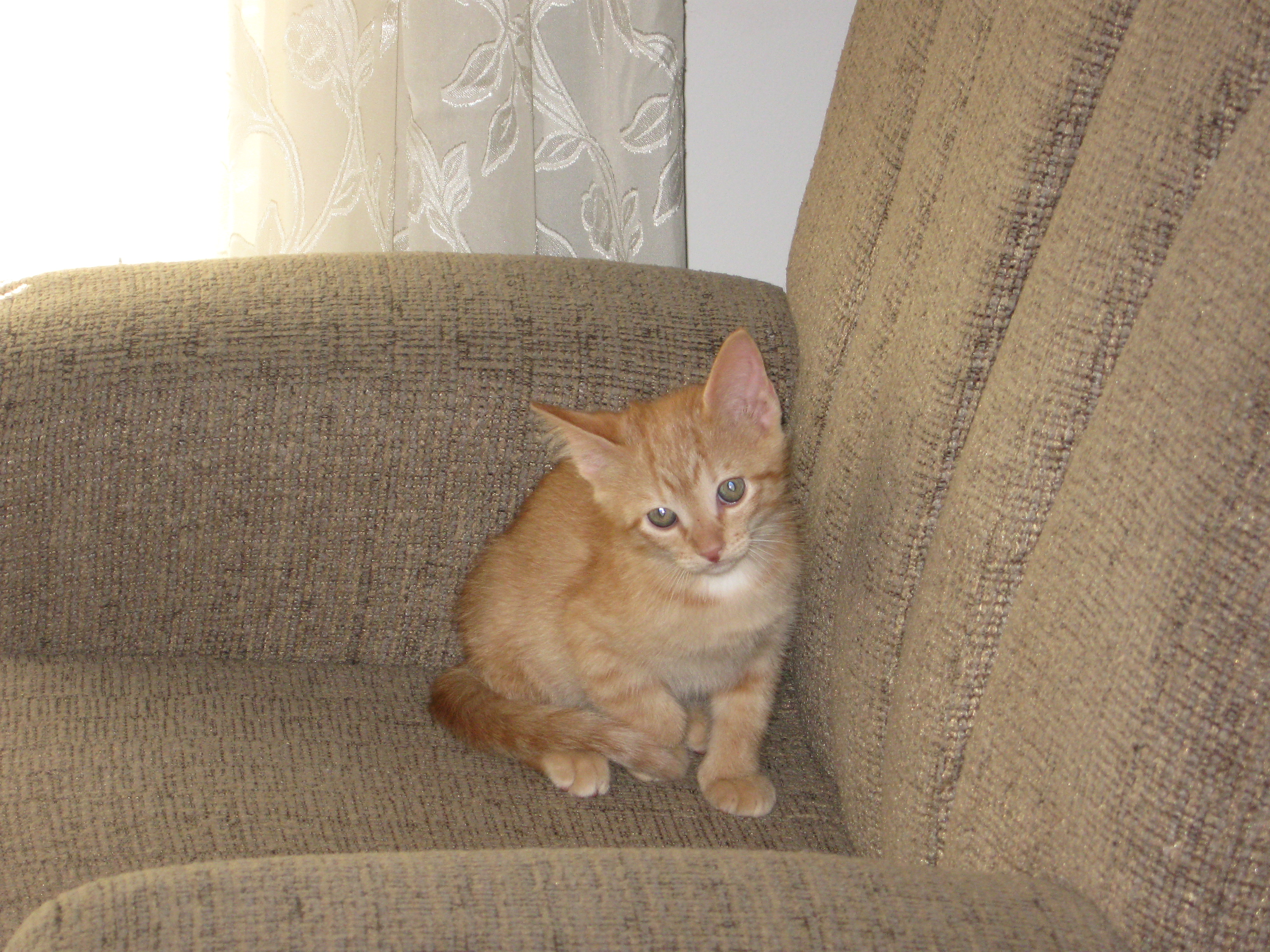
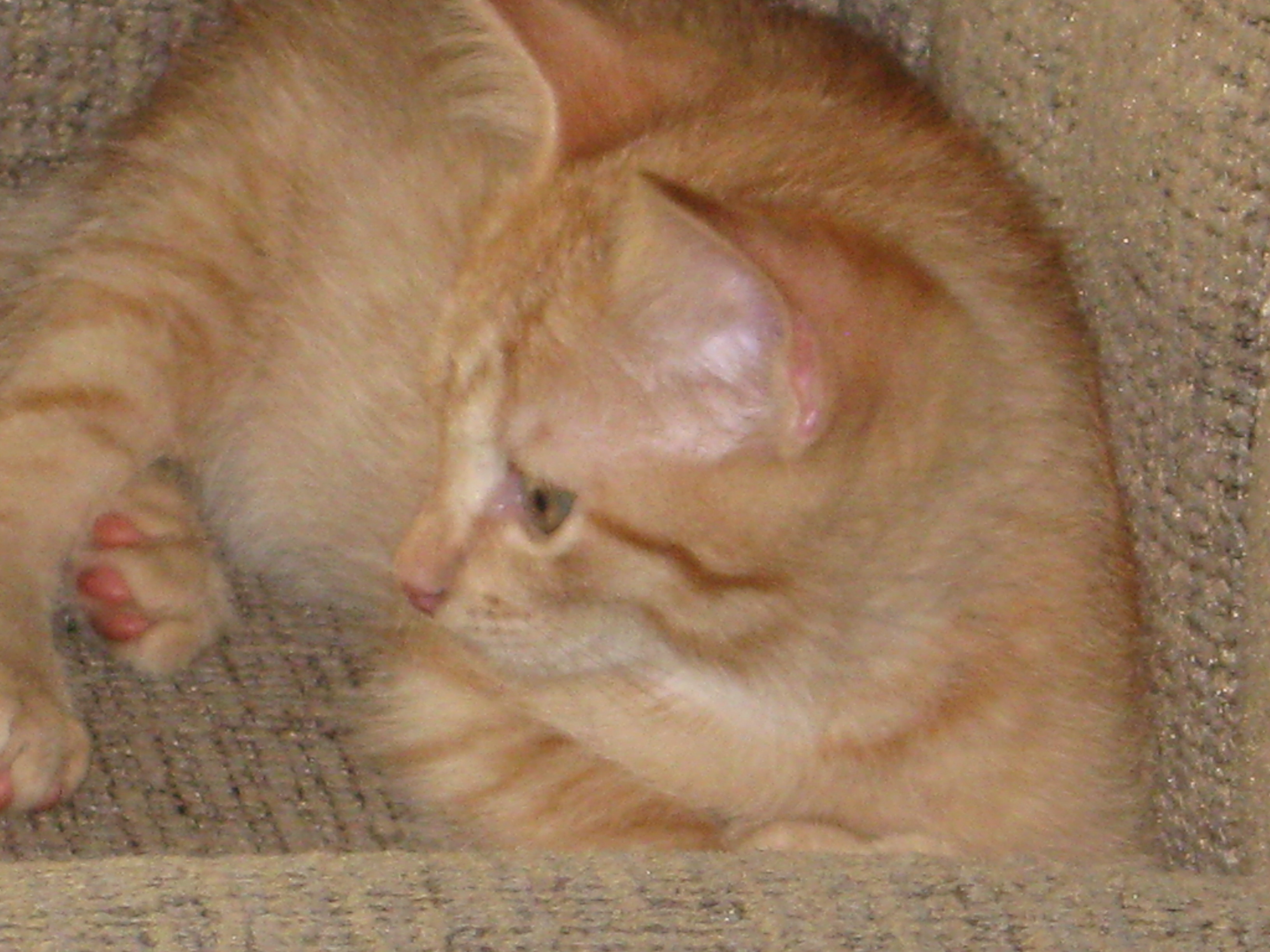
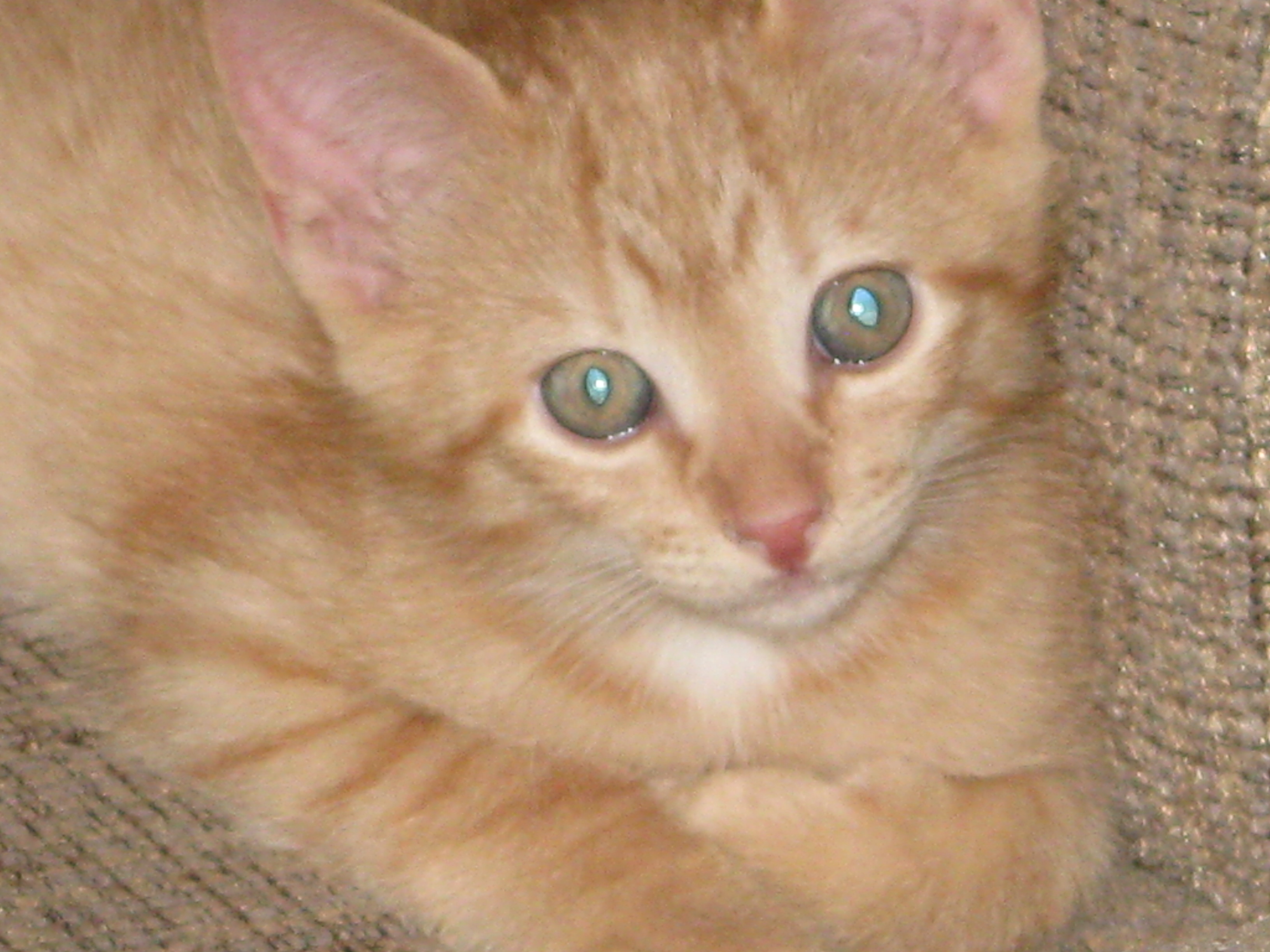
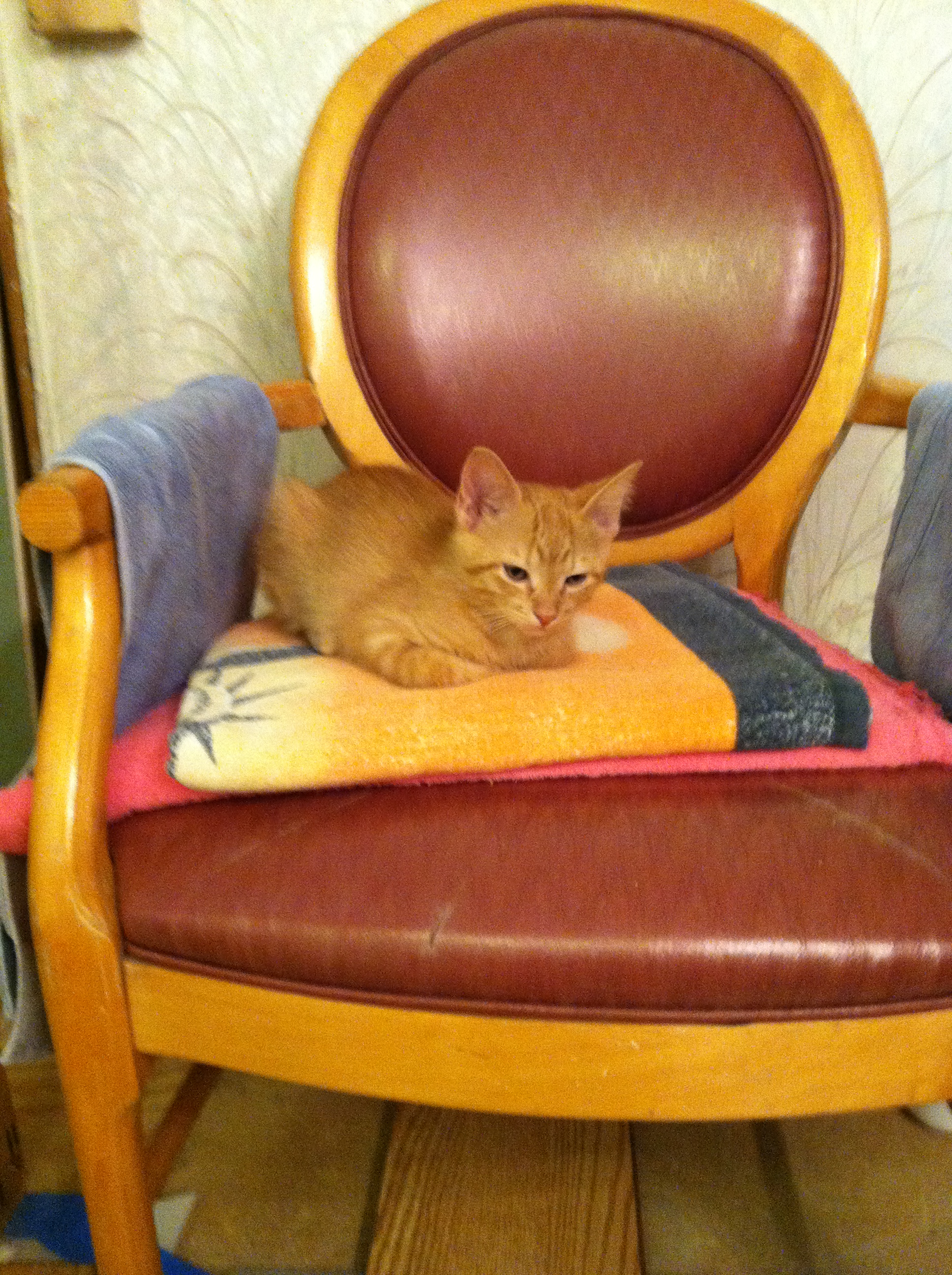
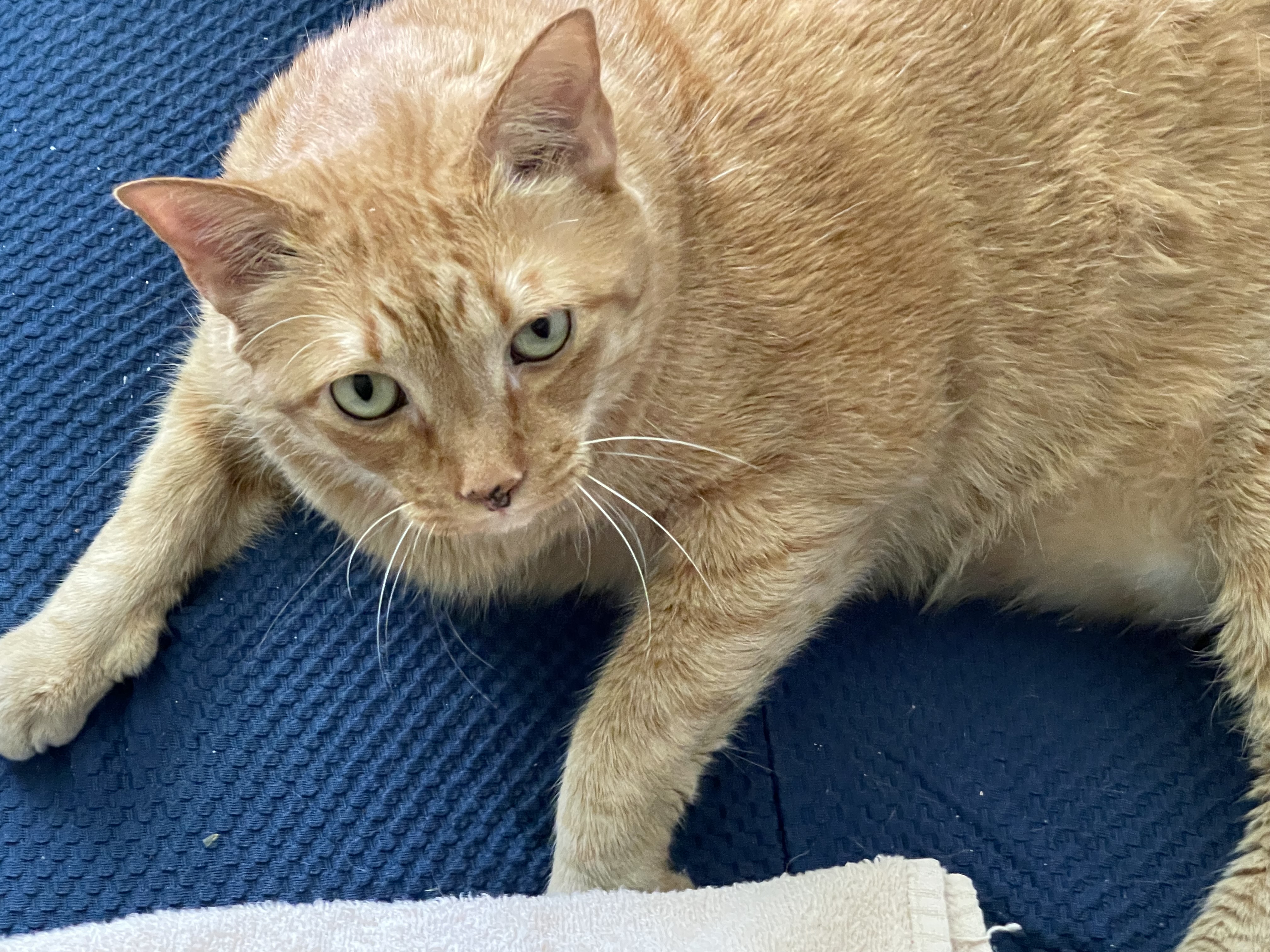
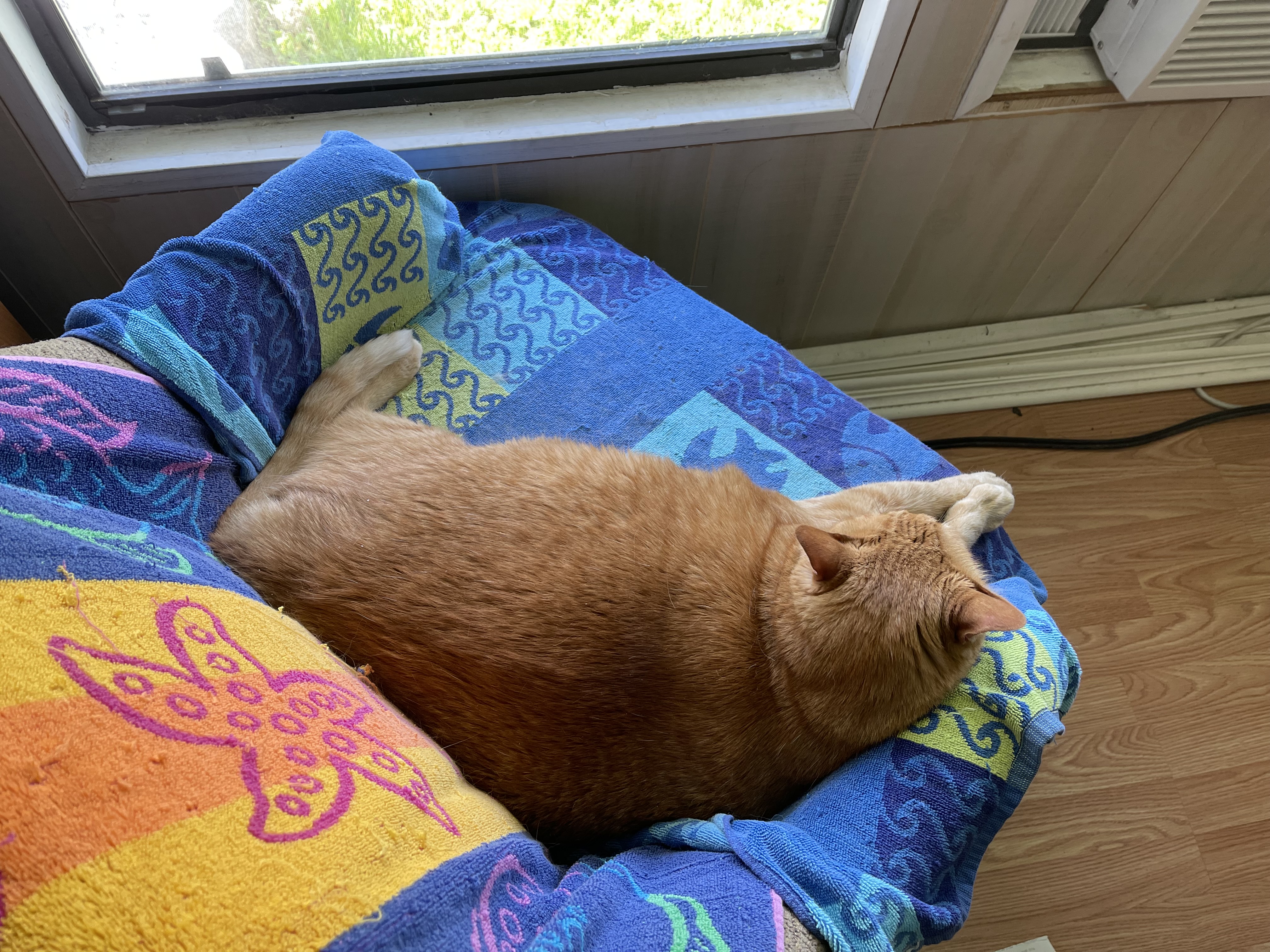
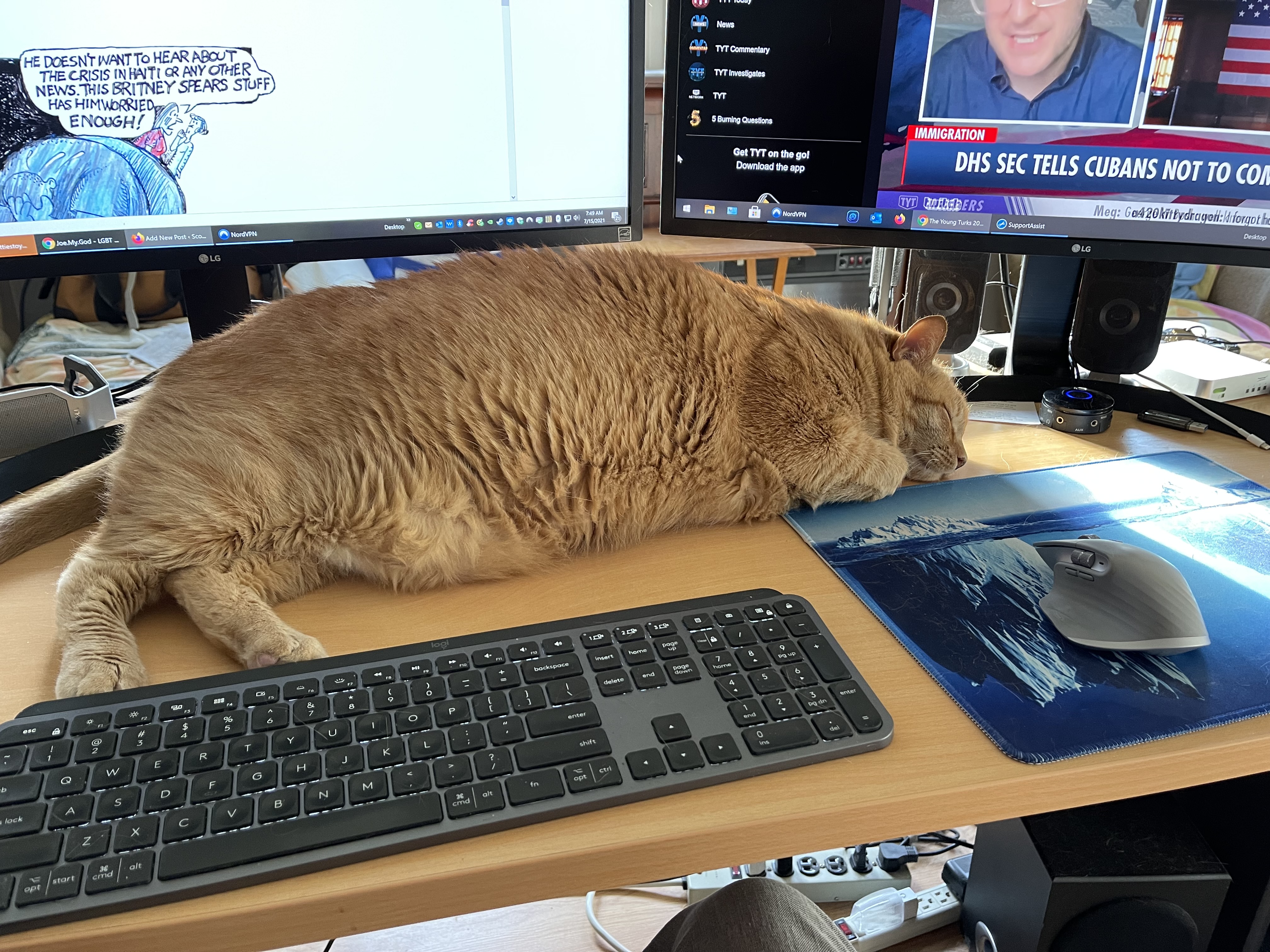
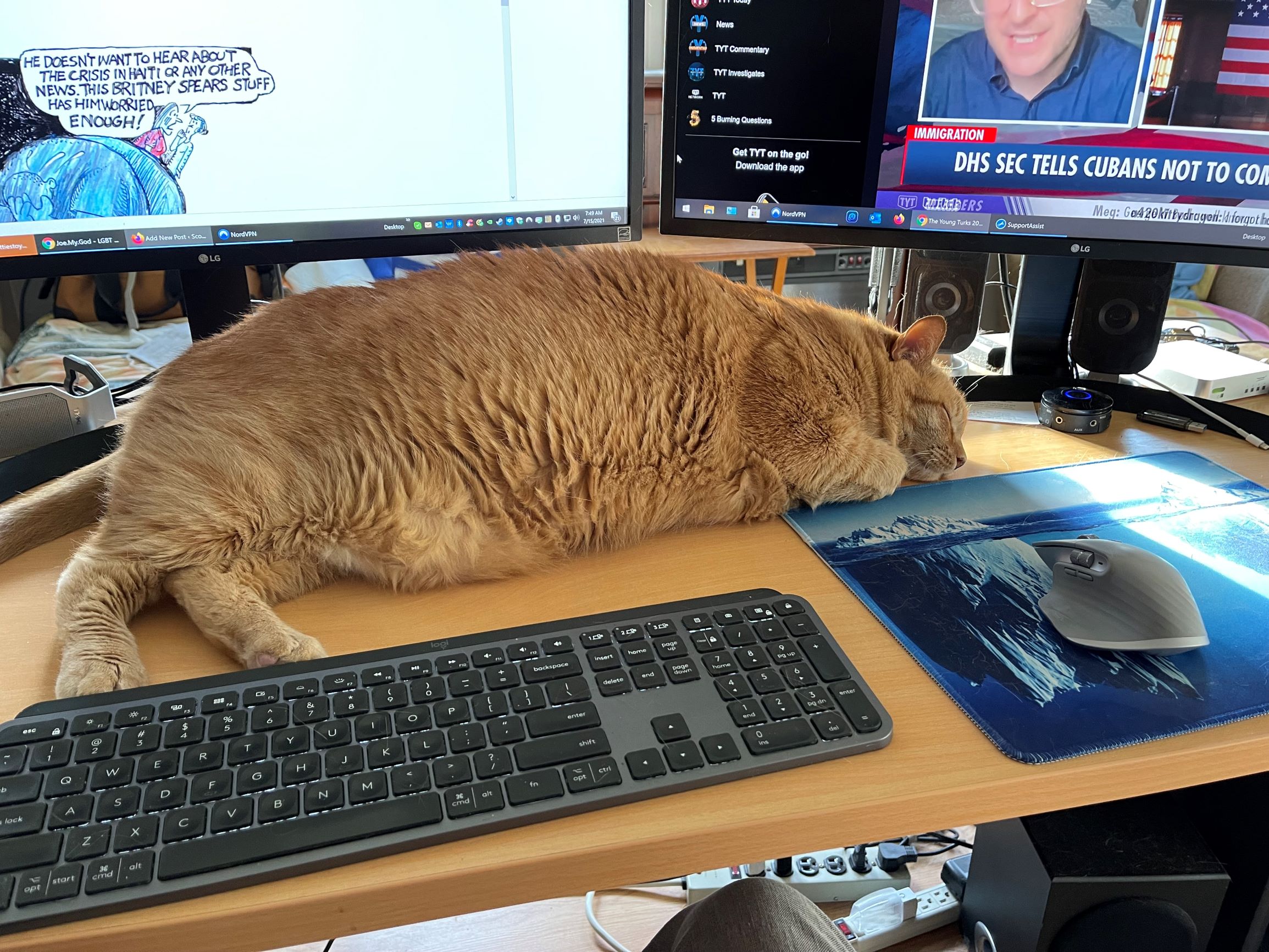
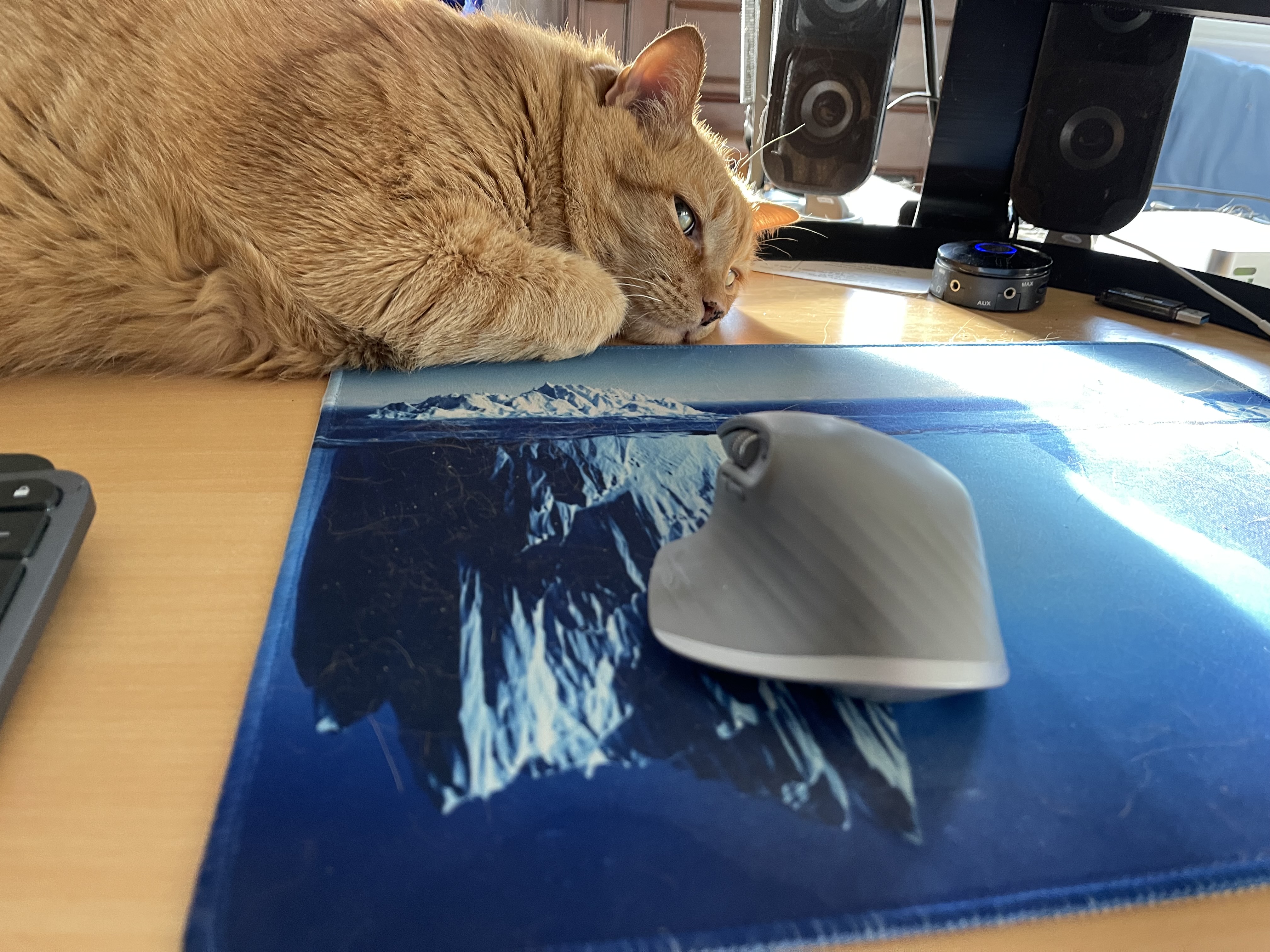
I have included a few pictures of Odie below. Best wishes, Purrs, and Hugs for all who want them.
Odie as a Kitten
Odie older.
Odie in his favorite spot to get my love and attention. My desk.