‘Voting feels like a battle’: In Mississippi, a group of Black women is reimagining voter turnout

The Mississippi Black Women’s Roundtable has traveled around the state for “boot camps” aimed at better mobilizing Black women to get out the vote. They face roadblocks in a state with a deep history of voter suppression.

Originally published by The 19th

This article is part of U.S. Democracy Day, a nationwide collaborative on September 15, the International Day of Democracy, in which news organizations cover how democracy works and the threats it faces. To learn more, visit usdemocracyday.org.

SOUTHAVEN, MISSISSIPPI — The training in northwest Mississippi that Cassandra Welchlin led was focused on get-out-the-vote efforts, but the longtime community organizer wanted to make space to sing.

Ain’t gonna let nobody turn me around, turn me around …

“Come on, y’all!” Welchlin told the crowd of nearly 100, who joined in on the next verse. Turn me around …

Ain’t gonna let nobody turn me around. I’m gonna keep on walking, keep on talking, marching up to freedom lane …

“I am so happy to have y’all in the house,” she said at one point. “If y’all could see what I see.”

What Welchlin saw that August morning were the faces of Black women — and a lot of them. Their interests, varied and historically overlooked, are at the center of a new kind of intentional voter engagement training.

“Black women mobilize their communities,” she told The 19th. “They are the catalyst.”

Welchlin is executive director of the Mississippi Black Women’s Roundtable, a civic engagement and policy advocacy organization whose members, all of them Black women, have traveled the state for months to host trainings called the “Power of the Sister Vote Boot Camp.”

On paper, their goal with the boot camps is an increase in voter turnout among Black women in the Mississippi counties where they visit. They also want to create a years-in-the-making pipeline to better mobilize Black women, whom Welchin views as the glue holding together democracy, especially in a state and region that continues to be impacted by policies that have historically suppressed Black voters.

“I was raised in a house of Black women — my aunties, my grandma, and then the neighborhood of elders,” she said. “I know the power of Black women taking care of Black women, and taking care of the community.”


At the trainings, Welchlin and her staff dress in military fatigues — a “boot camp” theme that has manifested into the advertisement the group uses to promote the events and the T-shirts they distribute to attendees. But there is a deeper significance.

“Voting feels like a battle in Mississippi,” she explained.

Mississippi is one of just three states that does not offer early voting to all residents, and one of eight states that does not offer online voter registration. The 12-hour window that many residents have to cast a ballot on Election Day can be difficult for people with irregular work shifts, child care responsibilities and challenges to accessing transportation.

Welchlin said she knows Black women overwhelmingly run their households. They also take on the added responsibility of getting their communities to the ballot box.

Yet Black women in Mississippi are the largest group of women in low-wage jobs, face one of the highest rates of poverty in the country and rank among the lowest in elected representation at the statehouse.

“I wanted to do something a little bit more strategic and formal that would bring excitement,” Welchlin said. “I just kind of sat with the idea of, ‘What would make people want to come?’

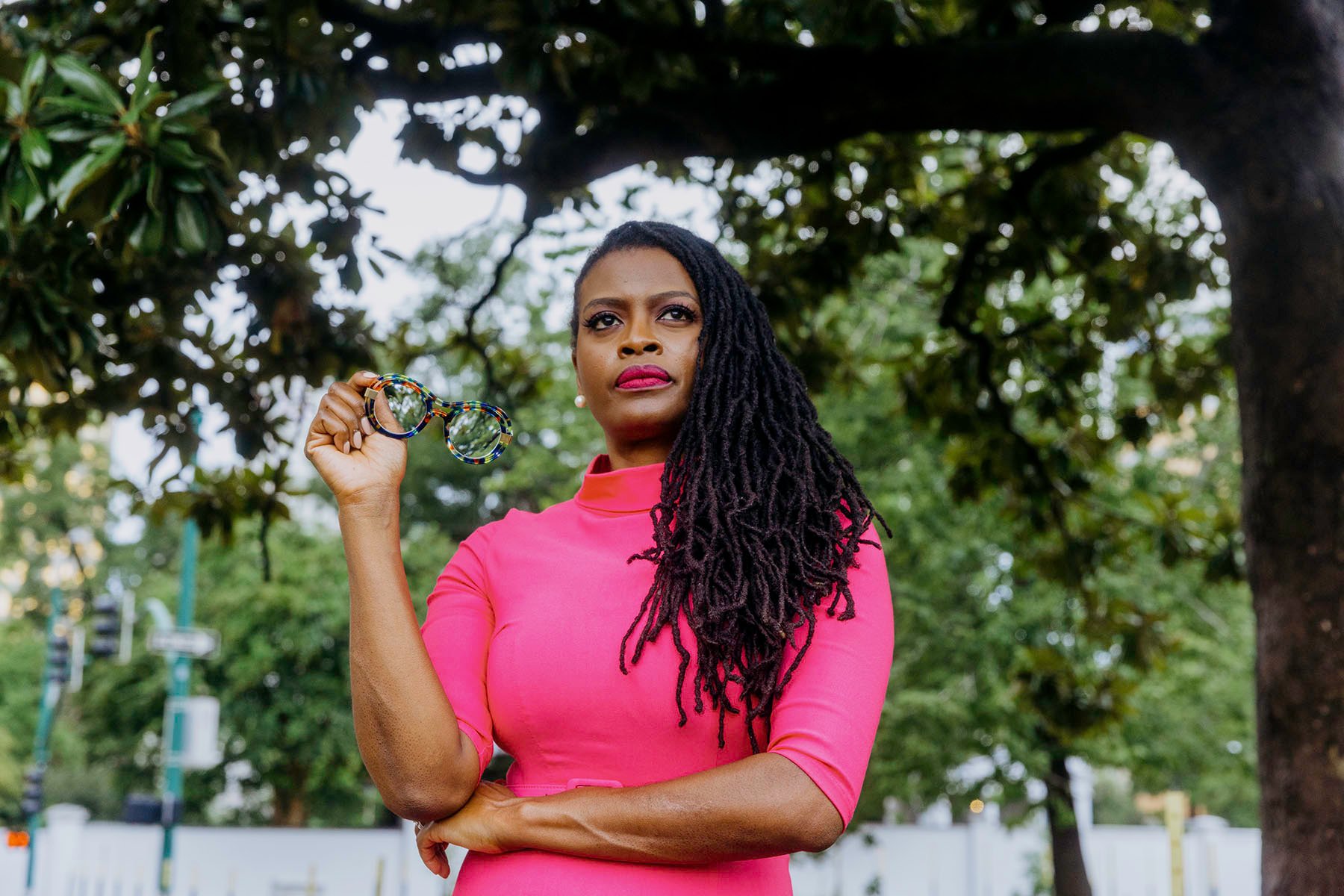
Cassandra Welchlin holding glasses in one hand, standing under a tree with a determined expression. She is wearing a bright pink dress, with her long locs draped over her shoulder, and the background features a park setting.
Cassandra Welchlin, executive director of the Mississippi Black Women’s Roundtable, emphasizes the role of Black women as catalysts for democracy and community change. (Imani Khayyam for The 19th)

The Mississippi Black Women’s Roundtable, which has long made issues like equal pay, Medicaid expansion and paid family and medical leave a priority in their work, is an affiliate of the National Coalition on Black Civic Participation. The organization has programming focused on Black women’s civic participation, including a “Sistervote” initiative.

Melanie Campbell, president and CEO of the National Coalition on Black Civic Participation, and convener of the national Black Women’s Roundtable programming, credited Welchlin for designing a training theme that not only has the potential to turn out more voters, but could lead to more Black women becoming leaders who run for office. She added that Welchlin is taking their political power “to another level.”

“Having a Cassandra Welchlin in leadership, who’s doing unique things — there could be more Black elected officials in the state of Mississippi, because the demographics are there. But when you talk statewide, it’s not reached its full potential,” she said.

There are about 1.9 million registered voters in Mississippi, where the governor’s office, Senate and House of Representatives are controlled by Republicans. Welchlin’s group estimates that more than 123,000 Black women in the state did not vote in the past three election cycles. The group’s  goal is to increase voter participation among these women by 10 percent this November. Black women voters in the counties the group has targeted for boot camps are among those who have voted most infrequently since 2021.

It’s part of why Allytra Perryman, deputy director of the Mississippi State Conference of the NAACP, which has partnered to help host some boot camps, also sees such potential in mobilizing them.

“When you train a Black woman on how to do anything, you train a community,” she said.


On the morning of the boot camp, Velvet Scott seemed to be everywhere.

As director of civic engagement and voting rights for the Mississippi Black Women’s Roundtable, she was ready to help roll out attendee tables and chairs; she was there to open boxes and hand materials to roundtable staff. She and Welchlin made sure the check-in table had updated registration lists, lunch was ordered and the child care in a nearby room was set up.

“Today we’re going to go through, of course, important information, but we’re going to have fun while doing it,” Scott told the women, many already wearing the matching boot camp T-shirts. 

Their meeting space was attached to a church on a hill — New Hope Missionary Baptist Church — nestled along a road filled with so many churches it’s called Church Road. Among the permanent signage adorning the room were Biblical-themed messages of hope: “We will not fail nor be discouraged, till our mission is complete….

“We welcome you today to be energized and to be educated,” said Pamela Helton, a leader within New Hope and the wife of the church pastor, in opening remarks.

Earlier, Welchlin seemed determined to shake the hands of every person who walked through the doors. For those she knew, she offered a hug. “So glad to see so many beautiful Black women,” she said at one point. “We comin’.”

When Welchlin helped host the first boot camp ahead of last year’ gubernatorial race, her organization did not collect data about the trainings. Anecdotal feedback showed a clear interest in organizing Black women around voter turnout, but the full scope of the programming’s reach in its pilot run is unclear.

“We realized that we had a gap,” Welchlin said. “But part of it had to do with capacity on our end to collect that data and do the follow-up.”

Scott, who joined the Mississippi Black Women’s Roundtable late last year, has committed to doing things differently. She honed a data mindset while first working in insurance, a job that brought her into the homes of Black and Brown people who increasingly sought her guidance about available social services. In 2018, Scott began volunteering at a youth-focused civic engagement organization and then joined the staff full-time.

At the Mississippi Black Women’s Roundtable, Scott tries to capture more information about the organization’s approach to community programming. That’s meant more of a focus on spreadsheets, more surveys and more individual follow-ups to ensure attendees have support afterward.
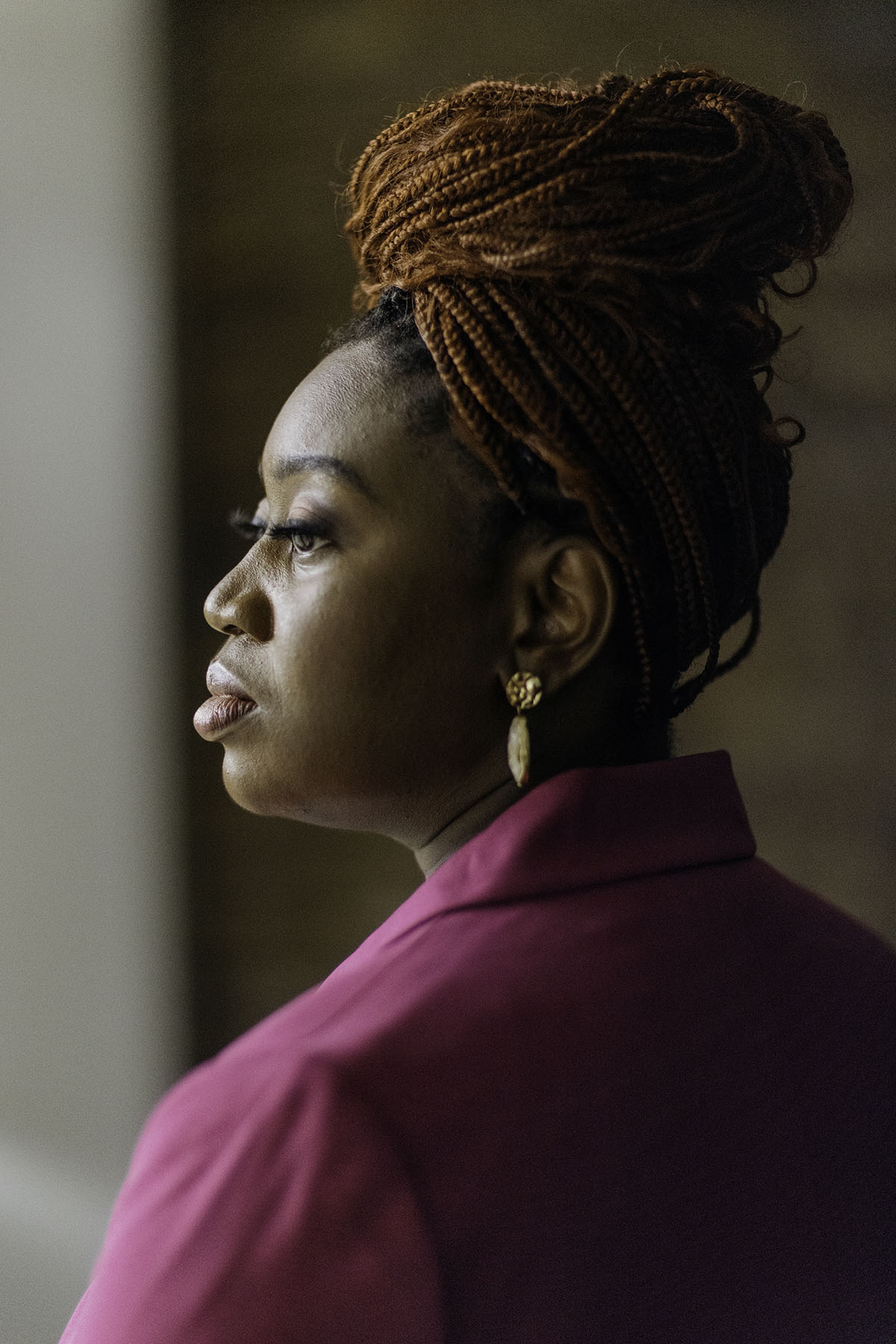
Profile shot of Velvet Scott in a pink suit, looking contemplative. Her braided hair is styled up, and she is wearing gold earrings.
Velvet Scott, director of civic engagement and voting rights for the Mississippi Black Women’s Roundtable, believes in the power of organizing and uplifting Black women in community spaces. (Imani Khayyam for The 19th)

Scott has tweaked the boot camps since they launched in April in order to make them more accessible. She’s made some trainings available on weeknights instead of Saturdays, when people tend to be most busy with family responsibilities. She has sometimes shortened the hours of programming to see if a tighter agenda keeps up engagement. She recently helped organize a virtual training.

As a mother to a newly walking toddler, she tries to think about what the attendees might need. She, like Welchlin, feels strongly about onsite child care. (During the Southaven training, Scott stepped away to breastfeed her child.) She ensures that a meal is provided during the trainings, as well as a gift card. The group set aside roughly $50,000 to run the program this election cycle, according to Scott. They’ve been under budget thanks to partnerships with other civic engagement groups.

Scott believes strongly in the power of Black women organizing their communities.

“We don’t live single-issue lives,” she said. “So to uplift Black women in the room is to say, ‘Hey, I see you. We’re going to work on this together, we’re going to be in community together, and we’re going to be in fellowship together.’”

Scott also wants to find the balance in her work. She’s tried to move away from an unspoken expectation in community organizing that she must be go-go-go. She doesn’t want to burn out, and she wants to be present with her family.

“Rest is resistance,” Scott said, who referenced research on the topic. “And advocates deserve joy.”


When Jessica Orey hears Welchlin’s singing, she perks up. Orey is attending alone, and the music comforts her.

As a young adult, Orey jumped into organizing through a local NAACP chapter. Those meetings also made space for “freedom songs” used at the height of the Civil Rights Movement. It’s why Orey was impressed by its emphasis in Southaven.

“She’s kind of bringing back the old school type-feel of it,” Orey said of Welchlin. “Like, hey, we’re going to sing our way through. This is what’s going to push us to the next level.”

Welchlin said her mentor, Hollis Watkins, the late civil rights activist who founded the voting rights organization Southern Echo, taught her the freedom songs that he once sang at mass organizing meetings.

“It’s teaching a new generation about what the meaning of song is, and what these words mean,” she said. “And so it’s a history lesson, while it’s also a spiritual blessing to our souls.”

Sheneka Bell is also in the room alone, listening along.

At 45, Bell is a longtime voter but has not been active in voter turnout efforts. But politics continues to seep into her life — from the national debate about reproductive rights, to local property rezoning. Last year, Bell joined the local county chapter of the NAACP.

“I have a responsibility to understand what’s going on in my neighborhood and beyond,” she said.

In some ways, Orey felt compelled to be at the boot camp: Her grandmother is Delores Orey, a longtime civil rights activist who worked alongside key leaders of the Civil Rights Movement.

“This is all I know. This is what Big Mama taught us,” said the 36-year-old, referring to her grandmother. “This is what Big Mama pushed for. So if any injustice is around me, it’s like, ‘What would Big Mama do?’ A lot of this stuff is ingrained. It’s a part of my DNA.”

After her grandmother died in 2014, Orey stepped back from community organizing. But she wants to get involved again, and she felt like the boot camp was a first step. Orey has since signed up for roundtable updates and alerts from several civic engagement groups. She recently participated in a GOTV event in Jackson.

“I know it’s time for me as a former advocate,” she said. “I need to get my shoes back in the game. There’s work to be done.”

Since the boot camp, Bell has looked into signing up to be a poll worker. She is open to phone banking, and recently showed her nieces how to check their voter registration statuses.

“I’m new to this space,” she said. “I’ve never done any of this before.”

Welchlin is not surprised that women like Orey and Bell are drawn to these endeavors in Mississippi, a state that played a key role in the long fight for universal voting rights. It is home to historic voter registration drives like Freedom Summer, and it is the birthplace of activists like Fannie Lou Hamer.

Civic engagement groups say the struggles continue.

In July, a federal court ordered Mississippi policymakers to redraw some state legislative maps that they established in 2022, after the court concluded that the maps illegally diluted the political power of Black residents.

Among the areas impacted by the racial gerrymandering is DeSoto County, which includes Southaven, the site of the August boot camp.

Some noted a recent state law over the voters rolls and technical issues at precincts during last year’s close governor’s race. Some polling precincts in Hinds County, home to the capital city of Jackson, ran out of ballots. Long lines were reported and some people were seen leaving polling locations without voting. More than 80 percent of Jackson residents are Black.

The state also has one of the most restrictive disenfranchisement bans in the nation, taking away voting rights from people who are convicted of certain felonies, including nonviolent crimes.

Welchlin cautioned against ignoring inequity around the ballot box in Mississippi, especially as Republican lawmakers advance voting restrictions around the country. They have increasingly claimed without proof that there is widespread voter fraud, and such policies often appear in states with large Black and Brown populations.

“Mississippi is part of the fabric of the struggles in the South,” Welchlin said. “We have a history, and a muscle, and a foundation in which we have built.” 

As the boot camps in Mississippi wrap up this election cycle, its ripple effect is coming into focus. A state lawmaker recently expressed interest in running a boot camp. At least one organization is now trying to offer similar programming targeting Black men. And the umbrella organization’s Michigan affiliate has reached out about replicating some of boot camp programming. 

“We know that their data is going to look different, but we’re giving them the template to adjust it the way they need,” she said. “It’s a model, and Michigan is going to be testing it.”

Welchin has tried to lean into the joy of the work ahead, despite the obvious obstacles. With Black women by her side, she feels empowered to find a way.

“Good things do come from the South, and we know that Black women have been a part of making that happen,” she said.

To check your voter registration status or to get more information about registering to vote, text 19thnews to 26797.

Indeed, he should resign.

But he’s a Republican, so he won’t. This is really good. Zorba linked it on Politicians are Poody Heads.

Peace & Justice History for 9/16

September 16, 1837
William Whipper, a wealthy negro from Lancaster County, Pennsylvania, published “An Address on Non-Resistance to Offensive Aggression” in the The Colored American, outlining his commitment to a strictly non-violent response to the evils of slavery. This landmark essay predated Thoreau’s on “Civil Disobedience” by 12 years.

“ …fatal error arises from the belief that the only method of maintaining peace, is always to be ready for war.”

William Whipper
Whipper edited a newspaper, The National Reformer, a publication of the National Moral Reform Society, and furnished food and transportation assistance to fugitive slaves who reached Pennsylvania.
A biography of William Whipper 
September 16, 1939
August Dickmann, a German and a Jehovah’s Witness, became the first conscientious objector (CO) to be executed by the Nazis during World War II. The execution by firing squad took place in Sachsenhausen concentration camp before all prisoners, including 400 Jehovah’s Witness inmates.

NY Times, Sept 16, 1939
Though threatened by Commandant Hermann Baranowsky with the same fate, none of the remaining 400 Witnesses renounced their CO position. Later, the Nazis commonly executed Witnesses by guillotine or hanging, not wanting to spend bullets on COs. German military courts sentenced and executed 270 Jehovah’s Witnesses, the largest number of COs executed from any victim group during World War II.

August Dickmann
He Died for a Principle
September 16, 1974
A federal judge dismissed all charges against American Indian Movement (AIM) leaders Dennis Banks and Russell Means stemming from the 1973 occupation of Wounded Knee, South Dakota.

.Dennis BanksRussell Means

On February 27, 1973, AIM and supporters seized control of Wounded Knee to draw attention to corruption and conditions on the Pine Ridge (Lakota Sioux) reservation.
Wounded Knee was the site where, on December 29, 1890, over 200 Sioux men, women and children were mercilessly gunned down by U.S. cavalry.

We Shall Remain  The Legacy of Wounded Knee 
September 16, 1974
President Gerald Ford announced a conditional amnesty program for Vietnam War deserters and draft-evaders, provided they swear allegiance to the country and agree to work two years in the branch of the military they had abandoned. He did this one month following his pardon of resigned former President Richard Nixon.
September 16, 1991
The Philippine Senate rejected a treaty allowing continued operation of U.S. military bases in the Philippines. The Americans had occupied the Philippines since 1898 (except after surrendering control to the Japanese in 1942 until the end of World War II), though on a “temporary” basis. More than two dozen U.S. military installations were established in the country, even after independence in 1945, notably Clark Air Base and the naval station at Subic Bay, the largest U.S. military installations in Asia.
September 16, 2003
New York Stock Exchange Chair Dick Grasso resigned amid a furor over his compensation package that would reach $139.5 million in one year.

Dick Grasso
The details of the plan and the reaction

https://www.peacebuttons.info/E-News/peacehistoryseptember.htm#september16

From MPS:

Well, all righty, then.

I’m OK with this.

By Samantha Riedel September 11, 2024

Donald Trump’s “transgender operations” line during this week’s presidential debate is already the talking point that launched a thousand memes — but what may have sounded like word salad managed to contain the barest hint of a real, honest-to-goodness fact.

During Trump and Vice President Kamala Harris’ first and potentially only debate on Tuesday evening, Trump accused the sitting vice president of approving “transgender operations on illegal aliens that are in prison.” Trump was ostensibly responding to a question about hydrofracking, though he veered wildly between other claims, including sensational and misleading allegations that protestors “burned down Minneapolis” in 2020. But for once, Trump’s comments about trans people weren’t entirely fabricated — although calling them “accurate” would be a stretch.

Trump’s claim about “transgender operations” can likely be traced back to a 2019 survey from the American Civil Liberties Union (ACLU), which the organization says it sent to all presidential candidates that year, CNN’s KFILE reported on Monday. In that survey, candidates were asked if they would use presidential authority to ensure that all trans people, including incarcerated people and undocumented immigrants, received “comprehensive treatment” for their transition “including all necessary surgical care.” Harris said she would do so. (snip-MORE)

https://www.them.us/story/donald-trump-presidential-debate-transgender-operations-prison-kamala-harris

Peace & Justice History for 9/15:

September 15, 1915
In a letter, Turkish Minister of the Interior Mehmet Talaat Pasha explained that the real intention of sending the Armenians to the Der-el-Zor (Deir el-Zor) Desert (now in Syria) was to annihilate them. Talaat had primary responsibility for planning and implementing the Armenian Genocide.
The day before, The New York Times reported that the murder of 350,000 Armenians in Turkey had already occurred.


1915, orphaned Armenian children in the open, many covering their heads from the desert sun. Location: Ottoman empire, region Syria.
The Turkish Adolf Eichmann 
September 15, 1935
The “Law for the Protection of German Blood and German Honor” and the “Reich Citizenship Law” were adopted by the Nazi (National Socialist German Workers’) Party Rally in Nuremberg, depriving German Jews of their citizenship.
September 15, 1963
During Sunday School, 15 sticks of dynamite blew apart the Sixteenth Street Baptist Church in Birmingham, Alabama, killing four children in the basement changing room, and injuring 23 others. Prime suspects were the Ku Klux Klan (KKK) and Nacirema (both white supremacist organizations; Nacirema is “American” spelled backwards).
A week before the bombing Governor George C. Wallace had told The New York Times that to stop integration, Alabama needed a “few first-class funerals.”

The four girls lost in the Sixteenth Street Baptist Church bombing,
the ruins of the church and grieving parents
This event set off racial rioting and other violence in which two African-American boys were shot to death, and became a turning point in generating broad American sympathy for the civil rights movement.
A member of the church, studying on a scholarship in Paris at the time, was Birmingham High School student Angela Davis.

Lives cut short…

Addie Mae Collins (14), Cynthia Wesley (14), Caole Robertson (14), Denise McNair (11)
Read more 
September 15, 1970
Vice President Spiro Agnew said the youth of America were being “brainwashed into a drug culture” by rock music, movies, books, and underground newspapers.

Agnew Assails Songs and Films That Promote a ‘Drug Culture’
September 15, 1981
A blockade started at a nuclear power plant construction site in Diablo Canyon near San Luis Obispo, California. Nearly 10,000 people tried to prevent fuel rods from being loaded into the two reactor cores. Over two weeks, 1,901 are arrested in the largest occupation of a nuclear power site in U.S. history.

Their immediate major concern was over the region being seismically active and the plant’s location near the Hosgri fault. In 2004 a 6.5 (on the Richter Scale) earthquake was centered less than 40 miles from the plant. Four other faults nearby have since been identified.

Additionally, 9.5 billion liters (2.5 billion gallons) of water needed to cool the reactors each day are discharged directly into the Pacific 11°C (20°F) warmer than the surrounding ocean water, affecting marine plant and animal life there.Diablo canyon
As with all nuclear plants, the problem remains with storage of spent nuclear fuel that remains dangerously radioactive for more than 10,000 years. Diablo Canyon generates 110 spent fuel rod assemblies each year. There is still no satisfactory solution to this long-term storage problem.
Diablo Canyon timeline 
September 15, 1986
Veterans Duncan Murphy (World War II) and Brian Willson (Vietnam) joined Charles Liteky & George Mizo in the Fast For Life, opposing U.S. support for the terrorist contra war against Nicaragua. The contras were insurgent guerillas using violence against civilians in the countryside to bring down the newly formed Sandanista government.
The contras were supported in contravention of the Boland Amendment which prohibited U.S. agencies from providing military equipment, training or support to anyone “for the purpose of overthrowing the Government of Nicaragua.”

Duncan Murphy, Brian Willson, Charles Liteky, George Mizo
The Fast for Life from Brian Willson’s perspective 
September 15, 1996
6,000 rallied and 1,033 were arrested near the Headwaters Grove in rural Carlotta, California, in protest against cutting one of the last large unlogged stands of redwood trees in the world.

Redwoods are coniferous trees (sequoia sempervivens: the genus is named for Sequoya, or George Guess, an American Indian scholar; sempervivens is ever alive in Latin) that can reach over 90m (300 ft.) over a life as long as 2000 years.
September 15, 1997
Sinn Fein, the political party closely allied with the goals of the Irish Republican Army (IRA), entered Northern Ireland’s peace talks for the first time.
September 15, 2001

Four days after 9/11, Representative Barbara Lee
(D-California) cast the only congressional vote against authorizing President Bush to use “all necessary and appropriate force” against anyone associated with the terrorist attacks of September 11. “I am convinced that military action will not prevent further acts of international terrorism against the United States.”

Barbara Lee – Alone on the Hill 

https://www.peacebuttons.info/E-News/peacehistoryseptember.htm#september15

Reblog from Octoberfarm:

Germany Laughs at Trump With the Rest of The World

Germany is denying an assertion made by former President Donald Trump during the presidential debate Tuesday about the country’s renewable energy industry.

“You believe in things like we’re not going to frack, we’re not going to take fossil fuel, we’re not going to do things that are going to be strong, whether you like it or not,” Trump said in his debate against Vice President Kamala Harris. “Germany tried that, and within one year, they were back to building normal energy plants.”

But on Wednesday, Germany’s Federal Foreign Office decided to issue a rebuttal, echoing the former president’s language.

“Like it or not: Germany’s energy system is fully operational, with more than 50% renewables,” the Federal Foreign Office shared on X. “And we are shutting down – not building – coal & nuclear plants. Coal will be off the grid by 2038 at the latest.”

The German Foreign Office also poked at Trump for another comment he made during the debate.

“PS: We also don’t eat cats and dogs,”

https://octoberfarm.blogspot.com/2024/09/germany-laughs-at-trump-with-rest-of.html

Peace & Justice History for 9/13:

September 13, 1858
A group of the citizens of Oberlin, Ohio, stopped Kentucky slavecatchers from kidnapping John Price, a black man. Shakespeare Boynton, son of a wealthy landowner had lured Price with the promise of work. Oberlinians, black and white, from town and from the local College, pursued the kidnappers to nearby Wellington at word of his abduction.
These were twenty of the thirty-seven citizens from Oberlin and Wellington who were charged with breaking the law by helping John Price escape from slave catchers in the fall of 1858. The Oberlin-Wellington Rescue and subsequent trial caught the eye of the nation as escalating tensions over slavery raised the prospect of civil war
The group, led by Charles Langston, James M. Fitch, bookseller and superintendent of the Oberlin Sunday School, and John Watson, a grocer, wanted to proceed nonviolently, but when the Kentuckians refused to surrender Price, the response was “we will have him anyhow.”
They rushed the door guards of the Inn and theology student Richard Winsor took Price to safety, hidden for a time in the home of Oberlin College President James Fairchild, later helped across the Canadian border to freedom.

The Oberlin-Wellington Rescue
September 13, 1961
Bertrand Russell, aged 89, and 32 others were arrested during a major demonstration against nuclear weapons in Trafalgar Square, London.
September 13, 1971
President Richard Nixon, speaking to his Chief of Staff Robert Haldeman, was recorded on the White House’s taping system saying: “Now here’s the point, Bob. Please get me the names of the Jews. You know, the big Jewish contributors to the Democrats. Could we please investigate some of the cocksuckers?”

Pres. Richard Nixon (L) with Chief of Staff Bob Haldeman, advisor John Ehrlichman (R) with Sec. of State (standing) Henry Kissinger
listen to The Smoking Gun:
September 13, 1982 
The European Parliament voted to phase out promotion and advertising of war toys throughout the 25 countries of the European Union (formerly European Economic Community).
September 13, 1983
The first group from Peace Brigades International (PBI) arrived in Guatemala to provide unarmed and nonviolent witness protection for indigenous leaders. Following decades of severe repression of native ethnic groups by the unelected military government, the PBI team accompanied the Mutual Support Group (GAM in Spanish) of Families of the Disappeared, the first human rights group to emerge from the terror and survive.
PBI vision and mission 
September 13, 1993

The Prime Minister of Israel, Yitzhak Rabin, and the leader of the Palestine Liberation Organization (PLO), Yasser Arafat, shook hands before cheering crowds on the White House lawn in Washington after signing an accord establishing limited Palestinian autonomy.
Read more 

https://www.peacebuttons.info/E-News/peacehistoryseptember.htm#september13

Taylor Swift and immigrants drive right wing men to madness

Elon Musk, JD Vance and others are fighting a losing battle to put them in their place.

Marisa Kabas September 12, 2024

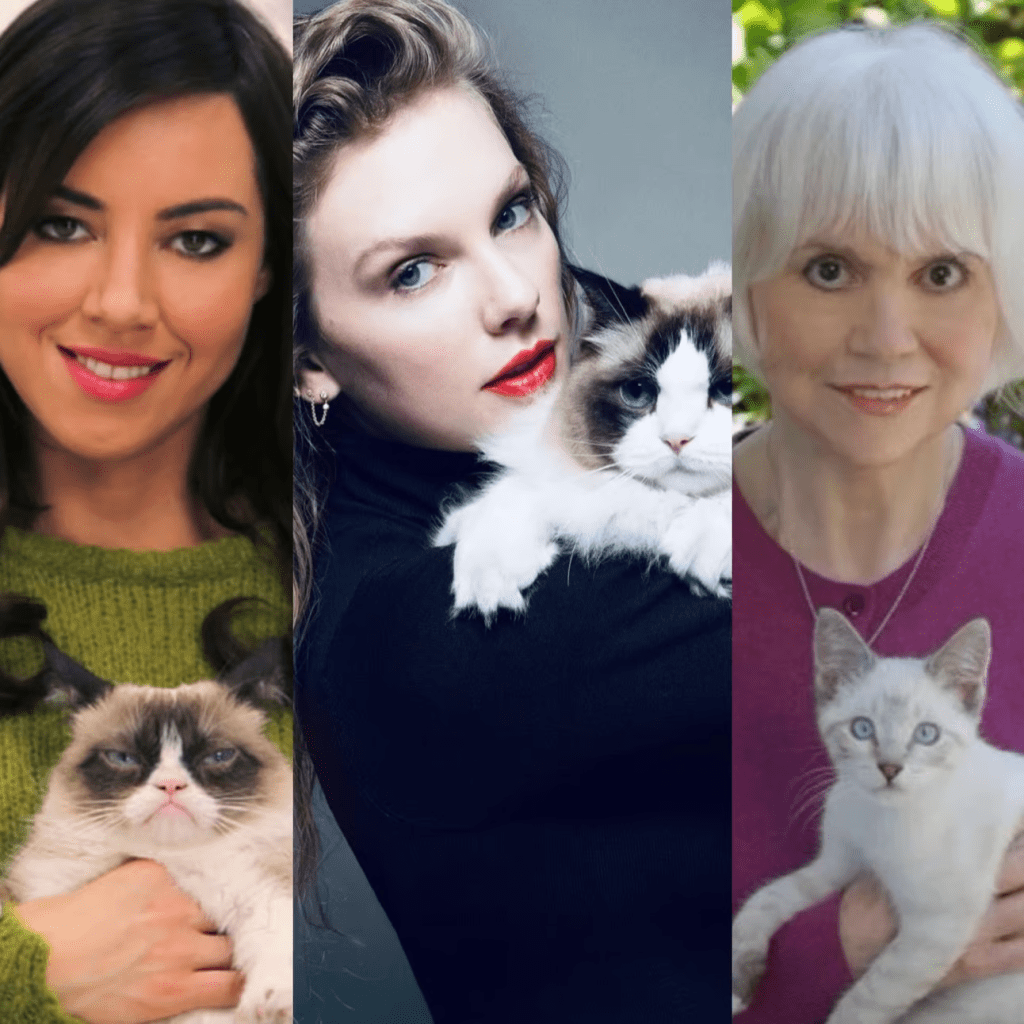
Aubrey Plaza, Taylor Swift, Linda Rondstadt

In the flurry of post-debate spin and endorsements you may have missed what is, to my eye, one of the most disgusting things a man has ever said to a woman.

Despite a dominant performance by Vice President Harris followed by the ringing endorsement of Taylor Swift to her 283 million Instagram followers, we were quickly reminded that misogyny will always try to win the day. Elon Musk, a scumbag who needs no introduction, took to his cesspool of a platform in the moments following Swift’s post in an attempt to put her in her place. 

(The tweet embed code doesn’t work here; I’m not on Twitter, so I can’t do much. You can see it on Marisa’s page, linked below, or I transcribed it; it is from Mr. Musk, who says, “Fine Taylor … you win … I will give you a child and guard your cats with my life” )

Understanding these 17 words requires a bit of context which I’m loath to repeat but feel duty-bound to explain. (Swift has not made any public comment regarding the tweet so far.)

First, let’s look at Swift’s endorsement of the Harris/Walz campaign. After explaining her process of researching and watching the presidential debate, she wrote: 

“I will be casting my vote for Kamala Harris and Tim Walz in the 2024 Presidential Election. I’m voting for @kamalaharris because she fights for the rights and causes I believe need a warrior to champion them. I think she is a steady-handed, gifted leader and I believe we can accomplish so much more in this country if we are led by calm and not chaos. I was so heartened and impressed by her selection of running mate @timwalz, who has been standing up for LGBTQ+ rights, IVF, and a woman’s right to her own body for decades.

She then reminded people to register to vote and to vote early if possible, providing links to resources in her Instagram story. And she signed it “With love and hope, Taylor Swift, Childless Cat Lady.” This was, of course, a reference to Trump’s veep candidate JD Vance saying the Democratic party is run by these sorts of women—meaning they couldn’t possibly care about the future of [white] children in this country. 

Swift’s endorsement was a seminal moment in the too-close-for-comfort-and-sanity race between Harris and Trump, and one many have been breathlessly waiting for. While a Swift endorsement doesn’t mean everything, it certainly means something to a lot of people: In the 24 hours following her post, 406,000 people had visited Vote.gov via Swift’s custom link. 

Now let’s break down Musk’s disgusting tweet piece by piece:

“Fine Taylor”

Right off the bat, I’m pissed. The Taylor in question is obviously Swift, arguably the most famous celebrity in the world. She’s an artist, a brand and an economy all at once. I may not be a Swiftie but I’ll be damned if the most divorced man of all time doesn’t show her a little respect. You’re not on a first name basis with her, you creep. She does not know you. But we’ll get back to that later.

“you win”

Winning implies that Swift willingly entered into some sort of bet or game with Musk, one in which he’s been forced to concede. As far as we know, Swift and Musk have never communicated in any capacity. In fact, as one Twitter user pointed out, Musk has replied to her a number of times over the years to no avail. Nevertheless, he persisted.

“I will give you a child”

This is where things get really dark. As established in the first two points, these two people do not know each other. Yet Musk is offering to impregnate Swift which, again, is not something she has ever expressed wanting. In fact, impregnating someone against their will is a heinous crime. 

Musk has long shown that the rules don’t apply to him, and so far he’s right. From tanking the value of every company he’s touched to saying heinous things about immigrants, he remains a free man and a billionaire with no consequences to speak of. He’s the father of at least 12 children with at least three women, one of whom is an executive at Neuralink, his company that creates chips to be implanted in the brains of humans.

(There is a tweet here on the page; the embed code doesn’t work. See below, or here it is transcribed. “Doing my best to help the underpopulation crisis. A collapsing birth rate is the biggest danger civilization faces by far.” )

He quite literally thinks spreading his seed will save humanity, and Musk thinks he’d be doing Swift a favor—saving her life and giving it meaning, even!—by getting her pregnant. For any man to presume such a thing is vile; for a deadbeat dad with a white supremacy problem, it’s unconscionable. 

“and guard your cats with my life”

As if being a predatory misogynist wasn’t enough, Musk decided to throw in some casual racism which also served as a callback to one of Trump’s most unhinged moments in the debate. Trump, echoing claims first trumpeted by Vance, furthered the total and complete lie that Haitian migrants in Springfield, Ohio are eating white people’s pets. It started with an accident last year wherein a Haitian migrant drove into a school bus and killed an 11-year-old white boy, sparking a racist backlash against the migrant community that has rapidly grown in Springfield since 2020. The boy’s parents have told Trump and Vance to stop using their son to spread “incessant hate.”

In Musk’s telling, not only does Swift need to be impregnated to fight against a non-existent population crisis, but her beloved pet cats need protection from the non-existent cat-hungry migrants.

Dave Rubin, a far-right media personality who works for Tenet Media (the company that it was revealed unwittingly worked for the Russian government) managed to somehow take Musk’s threat a step further.

(The tweet embed code doesn’t work. It’s awful, but transcribed, it says, “Dave Rubin asks Taylor Swift to reconsider her endorsement: ‘Taylor Swift, you are a young pretty girl, do you know what the gang members from Venezuela do to young pretty girls? It ain’t pretty!'”. Or, go to Marisa’s page to read; it’s all there.)

The mention of Venezuela was a reference to another anti-immigrant remark Trump made during the debate. Here Rubin deftly combines racism with a rape fantasy, though a different one than Musk had in mind. These are the minds of deeply troubled men.

Following Musk’s post, his estranged daughter Vivian Jenna Wilson bravely posted on Threads about it. 

Wilson has recently started speaking out against her father who claimed his child was, in his view, “dead, killed by the woke mind virus,” because she’s transgender. In her first-ever public interview, Wilson told NBC News of Musk in late July, “He was cold. He’s very quick to anger. He is uncaring and narcissistic.” 

That narcissism reared its ugly head this week, making even his most fervent supporters uneasy.

While far right zealots have the luxury of laughing off Trump, Vance and Musk’s cruelty, the migrant community in Springfield remains at active risk. On Thursday multiple city buildings and schools were forced to shut down after receiving a bomb threat.  The Haitian Times reports that some families have been afraid to send their kids to school since they became caught in the racist crosshairs, with cars being vandalized and Haitian residents considering moving elsewhere. This is all despite the fact that, as a PBS Newshour report demonstrated, Springfield’s businesses are thriving thanks to the town’s newest residents. 

Meanwhile, the childless cat (and dog) ladies are assembling: From Swift to Stevie Nicks, Linda Rondsadt and Aubrey Plaza, famous women are using their platforms to tell the wannabe dictators of the Republican ticket that they have no control over us or our bodies. Not now, not ever.

And in the coming days as conservatives continue to direct hate at immigrants in Springfield and beyond, it’s incumbent upon those with large followings to stand in solidarity with them—because we’re all fighting the same monsters.

https://www.thehandbasket.co/p/cat-ladies-immigrants-taylor-swift-elon-musk

Charlie Kirk Absolutely HUMILIATED By College Student