August 30, 1963 A “hotline” telephone link was installed between the Kremlin in Moscow and the White House in Washington, D.C. The intention was to allow direct communication in the event of a crisis between the U.S. president and the leader of the Soviet Union (U.S.S.R.). It had been agreed to following the Cuban Missile Crisis.
August 30, 1964 The Democratic Party National Convention refused to seat any delegates from the Mississippi Freedom Democratic Party (MFDP). The Credentials Committee chose to seat the all-white delegation from Mississippi’s regular Democratic Party despite overwhelming evidence of the state party’s efforts to disenfranchise Mississippi’s Negro citizens. A proposed compromise of two non-voting guest delegates from MFDP was rejected by its leaders. The dispute, the political intrigue, and the long-term effects
August 30, 1967 The Senate confirmed the appointment of Thurgood Marshall as the first Supreme Court Justice of African-American descent. Marshall had been counsel to the NAACP Legal Defense Fund, and had been the lead attorney in the Brown v. Board of Education case. He was appointed to the Court by President Lyndon Johnson after having served as Solicitor General of the U.S. for two years, and on the U.S. Court of Appeals for four. Thurgood Marshall Who was Thurgood Marshall?
August 30, 1971 Ten empty school busses were dynamited in Pontiac, Michigan, eight days before a school integration plan was to begin. Following Federal Judge Damon Keith’s finding that Pontiac’s school board had “intentionally” perpetuated segregation, a plan was developed by the board that included bussing of 8700 children. The bombers were later identified as leaders and members of the Ku Klux Klan, arrested, tried, convicted and imprisoned.
August 30, 1980 Striking Polish workers, their numbers approaching 150,000, won a sweeping victory in a battle with the Polish Communist government for the right to independent trade unions and the right to strike. Their lead negotiator was Lech Walesa, head of the union, Solidarnos´c´ (Solidarity). Lech Walesa announces the deal to cheering crowds of shipyard workers.
August 30, 1999 Residents of East Timor voted for independence from Indonesia in a U.N.-sponsored election.More about the East Timor election
After a court ruling from the 11th Circuit Court of Appeals allowed an anti-trans law in Florida targeting youth and adults go back into effect, many providers were forced to end care. Read on Substack
*With thanks to Janet.*
Several transgender youth and adults are being told their care will be terminated following a ruling from the 11th Circuit Court of Appeals by a majority-Trump appointed panel. The court ruled that a 2023 law, which restricts transgender care at any age, can go back into effect after being permanently blocked in June 2024.
The ruling, released late Monday, stated that transgender people are not a “quasi-suspect class,” meaning they do not receive the same level of equal protection under the Constitution as other categories such as race, ethnicity, religion, or sex. This decision implies that laws discriminating against transgender people are likely to be considered valid and constitutional by the 11th Circuit Court.
One such law, SB254, was passed in 2023. The law banned gender-affirming care for transgender youth but went further than similar legislation passed in several Republican-led states that year by also restricting care for transgender adults. The bill mandated that care for transgender adults could only be provided by physicians and required that patients receive forms outlining the “risks” of gender transition. Many proposed versions of these forms are filled with disinformation about transgender care.
The physician requirement has proven especially burdensome for transgender adults, as the majority of their care is provided by nurse practitioners. This is because the number of transgender adults far exceeds the capacity of physicians who offer gender-affirming care. Planned Parenthood, the largest hormone therapy provider in the United States, explains, “Most gender-affirming hormone care is provided at PPSP by advanced practice providers (physician assistants, certified nurse midwives, and nurse practitioners) in our health centers or over telemedicine.”
Now, with the law fully in effect, transgender adults who previously had access to care are being notified that their care will no longer be provided.
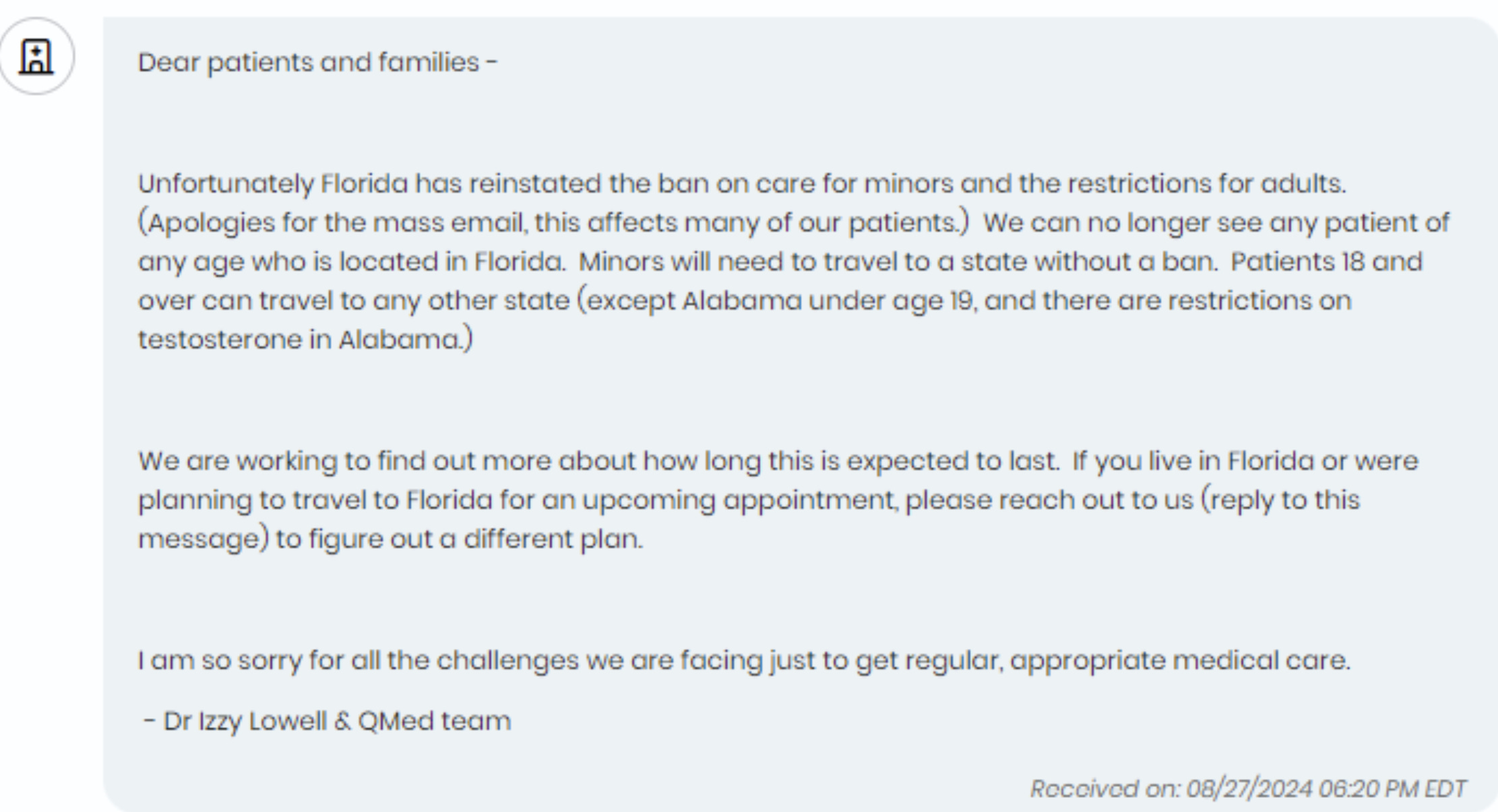
One anonymous patient shared an email from their provider, QueerMed, which stated, “Unfortunately, Florida has reinstated the ban on care for minors and the restrictions for adults… We can no longer see any patient of any age who is located in Florida.”
See that email here:
Email provided from a QueerMed Patient
Spektrum, a major provider in Florida, was also forced to terminate care and cancel new patient appointments. However, during the period when the law was blocked, the organization reportedly took steps to ensure patients were well-supplied with medication in case the law went back into effect:
“During this little freedom period as I call it … we made good use of that time to make sure all of our patients were well supplied with medication. Although I had hoped that it wouldn’t have been necessary, at least now we can say, I’m glad we did all the things that we did,” said Joseph Knoll, a nurse practitioner at the clinic, as reported by the Associated Press.
Healthcare bans are currently a contentious issue in courts across the United States, with some courts blocking bans on transgender healthcare coverage or provision. A major point of contention is whether discrimination against transgender people qualifies as sex discrimination, which would subject these laws to higher scrutiny regarding their constitutionality.
The Supreme Court is poised to rule on such questions later this year in a case stemming from Tennessee’s trans care ban. If the Supreme Court were to rule that transgender people are not entitled to equal protection under the law, many forms of discrimination against transgender youth and adults could be deemed fully legal.
For trans people in Florida, many cannot afford to wait for such a decision, and many have already fled the state. For those unable to leave, disruptions to their care will likely have significant impacts on their mental and physical health.
“We are deeply disappointed by this decision and the panel’s disregard for the district court’s careful findings and adherence to the Eleventh Circuit’s recent precedent. Allowing these discriminatory restrictions to go back into effect will deny transgender adults and adolescents lifesaving care, and prevent Florida parents from making medical decisions that are right for their children. As the district court found based on voluminous evidence, the record shows that these extraordinary restrictions were based on disapproval of transgender people and serve no purpose other than to harm transgender Floridians. The plaintiffs in this case are considering their options and will take every step possible to protect their right to equal treatment under Florida’s laws, which these restrictions egregiously violate. We will continue fighting for transgender Floridians and their families, and for everyone’s right to make healthcare decisions without government interference,” said the organizations representing the plaintiffs in the case.
August 29, 1758 The first Indian reservation, Brotherton, was established in New Jersey. A tract of three thousand acres of land was purchased at Edge Pillock, in Burlington County. The treaty of 1758 required the Delaware Tribes, in exchange for the land, to renounce all further claim to lands anywhere else in New Jersey, except for the right to fish in all the rivers and bays north of the Raritan River, and to hunt on unenclosed land.History Of The Brotherton Reservation
August 29, 1957 Following consultations among the NATO allies and other nations, the Western (non-Communist) countries presented to the United Nations a working paper entitled, “Proposals for Partial Measures of Disarmament,” intended as “a practical, workable plan to start on world disarmament.” The plan proposed stopping all nuclear testing, halting production of nuclear weapons materials, starting a reduction in nuclear weapons stockpiles, reducing the danger of surprise attack through warning systems, and beginning reductions in armed forces and armaments.
August 29, 1957 African Americans in Milledgeville, Georgia, wait in line to vote following the Civil Rights Act of 1957. The U.S. Congress passed the Civil Rights Act, the first such law since reconstruction. The bill established a Civil Rights Commission which was given the authority to investigate discriminatory conditions. A Civil Rights Division was created in the Department of Justice, allowing federal prosecutors to obtain court injunctions against interference with the right to vote, among other things.In an ultimately futile attempt to block passage, then-Democrat, former Dixiecrat, and later Republican Senator Strom Thurmond of South Carolina set the all-time filibuster record: 24 hours, 19 minutes of non-stop speaking on the floor of the Senate. A filibuster is the deliberate use of prolonged debate and procedural delaying tactics to block action supported by a majority of members. It can only be stopped with a 60% majority voting to end debate. Senator Strom Thurmond with his 24-hour filibustering speech
August 29, 1961 Robert Moses, leader of SNCC The Student Nonviolent Coordinating Committee (SNCC) was pursuing its voter registration drive in Amite County, Mississippi. Of 5000 eligible Negro voters in the county, just one was registered to vote. SNCC leader Robert Moses was attacked and beaten this day outside the registrar’s office while trying to sign up two voters. Nine stitches were required but the three white assailants were acquitted. Hear Moses recall the time
August 29, 1970 Between 15 and 30 thousand predominantly Chicanos (Americans of Mexican descent) gathered in East LA’s Laguna Park as the culmination of the Chicano National Moratorium. It was organized by Rosalio Munoz and others to protest the disproportionate number of deaths of Chicano soldiers in Vietnam (more than double their numbers in the population). There had been more than 20 other such demonstrations in Latino communities across the southwest in recent months. Three died when the anti-war march turned violent. The Los Angeles Police Department attacked and one gunshot, fired into the Silver Dollar Bar, killed Ruben Salazar, a Los Angeles Times columnist and a commentator on KMEX-TV (he had been accused by the LAPD of inciting the Chicano community). The Chicano Moratorium Ruben Salazar LA Times
August 28, 1833 The Abolition of Slavery Act was passed by the British Parliament. As early as 1787, members of the Society of Friends (Quakers), particularly Thomas Clarkson and Granville Sharp, organized to end the slave trade.Since Quakers were barred from serving in the House of Commons, the cause was led by a member of the Evangelical Party, William Wilberforce, ending the international trade in slaves in 1807. By 1827 slaving was considered piracy and punishable by death. The complete ban on slavery itself through the British Empire didn’t happen until this day; Wilberforce was informed of the Act’s passage on his death-bed. William Wilberforce
August 28, 1963 Reverend Martin Luther King, Jr. delivered his “I Have a Dream” speech from the steps of the Lincoln Memorial to a crowd of half a million gathered on the Mall in Washington, D.C. They gathered there for jobs and freedom. The speech: https://www.npr.org/2010/01/18/122701268/i-have-a-dream-speech-in-its-entirety
1983: Three hundred thousand marched in Washington on the 20th anniversary of MLK’s “I Have A Dream” speech for the second “March on Washington for Jobs, Peace and Freedom.”
August 28, 1976 60,000 joined the Community of Peace People demonstrations in Belfast and Dublin, Ireland. Peace People was founded by two women, Betty Williams and Mairead Corrigan to decry the painful violence between Catholics and Protestants, between unionists and republicans, and to move the peace process forward in Northern Ireland. Betty Williams Mairead Corrigan They jointly won the Nobel Peace Prize for 1976. More about Betty Williams and Mairead Corrigan From the Declaration of the Peace People: “ . . . We want to live and love and build a just and peaceful society. We want for our children, as we want for ourselves, our lives at home, at work and at play, to be lives of joy and peace. We recognize that to build such a life demands of all of us, dedication, hard work and courage . . . We dedicate ourselves to working with our neighbors, near and far, day in and day out, to building that peaceful society in which the tragedies we have known are a bad memory and a continuing warning.” The Peace People’s website: https://www.peacepeople.com/
Gunner Scott had a simple solution to making sure he had a trans-friendly bathroom when he served as a juror in Boston: Every day at lunch he left the building.
The year was 2009 and the Suffolk County Superior Court where Scott served as a juror for five days didn’t have a gender-neutral restroom. So, on his break, Scott walked up the street to his office.
“I heard one too many stories,” said Scott, who is a longtime transgender advocate.
The stories were about trans people being assaulted and harassed in bathrooms. Scott was not confident he could pass as male in a men’s room in 2009. More than that, his activism had made him a known public figure in the city. He feared someone would recognize him and target him for being trans and using a men’s restroom.
But over the years, as states have started to block trans people from using bathrooms and participating in other areas of public life, courtrooms have moved in the opposite direction by trying to make facilities available to people of all genders, experts say.
That movement is not only key to providing a roadmap for inclusivity for the nation. It also ensures that juries reflect the general population and that everyone gets the opportunity — or burden, in some cases — of serving on them.
Courtrooms may illustrate practical solutions to access as the nation grapples with increasing trans visibility and more traditional ideas about the safety and comfort of a larger public.
The issue of transgender accessibility in courts is a chapter in a longstanding fight for civil rights for LGBTQ+ Americans, prime targets of far-right legislation and discourse these days. The Equality Act, which bars discrimination on the basis of sexual orientation and gender identity, was first introduced to Congress 50 years ago but has never been passed into law. While its first draft only protected gay Americans, subsequent iterations have aimed to shield trans Americans from bias.
The Equality Act specifically mentions jury selection. The bill bans lawyers from striking queer jurors because they are LGBTQ+. Last year, Sen. Jeanne Shaheen of New Hampshire introduced a standalone bill to the same effect. Reps. Becca Balint of Vermont and Lizzie Fletcher of Texas are sponsoring the measure in the House, where it is unlikely to pass, at least while Republicans are the majority.
Balint told The 19th that courtroom accessibility is key to ensuring that jury pools reflect the makeup of the country.
“We need every American who is eligible to serve on a jury to be in the jury pool,” Balint said. “Conversations change concerning LGBTQ people when LGBTQ people are in the room, and when you exclude people from the judicial process, it makes the system inherently less free and less fair.”
Jury service and the belief that jurors should reflect the nation’s diversity is a closely held American belief today. Historically, though, juries were defined by their exclusivity. For centuries, women were banned or discouraged from jury duty because they were believed to be too fragile to handle criminal trials or deemed “the center of home and family life,” as stated in a 1961 Supreme Court ruling. Fourteen years later, the court ruled in Taylor v. Louisiana that systematically excluding them violated a defendant’s rights to a representative jury. But it wasn’t until 1994 that a decision around the Equal Protection Clause of the 14th Amendment specifically prohibited using gender to strike potential jurors.
Black Americans were barred from service due to slavery and after its abolition, discrimination. Even after the Civil Rights Act of 1875, which prohibited race-based jury selection, many states failed to enforce anti-discrimination protections, leading to lopsided convictions against people of color, a legacy that continues.
In legally recognizing trans people, states have faced increasing pressure to make government facilities accessible to them. In 2015, then-Boston Mayor Marty Walsh made headlines when he signed an executive order requiring gender-neutral bathrooms at City Hall.
Many courthouses have also installed gender-neutral options or found workarounds that allow trans and nonbinary people to safely use the court, say experts. The difference is that the change has largely gone unnoticed.
Ezra Young, a constitutional scholar and professor in New York, said he has seen even the most conservative courts put in extra effort to allow trans people bathroom access.
“I think one of the benefits of a judiciary is certain things about the very administration of the buildings aren’t really politicized,” Young said. “It’s under presumption that courts need to be generally accessible to people.”
Quite simply, the judicial system has no choice.
“Courts have a constitutional responsibility to make sure that courts are generally accessible to the public and specifically to people who need to use the court,” Young added.
Bathrooms have long been contested public spaces for marginalized groups, and courtrooms have not been immune. That means transgender access is not the first challenge facing court facility managers.
“Some of them didn’t even have women’s bathrooms until quite recently. Usually when reconstruction for bathrooms is done, they try to make sure things are accessible,” Young said.
Sandra Day O’Connor, the first woman to serve on the Supreme Court, encountered that problem in 1981 when she was sworn in.
“[The bathroom] was a long way down the hallway, so it wouldn’t have been convenient,” she told NPR in 2013. “And we had to find something in the way of a restroom that was near the courtroom that I would be able to use when we were back there or in the room where we discussed cases.”
Government buildings have undergone similar upgrades to make bathrooms accessible for people with disabilities since the Americans with Disabilities Act of 1990. Courthouses also reconfigured racially divided bathrooms and courtrooms in the wake of desegregation during the civil rights movement.
Now, all-gender access is the next goal for many municipalities. Nearly half of states (22 plus Washington D.C.) allow residents to opt for “X” gender markers on their state ID cards, and the federal government has been issuing “X” gender markers on passports for two years now. Just three states bar trans people from updating their IDs post-transition.
In Los Angeles County, officials have worked to ensure that every courthouse has a gender-neutral bathroom, according to a spokesperson for the superior court of the county.
“The Court supports inclusivity and seeks to expand access to justice by identifying and addressing barriers — substantive, procedural, physical and in appearance —that may inhibit full participation in the judicial process,” the court said in a statement.
In Cook County, which encompasses Chicago and has one of the world’s largest judicial systems, officials are engaged in research and design plans to add gender-neutral bathrooms to all of its courts. Such facilities already exist at the main courthouses for criminal court, domestic violence, juvenile cases and in the city branch courts.
Even today, Scott worries about violence and harassment in public restrooms. According to the 2015 U.S. Transgender Survey, 60 percent of trans people avoided using a public bathroom for fear of discrimination.
While trans people have gained acceptance in many areas of public life, data shows that discrimination remains high or has increased from a decade ago. A more recent survey in 2022 found that 47 percent of trans Americans considered fleeing their states because anti-trans laws, including bathroom bans, had made their communities less safe.
But Young, who is also transgender, hopes that courts today will provide visitors with a different experience than the one Scott had 15 years ago. For the most part, Young has had positive experiences as a trans person in courts. His transgender clients have, too.
That doesn’t mean that every court is perfect, he adds. Many still won’t have a gender-neutral bathroom, and often visitors will need to ask a judge for access. But Young thinks that most courts will aim to provide safety for trans people.
“They want to make sure that people can be in court,” Young said. That doesn’t necessarily mean that they might agree with the litigant just because of who they are, but they really do care about making sure that litigants and the broader public understand that they’re part of the overarching community.”
tRump is a racist and Nazi supporter. tRump stealing money, money disappearing and not traceable. Fox Host claims Democrats are the real authoritarians.
My view on the people complaining about the Democratic Convention not pushing harder for LGBTQ+ and trans people / rights, and not being more against Israel.
August 26, otherwise known as Women’s Equality Day, marks the anniversary of the certification of the 19th Amendment, which granted some women the right to vote.
Yet today, women have fewer rights than they’d had in decades. To recognize this, we acknowledge Women’s Inequality Day.
Inequality impacts our health: although women pay $15 million more each year for health care than men, we spend more of our lives in poor health. Those who may experience pregnancy no longer have reproductive freedom; and when we do give birth, we (particularly women of color) face high rates of maternal mortality.
It impacts our work: we’re paid less than our male counterparts and are underrepresented in leadership roles. We also deal with workplace harassment, insufficient maternal leave, and disproportionate caretaking responsibilities that affect our ability to work.
It impacts our representation: women are severely underrepresented in politics, making up only 25% of the Senate, 29% of the House, and 31.9% of statewide elective executives.
How can we make policies that protect and serve women without more women in office? And in an age where our basic freedoms and bodily autonomy are under fire, how can we ensure our rights aren’t degraded further?
The 2024 federal election is a critical moment in the fight for our equality.
The people we elect in November will be in charge of our rights – including the right to reproductive freedom – for the next four years.
So when you cast your vote in 2024, will you vote for someone who defends those rights? Or someone who wants to take them away?
Our 2024 campaign centers around empowering women to make their voices heard at the ballot box by equipping them with essential voter information. We’re highlighting our free, bilingual one-stop-shop for nonpartisan election information, VOTE411.org.
This year’s Women’s Inequality “Day” campaign will take place from August 26-30, with unique calls to action engaging voters every day! Get involved by sharing content via our social toolkit.
“Bad Romance: Women’s Suffrage is a parody music video paying homage to Alice Paul and the generations of brave women who joined together in the fight to pass the 19th Amendment, giving women the right to vote in 1920.” Watch here.
=====
WOMEN’S PROGRESS THROUGH THE YEARS…
Prior to 1918 Doctor’s weren’t allowed to advise married patients about birth control. Prior to 1920 Women couldn’t vote in all elections until 19th Amendment was ratified. Prior to WWII Female teachers couldn’t be married. During 1950’s Domestic abuse was not considered a crime but a’family matter’. Prior to 1963 Equitable wages for the same work, regardless of race, color, religion, national origin, or sex of the workers were not promised until passage of Equal Pay Act. Prior to 1964 Discrimination on the basis of race, color, religion, national origin, or sex was not prohibited until passage ofthe Civil Rights Act. Prior to 1965 State laws could prohibit the prescription or use of contraceptives by married couples. In some states, the woman needed her husband’s permission to purchase contraceptives. Prior to 1969 Yale and Princeton didn’t accept female students. Prior to 1969 Women couldn’t work at jobs that had been for men only. Prior to 1971 Women with a law degree could be denied the right to plead a client’s case in court. Prior to 1971 Private employers could refuse to hire women with pre-school children. Prior to 1972 The Boston Marathon was an all-male event. There was no Women’s Division. Prior to 1972 The right to privacy didn’t encompass an unmarried person’s right to use contraceptives. Prior to 1972 Title IX of the Education Amendment didn’t exist. Schools that received Federal support didn’t need to provide the same programs to women as they did men.
Prior to 1973 Abortions weren’t legal in the entire U.S. until Roe v. Wade decision by Supreme Court declared the U.S. Constitution protected a woman’s right to terminate an early pregnancy. Prior to 1974 Housing discrimination on the basis of sex and credit discrimination against women existed. Prior to 1974 It was legal to force pregnant women to take maternity leave on the assumption they were incapable of working in their physical condition. Prior to 1974 Single, widowed, or divorced women had to bring a man along to open a bank account or to cosign any credit application. Married women couldn’t open a bank account without their husband’s permission. Prior to 1975 Women were excluded from serving on juries. Prior to 1976 West Point Academy didn’t admit female students. Prior to 1977 Harvard didn’t admit female students. Prior to 1978 There was no ban on discrimination against women on the basis of pregnancy, childbirth, or related medical issues. Prior to 1984 Women were not allowed to join all-male organizations (Jaycees, Kiwanis, Rotary, Lions) Prior to 1994 There were no funded services for victims of rape or domestic violence. Prior to 2013 Women in the military were banned from combat positions. Prior to 2022 Since the 1973 Supreme Court decision (Roe v. Wade), a woman’s right to terminate a pregnancy was protected by the U.S. Constitution. This decision was reverse by the current U.S. Supreme Court in 2022. Information provided by Soroptimist site. Learn more about Soroptimist’s by visiting their site here.
LEARN MORE ABOUT THE HISTORY OF WOMEN’S EQUALITY DAY

 Thurgood Marshall

 ” Joe 1, the first Soviet atomic bomb
 African Americans in Milledgeville, Georgia, wait in line to vote following the Civil Rights Act of 1957.
 Senator Strom Thurmond with his 24-hour filibustering speech
 Robert Moses, leader of SNCC

 The speech:

 Betty Williams
 Mairead Corrigan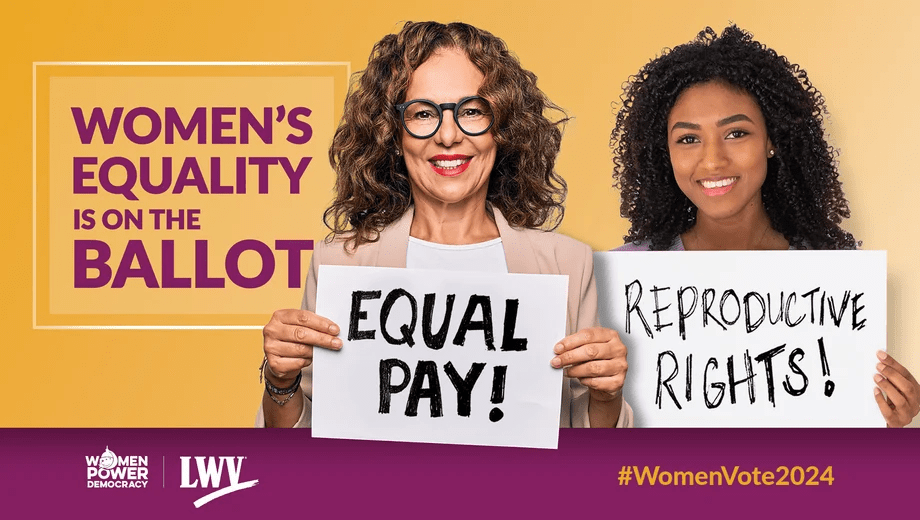
 Scottie's Playtime