
I made green chips in order to avoid salty and sweet treats for a while. Maybe I’ll post about that, but in the meantime, here is a bit about observing Yule. Solstice is my favorite night of the year, mostly because Winter is my favorite season, though so short. I am not pagan, but I love reading about Solstice and Yule. Maybe you’ll like this, too.
Category: Climate / Environment
So I had a morning full of errands
and just got home. I decided to eat one of the donuts I bought while out (there was a sale! As the shoppe will be closed until 1/5. Yay…) Anyway, the 1st page I open online every day is the NASA APOD, and here is what they put up today. Such a wonderful thing to see when I sit down to break my fast with a forbidden food and tea!! and relax a little reading blogs. I hope you enjoy it as much as I have.
https://apod.nasa.gov/apod/astropix.html
Astronomy Picture of the Day
Discover the cosmos! Each day a different image or photograph of our fascinating universe is featured, along with a brief explanation written by a professional astronomer.
2024 December 21
A Year in Sunsets
Image Credit & Copyright:Wael Omar
(I don’t get why WP won’t accept these photos. I thought it was my puter, but I have a new one, and the pic is still not here. It’s a quick click, and a really nice page today, so please go see it. After all, SPACE-X’s photos are likely to be poor, if they even do this for us.)
“Fearsome Forest Hawk”
Click through to see and hear.
When Tropical Cyclones Collide…
This Is What Happens When Tropical Cyclones Collide
December 19, 2024 Imma Perfetto

In April 2021, tropical cyclones Seroja and Odette clashed in the southeastern Indian Ocean, just north-west of Australia, before finally merging completely.
The Australian Bureau of Meteorology describes this interaction as rare: “Seroja produc[ed] torrential rainfall and devastating floods in parts of Indonesia and Timor Leste. Later, it interacted with Tropical Cyclone Odette via the Fujiwara effect, a phenomenon rarely observed in the Australian region. Finally, it strengthened into a category 3 tropical cyclone producing a severe impact in the Mid-West region of Western Australia, unusually far south for a coastal crossing of a Severe Tropical Cyclone.”
These types of convergences are one of the most extreme interactions between the ocean and the atmosphere on Earth. But with the number and intensity of tropical cyclones increasing because of global warming, understanding their impacts has become more important than ever.
“Seroja first of all stalled the smaller cyclone Odette and then merged with it 3 days later,” says Oliver Wurl of the University of Oldenburg in Germany. After the cyclones merged, Seroja abruptly changed course by 90 degrees.
The whole encounter lasted for about a week.
“This chain of events not only influenced weather patterns but also triggered a previously unobserved interaction with the ocean underneath,” says Wurl.
In a new report in in the journal Tellus A: Dynamic Meteorology and Oceanography, Wurl and colleague Jens Meyerjürgens analysed the encounter between the 2 relatively weak tropical cyclones and found effects that have only been observed with much stronger systems.
They did this by combining satellite data, measurements of the upper ocean, such as salinity and water temperatures obtained from ARGO floats and autonomous drifters, and numerical modelling.
The researchers found that sea-surface temperatures dropped by 3°C in the aftermath of the merge due to cold water upwelling towards the sea surface from depths of 200m.
Given cyclones’ intensity as a Category 1 on the Hurricane Scale, this cooling effect and depth of upwelling was “exceptionally high” – on the scale observed in Category 4 or 5 hurricanes.
“As a result of the interactions of a cyclone with the ocean and the upwelling of cold, deep water, the ocean absorbs additional heat from the air and then transports it to higher latitudes – a crucial process that influences the climate worldwide,” explains Wurl.
The researchers conclude that the simultaneous formation and interaction between tropical cyclones could increase in the future with global warming and, with it, the extreme thermodynamic responses of the upper ocean.
The Ultramarine project – focussing on research and innovation in our marine environments – is supported by Minderoo Foundation.
Yesterday’s News Today
but it’s vital timely stuff that is still fresh today-
Peace & Justice History for 12/17
| December 18, 1865 Following its ratification by the requisite three-quarters of the states earlier in the month, the 13th Amendment was formally adopted into the U.S. Constitution, ensuring that “neither slavery nor involuntary servitude… shall exist within the United States, or any place subject to their jurisdiction.”  “Selling females by the pound” |
| December 18, 1999 Julia Butterfly Hill descended from her tiny platform 180 feet up in a giant redwood tree (sequoia sempervivens) named “Luna,” after perching there for 738 days to protect it from loggers. Luna survived a chainsaw attack in 2001 but still stands.   “The question is not ‘Can you make a difference?’ You already do make a difference.It’s just a matter of what kind of difference you want to make during your life on this planet.” – Julia Butterfly Hill More about Julia Butterfly Hill and Luna Luna Today Earth Medicine |
https://www.peacebuttons.info/E-News/peacehistorydecember.htm#december18
Peace & Justice History 12/15
| December 15, 1791 The Bill of Rights became law when Virginia ratified the first 10 amendments to the United States Constitution. Read The Bill of Rights The Bill of Rights Defense Committee (emphasis mine -A. It’s an important site these days!) |
December 15, 1930  Albert Einstein, 1930 Albert Einstein urged militant pacifism and the creation of an international war resistance fund. Einstein stated in New York that if two percent of those called for military service were to refuse to fight, and were to urge peaceful means of settling international conflicts, then governments would become powerless since they could not imprison that many people. He struggled against compulsory military service and urged international protection of conscientious objectors. He concluded that peace, freedom for individuals, and security for societies depended on disarmament; otherwise, “slavery of the individual and the annihilation of civilization threaten us.” Einstein on Peace and World Government |
| December 15, 1946 Vietnamese leader Ho Chi Minh sent a note to French Premier Leon Blum congratulating him for his selection as French Premier and asking for peace talks. France had exercised colonial power over the Vietnamese as part of French Indochina, formed in October 1887 from the provinces of Annam, Tonkin, Cochin China, and the Kingdom of Cambodia; Laos was added in 1893. Vietnamese nationalists, however, had demanded independence for the three provinces at the end of World War II. |
December 15, 1973 The American Psychiatric Association reversed its long-standing position and declared that homosexuality is not a mental illness and “…deplores all public and private discrimination in such areas as employment, housing, public accommodation…” Read the APA policy on discrimination against [gays] |
| December 15, 2000 The Chernobyl nuclear power plant was shut down 14 years after becoming the site of the world’s worst nuclear accident ever. Nearly nine tons of radioactive material – dozens of times as much as the Hiroshima and Nagasaki bombs – were released in the explosion. The radioactive fallout affected 23% of Belarus, with 4.8% of Ukrainian territory and 0.5% of Russia. The Belarussian government spends 30% of its annual budget dealing with the aftermath of Chernobyl. |
https://www.peacebuttons.info/E-News/peacehistorydecember.htm#december15
Cookies In The Oven
but this is so nice, I had to share it. Sorry about the cookies, though. Our moon isn’t full here until 3:01 Sunday AM.
december full moon by onecloud
fri 13, 2024 over richmond st. at spadina ave. Read on Substack
december full moon
over richmond at spadina
at 5 PM
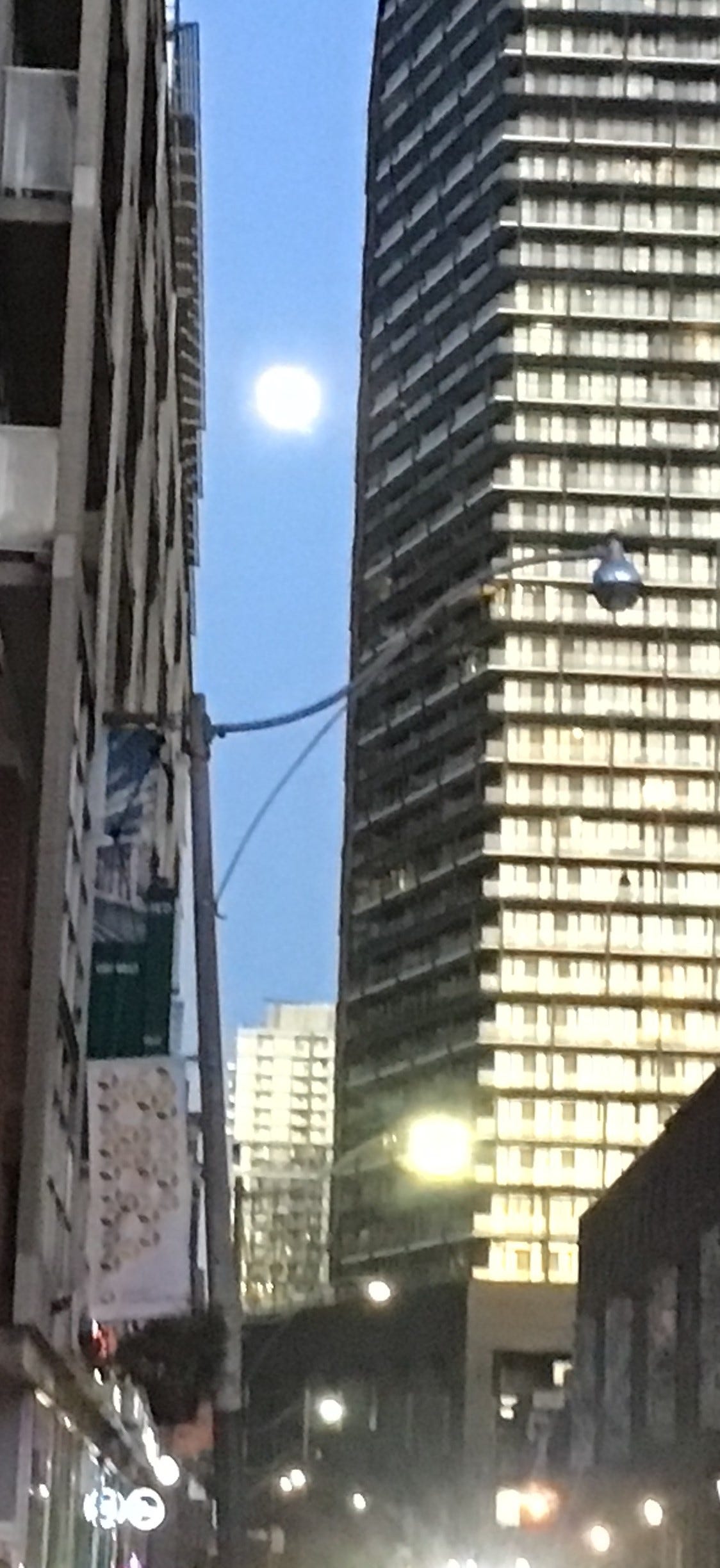
under full moon
traffic west bound
bound for home
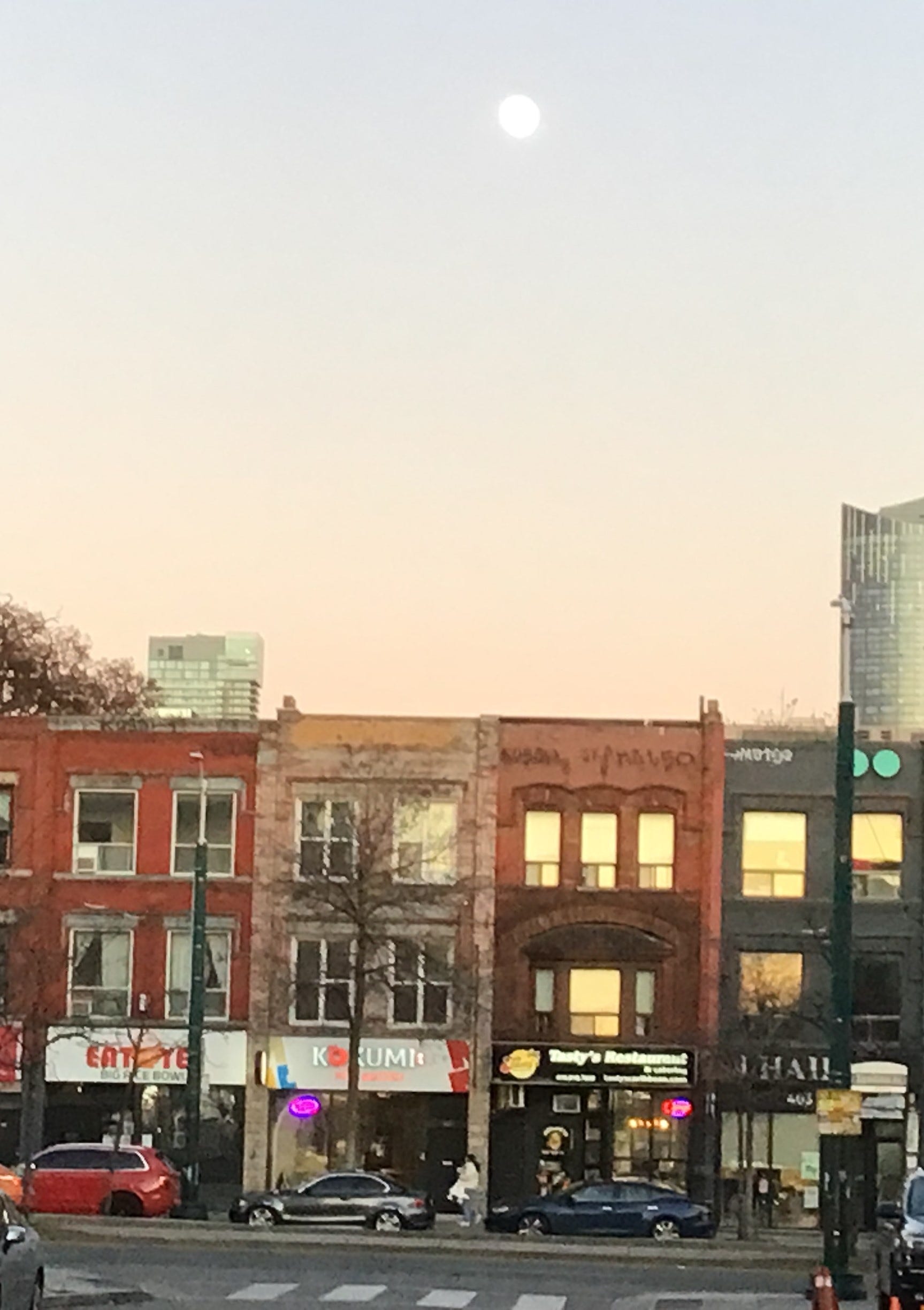
at oxford st
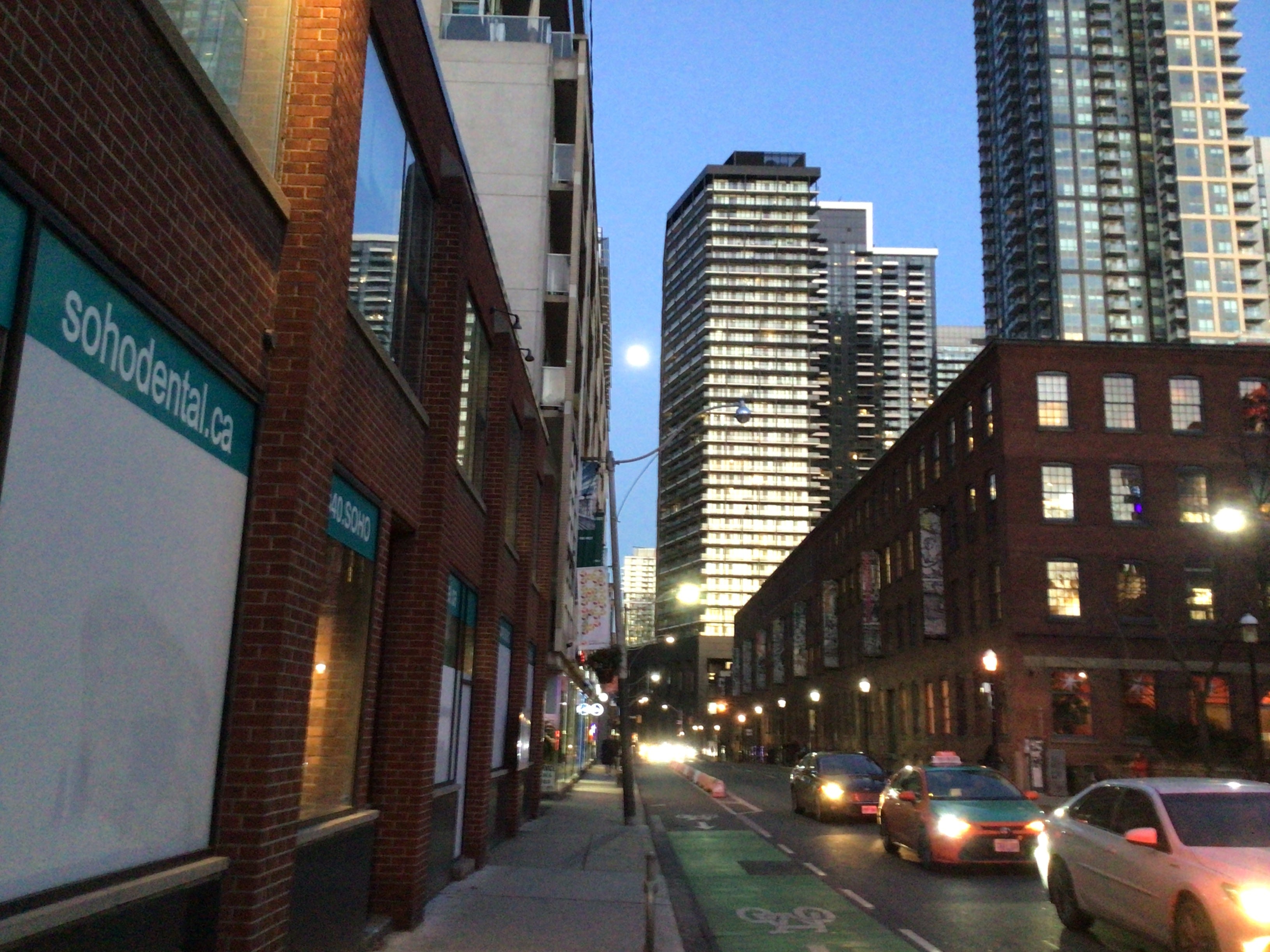
at richmond
Covers Everything Well
None on Friday, Two on Saturday
As always, the titles are links to learn more about the poets and their poems.
Rican Issues Carmen Bardeguez-Brown
Say What?
Could you please, Pleeeeeeeeeeease repeat
Did you say: Molleta?
Prieta?
Morena?
Ohh African!
Hmmm Soy Puertorriquena
Yes, Puertorican
That I don’t look What ?
Oh, I guess I don’t look cafe con leche
mancha de plátano
Mulata,
high yellow
grifa
By the way
I did not know that there was a puertorican look.
And what exactly is that?
That I just look more what?
Well, Y Tu abuela dónde Está?
I should say abuela, tío, Tía, y to el barrio
Let me tell you something
FOR YOUR INFORMATION
Most ricans are a mix of Africans, Spaniards, and Native Americans called
Taínos
By the way, no one has seen a Taíno in the last 500 years.
Sooooo exactly … You know what that means
My English is covered with spices
spices from the Caribbean
Spices that you might find Strange
Because you were born in this cold fast food of a mall of a country
Where Spanish is a foreign word
That you are ashamed to learn
And when you try
Is not there
Only mumbles of a murmur
Susurando el olvido
A reganadientes
Pretendiendo
Escondiendo la vergüenza
You remember Puerto Rico on the 2nd Sunday of every June
When everybody is suddenly proud to be Puerto Rican
No the word is Boricua
Boricuas Here, Boricuas THERE, Boricuas everywhere
And everyone waves the flags
The flags that they don’t even understand
And no one knows why they are here
Yes HERE Now
Do you Know?
why your parents or grandparents vinieron aqui?
De que Pueblo?
Cuando te bañaste en las aguas calientes del Caribe?
Better yet
Do you really know that …?
We all came from the Motherland
Africa
Even the Spanish people that came with Colon, Columbus
However you want to say it
Lived 700 hundred years under the Moors
You heard that right
The moors as in Arabs as in black Arabs
SO … in other words
Not only I
But we
Have over 500 years of African mestizaje
The so called “white people” that everyone is so proud of
As in “my grandparents are from Spain
Well if they are …
They
Too have negrITOs in them
Remember the Gitanos
But that is another story …
Getting back to the Boricua’s issue
What history do you know?
Ever heard of
Agüeybaná
Albizu Campos
Luis Palés Matos
Rafael Betances
Arturo Schomburg
Francisco Oller
Julia De Burgos
Rafael Hernández
Segundo Ruiz Belvís
Enrique Laguerre
Mariana Bracetti
Pedro Pietri
Still havING problems figuring me out?
Or is it that you just don’t know
Who you are?
Copyright © 2024 by Carmen Bardeguez-Brown. Originally published in Poem-a-Day on December 12, 2024, by the Academy of American Poets.
=====
On Water Street,
scaffolds envelop the buildings,
wire screens surround the benches,
iron fences line the street.
You must walk a hot summer block
in either direction to cross.
To the east, construction continues.
To the west, trucks sit, waiting.
Approaching or leaving,
it feels like a detention center
without passports or means of escape.
Late nights on Water Street,
beneath the scaffolding,
behind the steaming sidewalks,
and the screens and the fences,
the men set up their dominoes table
and their friends watch them play,
awaiting their turns.
We wave on our way to walk our dogs
and when returning home in the humid air.
There are no passersby on Water Street,
no loitering without intent or purpose
but I will reply to the questions
they might have asked had they existed.
Why, they might wonder, do the men sit
at a bridge table in the stifling heat
beneath scaffolds, behind screens and fences?
Surely, there are air-conditioned apartments
where they might socialize and yell Capicu!
Because, I would answer, it is our street,
this is our Lower East Side that we breathe,
this is our space where neighbors smile
as they pass by and call out, Otra vez
you’re still at it, as time slowly propels
us closer to wherever we are headed,
but until we get there, the table is set
for another night of apocalyptic dominos.
Copyright © 2024 by Puma Perl. Originally published in Poem-a-Day on December 13, 2024, by the Academy of American Poets.


