


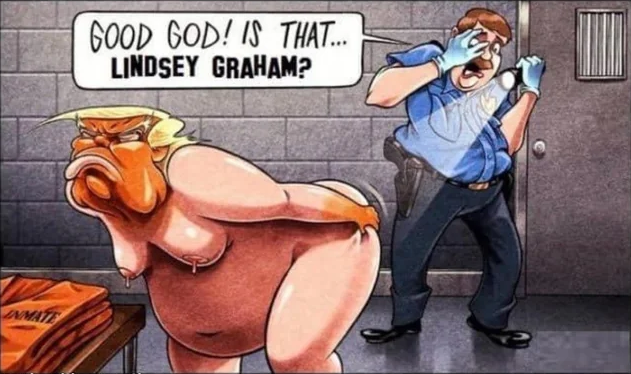


Wouldn’t “pouter” blue be more appropriate?


Me, literally every morning now: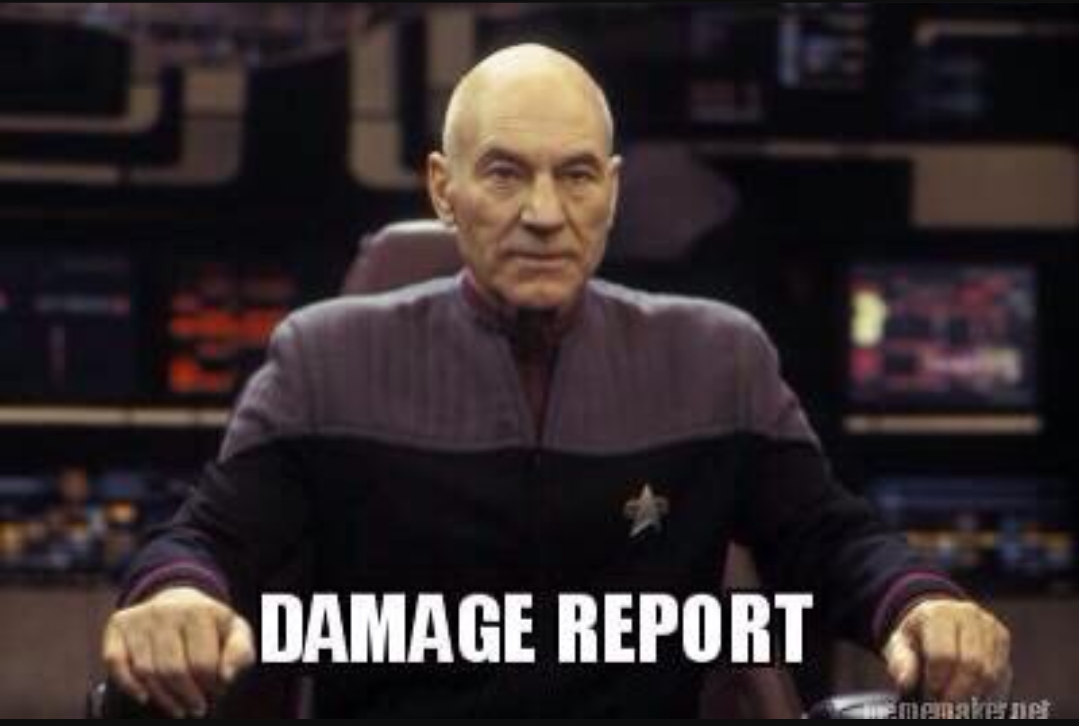



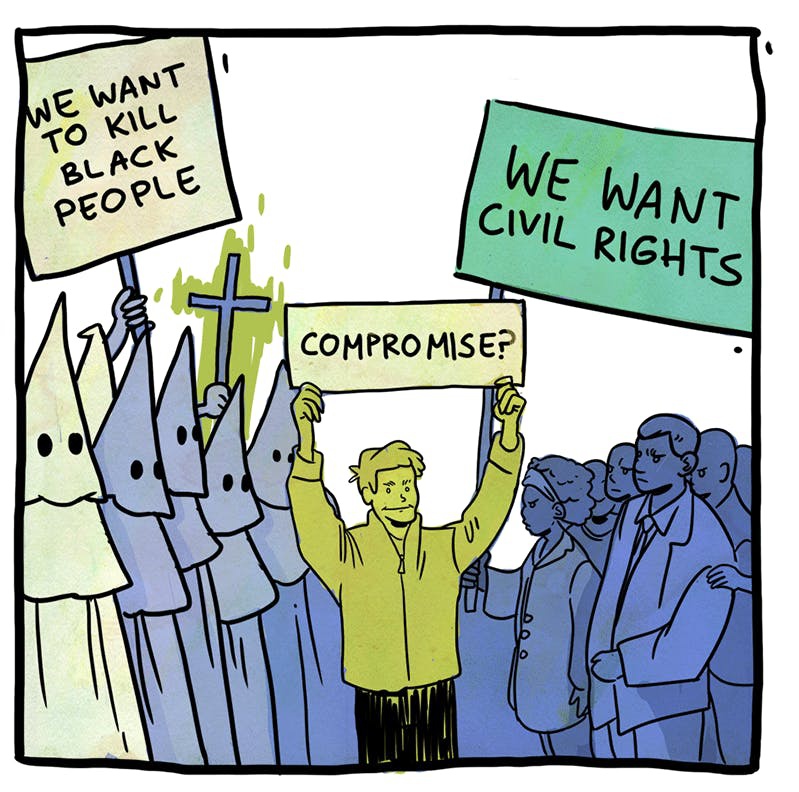
And then the children will be taught which children to hate…





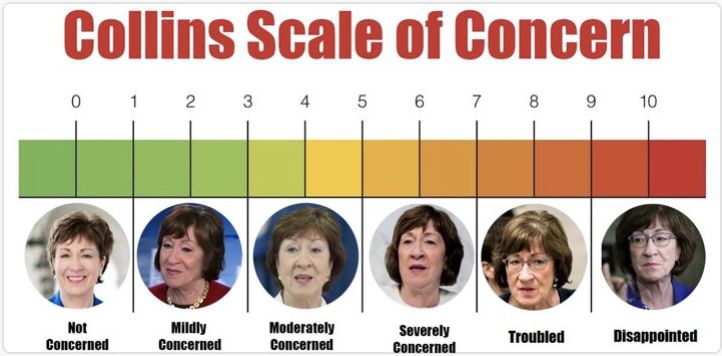

Wouldn’t “pouter” blue be more appropriate?
Me, literally every morning now:
And then the children will be taught which children to hate…
So much for rights for adults to make their own medical decisions. I guess it is fine for cis adults to have boob jobs and cis adult men can do what they want with their penises but not transitioning people. Well not women either. Seems only straight cis males can have control over their bodies and sex organs.
But what I think this is about is how trans people passing for the gender they are upsets fundamentalist men. It screws with their idea that god created men and women and that is just how it has to be, what you are assigned at birth. Right now people who do not suffer going through the wrong puberty don’t get the wrong secondary sex characteristics. Look at the changes in boys when puberty hit. Most boys facial features change and broaden, shoulders get wider, they develop deeper voices, and of course their bodies grow hair along with increasing the size of the sex organs. All things trans girls do not want their bodies to look like and will fight all their lives trying to change and make go away. It will be much harder for them to pass as the women they identify as. It will make them look much less of the idea most people have of how women should normally look. Much easier for them to be singled out. Some changes will never be able to mask or make go away.
Same with trans men. They will be forced to go through female puberty. They will grow boobs they hate, wider hips, along with other body changes including to their sexual organs. All things they hate. Some things will make it harder to transition, again making it harder for them to pass as the men they are.
And again that seems to be the plan. It seems to really upset the fundies that they get all hot about a woman that they then realize is a trans woman. I do know a straight man who had no interest in the male sex organ who started dating an attractive woman, she turns out to be trans who had not had bottom surgery. As they say, love conquers all and they are living very happily together. Hugs
============================================================
President Donald Trump arrives to speak about the economy during an event at the Circa Resort and Casino in Las Vegas, Saturday, Jan. 25, 2025. (AP Photo/Mark Schiefelbein)
Updated 9:03 PM EST, January 28, 2025President Donald Trump on Tuesday signed an executive order aimed at cutting federal support for gender transitions for people under age 19, his latest move to roll back protections for transgender people across the country.
“It is the policy of the United States that it will not fund, sponsor, promote, assist, or support the so-called ‘transition’ of a child from one sex to another, and it will rigorously enforce all laws that prohibit or limit these destructive and life-altering procedures,” the order says.
The order directs that federally-run insurance programs, including TRICARE for military families and Medicaid, exclude coverage for such care and calls on the Department of Justice to vigorously pursue litigation and legislation to oppose the practice.
Medicaid programs in some states cover gender-affirming care. The new order suggests that the practice could end, and targets hospitals and universities that receive federal money and provide the care.
The language in the executive order — using words such as “maiming,” “sterilizing” and “mutilation” — contradicts what is typical for gender-affirming care in the United States. It also labels guidance from the World Professional Association for Transgender Health as “junk science.”
On his Truth Social platform, Trump called gender-affirming care “barbaric medical procedures.”
Major medical groups such as the American Medical Association and the American Academy of Pediatrics support access to care.
Young people who persistently identify as a gender that differs from their sex assigned at birth are first evaluated by a team of professionals. Some may try a social transition, involving changing a hairstyle or pronouns. Some may later also receive puberty blockers or hormones. Surgery is extremely rare for minors.
“It is deeply unfair to play politics with people’s lives and strip transgender young people, their families and their providers of the freedom to make necessary health care decisions,” said Human Rights Campaign President Kelley Robinson.
The order encourages Congress to adopt a law allowing those who receive gender-affirming care and come to regret it, or their parents, to sue the providers.
It also directs the Justice Department to prioritize investigating states that protect access to gender-affirming care and “facilitate stripping custody from parents” who oppose the treatments for their children. Some Democratic-controlled states have adopted laws that seek to protect doctors who provide gender-affirming care to patients who travel from states where it’s banned for minors.
Lambda Legal promised swift legal action.
Michel Lee Garrett, a trans woman whose teenage child only partially identifies as a girl and uses they/them pronouns, said such policies aim to erase trans people from public life but will never succeed. Her child has not elected to pursue a medical transition, but the mother from State College, Pennsylvania, said she won’t stop fighting to preserve that option for her child and others.
“I’ll always support my child’s needs, regardless of what policies may be in place or what may come … even if it meant trouble for me,” Lee Garrett said.
For Howl Hall, an 18-year-old freshman at Eastern Washington University, taking testosterone not only changed his body but dramatically improved his experience with depression. With that treatment now under threat, Hall said he’s concerned that getting off testosterone would hurt his mental health.
“I would be alive, but I wouldn’t be living,” Hall said. “I wouldn’t be living my life in a productive way at all. I can guarantee that I would be failing all of my classes if I was even showing up to them.”
The push is the latest by Trump to reverse Biden administration policies protecting transgender people and their care. On Monday, Trump directed the Pentagon to conduct a review that is likely to lead to them being barred from military service. A group of active-duty military personnel sued over that on Tuesday.
Hours after taking office last week, Trump signed another order that seeks to define sex as only male or female, not recognizing transgender, nonbinary or intersex people or the idea that gender can be fluid. Already that’s resulted in the State Department halting issuing passports with an “X” gender marker, forcing transgender people to apply for travel documents with markers that don’t match their identities.
Trump said he would address these issues during his campaign last year, and his actions could prove widely divisive.
In the November election, voters were slightly more likely to oppose than support laws that ban gender-affirming medical treatment, such as puberty blockers and hormone therapy, for minors under the age of 18 who identify as transgender, according to AP VoteCast. About half of voters, 52%, were opposed, but 47% said they were in favor.
Trump’s voters were much more likely to support bans on transgender care: About 6 in 10 Trump voters favored such laws.
“It’s very clear that this order, in combination with the other orders that we’ve seen over the past week, are meant to not protect anyone in this country, but rather to single-mindedly drive out transgender people of all ages from all walks of civic life,” said Harper Seldin, a staff attorney for the American Civil Liberties Union’s LGBTQ & HIV Project.
Seldin said the ACLU is reviewing the order “to understand what, if anything, has immediate effect versus what needs to go through continued agency action.”
Even as transgender people have gained visibility and acceptance on some fronts, they’ve become major targets for social conservatives. In recent years, at least 26 states have adopted laws restricting or banning gender-affirming medical care for transgender minors. Most of those states face lawsuits, including one over Tennessee’s ban that’s pending before the U.S. Supreme Court.
Republican-controlled states have also moved to keep transgender women and girls from competing in women’s or girls’ sports and to dictate which bathrooms transgender people can use, particularly in schools.
“These policies are not serving anyone,” said Shelby Chestnut, executive director of the Transgender Law Center. “They’re only creating confusion and fear for all people.”
_________________________________________________
Mulvihill reported from Cherry Hill, New Jersey, and Schoenbaum from Salt Lake City. Associated Press writers Carla K. Johnson and Hallie Golden in Seattle and Linley Sanders in Washington contributed reporting.
Zeke is AP’s chief White House correspondentMulvihill covers topics on the agendas of state governments across the country. He has focused on abortion, gender issues and opioid litigation.Schoenbaum is a government and politics reporter based in Salt Lake City, Utah. She also covers general news in the Rockies and LGBTQ+ rights policies in U.S. statehouses.
CNN’s Kaitlan Collins talks with Navy Cmdr. Emily Shilling about her status as a trans service member after President Donald Trump signed an executive order banning transgender service members from serving in the US armed forces
(Because I live in a later time zone than many readers here.)
Hopium PM – Court Blocks Trump’s Dangerous Power Grab, New Reuters Poll Shows Trump Taking A Hit, Keep Making Calls!!!!!!!!!!!!!!! by Simon Rosenberg
Kennedy and Gabbard Hearings Tomorrow, Patel Thursday Read on Substack
Good evening peeps. A federal judge has blocked Trump’s outrageous suspension/cancelling of Congressionally mandated funding for programs of all kinds across all 50 states. From the Washington Post:
A federal judge on Tuesday temporarily blocked President Donald Trump from imposing a sweeping pause on trillions of dollars in federal spending, capping a frenetic day of disruption to government programs that fund schools, provide housing and ensure low-income Americans have access to healthcare.
The order prevented the new restrictions from taking effect until at least Feb. 3, buying time for a coalition of public-health advocates, nonprofits and businesses — represented by the left-leaning group Democracy Forward — to proceed with a case that may test Trump’s claims of expansive power over the nation’s fiscal trajectory.
The decision arrived amid a wave of chaos and confusion in Washington, where few appeared to understand the scope and intention of a White House memo that had directed agencies to “temporarily pause” the disbursement of key federal funds. Even before it could officially take effect at 5 p.m., thousands of government services — many dedicated primarily to Americans’ health, safety and well-being — appeared to be at risk of interruption or shutdown, at least temporarily.
The NYTimes has a good backgrounder on “impoundment” – Trump’s attempt just to cancel government programs he doesn’t care for and “impound” the money (gift article). I also found this article by Russell Berman in the Atlantic helpful in understanding where we are.
Yes, in the first few weeks of Trump’s Presidency we are already facing one of the gravest Constitutional crises in America history as Trump is attempting to seize a level of control over our government no President has ever had.
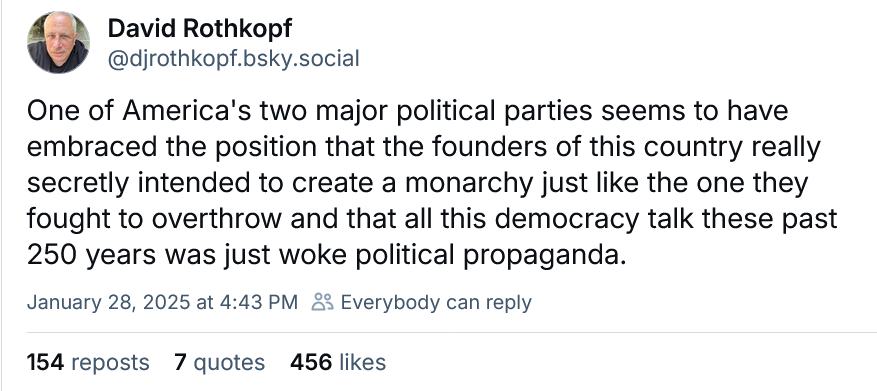
If there was an upside to this dark day Democrats across the country at all levels of government loudly rose up against the latest acts of our Mad Orange Wannabe King. It appeared to have woken us from our collective slumber, as the threat Trump clearly represents became impossible to ignore. Can we compete with Trump, contest his out of control Administration, score some wins in the coming days?

First, a new Reuters poll suggests Trump has already overreached, as his approval rating has already taken a 9 point hit:
We will see if these results are replicated in other polls but this one sure shows that Trump is struggling out of the gate. Note below how unpopular many of his early actions/proposals are (but also note the broad public support for “downsizing the federal government”): (snip-MORE; go see it! It’s free and you don’t have to log in.)
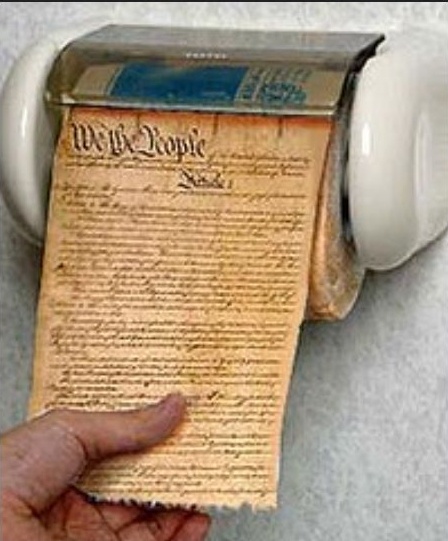
I’m sure I’m not the only one. Still, I found a couple of items that help with that. And I’m on the lookout for more! We still have the power, even thought it doesn’t feel like it. We the people still have the power, if we stay constructively informed.
==================================
I don’t even recall now what I was reading this morning that linked Transvitae, but here are its resources pages. I am not trans, so I only hope there isn’t anything there are the site that is, let’s say inappropriate. I read around and it seems like a decent place, but I am no expert. Resources are resources, though. We need to know about resources.
==================================
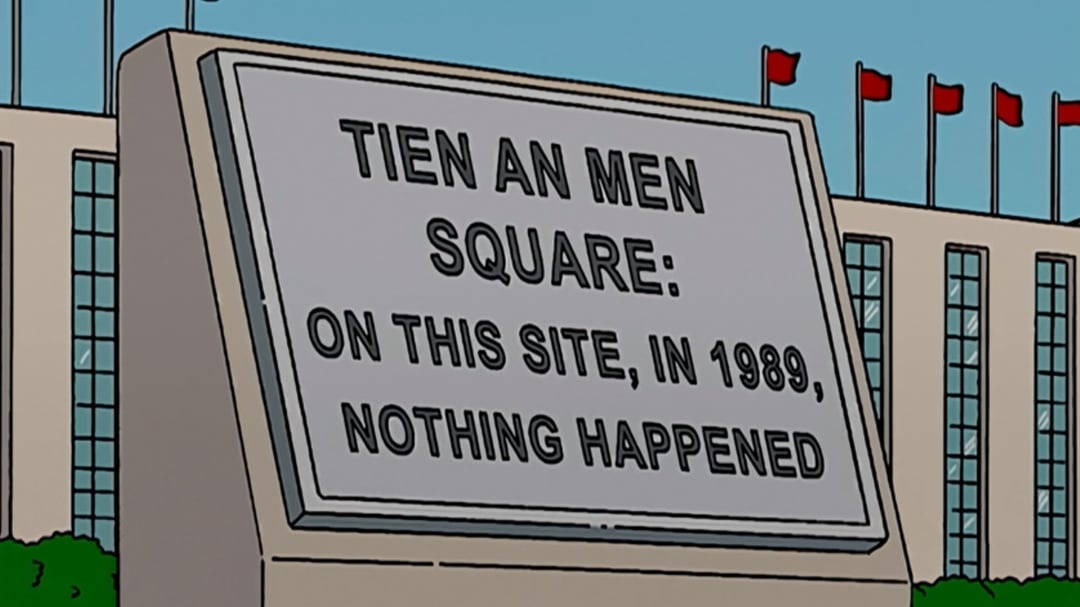
Plus, I’m going to try to draw Number Nine Eight One, and anyone else who has such an urge should do so, also! 🌞 🧑🎨
===================================
(There’s a video there, if it’s something you want to see. The still shows a person doing what she appears to be doing, if I am clear.)
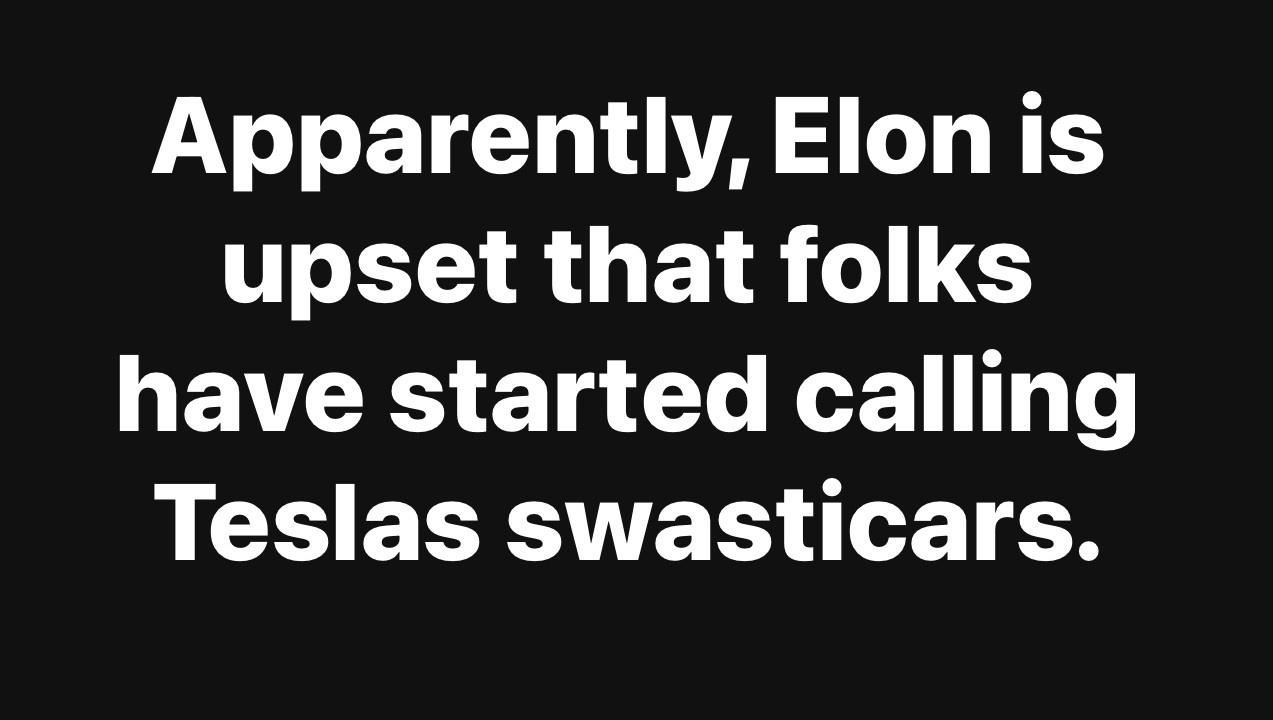
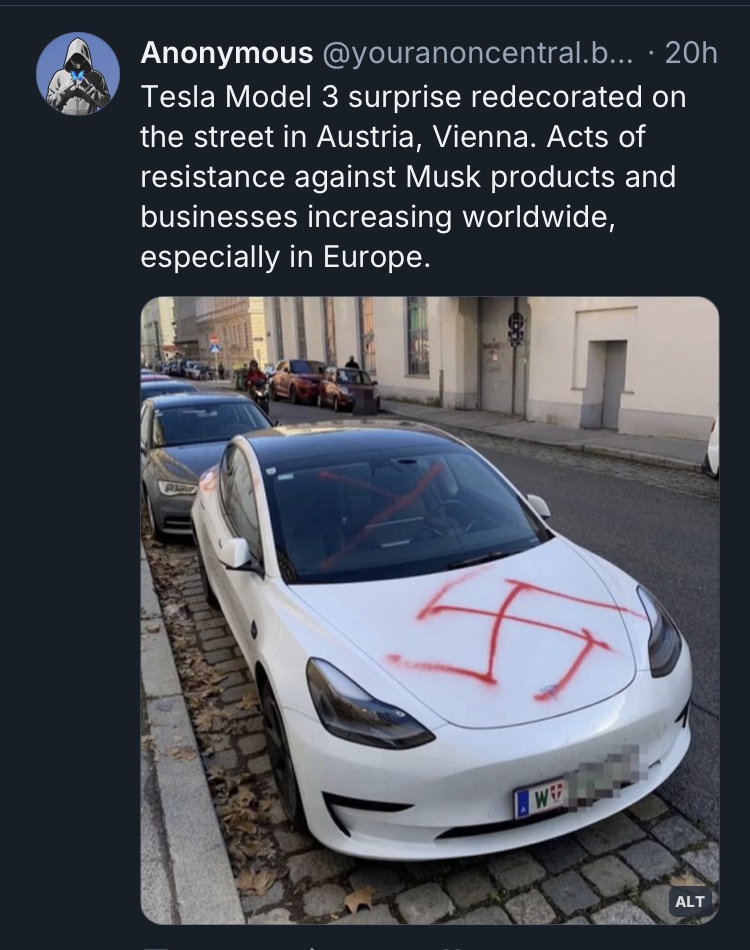
A supervisor of a town in Montgomery County, Pennsylvania, resigned after a video in which she appeared to mimic Elon Musk’s alleged Nazi salute went viral.
Musk, the CEO of Tesla and SpaceX, owner of the social media platform X, and Administrator of the Department of Government Efficiency, sparked outrage when he made a gesture that resembled a Nazi salute while addressing a crowd at an inauguration event for President Donald Trump.
The Anti-Defamation League (ADL) later posted a statement on X saying it seemed like Musk “made an awkward gesture in a moment of enthusiasm, not a Nazi salute.”
This is a delicate moment. It’s a new day and yet so many are on edge. Our politics are inflamed, and social media only adds to the anxiety.
It seems that @elonmusk made an awkward gesture in a moment of enthusiasm, not a Nazi salute, but again, we appreciate that people are on…— ADL (@ADL) January 20, 2025
Despite the ADL’s statement, many have still accused Musk of performing the salute. In response, Musk posted a series of Nazi-related puns on X which led to more backlash.
He also sparked more controversy while appearing to reference Germany’s Nazi history while making a virtual appearance at a campaign event for Germany’s far-right Alternative für Deutschland (AfD) party on Saturday.
Amid the controversy surrounding Musk, Laura Smith, a Republican and the Vice Chair of the Towamencin Township Board of Supervisors, posted a video of herself on the social media platform TikTok in which she appeared to mimic Musk’s gesture. (snip)
tRump is old and … intellectually challenged so he can not understand gender identification. A lot of older people can’t handle the changes in society and the acceptance of new ways to be / live. As far as the religious fanatics pushing the hate against LGBTQ+ people including trans people are cis people who do not feel a disconnect between their sex organs and their feelings of who they are in society. Just as the same religious straight people can not understand the attraction gay people feel. They don’t feel that way themselves, so don’t see being cis and straight being the only acceptable way to live as a problem. Instead they think because they don’t feel that way then no one else does so it must be a choice. Or a mental defect to be cured. They refuse to accept medical science / medical studies and all the evidence that it is real, exists, and normal. We learn as a society and we as we grow in understanding we learn to accept new things. Medical science and medical research tell us that being trans and gay is normal, also that medical care that affirms those feelings is important along with necessary. Just because I don’t like a food or feel like I want to eat it, doesn’t mean no one likes it or don’t want to eat it. But liking a food I don’t doesn’t mean it is a mental illness or makes a person unfit.
saying that the U.S. military has been “afflicted with radical gender ideology to appease activists” and that “many mental and physical health conditions are incompatible with active duty.”
It also takes aim at transgender people in personal terms, accusing them of living in conflict “with a soldier’s commitment to an honorable, truthful, and disciplined lifestyle, even in one’s personal life.”
“A man’s assertion that he is a woman, and his requirement that others honor this falsehood, is not consistent with the humility and selflessness required of a service member,” it adds.
Newly confirmed Defense Secretary Pete Hegseth, a former National Guard soldier who has said that “being transgendered in the military causes complications and differences,”
The above by the drunken wife abuser accused sexual predator Hegseth is wrong. The only complication and differences caused by having transgender people in the military is not the trans people but the fundamentalist religious people / Christians like Hegseth who feel the entire LGBTQ+ is an abomination to his god and so shouldn’t be allowed to exist. Or worse mix with the real children of god, people with good morals like the drunken wife abuser accused sexual predator Hegseth. This issue over transgender people in the military reminds me of when Clinton tried to make it legal for gay people to be out in the military. Senator Sam Nunn went on a Navy ship and said no real service member wanted to be sleeping near, working next to, or using the bathroom facilities with the dreaded gay person, which some churches were desperate to keep from being accepted and live openly in society. The anti-gay people claimed all sorts of horrors if gay people were allowed to service openly from the collapse of the military to mass exit of members. None of that happened, the military stayed the world’s best and there was no mass fleeing from the service.
These same people with the same hater mind set made the same claims about first black people being allowed to serve, and then when the military was desegregated. The same was said of women in combat roles. It always comes from the haters who use their personal bigotry as the metric for how everyone should be and feel. And they never admit when all the horrors they claim will happen if those they are against get equality and inclusion never happen. They just pick a new target and repeat the same attacks and hates. Now it is the trans people’s turn to be accused of all the horrible things that blacks were, the gays were, that never were true. Trans people have served openly for some time, studies show that they do not harm the military or lower the military readiness / effectiveness in any way. Sadly far too many of our general public who know nothing about the military or who never served think they are experts and again feel that everyone has the same bigotries, racist, and misogynistic feelings they do. Being in other countries or even different parts of the US will open closed minds. Harris did not lose by much, she almost won. It is too bad these hateful ignorant people are going to be able to enshrine their hates and bigotries into law and hurt so many people in the next few years. But remember if we can get the House then most of the damage can do with the passing of laws will stop, and if we can regain the Senate we can stop hateful ideolog judges from being installed. It is up to us to get out the vote. Hugs
==================================================================
The executive order took aim at transgender individuals in personal terms, noting that physical and mental health conditions make them “incompatible” with military service.
January 28, 2025 at 12:28 a.m. ESTThe Pentagon in Arlington, Virginia. (Joshua Roberts/Reuters)The list of conditions identified could affect tens of thousands of people depending on how it is interpreted. It cites diagnoses “that require substantial medication or medical treatment to bipolar and related disorders, eating disorders, suicidality, and prior psychiatric hospitalization.”
The order calls for the Pentagon to adopt updated policies on the medical standards required for military service. It also takes aim at transgender people in personal terms, accusing them of living in conflict “with a soldier’s commitment to an honorable, truthful, and disciplined lifestyle, even in one’s personal life.”
“A man’s assertion that he is a woman, and his requirement that others honor this falsehood, is not consistent with the humility and selflessness required of a service member,” it adds.
The order builds on a previous directive, issued hours after Trump’s Jan. 20 inauguration, overturning a 2021 Biden administration measure that permitted transgender troops to serve openly, which reversed an earlier ban from Trump’s first term in office. The new executive order does not immediately ban transgender individuals from serving, but it directs the Defense Department and the Department of Homeland Security, which oversees the Coast Guard, to revise medical standards and submit a report to the president outlining steps to comply with the directive.
While the Defense Department does not keep track of the number of transgender personnel across the force, the latest shift in the long-running policy back-and-forth could impact thousands of service members. It also represents one aspect of a far-reaching Trump administration effort to roll back diversity initiatives across the government.
Trump signed the new transgender order along with others calling for the reinstatement of troops who were discharged during the Biden administration for refusing coronavirus vaccines; the elimination of diversity, equity and inclusion offices in the Defense Department; and the creation of an “Iron Dome for America,” Trump’s vision for expanded missile defense.
Newly confirmed Defense Secretary Pete Hegseth, a former National Guard soldier who has said that “being transgendered in the military causes complications and differences,” promised in his first remarks to reporters at the Pentagon on Monday that he would ensure implementation of Trump’s priorities, which also include ordering the military to guard the southern border.
“This is happening quickly,” he said. “Our job is lethality and readiness and warfighting.”
In a November podcast, Hegseth said personnel receiving medication related to gender transitions would be unable to serve effectively.
Advocates for transgender people have said that there may be as many as 15,000 in the U.S. military. A 2016 Defense Department survey found that about 9,000 identified as such. Both figures represent less than 1 percent of the 2 million people who serve in the active-duty, reserve or National Guard components of the military.
For decades, the military considered transgender people to be sexual deviants who were unfit for service. But in 2016, after a year-long policy review, the Obama administration repealed a ban on transgender service, citing the value of ensuring that all qualified individuals were able to serve their country in uniform.
“We have to have access to 100 percent of America’s population for our all-volunteer forces to be able to recruit from among them the most highly qualified — and to retain them,” Defense Secretary Ash Carter said at the time.
The repeal followed the Obama administration in 2011 overturning the “don’t ask, don’t tell” policy, which prohibited gay service members from serving openly, and the 2015 repeal of a ban on women serving in a wide array of jobs in ground combat units.
After taking office in 2017, Trump announced a ban on transgender military service in a series of tweets, without notifying key defense officials. The move triggered a scramble in the Pentagon, with then-Defense Secretary Jim Mattis ordering another policy review.
In 2018, Mattis adopted a new policy with Trump’s tacit support that softened the full ban, effectively prohibiting new transgender service members from joining the military but allowing those already in uniform to stay on.
The ruling was challenged in court, but the Supreme Court upheld Trump’s partial ban in 2019. The military began enforcing that policy later that year.
President Joe Biden quickly reversed Trump’s ban in an executive order after taking office in 2021.
The Quakers are suing Trump’s Department of Homeland Security for allowing ICE raids in places of worship.
The lawsuit, filed in Maryland on Monday by multiple different Quaker groups from across the country, states that “the very threat of [immigration] enforcement deters congregants from attending services, especially members of immigrant communities,” and notes that the raids infringe on religious freedom.
“A week ago today, President Trump swore an oath to defend the Constitution and yet today religious institutions that have existed since the 1600s in our country are having to go to court to challenge what is a violation of every individual’s constitutional right to worship and associate freely,” said Skye Perryman, president and CEO of Democracy Forward, which is representing the Quaker groups in court. “The troubling nature of the policy goes beyond just houses of worship with sanctuary programs—it is that ICE could enter religious and sacred spaces whenever it wants.” (snip-MORE)
https://newrepublic.com/post/190756/trump-ice-lawsuit-quakers
Rare because I rarely post such. Pastor Bolz-Weber says all this so well, and it is what I learned when I was young and growing up; what I work to apply in my own (and in no one else’s) life. I’m not proselytizing or trying to “draw anyone in.” This helps to explain why and how I feel as I do about justice and peace, and love and understanding and all that, including hope and light. Enjoy with a mind that can absorb without feeling there’s gonna be a “come forward” moment, because there’s not one. (Other than to Christians who feel as we do, but wonder about Zionism and Nationalism being as bad as they are.)
Heresy and Checkpoints by Nadia Bolz-Weber
Some thoughts from breakfast this morning. Read on Substack
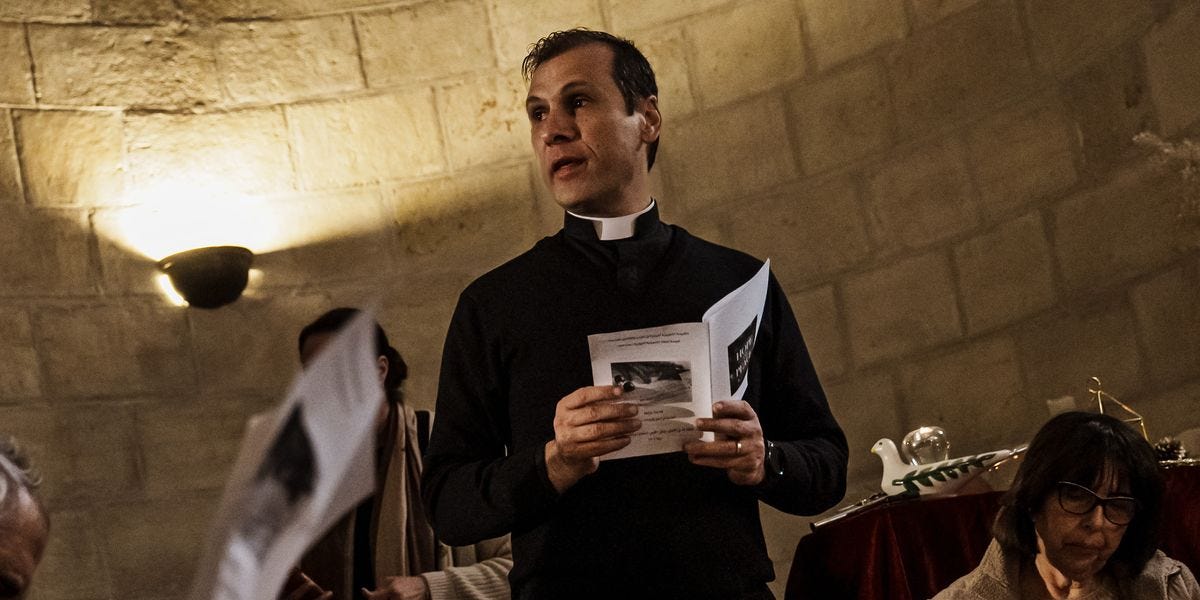
This morning I had a quick breakfast with another Lutheran pastor. This of course is not terribly remarkable in the scheme of things, except for the fact that the breakfast took place in the Kingdom of Jordan, a few feet away from the Dead Sea and my colleague had to cut the breakfast short so he could return home to his family, but he was anxious about all the military check point between here and there.
“How far of a drive is it” I asked.
“If I had a car and could drive straight there, about an hour. But my hope is that it will only take 8 hours.” He accepted that he may in fact not even make it home at all tonight.
Munther Isaac is a Palestinian Lutheran Pastor who lives and serves a church in Beit Sahour, near Bethlehem, the birthplace of Jesus. Christians have been here since the day the Spirit blew through them on the day of Pentecost, so Munther and my other Palestinian Christian friends can get slightly annoyed when well meaning Christians from the West ask “when did your family convert?”.
Um, over 2,000 years ago?
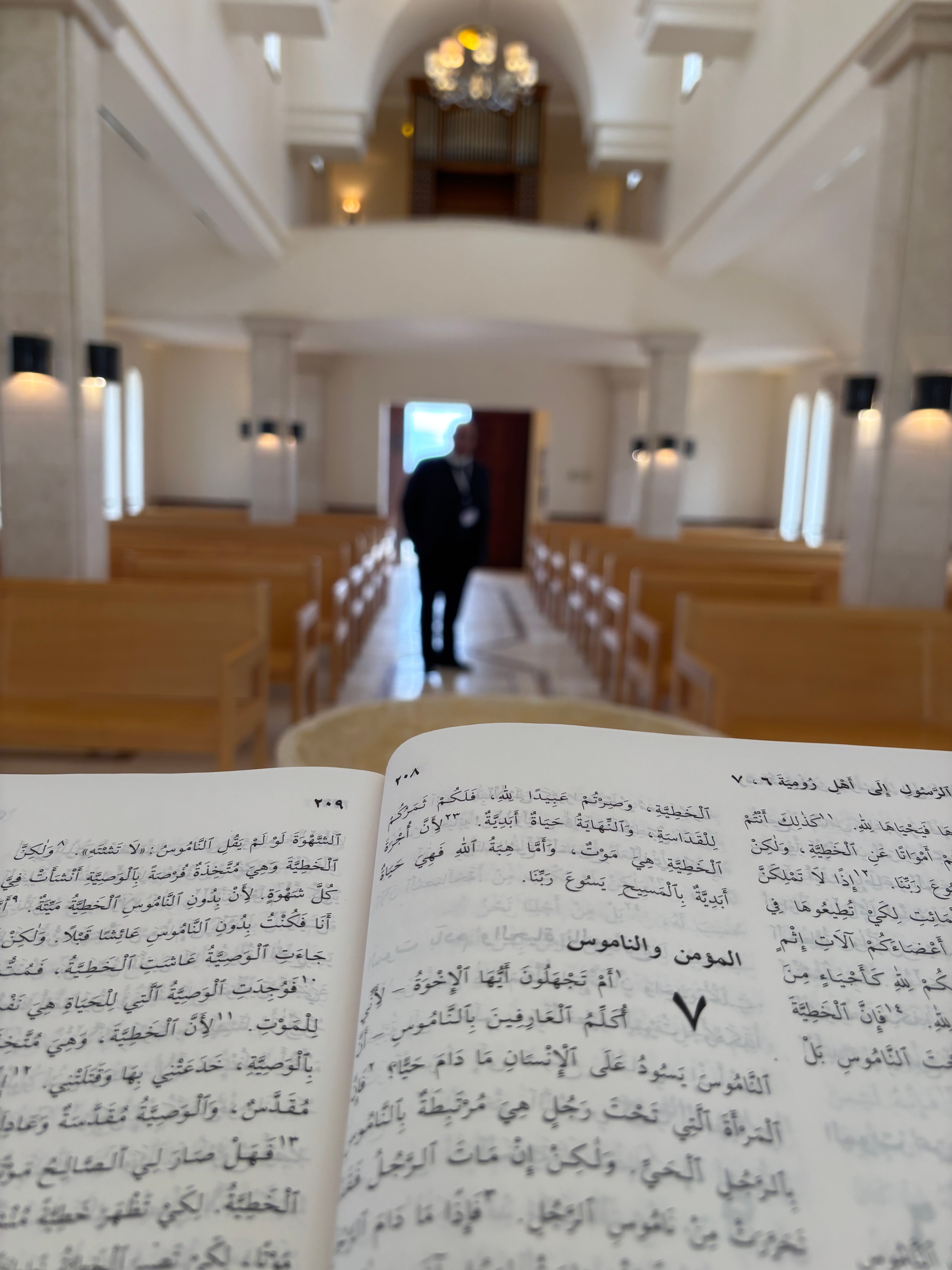
Munther and I are in Jordan right now for a conference – 60 academics and church leaders from 17 countries gathered over the last several days for a consultation on Christian Zionism (belief that Jewish people have a “divine right” to the land here – using a few verses in a 4,000 year old text to have authority over foreign policy and global political realities of today), and the impact of that on Christians in the Middle East; a few days together in a majority Muslim country, across the Dead Sea from the State of Israel to talk about Christian folks’ business: how do the theological beliefs of one group of Christians impact the lives of another group of Christians halfway across the planet?
Many of us grew up with some form of Christian Zionism, I know I did. Perhaps it stemmed from a desire to be faithful to what we have been told, or a desire to help usher in the second coming of Christ (ala The Late Great Planet Earth) so he can come back and destroy the world and take us up to heaven (described this week as science fiction theology), or a desire to assuage the guilt left over from the unspeakable atrocities and genocide of the holocaust.
It will take me time to metabolize what I heard over the last few days. Christian Zionism is widespread, and far reaching in it’s impact, and I am committed to try and maintain the humility it takes as a US citizen and a Christian to consider people like Munther and my friend Mitri Raheb as reliable narrators of the impact on the ground in Palestine.
Palestinian Christians should be listened to by us, their siblings in Christ.
Munther Isaac appeared in ‘Til Kingdom Come (2020), an Israeli documentary about American Christian support for Israel.[20] In the film he explains his view to pastor William Bingham that Christian Zionism contributes to the oppression of Palestinians. After their conversation, Bingham calls Isaac an anti-semite and says that Palestinians do not exist. – Wikipedia

This morning before Munther left to make his way home, he told me a story of a family in his church. For over 150 years they have rightfully owned and inhabited their land outside Bethlehem – a beautiful parcel dotted with olive trees, often hundreds of years old themselves.
Israeli settlers (whose actions are deemed illegal by the UN Security Council)
who for years have been attempting to take this family’s land, confronted them at their gate recently, demanding the family leave. The family showed them their ownership documents – dating back from Ottoman rule, then Jordanian rule through to Israeli rule. The settlers angrily lifted up their Bible and said “We have documents too. God gave us this land!”
As I mentioned, I am overwhelmed by all I heard this week and will try and write more later for those who are interested, but for now I wanted to report how one word stood out for me in a particular way during the conference, and that word is: heresy.
19th century theologian Friedrich Schleiermacher defined heresy as, “that which preserves the appearance of Christianity, and yet contradicts its essence“
So perhaps that is the correct word for when, with all the trappings of Christianity behind us, we who seek to justify or maintain our dominance over another group of people use the Bible to prove that our domination`is not actually an abuse of power at the expense of others, but is, indeed, part of “God’s plan”. Because there you have the appearance of Christianity (Bible verses and God-talk) contradicting its essence (love God, and love your neighbor, blessed are the meek, etc…).
Is it not heresy when slavery is established as “God’s will”; when the subordination of women is established as “God’s will”; when discrimination against queer folks is established as “God’s will”, when the taking of one people’s land by another people is established as “God’s will” (hello, manifest destiny), when the executive VP of the National Rifle Association claims that the right to buy an assault rifle is “not bestowed by man, but granted by God”? When a self-justifying message is heretically delivered in God’s name it brings with it a poison that infects the deepest parts of us and when the poison spreads, so does the violence.
When you can say that God Almighty is co-signing on your dominance over another group of God’s children, then every means is justified, right to the end. Every inch of land stolen, every suicide bombing enacted, every act of violence committed, every weapon used, every checkpoint and illegal detention, every child who dies, every tower that falls to the ground – all of it covered under some sort of bullshit spiritual umbrella policy. There are no means that need justifying if we claim God as our patron and guide.
And I imagine God is just about sick to death of it.
As I claimed in my book about sexual shame and religion, we should never be more loyal to a doctrine or an interpretation of a Bible verse than we are to people. If the teachings of the church are harming people we re-think those teachings. Amen?
Speaking up for Palestinians often comes at a cost. Those of you who have done it know. I also know, but am frankly too tired to care right now. So, if based on my recounting of the stories of my friends and colleagues, anyone is moved to called me anti-semitic, please open up the notes app on your phone and feel free to write it there but I will delete your unfounded accusations if you leave them here.
My apologies for the edge in my writing voice. We are all exhausted and as my friend Jodi just texted me, “this month has been two years long already.”
Thank you for reading. I am genuinely sending my love. Please pray this ceasefire holds. And for those waiting on the side of a road right now to return to the rubble of their homes. And for the hostages and prisoners who were released yesterday. I cannot imagine the trauma.
More soon…
In it with you,
Nadia
Several other intelligence agencies continue to favor the natural-origin theory, and there is no evidence SARS-CoV-2, the virus behind the pandemic, was in any laboratory before the outbreak.
The conspiracy nut jobs are in power now, who needs evidence and facts for something to be true.

So Jared can build luxury beachfront condos.
All that valuable oceanfront property. Much too nice for those dirty people. The Israeli military has already done a good job of demolition. We need to rebuild for people who will appreciate the beauty of the place and be willing to pay to maintain it. /s