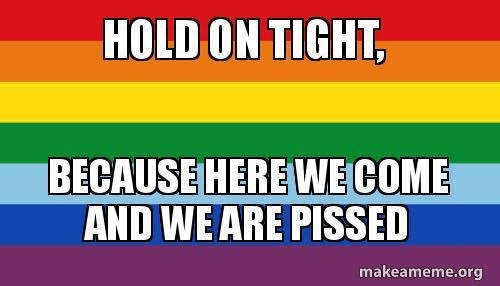
Bad republicans

Some cultists in the caravan were armed.

Last year Texas police were ordered to pay $175,000 for failing to respond to frantic calls from people on the bus.

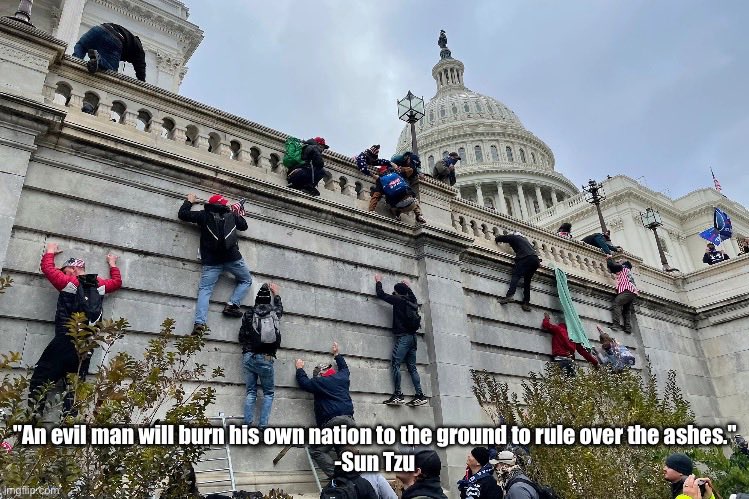
Marco Rubio, Trump Junior, and Jeanine Pirro were among the prominent cultists who celebrated the attack.

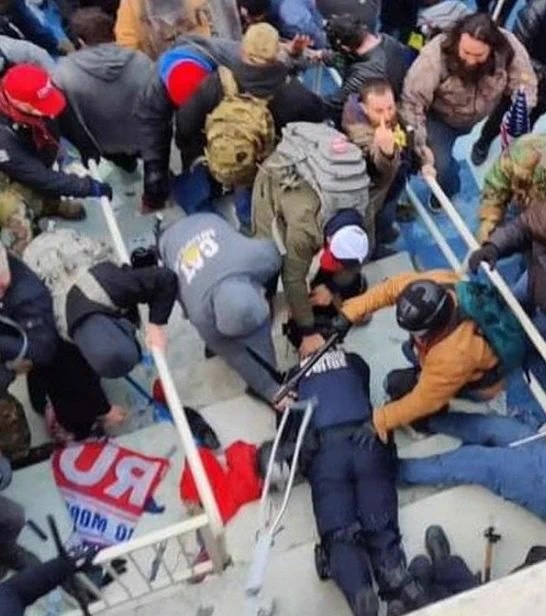
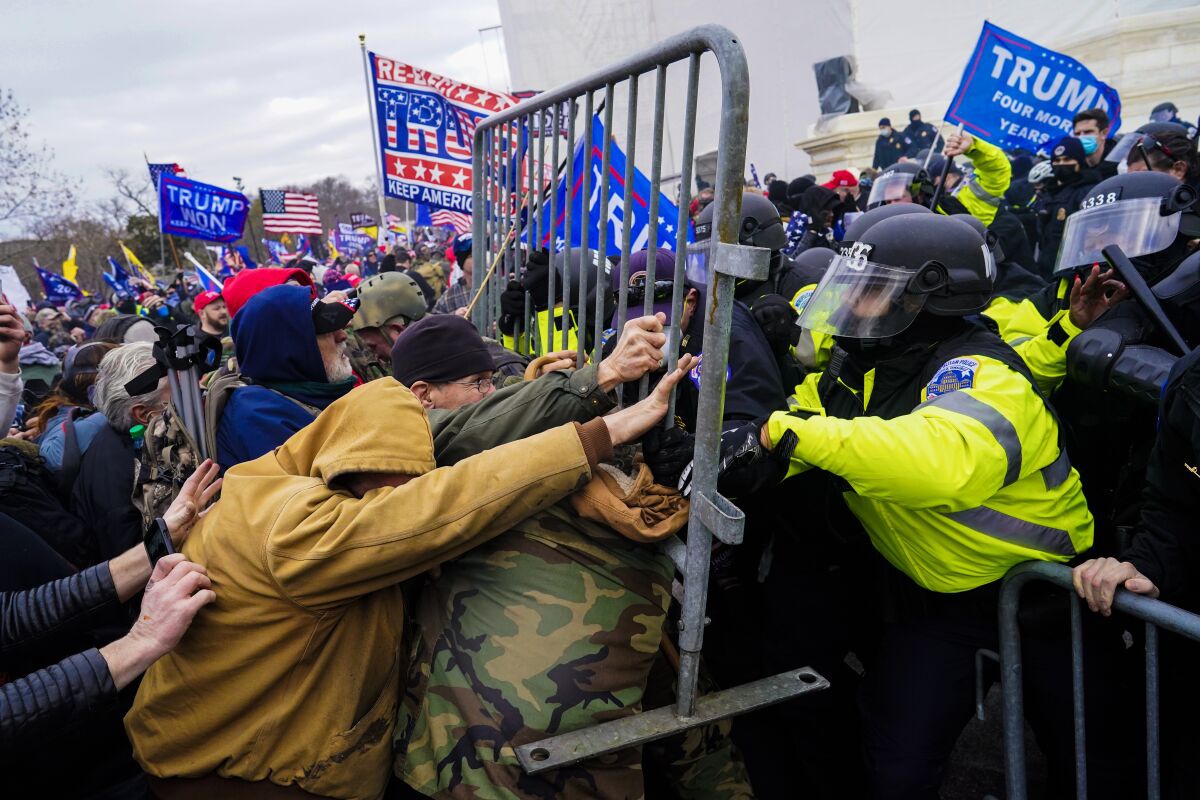
Trump later declared that the FBI should not investigate the attack, saying, “Those patriots did nothing wrong.”

The childish stupid misogynist shit the right spews.

Keeping Trump’s campaign promises would increase the national debt by $5.8 trillion over 10 years, while Harris’ would cost $1.2 trillion.

China-linked ‘Spamouflage’ network mimics Americans online to sway US political debate

This seems important.

By  DAVID KLEPPER Updated 11:56 AM CDT, September 3, 2024

WASHINGTON (AP) — When he first emerged on social media, the user known as Harlan claimed to be a New Yorker and an Army veteran who supported Donald Trump for president. Harlan said he was 29, and his profile picture showed a smiling, handsome young man.

A few months later, Harlan underwent a transformation. Now, he claimed to be 31 and from Florida.

New research into Chinese disinformation networks targeting American voters shows Harlan’s claims were as fictitious as his profile picture, which analysts think was created using artificial intelligence.

As voters prepare to cast their ballots this fall, China has been making its own plans, cultivating networks of fake social media users designed to mimic Americans. Whoever or wherever he really is, Harlan is a small part of a larger effort by U.S. adversaries to use social media to influence and upend America’s political debate.

The account was traced back to Spamouflage, a Chinese disinformation group, by analysts at Graphika, a New York-based firm that tracks online networks. Known to online researchers for several years, Spamouflage earned its moniker through its habit of spreading large amounts of seemingly unrelated content alongside disinformation.

“One of the world’s largest covert online influence operations — an operation run by Chinese state actors — has become more aggressive in its efforts to infiltrate and to sway U.S. political conversations ahead of the election,” Jack Stubbs, Graphika’s chief intelligence officer, told The Associated Press.

Intelligence and national security officials have said that RussiaChina and Iran have all mounted online influence operations targeting U.S. voters ahead of the November election. Russia remains the top threat, intelligence officials say, even as Iran has become more aggressive in recent months, covertly supporting U.S. protests against the war in Gaza and attempting to hack into the email systems of the two presidential candidates. (snip-More)

https://apnews.com/article/china-disinformation-network-foreign-influence-us-election-a2b396518bafd8e36635a3796c8271d7

Peace & Justice History for 9/4:

https://www.peacebuttons.info/E-News/peacehistoryseptember.htm#september4

September 4, 1949
Paul Robeson, scholar, athlete, musician and leader, defying a racist and red-baiting mob, sang to 15,000 at a Labor Day gathering in Peekskill, New York.
 
Paul Robeson (at microphone) singing to the Labor Day gathering in Peekskill, New York
The story and photographs of what happened 
Film from that day narrated by Sidney Poitier 
September 4, 1954
The Peace Pledge Union (PPU) organized a demonstration against the H-Bomb in London’s Trafalgar Square.
The PPU dates back to October 1934.

Young Peace Pledge Union members today.
The PPU today
September 4, 1957
Elizabeth Eckford and eight other young Negroes were blocked from becoming the first black student at Central High School in Little Rock, Arkansas.

Governor Orval Faubus had called out the National Guard to prevent the court-ordered integration of the public schools in the state’s capital.
President Dwight Eisenhower eventually sent in federal troops to guarantee the law was enforced.

Elizabeth Eckford
Read more Elizabeth Eckford followed and taunted by mob, 1957.
A very interesting related story: 
September 4, 1970
Vietnam Veterans Against the War (VVAW) began Operation RAW (Rapid American Withdrawal). Over the following three days more than 200 veterans, assisted by the Philadelphia Guerilla Theater, staged a march from Morristown, New Jersey, to Valley Forge, Pennsylvania, reenacting the invasion of small rural hamlets along the way.

Operation Rapid American Withdrawal 1970-2005: An Exhibition: 
September 4, 1978
Simultaneous demonstrations in Moscow’s Red Square and in front of the White House in Washington, D.C. were organized by the War Resisters League, calling for nuclear disarmament.

My day shoe shopping plus some news

I forgot to shut off the A/C in the room.  Let me know if it causes too much background noise.  Also we had a thunderstorm during this recording, so you might hear some of it.   Hugs.  Scottie

My morning, my day trying to find sneakers, a few news articles such as Kennedy and chem trails, red states block methane regulations, Israeli settlers attack Palestinians and kill them, steal their homes / land, and think genocide is not a problem.

Letters from an American-September 3, 2024

So much information today!

September 3, 2024 by Heather Cox Richardson Read on Substack

Last night the Boston Globe published a leaked email from a top volunteer with the Trump campaign, former Massachusetts Republican Party vice chair Tom Mountain, telling volunteers that the Trump campaign “no longer thinks New Hampshire is winnable” and is “pulling back” from that important swing state. He urged volunteers to turn their attention instead to Pennsylvania. After the story dropped, the Trump campaign cut ties with Mountain. 

Stephen Collinson of CNN and Isaac Arnsdorf, Josh Dawsey, and Marianne LeVine of the Washington Post reported today that Trump’s team has given up on trying to get Trump to talk about the economy and other issues voters care about. The former president has decided to spend the rest of the campaign attacking Vice President Harris to destroy her popularity and drive voters away from her, rather than trying to attract them to himself. The Washington Post reporters noted that likely voters view Trump unfavorably and his team has concluded that while he can’t improve his own standing, he can damage hers. 

Collinson dubbed Trump’s plans a “feral political offensive.”

It is not clear that this will work. As Collinson notes, Harris has refused to get dragged into the gutter with Trump, and Sarah Longwell of The Bulwark, who studies focus groups, notes that voters appear to want to put the nastiness of the past several years behind them. Still, the media-tracking company AdImpact reported that between August 23 and August 29, 57% of the total television spending for political ads was on Republican attacks on Harris.

Trump also continues to demand that Republicans support his attempt to suppress voting. Having failed to pass any of the necessary appropriations bills before going on August recess, Congress will be in a rush when it comes back into session next week. It needs to fund the government before the end of the fiscal year on September 30 in order to prevent a partial shutdown. Last Thursday, Trump told right-wing podcast host Monica Crowley that he would “shut down the government in a heartbeat” unless the government funding package includes the Safeguard American Voter Eligibility (SAVE) Act—which would give credence to the idea that noncitizens are voting in national elections despite the fact it is already illegal—and a bill restricting legal immigration.

Zeeshan Aleem of MSNBC today took public notice of Trump’s “deteriorating ability to clearly communicate.” His speeches “seem to be growing more discursive and difficult to comprehend by the day,” Aleem wrote. “Those speeches are making it hard, if not impossible, for people listening to them to understand what he wants to do with his power in office, and they’re reportedly turning off voters.” A reporter for The Guardian pointed out that attendees at Trump’s rallies are leaving as he rambles for nearly two hours, and complaining that he is “babbling.”

For his part, Trump says his wandering speech is deliberate. He calls it “the weave.” I’ll talk about, like, nine different things, and they all come back brilliantly together, and it’s like, and friends of mine that are, like, English professors, they say, ‘It’s the most brilliant thing I’ve ever seen.’”

Aleem notes that this less-focused, less-capable Trump would be exceptionally dangerous in office a second time. And yet, he was dangerous enough the first time. Today Adam Klasfeld and Ryan Goodman of Just Security released a study showing at least twelve times that Trump used the power of the presidency to retaliate against his political enemies. They note that there is no evidence that President Joe Biden or anyone else at the Biden White House ever took similar actions.  

John McCain’s son Jimmy today announced that he has switched his voter registration from Republican to Democrat and will work to elect Vice President Harris and Minnesota governor Tim Walz in 2024. The younger McCain enlisted in the Marine Corps at 17 and is now an intelligence officer in the 158th Infantry Regiment of the Arizona Army National Guard. He said he is speaking out because Trump’s conduct at Arlington National Cemetery was a “violation.” 

Last Friday, just before the long weekend, Trump announced that he would vote against a Florida ballot measure that would essentially enshrine in the Florida state constitution the abortion rights formerly protected by the 1973 Roe v. Wade decision. When Trump had bowed to popular support for abortion rights and expressed uneasiness at the state’s current six-week ban—a cutoff reached before most women know they’re pregnant—antiabortion activists launched fierce attacks on him. So, on Friday, Trump switched his position and announced he would vote against restoring access to abortion in Florida. 

That announcement has given wings to the Democrats’ messaging about Republicans’ determination to end abortion rights. It did not help the Republicans that more videos have been unearthed in which Republican vice presidential nominee J.D. Vance said that “a childless elite” is ruling the country. He went on to excoriate this elite for what he claimed was their pride that they didn’t have children and that they had abortions, and said “they look down on people who invest their time and their future in their children. And that is a dangerous place to live as a country.” Even a right-wing Newsmax interviewer suggested that he was “painting this group with perhaps a broad brush?”

On October 1, in Louisiana, a law will go into effect that reclassified the drug misoprostol as a controlled dangerous substance. Misoprostol can be used for abortion. It is also used for routine reproductive care and during medical emergencies to treat postpartum hemorrhage. It is on the World Health Organization’s list of essential medications, a list containing those medications that are the most effective and safe to meet a health care system’s most important needs. After antiabortion activists targeted the drug, Louisiana governor Jeff Landry signed a law reclassifying it as a controlled dangerous substance. The reclassification means that the drug will no longer be easily available on obstetric hemorrhage carts. 

“Take it off the carts?” one doctor said to Lorena O’Neil of the Louisiana Illuminator. “That’s death. That’s a matter of life or death.”

The Harris campaign said: “Let’s be clear: Donald Trump is the reason Louisiana women who are suffering from miscarriages or bleeding out after birth can no longer receive the critical care they would have received before Trump overturned Roe. Because of Trump, doctors are scrambling to find solutions to save their patients and are left at the whims of politicians who think they know better. Trump is proud of what he’s done. He brags about it. And if he wins, he will threaten to bring the crisis he created for Louisiana women to all 50 states.”

Vice President Harris’s campaign started its “Fighting for Reproductive Freedom” bus tour today in Palm Beach, Florida, where it drove past the Trump Organization’s Mar-a-Lago club. The bus will make at least 50 stops across the country. 

Pollster Tom Bonier today continued his examination of new registrants to vote. This time his focus was North Carolina. The pattern he has found across the country continues: “surges in registration are being driven by women.” In North Carolina, he writes, the number of registrants was almost 50% higher during the week of July 21 than in the same week in 2020, and the gender gap was +12 women, compared to +6 women in 2020. The new registrants were +6 Democratic, and 43% were younger than 30. 

The Harris-Walz campaign today joined the Democratic National Committee in announcing a transfer of nearly $25 million to support Democratic candidates in down-ballot state and federal races. The Democratic Congressional Campaign Committee and the Democratic Senatorial Campaign Committee will get $10 million each in hopes of supporting a Democratic majority in each chamber of Congress in the new administration. 

The Democratic Legislative Campaign Committee, the organization devoted to winning state legislatures, will receive $2.5 million. The Democratic Governors Association and the Democratic Attorneys General Association will get $1 million each. 

Finally, today, a federal judge issued a preliminary injunction to stop the Trump campaign from playing the song he likes to dance to at his rallies: “Hold On, I’m Coming.” The estate of Isaac Hayes Jr., the artist who co-wrote the song, filed a copyright infringement lawsuit against Trump, his campaign, and a number of his allies, noting that they have never obtained a public performance license for the song although they have used it at least 133 times.

Notes:

https://www.independent.co.uk/news/world/americas/us-politics/trump-campaign-new-hampshire-battleground-state-volunteer-email-b2606104.html

https://www.cnn.com/2024/09/03/politics/trump-quest-destroy-harris-momentum/index.html

https://www.washingtonpost.com/politics/2024/09/02/trump-strategy-campaign-harris/

https://www.huffpost.com/entry/donald-trump-government-shutdown_n_66d21e56e4b013957161cd53

https://www.msnbc.com/opinion/msnbc-opinion/trump-age-harris-ramble-rcna168979

https://www.cnn.com/2024/09/03/politics/jimmy-mccain-decries-trump-arlington-appearance/index.html

https://www.mediamatters.org/newsmax/unearthed-video-jd-vance-said-childless-elites-make-us-dangerous-it-was-too-much-newsmax

https://www.nbcnews.com/politics/2024-election/trump-damage-control-abortion-backlash-conservatives-rcna168922

https://www.firstcoastnews.com/article/news/politics/national-politics/kamala-harris-campaign-bus-will-tour-florida-this-week-heres-what-cities-it-will-travel-to/77-1dbe6154-e2c5-4acc-8352-4b876e377136

https://www.washingtonpost.com/elections/2024/09/03/harris-25-million-transfer/

https://www.npr.org/2024/08/29/g-s1-20187/trump-abortion-amendment-4-florida-ivf-funding-reproductive-rights

https://www.cbsnews.com/news/trump-isaac-hayes-hold-on-im-coming-lawsuit/

https://www.who.int/data/gho/indicator-metadata-registry/imr-details/essential-medicines-list-includes-misoprostol-tablets-for-use-during-pregnancy-childbirth-and-postpartum-care

https://www.theguardian.com/us-news/article/2024/sep/03/mccain-trump-arlington-democrat

X:

AudreyWSBTV/status/1830996525499011242

tbonier/status/1831139736477430080

cwebbonline/status/1830967329297178761

lorenaoneil/status/1831123870507552901

Morning_Joe/status/1830952788408295527

​​FBSaunders/status/1831041727676940632

X gets banned in Brazil

For once, Elon Musk has a case worth fighting — but he has to do it in the courts

Casey Newton

Starlink, the satellite broadband company led by Elon Musk, said on Tuesday that it would comply with a court order and block access to X in Brazil. It marked yet another surprising twist in a wild saga that has been simmering all year but boiled over this weekend when a Brazilian judge single-handedly moved to ban X in the country.

Today let’s talk about how a personality clash between two powerful men led to tens of millions of Brazilians being prevented from accessing X — and how the move could be used to justify further restrictions on internet freedom around the world.  

In April, I wrote here about how Musk had decided to risk a ban of X in Brazil over a court’s order that the platform ban a number of accounts belonging to right-wing users. Musk decided to restore the accounts in defiance of a powerful Supreme Court justice named Alexandre de Moraes, who subsequently opened an inquiry into the billionaire.

Musk, who has said he bought Twitter to turn the platform into a bulwark of free speech, positioned the move as a defense of liberty against an extremist government. Moraes, for his part, called Musk an “outlaw” whose X would “allow the massive spread of disinformation, hate speech and attacks on the democratic rule of law, violating the free choice of the electorate, by keeping voters away from real and accurate information.”

After Musk’s April outburst, X quickly reversed course, and said it would comply with the judge’s order. But the accounts that Moraes sought to terminate remained active, and last month X said he threatened to arrest a local employee for the platform’s failure to comply with his order. (The court wouldn’t comment, but threatening platform employees with jail time is an increasingly common and typically quite effective means of allowing government agents to moderate content as they see fit.)

Typically, threatening an employee with jail is all it takes to get a company to reverse course. Musk, on the other hand, said X would close its offices in Brazil.

On Friday, Moraes met that dramatic escalation with one of his own. Here are Jack Nicas and Kate Conger in the New York Times:

In a highly unusual move, Justice Moraes also said that any person in Brazil who tried to still use X via common privacy software called a virtual private network, or VPN, could be fined nearly $9,000 a day.

Justice Moraes also froze the finances of a second Musk business in Brazil, SpaceX’s Starlink satellite-internet service, to try to collect $3 million in fines he has levied against X. Starlink — which has recently exploded in popularity in Brazil, with more than 250,000 customers — said that it planned to fight the order and would make its service free in Brazil if necessary.

Moreover, while he quickly reversed course, Moraes initially ordered Apple and Google to block X at the level of the app store in Brazil, as well as blocking VPN apps that let users circumvent geographic barriers to app usage.

While moves like these are common in authoritarian countries such as Russia or China, they are extraordinary to see in democracies, which typically place a higher value on free expression.

In any case, the fallout from Moraes’ ban was swift. Countless fan and meme pages went silent. Bluesky added 2 million users, and Threads saw some lift as well. (They are currently the No. 1 and 2 apps respectively in the Brazilian App Store, per Similarweb.) 

And depending on how long the ban lasts, it will likely degrade even further the value of X, which a new analysis over the weekend found had lost an estimated $24 billion in value since Musk acquired Twitter in 2022.

What makes the story of Brazil and X such an unusual tech policy story is the way it has been driven almost entirely by two people. 

On one side is Musk, who has often claimed the mantle of free speech warrior in public while capitulating to government requests in private. One analysis last year found that under Musk, X had given into 83 percent of requests from authoritarian governments to remove content. And he appears more willing to accede to the requests of right-wing governments, such as India’s.

In 2021, it seemed possible that India would be the first democracy to ban Twitter, after the company fought court orders to remove political dissent — including from left-wing opponents to the government of Narendra Modi. But relations have warmed between Musk and the Modi government since he stopped fighting those battles.

“The rules in India for what can appear on social media are quite strict, and we can’t go beyond the laws of a country,” Musk told the BBC last year. “If we have a choice of either our people go to prison or we comply with the laws, we will comply with the laws.” At another point in the interview, Musk said: “If people of a given country are against a certain type of speech, they should talk to their elected representatives and pass a law to prevent it.”

Brazil once again gave Musk the choice of sending an employee to prison or complying with its laws. This time, he chose not to comply.

Musk’s defiance likely would have sparked a backlash in most countries where X operates. But he has found a particularly pugnacious opponent in Moraes, a hugely powerful and controversial figure within Brazilian politics who came to prominence during the tenure of former president Jair Bolsonaro. Bolsonaro, a Trump-like figure who threatened to undermine Brazil’s democracy, lost the 2022 election and left office after a violent riot at the capitol by his supporters last year.

Both during and since Bolsonaro’s presidency, Moraes has used the unusual powers of his office to order people arrested over their social media posts, account bans on the platforms where they posted, and even temporarily removing a governor from office. At X, he has sought the removal of at least 140 accounts, the Times reported, and often delivers his orders in sealed documents that do not specify any rationale for his decision.

Moraes is not the first government agent to make overbroad legal requests of a tech platform. GoogleMeta, and other companies receive thousands of requests like these every year, and disclose them in aggregate in annual transparency reports. The reason they publish those reports is to serve as a check on governments that seek to abuse their power by seeking information from platforms for surveillance and other potentially problematic uses.

Crucially, Google and Meta also fight against overbroad requests in court. Sometimes, they win. The result is a kind of dance between platforms and governments that leaves everyone at least somewhat disappointed but is also the reason that so many people around the world can speak freely online.

I don’t post on X any more myself, and I will not lament its passing when it disappears. But whatever role the 140 X accounts in question in Brazil may have played in threatening Brazil’s democracy, they cannot have threatened it more than silencing the 20 million or so Brazilians who have been using it regularly. Particularly when Brazil’s move will be seen by autocracies as justification to enact ever more onerous speech restrictions of their own.

Like Pavel Durov before him, Musk appears to have thought he could escape the reach of regulators indefinitely. This weekend, he began to learn the same lesson Durov has: you can’t outrun the legal system forever. Had Musk fought for his users in court earlier, he might have avoided a ban. Instead, as he has before in so many other things, Musk chose to do it the hard way.

https://www.platformer.news/x-ban-brazil-musk-moraes/?ref=platformer-newsletter

Justice Department Announces Terrorism Charges Against Senior Leaders of Hamas

Tuesday, September 3, 2024

Defendants Are Senior Leaders of Hamas Responsible for Planning, Supporting, and Perpetrating Hamas’s October 7 Terrorist Attacks in Israel Resulting in the Brutal Murders of More Than a Thousand Innocent Civilians, Including Over 40 American Citizens

NoteThe complaint was unsealed on Sept. 3 and can be viewed here

The Justice Department announced today the unsealing of terrorism, murder conspiracy, and sanctions-evasion charges against six senior leaders of Hamas, a designated foreign terrorist organization. The charges relate to the defendants’ central roles in planning, supporting, and perpetrating the terrorist atrocities that Hamas committed in Israel on Oct. 7, 2023 (the October 7 Hamas Massacres), involving the murders and kidnappings of countless innocent civilians, including American citizens, which was the culmination of Hamas’s decades-long campaign of terrorism and violence against Israel and its allies, including American citizens. The defendants are either deceased or remain at large. 

“The Justice Department has charged Yahya Sinwar and other senior leaders of Hamas for financing, directing, and overseeing a decades-long campaign to murder American citizens and endanger the national security of the United States,” said Attorney General Merrick B. Garland. “On October 7th, Hamas terrorists, led by these defendants, murdered nearly 1200 people, including over 40 Americans, and kidnapped hundreds of civilians. This weekend, we learned that Hamas murdered an additional six people they had kidnapped and held captive for nearly a year, including Hersh Goldberg-Polin, a 23 year old Israeli American. We are investigating Hersh’s murder, and each and every one of Hamas’ brutal murders of Americans, as an act of terrorism. The charges unsealed today are just one part of our effort to target every aspect of Hamas’ operations. These actions will not be our last.”

“Yahya Sinwar and the other senior leaders of Hamas are charged today with orchestrating this terrorist organization’s decades-long campaign of mass violence and terror — including on October 7th. On that horrible day, Hamas terrorists viciously massacred nearly 1,200 innocent men, women, and children, including over 40 Americans, kidnapped hundreds more, and used sexual violence as a weapon of brutality,” said Deputy Attorney General Lisa Monaco. “Since that horrific day, we have worked to investigate and hold accountable those responsible, and we will not rest until all those who kidnapped or murdered Americans are brought to justice. Our thoughts continue to be with the families of all the victims of this barbaric terrorist attack.”

“From the moment Hamas launched its horrific attack on October 7, the FBI has been dedicated to identifying and charging those responsible for these heinous crimes,” said FBI Director Christopher Wray. “The FBI has and will continue to relentlessly investigate these attacks on civilians, including Americans. Hamas is a Foreign Terrorist Organization with a long history of violence, and the group’s actions have resulted in increased terrorism threats in the U.S. and against American interests throughout the world. Countering terrorism remains our number one priority, and our work continues.”

“The core mission of the National Security Division is to protect Americans from violent terrorists and extremist organizations like Hamas,” said Assistant Attorney General Matthew G. Olsen of the Justice Department’s National Security Division. “The atrocities committed by Hamas in Israel on October 7 are intolerable, and the Justice Department will not rest in our pursuit to hold Hamas accountable for perpetrating its campaign of terror, death, and destruction.”

“For decades, Hamas and its leadership have dedicated themselves to the eradication of the State of Israel, and to murdering, maiming, and brutalizing anyone — including dozens of Americans — who stood in their way,” said U.S. Attorney Damian Williams for the Southern District of New York. “The October 7 Hamas Massacres – in which over 40 American citizens were murdered – is only the latest act of savagery carried out by Hamas. This office has long been dedicated to serving as a bulwark against terrorism, and striking blows against its leaders. Our commitment is clear: if you hurt one member of our community, you hurt all of us — and we stand with all victims of Hamas’ reign of terror. We will bring justice to this terrorist organization from the top down for the atrocities they have committed.”  

According to court documents, Harakat al-Muqawamah al-Islamiyya, commonly known as Hamas, is a terrorist organization that was founded in 1987, and has been designated as a foreign terrorist organization (FTO) by the United States since 1997. From its inception, Hamas’ stated purpose has been to create an Islamic Palestinian state throughout Israel by eliminating the State of Israel through violent holy war, or jihad. Hamas also promotes attacks against the U.S. and its citizens and, over more than two decades, Hamas has murdered and injured dozens of Americans as part of its campaign of violence and terror. (snip-More)

https://www.justice.gov/opa/pr/justice-department-announces-terrorism-charges-against-senior-leaders-hamas

Federal judge rejects Donald Trump’s request to intervene in wake of hush money conviction

By  MICHAEL R. SISAK Updated 6:47 PM CDT, September 3, 2024

NEW YORK (AP) — A federal judge on Tuesday swiftly rejected Donald Trump’s request to intervene in his New York hush money criminal case, spurning the former president’s attempt at an end-run around the state court where he was convicted and is set to be sentenced in two weeks.

U.S. District Judge Alvin Hellerstein’s ruling — just hours after Trump’s lawyers asked him to weigh the move — upends the Republican presidential nominee’s plan to move the case to federal court so that he could seek to have his conviction overturned in the wake of the U.S. Supreme Court’s presidential immunity ruling.

Hellerstein, echoing his denial of Trump’s pretrial bid to move the case, said the defense failed to meet the high burden of proof for changing jurisdiction and that Trump’s conviction for falsifying business records involved his personal life, not official actions that the Supreme Court ruled are immune from prosecution. (snip-more on the page, but this is the news.)

https://apnews.com/article/trump-hush-money-sentencing-new-york-immunity-a905207c7db9fc48d022d68ac6cc12e1

How a Native elections official is breaking down voting barriers in Arizona

Sep 03, 2024, Jessica Kutz

Originally published by The 19th

Your trusted source for contextualizing Election 2024 news. Sign up for our daily newsletter.

About a month before Arizona’s July primary, Pima County Recorder Gabriella Cázares-Kelly and her older sister Elisa Cázares were driving around Three Points, a rural community between Tucson and where they grew up on the Tohono O’odham Nation, dropping off flyers for the recorder’s reelection campaign. Some 5,000 people live in Three Points, which leans conservative. The properties, an assortment of mobile homes and ranch-style houses, are separated by chain link fences, but their yards blend into the Sonoran desert landscape of mesquite trees, saguaros and chollas. 

They stopped at a trailer whose address popped up on a canvassing app on Cázares-Kelly’s phone, programmed to scan voter rolls and identify homes of registered Democrats who voted in the last election. Old Volkswagens were rusting in the yard. There was a “beware dog” sign attached to the fence. No one came out to greet them, so Cázares-Kelly left her campaign materials wedged outside. Her sister made a note of it on the phone as a “lit drop.” 

At the second stop, Cázares-Kelly — dressed in tennis shoes, distressed jeans and a black shirt that says “Elect Indigenous Women” in big white letters — had just tucked fliers under a car’s windshield wiper when a little girl opened the door of the house, followed by a woman sporting a slightly wary expression.

“Hi. My name is Gabriella. I’m actually the county recorder. I’m running for reelection and just sharing some information about my campaign,” Cázares-Kelly said warmly through the fence, the sun beating down on her long black hair. 

Cázares-Kelly, who is Pima’s first Indigenous person to hold a countywide seat, quickly explained that part of her job is to be responsible for early voting, mail-in voting and voter registration. She was there soliciting voters for herself and also canvassing for her best friend April Ignacio, who was running for a Pima County Board of Supervisors seat. They grew up together on the Tohono O’odham Nation and got into politics to bring more rural and Indigenous representation to a county where about 4 percent of the residents identify as Indigenous and whose votes could help decide a closely-contested November election in a battleground state. 

Over the loud barks of two dogs, the woman explained that she can’t vote because she has felonies on her record. Cázares-Kelly’s demeanor shifted as she began talking about her favorite subject: voting rights. She told the woman about a free legal clinic provided by the county’s public defenders where she might be able to restore her voting rights and that all the information is on the recorder’s website.  

“Oh really?” the woman responded, her eyes lighting up. “That’s the only reason I haven’t is because it costs so much money.” 

“They’ll help you fill out the paperwork,” Cázares-Kelly said reassuringly. 

Cázares-Kelly headed back to the car and reported to her sister about the possible voter education win. “That was cool,” she said.

Her sister noted the interaction in the app and looked for the next address. 

Most stops resulted in lit drops at homes whose residents don’t seem to trust strangers walking up to their doors. At one, Cázares-Kelly was already on the front steps when the word “shotgun” on a sign caught her eye. She turned to the Ring camera and explained why she was there before briskly getting off the porch, entering the car and telling her sister to book it. 

To Cázares-Kelly, each conversation feels like a small victory. It’s rare to have politicians canvas in these harder-to-reach communities, including those on Indigenous lands; almost everyone perks up once she explains who she is and what she’s doing. 

Gabriella Cázares-Kelly, partially visible, holds an open, large ledger book filled with handwritten entries. She stands in front of shelves filled with old, worn books and binders in a storage room.
Gabriella Cázares-Kelly goes through old Pima County records at her offices in Tucson, Arizona. (Ash Ponders for The 19th)

She doesn’t really need to get the vote out to be reelected; in solidly Democratic Pima County, it’s extremely unlikely that a Republican would flip her seat. But as a member of the Tohono O’odham Nation, whose broad territory extends along 62 miles of the U.S.-Mexico border, she knows the obstacles to participating in elections. It’s the whole reason she ran in 2020: to represent people who were being ignored by the democratic system and denied the right to vote. 

But Indigenous voters can swing election results in this battleground state, home to 22 federally recognized tribes. In 2020, President Joe Biden won Arizona by just 10,457 votes. That year, Democrats garnered 10,657 more votes from inside Native American reservations than they had in 2016. 

Now, as a presidential election draws near, Cázares-Kelly is working to ensure that every eligible resident has a chance to cast their ballot. 

At one of the last homes she approached that day, an older woman named Ann Gail opened the front gate to chat, her eyes shielded by dark sunglasses. She said she stopped believing in mail-in ballots after the fake narrative of a stolen election pushed by former President Donald Trump and his Republican allies took hold in 2020. When it comes to her own ballot, she said, “I feel like it needs to be counted and I need to see it.”

Cázares-Kelly tried to reassure her. “Vote by mail is very safe,” she said. “But I absolutely respect your decision to vote on Election Day.” 

“As an elected official, and as a candidate, we need people to trust in the system and to recognize it’s non-partisan,” Cázares-Kelly continued. “Today I’m here on a partisan basis, but when I’m working, it is not partisan. It is about everybody voting.”

Gail assured her that she’ll be voting and will “get everybody in my neighborhood” to vote, too,” she said. “It’s so important. My grandson turns 18 in July, and I’ve told him, ‘You have to vote.’” 


Cázares-Kelly jokes that she got into voting rights work by accident. In 2016, she was an academic adviser at the Tohono O’odham Community College when her friend and colleague Daniel Sestiaga, a member of the Fort Yuma Quechan Indian Tribe, approached her about a favor. He had been recruited by the American Indian Higher Education Consortium, which represents the interests of tribal colleges across the country, to register students to vote. He asked Cázares-Kelly if she could help. She knew all the students by name and was “just like a changemaker on campus,” he said. 

On the first registration day, Sestiaga got pulled into a meeting, so Cázares-Kelly had to do the work by herself. Despite not having any training, she thought, “It’s probably not that hard. I’ve registered myself and other people. Like, it’ll be fine.”

Instead, she recalled, “It turned out to be really hard.” 

One of the challenges is that voter registration isn’t set up for the realities of tribal land. “The problem on the reservation is if you’re asked for your physical address, you just kind of make it up,” she said. “Because there is nothing you can really reference.” Instead of a street name, one might describe where they live in relation to a landmark or a mile marker. For example, the college’s address was Highway 86, milepost 125-and-a-half, she said. 

The form also includes a spot to draw where you live. “Well, my nation is the size of Connecticut,” Cázares-Kelly said. “Are you asking for the shape of my nation and a star? Like, what are you looking for here?” 

All of this can create confusion for residents who sometimes just list their PO boxes, which don’t count as physical addresses. That will delay their registration, Cázares-Kelly said.

Non-native students had issues, too, particularly if they were from out of state. Some students didn’t have driver’s licenses. “Every single person’s situation was so completely different,” she said. “It ended up being incredibly complex.” 

She took her questions to the office of then-recorder F. Ann Rodriguez. She had so many that, at one point, she bumped her sister’s number off her speed dial list and replaced it with the number for Rodriguez’s office. 

And the work was just beginning. “People started getting the voter registration cards back, getting their voter IDs in the mail, and they were so excited to show me or thank me for helping them register,” she said. But then it became, “My mom wants to register now, my auntie, my boyfriend, my uncle. How do I get them a form?” Cázares-Kelly realized she didn’t know. “It was like I pulled a thread from a sweater and all of a sudden this sweater started unraveling.”

One of the things she learned is that the post office on the reservation should have voter registration forms available, but hadn’t stocked them in years. “Having no influence and no title and no anything, I reached out to the postmaster, I reached out to the recorder’s office, and I connected the two,” she said. Soon, the forms were where they should have been all along. 

Cázares-Kelly’s voting advocacy quickly turned into an obsession, Sestiaga said. One day, he recalled, “We were cruising through the village on a lunch break or something and she said, ‘If there was a way that I could make a full-time job out of getting people registered to vote, I would do it.’” Teasing her, he told her she’d just have to become the next county recorder. “She was like, ‘Get out of here! Like, I have no interest in politics. I have no interest in campaigning.’” 

But she also recognized there was a need for better outreach, particularly on the Nation, he said. So when Rodriguez announced in 2019 that she was going to retire after 28 years of service, it felt a little bit like fate to Sestiago. A lot of other people who knew Cázares-Kelly had a feeling she would go for the seat. “I remember seeing that headline, and I just thought to myself, ‘Oh my goodness, she’s going to run for this,’” her husband, Ryan Kelly, said.

Cázares-Kelly wasn’t sold yet. She was, first and foremost, an educator. She had no desire to be a politician, and the thought of raising campaign money made her uncomfortable. 

But it nagged at her how long it had taken to build a relationship with the current recorder’s office. She thought about having to do that all over again once Rodriguez left office. And what if the new recorder was anti-Native? “I was worried,” she said. “Eventually, I recognized that I care about this office and I understand a lot about the needs that are not being met, and I have a sense of duty to at least try.” 

Gabriella Cázares-Kelly sits at her office desk, typing on a computer.
Gabriella Cázares-Kelly works in her office in Tucson, Arizona. (Ash Ponders for The 19th)
A wall in an office space displays framed portraits of county recorders, including Gabriella Cázares-Kelly, whose photo is in the bottom row. A digital clock above the frames shows the current time.
A wall displays framed portraits of Pima County Recorders, including Cázares-Kelly, at her offices. (Ash Ponders for The 19th)

She launched her campaign in 2020, right at the start of the COVID-19 pandemic. That meant having to canvass neighborhoods with social distancing measures in place, doing no-contact lit drops and outreach through Zoom forums and virtual fundraisers.

Worse, a candidate who wanted to win her community would need to do a lot of driving — and her car was having engine problems. She needed money to get back on the road. When she was registering voters, she sold banana bread to pay for gas. But fixing the car would take a much bigger sum, and she felt bad asking for money from people who might not have any to spare. A friend assuaged her guilt: “I think you’re saying, ‘Hey, community, I’ve invested in you,’” she recalls him telling her. “Now you’re asking, ‘Can you invest in me?’”  

She set up a GoFundMe for $3,500 and quickly met the goal. “It was just shocking to me that people would give me money,” she said. But it didn’t surprise her husband, a former teacher who is now a labor organizer with the AFL-CIO. Because she never wanted to get into politics, she had won community support just by being herself, he said. “Gabby walked into the race already having so many meaningful community relationships,” he said.

Those ties had deepened in 2017, when she, her longtime friend April Ignacio and a few others co-founded an advocacy organization called Indivisible Tohono. They have organized everything from sock drives to candidate forums to Pride events on the Nation.

That network of friends was ready to spread the word about her campaign. It helped that she made a TikTok video that went viral, showing her speeding by the National Mall in Washington, D.C. on an electric scooter while wearing a traditional red dress and yelling, “Excuse me, I’m Indigenous, coming through!” That moment became part of her campaign slogan and bumper sticker design. 

So when Election Day came, her supporters were hopeful that she might have a shot. “We had a good group of people who are really all rooted in the community,” her husband said. “I think we quietly suspected that it was going to be a landslide victory.” 

And they were right. She beat her opponent by more than 80,000 votes.  

Ignacio said it was a barrier-breaking moment for Cázares-Kelly. “As a rez girl growing up, we didn’t have the idea that we could do this. We didn’t have people in our community who were doing things like this,” she recalled. “For me to watch my best friend make history, it’s still very emotional. And I think that she’s the star who she’s always been.” 


Cázares-Kelly followed the canvassing in Three Points with a Juneteenth event in Tucson, where she gave the land acknowledgment at the opening ceremony, recognizing tribes like her own that have stewarded the land. Then she stayed to mingle with the crowd. As she strolled by the booths — some selling lemonade, others representing the gun reform group Moms Demand Action and the African American Democratic Caucus — people stopped her to shake her hand and fangirl about meeting her. 

She’s something of a local celebrity, which she didn’t expect as an elected official doing an administrative job. When she ran, “it wasn’t a sexy position,” she said. “Most people didn’t care about the recorder’s office.” 

Two things contributed to her popularity. One is that Cázares-Kelly, despite her initial shyness, is charismatic and funny and beloved by Pima County voters, who cast more votes for her than any other Democratic countywide candidate in the July primary. The other, a more somber reality, is that the 2020 election raised the profile of county recorders after the Trump administration spread unfounded conspiracy theories that votes in Arizona weren’t being counted. 

That fundamentally changed how she had to run her office. She immediately created a communications team to counter disinformation and teach people how voting works. In May, they invited a small group of community members and journalists into a highly restricted part of the office to see how ballots are counted. She also recently hosted a series with the Pima County Interfaith Council, visiting five churches to talk about a “day in the life” of the ballot. She draws inspiration from educational programs like “Mr. Rogers” and the “How It’s Made” videos about crayons or peanut butter. “I think people just want to know those types of things,” she said. 

She also uses social media to spread information about voting, tailoring the messages to the medium. Twitter is for journalists and other “nerds,” as she put it, so she tends to be wonkier there. Facebook and Instagram are for people like her sister, who don’t really care about the granularity of politics, but might be enticed if she can explain what her office does. 

Gabriella Cázares-Kelly stands outdoors, wearing a green patterned blouse and a beaded necklace with her hands in her pockets. She smiles slightly, and trees create dappled light on her face and clothing.
Pima County voters cast more votes for Cázares-Kelly than any other Democratic countywide candidate in the July primary. (Ash Ponders for The 19th)

“I think people have for a really long time been very dismissive of social media,” she said. “But we can very much see a parallel between what happens on Twitter and Instagram and what happens in person.” For example, she said, when Kari Lake, a far-right Republican who ran for governor in 2022 and is now running for the U.S. Senate, sent out a tweet suggesting ballot counting was being slow-rolled to prevent her from winning, “it results in physical phone calls to my office.” 

Voter outreach will matter a lot this year, in what former recorder F. Ann Rodriguez describes as a “big election” for both the county and the nation. She points out that Pima is Arizona’s second most-populated county, after Maricopa, which happens to be one of the fastest-growing counties in the United States. And several hot-button issues will bring out voters: This year both abortion rights and the wages of restaurant workers are on the Arizona ballot.

For now, a lot of Cázares-Kelly’s work happens at events like this one, where she can answer questions in person. At the booth for NextGen America, which focuses on getting out the youth vote, she chatted about how the work was going and offered a pro tip learned from years of dealing with registration hassles: Instead of asking if someone is registered to vote, ask if they are registered at their current address. (Sometimes people move without updating it.)

Two booths down, at the Saavi Services for the Blind tent, she talked to Mohammed Falah about a tool called a ballot marking device — a machine that helps people with disabilities vote. It can read a ballot to a person through headphones, offers functions for large print or color contrast and has a controller that people with hand mobility issues can use to select their voting option. She said her office would be happy to demonstrate it for his organization. 

The county had the machines before she came into office, but, she said, much of the staff didn’t know how to use them. “They were like a nice decorative thing on the side of the room and if somebody asked to use it, [staff] would have to take out the instruction booklet and troubleshoot,” she said. “Then that person’s having to wait. And often it would lead to people feeling discouraged and embarrassed. And, you know, they may choose not to participate.” 

Listening to what the community needs, Cázares-Kelly said, “makes it better for everybody.” Sometimes it’s as simple as having a table with chairs at early voting locations. Older people started requesting that accommodation, she said, “but then we would see people who come in with a boot on their foot.” Once, she watched a mom sit down to breastfeed her child while voting.  

Her office has taken other accessibility measures, like making sure that PDF documents are compatible with a screen reader, a tool that can read text aloud or translate it into Braille. All of her social media communications include an image description for the same reason. 

As of 2016, there were about 175,600 visually impaired people in Arizona, and the population is aging, Falah said. This means more people will soon need these accommodations. “We are a retirement state,” he said. “If we do not tackle it now, then when?” 


A few weeks later, Cázares-Kelly was standing in front of a class of soon-to-be graduates from a training program that helps Indigenous people overcome the unique challenges they’ll face while running for office. Native politicians are often some of the first from their communities to either run or hold their positions and that usually comes with a fair amount of pushback or skepticism. 

Cázares-Kelly opened her talk by greeting the students in the Tohono O’odham language. Switching back to English, she said, “You are on O’odham land.” Then she added, with a smirk, “So — you’re welcome.” The group burst into laughter. It felt like a cheeky inside joke for a group of people who’ve likely been asked to do land acknowledgements for non-Native audiences. But the lighthearted moment quickly turned serious as Cázares-Kelly launched into the story of how she became involved in voting rights work thanks to her earliest influence, her grandmother. 

Cázares-Kelly grew up in two different communities in the Tohono O’odham Nation. One is called Kupk, a remote place where she spent her summers. The rest of the year, she lived in the village of Pisin’ Mo’o, which had some services, like a bus stop. She lived next door to her grandmother, Catherine Josemaria. Cázares-Kelly refers to her affectionately as her Hu’uli-bat, which is O’odham for “my dearly departed mother’s mother.”

They would communicate across their two languages, her grandmother in her broken English and Cázares-Kelly in her broken O’odham. They were always together, she said. Her grandmother showed her how to harvest traditional foods and she recalls watching her grind corn and clean tepary beans in the kitchen. 

But she also remembers another tradition: her grandmother’s voting ritual. It was a right Josemaria did not have until she was 30 years old. She was born in 1918 and granted citizenship six years later, but it wasn’t until 1948 that Native Americans won the right to vote. Even then, for decades, voting barriers like literacy tests specifically disenfranchised non-White and Indigenous people. 

But that didn’t stop Josemaria from being politically active. “She was a brilliant woman and she was a community leader,” Cázares-Kelly told the group. “We had visitors every single day of my youth, people wanting to hear her stories and her gossip — she was the gossip queen — and get her advice and have political discussions with her.”

On election days, Cázares-Kelly would comb and braid her grandmother’s long gray hair and pin it up in a bun. Her grandmother would don a dress and a little purse, and Cázares-Kelly would help her into the passenger seat of her car. Cázares-Kelly was too young to legally drive, but it was pretty common to start driving young on the reservation — and extremely important to get her grandmother to the polls. It only occurred to her later that what her grandmother was doing was a big deal, an act of defiance. “She would not have had the full freedom of having a language translator until the mid 1970s, which isn’t that long ago,” she said.

Once they returned home, her grandmother would go to her bedroom and tack her “I voted” sticker on the vinyl faux wood wall next to other stickers she had collected over the years. The oldest ones, Cázares-Kelly remembers, were yellow and worn. 

The importance of those stickers stayed with her. They serve as reminders to vote and are a source of pride. It’s part of the reason why in 2022, Cázares-Kelly’s office released new stickers for early voters with the words “I voted” written in English, Spanish and O’odham, one on top of the other. 

Her office has also expanded the role of the Tohono O’odham outreach coordinator to spend more time in the field talking to tribal residents and made it a priority to reinstate an early voting site for the Pascua Yaqui Tribe. The tribe had sued the previous county recorder after she closed the site in 2018 just a few weeks before an election. (A judge sided with the decision to close the site, saying there wasn’t evidence that closing it made it harder to vote.) 

Sestiaga recently told Cázares-Kelly how crucial that voting center has been for him. Even though he’s not a member of that tribe, voting at a site where people look like him makes him feel safer. He used to vote at a church in a predominantly White neighborhood and “going in as the young, Brown-skinned, darkest person in the room, I got looked at. I felt like people were watching me, like I was getting judged.” 

Sestiaga is able to vote at that site due to a change the county government made in 2022: Instead of having to go to a specific precinct, a resident can vote at any center in the county. Eleven other Arizona counties use this model and its popularity is spreading. According to the Voting Rights Lab, an advocacy organization, voter centers are more convenient, widely popular and could increase turnout. 

The centers also make voting easier for people on the reservation. As with any rural area, if someone shows up at the wrong precinct, it can be a long drive to the right one. And not everyone can afford that kind of error, said Cázares-Kelly. Many people don’t have cars or can’t afford to spend extra money on gas. Public transportation systems aren’t reliable, if they exist at all. 

As she wound down her speech at the leadership conference, Cázares-Kelly reminded the students that running for office is about advocating for their communities — not just when it comes to voting rights, but other policy decisions that are shaped by elected officials, like in health care or infrastructure.

“It’s our duty to protect our community,” she told them. “And if that means that we’re not doing it in the traditional way, but we’re having to learn the language of government and policy and funding to protect our people, then it’s our duty to at least try.” 


A few weeks after she announced she would run for president, Kamala Harris held a rally in Glendale, Arizona, a sprawling suburb just outside Phoenix. As she watched one of the opening speakers, the governor of the Gila Indian River Community, come up to the stage, Cázares-Kelly exclaimed, “There’s hella Natives up in this piece!” 

Harris and vice presidential nominee Tim Walz talked about some of the most pressing issues in Arizona: immigration and abortion restrictions. Harris also promised to pass the John Lewis Voting Rights Advancement Act, which would strengthen protections against discriminatory voting practices.

Cázares-Kelly was happy to hear it. But on the drive back home, she said that some of the things she heard at the rally didn’t resonate with her, like when Arizona Sen. Mark Kelly talked about the “army” Democrats need to win the next election. Her tribe, whose ancestral lands straddle both sides of the border, is heavily surveilled by the border patrol, which has a history of harassing and even deporting tribal members. The military rhetoric, she said, “doesn’t make me feel safe.”

Though she is a registered Democrat and a delegate at the Democratic National Convention, she stands to the left of the Harris-Walz ticket and has felt conflicted by its more moderate stances. Also, as an Indigenous person, her identity is inherently political. One of her idols, Minnesota Lieutenant Governor Peggy Flanagan, a citizen of White Earth Band of Ojibwe, once put it this way: These political systems were not designed to include people like her, but to eradicate and assimilate Indigenous people. 

Gabriella Cázares-Kelly stands on the steps inside an arena filled with people attending a campaign rally for Vice President Kamala Harris. She wears a black patterned top and smiles, while attendees around her are engaged in conversations or looking around.
Gabriella Cázares-Kelly poses for a portrait before a Harris Walz campaign rally at Desert Diamond Arena in Glendale, Arizona. (Caitlin O’Hara for The 19th)

“So we’re still fighting the structure of white supremacy and anti-Indigenous sentiment and all of these other issues,” Cázares-Kelly said, “and we’re having to change the culture about what our role is in that.”

Eventually, the conversation turned to her own political future. Already, people have been speculating about whether she’d consider a higher office, but she promised herself she’d stay in the role for at least two terms. “I don’t know how I’ll feel in another four years, but four years has flown by for me,” she said.

It was past 10 p.m. and she was still making her way home. But the long day hadn’t sapped the energy in her voice or her enthusiasm for the job.

“There is so much work to do,” she said. 

To check your voter registration status or to get more information about registering to vote, text 19thnews to 26797.