November 20, 1816 The term “scab” was first used in print by the Albany (N.Y.) Typographical Society. A scab is someone who crosses a union’s picket line and takes the job of a striking worker. Read The Scab by Jack London
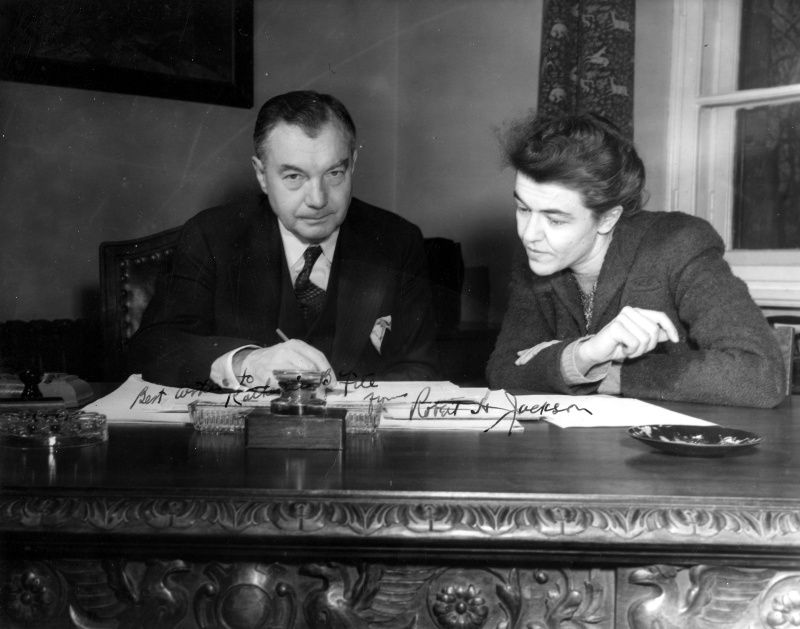
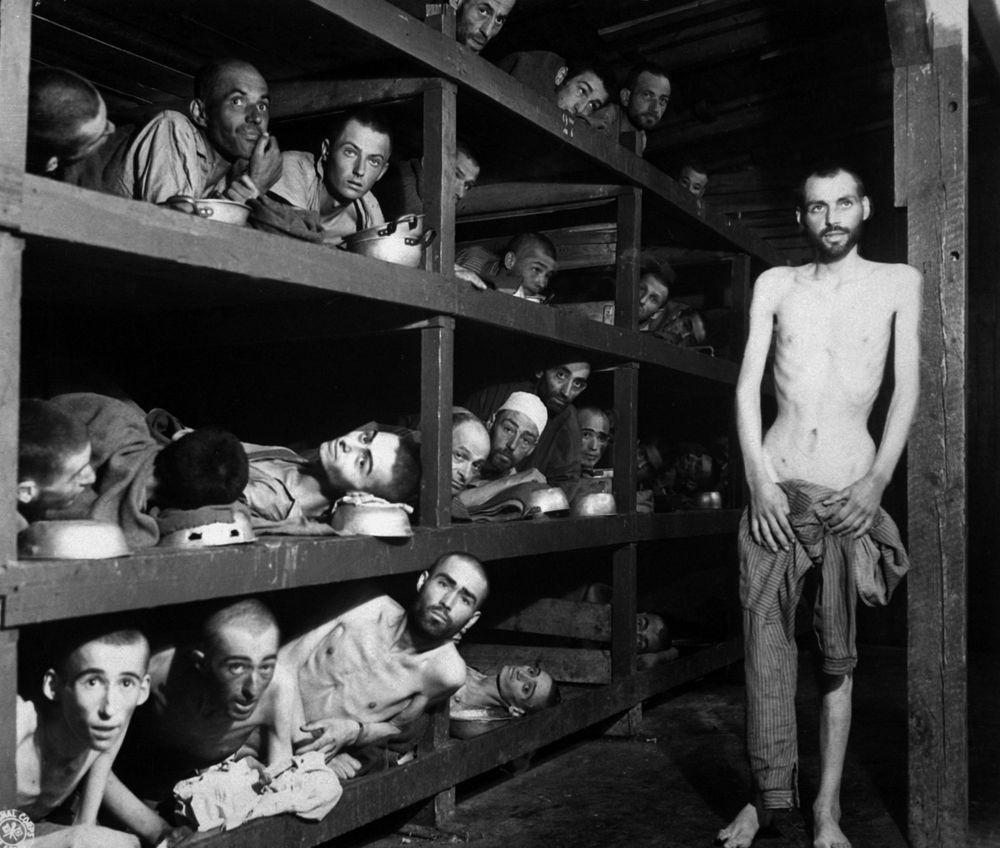
November 20, 1945 The International War Crimes Tribunal began in Nuremberg, Germany, and continued until October 1, 1946, establishing that military and political subordinates are responsible for their own actions even if ordered by their superiors.Twenty-four high-ranking Nazis were on trial for atrocities committed during World War II, ranging from crimes against peace to crimes of war, to crimes against humanity. The Nuremberg Trials were conducted by judges from the United States, the Soviet Union, France, and Great Britain.The Nuremberg defendants Read more
November 20, 1959 The United Nations proclaimed “The Declaration of the Rights of the Child,” because “the child, by reason of his physical and mental immaturity, needs special safeguards and care, including appropriate legal protection, before as well as after birth.” Read the text of the Declaration
November 20, 1962 President John F. Kennedy issued an executive order forbidding racial discrimination in public housing.
November 20, 1969 Eighty-nine American Indians seized Alcatraz Island in San Francisco Bay, offering to buy the island from the federal government for $24 worth of beads (the alleged price paid to the Canarsee Delaware Indians for Manhattan Island; it was actually 60 Dutch guilders). Their numbers swelled into the hundreds at times; the General Services Administration, which had responsibility for the site of the former federal prison, and Coast Guard gave them the opportunity to leave the island peacefully.They were reclaiming it as Indian land by right of discovery, and demanding fairness and respect for native peoples. The occupation lasted for more than a year. Said Richard Oakes, a Mohawk from New York, “We hold The Rock.” Indian people and their supporters wait for the ferry. Photo/Ilka Hartmann a new entrance to Alcatraz; Photo/Michelle Vignes Read more about the occupation LaNada Boyer (formerly Means) inside one of the Alcatraz guard barracks where occupiers lived from 1969-71. Much of the graffiti from 30 years ago remains throughout the island today. Photo by Linda Sue Scott.
November 20, 1977 Egyptian President Anwar El-Sadat addressed the Israeli Knesset (parliament). “I come to you today on solid ground to shape a new life and to establish peace. “But to be absolutely frank with you, I took this decision after long thought, knowing that it constitutes a great risk….” Text of Sadat’s speech to the Israeli Knesset Listen to the speech
November 20, 1987 SANE (The Committee for a Sane Nuclear Policy) and FREEZE (the campaign to freeze all testing of nuclear weapons) merged at their first combined convention in Cleveland, Ohio, becoming the largest U.S. peace organization. Peace Action today
November 20, 1993 The U.S. Senate approved the North American Free Trade Agreement (NAFTA), creating the world’s largest trade area covering Canada, the U.S. and Mexico.
It is OK and great to stop the video at the 8:30 mark. After that it gets seriously stupid. But before that it has a lot to say that is true and said in a semi comedic way. Hugs
Russia has been doing this, dealing out pain to the people of Ukraine while Biden refused to let him use the weapons to hit Russia making them feel the same pain. Biden now says OK when it looks like in three months there will be no choice but to give Russia what it wants or fight to the last person and lose anyway. It is sick, but tRump is a Russian / Putin toady. We failed to live up to a promise we made to Ukraine because of Biden’s out of touch fears from the 1950s. Hugs
KYIV, Ukraine (AP) — A Russian ballistic missile with cluster munitions struck a residential area of a northern Ukraine city, killing 11 people including two children and injuring 84 others, officials said Monday.
The two children killed in the strike on Sumy late Sunday were a 9-year-old boy and a 14-year-old girl, the regional prosecutor’s office said. Six injured children are in critical condition, it said.
The attack damaged 15 buildings, including two educational facilities, the prosecutor’s office said. A search and rescue operation continued Monday, on the eve of the war’s 1,000-day milestone.
Sumy lies 40 kilometers (24 miles) from the Russian border.
Also Sunday, U.S. President Joe Biden authorized for the first time the use of U.S.-supplied longer-range missiles by Ukraine to strike inside Russia, after extensive lobbying by Ukrainian officials.
The weapons are likely to be used in response to North Korea’s decision to send thousands of troops to support Russia in the Kursk region where Ukraine mounted a military incursion over the summer.
It is the second time the U.S. has permitted the use of Western weapons inside Russian territory within limits after permitting the use of HIMARS systems, a shorter-range weapon, to stem Russia’s advance in Ukraine’s Kharkiv region in May.
The first reaction from Ukraine to the long-awaited decision from the U.S. was notably restrained.
“Today, much is being said in the media about us receiving permission for the relevant actions. But strikes are not made with words. Such things are not announced. The missiles will speak for themselves,” Ukrainian President Volodymyr Zelenskyy said in his nightly video address.
Earlier, Zelenskyy said that Russia had launched a total of 120 missiles and 90 drones in a large-scale attack across Ukraine, including Sumy. Russia deployed various types of drones, he said, including Iranian-made Shaheds, as well as cruise, ballistic and aircraft-launched ballistic missiles.
The attack, which targeted Ukraine’s energy infrastructure, came as fears are mounting about Moscow’s intentions to devastate Ukraine’s power generation capacity ahead of the winter.
Ukrainian defenses shot down 144 out of a total of 210 air targets, Ukraine’s air force reported.
“The enemy’s target was our energy infrastructure throughout Ukraine. Unfortunately, there is damage to objects from hits and falling debris. In Mykolaiv, as a result of a drone attack, two people were killed and six others were injured, including two children,” Zelenskyy said.
Two more people were killed in the Odesa region, where the attack damaged energy infrastructure and disrupted power and water supplies, said local Gov. Oleh Kiper. Both victims were employees of Ukraine’s state-owned power grid operator, Ukrenergo, the company said hours later.
The combined drone and missile attack was the most powerful in three months, according to the head of Kyiv’s City Military Administration, Serhii Popko.
One person was injured after the roof of a five-story residential building caught fire in Kyiv’s historic center, according to Popko.
A thermal power plant operated by private energy company DTEK was “seriously damaged,” the company said.
Russian strikes have hammered Ukraine’s power infrastructure since Moscow’s all-out invasion of its neighbor in February 2022, prompting repeated emergency power shutdowns and nationwide rolling blackouts. Ukrainian officials have routinely urged Western allies to bolster the country’s air defenses to counter assaults and allow for repairs.
Russia’s Defense Ministry on Sunday acknowledged carrying out a “mass” missile and drone attack on “critical energy infrastructure” in Ukraine, but claimed all targeted facilities were tied to Kyiv’s military industry.
Although Ukraine’s nuclear plants were not directly impacted, several electrical substations on which they depend suffered further damage, the U.N.’s nuclear energy watchdog said in a statement Sunday. According to the International Atomic Energy Agency, only two of Ukraine’s nine operational reactors continue to generate power at full capacity.
The Russian military said Monday it intercepted and destroyed 59 Ukrainian drones overnight over several Russian regions. Two were downed over the Moscow region that surrounds the Russian capital, and three others over the neighboring Tula region. A total of 54 drones were destroyed over the Bryansk, Kursk and Belgorod regions on the border with Ukraine, according to a statement by the Russian Defense Ministry.
Moscow Mayor Sergei Sobyanin said the drones shot down outside of Moscow were heading toward the capital.
Kullab is an Associated Press reporter covering Ukraine since June 2023. Before that, she covered Iraq and the wider Middle East from her base in Baghdad since joining the AP in 2019.
The Emmett Till Memory Project teaches new generations about the tragedy that kickstarted the Civil Rights Movement. Preserving its digital assets is vital.
On a late August day in 1955, Emmett Till was murdered in Mississippi. A fourteen-year-old African American from Chicago, Till stopped with his cousins at Bryant’s Grocery & Meat Market to buy chewing gum. There, Till whistled at the clerk, a brazen act that violated the norms of the Jim Crow South and so angered the clerk’s husband and brother-in-law that they killed the boy.
The events and locations that tell the story of Till’s life and death have been memorialized in different ways and forms over the ensuing decades. The Emmett Till Memory Project (ETMP), an app, is one of them. It uses digitized archival documents, photos of those involved and of sites central to that fateful August day, and more so that users may educate themselves about who Emmett Till was and why his death still resonates. The ETMP’s digital assets are vital to ensuring the ongoing preservation of Till’s memory as well as his legacy.
That’s where Portico comes in. Dedicated to digital preservation, Portico has partnered with the ETMP to ensure the safekeeping in perpetuity of these digital artifacts.
Historian Dave Tell, a professor of communication studies at the University of Kansas, as well as the co-founder and director of the Emmett Till Memory Project, spoke with JSTOR Daily’s Sara Ivry about the Project and why its partnership with Portico is so critical.
Sara Ivry: How did you first learn of Portico?
Dave Tell: Kate Wittenberg reached out to me as part of the DEI efforts of her organization, specifically, a pilot project to support the preservation of archival content about under-represented topics that might be at risk. Kate contacted me about the time that we were massively reorganizing the Emmett Till Memory Project. She asked if she could just come along and preserve the site as it existed. I said, “Well, yes, you can, but we’re also trying to make it way better.” She sat in on development meetings over the last few years with us and has been an integral partner, not only in helping us think about preserving the site but helping us make design decisions that would render the site preservable.
Can you describe a little what the site was before you revamped it and what you were trying to do in the renovation?
The short story is we went live in October of 2019, and then in the pandemic, we used our last $10,000 of grant money to pay a DEI consultancy to tell us what we did well and what we did poorly. They did this entire audit, focus groups, they talked to the family, they talked to scholars. They looked at analytics, and they came back to us. Essentially, they told us great content, very bad design, which in retrospect is not surprising. Everyone on the project had been a content expert; we had never had design people on board. We had never had UX people.
The design only works for people who already know the story, they told us, which of course was a devastating blow to us. They also said this reads as if it was written by a middle-aged white guy and I’m like, “Well, I wrote it and I’m a middle-aged white guy—so fair enough.”
So, we hired a woman named Renee Payne out of the Rhode Island School of Design who runs a graphic design firm called included. She specializes in computer design for veterans of the Civil Rights movement; her clients include the families of Andy Young, Harry Belafonte, and family of Malcolm X. She assembled a team of young designers of color, and I said to them, “Nothing is sacred here. Let’s make this as good of a project as it can be,” and they reimagined it from the ground up.
When exactly then did Portico come on board?
Kate came in in the middle of this revamped process, and one of the specific things she encouraged us to do was to avoid third-party dependencies. The example that I understood was if you embed a YouTube video, your content is only as secure as YouTube, which you have no control over.
We really thought long and hard about what technologies we could preserve, and Kate and her colleague Karen Hanson pushed us to think about what exactly we’re preserving. The technologies we are currently depending on do not last forever, right? We changed our mindset. We don’t want to preserve this project so that like it will look the same for everyone into the future, but we want to preserve the assets.
Make images preservable, the text—the component parts.
Eventually we’re going to have a lot of immersive stuff on there. It’s only halfway there now. Portico helped us understand better to preserve the components that make up immersive pieces. In the future, people can use whatever technology is then current, use our same data, and create their own project.
I hadn’t thought about the built-in obsolescence of technology, and that we have to account and plan for that in the design of an app or site as well as in the design of an archive. Had you considered that before Portico got involved?
No, I’m a humanist by training, so when I first started thinking about digital preservation, probably a decade ago now, my gut instinct was we make the website just like a book. It’ll sit there unchanged forever. And Portico has been instrumental in changing the way I think about preservation—that first of all, forever might not be the goal.
Emmett and Mamie Till-Mobley on the exterior of the house they lived in from 1950–1955. Photo by Dave Tell via ETMP
Second, what gets preserved is not necessarily the sort of same experience that our users have today. What really matters and what needs to be preserved is what we have. The Emmett Till Memory Project has amazing artifacts. We have hours of audio with the family that they’ve given us permission to use that no one else has. We can tell the story in incredibly intimate ways and that’s super important. When you open this app, you’ll hear the voice of Reverend Wheeler Parker, Till’s cousin, narrating the story as all this stuff flashes on the screen behind you—I don’t care if the flashy, immersive technologies are preserved forever. But I care deeply that the audio files—and the voice of Rev. Parker—gets preserved. Someone else can build their own tools with that stuff. My ability to make that distinction is a testament to Kate and Portico.
Why is digital preservation of these assets critical in any case?
It’s almost hard to answer this question without going into cliche other than to say: Ignoring the past is a critical component of white supremacy. Full stop. What we want to do and what the family wants to do is tell the story—not that telling the story is sufficient for the change that they and I want to see, but it’s a critical part of the change that they and I want to see.
The Interpretive Center—what’s the first line of their mission statement, “We believe that racial reconciliation begins with telling the truth,” right?—that’s a sentence that accurately describes the vision of the Till family and it certainly describes my vision.
What was the origin of this app?
If you start from the murder of Emmett Till in August 1955 you have to count 49 years and 11 months before the state of Mississippi dropped a single dollar on the Till story. Eighteen citizens of Tallahatchie County thought that was ridiculous; they put up a commemorative sign that got shot, defaced with acid, spray painted.
Tallahatchie Civil Rights Driving Tour sign, ca. 2015. Photo by Pablo Correa via ETMP
In 2014, I got invited to go down, I’d been writing about Till for a decade and a half by then, and the question was: How do we tell Till’s story in the context of vandalism?
It’s easy to shoot a sign in the middle of the country. It’s harder to shoot an app.
What are some of the assets on the app that stand out to you?
My favorite by far are the hours of audio, oral history we have of Reverend Parker that was taken in his church in Chicago. We also drove him from site to site; we put a microphone on his lapel and on the sun visor of the car. And we just asked him what these sites meant to him as we went from place to place. All that audio’s not up yet, but we have it. (snip-a bit More)
November 16, 1928 An obscenity trial began for Radclyffe Hall’s novel, “The Well of Loneliness.” Great Britain banned it for its treatment of lesbianism, though it contained no explicit sexual references. A U.S. court in 1929 ruled similarly, for its sympathetic portrait of homosexuality, and because it “pleads for tolerance on the part of society.” Radclyffe Hall Read more
November 16, 1989 Six Jesuit priests, their housekeeper and her daughter were brutally murdered by U.S.-trained and -supported death squads in El Salvador.In 1995 the United Nations Commission on the Truth for El Salvador linked the slayings to 19 members of the armed forces who were graduates of the School of the Americas (SOA, now known as Western Hemisphere Institute for Security Cooperation), a facility run by the U.S. Army at Fort Benning, Georgia. Over its 59 years, the SOA has trained over 60,000 Latin American soldiers in counterinsurgency techniques, sniper, commando and psychological warfare, military intelligence and interrogation tactics. The graduates have consistently used their skills to wage a war against their own people. Among those targeted by SOA graduates are educators, union organizers, religious workers, student leaders, and others who work for the rights of the poor. The Truth Commission’s report More on the School of the Americas
November 16, 1990 President George H. W. Bush issued Executive Order 12735 which found the spread of chemical and biological weapons (CBW) to constitute an “unusual and extraordinary threat to the national security and foreign policy of the United States.” He declared a state of national emergency to deal with this threat. The order reiterated U.S. policy to lead and seek multilaterally coordinated efforts to control the spread of CW and BW and directed the secretaries of State and Commerce to adopt a variety of export controls.
November 16, 1994 After receiving assurances from the United States, Britain, and France, the Ukrainian Parliament approved Ukraine’s agreement to follow the Nuclear Non-Proliferation Treaty as a non-nuclear-weapons state.
November 17, 1973 President Nixon told an Associated Press managing editors meeting at Disney World in Orlando, Florida, that “people have got to know whether or not their president is a crook. Well, I’m not a crook.” Read more
November 17, 1980 Hundreds were arrested at the Women’s Pentagon Action protest of patriarchy and its war-making. Read more
November 17, 1989 Riot police in Prague, the capital of Czechoslovakia, arrested hundreds of people demanding the resignation of the leader of the Communist-led government. More than 15,000 people, mostly students, took part in the demonstration demanding democratic rights. [see November 18, 1989 below]
November 17, 2000 The Florida Supreme Court froze the tallying of the state’s presidential election returns, forbidding Secretary of State Katherine Harris to certify results of the vote count in the presidential race between Republican George W. Bush and Democrat Al Gore.
Sen. Bernie Sanders (I-Vt.) joins Meet the Press to discuss his criticism of the Democratic Party and what’s next for Democrats after Kamala Harris’ projected loss.
November 13, 1933 The first recorded “sit-down” strike in the U.S. was staged by workers at the Hormel Packing Company in Austin, Minnesota. When the Independent Union of All Workers (IUAW) went on strike, the company tried to bring in scab (strike-breaking) workers.
“ Four hundred men, many of them armed with clubs, sticks and rocks, crashed through the plant entrance, shattering the glass doors and sweeping the guards before them. The strikers quickly ran throughout the plant to chase out non-union workers. One . . . group crashed through the doors of a conference room where Jay Hormel and five company executives were meeting and declared “We’re taking possession. So move out!” (Larry Engelmann, “We Were the Poor — The Hormel Strike of 1933,” Labor History, Fall, 1974.) The tactic worked: within four days Hormel agreed to submit wage demands to binding arbitration. The success of this strike reinvigorated the labor movement, which had been in decline throughout the 1920s.
November 13, 1956 The U.S. Supreme Court ruled segregation unconstitutional in public transportation. The case, Browder v. Gayle, was brought by four women, Aurelia Browder, Susie McDonald, Claudette Colvin and Mary Louise Smith, who had refused to surrender their bus seats to whites in Montgomery (months before Rosa Parks had done so), and had been arrested for violating Alabama law which required segregation on public buses.They challenged the law and the Court agreed, finding the law under which they were arrested in violation of the due process and equal protection clauses of the Fourteenth Amendment to the U.S. Constitution. Aurelia Browder A roadside monument was dedicated in 2004 to the four plantiffs in the Browder v. Gayle case. Colvin, a 15-year-old student at Booker T. Washington High School, boarded a bus in 1955 and refused to give up her seat to a white man. She was handcuffed, arrested and forcibly removed from the bus, as she screamed that her constitutional rights were being violated. More on Browder v. Gayle
November 13, 1960 Over 1000 Quakers (members of the Society of Friends) surrounded the Pentagon for a silent vigil to commemorate the 300th anniversary of the first Quaker Peace Testimony issued to King Charles II in 1660. From the original Peace Testimony: “We utterly deny all outward wars and strife and fightings with outward weapons, for any end or under any pretence whatsoever. And this is our testimony to the whole world….” The complete text of the 1660 Declaration
November 13, 1974 Karen Silkwood, a technician and union activist (Oil, Chemical, and Atomic Workers’ Union) at the Kerr-McGee Cimarron plutonium fuels production plant near Crescent, Oklahoma, was killed in a one-car crash. Read more about her story
November 13, 1982 Maya Ying Lin The Vietnam Veterans Memorial was dedicated in Washington, D.C. Carved into black granite are the 58,260 names of those Americans who died in Vietnam. The designer, Maya Ying Lin of Athens, Ohio, a 21-year-old architecture student at Yale University, was the winner of the competition that drew 1,421 design entries: “. . . this memorial is for those who have died, and for us to remember them.” Eventually, the Memorial included three elements, the Wall of names, the Three Servicemen Statue and Flagpole, and the Vietnam Women’s Memorial. The Wall of Names, the Three Servicemen Statue and Flagpole, and the Vietnam Women’s Memorial