Also Charlie Kirk, Ben Shapiro, and any other RWNJ who have trouble with ASL interpreters at this late date, follow this interpreter’s suggestion.
(I love this song!)

Also Charlie Kirk, Ben Shapiro, and any other RWNJ who have trouble with ASL interpreters at this late date, follow this interpreter’s suggestion.
(I love this song!)
There’s a lot; some of it we’ve seen discussed 8 ways to Sunday, but some I’ve not yet seen, that involve WordPress, Mastodon, and others. Not all is bad news, much is good. This came from my Werd.i/o newsletter, but there’s not a newsletter link. So, snippets below, with links:
https://werd.io/2025/the-people-should-own-the-town-square
Mastodon is growing up:
“Simply, we are going to transfer ownership of key Mastodon ecosystem and platform components (including name and copyrights, among other assets) to a new non-profit organization, affirming the intent that Mastodon should not be owned or controlled by a single individual.
[…] We are in the process of a phased transition. First we are establishing a new legal home for Mastodon and transferring ownership and stewardship. We are taking the time to select the appropriate jurisdiction and structure in Europe. Then we will determine which other (subsidiary) legal structures are needed to support operations and sustainability.”
Eugen, Mastodon’s CEO, will not be the leader of this new entity, although it’s not yet clear who will be. He’s going to focus on product instead. (snip)
https://werd.io/2025/content-policy-on-the-social-web (snip)
The Social Web Foundation‘s statement about Meta’s moderation changes is important:
“Ideas matter, and history shows that online misinformation and harassment can lead to violence in the real world.
[…] Meta is one of many ActivityPub implementers and a supporter of the Social Web Foundation. We strongly encourage Meta’s executive and content teams to come back in line with best practices of a zero harm social media ecosystem. Reconsidering this policy change would preserve the crucial distinction between political differences of opinion and dehumanizing harassment. The SWF is available to discuss Meta’s content moderation policies and processes to make them more humane and responsible.”
This feels right to me. By implication: the current policies are inhumane and irresponsible. And as such, worth calling out.
[Link] (snip)
https://werd.io/2025/doj-releases-its-tulsa-race-massacre-report-over-100-years
[Adria R Walker at The Guardian]
A full century after the Bureau of Investigation blamed the Tulsa race massacre on Black men and claimed that the perpetrators didn’t break the law, the DoJ has issued an update:
““The Tulsa race massacre stands out as a civil rights crime unique in its magnitude, barbarity, racist hostility and its utter annihilation of a thriving Black community,” Kristen Clarke, the assistant attorney general of the DoJ’s civil rights division, said in a statement. “In 1921, white Tulsans murdered hundreds of residents of Greenwood, burned their homes and churches, looted their belongings, and locked the survivors in internment camps.””
Every one of the perpetrators is dead and can no longer be prosecuted. But this statement seeks to correct the record and ensure that the official history records what actually happened. There’s value in that, even if it comes a hundred years too late. (snip-MORE; this is history which should be recalled/learned)
https://werd.io/2025/mullenweg-shuts-down-wordpress-sustainability-team-igniting-backlash
The bananas activity continues over at Automattic / Matt Mullenweg’s house:
“Members of the fledgling WordPress Sustainability Team have been left reeling after WordPress co-founder Matt Mullenweg abruptly dissolved the team this week.
[…] The disbandment happened after team rep Thijs Buijs announced in Making WordPress Slack on Wednesday that he was stepping down from his role, citing a Reddit thread Mullenweg created on Christmas Eve asking for suggestions to create WordPress drama in 2025.” (snip)
https://werd.io/2025/is-ignorance-bliss
Is Ignorance Bliss?
I’ve been thinking about this paragraph since I read it:
“In times past, we would worry about singular governmental officials such Joseph Goebbels becoming a master of propaganda for their cause. Today’s problem is massively scaled out in ways Goebbels could only dream of: now everyone can be their own Goebbels. Can someone please tell me what the difference is between an “influencer” holding a smartphone and…a propagandist? Because I simply can’t see the distinction anymore.”
This brings me back to Renee DiResta’s Invisible Rulers: whoever controls the memes controls the universe.
[Link]
===================
As I said, there is more. From the werd.i/o links, you can navigate to read to your heart’s content. I didn’t want to make too long a post here, so I put the most pertinent ones here, but this week’s newsletter is full of important stuff. -A
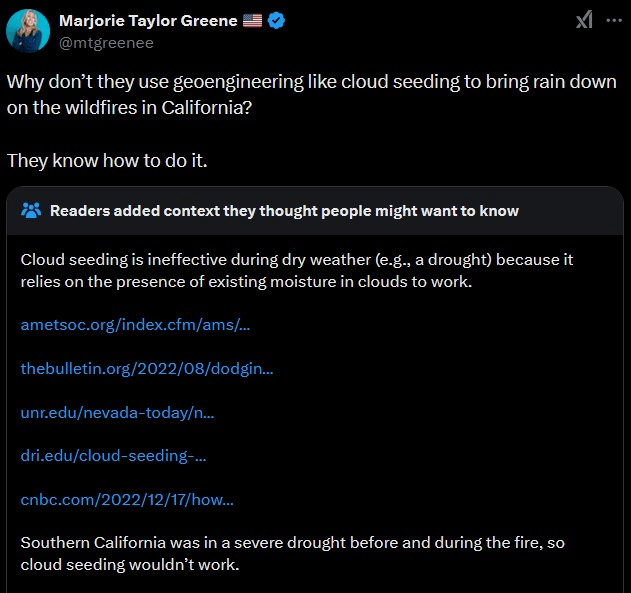
“But I don’t know. I can make all kinds of horrible theories up in my head, conspiracy theories and everything else, but it just seemed a little convenient that there was no water and that the wind conditions were right and that there are people ready and willing and able to start fires.
“And are they commissioned to do so or just acting on their own volition?” – Mel “Horse Paste Cures Cancer” Gibson, last night on Laura Ingraham’s show.
The QAnon nutbags are applauding.


Ogles last appeared here in August 2024 when the FBI raided his home over allegedly fraudulent campaign finance reports.
Weeks earlier, he appeared here when he filed articles of impeachment against Kamala Harris hours after she formally announced her bid for president.
Also last year, he introduced a bill that would ban gag orders for all federal defendants.
Shortly after he was elected, Ogles was found to have lied about his education and background, drawing comparisons to George Santos.
Recent federal disaster aid to Texas, Florida, North Carolina, Tennessee, Louisiana, and Georgia contained no conditions or “strings attached.”
Lucky the above guy who destroyed expensive public property did not get caught buying weed or being a doctor saving a woman’s life by giving them a needed abortion. Hugs

Despite the action noted above, the cult – led by Libs Of TikTok – is now attacking Lara for being gay.

https://www.washingtonpost.com/technology/2025/01/10/amazon-removes-black-trans-rights/
Another large company has fallen to right wing pressure and the fear of being on tRump’s bad side. This right wing media pressure campaign we had better find a way to stop and combat. Hugs.
===============================================================
A commitment to helping Black people live “free from fear,” and all occurrences of the term “transgender” disappeared from a page listing the online retailer’s policies late last month.
An Amazon logo hangs on a wall at Amazon’s HQ2 in Crystal City, Virginia in 2023. (Eric Lee for the Washington Post)Sections titled “Equity for Black people” and “LGBTQ+ rights” were removed from the page, along with all mentions of the term transgender. The “Diversity, equity, and inclusion” section was updated to say that “inequitable treatment of anyone — including Black people, LGBTQ+ people, Asians, women, and others — is unacceptable.”The changes come as other corporations have also adjusted their policies in ways apparently calculated to fit the change of political weather in Washington.
McDonald’s this month scaled back its diversity goals and Meta confirmed Friday that it would dismantle its employee diversity and equity, or DEI, programs. A growing number of Fortune 500 companies have abandoned or reduced DEI initiatives in the wake of the Supreme Court’s decision to overturn affirmative action in college admissions in 2023.
Amazon spokesperson Kelly Nantel said in an email statement, “We update this page from time to time to ensure that it reflects updates we’ve made to various programs and positions.” The company also pointed to an internal memo from December in which vice president Candi Castleberry said it was rolling back some DEI initiatives. Amazon founder Jeff Bezos owns The Washington Post.
Before late December, Amazon’s webpage listing its policy positions said the company stood “in solidarity” with Black employees and customers, and supported “legislation to combat misconduct and racial bias in policing, efforts to protect and expand voting rights, and initiatives that provide better health and educational outcomes for Black people.”
The paragraph containing those statements is no longer on the webpage.
Amazon also previously said on that page it was “working at the U.S. federal and state level on legislation” on protections for transgender people. It said that the company provided “gender transition benefits based on the Standards of Care published by the World Professional Association for Transgender Health (WPATH).” The section with those claims has also been deleted.


(Worriedman comments on another blog I read; I found he has a substack, and it’s beautiful. Enjoy!)
That red bird comes all winter /Firing up the landscape /As nothing else can do. by Worriedman
Mary Oliver – Red Bird Read on Substack
The whole poem –
Red Bird
Red bird came all winter
Firing up the landscape
As nothing else could.
Of course I love the sparrows,
Those dun-colored darlings,
So hungry and so many.
I am a God-fearing feeder of birds,
I know he has many children,
Not all of them bold in spirit.
Still, for whatever reason-
Perhaps because the winter is so long
And the sky so black-blue,
Or perhaps because the heart narrows
As often as it opens-
I am grateful
That red bird comes all winter
Firing up the landscape
As nothing else can do.
No way to go wrong with Mary Oliver!
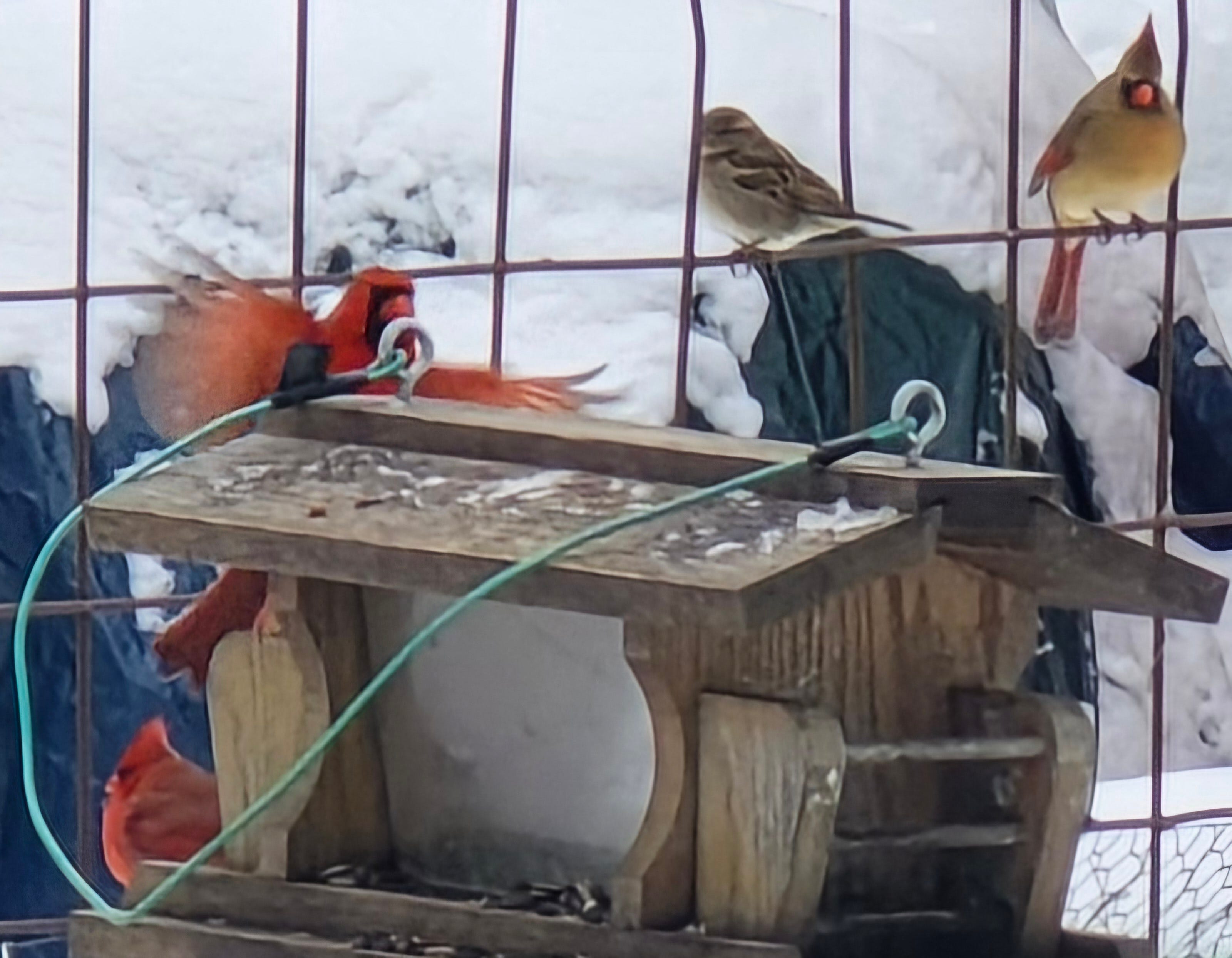
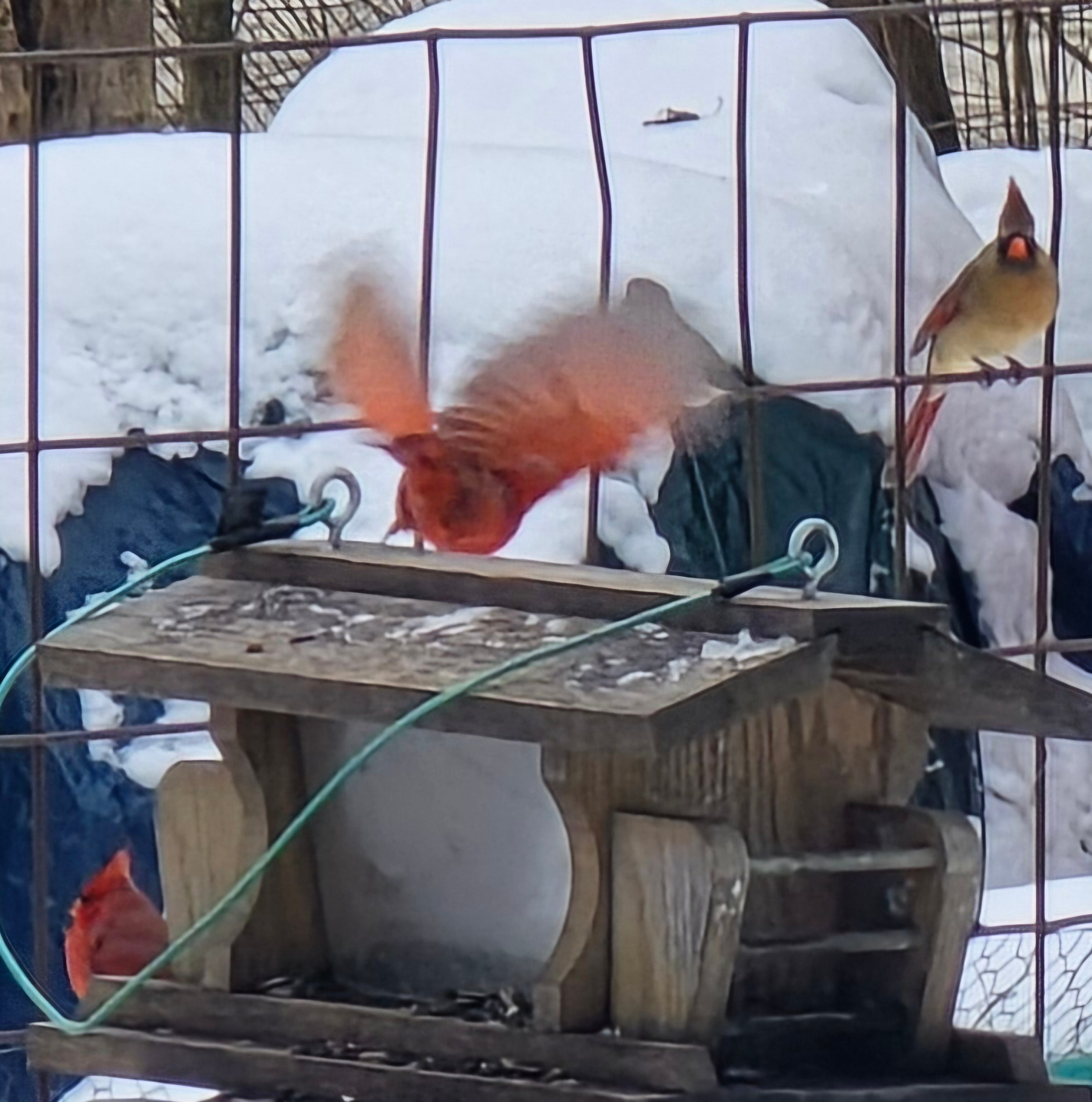
I was really happy to take these photographs today! I filled the feeders yesterday. By this morning the word had spread! Places full of birds. I’m out of bird food now. It’ll be a week before I can get to Costco. I was hoping the Cardinals would show up when I put the food out yesterday! I love the one in the lower left that’s all puffed up.



Huck!
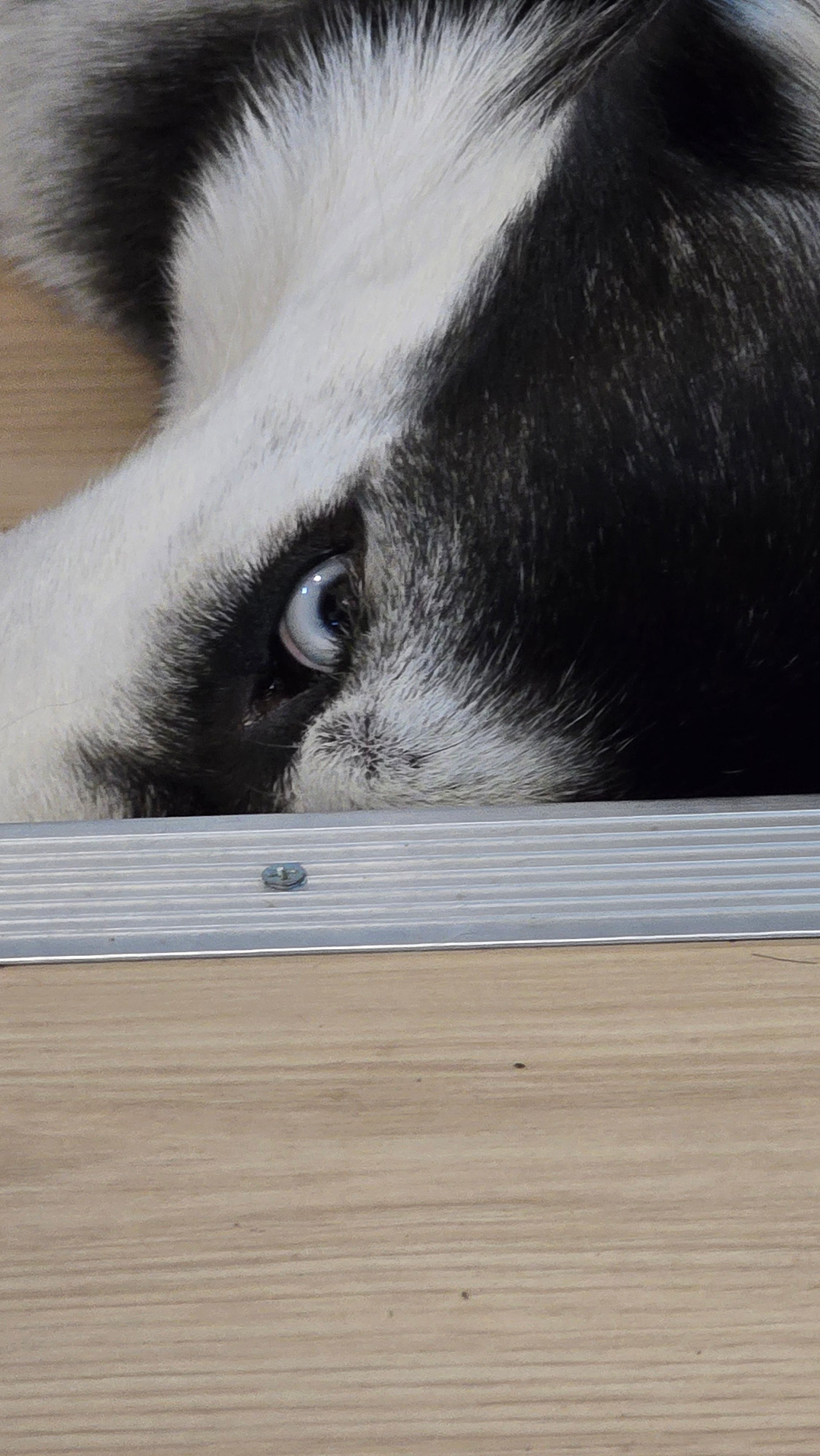
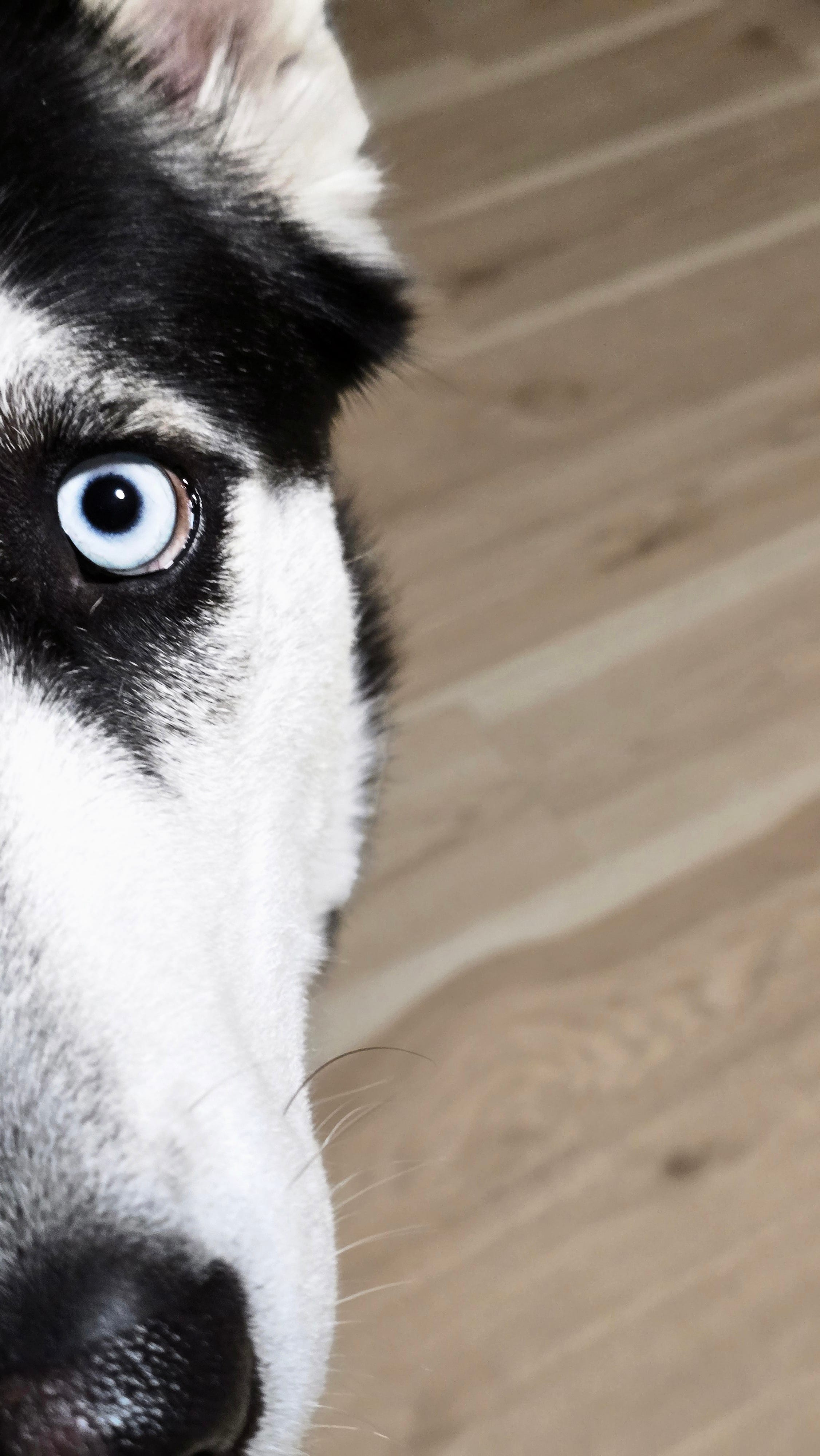
He has space issues.
Paulo! It’s hard to go wrong taking pictures of him. The trick is to put the Pale Blue Eye of Judgement right in the center of the photograph.
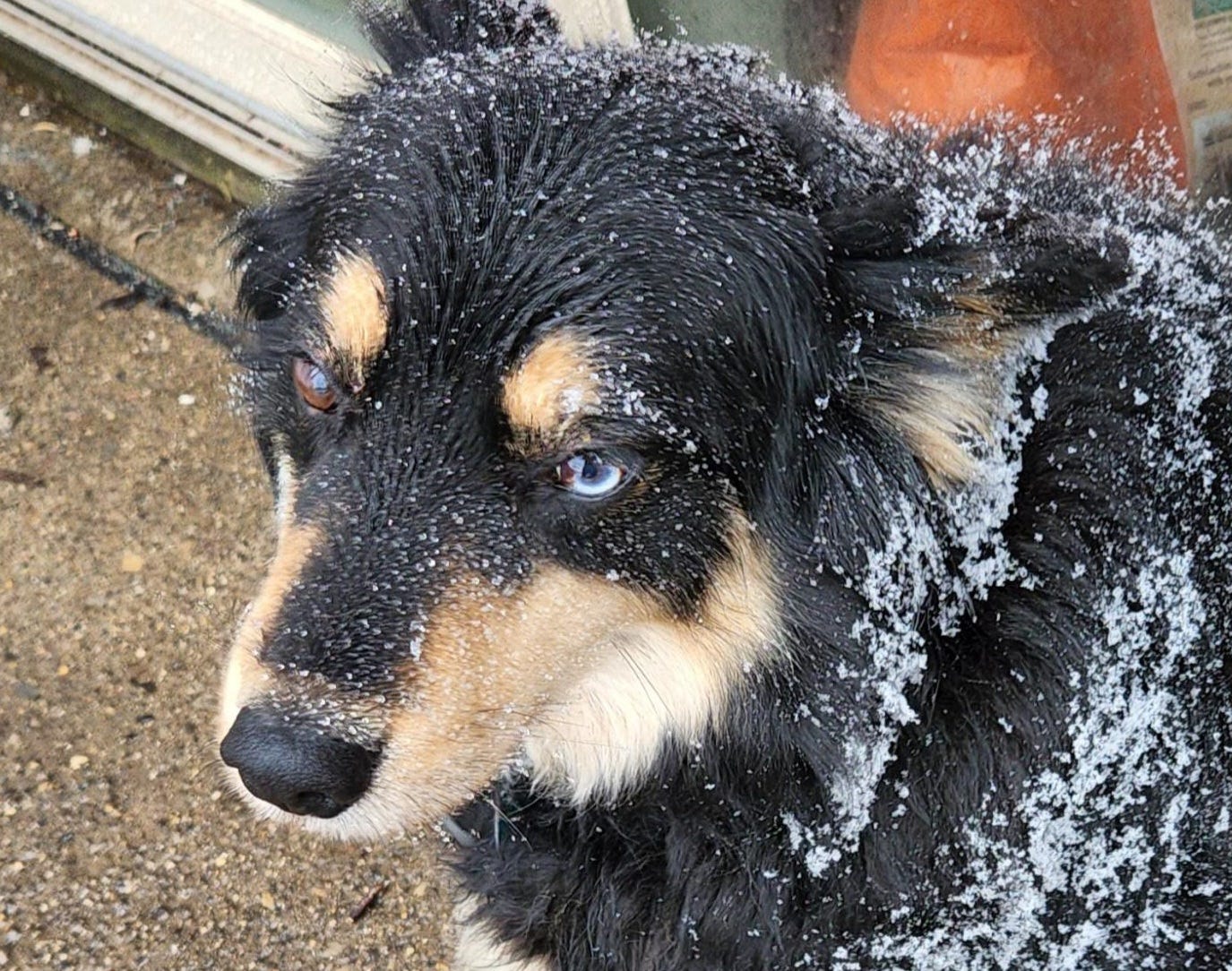

Can you feel him looking into your soul?
This is Fenn pretending she didn’t take a bite of my lemon bar while I went to get a fork.
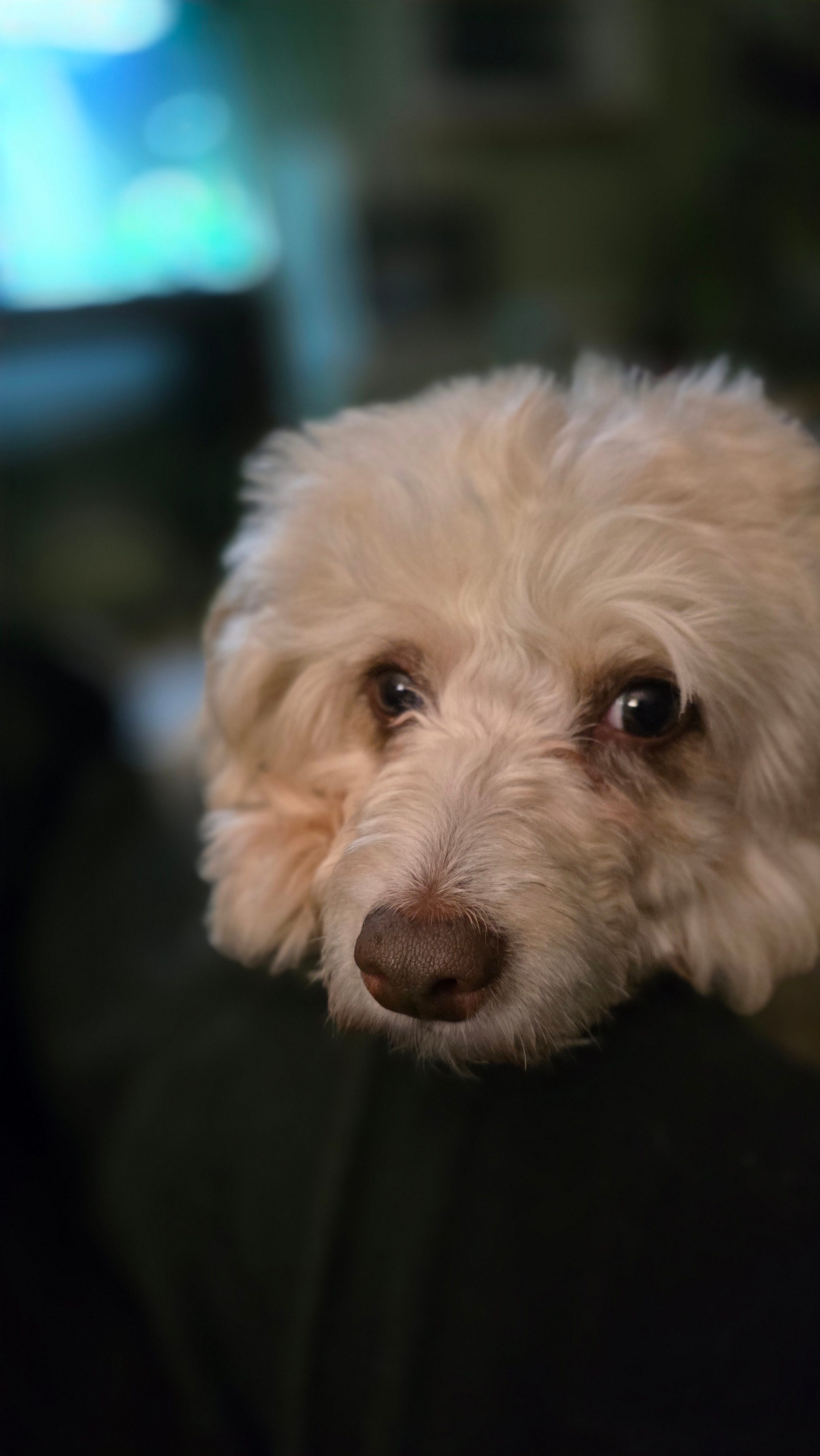
She was guilty. Guilty as Hell. Her breath smelled like lemon curd.
Sam is obviously quite wise. He’s very much against Bitcoin.
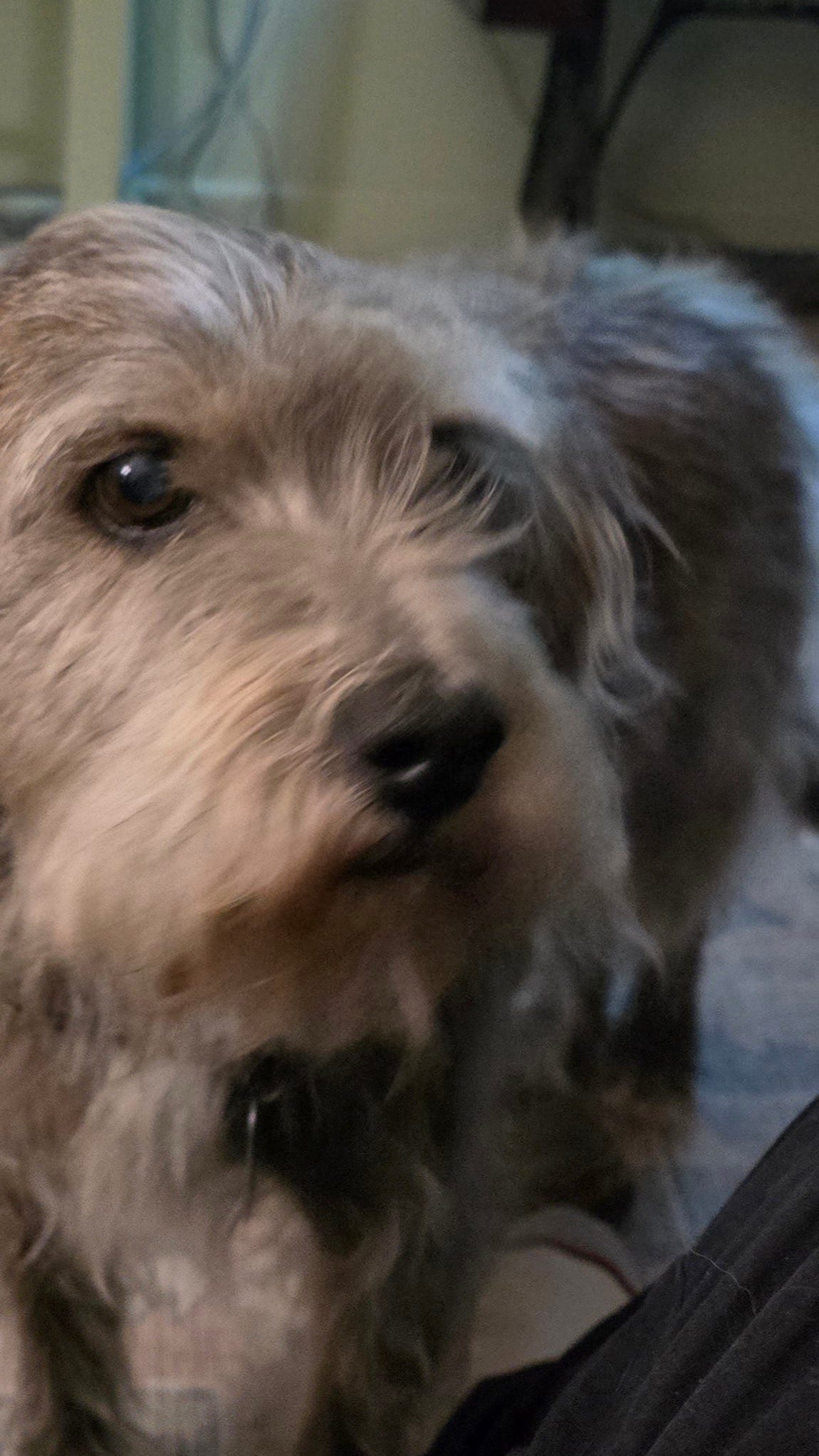
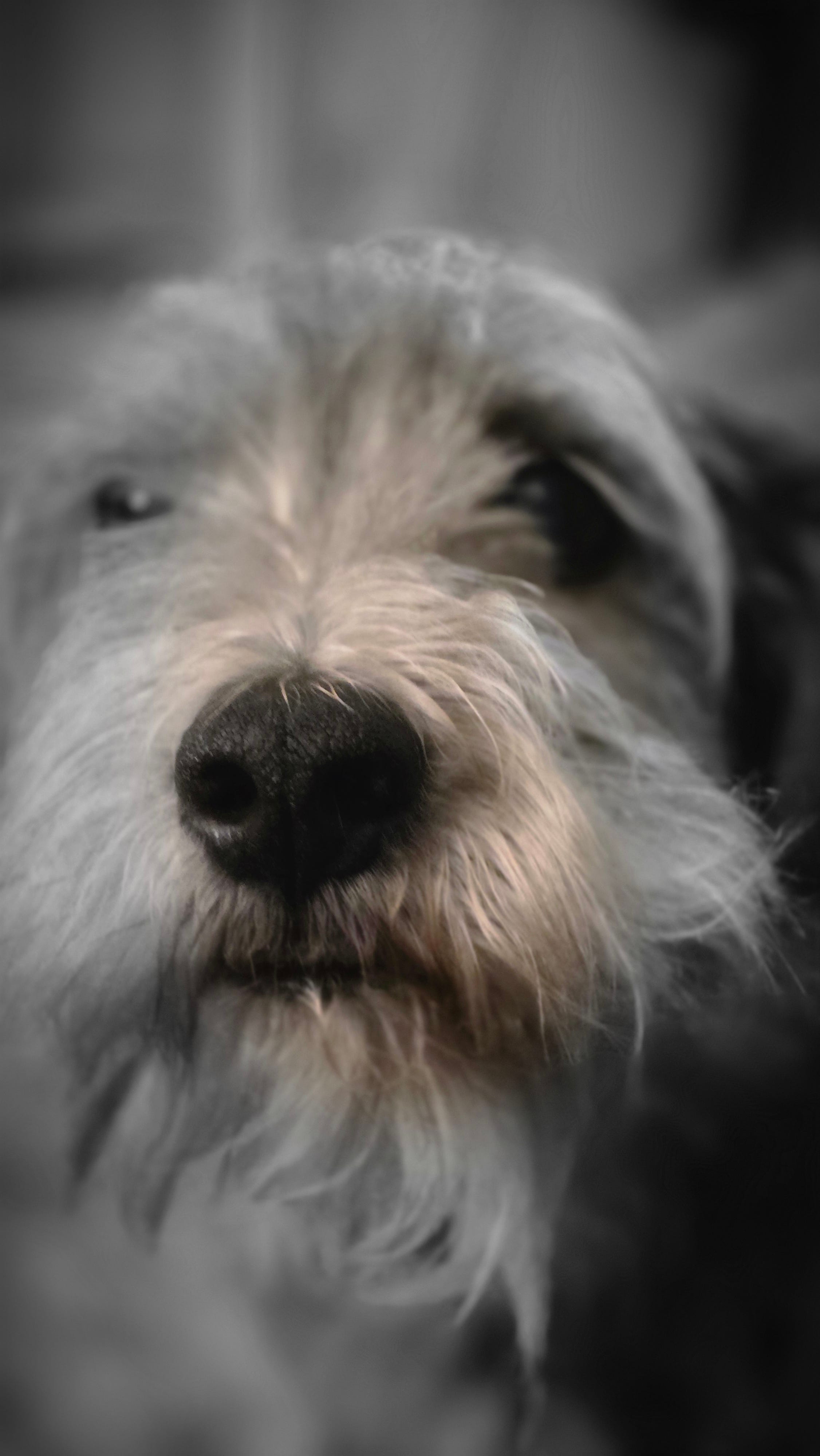
I had the greenhouse to myself this weekend. It was nice! It was snowing pretty hard at sunrise on Saturday. Today was mostly clear when the sun came up. A few clouds to shed some color.

That’s all I got room for – thanks for dropping by! (snip)
(I’m a huge Alan Cumming fan. And I really like Chrishell Stause’s talent, as well.)
Gabby Windey, Chrishell Stause, Bob the Drag Queen and more are delivering on the drama — and the style.
By Ana Osorno and Samantha Allen
The year 2025 is off to an extremely rocky start. Between the devastating Los Angeles fires and Donald Trump’s upcoming inauguration, times are tough. But if you’re on the hunt for a small kernel of joy, may we recommend tuning into season three of The Traitors for some respite? Hosted by none other than Emmy-winning diva Alan Cumming, the hilarious and messy game takes place in a stunning Scottish castle — and features some of our favorite reality TV icons and villains as they basically play an amped-up version of the party game Mafia with twists, turns, and delicious challenges. Prepare yourself to watch some Real Housewives stir the pot while big-game players — think: Survivor, Big Brother, The Challenge — inflict maximum pain on the competition. It really is as fun as it sounds.
This season, specifically, features a cast seemingly pulled directly out of our very gay fever dreams. Bob the Drag Queen! Gabby Windey! Chrishell Stause! Carolyn Wiger! A gay royal! Thank you, Alan. We are forever indebted to you for your efforts to ramp up the LGBTQ+ factor this year. After Peppermint was the first to be voted out last season… it’s nice to have multiple icons to root for, especially ones so vehemently opposed to Vanderpump Rules villain Tom Sandoval.
The longtime Traitors fans here at Them have been counting down the days until the return of this beloved show, so in honor of the first three episodes being released on Peacock, we sat down to discuss our fave players, judge the choices they’ve made so far, and share our hopes for the rest of the season. Below, site director Samantha Allen joins me to break it all down. — Ana Osorno (snip-More at the link)
We live in a world where right-wing nationalism is on the rise and many governments, including the incoming Trump administration, are promising mass deportations. Trump in particular has discussed building camps as part of mass deportations. This question used to feel more hypothetical than it does today.
Faced with this reality, it’s worth asking: who would stand by you if this kind of authoritarianism took hold in your life?
You can break allyship down into several key areas of life:
And in turn, can be broken down further:
These two things are different. There’s also a third option — non-collaboration but non-refusal — which I would argue does not constitute allyship at all. This might look like passively complying with authoritarian demands when legally compelled, without taking steps to resist or protect the vulnerable. While this might not seem overtly harmful, it leaves those at risk exposed. As Naomi Shulman points out, the most dangerous complicity often comes from those who quietly comply. Nice people made the best Nazis.
For the remainder of this post, I will focus on the roles of internet service vendors and protocol authors in shaping allyship and resisting authoritarianism.
For these groups, refusing to collaborate means that you’re not capitulating to active demands by an authoritarian regime, but you might not be actively considering how to help people who are vulnerable. The people who are actively helping, on the other hand, are actively considering how to prevent someone from being tracked, identified, and rounded up by a regime, and are putting preventative measures in place. (These might include implementing encryption at rest, minimizing data collection, and ensuring anonymity in user interactions.)
If we consider an employer, refusing to collaborate means that you won’t actively hand over someone’s details on request. Actively helping might mean aiding someone in hiding or escaping to another jurisdiction.
These questions of allyship apply not just to individuals and organizations, but also to the systems we design and the technologies we champion. Those of us who are involved in movements to liberate social software from centralized corporations need to consider our roles. Is decentralization enough? Should we be allies? What kind of allies?
This responsibility extends beyond individual actions to the frameworks we build and the partnerships we form within open ecosystems. While building an open protocol that makes all content public and allows indefinite tracking of user activity without consent may not amount to collusion, it is also far from allyship. Partnering with companies that collaborate with an authoritarian regime, for example by removing support for specific vulnerable communities and enabling the spread of hate speech, may also not constitute allyship. Even if it furthers your immediate stated technical and business goals to have that partner on board, it may undermine your stated social goals. Short-term compromises for technical or business gains may seem pragmatic but risk undermining the ethics that underpin open and decentralized systems.
Obviously, the point of an open protocol is that anyone can use it. But we should avoid enabling entities that collude with authoritarian regimes to become significant contributors to or influencers of open protocols and platforms. While open protocols can be used by anyone, we must distinguish between passive use and active collaboration. Enabling authoritarian-aligned entities to shape the direction or governance of these protocols undermines their potential for liberation.
In light of Mark Zuckerberg’s clear acquiescence to the incoming Trump administration (for example by rolling back DEI, allowing hate speech, and making a series of bizarre statements designed to placate Trump himself), I now believe Threads should not be allowed to be an active collaborator to open protocols unless it can attest that it will not collude, and that it will protect vulnerable groups using its platforms from harm. I also think Bluesky’s AT Protocol decision to make content and user blocks completely open and discoverable should be revisited. I also believe there should be an ethical bill of rights for users on open social media protocols that authors should sign, which includes the right to privacy, freedom from surveillance, safeguards against hate speech, and strong protections for vulnerable communities.
As builders, users, and advocates of open systems, we must demand transparency, accountability, and ethical commitments from all contributors to open protocols. Without these safeguards, we risk creating tools that enable oppression rather than resisting it. Allyship demands more than neutrality — it demands action.
https://werd.io/2025/building-an-open-web-that-protects-us-from-harm
Again Ethel is a woman I have been following since she was a teenager. She has gone through all the stages of transitioning, from doubt, trying to make it something else to finally admitting to herself and the world she is a woman and now living her life as one. The grand thing is she still fights so very hard for trans people despite the costs to her for taking on one of the growing popular atheist anti-trans people and others. She lost 2/3rd her income but never backed down, always telling the truth. She makes every video well researched and documents it, also she provides a transcript for those who would rather read than listen. I admit I admire her and her strength in her life struggles. But if you wish to learn more about those attacking trans stuff or the false idea that trans women are destroying female sports, I would watch her videos. Hugs
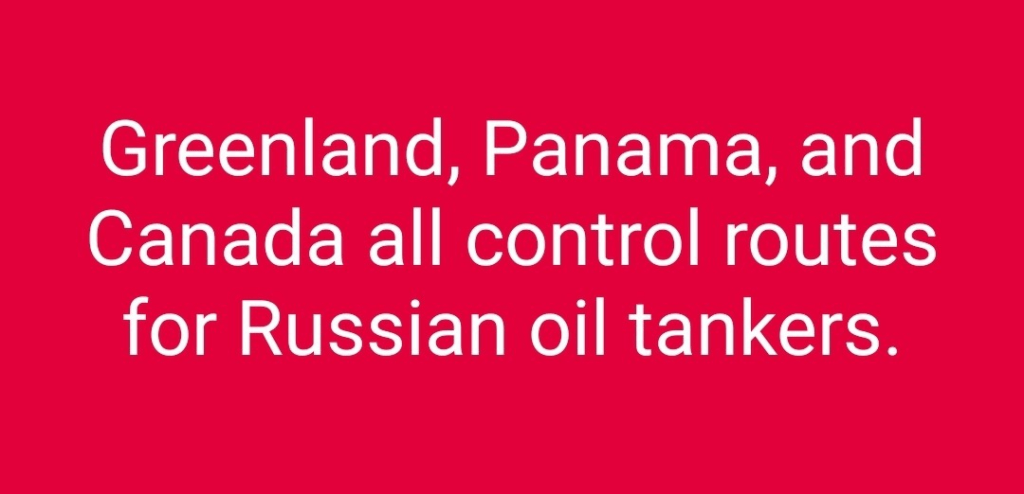
| January 9, 1964 Anti-U.S. rioting broke out in the Panama Canal Zone, resulting in the deaths of 21 Panamanians and three U.S. soldiers. The immediate issue was whether both the U.S. and Panamanian flags would fly at Canal Zone facilities, as ordered by President John F. Kennedy. James Jenkins, a 17-year-old senior at Balboa High School in the Canal Zone: “I guess you could say I’m the guy that started this whole thing. I’m sort of the ringleader. I circulated the petition to keep our flag flying. Then me and the others raised the flag. The school authorities left it up because they knew we’d walk out.” On the third day, demonstrating Panamanian students entered the school grounds and sang their national anthem, but the Balboa students blocked them from raising their flag. there was a scuffle — and the Panamanians retreated in outrage, claiming that their flag had been ripped by the Zonians.  |
| January 9, 1967 Julian Bond, elected more than a year before, was finally sworn in as a member of the Georgia House of Representatives.The legislature had refused to allow him to take his seat because of his opposition to the Vietnam War and specifically his endorsement of a Student Nonviolent Coordinating Committee (SNCC) statement accusing the United States of violating international law in Vietnam. Bond had been the director of SNCC. Following his election in 1965, the Georgia House refused to seat him. He was re-elected to his “vacant seat” and the House refused again. He was then elected to the same office for a third time. But not until the U.S. Supreme Court ruled unanimously in his favor was the legislature forced to relent.  Julian Bond in 1966 waiting to be seated in the General Assembly |
| January 9, 1987 The White House released the presidential finding – signed by President Ronald Reagan on January 17, 1986 – which authorized the sale of arms to Iran (to encourage the release of hostages) and ordered the CIA not to tell Congress. This was done retroactively after several shipments, including 18 HAWK (Homing-All-the-Way-Killer) surface-to-air missiles, had already been transferred to the Iranians, then at war with Saddam Hussein’s Iraq. Read the actual document authorizing the arms sales More Outline, key players and selected Iran-Contra documents from the National Security Archive |
January 9, 1991 Sam Day The day after the start of the U.S. bombing of Iraq, ten peace activists were arrested at Fort McCoy, Wisconsin, for handing out written warnings to military reservists about participation in war crimes. Long-time peace activist Sam Day was sentenced to four months for his participation. Remembering Sam Day |
https://www.peacebuttons.info/E-News/peacehistoryjanuary.htm#january9


