This is a fun half from an Emma Thursday 07-17-2025
This last one is from the Nazi authoritarian cult of tRump maga who I posted a meme of getting fired and asking for money because his boss felt his was not a good fit for the company. FAFO
This is the latest installment in the Sacrilegious Humor series. This is a series that I would like readers to help me with. If you know of a comedy bit that is irreverent towards religion, makes fun of religion, pokes fun at sincerely held religious beliefs, or challenges the firmly held religious beliefs of others, please email me the name of the bit or a link to it.
Even as an atheist, I’m a big fan of Jesus. I really am. What’s not to like? A tall, gorgeous man with great abs and flowing hair getting his feet washed by prostitutes. And encouraging people to love their neighbors while slaying in a loose kaftan. And Jesus was an immigrant, by the way. Let’s not forget . . .
Jesus would have loved trans people. He changed water into wine; is that not itself an act of transition? And you know how I know Jesus would love trans people? Because he loved people. He loved all people. So, of course, he would love trans people and all queer people. I mean, Jesus was followed around at all times by 12 single hot guys, all of them also sporting kaftans. You do the math. Jesus loved the gays, America. Deal with it.
The only thing our current president has in common with Jesus is that they both owe their career to their dads.
Seriously, just think to imagine what it must feel like to be trans person in America today. Our government has legislated that trans people do not exist. It is trying to erase them completely. Imagine having to stockpile your essential lifesaving medicine because your president might cut off access to it for no other reason than it makes him look strong to his base. If the government is going to declare a whole group of people shouldn’t exist, why can’t it be truly a dangerous group of people like those who take off their socks and shoes on airplanes and then go into the bathroom? Why can’t it be people who use leaf blowers at unearthly hours in the morning? Why can’t it be unkind people? Which brings us back to Jesus. Yes, of course. Jesus just wants all of us to be kind. So, for once, America, I beg you, let’s all really try to give kindness a go. Like my little mom says, “It doesn’t cost anything to be kind.” And I guarantee you any situation you find yourself in will go better with a little kindness.
Bruce Gerencser, 68, lives in rural Northwest Ohio with his wife of 47 years. He and his wife have six grown children and sixteen grandchildren. Bruce pastored Evangelical churches for twenty-five years in Ohio, Texas, and Michigan. Bruce left the ministry in 2005, and in 2008 he left Christianity. Bruce is now a humanist and an atheist. (snip)
Very informative and heart felt. Aron Ra is well known for his thought approach to atheism and science, delivering it in a way that a normal person can understand. The things he says at the end and the pictures he shows makes clear that as he says this is not about protecting anyone but about enforcing bigotry. Hugs
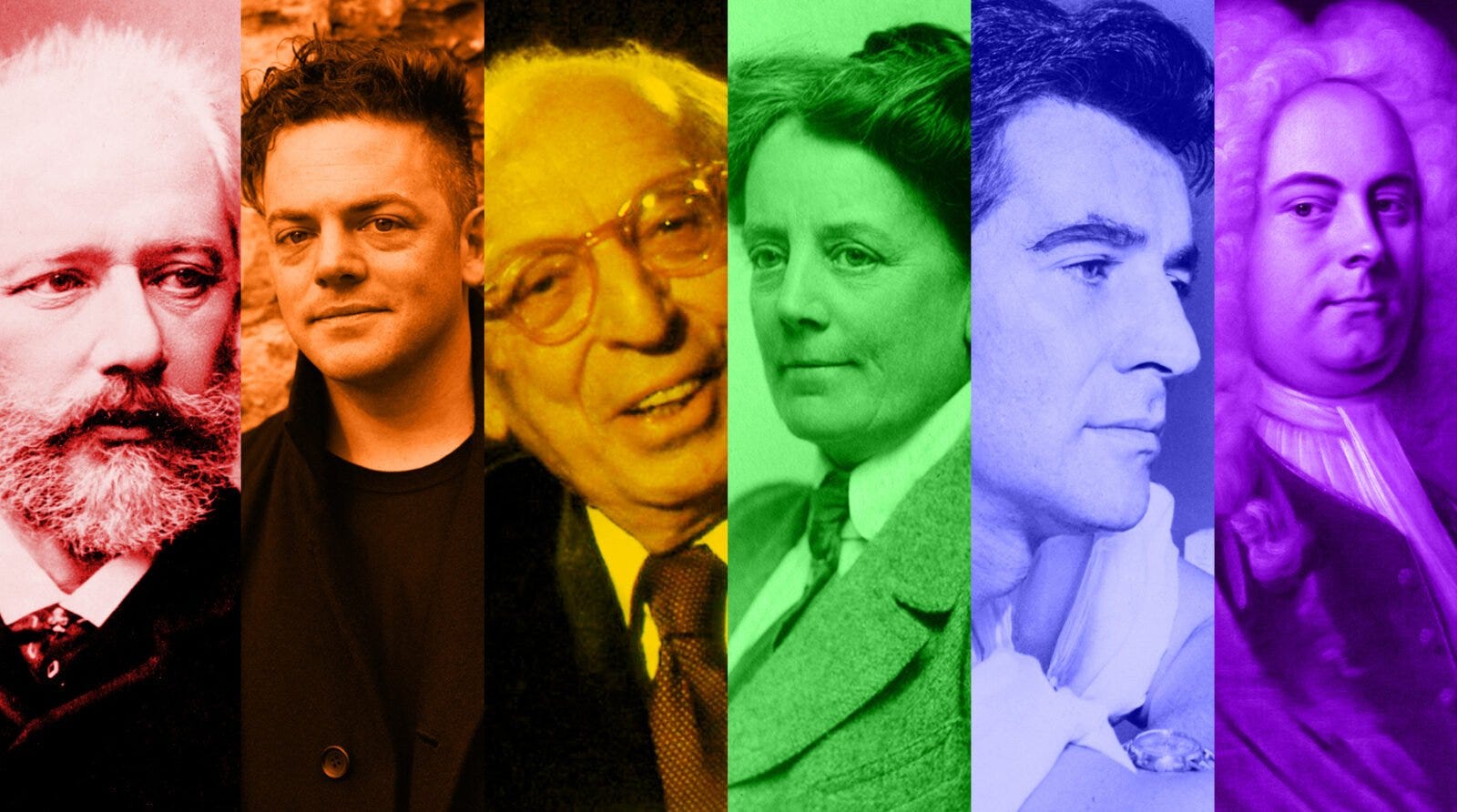
The year was 1877, and Pyotr Ilyich Tchaikovsky was drowning. Not in the Moscow River, though he’d fucking consider it soon enough, but in the suffocating heteronormative bullshit of Imperial Russia. Here was a man whose soul screamed in B-flat minor, whose heart pounded in 4/4 time, and whose sexual identity was buried so deep beneath layers of social expectation that it would take historians over a century to dig through the wreckage and find the truth: Tchaikovsky was gay as a fucking rainbow, and it nearly destroyed him.
I literally played the youtube video musical all through writing this shit. Thats how fucking awesome this is.
Tchaikovsy, how I love you.
The Tortured Genius Behind the Swan Lake
Let’s cut through the academic ass-kissing and get to the brutal reality. Pyotr Ilyich Tchaikovsky, born in 1840 in Votkinsk, Russia, was a man caught between two worlds: the soaring heights of musical genius and the crushing depths of societal homophobia. This wasn’t some gentle “product of his time” situation—this was a death sentence with a fucking bow tie.
In 19th-century Russia, being gay wasn’t just socially unacceptable; it was literally illegal and punishable by exile to Siberia or worse. The Orthodox Church considered homosexuality a mortal sin, the state considered it a criminal act, and society considered it grounds for complete social annihilation. Tchaikovsky knew this shit intimately, and it carved holes in his psyche that would bleed beautiful, agonizing music for the rest of his life.
The evidence of Tchaikovsky’s sexuality isn’t hidden in some dusty archive—it’s splattered across his correspondence like blood on a battlefield. His letters to men, particularly to his nephew Vladimir “Bob” Davydov, drip with passion that no amount of Victorian-era emotional repression can disguise. These weren’t your typical “Dear Friend” pleasantries; these were love letters disguised as family correspondence, each word carefully chosen to dance around the truth that could have killed him.
The Marriage That Nearly Killed Him
Enter Antonina Miliukova, a woman whose timing was about as good as a heart attack during a symphony performance. In 1877, this aspiring opera singer decided to confess her love to Tchaikovsky through a series of increasingly desperate letters. Most gay men throughout history have developed sophisticated avoidance techniques for such situations, but Tchaikovsky was operating under a particularly cruel form of internalized homophobia mixed with genuine terror.
The composer’s response? He fucking married her. On July 18, 1877, Pyotr Ilyich Tchaikovsky walked down the aisle like a man walking to his execution, because that’s essentially what it was. The marriage was a disaster from day one—a psychological horror show that lasted all of nine weeks before Tchaikovsky fled like his ass was on fire.
But those nine weeks? They nearly broke him completely. Tchaikovsky’s mental health, already fragile from years of sexual repression and social anxiety, shattered like a champagne flute hitting concrete. He attempted suicide by walking into the Moscow River in October 1877, hoping to catch pneumonia and die “naturally” rather than face the shame of admitting his marriage was a lie. The water was too fucking cold, and he survived, but the psychological damage was done.
The Brother Who Lived Free
While Pyotr was busy torturing himself with heteronormative performance art, his younger brother Modest was living his truth with the kind of balls that would make a bull jealous. Modest Tchaikovsky was openly gay in a time when that shit could get you killed, and he gave exactly zero fucks about what society thought.
Modest became a prominent playwright and librettist, penning the libretto for Pyotr’s “Queen of Spades” among other works. Their artistic collaboration flowed from deep fraternal understanding and shared sensibilities—two gay brothers finding ways to create beauty in a world that wanted them dead. But the difference between them was stark: Modest embraced his identity and lived authentically, while Pyotr remained trapped in a cage of his own making.
The psychological impact of watching his brother live freely while he remained closeted must have been excruciating. Modest’s existence was living proof that authenticity was possible, even in Imperial Russia, but Pyotr’s internalized shame and terror kept him locked away from his own truth.
The Music That Bled Truth
Here’s where Tchaikovsky’s genius becomes both heartbreaking and historically significant: he couldn’t live his truth, so he composed it. Every note, every crescendo, every heart-wrenching melody was a piece of his closeted soul screaming for recognition. The “Pathétique” Symphony, his final masterpiece, isn’t just music—it’s a fucking suicide note written in B minor.
Listen to the 1812 Overture and try to tell me that’s the work of a heterosexual man. The dramatic tension, the explosive release, the way it builds to an almost unbearable climax—this is the musical equivalent of a man who’s been sexually and emotionally repressed his entire life finally finding a way to express what he can’t say out loud.
Swan Lake, The Nutcracker, Sleeping Beauty—these aren’t just ballets, they’re coded messages from a gay man who couldn’t be gay. The tragic heroines, the impossible love stories, the themes of transformation and hidden identity—Tchaikovsky was writing his own story in every goddamn note, and the world was too busy enjoying the pretty music to notice the pain behind it.
The Psychological Massacre of the Closet
The psychological effects of Tchaikovsky’s forced closeting weren’t just personal—they were epidemic. Here was one of the world’s greatest composers, a man whose music would outlive empires, reduced to a trembling, suicidal wreck because he couldn’t love who he wanted to love. The internalized homophobia didn’t just damage him; it robbed the world of the person he could have been if he’d been free to live authentically.
Tchaikovsky’s diaries and letters reveal a man in constant psychological torment. He described his sexuality as a “curse” and spent his life trying to cure himself of feelings that were as natural as breathing. The self-hatred was so profound that it affected every aspect of his existence—his relationships, his work, his health, even his death.
The composer died in 1893, officially of cholera, but the circumstances were suspicious enough that many historians believe he committed suicide. Whether he died by disease or by his own hand, the cause was the same: a society that killed its own children rather than let them love freely.
The Ripple Effect on LGBTQ+ History
Tchaikovsky’s story isn’t just about one tortured genius—it’s about the systematic destruction of queer lives throughout history. Every note he wrote in anguish represents thousands of LGBTQ+ people who were crushed by the same forces that nearly destroyed him. His music became a sanctuary for queer people who recognized their own pain in his melodies, a coded language that said “you are not alone” to generations of closeted individuals.
The philosophical implications are staggering. Here was a man whose gifts to humanity were immeasurable, whose music brought joy to millions, whose artistic legacy is literally priceless—and society nearly destroyed him because of who he loved. How many other Tchaikovskys did we lose? How many symphonies were never written because their composers were too busy trying to survive in a world that wanted them dead?
The Social Impact of Closeted Genius
Tchaikovsky’s forced closeting had massive social implications that ripple through history. His marriage to Antonina became a cautionary tale about the dangers of forced heteronormative performance, but it also demonstrated how society’s homophobia damages everyone involved. Antonina became a victim too, trapped in a marriage with a man who could never love her the way she deserved.
The composer’s patroness, Nadezhda von Meck, provided him with financial support for thirteen years on the condition that they never meet in person. This relationship, conducted entirely through letters, became one of the most important in his life precisely because it was free from the sexual and social expectations that tormented him elsewhere. Von Meck understood, perhaps intuitively, that Tchaikovsky needed space to be himself—even if she never knew exactly what that meant.
The Philosophical Questions That Haunt Us
Tchaikovsky’s life raises philosophical questions that should make every thinking person’s blood boil. What is the moral cost of forcing human beings to deny their fundamental nature? How do we measure the artistic and social contributions we lost when we systemically oppressed LGBTQ+ people? What masterpieces were never created because their potential creators were too busy fighting for survival?
The composer’s struggle with his identity wasn’t just personal—it was a reflection of humanity’s broader failure to accept and celebrate diversity. His music became a form of resistance, a way of smuggling queer sensibility into mainstream culture without triggering the violent backlash that open authenticity would have provoked.
The Legacy That Survives
Despite the psychological torture he endured, Tchaikovsky’s music survives as a testament to the resilience of the human spirit. His compositions continue to move audiences to tears, to inspire dancers and musicians, to provide soundtrack for some of humanity’s most beautiful moments. The Swan Lake pas de deux has become synonymous with romantic love, performed by countless couples who have no idea they’re dancing to the work of a closeted gay man.
This is the ultimate irony: the music that emerged from Tchaikovsky’s repression has become the soundtrack for heterosexual romance across the globe. His pain became everyone’s pleasure, his torment became the world’s joy. It’s both beautiful and heartbreaking—a reminder that LGBTQ+ people have always been here, creating beauty even in the darkest circumstances.
The Modern Relevance
Tchaikovsky’s story remains devastatingly relevant because homophobia didn’t die with the 19th century. In Putin’s Russia, being openly gay is still dangerous. In dozens of countries around the world, LGBTQ+ people face imprisonment, violence, or death for being authentic. The composer’s struggle continues in the lives of countless individuals who still can’t live their truth without fear.
But his story also demonstrates the power of art to transcend oppression. Tchaikovsky couldn’t be openly gay, but his music queered the world anyway. Every performance of Swan Lake is a small act of resistance, every rendition of the Nutcracker Suite is a celebration of queer creativity, every tear shed during the Pathétique Symphony is a recognition of the pain caused by forcing people to hide who they are.
The Psychological Impact on Modern LGBTQ+ Communities
For modern LGBTQ+ people, Tchaikovsky’s story serves as both inspiration and warning. His music provides comfort and validation—proof that queer people have always existed, have always created beauty, have always found ways to express their truth even under impossible circumstances. But his psychological torture also serves as a reminder of what happens when society forces people to deny their authentic selves.
The composer’s internalized homophobia mirrors the struggles many LGBTQ+ people face today. The self-hatred, the attempts to “cure” himself, the desperate conformity to heteronormative expectations—these patterns persist in communities where acceptance is still lacking. Tchaikovsky’s story helps modern queer people understand that their struggles are part of a larger historical pattern, that they’re not alone in their pain.
The Fucking Truth We Can’t Ignore
Here’s the bottom line: Pyotr Ilyich Tchaikovsky was gay as a fucking rainbow, and society nearly destroyed one of history’s greatest musical geniuses because of it. His story isn’t just about one man’s struggle—it’s about the systematic oppression of LGBTQ+ people throughout history and the incalculable cost of that oppression.
Every time someone tries to deny or diminish Tchaikovsky’s sexuality, they’re participating in the same erasure that tortured him during his lifetime. Every time someone argues that his personal life doesn’t matter, they’re missing the point entirely. His sexuality wasn’t separate from his music—it was the source of his music, the pain that created beauty, the truth that couldn’t be spoken but had to be expressed.
The evidence is there for anyone willing to look: the passionate letters, the disastrous marriage, the psychological torment, the coded themes in his compositions. Tchaikovsky was a gay man living in a world that wanted him dead, and he survived by bleeding music instead of truth. His story deserves to be told honestly, completely, and without the sanitizing bullshit that has obscured it for too long.
We owe it to Tchaikovsky, to his brother Modest, to every LGBTQ+ person who has ever had to hide their truth, to tell this story with the visceral honesty it deserves. Because in the end, the music was never just about entertainment—it was about survival, resistance, and the unbreakable human spirit that creates beauty even in the darkest fucking circumstances.
Tchaikovsky’s legacy isn’t just musical—it’s a testament to the fact that LGBTQ+ people have always been here, creating the culture that defines human civilization, even when that same civilization tried to destroy them. His story is our story, his pain is our pain, and his music is our victory song—a reminder that love, in all its forms, will always find a way to express itself, even when the world tries to silence it.
Citations:
Suchet J. 2019 “Tchaikovsky: The Man Revealed”
Poznansky, K. 2014 “Tchaikovsky: The Quest for the Inner Man “
Trailblazing Illinois Democrat reflects on political career and says party is ‘in a daze’ about how to combat Trump
Carol Moseley Braun speaks after Rahm Emanuel wins Chicago’s mayoral race in February 2011. Photograph: Nam Y Huh/AP
“Oh, I wish I was in the land of cotton … ”
Carol Moseley Braun was riding a lift in the US Capitol building when she heard Dixie, the unofficial anthem of the slave-owning Confederacy during the civil war. “The sound was not very loud, yet it pierced my ears with the intensity of a dog whistle,” Moseley Braun writes in her new memoir, Trailblazer. “Indeed, that is what it was in a sense.”
The first African American woman in the Senate soon realised that “Dixie” was being sung by Jesse Helms, a Republican senator from North Carolina. He looked over his spectacles at Moseley Braun and grinned. Then he told a fellow senator in the lift: “I’m going to make her cry. I’m going to sing Dixie until she cries.”
But clearly, Moseley Braun notes, the senator had never tangled with a Black woman raised on the south side of Chicago. She told him calmly: “Senator Helms, your singing would make me cry even if you sang Rock of Ages.”
Moseley Braun was the sole African American in the Senate during her tenure between 1993 and 1999, taking on legislative initiatives that included advocating for farmers, civil rights and domestic violence survivors, and went on to run for president and serve as US ambassador to New Zealand.
In a wide-ranging interview with the Guardian from her home in Chicago, she recalls her history-making spell in office, argues that sexism is tougher to crack than racism and warns that the Democratic party is “walking around in a daze” as it struggles to combat Donald Trump.
As for that incident with Helms, she looks back now and says: “I had been accustomed to what we now call microaggressions, so I just thought he was being a jerk.”
Moseley Braun was born in the late 1940s in the post-war baby boom. Her birth certificate listed her as “white” due to her mother’s light complexion and the hospital’s racial segregation, a detail she later officially corrected. She survived domestic abuse from her father, who could be “a loving advocate one minute, and an absolute monster the next”, and has been guided by her religious faith.
In 1966, at the age of 19, she joined a civil rights protest led by Martin Luther King. She recalls by phone: “He was a powerful personality. You felt drawn into him because of who he was. I had no idea he was being made into a modern saint but I was happy to be there and be supportive.
“When it got violent, they put the women and children close to Dr King in concentric circles and so I was close enough to touch him. I had no idea at the time it was going to be an extraordinary point in my life but it really was.”
Moseley Braun was the first in her family to graduate from college and one of few women and Black students in her law school class, where she met her future husband. In the 1970s she won a longshot election to the Illinois general assembly and became the first African American woman to serve as its assistant majority leader.
But when she planned a historic run for the Senate, Moseley Braun met widespread scepticism. “Have you lost all your mind? Why are you doing this? But it made sense to me at the time and I followed my guiding light. You do things that seem like the right thing to do and, if it make sense to you, you go for it.”
Moseley Braun’s campaign team included a young political consultant called David Axelrod, who would go on to be a chief strategist and senior adviser to Obama. She came from behind to win the Democratic primary, rattling the party establishment, then beat Republican Richard Williamson in the general election.
She was the first Black woman elected to the Senate and only the fourth Black senator in history. When Moseley Braun arrived for her first day at work in January 1993, there was a brutal reminder of how far the US still had to travel: a uniformed guard outside the US Capitol told her, “Ma’am, you can’t go any further,” and gestured towards a side-entrance for visitors.
At the time she did not feel that her trailblazing status conferred a special responsibility, however. “I wish I had. I didn’t. I was going to work. I was going to do what I do and then show up to vote on things and be part of the legislative process. I had been a legislator for a decade before in the state legislature so I didn’t at the time see it as being all that different from what I’d been doing before. I was looking forward to it and it turned out to be all that I expected and more.”
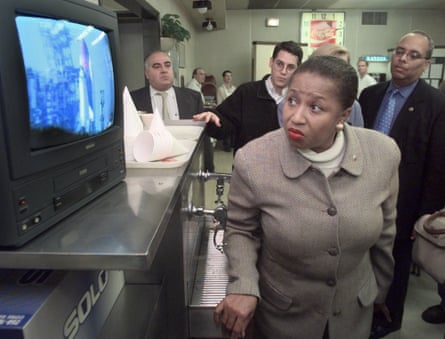
Carol Moseley-Braun watches the delayed launch of the space shuttle Discovery in Chicago in October 1998. Photograph: Michael S Green/AP
But it was not to last. Moseley Braun served only one term before being defeated by Peter Fitzgerald, a young Republican who was heir to a family banking fortune and an arch conservative on issues such as abortion rights. But that did not deter her from running in the Democratic primary election for president in 2004.
“It was terrible,” she recalls. “I couldn’t raise the money to begin with and so I was staying on people’s couches and in airports. It was a hard campaign and the fact it was so physically demanding was a function of the fact that I didn’t have the campaign organisation or the money to do a proper campaign for president.
“I was being derided by any commentator who was like, ‘Look, this girl has lost her mind,’ and so they kind of rolled me off and that made it hard to raise money, hard to get the acceptance in the political class. But I got past that. My ego was not so fragile that that it hurt my feelings to make me stop. I kept plugging away.”
Eventually Moseley Braun dropped out and endorsed Howard Dean four days before the opening contest, the Iowa caucuses. Again, she had been the only Black woman in the field, challenging long-held assumptions of what a commander-in-chief might look like.
“That had been part and parcel of my entire political career. People saying: ‘What are you doing here? Why are you here? Don’t run, you can’t possibly win because you’re not part of the show and the ways won’t open for you because you’re Black and because you’re a woman.’ I ran into that every step of the way in my political career.”
Since then, four Black women have followed in her footsteps to the Senate: Kamala Harris and Laphonza Butler of California, Angela Alsobrooks of Maryland and Lisa Blunt Rochester of Delaware.
Moseley Braun says: “I was happy of that because I was determined not to be the last of the Black women in the Senate. The first but not the last. That was a good thing, and so far the progress has been moving forward. But then we got Donald Trump and that trumped everything.”
Harris left the Senate to become the first woman of colour to serve as vice-president, then stepped in as Democrats’ presidential nominee after Joe Biden abandoned his bid for re-election.
Moseley Braun comments: “I thought she did as good a job as she could have. I supported her as much as I knew how to do and I’m sorry she got treated so badly and she lost like she did. You had a lot of sub rosa discussions of race and gender that she should have been prepared for but she wasn’t.”
Trump exploited the “manosphere” of podcasters and influencers and won 55% of men in 2024, up from 50% of men in 2020, according to Pew Research. Moseley Braun believes that, while the country has made strides on race, including the election of Obama as its first Black president in 2008, it still lags on gender.
“I got into trouble for saying this but it’s true: sexism is a harder thing to change than racism. I had travelled fairly extensively and most of the world is accustomed to brown people being in positions of power. But not here in the United States. We haven’t gotten there yet and so that’s something we’ve got to keep working on.”
Does she expect to see a female president in her lifetime? “I certainly hope so. I told my little grandniece that she could be president if she wanted to. She looked at me like I lost my mind. ‘But Auntie Carol, all the presidents are boys.’”
Still, Trump has not been slow to weaponise race over the past decade, launching his foray into politics with a mix of false conspiracy theories about Obama’s birthplace and promises to build a border wall and drive out criminal illegal immigrants.
Moseley Braun recalls: “It was racial, cultural, ethnic, et cetera, backlash. He made a big deal out of the immigration issue, which was racism itself and people are still being mistreated on that score.
“They’ve been arresting people for no good reason, just because they look Hispanic. The sad thing about it is that they get to pick and choose who they want to mess with and then they do. It’s too destructive of people’s lives in very negative ways.”
Yet her fellow Democrats have still not found an effective way to counter Trump, she argues. “The Democratic party doesn’t know what to do. It’s walking around in a daze. The sad thing about it is that we do need a more focused and more specific response to lawlessness.”
Five years after the police murder of George Floyd and death of Congressman John Lewis, there are fears that many of the gains of the civil rights movement are being reversed.
Over the past six months Trump has issued executive orders that aim to restrict or eliminate diversity, equity and inclusion (DEI) initiatives. He baselessly blamed DEI for undermining air safety after an army helicopter pilot was involved in a deadly midair collision with a commercial airliner. Meanwhile, Washington DC dismantled Black Lives Matter Plaza in response to pressure from Republicans in Congress.
None of it surprises Moseley Braun. “It should have been expected. He basically ran on a platform of: ‘I’m going to be take it back to the 1800s. Enough of this pandering and coddling of Black people.’”
But she has seen enough to take the long view of history. “This is normal. The pendulum swings both ways. We have to put up with that fact and recognise that this is the normal reaction to the progress we’ve made. There’s bound to be some backsliding.
More than 30 years have passed since Moseley Braun, wearing a peach business suit and clutching her Bible, was sworn into the Senate by the vice-president, Dan Quayle. Despite what can seem like baby steps forward and giant leaps back, she has faith that Americans will resist authoritarianism.
“I’m very optimistic, because people value democracy,” he says. “If they get back to the values undergirding our democracy, we’ll be fine. I hope that people don’t lose heart and don’t get so discouraged with what this guy’s doing.
“If they haven’t gotten there already, the people in the heartland will soon recognise this is a blatant power grab that’s all about him and making a fortune for himself and his family and has nothing to do with the common good. That’s what public life is supposed to be about. It’s public service.”
July 22, 1756 The “The Friendly Association for gaining and preserving Peace with the Indians by Pacific Measures.” was founded in Philadelphia. It was comprised primarily of Quakers (members of the Society of Friends who wished to pursue peaceful coexistence between the native peoples and the European immigrants to the Pennsylvania region. Quakers and Indians
July 22, 1877 A general strike, part of the railroad strike that had paralyzed the country, was called in St. Louis, where workers briefly seized control of the city. Within a week after it began in Martinsburg, West Virginia, the railroad strike reached East St. Louis, Illinois, where 500 members of the St. Louis Workingmen’s Party joined 1,000 railroad workers and residents. Strikers in St. Louis continued operation of non-freight trains themselves, collecting the fares, making it impossible for the railroads to blame the workers for loss of passenger rail service. More about the 1877 general strike
July 22, 1966 Federal Judge Claude Clayton issued an injunction ordering the police of Grenada, Mississippi, to stop interfering with lawful protest, ordering them instead to protect demonstrations, and requiring certain rules to be set down for the conduct of marches. This ruling followed weeks of arrests and beating of demonstrators who had been attempting to integrate all the businesses and other institutions in their town.
July 22, 1987 President Ronald Reagan signed into law the Stewart B. McKinney Homeless Assistance Act (named for a member of Congress from Connecticut) which provided emergency relief provisions for shelter, food, mobile health care, and transitional housing for homeless Americans. More about the act
If asked to pick one Lady Gaga song to encapsulate who she is and what she stands for, you’d be hard pressed to come up with a better choice than “Born This Way.” Released in 2011, the song is a vibrant, full-body dance anthem that calls on listeners to celebrate who they are. “God makes no mistakes,” she sings in the refrain. “I’m on the right track, baby / I was born this way.” The song was immediately embraced upon release, particularly by the LGBTQ+ community.
As it turns out, this wasn’t the first time a song by that name made that kind of impact. In 1977, Motown Records released the disco anthem “I Was Born This Way,” an upbeat tune featuring a largely unknown Black gospel singer who responds to critics with a refrain that was a head-turner for its time: “I’m happy. I’m carefree. And I’m gay. I was born this way.”
In 2021, Gaga directed people’s attention to that song, saying it was the inspiration for her own hit. And in the new documentary I Was Born This Way, which premiered at the Tribeca Film Festival in June, directors Daniel Junge and Sam Pollard shine a light on its creation and its singer, Carl Bean, an extraordinary individual who spent his life serving his LGBTQ+ community.
Junge and Pollard’s film starts with the story of Bean’s childhood in Baltimore. And many of the main moments are unforgiving: His mother abandons him at birth because she doesn’t feel ready to have a child; his uncle sexually assaults him for years; Bean attempts to kill himself as a teenager after his previously loving adoptive father hits him for being gay.
Bean, who died in 2021 at age 77, faced hardships in his life, many of which the film explores. But none of the horrors of Bean’s life land with the kind of bleakness one might expect. It’s not that the documentarians pull their punches, either. It’s Bean — there’s a persistent lightness to his spirit, the quiet joyfulness of someone who by some miracle is able to see a broader perspective. Those qualities so suffuse the story of his life that no darkness can overcome them.
And that faith sustained him when he moved first to New York City, where he would sing with Harlem’s Christian Tabernacle Choir, and then when he moved to Los Angeles and started writing his own songs. In New York, he worked at Macy’s and became lifelong friends with Cissy Houston, Estelle Brown, and Dionne Warwick; in Los Angeles, he signed a record deal but then discovered they only saw him as a gospel singer. And then, out of nowhere, Motown Records reached out.
The song “I Was Born This Way” has its own interesting history, which Junge and Pollard track. It was originally written years earlier by Bunny Jones, a New York City beautician who was friends with Stevie Wonder and later became a promoter. She wrote the song for one of her acts, a gay performer. But it wasn’t until two years later, when Motown reworked the song for disco and gave it to Bean to sing (with his friend Estelle Brown on backup), that it took off.
“There was such a feeling of freedom and relief and release when you danced to that song,” Minority AIDS Project program director Mike Jones says in the documentary. “All of the things we were trying to say throughout our lives to many of our friends and family that we could not say were in that song.”
While the collapse of disco would see the song fade from people’s memories, the film reveals the ways it continued to quietly live on. Musician and record producer Questlove talks about how often it has been sampled in other work over the decades. Among other places, you can hear it on Debbie Gibson’s “One Step Ahead,” Deee-Lite’s “Good Beat (Turn Up the Radio Mix),” and Rick Wade’s “Free.” The song, he says, “is the music equivalent of the Giving Tree.”
Meanwhile, Bean faced an unexpected fork in the road. Motown offered him the chance to do another big song. But “I Was Born This Way” had changed his perspective on the meaning and purpose of his life. “I had found my niche,” he said. “I knew my gig was to be a change agent in our society.”
And the film recounts how that choice led him down a path he could not have expected. Seeing how little was being offered to people of color when the AIDS pandemic erupted in the early ’80s, Bean started making visits on his own, traveling from person to person he learned about on Los Angeles city buses. Eventually he founded the Minority AIDS Foundation, which provided a hotline for information and to arrange visits.
When he learned from social workers that he would gain greater access to those who were sick if he became clergy, he also got ordained. Unexpectedly, some of those he visited asked for an Easter service. He provided it, not realizing it would be such a positive experience that they would aske him to lead to more services. Eventually, he started his own church, Unity Fellowship, an African American Christian community specifically for LGBTQ+ people.
Bean’s decades of generosity would eventually cost him. In his later years, he found himself unable to move his lower body. “All of those years of racism, of homophobia, all of that death and dying, it had an effect on my mind, my spirit, my being,” he said. “My body shut down.” The revelation is stunning — there’s been no sign over the course of the film that he has been suffering or overwhelmed with grief.
It’s a telling reminder of the sacrifices and generosity of so many queer people like Bean, whose stories are not well known. It’s also a testament to their irrepressible joy: At the end of the film, asked whether he has any last words for the camera, Bean offers a simple thought that pours directly out of the work of his life, including his famous song. “Find the place in you that allows you to love yourself and others,” he says. “It begins with love and ends with love.”
Then, as the film crew starts to pack up, he starts laughing warmly. There’s no reason. He just has so much to give.
July 20, 1967 The first Black Power conference was held in Newark, New Jersey, calling on black people in the U.S. “to unite, to recognize their heritage and to build a sense of community.” Read more
July 20, 1971 The first labor contract in the history of the federal government was signed by postal worker unions and the newly re-organized U.S. Postal Service. This contract was made possible by the postal strike of March 1970, in which 200,000 postal workers walked off the job, defying federal law. Prior to that, postal worker salaries started at $6,200 a year, and many postal workers were eligible for food stamps. The strike was not organized by a national union; it started when rank-and-file workers walked off the job in New York City and it spread to other parts of the country. The strike led to federal legislation that allowed postal unions to negotiate a contract with postal management (previously, postal salaries were set by Congress), with provisions for arbitration if no agreement were reached.Since that time, postal unions have successfully negotiated or arbitrated wages and benefits that provide a secure standard of living for their members. Read about the history of the APWU (American Postal Workers Union)