This is why I keep saying we must be vocal and show our displeasure with companies that pull back out of fear. We must voice it also with our money. I used to shop Target, but until they reverse their polices I won’t spend a dime in any of their stores. I know you can search and there are websites that show pro-LGBTQ+ stores and those who betrayed the LGBTQ+. But the right learned from the protests and tactics used by the LGBTQ+ in the past. We were vocal, we were loud, we worked both behind the scenes with companies and we made it clear we have disposable money to shop. A lot of gay people still do. Hugs
Murray is a Forbes news reporter covering entertainment trends.
Nearly two-fifths of corporations plan on scaling back engagement for LGBTQ Pride Month this June, an uptick from the same survey last year, while another two-fifths said their support would remain unchanged, according to a survey of corporate executives by Gravity Research, as some LGBTQ Pride organizations nationwide report fewer corporate sponsorships than past years.
Some Pride organizations have reported corporate donors have scaled back funding this year. (Photo … More
Getty Images
Key Facts
Of the 49 executives surveyed from Fortune 1000 companies, those who said they were pulling back on Pride support cited pressure from conservative activists and President Donald Trump, who has signed executive orders gutting diversity, equity and inclusion and targeting the transgender community.
Of the 39% of companies who said they would reduce Pride Month engagement this year, 43% said they would reduce external shows of support, which includes having a visual presence at or financially sponsoring Pride marches, offering a Pride merchandise line, updating social media branding and partnering with influencers for Pride-themed sponsorships.
Fewer respondents, 19%, said their decreased engagement for Pride would be internal, including internal communication with employees about commitments to equality and offering employee resource groups.
About 41% of the companies surveyed said their support for Pride will remain unchanged this year, while the rest responded “don’t know” or “haven’t decided.”
Last year just 9% of companies told Gravity Research last year they would alter their Pride Month engagement plans.
Crucial Quote
Gravity Research president Luke Hartig told Forbes the survey “reveals just how dramatically the cultural and political tides have turned,”stating two-fifths of companies scaling back Pride Month engagement “would’ve been unthinkable just five years ago.” Hartig said, though, “most are holding firm internally, continuing to show up for LGBTQ+ employees and allies via events, partnerships with ERGs, and reiterating workplace inclusion.”
What Did Corporate Leaders Say About Reducing Pride Month Engagement?
One corporate leader told Gravity Research their company would reduce their acknowledgement of Pride Month on social media to “minimize public visibility that could trigger attention.” An unnamed corporate executive at a Fortune 500 consumer staples company told Gravity Research it has “reduced risk across all heritage month events” by “focusing internally and doing what’s right for our people and not necessarily shouting to the world about it.” Some executives told Gravity Research they are preparing talking points in response to their Pride Month activities, including one financial executive, who said their company has provided HR employees with prepared responses for employees who question its Pride Month support. The financial executive also said their company is planning to take a “more conservative approach to how we are acknowledging Pride month on our social media channels.”
Surprising Fact
Business-to-consumer companies (71%) are more likely than business-to-business companies (53%) to prepare for Pride Month-related backlash, Gravity Research reported, which it says shows “increased public pressure and threat of consumer backlash.”
Which Pride Organizations Have Lost Corporate Sponsors?
Some of the United States’ biggest Pride organizations have said corporate sponsors pulled back financial support this year. Anheuser-Busch, the alcoholic beverage company that battled a wave of conservative backlash in 2023 over a partnership between Bud Light and transgender influencer Dylan Mulvaney, declined to support St. Louis Pride in 2025 after more than 30 years of sponsorship, St. Louis Pride said in an Instagram post. San Francisco Pride organizers told Forbes Anheuser-Busch also declined to support the organization this year, as did previous sponsors Comcast and alcoholic beverage company Diageo, representing a loss of $200,000 in corporate sponsorship funding. Pride Houston’s board of directors told Forbes some corporate sponsors reduced support by as much as 75%, totaling $100,000 in lost funds. Chris Piedmont, media director for NYC Pride, told Forbes some corporate sponsors have scaled back budgets, though he did not name specific companies. The loss of funding has led some organizations to turn to crowdfunding, including St. Louis Pride and Twin Cities Pride in Minnesota, which cut ties with Target after the company walked back its diversity, equity and inclusion measures in January.
Key Background
Some companies have faced backlash among conservative activists in recent years for their support for LGBTQ pride, notably Bud Light, which lost its spot as the top beer in the United States after facing a consumer boycott over its partnership with Mulvaney. Within about a month of the Bud Light boycott, which began in April 2023, Bud Light’s sales were down 26% compared to the year prior. Other companies that faced online attacks and boycotts included Nike, which also partnered with Mulvaney in 2023, and Target, which sparked outrage for selling a swimsuit marketed for trans women. In response to backlash, Target removed some of its LGBTQ pride items from stores. Target has faced renewed boycotts in recent weeks after it joined a wave of companies walking back diversity, equity and inclusion standards, angering critics who viewed the company as a longtime LGBTQ ally. Target’s foot traffic in stores has been down year-over-year for 11 straight weeks, beginning with the week after it dropped DEI commitments in January, Retail Brew reported.
I was putting together a post on this, then saw tengrain had already done so, so here it is. There is an additional snippet/link from LawDork beneath the MPS window here; I was tossing around which parts to snip for a post when I opened MPS’s page.
SCOTUS conservatives seem eager to increase parents’ religious rights in public schools by Chris Geidner
Tuesday’s arguments over Montgomery County schools’ story-time sessions included alarming questions about LGBTQ people. Read on Substack
The U.S. Supreme Court’s conservatives appeared eager on Tuesday to side with parents wanting to opt their students out of story-time sessions in Montgomery County’s public schools in Maryland that included a handful of books that contain same-sex couples and discussion of what it means to be transgender.
The question brought to the court by the parents’ lawyers from the Becket Fund for Religious Liberty is not whether schools can do so — as many do — but rather whether the First Amendment’s free exercise guarantee constitutionally requires it.
The school district has argued — and the U.S. Court of Appeals for the Fourth Circuit agreed — that teachers simply reading the books and students being exposed to these ideas do not constitute “coercion” such that parents’ free exercise rights are implicated.
But, in an alarming sign for LGBTQ people, it was clear that at least three of the justices believe that describing queer people accurately — acknowledging their equal existence — amounts to taking sides or trying to “influence” children.
More broadly, and after two-and-a-half hours of arguments at the Supreme Court, it was clear that the argument from the parents — with backing from the Trump administration — is going to prevail. The only real question was how the court will resolve the case. Given the different paths the court can take, though, the answer to that question is important.
It was, however, a lopsided argument that showed how extreme the “religious freedom” arguments have gotten in front of a court that has made clear that it backs religious supremacy over many — if not most — other constitutional rights. (snip-MORE)
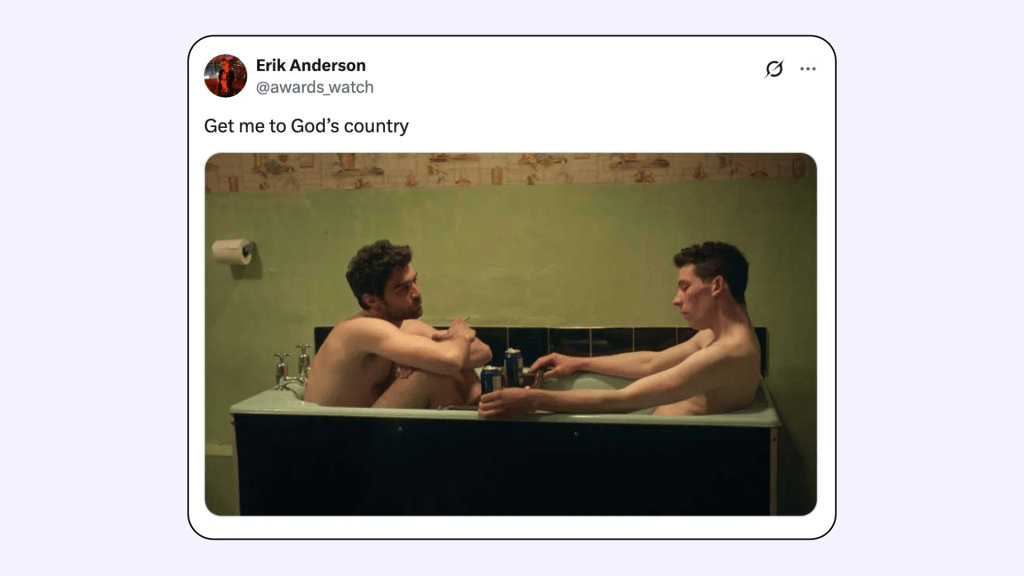
If you’re anything like us (gay and deeply unwell), a certain five-word phrase has been echoing in your head since Saturday evening: “Get me to God’s country.” For those of blessed readers who have no idea what we’re talking about, allow us to explain. Country singer Morgan Wallen, who I had never heard of before this weekend, was the most recent musical guest on Saturday Night Live, with recent Oscar winner Mikey Madison serving as the show’s host. He abruptly walked offstage as the show was ending, still fully on camera, then proceeded to post a picture of a jet with the caption, “Get me to God’s country.”
Considering that this guy apparently called his neighbor the N-word in a highly publicized 2021 incident (for which he later apologized), it’s hard to place much stock in Wallen’s judgement about which American geography is holy and which isn’t. (Besides, a certain gay little website is headquartered in New York too, so it’s personal.) Thankfully, the gay internet immediately did what it does best and proceeded to meme the hell out of Wallen’s words. Below, scroll through some of our faves. (snip-I can’t possibly snag all of these! They’re a worthy click. -A)
I’ve been wrestling with whether to post this, or not. I want to always advise of resources for marginalized people to find community. However, these are religious resources. They’re the sort that emphasize inclusion and welcome and community, though, so that wins out, for me. I’m going to post this, hoping that someone will be able to use the information or knows someone else who can. I don’t know if there is an audience here for such things, so this would be the time to comment as to Yea, post these when I see them, or no comments/Nay being there is no one who might use these, and I’ll save the space in future. Thanks for your time! There is no proselytization intended with this post. It’s only to try to reach any- and everyone who is looking for community. These came from my Sojourners magazine. They’re simple resources that one can check out with no obligation or identification.
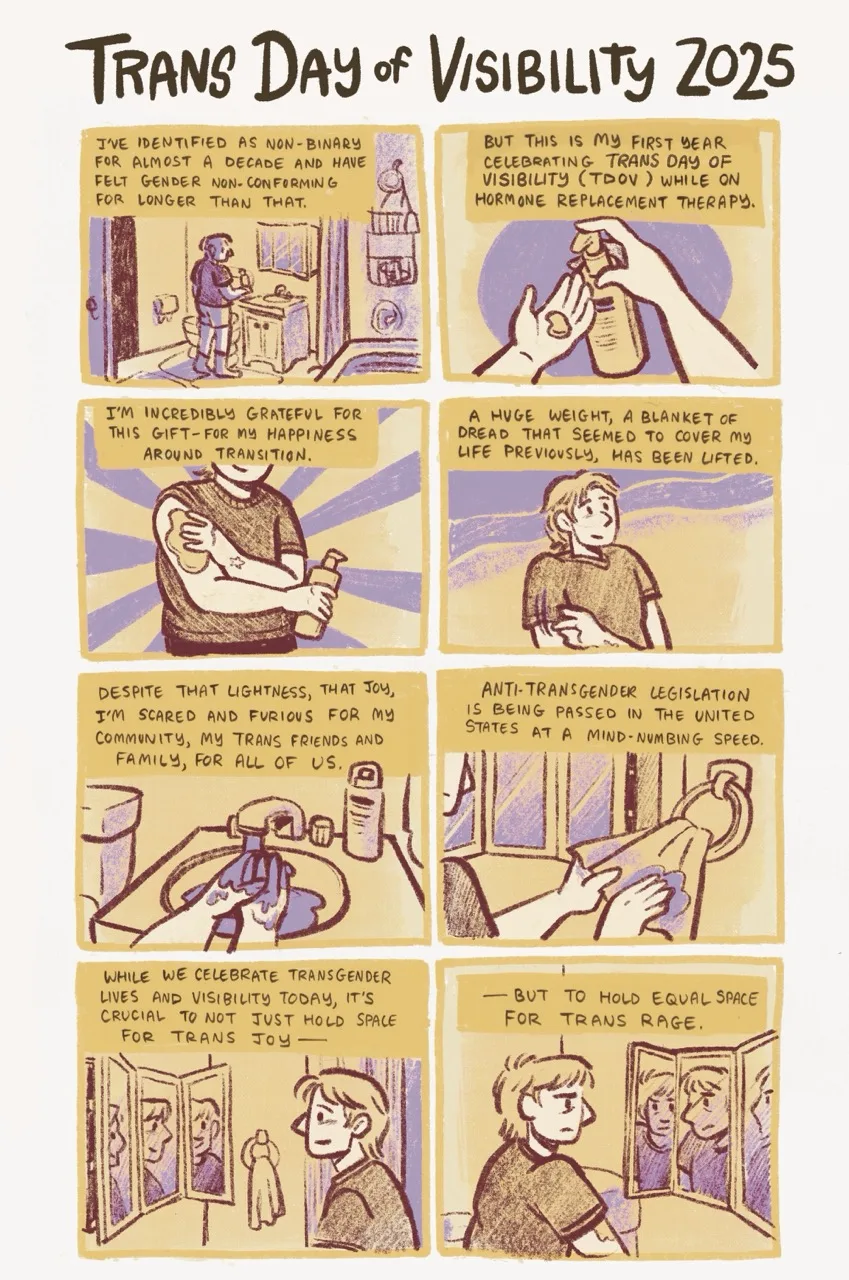
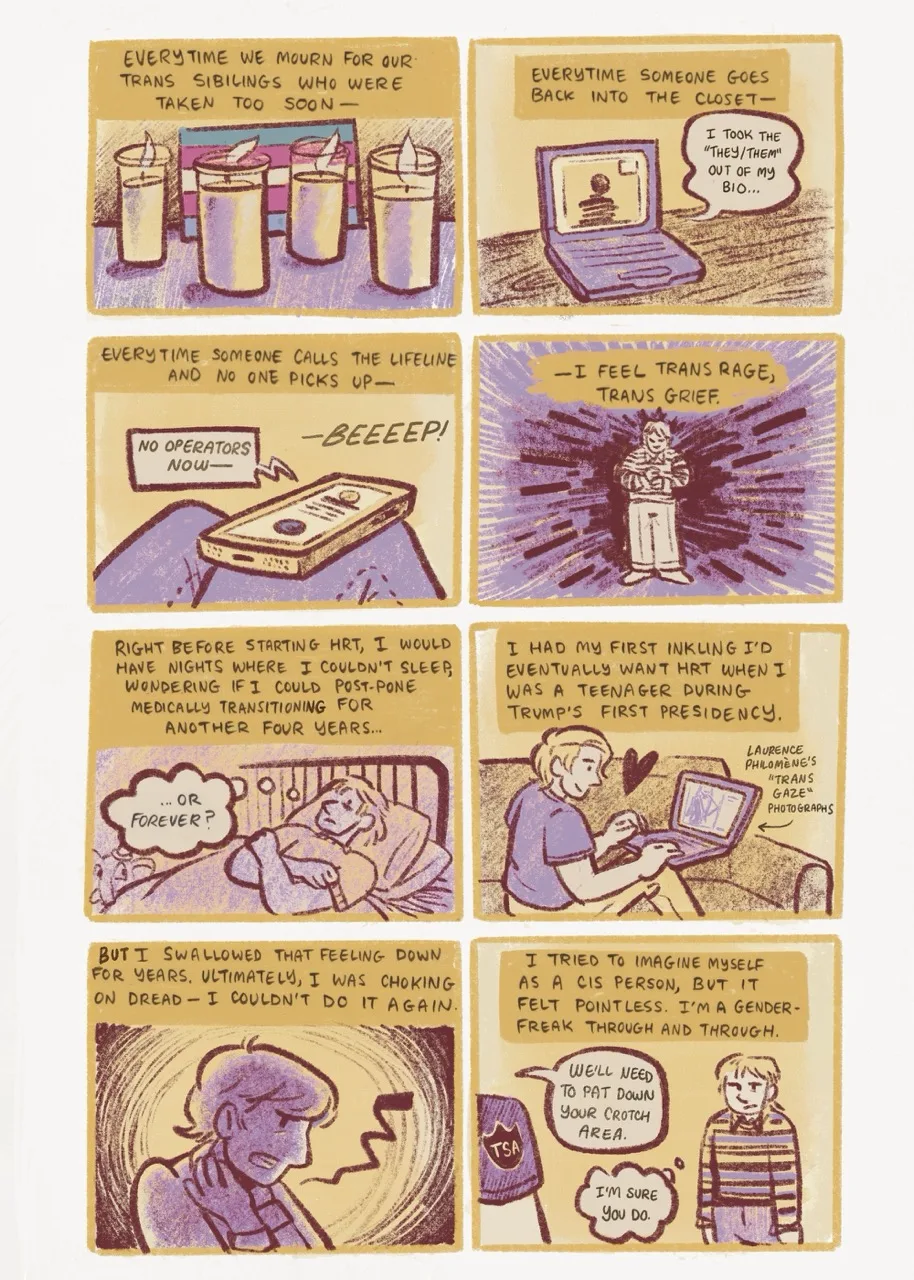
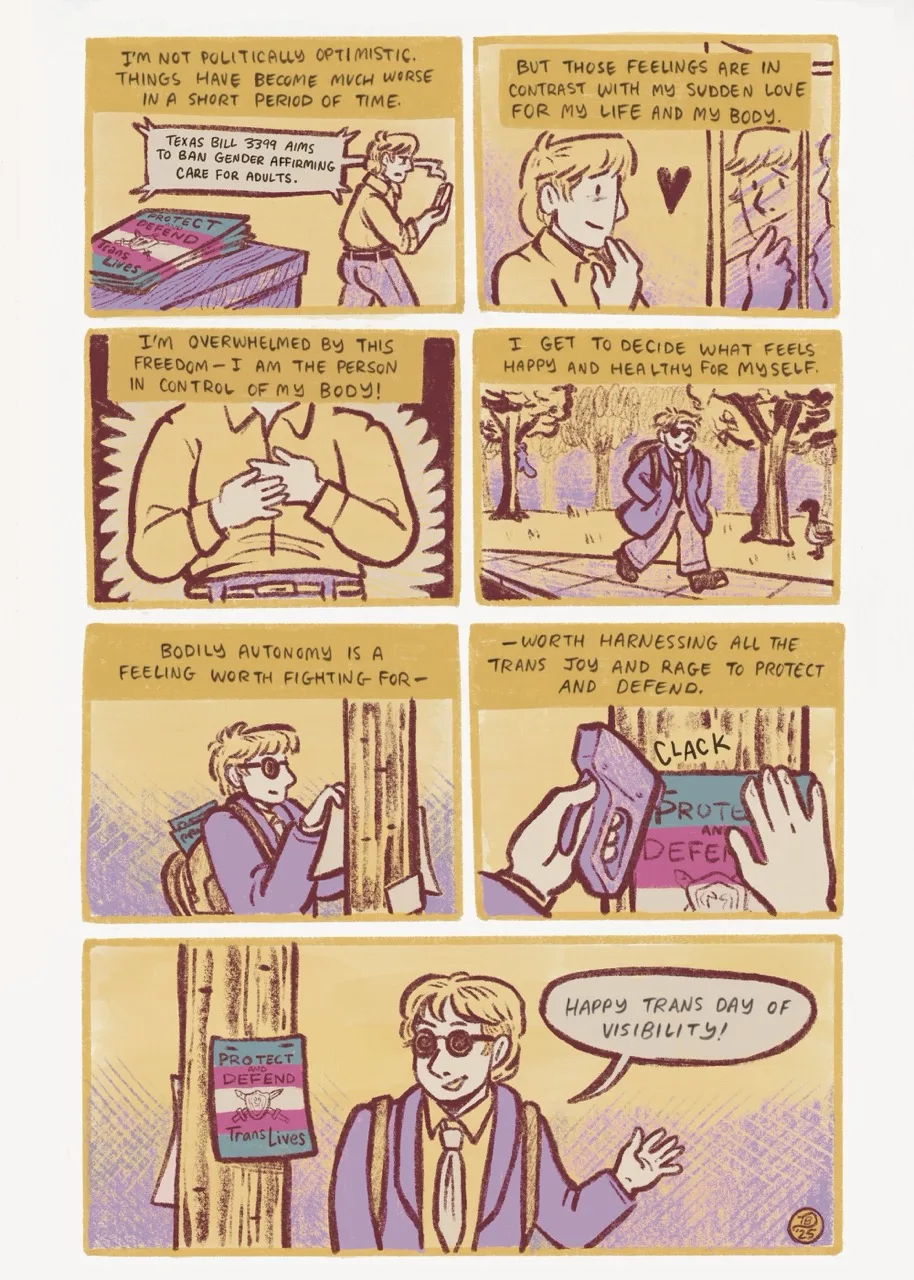
(Having only just now (10 PM Sunday) opened the email with this comic, I’m quite late; I’d saved it for a possible post, and it got buried. No matter, though; the message is good for more than one day, IMO. Everyone should be welcome everywhere every day, as they are welcome here. So, enjoy a comic. -A)
April 20, 1853 Harriet Tubman began her Underground Railroad, a network of people and places that aided in the escape of slaves to the north. Story of a liberator of her people from bondage Harriet Tubman
April 20, 1914 Troops from the Colorado state militia attacked strikers, killing 25 (half women and children), at Ludlow. Having struck the Rockefeller-owned Colorado Fuel and Iron Company the previous September for improved conditions, better wages, and union recognition, the workers established a tent camp which was fired upon and ultimately torched during a 14-hour siege. The Ludlow Massacre
April 20, 1964 In his closing statement at the Rivonia Trial, African National Congress leader Nelson Mandela addressed the court: “We want a just share in the whole of South Africa . . . We want security and a stake in society. Above all, my lord, we want equal political rights, because without them our disabilities will be permanent.” He was in Pretoria Supreme Court in South Africa where he and eight co-defendants were charged with 221 acts of sabotage designed to “ferment violent revolution,” and were facing the death penalty. At the time, black South Africans had no civil or political rights whatsoever, though they composed over 80% of the population. He concluded: “During my lifetime I have dedicated my life to this struggle of the African people. I have fought against white domination and I have fought against black domination. “ I have cherished the ideal of a democratic and free society in which all persons will live together in harmony and with equal opportunities. It is an ideal for which I hope to live and to see realised. But, my lord, if it needs be, it is an ideal for which I am prepared to die.” Mandela in 1958 The trial that changed South Africa
April 20, 1969 On the site of a parking lot owned by the University of California, Berkeley, a diverse group of people came together, each freely contributing their skills and resources to create People’s Park. People’s Park history
April 20, 1982 Seven women were arrested in an anti-nuclear protest outside Mather Air Force Base, near Sacramento, California, in what had become a weekly vigil. Speaking after her arrest, Barbara Weidner, 72, said, “As a mother and grandmother, I could no longer remain silent as our world rushes on its collision course with disaster which threatens the lives and futures of all children, everywhere, and the future of this beautiful planet itself.” She later said, “I hope people will not think we are encouraging people to break the law,” she said. “But our actions should teach people, and children, to scrutinize laws against human life, and they should be broken to prove a point.”
April 20, 2002 More than 75,000 marched in Washington, D.C. to protest U.S. policies in the Middle East, specifically regarding Palestine and the threatened war in Iraq. The demonstration was organized by the A.N.S.W.E.R. Coalition (Act Now to Stop War & End Racism) and included members of the Arab-American, Muslim and South Asian communities.