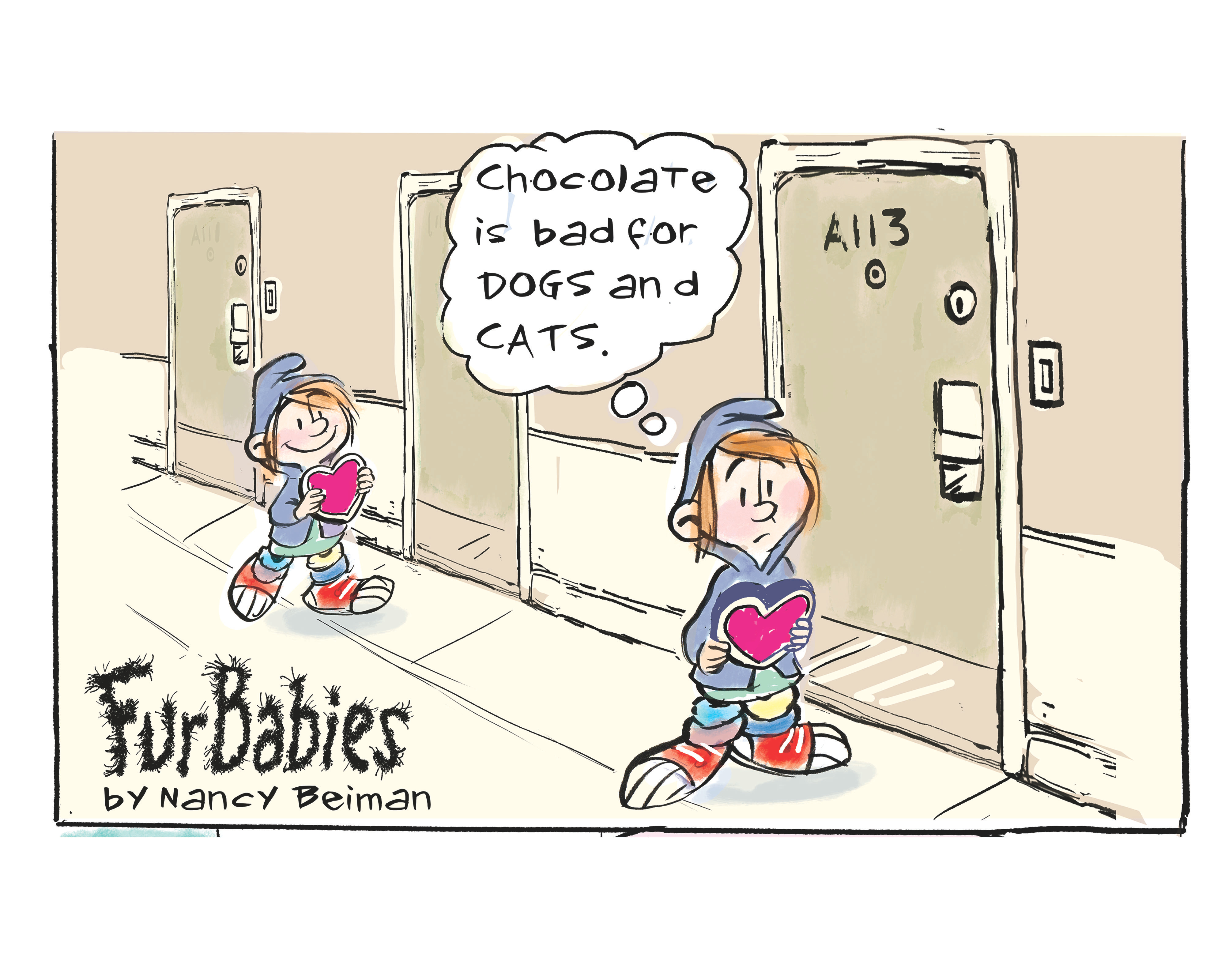
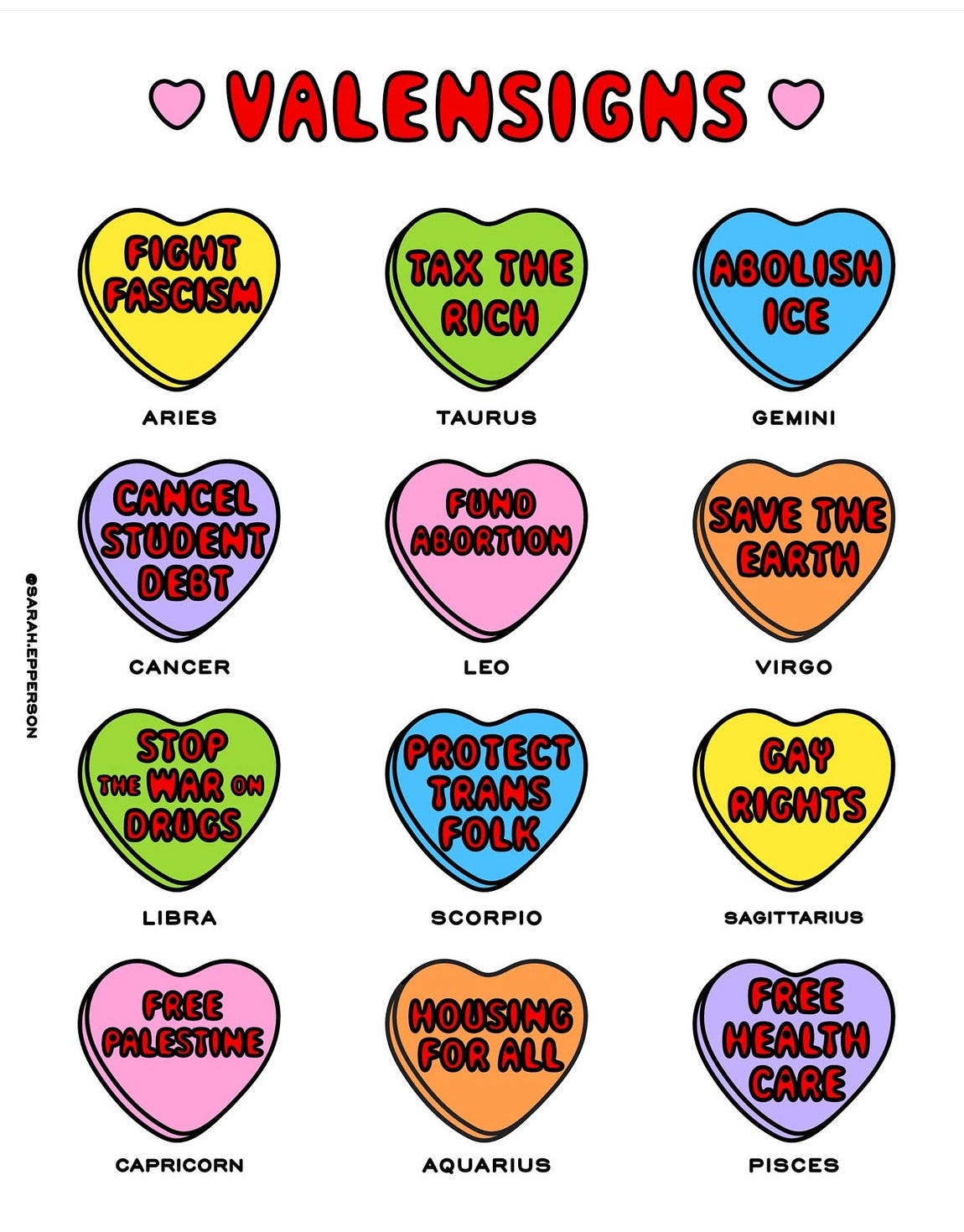
It came in an email with action alerts, linked. I made a religious statement earlier, and I don’t want to overdo religion here. Anyone can participate without fear, though, and they don’t check to see if you’re Christian; they just appreciate the help. Mainly I really like the toon above; it belongs here. Good Afternoon!
Leslie Margolin, the other girl in the first class, was not interviewed. A group photo was taken of other graduates for Vanity Fair. I am not in it. Tim Burton was Photoshopped in, but no one would do that for me even though I offered to go to New York for the photo shoot.
The so called Cal Arts Mafia only worked for the male students.
Thanks for reading FurBabies (formerly Animation Anarchy)! Subscribe for free to receive new posts and support my work.
The Trump’s administration’s unprecedented war on LGBTQ+ health research—erasing data, censoring science and threatening lives—demands urgent resistance from the medical and research communities.
For the first time in a long time, I was scared. Two weeks after the election, I gave a lecture I’ve delivered countless times, on the critical need to measure sexual orientation and gender identity in health research. Such measures are necessary to identify the unique health needs of lesbian, gay, bisexual and transgender (LGBT) people. In my 25 years of doing research in and withLGBT communities, this is a topic that has shaped my career.
Yet this time, I began my lecture with a caveat: I was uncertain—and afraid—of what the new administration might mean for the hard-won progress we’ve made in LGBT health research, to say nothing of the civil rights gained for my community in the past 30 years.
Not only was my fear justified. It was understated.
The administration’s actions have been swift and ruthless. (snip)
The American Public Health Association filed a lawsuit to challenge federal funding freezes. The American College of Obstetricians and Gynecologists has publicly condemned censorship and used their website to post some of the purged data. Organizations that rely on federal data should publicly take a stand, much like the American Association for Public Opinion Research just did. These aren’t just commendable actions; they’re blueprints for what every medical and scientific organization should do immediately.
Academic publishers and journal editors can no longer remain neutral. They have an ethical imperative to actively resist censorship and protect academic freedom. Their platforms, influence and resources need to be deployed in this fight—now, not after more damage is done.
A commentary by editors of the British Medical Journal is an excellent example. In it, they forcefully decry the Trump administration’s ludicrous order for CDC scientists to withdraw or retract scientific articles containing the aforementioned forbidden words, plainly explaining, “This is not how it works.” Article retractions, they note, do not happen on demand. They happen when there is evidence of data fabrication or manipulation, not because of political pressure.
Some may imagine that silence in the face of injustice will shield them from harm, particularly if their work is seemingly unrelated to issues of sexual orientation, gender or gender identity. But when healthcare data and related research about LGBT groups are suppressed, it is not just scientific integrity that is undermined. We’re actively worsening health outcomes and costing lives. And this is a cost we allwill bear.
Strengthening our cross-issue collaborations and advocacy efforts is imperative. This crisis demands unprecedented coalition-building across scientific disciplines, civil rights organizations and public health institutions. The administration’s assault on LGBT people and health research, as well as science writ large, may seem overwhelming. They are counting on our paralysis and division. We should not—must not—fall prey to this tactic.
It the midst of this deliberately wrought chaos, we must also take care of each other and ourselves. We cannot let these actions crush our spirit and obliterate our hope. I have found comfort in the work of Rebecca Solnit, author of Hope in the Dark, who reminds us that hope is itself an act of resistance. “They want you to feel powerless and surrender and let them trample everything, and you are not going to let them,” she posted on her site, “Meditations in an Emergency,” recently. “The fact that we cannot save everything does not mean we cannot save anything, and everything we can save is worth saving.”
Science is worth saving. Speak up. Push back. Build coalitions. File lawsuits. Protect data. Continue research. The future of science and countless lives hang in the balance. We cannot wait another day. We will not surrender.
I don’t know about you, but I’m ready for the weekend. Living through an attempted coup is exhausting. And yet here so many of you are—more every day! Our movement, or whatever we’re calling it now, is growing by leaps and bounds. This newsletter has gained well over 50,000 new subscribers in the last thirty days. That’s NUTS, and also shows that Americans continue to be fired up and determined to fight back. I am so glad.
I know it feels like Trump and Musk are “getting away with everything” right now, but I want to remind you that, as they say in twelve step programs, sometimes we have to just “let time take time.” We’re not even a month into this thing yet. Already the country has seen large demonstrations, swamped Congressional phone lines, mass Senate office visits, the first Stop-Shopping day scheduled (for February 28), and the rise of the 50501 movement. Indivisible groups are exploding, new coalitions are being built, and new connections being formed.
This is a moment when old heroes to many—Adam Schiff, the New York Times, Snoop Dogg?—are proving disappointments, but also when new ones—Chris Murphy, the AP, Kendrick Lamar— are rising with brilliant fierceness. Entire media empires are crumbling, yes, but out of those ashes are emerging a whole new crop of great publications and tough, fearless journalists. Political content creators are taking their rising visibility seriously and forming new groups to coordinate their messaging. State Attorneys General and Governors are stepping up in a big way. Career Prosecutors at the DOJ are, as we speak, exhibiting stunning courage in standing up to Trump.
Progress, in short, is being made, and the work being done. Not always by whom we want, and not always as fast as we want. But that stands to reason: There is a massive and necessary reorganization taking place in response to Trump’s attacks. It can’t be instant—that simply defies the laws of physics. We’ve never been here before, so it stands to reason that none of the old rules apply.
So we’re all going to have to keep building the plane while flying it, remembering that new mechanics and pilots are joining us all the time.
Now a word about the many protests and strikes being planned. I have received a LOT of emails asking me for more information on the ones I’ve mentioned here. I have very little. These events are happening organically in a decentralized way. They are being organized on discords and in signal messages. I am not organizing them. What I put in the newsletter is the extent of what I know.
I did glean some helpful resources from a fellow activist today, though: This site is encouraging groups (not just of these events, but all groups doing on the ground actions) to list their events to create a centralized hub for movement work. You can search by state and see if there’s an action listed. You may also find some events on this website (although it is not organized in a way that is as user friendly). The 50501 Bluesky account is also sharing flyers for events as they learn about them. 50501 also has a Reddit page and a website. They seem to be emerging as a major force in this effort; I intend to follow them. And before you ask—no, I don’t know who “they” are. But last week’s 50501 protests went off without a hitch. I’m not going to keep avoiding them just because they have diffuse leadership. This just may be how resistance to an autocracy has to look. I’m grateful for the work they’re doing.
OK, all. I’m running way behind today, so I’m going to leave you with my favorite Vaclav Havel quote; I resort to it often in moments of duress:
Either we have hope within us or we do not.
It is a dimension of the soul and is not essentially dependent on some particular observation of the world.
HOPE is an orientation of the spirit, an orientation of the heart. It transcends the world that is immediately experienced and is anchored somewhere beyond its horizons.
HOPE in this deep and powerful sense is not the same as joy that things are going well or willingness to invest in enterprises that are obviously headed for early success, but rather an ability to work for something because it is good, not because it stands a chance to succeed.
HOPE is definitely not the same thing as optimism. It is not the conviction that something will turn out well, but certainty that something makes sense regardless of how it turns out.
It is HOPE, above all which gives the strength to live and continually try new things.
Hi, I’m a constituent calling from [zip]. My name is ______.
(snip)
I know Congress is going on recess soon and I’d like to know when the Senator is holding his/her Town Hall. We constituents have a lot to say about the coup attempt that’s happening and we expect an opportunity to have our voices heard. Thanks.
Hi, I’m a constituent calling from [zip]. My name is _______.
I am upset about House Republicans’ proposed cuts to SNAP and Medicaid. Grocery prices and hunger are increasing in the country. Cutting the program that helps over 42 million people put food on the table is unacceptable. Same with Medicaid. 72 million Americans rely on it for healthcare—mostly children, seniors, and veterans. Republicans’ desire to cut these programs in order to pay for tax cuts for rich people is disgusting. What is the Congressmember doing to protect SNAP and Medicaid? Thanks.
Extra Credit ✅
VERY IMPORTANT! A group of 17 states (all Republican) have sued the United States government in a case called Texas v Becerra. These states are asking the court to get rid of Section 504—a critically important law that says you can’t discriminate against disabled people if you get money from the US government. Section 504 does everything from requiring schools to include students with disabilities and help them learn to requiring doctors and schools to have sign language interpreters for people who are deaf and hard of hearing. There’s so much more. The fact that they’re suing to kill this rule is really shocking. I guess Texas started the lawsuit when they found out that gender dysphoria can get you 504 protections. But they’re not trying to get rid of just that provision. They’re trying to kill the whole thing.
One of my subscribers sent me a document that explains the situation in super clear language. It also gives us ways to reach out to the Attorneys General involved and ask them to drop the lawsuit. I’m asking all of us who live in one of the 17 states involved to take the time to do this, please.
The document is here. Please read it, share it, and, if you live in one of the 17 red states that are part of the lawsuit, use the sample letter as a template and write to (or call) your Attorney General. This MUST be stopped!
Extra Extra Credit for NY State Residents
You can do this if you’re not a NY resident but obviously it will pack more punch if you live there. There’s also an email form here.
Call Governor Kathy Hochul at 1-518-474-8390 and say:
My name is ____ and I live in [NY zip]. The Trump administration and NYC Mayor Eric Adams seem to have engaged in an overt quid pro quo – dropping the criminal case against Adams in exchange for the Mayor facilitating the Trump administration’s indiscriminate immigration crackdown. The Governor has the power to remove Mayor Adams. She needs to do so. He’s a criminal and a disgrace. Thanks.
Get Smart! 📚
As many of us engage on urgent threats to democracy, it is also vital to prepare and plan for the 2025 elections that will need a robust voter protection effort. Early planning and coordination will be key to protecting voters.
To help kick start that work, I’m pleased to announce a short Zoom presentation on February 25, convened by Voter Protection Corps and featuring voter protection experts analyzing the 2024 elections and providing insight into what to expect in 2025.
Please join them for this interactive virtual event.
Speakers: Caroline Hutton (Voter Protection Director, WisDems), Cecelia Ugarte Baldwin (Voter Protection Director, Democratic Party of Georgia), Jenny Guzman (Common Cause Arizona), Jesse Littlewood (Voter Protection Corps), moderated by Quentin Palfrey (Voter Protection Corps)
Date: Tuesday, February 25, 2025 Time: 5:30 PM – 6:30 PM ET
With RFK Jr. now the HHS Secretary access to abortions is more threatened than ever. I truly believe we’re going to see the FDA ban (or severely restrict) abortion pills soon. Fortunately the amazing org Plan C is not backing down.
From them:
At this time of uncertainty we know several things: evidence-based information is critical in healthcare and beyond. People will continue to have abortions. And the evidence shows that abortion pills are safe, effective, life-saving medications, whether obtained through a clinic visit, via telehealth, or as a self-managed option. Abortion pills are accessible in all states and territories, including states with heavy restrictions, and can be kept on hand for two years.
Here are a few specific actions people can take to protect this access. PLEASE share this information:
Learn about pills in advance. People can access highly affordable (as low as $70) abortion pills now before they need them, so they have access to this vital form of health care. Visit plancpills.org/pills-in-advance to learn more and find pill options.
Order Plan C stickers. To date, we’ve distributed more than 4M stickers that direct people to our website with accurate, up-to-date information about how people are accessing abortion pills. We plan to continue to share this information under a Trump administration. plancpills.org/stickers
Spread the word about resources. We encourage people to know about and bookmark the following resources which will have information on how to access abortion:
For pills by mail sources and info on using them, visit plancpills.org
For clinics, travel and pills by mail visit ineedana.com
And for a one-stop URL for reproductive access information, youhaveoptions.com.
Give 💰!
Movement Voter Project has just launched The Comeback Campaign: a plan for the first 100 days which is an all-hands-on-deck push to fund the most effective frontline groups around the country working to protect communities, block MAGA, and plant the seeds to win back power in 2026 and beyond.
Y’all, I’m doing a bit of work with Gay Valimont’s team to help publicize her upcoming special Congressional election in Florida. This race is a super long shot but in this climate I actually think a victory is possible. Watch the video for more info, then sign up to volunteer here or make a donation here.
Hey Missouri!
I’ve launched yet another state newsletter! This time it’s Missouri (here’s the link). My co-author is Anna Eggemeyer, a St. Louis-based activist, and we’ll be sending out legislative updates, actions, events etc. once every two weeks or so starting today. If you’re from MO, go check it out! Or if you know someone who is, send them the link. Thanks!
No Resistbot letter today, sorry!
OK, you did it again! You’re helping to save democracy! You’re amazing.
In Major Win For Trans Students, New Jersey Court Rules Against Forced Outing Policies by Erin Reed
The pair of rulings came in an environment where Trump and red states are pushing anti-trans policy across the United States.Read on Substack
Yesterday, the New Jersey Superior Court’s Appellate Division issued two unanimous rulings blocking forced outing policies in school districts across Morris and Monmouth counties. In mid-2023, Hanover Township Public Schools in Morris County, Marlboro Township Public Schools in Monmouth County, Middletown Public Schools in Monmouth County, and Manalapan-Englishtown Regional School District in Monmouth County implemented policies mandating the disclosure of a student’s transgender status to their parents. The policies varied in scope—some required notification only if a student formally changed their gender identity at school, while others mandated disclosure if a student merely mentioned being transgender in counseling sessions. Shortly after the policies were enacted, they were challenged in court and met with preliminary injunctions, preventing their enforcement. The appellate court upheld these injunctions yesterday.
The plaintiffs in both cases are New Jersey Attorney General Matthew Platkin and Sundeep Iyer, Director of the New Jersey Division on Civil Rights. The Attorney General’s office represented them in both cases. However, in Platkin et al. v. Middletown Township Board of Education et al., the American Civil Liberties Union and LGBTQ+ rights organization Garden State Equality filed amicus briefs in support of the plaintiffs. In Platkin et al. v. Hanover Township Board of Education et al., no amicus briefs were submitted. The cases were overseen by Judges Robert J. Gilson, Avis Bishop-Thompson, and Lorraine M. Augostini. Gilson was appointed by Democratic Governor Jon Corzine, while Bishop-Thompson and Augostini were appointed by Republican Governor Chris Christie. (snip-MORE)
Corewell, Largest Michigan Provider, Resumes Trans Youth Care Despite Illegal Trump EO by Erin Reed
On Wednesday, the hospital system announced that it was resuming gender affirming care after a brief pause due to Trump’s executive order attempting to ban it for those under 19.Read on Substack
In an announcement on Wednesday, Corewell Health, the largest healthcare provider in Michigan, stated that it would resume gender-affirming care for transgender youth under the age of 19. The decision follows a temporary halt in services to new patients after President Trump issued an executive order unlawfully claiming the authority to withhold federal funding from hospitals providing such care. Corewell Health is the first—and the largest—hospital system to reverse course after initially pausing treatment, a move that sparked nationwide protests against other healthcare providers that have yet to reinstate care.
The hospital, in a statement released Wednesday, said that its decision was always meant to be temporary, and that decisions around transgender healthcare best belong to patients and their doctors.
“We are lifting our pause on new hormone therapies for pediatric patients seeking gender affirming care. Care decisions are best made between physicians and their patients and families.
We briefly paused beginning these therapies to allow us time to assess the potential impact that recent policy changes might have on our patients and their health. Contrary to some inaccurate reports, we never suspended any gender affirming care for any of our patients.”
The decision to reinstate care is huge for Michigan transgender patients. The hospital system is the largest in the state, employing over 60,000 people. The LGBTQIA+ adolescent page for one of the member hospitals states, and stated through the closure, “The adolescent and young adult medicine team at Helen DeVos Children’s Hospital takes a holistic, individualized approach to patient care. We guide Michigan patients and their families through comprehensive education and an evidence-based approach. We know this is a challenging time for many of our patients and their families. No matter what is happening around us, we will always remain committed to providing high-quality care for all of our patients.” (snip-MORE)
Feb. 12th always reminds me of the time we were sitting in a Wendy’s eating on the way to/from a karate tournament. Someone in the restaurant sneezed (it wasn’t crowded,) and I automatically said “God bless you!” then the kid said, “Science could have prevented that.” It was pretty awesome. Happy Darwin Day!
February 12, 1809
Charles Robert Darwin, who first described the process of evolution of species in the plant and animal kingdoms through natural selection, was born. It is now celebrated as Darwin Day, when the common language of science, bridging language and culture, is recognized and appreciated.
Darwin Day ideas ================================================ February 12, 1909 The National Association for the Advancement of Colored People (NAACP) was founded by sixty Americans, both black and white, in a call to safeguard civil, legal, economic, human, and political rights of black Americans. The call was partly in reaction to a race riot in 1908 in Springfield, Illinois, home of Abraham Lincoln. The call was issued on the centennial of his birth, and principally written by Oswald Garrison Villard, president of the N.Y. Evening Post Company: “If Mr. Lincoln could revisit this country in the flesh, he would be disheartened and discouraged.” Oswald Garrison Villard NAACP’s beginnings ================================================== February 12, 1947 An estimated 400-500 veterans and conscientious objectors from World Wars I and II burned their draft cards during two demonstrations, in front of the White House and at New York City’s Labor Temple, in protest of a proposed universal conscription law. This was the first peacetime draft-card burning. ================================================== February 12, 1993 About 5,000 demonstrators marched on Atlanta’s State Capitol to protest the Georgia state flag (on left) because its principal element was the Confederate battle flag. That flag was adopted in 1956 by the state legislature in reaction to the Supreme Court decision of Brown v. Board of Education ordering the racial integration of public schools. Several newspaper editorials opposed the flag as well as 18 local patriotic organizations, including the United Daughters of the Confederacy, stating the flag “would cause strife.”
In 2001 the Georgia state flag was redesigned, shown above. ==================================================== February 12, 1997 In “Prince of Peace Plowshares,” six activists poured blood and symbolically disarmed U.S.S. The Sullivans, a nuclear-capable Arleigh Burke-class destroyer, at the Bath Iron Works in Bath, Maine. All were eventually convicted of destruction of government property and conspiracy. Read more about this action