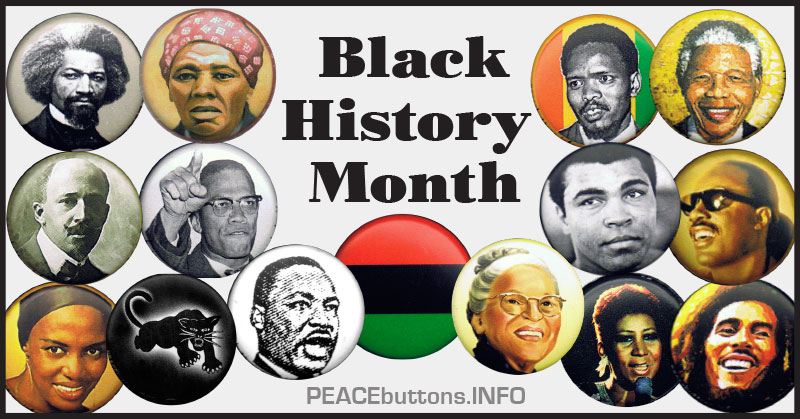
Peace & Justice History for 11/4:

November 4, 1811
A group of men in Bulwell, near Nottingham, England, armed with hammers, axes and pistols in the dark of night, broke into the workshop of a master weaver named Hollingsworth and smashed six weaving machines the men thought threatened their jobs. They and their supporters opposed the industrialization that had turned home-based sustainable textile work into factory work with significant loss of jobs through mechanization (and those at much lower wages), as well as the attendant air and water pollution.
Luddites smashing loom.
They called themselves followers of the probably fictional General Ludd and continued their attacks for months, with over a thousand knitting machines destroyed. In response, thousands of troops were sent to stop the rebellion, and Parliament passed a law making destruction of weaving machines a hanging offense.
Luddites has since become a term used for those who oppose technology.
November 4, 1956
Two hundred thousand Russian troops with 1000 tanks stopped an
anti-Stalinist uprising in Hungary and installed a new pro-Soviet government. Although civilians had set up barricades along all the major roads leading to Budapest, the Soviet air force bombed the capital and troops poured into the city in a massive dawn offensive.
Hungarian Army and National Guard troops participated in the resistance; only Communist Party functionaries and security police fought alongside the Warsaw Pact troops. The help promised from the U.S. to protect and aid the anti-Stalinists never came.
20,000 Hungarians ultimately died as a result (as well as 4000 troops), and ten times that many left the country permanently.

Hungarian ‘freedom fighters’ temporarily forced back Soviet tanks and troops.

Soviet tanks in Budapest.
Pictorial history of the Hungarian Uprising 
November 4, 1984
The first free elections in Nicaraguan history were held. Nicaragua’s ruling Sandinista Front claimed a decisive victory (70%), defeating six other parties, in the country’s first elections since the revolution the Sandanistas had led five years previous. The high-turnout election (83%) was monitored by 400 independent election observers who said the election had been fair.

Read more 
November 4, 1995
Israeli Prime Minister Yitzhak Rabin was fatally shot minutes after speaking at a peace rally held in Tel Aviv’s Kings Square in Israel.

The rally in Kings of Israel Square
  Yitzhak Rabin
Read more 
November 4, 2008
The first African American ever nominated by a major political party as candidate for president went before the electorate. Senator Barack Obama of Illinois and his Democratic vice-presidential running mate, Senator Joseph Biden of Delaware, faced Republican Senator John McCain of Arizona and Alaska Governor Sarah Palin; independent candidates Ralph Nader and Matt Gonzalez; Green Party candidates former Representative Cynthia McKinney and Rosa Clemente; and former Repepresentatives Bob Barr and Wayne Allyn Root.

https://www.peacebuttons.info/E-News/peacehistorynovember.htm#november4

For Science! on Sunday

Acceleration of Pacific Ocean circulation is impacting global weather

November 2, 2024 Evrim Yazgin

Significant acceleration in the upper-ocean circulation of the equatorial Pacific Ocean over the past 30 years is impacting global weather patterns, according to a new study.

Map of pacific showing currents
West-east near-surface current trend between 1993–2022. The blue colors show increased westward currents; red colors show increased eastward currents. The largest trends are observed in the central tropical Pacific Ocean (black box). Current velocity data from three equatorial moored buoys (yellow diamonds) provide a subsurface view on long-term upper-ocean current velocity trends. Credit: Journal of Geophysical Research: Oceans (2024). DOI: 10.1029/2024JC021343

The acceleration is driven by strengthening atmospheric winds. The oceanic currents are becoming stronger and shallower. Among the effects are increased frequency and intensity of El Niño and La Niña events.

The study is published in the Journal of Geophysical Research: Oceans.

Researchers used data collected between 1993–2022 from satellites, mooring buoys and ocean surface drifters.

They reanalysed wind data and satellite altitude measurements to create a high-resolution gridded map of ocean currents over time.

Among the findings is the roughly 20% acceleration of westward near-surface currents in the central equatorial Pacific.

North and south of the equator, currents going toward the poles have also accelerated. Currents going to the north pole have intensified by 57%, and the currents heading southward have increased 20%.

“The equatorial thermocline – a critical ocean layer for El Niño–Southern Oscillation (ENSO) dynamics – has steepened significantly,” says first author Franz Phillip Tuchen, a postdoctoral researcher at the University of Miami’s Ronenstiel School of Marine Atmospheric and Earth Science.

“This steepening trend could reduce ENSO amplitude in the eastern Pacific and favour more frequent central Pacific El Niño events, potentially altering regional and global climate patterns associated with ENSO.”

The new and comprehensive study provides a benchmark for climate models which have had limited success in accurately representing Pacific circulation and sea surface temperature trends.

The research helps explain why, for example, global mean sea surface temperatures have risen but parts of the tropical South Pacific have seen a cooling trend of more than –0.5°C over the past 3 decades.

Originally published by Cosmos as Acceleration of Pacific Ocean circulation is impacting global weather

https://cosmosmagazine.com/earth/climate/pacific-ocean-circulation-acceleration/

Peace & Justice History for 11/3:

November 3, 1883
The U.S. Supreme Court, in its decision Ex Parte Crow Dog, declared Native Americans were ultimately subject to U.S. law, “not in the sense of citizens, but . . . as wards subject to a guardian . . . as a dependent community who were in a state of pupilage.”
However, the Court acknowledged the sovereignty of tribal authority in the particular case at hand. The Congress, however, essentially overturned the Court’s decision two years later.

Chief Crow Dog, 1898
More on Ex Parte Crow Dog 
November 3, 1917
Bolsheviks, the followers of Vladimir Lenin, took control of the capital, Moscow, and the Kremlin, the fortress-like grouping of government buildings and churches at the center of the capital city, as the Russian revolution succeeded.
November 3, 1969

President Nixon announced the “Vietnamization” program to shift fighting by U.S. troops to U.S.-trained Vietnamese troops. “We have adopted a plan which we have worked out in cooperation with the South Vietnamese for the complete withdrawal of all U.S. combat ground forces, and their replacement by South Vietnamese forces on an orderly scheduled timetable.”
The last U.S. troops didn’t return home until 1975.
November 3, 1972

Five hundred protesters from the “Trail of Broken Treaties,” a Native American march, occupied the Bureau of Indian Affairs offices (part of the Department of Interior) in Washington, D.C., for six days. Their goal was to gain support from the general public for a policy of self-determination for American Indians.

Read more about the occupation: 
Read the Indian Manifesto: 
November 3, 1979
Five members of the Workers Viewpoint Organization (later the Communist Workers Party) which had organized a “Death to the Klan” rally, were murdered and ten others injured when the rally was attacked by 40 Ku Klux Klan members and Nazis in Greensboro, North Carolina. The political organization had been joined in the march by a group of local African-American mill workers. At the time of the shootings, not one police officer was present.
Two all-white juries acquitted the murderers despite the fact that the whole incident was on videotape. But in 1985 a federal jury found two policemen, a police informant/Klan leader, and five Klansmen and Nazis liable for the wrongful death of one of the demonstrators.
November 3, 1985
The Rainbow Warrior bombed
Two French agents of the DGSE (Secret Service) dramatically changed their pleas on charges related to the bombing and sinking of the Greenpeace’s ship, Rainbow Warrior, and pled guilty. The ship was attacked in Auckland (New Zealand) harbor in anticipation of sailing to Moruroa Atoll to interfere with French nuclear weapons testing. It was the first act of terror ever committed in New Zealand.
Read more 

https://www.peacebuttons.info/E-News/peacehistorynovember.htm#november3

Why This Supreme Court Case on Trans Health Care Is “Really Dangerous” for All Americans

The stakes in United States v. Skrmetti are even higher than most Americans realize and could have wide-reaching consequences if the court rules to keep the ban on gender-affirming care in place.

BY ORION RUMMLER, THE 19TH

This piece was published in partnership with The 19th, a nonprofit newsroom covering gender, politics, and policy. Sign up for their newsletter here.

A Supreme Court case that will decide whether Tennessee can continue to ban gender-affirming care for transgender youth could imperil the ability of all Americans to make decisions about their health care, experts say. The outcome depends on how far the court is willing to stretch its ruling that overturned federal abortion rights.

In United States v. Skrmetti, the court has agreed to take up the question of whether gender-affirming care bans for trans youth are unconstitutional, in response to the Biden administration petitioning on behalf of trans youth and their families in Tennessee — one of 26 states that has banned such care for minors. The outcome of the case will grant much-needed clarity in a political landscape that has thrown the lives of trans people across the country into turmoil, as hospitals turn patients away, pharmacies deny prescriptions and families travel hundreds of miles to find care.

But with the case set for oral arguments on December 4, the stakes are even higher than most Americans realize, legal and policy experts say. Tennessee has banned gender-affirming care, such as puberty blockers and hormone replacement therapy, for a specific demographic — trans youth — while allowing those same treatments for cisgender youth. If the Supreme Court allows the state to keep its ban in place, that could imperil everyone’s access to health care.

“What the state of Tennessee is arguing is really dangerous for any person who has any sort of medical condition,” says Ezra Young, a civil rights lawyer and constitutional scholar. Tennessee is dictating what medical treatments people should or should not be allowed to have, Young said; that goes well beyond states’ authority to regulate medicine, specifically because giving health care to trans people is not a public health concern.

“The state can make sure that the doctor you see has a medical degree and has an active medical license, for instance,” he says. “What the state can’t do is micromanage the medical decision-making of patients or doctors, and that’s for good reason. Bureaucrats or lawmakers aren’t medical experts.”

Yet in half of U.S. states, Republican lawmakers have banned or restricted medical care that many trans people need to live, over the protests of the American Medical AssociationAmerican Psychiatric Association, and other leading medical groups. Federal judges have attempted to block these bans from taking hold, finding them to be likely unconstitutional. Appeals court judges have disagreed and overturned those decisions. Now, the Supreme Court will have the final say.

“If we don’t win here, it’s going to be open season on any health care related to transgender people,” says Shannon Minter, legal director of the National Center for Lesbian Rights. If the Supreme Court holds that banning gender-affirming care is not discriminatory, then trans people would no longer be protected under the Affordable Care Act, he argues. States and private insurers would be able to exclude gender-affirming care from coverage plans.

“It would be devastating. I mean, absolutely catastrophic,” Minter says.

Ultimately, the outcome of this case will have a wider impact beyond gender-affirming care. A Supreme Court ruling endorsing Tennessee’s argument that the state can ban safe medical care — just because it disagrees with who that treatment is being given to  would enable the government to control people’s health decisions and enact other blatantly discriminatory policies, legal experts say.

“I think this case has bigger and broader implications than a lot of people realize, even frankly within the legal community,” says Michael Ulrich, an associate professor of health law, ethics and human rights at Boston University’s School of Public Health and School of Law. If the Supreme Court agrees with Tennessee’s ban, there’s nothing stopping states from banning or restricting other kinds of health care, he said — like what gets covered under Medicaid.

Solicitor General Elizabeth Prelogar’s office, representing the Biden administration, will split argument time before the Supreme Court with Chase Strangio, co-director of the American Civil Liberties Union’s LGBTQ & HIV Project.

The United States v. Skrmetti case is focused on whether Tennessee’s gender-affirming care ban violates the 14th Amendment’s equal protection clause, which prohibits discrimination on the basis of sex. The state insists that its ban has nothing to do with sex and that it does not target trans people. Instead, the law “sets age and use-based limits,” Tennessee’s attorney general argues. Minors can still access hormones and puberty blockers for medical purposes, as long as those treatments are not being used as part of a gender transition or to alleviate gender dysphoria. The state claims such a distinction is not based on sex because “neither boys nor girls can use these drugs for gender transition.”

To support this argument that the ban is not discriminatory, Tennessee is looking to the case that overturned federal abortion rights.

In Dobbs v. Jackson Women’s Health Organization, the Supreme Court found that there is no constitutional right to an abortion in the United States. This ruling overturned Roe v. Wade, the landmark case that had guaranteed the right to an abortion since 1973. When writing the majority opinion in Dobbs, Supreme Court Justice Samuel Alito briefly addressed a theory that suggests abortion could be covered under the 14th Amendment’s equal protection clause. This idea is not part of Roe, or at issue in Dobbs, but was invoked in a separate “friend of the court” brief. Alito dismissed it, saying that state regulations on abortion do not discriminate based on sex.

“So that’s what the state of Tennessee is now latching on to, this passing reference, this brief statement in Dobbs, and they’re pinning their whole argument on it,” says Minter. “Everything hinges on it.”

In Dobbs, Alito wrote that abortion cannot be protected under the 14th Amendment’s equal protection clause, citing the arcane Geduldig v. Aiello — a case about pregnancy-related disability benefits — and Bray v. Alexandria Women’s Health Clinic, a case dealing with the rights of anti-abortion protesters. These rarely cited cases found that state regulations on abortion and pregnancy, or opposing abortion, are not sex discrimination. Tennessee is now using this framework to argue that “any disparate impact on transgender-identifying persons” caused by its law does not single trans people out for discrimination in ways covered by the 14th Amendment.

If the state’s gender-affirming care ban is found by the Supreme Court to be discriminatory under the 14th Amendment, it is subject to heightened scrutiny — a more rigorous review to determine whether a law is constitutional or not. In that scenario, Tennessee is more likely to lose.

Using abortion case law to support bans on gender-affirming care is especially dangerous, experts say. Tennessee is taking the Supreme Court’s own decision in Dobbs out of context, according to lawyers who have worked in LGBTQ+ rights cases for decades. And, if the justices read Tennessee’s law, it is obvious that banning gender-affirming care for trans people is discriminating based on sex, they say.

The United States v. Skrmetti case is focused on whether Tennessee’s gender-affirming care ban violates the 14th Amendment’s equal protection clause, which prohibits discrimination on the basis of sex. The state insists that its ban has nothing to do with sex and that it does not target trans people. Instead, the law “sets age and use-based limits,” Tennessee’s attorney general argues. Minors can still access hormones and puberty blockers for medical purposes, as long as those treatments are not being used as part of a gender transition or to alleviate gender dysphoria. The state claims such a distinction is not based on sex because “neither boys nor girls can use these drugs for gender transition.”

But, although the question before the court has become more specific, this ruling still has the potential to broadly set back LGBTQ+ rights.

Tennessee argues that the Supreme Court’s 2020 ruling in Bostock v. Clayton County, which found that employment discrimination against LGBTQ+ workers is sex-based discrimination prohibited under the Civil Rights Act, has nothing to do with this case. But going down this road leads to more questions, Ulrich says: Is discriminating due to sexual orientation also not considered sex-based discrimination?

“Then you can see just a proliferation of discriminatory laws that are coming out thereafter,” he says. “That’s a really dangerous proposition for the entire LGBTQ+ community and it’s setting us back significantly.”

Sruti Swaminathan, an ACLU staff attorney who has been counsel in this case from the beginning, said United States v. Skrmetti will test how far the Supreme Court is willing to stretch its Dobbs decision. They are well aware that the outcome of this case could curtail bodily autonomy for everyone. And taking this challenge before a conservative-majority Supreme Court has stoked fears among trans people of worst-case scenarios.

“We’re already at the place where half the country has banned this care. We need to not let the 6th Circuit decision stand idly and be utilized in the way it has,” Swaminathan says.

But Tennessee’s tactics, and the consequences that they could have during a time when laws targeting reproductive and transgender health care are proliferating, still worry them.

“I’m terrified. What we learned from Dobbs is that these attacks won’t stop with abortion,” Swaminathan says. “Banning abortion seems to be one pillar of an effort to write outdated gender norms into the law.”

Supreme Court

A Landmark Trans Healthcare Case Finally Has Supreme Court Date

U.S. v. Skrmetti began as a lawsuit against Tennessee’s ban on gender-affirming care for minors.

Tennessee’s argument in this case illustrates a larger coordinated effort to attack abortion access alongside gender-affirming care, says Logan Casey, director of policy research at the Movement Advancement Project, a nonprofit that tracks LGBTQ+ legislation.

States across the country have attempted to define sex based on reproductive capacity at birth. These efforts open transgender people up to discrimination and ignore the realities of intersex people, as well as cisgender women with conditions like primary ovarian insufficiency. Proponents of gender-affirming care bans inaccurately portray the effects of hormone replacement therapy on trans people’s reproductive ability by conflating the treatment with sterilization.

This Supreme Court case exemplifies a much larger argument that’s been a through line across attacks on transgender care and trans issues across the country, Casey says: What is sex, and who is protected when we think about that?

“Many of these state actors and politicians and extremists are clearly very invested in the concept of sex and defining sex in a very restricted and extraordinarily old-fashioned way that focuses only on people’s reproductive capacity, and then they use that argument in whatever context they can to advance the policies that would match that worldview,” he says.

https://www.them.us/story/us-vs-skrmetti-scotus-gender-affirming-care-ban-consequences

Return the SCOTUS to law and order-

(I don’t know if this is gonna work; I’m not on Instagram, but I went there, and could see, hear, read, and got the embed link. MomsRising is asking for shares, so if anyone cares to share, thank you!)

View this post on Instagram

A post shared by MomsRising.org (@momsrising)

Peace & Justice History for 11/2:

November 2, 1920

Socialist Party candidate Eugene V. Debs received nearly one million votes for President though he was serving a prison sentence at the time for his criticism of World War I and his encouraging resistance to the draft.
More on Debs  
November 2, 1982
Voters in nine general elections passed statewide referenda supporting a freeze on testing of nuclear weapons. Only Arizona turned it down.

Dr. Randall Forsberg, a key person behind the Freeze movement
Dr. Randall Forsberg
November 2, 1983

A bill designating a federal holiday honoring Dr. Martin Luther King, Jr. (to be observed on the third Monday of January) was signed by President Ronald Reagan.
King was born in Atlanta in 1929, the son of a Baptist minister. He received a doctorate degree in theology and in 1955 organized the first major protest of the civil rights movement: the successful Montgomery Bus Boycott. Influenced by Mohandas Gandhi, he advocated nonviolent civil disobedience of the laws that enforced racial segregation.
 
The history of Martin Luther King Day   (pdf)

https://www.peacebuttons.info/E-News/peacehistorynovember.htm#november2

Republicans against democracy. They want to rule.

Below is what the tRump campaign is all about, toxic masculinity.   Gang thug 12 yr old boys on the playground standing around insulting other kids pretending to be tough guys.  Is this what you want for president, for congress?  People who feel that everyone different from them should be insulted and belittled?  Hugs  

 NFL rules forbid political “messages or gestures” during games or on the field. Just ask Colin Kaepernick, who was attacked by Bosa for kneeling during the anthem. The cult is celebrating Bosa and attacking NBC for editing the incident out of their coverage.

8.2 billion people and he is desperate for more … white ones.  Yes that is the truth of it.  First he is so egotistical he thinks his genetics are superior to any others.  Second the fear he has is that brown people will out number white ones and rule the world.   As a member of South Africa’s apartheid system he hates the idea of whites not being firmly and securely ruling over everyone else.  He is a sick man.  Hugs

They are so sure the voter purges are hurting the democrats that they push deeper and deeper cuts to the voter rolls.  Not realizing they are hitting their own people now also.  Hugs

 And she seethed at the idea that anyone would question the citizenship of a former federal employee with the “whitest name you could have.”

https://www.texastribune.org/2024/10/29/texas-noncitizen-voter-roll-removal-mary-howard-elley/

Lots of links here;

I’ve read 5 of them. One I clicked in particular is most excellent, and easy to read. Link below; there are fine pieces on Ten Bears’s page.

https://www.popsci.com/america-before-epa-photos/

Let’s talk about Trump and whether women like it or not….

Let’s talk about Musk saying Trump’s economy will include hardship….