Baltimore Pride Flag Arson Destroys Several Homes, Three People Seriously Injured, Two In Critical Condition

Baltimore’s CBS News affiliate reports:

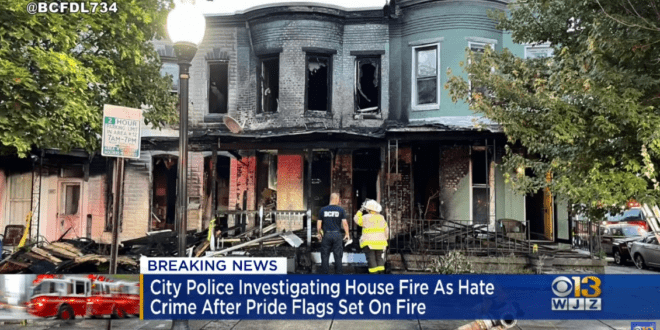
A Wednesday morning fire in Baltimore that put three people in the hospital is being investigated as a possible hate crime, authorities told WJZ.

Based on a preliminary investigation, authorities believe someone set fire to at least one Pride flag outside a row home in the 300 block of E. 31st Street and the flames spread to the home and neighboring homes, a Baltimore Police spokesperson said.

Three victims were taken to Shock Trauma for treatment, he said. A 30-year-old woman and 57-year-old man were hospitalized in critical condition, and a 74-year-old man is in serious condition, the Baltimore City Fire Department told WJZ.

Read the full article.
https://twitter.com/C_Broome/status/1537055292566867968?ref_src=twsrc%5Etfw%7Ctwcamp%5Etweetembed%7Ctwterm%5E1537055292566867968%7Ctwgr%5E%7Ctwcon%5Es1_c10&ref_url=https%3A%2F%2Fwww.joemygod.com%2F2022%2F06%2Fbaltimore-pride-flag-arson-destroys-several-homes-three-people-seriously-injured-two-in-critical-condition%2F


rcdcr • 2 days ago

JFC, it feels like we’re back in the 80’s. Be vigilant, everyone. Know who is near you at all times. Know who is behind you at all times. Look out for yourselves and each other.

another_steve rcdcr • 2 days ago

For those attending Pride events, be particularly vigilant.

Trump’s people have guns, and they’re willing and anxious to use them.

April Smith rcdcr • 2 days ago

I find myself holding back from using public restrooms if there is someone already in there. The atmosphere has changed where there could be a real confrontation. It isn’t helping that Republican politicians here in Oklahoma are trying to out do each other in their anti-Trans hate.

It’s really wearing me down.

KarenAtFOH • 2 days ago

This is what a failing democracy looks like. A majority support gay marriage, contraception, interracial marriage, and abortion rights, but are powerless to stop the removal of these rights.

Uncle Mark’s ugly face returns KarenAtFOH • 2 days ago

“ Dear America: You are waking up, as Germany once did, to the awareness that 1/3 of your people would kill another 1/3, while 1/3 watches.”

another_steve KarenAtFOH • 2 days ago

Fundamentalist evangelical Christianity and its members are, sadly, a major major factor when it comes to the future of our nation. Ronald Reagan opened the doors of government to them in the early 80s and they poured in.

In the person of Donald Trump they found their perfect puppet. They control him and he controls the vast majority of Republicans today.

AyJayDee KarenAtFOH • 2 days ago

My thoughts exactly. Add to that increasing violence, especially political violence and violence directed at minorities, and society at large but especially authorities becoming increasingly tolerant of it. Kyle Rittenhouse being acquitted after murdering two people and then lauded as a celebrity is a harbinger of things to come.
Russia’s invasion of Ukraine affecting worldwide economic growth

The conflict raging in Ukraine is damaging worldwide economic growth and driving inflation. Michael Bociurkiw, senior fellow at The Atlantic Council’s Eurasia Center, joins “CBS News Mornings” to talk about why the worst might still be ahead and other news about the conflict.

EXPOSED: Ginni Thomas Played Key Role In Encouraging The End Of Democracy

The January 6th Committee has obtained emails between Trump lawyer John Eastman and Ginni Thomas, the wife of Supreme Court Justice Clarence Thomas, clearly showing that Thomas was very much involved in planning the coup attempt. In an email to another MAGA lawyer, Eastman explained that the SCOTUS was still debating whether or not to hear an election contest claim from Wisconsin, while Ginni reached out to 27 Arizona lawmakers on multiple occasions encouraging them to overturn their states’ election results. Cenk Uygur and Ana Kasparian discuss on The Young Turks.

Read more HERE: https://www.huffpost.com/entry/ginni-…

“The House committee investigating the Jan. 6, 2021, insurrection at the U.S. Capitol is in possession of emails Ginni Thomas, the wife of conservative Supreme Court Justice Clarence Thomas, exchanged with John Eastman, a lawyer advising former President Donald Trump how to overturn the 2020 election.

The correspondence shows Thomas was more involved in trying to reverse Trump’s election defeat than previously known, two sources told The Washington Post. The content of the emails, and the timing of the exchanges, wasn’t known.

Earlier this month, a judge ordered Eastman to surrender 159 documents to the House panel. In another email exchange dated Dec. 24, 2020, reviewed by the committee and detailed in The New York Times, Eastman wrote to Kenneth Chesebro, another lawyer supporting Trump, and other Trump officials, that Supreme Court justices were arguing over whether to hear a case contesting the results of the 2020 election.

In the email, Eastman discussed filing a lawsuit over the results in Wisconsin, hoping to nudge at least four justices needed for the Supreme Court to take a case.”

‘The Russians said beatings were my re-education’

https://www.bbc.com/news/world-europe-61683513

Andriy looking outside

Image caption,

Like many Ukrainians trying to leave Russian-occupied areas, Andriy was forced to go through a process called filtration

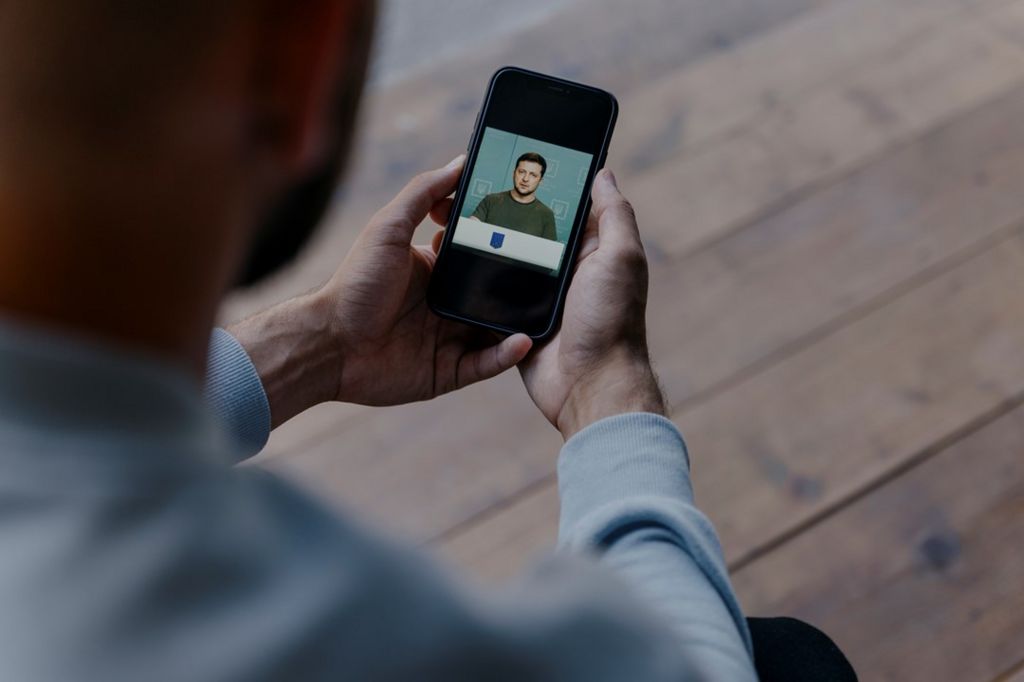
Andriy watched anxiously as Russian soldiers connected his mobile to their computer, trying to restore some files. Andriy, a 28-year-old marketing officer, was attempting to leave Mariupol. He had deleted everything he thought a Russian soldier could use against him, such as text messages discussing Russia’s invasion of Ukraine or photos of the devastation in his city caused by weeks of relentless shelling.

But the internet in Mariupol, a once bustling port in southern Ukraine, had been cut off as part of the siege imposed by Russia, and Andriy had not been able to take down some of his social media posts. He remembered the first days of the war, when he had shared some anti-Russian messages and speeches from the Ukrainian president, Volodymyr Zelensky. “I’m screwed,” he thought.

The soldiers, Andriy said, already had their focus on him.

On that day in early May, when he first joined the queues for what is known as filtration, the process of scrutinizing civilians wishing to leave Russian-occupied areas, one of the soldiers noticed his beard. He instantly assumed it was a sign Andriy was a fighter with the city’s Azov regiment, a former militia which had links with the far right. “Is it you and your brigade killing our guys?,” Andriy was asked. He replied he had never served in the army, he started working directly after graduating, but “they didn’t want to hear it”.

As the soldiers went through his phone, they turned to his political views, and asked his opinion of Zelensky. Andriy, cautiously, said Zelensky was “okay”, and one of the soldiers wanted to know what he meant by that. Andriy told him Zelensky was just another president, not very different from those who had come before, and that in fact, he was not very interested in politics. “Well,” the soldier replied, “you should just say you aren’t interested in politics.”

They kept Andriy’s phone and told him to wait outside. He met his grandmother, mother and aunt, who had arrived with him for the process in Bezimenne, a small village to the east of Mariupol. They had already been given a document that allowed them to leave. A few minutes later, Andriy said, he was ordered to go to a tent where members of Russia’s security service, the FSB, were carrying out further checks.


Five officers were sitting behind a desk, three wearing balaclavas. They showed Andriy a video he had shared on Instagram of a speech Zelensky had given, from 1 March. With it was a caption written by Andriy: “A president we can be proud of. Go home with your warship!” One of the officers took the lead. “You told us you’re neutral to politics, but you support the Nazi government,” Andriy recalled being told. “He hit me in the throat. He basically started the beating.”

Andriy looking at his phone
Image caption,
Andriy said the soldiers found out he had shared speeches of President Zelensky after connecting his phone to their computer

Like Andriy, Dmytro had his phone confiscated at a checkpoint as he tried to leave Mariupol in late March. Dmytro, a 34-year-old history teacher, said the soldiers came across the word “ruscist”, a play on “Russia” and “fascist”, in a message to a friend. The soldiers, Dmytro told me, slapped and kicked him, and “everything [happened] because I used that word.”

Dmytro said he was taken, with four other people, to a police station in the village of Nikolsky, also a filtration point. “The highest-ranking officer punched me four times in the face,” he said. “It seemed to be part of the procedure”.

His interrogators said teachers like him were spreading pro-Ukrainian propaganda. They also asked what he thought about “the events of 2014”, the year that Russia annexed the Crimea peninsula and started supporting pro-Russian separatists in Donetsk and Luhansk. He replied that the conflict was known as the Russo-Ukrainian war. “They said Russia was not involved, and asked me whether I agreed that it was, in fact, a Ukrainian civil war.”

The officers checked his phone again, and this time found a photo of a book which had the letter H in its title. “We got you!” the soldiers told Dmytro. Russia’s president, Vladimir Putin, claims his war in Ukraine is an effort to “de-Nazify” the country, and the soldiers, Dmytro said, believed he was reading books about Hitler.

The next morning, Dmytro was transferred with two women to a prison in Starobesheve, a separatist-controlled village in Donetsk. He counted 24 people in the four-bunk cell. After four days and another detailed interrogation, he was finally released, and eventually reached Ukrainian-held territory. Weeks later, he still does not know what happened to his cell mates.

 
Short presentational grey line

Back inside the tent in Bezimenne, Andriy noticed two other people with their hands tied behind them, who had been left in a corner while the officers paid attention to him. “They started to beat me way harder,” Andriy told me, “everywhere”. At one point, after a blow to the stomach, he felt as if he was about to faint. He managed to sit on a chair.

“I wondered what would be better,” he said, “to lose consciousness and fall down or tolerate the pain further.”

At least, Andriy thought, he had not been sent somewhere else, away from his family. Ukrainian officials say thousands of people are believed to have been sent to detention centres and camps set up in Russian-controlled areas during filtration. In almost all cases, their relatives do not know where they are being held, or why. “I [was] very angry about everything,” Andriy said, “but, at the same time, I know it could’ve been much worse.”

His mother tried to get into the tent, but was stopped by the officers. “She was very nervous. She later said they had told her that my ‘re-education’ had started,” Andriy said, “and that she shouldn’t be worried.” His ordeal, he told me, continued for two and a half hours. He was even forced to make a video saying “Glory to the Russian army!”, a mockery of “Slava Ukraini!”, the Ukrainian slogan.

The final question, Andriy said, was whether he had “understood his mistakes”, and “I obviously answered yes”. As he was being released, officers brought in another man, who had previously served in Ukraine’s military and had several tattoos. “They immediately pushed him to the ground and started to beat him,” Andriy said. “They didn’t even talk to him.”

Andryi looking outside
Image caption,
“I even try to justify the process somehow. Try to convince myself there’s some logic,” Andriy said about filtration

Ukrainian authorities say Russian forces and Russian-backed separatists have carried out filtration in occupied territories as an attempt to establish residents’ possible links with the military, law enforcement and even local government, as the invading forces try to restore services and infrastructure.


Men of fighting age are particularly targeted, checked for bruises that could suggest recent use of weapons, such as on the fingers and shoulders. Strip searches are common, witnesses say, including for women. Oleksandra Matviychuk, the head of the Center for Civil Liberties, a Kyiv-based human rights group, said the process, even when not violent, was “inhuman”. “There’s no military need for this… They’re trying to occupy the country with a tool I call ‘immense pain of civilian people’. You ask: ‘Why so much cruelty? For what?'”

Maksym, a 48-year-old steelworker, said he was forced to strip naked while officers in Bezimenne checked even the seams of his clothes. He was asked whether he was from the Azov regiment or was a Nazi sympathiser – he denied being either – and why he wanted to leave Mariupol. “I said, ‘Actually, it’s you who are on Ukrainian soil.'” One of the officers, who he said were all Russian, reacted by hitting Maksym with the gun butt in his chest. He fell.

“I leaned my head on the ground, holding my ribs. I couldn’t get up,” he said. “It was very painful to breathe.”

He was taken to what he described as a “cage”, where others were being held. He noticed that one man, a weightlifter, had a tattoo of Poseidon, the Greek god, with a trident. The soldiers, Maksym said, thought it was the Ukrainian coat of arms. “He explained it to them but they didn’t understand.” Those detained in the “cage” were given no water or food, and had to urinate in a corner in front of everyone, Maksym told me. At one point, exhausted, he tried to sleep on the ground. An officer came in and kicked him in the back, forcing him to stand.

People would be taken to be interrogated and, when they returned, “you saw the person had been beaten,” Maksym said. He witnessed a woman in her 40s lying in pain, apparently after being hit in the stomach. A man, who seemed to be around 50, had a bleeding lip and red bruises on his neck. Maksym believed he had been strangled. No-one in the “cage” asked or said anything to each other. They were afraid that FSB officers could be disguised as prisoners.

After about four or five hours, Maksym was released and allowed to leave Mariupol. Days later, he reached safety in Ukrainian-controlled territory, and went to a hospital to treat the persistent pain in his chest. The diagnosis: four broken ribs.

Short presentational grey line

Yuriy Belousov, who leads the Department of War at the Ukrainian general prosecutor’s office, said his team had received allegations of torture and even killings during filtration. “[It seems to be] a Russian policy which was designed in advance, and pretty well prepared,” he told me. “It’s definitely not just a single case or [something] done by a local military guy.”

He acknowledged it was difficult to verify the cases, or estimate the scale of the violence. The Ukrainian authorities are unable to carry out investigations in occupied territories and most victims remain reluctant to share their stories, concerned that relatives in Mariupol could be targeted if their identity is exposed.

Vadym, 43, who used to work at a state-owned company in Mariupol, said he was tortured in Bezimenne in March. Separatist soldiers had questioned his wife after finding out she had “liked” the Ukrainian army page on Facebook, and restoring a receipt on her phone of a donation she had made to them. “I tried to stand up for her,” he said, “but was knocked down.” He got up, but was beaten once more. A pattern, he said, that happened again and again.

When Russian soldiers realised where he worked, they took Vadym to a different building. There, Vadym said separatist soldiers asked him “stupid things” and started to beat him. “They used electricity. I almost died. I fell and choked on my dental fillings, which had come out from my teeth,” Vadym said. He vomited and fainted. “They were furious. When I recovered consciousness, they told me to clean everything up and continued to give me electric shocks.”

The torture, Vadym said, only stopped after Russian officers intervened. They carried out another round of questioning before finally freeing him. As Vadym left the building, he saw a young woman, who had been identified during the process as a court clerk, being carried out.

“A plastic bag was put on her head, and her hands were tied,” Vadym said. “Her mother was on her knees, begging for her daughter not to be taken away.”

Vadym’s release came with a condition: he would have to go to Russia. About 1.2 million people in Ukraine, including thousands of Mariupol residents, have been sent to Russia against their will since the invasion began in February, according to Ukrainian officials. Russia denies it is carrying out a mass deportation, which would constitute a war crime under international humanitarian law, and says it is simply helping those who want to go. Ukraine rejects this claim.

Some of those sent to Russia have managed to escape to other countries and even return to Ukraine. How many, remains unclear. Vadym, with the help of his friends, moved to another European country – he did not want to reveal the exact location. He had lost some of his vision, he told me, and doctors said this was a result of head injuries from the beating. “I feel better now, but rehabilitation will take a long time.” I asked him what he thought about filtration. “They separate families. People are being disappeared,” he said. “It’s pure terror.”

Russia’s defence ministry did not respond to several requests for comment on the allegations. The Russian government has previously denied it is carrying out war crimes in Ukraine.

Andryi's shadow
Image caption,
Andriy said his mother was told by a Russian soldier that he was going through “re-education”

Andriy and his family have now settled in Germany, after also having been forced to go to Russia. Looking back, he believes the occupying forces seemed to be using filtration to show their “absolute power”. Soldiers, he said, acted as if it was a “type of entertainment”, something to “satisfy their own ego”.

I told him about another Ukrainian I had met, a 60-year-old retired engineer called Viktoriia. A soldier found out she had added a Ukrainian flag to her profile photo on Facebook, she told me, and the message “Ukraine above all.”

She said that he pointed his gun at her and threatened: “I’ll put you in the basement until you rot!” He then kicked her, she said. Viktoriia could not understand why he had acted like that. “What did I do? What right did they have?”

Andriy said he could not explain such behaviour. “I even try to justify the process somehow. Try to convince myself there’s some logic.”

But, he said, “there’s no logic”.

Some names have been changed to protect identities

Texas Paul EXPOSES GOP Links to Extremist Groups

Texas Paul REACTS to Lauren Boebert saying Jesus needed an AR-15

Pro-Trump Pastor calls for LGBTQ Americans to be Executed in most Shocking Statements Yet

Pastor Mark Burns, a loyal supporter of former President Donald Trump and a Republican congressional candidate, said earlier this week that parents and teachers who communicate with children about LGBTQ issues pose a “national security threat” to the United States and added that those found guilty of “treason” should be executed. Coach D reacts.

4 in 10 Republicans think mass shootings are ‘unfortunately something we have to accept as part of a free society’: CBS/YouGov poll

https://www.insider.com/poll-4-in-10-gop-accept-mass-shootings-free-society-2022-6

A toy yellow school bus is placed in front of a cross to honor Rojelio Torres, one of the children killed during the mass shooting in Robb Elementary School, while an American flag is seen in the foreground, Sunday, May 29, 2022, in Uvalde, Texas.

A toy yellow school bus is placed in front of a cross to honor Rojelio Torres, one of the children killed during the mass shooting in Robb Elementary School, while an American flag is seen in the foreground, Sunday, May 29, 2022, in Uvalde, Texas. Wong Maye-E/AP

  • Some 44% of Republicans say mass shootings are “something we have to accept as part of a free society,” a poll found.
  • The poll found that a majority of Democrats and Independents said shootings are preventable “if we really tried.”
  • The survey comes after a string of mass shootings have again prompted Congress to assess gun control.

More than 4 in 10 Republicans think mass shootings are inevitable in a “free society,” according to a new poll by CBS News and YouGov.

The survey results came on the heels of a string of mass shootings across the country that have prompted Congress to once again consider legislation on gun control

One of the questions in the poll asked respondents if they feel that mass shootings are “unfortunately something we have to accept as part of a free society” or “something we can prevent and stop if we really tried.” 

In response, 44% of Republicans said mass shootings are inevitable “as part of a free society.” Meanwhile, 85% of Democrats and 73% of Independents said mass shootings are preventable “if we really tried.” 

The survey had a sample size of 2,021 US adults that were interviewed between June 1 and June 3, per CBS News, which noted the margin of error is ±2.6 points. 

Following the shooting in Uvalde, President Joe Biden insisted that Senate Minority Leader Mitch McConnell is a “rational Republican” who could agree to gun control measures, despite the party’s longtime refusal to seriously entertain policy changes on firearms. 

McConnell signaled his willingness for Republican senators to work with Democrats on a bipartisan push for gun safety legislation, but he did not endorse any specific proposals. The Minority Leader said he had “encouraged” Sen. John Cornyn, a Texas Republican, to talk to key Democrats “who are interested in trying to get an outcome that’s directly related to the problem.”

Days later, a conservative radio host tweeted that Cornyn was “open to making gun laws more restrictive.” Cornyn responded to the tweet, saying it was “not gonna happen.”

In the CBS/YouGov poll, respondents from political parties across the board seemed to agree that it is unlikely Congress will “pass any laws in the next few months that will make significant changes to gun policy.”

A total of 66% of Democrats, 72% of Independents, and 71% of Republicans indicated that they think it is “not very likely” or “not at all likely” that Congress passes significant, new gun policies in the coming months. 


Turkish police violently arrest and ‘torture’ Istanbul Pride organizers during peaceful protest

I want to point out that Turkey used to be a secular democracy and is still a member of NATO.  They have transformed into a hardline strongman government with few democratic elements, and the government is promoting a Muslim theocracy.  As for NATO Turkey has become one of the biggest obstacles for NATO growth and development.  Recep Tayyip Erdoğan is close with Putin and so threatens the secrets of US systems used my NATO.  It is a bad situation made worse by religion taking over the government.  And again near the end I have highlighted the same slurs and attacks by government on the LGBTQ+.    President Tayyip Erdoğan’s government has shamelessly sought to paint LGBTQ+ as “perverts” or claim they don’t even exist as they tear away at what little rights LGBTQ+ people have in Turkey.

Police and istanbul Prude organisers square off

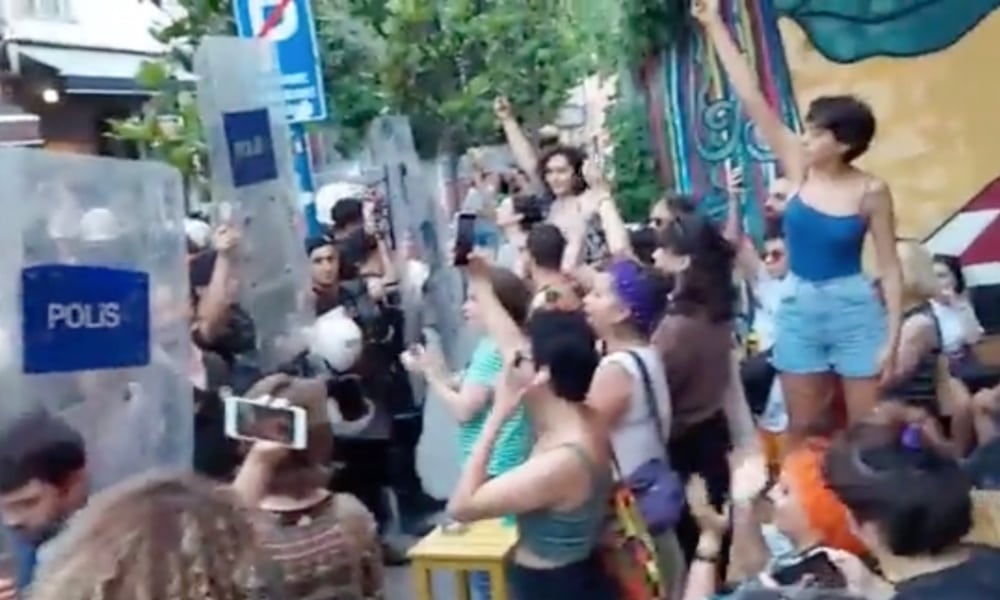
Turkish police descended on a peaceful Istanbul Prude protest. (Screen capture via Twitter)

Turkish police brutally beat and allegedly “tortured” nearly a dozen LGBTQ+ activists in Istanbul who were simply celebrating the start of Pride Month.

On 5 June, members of İstanbul LGBTİ+ Onur Haftası, which organises Istanbul Pride, gathered in the Yeldeğirmeni neighbourhood of the Kadıköy district to read a statement welcoming the start of Pride.


But as activists came together to celebrate 30 years of Istanbul Pride at around 6.30pm, a wave of police swept over the street. Hundreds of officers wielding riot shields proceeded to arrest 11 LGBTQ+ campaigners, according to video footage shared by İstanbul LGBTİ+ Onur Haftası.

Officers from Turkey’s national police force, the General Directorate of Security, were joined by the Çevik Kuvvet riot squad to squash the peaceful protest.

Activists and onlookers alike booed as people were escorted into police vans. Cordons of police lined the street and raised their shields up high in an attempt to prevent bystanders from seeing officers handcuffing and shoving activists.


Remaining defiant, Pride organisers and other campaign groups continued to raise intersex-inclusive Progress flags and heckle even as police detained them.

“Istanbul LGBTI+ Pride week is 30th [sic] years old. Police attacked and arrested LGBTI+ people who met in Yeldegirmeni streets in Istanbul- Kadikoy to celebrate Pride Month,” İstanbul LGBTİ+ Onur Haftası tweeted.

“Queer pride will defeat police torture! Istanbul Pride March countdown just begun! This year to we will resist!”

Members of İstanbul LGBTİ+ Onur Haftası, as well as two members of Trans+ Korteji, were arrested by police that evening. Trans+ Korteji claimed that, while in custody at the Vatan Police Station, officers “tortured” activists and shared alarming photographs of their heavily bruised wrists and legs.

Those arrested were all released later that evening.

With the theme of “resistance” 2022’s Istanbul Pride parade is scheduled for 26 June. But how police crushed a small gathering was a troubling forewarning of what the coming weeks will be like for LGBTQ+ people.

Istanbul Pride’s parades attracted hundreds of thousands of attendees for 13 years before the governate of Istanbul banned LGBTQ+ Pride events in 2015. Each year since city officials have invented reasons to prohibit the parade, such as “safety concerns” or COVID-19 restrictions, all but going in the face of Turks’ constitutional right to hold a peaceful protest without prior permission.


Yet activists refuse to back down and march anyway – and they have their reasons to. President Tayyip Erdoğan’s government has shamelessly sought to paint LGBTQ+ as “perverts” or claim they don’t even exist as they tear away at what little rights LGBTQ+ people have in Turkey.

In one of the most violent crackdowns yet, 2021 Istanbul Pride saw a shower of rubber bullets and tear gas strike LGBTQ+ Pride-goers. Around 20 were detained.

İstanbul LGBTİ+ Onur Haftası knows that this year won’t be any different. In the statement the group intended to read out on 5 June, organisers hoped to say that Pride is not only a celebration but is and always will be a protest.

“We LGBTIQA+ people are on the streets again. Our voices, laughter, and slogans echo in these streets. We are here with our identities, orientations, queerness, and all our existences,” the statement said according to the Turkish press agency Bianet.

“We are strong together, we continue to exist,” İstanbul LGBTİ+ Onur Haftası added. “Happy Pride.”

New study shows welfare prevents crime, quite dramatically

https://www.eurekalert.org/news-releases/954451

This has been well known for a century, maybe longer.   People who have nothing, who are hungry, cold, hopeless will do whatever they can to get what they need, even crime.   Let’s give them another way, we can easily afford it in this country if we stop robbing the public to funnel the money to the wealthy.   Hugs

A new paper in the Quarterly Journal of Economics, published by Oxford University Press, indicates that removing cash welfare from children when they reach age 18 greatly increases the chances that they will face criminal justice charges in subsequent years.  

Supplemental Security Income is a United States program that provides payments to people with disabilities who have low incomes. Children qualify for the program based on their disability status and their parents’ low income and assets. Until 1996 children automatically continued to qualify for the adult program when they reached 18 years old unless their incomes increased.

As part of changes made to US social welfare programs in 1996 the US Social Security Administration began to reevaluate children receiving SSI when they turned 18 using different, adult, medical eligibility criteria. The Social Security Administration began removing about 40% of children receiving benefits when they turned 18. This process disproportionately removes children with mental and behavioral conditions such as attention-deficit/hyperactivity disorder.

Using data from the Social Security Administration and the Criminal Justice Administrative Records System researchers estimated the effect of losing Supplemental Security Income benefits at age 18 on criminal justice and employment outcomes over the next two decades. By comparing records of children with an 18th birthday after the date of welfare reform enactment on August 22, 1996, and those born earlier (who were allowed onto the adult program without review) the researchers were able to estimate the effect of losing benefits on the lives of the affected youth.

They found that terminating the cash welfare benefits of these young adults increased the number of criminal charges by 20% over the next two decades. The increase was concentrated in what the authors call “income-generating crimes,” like theft, burglary, fraud/forgery, and prostitution. As a result of the increase in criminal charges, the annual likelihood of incarceration increased by 60%. The effect of this income removal on criminal justice involvement persisted more than two decades later.

The researchers found that the impact of the change was heterogeneous. While some people removed from the income support program at age 18 responded by working more in the formal labor market, a much larger fraction responded by engaging in crime to replace the lost income. In response to losing benefits, youth were twice as likely to be charged with an illicit income-generating offense than they were to maintain steady employment.

While each person removed from the program in 1996 saved the government some spending on SSI and Medicaid over the next two decades, each removal also created additional police, court, and incarceration costs. Based on the authors’ calculations, the administrative costs of crime alone almost eliminated the cost savings of removing young adults from the program.

“Traditionally, economists talk about the income effects of welfare programs in the context of the formal labor market—that welfare discourages work,” said the paper’s authors, Manasi Deshpande and Michael Mueller-Smith. “What we find is that the income effect of welfare benefits can also manifest as reductions in criminal activity. In fact, in the SSI context, cash welfare has a much larger discouragement effect on criminal activity than it does on formal work.”

The paper “Does Welfare prevent crime? The criminal justice outcomes of youth removed from SSI” is available (at midnight on June 7th) at: https://academic.oup.com/qje/advance-article/doi/10.1093/qje/qjac017/6581195.

Direct correspondence to: 
Manasi Deshpande
University of Chicago Department of Economics 
Saieh Hall for Economics 347 
1126 East 59th Street 
Chicago, IL 60637                                                                                                                                          mdeshpande@uchicago.edu

To request a copy of the study, please contact:
Daniel Luzer 
daniel.luzer@oup.com