“Threatening to cancel votes”: Florida officials allege fraud to kneecap abortion rights amendment
https://www.salon.com/2024/10/12/threatening-to-cancel-votes-florida-officials-allege-fraud-to-kneecap-abortion-rights-amendment/

The last-minute report threatens to “cancel” votes for an amendment to restore abortion rights in the state

By Griffin Eckstein

News Fellow

Published October 12, 2024 2:06PM (EDT)

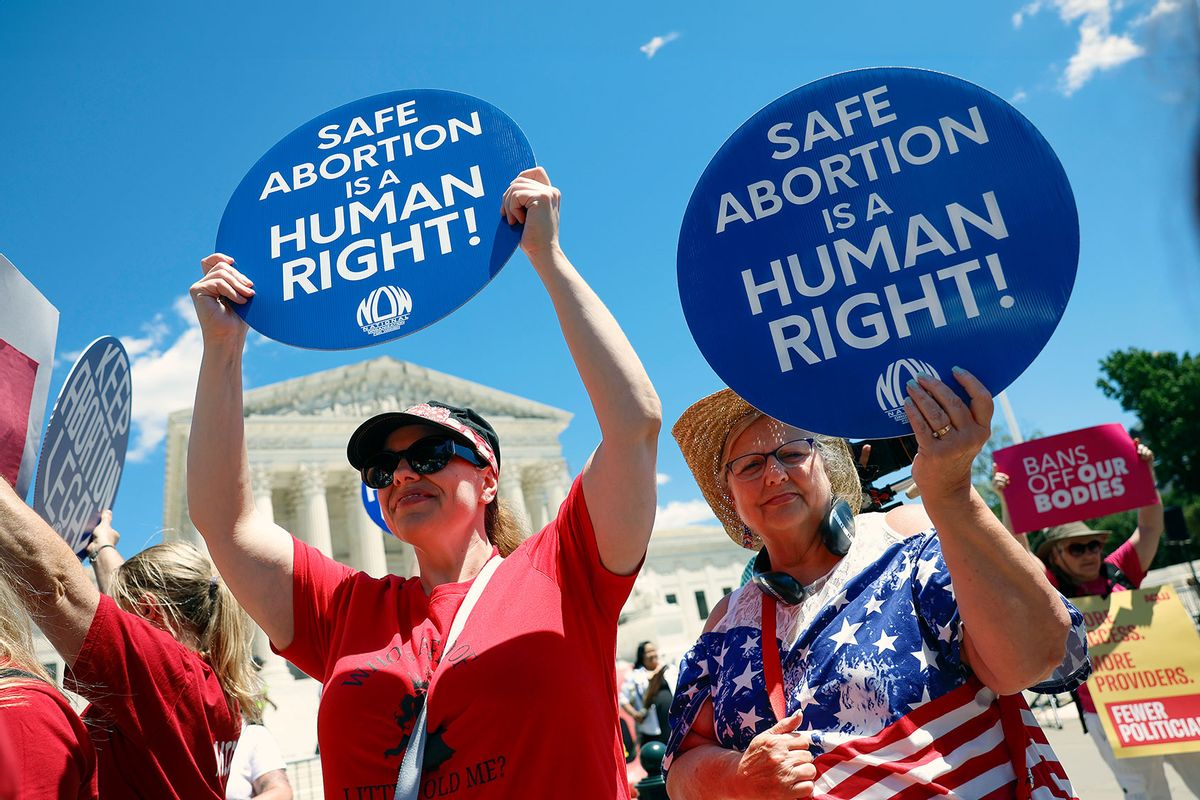
Abortion rights advocates participate in a protest outside of the U.S. Supreme Court Building on June 24, 2024 in Washington, DC. (Anna Moneymaker/Getty Images)

Abortion rights advocates participate in a protest outside of the U.S. Supreme Court Building on June 24, 2024 in Washington, DC. (Anna Moneymaker/Getty Images)

In a last-minute effort to kill a proposed ballot amendment that would restore abortion rights in Florida, state officials are accusing a group that gathered signatures to get the amendment on this year’s ballot fraud.

Florida Deputy Secretary of State Brad McVay claimed in a 348-page report released on Friday night that Floridians Protecting Freedom paid out-of-state petition circulators to harvest fraudulent signatures. That group that gathered nearly 1 million signatures for the abortion rights effort. The report alleges the Department of State has been flooded with complaints about potential fraud, and that it had opened over 100 criminal investigations.

“The allegations included reports of paid FPF petition circulators signing petitions on behalf of deceased individuals, forging or misrepresenting elector signatures of petitions, using electors’ personal identifying information without consent, and perjury/false swearing,” the report claims, noting that “more than 20” of the 911,000 signatures were from now-deceased Floridians.

Florida law allows voters to add amendments to the state constitution directly, if 60% of voters agree with a given proposal. Though the election is just three weeks away and ballots have been printed, challenges to the amendment could invalidate votes cast for the initiative. 

Governor Ron DeSantis’ administration has worked hard to kneecap the rights-restoring proposal, reportedly sending state troopers to interrogate petition signers and threatening to prosecute television stations that run ads supporting the measure. On Thursday, state’s Supreme Court ruled DeSantis was not abusing his powers in his attacks on the amendment. 

Florida Democrats warn that the report is just another tactic aimed at killing the effort to repeal the state’s DeSantis-enacted six-week abortion ban.

“DeSantis is so obsessed w/ending reproductive freedom in FL that he has weaponized every state agency against us, is spending PUBLIC $ to campaign against [the ballot initiative] & now — while we’re recovering from a hurricane  — releasing late night reports, threatening to cancel our votes,” Democratic state Representative Anna V. Eskamani wrote in a post to X.


MORE FROM Griffin Eckstein

Vote Blue-From Janet

Interesting!

Misinformation: how the printing press fuelled witch trials

October 11, 2024 Ellen Phiddian

Book opening page illustrating witch titled 'the discovery of witches'
A 1647 witch-finder pamphlet. Via Wikimedia Commons

The printing press – and a particular manual it printed – played a big role in early modern witch trials, according to a fascinating new study.

Between 1450 and 1750, some 90,000 people were put on trial for being witches across Europe.  About 45,000 of these people were executed.

Reasons for the fervour of this “witch craze” are murky. People had believed in witches for centuries, but brutal witch-hunts weren’t nearly as common until the 15th Century.

A study published in Theory and Society uses data on witch trials and witch-hunting publications to suggest that manuals may have been a big contributor.

In particular, they believe the Malleus maleficarum, which was first published in 1487, could explain a lot of the uptick – alongside trials in neighbouring cities.

Malleus maleficarum front page
Frontpiece for a 1576 edition of the Malleus maleficarum. Via Wikimedia Commons

“Cities weren’t making these decisions in isolation,” says lead author Dr Kerice Doten-Snitker, a postdoctoral fellow at the Santa Fe Institute, USA.

“They were watching what their neighbours were doing and learning from those examples. The combination of new ideas from books and the influence of nearby trials created the perfect conditions for these persecutions to spread.”

The researchers tracked the “ideational diffusion” – the spread of an idea, and behaviours linked to it – of witchcraft by looking at trial data and publication data from 553 cities in Central Europe.

They looked specifically for the publication of witch-hunting manuals, like the Malleus maleficarum.

This book contained a detailed explanation of “demonology” – the theory of witchcraft – as well as practical advice on finding and convicting witches.

“At the time of its appearance, there was only a shaky consensus among learned authorities on the crucial questions of who witches were, what they did, and why they had supernatural powers,” write the researchers in their paper.

“The willingness of [author Heinrich] Kramer to expound confidently on these questions is part of what made Malleus so influential.”

Each new edition of the Malleus maleficarum was linked to an increase in witch trials in the city where it was printed.

“The printing press did not cause the inception of the elaborated theory of witchcraft, but our results show that it fostered its spread,” write the researchers.

The team believes this ideational diffusion can be seen in many other areas.

“The process of adopting witch trials is not unlike how modern governments adopt new policies today,” says Doten-Snitker.

“It often starts with a change in ideas, which are reinforced through social networks. Over time, these ideas take root and change the behaviour of entire societies.”

Originally published by Cosmos as Misinformation: how the printing press fuelled witch trials

https://cosmosmagazine.com/people/social-sciences/printing-press-witch-trials/

Let’s talk about Trump, calendars, messages, and economies….

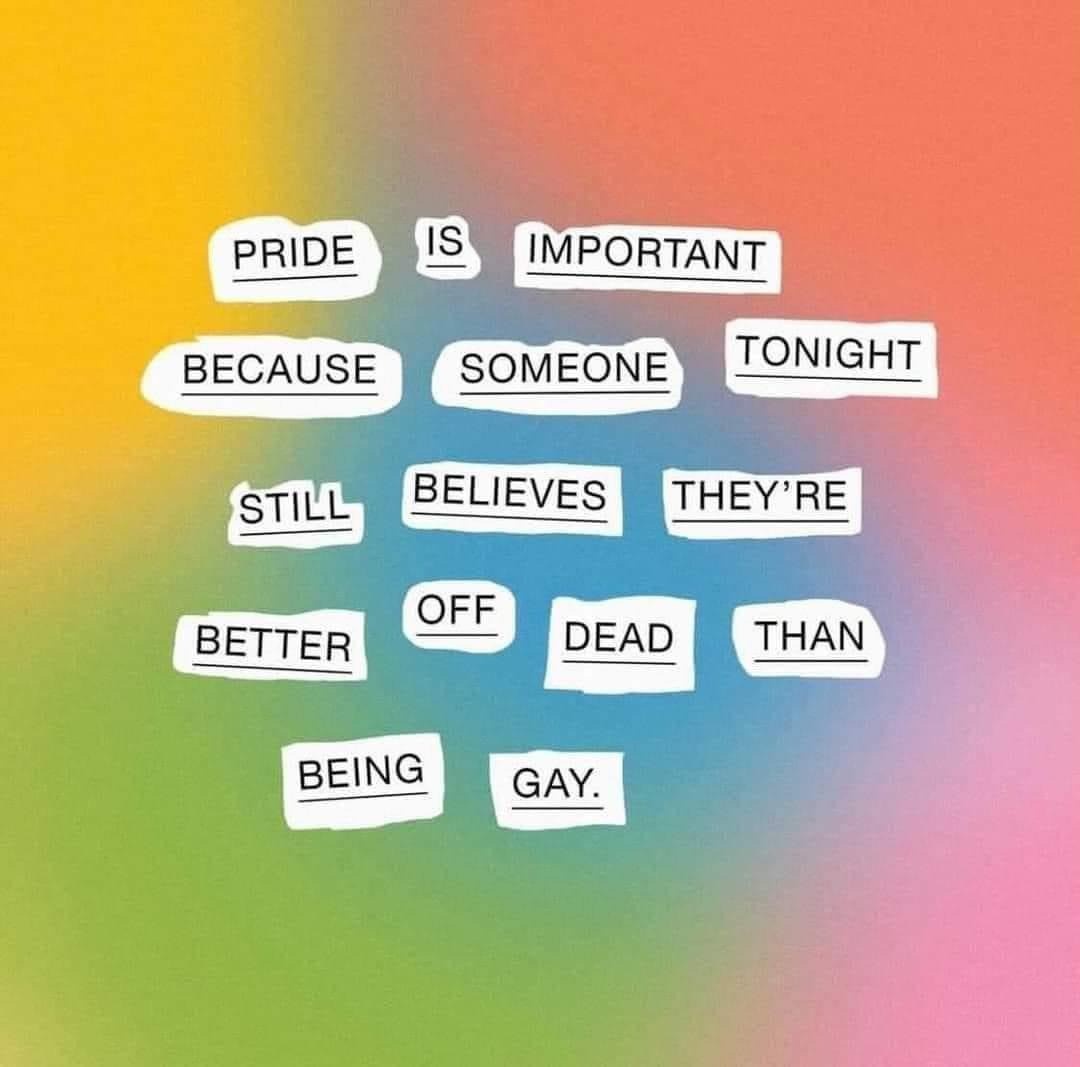
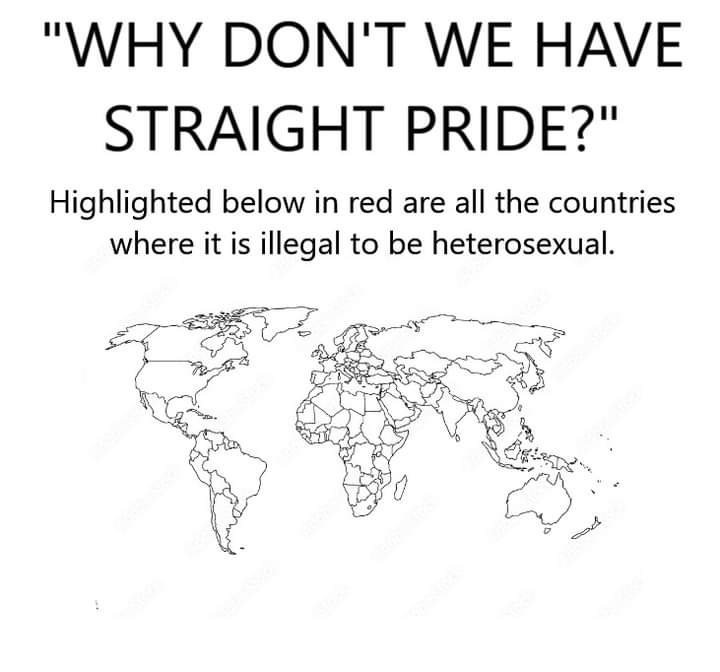
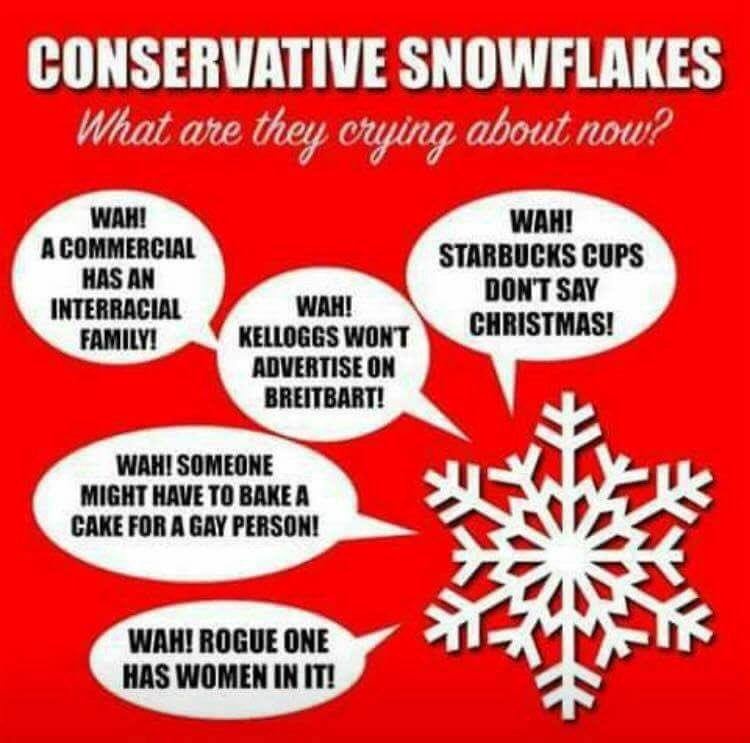
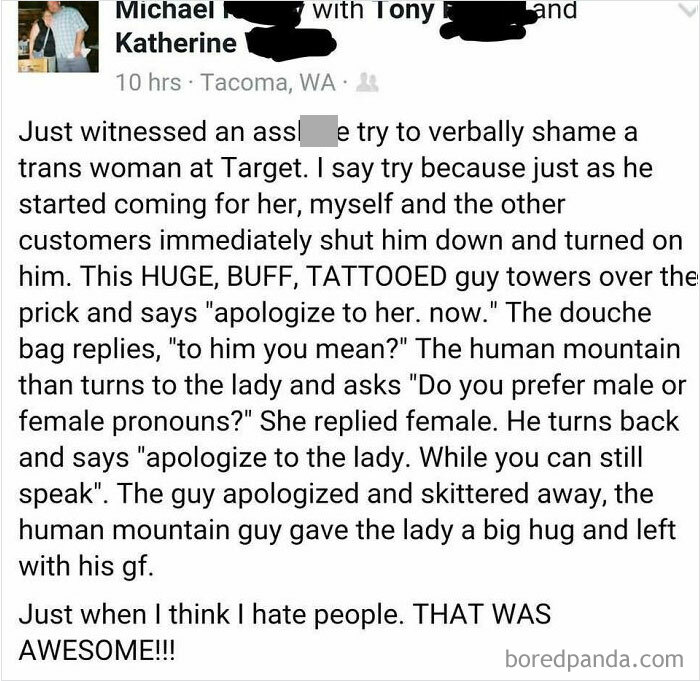
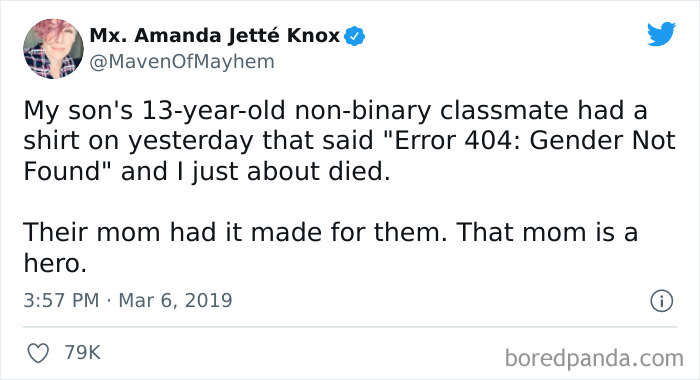
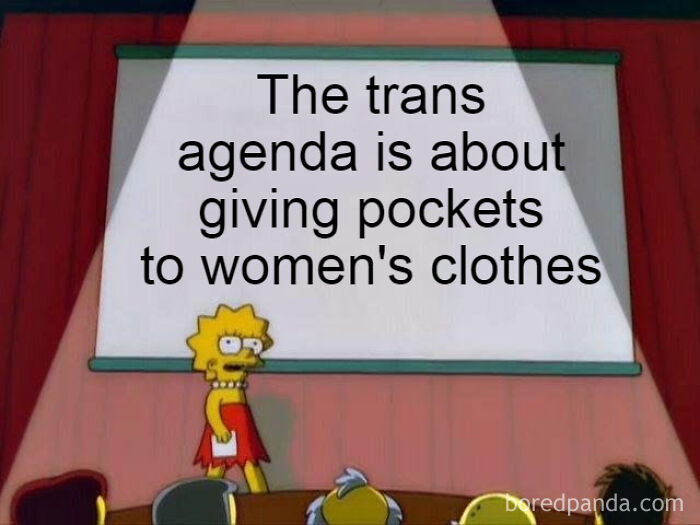
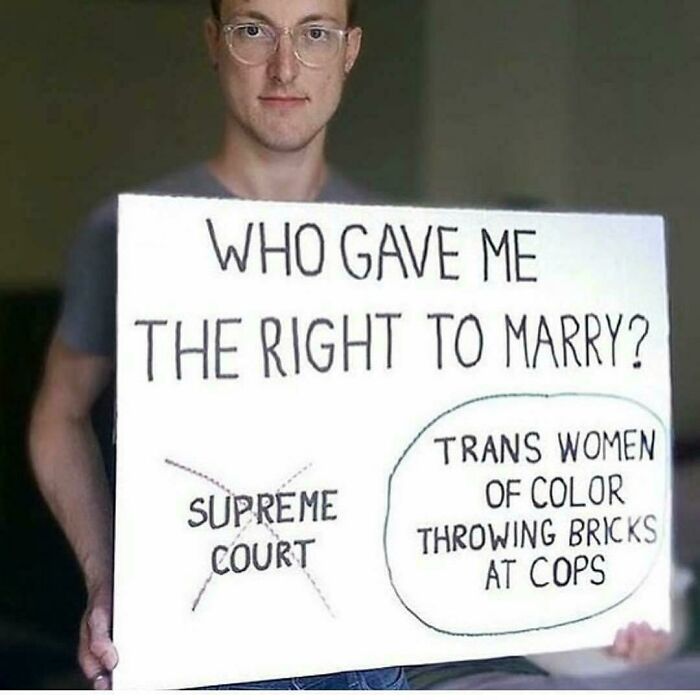
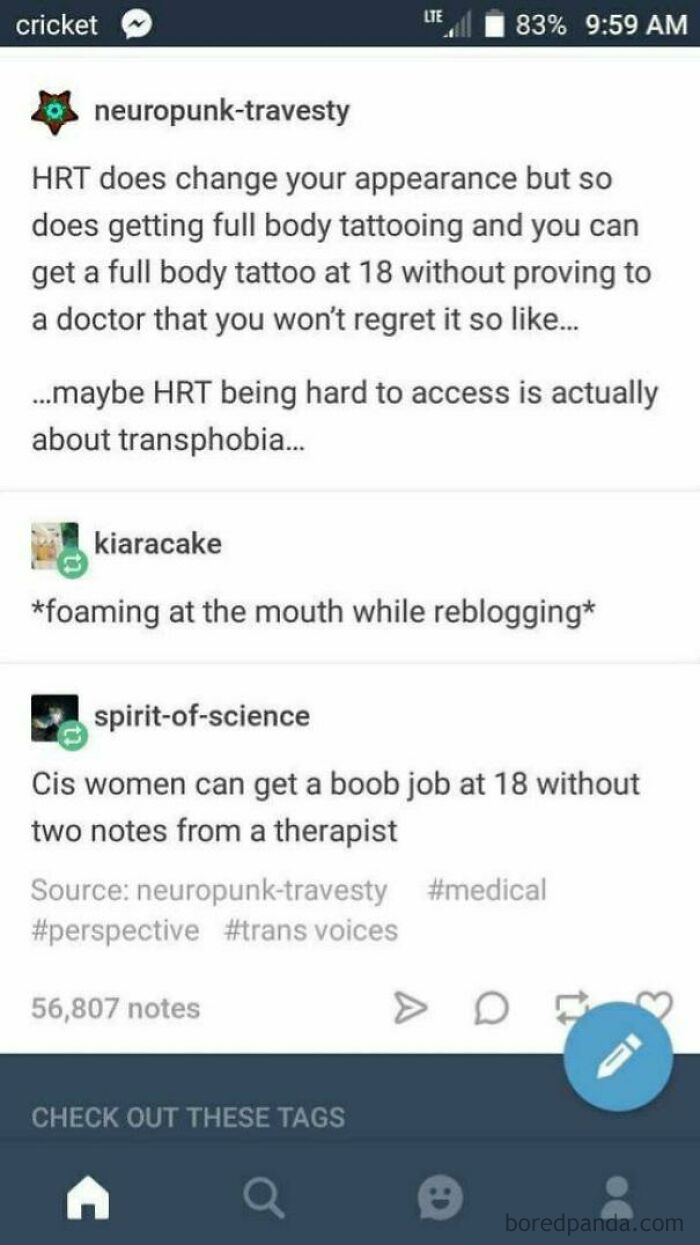
Bathroom problems for a man who looks like a woman. Plus some memes supporting trans people.

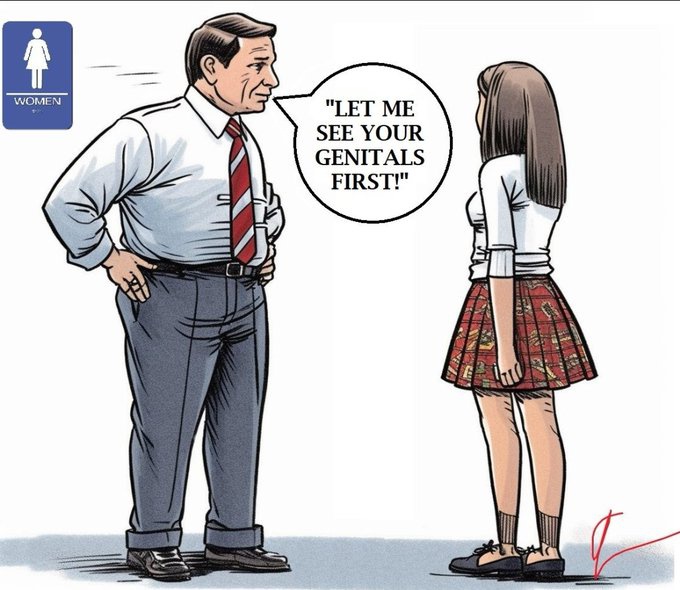
As I keep saying all these bathroom bills and trans people in the bathroom trash talk is the cis people who don’t look feminine or masculine enough for other people.   I have read and watched videos of women who look mannish who get assaulted or harassed for going into the woman’s bathroom.   One woman was a cancer survivor who lost all her hair due to treatment and two men were calling her horrific names and threatening to beat her up on video because they were sure she was a man.  It all goes on looks for these people.  Unless people are going to line up for a genital inspection by these gang thugs before entering the bathroom, how else do these maga think they are going to be able to tell?  Oh and this post took me two days to put together.  Hugs.  

@lucass502

The worst part… i cant even blame him fr 😭😭 #androgony #storytime #story

♬ Cumbia Buena – Grupo La Cumbia

It is not trans people assaulting cis people in restrooms.  It is cis people assaulting trans people is what is really happening.  Hugs.  

https://www.fox32chicago.com/news/2-assault-transgender-woman-in-north-carolina-bathroom-police-say

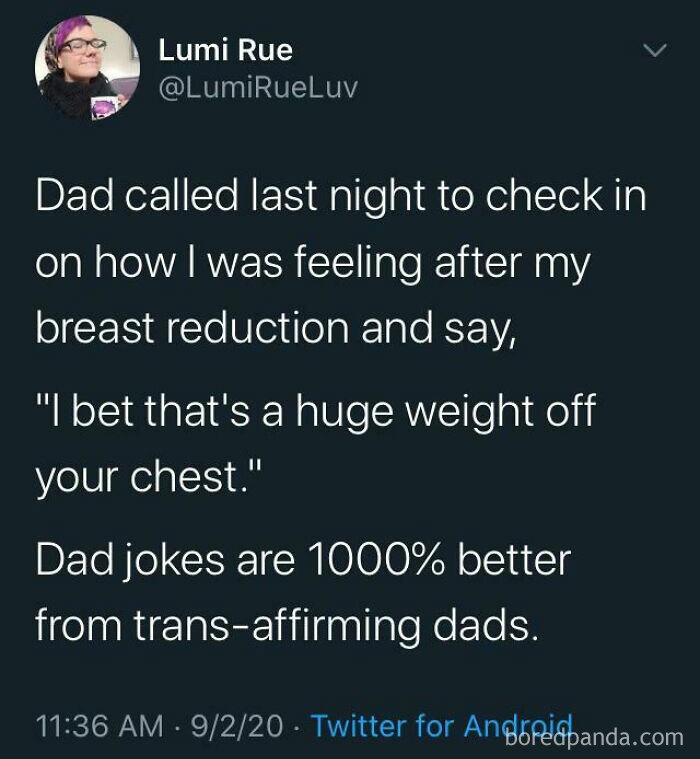
Trans Dad Jokes Are The Best

"So What's In Your Pa-" 401 Unauthorized. Content Forbidden


Hail Human Mountain Friend

Being Yourself Is A Right And Not Something That Should Be Seen As An Agenda

This Is The Way To Rule The World

Be Gay, Do Crime

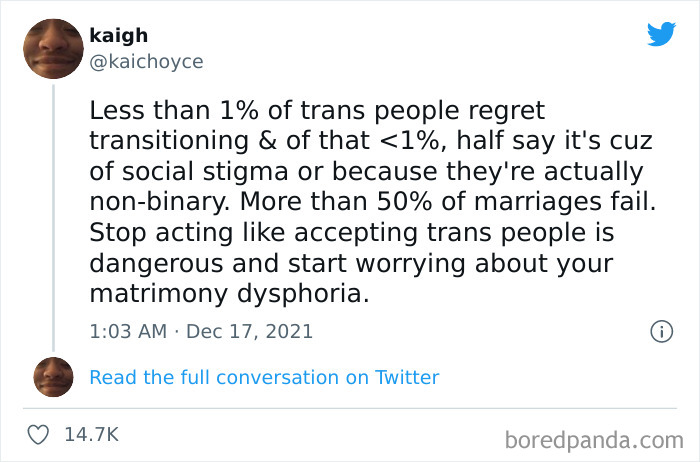
Trans Rights Are Human Rights

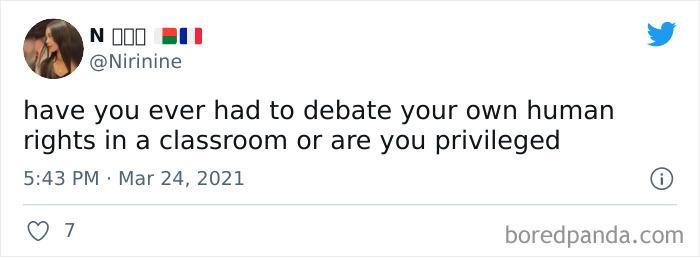
Have You Ever

Happy Bday To A Legend!

A Intesting Title

Trans Rights Are Human Rights

We're Not Sideshows, Our Bodies Are Not For Public Consumption

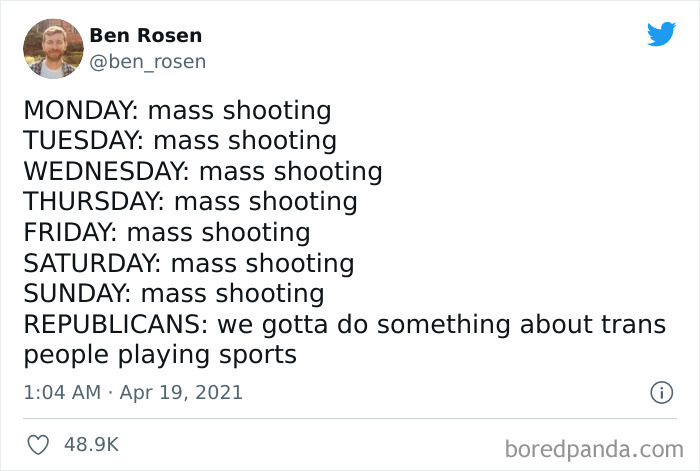
Priorities In The USA

That’s The Idea!

Transwomen Are Women

Psa!

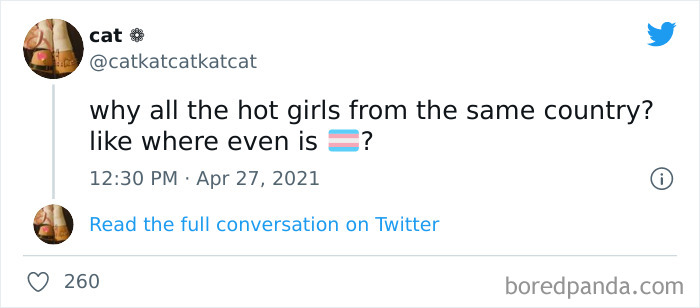
To All My Hot Girls Out There!

Yeah I Have Had Surgery (When I Broke My Arm)

I'm Only A Victim If We're Roleplaying

(Place Title Here)

Cognitive Dissonance

Im Just Concerned For Your Health


Red State Fear

Telling the men in our lives the reality of our lives

Read on Substack Jess Piper Oct 10, 2024

(Note from Ali: Jess wrote the anti-misogyny rant I was thinking of.)

“Do the best you can until you know better. Then when you know better, do better.”

~Maya Angelou

I go solo camping often. I head up to the North Shore in Minnesota or down to Northwest Arkansas and hang out a few days by myself or with my daughter. My husband is a big ole, corn-fed country boy who will not sleep on the ground, so we leave him at home.

I love to sleep outside, but the very thing I hate about camping is sleeping outside — exposed. As a woman, this is something I think about a lot. When I wake up for some unknown reason and wonder if I heard something in my sleep. Or, I wake up to actually hearing something or someone. I get scared. I get nervous. I wonder why in the hell I do the things I do and take the chances I take.

And then I go back to sleep and wake up on Lake Superior or Devil’s Den and hike to waterfalls and forget it all until it is time to go back to sleep outside. Love and hate.

Lake Superior, Split Rock Lighthouse State Park.

I once asked my husband if he’s ever afraid when he is alone. He laughed out loud.

“Of what? Why would I be scared?”

I tend to be an overthinker, but I can’t tell you how many times I have wondered about his statement of fact. He is not scared. Of men or animals or most of the danger I intuitively see around me. He has nothing to be scared of — he is physically imposing and there is not one law on the books that will harm him.

He has never worried about walking at dark. Or encountering someone on a trail. Or sleeping outside. Or most of the things that take up a lot of my mental space.

He has lived his life completely unencumbered by his environment, even as a resident of a red state. A homegrown Missouri man.

Sure, the Missouri GOP trifecta, a supermajority, has defunded the schools and let our roads crumble and closed hospitals and generally made a nuisance of themselves, but that is exactly what they were to him. An inconvenience. Annoying. Turds in the punchbowl, but nothing to get too riled up about.

He was just living his life.

He didn’t see it. Not because he is not empathetic. Not even because he doesn’t pay attention to politics. It’s because he has lived his life with a privilege he didn’t know existed until I pointed it out. Because, until he saw the world through his daughters’ eyes, through my eyes, these things just never occurred to him. He didn’t deny privilege, he just didn’t see it. He isn’t uncaring or a dolt — he just had absolutely no experience being marginalized. I had to tell him.

Once he saw it, though, he couldn’t look away. He was disgusted. He understood.

This is where I should mention something that I have spoken of in front of safe men. When I tell them that I have been sexually assaulted as well as almost every woman I know, they are astounded. When I tell them of sexual harassment, they are amazed. And then, one day it clicked for me. These are good and safe men and the predators know it. They don’t hurt women while they are around. They don’t talk about it or joke about it, because these men wouldn’t put up with it. The good guys have often really not been a witness to the behavior we have endured because they are just that…good guys.

I am not making excuses for the menfolk.

The men in my life will attest to the fact that I constantly push them to see what we see. I am hard on them. I ask that they look beyond themselves and be an ally to others. To be a witness and bear witness.

We don’t need protectors, but we do need witnesses.

As a woman, as a mom of girls and granddaughters, I have no degree of safety in Missouri and I know all of my girls fall into the same category. They are not safe from sexual assault or rape. They are not safe after a sexual assault or rape. They will likely be dismissed, or worse, blamed. They would be forced to bear the child of their rapist. They would likely be forced to co-parent with their rapist.

Missouri has a total abortion ban with no exemptions for rape or incest. Not that it would matter…I am sure there is some process to that exemption as well and I really hate the notion that a woman or girl can’t have bodily autonomy unless she has first been violated.

Writing that sentence made me sick at my stomach.

Missouri women have been denied care because of the abortion ban. A Kansas OBGYN, Dr. Ahmed, shared a story last week about her Missouri patient who suffered a miscarriage:

“She came in for a follow-up still bleeding,” said Dr. Ahmed. “Turns out there was some tissue that was still there. Retained tissue in that setting can become infected, can cause a lot of bleeding, so I discussed with her the options.”

The patient decided on medication and Dr. Ahmed says she prescribed it. But the following morning, she received a fax from Walgreens on Stateline after prescribing Misoprostol or Cytotec for the miscarriage stating, “Under Missouri law medication abortion is now illegal. Please advise patient to fill across Kansas border”.

Missouri has also had a 25% decrease in OBGYN residency applicants willing to come to our state because of the ban. That decreases care for all women, not just pregnant women.

We aren’t safe in Missouri.

The good news is that Missourians will get to vote on Amendment 3 in a few weeks. This amendment will restore abortion rights in Missouri. We will be the first state to overturn a complete ban.

The bad news is that our bodily autonomy is even put to a vote. That geography dictates our rights. That random folks will get to decide if we are first or second-class citizens. That we have been treated as less than. That our rights have been up for debate.

This is red state shit. We are used to it. It is constant and it is something we live in fear of every day. It is the thing I point to when I am speaking to the men around me. I never let them daydream their way back into complacence. I don’t let them fade into the peace of not knowing…of not being engaged. I don’t let them forget the fear of the women around them. I keep them awake.

Woke. (Emphasis mine- Ali)

I don’t want to be scared of living in Missouri anymore. I don’t want anyone to be scared in their home state. This is why we have to speak on it. Say it.

The reality is that we cannot gain our rights back without involving men. I have such good men in my life. Would they have voted yes on Amendment 3 without me telling them? I’d say yes. Would they be as rabid in telling other men around them to vote yes if I had not worked on them for so long? Maybe not.

It’s not that we are dealing with self-centered jerks. It’s that they didn’t know what they didn’t know.

Now they do.

~Jess

Transgender Youth-reblog from Janet:

“We need cis allies to speak up for us. Vote to remove the bigots from positions of power. The biggest thing you can possibly do right now is to vote. Vote for Democrats. Because, no, they aren’t perfect, and no one is. But they are a darn sight better than the alternative.”

“A Purrrrfect Political Storm”

Crazy cat ladies have come to dominate this election season. It’s hardly the first time.

By: Natalie Kinkade  September 25, 2024 11 minutes

Before internet memes, postcards offered a popular, accessible, shareable means to combine image and word. Messages could be as simple as “wish you were here,” but in their “golden age” (circa 1898–1917), postcards provided a powerful way to promote political agendas, writes scholar Kenneth Florey. The golden age neatly coincided with the height of the women’s suffrage movement in the United States and Britain. More than a thousand varieties of pro- and anti-suffrage-themed postcards were produced then, 200 of which are included in “Votes and Petticoats,” a Johns Hopkins University digital collection available on JSTOR. Of these, a significant number, curiously, depict cats—both as women’s pets and as women.

Associations between ladies, cats, and cat ladies—childless and otherwise—are rooted in a long, complicated cultural history. In Edwardian times, cats were linked to women as creatures of the domestic domain: woman was Angel of the House, the cat her companion, both of them sweet, warm, helpful, and cute. At the same time, animal lovers, “spinsters,” and suffragists represented overlapping, suspect categories of womanhood. It’s the perennial paradox in which women find themselves: somehow looked down upon while also placed on a pedestal.

I Want My Vote! Courtesy Votes and Petticoats: Postcards, The Sheridan Libraries, Johns Hopkins University.

This postcard captures many of the themes that recur across the collection: it suggests that a woman demanding the vote is as silly as a kitten so doing, their protests as ineffective as the kitten’s mewls. The green, white, and purple stripes behind the kitten were the colors of the Women’s Social and Political Union (WSPU), one of the more militant British suffrage societies. Historian Krista Cowman interprets the sexism in this postcard as infantilizing though not especially cruel. Similarly, Florey describes the use of cats in suffrage postcards as softening a message that might otherwise seem harsh.

We Demand the Vote: An Advocate for Women’s Rights. Courtesy Votes and Petticoats: Postcards, The Sheridan Libraries, Johns Hopkins University.

In a similar vein, this cat is draped in the colors of the WSPU and wearing a fashionably magnificent hat. The message is ambiguous: Larissa Schulte Nordholt contends that it’s probably meant to satirize the concept of women participating in politics, the well-groomed, fat feline playing on the perception of suffragists as spoiled. It was published by a company that produced other, more clearly anti-suffrage postcards. But there’s a certain dignity in the cat’s determined forward gaze and assertive paw that perhaps suffragists could have embraced, regardless of the creator’s intention. Then again, that seriousness can also be interpreted as the very thing an anti-suffragist postcard maker was mocking by attaching it to a fluffy house cat.

Less whimsically, other postcards feature cats as pets in human scenes.

Courtesy Votes and Petticoats: Postcards, The Sheridan Libraries, Johns Hopkins University.

Here, the suffragists portrayed are mannish and middle-aged, typical of many negative suffragist depictions, stereotyping them as unsexed spinsters. While the housewife they address isn’t an idealized Angel of the House, she has a traditionally “motherly” figure and wears more feminine clothing. The suffragists, the viewer thus understands, are out of touch with what “real” working women want. If the suffragists had families to occupy them, they wouldn’t worry about the vote. And if lower-class women had the vote, they wouldn’t care to exercise it.

The cat in this postcard is outside the house and thus linked to the suffragists (it sits slightly apart, but arguably that positioning is dictated by compositional rather than symbolic reasons). The suffragists are “outdoor cats,” less benign and more feral—less feminine—than their indoor counterparts. It’s also worth noting that the cat is black, which taints it, and thus the suffragists, with associations of witchcraft and bad luck.

I’m a Purrfect Lady. Courtesy Votes and Petticoats: Postcards, The Sheridan Libraries, Johns Hopkins University.

Here too the suffragist is associated with a black cat, to unflattering, ridiculous effect. Although it was considered appropriately feminine for women to care for animals, women and femininity were also considered weaker, sillier, and more frivolous than men and masculinity; caring too much for other creatures came was considered a sign of fragility and triviality.

Tobias Menely has traced the disparagement of animal welfare through the evolution of gender norms in the modern period. As an early example, he cites a 1786 Scottish magazine story about a “Mrs. Sensitive” who dotes on a menagerie of pets yet cares little for “poor Christians.” In Menely’s analysis, Mrs. Sensitive is “immoral and unnatural, an ancestor of our own crazy cat ladies, women whose maternal instincts, we are led to believe, have been attenuated by an affinity for animals.”

By 1909, around the time these postcards were produced, sensitivity to animals was fully pathologized, as Menely relates: one doctor, Charles Dana, called it “zoöphilpsychosis” and published an article about it in the Medical Record. A case study pronounced a “childless woman who transformed her house into a hospital for sick felines” as “beyond medical redemption.” Sufferers of “zoöphilpsychosis” were described as “sentimental,” “weak,” and “hysterical”—terms loaded with sexist connotations.

These stereotypes are further repeated in conversations surrounding the anti-vivisection movement, another woman-dominated cause that reached its height in the Victorian and Edwardian eras.

The Girls All Vote in This Town. May the Best Man Win. Courtesy Votes and Petticoats: Postcards, The Sheridan Libraries, Johns Hopkins University.

This is one of several suffrage postcards that feature photographs of live and presumably taxidermized kittens dressed up and posed. Although this postcard’s message could be interpreted multiple ways, Nordholt points out that the use of taxidermy speaks to the “synchronous oppressions of women and cats.”

Indeed, Susan Hamilton quotes a contemporary critic of anti-vivisection using misogyny to defend animal cruelty:

Is it necessary to repeat that women—or rather, old maids—form the most numerous contingent of [antivivisectionists]? Let my adversaries contradict me, if they can show among the leaders of the agitation one young girl, rich, beautiful, and beloved, or some young wife who has found in her home the full satisfaction of her affections!

Although suffragettes and antivivisectionists didn’t always align, the two movements had much in common, including the consistent stereotyping of their members as spinsters. And as we have seen in “But Surely My Good Woman…,” spinsters were objects of mistrust and derision.

Courtesy Votes and Petticoats: Postcards, The Sheridan Libraries, Johns Hopkins University.

It wasn’t always that way. For a time in the nineteenth century, single women could claim feminine power through the “Single Blessedness” movement. Where women had long been shamed or pitied for not marrying, they began to frame their singleness as reflective of a higher calling: still nurturing, still Christian, but outside of marriage. Harriet Tubman, for example, spent eighteen of her most productive and prominent years without a husband. As a Black woman, Tubman faced extra scrutiny for being unmarried. She leveraged the concept of Single Blessedness for respectability.

As women began to agitate more for equal rights, however, Single Blessedness fell out of favor. Lee Chambers-Schiller provides an overview, writing that

[a]s the century wore on, spinsters were increasingly defined as unacceptable childcare providers, guardians, or even teachers of children. Their spinsterhood took on an ominous cast, their celibacy no longer evidence of pure, Christian love, but now suggestive of physical, emotional, and intellectual degeneracy.

It wasn’t just that spinsters lacked the feminine graces needed to attract a man—their “degeneracy” was a result of their childlessness:

The woman whose reproductive organs went unused would experience their atrophy and derangement, together with a painful menopause and general physical and mental deterioration. A spinster could look forward to a shortened life span and quite possibly insanity.

Courtesy Votes and Petticoats: Postcards, The Sheridan Libraries, Johns Hopkins University.

The suffragist in this postcard is marked as a spinster; her masculine features, hat, and clothing tell us as much. Wild-eyed and staring off the page, she’s so out of touch with reality and with her maternal instincts that she doesn’t even realize her audience of “Citizens” consists only of confused children.

Opponents of women’s suffrage argued that banning women from voting was actually a way of protecting them and preserving their angelic femininity. Politics, they claimed, was a nasty business that would take women away from their divine calling in the home, to the detriment of the race.

The Queen of the Polls. Courtesy Votes and Petticoats: Postcards, The Sheridan Libraries, Johns Hopkins University.

This woman represents anti-suffragists’ fears of what society would look like if women gained the vote. In contrast to the depictions of suffragists as dowdy old maids, the woman portrayed in this postcard is conventionally attractive and fashionably dressed. But her decadent New Woman status is given away by her cigarette—proper women didn’t smoke!—and her “District Leaderess” sash. The pole behind her is covered in campaign signs for mostly female candidates, including “Miss Spinster” for justice of the children’s court, which viewers are of course meant to interpret as an outrageous irony.

The role-reversal that women’s suffrage would supposedly bring about is communicated in several postcards, once again, through cat imagery.

The Suffragette Not at Home. Courtesy Votes and Petticoats: Postcards, The Sheridan Libraries, Johns Hopkins University.Courtesy Votes and Petticoats: Postcards, The Sheridan Libraries, Johns Hopkins University.

Here, the man of the house is substituting for the absent woman by staying home, caring for the children, and making tea. The cat suffers the consequences of his ineptitude in the unnatural role.

Suffragette Madonna Crop of 1910. Courtesy Votes and Petticoats: Postcards, The Sheridan Libraries, Johns Hopkins University.

Alternately, this man is taking good care of the home and family for his suffragist wife, but he’s thus emasculated. The halo of the golden plate, evoking the Virgin Mary, as well as the cat on the hearth behind him, emphasize his domesticity.

The absurdity of men in the women’s/cats’ sphere is surpassed by the absurdity of women/cats in the men’s sphere.

A Raid on the House. Courtesy Votes and Petticoats: Postcards, The Sheridan Libraries, Johns Hopkins University.

This British postcard seems to reference suffragists’ “raids” on the Houses of Parliament, during which women attempted to occupy the legislative chambers to protest their exclusion from them. The symbolism of this image is a striking echo of how the Daily Express described a suffrage raid in 1907: “[T]he sight reminded one very much of the removal of naughty kittens from a room in which they had been disporting themselves freely.” Cowman cites this description as example of voices in the press that often made light of the women’s suffrage movement, thus “making it appear over-feminine and consequently somewhat frivolous.”

Like “I Want My Vote!”, both this postcard and the Daily Express article infantilize women by portraying them as kittens. Viewers are meant to chuckle at the silly kittens’ attempt to infiltrate the doghouse—the kittens are cute, but they’ll never displace or even disturb the dog, who sleeps through their efforts.

“A Raid on the House” is particularly insulting when contrasted with the reality of the women’s suffrage movement, in which participants faced violent attacks. One march on the House of Commons in 1910 became known as “Black Friday” when suffragists were brutally beaten by police.

I’m A Suffer Yet. Courtesy Votes and Petticoats: Postcards, The Sheridan Libraries, Johns Hopkins University.

Bandaged and bruised, this bedraggled cat seems to represent a suffragist who has been beaten but is still dedicated to the cause. Whether the cat’s determination makes it sympathetic or stupid is a matter of interpretation.

Cats, as it turns out, are difficult to pigeonhole. So are women. According to Alleyn Diesel, the association between cats and women goes back at least as far as Ancient Egypt. Goddesses in ancient and contemporary religions have frequently been portrayed as either part-cat or accompanied by cats. And when it comes to goddesses, being catlike doesn’t mean being sweet and domestic. On the contrary, feline-linked deities are known for “self-reliance, elegance, and… willingness to be tamed strictly on their own terms”: powerful qualities that patriarchal societies mistrust in women.

When JD Vance questioned why a childless person would want to be a teacher or a leader, infamously calling Kamala Harris and her ilk “miserable” and “childless cat ladies,” he was invoking old, sexist stereotypes. The Harris campaign responded by selling “childless cat lady” merch. This tactic of reclaiming an insult and turning it into a badge of honor also has rich historical precedent.

The Suffragette Down with the Tom Cats. Courtesy Votes and Petticoats: Postcards, The Sheridan Libraries, Johns Hopkins University.

The intention behind this final postcard may have been, yet again, to paint the fight for suffrage as absurd, to make suffragists seem like willful, unfeminine animals.

But the sender of the postcard wrote on the back, “See the expression: In town for the fight. Have used my night off for training my guns in the new campaign. Ha! Ha! You will see the signs soon.” We can’t be sure, but the writer seems to have been a suffragist, claws out.

Editor’s Note: Harry Whittier Frees, the likely photographer of the image depicting clothed kittens in line to vote, used live animals in his work, not taxidermy. The text has been amended to account for this fact.

Here’s to a morning transcript

I am enjoying “Elizabeth and Essex” with Bette Davis because I’ve not seen it in full to just enjoy her talent. Tonight’s debate will be very like the first debate between the Don and Pres. Biden, with Sen. Vance playing the Don. I have no doubt Gov. Walz can handle it all, but there will be no fact checking or corrections, the two mods are women so I expect Vance to be abusive if one does try to control the program, and then there is this from the Daily Beast:

You Won’t Like Who JD Vance Will Copy at Tonight’s Debate

The past is always prologue and this one features another shouty Yale Law School graduate.

Nell Scovell Updated Oct. 01, 2024 12:52PM EDT / Published Oct. 01, 2024 12:46PM EDT 

Snippet:

Look for candidate JD Vance to come out swinging at Tuesday’s vice presidential debate against Minnesota Governor Tim Walz. Odds are good that Vance will go for the Trumpian emotional trifecta: playing the victim, spewing anger, and attacking women and immigrants.

While not everyone is charmed by righteous rage, Donald Trump is the “audience of one” who needs to hear his chosen candidate mimic the boss. There’s precedent for this behavior from fellow Yale Law School graduate, Brett Kavanaugh. (snip)

Vance knows that his debate performance must please an “audience of one.” Job one is to make Daddy Donald proud. Reasonable and empathetic just won’t cut it. Here are ten predictions for how Vance will follow in Kavanaugh’s footsteps by using a sharp tone, being overly emotional and saying a few things he should not say. (snip-MORE)

Stunning.