In the case of Saturday Night Fever, “[t]he use of disco-inflected classical music in the film represents the economic and social success to which Tony and his friends ultimately aspire,” argues McLeod. “The disco milieu represents one form of illusion—the illusion of power in the outside ‘real’ world that Tony imagines.”
Indeed, classical music represents an exotic world of sophistication, elitism, and wealth which, especially when merged with a homogeneous disco beat, becomes an enticing symbol of the unattainable, illusory, and artificial nature of Tony’s dreams.
Walter Murphy’s “A Fifth of Beethoven” makes its appearance when Tony and his friends arrive at the 2001 Oddyssey (sic) disco club.
“To some extent he is represented as the new heir to the cultural prestige of classical music,” writes McLeod of Tony’s appearance. The soundtrack, with its
seemingly contradictory and almost synthetically forced fusion of classical music and disco underlines the artificiality of his entrance and of the world into which he has crossed. It is likely no accident that the famous “fate” motive, heard here near the beginning of the movie, functions as a foreshadowing of the dramatic events that will soon unfold within this world.
“A Fifth of Beethoven” is easily the highest-profile instance of disco appropriation of classical music. Beethoven’s Symphony No. 5 is typically associated with notions of monumentality, heroism, fate, and relentless transcendence of the will. And while Beethoven’s version is about transcending humanity, Murphy’s is steeped in humanity, as it represents acceptance of common human desires—such as dancing—rather than superhuman transcendence of them.
The soundtrack also featured another instrumental disco–classical interpretation: David Shire’s “Night on Disco Mountain,” which adapts Mussorgsky’s orchestral tone poem Night on Bald Mountain (which is also the Chernabog segment in Disney’s Fantasia). “Night on Disco Mountain” is heard when Tony and his friend pretend to jump off the Verrazzano-Narrows Bridge.
“The faked suicides are symbolized by the ‘fake’ classical music,” writes McLeod.
Shire’s track adds another layer of grotesque ambient sounds to further heighten the atmosphere of chaos and alienation, producing what McLeod calls “an international and futuristic potpourri of sounds.”
“A Fifth of Beethoven” and “Night on Disco Mountain” weren’t isolated instances of classical–disco fusion. Wendy Carlos’s Switched-On Bach and Switched-On Brandenburgs recordings became instant commercial radio and dance hits. K-Tel Records initiated their popular Hooked on Classics series that combined classical music with elements of disco and pop music. This trend spawned a number of disco–classical albums such as Klassiks Go Disko, featuring “A Sixth of Tchaikovsky” and “Brahms’s Disco Dance No. 5,” and Saturday Night Fiedler, an album of disco arrangements by the Boston Pops.
“Many of classical music’s qualities, such as structural complexity and cultural prestige, were natural targets for simplification, reduction, and transmission to a mass audience,” argues McLeod. Artificiality is another common thread, as both genres thrive on the notion. “As in a discotheque,” he writes, “classical music is often enjoyed and appreciated in escapist settings by wealthy, well-dressed devotees.”
There are also similarities between classical and disco compositional style.
I was not a massive fan of Ozzy Osbourne, but I was still a fan. When I got a news alert in a text while on the city bus (see? I get news alerts, people) telling me he had passed, and just a few weeks after his final performance, I knew I had to honor him.
I was never really a metal head, but Ozzy ruled. Even if I didn’t like him, I was in a scene where everyone else did. I was very much in the know about Ozzy. If nothing else, I liked him solo more than I liked Black Sabbath.
Randy Rhoads is why I’m an Ozzy fan, and I still listen to him after Randy’s tragic death in 1982 from a plane crash. Randy’s career was just getting started with a bright future in front of him.
So, did Ozzay really bite the head off a bat? I have been hearing different versions of this story for years. But yes, it appears that he actually did. Reportedly, it wasn’t a stunt.
Ozzy used to throw out real animal parts during a tour in the early 80s. Fans learned about this, so they were prepared when they went to his shows. Somewhere in Iowa, a 17-year-old Ozzy fan threw a bat on stage. Ozzy thought it was fake and bit its head off. In one version, he said he discovered it was real when it was in his mouth and he tasted “warm, gloopy liquid,” and the head twitched. He claimed it was a live bat.
In a different version, he said it was dead. The kid who brought the bat also said it was dead.
Ozzy also told two different stories about biting the heads off doves at a meeting with CBS executives. In one version, he brought three live doves, and being drunk (Oz had substance issues), he bit the heads off all three of the LIVE doves.
In a second version, he brought one to release at the end of the meeting, but it died, so waste not, want not….he made use of it by biting its head off. I don’t know what actually happened. I wasn’t there.
Ozzy had just done his final performance a few weeks ago at a concert billed as “Back To The Beginning: Ozzy’s Final Bow,” in Birmingham, England, in front of 42,000. He sang from a custom-built throne as he had been suffering from Parkinson’s Disease for the past five years, and walking was extremely difficult for him. (snip-MORE)
“This is supposed to be my farewell tour,” says Ozzy Osbourne in a clip included in the Biography television documentary above. He then gives the finger and adds, “We’ll see.” The year was 1993, and indeed, there turned out to have been much more to come for the former frontman of Black Sabbath, the band that opened the floodgates — or perhaps hellgates — of heavy metal. After an impoverished childhood spent playing in the bomb sites of postwar Birmingham, Osbourne hopped from job to job, including one failed stint at a slaughterhouse and another as a criminal. He then turned singer, receiving a PA system from his father and forming a blues group with a few local musicians. People pay good money to see scary movies, they one day reckoned, so why not make scary music?
The time was the late nineteen-sixties, when listeners approached record albums as quasi-cinematic experiences. Taking their name from Mario Bava’s anthology horror film, which had come out a few years before, Black Sabbath delivered on expectations many weren’t even aware they had. Today, anyone can put on an early Black Sabbath album and identify the music as heavy metal, not a world apart from any of its newer variants. (snip-MORE)
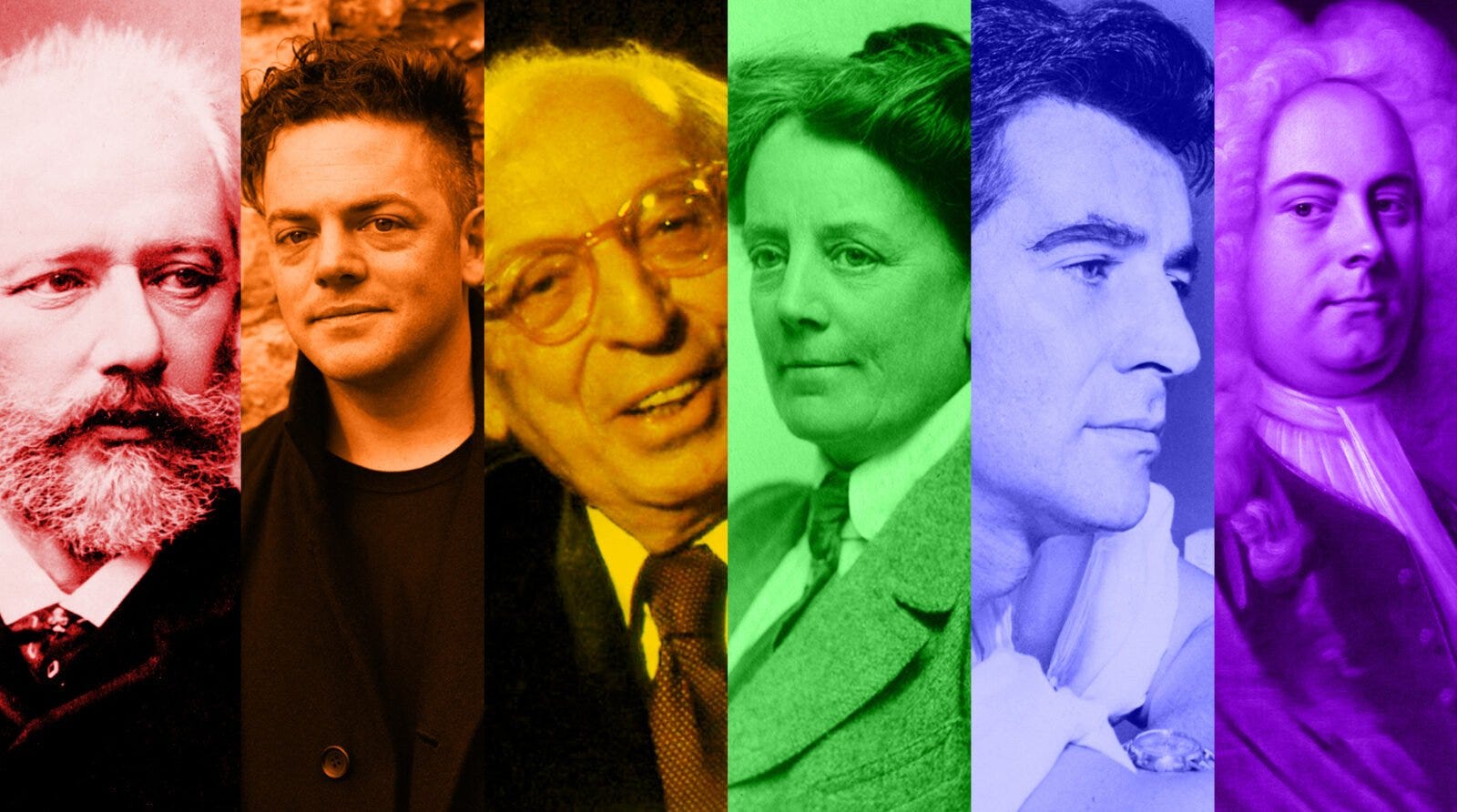
The year was 1877, and Pyotr Ilyich Tchaikovsky was drowning. Not in the Moscow River, though he’d fucking consider it soon enough, but in the suffocating heteronormative bullshit of Imperial Russia. Here was a man whose soul screamed in B-flat minor, whose heart pounded in 4/4 time, and whose sexual identity was buried so deep beneath layers of social expectation that it would take historians over a century to dig through the wreckage and find the truth: Tchaikovsky was gay as a fucking rainbow, and it nearly destroyed him.
I literally played the youtube video musical all through writing this shit. Thats how fucking awesome this is.
Tchaikovsy, how I love you.
The Tortured Genius Behind the Swan Lake
Let’s cut through the academic ass-kissing and get to the brutal reality. Pyotr Ilyich Tchaikovsky, born in 1840 in Votkinsk, Russia, was a man caught between two worlds: the soaring heights of musical genius and the crushing depths of societal homophobia. This wasn’t some gentle “product of his time” situation—this was a death sentence with a fucking bow tie.
In 19th-century Russia, being gay wasn’t just socially unacceptable; it was literally illegal and punishable by exile to Siberia or worse. The Orthodox Church considered homosexuality a mortal sin, the state considered it a criminal act, and society considered it grounds for complete social annihilation. Tchaikovsky knew this shit intimately, and it carved holes in his psyche that would bleed beautiful, agonizing music for the rest of his life.
The evidence of Tchaikovsky’s sexuality isn’t hidden in some dusty archive—it’s splattered across his correspondence like blood on a battlefield. His letters to men, particularly to his nephew Vladimir “Bob” Davydov, drip with passion that no amount of Victorian-era emotional repression can disguise. These weren’t your typical “Dear Friend” pleasantries; these were love letters disguised as family correspondence, each word carefully chosen to dance around the truth that could have killed him.
The Marriage That Nearly Killed Him
Enter Antonina Miliukova, a woman whose timing was about as good as a heart attack during a symphony performance. In 1877, this aspiring opera singer decided to confess her love to Tchaikovsky through a series of increasingly desperate letters. Most gay men throughout history have developed sophisticated avoidance techniques for such situations, but Tchaikovsky was operating under a particularly cruel form of internalized homophobia mixed with genuine terror.
The composer’s response? He fucking married her. On July 18, 1877, Pyotr Ilyich Tchaikovsky walked down the aisle like a man walking to his execution, because that’s essentially what it was. The marriage was a disaster from day one—a psychological horror show that lasted all of nine weeks before Tchaikovsky fled like his ass was on fire.
But those nine weeks? They nearly broke him completely. Tchaikovsky’s mental health, already fragile from years of sexual repression and social anxiety, shattered like a champagne flute hitting concrete. He attempted suicide by walking into the Moscow River in October 1877, hoping to catch pneumonia and die “naturally” rather than face the shame of admitting his marriage was a lie. The water was too fucking cold, and he survived, but the psychological damage was done.
The Brother Who Lived Free
While Pyotr was busy torturing himself with heteronormative performance art, his younger brother Modest was living his truth with the kind of balls that would make a bull jealous. Modest Tchaikovsky was openly gay in a time when that shit could get you killed, and he gave exactly zero fucks about what society thought.
Modest became a prominent playwright and librettist, penning the libretto for Pyotr’s “Queen of Spades” among other works. Their artistic collaboration flowed from deep fraternal understanding and shared sensibilities—two gay brothers finding ways to create beauty in a world that wanted them dead. But the difference between them was stark: Modest embraced his identity and lived authentically, while Pyotr remained trapped in a cage of his own making.
The psychological impact of watching his brother live freely while he remained closeted must have been excruciating. Modest’s existence was living proof that authenticity was possible, even in Imperial Russia, but Pyotr’s internalized shame and terror kept him locked away from his own truth.
The Music That Bled Truth
Here’s where Tchaikovsky’s genius becomes both heartbreaking and historically significant: he couldn’t live his truth, so he composed it. Every note, every crescendo, every heart-wrenching melody was a piece of his closeted soul screaming for recognition. The “Pathétique” Symphony, his final masterpiece, isn’t just music—it’s a fucking suicide note written in B minor.
Listen to the 1812 Overture and try to tell me that’s the work of a heterosexual man. The dramatic tension, the explosive release, the way it builds to an almost unbearable climax—this is the musical equivalent of a man who’s been sexually and emotionally repressed his entire life finally finding a way to express what he can’t say out loud.
Swan Lake, The Nutcracker, Sleeping Beauty—these aren’t just ballets, they’re coded messages from a gay man who couldn’t be gay. The tragic heroines, the impossible love stories, the themes of transformation and hidden identity—Tchaikovsky was writing his own story in every goddamn note, and the world was too busy enjoying the pretty music to notice the pain behind it.
The Psychological Massacre of the Closet
The psychological effects of Tchaikovsky’s forced closeting weren’t just personal—they were epidemic. Here was one of the world’s greatest composers, a man whose music would outlive empires, reduced to a trembling, suicidal wreck because he couldn’t love who he wanted to love. The internalized homophobia didn’t just damage him; it robbed the world of the person he could have been if he’d been free to live authentically.
Tchaikovsky’s diaries and letters reveal a man in constant psychological torment. He described his sexuality as a “curse” and spent his life trying to cure himself of feelings that were as natural as breathing. The self-hatred was so profound that it affected every aspect of his existence—his relationships, his work, his health, even his death.
The composer died in 1893, officially of cholera, but the circumstances were suspicious enough that many historians believe he committed suicide. Whether he died by disease or by his own hand, the cause was the same: a society that killed its own children rather than let them love freely.
The Ripple Effect on LGBTQ+ History
Tchaikovsky’s story isn’t just about one tortured genius—it’s about the systematic destruction of queer lives throughout history. Every note he wrote in anguish represents thousands of LGBTQ+ people who were crushed by the same forces that nearly destroyed him. His music became a sanctuary for queer people who recognized their own pain in his melodies, a coded language that said “you are not alone” to generations of closeted individuals.
The philosophical implications are staggering. Here was a man whose gifts to humanity were immeasurable, whose music brought joy to millions, whose artistic legacy is literally priceless—and society nearly destroyed him because of who he loved. How many other Tchaikovskys did we lose? How many symphonies were never written because their composers were too busy trying to survive in a world that wanted them dead?
The Social Impact of Closeted Genius
Tchaikovsky’s forced closeting had massive social implications that ripple through history. His marriage to Antonina became a cautionary tale about the dangers of forced heteronormative performance, but it also demonstrated how society’s homophobia damages everyone involved. Antonina became a victim too, trapped in a marriage with a man who could never love her the way she deserved.
The composer’s patroness, Nadezhda von Meck, provided him with financial support for thirteen years on the condition that they never meet in person. This relationship, conducted entirely through letters, became one of the most important in his life precisely because it was free from the sexual and social expectations that tormented him elsewhere. Von Meck understood, perhaps intuitively, that Tchaikovsky needed space to be himself—even if she never knew exactly what that meant.
The Philosophical Questions That Haunt Us
Tchaikovsky’s life raises philosophical questions that should make every thinking person’s blood boil. What is the moral cost of forcing human beings to deny their fundamental nature? How do we measure the artistic and social contributions we lost when we systemically oppressed LGBTQ+ people? What masterpieces were never created because their potential creators were too busy fighting for survival?
The composer’s struggle with his identity wasn’t just personal—it was a reflection of humanity’s broader failure to accept and celebrate diversity. His music became a form of resistance, a way of smuggling queer sensibility into mainstream culture without triggering the violent backlash that open authenticity would have provoked.
The Legacy That Survives
Despite the psychological torture he endured, Tchaikovsky’s music survives as a testament to the resilience of the human spirit. His compositions continue to move audiences to tears, to inspire dancers and musicians, to provide soundtrack for some of humanity’s most beautiful moments. The Swan Lake pas de deux has become synonymous with romantic love, performed by countless couples who have no idea they’re dancing to the work of a closeted gay man.
This is the ultimate irony: the music that emerged from Tchaikovsky’s repression has become the soundtrack for heterosexual romance across the globe. His pain became everyone’s pleasure, his torment became the world’s joy. It’s both beautiful and heartbreaking—a reminder that LGBTQ+ people have always been here, creating beauty even in the darkest circumstances.
The Modern Relevance
Tchaikovsky’s story remains devastatingly relevant because homophobia didn’t die with the 19th century. In Putin’s Russia, being openly gay is still dangerous. In dozens of countries around the world, LGBTQ+ people face imprisonment, violence, or death for being authentic. The composer’s struggle continues in the lives of countless individuals who still can’t live their truth without fear.
But his story also demonstrates the power of art to transcend oppression. Tchaikovsky couldn’t be openly gay, but his music queered the world anyway. Every performance of Swan Lake is a small act of resistance, every rendition of the Nutcracker Suite is a celebration of queer creativity, every tear shed during the Pathétique Symphony is a recognition of the pain caused by forcing people to hide who they are.
The Psychological Impact on Modern LGBTQ+ Communities
For modern LGBTQ+ people, Tchaikovsky’s story serves as both inspiration and warning. His music provides comfort and validation—proof that queer people have always existed, have always created beauty, have always found ways to express their truth even under impossible circumstances. But his psychological torture also serves as a reminder of what happens when society forces people to deny their authentic selves.
The composer’s internalized homophobia mirrors the struggles many LGBTQ+ people face today. The self-hatred, the attempts to “cure” himself, the desperate conformity to heteronormative expectations—these patterns persist in communities where acceptance is still lacking. Tchaikovsky’s story helps modern queer people understand that their struggles are part of a larger historical pattern, that they’re not alone in their pain.
The Fucking Truth We Can’t Ignore
Here’s the bottom line: Pyotr Ilyich Tchaikovsky was gay as a fucking rainbow, and society nearly destroyed one of history’s greatest musical geniuses because of it. His story isn’t just about one man’s struggle—it’s about the systematic oppression of LGBTQ+ people throughout history and the incalculable cost of that oppression.
Every time someone tries to deny or diminish Tchaikovsky’s sexuality, they’re participating in the same erasure that tortured him during his lifetime. Every time someone argues that his personal life doesn’t matter, they’re missing the point entirely. His sexuality wasn’t separate from his music—it was the source of his music, the pain that created beauty, the truth that couldn’t be spoken but had to be expressed.
The evidence is there for anyone willing to look: the passionate letters, the disastrous marriage, the psychological torment, the coded themes in his compositions. Tchaikovsky was a gay man living in a world that wanted him dead, and he survived by bleeding music instead of truth. His story deserves to be told honestly, completely, and without the sanitizing bullshit that has obscured it for too long.
We owe it to Tchaikovsky, to his brother Modest, to every LGBTQ+ person who has ever had to hide their truth, to tell this story with the visceral honesty it deserves. Because in the end, the music was never just about entertainment—it was about survival, resistance, and the unbreakable human spirit that creates beauty even in the darkest fucking circumstances.
Tchaikovsky’s legacy isn’t just musical—it’s a testament to the fact that LGBTQ+ people have always been here, creating the culture that defines human civilization, even when that same civilization tried to destroy them. His story is our story, his pain is our pain, and his music is our victory song—a reminder that love, in all its forms, will always find a way to express itself, even when the world tries to silence it.
Citations:
Suchet J. 2019 “Tchaikovsky: The Man Revealed”
Poznansky, K. 2014 “Tchaikovsky: The Quest for the Inner Man “
If asked to pick one Lady Gaga song to encapsulate who she is and what she stands for, you’d be hard pressed to come up with a better choice than “Born This Way.” Released in 2011, the song is a vibrant, full-body dance anthem that calls on listeners to celebrate who they are. “God makes no mistakes,” she sings in the refrain. “I’m on the right track, baby / I was born this way.” The song was immediately embraced upon release, particularly by the LGBTQ+ community.
As it turns out, this wasn’t the first time a song by that name made that kind of impact. In 1977, Motown Records released the disco anthem “I Was Born This Way,” an upbeat tune featuring a largely unknown Black gospel singer who responds to critics with a refrain that was a head-turner for its time: “I’m happy. I’m carefree. And I’m gay. I was born this way.”
In 2021, Gaga directed people’s attention to that song, saying it was the inspiration for her own hit. And in the new documentary I Was Born This Way, which premiered at the Tribeca Film Festival in June, directors Daniel Junge and Sam Pollard shine a light on its creation and its singer, Carl Bean, an extraordinary individual who spent his life serving his LGBTQ+ community.
Junge and Pollard’s film starts with the story of Bean’s childhood in Baltimore. And many of the main moments are unforgiving: His mother abandons him at birth because she doesn’t feel ready to have a child; his uncle sexually assaults him for years; Bean attempts to kill himself as a teenager after his previously loving adoptive father hits him for being gay.
Bean, who died in 2021 at age 77, faced hardships in his life, many of which the film explores. But none of the horrors of Bean’s life land with the kind of bleakness one might expect. It’s not that the documentarians pull their punches, either. It’s Bean — there’s a persistent lightness to his spirit, the quiet joyfulness of someone who by some miracle is able to see a broader perspective. Those qualities so suffuse the story of his life that no darkness can overcome them.
And that faith sustained him when he moved first to New York City, where he would sing with Harlem’s Christian Tabernacle Choir, and then when he moved to Los Angeles and started writing his own songs. In New York, he worked at Macy’s and became lifelong friends with Cissy Houston, Estelle Brown, and Dionne Warwick; in Los Angeles, he signed a record deal but then discovered they only saw him as a gospel singer. And then, out of nowhere, Motown Records reached out.
The song “I Was Born This Way” has its own interesting history, which Junge and Pollard track. It was originally written years earlier by Bunny Jones, a New York City beautician who was friends with Stevie Wonder and later became a promoter. She wrote the song for one of her acts, a gay performer. But it wasn’t until two years later, when Motown reworked the song for disco and gave it to Bean to sing (with his friend Estelle Brown on backup), that it took off.
“There was such a feeling of freedom and relief and release when you danced to that song,” Minority AIDS Project program director Mike Jones says in the documentary. “All of the things we were trying to say throughout our lives to many of our friends and family that we could not say were in that song.”
While the collapse of disco would see the song fade from people’s memories, the film reveals the ways it continued to quietly live on. Musician and record producer Questlove talks about how often it has been sampled in other work over the decades. Among other places, you can hear it on Debbie Gibson’s “One Step Ahead,” Deee-Lite’s “Good Beat (Turn Up the Radio Mix),” and Rick Wade’s “Free.” The song, he says, “is the music equivalent of the Giving Tree.”
Meanwhile, Bean faced an unexpected fork in the road. Motown offered him the chance to do another big song. But “I Was Born This Way” had changed his perspective on the meaning and purpose of his life. “I had found my niche,” he said. “I knew my gig was to be a change agent in our society.”
And the film recounts how that choice led him down a path he could not have expected. Seeing how little was being offered to people of color when the AIDS pandemic erupted in the early ’80s, Bean started making visits on his own, traveling from person to person he learned about on Los Angeles city buses. Eventually he founded the Minority AIDS Foundation, which provided a hotline for information and to arrange visits.
When he learned from social workers that he would gain greater access to those who were sick if he became clergy, he also got ordained. Unexpectedly, some of those he visited asked for an Easter service. He provided it, not realizing it would be such a positive experience that they would aske him to lead to more services. Eventually, he started his own church, Unity Fellowship, an African American Christian community specifically for LGBTQ+ people.
Bean’s decades of generosity would eventually cost him. In his later years, he found himself unable to move his lower body. “All of those years of racism, of homophobia, all of that death and dying, it had an effect on my mind, my spirit, my being,” he said. “My body shut down.” The revelation is stunning — there’s been no sign over the course of the film that he has been suffering or overwhelmed with grief.
It’s a telling reminder of the sacrifices and generosity of so many queer people like Bean, whose stories are not well known. It’s also a testament to their irrepressible joy: At the end of the film, asked whether he has any last words for the camera, Bean offers a simple thought that pours directly out of the work of his life, including his famous song. “Find the place in you that allows you to love yourself and others,” he says. “It begins with love and ends with love.”
Then, as the film crew starts to pack up, he starts laughing warmly. There’s no reason. He just has so much to give.
July 3, 1835 Children employed in the silk mills at Paterson, New Jersey, went on strike for an eleven-hour workday and a six-day workweek rather than 12-14 hour days. With the help of adults, they won a compromise settlement of a 69-hour week. More on the Baby Strikers
July 3, 1966 4000 Britons chanting, “Hands off Vietnam,” demonstrated in London against escalation of the Vietnam War. U.S. warplanes had recently bombed the North Vietnamese capital of Hanoi as well as the port city of Haiphong. Police moved in after scuffles broke out at the demonstration outside the U.S. Embassy in Grosvenor Square; 31 were arrested. Actress Vanessa Redgrave joins 25,000 two years later at Anti-Vietnam war protest, Grosvenor Square. Read more
July 3, 1974 At the Moscow Summit talks between President Richard Nixon and President Leonid Brezhnev, the United States and the Soviet Union agreed to hold bilateral talks on the prohibition of chemical weapons.
July 4, 1776 The United States declared its independence from King George III and Great Britain, thus beginning the first successful anti-imperial revolution in world history. Signed in Philadelphia by 56 British subjects who lived and owned property in thirteen of the American colonies, the document asserted the right of a people to create its own form of government. The signers of the Declaration of Independence were members of the 2nd Continental Congress which had voted two days earlier to separate from the British crown. Read the Declaration see some quotes on nationalism and patriotism
July 4, 1827 Slavery was outlawed in New York State as the result of the Gradual Emancipation law passed ten years earlier. This freedom applied only to those who had been 18 at the time of its passage. Enslaved children born during the subsequent ten-year period were not be freed until they reached the age of 21. At the urging of Reverend William Hamilton, a freedman and carpenter, and others, the end of slavery was celebrated in churches. The Fourth of July had in the past been marred by young white men attacking black Americans. More on William Hamilton and others
July 4, 1829 Speaking at Boston’s Park Street Church, newspaper editor and abolitionist William Lloyd Garrison gave a seminal speech on “Dangers to the Nation.” Though Massachusetts had banned slavery in 1781 and there was strong anti-slavery sentiment, most understood that a national ban of slavery would threaten the union of the states. Compensation to slaveholders and return of the enslaved to Africa was considered the best solution. Garrison, on the other hand, called attention to the hypocrisy of celebrating the the day the document was signed declaring, “All men are created equal” while two million were in bondage. He proposed four propositions that day to guide the abolitionist movement: 1. Above all others, slaves in America deserve “the prayers, and sympathies, and charities of the American people.” 2. Non-slave-holding states are “constitutionally involved in the guilt of slavery,” and are obligated “to assist in its overthrow.” 3. There is no valid legal or religious justification for the preservation of slavery. 4. The “colored population” of America should be freed, given an education, and accepted as equal citizens with whites. William Lloyd Garrison
July 4, 1894 The Republic of Hawaii was proclaimed with Sanford B. Dole as president. It was recognized immediately by the United States government under President Grover Cleveland. This was the result of the successful overthrow of the Hawaiian monarchy, then held by Queen Lydia Liliuokalani, and the support by white Americans involved in the sugar trade on the islands for annexation by the United States. Shortly after she had come to office, she had promulgated a new constitution which increased the power of the monarchy and that of native Hawaiians.
July 4, 1965 Barbara Gittings at the Philadelphia picket The first of an annual picket in front of Philadelphia’s Independence Hall was held by gay and Lesbian Americans. Jack Nichols and Frank Kameny and members of the New York and Washington Mattachine Society and the Daughters of Bilitis had earlier demonstrated in Washington, and wished to change the general perception that homosexuals were perverted or sick.
“By those protesters coming out publicly, and placing themselves very strategically in front of the building that evoked the Declaration of Independence and the idea that all men are created equal, it suggested it [gay rights] was no longer a moral or national security or psychiatric issue … it was a civil-rights issues,” David K. Johnson wrote in The Lavender Scare: The Cold War Persecution of Gays and Lesbians in the Federal Government.
July 4, 1966 The Freedom of Information Act, P.L. 89-487, became law. It established the right of Americans to know what their government is doing by outlining procedures for getting access to internal documents.
July 4, 1969 “Give Peace a Chance” by the Plastic Ono Band was released in the United Kingdom. The song was recorded May 31, 1969, during the “Bed-In” John Lennon and Yoko Ono staged at the Queen Elizabeth Hotel in Montreal as part of their honeymoon. John and Yoko stayed in bed for 8 days, beginning May 26, in an effort to promote world peace. Some of the people in the hotel room who sang on this were Tommy Smothers, Timothy Leary, Allen Ginsberg, and Petula Clark. Smothers also played guitar. This event promoting peace received a great deal of media attention.“All we are saying . . .” watch & listen – give it a chance
July 4, 1969 A national anti-war conference in Cleveland, Ohio, mapped out activities against the Vietnam War and resulted in the founding of New Mobe (mobilization). More about the Mobes
July 4, 1983 The Women’s Encampment for a Future of Peace and Justice began an eight week stay on a farm just outside the Seneca Army Depot near Romulus, New York. The purpose of the gathering was for the women to learn about and together protest the escalation of militarism and the weapons build-up being led at the time by the Reagan administration. visit PeaCe eNCaMPeNT HeRSToRy PRoJeCT
July 4, 2007 The first of several Peace Caravans (Caravanes de Paix) set out from South Kivu and traveled across Africa’s Great Lakes region, including the Democratic Republic of the Congo, Burundi and Rwanda. The Scout Associations of the countries in the violence-ridden area trained hundreds of young people in conflict resolution through their focus on education for peace. Members of the Caravan for Peace in Burundi The classes and the caravans included hundreds of young people in Scouts and Girl Guides from many ethnic groups (often with a history of mutual hostility) who act as community mediators.
Tell-It Report: Army Renames Fort Lee After a Black Soldier to Maintain Confederate Fiction by Michael Harriot
Barred from using the names of Confederate soldiers, the Trump administration “restores” the names of seven military bases that once honored the losers of the Civil War. Read on Substack
In Gullah Geechee communities, a “tell-it” was a designated lookout, community warning system and the most trusted source for news and information. The Tell-It Report is ContrabandCamp’s weekly roundup of the Black stories that deserve more attention — from politics to entertainment.
President Donald Trump has reinstated the names of Army bases that once honored Confederate leaders. But, contrary to what he announced, Fort Lee won’t be named after Robert E. Lee, but a Black soldier named Fitz Lee.
Trump’s recent travel ban is preventing Haitian children scheduled to undergo heart surgery from traveling to the United States for their life-changing procedures.
The Grammys are adding a “traditional country” category just months after Beyoncé’s “Cowboy Carter” earned her Country Album of the Year.
Read the full stories below:
Trump renames Fort Lee after a Black soldier because he can’t use Robert E. Lee
Continuing President Trump’s efforts to remove diversity measures enacted by his predecessor, the Army announced it was reverting to the original names of seven bases whose names were changed in 2023 because they honored Confederate leaders. Despite his statement on Tuesday in which Trump said one base would be restored to Fort Robert E. Lee, it will not actually honor the Confederate general who led the fight to keep slavery legal.
Instead, Fort Lee in Prince George’s County will be named after a Black soldier, Pvt. Fitz Lee, the New York Times reports.
In 2023, the Biden administration renamed the bases honoring Confederate leaders. Fort Lee then became Fort Gregg-Adams to honor two Black leaders, Lt. Gen. Arthur J. Gregg and Lt. Col. Charity Adams. By law, names of Confederate soldiers can’t be used on military bases, hence the bait and switch.
Lee was a Buffalo soldier who fought in the Spanish-American War. Born in Virginia, he received the Medal of Honor in 1899 for risking his life to save wounded comrades in Cuba. Shortly after the mission, he suffered from vision loss, swollen limbs and abdominal pain stemming from kidney disease. He died at age 33.
Though the bases’ original names are back, like Fort Lee, they will not honor Confederate leaders. Instead, they will be named after the soldiers “who served in conflicts ranging from the Civil War to the Battle of Mogadishu,” the Army announced in a statement on Tuesday. No women are honored in the rebrand.
Along with the newly dubbed Fort Lee, bases included in the change are Fort Pickett, Fort Hood, Fort Gordon, Fort Polk, Fort Rucker and Fort A.P. Hill. Earlier this year, Defense Secretary Pete Hegseth changed the names of Fort Bragg and Fort Benning, now honoring World War I and II veterans, respectively, with the same last names instead of Confederate soldiers.
“We won a lot of battles out of those forts. It’s no time to change,” Trump said during the announcement, CBS News reports. “And I’m superstitious, you know? I like to keep it going, right? I’m very superstitious.”
The Department of Defense originally spent about $39 million to change the names of military installations named after Confederate figures, CBS 6 Richmond reports. Although the changes are expected to take effect immediately, no estimated cost for the revamp was announced, according to CBS News.
Trump’s travel ban is blocking Haitian children from getting stateside surgery
Lifesaving procedures for more than a dozen Haitian children and young adults with serious cardiac issues have been stalled or canceled due to Trump’s travel ban, NBC News reports
The ban, which went into effect on June 9, extends to 12 countries and bars foreigners seeking legal immigrant status as well as those seeking visas from entering the U.S., according to CBS News.
The International Cardiac Alliance is an aid organization that has sent more than 100 children from Haiti to the U.S. for heart surgery. Though a proclamation made some exemptions, including for U.S. citizens and those traveling for the World Cup and the Olympics, those undergoing medical procedures with the alliance’s help were not on that list, according to NBC. Its waitlist includes at least 316 Haitians in need of heart surgery, ranging from infants to young adults.
The organization’s executive director, Owen Robinson, told the New York Times that finding adequate medical help in other countries will be difficult.
Sixteen-year-old Fabienne Rene and her family were counting on travel to treat her rheumatic heart disease. Her father, Fignole Rene, told NBC that they don’t know what their alternative option would be.
“I was not waiting to hear something like that,” Rene told the outlet in Creole. “We know for sure that there is nowhere in Haiti we can have this possibility. The only option that we have was just waiting to have an open door from the Cardiac Alliance.”
According to the NYT, Trump’s decision to prevent Haitians from visiting is because they stayed in the states longer than their visas permitted 25% of the time. In addition to Haiti, the 12 countries on the travel ban list include Afghanistan, Myanmar, Chad, The Republic of the Congo, Equatorial Guinea, Eritrea, Iran, Libya, Somalia, Sudan and Yemen. Trump also issued partial suspensions for Burundi, Cuba, Laos, Sierra Leone, Togo, Turkmenistan and Venezuela.
Trump has restricted travel for these 19 Black and brown countries because he deemed them “high-risk.” However, just last month, he gave white South Africans asylum, claiming they were subject to “white genocide.”
His administration also rescinded Haitians’ temporary protected status, which prevented them from being deported, and revoked a program that allowed them to move to the U.S, according to the NYT.
Grammys to add ‘traditional country’ category after Beyoncé’s historic win
The Recording Academy announced that they would be breaking up the country album category, adding a “traditional” category and renaming the existing category to “contemporary.” And Beyoncé fans don’t think their decision’s timing — coming just months after “Cowboy Carter” won big — is coincidental.
“The community of people that are making country music in all different subgenres came to us with a proposal and said we would like to have more variety in how our music is honored,” the Academy CEO Harvey Mason told Billboard. “They said, we think we need more space for our music to be celebrated and honored.” According to the outlet, the new category was proposed in previous years.
Fans pointed to the not-so-subtle racist shade that they believe stemmed from “Cowboy Carter” winning both Best Country Album and Album of the Year, the first time Beyoncé has won in both categories.
An anonymous music executive told Phil Lewis that the academy’s intentions are clear. The executive pointed to the academy adding Best Dance Pop Recording category after Beyoncé’s “Renaissance” and “Break My Soul” won.
“Now, the same thing has happened again.” the executive explained for What I’m Reading.
“There are probably some country purists in power that aren’t happy with her winning Best Country Album — especially after she was snubbed completely from the CMAs — and suddenly the country album category is being divided into two categories.”
Beyoncé is currently on the Cowboy Carter World Tour. The show and album pay homage to country’s Black roots and call out the industry’s historic efforts to erase Black legacy and impact from the genre.
During her acceptance speech for Best Country Album, she expressed gratitude for those in the genre who accepted “Cowboy Carter.”
“We worked so hard on it,” she said. “I think sometimes genre is a code word to keep us in our place as artists, and I just wanna encourage people to do what they’re passionate about and to stay persistent.”
ICYMI
Former host of MTV’s “TRL” and BET’s “Teen Summit,” Ananda Lewis, has died at 52 on Wednesday after a long battle with breast cancer.
Sly Stone, the legendary frontman of Sly and the Family Stone, died on June 9 at age 82.
Silentó, the 27-year-old rapper who created a viral hit with “Watch Me (Whip/Nae Nae),” was sentenced to 30 years in prison after pleading guilty in the fatal shooting of his cousin.
A Milwaukee jury convicted Maxwell Anderson of killing 19-year-old Sade Robinson, whose body was found dismembered after she went on a first date with Anderson.
Misty Copeland announced that she is retiring after 25 years with the American Ballet Company.





 At the urging of Reverend William Hamilton, a freedman and carpenter, and others, the end of slavery was celebrated in churches. The Fourth of July had in the past been marred by young white men attacking black Americans.


 Scottie's Playtime