
Vaush shows how trans people are a manufactured issue that really had no effect on the elections. He shows how the republicans talked about trans people non-stop while Harris never mentioned it once. The law says that trans prisoners get trans treatment because once a person is incarcerated their healthcare is the responsibility of the state. Trump followed the law also doesn’t matter to the host in his attempt to bash the left. Great way to showcase the five or so trans athletes did not affect the average person’s life but costs of living did. Hugs
Category: Political / Governments / Nations / Countries /
Let’s talk about community and evolution….
Let’s talk about Trump’s picks, 3 spots, and foreign policy….
Peace & Justice History 11/13:
| November 13, 1933 The first recorded “sit-down” strike in the U.S. was staged by workers at the Hormel Packing Company in Austin, Minnesota. When the Independent Union of All Workers (IUAW) went on strike, the company tried to bring in scab (strike-breaking) workers. “ Four hundred men, many of them armed with clubs, sticks and rocks, crashed through the plant entrance, shattering the glass doors and sweeping the guards before them. The strikers quickly ran throughout the plant to chase out non-union workers. One . . . group crashed through the doors of a conference room where Jay Hormel and five company executives were meeting and declared “We’re taking possession. So move out!” (Larry Engelmann, “We Were the Poor — The Hormel Strike of 1933,” Labor History, Fall, 1974.) The tactic worked: within four days Hormel agreed to submit wage demands to binding arbitration. The success of this strike reinvigorated the labor movement, which had been in decline throughout the 1920s. |
| November 13, 1956 The U.S. Supreme Court ruled segregation unconstitutional in public transportation. The case, Browder v. Gayle, was brought by four women, Aurelia Browder, Susie McDonald, Claudette Colvin and Mary Louise Smith, who had refused to surrender their bus seats to whites in Montgomery (months before Rosa Parks had done so), and had been arrested for violating Alabama law which required segregation on public buses.They challenged the law and the Court agreed, finding the law under which they were arrested in violation of the due process and equal protection clauses of the Fourteenth Amendment to the U.S. Constitution. 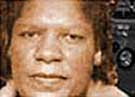 Aurelia Browder Aurelia Browder A roadside monument was dedicated in 2004 to the four plantiffs in the Browder v. Gayle case. Colvin, a 15-year-old student at Booker T. Washington High School, boarded a bus in 1955 and refused to give up her seat to a white man. She was handcuffed, arrested and forcibly removed from the bus, as she screamed that her constitutional rights were being violated. More on Browder v. Gayle |
November 13, 1960 Over 1000 Quakers (members of the Society of Friends) surrounded the Pentagon for a silent vigil to commemorate the 300th anniversary of the first Quaker Peace Testimony issued to King Charles II in 1660. From the original Peace Testimony: “We utterly deny all outward wars and strife and fightings with outward weapons, for any end or under any pretence whatsoever. And this is our testimony to the whole world….” The complete text of the 1660 Declaration |
November 13, 1974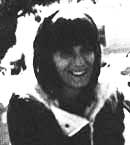 Karen Silkwood, a technician and union activist (Oil, Chemical, and Atomic Workers’ Union) at the Kerr-McGee Cimarron plutonium fuels production plant near Crescent, Oklahoma, was killed in a one-car crash. Read more about her story |
November 13, 1982 Maya Ying Lin Maya Ying LinThe Vietnam Veterans Memorial was dedicated in Washington, D.C. Carved into black granite are the 58,260 names of those Americans who died in Vietnam. The designer, Maya Ying Lin of Athens, Ohio, a 21-year-old architecture student at Yale University, was the winner of the competition that drew 1,421 design entries: “. . . this memorial is for those who have died, and for us to remember them.” Eventually, the Memorial included three elements, the Wall of names, the Three Servicemen Statue and Flagpole, and the Vietnam Women’s Memorial.    The Wall of Names, the Three Servicemen Statue and Flagpole, and the Vietnam Women’s Memorial Read more about the memorial Stunning photo gallery of the Memorial including interactive panoramic images Interview with Maya Lin and filmmaker Freida Lee Mock, who made the Academy-Award-winning documentary, “Maya Lin: A Strong Clear Vision” (My apologies about Charlie Rose; it’s PeaceButton’s link, and it’s good info, Rose notwithstanding. -A) |
https://www.peacebuttons.info/E-News/peacehistorynovember.htm#november13
Fact Check: Did Kamala Harris Lose More Than 325,000 Migrant Children?
I am so tired of this stupid lie. The right / republicans keep using it because the children they stole from parents at the border back during tRump’s term have never been found and returned to their parents. That is what this asshole false claim is about. Here are the facts. And also notice that the time frame includes tRump’s first term! Want to know why this pisses me off so much !!! Because as an abused kid I could have been saved if people had cared enough to do it. Instead the republicans do this shit that helps no child, helps no kid. Hugs
Kamala Harris is expected to visit the U.S.-Mexico border during a trip to Arizona this week as the Vice President attempts to win over voters on immigration policy ahead of the November election
Donald Trump has repeatedly targeted Harris over the number of border crossings during the Biden administration, highlighting the role handed to her by the president to investigate the root causes of migration in the Northern Triangle of Central America.
Trump went after Harris again earlier this week during a rally in Pennsylvania when he accused her of losing hundreds of thousands of unaccompanied migrant children who had entered the country.
 Kamala Harris speaks during a press conference at El Paso International Airport, on June 25, 2021 in El Paso, Texas. Donald Trump has claimed the Vice President is responsible for the disappearance of 325,000 migrant children. PATRICK T. FALLON/AFP via Getty Images© PATRICK T. FALLON/AFP via Getty Images
The Claim
At a speech in Indiana, Pennsylvania, on September 23, 2024, Donald Trump claimed that Kamala Harris had lost more than 325,000 migrant children.
“She [Kamala Harris] lost more than 325,000 migrant children,” Trump said.
“They’re gone, nobody knows where they are. Many of them are dead, many of them are in sex trade, many of them, but many of them are dead, they’ve been trafficked, they’ve been raped. Three hundred and twenty-five thousand children are missing.”
The Facts
Donald Trump’s claim is wrong with some caveats.
It appears his claim is based on an
August 2024 audit by the Department of Homeland Security’s Office of Inspector General (OIG) that uncovered U.S. Immigration and Customs Enforcement (ICE) statistics on unaccompanied migrant children (UCs).
Between fiscal years 2019 and 2023, ICE transferred over 448,000 unaccompanied children to the Department of Health and Human Services Office of Refugee Resettlement (ORR). After apprehension by the Department of Homeland Security, children are transferred by ICE to ORR.
ORR handles the care and custody of these children awaiting immigration hearings. Care and custody include placing children in shelters or with a sponsor. ICE is responsible for managing immigration cases, and the audit showed the agency struggled to monitor the whereabouts of many of these children after their release from ORR custody.
ICE reported that more than 32,000 children had failed to appear for scheduled immigration court hearings between 2019 and 2023. ICE also failed to serve Notices to Appear (NTAs) on 291,000 children, leaving them without scheduled court dates and outside the formal immigration process.
The “more than 325,000” figure appears to be a combination of the 291,000 children who had not been issued a court date and the 32,000 who did not appear for scheduled dates, off by a couple of thousand.
Crucially, the main figure to focus on is the 32,000 children who missed their court date, the audit noting that ICE “was not able to account for the location of all UCs who were released by HHS and did not appear as scheduled in immigration court.”
The audit also said that failure to send an NTA could limit the chances of maintaining contact when children are released from ORR custody, adding ICE did not always inform ORR about the failure to appear in court.
“Similarly, when ICE does not share information with HHS regarding UCs who did not appear for hearings, HHS personnel are unable to determine if UCs need wellness checks or post-release services for individuals at an increased risk of being trafficked,” the report stated.
“Without an ability to monitor the location and status of UCs, ICE has no assurance UCs are safe from trafficking, exploitation, or forced labor.”
However, Trump combined the figures even though the audit did not say that the 291,000 who had not been issued an NTA were lost.
The report also does not say that ICE could not find all 32,000 children who had not appeared in court. ICE is not a child welfare authority either; as explained here and in previous Newsweek fact checks, unaccompanied minors are placed into the care of sponsors if available which ORR is meant to monitor. Although there have been concerns regarding the risk of exploitation in this system, the context of who carries responsibility here is important.
Furthermore, the OIG audit covered cases between fiscal years 2019 and 2023. Although more children were transferred into ORR custody between fiscal years 2021 and 2023, Trump’s administration oversaw transfers during the 2019 and 2020 periods and part of 2021.
Newsweek has contacted media representatives for ICE, Kamala Harris, Donald Trump, and the White House via email for comment.
Trump also claimed during his speech that “many” of the children were “dead”, “in sex trade”, and “raped.” The report does not make that conclusion. While the OIG report mentions exploitation vulnerability, it does not support Trump’s claim.
The Ruling
False.
Trump’s claim is based on an audit that showed between fiscal years 2019-2023 U.S. Immigration and Customs Enforcement (ICE) had reported that more than 32,000 unaccompanied migrant children had not appeared in court for immigration proceedings. The audit found that ICE “was not able to account for the location” of all these children.
The audit also said ICE had not issued orders for 291,000 children to appear in court.
Trump appears to have combined these two figures to try to make 325,000. The audit did not state that the 291,000 without court orders were missing, nor did it say that all 32,000 children could not be located. ICE is not a child welfare authority and unaccompanied migrant children are placed in shelters or with a sponsor by the Department of Health and Human Services, which is meant to monitor placements.
The audit monitored reporting under the Trump and Biden administrations.
FACT CHECK BY Newsweek’s Fact Check team

FACT FOCUS: Claims that more than 300,000 migrant children are missing lack context
I am so tired of this stupid lie. The right / republicans keep using it because the children they stole from parents at the border back during tRump’s term have never been found and returned to their parents. That is what this asshole false claim is about. Here are the facts. Hugs
Updated 6:29 PM EST, October 2, 2024Republicans, including former President Donald Trump, have recently claimed that hundreds of thousands of migrant children who crossed the U.S.-Mexico border unaccompanied are missing, then criticized the border policies of the Biden administration and Democratic presidential nominee Vice President Kamala Harris.
Ohio Sen. JD Vance, the Republican vice presidential nominee, repeated the claim during Tuesday night’s debate.
“We have 320,000 children that the Department of Homeland Security has effectively lost,” he said as he met Minnesota Gov. Tim Walz in what is likely the last debate of the 2024 presidential campaign.
But immigration experts say the claims regarding missing migrant children lack significant context.
Here’s a closer look at the facts.
CLAIM: The Biden administration has lost more than 300,000 unaccompanied migrant children.
THE FACTS: This claim misrepresents information in an August report published by the Department of Homeland Security’s Office of the Inspector General, which faulted Immigration and Customs Enforcement for failing to consistently “monitor the location and status of unaccompanied migrant children” once they are released from federal government custody.
The report noted that more than 291,000 unaccompanied migrant children had not, as of May 2024, received a notice to appear in court. Additionally, more than 32,000 unaccompanied migrant children got a notice to appear but then failed to show up for immigration court hearings. Those figures came from ICE and covered a period from October 2018 to September 2023. During that period there were a total of 448,820 unaccompanied children released by ICE to the Department of Health and Human Services’ Office of Refugee Resettlement.
“This is not a ‘missing kids’ problem; it’s a ‘missing paperwork’ problem,” Jonathan Beier, associate director of research and evaluation for the Acacia Center for Justice’s Unaccompanied Children Program, wrote in an email.
Plus, President Joe Biden only entered the White House partway through this period. It includes approximately 15 months when Trump was president and does not specify how many children arrived in the U.S. under each president.
Experts say there are many reasons why the children might not have appeared for hearings or received a notice to appear in the first place. For example, they only get a notice to appear when removal proceedings against them have begun, and if ICE hasn’t started that removal process, they wouldn’t have gotten a notice in the first place.
A lack of communication between government agencies could mean a notice is sent to the wrong address if it has been updated with one agency and not another. A child’s guardian may be unable to take them to court, perhaps because they live on the other side of the state.
The report does not provide any explanations.
“All of these factors can explain some of the deficiencies and a conclusion that the children are missing could be very, very premature,” said Raul Pinto, deputy legal director for transparency at the American Immigration Council.
Carmen Hills, an ICE spokesperson, said the agency agreed with the inspector general’s recommendations to improve information sharing within ICE and externally with HHS, but disagreed with the suggestion that the children are missing.
“We are concerned that the report’s findings are misleading and may be misconstrued because they fail to acknowledge key facts,” she said.
Hills said ICE does not generally issue court notices to unaccompanied children “until after they have been placed with sponsors who have been vetted by HHS” so that they can get settled and seek legal help.
Representatives for HHS and Vance did not respond to requests for comment from The Associated Press.
An unaccompanied migrant child is defined by the U.S. government as someone who is under 18, lacks lawful immigration status and has no parent or guardian in the country to take custody of them. When they’re apprehended by the Department of Homeland Security, they’re transferred to the HHS’s Office of Refugee Resettlement.
They are then placed “in the least restrictive setting that is in the best interests of the child,” according to the resettlement office. That can mean shelters, foster care or residential treatment centers, among other options. If possible, children are released to sponsors, often family members, who can care for them.
Removal proceedings may be initiated by ICE and the Department of Justice. Some children are able to stay in the U.S. legally if they qualify for asylum, special visas for victims of abuse, trafficking and other crimes, or other types of immigration relief. In those cases, removal proceedings may never start.
___
Find AP Fact Checks here: https://apnews.com/APFactCheck.
Goldin debunks, analyzes and tracks misinformation for The Associated Press. She is based in New York.


How Trump’s second term will be different
Let’s talk about Warren Buffett, surgery, and the economy….
Let’s talk about China wanting peaceful coexistence with Trump….
Belle talks about how tRump and his supporters build his fake image of being a superpower in the world. They take stuff that tRump had nothing to do with and claim it only happened because of him. They depend on people not knowing the subject they are talking about. Hugs
The Fight for Native American Voting Rights
Despite the passage of the Indian Citizenship Act in 1924, Native American activists have had to repeatedly take their fight for voting rights to Congress.
In June 1986, Judge Edward Rafeedie handed down a ruling. Indigenous voting rights were being suppressed in Montana’s Big Horn County, where “official acts of discrimination…have interfered with the rights of Indian citizens…to register and vote.” This was a victory for voting equality, but it wasn’t met with open arms. County Commissioner Ed Miller, for example, was dismayed, citing a longing for the “good old days.”
“The Voting Rights Act is a bad thing,” Miller claimed, according to the San Francisco Examiner. “[T]hings were fine around here. Now they (Indians) want to vote. What next?”
Maybe most weren’t as vocal about their opposition to equal rights as Miller was, but the Native American franchise was a hard-fought battle. As historian Matthew G. McCoy writes, “Only through consistent activism and legal action did Native Americans succeed in breaking down these egregious barriers to voting.”
It shouldn’t have been as difficult for Native Americans to vote as it was. The Indian Citizenship Act of 1924, in theory, settled the question of whether Indigenous people were citizens. They were. And they were entitled to vote. However, as historian Orlan J. Svingen explains, this law didn’t prevent discrimination.
A government study in 1936, for example, found that seven states were actively preventing Native Americans from voting. Much like the laws that prevented Black Americans from voting, these states enacted laws specifically targeting Native American voters, including mandating that all voter registrars be taxpayers (many Native Americans were exempt from certain local taxes, and this law depressed voter registrations on reservations) and literacy tests as a requirement for voting. One Cherokee voter was told by a judge that despite his master’s degree from the University of North Carolina, “You couldn’t read or write to my satisfaction if you stayed here all day.”
Though there was anger and a number of court battles in earlier years, it may have been the start of World War II that acted as a catalyst for activism, McCoy notes. Though Native American soldiers were being sent overseas to fight for freedom, that same freedom eluded them at home. Navajo soldier Ralph Anderson sent a letter to tribal leaders in 1943 with this exact contradiction on his mind.
“We all know Congress granted the Indians citizenship in 1924,” he wrote, “but we still have no privileges to vote. We do not understand what kind of citizenship you would call that.”
In the following years, Native activists took their fight to Congress several times, meeting denials of their rights most times. But they were undeterred and began leading direct actions. In 1946, for example, Navajo citizens attempted to register to vote in Arizona and were denied, as were two people from the Yavapai tribe. The latter denial led to a court case, Harrison v. Laveen, that overturned a previous ruling that classified Native Americans living on reservations as being essentially wards of the state and ineligible for voting. A case in 1948 successfully took the fight to the federal government, arguing that the denial of voting rights was unconstitutional. And as Svingen writes, in the 1970s, “exemptions from certain taxes no longer limits [Native Americans’] right to vote, and election districts must be apportioned under the ‘one person one vote’ principle,” rules that officials in Big Horn County were simply ignoring.
There have been many subsequent fights for equality, and some experts argue that certain regulations, like voter ID, may still be playing a role in disenfranchising Native American voters. Legal scholar Sally Harrison writes that “one in five eligible Native American voters do not have a [government-issued] photo ID that meets the requirements for ID in strict-photo ID states [and] many states do not allow tribal photo IDs at the polls because a state or federal government did not issue them,” a contradiction that could lead to revisiting past injustices. As Harrison notes, “state and federal legislators should pay special attention to the Native American vote, making sure that it does not face the discrimination and exclusion it has in the past.”

