May 11, 1973 Charges against former Pentagon analyst Daniel Ellsberg (including conspiracy, espionage and larceny) for his role in the release of The Pentagon Papers (a comprehensive classified study of the origins and conduct of the Vietnam War) were dismissed. Judge William M. Byrne cited government misconduct, including attempts to bribe him with an appointment as FBI Director, and previously undisclosed wiretaps of Ellsberg. His compatriot, Tony Russo, a former RAND Corporation analyst, was also released. Secrets: A Memoir of Vietnam and the Pentagon Papers a book review Daniel Ellsberg’s website
May 11, 1975 80,000 turned out in New York City’s Central Park to celebrate the end of the Vietnam War.
John Oliver discusses the recent deportations by the Trump administration, the conditions in the facility people are being sent to abroad, and why even Henry Winkler could be in danger of being expelled from the U.S. Yeah, even national treasure Henry Winkler.
In rivers and oceans across the globe, fish are behaving strangely. Some swim faster than they should. Others take risks they’d normally avoid. Many abandon the social structures that once protected them. These shifts are not random. They point to an invisible threat flowing just beneath the surface: pharmaceutical pollution.
Drugs designed for human anxiety, pain, and insomnia are entering the world’s water systems through sewage, manufacturing waste, and improper disposal. Once there, they don’t vanish. They linger, affect wildlife, and disrupt entire ecosystems.
Bold Fish, Bigger Risks
Juvenile salmon migrating from Sweden’s River Dal to the Baltic Sea have become an unexpected case study. Researchers implanted hundreds of these fish with tiny slow-release doses of clobazam, an anti-anxiety drug commonly prescribed to humans. Tracking tags revealed something remarkable: salmon exposed to the drug completed their journey faster and in greater numbers than their drug-free peers.
According to Jack Brand, a researcher at the Swedish University of Agricultural Sciences, these medicated salmon passed through hydropower dams two to three times faster than untreated fish, likely because they were less hesitant around the turbines, NPR reports.
This boldness might sound like a survival advantage. But in ecosystems, risk-taking has consequences. When predators lurk or conditions shift, impulsive behavior can turn deadly.
Anti-anxiety drugs are altering fish behavior in the wild.
A Global Cocktail of Contaminants
The scope of contamination is staggering. Almost 1,000 pharmaceutical compounds have been detected in waterways around the world—including Antarctica. A Cary Institute report found that up to 80% of streams in the U.S. alone are polluted with pharmaceuticals and personal care products.
These compounds are potent by design. Many target receptors in the human brain, and those same receptors are found in fish and other species. Drugs like benzodiazepines, used to treat anxiety in people, also alter the stress response in fish. As a result, animals become less risk-averse, change their migration timing, or fail to form protective schools—shifts that can affect survival.
Drugged salmon are taking dangerous risks during migration.
From Lab to Wild
Previous experiments hinted at these effects. In labs, fish exposed to psychoactive drugs became more isolated and less cautious. But the new field studies from Sweden show that these behavioral changes persist—and even intensify—in the wild.
A follow-up experiment revealed that drugged salmon formed looser groups, even when a predator was nearby. The tighter a school, the safer its members. Disrupted shoaling behavior means more fish swimming solo—making them easier prey.
Michael Bertram, an ecologist leading the study, described the salmon’s altered behavior as a form of “unnatural selection,” The New York Times reports. If bolder fish survive migration but die later in predator-rich waters, the long-term outcome could be population decline, not resilience.
Predator-prey dynamics are being disrupted by pharmaceutical waste.
The Long Tail of Human Medicine
Human waste isn’t the only path these drugs take to the water. Wastewater from hospitals, improper drug disposal, and runoff from pharmaceutical manufacturing sites all contribute. Deutsche Welle reports that some wastewater treatment plants near manufacturing facilities have drug levels 1,000 times higher than others.
Yet most treatment plants are not equipped to filter out pharmaceuticals. Some drugs pass through the system unchanged. Others break into byproducts that are just as toxic.
Unknowns Beneath the Surface
Despite years of research, the full ecological impact of pharmaceutical pollution is unknown. Scientists have documented effects on hundreds of species, including reproductive issues and behavioral disruptions. A Cary Institute investigation described how certain antidepressants alter fish breeding cycles, while hormones from birth control pills can cause male fish to develop female egg cells.
As compounds accumulate in fish, they climb up the food chain. Birds, mammals, and even humans may be exposed through drinking water or consumption of contaminated seafood.
Solutions and Setbacks
There are potential fixes. Advanced treatment technologies like ozonation and membrane filtration can help. But they’re expensive and rare. Designing drugs that biodegrade safely—an approach known as green chemistry—is promising, though slow to implement.
Policy change is another lever. Currently, pharmaceutical companies are responsible for testing their own products for environmental safety. Critics argue that these reviews are insufficient and underregulated.
Improved drug disposal practices, public education, and cross-agency coordination could all make a difference. But as things stand, no pharmaceuticals are currently regulated under the EPA’s primary drinking water standards, Cary Institute reports.
The Cost of Inaction
The salmon darting through Swedish dams may seem like a scientific curiosity. But they are just one visible indicator of a much larger, invisible crisis. Every flushed pill, every untreated discharge, adds to a global experiment with no control group and no reset button.
What happens in rivers doesn’t stay there. It shapes the ocean, the land, and the web of life that connects them all.
Click and help us keep our oceans clean!(Note from A: this is a simple free Greater Good organization click-to-donate; the easily ignored ads help pay for cleaning the ocean. I’ll never know whether you click or not, I just wanted to let you know what it is.)
When books burn, humans follow – a warning we cannot afford to ignore Read on Substack
When I tell you that fascists don’t start with violence—they start with books—I’m not speaking in fucking hypotheticals. On May 6th, 1933, while the ink was barely dry on Hitler’s chancellorship, young Nazis stormed the Institute of Sexual Research. They ransacked the place that night, and then four days later, they took more than 20,000 books from the Institute’s library to Berlin’s Bebelplatz Square and burned them.
They didn’t just burn paper. They burned hope. They burned sanctuary. They burned the world’s first transgender clinic and decades of groundbreaking research that might have spared generations of queer people unimaginable suffering.
I’m not being dramatic when I say this is one of the most gut-wrenching episodes in queer history. The visceral image of Magnus Hirschfeld—a gay Jewish doctor and pioneering advocate for gay and transgender rights—watching on television as his life’s work went up in flames should haunt us all. Because make no mistake: these weren’t military operations. These were everyday people, your neighbors, your classmates, who decided certain knowledge was too dangerous to exist.
A Haven of Revolutionary Care
The Institute for Sexual Research wasn’t just ahead of its time—it was blazing the trail for a future we’re still fighting to reach nearly a century later. Opened in 1919 by Magnus Hirschfeld in Berlin, this non-profit institution provided care that modern transphobes claim is “experimental” today, despite the fact that Hirschfeld was performing these procedures over a hundred years ago.
Initially hesitant about gender-affirming surgeries, Hirschfeld changed his mind when he recognized a simple truth: this was life-saving care that prevented suicide. Think about that—while most of the world was still living in willful ignorance, this man understood that people would rather die than live in bodies that betrayed them. The Institute provided facial feminization and masculinization surgeries, hair removal, and complex gender reassignment procedures when most doctors wouldn’t even recognize trans people as human.
It’s hard to wrap your mind around just how revolutionary this place was. Hirschfeld recognized that gender identity and sexual orientation were entirely separate entities—a concept some people still struggle with a century later. He coined the terms “transsexual” and “transvestite,” creating language for experiences that had been silenced for millennia. The Institute was staffed with every specialist imaginable—psychologists, gynecologists, radiologists, lawyers, general practitioners—providing low-cost or free care to those whom society had abandoned.
History Doesn’t Repeat, But It Does Rhyme
My friend (and my Editor-in-Chief) thepoetmiranda saw the dark echoes of history when one of Trump’s first orders was for the National Institutes of Health and the Centers for Disease Control to start scrubbing medical literature related to healthcare for transgender Americans from government databases (an erasure policy that has spread beyond healthcare to all historical references of transgender people—even on the Stonewall National Memorial website). She wrote the poem linked below, which is a fucking must read:
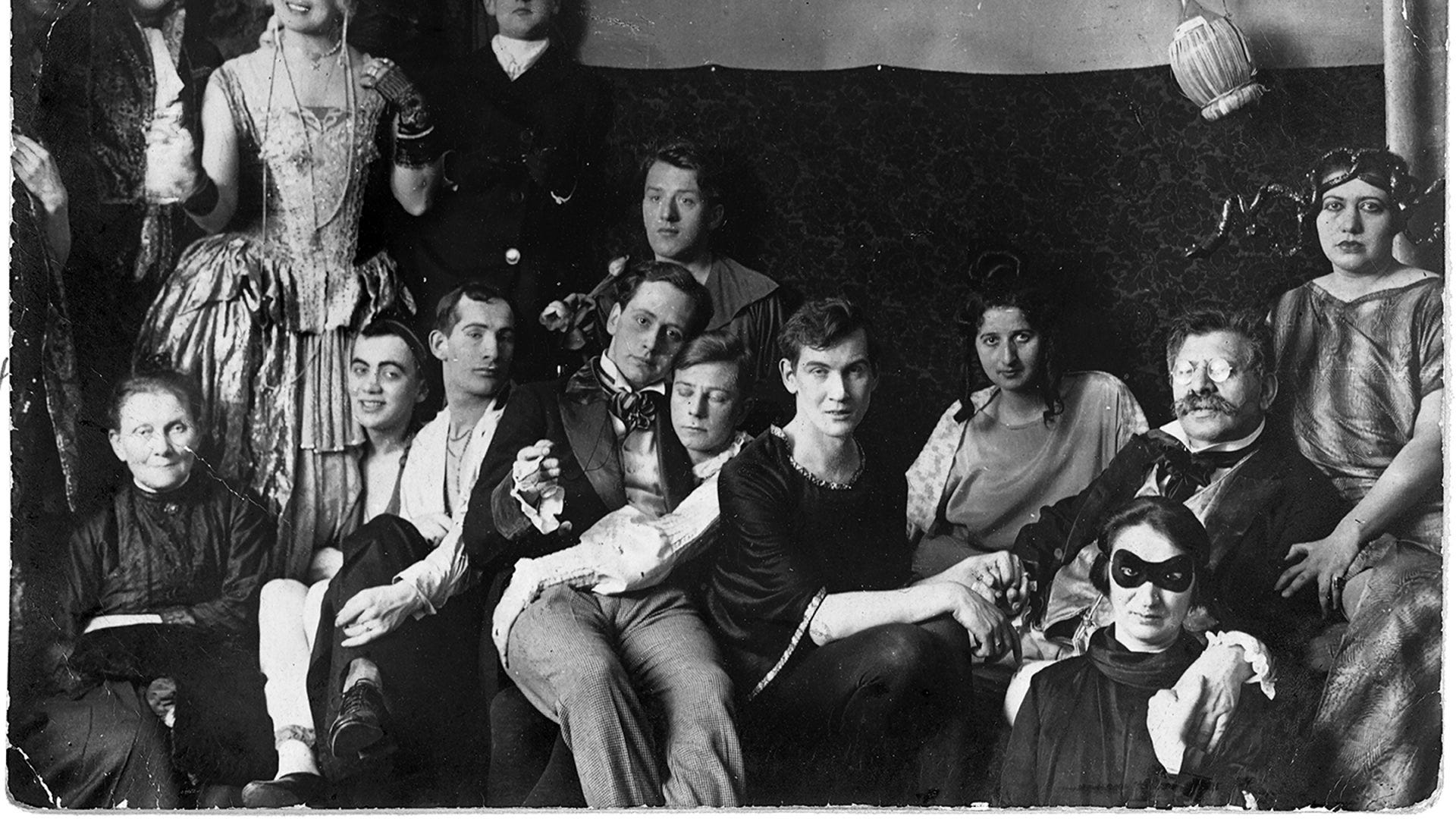
Hirschfeld’s clinic wasn’t just a clinic. It was a fucking sanctuary. Hirschfeld and his partner Karl Giese lived in the building, creating a warm, plush space filled with life. They hosted costume parties where queer people could express themselves freely. They recommended local bars and venues where LGBTQ+ folks could find community instead of isolation.
When trans women struggled to find employment after transitioning, Hirschfeld hired five of his own patients to work at the clinic. He fought for the repeal of Paragraph 175, which criminalized homosexuality, and even secured legal identification passes for his trans female patients with a “transvestite” gender marker to prevent them from being arrested for crossdressing.
Instead of the torturous conversion therapy that was common practice, the Institute taught “adaptation therapy,” instructing queer people how to navigate a hostile world while staying true to themselves. Their motto was “Through science to justice”—a radical notion that education and understanding were the path to equality.
The Day Knowledge Became Dangerous
When the Nazi youth and the German Student Union piled the contents of the Institute in the square on May 10th, 1933, they topped it with Hirschfeld’s bust before setting it ablaze. This wasn’t random destruction—it was a deliberate erasure of knowledge they deemed threatening. This happened just three months after Hitler was named Chancellor. It wasn’t soldiers who did this; it was civilians, ordinary Germans who had been convinced that minorities were the root cause of inflation and social problems.
Anyone who wasn’t white, cisgender, and Christian was deemed immoral and dangerous to German youth and the “traditional family.” Sound familiar? It should, because we’re hearing the same bullshit rhetoric recycled today by people who would burn books all over again if given half a chance.
Hirschfeld, who was out of the country, watched the destruction on television. He never returned to Germany and died of a stroke in 1935, his life’s work reduced to ashes. The loss was immeasurable—not just papers and books, but decades of research that could have advanced trans healthcare by generations.
The Brutal Reality of Lost Knowledge
We lost so much ancestral knowledge about our community in this one raid. The world’s first transgender clinic—gone. Groundbreaking research on gender identity—gone. Records of successful gender-affirming surgeries—gone. Resources for queer people to find community—gone. All of it, up in smoke because knowledge in the wrong hands threatened the status quo.
The memorial for this event bears the quote, “Where they burn books, in the end, they will burn humans, too”—a line from Hirschfeld’s own library that would prove prophetic. The Nazis began with books but ended with concentration camps where thousands of queer people wore pink triangles to their deaths.
Practical Tools for Preserving Our History
Document and digitize queer history in multiple locations and formats
Support LGBTQ+ archives financially and through volunteer work
Learn and share the stories of pioneers like Magnus Hirschfeld
Recognize warning signs when marginalized communities are blamed for societal problems
Protect trans healthcare by understanding its long history and scientific basis
Community Connection
The story of the Institute’s destruction isn’t ancient history—it’s a warning. When you hear politicians targeting trans healthcare, when you see books about queer experiences being banned from libraries, when you witness the demonization of drag performances, remember the Institute. Remember what happens when fear and ignorance are weaponized against knowledge.
Today, organizations like the Magnus Hirschfeld Foundation continue his legacy, but the threat remains. Every time a state bans gender-affirming care, every time a library removes LGBTQ+ books, every time a transgender person is denied basic dignity, we’re watching echoes of that burning pile in Berlin.
Conclusion
Knowledge is a form of rebellion, and the facts and history you carry in your mind can never be taken away from you. Education and queer joy are our greatest protections right now, just as they were in Hirschfeld’s time.
When we learn about the Institute for Sexual Research, we’re not just studying history—we’re resurrecting knowledge that fascists tried to erase. When we speak the names of Magnus Hirschfeld and his patients, we’re undoing their work of erasure. Every time we share these stories, we’re rebuilding what they tried to destroy.
The memorial’s warning echoes across time: “Where they burn books, in the end, they will burn humans, too.” We must never forget this. We must never allow it to happen again.
Because our history isn’t just about the past—it’s about fucking surviving the present and building a future where institutes like Hirschfeld’s aren’t revolutionary; they’re just how we treat each other.
References:
Hirschfield, M. 1912 “Die Transvestiten: Eine Untersuchung über den Erotischen Verkleidungstrieb”
Hirschfield, M. 1920 “Die Homosexualität des Mannes und des Weibes”
Hirschfield, M. 2017 (Reprint) “Berlin’s Third Sex”
Hackers say they have obtained what they say are passenger lists for GlobalX flights from January to this month. The data appear to include people who have been deported.
Hackers have targeted GlobalX Air, one of the main airlines the Trump administration is using as part of its deportation efforts, and stolen what they say are flight records and passenger manifests of all of its flights, including those for deportation, 404 Media has learned.
The data, which the hackers contacted 404 Media and other journalists about unprompted, could provide granular insight into who exactly has been deported on GlobalX flights, when, and to where, with GlobalX being the charter company that facilitated the deportation of hundreds of Venezuelans to El Salvador.
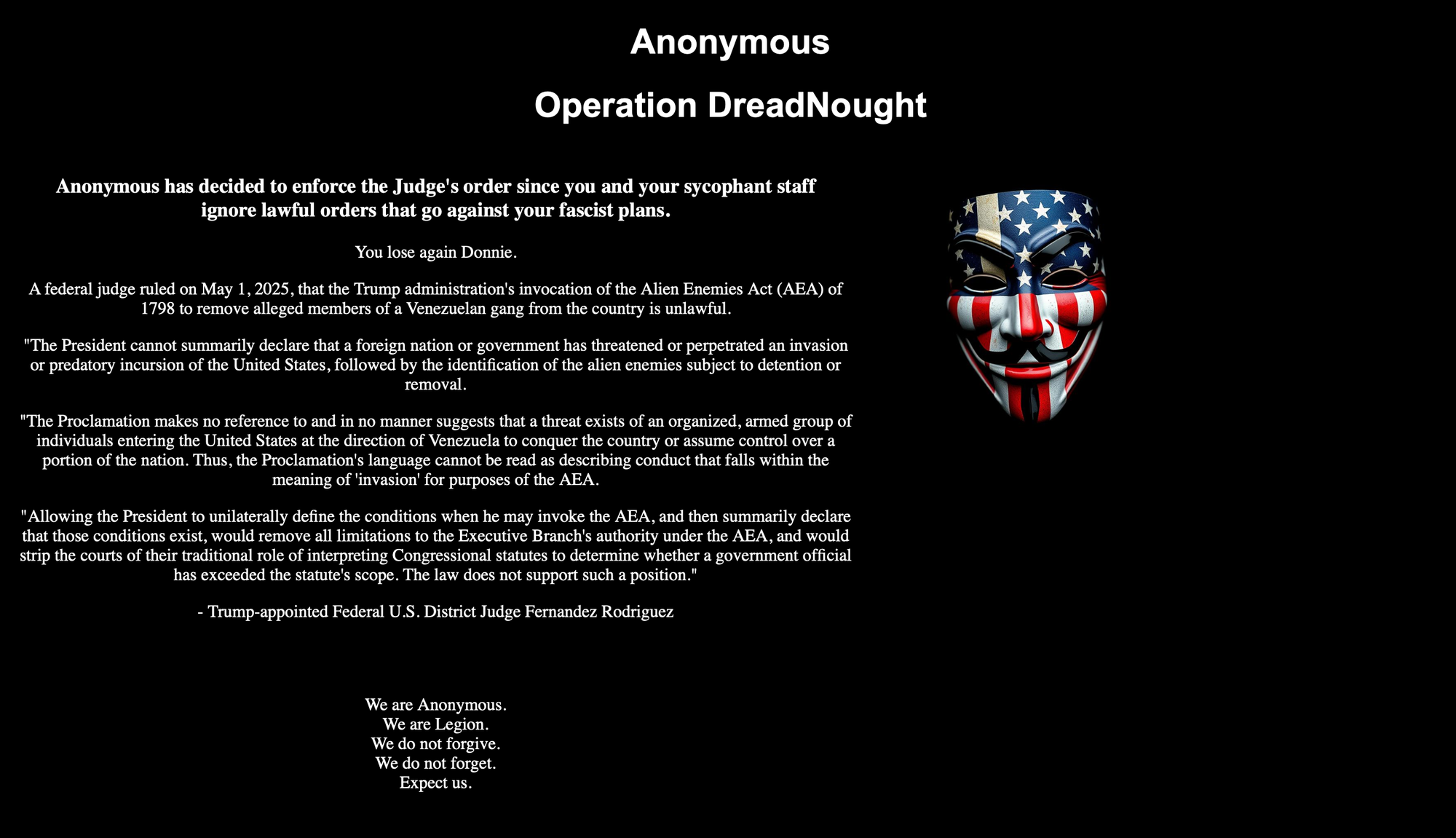
“Anonymous has decided to enforce the Judge’s order since you and your sycophant staff ignore lawful orders that go against your fascist plans,” a defacement message posted to GlobalX’s website reads. Anonymous, well-known for its use of the Guy Fawkes mask, is an umbrella some hackers operate under when performing what they see as hacktivism.
The hacker says the data includes flight records and passenger lists. The hacker sent 404 Media a copy of the data, which is sorted into folders dated everyday from January 19 through May 1.
404 Media cross-checked known information about ICE deportation flights that come from official and confirmable sources with information contained on the flight manifests and flight details obtained by the hacker. Information about Kilmar Abrego Garcia’s flight is in the hacked data.
For example, the hackers obtained what appears to be detailed flight information about GlobalX flights 6143, 6145, and 6122 that left from Harlingen, Texas’s Valley International Airport on March 15. These flights are at the center of a class-action lawsuit filed by five pseudonymous Venezuelan men against the Trump administration (which eventually went to the Supreme Court) and which took off during and immediately following a court proceeding in which their lawyers were trying to get a restraining order to prevent the flights from taking off.
During a District Court proceeding in Washington D.C., the federal government argued that it had no flight information to share with the court: “the Government surprisingly represented that it still had no flight details to share,” during the hearing, the judge’s opinion in that case reads. “When pressed, Government counsel stated that the ‘operational details’ he had learned during the recess ‘raised potential national security issues,’ so they could not be shared while the public and press listened.”
Image: A screenshot of the defacement.
“Although the Government has refused to provide the particular details, all evidence suggests that during the short window that the Court was adjourned, two removal flights took off from Harlingen—one around 5:25 pm and the other at about 5:45 pm,” court records say, noting that these were GlobalX flights 6143 and 6145; a third referenced flight left immediately following the hearing. These details closely match the timing of the flights and other details in the hacked data.
Also included in the data is a record mentioning the name Heymar Padilla Moyetones, a 24-year-old woman who was flown from Texas to Honduras, then from Honduras to El Salvador by mistake, and then was returned to Texas. The data obtained by the hackers says that GlobalX flew her from Valley International Airport in Texas to Honduras on March 15 on Flight 6143, then was flown from Comayagua International Airport in Honduras to El Salvador International on flight 6144 later that day. She then was flown directly from El Salvador International back to Valley International Airport in Texas on March 15. The information in the hacked data lines up with what Moyetones told NBC.
404 Media was also able to cross-check the names on larger published lists of people who have previously been reported to be deported, finding their names in the hacked data with the specific flights that they were purportedly on.
404 Media is not publishing the full list of passengers at this time as we work to verify which passengers were specifically on deportation flights and to protect peoples’ privacy because the manifests contain personally sensitive information like passport details. We will continue to analyze the data for information in the public interest and explore what we’re able to publish.
Neither GlobalX nor ICE responded to requests for comment.
The Trump administration contracts with a company called CSI Aviation as part of its deportation flights. On February 28, ICE posted a notice saying it would award $128 million to the company for its work. In turn, CSI Aviation subcontracts some of its work to GlobalX, which said it expects to make $65 million per year from the deal. In 2024, 74 percent of ICE’s more than 1,500 removal flights were on GlobalX plans, the Project on Government Oversight reported in March.
ProPublica previously reported on what it is like for flight attendants working on GlobalX, also known as Global Crossing Airlines. Sources in that piece said they were worried what would happen in an emergency, in part because the passengers were shackled.
“They never taught us anything regarding the immigration flights,” ProPublica quoted one flight attendant as saying. “They didn’t tell us these people were going to be shackled, wrists to fucking ankles.”
The hacker told 404 Media they managed to find a token belonging to a GlobalX developer. They then used that to find access and secret keys for GlobalX’s AWS instances which contained the data. They said they also sent a copy of the defacement message to GlobalX’s employees, and then deleted company data. 404 Media does not know the identity of the hacker, and the hacker said they sent the data to other journalists
The hacker said they also sent the message to GlobalX pilots and crew members through the company’s NAVBLUE account. NAVBLUE is a flight operations platform made by Airbus which pilots use for flight planning, among other things.
404 Media was unable to verify whether pilots or crew members received this message. But the hacker provided screenshots which appear to show them logged into the platform. They also provided a screenshot purporting to show access to GlobalX’s GitHub.
The website defacement quotes a May 1 ruling from US District Judge Fernando Rodriguez which said that the president unlawfully invoked the Alien Enemies Act and blocked the administration from deporting more alleged Venezuelan gang members without due process.
The defacement adds: “You lose again Donnie.” (snip)
May 6, 1916 Emma Goldman and Alexander Berkman Alexander Berkman and Emma Goldman started the No Conscription League in the U.S. to discourage young men from registering for the draft which had passed Congress the previous month. This was prior to American troops’ being sent to Europe in what is known as World War I. Read the No-Conscription League Manifesto
May 6, 1944 Mohandas Gandhi, due to declining health, was released from his last imprisonment in India, having spent 2,338 days in jail during his lifetime.
May 6, 1954 Two American pilots and most of their crew died flying ammunition supply missions to French colonial troops under siege by Vietnamese insurgent troops under General Vo Nguyen Giap. James “Earthquake McGoon” McGovern and Wallace Buford became the first U.S. aviators to die in Vietnam. Pres. Dwight Eisenhower had not wanted to commit the U.S. military to Vietnam so shortly after the end of the war in Korea, so McGovern and Buford were working for an organization contracted by the CIA.
May 6, 1970 U.S. Senate hearings began on ratification of the Equal Rights Amendment (ERA) to the U.S. Constitution: “Equality of rights under the law shall not be denied or abridged by the United States or by any State on account of sex.” Similar amendments had been introduced in every Congress since 1923. Writer and editor Gloria Steinem testified: “During twelve years of working for a living, I’ve experienced much of the legal and social discrimination reserved for women in this country. I have been refused service in public restaurants, ordered out of public gathering places, and turned away from apartment rentals, all for the clearly stated, sole reason that I am a woman.” Gloria Steinem in 1970 Steinem’s full testimony more ERA history
May 6, 1973 14 cities across France saw demonstrations against their country’s nuclear weapons tests in the Pacific Ocean.
May 6, 1979 125,000 rallied in Washington, D.C. to oppose nuclear power.
Growing up, my father had a number of sayings that I did not always appreciate. One that sticks with me to this day is when he saw me waxing my first car. Admittedly, it wasn’t a great car, but it was mine!, and I was proud to have it. So there I was, rubbing away at it like a bum on the beach caressing a dented lamp hoping a Genie would pop out and make it a Mustang or something, and I saw him, leaning against the wall watching me use up his good wax and I grinned at him. “You know, son, there’s only so much you can polish a turd,” he said, then walked away as my grin fell.
Value is subjective, determined by the amount of life we deem it to be worthy. One of the most dangerous things you can do is stand between a man and what he believes worth everything for he will destroy anything to protect it.
The second most dangerous thing one can do is to overvalue something, for you will willingly destroy yourself and everything you love less in the pursuit of that item. This is the fall of Mike Lindell, Michael Cohen, Rudi Giuliani, and so many others. Obsessed with a conman and addicted to the koolaid, they laid prostrate upon the dark alter of Trump and sacrificed their wealth, career, future, loved ones, and perhaps their very soul for that which is objectively corrupt, offensive and untrue.
It is interesting to me to watch the fall of another who thought he could ride the corrupt lies to greatness only to find them as corrosive to ‘friend’ as to ‘foe’. Elon, once the wealthiest of businessmen, began his downfall by attempting to stifle the decency within Twitter in service to his Lord drumpf. He then used his platform to lie and cheat for a conman, buying his presidency and drinking the koolaid as fast as drumpf could make it.
I couldn’t understand why this man, wealthier than many countries, would put all he was and could be on the line like that. A man known for his advances in science and conservation placed himself within the nuclear blast zone of someone who denies science, flaunts his own ideas over those of experts, who embraces ignorance and self aggrandizement, and who denies conservation care for the environment. What drives people like these to destroy themselves? What hold does that Svengali have on them?
In all fairness, I don’t think I need to shed a tear for Elon. He is a big boy and will just have to suffer the consequences of his self-immolation. It is the curiosity of seeing it happen live, to see the startling half-realization that hate has consequences and seeking the shiney value, the loud and obnoxious clown above all that has real value, has begun his destruction. I can’t help but to wonder where he will wash up.
I’ve even made plans, presuming some of this becomes legal in the next 10 years where I live. I have high hopes for sky burials and terramation, at least those are my 2 favorites.) I have links to more info, but this is good for some who maybe haven’t thought of this aspect of the circle of life.
Think Outside the Coffin: Green Burials Gain Popularity
Green burials have been gaining favor for nearly 30 years, offering an eco-friendly way to say goodbye.
As Ben Franklin once said, “In this world, nothing can be said to be certain except death and taxes.” While the subject of taxes may be unpleasant, conversations about death don’t have to be.
“Most families are close enough to know what their loved ones want, [but] a lot of people don’t learn about death care until a loved one dies,” says B. Milton, a retired death care industry professional in Indiana. End-of-life discussions can be uncomfortable to broach — a lot of people don’t pre-plan, according to Milton — but having direction for your post-life care allows for peace of mind, both emotionally and financially.
As most people know, conventional burials — those that include options like a viewing, a funeral service, and burial in a casket — can be very expensive. The national median cost of a funeral with a burial in 2023 was $8,300, according to the National Funeral Directors Association. Caskets alone can cost thousands of dollars. Of course, the sentiment is wonderful; there is a true gift in being able to choose a beautiful vessel as a loved one’s final resting place. A growing number of people, however, prefer to keep funeral costs lower and more eco-friendly with green burial options, including burial shrouds, terramation, and aquamation.
Burial Shrouds
“Green burials are in their infancy,” says Russ Burns, director of All Saints Cemetery and The Preserve, a natural burial site in Michigan. “In 20 to 30 years, they’ll be up there with traditional burials,” noting that customers interested in green burial are well-informed and concerned less about themselves post-mortem and more about how the area where they will be interred will remain green.
A cenotaph wall at The Preserve. The wall is a collection of rocks engraved with names of those buried on the property. It offers a physical place for family and friends to visit their loved ones as graves are inaccessible after the burial service. (Image courtesy of Mt. Elliott Cemeteries)
The use of a burial shroud is simple: The deceased is placed in a shroud made of a biodegradable material like canvas and committed to the earth about three feet underground. The shallower depth allows for more oxygen flow than the standard six-foot depth for coffins, which helps the body decompose and return to the soil. The process takes about a year and costs, at the lower end, around $1,800.
Burns cautions customers to do their research and make sure they work with an organization that is fully funded and has “more than good intentions.” Following burial, the land continues to require maintenance you would expect, like mowing and landscaping, but may also need an environmental impact study or a controlled burn to get rid of invasive plant species.
Terramation
Terramation, to put it simply, is human composting. If you’ve ever joked about having a green thumb, now you can have green everything and quite literally be turned into soil.
The first stage of terramation takes about a month. The deceased is placed in a vessel and covered in organic materials like straw, alfalfa, and wood chips. Families who attend the preparation of the body also known as a laying-in ceremony — sometimes bring garden clippings and assist in the process. The vessel is then closed and stored while microbes break the body down to roughly one cubic yard (or several hundred pounds) of soil. The material is examined for any remaining organic matter like bone or non-organic matter like surgical implants and then left to cure. Before being released to the family, the soil must pass safe compost regulations, including tests for the presence of arsenic or lead.
The process of composting people has only been around for about 10 years and is currently legal in 12 states, including Minnesota, Arizona, California, Colorado, New York, and Washington state. Cost can range from $5,000 to $7,000. In the video below, mortician and green death advocate Caitlin Doughty chats with Katrina Spade, the founder and CEO of Recompose, a green funeral home near Seattle that specializes in terramation.