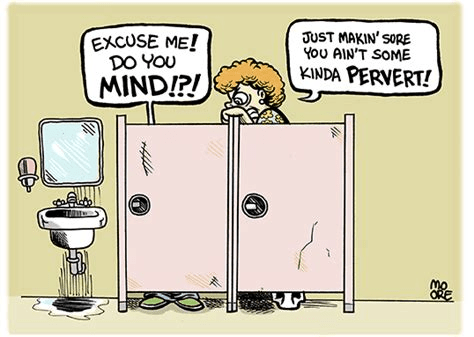
As I keep saying all these bathroom bills and trans people in the bathroom trash talk is the cis people who don’t look feminine or masculine enough for other people. I have read and watched videos of women who look mannish who get assaulted or harassed for going into the woman’s bathroom. One woman was a cancer survivor who lost all her hair due to treatment and two men were calling her horrific names and threatening to beat her up on video because they were sure she was a man. It all goes on looks for these people. Unless people are going to line up for a genital inspection by these gang thugs before entering the bathroom, how else do these maga think they are going to be able to tell? Oh and this post took me two days to put together. Hugs.
Monday marked the one year anniversary of the October 7th massacre in Israel, and at sundown Friday, the Jewish day of atonement—Yom Kippur—begins. It’s the holiest day of the Hebrew calendar, saddled with even more gravity given the past year of intra and inter-community turmoil. It’s meant to be observed with deep self-reflection.
Rabbi Jason Rubenstein, Executive Director of Harvard University’s Hillel (an international Jewish student organization) endeavored to do just that with a searching letter posted to his chapter’s website Thursday evening. The nearly 2,600 word missive was published in response to a fairly confusing fracas on campus earlier this week. The details are important, so I’ll break it down for you:
On Monday, October 7, 2024, a student affiliated with JStreet U, the university arm of the liberal pro-Israel Jewish nonprofit JStreet, allegedly used the printing resources of the campus Hillel to produce copies of posters without permission. The student was later identified in a self-published statement as Meredith W. B. Zielonka.
The printable posters were produced by Halachic Left, a grassroots Jewish organization. They featured a variety of images depicting death and suffering in Gaza over the past year juxtaposed with Hebrew and English translations of the “Al Chet,” a list and confession of sins recited throughout Yom Kippur services.
These posters were hung outside the campus Hillel center and discovered by staffers early Tuesday morning. The staffers then called the Cambridge Police Department because, according to a statement, “the flyers contained graphic content they felt was meant to be intimidating.”
The Crimson, Harvard’s student newspaper, reported Tuesday that Harvard Hillel “temporarily suspended” JStreet U because of their actions, though it remains unclear from what they were suspended and what authority Hillel has over JStreet U.
I reached out to JStreet’s national organization Wednesday, who informed me the following day that they no longer have an official chapter at Harvard and that a student—now identified as Zielonka—who had been affiliated with them in the past was the one who printed the posters. They said she “engaged in activity that was in violation of both Hillel’s affiliate agreement and J Street U’s own standards for our campus chapters.” I asked JStreet for specifics as to how Zielonka violated their standards, but they declined to comment further.
JStreet also shared with me a letter their president and directors sent to Rabbi Rubenstein profusely apologizing for Zielonka’s actions. “We are committed to developing genuine J Street U leadership on campus that represents our values and mission, specifically providing a safe space for students to hold nuanced views without compromising their pro-Israel values,” they wrote.
Thursday evening Rubenstein published his letter in response to the situation. He likened the posters to antisemitic propaganda—both historic and recent—that depicts Jews as dangerous vermin who should be met with violence. In his view, the posters “stigmatize” a type of Jew (IDF soldiers enacting violence in Gaza) and even if they’re not necessarily an attack, create “the potential to engender conflict between different elements of our community”. He wrote: “The saturation of public spaces, and the minds of an increasing number of Americans, with images of Jews as heinous, is real, and dangerous, and requires – just like testing and masking during COVID – that we curtail some public freedoms to protect one another.”
Shortly after, Zielonka published a statement. She wrote that she put up the posters to “protest Israel’s conduct in Gaza and underscore my genuine moral and religious concerns for Palestinian lives,” and added, “While I stand by my beliefs, I regret the misunderstandings that overshadowed our message.”
Zileonka explained: “I received permission to spend funds to print the posters as a Hillel affiliated group, but I should have preemptively shown Hillel the content given their rules precluding the use of their funds for controversial matters. Out of respect for Hillel and their mission, I have already donated the $41 back to the organization.”
Another poster from Halachic Left
I’d like to share some additional language from Rubenstein’s letter so that my criticism makes sense. He writes that the poster images from Gaza, “depict, in ways that are painful to confront, effects of the IDF’s campaign against Hamas there on Palestinian civilians. It is vital that we, as Jews, not evade the effects of the Jewish state’s army’s actions on others.”
The framing in that first sentence feels especially important. It’s a reminder that from a Zionist perspective, Israel’s government and army have killed tens of thousands of people in Gaza for a reason: to eradicate Hamas. The Palestinian civilians are simply bystanders caught up in war, and while their pain should cause us pain, it doesn’t mean that all Jews should have to repent for it.
I as much as anyone have consistently made it clear that the conflation of Zionism with Judaism is dangerous and harmful. The trouble is, however, that from the perspective of the world, the atrocities being committed against Palestinians are being done in our name–therefore, we’ve become part of the story, whether we agree with the premise or not. And so from my perspective, the posters are not trying to say that every Jew should atone this Yom Kippur for the sins of the IDF, but that we should atone for what is seen as violence carried out to protect our religion. After all, “not in our name” is a phrase that has been used by Jews long before, but especially since, October 7, 2023.
But what’s perhaps even more troubling on a micro level is the involvement of law enforcement and the idea that certain freedoms be curtailed in the name of safety.
“Jewish institutions have a tremendous amount of power, and it hurts my heart that they so often use it to gate-keep and exclude rather than enfranchise,” Rabbi and author Danya Ruttenberg, who publishes the newsletter Life is a Sacred Text, told me. “That Harvard Hillel decided to engage law enforcement on a matter of…postering (never mind that they were posters with…our sacred liturgy? Inviting us to collective moral reflection?) speaks to just how profoundly some corners of our institutional life have lost the thread here.”
A Jewish Harvard student I spoke with Friday morning, whose name I’m not sharing to protect their privacy, pointed out that the situation could have turned out even worse had the JStreet U-affiliated student been a person of color. They felt that involving the cops rapidly escalated the situation, when it could have easily been an opportunity for community building handled privately between groups.
And, as Ruttenberg pointed out, there was no actual crime was committed.
The impact of Hillel’s rush to suspend and punish JStreet U, another Jewish student organization—never mind the fact that they didn’t have an active chapter on campus or that Hillel doesn’t have any apparent authority over other student organizations—goes beyond this one incident. The student told me how they feel this represents something larger about how Hillel views left of center Israel activism, and that even the actions of an organization as close to the center as JStreet is unacceptable.
Harvard has been no stranger to controversy (legitimate and manufactured) since last October, which is why this seemingly niche story captured my interest. While one elite university campus is not representative of the country or world at large, much like Judaism and Zionism, the school’s experience and reality have been conflated. And so even a relatively small event looms large.
“How ready are our institutions to criminalize young people who simply seek to engage about horrific moral questions with the community, and with those in power?” Ruttenberg wondered. “This was a moment for communal conversation, for drawing in and speaking to. Is this who we want to be?”
If you’re observing Yom Kippur, I hope that however you choose to observe is meaningful to you. I will be attending a Yizkor service tomorrow organized by Rabbis for Ceasefire. And, in keeping with Jewish tradition, I want to apologize to anyone I may have hurt by my words or actions this past year. I hope you can accept my sincere forgiveness.
Superintendent Ryan Walters’ legal fees surpass $100,000 amid multiple lawsuits
by Tanya Modersitzki Thu, October 10th 2024 at 12:51 PM
Updated Thu, October 10th 2024 at 4:13 PM
OKLAHOMA CITY, OKLA — As Superintendent Ryan Walters sees the inside of a courtroom more with recent court dates piling up, he’s also racked up more than $100,000 in attorney fees in a five-month time span.
On Oklahoma State Court Network’s website, since last year, he’s named in eight lawsuits, not including the one involved with the State Grand Jury on alleged misspent pandemic money, and others related to the Oklahoma State Department of Education.
State Representative Mark McBride said he’s concerned how much Walters’ legal fees are costing taxpayers.
“I’m pretty confident there’s another investigation going on by the feds in the Department of Education. I think he’s 12 or 14 lawsuits,” McBride said. Walters most recent lawsuit came from the Bixby Public Schools Superintendent for alleged defamatory remarks.
From March of this year until July, records we received from Oklahoma Management and Enterprise Services show Walters averaging roughly $20,000 a month in lawyer fees. In March, OSDE paid an attorney invoice for more than $28,000.
In May, multiple invoices came out to cost more than $19,000.
In June, OSDE paid nearly another $28,000 for attorneys.
In that timespan, Walters’ attorneys cost the state more than $104,000. McBride said this is all at the cost of constituents.
“These things I think he’s going to lose at the end of the day and taxpayers foot the bill,” he said.
These totals don’t reflect charges for August, September, and October. NewsChannel 8 is working to get those numbers. Walters’ office did not respond for a comment.
I hope this short video means as much to others as it meant to me. Growing up gay meant I was different. Coming from an abusive family meant I had no support and it hurt my sexual identity even more as those abusing me used homophobic slurs against me, but they were the ones forcing me to submit to them. I have watched several videos of reverse gender stereotypes and sadly the ones that need to see it won’t and I doubt they would absorb the message if they were forced to view them. but it is important to understand the stereotypes are created to give the majority a feeling of security and normalcy as they try to force every child into the mold preset by their thinking that the child should be. Making mini me copies of the parents. That is not normal or how it should be. Each child is a new being and should be allowed to have the feelings and express themselves are they really know themselves to be. Openly and freely without repercussions and targeted harm. Please watch the short video, it is eye opening at the end. Hugs. Scottie
I bet the next election will be well attended and these people will lose their seats and new progressive inclusive people will win. That is what has happened all over when the right bigots and haters snuck into school board seats, they go too far trying to erase the LGBTQ+ kids / people from existence, then they get kicked out. Sadly by then the damage is done. What they hell do they want people perving on kids in the bathrooms for? To make the kids scared to use them and to make sure the weird kids are not doing weird gay stuff in them, right? Hugs. Scottie.
By the way. We have a hurricane headed right at us. It will be here Wednesday at around noon, but we have three days of wind and rain beforehand. It will hit at a class three. It is projected to hit just above us but could hit us directly. We will be spending the next few days getting as much done as possible, stocking in cat food Ron forgot and getting more gas and propane for the generator. It is unlikely that pole of ours will survive another storm as it is already leaning hard. Repair crews are already stretched thin in other areas so won’t be able to come rescue us in our time of need. Going to be a very long few months. Hugs. Scottie
YORK DISPATCH EDITORIAL BOARD
York Dispatch
At the risk of stating the obvious, South Western’s elected school board is making some strange decisions.
For the last two years, they’ve fixated on which bathrooms LGBTQ+ kids use. In 2023, officials in this Hanover-area district played musical chairs with school bathrooms in a misguided attempt to appease the loudest bigots among them — ending up with five different types of bathrooms.
After a low-turnout school board election in which several far-right members joined their ranks, they hired a Christian law firm, decided to begin banning books and reopened the bathroom issue. Board President Matthew Gelazela, who was elevated to his post after previously serving as the board’s most vocal bomb-thrower, pointed to Red Lion’s discriminatory policiesas something to aspire to.
These adults want to make it easier for other people to watch your children while they’re in the bathroom. It’s absolutely mind-boggling.
Gelazela, who’s steadfastly refused to explain the logic here, said in a public meeting that the windows help “[add] privacy in the toilet facility” and that they “increase oversight of the wash area.”
There’s a reason public restrooms tend not to have windows — or, if they do, they have frosted glass.
No one wants to be spied on when they’re relieving themselves.
The parents who spoke to The York Dispatch about the latest bathroom renovations said their children no longer feel comfortable using these bathrooms. One of the parents went to the principal and asked for an exemption to allow her son to use a different bathroom further away from class.
Her 13-year-old doesn’t want to be spied on while he’s in the bathroom.
And we don’t blame him.
It’s creepy and weird.
And let’s not ignore the bigger picture: This is happening at a time when this and other York County school boards are pushing policies that would restrict what books students read, what sports teams they compete on and even which pronouns they use.
All of this is part of an attempt to erase LGBTQ+ people.
Cutting a window into these bathrooms is an intimidation tactic designed to make sure students who use the so-called “gender-identity” facilities — and, let’s be honest, any student who doesn’t fit neatly into the worldview of the school board’s far-right majority — know they’re being watched, controlled and judged.
In their quest to punish LGBTQ+ kids, however, the misguided “adults” on this South Western School Board are doing the things they accuse others of doing.
This is an invasion of privacy and a waste of taxpayer dollars.
Nico Romeri, 17, joined an amicus brief supporting a policy that bars school personnel from disclosing students’ gender identities – and won
When Nico Romeri came out as transgender at 14 years old, he first shared the news with his closest friends and a therapist. The private conversations he had outside of the home helped him feel more comfortable to then approach his parents, who supported his transition. If anyone else had revealed his gender identity to his family on his behalf, he said it would have been disruptive to his coming out process.
“I really wanted to have a one-on-one discussion with them, where they knew I trusted them and they trusted me,” Romeri said. “Having that break of trust before you’re confident enough to tell other people is a huge deal.”
A recent ruling helps ensure that other trans students will have the protection to come out to their families when they’re ready. The case came about in May 2022 after a New Hampshire mother inadvertently learned from a teacher that her child used a different name and pronouns in school. The parent argued that the school policy, which advises school personnel not to disclose a student’s transgender status, infringed upon her ability to raise her child as she sees fit. Along with his mother, Heather, Romeri joined an amicus brief in support of the school policy.
In August, the New Hampshire supreme court upheld a lower court’s ruling on the school district policy, affirming trans and gender nonconforming students’ rights to privacy concerning their gender identities and presentation at school. The decision is the first such ruling to come out of a state supreme court, and according to Chris Erchull, senior staff attorney at GLBTQ Legal Advocates & Defenders, the ruling could set guidance for other states and federal courts fighting similar cases.
“When there’s no US supreme court precedent, federal courts have to look around at what other courts are saying for precedent,” said Erchull. “So it is going to be very powerful and persuasive.”
Erchull, who filed an amicus brief in the case, said it was critical for students to have a supportive framework that allows them to explore their gender identity in school.
Hearing that [my children are trans] from someone else would have been not good for our relationship
Heather Romeri
“It’s not a public school teacher or administrator’s place to make a decision about how and when to talk to families about these really intimate, sensitive matters,” he said. “It is in the best interest of everyone if the information comes from the student when the student is ready, on the student’s own terms.”
Policies on LGBTQ+ students’ right to privacy varies by school district throughout the nation. In 2015, the New Hampshire school board association issued a model policy to protect the privacy of trans students and to prevent discrimination, which was adopted by 48 of 196 school districts and charter schools, according to a 2020 ACLU New Hampshire report.
The policy was rescinded in 2022 due to conservative pushback, but some school districts, including Manchester, the largest in the state, continue to advise school personnel not to share a trans or gender nonconforming student’s identity to others without the child’s consent. In July, California became the first state to ban school district policies that require staff to notify parents when a child changes their name or pronouns.
Revealing a child’s gender identity or sexual orientation to their family when they’re not ready can lead to suicide and the child getting kicked out of their home, he added. LGBTQ+ youth are 120% more likely to experience homelessness than their cisgender and heterosexual counterparts.
For Heather Romeri, it is crucial that students make their own choices about who they disclose their gender identity to and when. “Two of my children are both trans, so they have both been able to come to me at their own time when they were ready to disclose the information they needed to,” she said. “Hearing that from someone else would have been not good for our relationship, not good for … our children [being able to come] out safely and happily.”
Nico Romeri has trans friends who haven’t shared their gender identity with their parents because they fear for their safety, Heather said. “They really believe they will be hurt or they will be kicked out of their house,” she explained. “They have [seen] others who have tried to come out to their parents, and it’s had negative repercussions to them emotionally.” She sees the victory of the New Hampshire ruling as a prime example for other states considering policies for LGBTQ+ students’ rights.
Now 17, Romeri said that he joined the amicus brief to support his friends who don’t have the same supportive environment to transition. “It’s really important to represent the people that can’t voice [their identity fully] and to keep the laws in place.”
The windows were approved following legal counsel from Independence Law Center, a subsidiary of the Pennsylvania Family Institute, which has been designated as an anti-LGBTQ+ hate group. BY SAMANTHA RIEDEL
(I don’t like this. Aside from the important and actual reasons, how’re the kids gonna smoke in the bathroom? Or buy tampons? Or trade clothes? Now, I realize kids likely don’t do two of those things at school anymore, anyway. But people need their privacy in restrooms. This from the people who are so worried about their own privacy in bathrooms? -A)
A Pennsylvania school district is under fire for installing windows looking into middle-school bathrooms, seemingly at the recommendation of a conservative anti-LGBTQ+ advocacy group.
Gender-neutral bathrooms at Emory H. Markle Middle School in Hanover now have large windows on their outer walls, which allow those outside to see the bathrooms’ sink area, but not inside the stalls, as seen in photos shared with local news outlets. The windows have reportedly not been installed in gendered multi-user bathrooms or in changing rooms — and according to South Western School District (SWSD) board president Matthew Gelazela, that means privacy isn’t an issue.
Our students should not consider the space outside of our stalls as private within the multiuser restrooms,” Gelazela said in a statement to PennLive this week, highlighting a district policy that specifically requires “private changing areas” be provided to students. “Areas between our stalls and sinks in multiuser restrooms are not private changing areas under that policy.” Gelazela further claimed that the district is in the process of adding higher stall walls to gender-neutral bathrooms to increase privacy.
According to district board records, SWSD board members approved the bathroom windows — the installation of which has already cost the district $8,700 — after receiving a recommendation earlier this year from the Independence Law Center (ILC), which the district contracted as an outside legal counsel in March.
Around the same time, the board adopted an ILC-recommended policy that restricted teachers from using anything but a student’s pronouns based on “biological sex” and legal name, or a nickname commonly associated with their legal name, at school. They also adopted a plan to allow parents to restrict their children from specific categories of books, another ILC recommendation.
At an August 14 meeting, one board member noted that demolition for the bathroom windows had begun before the board officially approved their installation or knew the costs associated; the board then voted to go forward with the windows by a vote of 6-3.
ILC is a subsidiary of the Pennsylvania Family Institute (PFI), itself tied to the far-right Family Research Council, both of which have been designated as anti-LGBTQ+ hate groups by the Southern Poverty Law Center. ILC’s website claims it acts to “secure the blessings of liberty,” which it apparently seeks to accomplish by filing amicus briefs in numerous anti-LGBTQ+ legal cases like 303 Creative v Elenis and Masterpiece Cakeshop v Colorado.
ILC chief counsel Randall Wenger appeared to distance his organization from the SWSD policy this week, however, telling NBC affiliate WGAL that it was “not our recommendation to create a line of sight into a restroom that lacks adequate privacy” and that ILC believes “privacy in multi-user facilities starts at the door of the room, not the door of stalls,” but that if stalls were made more “like the bathrooms on airplanes,” bathrooms may “open to a public area” where staff can monitor students for drug use or loitering. It was not clear whether SWSD’s policy extended beyond what ILC originally recommended, or if the district had simply not implemented stalls with greater wall-to-ceiling coverage before installing the windows.
Them reached out to ILC for further comment, and received the following statement from Wenger, further denying ILC’s responsibility for the policy: “Independence Law Center always recommends privacy, including increasing privacy within existing facilities. We never suggest putting a window into restrooms with stalls. Facilities with full privacy, like bathrooms on airplanes can open to a public area just as we are all used to on airplanes and coffee shops.” Them also reached out to Gelazela for comment, but did not receive a reply before publication.
According to mission statements and case examples on its website, ILC primarily acts to curtail LGBTQ+ rights and advance Christian ideals and policy goals under the auspices of protecting “liberty,” including what it terms “marriage and the family” and the “protect[ion of] human life” — i.e., opposing abortion, a major goal of the PFI. The organization also has ties to past fundamentalist Christian groups. Prior to his work with the ILC, Wegner was employed by the Foundation for Thought and Ethics, an “intelligent design” advocacy group that published and distributed the creationist textbook Of Pandas and People. The distribution of Pandas in a Pennsylvania public school district led to a 2005 district court decision that determined the school board had violated the Establishment Clause of the First Amendment.
Parents of students at Markle Middle School told local outlets they were shocked to learn that the district had installed windows in bathrooms, pushing back against Gelazela’s claim that students’ privacy rights were not affected. “It just raised a ton of concerns for me: privacy concerns, safety concerns, concerns for the kids who need those facilities. I feel like this is a deterrent to keep them from using them,” parent Jennifer Holahan told WGAL. “I can understand needing to have supervision [….] But I also think windows aren’t a solution. I think if it was a real issue, it wouldn’t just be [in the] gender-inclusive restrooms.”
Eric Stiles, executive director of the LGBTQ+ advocacy group Rainbow Rose Center in York, PA, told PennLive he believes the windows may likely be used to harass and intimidate LGBTQ+ youth in school.
“They’ve done book banning and not using pronouns and outing students to their parents, and now this latest attempt is these bathroom windows that really call into concern the safety of students,” Stiles said. “There will be other students that use the windows, which means they can track each other [….] What does it mean for victims of violence that haven’t been able to come forward? Now you have a big window there. Are they going to have to plan their day on how and when to use the bathroom?”
A federal judge on Thursday dismissed a lawsuit from a Denver Public Schools parent who sought to force the district to honor his request to display “straight pride” flags in his children’s classrooms.
Nathan Feldman brought suit on behalf of himself and his two children, alleging discrimination and a violation of the First Amendment stemming from DPS declining to add a straight pride flag in his children’s classrooms alongside displays of LGBTQ pride flags.
In a June 26 order, U.S. District Court Judge Regina M. Rodriguez determined the pride flags amounted to the government’s own speech, which the First Amendment does not regulate. Therefore, a decision by DPS not to display a flag did not violate Feldman’s rights.
“DPS policy reflects careful consideration about what views can be expressed and that any expressions must reflect DPS’s policy of equality and inclusion. Accordingly, the Court finds that DPS has maintained control over the flag displays,” wrote Rodriguez, an appointee of President Joe Biden.
Feldman filed suit after school administrators allegedly allowed “non-binary and non-cisgender students to have flags displayed that represent their genders but not allowing Plaintiffs to have flags displayed that represent their genders.” He asked for damages of at least $3 million and for an order allowing him to display the straight pride flag.
A “straight pride” flag. Source: Feldman et al. v. Denver Public Schools et al.
DPS, in moving to dismiss the lawsuit, noted Feldman’s allegations were contradictory, as he simultaneously asserted “each” classroom at Slavens School had a pride flag and that “not all teachers displayed these flags.” Nonetheless, the district argued the display of flags constituted government speech, as DPS policy endorsed the use of LGBTQ pride flags as “symbols consistent with the District’s equity-based curriculum.”
“Plaintiffs assert that passing a resolution recognizing LGBTQIA+ students or staff without providing equal recognition to those who don’t so identify is an actionable distinction. Not so,” wrote the district’s attorneys.
Feldman responded that individual teachers at his children’s school made the decision to display pride flags. Therefore, DPS was not in control of the displays and they did not constitute the government’s own speech.
In August, U.S. Magistrate Judge Scott T. Varholak recommended that Feldman’s claims be dismissed. He cited a 2022 U.S. Supreme Court decision involving Boston’s practice of allowing private entities to fly flags outside city hall. The court did not find such circumstances amounted to speech by the government.
However, wrote then-Justice Stephen G. Breyer, “when the government speaks for itself, the First Amendment does not demand airtime for all views.”
“Here, DPS selected the Pride Flag, and not Plaintiffs’ Flag, as representing the message that DPS wished to convey,” Varholak wrote in deeming the flag displays governmental expression. “Conversely, there is no allegation that DPS had a history of accepting for display other flags submitted by the public.”
In this 2018 file photo, a supporters of the LGBTQ community fly a Pride flag in the Colorado Springs PrideFest Parade.
(Jerilee Bennett/The Gazette, File)
As for Feldman’s sex discrimination and equal protection claims, Varholak noted that unless there are allegations of unequal treatment, there is no legal claim based on the absence of a flag representing cisgender, heterosexual students.
“Plaintiffs plainly disagree with DPS’s selected messaging, and phrase this disagreement in constitutional terms,” he concluded, “but ultimately fail to allege any injury except exposure to a flag that they do not feel represented by.”
Feldman objected to portions of Varholak’s analysis, but Rodriguez, the district judge, concluded Feldman was either raising new arguments for the first time or had failed to show why Varholak was mistaken.
To the claim that displaying a flag is discriminatory when it repesents a different group’s sexual orientation or gender identity, “Plaintiffs offer no legal support for their argument,” she wrote, “and the Court finds none.”
Attorneys for both parties did not immediately respond to a request for comment.
The case is Feldman et al. v. Denver Public Schools et al.
I will be discussing the Koch brothers in this essay. If you are unfamiliar with them, here is a primer.
“Never, ever be afraid to make some noise and get in good trouble, necessary trouble.”
~John Lewis
I once left an educational conference with nearly a dozen cans of Diet Coke, several boxed lunches, a handful of cookies, and every handout I could get my hands on. I left with every pen, lanyard, and every lesson plan that was out for the taking.
I’m not a hoarder or even participating in minor theft — it was all free. I was attending a Koch-funded Bill of Rights Teacher Institute and I was going to take those folks for every penny I could. The next day, I delivered the cookies and boxed lunches to the teachers’ lounge. I drank the Diet Cokes.
Koch money paid for my day out of school for this seminar by giving me a stipend and paying for my sub while I was out of the classroom. I think it was around $400 in total.
Did I make a dent in a billionaire’s pocketbook? No. Would I participate as a cog in the wheel in their dystopian vision of education? Hell no.
“If the injustice is part of the necessary friction of the machine of government, let it go, let it go: perchance it will wear smooth–certainly the machine will wear out… but if it is of such a nature that it requires you to be the agent of injustice to another, then I say, break the law. Let your life be a counter-friction to stop the machine. What I have to do is to see, at any rate, that I do not lend myself to the wrong which I condemn.”
~Henry David Thoreau
I have read enough protest literature to know one thing: don’t be a cog in the wheel. If you see something you don’t like, shut it down. If you can’t shut it down, make the harmful agenda more difficult.
That’s exactly the sort of minor mayhem I have caused for years. Slight chaos. A burr under the saddle. A thorn in the side. A constant irritation.
The older I get, the more brazen I have become in not lending myself to the wrong which I condemn. I applied to the Koch-funded Bill of Rights Teacher Institute after hearing about it at other teacher seminar I had attended.
My last five years of teaching had grown a little tired and monotonous so I applied for summer travel institutes with the National Endowment for the Arts and the National Endowment for the Humanities and others like the summer program at George Washington’s Mount Vernon. All were prestigious and admission was difficult.
I was lucky to be admitted to several.
I love to travel, but what I really loved about these institutes was learning about American History from scholars in the places where history happened. It makes a huge difference. I have learned from scholars across the country.
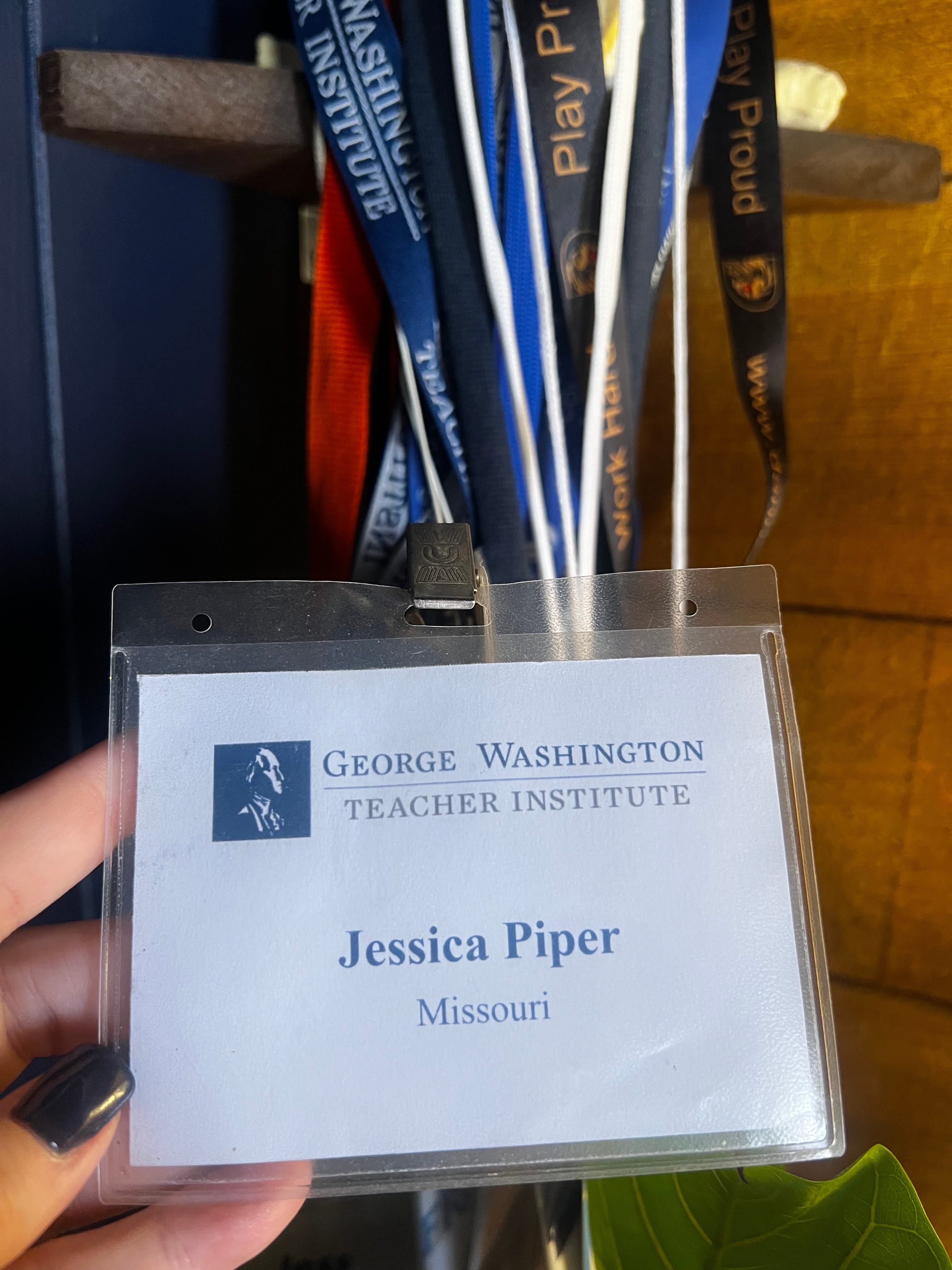
My lanyard from the George Washington Institute. I have 15 keepsake lanyards from teacher institutes I have attended. I am almost as proud of them as I am my degrees.
Once I found out that Koch money is used to sponsor teacher institutes, I knew I had to go. The Koch brothers —David has since died, while Charles remains— are from Kansas and several seminars happen right over the state line.
By attending these seminars, I was taking up the space of another educator. I was thinking of young teachers who might be indoctrinated by their bullshit. I was using up Koch time and resources and there was no way I would use their material or their instruction in my classroom.
Koch money is funding extremism across the country, especially in their vision of the future when it comes to education. They push for universal school vouchers which defund public schools, but it’s even more insidious than that. The Bill of Rights Institute offers curriculum workshops throughout the country, distributes teaching materials, holds essay contests for students, and displays its wares at the National Council for the Social Studies conference.
In its materials for teachers and students, the Bill of Rights cherry-picks the Constitution, history, and current events to hammer home its libertarian message that the owners of private property should be free to manage their wealth as they see fit. As one lesson insists: “The Founders considered industry and property rights critical to the happiness of society.” This message—that individual owners of property are the source of social good, their property sacred, and government the source of danger—is woven through the entire Koch curriculum.
The material and the professional development are sneaky. A teacher could attend a training and walk out thinking not much about it, but there is an underlying premise…the right to private property (wealth) is the only right that needs any defense. That is exactly the point of the Koch doctrine.
The Koch billionaires spent much of their lives and a good chunk of their fortune pushing anti-tax policies. They helped found the Cato Institute, a right-wing think tank, and helped fund the Heritage Foundation.
Yes, the folks behind Project 2025.
I found it so odd that the Bill of Rights Institute was even funding teacher seminars in the first place knowing that the brothers hate public education.
David Koch once stated, “We advocate the complete separation of education and state. Government schools lead to the indoctrination of children and interfere with the free choice of individuals. Government ownership, operation, regulation, and subsidy of schools and colleges should be ended.”
Good god. Talk about the quiet part out loud. Koch money is hosting seminars to disseminate propaganda directly to public school teachers in an effort to end public schools.
They also fund seminars for students.
I had heard they have a Bill of Rights summer institute for students in high school. A fully-paid trip to Washington, DC. I encouraged my 16-year-old son to apply and he was accepted. He learned to interact with very right-wing topics and children who are being indoctrinated to speak and debate on those topics.
My son came out stronger in his liberal values — he also used up about $2500 in Koch money and took the seat of a student who may have been susceptible to indoctrination.
I do these things to give these oligarchs no rest. No peace. It is my small way of throwing a wrench into the gears.
I work just as hard to be a constant sort of irritation to the Herzog Foundation. A billion dollar Missouri-based company whose mission is to “catalyze Christian education.” In smaller words, they want to send taxpayer money to private religious schools and even push for vouchers for homeschoolers. The less they know, right?
The Herzog Foundation is also on the Board of Advisory for Project 2025.
I once stood in a cornfield with a dozen friends to protest the “school choice” grifter they brought to town. I often tweet out their events and hundreds of folks have signed up to fill the seats. The foundation had to shut down an event and re-register people after I tweeted out the registration link for a Sarah Huckabee Sanders visit. She came to Missouri to sell her school voucher snake oil.
How can I help it if hundreds of folks who have no interest in an event, and have a burner email account, register for Herzog events and break the registration links?
I constantly comment on their social media posts. I write about them. I tell others about their mission. In general, I make a nuisance of myself.
No rest. No peace.
You can do these things too. You can be a burr. A constant irritation. An annoyance.
What can we do about the oligarchs who are taking over our institutions and forcing propaganda into our schools?
We can be counter-friction to stop the machine. We can create good trouble.
He feels entitled to take anything he wants without paying for it. He also believes it is better to just due and ignore anyone else’s rights. He is the great cult leader. Hugs. Scottie
Walters has ordered daily bible lessons for Oklahoma’s public school students in all grades. Several dozen school districts are currently defying that edict.
Earlier this month, local outlets exposed Walters for spending state money to fund a national tour of far-right events to “promote himself on the national stage.”
Walters is widely expected to run for governor. Current governor and fellow Christian nationalist Kevin Stitt is term-limited.
Last month around two dozen GOP state lawmakers signed a letter calling for an impeachment probe into Walters for refusing to disclose his spending.
Walters has hired a raft of far-right figures, including Chaya Rachik and Dennis Prager, to help him “turn students to Jesus.” Raichik is reportedly helping overhaul public school libraries.
Imagine all the good that those millions of dollars could be used for. It could be used to pay Oklahoma’s hardworking teachers or provide additional supplies and resources for its struggling schools.
Instead, it’s being used to promote Walters’ Christian nationalist agenda. https://t.co/DE20Pw1846
Please remember the people who first led Israel in the beginning were also terrorist. Many in the Israeli government in the early decades of Israel’s existence were also labeled terrorist. One person’s terrorist is another person’s avowed wonderful member of government. It has been leaked that members of Israel’s government wants to annex another sovereign country’s land and make it Israel’s property. Just like they have in the West bank, and Gaza. In fact some have talked about trying to take part of Egypt. This is because religious fanatics are running the country now and they claim their god gave them the entire area so they simply have the right to take it. And no one can stop them as long as Biden stays in the mind set of the 1950 / 60s/ 70s, because Biden won’t let anyone else strike Israel back to show them their god did not give them permission to take others lands. Bibi has given the middle finger to every US president and he is desperate to get tRump to win by dragging the US into a war in the Middle East. That is his plan to help tRump and hurt Harris. And they bombed an entire area of occupied apartments in Beirut, which is another war crime they committed. Hugs. Scottie
A marketing director of a well-known Swiss brand, said, “When you look at all of them, they scream Chinese-made watch. None of them is worth the asking price. Those blue screws on the tourbillon cage are a dead giveaway that it was partly made in China. You won’t find blue screws on a tourbillon made in Switzerland. And you can pick up a Chinese tourbillon for $100.”
Trump's "Vastly Overpriced" $100,000 "Swiss Watch" Is Probably Made in China, Experts Say https://t.co/neyxxt5J0U
Milei has cut support for welfare programs, soup kitchens, and other efforts to aid the needy.
Milei’s biggest cheerleader is Elon Musk, who has vowed to bring similar policies as the leader of Trump’s supposed “Department Of Government Efficiency.”
Of note, the planned department’s acronym just happens to be the same as a cryptocurrency often promoted by Musk.
Earlier this year Musk posted the below porn-adjacent image in celebration of Milei.
Not only did Hawley vote against the project, the report below notes that in 2019 Trump defunded all such military projects to divert the money to his border wall.
“We can VERIFY: No, Hawley did not secure $100 million for Fort Leonard Wood's military housing.”
Lying about supporting military families? While even voting AGAINST supporting them? That amounts to nothing more than stolen valor.https://t.co/jWt78m2qd4
The party who has people arrested, charged, and found guilty of voter fraud is the Republican Party. Every accusation from them is a confession of their own actions. They are setting it up to challenge the voters will and overturn the vote in that state. Hugs. Scottie
Hancock said that he learned during the trial that Rittenhouse had allegedly used racial slurs in messages sent to his friends and appeared to be looking for an opportunity to use a weapon. “There was a history of things he was doing prior to Kenosha, specifically patrolling the street for months with guns and borrowing people’s security uniforms, doing whatever he could to try to get into some kind of a gunfight,” Hancock claimed.
‘Patrolling the streets for months’: Kyle Rittenhouse confidants reveal new details the jury never knew https://t.co/zDg2esDw0t
The party maybe have evolved into the kind of anti-migrant, anti-Islam populist force that has taken hold across much of Europe, but it began as a political refuge for former Nazis. Not only has the FPÖ not disavowed that past, it embraces it — at least in private — with the leading party figures regularly getting to trouble for paying quiet tribute to their Nazi forebears.
Abrasive and provocative, far-right leader Herbert Kickl has one of the lowest approval ratings among Austria's top politicians, yet he is the frontrunner in Sunday’s parliamentary election, which has at times felt like a referendum on him https://t.co/NAPLJKizYypic.twitter.com/IUoS0CaQoV
As I often remind the haters, almost all of the children in the foster care and adoption system are there due to abuse and abandonment by the heterosexual parents.
Texas Attorney General Ken Paxton is suing the federal government over its requirement that states provide LGBTQ+ affirming placement for foster care youth. https://t.co/Al87Q9y6L7















 Scottie's Playtime