“We’re not looking to arm up and storm the Capitol,” one gun owner said. “We just don’t want to be put in concentration camps.”
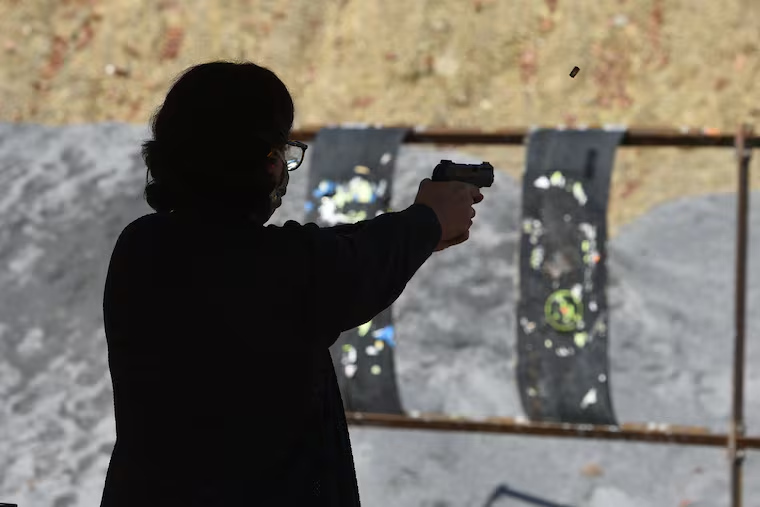
A., who the Inquirer is identifying by the first letter of her first name for safety reasons, stapled two paper plates to the range for her target practice.Bradley C Bower / For The Inquirer
On a brisk Saturday afternoon, A. crouched in a boxer’s stance, knees bent, one hip forward, raised her new Ruger Security-380 pistol aloft with both hands, and pulled the trigger. Spent gold casings clinked to the ground as a paper plate across the range filled with bullet holes. Next to her, a row of men in sweatshirts and earmuffs affably shot their own marks.
A., who The Inquirer is identifying by the first letter of her first name because of safety concerns, is new to the world of shooting ranges and target practice. As a trans woman who lives in Philadelphia, she began seriously considering armed self-defense this summer, as she saw Texas uphold a ban on gender-affirming care for minors and Florida prohibit nurse practitioners from prescribing hormones to transgender people. She watched with increasing dread as Republicans spent nearly $215 million on network TV ads portraying people like her as a dangerous threat to the country.
“Three months before the election, that’s when the alarm bells started to ring,” A., who is 24 and speaks carefully and thoughtfully, said recently. When she mentioned wanting to learn how to fire a gun to friends, they stared at her blankly.
But she felt she couldn’t have been more rational. On Nov. 2, she bought her first gun, at Delia’s Gun Shop in Northeast Philly.
“Minorities that are armed are more difficult to legally oppress,” she said. She was reassured by the idea that “in the event of hate crimes or terrorist attacks, knowing that, ‘OK, I’m personally armed and I can protect my property and people that are close to me.’” She is applying for a concealed carry permit in Pennsylvania, though she doesn’t plan to carry the gun with her every day.
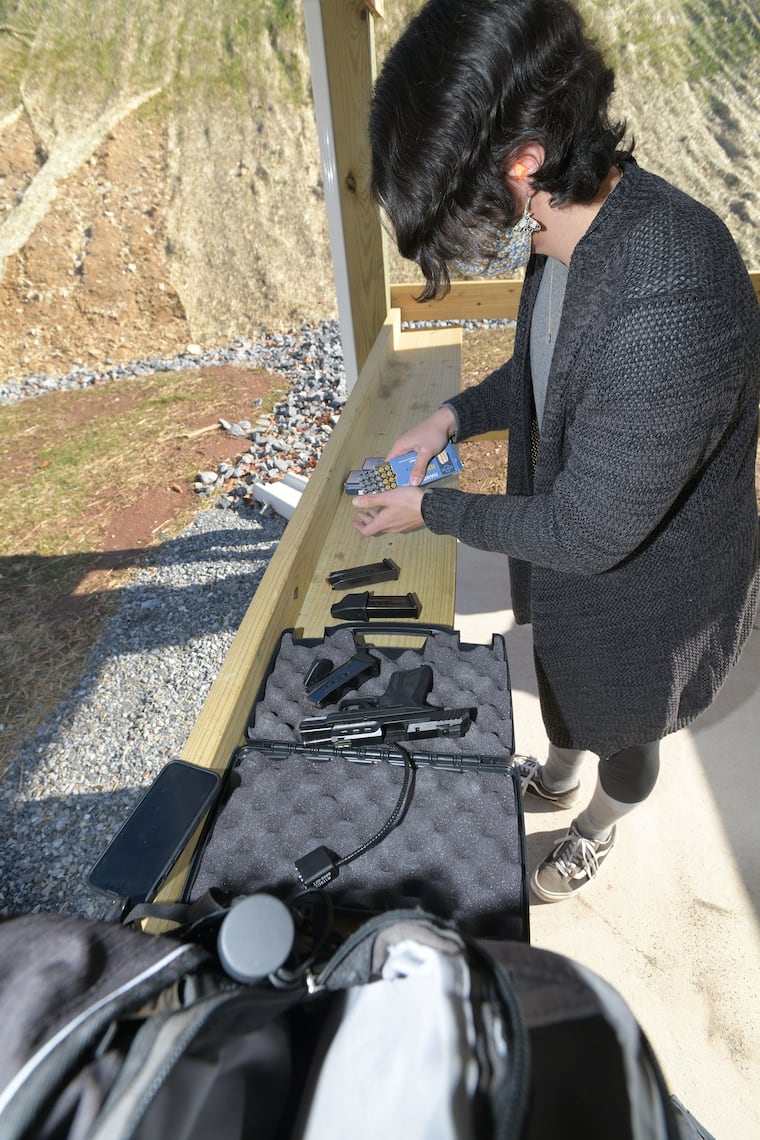
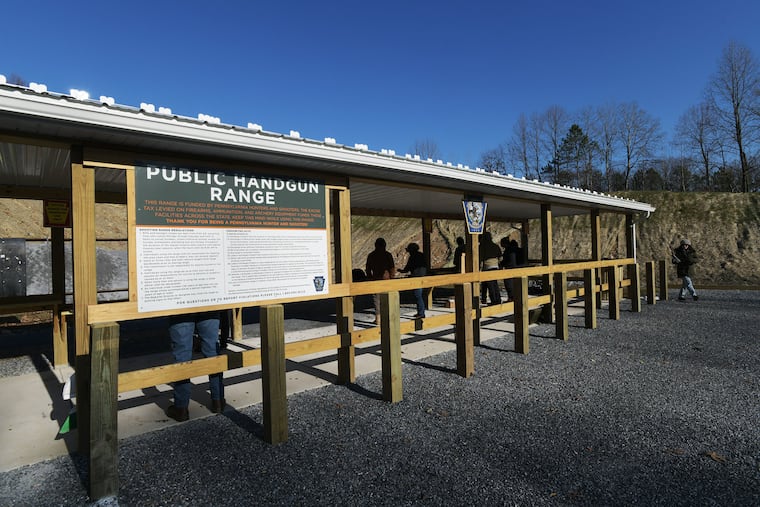
By the end of her practice at the outdoor range at French Creek State Park, bullet casings littered the ground near her backpack and water bottle, which was decorated with rainbow hearts and a “Protect Trans Kids” sticker.
A. prepared to shoot at the French Creek State Park outdoor range.Bradley C Bower / For The Inquirer
‘If I can’t protect myself, who will?’
Since Donald Trump’s reelection in November, nontraditional gun groups across the city and country have seen a flood of interest. The national Liberal Gun Club said it has received thousands of training requests since the election, more than in all of 2023. A spokesperson for the group estimated that roughly a quarter were from LGBTQ people.
In Philadelphia, in the waning weeks of the year, residents peppered local queer Facebook groups with questions about guns and training. The local chapter of the Socialist Rifle Association, a leftist analogue to the National Rifle Association, said it saw a surge in paid memberships; its regular classes about gun safety filled up immediately, so they added more. The head of the Delaware Valley chapter of the Pink Pistols, a longtime gay gun group with the slogan “Armed Gays Don’t Get Bashed,” said he received a sudden flurry of emails inquiring about gun training.
“There’s definitely a feeling among a lot of LGBT individuals: ‘If I can’t protect myself, who will?’” said Madeline Shearman, a trans woman based in Glen Mills who runs a casual and growing “2A social group” in Pennsylvania. “I feel that way myself.”
In Pennsylvania, overall gun sales were down in 2024, according to figures from the State Police: 666,759 firearms were lawfully purchased or privately transferred through the end of October, a drop from the 2020 record high of 1.1 million.
It’s difficult to track rises and falls in LGBTQ gun ownership because there are few published studies about the relatively small population, said David Yamane, a professor of sociology at Wake Forest University and author of the book Gun Curious.
But in general, Yamane argues that American gun culture has dramatically shifted in recent years, away from a focus on hunting and recreation and toward a focus on self-defense, the core of what he calls “Gun Culture 2.0.” As the culture has shifted, people who own guns have become far more diverse. He pointed to 2020 as a pivotal year.
“It was a period of tremendous social unrest and social uncertainty. And a large number of people in the United States, under those conditions, look to firearms to reestablish some sense of safety and security,” Yamane said. He added that racial and gender minorities “led the way” in terms of new gun ownership rates in 2020 and afterward.
A. purchased her gun on November 2, 2024.Bradley C Bower / For The Inquirer
Yamane also pointed to other political moments that have fueled gun interest in the LGBTQ community. Pink Pistols, which has more than two dozen chapters across the country, was originally founded in 2000 after the writer Jonathan Rauch proposed in a Salon article that “homosexuals should embark on organized efforts to become comfortable with guns, learn to use them safely and carry them. They should set up Pink Pistols task forces, sponsor shooting courses and help homosexuals get licensed to carry.”
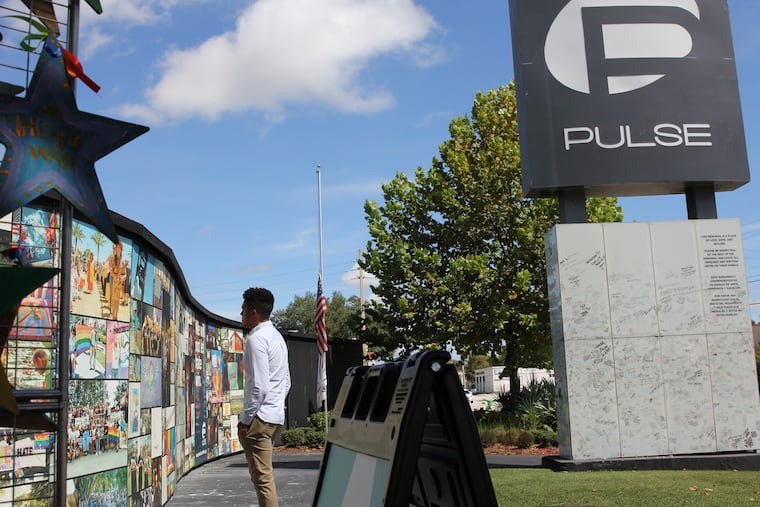
Brandon Wolf, a survivor of the Pulse nightclub shooting and activist, looks at the photos that were part of a Pulse memorial in Orlando, Fla., in 2022.Cody Jackson / AP
The devastating mass shooting at the Pulse nightclub in Florida in 2016 was another catalyst. That’s when Matthew Thompson, who lives in Oakland, N.J., purchased his first gun. A gay man and custom leather worker, Thompson often travels to leather and bear events on the weekends, and feared what might happen. He began practicing drills at home — setting a timer on his phone, wearing his unloaded gun around the house, and drawing it quickly when the timer went off.
Days after the presidential election, he began pursuing his concealed carry permit in New Jersey. He is also organizing other LGBTQ people to practice at a local gun range.
“The people I’ve been seeing on the left and the gay people who are out purchasing guns for the first time, it’s all about self-defense and fear,” said Thompson, who is 36. “We’re not looking to arm up and storm the Capitol. We just don’t want to be put in concentration camps.”
Gun safety with the Socialist Rifle Association
In mid-December, the Socialist Rifle Association’s local chapter held its monthly “Gun-damentals” class. A dozen people gathered in a ramshackle room at the Lava Community Center in West Philadelphia, where a range of unloaded firearms were displayed on the front table. Many of the attendees said they had little or no experience with guns.
The organization, founded nationally in 2018, tries to take a community-based approach to defense, organizers said. Once a month, its volunteers distribute food and medical supplies to people living on the street in Kensington, and the group also leads first aid and de-escalation training classes.
The recent gun-safety class was earnest and efficient: two organizers led the group through an information-packed PowerPoint presentation, explaining the legal landscape in Pennsylvania, the process of purchasing a gun, and basic safety tips, using a laser pointer to emphasize certain points.
Despite people’s hopes about increasing their safety, researchers have found that higher rates of gun ownership and access is correlated with higher rates of gun-related homicides, suicides, accidental deaths, and injuries. In an effort to reduce that danger, the SRA said it focuses on teaching responsible firearm ownership and safe storage.
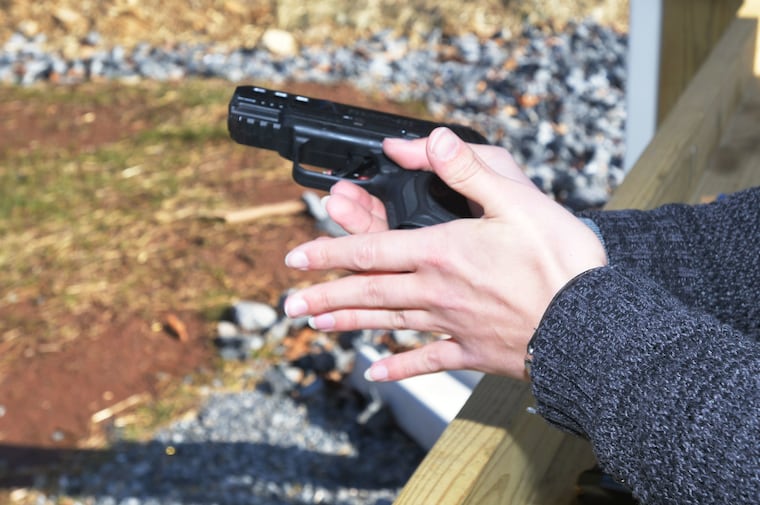
The public handgun range at French Creek State Park.Bradley C Bower / For The Inquirer
An organizer wearing an Eagles cap and a black sweatshirt lingered on a slide about mental health.
“So guns are weapons, and they’re really good at what they do, which is killing things,” he said, as some attendees nodded and took notes. “85% of suicides attempted with firearms lead to death. … So you have to be mindful, if this is something that you do want to bring into your life, that you’re aware of your own mental health going into it.”
Doug, a therapist who asked to be identified solely by their first name to maintain professional privacy, joined the SRA after the election. They had been in the Boy Scouts growing up, had shot BB guns at camp, and gone to the shooting range occasionally with friends. But they had never owned a gun.
They attended the gun-safety class. Then in early December, they purchased their first gun, an AR-15. Doug was partly motivated by the fact that their official identifications are gender nonspecific, which could alert authorities to the fact that they are nonbinary. They feared they might not be able to buy a gun in the future.
“This country is not, I wouldn’t say, on very solid footing,” Doug said. “As a Boy Scout, I’d rather be prepared.”
I’m from Louisiana, mostly. But I always tell people I’m from the part of the state that’s not fun, which means I’m not from New Orleans because that’s the impression most people get when I say I’m from Louisiana. Yes, I am a Saints fan. Who dat?
It breaks my heart to see New Orleans suffer. While I haven’t been there in over two decades, it’s a city I love. While every city is different and has its own character, New Orleans is special. I read somewhere a long time ago that the four most distinctive cities in this nation are Boston, Austin, San Francisco, and New Orleans. I don’t know if I believe that because I’d throw New York City and Chicago into that mix.
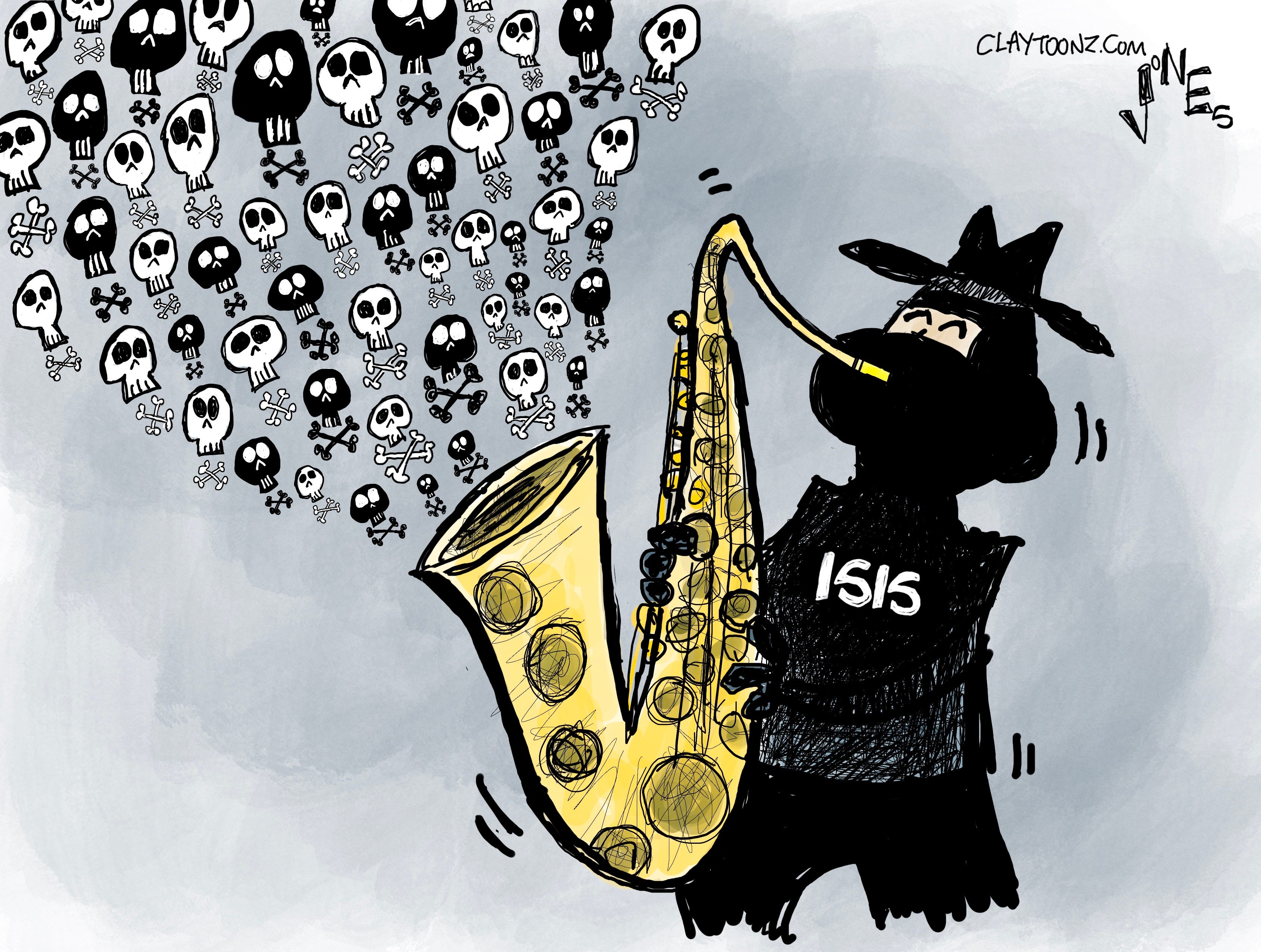
But like New York City, New Orleans knows how to rebound after a disaster. While 9/11 was hard, it didn’t destroy NYC. Katrina nearly destroyed New Orleans and the city was down for the count, but it’s back. And I assure you that an ISIS-inspired terrorist from Texas isn’t going to take the city out either.
And now I want an oyster po’boy.
What New Orleans nor the nation needs right now is Donald Trump.
Trump has blamed this attack on President Biden, open “border’s,” and immigrants. He also trashed law enforcement. But the thing is, this attack wasn’t perpetuated by an immigrant but by a U.S.-born citizen who’s in the military.
Donald Trump probably followed a false news report by Fox News, which they quickly corrected, but Trump doubled down on his lies.
But Trump isn’t just any American citizen. He’s the president-elect. He is receiving an intelligence briefing daily which means he knows he’s lying.
The election is over, so what the hell is Trump campaigning for? He’s scaring America so it’ll go along with his hate agenda, especially when he starts rounding up immigrants along with his enemies.
Creative note: I thought I had my idea for this in my head yesterday. But I went north to Northern Virginia last night and when I started work this morning in a different location, I decided I didn’t like my original idea. But then this hit me.
I was simply reading this, then saw a bit about Supt. Walters. The news, as humorously presented as Wonkette does, is still sickening as to RWNJ logic, and none of us needs that. However. I did promise to update regarding Walters. So, here’s the link to the article, with the snippet about Walters. -A.
If We Can’t Blame Teachers Unions For Terrorism (Yes, Really!), Then The Terrorists Will Win by Rebecca Schoenkopf
(snip) “For his part, Ryan Walters, the Oklahoma schools chief who has been trying to Jesusify the state’s entire public school system, was pretty sure that these men committed these acts because the US school system taught them to hate America — to hate America so much that, again, they both joined the Army. Like big America-haters often do.
“Walters said:”
‘What a terrible day when we see terrorist attacks on American soil. It’s absolutely tragic and we’ve got to look as a country on how these things happen. We absolutely have to shut down the border, we can’t allow terrorists to come across the border. We also have to take a look at how are these terrorists coming from people that live in America?
‘You have schools that are teaching kids to hate their country, that this country is evil, you have the teachers unions pushing this on our kids, the radical Left wants people to hate this country. They’ve completely destroyed the integrity of the FBI by making them more concerned about DEI than about protecting Americans. It’s a major part of this.
‘And look, this is a real uncomfortable truth, and I know the Left is going to lose their mind, but listen: We cannot allow our schools to be terrorist training camps. We cannot allow our schools to teach our kids to hate this country. We cannot allow our kids to be taught that this is an evil country.
‘That’s why we’re getting back to the basics in Oklahoma, to make sure that our kids love this country, understand American values, understand the role that the Constitution, the Bible, the Declaration of Independence played in American history. Because we want patriots, and that’s going to be the focus of our schools.
“I suppose it’s possible that these men simply forgot that they hated America for several decades and then went on to commit terrorist attacks against the United States after remembering that they learned that Columbus committed genocide and that many of the Founding Fathers owned slaves in school — but it does seem a tad unlikely.” (snip)
The eight tech titans alone gained more than $600 billion this year, 43% of the $1.5 trillion increase among the 500 richest people tracked by the Bloomberg Billionaires Index.
Greenland’s natural resources are worth many trillions; future drillers and diggers won’t care that it’s cold and distant. As Alaska proves, where there’s value, there’ll be value-extractors
plus, perhaps, a casino or two. Yes, the right kind of development could MGGA—Make Greenland Great Again.
January 1, 1831 William Lloyd Garrison first published The Liberator (four hundred copies printed in the middle of the night using borrowed type), which became the leading abolitionist paper in the United States. He labeled slave-holding a crime and called for immediate abolition. From the first issue: “I will be harsh as truth, and uncompromising as justice. On this subject, I do not wish to think, or speak, or write with moderation.“Assenting to the ‘self-evident truth’ maintained in the American Declaration of Independence, ‘that all men are created equal, and endowed by their Creator with certain unalienable rights—among which are life, liberty,and the pursuit of happiness,’ I shall strenuously contend for the immediate enfranchisement of our slave population.” Selections from The Liberator
January 1, 1847 Michigan became the first state – the first government in the English-speaking world – to abolish capital punishment (for all crimes except treason). This was done by a vote of the legislature, and was not a part of the state’s constitution until 1964. How it happened (it’s a .pdf)
January 1, 1959 32-year-old lawyer Fidel Castro led Cuban revolutionaries to victory over the corrupt government of Fulgencio Batista who had fled the island the day before. Batista, a former army sergeant, had seized power in a coup, canceling an election, in 1952. Fidel Castro More on pre-Castro Cuba The news at the time Perspective of a U.S. intelligence agent
January 1, 1983 44 women scaled a 12-foot fence at dawn, breaking into a cruise missile base at Greenham Common in Great Britain, and danced on a missile silo. The lyrics to their “Silo Song”
January 1, 1987 Ten anti-nuclear activists were arrested for trespassing at the Nevada Test Site, the culmination of a 54-day encampment at the main Test Site gate. The camp established momentum for what became a movement ultimately involving over 10,000 arrests in numerous Test Site protests over the following years in the campaign to achieve a freeze of all nuclear weapons testing. Nevada test site landscape The Nevada site includes more than 14,000 sq. km. (nearly 6000 sq. miles, larger than the state of Connecticut) of uninhabited land where atmospheric, and later underground, nuclear testing had been conducted since the 1950s. About the the Nevada Test Site
January 1, 1989 Kees Koning Kees Koning, a former army chaplain and priest, and Co van Melle, a medical doctor working with homeless people and illegal refugees, entered the Woensdrecht airbase (for a second time), and began the “conversion” of NF-5B fighter airplanes by beating them with sledgehammers into ploughshares. The Dutch planned to sell the NF-5B to Turkey, for use against the Kurdish nationalists as part of a NATO aid program which involved shipping 60 fighter planes to Turkey. Koning and van Melle were charged with trespass, sabotage and $350,000 damage; they were convicted, and both sentenced to a few months in jail. Read more about the plowshares movement
January 1, 1991 Early in the morning Moana Cole, a Catholic Worker from New Zealand, Ciaron O’Reilly, a Catholic Worker from Australia, and Susan Frankel and Bill Streit, members of the Dorothy Day Catholic Worker community in Washington, D.C., calling themselves the ANZUS (Australia, New Zealand and U.S.) Peace Force Plowshares, entered the Griffiss Air Force Base in Rome, New York. Moana Cole After cutting through several fences, Frankel and Streit entered a deadly force area, and hammered and poured blood on a KC-135 (a refueling plane for B-52s), and then hammered and poured blood on the engine of a nearby cruise missile-armed B-52 bomber. They presented their action statement to base security who encircled them moments later. About Moana Cole
January 1, 1994 The North American Free Trade Agreement (NAFTA) took effect. A treaty among Canada, the U.S. and Mexico, it called for all three countries to follow similar policies for environmental, safety and investment regulation, apart from laws passed by their respective legislatures.
January 1, 1994 On the day NAFTA (see above) took effect, more than 2,000 native Mayans in Mexico’s Chiapas state marched into the state capital, San Cristóbal de las Casas, and five neighboring towns, and seized control. Calling themselves Zapatistas, or the Zapatista Army of National Liberation (EZLN), a “declaration of war” was issued. Chiapas is among the poorest parts of Mexico. The indigenous peoples of Mexico long suffered as second-class citizens due to the dominance of the Roman Catholic church and the traditional Mestizo (mixed Spanish and Indian ancestry) political leadership of the country. The EZLN was certain that NAFTA would permanently lock in the top-down economic situation in Mexico. The Zapatistas’ slogan was !Ya basta! (“Enough is enough”). Employees at the Mexican stock exchange were evacuated by riot police. 25,000 Mexican soldiers arrived in Chiapas equipped with automatic weapons, tanks, helicopters and airplanes. 145 deaths were reported, mostly civilians. Massive arrests and subsequent torture of prisoners by the government took place.
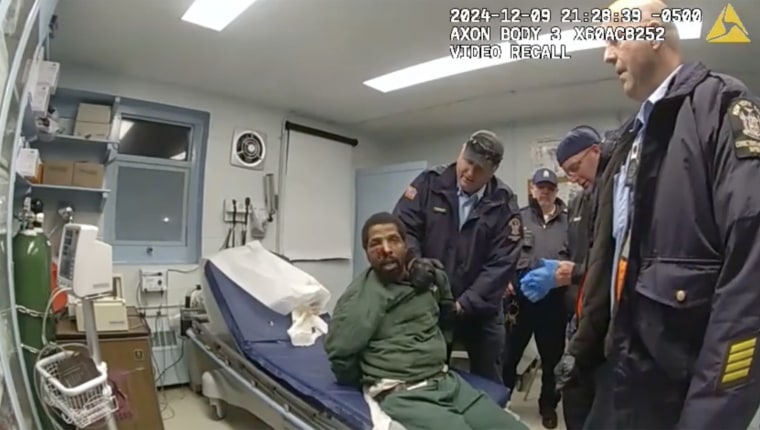
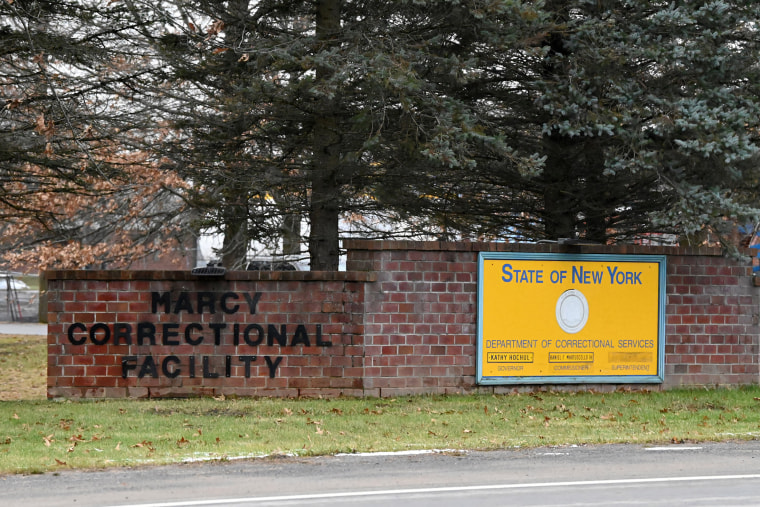
Robert Brooks, 43, died a day after being attacked by several correctional officers at the Marcy Correctional Facility on Dec. 9. His death has prompted a state investigation.
*** There is a video at the site linked above that is very informative and shows the man before the police killed him. ***
The office of New York’s attorney general released body camera footage Friday showing the fatal beating of a state prisoner this month by correctional officers who punched and kicked him repeatedly while he was handcuffed on an infirmary bed.
The incident, which has drawn outrage from political leaders and was condemned by the officers’ union as “incomprehensible,” is being investigated by state Attorney General Letitia James. The inmate, Robert Brooks, 43, died in the hospital a day after the Dec. 9 attack.
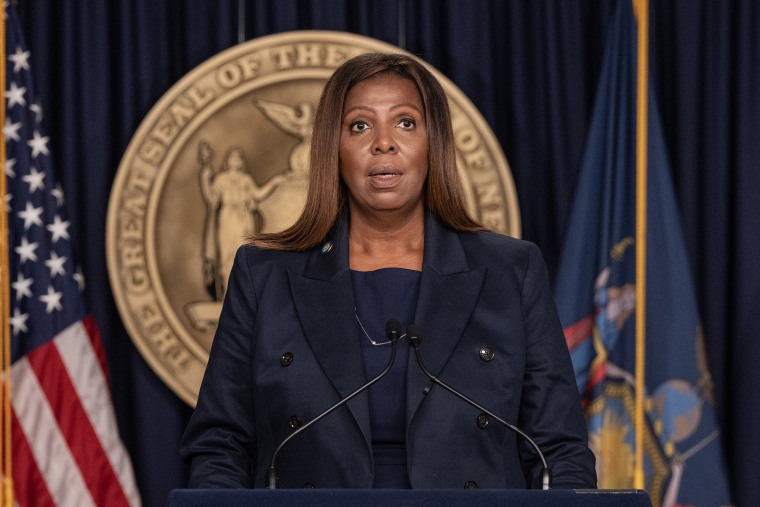
“I do not take lightly the release of this video, especially in the middle of the holiday season,” James said at a virtual news conference.
“These videos are shocking and disturbing,” she added.
Brooks can be seen in the videos with his hands cuffed behind his back. In one video, he is sitting up as an officer presses his foot down on him. He is then punched by two officers.
At another point, he is forcefully yanked from the bed by his shirt collar and held up above the ground, his face visibly bloodied.
Robert Brooks as seen in body camera footage at the Marcy Correctional Facility in Oneida County, New York, on Dec. 9.Office of the New York State Attorney General
Last week, Gov. Kathy Hochul ordered the state Department of Corrections and Community Supervision to begin the process of firing 14 workers at the Marcy Correctional Facility in Oneida County, where the incident occurred. They include correctional officers, sergeants and a prison nurse. In the interim, all have been suspended without pay, except for one officer, who already resigned. In a statement following the release of the videos, Daniel Martuscello, the commissioner of the state corrections department, said his office has launched its own investigation in an effort to bring “institutional change.”
“Watching the video evidence of Robert Brooks’ life being taken left me feeling deeply repulsed and nauseated,” Martuscello said. “There is no excuse and no rationalization for a vulgar, inhumane act that senselessly took a life. This type of behavior cannot be normalized, and I will not allow it to be within DOCCS.”
James said the officers had not activated their body cameras, but they were still on and recorded in standby mode. As a result, she added, they did not capture audio and only recorded for 30 minutes.
Her office released the entirety of the four officers’ videos, which included some blurring.
On Dec. 9, James said, Brooks was being transferred from the Mohawk Correctional Facility, also in Oneida County, to Marcy Correctional Facility. The events unfolded in a medical exam room before 9:30 p.m. Brooks was carried into the room hanging upside down with his hands handcuffed behind his back, one video shows.
The entrance to Marcy Correctional Facility state prison on Thursday, Dec. 19, 2024, in Marcy, N.Y. (Will Waldron/Albany Times Union via Getty Images)Will Waldron / Albany Times Union / Getty Images
Without audio, it’s unclear what words were exchanged between Brooks and the officers. While he does not appear to physically retaliate in the footage, the videos present different angles, and at times it’s unclear what is happening to Brooks as officers move and stand around the room. After the officers yank Brooks from the bed, he is brought to a corner. Later, he is seen on the bed wearing only his underwear and being tended to by the nurse.
Brooks was taken to the hospital and died the following day. An autopsy was conducted, and “preliminary findings show concern for asphyxia due to compression of the neck as the cause of death, as well as the death being due to actions of another,” according to a state corrections office investigative report obtained by NBC affiliate WKTV in Utica.
In the wake of the initial media reports, James said her Office of Special Investigation would conduct a review and make the video public after Brooks’ family viewed it first.
“I have a responsibility and duty to provide the Brooks family, their loved ones and all New Yorkers with transparency and accountability,” she said Friday.
Attorney General Letitia James speaks during a press briefing on Nov. 6.Lev Radin / Pacific Press / Getty Images
Brooks had been imprisoned since 2017 on a 12-year sentence for first-degree assault involving a longtime girlfriend. State corrections officials declined to detail what led Brooks to be transferred to the Marcy Correctional Facility, a medium-security prison, that night. The New York State Correctional Officers and Police Benevolent Association did not immediately respond to a request for comment Friday, but the union has previously said it viewed parts of the videos.
“What we witnessed is incomprehensible to say the least and is certainly not reflective of the great work that the vast majority of our membership conducts every day,” the union said in a statement this week, adding what transpired is the “opposite of everything NYSCOPBA and its membership stand for.”
Hochul said in a statement that the “vast majority” of correctional officers “do extraordinary work under difficult circumstances,” but “we have no tolerance for individuals who cross the line, break the law and engage in unnecessary violence or targeted abuse.”
Martuscello said the agency has expanded its body camera policy effective immediately, requiring all corrections officers to have their cameras activated any time they are engaging directly with inmates.
The Correctional Association of New York, an independent prison oversight group, released a report last year after monitoring the Marcy Correctional Facility in October 2022. The report noted complaints of “rampant” physical abuse by staff members, with 80% of incarcerated people reporting having witnessed or experienced abuse and nearly 70% reporting racial discrimination or bias.
Brooks’ family thanked Hochul in a statement this week for taking action “to hold officers accountable.”
“We cannot understand how this could have happened in the first place,” the family said. “No one should have to lose a family member this way.”
So much of this story is upsetting. But one detail stood out to me, and it has not been stressed enough when police violence and false arrests. The man, Mr. Brock lost his job three days after the brutal assault and may have suffered severe financial distress. Police and prosecutors know that often just being charged can ruin a persons life. Hugs
————————————————————————————————————–
Joseph Benza III, main officer involved in incident with Emmett Brock, pleaded guilty in federal court last week
Multiple L.A. sheriff's deputies relieved of duty as feds probe beating of trans teacher https://t.co/JNQeqBKe9P
On the clear, cold morning of December 29, 1890, on the Pine Ridge Reservation in South Dakota, three U.S. soldiers tried to wrench a valuable Winchester away from a young Lakota man. He refused to give up his hunting weapon. It was the only thing standing between his family and starvation, and he had no faith it would be returned to him as the officer promised: he had watched as soldiers had marked other confiscated valuable weapons for themselves.
As the men struggled, the gun fired into the sky.
Before the echoes died, troops fired a volley that brought down half of the Lakota men and boys the soldiers had captured the night before, as well as a number of soldiers surrounding the Lakotas. The uninjured Lakota men attacked the soldiers with knives, guns they snatched from wounded soldiers, and their fists.
As the men fought hand to hand, the Lakota women who had been hitching their horses to wagons for the day’s travel tried to flee along the nearby road or up a dry ravine behind the camp. Stationed on a slight rise above the camp, soldiers turned rapid-fire mountain guns on them. Then, over the next two hours, troops on horseback hunted down and slaughtered all the Lakotas they could find: about 250 men, women, and children.
Fifteen years ago, I wrote a book about the Wounded Knee Massacre, and what I learned still keeps me up at night. But it is not December 29 that haunts me.
What haunts me is the night of December 28.
On December 28 there was still time to avert the massacre.
In the early afternoon, the Lakota leader Sitanka had urged his people to surrender to the soldiers looking for them. Sitanka was desperately ill with pneumonia, and the people in his band were hungry, underdressed, and exhausted. They were making their way south across South Dakota from their own reservation in the northern part of the state to the Pine Ridge Reservation. There they planned to take shelter with another famous Lakota chief, Red Cloud. His people had done as Sitanka asked, and the soldiers escorted the Lakotas to a camp on South Dakota’s Wounded Knee Creek, inside the boundaries of the Pine Ridge Reservation.
For the soldiers, the surrender of Sitanka’s band marked the end of what they called the Ghost Dance Uprising. It had been a tense month. Troops had pushed into the South Dakota reservations in November, prompting a band of terrified men who had embraced the Ghost Dance religion to gather their wives and children and ride out to the Badlands. But at long last, army officers and negotiators had convinced those Ghost Dancers to go back to Pine Ridge and turn themselves in to authorities before winter hit in earnest.
Sitanka’s people were not part of the Badlands group and, for the most part, were not Ghost Dancers. They had fled from their own northern reservation two weeks before when they learned that officers had murdered the great leader Sitting Bull in his own home. Army officers were anxious to find and corral Sitanka’s missing Lakotas before they carried the news that Sitting Bull had been killed to those who had taken refuge in the Badlands. Army leaders were certain the information would spook the Ghost Dancers and send them flying back to the Badlands. They were determined to make sure the two bands did not meet.
But South Dakota is a big state, and it was not until late in the afternoon of December 28 that the soldiers finally made contact with Sitanka’s band. The encounter didn’t go quite as the officers planned: a group of soldiers were watering their horses in a stream when some of the traveling Lakotas surprised them. The Lakotas let the soldiers go, and the men promptly reported to their officers, who marched on the Lakotas as if they were going to war. Sitanka, who had always gotten along well with army officers, assured the commander that the band was on its way to Pine Ridge and asked his men to surrender unconditionally. They did.
By this time, Sitanka was so ill he couldn’t sit up and his nose was dripping blood. Soldiers lifted him into an army ambulance—an old wagon—for the trip to the Wounded Knee camp. His ragtag band followed behind. Once there, the soldiers gave the Lakotas an evening ration and lent army tents to those who wanted them. Then the soldiers settled into guarding the camp.
And the soldiers celebrated, for they saw themselves as heroes of a great war, and it had been bloodless, and now, with the Lakotas’ surrender, they would be demobilized back to their home bases before the South Dakota winter closed in. As they celebrated, more and more troops poured in. It had been a long hunt across South Dakota for Sitanka and his band, and officers were determined the group would not escape them again.
In came the Seventh Cavalry, whose men had not forgotten that their former leader George Armstrong Custer had been killed by a band of Lakota in 1876. In came three mountain guns, which the soldiers trained on the Indian encampment from a slight rise above the camp.
For their part, the Lakotas were frightened. If their surrender was welcome and they were going to go with the soldiers to Red Cloud at Pine Ridge, as they had planned all along, why were there so many soldiers, with so many guns?
On this day and hour in 1890, in the cold and dark of a South Dakota December night, there were soldiers drinking, singing, and visiting with each other, and anxious Lakotas either talking to each other in low voices or trying to sleep. No one knew what the next day would bring, but no one expected what was going to happen.
One of the curses of history is that we cannot go back and change the course leading to disasters, no matter how much we might wish to. The past has its own terrible inevitability.
But it is never too late to change the future.
—
Note:
Every year on this date, I post the story of the Wounded Knee Massacre.
My book about that event was so hard to write I had to take a long break in the middle of it. When you write a book, you get to know your characters as if they were family. Sometimes you love them and sometimes you don’t, but they become part of you. As the massacre drew inexorably closer, I wrote about the scenery, plant life, and animals of the Plains as a distraction from what I knew was coming.
But it came anyway. Even after all these years, I still have a hard time on the date of the massacre.
In an interview this year, someone asked me why I write as if I am running out of time, and it hit me that I write these letters because no matter how hard I tried, I could not stop the Wounded Knee Massacre.











 Scottie's Playtime