Weeks before leaving office, President Joe Biden pardoned his son Hunter Biden on federal felony gun and tax convictions in two cases.
The Democratic president previously said he wouldn’t pardon his son or commute his sentence. The pardon came weeks before Hunter Biden was set to receive punishment after his trial conviction in the gun case and guilty plea on tax charges.
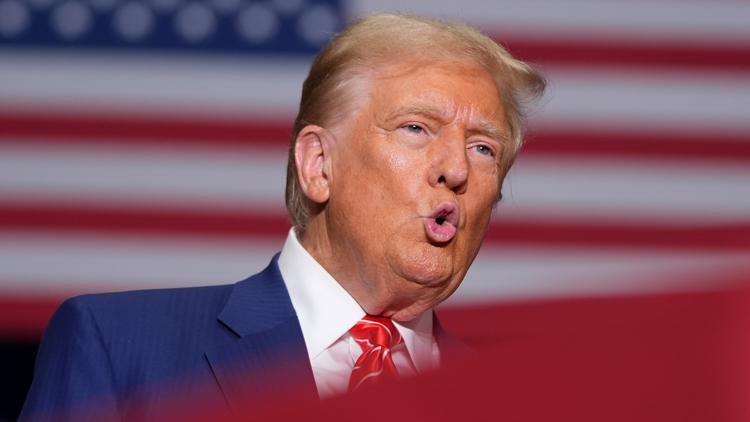
The pardon also comes less than two months before President-elect Donald Trump is set to return to the White House for a second term. Before leaving office for the first time in 2020, Trump issued close to 200 pardons and commutations in his final days as president.
With the controversial pardon of his son from Biden, here’s a look back at who Trump pardoned at the end of his first term.
Former Rep. Duncan Hunter of California
Hunter was sentenced to 11 months in prison after pleading guilty to stealing campaign funds and spending the money on everything from outings with friends to his daughter’s birthday party.
Former Rep. Chris Collins of New York
Collins, the first member of Congress to endorse Trump to be president, was sentenced to two years and two months in federal prison after admitting he helped his son and others dodge $800,000 in stock market losses when he learned that a drug trial by a small pharmaceutical company had failed.
Rep. Phil Lyman of Utah
Utah state Rep. Phil Lyman was serving as a county commissioner in 2014 when he led a protest of about 50 ATV riders in a canyon home to Native American cliff dwellings that officials closed to motorized traffic.
Government contractors
Four former government contractors were pardoned after being convicted in a 2007 massacre in Baghdad that left more than a dozen Iraqi civilians dead and caused an international uproar over the use of private security guards in a war zone.
Supporters of Nicholas Slatten, Paul Slough, Evan Liberty and Dustin Heard, the former contractors at Blackwater Worldwide, had lobbied for pardons, arguing that the men had been excessively punished in an investigation and prosecution they said was tainted by problems and withheld exculpatory evidence. All four were serving lengthy prison sentences.
Russia investigation
Trump also announced pardons for allies ensnared in the Russia investigation. One was for George Papadopoulos, his 2016 campaign adviser whose conversation unwittingly helped trigger the Russia investigation that shadowed Trump’s presidency for nearly two years. He also pardoned Alex van der Zwaan, a Dutch lawyer who was sentenced to 30 days in prison for lying to investigators during special counsel Robert Mueller’s investigation.
Van der Zwaan and Papadopoulos are the third and fourth Russia investigation defendants granted clemency. By pardoning them, Trump once again took aim at Mueller’s probe and pushed a broader effort to undo the results of the investigation that yielded criminal charges against a half-dozen associates.
Michael Flynn, former national security adviser
Trump pardoned former national security adviser Michael Flynn, who had twice pleaded guilty to lying to the FBI, and months earlier commuted the sentence of another associate, Roger Stone, days before he was to report to prison.
Former U.S. Border Patrol agents
Two former U.S. Border Patrol agents were also pardoned, Ignacio Ramos and Jose Compean, convicted of shooting and wounding a Mexican drug smuggler near El Paso, Texas, in 2005.
Dentist, convicted drug criminals, moonshiner
Others on the list included a Pittsburgh dentist who pleaded guilty to health care fraud, two women convicted of drug crimes, and Alfred Lee Crum who pleaded guilty in 1952 when he was 19 to helping his wife’s uncle illegally distill moonshine.
Crum served three years of probation and paid a $250 fine. The White House said Crum has maintained a clean record and a strong marriage for nearly 70 years, attended the same church for 60 years, raised four children and regularly participated in charity fundraising events.
Paul Manafort
Manafort was Trump’s former campaign chairman and was among the first people to be charged in Mueller’s investigation, which examined possible coordination between the Trump campaign and Russia in the 2016 election campaign. He was released from a low-security federal prison in May 2020 to serve his sentence on home confinement due to concerns about the coronavirus. Prior to his release, he had been jailed since June 2018 and was serving more than seven years in prison following his conviction.
Manafort was prosecuted in two federal courts and was convicted by a jury in federal court in Virginia in 2018 and later pleaded guilty in Washington. He was sentenced March 2019 and was immediately hit with state charges in New York after prosecutors accused him of giving false information on a mortgage loan application. A New York judge threw out state mortgage fraud charges, ruling that the criminal case was too similar to one that already landed Manafort in prison. Prosecutors appealed that ruling last month.
Roger Stone
Stone has been a longtime friend and ally of Trump. He was also convicted in Mueller’s investigation for lying to Congress, witness tampering and obstructing the House investigation into whether Trump’s campaign colluded with Russia to win the 2016 election.
Trump commuted his sentence just days before he was scheduled to report to federal prison. Then, he issued Stone a full pardon.
Pardoning Manafort and Stone underscores the president-elect’s lingering rage over Mueller’s investigation and is part of a continuing effort by Trump to rewrite the narrative of a probe that shadowed his presidency for two years.
Charles Kushner
Kushner is the father of Trump’s son-in-law, Jared Kushner, and a wealthy real estate executive who pleaded guilty years ago to tax evasion and making illegal campaign donations. The two knew each other from real estate circles and their children were married in 2009. Trump issued him a full pardon.
Kushner, who is from New Jersey, pleaded guilty to 18 counts that also included witness tampering and was sentenced in 2005 to two years in prison, but emerged to resume his career in real estate and his company Kushner Cos. purchased the famed Watchtower complex along the Brooklyn Bridge, the former headquarters for the Jehovah’s Witnesses.
Kushner was also a major Democratic donor, and agreed to pay $508, 900 to the Federal Election Commission after he violated contribution regulations by failing to obtain an OK from partners to whom more than $500,000 in campaign contributions were attributed. But, he donated more than $100,000 to Trump’s 2015 campaign.
Margaret Hunter
Hunter is the wife of former U.S. Rep. Duncan Hunter, who Trump pardoned. Along with her husband, she was also convicted of conspiracy to misuse campaign funds and was sentenced to three years of probation. Her husband, a Southern California Republican, had pleaded guilty to stealing about $150,000 from his campaign funds to pay for a lavish lifestyle, from vacations to outings with friends, private school tuition and his daughter’s birthday party.
John Tate and Jesse Benton
The men were top staffers on Ron Paul’s 2012 presidential campaign and convicted in 2016 of causing false records and campaign expenditure reports to be filed to the Federal Election Commission. Prosecutors said Tate, Benton and a third campaign official tried to hide $73,000 in payments to former Iowa Sen. Kent Sorenson for his endorsement of Paul. They argue that they broke no laws when they concealed the payments through a third-party campaign vendor.
The White House said the pardons were supported by a former chairman of the Federal Election Commission and by Sen. Rand Paul, a Republican from Kentucky who is also the son of Ron Paul.
Stephanie Mohr
The former Maryland police officer was convicted in 2001 of violating a homeless man’s civil rights by letting her police dog attack him even though he had surrendered. Prosecutors said after the man had surrendered, Mohr released her police dog and the canine bit into the man’s leg, requiring ten stitches. Mohr, the first canine handler in the Prince George’s County police force, served 10 years in prison.
She was convicted of violating the man’s civil rights under the color of authority; another officer who faced trial in the case was acquitted.
Gary Brugman
The former U.S. Border Patrol agent was convicted of striking and violating the civil rights of a man who had crossed the U.S. border illegally. Court records said Brugman and other Border Patrol officers had stopped a group of people who crossed the border illegally and during the encounter, he struck one of the men with his foot, pushing him to the ground and then hit the man with his hands.
The man later filed a complaint when he was in custody at a Border Patrol station. Brugman had worked as a Border Patrol agent for four years in Eagle Pass, Texas.
He served 27 months in prison. The White House said his pardon was supported by several Republican members of Congress and conservative media personalities, including Laura Ingraham, Sara Carter, Glenn Beck and Lou Dobbs, along with former New York City Police Commissioner Bernie Kerik, who also was convicted of a federal crime and pardoned by Trump.
Mary McCarty
McCarty, a former county commissioner in Palm Beach County, Florida, was issued a full pardon. She was convicted of a federal criminal charge for honest services fraud.
When she was convicted, prosecutors said she had misused her position as a county commissioner to “personally enrich herself, her husband, and their associates through a series of municipal bond transactions” and by receiving gifts and gratuities from people doing business with the Board of County Commissioners.
The White House said her pardon was supported by former Florida Attorney General Pam Bondi and Christopher Ruddy, the CEO of Newsmax Media.
Mark Siljander
The former Southwest Michigan congressman was convicted of obstructing justice and failing to register as a foreign agent. He was sentenced to serve more than a year in prison after being accused of accepting stolen funds on behalf of a Missouri charity with alleged terrorism ties.
Prosecutors said an associate had conspired to hire Siljander to lobby for the charity’s removal from a government list of charities suspected of funding international terrorism. The charity closed in October 2004 after being designated a global terrorist organization by the U.S. government
Christopher II X, formerly Christopher Anthony Bryant
The prominent community leader in Louisville, Kentucky, was issued a full pardon for his conviction on federal drug charges. He was also issued a pardon by Kentucky’s governor for state offenses in 2019.
The White House said he has been a “powerful example of the possibility of redemption,” pointing to his struggle to overcome drug addiction and his work with nonprofit and community groups in Kentucky.
Robert Coughlin
Coughlin worked in the Justice Department and was convicted of a conflict of interest charge for his role in the influence peddling scandal surrounding former lobbyist Jack Abramoff. He admitted in court in 2009 that he provided assistance to Abramoff’s lobbying team and its clients while accepting free meals and drinks and tickets to sporting events and concerts from Abramoff lobbying partner Kevin Ring. He was issued a full pardon.
Joseph Occhipinti
Occhipinti was an agent with the U.S. Immigration and Naturalization Service when he was convicted in 1991 of conspiracy to violate civil rights under the color of law and making false statements. Authorities charged that he illegally detained and searched Hispanic store owners in New York City and then made false statements to cover-up those activities. His sentence was commuted after seven months in prison by President George H.W. Bush. The White House said he had earned 76 commendations during his career, including from three attorneys general.
Rickey Kanter
Kanter founded a company known as Dr. Comfort, selling special shoes and inserts for diabetics, and was convicted of mail fraud tied to illegal Medicare reimbursements. He was sentenced to serve a year and a day in federal prison. He had also paid a multimillion-dollar civil fine. Federal prosecutors said his diabetic shoe inserts did not meet Medicare requirements, but they were sold to Medicare beneficiaries and the company was reimbursed by the federal government.
Daniela Gozes-Wagner
The Houston woman was convicted in a $50 million health care fraud scheme in 2017. Federal prosecutors said she conspired with others to falsely bill Medicare and Medicaid for millions of dollars’ worth of medical tests that were either unnecessary or just never performed. She received a sentence of 20 years’ imprisonment and was ordered to pay $15.2 million in restitution. The president commuted her sentence; the White House said the commutation was supported by several former U.S. attorneys general.
Mark Shapiro and Irving Stitsky
Trump commuted Shapiro and Stitsky’s sentences after they were convicted in federal court in New York of defrauding more than 250 people in a $23 million real estate scam. Both men were convicted and sentenced to serve 85 years in federal prison. Prosecutors said Stitsky and Shapiro also diverted millions of dollars of investor funds for their own benefit.
The White House said the men had been offered plea deals to serve no more than nine years but had turned them down and chose instead to go to trial. A White House news release praised the men as “model prisoners,” who had earned support and praise from other inmates.
Topeka Sam
Sam, now a criminal justice advocate who helped work on a bipartisan criminal justice overhaul that Trump often touts, was convicted of conspiracy to possess and distribute cocaine and served three years of a more than 10-year prison sentence. She was in the White House when Trump signed the overhaul measure, known as the First Step Act, into law. Sam posted a video on Twitter shortly after the pardon was announced, thanking Trump, and saying, “this is all so surreal.”
Her case had been championed by other criminal justice reform advocates like Alice Marie Johnson, whose life sentence Trump commuted in 2018 at the urging of reality TV star Kim Kardashian West.
James Batmasian
Batmasian is a real-estate investor and runs property management companies in South Florida. He pleaded guilty to cheating the federal government out of more than $250,000 by failing to pay federal taxes for employees at his company. He was an influential developer and at the time was one of the largest landowners in Boca Raton, Florida. He served an eight-month prison sentence.
Cesar Lozada
Lozada was convicted of conspiring to distribute marijuana and served a 14-month prison sentence. He was granted a full pardon. The White House said Lozada is an immigrant from Cuba who started a pool cleaning business near Miami, Florida, and employs dozens of people.
Joseph Martin Stephens
Stephens pleaded guilty in 2008 to being a felon in possession a firearm, a federal offense. He has previously been convicted of a felony offense in 1991, when he was 19 years old, the White House said. He served 18 months in prison and was issued a full pardon.
Andrew Barron Worden
Wordon, who runs an investment firm and a solar energy company, was convicted of wire fraud in 1998. The White House said he “made mistakes in running an investment firm he founded.” Records from the Securities and Exchange Commission show Worden was accused of defrauding several brokerage firms out of more than $130,000. He was issued a full pardon. The White House said Worden had begun to repay his victims before criminal charges were filed.
John Boultbee, Peter Atkinson
The two men were senior executives at Hollinger International and associates of media tycoon Conrad Black. Boultbee and Atkinson were found guilty of three counts of mail fraud and each served a year in prison.
Black was a co-defendant in the case and was also convicted; Trump previously pardoned him.
Rebekah Charleston
Charleston was arrested in 2006 for tax evasion, and the White House said she is a victim of sex trafficking who was forced into prostitution. Officials said she volunteers to help sex trafficking victims and her pardon was also supported by a law enforcement agent who arrested her.
William J. Plemons Jr.
The White House said Plemons was convicted of various financial crimes in the late 1990s and early 2000s and served 27 months in federal prison. Officials said he served in the Air Force and supported several charitable organizations.
James Kassouf
Kassouf pleaded guilty in 1989 to a federal tax offense. The White House said that since his convicted, he has been devoted to his church, fire department and works with charitable organizations.
Christopher Wade
The White House said Wade was convicted of multiple cyber-related offenses and has “shown remorse and sought to make his community a safer place.” He was issued a full pardon.
Russell Plaisance
Trump granted a posthumous pardon for Plaisance, who was convicted of conspiracy to important cocaine from a 1987 case, which the White House said stemmed from “one conversation in which he participated.” A White House news release cited the judge who presided over his sentencing saying that the actions were inconsistent with Plaisance’s life history and character. Officials said he has built a tugboat business that has seven vessels and employs 50 people. The White House said the prosecutors involved in his case did not object to the pardon.
Todd Boulanger
President Trump granted a full pardon to Todd Boulanger, according to the White House. In 2008, Mr. Boulanger pled guilty to one count of conspiracy to commit honest services fraud. Boulanger is a veteran of the United States Army Reserves and was honorably discharged. He has also received an award from the City of the District of Columbia for heroism for stopping and apprehending an individual who assaulted an elderly woman with a deadly weapon on Capitol Hill.
Abel Holtz
President Trump granted a full pardon to Abel Holtz, the White House said. In 2020, Holtz was 86 years old. In 1995, he pled guilty to one count of impeding a grand jury investigation and was sentenced to 45 days in prison. Holtz has “devoted extensive time and resources to supporting charitable causes in South Florida, including substantial donations to the City of Miami Beach,” the White House said.
Rep. Rick Renzi of Arizona
President Trump granted a full pardon to Representative Rick Renzi of Arizona, the White House said. In 2013, Renzi was convicted of extortion, bribery, insurance fraud, money laundering, and racketeering. He was sentenced to 2 years in Federal prison, 2 years of supervised release, and paid a $25,000 fine. Before his conviction, Mr. Renzi served three terms in the House of Representatives.
Kenneth Kurson
President Trump granted a full pardon to Kenneth Kurson. Prosecutors have charged Mr. Kurson with cyberstalking related to his divorce from his ex-wife in 2015. In a powerful letter to the prosecutors, Mr. Kurson’s ex-wife wrote on his behalf that she never wanted this investigation or arrest and, “repeatedly asked for the FBI to drop it… I hired a lawyer to protect me from being forced into yet another round of questioning. My disgust with this arrest and the subsequent articles is bottomless…” This investigation only began because Mr. Kurson was nominated for a role within the Trump Administration, the White House said.
Casey Urlacher
President Trump granted a full pardon to Casey Urlacher, the White House said. Urlacher has been charged with conspiracy to engage in illegal gambling.
Carl Andrews Boggs
President Trump granted a full pardon to Carl Andrews Boggs, the White House said. In 2013, Mr. Boggs pled guilty to two counts of conspiracy.
Jaime A. Davidson
President Trump commuted the sentence of Jaime A. Davidson, the White House said. In 1993, Mr. Davidson was convicted and sentenced to life imprisonment in relation to the murder of an undercover officer. Although Mr. Davidson has been incarcerated for nearly 29 years, the admitted shooter has already been released from prison, the White House said.
James E. Johnson, Jr.
President Trump granted a full pardon to James E. Johnson, Jr., the White House said. In 2008, Johnson pled guilty to charges related to migratory birds. Johnson received 1 year probation, was barred from hunting during that period, and a $7,500 fine was imposed.
Tommaso Buti
President Trump granted a full pardon to Tommaso Buti, an Italian citizen and businessman, the White House said. More than 20 years ago, Mr. Buti was charged with financial fraud involving a chain of restaurants. He has not, however, been convicted in the United States, according to the administration.
Bill K. Kapri, aka Kodak Black
President Trump granted a commutation to Bill Kapri, more commonly known as Kodak Black. Kodak Black is a prominent artist and community leader, according to the White House. Kodak Black was sentenced to 46 months in prison for making a false statement on a Federal document.
Jawad A. Musa
President Trump commuted the sentence of Jawad A. Musa. In 1991, Musa was sentenced to life imprisonment for a non-violent, drug-related offense. Mr. Musa’s sentencing judge and the prosecutor on the case have both requested clemency on his behalf. He was 56 years old in 2020.
Adriana Shayota
President Trump commuted the sentence of Adriana Shayota. She was convicted of conspiracy to traffic in counterfeit goods, commit copyright infringement, and introduce misbranded food into interstate commerce.
Glen Moss
President Trump granted a full pardon to Glen Moss. After pleading guilty in 1998, Mr. Moss has been a vital member of his community, the White House said.
Anthony Levandowski
President Trump granted a full pardon to Anthony Levandowski. Levandowski pled guilty to a single criminal count arising from civil litigation.
Aviem Sella
President Trump granted a full pardon to Aviem Sella, who was indicted in 1986 for espionage in relation to the Jonathan Pollard case.
Michael Liberty
President Trump granted a full pardon to Michael Liberty. In 2016 Liberty was convicted for campaign finance violations and later was indicted for related offenses.
Greg Reyes
President Trump granted a full pardon to Greg Reyes. Reyes was the former CEO of Brocade Communications. Mr. Reyes was convicted of securities fraud. The Ninth Circuit Court of Appeals, however, threw out his convictions, finding prosecutorial misconduct. He was later retried, convicted, and sentenced to 18 months in Federal prison.
Ferrell Damon Scott
President Trump commuted the sentence of Ferrell Damon Scott. Scott served nearly 9 years of a life imprisonment sentence for possession with intent to distribute marijuana.
Jerry Donnell Walden
President Trump commuted the sentence of Jerry Donnell Walden. Walden has served 23 years of a 40-year prison sentence.
Jeffrey Alan Conway
President Trump granted a full pardon to Jeffrey Alan Conway.
Benedict Olberding
President Trump granted a full pardon to Benedict Olberding, who was convicted on one count of bank fraud.
Syrita Steib-Martin
President Trump granted a full pardon to Syrita Steib-Martin. Steib-Martin was convicted at the age of 19 and sentenced to 10 years in prison and nearly $2 million in restitution for the use of fire to commit a felony. After her release from prison, she became an advocate for criminal justice reform and founded Operation Restoration.
Michael Ashley
President Trump commuted the sentence of Michael Ashley. Ashley was convicted and sentenced to 3 years in prison for bank fraud.
Lou Hobbs
President Trump commuted the sentence of Lou Hobbs. Hobbs had served 24 years of his life sentence in 2020.
Matthew Antoine Canady
President Trump commuted the sentence of Matthew Antoine Canady.
Mario Claiborne
President Trump commuted the sentence of Mario Claiborne. Claiborne was serving life imprisonment and had already served more than 28 years in prison.
Rodney Nakia Gibson
President Trump commuted the sentence of Rodney Nakia Gibson. In 2009, Mr. Gibson was convicted of trafficking drugs. Mr. Gibson was a first-time, non-violent offender who has been a “model inmate” for more than 11 years in custody.
Tom Leroy Whitehurst
President Trump commuted the sentence of Tom Leroy Whitehurst from life to 30 years. Mr. Whitehurst led a conspiracy to manufacture at least 16.7 kilograms of methamphetamine and possessed numerous firearms during the course of the conspiracy.
Monstsho Eugene Vernon
President Trump commuted the sentence of Monstsho Eugene Vernon. Mr. Vernon served over 19 years in prison for committing a string of armed bank robberies in Greenville, South Carolina.
Luis Fernando Sicard
President Trump commuted the sentence of Luis Fernando Sicard. Mr. Sicard was sentenced in 2000 for conspiracy to possess with intent to distribute cocaine and possession of a firearm during and in furtherance of a drug trafficking crime.
DeWayne Phelps
President Trump commuted the sentence of DeWayne Phelps. He served 11 years in prison for conspiracy to distribute methamphetamine.
Isaac Nelson
President Trump commuted the sentence of Isaac Nelson. He was serving a mandatory 20-year sentence for conspiracy to possess with intent to distribute and distribution of 5 kilograms or more of cocaine and 50 grams or more of crack cocaine.
Traie Tavares Kelly
President Trump commuted the sentence of Traie Tavares Kelly. He was convicted of conspiracy to possess with intent to distribute and to distribute 50 grams or more of cocaine base and 5 kilograms or more of cocaine.
Javier Gonzales
President Trump commuted the sentence of Javier Gonzales. He was convicted of conspiracy to possess with intent to distribute methamphetamine and distribution of methamphetamine in 2005.
Eric Wesley Patton
President Trump granted a full pardon to Eric Wesley Patton. Mr. Patton was convicted of making a false statement on a mortgage application in 1999.
Robert William Cawthon
President Trump granted a full pardon to Robert William Cawthon. Cawthon was convicted in 1992 for making a false statement on a bank loan application and was sentenced to 3 years’ probation, conditioned upon 180 days’ home confinement.
Hal Knudson Mergler
President Trump granted a full pardon to Hal Knudson Mergler. He was convicted of conspiracy to possess with intent to distribute and distribution of lysergic acid diethylamide (LSD) in 1992. He received 1 month imprisonment, 3 years supervised release, and ordered to pay restitution.
Gary Evan Hendler
President Trump granted a full pardon to Gary Evan Hendler. In 1984, Mr. Hendler was convicted of conspiracy to distribute and dispense controlled substances and served 3 years’ probation for his crime.
John Harold Wall
President Trump granted a full pardon to John Harold Wall. Mr. Wall was convicted of aiding and abetting possession with intent to distribute methamphetamine in 1992. He completed a 60-month prison sentence with 4 years’ supervised release.
Steven Samuel Grantham
President Trump granted a full pardon to Steven Samuel Grantham. Mr. Grantham was convicted in 1967 for stealing a vehicle. He received 18-months imprisonment, and 2 years’ probation.
Clarence Olin Freeman
President Trump granted a full pardon to Clarence Olin Freeman. Freeman was convicted in 1965 for operating an illegal whiskey still. He received 9 months imprisonment and 5 years’ probation.
Fred Keith Alford
President Trump granted a full pardon to Fred Keith Alford. He was convicted in 1977 for a firearm violation and served 1 year’s unsupervised probation.
John Knock
President Trump commuted the sentence of John Knock. This commutation is supported by his family. Mr. Knock was a 73 year-old man in 2020, a first-time, non-violent marijuana only offender, who has served 24 years of a life sentence.
Kenneth Charles Fragoso
President Trump commuted the sentence of Kenneth Charles Fragoso. Mr. Fragoso is a 66-year-old United States Navy veteran who has served more than 30 years of a life sentence for a nonviolent drug offense.
Luis Gonzalez
President Trump commuted the sentence of Luis Gonzalez. Mr. Gonzalez is a 78-year-old non-violent drug offender who has served more than 27 years of a life sentence.
Anthony DeJohn
President Trump commuted the sentence of Anthony DeJohn. Mr. DeJohn has served more than 13 years of a life sentence for conspiracy to distribute marijuana.
Corvain Cooper
President Trump commuted the sentence of Mr. Corvain Cooper. In 2020, he had served more than 7 years of a life sentence for his non-violent participation in a conspiracy to distribute marijuana.
Way Quoe Long
President Trump commuted the sentence of Way Quoe Long. Mr. Long is a 58-year-old who has served nearly half of a 50-year sentence for a non-violent conviction for conspiracy to manufacture and distribute marijuana.
Michael Pelletier
President Trump commuted the sentence of Michael Pelletier. Mr. Pelletier is a 64 year-old who has served 12 years of a 30 year sentence for conspiracy to distribute marijuana.
Craig Cesal
President Trump commuted the sentence of Craig Cesal. Mr. Cesal is a father of two, one of whom unfortunately passed away while he was serving his life sentence for conspiracy to distribute marijuana.
Darrell Frazier
President Trump commuted the sentence of Darrell Frazier. Mr. Frazier is a 60-year-old who has served 29 years of a life sentence for non-violent conspiracy to distribute and possess with intent to distribute cocaine.
Lavonne Roach
President Trump commuted the sentence of Lavonne Roach. Ms. Roach has served 23 years of a 30-year sentence for non-violent drug charges.
Blanca Virgen
President Trump commuted the sentence of Blanca Virgen. Ms. Virgen had served 12 years of a 30-year sentence.
Robert Francis
President Trump commuted the sentence of Robert Francis. Mr. Francis has served 18 years of a life sentence for non-violent drug conspiracy charges.
Brian Simmons
President Trump commuted the sentence of Brian Simmons. Mr. Simmons has served 5 years of a 15-year sentence for a non-violent conspiracy to manufacture and distribute marijuana.
Derrick Smith
President Trump commuted the sentence of Derrick Smith. Mr. Smith is a 53-year-old who has served more than 20 years of a nearly 30-year sentence for distribution of drugs to a companion who passed away.
Raymond Hersman
President Trump commuted the sentence of Raymond Hersman. Mr. Hersman is a 55-year-old father of two who has served more than 9 years of a 20-year sentence.
David Barren
President Trump commuted the sentence of David Barren. He served 13 years of his life sentence in addition to 20 years for a non-violent drug conspiracy charge.
James Romans
President Trump commuted the sentence of James Romans. Mr. Romans is a father and a grandfather who received a life sentence without parole for his involvement in a conspiracy to distribute marijuana.
Jonathon Braun
President Trump commuted the sentence of Jonathan Braun. Mr. Braun has served 5 years of a 10-year sentence for conspiracy to import marijuana and to commit money laundering.
Michael Harris
President Trump commuted the sentence of Michael Harris. Mr. Harris is a 59 year old who has served 30 years of a 25 year to life sentence for conspiracy to commit first-degree murder.
Kyle Kimoto
President Trump commuted the sentence of Kyle Kimoto. Mr. Kimoto is a father of six who has served 12 years of his 29 year sentence for a non-violent telemarketing fraud scheme.
Chalana McFarland
President Trump commuted the sentence of Chalana McFarland. Ms. McFarland has served 15 years of a 30-year sentence. Though she went to trial, Ms. McFarland actually cooperated with authorities by informing them of a potential attack on the United States Attorney. Her co-defendants who pled guilty, however, received lesser sentences ranging from 5 to 87 months.
Eliyahu Weinstein
President Trump commuted the sentence of Eliyahu Weinstein. He was serving his eighth year of a 24-year sentence for real estate investment fraud.
John Estin Davis
President Trump commuted the sentence of John Estin Davis. He spent 4 months incarcerated for serving as Chief Executive Office of a healthcare company with a financial conflict of interest.
Alex Adjmi
President Trump granted a full pardon to Alex Adjmi. In 1996, Mr. Adjmi was convicted of a financial crime and served 5 years in prison.
Elliott Broidy
President Trump granted a full pardon to Elliott Broidy. Mr. Broidy is the former Deputy National Finance Chair of the Republican National Committee. Broidy was convicted on one count of conspiracy to serve as an unregistered agent of a foreign principal.
Stephen K. Bannon
President Trump granted a full pardon to Stephen Bannon. Prosecutors pursued Mr. Bannon with charges related to fraud stemming from his involvement in a political project.
Douglas Jemal
President Trump granted a full pardon to Douglas Jemal. In 2008, Mr. Jemal was convicted of fraud.
Noah Kleinman
President Trump commuted the sentence of Noah Kleinman. He served 6 years of a nearly 20-year sentence for a non-violent crime to distribute marijuana.
Dr. Scott Harkonen
President Trump granted a full pardon Dr. Scott Harkonen. Dr. Harkonen was convicted of fraud based on a misleading caption in a press release with respect to a treatment for a disease, the White House said.
Johnny D. Phillips, Jr.
President Trump granted a full pardon to Johnny D. Phillips, Jr. In 2016, Mr. Phillips was convicted of conspiracy to commit wire fraud and mail fraud.
Dr. Mahmoud Reza Banki
President Trump granted a full pardon to Dr. Mahmoud Reza Banki. In 2010 Dr. Banki was charged with monetary violations of Iranian sanctions and making false statements. The charges related to sanctions violations were subsequently overturned by the United States Court of Appeals for the Second Circuit.
Tena Logan
President Trump commuted the sentence of Tena Logan. Ms. Logan served 8 years of a 14-year sentence for a non-violent drug offense.
MaryAnne Locke
President Trump commuted the sentence of MaryAnne Locke. She served roughly 11 years of a nearly 20-year sentence for a non-violent drug offense.
April Coots
President Trump commuted the sentence of April Coots. Ms. Coots served more than 10 years of her 20-year sentence for a non-violent drug offense.
Caroline Yeats
President Trump commuted the sentence of Caroline Yeats. Ms. Yeats was a first-time, non-violent drug offender who has served nearly 7 years of a 20-year sentence.
Jodi Lynn Richter
President Trump commuted the sentence of Jodi Lynn Richter. Ms. Richter has served 10 years of a 15-year sentence for a non-violent drug offense.
Kristina Bohnenkamp
President Trump commuted the sentence of Kristina Bohnenkamp. She served more than 10 years of a 24-year sentence for a non-violent drug offense.
Mary Roberts
President Trump commuted the sentence of Mary Roberts. She served 10 years of a 19-year sentence for a non-violent drug offense.
Cassandra Ann Kasowski
President Trump commuted the sentence of Cassandra Ann Kasowski. She served more than 7 years of a 17-year sentence for a non-violent drug offense.
Lerna Lea Paulson
President Trump commuted the sentence of Lerna Lea Paulson. She served nearly 7 years of a 17-year sentence for a non-violent drug offense.
Ann Butler
President Trump commuted the sentence of Ann Butler. Ms. Butler has served more than 10 years of a nearly 20-year sentence for a non-violent offense.
Sydney Navarro
President Trump commuted the sentence of Sydney Navarro. She served nearly 8 years of a 27-year sentence for a non-violent drug offense.
Tara Perry
President Trump commuted the sentence of Tara Perry. She served nearly 7 years of a 16-year sentence for a non-violent drug offense.
John Nystrom
President Trump granted a full pardon to John Nystrom, who, other than this conviction, was described by his sentencing judge as a “model citizen.” Over 10 years ago, while working as a contractor on a school reconstruction project, Mr. Nystrom failed to alert the proper authorities when he learned that a subcontractor was receiving double payments for work performed, the White House said. Mr. Nystrom took full responsibility for this oversight and even tried to pay the Crowe Creek Tribe, who was paying for the work, restitution before he pled guilty.
Gregory Jorgensen, Deborah Jorgensen, Martin Jorgensen
President Trump granted full pardons to Gregory and Deborah Jorgensen, and a posthumous pardon to Martin Jorgensen. In the 1980s, Gregory and his father, Martin, gathered a group of South Dakota cattle producers to market and sold processed beef. The Jorgensen’s marketed their beef under the Dakota Lean brand and sold the premium product as heart-healthy and antibiotic- and hormone-free. When demand outstripped supply, Gregory, Deborah, and Martin mixed in inferior, commercial beef trim and knowingly sold misbranded beef.
Jessica Frease
President Trump granted a full pardon to Jessica Frease. She was 20 years old when she was convicted after converting stolen checks and negotiating them through the bank where she worked as a teller. Upon her arrest, however, she immediately relinquished the stolen funds to the authorities. After serving her two year sentence, she was granted early termination of her supervised release.
Robert Cannon “Robin” Hayes
President Trump granted a full pardon to Robert Cannon “Robin” Hayes. The former North Carolina Congressman was serving a 1-year term of probation for making a false statement in the course of a Federal investigation.
Thomas Kenton “Ken” Ford
President Trump granted a full pardon to Ken Ford, a 38-year veteran of the coal industry and currently the General Manager of a coal company. Twenty years ago, Mr. Ford made a material misstatement to Federal mining officials. Mr. Ford pled guilty and served a sentence of 3 years’ probation.
Jon Harder
President Trump commuted the sentence of Jon Harder, former President and CEO of Sunwest Management Inc., who served nearly 5 years of a 15-year prison sentence. Mr. Harder was serving as president and CEO of Sunwest Management Inc., a large management company overseeing residential senior care facilities when he misused investment funds during the real estate crisis.
Scott Conor Crosby
President Trump granted a full pardon to Scott Conor Crosby. In 1992, Mr. Crosby made a “‘spur of the moment’ poor decision” to participate in a co-worker’s plan to commit a bank robbery.
Chris Young
President Trump commuted the remaining sentence of Chris Young. He served over 10 years of a 14-year sentence for his role in a drug conspiracy.
Adrianne Miller
President Trump commuted the remaining sentence of Adrianne Miller. She served 6 years of a 15-year sentence after pleading guilty to conspiracy to possess with intent to distribute methamphetamine and possession of a List I chemical.
Lynn Barney
President Trump granted a full pardon to Lynn Barney. He was sentenced to 35 months in prison for possessing a firearm as a previously convicted felon, after having previously been convicted for distributing a small amount of marijuana.
Joshua J. Smith
President Trump granted a full pardon to Joshua J. Smith. Since his release from prison in 2003 for conspiracy to possess drugs with intent to distribute, Mr. Smith has dedicated his life to his faith and to his community.
Amy Povah
President Trump granted a full pardon to Amy Povah, the founder of the CAN-DO (Clemency for All Non-violent Drug Offenders) Foundation. In the 1990s, Ms. Povah served 9 years of a 24-year sentence for a drug offense before President Clinton commuted her remaining prison sentence in 2000.
Dr. Frederick Nahas
President Trump granted a full pardon to Frederick Nahas. In the 1990s, Dr. Nahas became aware of a Federal investigation into his billing practices. Although the 6-year investigation uncovered no underlying billing fraud, Dr. Nahas did not fully cooperate and ultimately pled guilty to one count of obstructing justice in a health care investigation. Dr. Nahas spent 1 month in prison in 2003.
David Tamman
President Trump granted a full pardon to David Tamman. Tamman was a partner at a major American law firm when he doctored financial documents that were the subject of a Federal investigation. These actions were done at the behest of a client who was perpetrating a Ponzi scheme upon unsuspecting investors. Mr. Tamman was convicted of his crimes following a bench trial and completed his seven-year sentence in 2019.
Dr. Faustino Bernadett
President Trump granted a full pardon to Dr. Faustino Bernadett. In approximately early 2008, Dr. Bernadett failed to report a hospital kickback scheme of which he became aware.
Paul Erickson
President Trump has issued a full pardon to Paul Erikson. His conviction was based on “the Russian collusion hoax,” as the Trump administration described it. He was charged with a “minor financial crime” and sentenced to 7 years’ imprisonment.
Kwame Kilpatrick
President Trump commuted the sentence of the former Mayor of Detroit, Kwame Malik Kilpatrick. Mr. Kilpatrick had served approximately 7 years in prison for his role in a racketeering and bribery scheme while he held public office.
Fred “Dave” Clark
President Trump commuted Dave Clark’s remaining term of incarceration after serving over 6 years in Federal prison for a first-time, non-violent offense.
Todd Farha, Thaddeus Bereday, William Kale, Paul Behrens, Peter Clay
President Trump granted full pardons to Todd Farha, Thaddeus Bereday, William Kale, Paul Behrens, and Peter Clay, former executives of a healthcare maintenance organization. In 2008, Messrs. Farha, Bereday, Kale, Behrens, and Clay were criminally prosecuted for a state regulatory matter involving the reporting of expenditures to a state health agency. The expenditures reported were based on actual monies spent, and the reporting methodology was reviewed and endorsed by those with expertise in the state regulatory scheme.
David Rowland
President Trump granted a full pardon to David Rowland. Mr. Rowland’s asbestos removal license had lapsed when he agreed to remove asbestos found in an elementary school. He completed the work in compliance with all other regulations but received 2 years’ probation for a violation of the Clean Air Act.
Randall “Duke” Cunningham
President Trump granted a conditional pardon to Randall “Duke” Cunningham who was released from prison in 2013. Mr. Cunningham, a former California Congressman, was sentenced to over 8 years’ imprisonment for accepting bribes while he held public office.
William Walters
President Trump commuted the sentence of William Walters. He was sentenced to 5 years imprisonment for insider trading. Since his conviction, Mr. Walters has served nearly 4 years of his prison sentence and has paid $44 million in fines, forfeitures, and restitution. In addition to his established reputation in the sports and gaming industry, Mr. Walters is well known for his philanthropic efforts and was previously named Las Vegas’ Philanthropist of the Year.
Dwayne Michael Carter Jr., aka Lil Wayne
President Trump granted a full pardon to Dwayne Michael Carter Jr., also known as “Lil Wayne.” Mr. Carter pled guilty to possession of a firearm and ammunition by a convicted felon, owing to a conviction over 10 years ago.
Stephen Odzer
President Trump granted a conditional pardon to Stephen Odzer. This pardon is supported by former Acting Attorney General Matthew Whitaker, Sigmund “Sig” Rogich, Jason Greenblatt, Michael Steinhardt, Wayne Allyn Root, Salvador Moran, the Aleph Institute, and numerous members of Mr. Odzer’s religious community. Mr. Odzer pled guilty to conspiracy and bank fraud, for which he was sentenced to 18 months in prison. Numerous individuals testify to his substantial philanthropic and volunteer activities. His philanthropic endeavors include providing personal protective equipment to front-line workers in New York City hospitals; visiting sick children in hospitals; and donating religious materials to prison inmates and U.S. Service Members around the world. He has also dedicated resources to support and build synagogues in memory of his late cousin who was kidnapped and killed by Muslim terrorists while in Israel. The pardon requires Mr. Odzer to pay the remainder of his restitution order.
James Brian Cruz
President Trump commuted the remaining sentence of James Brian Cruz. He served approximately half of a 40-year sentence for a drug crime.
Steven Benjamin Floyd
President Trump granted a full pardon to Steven Benjamin Floyd. Floyd joined the United States Marines Corps at age 17 and earned a combat action ribbon in Iraq. He pled guilty to one count of bank robbery by extortion.
Joey Hancock
President Trump granted a full pardon to Joey Hancock. He was convicted for conspiracy to possess with intent to distribute a controlled substance.
David E. Miller
President Trump granted a full pardon to David E. Miller. In 2015, Mr. Miller pled guilty to one count of making a false statement to a bank.
James Austin Hayes
President Trump granted a full pardon to James Austin Hayes. Nearly 10 years ago, Mr. Hayes was convicted of conspiracy to commit insider trading.
Drew Brownstein
President Trump granted a full pardon to Drew Brownstein, who, other than this conviction, was described by his sentencing judge as someone who “goes out of his way to help people that are less fortunate.” Mr. Brownstein was convicted of insider trading and has since paid his fines and forfeitures in full, the White House said.
Robert Bowker
President Trump granted a full pardon to Robert Bowker. Nearly 30 years ago, Mr. Bowker pled guilty to a violation of the Lacey Act, which prohibits trafficking in wildlife, when he arranged for 22 snakes owned by Rudy “Cobra King” Komarek to be transported to the Miami Serpentarium.
Amir Khan
President Trump granted a full pardon to Amir Khan. Mr. Khan pled guilty to wire fraud.
Shalom Weiss
President Trump commuted the sentence of Shalom Weiss. Mr. Weiss was convicted of racketeering, wire fraud, money laundering, and obstruction of justice, for which he has already served over 18 years and paid substantial restitution. He was 66 years old in 2020 and suffered from chronic health conditions.
Salomon Melgen
President Trump commuted the sentence of Salomon Melgen. Dr. Melgen was convicted of healthcare fraud and false statements.
Patrick Lee Swisher
President Trump granted a full pardon to Patrick Lee Swisher. Mr. Swisher was convicted of tax fraud and false statements.
Robert Sherrill
President Trump granted a full pardon to Robert Sherrill. Mr. Sherrill was convicted of conspiracy to distribute and possession with intent to distribute cocaine.
Dr. Robert S. Corkern
President Trump granted a full pardon to Robert S. Corkern. Dr. Corkern was convicted of Federal program bribery.
David Lamar Clanton
President Trump granted a full pardon to David Lamar Clanton. Mr. Clanton was convicted of false statements and related charges.
George Gilmore
President Trump granted a full pardon to George Gilmore. He was convicted for failure to pay payroll taxes and false statements.
Desiree Perez
President Trump granted a full pardon to Desiree Perez. Ms. Perez was involved in a conspiracy to distribute narcotics.
Robert “Bob” Zangrillo
President Trump granted a full pardon to Robert Zangrillo. He was charged in connection with the Varsity Blues investigation.
Hillel Nahmad
President Trump granted a full pardon to Hillel Nahmad. He was convicted of a sports gambling offense. Since his conviction, he has lived an exemplary life and has been dedicated to the well-being of his community.
Brian McSwain
The President granted a full pardon to Brian McSwain. Since serving his 18-month sentence for a drug crime committed in the early 1990s, Mr. McSwain has been gainfully employed and has been passed over for several promotion opportunities due to his felony conviction, according to the White House.
John Duncan Fordham
President Trump granted a full pardon to John Duncan Fordham. Mr. Fordham was convicted on one count of health care fraud. A judge later dismissed the conspiracy charge against him.
William “Ed” Henry
President Trump granted a full pardon to William “Ed” Henry of Alabama. He was sentenced to 2 years’ probation for aiding and abetting the theft of government property and paid a $4,000 fine.
In addition, the White House said President Trump commuted the sentences to time served for the following individuals: Jeff Cheney, Marquis Dargon, Jennings Gilbert, Dwayne L. Harrison, Reginald Dinez Johnson, Sharon King, and Hector Madrigal, Sr.
The Associated Press and TEGNA’s Travis Pittman contributed to this article.







 Biko’s funeral
 Steve Biko


