Have a fine Juneteenth. It’s still a federal holiday.
A Replay From Last Year
Have a fine Juneteenth. It’s still a federal holiday.

Have a fine Juneteenth. It’s still a federal holiday.
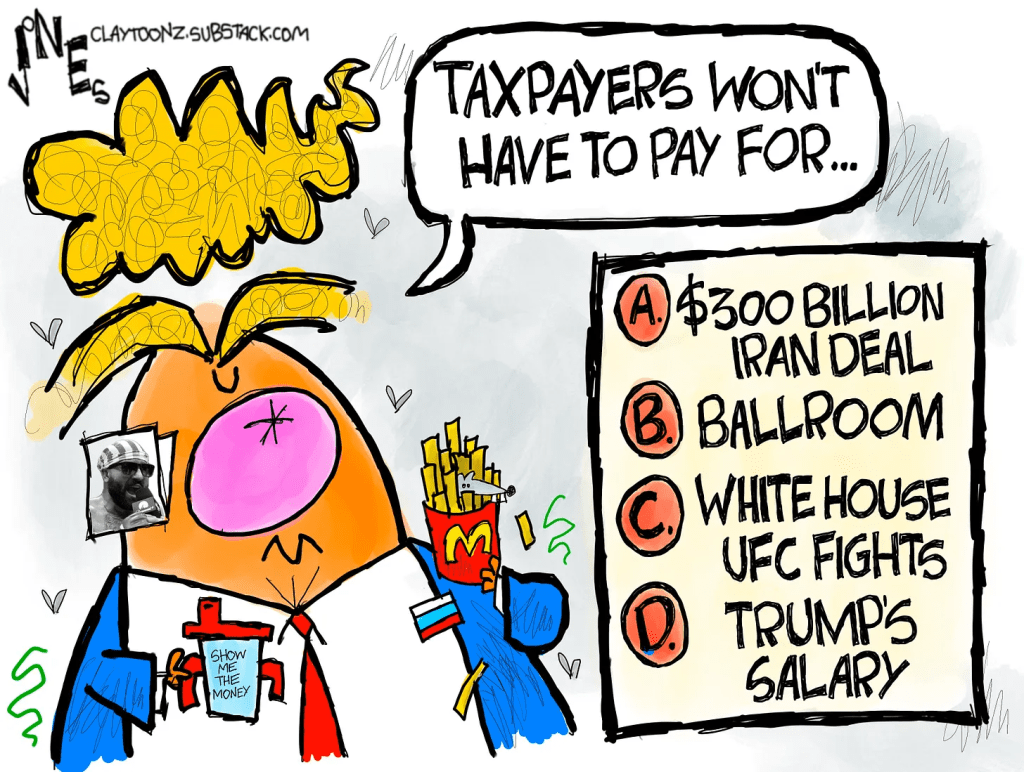
Part of Donald Trump’s unconditional surrender to Iran is a promise of providing $300 billion in reconstruction funds. Trump has spent years attacking President Barack Obama, and the JCPOA, the nuclear treaty that President Obama and several other countries negotiated with Iran that gave it billions in unfrozen assets, but the deal he signed yesterday, or Sunday, depending on which version of his own stories you want to believe, provides even more funds to Iran.
Yesterday, Trump said, “And you know what the Iranians did? They laughed at Obama, and they said, ‘He’s a stupid son of a bitch.’” Of course, that’s not true, but they are probably saying it about an American president now. Trust me on this, Donald Trump is a stupid son of a bitch.
Today, Senator Chuck Schumer called Trump a “terrible negotiator,” telling reporters that the agreement with Iran was “one of the worst deals that we’ve ever seen in the United States’ foreign and diplomatic policy.” And the criticism of the deal is bipartisan, as several Republicans, including former Vice President Mike Pence, have criticized it.
So, how bad is the Iran deal? Dick Wright, Gary Varvel, and Chip Bok, and Chip Bok are criticizing it. You know it sucks when the Kool-Aid drinking MAGAts hate it and can actually summon up enough independence to say something about it. (snip-MORE)
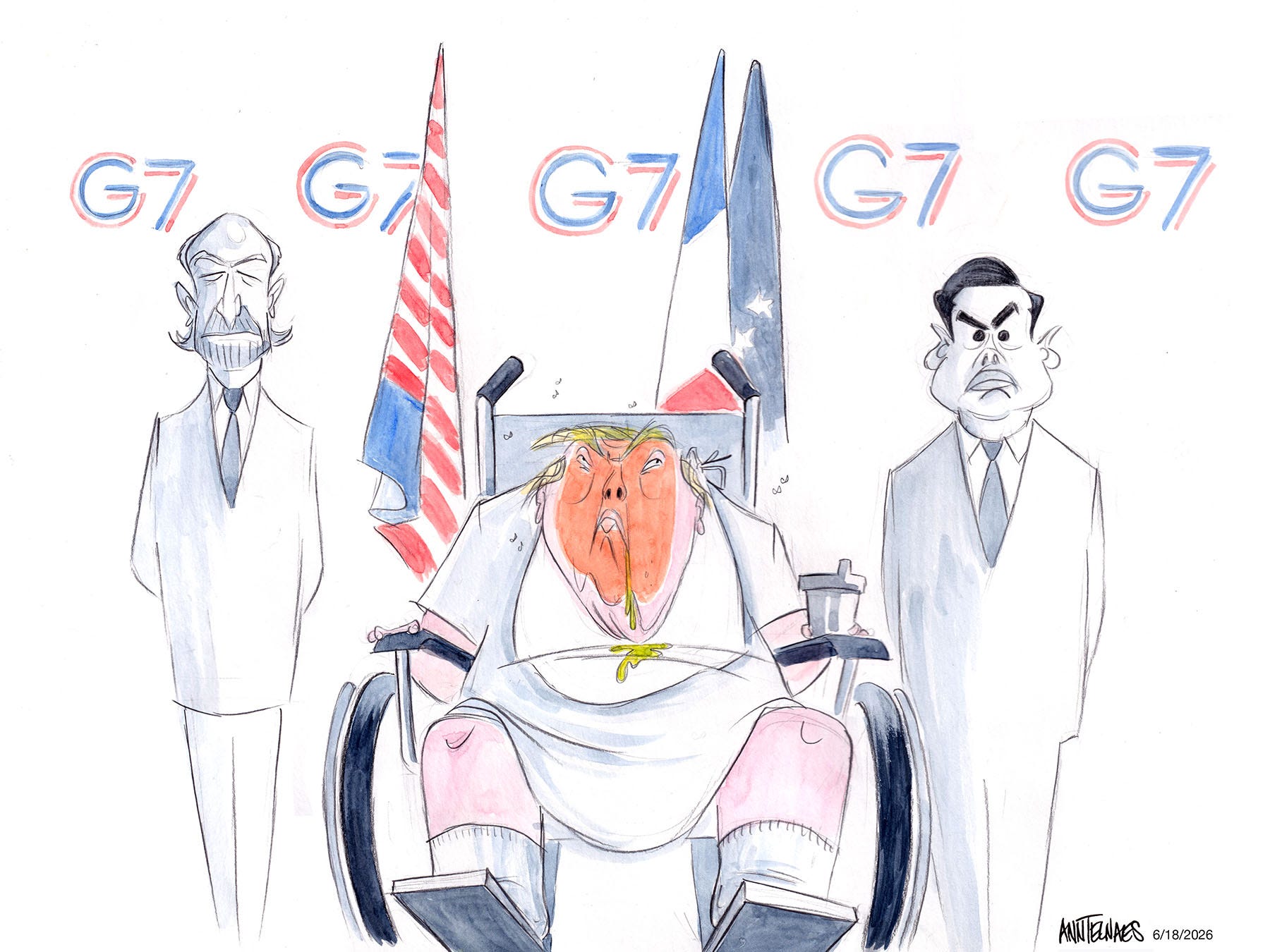
He’s deteriorating.
As I have posted before on this subject this is an attempt to push a fundamentalist Christianity on the entire rest of the public. It is an attempt to enshrine Christian nationalism and the doctrines of one sect into the laws we all must live by. The people doing these attacks want to make any and all LGBTQ+ content seem dangerous and harmful which would require warning labels. It is about demonizing the way other people live because the hyper religous don’t like it. The Christians are free to live as they wish and think as they want but they can not be allowed to oppress and require everyone to live as they do. They are a minority and the polls show the majority of the public doesn’t share these haters belief that LGBTQ+ people are dangerous or bad. The majority of people are live the way they want to and let others live the ways they want to. Republicans keep using attacks on trans and gay marriage to distract from real issues, to enrage their base to excite them to vote, and to demonize a minority group so that the status quo can go back to the 1950s cis straight white male hierarchy. Hugs
Some GOP lawmakers are attempting to rebrand June, which has been nationally recognized as Pride Month, as “Nuclear Family Month” in some states. GLAAD CEO & President Sarah Kate Ellis joins Laura Barrón-López to share her thoughts on this and a new poll around support for LGBTQIA+ communities.
 (Photo by Douglas Rissing via Getty Images)
Political action committees focused on LGBTQ+ issues have already spent big in the 2026 election cycle. They have doled out hundreds of thousands of dollars to support congressional candidates who identify as sexual or gender minorities, as they seek to both defend and expand representation.
Ten LGBTQ+-focused PACs contributed a combined $637,849 to congressional candidates so far in the 2025-26 cycle (through March 31), supporting incumbent lawmakers, candidates pursuing historic firsts and contenders in open-seat and other competitive races. The top five PACs gave $593,041, or 93%, of that total.
(The chart coded below can be seen on the story page, linked in the title above, or at the end of the article.)
(function(){function e(){window.addEventListener(`message`,function(e){if(e.data[`datawrapper-height`]!==void 0){var t=document.querySelectorAll(`iframe`);for(var n in e.data[`datawrapper-height`])for(var r=0,i;i=t[r];r++)if(i.contentWindow===e.source){var a=e.data[`datawrapper-height`][n]+`px`;i.style.height=a}}})}e()})();
Equality PAC, the political arm of the Congressional Equality Caucus, is responsible for 29% of the contributions to candidates from LGBTQ+ PACs ($185,000). It works to elect openly LGBTQ candidates and allies committed to passing the Equality Act, which would prohibit discrimination based on sexual orientation and gender identity in areas including housing, employment and lending.
The Human Rights Campaign, which describes itself as the nation’s largest civil rights and LGBTQ lobbying organization, gave $141,541 to many of the same candidates and accounts for 22% of this total. Equality Project PAC, which has also been associated with the Equality Caucus, has contributed $115,000 (18%). No Vote Left Behind PAC, which describes its mission as developing and funding voter registration and get-out-the-vote programs targeted to the LGBTQ community in battleground states, contributed $84,000. Christopher Street Project, which focuses on electing candidates committed to advancing trans rights, contributed $67,000.
Reps. Becca Balint (D-Texas) and Julie Johnson (D-Texas) serve as the PAC’s vice chairs and have received $7,500 and $5,000 from the PAC, respectively. Two co-chairs, Reps. Ritchie Torres (D-N.Y.) and Mark Takano (D-Calif.) each received $10,000 from the committee.
Balint is the first woman and openly LGBTQ+ person to represent Vermont in Congress and has supported numerous pieces of legislation that protect LGBTQ+ Americans and their access to healthcare. In 2025, she introduced the Transgender Health Care Access Act, which would fund programs to train medical providers in providing gender affirming care.
Balint has received a total of $22,000 from LGBTQ+ PACs, including the $7,500 from Equality PAC, $5,000 from No Vote Left Behind PAC and $4,500 from Equality Project PAC. She also received $2,500 from both the Christopher Street Project and the Human Rights Campaign.
Johnson, who was running for reelection in Texas’ 33rd district, received over $40,000 in donations from various LGBTQ+ PACs, the most of any candidate, yet lost in the Democratic primary runoff on May 26.
In a statement about Johnson’s loss, Equality PAC said, “Texas – and likely the entire South – will lose openly LGBTQ representation in Congress. Many in our community remain deeply hurt by Colin Allred’s decision to challenge one of our own. As he moves forward, he bears a responsibility to help heal those divisions and rebuild trust with the communities impacted by this race.”
Torres, who represents New York’s 15th district, became the first openly LGBTQ+ Afro-Latino person elected to Congress after he defeated Patrick Delices in the 2020 election, receiving 88.7% of the vote compared to Delices’ 11.1%.
In 2023, he was selected to serve as a co-chair of the Equality PAC. “Congressman Torres is one of Equality PAC’s greatest and proudest success stories. We all know that representation matters – and that is why Equality PAC was the first major national organization to endorse his congressional campaign in 2019,” said fellow co-chair Takano. “As the first LGBTQ Afro-Latino ever elected to Congress, Congressman Torres is a living example of Equality’s PAC mission to make Congress look like America — and that includes LGBTQ America.”
This cycle, Torres received $10,000 from both Equality PAC and Equality Project PAC. He also received $10,000 from No Vote Left Behind PAC and another $2,500 from the Human Rights Campaign.
In 2012, Takano became the first openly LGBTQ+ person of color elected to Congress. Takano serves as the chair of the Congressional Equality Caucus and is the lead sponsor of the Equality Act, the caucus’s flagship bill.
PACs focused on gay and lesbian rights donated $35,000 to Takano, who represents California’s 41st district. Contributions from Equality PAC, Equality Project PAC and No Vote Left Behind PAC compose a majority of this, with each organization donating $10,000 to Takano’s campaign.
Takano also received $2,500 from the Christopher Street Project and $2,500 from the Human Rights Campaign.
Rep. Robert Garcia (D-Calif.) is the first openly LGBTQ+ immigrant elected to Congress and has championed legislation promoting global gender and sexual equality, such as the International Human Rights Defense Act.
Garcia, who represents the Golden State’s 42nd district, has received $22,000 from PACs focused on LGBTQ+ issues so far this cycle. Equality PAC, the political arm of the Congressional Equality Caucus (of which he is a co-chair) contributed $7,500 to Garcia’s campaign.
Equality PAC has maintained its support for Garcia since 2024, having donated $7,500 to his campaign that cycle.
Rep. Emily Randall (D-Wash.) is the first openly LGBTQ+ Latina to serve in Congress and is the first woman to represent the state’s 6th district. Randall has championed the reintroduction of the Equality Act, which ensures nondiscrimination protections for LGBTQ+ Americans, and national LGBTQ+ organizations have continued to support her as she seeks reelection.
Randall, who will not face any challengers in the Aug. 4 primary, has received $11,500 from LGBTQ+-focused PACs this cycle. She received $5,000 from Equality PAC, as well as $3,500 from Human Rights Campaign and $3,000 from Equality Project PAC.
Equality PAC first endorsed Randall’s run for Congress in 2023, stating that she has “worked tirelessly” in the State Senate to make Washington one of the most inclusive and accepting places for LGBTQ Americans.
Marni von Wilpert, an LGBTQ+ member of the San Diego City Council and a former civil rights attorney, is running for California’s 48th district. She has raised $1.2 million so far, with $32,500 coming from LGBTQ+ PAC contributions.
Equality PAC donated $10,000 to von Wilpert’s campaign and stated in its endorsement that she “represents one of our best chances to elect a new LGBTQ woman to Congress this year.” Wilpert also received $10,000 from both Equality Project PAC and No Vote Left Behind.
Von Wilpert has also been added to the Democratic Congressional Campaign Committee’s Red to Blue program, which provides Democratic candidates in particularly competitive races with organizational and fundraising support.
Rep. Chris Pappas (D) became New Hampshire’s first openly gay member of Congress when he was elected in 2018 to represent the 1st district. Now, as he runs for Senate, Pappas has become a focus for LGBTQ+ PACs looking to support increased representation in a chamber that has had very few openly LGBTQ+ members in its history.
If elected, Pappas would become the first openly gay man elected to the Senate, making the race particularly significant for PACs seeking to expand representation.
In its endorsement of Pappas, Equality PAC said New Hampshire “needs a fighter in the Senate who will put the Granite Staters first, and Chris Pappas has proven time and time again that he is that leader.”
LGBTQ+-focused PACs have contributed $11,050 to Pappas in 2025-26, including funding from LGBTQ Victory Fund, the Human Rights Campaign, No Vote Left Behind PAC and Equality Project PAC.
This article was originally published by OpenSecrets, a nonpartisan, nonprofit organization that tracks money in politics. View the original article.
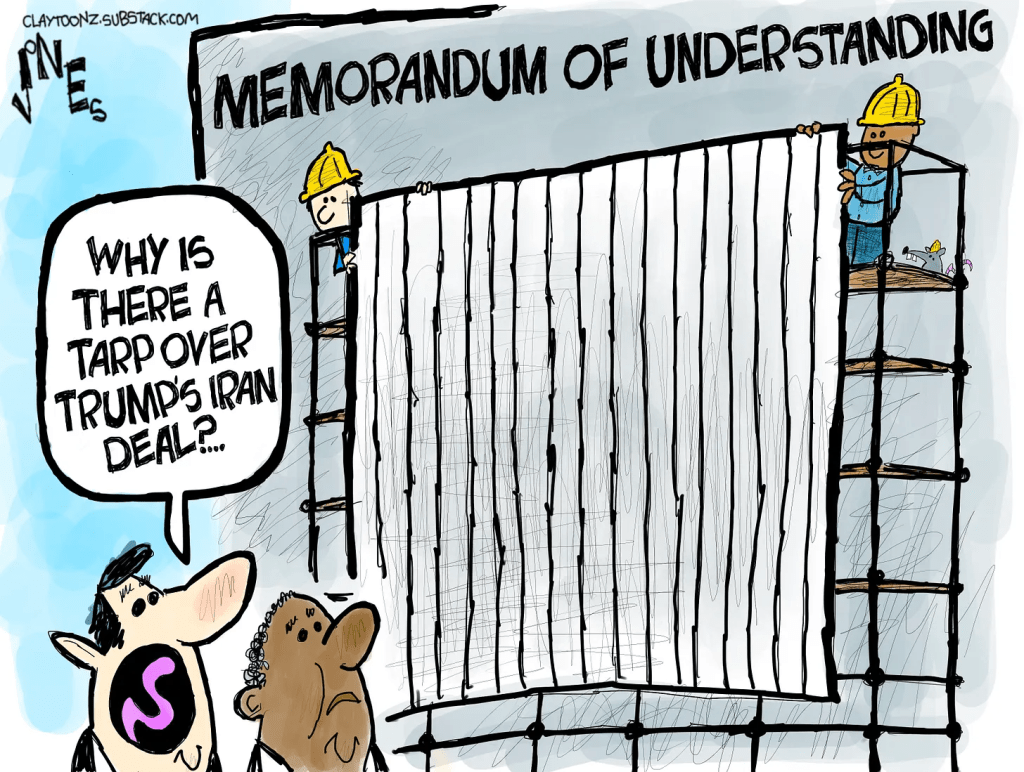
Today, this cartoon was challenged on Facebook by a couple of MAGAts.
One wrote, “One would think with the superior ‘intelligence’ of liberals, they could do a little better job at convincing the masses they’re right than grade school cartoons and hyperventilated delusions…….”
The other argued, “More dumbass dumbocrap shit.” Thank God, Donald Trump told him there’s a B in dumb.
The Trump regime and Iran have a peace deal to have a peace deal in 60 days. Donald Trump said that he digitally signed the deal on Sunday in Washington, and today, an administration official said Trump signed it in Versailles on Wednesday. We are not sure if Donald Trump signed it twice, or if he lied about signing it on Sunday, or what. Later, Trump said that he had signed it in Versailles. This regime that can’t even clean a swimming pool has not been straight about anything. Wasn’t this supposed to be the most transparent administration in American history?
Did they or did they not take Trump’s name off the Kennedy Center last Saturday? The Kennedy Center says they have, but we can’t be sure because the tarp is still in front of it.
It wasn’t until today that anonymous US officials read the language of the memorandum on ending the war to journalists after days of secrecy. The Trump regime blamed Iran for the secrecy, saying that’s how they wanted it. Who’s calling the shots here?
The terms of the agreement would reopen the Strait of Hormuz, outline a $300 billon plan for Iran’s reconstruction, and lift restrictions on the country’s oil exports. It kicks the can down the road on Iran giving up its nuclear material. It calls for Israel to end its attack against Hezbollah in Lebanon, despite the fact that Israel is not a party to the MOU, the Memorandum of Understanding.
The MOU is a 60-day extension of the ceasefire. It outlines that Iran and Oman will manage the Strait of Hormuz and that there will not be a toll for ships to pass through during the 60-day ceasefire. There’s no mention of there not being any tolls in the future.
This agreement is different from the Joint Comprehensive Plan of Action (JCPOA) negotiated by President Obama, which Trump ended, which eventually led to this war. The JCPOA was broad in detail and was working in preventing Iran from developing a nuclear weapon, while Trump’s Iran deal is about as vague as that peace treaty he signed with North Korea several years ago.
As you may recall, the so-called peace treaty with North Korea didn’t obligate North Korea to do anything. And this so-called peace deal with Iran achieves none of the goals that Donald Trump and Pete Hegseth laid out at the start of the war. But remember, Donald Trump is the greatest negotiator in the world.
This deal does not accomplish regime change in Iran. It doesn’t end their missile program. It does not end the persecution of its people. And Iran does not surrender unconditionally. What it really does for Donald Trump is that it gives him an out from this war, so maybe he can focus on his next conquest, Cuba.
Iran walks away from this conflict with more power and more money. The United States walks away with nothing it set out to do, and after spending billions of dollars.
Senator Bill Cassidy said, “Reagan is rolling over in his grave. Before the war, the strait was open, Iran was being crushed by sanctions, and 13 service members were still alive,” Cassidy said, “Now, 13 Americans are dead, families have paid billions at the pump, sanctions will be lifted, and the bombing has stopped.”
Cassidy found his spine after losing his primary reelection bid after Trump endorsed his challenger, and is now free to openly criticize Donald Trump. “This is the worst foreign policy blunder in decades,” he said.
Senator Ted Cruz, who doesn’t even have a spine, said, “Giving billions of dollars to theocratic lunatics who want to murder us is not a good idea. I think the president, unfortunately, is receiving bad advice.”
He also said, “Setting up Iran to be in charge of the Strait of Hormuz in perpetuity and to charge tolls is not in America’s interest. In my view, the Ayatollah should not reap a single penny from the free transit of the seas.”
What does it tell you when even Republicans are not happy with this deal?
Creative note: Right after I finish the lettering in this cartoon, news broke that some anonymous administration officials had read details of the agreement to reporters. So I almost shelved this. But after talking to Laura and another friend, they convinced me that I should still go with this, so I did. But while building up to that decision, I wrote two more ideas that I like, and I plan to do them over the next couple of days.
From Waging Nonviolence. It’s a heck of a story. Maybe refill your cup, and have a good read.
David Wise’s new experimental play, “Fight Back,” opens a portal to an earlier era of organizing and spotlights the enduring power of slow-moving consensus building.
Imagine a murder mystery dinner party, where everyone sheds their true identity at the door and assumes a role to play in the night’s events — only instead of solving a crime, they must reenact a contentious activist meeting. That’s what artist David Wise tasks participants with in his immersive theater piece “Fight Back.” He recreates the AIDS Coalition to Unleash Power, or ACT UP, meeting on March 13, 1989 in the same room where it happened nearly 40 years ago.
It’s impossible to sit in the same room in New York City’s LGBT Community Center where their meetings happened nearly 40 years ago without feeling the echoes of today’s governmental failures, and the urgent need for both resistance and mutual aid.
At the May 18 performance of “Fight Back” — which takes its title from ACT UP’s chant: “Act up! Fight Back! Fight AIDS!” — I did something we rarely have to do these days: relinquish checking and doomscrolling on my phone to spend uninterrupted time face-to-face with strangers, co-creating something from scratch. Nearly 40 of us had two and a half hours to make our way through a 26-item agenda, an education in ACT UP’s work.
ACT UP is a direct action group formed during the AIDS epidemic to fight for visibility, healthcare access and an end to the crisis. To mark the second anniversary of the group’s formation, they were in the midst of planning Target City Hall — the kind of creative, high-profile direct action for which the group had become known — to protest Mayor Ed Koch’s failure to adequately address the AIDS crisis in New York City.
By the beginning of 1989, more than 18,000 New Yorkers had been diagnosed with AIDS and over 12,500 had died. ACT UP was demanding affordable access to the highly toxic but potentially life-saving drug AZT, which had just come on the market a year earlier. They also demanded housing for people living with AIDS and changes to the Food and Drug Administration’s drug trial policy to give more patients hope. They demanded dignity for the living and the dead. In the midst of all this, members still found the time and space to plan fundraising parties and, more importantly, to flirt.
The 1980s was an era of phone trees and answering machines. We checked our cell phones at the door. The experience is an invitation to follow the advice writer Mira Jacob gave on Instagram earlier this year: “Stop scrolling. Do literally anything else … We’re going to prevail, but only if you don’t let this app scare you numb.” If you were mad in 1989 because your friends were dying at the hands of the government and you wanted to yell at someone about it, you had to show up to a meeting or participate in a phone zap or volunteer to surreptitiously print flyers at your office denouncing Mayor Koch as a closet case. (One attendee politely corrected our pronunciation of “Koch” — no relation to the present-day billionaire brothers who pronounce their last name “coke.”)

A smaller group within ACT UP gathers during David Wise’s experimental theater piece, a reminder that the organization was not a monolith. (Hong-An Tran)
The atmosphere in the room was tentative. Every question opened up a minefield that only the basic tenets of improv could answer: Say “yes, and” to help the scene unfold; make bold choices, even when you are unsure of them, and don’t “break” the illusion. Most of us had brought hastily scribbled notes about our assigned historical personas, pulled from summaries and the ACT UP oral history archive. This background helped with questions like, “What affinity groups are you in?” and “Is this your first meeting?” But they offered little to lean on when it came to more quotidian conversation starters, “Are you coming from work?” or “Are you out to your family?” Those we stumbled through, together.
I had been assigned the role of Bill Bahlman, my first part since a non-speaking role in the middle school production of “Schoolhouse Rock!” A lifelong New Yorker and a music journalist, Bill had been a part of the Gay Activists Alliance and the Gay and Lesbain Alliance Against Defamation, or GLAAD. A self-described anarchist, he sometimes found the groups to be too soft, particularly the Gay Activists Alliance’s discussions of whether to drink mixed drinks or soft drinks at their dances. He splintered off from GLAAD into the Lavender Hill Mob, a direct action group formed in 1986 and named after a British comedy film. The dozen members focused on AIDS activism and organized disruptive “zaps,” interrupting a CDC meeting, a Catholic mass and other high-profile events with leaflets and banners bearing slogans like, “Gays and lesbians will not be silenced!”
When ACT UP formed in March 1987, Bill and many other Lavender Hill Mob members joined, but their affiliation and camaraderie with one another remained. While ACT UP is often remembered as a monolith, it was in practice a true coalition under which many smaller groups coalesced, including affinity groups like Delta Queens, La Cocina or Wave 3 that demonstrated together at actions.
Bill was slated to speak late in the agenda. The items were laborious in their minutia. Should the flyers Wave 3 planned to wheat paste around the city to gather people for Target City Hall in two weeks be printed in color, or black and white? Should we send three or four people to the Lesbian and Gay Health Conference in San Francisco? We rose from our chairs for civil disobedience training, half of us playing cops and half of us playing protesters gone limp to resist arrest, but then it was butts right back in seats.
By the two-hour mark, I could no longer stifle my yawns. There may have been flirting at meetings, and even a little in our reenactment, but the agenda was a reminder that there is little instant gratification in organizing. It took much longer than an Amazon delivery or a ChatGPT response. This focus on consensus decision making has undergirded some of the most visible movements and organizations, like Occupy Wall Street, Jewish Voice for Peace and the Democratic Socialists of America. While they don’t offer an instant dopamine hit, the memorable actions and ballot wins delivered by these groups are clear evidence of their effectiveness.
There are no professional actors associated with the production. Every meeting member was a stranger assigned to play their role for one night only. That said, I recognized an actor from an old TV show who attended as a curious citizen. She had been assigned the role of our chant leader Ron Goldberg, and I expected that, given her background, she might be the one to voice the most objections. Or, I thought, they might come from the tall, brawny and bespectacled man who wore a Larry Kramer name tag, a historical figure whose outspoken anger and divisive politics had been a catalyst for ACT UP’s formation. Instead, the objections came from Karen Ramspacher, a 24-year old curatorial assistant played by a middle-aged white woman seated in the back row with a bun on top of her head. “People are dying and we can’t cobble together the money for color printing?”
The meeting’s facilitators, one of whom I assumed must be Wise himself, tried to keep us on track. I kept glancing at my watch, hoping that time would run out before it was my turn to speak. When my name was called, my hands shook. I stood at the front of the room and looked out at the gathered crowd, some in their 50s, some in their 20s, many filling out the ages in between. I held the mic and spoke about Steve Zabel, my friend who I had found murdered in his apartment at the beginning of the month. The police had done nothing. What could we do to put pressure on them? Steve was just one man, but we all knew a Steve. To my surprise, everyone had ideas. The Media Committee wanted to take it to the press. The woman with the bun wanted to agitate with the neighbors. They had Bill’s back.
When the bell rang to return us to 2026, I made my way over to the outspoken woman, who in real life looked closer to 54 than 24.
“You were great!” I said, relieved to speak as myself again. “Really channeled the anger of the time.”
“I was there,” she said.
“What?”
The woman who had interjected so many times during “Fight Back” had attended ACT UP meetings as a teenager. She had a job in the 80s in Philly calling men to let them know where they were on the wait list to see the only doctor in the city who would treat AIDS patients. Many had died before their turn came.
A little group gathered around to hear her story. One man shared that he had come to the center that night with a friend who had also been a part of ACT UP, but he had turned around at the door because she wasn’t ready to reopen the emotions of that time. Wise revealed himself to have been Iris Long from the Treatment and Data Committee, a cancer researcher determined to publicize the life-saving uses of aerosolized pentamidine. The reenactment of the meeting had, in fact, been facilitated by everyday people.
Later, the woman continued, she had worked as a social worker in New York City with young transvestites, as they called themselves then, and sex workers. At one point she was given one dose of AZT and had to choose who to give it to in her community. She didn’t realize at the time that the medication had to be taken once every 12 hours to be effective. Of course she was still angry.
After everyone else dispersed, I lingered. The woman pointed across the room at her adopted daughter, a young Black woman whose biological parents had died of AIDS in Africa. She had remained in the global AIDS fight her whole life.
“If the AIDS crisis happened in New York today, we’d all be dead already,” she told me. “You had to be out there, you had to be visible, you had to be risking arrest to make yourself heard. Today everyone is stuck at home. You know what you have to do?”
I leaned in closer.
“Host a dinner party of strangers. You don’t even have to cook. Tell everyone to bring their favorite dish. People love to show off their culinary skills. Think about the seating arrangements. You don’t even need to set an agenda. That’s where political action comes from, talking to people.”
Wise had laid the groundwork for such unexpected offline encounters. His theatrical experiment will take place again on June 15, but Wise hopes to make his impressive research on these figures widely available someday, so school groups and others can try to reenact the meeting on their own.
Art about AIDS abounds. For starters, there’s “Rent” and there’s “Angels in America,” there’s Sarah Schulman’s “People in Trouble,” Rebecca Makkai’s “The Great Believers,” and, more recently, Natalie Adler’s “Waiting on a Friend.” Those pieces invite sorrow and rage, empathy and memory in equal measure. “Fight Back” invites you to act.
Amelia Possanza is a writer and book publicist who lives in Brooklyn. Her book “Lesbian Love Story: A Memoir in Archives” was the winner of a 2023 Lambda Literary Award.
Have a bit of bubbly for this one, even, maybe!
There are several this time! The titles are links, as usual, but for space consideration, I’m leaving Clay’s awesome commentary on his pages, and posting only toons this time. Go see what he has to say, though-it’s always good!
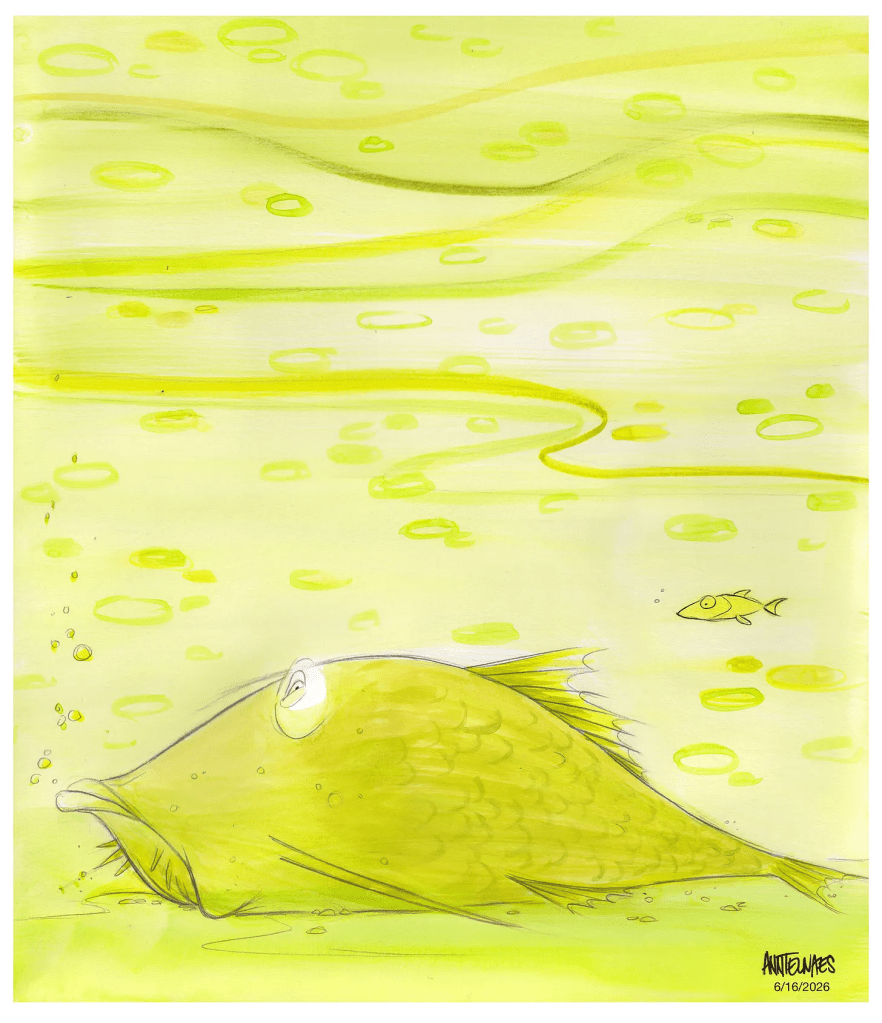
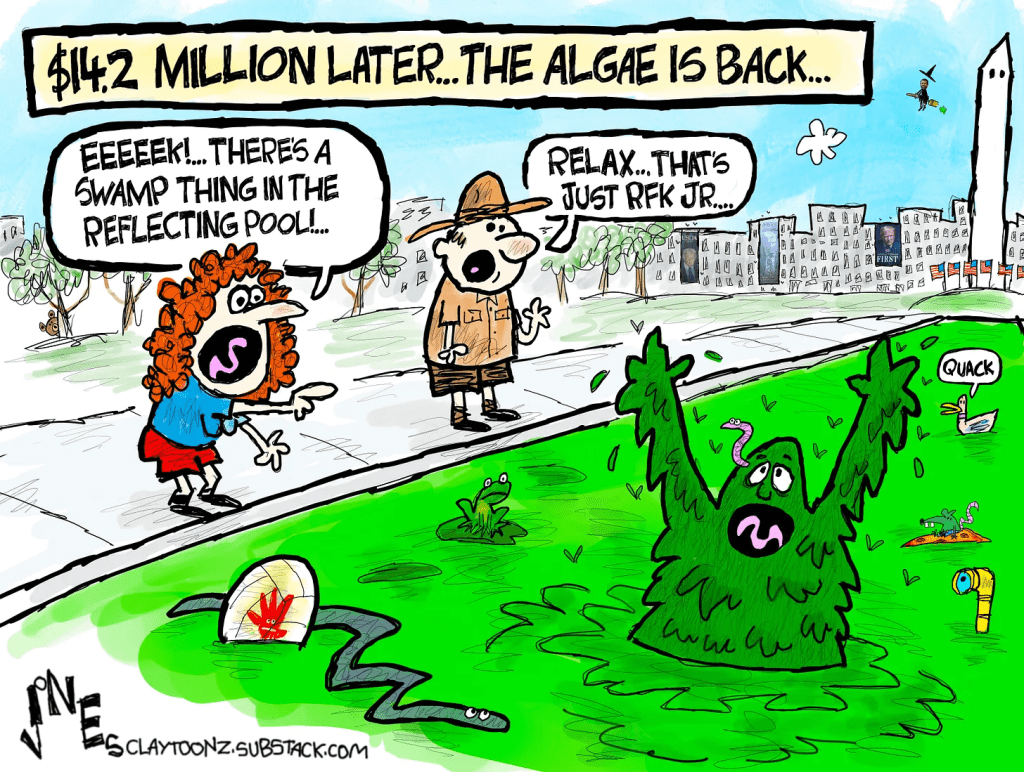
(snip-go see the comments, and his creation video, too)
It’s not enough he turns the White House into a trashy spectacle or plasters his name all over everything.
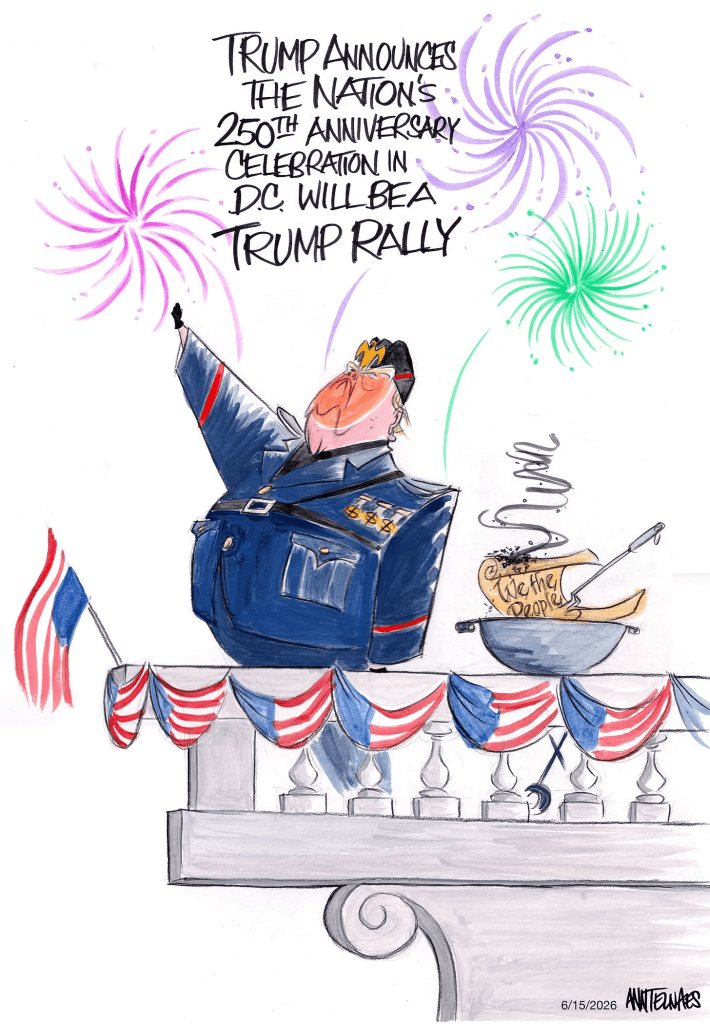
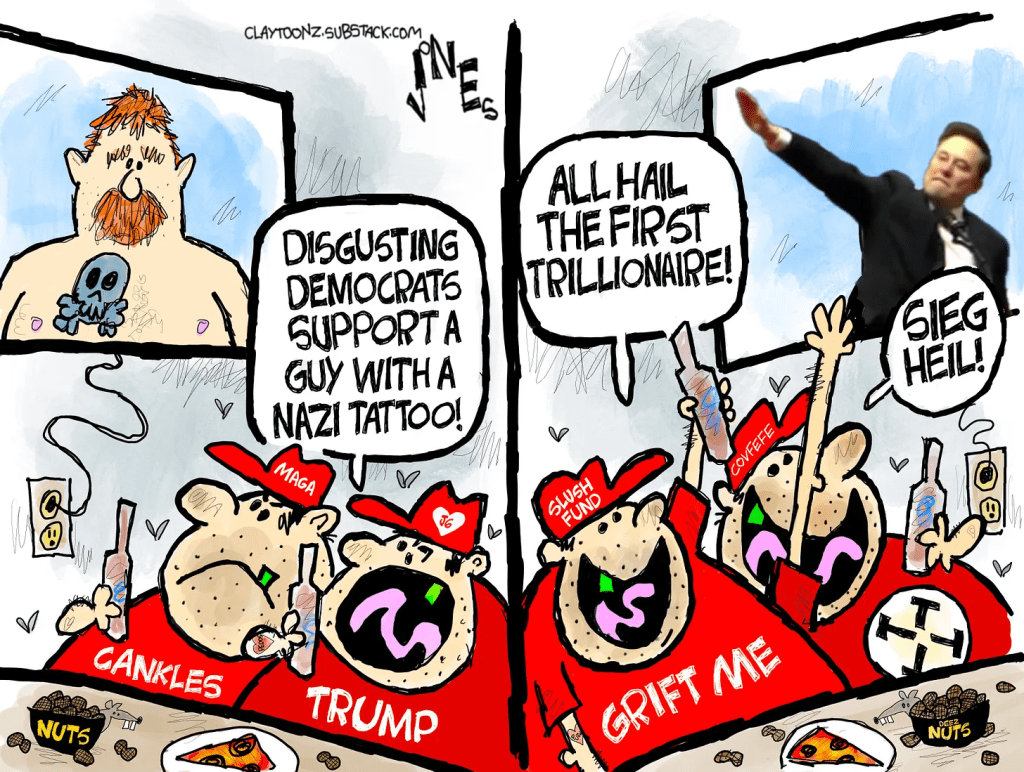
(snip)
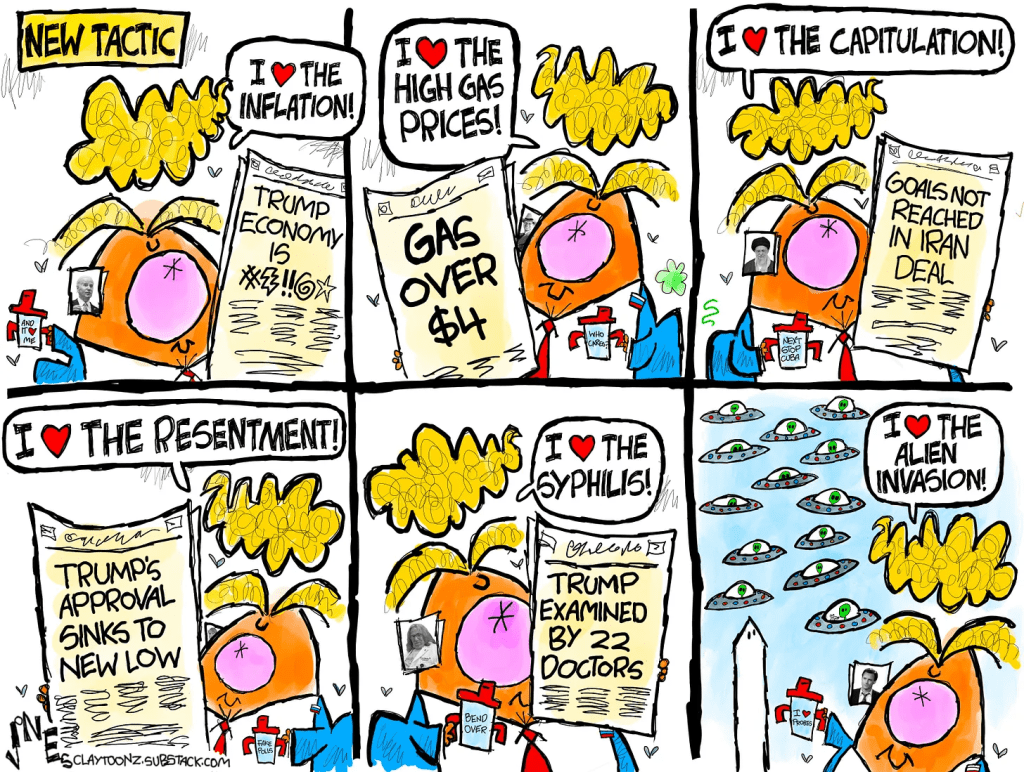
A spoken poem by friend of Playtime Bee Halton, The Bee Writes.


