July 3, 1835 Children employed in the silk mills at Paterson, New Jersey, went on strike for an eleven-hour workday and a six-day workweek rather than 12-14 hour days. With the help of adults, they won a compromise settlement of a 69-hour week. More on the Baby Strikers
July 3, 1966 4000 Britons chanting, “Hands off Vietnam,” demonstrated in London against escalation of the Vietnam War. U.S. warplanes had recently bombed the North Vietnamese capital of Hanoi as well as the port city of Haiphong. Police moved in after scuffles broke out at the demonstration outside the U.S. Embassy in Grosvenor Square; 31 were arrested. Actress Vanessa Redgrave joins 25,000 two years later at Anti-Vietnam war protest, Grosvenor Square. Read more
July 3, 1974 At the Moscow Summit talks between President Richard Nixon and President Leonid Brezhnev, the United States and the Soviet Union agreed to hold bilateral talks on the prohibition of chemical weapons.
July 4, 1776 The United States declared its independence from King George III and Great Britain, thus beginning the first successful anti-imperial revolution in world history. Signed in Philadelphia by 56 British subjects who lived and owned property in thirteen of the American colonies, the document asserted the right of a people to create its own form of government. The signers of the Declaration of Independence were members of the 2nd Continental Congress which had voted two days earlier to separate from the British crown. Read the Declaration see some quotes on nationalism and patriotism
July 4, 1827 Slavery was outlawed in New York State as the result of the Gradual Emancipation law passed ten years earlier. This freedom applied only to those who had been 18 at the time of its passage. Enslaved children born during the subsequent ten-year period were not be freed until they reached the age of 21. At the urging of Reverend William Hamilton, a freedman and carpenter, and others, the end of slavery was celebrated in churches. The Fourth of July had in the past been marred by young white men attacking black Americans. More on William Hamilton and others
July 4, 1829 Speaking at Boston’s Park Street Church, newspaper editor and abolitionist William Lloyd Garrison gave a seminal speech on “Dangers to the Nation.” Though Massachusetts had banned slavery in 1781 and there was strong anti-slavery sentiment, most understood that a national ban of slavery would threaten the union of the states. Compensation to slaveholders and return of the enslaved to Africa was considered the best solution. Garrison, on the other hand, called attention to the hypocrisy of celebrating the the day the document was signed declaring, “All men are created equal” while two million were in bondage. He proposed four propositions that day to guide the abolitionist movement: 1. Above all others, slaves in America deserve “the prayers, and sympathies, and charities of the American people.” 2. Non-slave-holding states are “constitutionally involved in the guilt of slavery,” and are obligated “to assist in its overthrow.” 3. There is no valid legal or religious justification for the preservation of slavery. 4. The “colored population” of America should be freed, given an education, and accepted as equal citizens with whites. William Lloyd Garrison
July 4, 1894 The Republic of Hawaii was proclaimed with Sanford B. Dole as president. It was recognized immediately by the United States government under President Grover Cleveland. This was the result of the successful overthrow of the Hawaiian monarchy, then held by Queen Lydia Liliuokalani, and the support by white Americans involved in the sugar trade on the islands for annexation by the United States. Shortly after she had come to office, she had promulgated a new constitution which increased the power of the monarchy and that of native Hawaiians.
July 4, 1965 Barbara Gittings at the Philadelphia picket The first of an annual picket in front of Philadelphia’s Independence Hall was held by gay and Lesbian Americans. Jack Nichols and Frank Kameny and members of the New York and Washington Mattachine Society and the Daughters of Bilitis had earlier demonstrated in Washington, and wished to change the general perception that homosexuals were perverted or sick.
“By those protesters coming out publicly, and placing themselves very strategically in front of the building that evoked the Declaration of Independence and the idea that all men are created equal, it suggested it [gay rights] was no longer a moral or national security or psychiatric issue … it was a civil-rights issues,” David K. Johnson wrote in The Lavender Scare: The Cold War Persecution of Gays and Lesbians in the Federal Government.
July 4, 1966 The Freedom of Information Act, P.L. 89-487, became law. It established the right of Americans to know what their government is doing by outlining procedures for getting access to internal documents.
July 4, 1969 “Give Peace a Chance” by the Plastic Ono Band was released in the United Kingdom. The song was recorded May 31, 1969, during the “Bed-In” John Lennon and Yoko Ono staged at the Queen Elizabeth Hotel in Montreal as part of their honeymoon. John and Yoko stayed in bed for 8 days, beginning May 26, in an effort to promote world peace. Some of the people in the hotel room who sang on this were Tommy Smothers, Timothy Leary, Allen Ginsberg, and Petula Clark. Smothers also played guitar. This event promoting peace received a great deal of media attention.“All we are saying . . .” watch & listen – give it a chance
July 4, 1969 A national anti-war conference in Cleveland, Ohio, mapped out activities against the Vietnam War and resulted in the founding of New Mobe (mobilization). More about the Mobes
July 4, 1983 The Women’s Encampment for a Future of Peace and Justice began an eight week stay on a farm just outside the Seneca Army Depot near Romulus, New York. The purpose of the gathering was for the women to learn about and together protest the escalation of militarism and the weapons build-up being led at the time by the Reagan administration. visit PeaCe eNCaMPeNT HeRSToRy PRoJeCT
July 4, 2007 The first of several Peace Caravans (Caravanes de Paix) set out from South Kivu and traveled across Africa’s Great Lakes region, including the Democratic Republic of the Congo, Burundi and Rwanda. The Scout Associations of the countries in the violence-ridden area trained hundreds of young people in conflict resolution through their focus on education for peace. Members of the Caravan for Peace in Burundi The classes and the caravans included hundreds of young people in Scouts and Girl Guides from many ethnic groups (often with a history of mutual hostility) who act as community mediators.
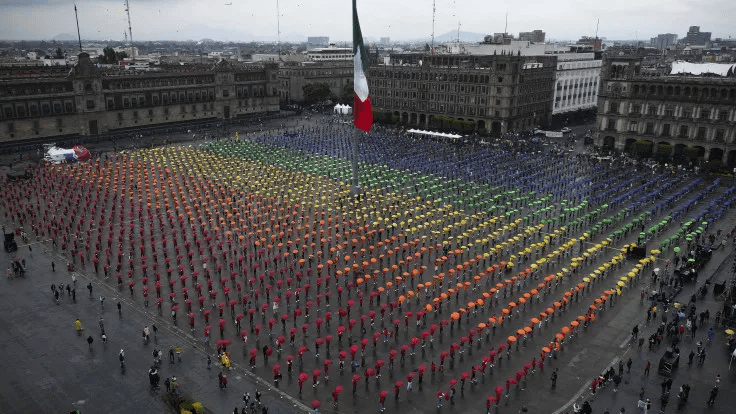
In celebration of Pride Week, more than five thousand LGBTQ+ activists converged on Mexico City’s Zócalo to form the world’s largest human LGBT flag. Under a shower of rain and brandishing vibrant umbrellas, the colorful formation draped the historic Plaza de la Constitución, capturing global attention and shattering previous records.
Mexico City Mayor Clara Brugada joined the crowd led the choreography. She said during the event that “Mexico City is and will continue to be the city of rights and freedoms. This monumental image we draw with our bodies and colors will be a powerful message to the country and the world. Mexico City is the capital of pride, diversity, peace, and transformation.”
Link to Original Art Curious to see of more of the original art? Click the link to read the entire vintage comic book for free on ComicBookPlus.com. —John
Queer History 745: Patricia Highsmith – The Brilliant Fucking Architect of Queer Hope by Wendy🏳️⚧️🏳️🌈🌈 Read on Substack
In the suffocating landscape of 1950s America, when being queer could land you in a mental institution, prison, or worse, one woman sat down at her typewriter and decided to tell the truth. Patricia Highsmith didn’t just write a fucking love story—she carved out a piece of literary real estate where lesbian love could exist without punishment, where two women could find each other and actually keep each other. In a world determined to erase queer joy, she smuggled hope onto bookshelves disguised as pulp fiction.
But let’s not paint Highsmith as some sanitized literary saint. This woman was complicated as hell, brilliant as fuck, and carried enough psychological baggage to sink a goddamn ship. She was an alcoholic, a recluse, and often cruel to the people who loved her. She was also one of the most important queer voices of the 20th century, whether she wanted that label or not. Her story isn’t just about one woman’s struggle with her sexuality—it’s about the price we all pay when society forces us to live fractured lives, and the revolutionary act of refusing to let that fracture define us.
The Making of a Literary Badass
Mary Patricia Plangman was born in Fort Worth, Texas, on January 19, 1921, into a world that would spend the next several decades trying to convince her that everything she was constituted a crime against nature. Her parents, Jay Bernard Plangman and Mary Coates, divorced before she was born, and her mother married Stanley Highsmith when Patricia was three. The family moved to New York, where young Patricia would grow up surrounded by the kind of suffocating heteronormative expectations that could drive anyone to drink—and eventually did.
From childhood, Highsmith knew she was different, and not in the precious, special-snowflake way that adults like to romanticize. She was different in the way that made her feel like she was constantly walking on broken glass, knowing that one wrong step could cut her to pieces. She was attracted to women in an era when that attraction was classified as a mental illness, when “treatments” ranged from electroshock therapy to lobotomies. The psychological pressure of living with this secret would shape not just her personal relationships but every fucking word she ever wrote.
At Barnard College, Highsmith studied English literature and began to understand that stories could be weapons—tools for survival in a hostile world. She was already writing, already crafting the psychological precision that would make her famous. But she was also falling in love with women, conducting relationships in shadows and whispers, learning the exhausting choreography of the closet that would define her entire adult life.
After graduation, she moved to Greenwich Village, ostensibly to pursue her writing career but really to find some semblance of community among other artists and outcasts. The Village in the 1940s was one of the few places in America where queer people could exist with some measure of freedom, though even there, the threat of police raids and social destruction loomed constant. Highsmith found work writing for comic books, including scripts for Captain America and other superheroes—ironic, considering she was creating stories about characters who could live openly as their authentic selves while she remained trapped behind a mask of heterosexual respectability.
The Birth of Lesbian Literary Revolution
In 1951, while working at Bloomingdale’s during the Christmas rush—because even future literary legends had to pay rent—Highsmith had an encounter that would change queer literature forever. She served a beautiful blonde customer buying a doll for her daughter, and something about the interaction sparked what would become “The Price of Salt.” Later, walking through the city, Highsmith felt what she described as a “strange happiness” and knew she had to write this story.
But let’s be clear about what she was attempting: in 1952, lesbian novels ended one of two ways—with the queer character dying or going insane. Those were the only narratives society would tolerate. Happy queers were not allowed to exist in fiction because they weren’t allowed to exist in real life. Publishers, critics, and readers had been thoroughly conditioned to expect punishment for sexual deviance. A lesbian love story with a happy ending wasn’t just revolutionary—it was practically seditious.
Highsmith wrote “The Price of Salt” under the pseudonym Claire Morgan because she knew that attaching her real name to a lesbian novel would be career suicide. Even with the pseudonym, the book was relegated to the pulp fiction ghetto, sold alongside other “deviant” literature in bus stations and drugstores. The literary establishment wouldn’t touch it with a ten-foot pole, and most critics dismissed it as sensational trash designed to titillate straight male readers.
They were wrong, and they were missing the fucking point entirely.
“The Price of Salt” tells the story of Therese Belivet, a young woman working in a department store who becomes infatuated with Carol Aird, an elegant older woman going through a divorce. What follows is a love story that unfolds with the psychological complexity and emotional honesty that would become Highsmith’s trademark. But more importantly, it’s a love story where both women survive, where love is possible, where the ending doesn’t require sacrifice or punishment.
The novel found its audience despite the literary establishment’s best efforts to ignore it. Queer women passed dog-eared copies between friends, smuggled them in suitcases, hid them between mattresses. For the first time, they could read a story where people like them weren’t doomed, where lesbian love wasn’t portrayed as inherently tragic or destructive. The psychological impact was immeasurable—here was proof that queer happiness was possible, that their desires weren’t automatically poisonous.
The Psychological Architecture of Survival
Understanding Highsmith’s impact on LGBTQIA+ people requires understanding the psychological landscape they were navigating in mid-20th century America. This was an era of institutionalized homophobia so complete and systematic that it’s hard to imagine from our current perspective. Homosexuality was classified as a mental illness. Same-sex relationships were illegal in every state. Queer people were barred from government employment, discharged from the military, subjected to police harassment, and often rejected by their families.
The psychological effects of living under this kind of systematic oppression were devastating. Queer people internalized shame, developed elaborate systems of concealment, and often struggled with depression, anxiety, and suicidal ideation. The absence of positive representation in media and literature reinforced the message that queer love was inherently destructive, that happiness wasn’t possible for people like them.
Into this psychological wasteland, Highsmith dropped a fucking bomb of hope.
“The Price of Salt” didn’t just tell queer women that love was possible—it showed them what that love might look like. Carol and Therese weren’t tragic figures destroyed by their desires; they were complex, flawed, human women who found each other and fought to stay together. The novel’s ending, with Therese choosing Carol over societal expectations, was nothing short of revolutionary.
But Highsmith’s psychological insight went deeper than just providing positive representation. She understood the specific ways that homophobia warped relationships, the paranoia and secrecy that poisoned even the most genuine connections. Carol’s ex-husband uses their daughter as leverage, threatening to take the child away if Carol doesn’t renounce her “perversion.” The constant threat of exposure hangs over every tender moment, every stolen glance, every whispered conversation.
This wasn’t melodrama—this was documentary realism for queer people living in the 1950s. Highsmith captured the specific psychological toll of living in the closet, the way fear could poison love, the exhausting vigilance required to maintain a double life. But she also showed that despite all this, love could survive, relationships could endure, happiness was fucking possible.
The Ripple Effects: How One Book Changed Everything
The immediate impact of “The Price of Salt” was profound but largely invisible. Queer women didn’t write letters to newspapers praising the book—that would have been social suicide. Instead, they quietly bought copies, passed them along to friends, and felt something shift inside themselves when they read about Carol and Therese’s love story.
Dr. Eli Coleman, a sexologist who has studied the impact of literature on LGBTQIA+ identity formation, argues that positive representation in fiction serves a crucial psychological function for marginalized communities. “When people see themselves reflected positively in stories,” Coleman explains, “it validates their experiences and provides a roadmap for possibility. For queer people in the 1950s, who had almost no positive representation anywhere, a novel like ‘The Price of Salt’ could literally be life-saving.”
The psychological impact extended beyond individual readers to the broader cultural conversation about homosexuality. While the book didn’t immediately change mainstream attitudes—that would take decades—it planted seeds that would eventually bloom into the gay rights movement. Young people who read Highsmith’s novel grew up with the revolutionary idea that queer love didn’t have to end in tragedy, that happiness was possible for people like them.
This shift in narrative possibilities had profound philosophical implications. If queer love could be portrayed as beautiful, complex, and worthy of a happy ending, then the entire moral framework that condemned homosexuality began to crack. Highsmith wasn’t just telling a love story—she was challenging the fundamental assumptions that justified queer oppression.
The Complex Psychology of Patricia Highsmith
While Highsmith was creating revolutionary representation for other queer people, her own relationship with her sexuality remained deeply complicated. She never publicly came out, never became an activist, and often seemed uncomfortable with the idea that “The Price of Salt” had become a touchstone for lesbian readers. This wasn’t just garden-variety internalized homophobia—though that was certainly part of it—but a complex psychological response to a lifetime of navigating hostile territory.
Highsmith’s personal relationships were often tumultuous and self-destructive. She drank heavily, maintained emotional distance even from intimate partners, and seemed to prefer the company of her numerous cats to most humans. Friends and lovers described her as brilliant but difficult, generous but cruel, capable of profound empathy and stunning callousness sometimes within the same conversation.
This psychological complexity was both a source of her literary genius and a reflection of the damage caused by a lifetime in the closet. Highsmith had spent so many years concealing her true self that authenticity became nearly impossible. She developed what psychologists call “minority stress”—the chronic psychological tension experienced by stigmatized groups who must constantly monitor and modify their behavior to avoid discrimination.
The effects of minority stress on LGBTQIA+ individuals are well-documented: higher rates of depression and anxiety, difficulty forming intimate relationships, substance abuse, and a persistent sense of alienation from mainstream society. Highsmith exhibited many of these symptoms throughout her life, but she also channeled that psychological complexity into her writing, creating characters whose inner lives were as intricate and contradictory as her own.
Her later novels, including the famous Tom Ripley series, explored themes of identity, deception, and the psychology of outsiders—all subjects she knew intimately from her own experience as a closeted lesbian. While these books weren’t explicitly queer, they were infused with the psychological insights that came from a lifetime of living on society’s margins.
Social Impact: Cracking the Foundations of Heteronormativity
“The Price of Salt” didn’t exist in a vacuum—it was part of a slowly building wave of cultural change that would eventually reshape American attitudes toward sexuality. But Highsmith’s contribution was unique in its subtlety and psychological sophistication. Unlike the explicitly political gay rights literature that would emerge in later decades, her novel worked by stealth, smuggling queer humanity into mainstream consciousness through the back door of popular fiction.
The book’s classification as pulp fiction was actually crucial to its impact. While “serious” literature was consumed primarily by educated elites, pulp novels reached a much broader audience. Working-class people, teenagers, small-town residents—people who might never encounter openly queer individuals in their daily lives—were reading about Carol and Therese’s love story. The seeds of empathy were being planted in unexpected soil.
This demographic reach had significant social implications. When the gay rights movement began to gain momentum in the 1960s and 1970s, it wasn’t starting from scratch. Thanks to novels like “The Price of Salt,” millions of Americans had already been exposed to positive portrayals of queer relationships. The ground had been prepared, even if most people didn’t realize it.
The philosophical implications were equally profound. For centuries, Western society had constructed elaborate theological and pseudo-scientific justifications for condemning homosexuality. These arguments depended on portraying queer love as inherently unnatural, destructive, and incapable of producing genuine happiness. Highsmith’s novel didn’t engage these arguments directly—it simply rendered them irrelevant by showing that none of them were true.
Carol and Therese’s relationship was portrayed as natural, nurturing, and fulfilling. They weren’t predators or victims, sick or sinful—they were simply two women who fell in love. This narrative simplicity was actually a sophisticated philosophical assault on the entire edifice of heteronormative ideology.
The Continuing Revolution: Highsmith’s Legacy in Contemporary LGBTQIA+ Culture
When “The Price of Salt” was reissued in 1990 under Highsmith’s real name with the new title “Carol,” it found a new generation of readers who could appreciate its revolutionary impact. The AIDS crisis had decimated the gay male community, and lesbian feminism was providing crucial leadership in the broader LGBTQIA+ rights movement. Highsmith’s novel was rediscovered as a foundational text, a reminder of how far the community had come and how much further it still needed to go.
The 2015 film adaptation, starring Cate Blanchett and Rooney Mara, introduced Highsmith’s story to an even broader audience and sparked new conversations about queer representation in media. The film’s lush cinematography and devastating emotional honesty brought Carol and Therese’s love story to life for a generation raised on increasing LGBTQIA+ visibility but still fighting for full equality.
For contemporary LGBTQIA+ people, particularly young people struggling with their sexual or gender identity, Highsmith’s work continues to provide crucial psychological support. In an era of increasing political backlash against queer rights, when transgender youth face legislative attacks and gay marriage remains under threat, the simple existence of stories like “Carol” serves as a reminder that queer love has always existed, has always been beautiful, and has always been worth fighting for.
The psychological impact is particularly powerful for young people from conservative backgrounds or regions where LGBTQIA+ visibility remains limited. Reading about Carol and Therese’s love story can be the first time these individuals encounter the revolutionary idea that their desires are valid, that happiness is possible, that they aren’t broken or sinful or destined for tragedy.
The Philosophical Architecture of Queer Joy
Highsmith’s greatest achievement wasn’t just creating positive lesbian representation—it was constructing a philosophical framework for queer joy that transcended the specific circumstances of her characters. “The Price of Salt” argues, through narrative rather than polemic, that love itself is the highest human value, that authentic relationships matter more than social approval, and that individuals have the right to pursue happiness even when that pursuit challenges conventional morality.
This philosophical stance was radical in 1952 and remains challenging today. American society continues to struggle with the tension between individual freedom and social conformity, between traditional values and evolving understanding of human sexuality and gender identity. Highsmith’s novel doesn’t resolve these tensions—it simply insists that love transcends them all.
The book’s ending is particularly significant in this regard. Therese’s choice to pursue a relationship with Carol isn’t portrayed as a rejection of society or a declaration of war against heteronormativity. It’s simply a young woman choosing love over fear, authenticity over approval, joy over safety. The philosophical implications are profound: if individuals have the right to pursue happiness, and if love between consenting adults is inherently valuable, then society’s objections become irrelevant.
This isn’t the angry politics of later gay liberation movements—it’s something more subtle and perhaps more subversive. Highsmith wasn’t arguing that society should accept queer people; she was arguing that queer people didn’t need society’s acceptance to live full, meaningful lives. The audacity of that position, especially in 1952, cannot be overstated.
The Psychological Legacy: How One Story Saves Lives
The most important measure of Highsmith’s impact isn’t literary criticism or sales figures—it’s the immeasurable number of LGBTQIA+ lives that have been saved by her willingness to imagine queer happiness. In a community where suicide rates remain tragically high, where young people continue to face rejection and violence for their sexual or gender identity, stories matter in ways that straight, cisgender people often struggle to understand.
Dr. Ryan Watson, who studies the relationship between media representation and LGBTQIA+ mental health, explains: “For young people questioning their sexuality or gender identity, seeing positive representation in media can literally be the difference between life and death. When you’re told by your family, your school, your church, and your government that you’re fundamentally wrong or broken, finding stories where people like you are happy and loved can provide the hope necessary to survive.”
“The Price of Salt” has been providing that hope for over seventy years. It sits on countless bookshelves, gets passed between friends, appears on recommended reading lists, and continues to whisper the same revolutionary message to each new generation of readers: you are not alone, your love is valid, happiness is possible.
The novel’s impact extends beyond individual readers to the broader cultural conversation about LGBTQIA+ rights and representation. Every positive portrayal of queer relationships in contemporary media owes a debt to Highsmith’s pioneering work. Every time a young person sees themselves reflected positively in a book, movie, or television show, they’re benefiting from the foundation she laid in 1952.
The Ongoing Fight: Highsmith’s Relevance in Contemporary Struggles
As LGBTQIA+ people continue to fight for full equality and acceptance, Highsmith’s work remains remarkably relevant. The psychological insights she provided about the costs of closeting, the importance of authentic relationships, and the possibility of queer joy continue to resonate with contemporary experiences.
Young transgender people facing legislative attacks and social rejection can find solidarity in Therese’s struggle to live authentically despite social pressure. Gay men navigating family rejection might recognize themselves in Carol’s battle to maintain relationships with her loved ones while refusing to deny her true self. Lesbian couples fighting for the right to parent can draw strength from Carol and Therese’s determination to build a life together despite legal and social obstacles.
The philosophical framework Highsmith constructed—that love transcends social convention, that individual happiness matters, that authenticity is worth fighting for—remains a powerful tool for contemporary LGBTQIA+ activism. While the specific battles have evolved, the underlying struggle between individual freedom and social control continues.
Perhaps most importantly, Highsmith’s work reminds us that representation matters, that stories have power, that the simple act of imagining queer happiness can be a revolutionary force. In an era when politicians and pundits continue to debate the “appropriateness” of LGBTQIA+ visibility, her novel stands as proof that queer people have always existed, have always loved, and have always deserved the chance to pursue happiness.
Conclusion: The Fucking Beautiful Truth
Patricia Highsmith died in 1995, long enough to see some of the changes her work helped create but not long enough to witness marriage equality, widespread LGBTQIA+ representation in media, or the growing acceptance of transgender rights. She remained complicated and contradictory until the end—a brilliant writer who struggled with intimacy, a queer pioneer who never fully embraced that role, a woman who gave hope to millions while often seeming to have little hope for herself.
But her legacy isn’t diminished by her personal struggles—if anything, it’s enhanced by them. Highsmith’s psychological complexity, her understanding of the costs of closeting, her ability to create characters who were both strong and vulnerable, all stemmed from her own experiences navigating a hostile world. She transformed her pain into art, her isolation into empathy, her struggle into a story that continues to save lives.
“The Price of Salt” stands as proof that individual acts of courage can have ripple effects that extend far beyond what their creators ever imagine. When Highsmith sat down to write about Carol and Therese’s love story, she probably thought she was just crafting another novel to pay the bills. Instead, she created a piece of revolutionary literature that challenged fundamental assumptions about sexuality, provided hope to countless individuals, and helped lay the groundwork for the LGBTQIA+ rights movement.
In a world that continues to tell queer people that their love is wrong, that their happiness is impossible, that they should be grateful for tolerance rather than demanding full equality, Highsmith’s novel remains a radical document. It insists that queer love is beautiful, that happiness is possible, that authenticity is worth any price society might demand.
That message, delivered with all the psychological sophistication and emotional honesty Highsmith could muster, continues to resonate with each new generation of readers who discover that they are not alone, that their love is valid, and that despite everything society might tell them, happiness is not only possible—it’s their fucking birthright.
The woman who wrote comic book heroes while hiding behind a mask of heterosexual respectability ultimately became a hero herself, not through superhuman powers but through the simple, revolutionary act of telling the truth about love. In doing so, she proved that sometimes the most powerful weapon against oppression isn’t anger or violence—it’s the audacious insistence that joy is possible, that love conquers all the bullshit society tries to pile on top of it, and that everyone deserves the chance to pursue their own beautiful, complicated, fucking magnificent version of happiness.
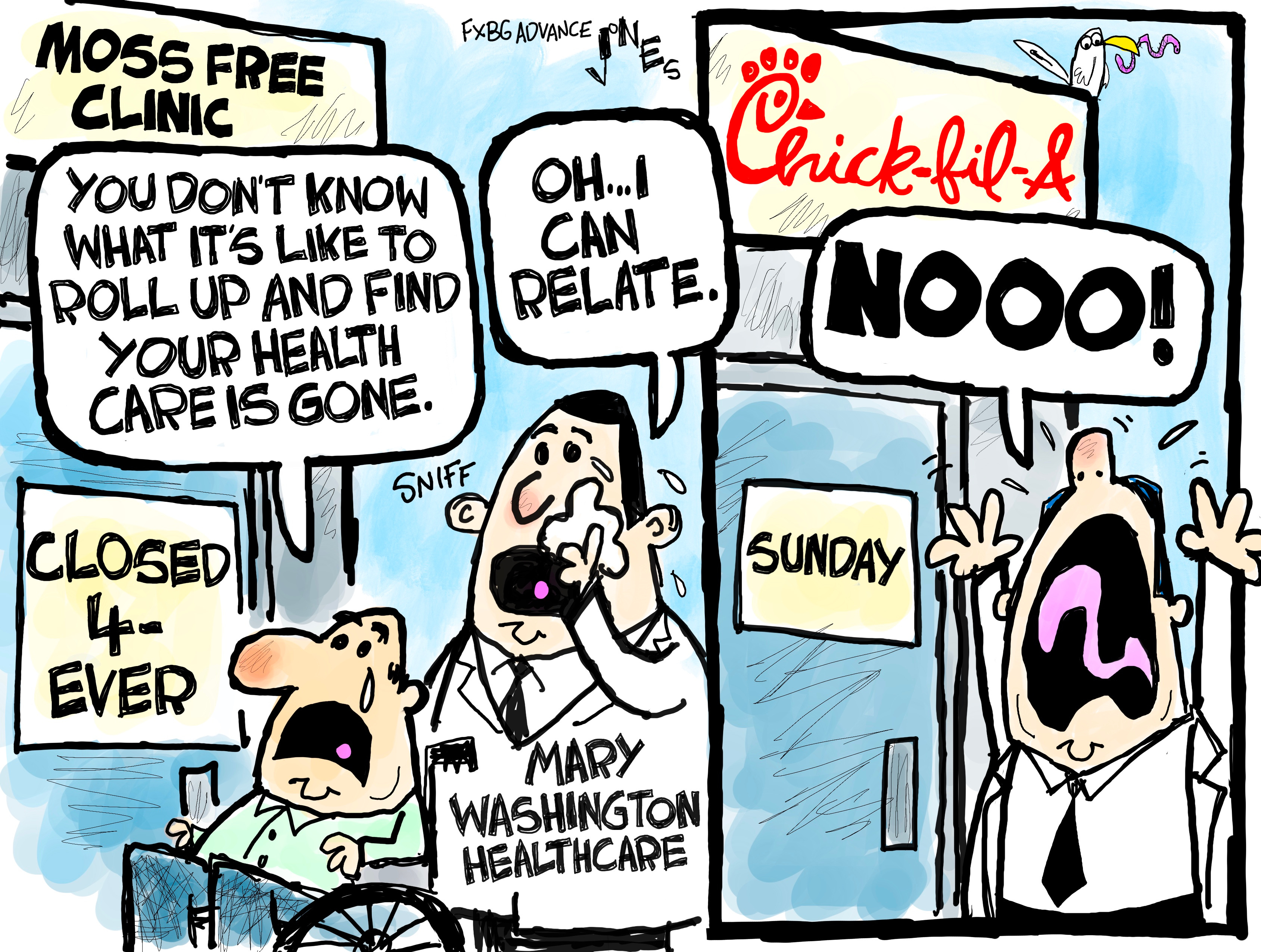
And no, you can’t get your healthcare at Subway Read on Substack
This cartoon was drawn (in California) for the FXBG Advance. Is it weird to draw a cartoon on Fredericksburg while in California? Not really. I did it in Huntsville, Alabama, and Montreal. I didn’t do one while traipsing the UK, Ireland, and Iceland.
Fredericksburg has lost Moss Free Clinic, and very important, and the only source for many for healthcare.
I covered this issue back in February 2024, way before I even started my Substack.
Creative note: I was out Thursday night in downtown Carlsbad when my editor sent me a few subjects. I knew this was the most important one. I wrote it in my head while having a Modelo. I got it approved the next day (Friday) and drew it that night.
Music note: I listened to Tom Petty’s Wildflowers album. (snip)
==========
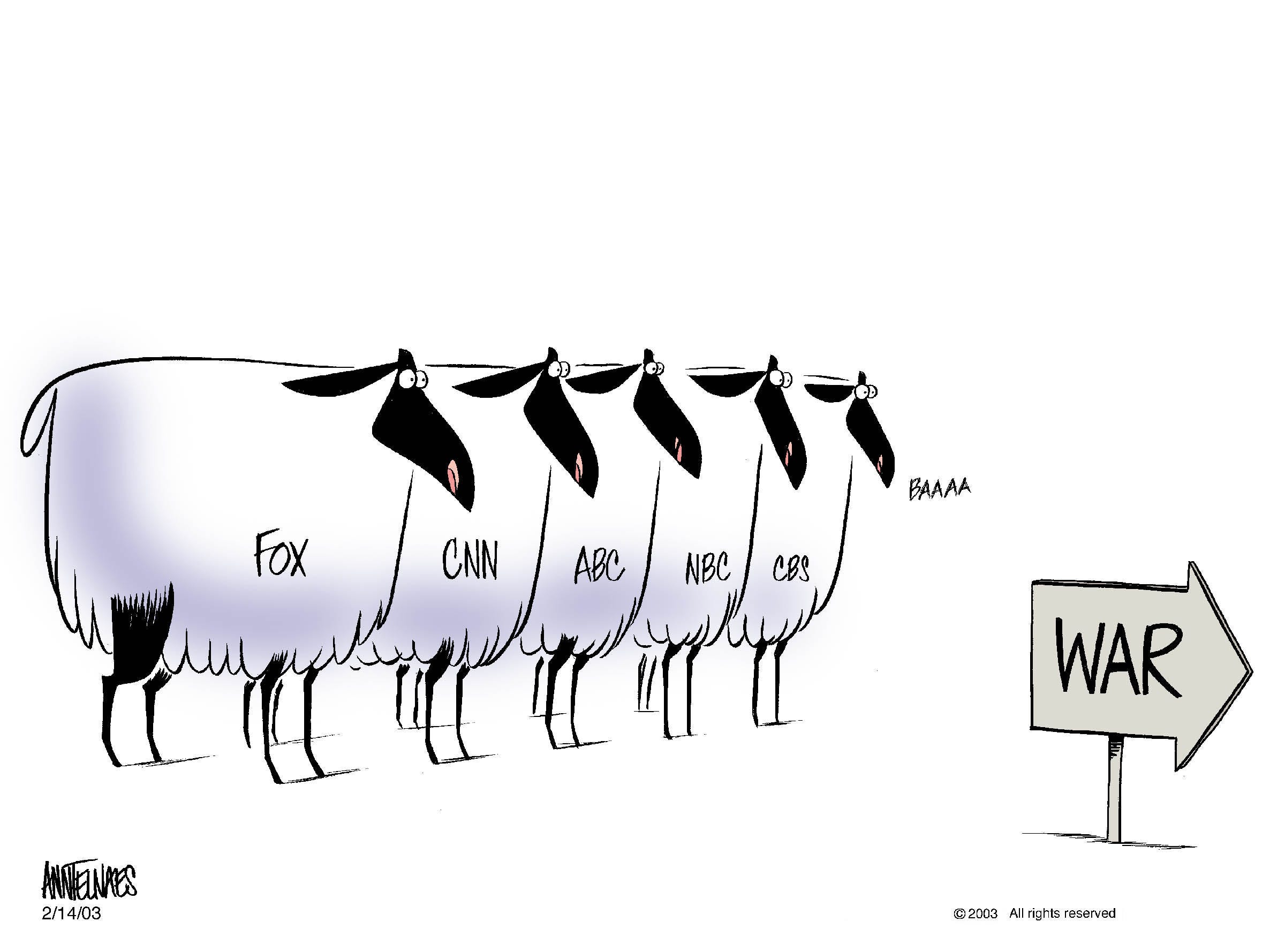
Trump orders strike on Iran by Ann Telnaes
Operation Midnight Shammer gets to play strongman Read on Substack
Yesterday Trump announced the bombing of three nuclear sites in Iran, claiming “the strikes were a spectacular military success. Iran’s key nuclear enrichment facilities have been completely and totally obliterated”.
Timothy Snyder, author of “On Tyranny”, posted on bluesky last night: “Many things reported with confidence in the first hours and days will turn out not to be true”.
The decision to go to war shouldn’t be left to a low-IQ racist, narcissistic toddler with impulse issues. I wonder if our generals feel like Hitler’s generals. In both cases, experienced and trained military professionals had to follow very stupid orders. In Hitler’s case, those orders cost Germany thousands of soldiers, either through death or capture.
Hitler was a veteran while Trump dodged the Vietnam War, citing bone spurs.
To the idiot conspiracy-theory spreading trolls at GoComics believing yesterday’s cartoon signals I’m for bombing Iran, no, morons. How could you come to that conclusion after years of reading my work?
To be clear, I do NOT support starting a war against any nation that hasn’t attacked us. This case is particularly stupid.
Donald Trump is demanding peace from Iran, which has never attacked us, after he dropped massive bombs on it. We HAD peace with Iran.
Years ago, Trump falsely predicted that President Barack Obama would start a war with Iran because he would be incapable of negotiating. Except it was President Obama who successfully negotiated for Iran to end its nuclear program, and the treaty was working. Iran was complying with all the conditions.
It was Trump who canceled the agreement and is now bombing Iran because he’s incapable of negotiating. And why would Iran want to negotiate with Donald Trump when they know they can’t trust him. How many treaties and agreements has Trump broken?
Iran doesn’t have a nuclear bomb today, or Trump and Bibi would not have bombed them. But Donald Trump just taught Iran that they need a nuclear weapon.
We may be slow learners of history, but the Iranians may not be. We forgot the history lessons of Vietnam and invaded Iraq. Iran probably remembers our demands on Iraq and Libya to lose their nuclear programs, only to see their regimes overthrown later.
Another history lesson we’re forgetting is our regime changes in Iraq and Afghanistan. How long is Trump prepared to commit US troops to this war? It’ll be a lot longer than Trump will be in office.
Last night, Trump said to the nation, “Iran’s key nuclear enrichment facilities have been completely and totally obliterated.” And then he said there are other targets. (snip)
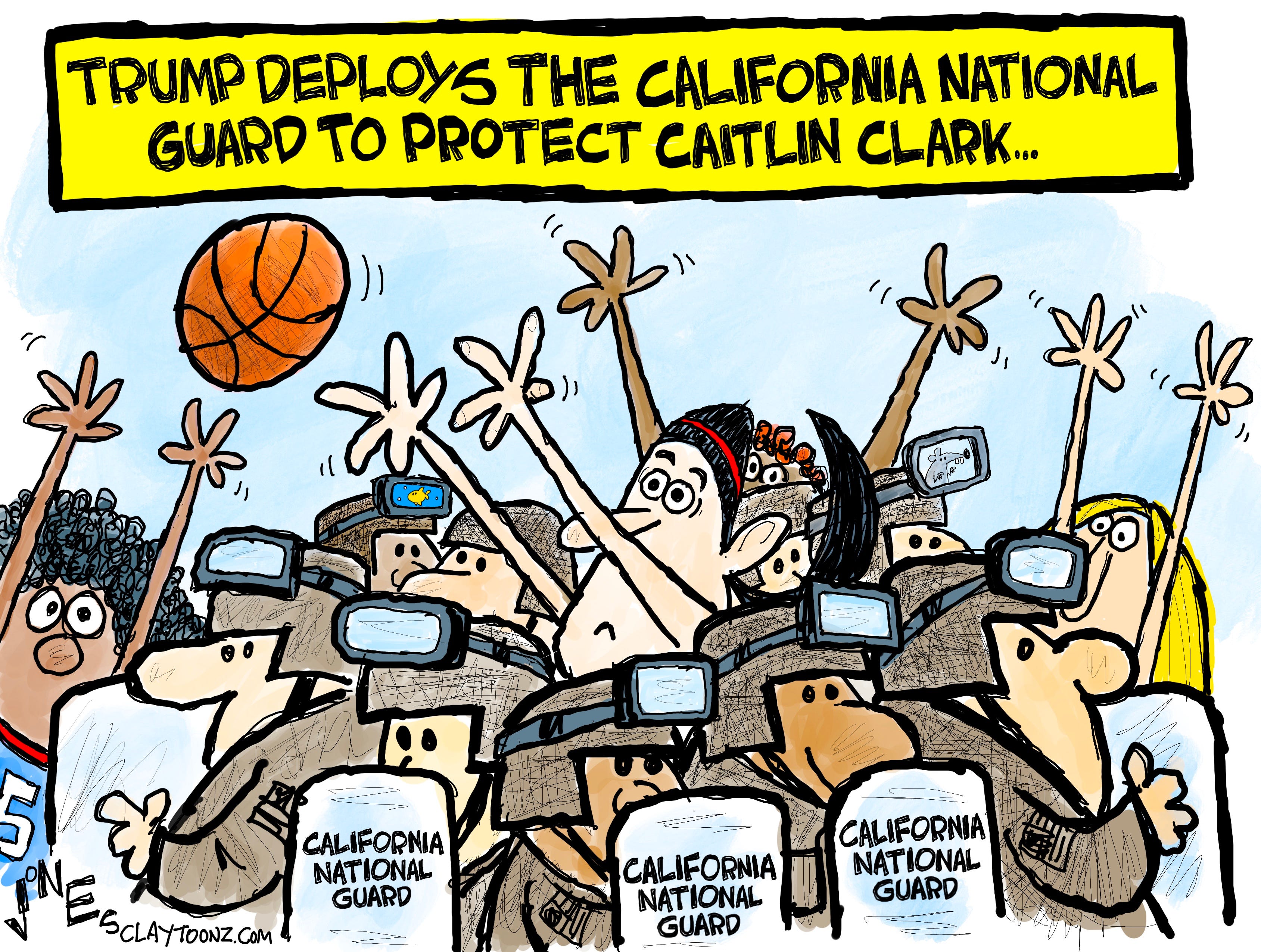
An appeals court is allowing Donald Trump to retain control of the California National Guard.
A three-judge panel of the San Francisco-based 9th U.S. Circuit Court of Appeals said Trump “probably” acted within his authority, and added that his administration “probably” complied with the requirement to coordinate with Governor Gavin Newsom, and even if it did not, he had no authority to veto Trump’s directive.
The panel, with two Trump-appointed judges and one Biden-appointed judge, is using “probably” a lot in their ruling. That’s probably a bunch of bullshit.
The law sets out three conditions that a president can federalize state National Guard forces; an invasion (which isn’t happening here), a “rebellion or danger of a rebellion” against the government (which isn’t happening here), or a situation in which the U.S. government is unable with regular forces to execute the country’s laws (another thing not happening here).
The appeals court said the final condition had probably been met because protesters hurled items at immigration authorities’ vehicles, used trash dumpsters as battering rams, threw Molotov cocktails, and vandalized property, frustrating law enforcement. There was that probably again. What about the cops shooting reporters? Which cop agency is enforcing that?
Yet, the governor never called the president (sic) to say that Los Angeles or California couldn’t execute the nation’s laws because ICE agents were having items thrown at them. And lately, ICE and Trump have been breaking more laws than protesters. Can we deploy a state’s National Guard to enforce laws on Trump?
The courts need to factor in that Trump deployed the National Guard to fight Californians. (snip-MORE, including Caitlin Clark)
I was admiring the view from my buddy’s backyard late yesterday afternoon when a hawk, or some kind of bird of prey, almost flew into my head. What?
The backyard overlooks a ravine. So the hawk was flying as usual, but his height decreased as he approached the hill, him not approaching the ground but the ground coming to him, and the next thing you know, he comes closer to objects on the ground, in this case, me. Bear with me, I’m making a point.
This did not happen on Tuesday, but it did happen yesterday, which was Wednesday (there may be some MAGAts reading, and they probably can’t figure out how a calendar works). What I’m telling you is that yesterday, there was a 100 percent increase in hawks nearly flying into my head.
Of course, I’m exaggerating. While the hawk did make me jump as it came from behind, it was probably about 15 to 20 feet away. Still, it was at my head level, though it wasn’t ever about to slam into me. I still jumped, but my point remains.
Immigration and Customs Enforcement and the Department of Homeland Security have both claimed multipletimes since May that there’s been a 413 percent increase in assaults against their agents to justify their wearing of masks to conceal their identities.
OK, DHS and ICE…since when? Since Trump took over the White House? I mean, gosh and golly gee wilikens, 413 percent is a lot. That is huge, right? You would think with such a huge increase in assaults that we’d hear more about it, especially since ICE agents are such huge victimized crybabies.
What action justifies being classified as an assault? I mean, if it’s the action New York City Comptroller and mayoral candidate Brad Landers committed when ICE illegally arrested him, then it’s not really much of an assault. When I was a kid, my mother used to threaten to beat me with a wet noodle. That threat of an “assault” never really scared me, and I was afraid of everything. The three things I was afraid of the most were sharks, tornadoes (before we even had Sharknadoes), and my mother. If you beat an ICE agent with a wet noodle, Kristi Noem would probably call it an assault.
I would have to know what kind of noodle would classify as an assault, only if it’s wet, of course. Would it have to be a spaghetti noodle, a linguine noodle, or a cork screw noodle? How about one of those Asian flat noodles? Maybe that could do some damage.
In a column for The Washington Post, Phillip Bump wrote, “That ICE uses a percentage is telling. A 413 percent increase could mean that the number of assaults went from 200 in 2024 to 1,026 in 2025 — or that it went from eight to 41.” Bump points out, “But there’s a big difference between an increase of 826 assaults and an increase of 33 — especially if some of those ‘assaults’ are of the Lander variety.”
If the assaults are of the Lander variety, then DHS and ICE are lying about the assaults. Also, if the assault by Landers was so bad, then why did ICE drop the charges, including assault, against him? (snip-MORE)
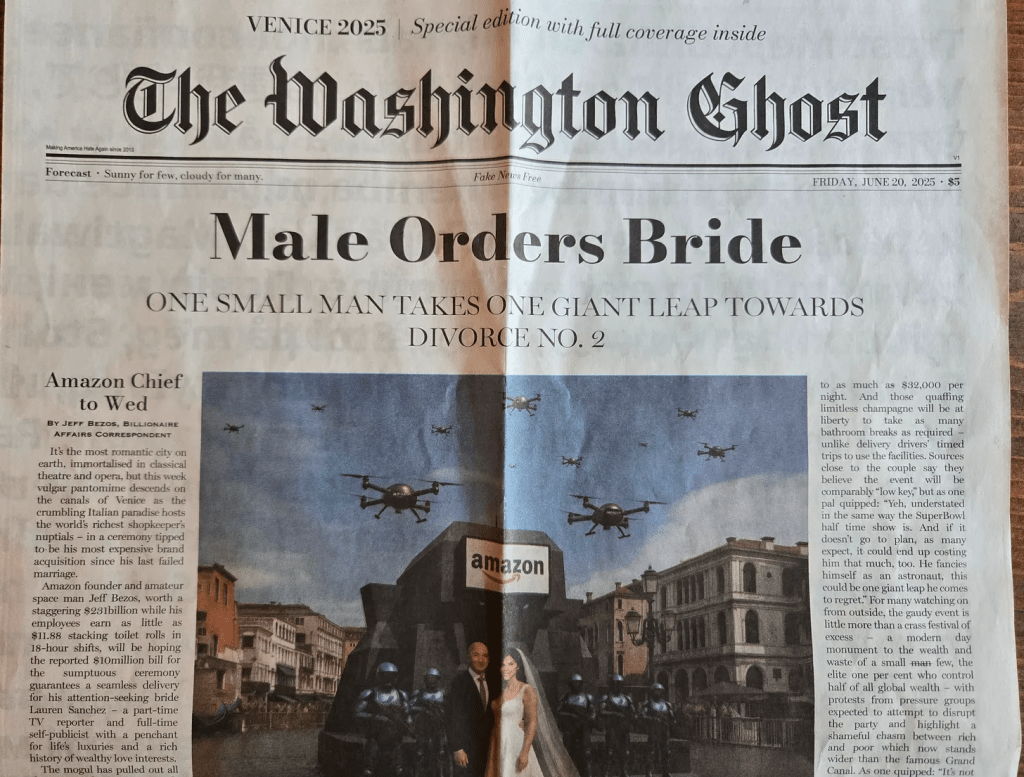
Special to The Washington Pist from The Washington Ghost Read on Substack
Hello. Today…
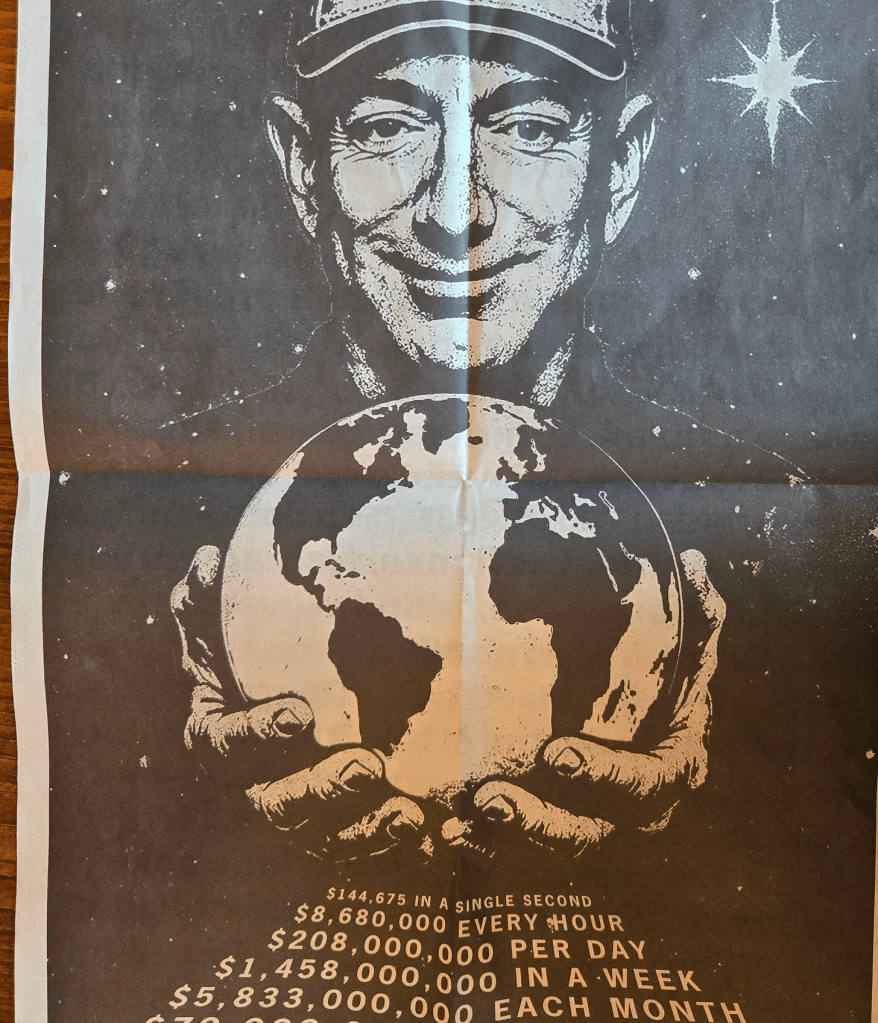
… is proud to re-publish, here, an unsigned parody newspaper that showed up on the streets around The Post building today, tucked under windshield wipers, etc. It’s four pages. That is the front page above, top and bottom, and the back page. It appears to be generated by Brits — they use the word “lorries” and “toilet rolls” — and is about Jeff Bezos’s revoltingly, ostentatiously tone-deafedly expensive upcoming marriage in Venice to the generously bodiced Lauren Sanchez at a time when his Post is drastically contracting its operation and jettisoning sections to save money, and when his overworked Amazon employees earn peanuts and have to pee in jars to meet their quotas.
That’s really all I have to report. Whoever is responsible for it is clearly a journalist and clearly paid quite a bit to produce it. It is very worth reading.
More stuff tomorrow.
—
Gene Pool Gene Poll: (snip-Go Vote! Click above on “Read On Substack”.)




 At the urging of Reverend William Hamilton, a freedman and carpenter, and others, the end of slavery was celebrated in churches. The Fourth of July had in the past been marred by young white men attacking black Americans.