Again all this is about is a Christian nationalist desire to mimic Russia and remove all LGBTQ+ representation from the public view in the name of “protecting children from porn” as if just being or media representing LGBTQ+ people is pornographic and sexual. These people feel anything not straight and cis is sexualizing and abusing children simply because they do not want the LGBTQ+ people to exist. Hugs
Side note. Ron got home last night 3-2-2026 about 6 pm. I made him a supper of a salad and two hamburgers with the fixings. He was so happy. I was happy. We went to bed and snuggled which made Tupac who has snuggled me every night a bit unhappy but he pressed in from the other side. All day Ron and I have been together, unloading the car, doing laundry, Ron started on the floors in the kitchen, and we are making a pork tenderloin, potatoes, brown gravy, carrots, and greenbeans for supper. It is so good to have my husband home. I understood why he had been gone for the better part of three months but it sure is grand to have him home. I feel better, anxieties lower, and happy feeling up. Also for those worried I was not eating which I was not, I ate like a pig at a trough tonight, having a first heaping plate of everything and then going back for a second heaping plate. The end of the second one was a bit challenging to finish but I did. I offered to pick up the last bits of left overs but ron said he would do it. I think he noticed I was trying to hide that I was swaying and wobbleing when I walked due to my pain levels. Hugs
Discussion of gender is not sexualization. Making books available to students that represent the diversity of their experiences and showcase the numerous ways to be a person in the world is not sexualizing them. Such an interpretation says far more about the adults and the perspectives they’re applying to books than it does about the books or their intended audiences.
Following this week’s State of the Union Address, House Republicans worked quickly to advance legislation to ban books from public schools nationwide. House Resolution 7661 (H.R. 7661), also known as the “Stop the Sexualization of Children Act” would modify the Elementary and Secondary Education Act of 1965 by prohibiting use of funds under the act “to develop, implement, facilitate, host, or promote any program or activity for, or to provide or promote literature or other materials to, children under the age of 18 that includes sexually oriented material, and for other purposes.”
The bill was introduced by House Representative Mary Miller (Republican, Illinois). 17 additional Representatives cosigned it.
H.R. 7661 is an anti-trans bill, and tucked within its provisions are those that ban books for those under 18 that “include sexually oriented material.” This is the same vague language used in numerous states across the U.S. to ban books from public schools and public libraries. This bill includes “lewd” and “lascivious” dancing as prohibited topics or themes. No such books for young readers exist, but facts don’t matter to a regime seeking total and complete control.
The bill goes on to further define “sexually oriented material” as anything broaching the topics of “gender dysphoria or transgenderism.” The latter is an intentionally harmful word used as a cudgel to harm trans people. Such a broad definition also ensures that this kind of bill could be applicable in any situation where it would benefit the banners. It isn’t a stretch to see a bill like this used to outright ban all books by or about LGBTQ+ people under the guise of it being “sexually oriented.”
Though this legislation would apply to institutions using funds from the Elementary and Secondary Education Act of 1965, there’s little question that it would expand to include all public libraries, not just those in public schools. We’ve already seen this very thing play out across the country.
These local-level policies, alongside state-level policies like Iowa’s Senate File 496 and Idaho’s House Bill 710–both still working their way through numerous lawsuits–provided the roadmap for the proposal of federal-level book ban legislation. It was only a matter of time, and the ongoing onslaught of anti-trans legislation and rhetoric that has grown exponentially under the Trump-Vance regime made this the prime moment.
Discussion of gender is not sexualization. Making books available to students that represent the diversity of their experiences and showcase the numerous ways to be a person in the world is not sexualizing them. Such an interpretation says far more about the adults and the perspectives they’re applying to books than it does about the books or their intended audiences.
You can read the full text of H.R. 7661 here, including its list of cosponsors. Right now, your best way to have your voice heard about this hateful and discriminatory bill is to call your House representatives and urge them to veto this bill at every opportunity. There are years’ worth of resources from which you can pull about where and how all of these bills are calculated and targeted, and you can pull from the numerous ongoing lawsuits challenging similar bills and policies at the local and state level. Let your lawmakers know that you’re watching them and their voting records, especially if they’re among the roster of those proposing the legislation.
These bills aren’t about removing books; books are just one of the tools. These bills are about the complete and total erasure and removal of queer people from American life.
Don't be fooled by this bill's name– this is a book banning bill that will exclude LGBTQ books from all public schools NATIONWIDE.Call your congresspeople and tell them to VOTE NO on this nakedly bigoted book banning bullshit. http://www.congress.gov/bill/119th-c…
The conflation of porn and LGBTQ (but specifically trans) issues is purposeful. It's part of the Project 2025 plan to criminalize LGBTQ+ ppl.It starts with books. It moves to bathrooms. Then it moves to govt IDs. We're in it already.You don't need to be an expert to see where this goes next.
Nazi Republican Mary Miller who has quoted Hitler in the past now wants to ban strippers in public schools…and she's all in with banning any book that dares mention LGBTQ+ issues…www.lgbtqnation.com/2026/02/gop-…
I can’t understand living just to hate and harm others who are not doing anything that harms you. To carry that bitterness and to work so hard to deny to others what you demand for yourself seems like poisoning one’s self. With so much to enjoy in diversity and inclusion why work so hard to create a homogeny of everyone being the same. Hugs
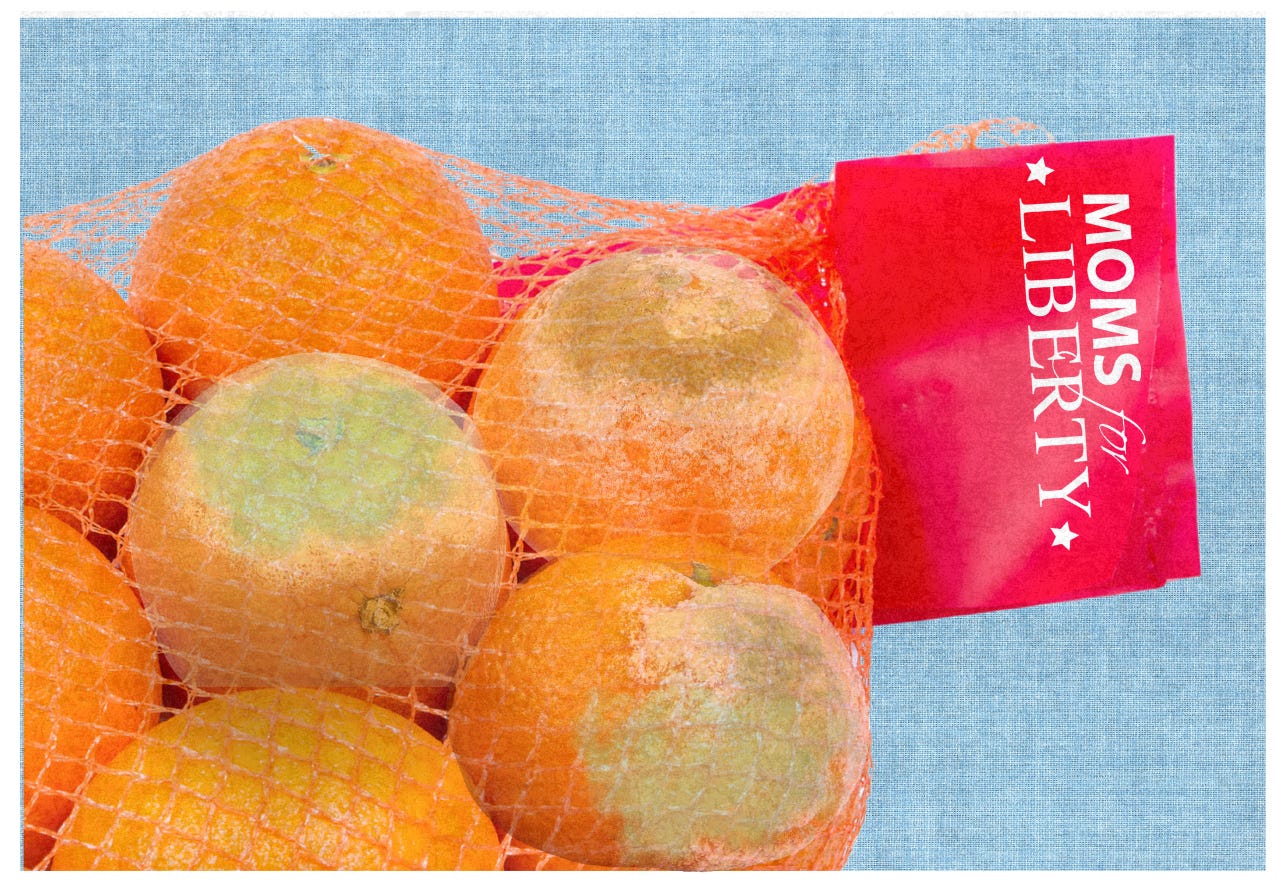
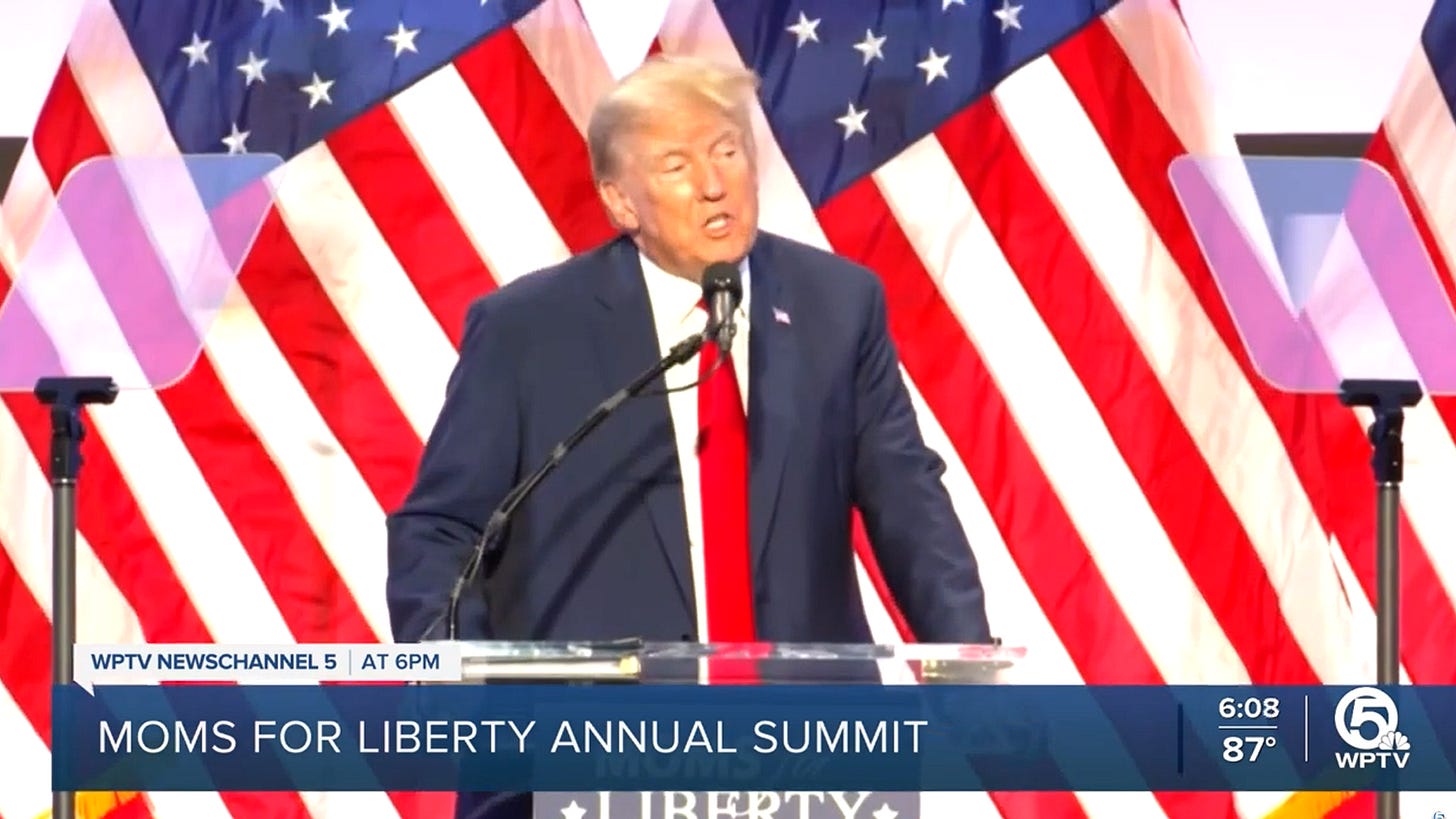
As the M4L annual summit kicks off this weekend, here’s how one of the group’s original chapters is sowing chaos and pushing anti-LGBTQ policies in Indian River County.
Mink Tyner says some people call her a “helicopter parent” because of how protective she is over her kids. Despite this, she wasn’t concerned about bringing her daughter, then 14, to the Indian River County, Florida, school board meeting in August 2023, where they were discussing changes to the state’s curriculum relating to race and slavery.
That’s why she was shocked when she saw community members at the podium reading excerpts of sexual content from books.
“I hate lights out now because my D has a mind of its own,” one woman read. Then a man came up and read, “When Doris had just turned 11, her current stepfather started having sex with her.” And a third person read, “He took a long long time peeling off my jeans and T-shirt, pink bra and panties, and a longer time stroking and kissing me.”
The meeting had turned into more of a stunt led by protestors affiliated with the local chapter of Moms for Liberty (M4L), a Southern Poverty Law Center-designated far-right extremist group.
“I’m not gonna have my kid in here listening to these adults doing this shit,” Tyner remembers thinking.
She took her daughter out of the room and pleaded with security to intervene, but they refused. So she spoke up to disrupt the meeting herself, only for security from the Sheriff’s office—who told Uncloseted Media their deputies responded “appropriately and in accordance with established procedures”—to escort her out.
As she was leaving, conservative pastor John Amanchukwu, who had attended the meeting with M4L, confronted her while recording a video that he would later post to X calling her “demonic” and lashing out about her being pro-LGBTQ: “You’re okay with DEI. … You’re okay with Pride Month. You’re okay with the rainbow flag. You’re okay with all that junk,” he yelled. Tyner responded by calling him a “fucking weirdo” and walked out.
That video opened a floodgate of harassment that tormented Tyner and her family for years: She received insults, accusations of pedophilia, and persistent threats of violence from a Facebook account displaying the name CURTIS COUSINS who called her a “fent-using fat fucking dyke” and told her she deserved to have “a potato peeler peel her clit right off to the bone.”
“I never know if this week or 10 years from now somebody’s gonna show up [to my business] based on some kind of misinformation that Moms for Liberty started about me [or] want to harm me and my family,” Tyner, who owns a tattoo shop, told Uncloseted Media.
Indian River County is home to one of the first of M4L’s 320 chapters nationwide. The group’s annual summit is this weekend and will feature a variety of politicians with anti-LGBTQ track records, including Oklahoma’s former state superintendent Ryan Walters, who made headlines for making anti-trans comments after the death of 16-year-old trans teen Nex Benedict. Last year, conservative heavyweights spoke at the event, including President Trump, Tulsi Gabbard and Sebastian Gorka.
Over the last four years, M4L have built a reputation for chaos and controversy. Members have made the news for quoting Hitler, stripping at a school board meeting and offering bounties to report teachers who teach about “critical race theory.”
At one point in Indian River County, close allies of M4L made up a majority of the school board where they pressured the district to ban scores of books, many of which contain LGBTQ themes, and reverse a racial equity policy—all while harassing, doxing and defaming their adversaries.
Maurice Cunningham, a retired professor of political science from the University of Massachusetts, says what’s playing out in Indian River County is a microcosm for so many other chapters across the country.
“[The media are] falling like suckers for this story that they’re a grassroots moms organization. They are not, they are connected to … the far right establishment,” he says. “And that’s become … more and more apparent. So this whole grassroots thing is hogwash.”
Beginnings
Moms for Liberty was founded in Florida in 2021 by three current and former school board members: Tiffany Justice, Tina Descovich and Bridget Ziegler, the latter of whom has since left the group after being involved in a sex scandal wherein her husband allegedly prowled local bars to solicit women for threesomes.
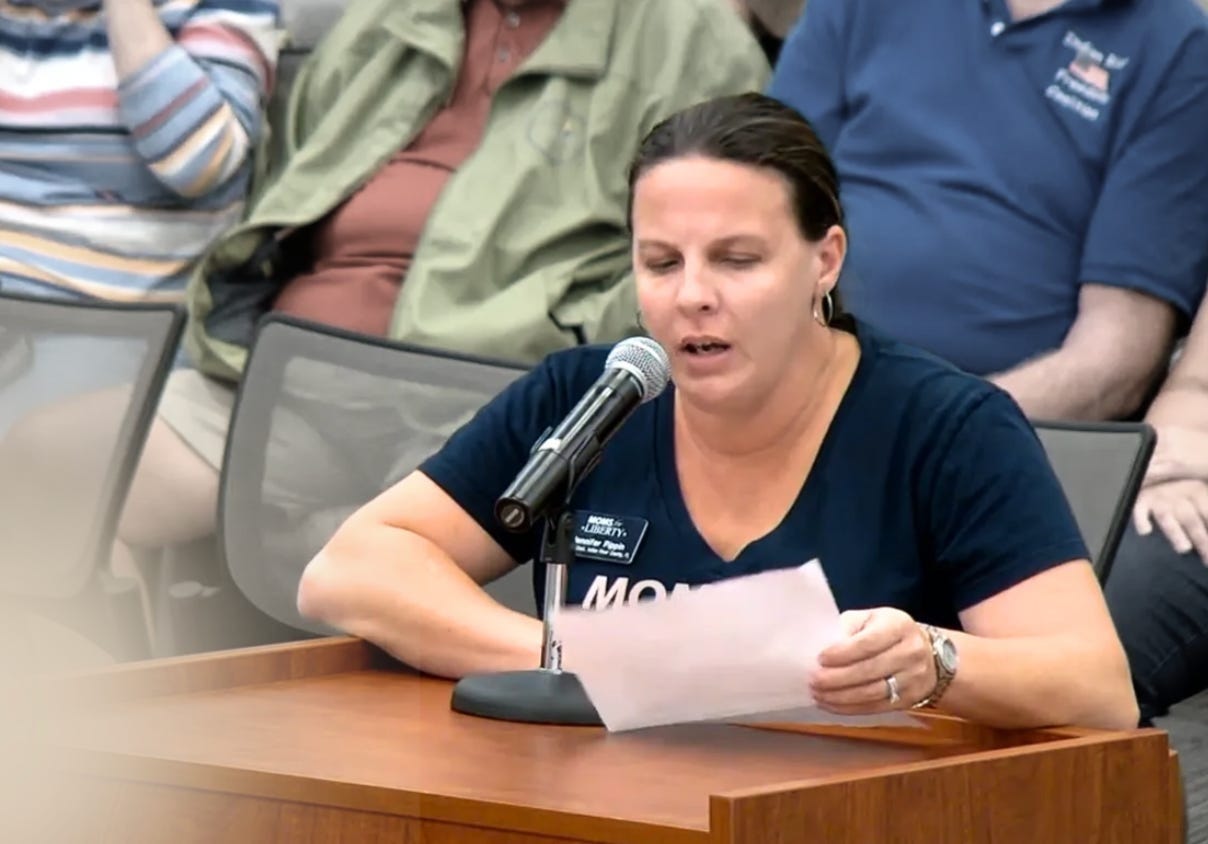
Shortly after M4L launched, Justice tapped Jennifer Pippin, who had made a name for herself for leading activism against COVID-19 restrictions, to lead the chapter for her home county, Indian River.
While the anti-mask circles that would later be folded into M4L always had a conservative lean, multiple county residents told Uncloseted Media that the group’s discriminatory views were not initially apparent.
Tyner, a lesbian who identifies as politically independent, actually felt welcomed by the group when she worked with them on their anti-mask mandate advocacy. However, that changed as M4L’s focus turned towards opposing LGBTQ inclusion measures in schools.
“Once they organized and got the appearance of a grassroots start … and many people in the community that were siding with them, it’s like they took the steering wheel and they just steered another direction,” she says.
When Tyner began speaking up against this rhetoric, she says she was blocked from the group’s Facebook pages. But as she continued to oppose them publicly, Justice offered to meet with her to address her concerns.
Over breakfast at a local cafe, Tyner says Justice gave her a “scripted” response in the hopes of winning back her support. She even invited Tyner to an M4L chapter meeting. However, Tyner declined as the meeting was allegedly to be hosted by a community member who had made an online post suggesting necrophilia and pedophilia are part of the LGBTQ umbrella.
“I was like, ‘Alright, this is not a good or a safe movement,” says Tyner.
Justice did not respond to a request for comment. In an email, Pippin told Uncloseted Media that M4L have “members and members children that are LGB in [their] chapter and across the country.”
Another local parent, who requested anonymity due to concerns about his job security, says while he’d initially been on board with M4L’s parental rights advocacy, he ran into conflict with the group when they started opposing the school district’s racial equity policies and tried to ban books with antiracist themes, including Ibram X. Kendi’s “Antiracist Baby”and “Stamped: Racism, Antiracism, and You.” Like Tyner, he says he was approached by Justice and Pippin to win him over again but was ultimately unconvinced.
After he split from M4L, he began publicly criticizing the group’s book bans. In retaliation, some M4L members accused him of supporting pedophiles.
When he reached out to Pippin to ask for the people making such accusations against him to be held accountable, he says she waved him off—all while blocking him on social media and accusing him of “bullying.” He also says that she doxed him after another dispute—a major factor in his decision to remain anonymous.
“Her response to me basically was ‘free speech,’ ‘we don’t control what our members say.’ And I’m like, ‘But Jennifer, you know me, and you know I’m not a pedophile, and this is unacceptable,’” he told Uncloseted Media.
Building Political Power
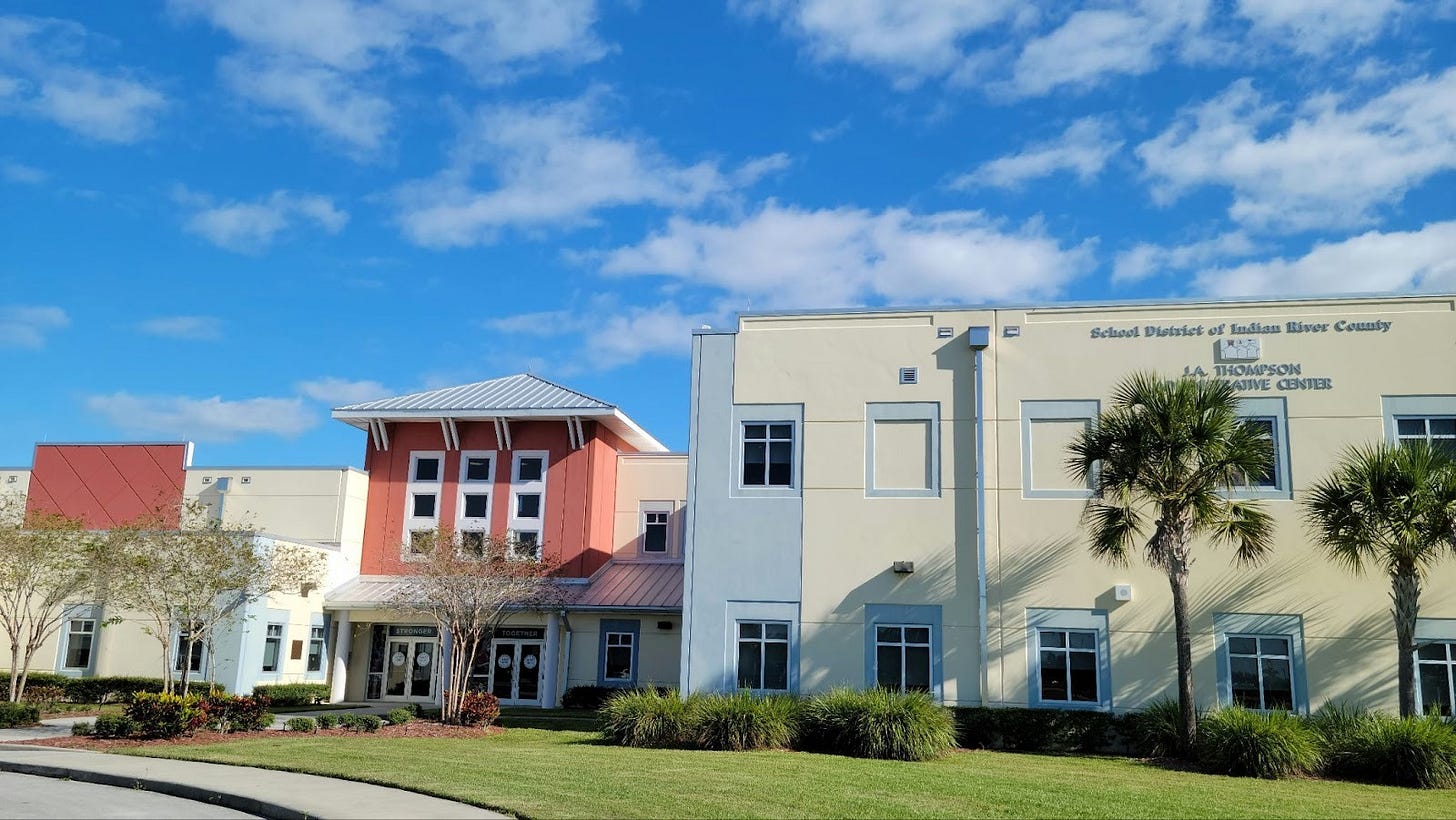
The Indian River County School District’s J.A. Thompson Administrative Center. Photo by Kiran891.
Efforts to ban LGBTQ and racial justice-related books in schools are part of M4L’s national ammo that helped them quickly explode in popularity.
Cunningham says M4L were boosted by high-profile connections on the right. Ziegler and Descovich both served as presidents of the Florida Coalition of School Board Members, a group billed as a conservative alternative to the Florida School Board Association. Ziegler’s husband, Christian, was vice chairman of Florida’s Republican Party at the time and worked as a media surrogate for the Trump campaign in 2016.
Since their launch, M4L have had their conferences and events sponsored by the Heritage Foundation and the Leadership Institute; were directly advised by Leadership Institute founder Morton Blackwell; and were a part of Project 2025’s advisory board. And this summer, Justice was hired as executive vice president of Heritage Action.
In 2022, the Indian River County chapter leveraged this influence to carve out power in local government: They got two close allies, Jacqueline Rosario and Dr. Gene Posca, elected to the school board, and they developed closerelationships with the Ron DeSantis-backed county sheriff Eric Flowers. Pippin was even appointed by Florida’s Department of Education to a statewide workgroup to develop compliance training for Florida’s classroom censorship policies, including the infamous “Don’t Say Gay” law.
As M4L became notorious for pushing exclusionary measures in schools, some officials—including school board member Peggy Jones—criticized the group. In retaliation, Jones reportedly received so many death threats that the district had to increase security detail at all school events where she was present.
In the midst of increasing chaos surrounding M4L, the group mounted a campaign of hundreds of requests to ban books containing “sexual content.”
While some librarians continued to hold the majority of books where bans were unsuccessful, M4L convinced Flowers to investigate one school library, alleging that keeping the books on the shelf could constitute a sex crime. While the investigation found that no crime had been committed, Flowers concluded that “we do not feel that this content is appropriate for young children,” putting even further pressure on local librarians.
Pippin at the school board meeting in August 2023. Photo via YouTube.
This kind of direct action proved very effective. Even the reading protest where Tyner was escorted out won them 34 additional book bans from a unanimous board vote.
“You can’t deny that the kind of tactics that they have have been useful,” Cunningham says. “Some of the places they’ve taken over, [including] Sarasota County, where Bridget Ziegler was on the board, became much more conservative over the past few years.”
Silencing Opposition
In addition to school board meetings, the group has a track record of trolling progressive events. Tyner and the anonymous parent remember an incident where a group of M4L members showed up to a local National Association for the Advancement of Colored People (NAACP) meeting that had been organized to discuss plans for opposition against new state regulations that required classes to portray slavery in a more positive light.Tyner says white M4L members attempted to shout down NAACP speakers, with one member allegedly using the n-word. Thomas Kenny, a M4L member who was at the event, said this “did not happen” and that one of their members using the n-word is “an absolute lie.”
Cunningham says these disruptions are part of M4L’s playbook. He pointed to the example of Jennifer Jenkins, the liberal school board member who unseated Tina Descovich in neighboring Brevard County, who says protestors spurred by M4L have turned up outside her home calling her a pedophile and burning “FU” in her lawn.
“They [use the] same kind of tactics … over and over again,” says Cunningham.
Pippin
Chapter leader Jennifer Pippin has mastered those tactics, becoming widely known as one of the most influential book banners in the country. She’s also made headlines for filing a complaint against the Kilted Mermaid, a Vero Beach wine bar, alleging that they had hosted an all-ages drag event with sexual content, which the bar owner denies. M4L rallied against the bar online, spamming the posts of one of the bar’s drag performers, telling the queen to “stay away from children.” This stunt caught the attention of Florida’s Attorney General James Uthmeier, who launched an investigation and issued subpoenas for video recordings of the bar on the day of the event as well as identifying documents for employees and performers.
Pippin has also claimed to be a nurse, despite no public records showing that she has a license, and appeared on the antisemitic and homophobic far-right news website TruNews, where she claimed, without evidence, that anti-M4L activists have been killing pets and livestock owned by the group’s members.
Fear
Tyner and the other anonymous parent both say that they’ve had to take a step back from the school board and local activism because of the toxic environment M4L have created.
“It’s been turned into such a circus,” Tyner says.
In the meantime, things have gotten worse for the LGBTQ community in Indian River County, and in Florida overall, between the “Don’t Say Gay” law and anti-LGBTQ legislation that requires teachers to deadname trans students unless they have signed parental permission slips. The anonymous parent says he’s watched many of the LGBTQ people in his life, including one of his own children, who is a teacher, leave the state due to the hostile environment.
“It’s not safe for a lot of people,” he says.
Greener Pastures?
Despite all of this, a sea change may be on the horizon. A 2024 Brookings report found that the success rates of M4L-endorsed candidates were on the decline, and in Indian River County’s elections last year, both of M4L’s school board candidates lost. With the continued controversies of the Trump administration and the growing popularity of groups that oppose M4L’s ideology, Cunningham feels the tide may be turning for M4L’s influence in Indian River County and across America.
“In school board races, the Moms for Liberty label is toxic, so try to not get attached to that,” he says. “They’ve had quite an impact … I don’t wanna downplay that. But in terms of popular appeal and growth, I think it’s much more limited than it is portrayed.”
Editor’s Note: In an email, Jennifer Pippin responded to the allegations made about her in this story. You can read them here.
If objective, nonpartisan, rigorous, LGBTQ-focused journalism is important to you, please consider making a tax-deductible donation through our fiscal sponsor, Resource Impact, by clicking this button:
Whistleblower Rutherford County Library Systems Director Luanne James claims the RCLS Board Chair, Cody York, instructed her to remove multiple books from the public library system without following the rules to do so.
James claimed York had checked out books he wanted banned and kept the books for so long they were marked as lost and then removed from the system. James also said York asked her to gather a list of library patrons’ personal information, including which books they checked out.
“Names of the patrons, their addresses, their ZIP codes, their barcodes, how many children and how many adults were in each household and what they were checking out,” James told the RCLS Board Monday night.
According to RCLS, James was appointed as the new Library Director, which went into effect on July 28. James claimed she was at her job for only two days before she was instructed to remove books.
During Monday’s meeting, York denied all James’ allegations and denied any wrongdoing, saying he requested patrons’ ZIP codes to see which patrons lived outside the county so they could pay an additional $25 fee to hold a library card. With regard to the missing books, York shifted the blame back to James.
“Does policy allow one board member or the chair to remove books?” York asked James during the board meeting.
“No,” James replied.
“So why did you do it [remove books]?” York said. “…I’m not denying that I told you these books should not be in the library, but I can’t make a decision to remove them — that’s your decision.”
A local advocacy group called the Rutherford County Library Alliance believes the following books listed are missing and had been removed from the library:
“Forever” by Judy Blume
“Over the River and Through the Wood: A Holiday Adventure” by Lisa Marie Francis Child
“The Antiracist Kid” by Tiffany Jewel
“Making a Baby” by Rachel Greener
News 2 hasn’t been able to independently confirm these specific titles are missing.
“If a librarian has put a book in our library, it’s because our community needs it, so by bypassing all of the professionals and saying, ‘Well, I don’t like it, so it should go because I don’t want my kid reading it,’ that goes against the First Amendment,” Keri Lambert, Vice President of the Rutherford County Library Alliance, told News 2.
“I believe it’s all driven by one motive only: to basically eliminate a certain class of people from the library collection as if they didn’t exist … To figuratively put them back in the closet, if you will,” Frank Lambert, a Library and Information Science Associate Professor at Middle Tennessee State University, told News 2.
News 2 reached out to Chair York, who responded with a statement:
“I categorically deny the allegations made against me last night.
The Rutherford County Library System has only two approved methods by which a title may be removed from the collection under our policies. Library staff may remove a title if it no longer meets the collection standard, such as relevance, condition, accuracy, or other established criteria, through the normal weeding process. A title may be removed by a vote of the Library Board, but only after the formal reconsideration process is completed. This process includes a written request, staff review, and a vote in an open public meeting.
Those are the only mechanisms permitted. No board member can direct the Executive Director to bypass either process. Raising questions about whether books in the collection meet our collection standards is not inappropriate.”
When News 2 reached out to the whistleblower, Luanne James, we received an Out of Office email, indicating she may still be employed by the library system.
No one forced these people to read the book. But just having the book there in open view enraged them. How dare this librarian admit that trans kids exist, that they are real. They wouldn’t have an issue with a book on child angels or mythical creatures, but humans that are different from the majority straight cis must be denied and destroyed. Forbidden knowledge seems big in the Christian extremest world. They seem to live for and delight in harming anyone or thing different from the way they want the world to be. They seem to think it fine for them to force their views on others but requiring factual teaching about science, biology, geology, race history is oppressing them. Imposing the idea that some people dress up in costumes to read books to children on them is a violation of their rights, but a kid’s desire to see themselves represented in media they feel they have a right to prevent. Hugs
The cover of the offending book, When Aidan Became a Brother by transgender male author Kyle Lukoff. | Lee & Low Books
Lavonnia Moore, a 45-year-old library manager, had worked at the Pierce County Library in Blackshear, Georgia, for 15 years. She was ultimately let go when a Christian extremist group filed a complaint to the library after Moore approved the display of a children’s book about a transgender boy.
According to Moore, the display (entitled “Color Our World”) included the book When Aidan Became a Brother (by trans male author Kyle Lukoff), a story about a family accepting a trans child named Aiden while also preparing for the birth of Aiden’s sibling. Library volunteers created the display as a part of a regional-wide summer theme featuring books that celebrate diversity.
“I simply supported community involvement, just as I have for other volunteer-led displays. That’s what librarians do — we create space for everybody… I did not tell the parents and children what they could or could not add to the display, just as I do not tell them what they can or cannot read,” she wrote in a statement.
However, the book caught the attention of a group calling themselves the Alliance for Faith and Family (AFF), not to be confused with the anti-LGBTQ+ legal group Alliance Defending Freedom. The AFF had previously been in the public eye for demanding the removal of a mural in the Waycross-Ware County Public Library, which included a Pride theme declaring, “Libraries Are For Everyone.”
The AFF campaigned on Facebook, urging their followers to pray and take a few moments out of their day to email the Three Rivers Library System and Pierce County Commissioners to “put a stop to this and show them the community supports them in taking a stand against promoting transgenderism at our local library,”
In an update post, the group wrote, “The display has been removed, and LaVonnia is no longer the Pierce County Library Manager. Please thank the Pierce County Commissioners and Three Rivers Regional Library System for quickly addressing our concerns.”
Moore and her sister Alicia confirmed that LaVonnia Moore had been fired. A statement to The Blackshear Times from the Three Rivers Library System Director Jeremy Snell explained that the library board leadership decided to move to new leadership for the Pierce County Library. He specifically cited the display of an “inappropriate” book as his reasoning.
“The library holds transparency and community trust in the highest regard,” Snell said.
“Instead of investigating, talking to me or my team, or exploring any kind of fair process, they used the ‘at-will’ clause in my contract to terminate me on the spot. No warning. No meeting. No due diligence. Just the words ‘poor decision making’ on a piece of paper after 15 years of service,” Moore claimed.
“I am just heartbroken,” she said of her dismissal.
According to Moore’s sister Alicia, “She messaged the family group and said ‘I was just fired.’”
“I don’t think she’s doing emotionally good, because imagine having to pack up 15 years in two days,” Alicia Moore told First Coast News.
“She’s heartbroken that a place she gave so much of herself to turned its back on her so quickly. And yes, she’s still in disbelief. She didn’t expect to be punished for doing her job with integrity and love for all patrons — especially children.” the sister explained.
The sisters are currently seeking legal counsel, and Alicia is urging people to reach out to the library board and county commissioners.
“I’m hoping the same method will be useful to get her justice,” Alicia said.
Subscribe to the LGBTQ Nation newsletter and be the first to know about the latest headlines shaping LGBTQ+ communities worldwide.
The fact is these kids are exposed to sex and gender as soon as they learn there is a difference between boy and girl. Hey what do you tell a boy in kindergarten when they need to go to the bathroom. That’s right in all their younger grades they are instructed to use the bathroom of their gender, boy go to the boys bathroom, girls go to the girls bathroom. That teaches them gender regardless of these cis straight religious people want to admit it or not. Plus their goal seems to deny their kids the idea that some people are different, have different feelings when those very kids are in their class and maybe their friends? They seek to deny these kids friendships with people who are different from them. It reminds me of the segregation issues in the southern state. White supremacist did not want their pretty white kids in the same class as the black kids they felt were … something. It is like they thought the black was able to spread and be caught. No matter if these religious people like it or not the world has changed, society has changed and it is not the time of their bible nor the fabled 1950s they dream existed. Trying to deny the existance of the LGBTQ+ is like trying to deny black people exist. Hugs.
Parents in Montgomery County, Maryland, want to be able to opt out of instruction on gender and sexuality that they say goes against their religious convictions.
January 17, 2025 at 6:54 p.m.
A large group of parents protested in Rockville, Maryland, on June 27, 2023, in an effort to allow their children to opt out of books that feature LGBTQ+ characters in Montgomery County schools. (Sarah L. Voisin/The Washington Post)
The Supreme Court agreed Friday to hear a case about whether public schools must give parents ofelementary schoolchildren a chance to opt out of instruction on gender and sexuality that they saygoes against their religious convictions.
Parents, who are Muslim,Roman Catholic and Ukrainian Orthodox, filed suit in 2023, saying the policy violates their First Amendment rights to freedom of religion.
The case puts the high court at the center of a contentious national debate over how to teach and treat gender and sexuality in schools, which has spurred fights over books, bathroom use and on which teams transgender athletes should be allowed to play.
Eric Baxter, an attorney for the families, said in a statement that the school system’s decision to disallow opt-outs was “cramming down controversial gender ideology” to 3-year-old pupils. Becket, a public interest institute that pushes for religious liberty, is representing the families, and has been involved in other cases on LGBTQ+ issues.
“The Court must make clear: Parents, not the state, should be the ones deciding how and when to introduce their children to sensitive issues about gender and sexuality,” Baxter said.
Montgomery County schools declined to comment, citing the pending litigation. Butthe districtwrote in filings to the high court thatan adverse ruling could upend long-standing legal precedent that guides how schools teach.
“Petitioners seek to unsettle a decades-old consensus that parents who choose to send their children to public school are not deprived of their right to freely exercise their religion simply because their children are exposed to curricular materials the parents find offensive,” attorneys for the schools wrote.
During the 2022-2023 school year, Montgomery County schools introduced a reading list of books that included LGBTQ+ characters as part of an effort to be more inclusive to its diverse student population. The lists were intended for students from prekindergarten to 12th grade and were created with parental feedback.
The school system required teachers to read at least one storybook a year from a group of titles that included “Pride Puppy,” which is about a gay pride parade; “Intersection Allies,” which is about a group of children discussing their differences; and “Love, Violet,” which is about a girl who has feelings for a female classmate.
“The storybooks are not used in any lessons related to gender and sexuality,” the school district wrote in itsfiling. “Nor is any student asked or expected to change his or her views about his or her own, or any other student’s, sexual orientation or gender identity. Instead, the books are made available for individual reading, classroom read-alouds, and other educational activities designed to foster and enhance literacy skills.”
The parents wrote in court documents that the Montgomeryschool board also issued guidance that instructed teachers to emphasize that “not everyone is a boy or girl” and that some “people identify with both, sometimes one more than the other and sometimes neither.”
As teachers started using the books in the classroom, some families wanted to opt their children out of the discussions due to concerns that the lessons and subsequent discussions would conflict with their religious views. The books that targeted elementary-aged students were particularly controversial.
Originally, some principals let families pull their children out of the classroom when the books were read. But in March 2023, the school system’s central office announced that opt-outs would not be permitted.
More than 1,100 parents signed a petition asking the district to restore the opt-out right and hundreds protested the decision. Maryland is one of 47 states and the District of Columbia that have opt-out or opt-in provisions for sex education in schools, according to the parents’ filing.
In May 2023, a group of parents filed a lawsuit against the school system, alleging that the district violated their First Amendment rights and that the decision went against a district policy that allows for religious accommodations. The parents are not asking the school system to drop the curriculum.
Other parents did not support opting out of the curriculum.
After the lawsuit was filed, the school system quietly stopped teaching two of the books referenced in the lawsuit because of concerns that it would “require teachers to explicitly teach vocabulary terms outside of the context of the lesson,” according to a district database.
The parentswho sued the district asked a federal judge in Maryland for a preliminary injunction to restore the opt-out provision, but the judge denied the request, ruling the parents were unlikely to succeed because they could not show “that the no-opt-out policy burdens their religious exercise.”
That ruling was upheld by a divided panel of the U.S. Court of Appeals for the 4th Circuit in Richmond, before the parents petitioned the Supreme Court to hear the case. Oral arguments in the case will be scheduled later.
Mark Eckstein, a Montgomery County schools parent and LGBTQ+ advocate, said he wasn’t surprised the Supreme Court agreed to hear the case, given that discussions around gender and sexuality have roiled school communities across the country.
“I strongly believe that the district court ruled correctly, and I’m hoping there will be a vigorous defense of the wisdom of that decision and MCPS’s policy,” he said.
Montgomery is one of a number of school districts where controversy has flared over books dealing with sexuality and gender. In 2023,a Georgia teacher was fired after she read a book about gender conformity to her fifth-grade class. She sued.
A group of parents in Dearborn, Michigan, sued the school district in 2022, seeking to remove books from school libraries they felt had inappropriate sexual content. Hundreds of mostly Muslim parents also protested at a school board meeting.
The effort was part of a broader push to pull somebooks from schools and libraries. The American Library Association found more than 4,200 book titles were targeted for removal from schools in libraries in 2023, greatly outpacing the 2,500 targeted the year before. Almost 50 percent of the titles dealt with gay and minority themes.
The Supreme Court has moved in recent terms to expand religion in education and the rights of the religious.
In 2o22, a divided court ruled that Washington state discriminated against a football coach who prayed at midfield after a high school football game. The same year, the high court ruled Maine could not exclude religious schools from a voucher program that provides public assistance for education.
Last year, the high court ruled that the constitution’s free speech provisions shield some businesses from being required to provide services to same-sex couples, after a web designer argued she should not have to do such work because of her religious beliefs.
Justin Jouvenal covers the Supreme Court. He previously covered policing and the courts locally and nationally. He joined The Post in 2009. follow on X@jjouvenal
The case was filed by the Catholic anti-LGBTQ hate group, the Becket Fund, whose senior counsel celebrates below.
The Becket Fund last appeared here in July 2024 when they sued to overturn Michigan’s ban on ex-gay torture.
In 2014, the Becket Fund joined with NOM, San Francisco Archbishop Salvatore Cordileone, and Alliance Defending Freedom to form an anti-LGBTQ “supergroup” to battle same-sex marriage.
In 2013, the Becket Fund joined with major Catholic groups in sponsoring the so-called Manhattan Declaration, signers of which avow that they will “civilly disobey” laws that protect LGBTQ people from discrimination.
The Becket Fund was founded in 1994 by a former Reagan administration Justice Department lawyer who worked under future Supreme Court Justice Samuel Alito.
The group is named for Saint Thomas Becket, who was Archbishop of Canterbury under King Henry II until he was murdered by followers of the King in the year 1170.
Outside of LGBTQ issues, the Becket Fund is best known for winning cases on behalf of the Little Sisters of the Poor and Hobby Lobby.
We need more of these laws protecting the representation of minorities and the ideas the fundamentalist right hate, such as female autonomy. The only way to get more states to do this is to elect more progressives, become more vocal over what we want, and to support those who advocate for the full support of equality and inclusion of everyone in society, sometimes called DEI. Hugs
Gov. Phil Murphy, at the Princeton Public Library, signs legislation Monday aimed at barring public libraries and schools from banning books.
New Jersey Gov. Phil Murphy, a Democrat, signed a law Monday prohibiting public schools and libraries from banning books and protecting librarians who obey state law.
Murphy’s signing of the Freedom to Read Act comes amid an ongoing push by conservative lawmakers and activists across the country to challenge books they consider inappropriate for minors, particularly those about LGBTQ issues and race. Lawmakers in at least 13 states this year have introduced legislation to disrupt library services or limit their materials, according to an NBC News tally.
“Across the nation, we have seen attempts to suppress and censor the stories and experiences of others,” Murphy said in a statement. “I’m proud to amplify the voices of our past and present, as there is no better way for our children to prepare for the future than to read freely.”
Murphy during an interview in New York on Nov. 22.
In September, PEN America, a nonprofit dedicated to promoting free speech, reported that the number of books being removed from school shelves during the 2023-24 school year had tripled from the previous year, to more than 10,000.
The PEN America report, along with one from the American Library Association released that same month, outlined how frequently challenged books are often about or written by people of color or those who identify as LGBTQ.
In 2023, the American Library Association’s list of the 10 most challenged books nationwide included Toni Morrison’s “The Bluest Eye,” a novel about a young Black girl who grew up after the Great Depression; Maia Kobabe’s “Gender Queer: A Memoir,” a graphic memoir about the author’s exploration of gender identity from adolescence to young adulthood; and George M. Johnson’s “All Boys Aren’t Blue,” a coming-of-age memoir about a queer Black man.
New Jersey -is the third state to sign a law prohibiting the banning of books at public schools and libraries, following Illinois and Minnesota.
The new law is set to take effect in a year from the governor’s signing. However, the state education commissioner and the New Jersey state librarian are permitted to start implementing it immediately “as may be necessary,” the law states.
“Through this legislation, we are protecting the integrity of our libraries that are curated by dedicated professionals and making those resources available to help every student to grow as a critical thinker,” New Jersey acting Education Commissioner Kevin Dehmer said in a statement.
Today the Freedom to Read Act from @AndrewZwicker will be signed into law by @GovMurphy – protecting a reader’s freedom to access information and safeguarding librarians from harassment.


 The cover of the offending book, When Aidan Became a Brother by transgender male author Kyle Lukoff. | Lee & Low Books


 Scottie's Playtime
