Beautiful skating, and Elton is tops! 💃 🎶 ⭐
Definitely Happy!
Beautiful skating, and Elton is tops! 💃 🎶 ⭐

Beautiful skating, and Elton is tops! 💃 🎶 ⭐
(trying to get a good blood pressure this morning! -A.)
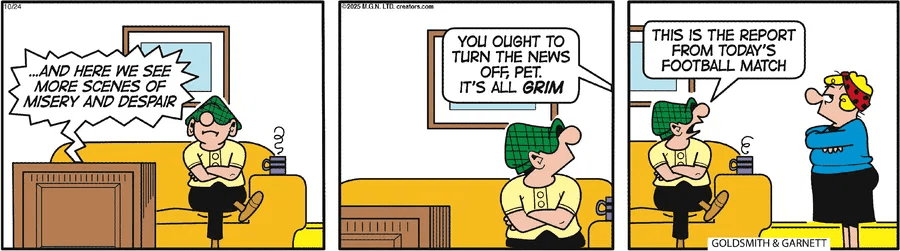
https://www.gocomics.com/andycapp/2025/10/24

https://www.gocomics.com/bliss/2025/10/24

https://www.gocomics.com/broomhilda/2025/10/24

https://www.gocomics.com/calvinandhobbes/2025/10/24
(Whew! 114/71. It’s not 108/68, but it’s still fine. Now I can read some more comics, then the news… )

https://www.gocomics.com/closetohome/2025/10/24

Right from the start of my leaving the military I vowed to be an out proud gay man. This was in 1986. It has lead to a lot of embarrassing conversations. People have asked me such personal questions on same sex actions and how gay feelings might differ from straight feelings. At first I found it weird and offensive, but as I got older I realized I brought a lot of straight cis people to be allies simply by being willing to answer sensitive or stupid questions. I remember one weekend a straight co-worker with two young children showed up at my house. Thankfully he had left his children at home with a sitter as he had lost his wife. After talking for a few minutes he got around to discussing gay sex and why I liked it. I struggled to understand his questions and to explain it to him. He then surprised me. He said show me. I was like what? He said let’s have sex. I thought oh shit a straight guy who just wants to fuck a gay guy and put that notch on his sex card. I was wrong. He started taking off his clothing and said to me, you say it feels good, it is like me with a woman, so it should be the same. He wanted to do oral sex and then anal, but wanted me to do anal with him being the bottom first. I was desperately trying to explain to him that the first time can be bad or painful and it is not just about sex. It is a need, and emotional feeling. He was like we are friends, I like you, you like me so it should be OK.
Let’s just say after that night he was still straight but he understood how two men had sex. I was surprised when after giving him oral he insisted on doing the same to me. But later I remembered my years in the military and how many straight young guys begged me to go with them on passes and have sex. It was never one sided. I have realized a lot of bigotry can be undone, can be reversed by simply sharing time with those that are the “other”. Everyone needs someone to hold, to touch, to feel a connection with. Hugs
Definite beverage alert!
120 years ago, 11-year-old Frank Epperson left his drink on the front porch on a chilly night. That accident became one of the most successful frozen dessert brands in the nation.

An early advertisement for Popsicle (National Archives)
Whether their favorite is ice cream, popsicles, or gelato, most people would agree that frozen treats are delicious.
While the origins of frozen desserts are unclear, they likely trace their roots back to the Ancient Persians, who used ice houses to produce and store faloodeh and sorbets. First-century Roman cookbooks included recipes of sweet desserts sprinkled with snow. Marco Polo is (probably falsely) credited for introducing frozen desserts to Italy after his travels in China, and Thomas Jefferson popularized ice cream in the United States — his handwritten vanilla ice cream recipe from the 1780s was one of the earliest in the nation.
But one story in frozen dessert history stands out, and it is not about a United States president or a Silk Road explorer: It’s about an 11-year-old boy.
On a winter day in 1905, young Frank Epperson made a beverage mixing soda powder with water to stay hydrated. One night, he accidentally left his cup on the porch overnight with a stirring stick inside, according to popsicle.com. Temperatures dropped during the night, and the next morning, Epperson found his cup where he had left it, no longer liquid, but now an icy snack. He ran the cup under hot water, pulled it out using the wooden stick, and tasted the new frozen dessert. He named it the Epsicle — a combination of “Epperson” and “icicle” — but unlike the process of its invention, the product didn’t turn into a national success overnight.
Epperson continued making Epsicles for his friends, and later, his children — who began calling the treat “Pop’s Sicle” or “Popsicle,” the name the brand keeps to this day — for many years. He also sold popsicles around his neighborhood until 1923, when he decided to expand his market to Neptune Beach — known as the “West Coast Coney Island” — where it became a beloved treat, selling as many as 8,000 in one day.
Following this popularity, Epperson applied for a patent on June 11, 1924, describing the Popsicle as a “frozen confection of attractive appearance, which can be conveniently consumed without contamination by contact with the hand and without the need for a plate, spoon, fork or other implement.”

Epperson’s request was approved two months later, and he immediately sold all of the rights to the invention that had defined much of his life to the Joe Lowe Co., which later started a subsidiary called the Popsicle Industries. Epperson later regretted the loss, saying: “I was flat and had to liquidate all my assets. I haven’t been the same since,” according to NPR. The frozen dessert brand, however, continued on without him.
A few years later, the Great Depression began to weigh heavily on the American public. As the stock market crashed and employment declined, struggling families had to cut out the ten-cent popsicles from their purchases. In response, the Popsicle Corporation devised the first two-stick popsicles so that two children could enjoy a snack for the price of one. According to a 1931 advertisement, “People who could not afford dimes, quarters and halves for ice cream gladly bought Popsicles at a nickel each for children, family and friends.” The two-stick popsicle became a huge success, doubling the company’s sales in a year. The Popsicle Corporation later declared itself “Depression Proof.”
But not everything was as sweet as the dessert itself for the Popsicle brand. The Popsicle Corporation also had rivalries with the company Good Humor — a brand known for their chocolate-coated bars and the first ice cream trucks. The dispute resulted in a series of court cases over patent violations. The initial conflict ended with a compromise: The Popsicle Corporation would sell iced treats with no milk, and Good Humor would sell products containing milk. However, with the drop of dairy prices in 1932, Popsicle ignored the agreement and decided to tap into the ice cream market — coming out with a “Milk Popsicle” that included 4.48 percent butter fat.
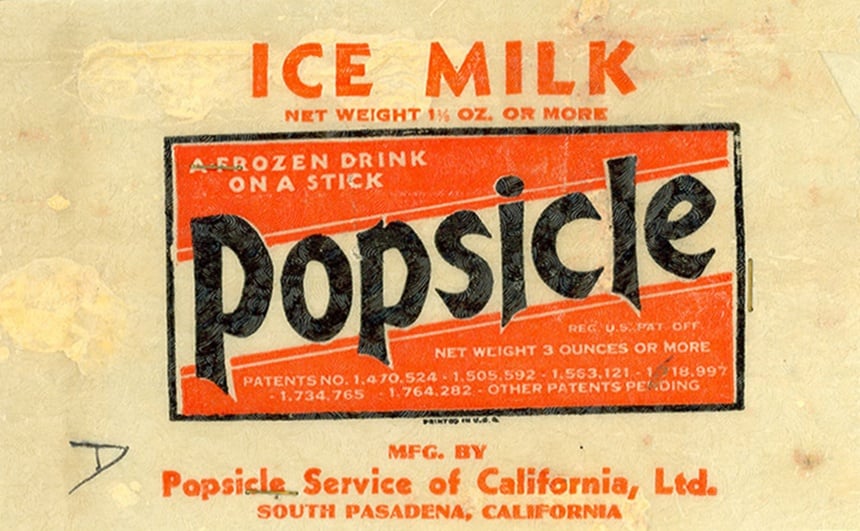
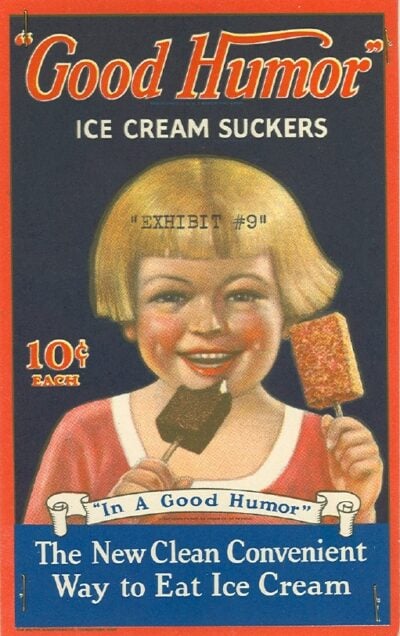
Good Humor filed a lawsuit immediately. Both sides fought to define “sherbet.” Good Humor strictly defined it as “flavored water ice,” but Popsicle rebutted, claiming that most state regulators did not categorize the Milk Popsicle as ice cream, but with terms such as “imitation ice cream,” “frozen custard,” “milk sherbet,” or “ice milk.” The judge ruled for Good Humor, and both companies signed their new court-approved agreement on April 7, 1933. Ironically, over the next six decades, Unilever — one of the largest global consumer goods companies — bought the rights to both Good Humor and Popsicle, ending the Cold War between the two companies.
If you remember buying a cold treat from a neighborhood ice cream truck on a hot summer day, eating a Firecracker during a Fourth of July party, or splitting a two-stick pop with a friend, you’re one of millions that probably has nostalgic memories of Popsicles. It continues to be one of the most popular frozen dessert brands, and for that, we have an 11-year-old Frank Epperson to thank.
An old food photos post-
Vanessa Barron
Sat, October 4, 2025 at 9:20 AM CDT

Yahoo is using AI to generate takeaways from this article. This means the info may not always match what’s in the article. Reporting mistakes helps us improve the experience.
Step back in time and into the kitchens of mid-century America, where no party would be complete without tiny morsels of food elegantly arranged on colorful plates to greet guests. In the 1950s, home entertaining was all the rage thanks to postwar prosperity and the rise of suburban living, and dinner parties became a cornerstone of middle-class American society. Hosts armed with cookbooks like “Betty Crocker” and “Good Housekeeping” perfected the art of elegant yet approachable hors d’oeuvres. Unlike more formal, old-fashioned dining customs, these appetizers were often served in the living room before dinner. In theory, they were meant to stimulate both the guests’ appetite and their conversation; in practice, they gave the host some breathing room to prepare for the elaborate meal ahead. Regardless, appetizers were expected to delight both the eyes and the palate. In the ’50s, presentation was everything.
Appetizers have been around since Ancient Greece, when feasts would begin with small plates of snails, sea urchins, and pickled cabbage to leave guests just a little hungry for the main course. Later, appetizers gained popularity across Europe, from Russian caviar to Scandinavian smorgasbords. By the 1950s, these bite-sized offerings were still relatively rare in everyday American cuisine but quickly became commonplace at formal banquets, weeknight dinners, and casual gatherings. From the ubiquitous shrimp cocktail to the adventurous rumaki, these classic nibbles came to represent hospitality, abundance, and the optimistic spirit of the era. Keep reading to discover the most popular appetizers that delighted hungry guests in mid-century America.
Read more: 15 Vintage Ice Cream Flavors No One Seems To Eat Anymore

When you picture a 1950s dinner party, you might imagine classic cocktails like martinis and highballs in every hand. But if you flip through cookbooks from that era, you’ll find that many hosts actually served fruit cocktails before dinner. These could take the form of diced fruit served in dainty sherbet cups, or a simple blend of fruit and vegetable juices presented in stemware. Far from being an afterthought, they were considered a refreshing and wholesome start to a meal, whether served on their own or alongside other appetizers.
Juice itself was a relatively new commodity at the time. During World War II, scientists developed frozen orange juice concentrate to provide soldiers with vitamin C. This innovation led to the formation of Minute Maid, which made juice more affordable and firmly established it as a household staple by the 1950s. Many baby boomers grew up drinking juice daily as a part of a well-balanced diet.
Cookbooks of the era reinforced the idea that juice cocktails were a sign of good hosting. Betty Crocker cheerfully advised (albeit in very dated language), “The clever wife has a simple appetizing cocktail ready for her weary husband when he comes home at night. Vegetable or fruit juices are at their best when two or three tart flavors are chilled and served ice cold in appropriate glasses.” A 1951 home economics textbook also suggested that a proper informal dinner should begin with cold tomato juice seasoned with spices, served alongside canapés as a complete appetizer. For more elaborate entertaining, Betty Crocker and Good Housekeeping recommended tomato-sauerkraut juice or even pineapple-lemon foam cocktails made with whipped egg whites.

Shrimp cocktail is a retro favorite that’s never really gone out of style. Visually striking and refreshingly simple, it epitomized mid-century elegance. Surprisingly, cocktail sauce was originally created as an oyster pairing; shrimp only took center stage in the 1950s. The shift came about due to dwindling oyster supplies and major advances in refrigeration. By the late 1940s, shipping fresh shrimp by truck had become standard practice, and suddenly, this once-coastal delicacy was available nationwide. Shrimp cocktails quickly became a glamorous staple, especially in the glitzy casinos of Las Vegas.
Cookbooks of the era eagerly embraced the trend, showcasing seafood cocktails with zesty cocktail sauces. Presentation was considered just as important as flavor. Betty Crocker’s 1950 cookbook suggested serving shrimp with chopped celery or skewering them on toothpicks for easy nibbling. Good Housekeeping’s 1955 cookbook offered more dramatic ideas — arrange the shrimp in a lettuce-lined sherbet glass for formal occasions, or, for casual living-room entertaining, serve them on a plate with cocktail sauce tucked into a hollowed-out tomato, grapefruit, or avocado shell. It also suggested adding a green garnish and keeping toothpicks on hand so guests could keep their fingers clean.

A simple recipe with elegant results, deviled eggs have been a crowd-favorite appetizer for ages. In fact, deviled eggs are significantly more vintage than you might think — as in, 13th-century vintage. Medieval cookbooks include recipes for eggs filled with all kinds of ingredients, including saffron, mint, cilantro, and pepper. The term “deviled” didn’t come around until the late 1700s, when it was used to refer to dishes prepared with spicy seasonings, the idea being that the devil loved heat.
Deviled eggs were particularly popular appetizers in the 1950s. Advances in refrigeration made eggs easy to store, and their affordability and versatility made them a natural choice for home entertainers. They were simple to prepare, endlessly customizable, and visually appealing. Betty Crocker’s 1950 cookbook praised deviled eggs with poetic flair, describing them as “Mounds of savory yellow egg yolks in white frames. A stunning garnish and satisfying appetizer…food for picnics and parties.”
The basic formula involves mashing hard-boiled egg yolks with mayonnaise, mustard, or salad dressing and a handful of spices before piping the mixture back into the whites. Mid-century cooks often added their own twists, using ingredients like paprika, pimientos, minced ham, or dried beef to create deluxe versions of the bite-sized treat. Whether served at picnics, cocktail hours, or holiday spreads, deviled eggs embodied the 1950s love of practical and pretty appetizers.

A beloved retro appetizer perfect for summer picnics and cocktail parties, stuffed celery enjoyed a long stretch of popularity throughout the 20th century. Conceptually, it’s not far from deviled eggs — many recipes even use similar fillings, which is why the two often appeared side by side on appetizer platters. The appeal is easy to see: stuffed celery is incredibly easy to make, relatively light, and looks elegant on a serving dish.
Stuffed celery can be endlessly customizable. In the 1950s, Good Housekeeping suggested six variations, ranging from olive-nut and sardine-pickle fillings to pineapple-horseradish for more adventurous palates. Meanwhile, Betty Crocker kept it simple, suggesting a filling of Roquefort and cream cheese seasoned with Worcestershire sauce.
There are all sorts of ways to present stuffed celery, too. The stalks can be served whole, cut into bite-sized sticks, or pressed together and sliced into decorative pinwheels. Betty Crocker even suggested tying string around the stalks while they chill so the celery curls into appealing shapes. As with most mid-century appetizers, appearance was key. But the real charm of stuffed celery was the crisp and refreshing taste that didn’t spoil your appetite.

Pigs in a blanket remain an enduring American favorite, beloved for their simplicity and universal appeal. They’re the perfect finger food: sweet, salty, savory, easy to make, and even easier to eat. Pigs in a blanket are a descendant of the British sausage roll but first started appearing in American cookbooks in the 1930s.
“The Joy of Cooking,” an iconic cookbook from 1936 that’s worth a pretty penny today, included a recipe for “Sausages in Pastry or Biscuit Dough.” By 1944, a U.S. military cookbook was calling them “Pigs in Blankets,” cementing the dish as a mainstay of American food culture.
Despite requiring only two ingredients, there is some room for customization. Betty Crocker recommended using Vienna sausage halves wrapped in thinly rolled pastry or rich biscuit dough, baked until golden and flaky. However, for an even more retro meat choice, you can substitute the hotdogs with Spam. Whether they’re making the rounds at a 1950s cocktail party or showing up at a modern potluck, pigs in a blanket have never really fallen out of fashion.

Dips and spreads were everywhere in the 1950s, a trend reflected in the sheer number of recipes found in cookbooks of the era. Most of these recipes revolved around soft dairy bases like cream cheese, sour cream, or mayonnaise, all of which had become more widely available thanks to the rise of home refrigeration. With reliable cold storage now standard in American kitchens, perishable ingredients could be shipped, stored, and served more safely, fueling a boom in dairy-rich appetizers.
There was also a clever shortcut that made dips a breeze — just one of many forgotten cooking hacks from a bygone era. One of the decade’s most enduring innovations was French onion dip. Sometime in the 1950s, an anonymous home cook discovered that stirring a packet of Lipton’s dehydrated onion soup mix into sour cream created a quick and delicious dip. The recipe caught on like wildfire. Lipton quickly embraced it, marketing the mixture as California Dip in advertisements that doubled as recipe cards. Soon, copycat versions hit the market, using the name French onion dip.
For homemade spreads, Betty Crocker offered combinations like cheese-anchovy or herring-apple, along with the infamous Hollywood Dunk, made with deviled ham, horseradish, onion, chives, and whipped cream. Typically served in the living room with colorful garnishes on a festive tray, dips and spreads epitomized the 1950s love of convenience and creativity.

Cheese balls were the life of the party in the 1950s. Like so many mid-century appetizers, they were popular because they were extremely simple to make, easy to customize, and had an undeniable visual appeal. After all, nothing says “Wow!” quite like a giant ball of cheese at the center of the snack table.
Legend has it that the very first cheese ball dates back to 1801, when a Massachusetts farmer presented President Thomas Jefferson with a colossal 1,200-pound wheel of cheese. However, the appetizer-sized version didn’t appear in print until 1944, listed in a Minneapolis cookbook. From there, the ’50s home-entertaining culture elevated cheese balls to a party staple that would remain popular throughout the rest of the century.
Cheese balls are typically made by combining cream cheese with shredded cheese, herbs, and spices. Some enterprising cooks even include a meaty element in their recipe, fortifying their cheese balls with dried beef. This mixture is then shaped into a sphere and rolled in chopped nuts or fresh herbs for added texture. Paired with chips or crackers, the cheese ball was the mid-century party centerpiece guests could literally gather around.

Special occasions call for stylish appetizers, and rumaki was a trendy mid-century favorite. First introduced at Trader Vic’s in the 1940s, the dish fit neatly into America’s burgeoning tiki craze. The name might not ring many bells today, but rumaki is closely related to the vintage British seafood-based appetizer, Angels on Horseback. Its classic form features water chestnuts and chicken liver, both wrapped in bacon, marinated in soy sauce, and flavored with ginger and brown sugar.
By the 1950s, rumaki was a common feature at prominent U.S. tiki bars and Chinese-American restaurants, often appearing on pupu platters alongside egg rolls and chicken-on-a-stick. By the 1960s, rumaki had crossed into the suburban mainstream — it even makes a cameo on the TV show “Mad Men,“ when Betty Draper serves it at an international-themed dinner party.Trader Vic’s founder, Victor Bergeron, suggested the recipe came from Chinese cooking by way of Hawaii, but it’s more likely that it was his own invention. Authentic or not, rumaki embodied the mid-century appetite for exotic flavors in appetizer form.
Read the original article on Tasting Table.
(The Harvest [full] Moon is fullest at 10:47PM CDT tonight.)

https://www.gocomics.com/arloandjanis/2025/10/06
It’s from a year ago even though it showed up in my phone stream-thing last night. It’s good, so here it is. ALSO: remember he’s hosting The Daily Show Tues. through Thurs. this coming week-yay!
 Scottie's Playtime