Leaked Interior Department database reveals US plans to revise historical information

This is total white supremacy Christian nationalism and an attempt to both roll back all civil rights of minorities and project a fake white Christians were the only good people in the country mentality.  Propaganda in other words to support fragile white men’s egos and prop up declining church attendance.  This is driven by people who don’t want to share the country equally with others but want everything for their group only.  They want to remove an entire group of people from society, the LGBTQ+ community and go back to the pre1960s civil rights for nonwhites.  Hugs
An internal government database first reported, by the Washington Post and posted on two public on Monday revealed the scope of the Trump administration’s ​effort to revise or remove information on African-American history, LGBT rights, ​climate change and other topics at hundreds of national park ⁠sites.
“The narrative being advanced is false and these draft, deliberative internal ​documents are not a representation of final action taken by the department,” ​an Interior Department spokesperson said. The National Park Service is part of the Interior Department.
————————————————————————————————————————————-

https://www.reuters.com/sustainability/climate-energy/leaked-interior-department-database-reveals-us-plans-revise-historical-2026-03-03/?taid=69a67fff36cfd000018dfcee&utm_campaign=trueAnthem:+Trending+Content&utm_medium=trueAnthem&utm_source=twitter

Illustration shows United States Department of the Interior logo and U.S. flag
United States Department of the Interior logo and U.S. flag are seen in this illustration taken April 23, 2025. REUTERS/Dado Ruvic/Illustration
The U.S. Interior Department said a database revealing how President Donald Trump’s administration planned to revise information on key phases of ​American history at national park sites was deliberative and the employees ‌who released it “will be held accountable.”
An internal government database first reported, by the Washington Post and posted on two public on Monday revealed the scope of the Trump administration’s ​effort to revise or remove information on African-American history, LGBT rights, ​climate change and other topics at hundreds of national park ⁠sites.
“The narrative being advanced is false and these draft, deliberative internal ​documents are not a representation of final action taken by the department,” ​an Interior Department spokesperson said. The National Park Service is part of the Interior Department.
Trump has targeted cultural and historical institutions – from museums to monuments to national ​parks – to remove what he calls “anti-American” ideology.
His declarations and executive orders have ​led to the dismantling of exhibits on slavery, the restoration of Confederate statues and other ‌moves ⁠that civil rights advocates say could reverse decades of progress.
The Interior Department spokesperson alleged the internal working documents were edited in a misrepresenting way before being released. The spokesperson also labeled the release as inappropriate and ​illegal, without specifying the ​law it ⁠allegedly violated.
“Employees who altered internal records and leaked in an effort to hurt the Trump administration will be held ​accountable,” the spokesperson added.
The Trump administration has sought to stifle internal ​dissent within ⁠government agencies and taken action against employees who have criticized its policies.
Last year, some employees at the Federal Emergency Management Agency were put on leave ⁠after they ​signed an open letter against the agency’s ​leadership, while some Environmental Protection Agency employees were fired after they signed a letter critical of ​the government’s actions.

Reporting by Kanishka Singh in Washington; Editing by Thomas Derpinghaus

Two More Histories From Wendy the Druid

(Both important stories. Of course, language alert, but definitely good reading here. -A)

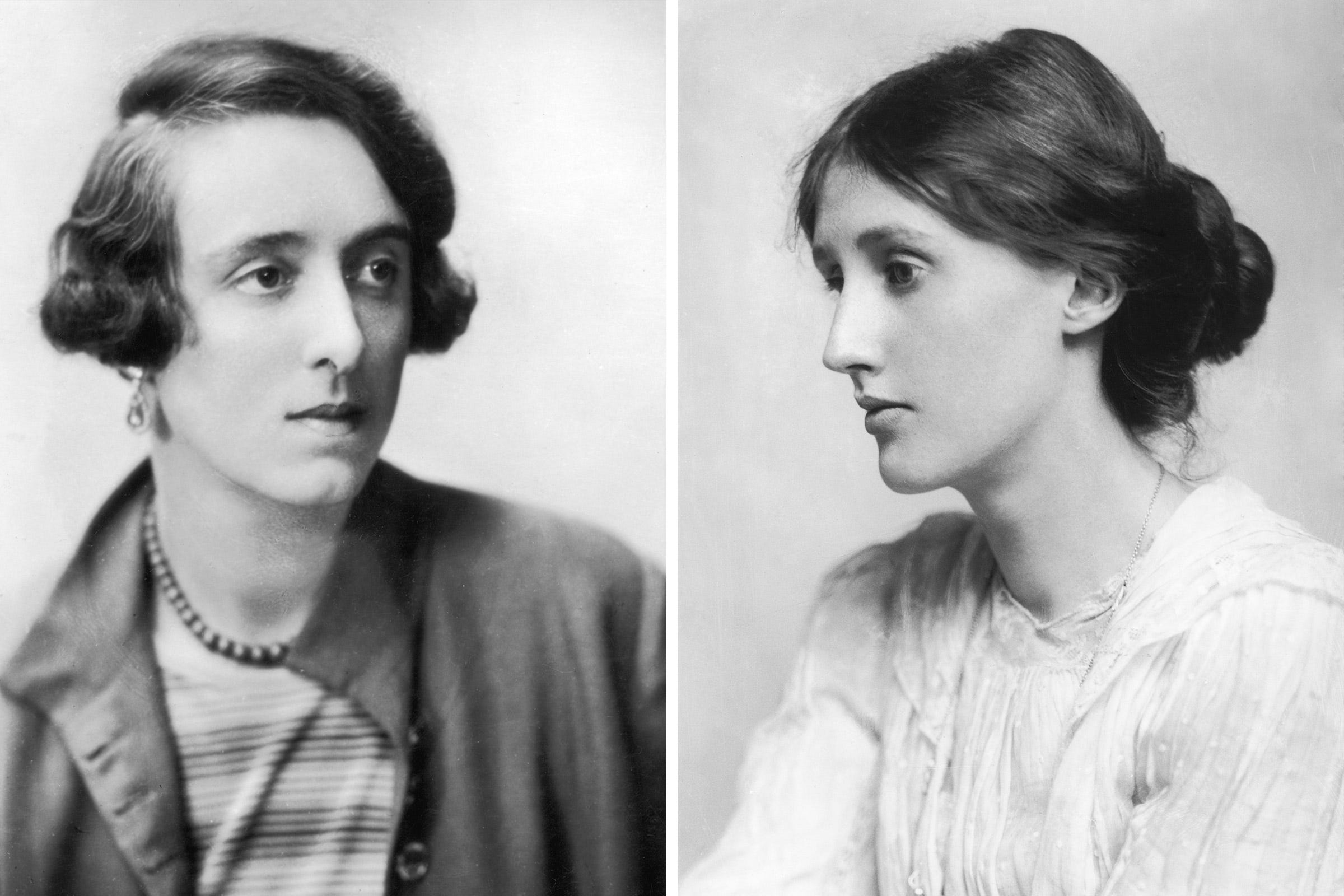
Queer History 124: Virginia Woolf & Vita Sackville-West by Wendy🏳️‍⚧️🏳️‍🌈🌈

How an aristocratic garden-loving poet inspired the 20th century’s most experimental “love letter” ….. Read on Substack

When Virginia Woolf first met Vita Sackville-West at a dinner party in 1922, neither woman could have possibly predicted that their relationship would produce one of the most revolutionary novels of the 20th century. On the surface, they seemed like complete opposites: Virginia—brilliant, fragile, middle-class, and sexually timid; Vita—aristocratic, confident, adventurous, and sexually voracious. Yet their decade-long affair transcended a simple romance to become one of the most creatively fertile partnerships in literary history, producing a groundbreaking gender-bending masterpiece that still feels radical nearly a century later.

The True Story of Virginia Woolf and Vita Sackville-West | TIME

Let’s cut through the academic bullshit that often sanitizes their relationship and explore what really happened between these remarkable women. Their letters reveal a passionate connection that was intellectual, emotional, and unmistakably physical. “I am reduced to a thing that wants Virginia,” Vita wrote in one letter. Not exactly the chaste “friendship” that some literary historians tried to paint it as for decades. Their affair challenged the conventions of their time, their social circles, and ultimately, the very form of the novel itself.

The Women Behind the Legend: Who They Really Were

(snip-More; it’s really good!)

Queer History 125: The Raw, Unfiltered History of Sapphic and Platonic Queer Cultures by Wendy🏳️‍⚧️🏳️‍🌈🌈
Read on Substack

The Goddamn Poetry of Desire: An Introduction

The ancient world was no fucking stranger to same-sex love. While modern society often frames homosexuality as a contemporary phenomenon—something that emerged from the shadows of the closet into the damn light of day during the liberation movements of the 20th century—the historical record tells a far more complex and fascinating story. Long before we had Pride parades and marriage equality, we had Sappho of Lesbos and Plato of Athens, two figures whose works and philosophies have profoundly shaped how we understand same-sex desire.

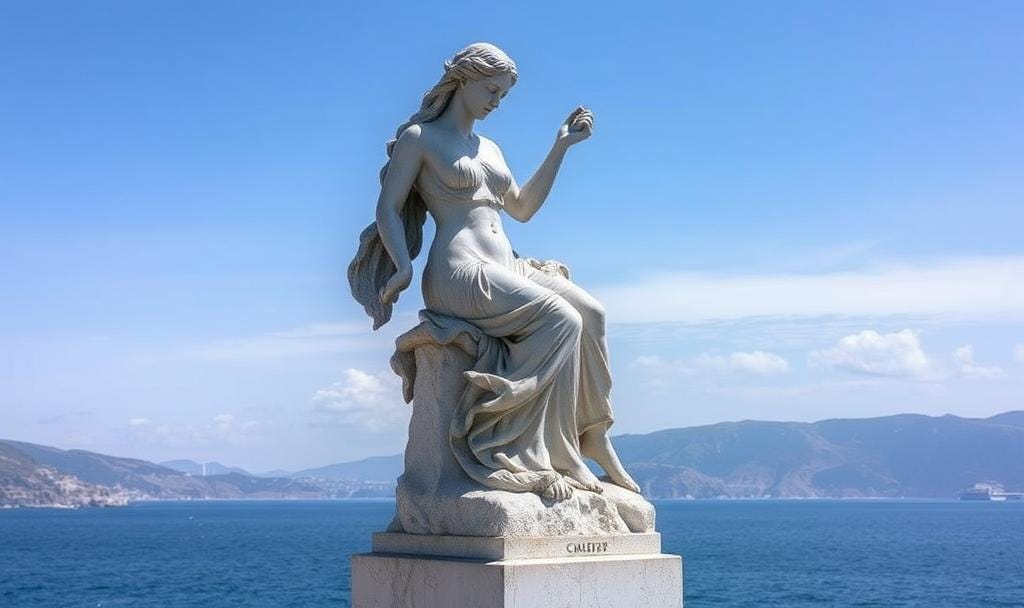
Sappho Lesbos

The rocky shores of Lesbos and the philosophical gardens of Athens—separated by the azure waters of the Aegean—gave birth to two distinct yet equally significant homosexual cultural traditions that continue to echo through the halls of queer history. These traditions, one centered on the passionate lyrical expressions of a woman poet, and the other on the philosophical musings of a male thinker, offer us a window into the complex ways same-sex desire was articulated, celebrated, and sometimes condemned in ancient Greek society.

Standing on the windswept cliffs of Lesbos, one can almost hear the lyrical whispers of Sappho’s poetry carried on the salt-laden breeze—fragments of desire that have survived over two and a half millennia. Meanwhile, in the once-bustling agora of Athens, the philosophical dialogues of Plato still reverberate, offering a theoretical framework for understanding male same-sex love that has influenced Western thought for centuries.

This analysis isn’t just about ancient history—it’s about the living, breathing legacy of these traditions and how they’ve been twisted, reimagined, and reclaimed through the bloody centuries. It’s about the raw power of words to shape how we understand our deepest desires and most intimate connections. It’s about the tension between poetic expression and philosophical reasoning in articulating the ineffable experiences of love and longing.

So let’s cut through the academic bullshit and get to the heart of the matter. Let’s explore the goddamn fascinating parallels and divergences between these two seminal traditions—one rooted in the fragmented verses of a woman whose very name has become synonymous with female homosexuality, and the other in the philosophical dialogues of a man whose ideas about love between men have shaped Western thought for millennia.

The Lyrical Fucking Fire: Sappho and Her Sacred Circle

On the sun-drenched isle of Lesbos, around 630-570 BCE, Sappho created a world of women that would reverberate through time like a pebble dropped in still water, its ripples still touching distant shores millennia later. The island’s rugged landscapes and azure waters formed the sensuous backdrop to her life and work—a physical paradise that mirrored the emotional and erotic paradise she created in her verses. (snip-More important history)