August 12, 1953 The first Soviet hydrogen (thermonuclear or fusion) bomb, far more potentially damaging than those dropped on Japan, was exploded in the Kazakh desert, then part of the Soviet Union. Igor Vasziljevics Kurcsatov, head of the Soviet Uranium Committee, said to Josef Stalin at the time: “The atomic sword is in our hand. It is time to think about the peaceful use of nuclear energy.” The Soviet Nuclear Weapons Program
August 12, 1982 Open missile tubes on Trident sub Twelve were arrested in an attempted blockade of the first Trident submarine, the USS Ohio, entering the Hood Canal in the state of Washington. In motorboats, sailboats and small handmade wooden vessels, the demonstrators were objecting to the presence of nuclear weapons in Seattle. The Coast Guard overturned some of the vessels with water cannon.
August 12, 1995 Thousands demonstrated in Philadelphia and other cities in support of journalist and former Black Panther Mumia Abu-Jamal (on death row for murder since 1982) in the largest anti-death-penalty demonstrations in the U.S. to date. All Out For Mumia Abu-Jamal
August 11, 1894 Federal troops forced some 1,200 jobless workers across the Potomac River and out of Washington, D.C. Jack London Led by an unemployed activist, “General” Charles “Hobo” Kelly, the jobless group’s “soldiers” included young journalist Jack London, known for writing about social issues, and miner/cowboy William ”Big Bill” Haywood who later organized western miners and the Industrial Workers of the World (IWW). “Big Bill” Haywood Read about “Big Bill”
August 11, 1958 A drugstore chain in Wichita, Kansas, agreed to serve all its customers after weeks of sit-ins at Dockum’s lunch counter by local African-Americans who wanted an end to segregation. On this day, as several black Wichitans were sitting at the counter even though the store refused to serve them, a white man around 40 walked in and looked at them for several minutes. Then he looked at the store manager and said, simply, “Serve them. I’m losing too much money.” He was the owner, Robert Dockum. That day the lawyer for the local NAACP branch called the company and was told by the a vice president ”he had instructed all of his managers, clerks, etc., to serve all people without regard to race, creed or color,” statewide. This was the first success of the sit-in movement which soon spread to Oklahoma City and other towns in Kansas, but is often thought to have started in Greensboro, North Carolina, in 1960.
August 11, 1984 Prior to his weekly radio address, unaware that the microphone was open and he was broadcasting, President Ronald Reagan joked, “My fellow Americans, I’m pleased to tell you today that I’ve signed legislation that will outlaw Russia forever. We begin bombing in five minutes.” Many Americans and others throughout the world were concerned about the President’s apparently flippant attitude towards nuclear war at a time of increasing tension between the two major nuclear powers. Among other things, the U.S. had begun a major strategic arms buildup, adding many thousands of additional nuclear warheads along with a broad range of new delivery systems: long-range bombers including 100 B-1B stealth bombers and MX (10-warhead) ICBMs, considered first-strike weapons; intermediate-range missiles to be deployed in Europe; 3000 cruise missiles; and Trident nuclear submarines with sea-launched cruise missiles. Additionally, Reagan had proposed building the space-based Strategic Defense Initiative of anti-ballistic missiles, a destabilizing influence on the nuclear balance. The Nuclear Arms Control Legacy of Ronald Reagan
This week, as I noted last night when I wrote to you, a lot was going on. Really, too much, which seems to be a definite feature and not a bug of this second Trump administration. They don’t want us to be able to take in everything that’s going on. So I’m starting a Sunday morning wrap-up feature to help you keep up with anything you may have missed during the week.
I’m going to cheat by a day and start with the column from Saturday, August 2nd, It’s 1984, which is the perfect lead in for starting the conversation about our Book Club book, George Orwell’s 1984, now that we’ve had some time to start reading. If you haven’t started, we’ll have a Substack Live discussion about it later this week, so now is a great time to get started. In the column, following Trump’s firing of Bureau of Labor Statistics commissioner Ericka McEntarfer because he didn’t like the jobs numbers, I wrote, “In the novel 1984, facts are not a barrier. Rewriting history is a central tenet of the totalitarian regime, carried out by the Ministry of Truth.” We need to take note as this becomes a feature of the Trump administration. We live in a post-truth society now.
In The Week Ahead last Sunday, we kicked off a conversation about the Voting Rights Act, which had its 60th anniversary last week. The irony of the Supreme Court’s announcement late on the Friday night ahead of that anniversary, that it would hear a case with an issue designed to gut much of what remains of it, was far too measured to be coincidence. Here’s your essential refresher on the Act, and the way the Supreme Court has eroded it. Most importantly, this is not hopeless! Electing majorities in the Senate and the House at the midterms would almost certainly make restoring the Act, which the Supreme Court invited Congress to do, a top priority. We took that issue up in conversations later in the week, which you’ll want to see if you missed them during the week.
On Monday, Marc Elias and I discussed the Voting Rights Act. There is no sugar coating here, but realism about where we are, and also what the path forward could look like if we don’t give up.
There’s no nice way to put it. I’m heartsick about what’s happening at DOJ and the FBI. Discussed in this post, Desecrating DOJ. Pam Bondi is proving to be exactly the Attorney General we expected—someone with loyalty to Donald Trump instead of to the Constitution. But even here, there are guardrails—even if DOJ tries to indict its revenge cases, grand juries may refuse to go along. If they indict, trial judges and juries must be persuaded of guilt beyond a reasonable doubt. Make sure you read this piece to the end, because part of Trump’s shtick is persuading people to give up because he’s already won, already taken the system apart, and he has not. There is still some play in the joints, and every reason for us to persist.
We had no chicken pictures this week, but the Turkeys that were roaming around in the woods while I finished proofreading my book were pretty engaging. I appreciated all the people who wrote to tell me this was a pack of males roaming around in the pre-mating season. The things you can learn here at Civil Discourse!
If you missed my conversation with Alabama Congressman Shomari Figures, do yourself a favor and go listen now. Shomari was elected out of Alabama 2, the new district created last term after the Supreme Court ruled Alabama’s legislature engaged in racial discrimination when it drew new maps after the decennial census and ordered them redrawn. I’m a little biased here, Shomari was my Obama-era colleague working on criminal justice reform and other issues, and his parents are civil rights icons in Alabama, but he makes you feel proud to be a Democrat. This is a conversation filled with hope but tempered with realism. Shomari is part of the new generation of leaders we need.
This week’s Five Questions column featured Maine’s Secretary of State (and gubernatorial candidate) Shenna Bellows, who recently told the administration to “Go Jump in the Gulf of Maine,” when it asked her to give them information on Maine’s voters. This is someone who knows what it takes to run an election, but in addition to being smart, she also reminds us that elections are about us and about grassroots American patriotism. We’ll follow up with a Substack Live with her soon.
Finally, last night’s, A Tough Week for the Rule of Law, catches us up on more of the difficult legal news from last week. “In order to resist what Trump is doing in our country, you need to be informed; you need to know what’s at stake.” It can be awfully tempting to look away right now, but don’t. This is our generation’s fight for democracy, and this week confirmed my sense that I landed on the right title for my book, when I called it “Giving Up is Unforgivable.” Get mad. Get angry. Feel the sadness of the moment. But don’t give up.
I hope you’ll use the week’s posts to stay up to speed and that you’ll share them widely—it’s going to take every last one of us to reset guardrails in Congress in the 2026 election. There will be nothing more important, and the time to start educating people around you is now. Thanks for being here with me at Civil Discourse, as we take on the challenges ahead!
August 10, 1883 Adrian “Cap” Anson refused to field his visiting Chicago White Stockings team in an exhibition baseball game if the Toledo Mud Hens included star catcher Moses Fleetwood Walker in their lineup. Chicago’s Captain Anson, who grew up in slaveholding Iowa, said he wouldn’t share the diamond with a non-white player. After more than an hour’s delay, Charlie Morton, the Toledo manager, insisted that if Chicago forfeited the game, it would also lose its share of the gate receipts; Anson relented. Moses Fleetwood Walker Morton had not planned to have Walker catch due to injury, but insisted on putting him in at centerfield, despite Cap Anson’s objections.
August 10, 1948 Gay rights activist Harry Hay organized what later became the Mattachine Society (originally ~ Foundation), a groundbreaking 1950s gay rights organization. The group was named after the Mattachines, a medieval troupe of men who went village-to-village advocating social justice. Mattachine: Radical Roots of Gay Liberation
August 10, 1984 Two Plowshares activists, Barb Katt and John LaForge, damaged a guidance system for a Trident submarine with hammers at a Sperry plant in Minnesota. In sentencing them to six months’ probation, U.S. District Judge Miles W. Lord commented, “Why do we condemn and hang individual killers, while extolling the virtues of warmongers?” Barb Katt More on the Sperry Software Pair More plowshares actions
August 10, 1988 President George H.W. Bush signed legislation apologizing and compensating for the World War II internment of Japanese Americans. President Franklin Roosevelt had authorized the round-up of hundreds of thousands of Americans of Japanese ancestry, some of whom were American citizens, as security risks. Most lost all their property and were moved to relocation camps for the duration of the war (though not in Hawaii, then not yet a state, where public opposition would not allow it).
August 10, 1993 Ruth Bader Ginsburg is sworn in as the second woman and 107th Justice to serve on the U.S. Supreme Court.
August 10, 2005 Mehmet Tarhan was sentenced to four years’ imprisonment on two charges of “insubordination before command” and “insubordination before command for trying to escape from military service” because he refused to serve in the Turkish Army. He would not sign any paper, put on a uniform, nor allow his hair and beard to be cut. He went on two extended hunger strikes to protest his arrest and abuse while in Sivas Military Prison. War Resisters International has supported his efforts throughout his ordeal. He was released unexpectedly from prison after one year. Read more
August 9, 1943 Franz Jägerstätter, an Austrian conscientious objector who reported for induction but refused to serve in the army of the Third Reich, was executed by guillotine at Brandenburg-Gorden prison. An American, Gordon Zahn, wrote about Jägerstätter while researching the subject of German Roman Catholics’ response to Hitler. Zahn’s book, In Solitary Witness, influenced Daniel Ellsberg’s decision to stand against the Vietnam War by bringing the previously secret Pentagon Papers to public attention. Against the Stream by Erna Putz, the story of the courage of Franz Jägerstätter
August 9, 1945 The second atomic bomb, “Fatman,” was dropped on the arms-manufacturing and key port city of Nagasaki. The plan to drop a second bomb was to test a different design rather than one of military necessity. The Hiroshima weapon was a gun type, the Nagasaki weapon an implosion type, and the War Department wanted to know which was the more effective design. Responsibility for the timing of the second bombing had been delegated by President Harry Truman before the Hiroshima attack to Colonel Paul W. Tibbets, the commander of the 509th Composite Group on Tinian, one of the Northern Mariana Islands in the western Pacific. Scheduled for August 11 against Kokura, the raid was moved forward to avoid a five-day period of bad weather forecast to begin on August 10. English translation of leaflet air-dropped over Japan after the first bomb [excerpt]:“We are in possession of the most destructive explosive ever devised by man. A single one of our newly developed atomic bombs is actually the equivalent in explosive power to what 2000 of our giant B-29s can carry on a single mission. This awful fact is one for you to ponder and we solemnly assure you it is grimly accurate.” Of the 195,00 population of the city (many of its children had been evacuated due to bombing in the days just prior), 39,000 died and 25,000 were injured, and 40% of all residences were damaged or destroyed.“ What on earth has happened?” said my mother, holding her baby tightly in her arms. “Is it the end of the world?” Hear an eyewitness account of this terrrible event Photographic exhibit of the aftermath
August 9, 1956 20,000 women demonstrated against the pass laws in Pretoria, South Africa. Pass laws required that Africans carry identity documents with them at all times. These books had to contain stamps providing official proof the person in question had permission to be in a particular town at a given time. Initially, only men were forced to carry these books, but soon the law also compelled women to carry the documents.
August 9, 1966 Two hundred people sat in at the New York City offices of Dow Chemical Company to protest the widespread use in Vietnam of Dow’s flammable defoliant Napalm . Napalm in use in Vietnam Read more about Dow Chemical and the use of napalm
August 9, 1987 Hundreds were arrested in an all-day blockade of the Rocky Flats nuclear weapons plant in Golden, Colorado. Protests at Rocky Flats had been going on for some years.
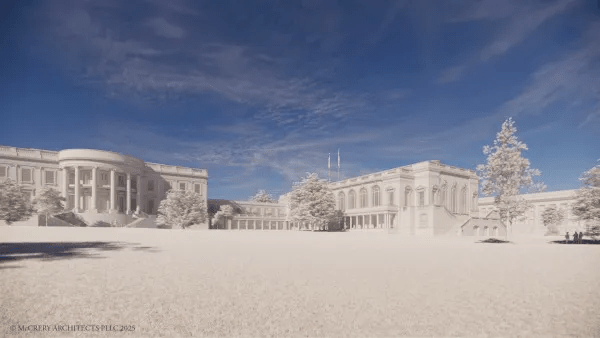
(BTW – the image we’ve all seen of the exterior of the new addition is an unofficial AI rendering. I believe last week we said it was real. The REAL one is at the top of this newsletter. We apologize for the error.)
We are now long past lamenting that this stuff is not normal. The yahoos who have been installed in government have no interest in making our lives better – but they’re super good at coming up with crap to make them worse.
“Nothing is normal,” Karoli agrees. “but some things are so out of the realm of – like, for example…today’s executive order by Trump ordering a new census to be based on 2024 data with no non-citizens in the census. All of which is entirely illegal, unconstitutional.”
“Why is it that newspapers cannot say it’s unconstitutional? I mean, the Washington Post came close to saying that but they couldn’t actually say it,” she says. (NOTE: NPR does a good job here. Which is a good reminder to give to your local NPR station, if you can.)
When Karoli pointed out on social media that this latest EO was unconstitutional, someone came back at her with “Who’s going to stop him?”
That is exactly the kind of thinking that makes the authoritarian takeover complete. We still have the possibility of returning this nation to a functioning democracy – as long as we resist the temptation to become fatalistic about MAGA’s burrowing infestation of our government.
Just look at what has happened since the regime ordered Texas to engage in a highly irregular mid-cycle redistrict session to give the Republicans five more seats. The only reason this is happening is because the regime expects to lose the House in 2026, so they are doing everything they can think of to rig the election in their favor.
And we are fighting back. Those Democratic Texas legislators who fled the state to deprive Governor Abbott of a quorum are heroes in the fight for democracy. The Democratic governors who are assisting them and arranging for retaliatory re-districting are champions of democracy. And the House Democrats on the Oversight Committee who figured out they could force Chairman James Comer into subpoenaing the Epstein Files are golden.
And do you know what happens when we don’t meekly accept MAGA’s crazy maneuvers as done deals? They back down. Just look at the highest profile cases of people who have been kidnapped by ICE. Community outrage and publicity have helped get some of these folks released. But – as Aliza points out – the key to winning that battle is engaging the community.
“It is way past time for white people to do this job and this heavy lifting. It has to come from us. It HAS to. We have been reliant and allowing the people who we’ve oppressed and allowed to be oppressed save us every single time. And it is our turn… we have to have the difficult conversations with our families, with our neighbors, with our friends, with our fellow white people. We need to call these people, you know – we have to call them on their biases, and their flawed thinking. It has to happen. They can’t sit in comfort while all this shit’s happening around us,” she says.
Here’s a few of the resources I looked at while trying to understand if there actually is anyone to stop Trump from building his monstrosity of a ballroom:
Architectural Digest has this handy dandy timeline of all the many renovations that have been undertaken at the White House over the years.
One of the biggest changes to the White House occurred during the Truman Administration, which added the East Wing to the building in order to cover up an underground security bunker that was added during the war. Wikipedia’s got a deep dive into that one.
Finally: Karoli (who is a much better researcher than I) found a New York Times article (gift link) with the answer to the question we originally posed: It turns out that there IS a standing Committee for the Preservation of the White House – and it’s made up of the director of the National Park Service, representatives from the White House, the Smithsonian Institution, the Commission of Fine Arts, the National Gallery of Art and more appointees of the president.
As it turns out:
Mr. Trump has not nominated a park service director, a position that requires Senate confirmation, or announced the appointments of individuals to serve on the committee. The terms of 13 individuals that former President Joseph R. Biden Jr. appointed to the committee in 2023 expired when Mr. Trump began his second term, according to a government database. Jessica Bowron, the comptroller of the National Park Service, is currently serving as its acting director.
So the answer to that question is – No, there appears to be no one who will stop him from this one. (snip-MORE on the page, including the podcast)
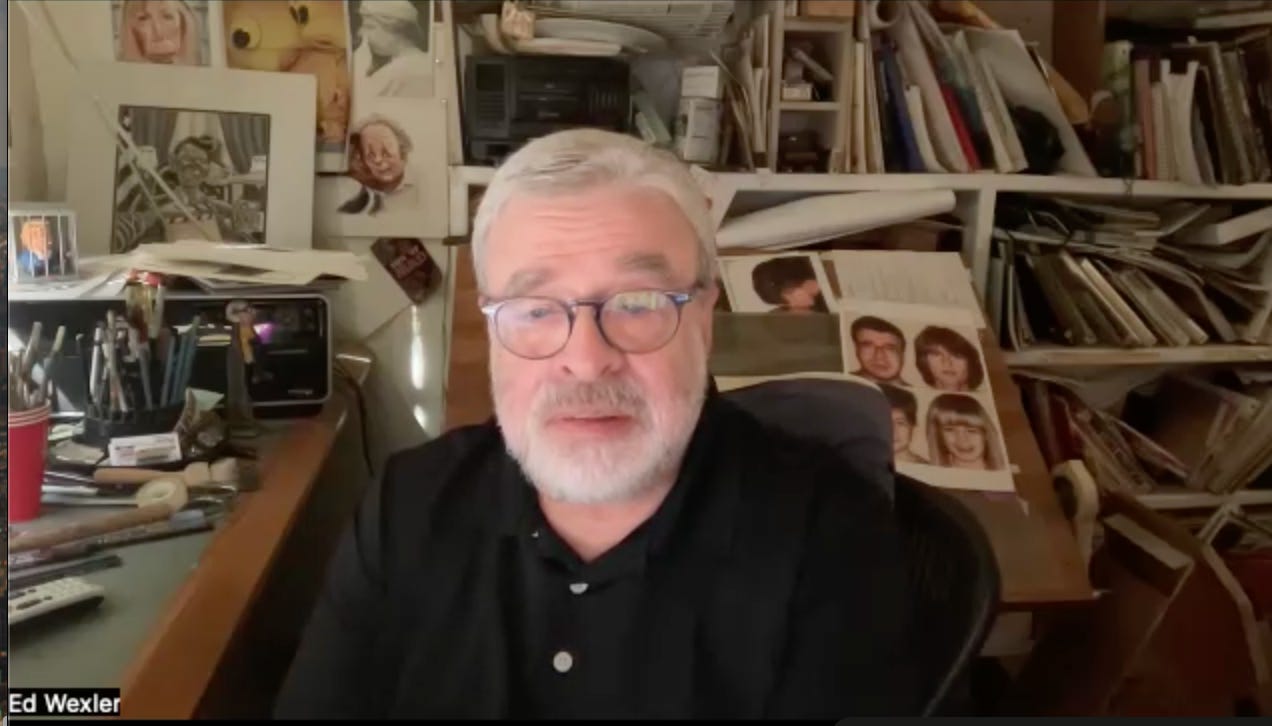
Today’s Zoom talk is with Ed Wexler, who draws for Cagle Cartoons. Join us as we talk about cartoons, art supplies, caricatures, SoCal weather, and Duck Tales.
(The Zoom chat is on the page, linked at “Read On Substack” above. It’s an hour & 15 min.–A.)
On Tuesday, it was announced that the Trump Regime, which is a petri dish of conspiracy theories, is canceling almost $500 million in contracts to develop mRNA vaccines to protect the nation against future viral threats.
The federal Biomedical Advanced Research and Development Authority (BARDA, which is also the noise Pete Hegseth makes when throwing up in a back alley dumpster), which oversees the nation’s defenses against biological attacks, is terminating 22 contracts with university researchers and private companies to develop new uses for the mRNA technology, because the Health and Human Services Secretary, Robert F. Kennedy Jr., is not a doctor or medical expert, but a conspiracy-theorist whack job.
Lunatics who believe vaccines cause autism and come with tracking chips so the Deep State Illuminati baby-eating reptillians can keep track of you are ecstatic. Actual scientists, doctors, and public health experts, not so much.
Showing evidence that the brain worm may have eaten more than we first believed, RFK Jr. said, “Let me be absolutely clear: HHS supports safe, effective vaccines for every American who wants them. That’s why we’re moving beyond the limitations of mRNA vaccines for respiratory viruses and investing in better solutions.”
This is like when Trump tried to get rid of Obamacare with “something better.”
The first COVID vaccine was developed during the first Trump regime, but that administration never had a plan to roll it out to the public. They were planning to hide it all behind a toilet at MAGA-Lardo. Thankfully, Joe Biden won the 2020 election and made the vaccines effective. Now, the same regime that took credit for the vaccine is trying to destroy it.
Michael Osterholm, who runs the Center for Infectious Disease Research and Policy at the University of Minnesota, said, “This may be the most dangerous public health judgment that I’ve seen in my 50 years in this business. It is baseless, and we will pay a tremendous price in terms of illnesses and deaths. I’m extremely worried about it.” He’s worried.
Every single MAGAt who yelled “Go get another booster, soy boy” during a losing argument responded with, “Yee-hay, yee-haw, yee-haw.”
Mary Holland, the president and CEO of The Children’s Health Defense, said, “While we believe the mRNA vaccines should be taken off the market, the announcement is a positive move towards protecting public health.” By the way, the Children’s Health Defense was founded by RFK Jr, but I’m sure the people running that organization are totally credible (insert rolling eyes here).
I had a feeling it was bad to make the nation’s top health official a guy who believes in chemtrials and likes to tool around town in a car with a whale’s head strapped to it. (snip-MORE, and it’s good/not good. Clay’s commentary is what’s good; the news is not.)
August 8, 1974 President Richard M. Nixon resigned from office, the first U.S. president ever to do so. The House Judiciary Committee had, with bipartisan support (the Democrats and one-third of the Republican members), voted for three articles of impeachment: obstruction of justice, abuse of power, and contempt of Congress.A week later, one of the White House tapes was finally made public, showing the President’s direct involvement in the Watergate scandal cover-up: “…call the FBI and say that we wish, for the country, don’t go any further into this case, period…” – Nixon to Chief of Staff Haldeman, June 23, 1972 (six days after the Watergate break-in) He officially left office August 9, and was fully pardoned one month later by his successor, President Gerald Ford. Asked years later about some of his administration’s questionable activities, Nixon said, “Well, when the president does that, it isn’t illegal.” The headlines in Washington that day
August 8, 1999 A 53-mile peace walk commemorating the bombing of Hiroshima and Nagasaki ended near Clam Lake, Wisconsin, at the site of the U.S. Navy’s Project Elf (extremely low frequency) submarine communications transmitter. Twelve of the demonstrators were arrested for trespassing, adding to the nearly 500 previously arrested for sit-ins, Citizen Inspections, blockades and disarmament actions at the transmitter site in Ashland County.
August 7, 1904 Ralph Bunche, born this day in Detroit, spent a remarkable life in vigorous service to academia, his community, the nation and the world. Ralph Bunche Head of the Howard University Political Science Department for over twenty years, he was one of the first African Americans to hold a key position at the U.S. State Department. He went on to the United Nations and served as its mediator on Palestine. He was the recipient of the Nobel Peace Prize for negotiating the 1948 armistice agreements between Israel and the Arab states. He worked with Martin Luther King in the civil rights struggles of the ‘50s and ’60s. Succinct biography of Ralph Bunche
August 7, 1958 The D.C. Court of Appeals reversed playwright Arthur Miller’s conviction for contempt of Congress following a two-year legal battle. He had been charged for refusing to tell the House Un-American Activities Committee (HUAC) the names of alleged Communist writers with whom he attended five or six meetings in New York in 1947. Arthur Miller in front of HUAC Read more
August 7, 1964 After a reported U.S. confrontation with North Vietnamese forces that, it was later discovered, never occurred, the U.S. Congress nearly unanimously passed the Gulf of Tonkin resolution.The resolution gave President Lyndon Johnson broad powers in dealing with North Vietnam, including sending U.S. troops. News coverage relied almost entirely on official U.S. government sources so Americans assumed the North had in fact launched an unprovoked attack. Two courageous senators, Wayne Morse (D-Oregon) and Ernest Gruening (D-Alaska), provided the only “no” votes. “I rise to speak in opposition to the joint resolution. I do so with a very sad heart. But I consider the resolution . . . to be naught but a resolution which embodies a predated declaration of war . . . .” –Senator Wayne Morse The media and the Gulf of Tonkin The facts of the incident uncovered by the National Security Archive
August 7, 1995 Four experienced Plowshares activists, Michele Naar-Obed, Erin Sieber and Rick Sieber, hammered and poured their blood on the U.S.S. Greenville, a fast-attack submarine in production at the Newport News, Virginia, shipyard.
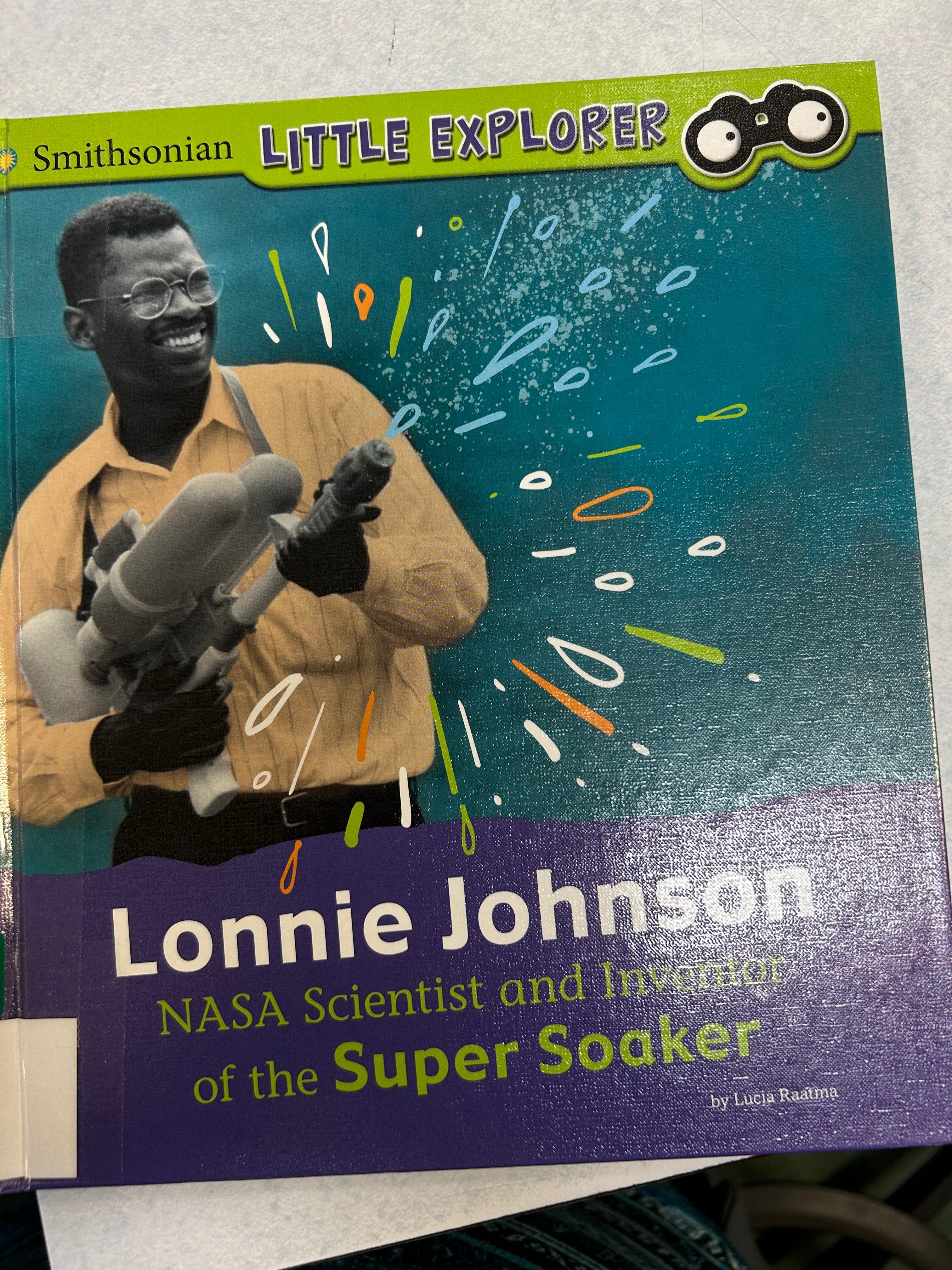
Do You Know Who Created The Super Soaker? by Lique Read on Substack
It was him!
Lonnie Johnson. A NASA Scientist and Inventor.
Also, an African American. Though that should not make any difference. The part of his history that angered me, though I should not be surprised, was that Hasbro had tried to jilt this man out of $73 million dollars! I could not believe it. But him being the super star brain that he is won at his day in court.










 Scottie's Playtime