Legacy media is very concerned with the ‘Gen Z Stare’
In the past week, there’s been robust discourse in legacy media about the so-called ‘Gen Z Stare’ and the bursts of generational conflict it reportedly captures.
It’s gotten write-ups by The New York Times, The Washington Post, USA Today, The Boston Globe, NBC News, ABC News, CNBC, Newsweek, Indy100, Axios, Fortune, Vox, Vice, Business Insider, The Independent, Forbes, Buzzfeed, Slate, HuffPost, Glamour, People, and Marie Claire, among others.
As a millennial, I am apparently urged to be concerned about this phenomenon of Gen Z folks supposedly failing to appropriately interact with me through sufficiently pleasant facial expressions, so I thought it might be helpful to offer my thoughts:
The sitting president of the United States is currently covering up a massive sex trafficking operation that targeted children and likely implicates a number of powerful people who are currently out in the world and free to continue preying on children.
The sitting president of the United States just successfully pressured Paramount and CBS to cancel the #1 late-night talk show on broadcast television as part of what appears to be a blatant bribery deal because the host has been critical of him.
The sitting president of the United States just got the extremist Republican majority in Congress to strip 11 million Americans of health care coverage by the end of 2026 and upwards of 17 million Americans when you account for new federal work requirements. (snip-MORE; it’s succinct and quick, and it’s all good facts for grocery/other places lines, for discussion.)
July 21, 1878 Publication of “Eight Hours,” written by Reverend Jesse H. Jones (music) and I.G. Blanchard (lyrics), the most popular labor song until “Solidarity Forever” was published by the IWW (Industrial Workers of the World) in 1915. “Eight hours for work, Eight hours for rest; Eight hours for what we will.” All the lyrics (The eight-hour was an established concept before the song.)
July 21, 1925 The so-called “Monkey Trial” ended in Dayton, Tennessee, with high school teacher John T. Scopes convicted of violating a state law against teaching Darwin’s theory of evolution. It was considered illegal to contradict the Bible’s description of God’s seven-day creation of the world in Genesis. The trial pitted two of America’s leading advocates as the opposing lawyers: William Jennings Bryan, thrice the Democratic presidential candidate (1896, 1900, 1908) and the state’s prosecutor; Clarence Darrow, a lawyer famous for representing the underdog, at the defense table. Referred to as “the trial of the century” even before it began, it was the first trial ever broadcast (on radio). Bryan became ill and died shortly after the trial’s end; the conviction was later overturned by Tennessee’s Supreme Court. The Defendant John T. Scopes The Attorneys: Darrow & Bryan/ The Verdict: Thou Shall Not Think Interest in the trial by the populace and the media (and the heat in the courtroom) prompted Judge John T. Raulston to move the trial outdoors to the courthouse lawn. Bryan himself was called as a witness on the literal interpretation of scripture. Attorney General Thomas Stewart, in response to Darrow’s questioning, asked, “What is the meaning of this harangue?” “To show up fundamentalism,” shouted Mr. Darrow, “to prevent bigots and ignoramuses from controlling the educational system of the United States.” Mr. Bryan sprang to his feet, his face purple, and shook his fist in Darrow’s face: “To protect the word of God from the greatest atheist and agnostic in the United States.” ACLU History: The Scopes ‘Monkey Trial’ More about the Monkey Trial
July 21, 1954 Major world powers, meeting in Geneva, Switzerland, reached agreement on the terms of a ceasefire for Indochina, ending nearly eight years of war. The war began in 1946 between nationalist forces of the Communist Viet Minh, under leader Ho Chi Minh, and France, the occupying colonial power after the Japanese lost control during World War II. The Geneva conference included France, the United Kingdom, the U.S., the U.S.S.R., People’s Republic of China, Cambodia, Laos, and both Vietnamese governments (North and South). The peace treaty called for independence for Vietnam and a 1956 election to unify the country. However, only France and Ho Chi Minh’s DRV (Democratic Republic of Vietnam (North)) signed the document. The United States did not approve of the agreement. Instead, they backed Emperor Boa Dai and Prime Minister Ngo Dinh Diem’s government in South Vietnam and refused to allow the elections, knowing, in President Eisenhower’s words, that “Ho Chi Minh will win.” The result was the Second Indochina War, more commonly known as the Vietnam War. The treaty is signed
July 21, 1976 Plaza de Mayo mother A military junta under General Jorge Rafael Videla took power in Argentina on March 24, disbanding parliament and taking over all labor unions. The military kidnapped hundreds of people from two villages of Jujuy province in northern Argentina, thirty of whom never returned from a clandestine detention center. Most of those disappeared worked for the Ledesma sugar refinery. Since 1983, on the Thursday closest to July 21, Madres de Plaza de Mayo (an organization of mothers and wives of the missing) are joined by others, and walk the 7 km (4.3 miles) from Calilegua to San Martin, demanding answers about their loved ones. Madres de Plaza de Mayo is supported by Amnesty International and the United Nations Human Rights Commission. Read more
If asked to pick one Lady Gaga song to encapsulate who she is and what she stands for, you’d be hard pressed to come up with a better choice than “Born This Way.” Released in 2011, the song is a vibrant, full-body dance anthem that calls on listeners to celebrate who they are. “God makes no mistakes,” she sings in the refrain. “I’m on the right track, baby / I was born this way.” The song was immediately embraced upon release, particularly by the LGBTQ+ community.
As it turns out, this wasn’t the first time a song by that name made that kind of impact. In 1977, Motown Records released the disco anthem “I Was Born This Way,” an upbeat tune featuring a largely unknown Black gospel singer who responds to critics with a refrain that was a head-turner for its time: “I’m happy. I’m carefree. And I’m gay. I was born this way.”
In 2021, Gaga directed people’s attention to that song, saying it was the inspiration for her own hit. And in the new documentary I Was Born This Way, which premiered at the Tribeca Film Festival in June, directors Daniel Junge and Sam Pollard shine a light on its creation and its singer, Carl Bean, an extraordinary individual who spent his life serving his LGBTQ+ community.
Junge and Pollard’s film starts with the story of Bean’s childhood in Baltimore. And many of the main moments are unforgiving: His mother abandons him at birth because she doesn’t feel ready to have a child; his uncle sexually assaults him for years; Bean attempts to kill himself as a teenager after his previously loving adoptive father hits him for being gay.
Bean, who died in 2021 at age 77, faced hardships in his life, many of which the film explores. But none of the horrors of Bean’s life land with the kind of bleakness one might expect. It’s not that the documentarians pull their punches, either. It’s Bean — there’s a persistent lightness to his spirit, the quiet joyfulness of someone who by some miracle is able to see a broader perspective. Those qualities so suffuse the story of his life that no darkness can overcome them.
And that faith sustained him when he moved first to New York City, where he would sing with Harlem’s Christian Tabernacle Choir, and then when he moved to Los Angeles and started writing his own songs. In New York, he worked at Macy’s and became lifelong friends with Cissy Houston, Estelle Brown, and Dionne Warwick; in Los Angeles, he signed a record deal but then discovered they only saw him as a gospel singer. And then, out of nowhere, Motown Records reached out.
The song “I Was Born This Way” has its own interesting history, which Junge and Pollard track. It was originally written years earlier by Bunny Jones, a New York City beautician who was friends with Stevie Wonder and later became a promoter. She wrote the song for one of her acts, a gay performer. But it wasn’t until two years later, when Motown reworked the song for disco and gave it to Bean to sing (with his friend Estelle Brown on backup), that it took off.
“There was such a feeling of freedom and relief and release when you danced to that song,” Minority AIDS Project program director Mike Jones says in the documentary. “All of the things we were trying to say throughout our lives to many of our friends and family that we could not say were in that song.”
While the collapse of disco would see the song fade from people’s memories, the film reveals the ways it continued to quietly live on. Musician and record producer Questlove talks about how often it has been sampled in other work over the decades. Among other places, you can hear it on Debbie Gibson’s “One Step Ahead,” Deee-Lite’s “Good Beat (Turn Up the Radio Mix),” and Rick Wade’s “Free.” The song, he says, “is the music equivalent of the Giving Tree.”
Meanwhile, Bean faced an unexpected fork in the road. Motown offered him the chance to do another big song. But “I Was Born This Way” had changed his perspective on the meaning and purpose of his life. “I had found my niche,” he said. “I knew my gig was to be a change agent in our society.”
And the film recounts how that choice led him down a path he could not have expected. Seeing how little was being offered to people of color when the AIDS pandemic erupted in the early ’80s, Bean started making visits on his own, traveling from person to person he learned about on Los Angeles city buses. Eventually he founded the Minority AIDS Foundation, which provided a hotline for information and to arrange visits.
When he learned from social workers that he would gain greater access to those who were sick if he became clergy, he also got ordained. Unexpectedly, some of those he visited asked for an Easter service. He provided it, not realizing it would be such a positive experience that they would aske him to lead to more services. Eventually, he started his own church, Unity Fellowship, an African American Christian community specifically for LGBTQ+ people.
Bean’s decades of generosity would eventually cost him. In his later years, he found himself unable to move his lower body. “All of those years of racism, of homophobia, all of that death and dying, it had an effect on my mind, my spirit, my being,” he said. “My body shut down.” The revelation is stunning — there’s been no sign over the course of the film that he has been suffering or overwhelmed with grief.
It’s a telling reminder of the sacrifices and generosity of so many queer people like Bean, whose stories are not well known. It’s also a testament to their irrepressible joy: At the end of the film, asked whether he has any last words for the camera, Bean offers a simple thought that pours directly out of the work of his life, including his famous song. “Find the place in you that allows you to love yourself and others,” he says. “It begins with love and ends with love.”
Then, as the film crew starts to pack up, he starts laughing warmly. There’s no reason. He just has so much to give.
July 20, 1967 The first Black Power conference was held in Newark, New Jersey, calling on black people in the U.S. “to unite, to recognize their heritage and to build a sense of community.” Read more
July 20, 1971 The first labor contract in the history of the federal government was signed by postal worker unions and the newly re-organized U.S. Postal Service. This contract was made possible by the postal strike of March 1970, in which 200,000 postal workers walked off the job, defying federal law. Prior to that, postal worker salaries started at $6,200 a year, and many postal workers were eligible for food stamps. The strike was not organized by a national union; it started when rank-and-file workers walked off the job in New York City and it spread to other parts of the country. The strike led to federal legislation that allowed postal unions to negotiate a contract with postal management (previously, postal salaries were set by Congress), with provisions for arbitration if no agreement were reached.Since that time, postal unions have successfully negotiated or arbitrated wages and benefits that provide a secure standard of living for their members. Read about the history of the APWU (American Postal Workers Union)
July 19, 1848 The first Women’s Rights Convention in the U.S. was held at Seneca Falls, New York. Its “Declaration of Sentiments” launched the movement of women to be included in the constitution.The Declaration used as a model the U.S. Declaration of Independence, demanding that the rights of women as individuals be acknowledged and respected by society. It was signed by sixty-eight women and thirty-two men. The impetus came from Elizabeth Cady Stanton and Lucretia Mott, both of whom had been excluded, along with all the other female American delegates, from the World Anti-Slavery Convention (London, 1840) because of their sex. Frederick Douglass, the former slave and abolitionist leader attended the convention and supported the resolution for women’s suffrage. When suffrage finally became a reality in 1920, seventy-two years after this first organized demand in 1848, only one signer of the Seneca Falls Declaration, Charlotte Woodward, then a young worker in a glove manufactory, had lived long enough to cast her first ballot. The Seneca Falls Convention and the Early Suffrage Movement The Declaration of Sentiments
July 19, 1958 Several black teenagers, members of the local NAACP chapter (National Association for the Advancement of Colored People), entered downtown Wichita’s Dockum Drug Store (then the largest drugstore chain in Kansas) and sat down at the lunch counter. Wichita sit-in sculpture The store refused to serve them because of their race. They returned at least twice a week for the next several weeks. They sat quietly all afternoon, creating no disturbance, but refused to leave without being served. Though the police once chased them away, they were breaking no law, only asking to make a purchase, a violation of store policy. This was the first instance of a sit-in to protest segregationist policies. Less than a month later, a white man around 40 walked in and looked at those sitting in for several minutes. Then he looked at the store manager, and said, “Serve them. I’m losing too much money.” That man was the owner of the Dockum drug store chain. That day the lawyer for the local NAACP branch called the store’s state offices, and was told by the chain’s vice president that “he had instructed all of his managers, clerks, etc. (statewide), to serve all people without regard to race, creed or color.”
July 19, 1974 Martha Tranquill of Sacramento, California, was sentenced to nine months’ prison time for refusing to pay her federal taxes as a protest against the Vietnam War.
July 19, 1993 President Bill Clinton announced regulations to implement his “Don’t Ask, Don’t Tell” policy regarding gays in the military, saying that the armed services should put an end to “witch hunts.” The policy was developed by General Colin Powell, then Chair of the Joint Chiefs of Staff, and eventually summarized as “don’t ask, don’t tell, don’t pursue, don’t harass.”
July 19, 2000 A federal administrative law judge ordered white supremacist Ryan Wilson to pay $1.1 million in damages to fair housing advocate Bonnie Jouhari and her daughter, Dani. The decision stemmed from threats made against Jouhari by Wilson and his Philadelphia neo-Nazi group, ALPA HQ.
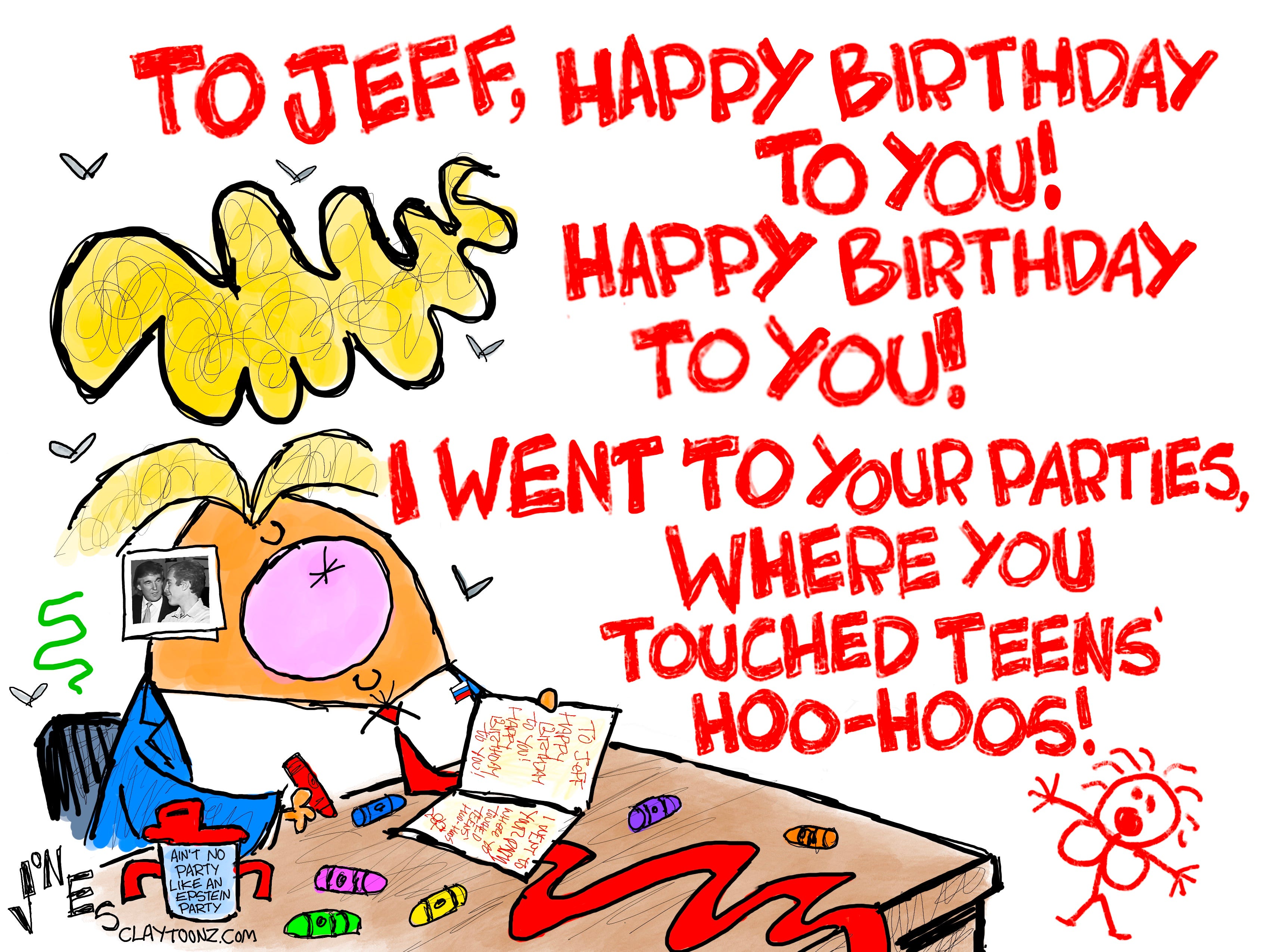
Donald Trump’s birthday card to Jeffrey Epstein Read on Substack
The Wall Street Journal is reporting that Donald Trump wrote a “racy” birthday letter to Jeffrey Epstein way back in 2003. I’m shocked too. Who knew he could write?
This letter is part of the Epstein Files from the investigation by the Department of Justice. One of the MAGA talking points is that if there were anything in those files with Trump’s name on it, then the Biden administration would have released it to help the Democrats with the 2024 election. Take note that the Biden administration did NOT release it.
The question, “Why didn’t Biden release it?” is based on the presumption that Joe Biden is as corrupt as Donald Trump and would politicize the DOJ. Despite the MAGA narrative, Biden never politicized or weaponized the DOJ.
And there is something to this, because Trump is upset, and threatening to sue the WSJ, its owner, News Corp, and Rupert Murdoch. WSJ reported that the letter was part of a book of messages organized by Ghislaine Maxwell for Epstein’s 50th birthday. Maxwell was convicted 16 years later in 2019 for aiding Epstein’s sexual abuse of minors.
The letter, signed by Trump, wishes Epstein a happy birthday and tells him, “may every day be another wonderful secret.” The letter featured lines of typewritten text framed by a drawing of a naked woman, with Trump’s name signed below the woman’s waist.
Hmmmm. Whatever could that secret be, and has anyone checked the age of the woman in the naked drawing?
Trump issued a denial, saying, “I never wrote a picture in my life. I don’t draw pictures of women. It’s not my language. It’s not my words.” It’s true, you don’t write a picture. Unfortunately for Trump, the letter was written in crayon. (snip-MORE. Also, the card was written in 2003, when POTUS had a few more words in his vocab.)
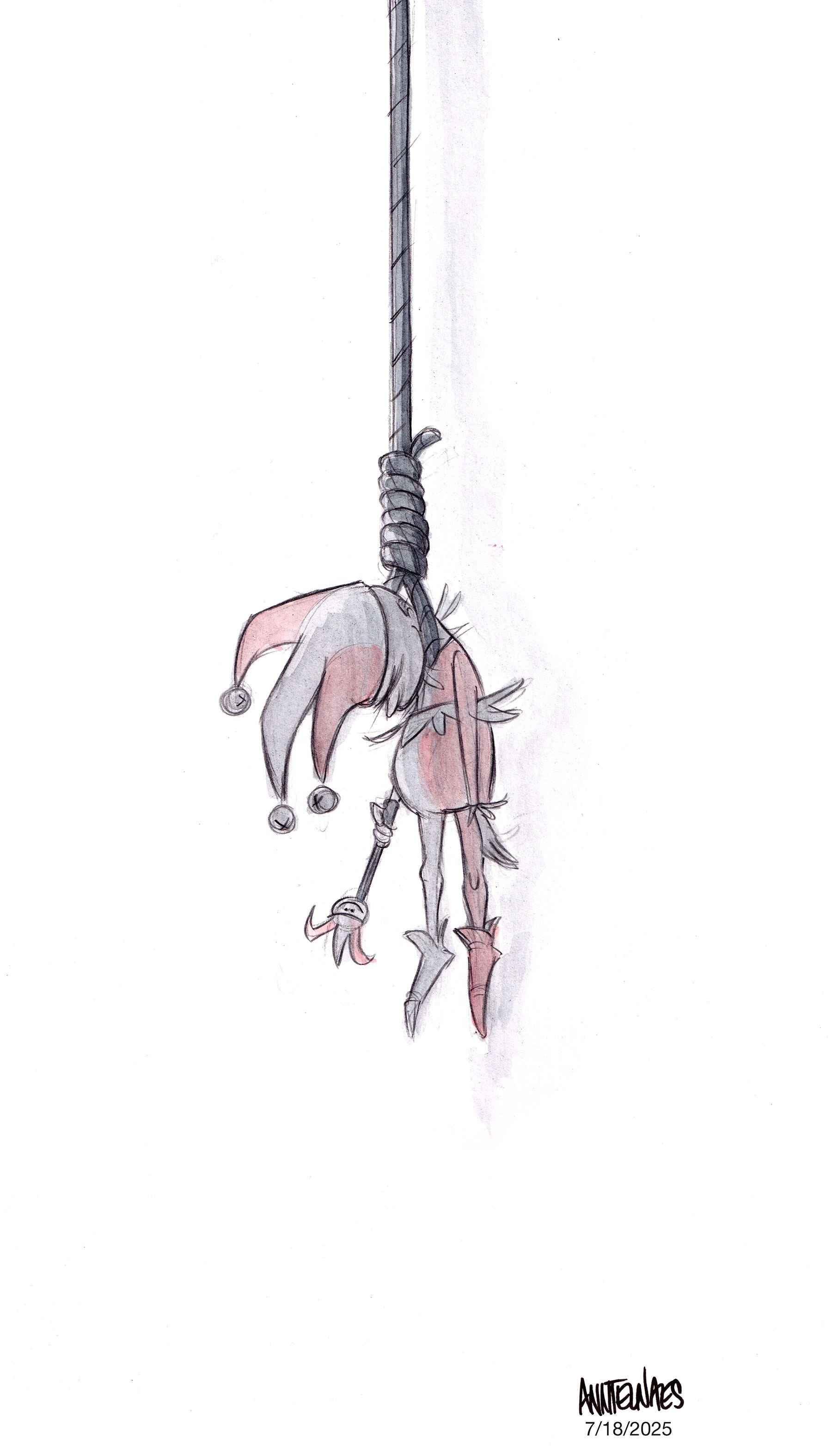
Killing satire by Ann Telnaes
CBS cancels The Late Show with Stephen Colbert, claiming it was “purely a financial decision” Read on Substack
The timing of the cancellation is suspect since Colbert publicly criticized the network’s parent company, Paramount, just a few days ago for settling a $16 million lawsuit with Trump while also looking to get approval from the FCC for a merger worth $8.4 billion. As Colbert described during his monologue, a “big, fat bribe”.
Paramount is just another media company looking to keep on Trump’s good side in order to benefit their bottom line. As any other autocrat, Trump has a very thin skin and doesn’t like getting ridiculed so expect more of this. Not a good sign for satirists or editorial cartoonists…or free speech in general.
A few months ago I was interviewed by Jeffrey Brown of the PBS Newshour and talked about how important it is for a democracy to protect the rights of editorial cartoonists and satirists (at end of the segment). (snip)
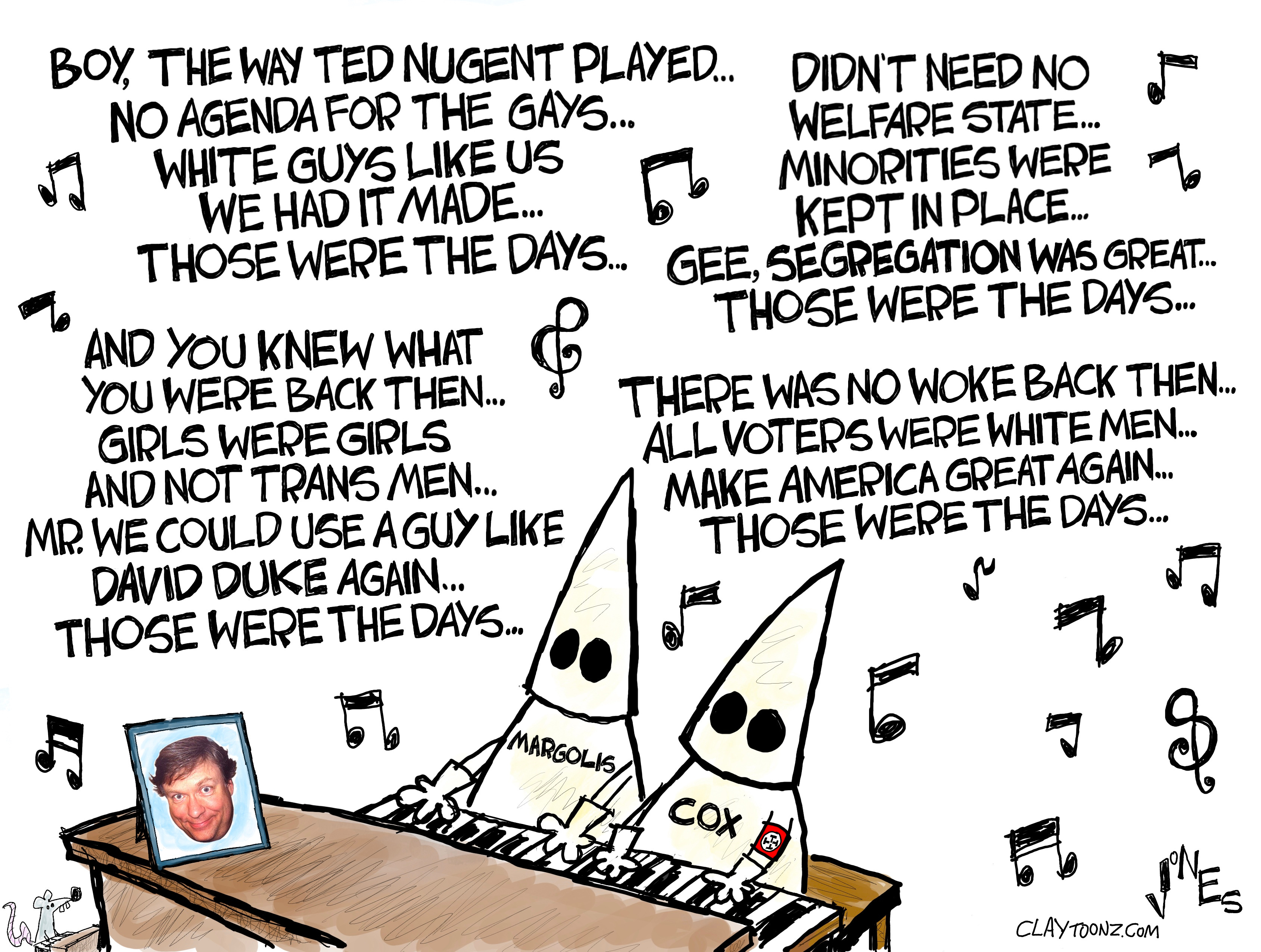
Ya’ll already knew I was a stinker. This cartoon is from December 2023, on the death of Norman Lear. I’m repurposing it with a few changes for Margolis & Cox, the racist cartooning duo I had a little spat with a couple of days ago, which I wrote about.
I sent this to my clients, but it’s not a regular syndication cartoon. They will get another cartoon today.
Nothing new with those racists, I just want to ask them a question. Cox is the artist and Margolis is the writer, right? So why does Cox need Margolis if he’s only going to write tropes that have already been done a million times? Look at this cartoon and remember, they said I can’t draw. Again, it doesn’t matter how well you draw (and they don’t draw well) if your ideas are shit.
Creative note: I had a few qualms about doing this, not about pissing off Margolis, Cox, or Cagle. I couldn’t care less about what mood this puts them in. I was concerned about repurposing an old cartoon. I’m no Dave Granlund. I don’t care about his mood either. But I decided this is special, and what better way to call them out than with a cartoon?
I have discovered over the years that many people who criticize others for a living can’t take criticism, especially if they’re MAGAts.
July 18, 1872 Great Britain, under the leadership of William Gladstone, passed a law requiring voting by secret ballot. Previously, people had to mount a platform in public and announce their choice of candidate to the officer who then recorded it in the poll book. Secrecy served to prevent the possibility of coercion and retaliation for one’s vote. A ballot box used in the 1872 election. ————————————————————————– July 18, 1918 Nelson Mandela was born. He was one of the leaders in the successful fight against apartheid in South Africa and became its first black president. In 1993 he was awarded the Nobel Peace Prize. Mandela at 19 Mandela photo gallery A short bio of Nelson Mandela by the Nobel Committee
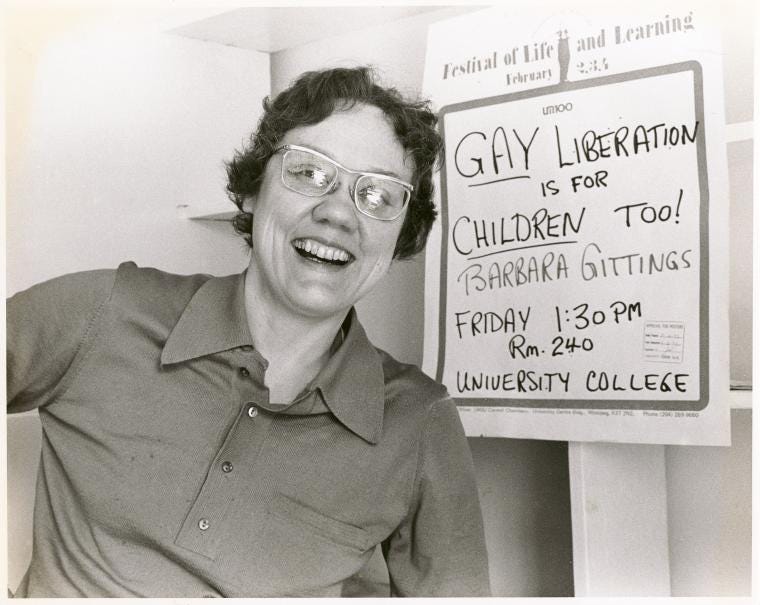
Queer History 491: Barbara Gittings – The Librarian Who Told the Shrinks to Go Fuck Themselves by Wendy🏳️⚧️🏳️🌈🌈 Read on Substack
In the dark fucking ages of American psychiatry, when homosexuality was classified as a mental illness and queer people were subjected to electroshock therapy, chemical castration, and lobotomies in the name of “treatment,” Barbara Gittings stood up and said what needed to be said: “We’re not sick, you assholes.” Born in 1932 in Vienna, Austria, to American parents, Gittings didn’t just challenge the psychiatric establishment’s classification of homosexuality as pathology—she dismantled it piece by piece with the methodical precision of the librarian she was and the righteous fury of a woman who had spent her entire adult life watching her community be tortured by medical professionals who should have been helping them.
Gittings wasn’t content to politely ask for acceptance or quietly hope that attitudes would change. She organized, she protested, she confronted the American Psychiatric Association directly, and she refused to let them continue pathologizing her existence without a fight. When the APA finally removed homosexuality from their Diagnostic and Statistical Manual in 1973, it wasn’t because they suddenly developed enlightened attitudes—it was because activists like Gittings had made their position scientifically and politically untenable. She didn’t just change a classification; she helped save thousands of lives by ending the medical justification for torturing gay people into compliance.
The Making of a Revolutionary: From Confusion to Clarity
Barbara Gittings’s journey to activism began in the most American way possible—in a college library, researching her own fucking existence because nobody else would give her straight answers about what it meant to be attracted to women. Born into a middle-class family that moved frequently due to her father’s work, she grew up feeling different but having no language or framework to understand why.
When she enrolled at Northwestern University in 1950, she was a typical college student in every way except one: she was desperately trying to figure out why she was attracted to women instead of men. In an era when homosexuality was literally unspeakable in polite society, when the very word “lesbian” was considered so shocking that newspapers wouldn’t print it, Gittings did what any good researcher would do—she went to the library.
What she found there was a psychological horror show disguised as medical literature. Book after book described homosexuality as a mental illness, a developmental disorder, a psychological pathology that could and should be cured. The “experts” had a whole arsenal of explanations for why people like her existed—overbearing mothers, absent fathers, childhood trauma, arrested development—and an even more horrifying arsenal of “treatments” designed to fix them.
The psychological impact of reading this shit cannot be overstated. Imagine being a young woman trying to understand herself and discovering that every medical authority in your society considers your very existence to be evidence of mental illness. The internalized shame, self-doubt, and fear that this “research” created in LGBTQIA+ people was devastating and intentional—designed to make them compliant with attempts to “cure” them.
But Gittings had something that many of her peers lacked: a librarian’s skepticism about sources and a growing suspicion that the experts might be full of shit. The more she read, the more she began to question whether the problem was with homosexuality or with the people studying it.
The Mattachine Society: Where Polite Activism Met Reality
In 1958, Gittings discovered the Mattachine Society, one of the earliest gay rights organizations in America, and it changed her life forever. But it also pissed her off. The organization, founded in the early 1950s, was committed to what they called “accommodation”—basically, trying to prove to straight society that gay people were just like everyone else, except for that one little detail about whom they fucked.
The Mattachine approach was understandable given the political climate of the 1950s—this was the era of McCarthyism, when being gay could cost you your job, your security clearance, and your freedom. The organization’s founders believed that the best strategy was to keep their heads down, be respectable, and hope that straight society would eventually accept them as harmless.
Gittings thought this approach was bullshit, and she wasn’t afraid to say so. She joined the New York chapter of Mattachine in 1958 and immediately began pushing for more visible, more confrontational activism. She understood something that the old guard didn’t: that respectability politics wouldn’t work because the problem wasn’t that gay people were too visible—it was that they weren’t visible enough.
Her psychological insight was profound: as long as gay people remained hidden, straight society could continue to believe whatever stereotypes and prejudices they wanted about homosexuality. The only way to change attitudes was to force people to confront the reality of gay existence—to see actual gay people living actual lives rather than the pathological caricatures promoted by the medical establishment.
The Daughters of Bilitis: Creating Community Through Visibility
In 1958, Gittings also became involved with the Daughters of Bilitis, the first lesbian organization in the United States. Founded in San Francisco in 1955, DOB was even more conservative than Mattachine, focused primarily on providing social opportunities for lesbian women in a safe, private environment.
But Gittings wasn’t interested in hiding. She became the editor of The Ladder, DOB’s newsletter, and immediately began transforming it from a timid publication that avoided anything controversial into a bold voice for lesbian rights and visibility. Under her editorship, The Ladder began featuring photographs of lesbians (with their permission), publishing articles that challenged the medical pathologizing of homosexuality, and providing positive representations of lesbian relationships.
This shift toward visibility was revolutionary in ways that are hard to understand today. In the 1960s, most gay publications featured either no photographs of gay people or images that were so heavily shadowed or cropped that the subjects were unrecognizable. The idea that lesbians would allow their faces to be published in a gay magazine was considered so dangerous that many DOB members were horrified by Gittings’s approach.
But Gittings understood the psychological importance of representation. She knew that isolated lesbians across the country were reading The Ladder as their only connection to lesbian community, and she wanted them to see that lesbians were real people with real lives, not the pathological specimens described in medical literature.
The psychological impact of this visibility cannot be overstated. For many readers, The Ladder was the first place they had ever seen positive representations of lesbian existence. It provided both validation and hope—proof that they weren’t alone and that other women like them were not only surviving but thriving.
The Confrontation Strategy: Making Homosexuality Impossible to Ignore
By the early 1960s, Gittings was convinced that the gay rights movement’s strategy of respectability and accommodation was not only ineffective but counterproductive. She began advocating for what she called “confrontation”—direct, visible challenges to discrimination and prejudice that would force society to deal with gay people as real human beings rather than abstract concepts.
In 1965, she organized the first gay rights picket in front of the White House, protesting the federal government’s ban on employing gay people. The images of well-dressed gay men and lesbians carrying signs demanding equal rights were shocking to a society that had never been forced to confront organized homosexual political action.
The psychological courage required for these early demonstrations cannot be overstated. The participants were risking their jobs, their families, their safety, and their freedom by identifying themselves publicly as homosexuals. Many wore sunglasses or otherwise tried to disguise their faces, but they showed up anyway because they understood that visibility was the price of liberation.
Gittings’s strategic insight was brilliant: by presenting gay people as ordinary Americans demanding basic civil rights rather than patients seeking treatment for mental illness, she was reframing the entire discourse around homosexuality. She was moving the conversation from the medical model—where gay people were sick individuals who needed to be cured—to the civil rights model—where gay people were a minority group facing discrimination.
The War Against Psychiatric Oppression
But Gittings’s most important battle was against the psychiatric establishment itself. She understood that as long as homosexuality was classified as a mental illness, gay people would continue to be subjected to “treatments” that were actually torture, and society would continue to view them as fundamentally defective.
The psychiatric profession’s approach to homosexuality in the 1960s was a fucking nightmare. Therapists were using electroshock therapy, aversion therapy (including showing gay men pictures of naked men while administering electric shocks or nausea-inducing drugs), hormone treatments, and even lobotomies to try to “cure” homosexuality. These treatments didn’t work—they couldn’t work, because there was nothing to cure—but they destroyed thousands of lives and caused immeasurable psychological trauma.
Gittings began a systematic campaign to challenge the psychiatric establishment’s classification of homosexuality as mental illness. She studied the research, attended psychiatric conferences, and began confronting psychiatrists directly about their unscientific and harmful approaches to treating gay people.
Her psychological insight was devastating to the psychiatric establishment: she pointed out that their research was fundamentally flawed because it was based entirely on gay people who were seeking treatment or who had been forced into treatment. It’s like studying cancer by only looking at people who are dying from it and then concluding that cancer is always fatal.
The vast majority of gay people, Gittings argued, were living perfectly healthy, productive lives without any need for psychiatric intervention. The only reason they might seek therapy was to deal with the psychological damage caused by living in a society that told them they were sick.
The APA Infiltration: Activism from Within
Gittings’s most brilliant tactical move was her decision to infiltrate the American Psychiatric Association’s own conferences and meetings. Starting in the late 1960s, she began attending APA meetings not as a patient or a researcher, but as an activist demanding that gay voices be heard in discussions about homosexuality.
This was psychological warfare at its finest. Psychiatrists were used to talking about gay people, not to gay people. They were comfortable theorizing about homosexuality in the abstract but deeply uncomfortable being confronted by actual homosexuals who refused to accept their pathological classifications.
In 1972, Gittings organized a panel at the APA’s annual meeting titled “Psychiatry: Friend or Foe to Homosexuals?” The panel included both hostile and sympathetic psychiatrists, but the real bombshell was the appearance of “Dr. H. Anonymous”—a gay psychiatrist who spoke from behind a mask and with a voice modulator to protect his identity while describing the discrimination and fear that gay medical professionals faced within their own profession.
The psychological impact of this presentation on the psychiatric establishment was enormous. For the first time, many psychiatrists were forced to confront the possibility that their colleagues—people they respected and worked with—might be gay themselves. It shattered the comfortable distance between the treaters and the treated.
The Victory: When Science Finally Caught Up with Reality
The combination of Gittings’s activism, changing social attitudes, and pressure from within the psychiatric profession itself finally led to the APA’s decision in 1973 to remove homosexuality from the Diagnostic and Statistical Manual of Mental Disorders. This wasn’t just a bureaucratic change—it was a fundamental shift in how American society understood homosexuality.
The psychological impact of this victory on the LGBTQIA+ community cannot be overstated. Overnight, millions of gay people were no longer officially mentally ill. Parents could no longer force their gay children into psychiatric treatment. Insurance companies could no longer pay for “conversion therapy.” The medical justification for discrimination and violence against gay people had been removed.
But Gittings understood that the victory was fragile. She continued her activism, working to ensure that the APA’s decision stuck and that other medical and psychological organizations followed suit. She also worked to educate mental health professionals about how to provide genuinely helpful therapy to LGBTQIA+ people—therapy that affirmed their identities rather than trying to change them.
The philosophical implications of this victory were profound. For the first time in modern American history, a minority group had successfully challenged the medical establishment’s classification of their identity as pathological. It established an important precedent for other groups facing medical discrimination and provided a model for how activism could challenge supposedly scientific authority.
The Personal Cost of Public Activism
Gittings’s decades of activism came with significant personal costs. She faced job discrimination, social ostracism, and constant stress from being a public target for anti-gay hostility. Her relationship with her partner, Kay Tobin (later Kay Tobin Lahusen), was subjected to scrutiny and criticism from both hostile straight society and conservative elements within the gay community who thought she was too visible, too confrontational, too unwilling to compromise.
The psychological toll of being a full-time activist for an unpopular cause was enormous. Gittings dealt with depression, anxiety, and the constant stress of knowing that her public visibility made her a target for violence and harassment. She also faced criticism from within the gay community—from people who thought her tactics were too aggressive and from younger activists who thought she wasn’t radical enough.
But she persisted because she understood that the stakes were too high for compromise. Every day that homosexuality remained classified as mental illness, gay people were being subjected to harmful “treatments.” Every day that gay people remained invisible, young LGBTQIA+ people were growing up believing they were fundamentally broken.
Her commitment to the cause required sacrificing many of the normal pleasures and securities of life. She couldn’t have a completely private relationship, couldn’t avoid political controversy, couldn’t retreat into the kind of respectability that might have made her life easier but would have betrayed the people counting on her activism.
The Intersection of Library Science and Liberation
Gittings’s background as a librarian profoundly shaped her approach to activism. She understood the power of information, the importance of documentation, and the need to preserve the historical record of LGBTQIA+ resistance. Her work wasn’t just about changing laws or policies—it was about changing the fundamental narratives that society told about gay people.
She applied librarian principles to activism: careful research, systematic organization, preservation of documents, and broad dissemination of information. She understood that lasting social change required changing not just attitudes but the underlying information systems that shaped those attitudes.
Her work with The Ladder exemplified this approach. She transformed it from a social newsletter into a comprehensive archive of lesbian thought, experience, and resistance. She published articles by and about lesbians from all walks of life, creating a literary and intellectual tradition that had previously been almost completely suppressed.
The psychological importance of this work cannot be overstated. For isolated LGBTQIA+ people across the country, publications like The Ladder were lifelines—proof that they weren’t alone, that other people shared their experiences, and that their lives had value and meaning beyond what mainstream society acknowledged.
The Legacy of Confrontational Activism
Gittings’s approach to activism—direct, confrontational, unwilling to compromise on fundamental questions of dignity and rights—provided a model for later LGBTQIA+ activists and for other social justice movements. She demonstrated that marginalized groups didn’t have to wait for permission to demand equality, didn’t have to prove their worthiness for basic human rights, and didn’t have to accept expert opinion that contradicted their lived experience.
Her victory over the psychiatric establishment proved that supposedly scientific authority could be challenged and changed when it was based on prejudice rather than evidence. This lesson has been crucial for other communities facing medical discrimination, from transgender people challenging pathological classifications of gender identity to fat activists challenging medical assumptions about weight and health.
The psychological liberation that her work provided to LGBTQIA+ people continues to reverberate today. Every time someone refuses to accept a mental health professional’s attempt to pathologize their sexual orientation or gender identity, every time an LGBTQIA+ person demands affirmative therapy rather than conversion therapy, every time someone challenges medical authority that contradicts their lived experience, they’re building on the foundation that Gittings laid.
The Continuing Relevance of Information Warfare
In an era when LGBTQIA+ rights are again under attack, when conversion therapy is being repackaged and promoted by religious and political conservatives, when young LGBTQIA+ people are being told that their identities are phases or mental illnesses, Gittings’s example remains urgently relevant.
Her understanding that information is power, that representation matters, and that marginalized communities must control their own narratives provides a roadmap for contemporary activism. She showed that it’s possible to challenge expert authority when that authority is being used to harm rather than help, and that sustained, organized resistance can change even the most entrenched institutional prejudices.
The psychological principles she identified—that visibility reduces stigma, that community reduces isolation, that accurate information reduces fear—remain as relevant today as they were in the 1960s. Her work reminds us that the fight for LGBTQIA+ rights isn’t just about laws and policies—it’s about the fundamental right to exist without being pathologized, criminalized, or erased.
The Sacred Act of Refusing to Be Sick
Perhaps Gittings’s greatest contribution to LGBTQIA+ liberation was her simple, revolutionary insistence that being gay was not a sickness. This wasn’t just a political position—it was a spiritual and psychological stance that transformed how millions of people understood themselves.
By refusing to accept the psychiatric establishment’s pathological classification of homosexuality, she was asserting something profoundly important: that LGBTQIA+ people were the ultimate authorities on their own experience, that scientific-sounding prejudice was still prejudice, and that no one had the right to define another person’s identity as inherently disordered.
This principle—that marginalized people are experts on their own lives—has become central to contemporary social justice movements. From disability rights activists challenging medical models that pathologize difference to racial justice activists challenging psychological theories that blame victims for systemic oppression, Gittings’s example continues to inspire people who refuse to let experts define their experiences for them.
The Revolutionary Power of Saying “Fuck That”
Barbara Gittings’s legacy can be summed up in her fundamental refusal to accept bullshit, even when that bullshit came with medical degrees and official stamps of approval. She looked at a psychiatric establishment that was torturing gay people in the name of treatment and said, essentially, “Fuck that. We’re not sick, you’re the ones with the problem.”
This kind of clarity—the ability to see through official rhetoric to underlying prejudice—is what made her such an effective activist. She wasn’t intimidated by credentials or authority when those credentials were being used to justify harm. She trusted her own experience and the experiences of her community over the theories of people who had never lived what they were trying to explain.
Her victory over the APA wasn’t just a policy change—it was proof that marginalized communities have the power to challenge and change even the most entrenched systems of oppression when they organize, persist, and refuse to accept definitions of themselves created by their oppressors.
The revolution she started continues today, carried forward by every LGBTQIA+ person who refuses to be pathologized, every activist who challenges expert authority that contradicts lived experience, and every individual who understands that the most radical act is sometimes simply insisting on your right to define yourself.
Holy shit, what a legacy: she helped save an entire community from medical torture by having the courage to tell the experts they were wrong. That’s the kind of revolutionary clarity the world needs more of—the willingness to trust your own experience, challenge authority that causes harm, and never stop fighting until justice is achieved.





 Scottie's Playtime