Tag: Justice
Peace & Justice History for 4/19
| April 19, 1911 More than 6,000 Grand Rapids, Michigan, furniture workers—Germans, Dutch, Lithuanians, and Poles—put down their tools and struck 59 factories in what became known as the Great Furniture Strike. For four months they campaigned and picketed for higher pay, shorter hours, and an end to the piecework pay system that was common in the plants of America’s “Furniture City.” Although the strike ended after four months without a resolution, Gordon Olson, Grand Rapids city historian emeritus, said once employees returned to work, most owners did increase pay and reduce hours. ![]() The Spirit of Solidarity — a $1.3 million granite sculpture, plaza and fountain — sits on the land of the Gerald Ford Presidential Museum on the banks of the Grand River near the Indian mound. The Strike’s history from the APWU On the 100th anniversary of the strike |
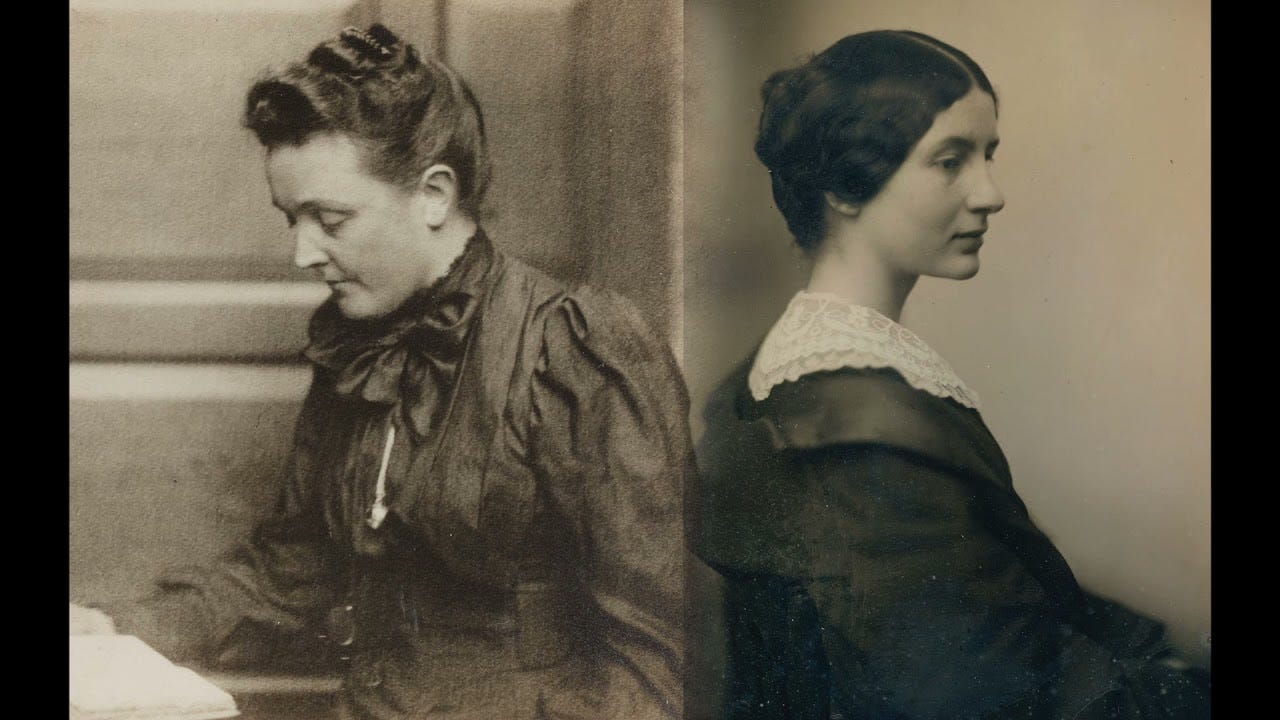
| April 19, 1943 On the eve of Passover, the Warsaw Ghetto Uprising began when Nazi forces attempted to clear out the Jewish ghetto in Warsaw, Poland, to send them to concentration camps. The Germans were met by unexpected gunfire from Jewish resistance fighters. The destruction of the ghetto had been ordered in February by SS Chief Heinrich Himmler: “An overall plan for the razing of the ghetto is to be submitted to me. In any case we must achieve the disappearance from sight of the living-space for 500,000 sub-humans (Untermenschen) that has existed up to now, but could never be suitable for Germans, and reduce the size of this city of millions—Warsaw—which has always been a center of corruption and revolt.” These two women, soon to be executed, were members of the Jewish resistance. ” …Jews and Jewesses shot from two pistols at the same time… The Jewesses carried loaded pistols in their clothing with the safety catches off… At the last moment, they would pull hand grenades out…and throw them at the soldiers….” Captured Jews in the Warsaw Ghetto Uprising Learn more about The Warsaw Ghetto Uprising (it’s the search page for the national Holocaust Museum.) |
April 19, 1971![]() As a prelude to a massive anti-war protest, Vietnam Veterans Against the War (VVAW) began a five-day demonstration in Washington, D.C. The generally peaceful protest was called Dewey Canyon III in honor of the operation of the same name conducted in Laos. They lobbied their congressmen, laid wreaths at Arlington National Cemetery, and staged mock “search-and-destroy” missions. ![]() Read more about this action |
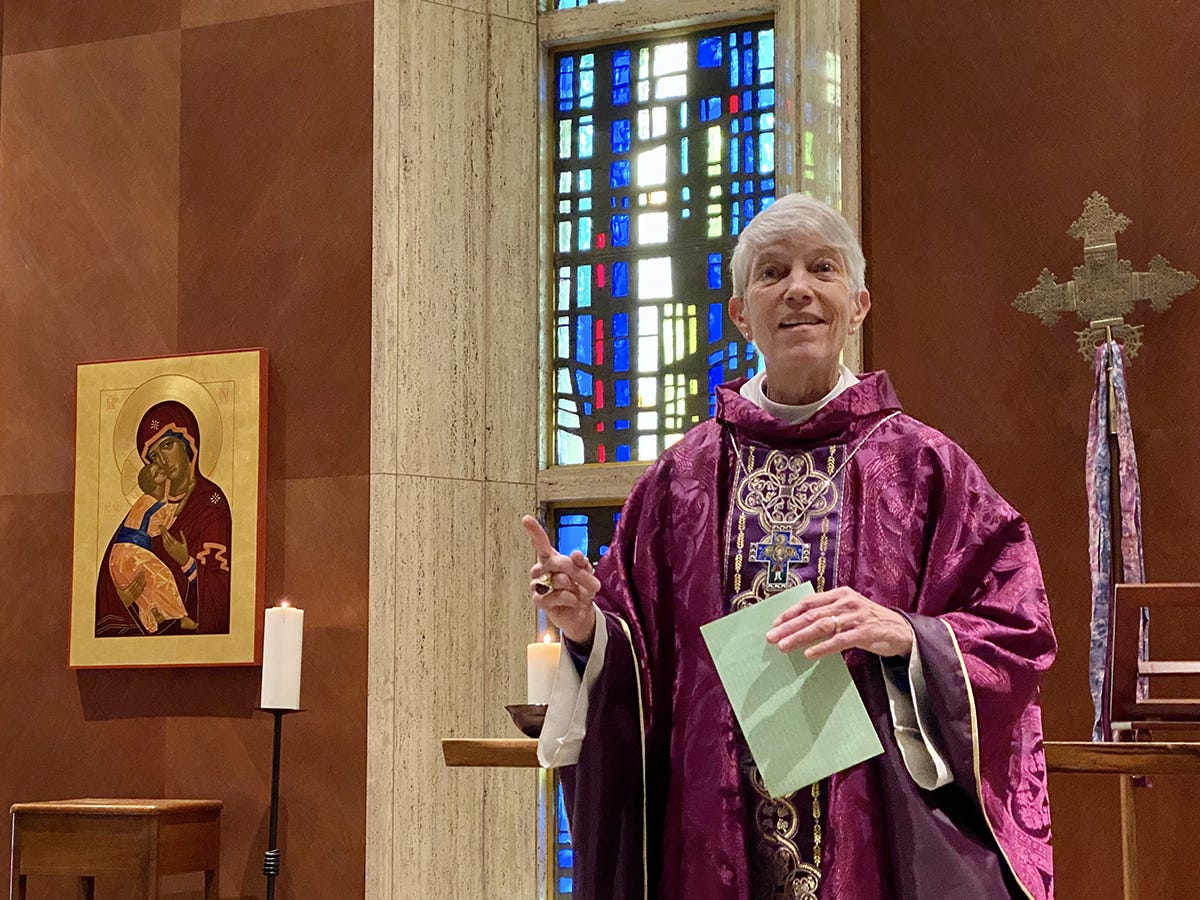
| April 19, 1997 Two Swedish Plowshares peace activists, Cecelia Redner, a priest in the Church of Sweden, and Marija Fischer, a student, entered the Bufors Arms factory in Karlskoga, Sweden, planted an apple tree and attempted to disarm a naval cannon being exported to Indonesia. Cecelia was charged with attempt to commit malicious damage and Marija with assisting in what was called the Choose Life Disarmament Action. Both were also charged with violating a law which protects facilities “important to society.” Both women were convicted, arguing over repeated interruptions by the judge, that, in Redner’s words, “When my country is arming a dictator I am not allowed to be passive and obedient, since it would make me guilty to the crime of genocide in East Timor. I know what is going on and I cannot only blame the Indonesian dictatorship or my own government.” Fischer added, “We tried to prevent a crime, and that is an obligation according to our law.” Redner was sentenced to fines and three years of correctional education. Fischer was sentenced to fines and two years’ suspended sentence. Both the prosecutor and defendants appealed the case. No jail sentences were imposed. |
https://www.peacebuttons.info/E-News/peacehistoryapril.htm#april19
Share Liberally
Good morning, Scottie’s Playtime!
From jeff tiedrich:
Peace & Justice History for 4/18
| April 18, 1912 Members of the United Mine Workers of America on Paint Creek in Kanawha County, West Virginia, demanded wages equal to those of other area mines. The operators rejected the wage increase and miners walked off the job. Miners along nearby Cabin Creek, having previously lost their union, joined the Paint Creek strikers and demanded: • the right to organize • recognition of their constitutional rights to free speech and assembly • an end to blacklisting union organizers • alternatives to company stores • an end to the practice of using mine guards • prohibition of cribbing • installation of scales at all mines for accurately weighing coal • unions be allowed to hire their own checkweighmen to make sure the companies’ checkweighmen were not cheating the miners.When the strike began, operators brought in mine guards from the Baldwin-Felts Detective Agency to evict miners and their families from company houses. The evicted miners set up tent colonies and lived in other makeshift housing. The mine guards’ primary responsibility was to break the strike by making the lives of the miners as uncomfortable as possible. ![]() Striking miners and their families being evicted from company houses. Deep background on the W. Virginia coal business and the strike |
April 18, 1941![]() Reverend Adam Clayton Powell, Jr. Bus companies in New York City agreed to hire 200 black drivers and mechanics after a four-week boycott by riders led by Reverend Adam Clayton Powell, Jr. of Harlem’s Abysinnian Baptist Church, the largest Protestant congregation in the U.S. Powell ran and won a City Council seat later that year and became a member of Congress four years later. A Bus Boycott Before Its Time |
April 18, 1955![]() Sukarno hosts Bandung conference A conference bringing together government representatives from 29 Asian and African countries began in Bandung, Indonesia. The intention was to promote economic and cultural cooperation, and to oppose Western colonialism, then still prevalent on both continents. At the same time, many countries were worried about communism and the power of the Soviet Union. The principal actors were Sukarno of Indonesia, one of the countries that organized the meeting; Jawahrlal Nehru, prime minister of recently independent India; Kwame Nkrumah, prime minister of the Gold Coast (now Ghana); Gamal Abdel Nasser, president of Egypt; Chou En Lai, premier of China; and Ho Chi Minh, prime minister of Vietnam. ![]() Chou En-Lai and Jawaharlal Nehru at the Bandung Conference Many concepts of international cooperation and mutual interest were discussed at the week-long conference, including Pan-Islam, Pan-Arabism, Pan-Asianism, and Pan-Africanism. The meeting was a precursor to what became known as the Non-Aligned Movement (aligned neither with Washington nor Moscow). Bandung Conference background info |
| April 18, 1958 The first march against nuclear arms in West Germany took place. |
April 18, 1960![]() Tens of thousands of people marked the end of the Aldermaston “ban the bomb” march at a rally with at least 60,000 gathering in Trafalgar Square, the largest demonstration London had seen to date. Read more |
| April 18, 1989 Thousands of Chinese students from several universities took to the streets to protest government policies and issue a call for greater democracy in the communist People’s Republic of China (PRC). Mourning over the death of Hu Yaobang began on the 15th in Tiananmen Square. As Secretary General of the Chinese Communist Party, he had called for rapid reform in the PRC, but had been pushed out of office over the Democracy Wall protests. Students in the Square demanded response from government officials, and began a sit-in and other activities that persisted for weeks. Timeline of the Beijing democracy protests |
https://www.peacebuttons.info/E-News/peacehistoryapril.htm#april18
A Timely Resource from Janet
Peace & Justice History for 4/17
| April 17, 1959 22 were arrested in New York City for refusing to take shelter during a civil defense drill. |
| April 17, 1960 Inspired by the Greensboro sit-in of four black college students at an all-white lunch counter, nearly 150 black students from nine states formed the Student Nonviolent Coordinating Committee (SNCC). Meeting in Raleigh, North Carolina, with Ella Baker, James Lawson and Martin Luther King, Jr., the founders set SNCC’s initial goals as overturning segregation in the South. ![]() ![]() They also considered it important to give young blacks a stronger voice in the civil rights movement, as many had participated in sit-ins that had proliferated to dozens of cities over the previous three months. At the Raleigh conference Guy Carawan sang a new version of “We Shall Overcome,” an adaptation of an old labor song. This song would become the national anthem of the civil rights movement. People joined hands and gently swayed in time singing “black and white together,” repeating over and over, “Deep in my heart, I do believe, we shall overcome some day.” History of SNCC (It’s a Stanford.edu page, which “cannot be reached.” Take from that what you will. I’ve decided to note these things when they happen.) What SNCC did to make change happen (This page is good.) |
April 17, 1961![]() Cuban leader Fidel Castro during the Bay of Pigs invasion. An army of 1500 anti-Castro Cuban exiles, mercenaries equipped and trained at a secret Guatemala base by the CIA, landed at Bahia de Cochinos (Bay of Pigs) in an attempt to “liberate” Cuba from Communist rule. Within three days, the invasion proved disastrous with nearly 1200 members of Brigade 2506 (who had been trained in the U.S.) taken prisoner. Known as Operation Zapata, it was conceived by Vice President Nixon, planned and approved by the Eisenhower administration, and executed shortly after President John Kennedy’s inauguration. ![]() President Kennedy receives the Brigade 2506 flag in Miami in 1962 and declares: “I promise to return this flag in a free Havana.” Soviet General Secretary Nikita Kruschev sent a telegram to President Kennedy: “Mr. President, I send you this message in an hour of alarm, fraught with danger for the peace of the whole world. Armed aggression has begun against Cuba. It is a secret to no one that the armed bands invading this country were trained, equipped and armed in the United States of America. The planes which are bombing Cuban cities belong to the United States of America, the bombs they are dropping are being supplied by the American Government . . . .” What actually happened |
April 17, 1965![]() The first national demonstration against the Vietnam War took place in the nation’s capital. Students for a Democratic Society (SDS), the organizers, had expected about 2000 marchers; the actual count was 15,000–25,000. This was the largest anti-war protest ever to have been held in Washington, D.C. up to that time. The number of marchers approximately equaled the number of U.S. soldiers in Vietnam. Several hundred students in the protest broke away from the main march and conducted a brief sit-in at the U.S. Capitol’s door. An exam prepared by SDS about the Vietnam War (answers available) |
April 17, 1965![]() Gay rights advocate Jack Nichols The first demonstration promoting equal treatment of homosexuals, Jack Nichols, Barbara Gittings and others picketed in front of the White House. There were no media present.. Read more |
| April 17, 1986 Reverend Jesse Jackson, future congresswoman Maxine Waters and others co-founded the Rainbow Coalition, initially intended as a progressive public-policy think tank within the Democratic Party. ![]() Representative Maxine Waters, Harry Belafonte, John Sweeney, President of the AFL-CIO, Reverend Jesse Jackson, and Willie Nelson August 6, 2005-Atlanta, Georgia. Brief history of Rainbow Push Coalition |
| April 17, 1992 On Good Friday morning, about 50 people accompanied Fr. Carl Kabat and Carol Carson to Missile Silo Site N5 at Whiteman Air Force Base in Missouri, the same silo that Carl and other members of the Silo Pruning Hooks (see below) disarmed in 1984. They cut through a fence and, once inside, Carol used a sledgehammer on the concrete lid of the silo while Carl performed a rite of exorcism. Eventually, the police arrived and arrested Carl and Carol. They were jailed and held until their court appearance. At that time, they made a preliminary agreement with federal prosecutors wherein they would plead “no contest” to trespass in exchange for the property destruction charge being dropped; they were sentenced to six and three months, respectively, in a halfway house. ![]() Carl Kabat A History of Direct Disarmament Actions About the Silo Pruning Hooks action |
https://www.peacebuttons.info/E-News/peacehistoryapril.htm#april17
(Hiding Snickers Behind My Hand…)
Crosswalks in Silicon Valley Hacked to Talk Like Musk and Zuckerberg
In one snippet, a crosswalk hacked to sound like Mark Zuckerberg told individuals there was nothing they could do to stop progress of AI.
By Thomas Maxwell Published April 14, 2025
Over the weekend, crosswalk pedestrian signals in the backyard of Mark Zuckerberg and Elon Musk were hacked to play voices imitating their likeness. But they were not exactly kind to the billionaires, instead offering a commentary on the heightened polarization and distrust of the two leaders who have become more influential than ever in today’s society and Washington in particular.
In one video posted to TikTok, after the crosswalk button is pressed, it begins to say, “It’s normal to feel uncomfortable or even violated as we forcefully insert AI into every facet of your conscious experience.” It continues, “I just want to assure you, you don’t need to worry because there’s absolutely nothing you can do to stop it.”
Meta has been pushing AI heavily, inserting “Meta AI” buttons into search boxes across its apps and promoting the idea of interacting with AI characters tailored to a user’s interests in lieu of real humans. Recent surveying by YouGov found 44% of Americans are skeptical of AI over concerns ranging from invasion of personal privacy to the spread of misleading videos or deepfakes. But companies like Meta are betting that AI will enable more people to create content online and communicate with friends. (snip-MORE)
Peace & Justice History for 4/16
| April, 16, 1971 The Internal Revenue Service (IRS) estimated over 2,000 people openly refused to pay part or all of their income tax. “If a thousand [people] were not to pay their tax bills this year, that would not be a violent and bloody measure, as it would be to pay them and enable the state to commit violence and shed innocent blood.” Henry David Thoreau on the Mexican War ![]() National War Tax Resistance Coordinating Committee |
| April 16, 2000 Between 10,000 and 20,000 activists blockaded meetings of the World Bank and International Monetary Fund in Washington, D.C. Sitting down at intersections and locking arms to form human chains, the protesters were opposed to Bank and IMF policies that increased third-world indebtedness and did little to directly benefit the poor in those countries. “The World Bank is subjugating our economic and social independence,” Vineeta Gupta, a doctor from the Punjab in India, said in a letter he delivered to World Bank President James Wolfensohn at his home. “It is time that we shut the bank down, and this boycott is a great start.” |
https://www.peacebuttons.info/E-News/peacehistoryapril.htm#april16
Jackie Robinson, and More, in Peace & Justice History for 4/15
| April 15, 1947 Jackie Roosevelt Robinson became the first African American to play in a major league baseball game in the 20th century. His stepping onto Ebbets Field in a Brooklyn Dodgers uniform broke the “color line,” the segregation of professional teams. The International League in 1887 began a wave of League-wide black exclusion, and it had been complete since 1899, when Bill Galloway became the last African-American player in white organized ball (Woodstock, Ontario). Though hitless in three at-bats, Robinson started at first base, and the Dodgers beat the Boston Braves that day, 5-3. ![]() “Jackie, we’ve got no army. There’s virtually nobody on our side. No owners, no umpires, very few newspapermen. And I’m afraid that many fans will be hostile. We’ll be in a tough position. We can win only if we can convince the world that I’m doing this because you’re a great ballplayer, a fine gentleman.” “There was never a man in the game who could put mind and muscle together quicker and with better judgment than (Jackie) Robinson.” -Branch Rickey Jackie Robinson and his work on civil rights from the National Archives (with teaching activities and worksheets) (I was concerned this wouldn’t be there, but then recalled they said they put him back. It’s there. -A) |
April 15, 1967![]() King and Dr. Benjamin Spock lead an anti-war march to the United Nations, 15 April 1967 Amidst growing opposition to the war in Vietnam, large-scale anti-war protests were held in New York, San Francisco and other cities. In New York, the protest began in Central Park, where over 150 draft cards were burned, and concluded at the United Nations with speeches by Rev. Martin Luther King, Jr. and others. King’s opposition to the war, excerpts of his speeches and reaction throughout the country |
https://www.peacebuttons.info/E-News/peacehistoryapril.htm#april15