Hours later, the calf, fed and fluffed, took a spot on the couch with the Sorrell family’s two children. Their mom, Macey Sorrell, snapped some photos and later posted them to social media, and the cuteness did not go unnoticed.
The calf was born outdoors in single digit temperatures on Saturday. Macey Sorrell said her husband, Tanner, went outside to check on the pregnant mother and found the calf, suffering in the cold.
“She was just frozen. Her umbilical cord looked like a popsicle,” Macey Sorrell said Thursday from her home in Mount Sterling, Kentucky. “It was just frozen.”
After losing a calf last winter to frostbite, the family moved quickly to bring the baby inside to clean her off and warm her up.
Waiting for lunch to digest so I can go work on the driveway while the temp is over 10 degrees, I’m reading my weekly Literary Hub newsletter. And what to my eyes should appear, but them saying today is National Florida Day! I’d still rather not be in Florida (too humid for my sinuses,) but the idea is pretty good, in and around the doom and violence in some of the day’s events. There is all sorts of stuff on this page, including Dave Barry, but skip to following pages for better bits of escape. I’m going to post a snippet about FL literature (yes, literature comes from FL, too, and it’s darned good! I love Carl Hiaasen!)
Snippet:
Today, January 25, is National Florida Day.
Despite being the epicenter of contemporaryAmericanbookbanning, Florida has a lush literary history, and is the subject of ongoing fascination for both writers and readers across the country. To celebrate the literary pedigree of the Sunshine State, and to combat the winter weather that is burying pretty much everyone else this weekend, we present to you a Florida reading list. This is by no means meant to be complete, of course. Just a little something to get you warmed up:
Joy Williams, Ill Nature Amy Hempel on Ill Nature: Joy Williams lived for years in Florida, in the Keys, and was lucky to have known parts of it that no longer exist. This is one of the occasions on which her anger is also a form of mourning. “Neverglades” chronicles the destruction of an enormous percentage of this singular ecosystem, leaving it “a horror show of extirpated species.” Of Big Sugar’s role in its destruction, Williams suggests we “think of the NRA with a sweet tooth.” “That the Everglades still exist is a collective illusion,” she writes, “shared by both those who care and those who don’t.” She describes the state as “attuned to growth, on autocatalytic open throttle.”
Richard Deming on Dust Tracks on a Road: Hurston’s hometown, Eatonville, located outside Orlando, was one of the first towns in the United States to be incorporated and run by African Americans. She described it as “a pure Negro town— charter, mayor, council, town marshal and all.” Zora’s handsome father, John Hurston, a rugged, physically commanding Baptist preacher with a gift for lyric turns of language—perhaps the one gift he passed down to his daughter—would even become a three‑ term mayor in the town.
Eatonville had been a defining place for her, and although she would be forced to leave it as a teenager, it stayed with her for as long as she lived. The town and its habits, its inhabitants, all pressed knowledge and lore into the topographic folds of her mind. On benches and apple boxes and milk crates sat people at Joe Clarke’s store, the “heart and soul” of the town. When it was really humid, they gathered on the porch, shirts loosened, shooing big Florida flies, and fanning gently their foreheads. Inside and out, people talked and gossiped, telling tales large and small, real and invented.
Grace Flahive on Florida: Some books are books. Other books are places. More than any story collection I’ve read in my life, Lauren Groff’s Florida feels like tearing through the page and stepping into a fully realized portrait of the state, living and breathing and dangled with Spanish moss, as panthers pass through the shadows. In “The Midnight Zone,” a mother staying in a remote cabin with her two young boys falls from a stool and hits her head and finds herself traveling outside of her body, amongst the thick of the trees. In “Eyewall,” a woman hunkers down as a hurricane slams her home, and when the storm passes, a miracle is revealed: a single, intact chicken egg sits, gleaming, where the front steps had been.
These stories are rich, at times hallucinogenic, and unforgettable.
Carl Hiaasen, the whole oeuvre
Neil Nyren on the works of Carl Hiaasen: The books are all set in Florida, because of course they are. Besides being the place where Hiaasen was born and raised, and lives in and loves, it is a place utterly unique in both its natural beauty and its level of venality. “Every pillhead fugitive felon in America winds up in Florida eventually,” muses a detective in Double Whammy (1987). “The Human Sludge Factor—it all drops to the South.” Another detective in Skinny Dip (2004), who is originally from Minnesota, concurs: “[In the upper Midwest] the crimes were typically forthright and obvious, ignited by common greed, lust or alcohol. Florida was more complicated and extreme, and nothing could be assumed. Every scheming shithead in America turned up here sooner or later, such were the opportunities for predators.” Tied to that, gloats a crooked (and entirely uncredentialed) plastic surgeon in Skin Tight (1989), “One of the wondrous things about Florida was the climate of unabashed corruption. There was absolutely no trouble from which money could not extricate you.”
Grace Flahive on Milk Blood Heat: Each of the stories in Dantiel W. Moniz’s collection are the type you experience twice. First, you inhale the story (Moniz’s spellbinding prose doesn’t offer any slower option). Then, each story lingers within you, as your mind digests the inflection points, the double meanings, the emotional dynamics that Moniz has laid bare.
Set primarily in Jacksonville, Moniz’s stories trace the contours of her characters’ inner lives, including private pains and unspeakable secrets, showing us ordinary people with extraordinary things broiling just beneath the surface. Each protagonist grapples with something too dark and unwieldly for one person to carry—girlhood grief, the loss of a pregnancy, hate spun from faith, and a near-death experience, just to name a few. But Moniz’s characters find agency in the impossible—in “Tongues,” a young girl defies her community’s hypocrisy, and in “The Hearts of Our Enemies,” a mother delivers a delicious act of retribution. The collection’s title hints at the visceral stories within, and the prose delivers—as well as milk, blood and heat, this is a fully embodied world of sweat, tears, ocean water, and tiny, haunting limbs. As a reader, I let myself be swept away. As a writer, I was taking notes on Moniz’s endless skill.
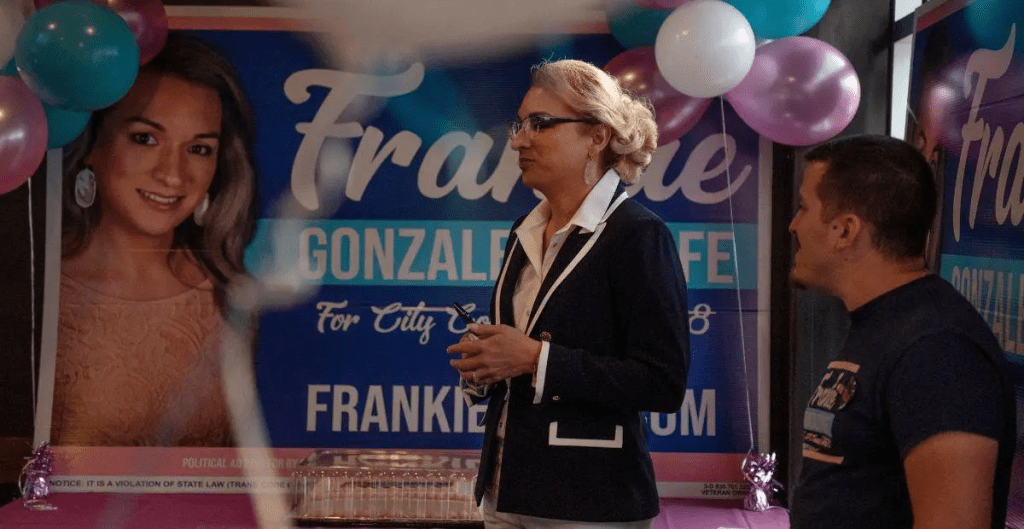
Early Tuesday morning, final appropriations bills for the Departments of Labor, Health and Human Services, and Education—and related agencies—were released, marking the last major funding measures to be negotiated in the aftermath of the record-breaking government shutdown fight in 2025. That standoff featured multiple appropriations bills loaded with anti-transgender riders and poison pills for Democrats, ultimately ending in a short-term continuing resolution that punted many of those provisions to the end of January. While other “minibus” packages funding individual agencies moved forward, the Education and HHS bills were conspicuously absent, as they contained some of the most sweeping and consequential anti-trans riders ever proposed in Congress. Now, with the final bills released, it is clear that no anti-transgender riders were included—meaning transgender people will largely be spared new congressional attacks through most of 2026 should they pass as-is.
As the government shut down on Oct. 1, the state of appropriations bills needed to reopen the federal government for any extended period was extraordinarily dire for transgender people. Dozens of anti-transgender riders were embedded across House appropriations bills, even as those provisions were largely absent from the Senate’s versions. The riders appeared throughout nearly every funding measure, from Commerce, Justice, and Science to Financial Services and General Government. The most extreme provisions, however, were concentrated in the House HHS and Education bills, including language barring “any federal funds” from supporting gender-affirming care at any age and threatening funding for schools that support transgender students. Taken together, those measures would have posed a sweeping threat to transgender people’s access to education and health care nationwide.
Those fears eased somewhat when the government reopened under a short-term continuing resolution funding operations through the end of January. In the months that followed, Democrats notched a series of incremental victories for transgender people, advancing multiple appropriations “minibus” packages that stripped out anti-trans riders as the government was funded piece by piece. As amendment after amendment fell away, those wins grew more substantial, including the removal of a proposed ban on gender-affirming medical care from the NDAA—even after it had passed both the House and Senate. Still, the most consequential question remained unresolved: what would ultimately happen to the high-impact anti-trans provisions embedded in the HHS and Education bills.
Now, the package has been released—and for the moment, transgender people can breathe again. The final HHS and Education bills contain no anti-transgender provisions: no ban on hospitals providing gender-affirming care to transgender youth, no threats to strip funding from schools that support transgender students or allow them to use the bathroom, and no mandate forcing colleges to exclude transgender students from sports or activities like chess or esports. The bills are strikingly clean. As such, they avert yet another protracted shutdown fight in which transgender people are once again turned into political bargaining chips—and, at least for now, remove Congress as the immediate vehicle for new federal attacks, should they pass as-is.
When asked about the successful stripping of anti-trans provisions, a staffer for Representative Sarah McBride tells Erin In The Morning, “Rep. McBride works closely with her colleagues every day to defend the rights of all her constituents, including LGBTQ people across Delaware. In the face of efforts by the Trump administration and Republicans in Congress to roll back health care and civil rights, she was proud to work relentlessly with her colleagues in ensuring these funding bills did not include anti-LGBTQ provisions. It takes strong allies in leadership and on committees to rein in the worst excesses of this Republican trifecta, Rep. McBride remains grateful to Ranking Members DeLauro, Murray, and Democratic leadership for prioritizing the removal of these harmful riders.”
This does not mean that transgender people will not be targeted with policies and rules that affect them in all areas of life. The Trump administration has acted without regard to law in forcing bans on sports, pulling funding from schools and hospitals, and banning passport gender marker updates. The Supreme Court has been increasingly willing to let the office of the presidency under Trump do whatever it would like to transgender people. However, the lack of passage of bills targeting transgender people means that these attacks will only last for as long as we have Trump in the White House, and a future president should hopefully be easily able to reverse the attacks.
He posted that this one is longer than usual; around an hour and ten minutes. (Listening as I set this up.) Of course a person doesn’t have to listen at one go; pause it and return. Or just keep on listening because he’s that good!
It’s the one-year anniversary of Donald Trump’s second administration this week. There’s not much to celebrate.
The oath Trump took on January 20, 2025: “I do solemnly swear (or affirm) that I will faithfully execute the Office of President of the United States, and will to the best of my ability, preserve, protect and defend the Constitution of the United States.” He added, “so help me God” at the end.
Tonight, about 1,500 active-duty soldiers, two infantry battalions of the Army’s 11th Airborne Division, are under prepare-to-deploy orders for possible action in Minnesota. This means Donald Trump is actively contemplating invoking the Insurrection Act. Absent that, deployment of active duty members of the military is prohibited by the Posse Comitatus Act. It bears repeating that the American military isn’t meant to be used for domestic law enforcement against American citizens, barring extraordinary circumstances that simply aren’t present here.
The 11th Airborne, nicknamed the “Arctic Angels,” specializes in operating in arctic conditions. That’s convenient for Minnesota, or perhaps for Maine, where there are persistent rumors Trump plans to surge ICE this week, with an eye to the state’s Somali immigrant community. Governor Janet Mills has said Maine officials have been unable to confirm whether the rumors are true, but she’s said she’s working with the cities of Portland and Lewiston, which have sizable immigrant communities, along with local law enforcement, to be ready. “Maine will not be intimidated,” the Governor said.
Trump seems to be on course to become the first President to direct the use of U.S. military forces against American citizens during peacetime. And he’s doing it in a situation where the “unrest” is mostly peaceful protests resulting from Trump’s efforts to inflame the city. The situation is hardly the kind of insurrection, domestic violence, or conspiracy the Act contemplates, but this is a presidency where the facts don’t matter. This week could become an extraordinary moment in American history.
What exactly does the 11th Airborne Division do? When they were activated in 2022, the General running the show told the troops, “I expect every soldier of this Division to be masters of their craft, of Arctic Warfare.” Arctic warfare—headed for the streets of Minneapolis.
According to their website, “The 11th Airborne Division executes expeditionary operations worldwide, conducts Multi-Domain Operations in the Indo-Pacific theater and the Arctic, and on order decisively defeats any adversary in extreme cold weather, mountainous and high-latitude environments through large scale combat operations.” They are ready to “deploy, fight and win decisively against any adversary.” Presumably, that includes the protestor in a giraffe costume ICE agents forced to the ground last week or the one dressed like a pickle. If the stakes weren’t so high, the whole thing would be ridiculous.
And to triple down on what it’s doing in Minnesota, the administration announced it’s investigating Minnesota Governor Tim Walz and Minneapolis Mayor Jacob Frey and plans to subpoena them. No word on specifics of potential charges or whether the subpoenas will be for documents or testimony. It’s hard to imagine what possible federal crimes the two have committed. Former Attorney General Eric Holder put it best—Holder quips, maybe “felony disagreement?”
DOJ is also investigating the partner of the Minneapolis woman an ICE agent shot and killed, apparently looking into whether Becca Good interfered with the agent. Videotape suggests he wasn’t impeded in any way by her comment that he should go out to lunch, moving without any obstruction to take three shots.
But DOJ is not investigating whether the ICE agent who killed her should be charged in connection with the shooting death of Renee Good. On Fox News Sunday, Deputy Attorney General Todd Blanche said, “No, we are not investigating.” Blanche characterized what happened as the agent “defending himself” and said, “we investigate when it’s appropriate to investigate,” claiming that wasn’t the case here. “The party told you to reject the evidence of your eyes and ears. It was their final, most essential command.” — George Orwell.
Officer-involved shootings are virtually always investigated, most of them by state agencies, which is where the majority of these incidents occur. But this case isn’t just a “shooting”; it’s a death, and possibly a homicide—a possibility that can’t be ruled out without investigation. There is also video evidence that a doctor who tried to treat Good, who was still alive when paramedics arrived 15 or more minutes later, was refused, which could lead to additional charges. This is the kind of case that demands a thorough, objective investigation.
Beyond that, Blanche’s claim that there are too many shootings every year to investigate—he says over 1,000—is as ludicrous as it is wrong. His argument is essentially that cops are shooting too many people to be bothered to investigate. If anything, high numbers would make investigation even more essential. While exact numbers aren’t available, a 2023 assessment by NBC suggested that between 2018 and 2022, 223 people were shot by officers working for or with the four primary federal law enforcement agencies, and that 151, or an average of 30 per year, were killed. Surely, Blanche can muster the resources to investigate 30 deaths in federal officer involved shootings a year—even if it means pulling a few FBI agents off of their work arresting school children and field workers who are in the country without legal immigration status, but hurting no one. In a moment where it would have shown good faith to conduct an investigation, the administration acted like it had something to hide, instead.
It should come as no surprise that recent polls show Trump slumping as he comes to the end of his first year. 58% of Americans call his first term a failure. A mere 37% say that Trump puts the good of the country above his personal gain. Only 32% believe he’s in touch with the problems ordinary Americans face in their daily lives. Perhaps most damning, “Fewer than half say that Trump has the stamina and sharpness to serve effectively, and just 35% call him someone they’re proud to have as president.”
Keep talking with the people around you! The truth still has a way of breaking through when we share it.
Other developments to expect this week:
On Tuesday, the plaintiffs’ response is due in the temporary protected status case we discussed in this post back on January 10. In Svitlana Doe v. Noem, Judge Talwani restricted the government’s efforts to end parole status for Colombians, Cubans, Ecuadorians, Guatemalans, Haitians, Hondurans, and Salvadorans with family reunification status. Once briefing is complete, she will decide whether to permanently enjoin the government from ending parole status for these individuals before the time set for it to expire.
On Wednesday, the Supreme Court will hear oral argument in the case of Fed Governor Lisa Cook, who Trump tried to remove. The Court has seemed less willing to let Trump run roughshod over federal appointees when it comes to the Fed than other agencies. It permitted Cook to remain in place during the litigation, in sharp contrast to how it has treated others, including FTC Commissioner Rebecca Slaughter, who Trump also ousted. Previously, Trump threatened to prosecute Cook for mortgage fraud, using the same flawed arguments that permeated the case brought in Virginia against New York AG Tish James and the investigations involving Senator Adam Schiff and Congressman Eric Swalwell. More recently, he has threatened Fed chair Jerome Powell with a meritless perjury prosecution. Whether the Court will weigh in on that pattern remains to be seen.
On Thursday, Jack Smith will testify on Capitol Hill, publicly this time, at 10 am. He will remain under restriction from a Florida Judge’s order that prevents him from discussing the details of his report on the Mar-a-Lago indictment.
Also this week, we’ll be on the lookout for developments in the arson at Beth Israel Jewish Synagogue in Jackson, Mississippi, that destroyed a significant portion of the temple, including its Torahs. Stephen Spencer Pittman has been charged by both state and federal prosecutors with hate crimes.
The local DA noted the historic nature of the temple:
“Beth Israel Congregation has endured violence in its history, including a 1967 Ku Klux Klan bombing during the civil-rights era, and this case arises amid a documented increase in attacks on houses of worship across the United States, including arson, vandalism, and other acts of target violence,” he said. “Such crimes are intended to intimidate entire religious communities. Violence directed at any place of worship, regardless of faith, will not be tolerated in Jackson, Mississippi.”
Pittman confessed to the attack after his arrest. He referred to the temple as “the synagogue of Satan,” language white nationalists frequently use to denigrate Jews. Jews make up just 2% of the population in the U.S. but are the targets of 69% of the hate crimes in this country, according to FBI statistics. It’s not clear whether the confession means he’ll be pleading guilty.
Finally, this week, just like last week, and the one before it, and the one before that, Trump’s Justice Department is still refusing to comply with the Epstein Files Transparency Act.
Minnesota is under occupation by federal agents from ICE and CBP, and they need your help.
Not just Minneapolis, and not just people protesting. Across Minnesota, ICE continues to stop, harass, and detain people regardless of their citizenship status. Normal life in Minnesota has been interrupted, as schools have been forced to close or go virtual, as people live in fear of leaving their homes or going to work.
Minnesotans are organized and activated to respond to this violence. But they need our help.
This directory of places to donate to all comes from activists on the ground, plugged into the situation. Everything is vetted, with the exception of individual GoFundMes (not everyone is in our networks, and we don’t want to pick and choose who is worthy of help.)
If you don’t have resources to give, please amplify what you are hearing and seeing about Minnesota, across social media, but also to your networks, friends, and family offline.
Overwhelmed by the amount of listings here? Donate to the Immigrant Law Center of MN, who is providing assistance to hundreds of people with families detained by ICE, or the Immigrant Rapid Response Fund, a fund assembled by a coalition of Twin Cities Foundations committed to getting assistance out the door as quickly as possible.
Mutual Aid & Materials Purchasing
These funds are administered by neighbors helping their neighbors, not large organizations. This is one of the most direct ways to help and to get cash and resources into people’s hands quickly.
Diaper Fund
Rent Relief Funds
Mutual Aid Funds
Provide Food Support
Buy/Donate Materials
Crowdfunding Campaigns
We are only including campaigns which have not met their goals. To get a campaign added please email contact@standupforminnesota.com
Funds for Employees
For Individuals
Funds for Schools & Students
Funds for Communities
And there is so much more on the page. Please thoughtfully consider what you can do, including simply telling people about this when it comes up (or when you bring it up, maybe?) And thank you!