Two From Clay Jones

I haven’t shared this guy’s work in some time, either.

I am a member of the Association of American Editorial Cartoonists, and I also sit on its board of directors. Today, our president, Marc Murphy, wrote a statement for the organization in defense of journalist Don Lemon, who was arrested by the Trump regime for doing his job.

(snip-MORE, and it’s hot; go read it!)

=====

My favorite part of Raiders of the Lost Ark is when they remove the lid, and Greg Bovino’s face melts off. Of course, that would be impossible. He’s not tall enough to reach the top of the ark. By the way, I love this woman.

You know Donald Trump only cares about the optics because he has been perfectly happy with Greg Bovino’s job performance. Trump doesn’t have a problem with American citizens protesting ICE being murdered in the streets. It’s just too bad the optics aren’t good about that, as even Republicans are starting to cringe. Notice that Trump didn’t have any empathy for Congresswoman Ilhan Omar being attacked? And it’s probably his fault.

(snip-MORE, and it, too, is quite hot!)

A Saturday A.M. Bird Post

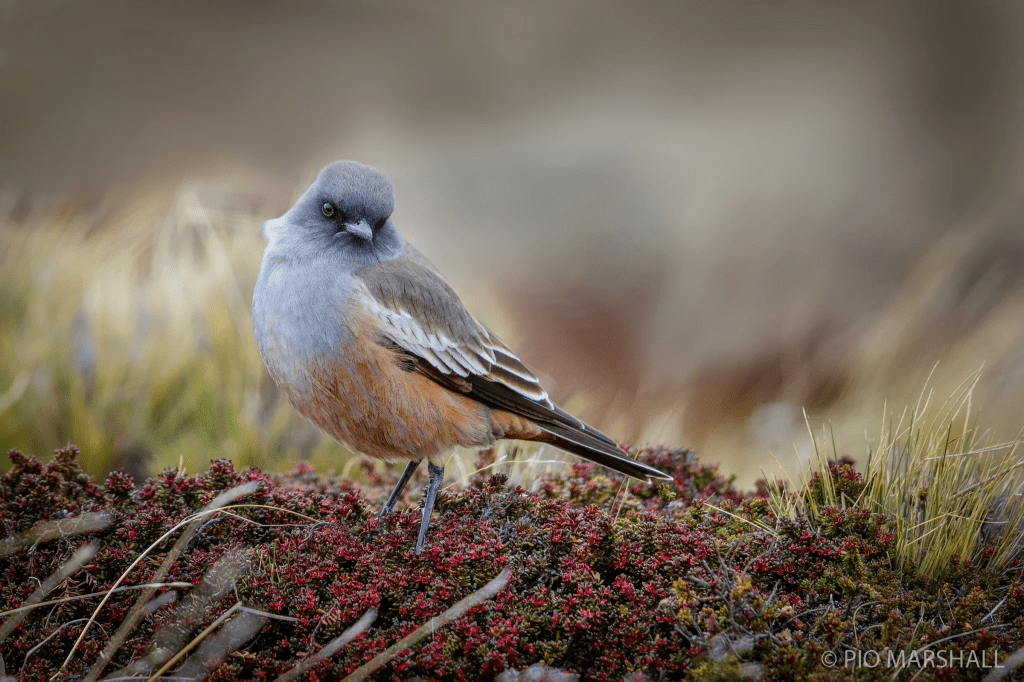
I haven’t posted these in a while, so here are a few links to photos, songs, and facts you can look at whenever you like!

The Painted Bunting

=====

Macaulay Library’s Best Bird Photos 2026

Featuring 37 photographers. Photo selections and text by Macaulay Library and Living Bird staff.

=====

The American Goshawk

An Answer to a Struggle.

Hello Everyone, and Hello to you, Scottie!

A bit ago, Scottie – you put out a post titled “I have struggled all day”. In that post, you included two songs, and for those who have been on this blog for a while we do recognize Terry Jacks.
Music is a huge part of my life. I sing like a water buffalo with laryngitis, but I love music. It works to lift me up when I’m down, it reminds me of special people and special times in my life, it brings me peace, and sometimes it allows me to be angry. Music can sing to a person’t soul, lighten one’s load. It allows me to cry when I need to cry, to hope when hope seems gone. It reminds me that I’m not alone.
So, I have three songs here. Two are just a bit tongue-in-cheek, but the last is very special to me. I sent you this song, Scottie, a long time ago. It is my favorite cover of that song.
My challenge and my ask to everyone is to please add in the comments the songs that you love, that feed your heart and soul. Songs that make you smile, make you cry, make you dance or sing in a crowded grocery store because you just can’t not sing or dance when you hear it. Because like the last song says so clearly: we are all in this together, whether we want to be or not. 🙂

I love you, my brother!
Randy

So, Again Everyone… please let me know the songs that are special to you, and perhaps even why they are special. Music is the magic. Randy

This Is Nice:

We Interrupt To Bring You The Photo You Didn’t Know You Needed To See

LOUISVILLE, Ky. (AP) — A Kentucky family battling extreme cold temperatures on their farm over the weekend opened their home to a newborn calf that was struggling in the deep freeze.

Hours later, the calf, fed and fluffed, took a spot on the couch with the Sorrell family’s two children. Their mom, Macey Sorrell, snapped some photos and later posted them to social media, and the cuteness did not go unnoticed.

The calf was born outdoors in single digit temperatures on Saturday. Macey Sorrell said her husband, Tanner, went outside to check on the pregnant mother and found the calf, suffering in the cold.

“She was just frozen. Her umbilical cord looked like a popsicle,” Macey Sorrell said Thursday from her home in Mount Sterling, Kentucky. “It was just frozen.”

After losing a calf last winter to frostbite, the family moved quickly to bring the baby inside to clean her off and warm her up.

Reblogging Whatever

She Laid The Foundation for GPS! Rest In Power, Gladys Mae West:

Your Josh Day Next Day

Lit Hub Florida!

Waiting for lunch to digest so I can go work on the driveway while the temp is over 10 degrees, I’m reading my weekly Literary Hub newsletter. And what to my eyes should appear, but them saying today is National Florida Day! I’d still rather not be in Florida (too humid for my sinuses,) but the idea is pretty good, in and around the doom and violence in some of the day’s events. There is all sorts of stuff on this page, including Dave Barry, but skip to following pages for better bits of escape. I’m going to post a snippet about FL literature (yes, literature comes from FL, too, and it’s darned good! I love Carl Hiaasen!)

Snippet:

Today, January 25, is National Florida Day.

Despite being the epicenter of contemporary American book banning, Florida has a lush literary history, and is the subject of ongoing fascination for both writers and readers across the country. To celebrate the literary pedigree of the Sunshine State, and to combat the winter weather that is burying pretty much everyone else this weekend, we present to you a Florida reading list. This is by no means meant to be complete, of course. Just a little something to get you warmed up:

Joy Williams, Ill Nature
Amy Hempel on Ill Nature: Joy Williams lived for years in Florida, in the Keys, and was lucky to have known parts of it that no longer exist. This is one of the occasions on which her anger is also a form of mourning. “Neverglades” chronicles the destruction of an enormous percentage of this singular ecosystem, leaving it “a horror show of extirpated species.” Of Big Sugar’s role in its destruction, Williams suggests we “think of the NRA with a sweet tooth.” “That the Everglades still exist is a collective illusion,” she writes, “shared by both those who care and those who don’t.” She describes the state as “attuned to growth, on autocatalytic open throttle.”

Zora Neale Hurston, Dust Tracks on a Road

 Richard Deming on Dust Tracks on a Road: Hurston’s hometown, Eatonville, located outside Orlando, was one of the first towns in the United States to be incorporated and run by African Americans. She described it as “a pure Negro town— charter, mayor, council, town marshal and all.” Zora’s handsome father, John Hurston, a rugged, physically commanding Baptist preacher with a gift for lyric turns of language—perhaps the one gift he passed down to his daughter—would even become a three‑ term mayor in the town.

Eatonville had been a defining place for her, and although she would be forced to leave it as a teenager, it stayed with her for as long as she lived. The town and its habits, its inhabitants, all pressed knowledge and lore into the topographic folds of her mind. On benches and apple boxes and milk crates sat people at Joe Clarke’s store, the “heart and soul” of the town. When it was really humid, they gathered on the porch, shirts loosened, shooing big Florida flies, and fanning gently their foreheads. Inside and out, people talked and gossiped, telling tales large and small, real and invented.

Lauren Groff, Florida

Grace Flahive on Florida: Some books are books. Other books are places. More than any story collection I’ve read in my life, Lauren Groff’s Florida feels like tearing through the page and stepping into a fully realized portrait of the state, living and breathing and dangled with Spanish moss, as panthers pass through the shadows. In “The Midnight Zone,” a mother staying in a remote cabin with her two young boys falls from a stool and hits her head and finds herself traveling outside of her body, amongst the thick of the trees. In “Eyewall,” a woman hunkers down as a hurricane slams her home, and when the storm passes, a miracle is revealed: a single, intact chicken egg sits, gleaming, where the front steps had been.

These stories are rich, at times hallucinogenic, and unforgettable.

Carl Hiaasen, the whole oeuvre

Neil Nyren on the works of Carl Hiaasen: The books are all set in Florida, because of course they are. Besides being the place where Hiaasen was born and raised, and lives in and loves, it is a place utterly unique in both its natural beauty and its level of venality. “Every pillhead fugitive felon in America winds up in Florida eventually,” muses a detective in Double Whammy (1987). “The Human Sludge Factor—it all drops to the South.” Another detective in Skinny Dip (2004), who is originally from Minnesota, concurs: “[In the upper Midwest] the crimes were typically forthright and obvious, ignited by common greed, lust or alcohol. Florida was more complicated and extreme, and nothing could be assumed. Every scheming shithead in America turned up here sooner or later, such were the opportunities for predators.” Tied to that, gloats a crooked (and entirely uncredentialed) plastic surgeon in Skin Tight (1989), “One of the wondrous things about Florida was the climate of unabashed corruption. There was absolutely no trouble from which money could not extricate you.”

Dantiel W. Moniz, Milk Blood Heat

Grace Flahive on Milk Blood Heat: Each of the stories in Dantiel W. Moniz’s collection are the type you experience twice. First, you inhale the story (Moniz’s spellbinding prose doesn’t offer any slower option). Then, each story lingers within you, as your mind digests the inflection points, the double meanings, the emotional dynamics that Moniz has laid bare.

Set primarily in Jacksonville, Moniz’s stories trace the contours of her characters’ inner lives, including private pains and unspeakable secrets, showing us ordinary people with extraordinary things broiling just beneath the surface. Each protagonist grapples with something too dark and unwieldly for one person to carry—girlhood grief, the loss of a pregnancy, hate spun from faith, and a near-death experience, just to name a few. But Moniz’s characters find agency in the impossible—in “Tongues,” a young girl defies her community’s hypocrisy, and in “The Hearts of Our Enemies,” a mother delivers a delicious act of retribution. The collection’s title hints at the visceral stories within, and the prose delivers—as well as milk, blood and heat, this is a fully embodied world of sweat, tears, ocean water, and tiny, haunting limbs. As a reader, I let myself be swept away. As a writer, I was taking notes on Moniz’s endless skill.

Read more here.

Whew-Breathe Again, For A Bit

Democrats Successfully Strip All Anti-Trans Riders From Final Appropriations Bills

The HHS and Education bills once contained the most sweeping anti-trans provisions in congressional history. Now they contain none.

Erin Reed Jan 20, 2026

Early Tuesday morning, final appropriations bills for the Departments of Labor, Health and Human Services, and Education—and related agencies—were released, marking the last major funding measures to be negotiated in the aftermath of the record-breaking government shutdown fight in 2025. That standoff featured multiple appropriations bills loaded with anti-transgender riders and poison pills for Democrats, ultimately ending in a short-term continuing resolution that punted many of those provisions to the end of January. While other “minibus” packages funding individual agencies moved forward, the Education and HHS bills were conspicuously absent, as they contained some of the most sweeping and consequential anti-trans riders ever proposed in Congress. Now, with the final bills released, it is clear that no anti-transgender riders were included—meaning transgender people will largely be spared new congressional attacks through most of 2026 should they pass as-is.

As the government shut down on Oct. 1, the state of appropriations bills needed to reopen the federal government for any extended period was extraordinarily dire for transgender people. Dozens of anti-transgender riders were embedded across House appropriations bills, even as those provisions were largely absent from the Senate’s versions. The riders appeared throughout nearly every funding measure, from Commerce, Justice, and Science to Financial Services and General Government. The most extreme provisions, however, were concentrated in the House HHS and Education bills, including language barring “any federal funds” from supporting gender-affirming care at any age and threatening funding for schools that support transgender students. Taken together, those measures would have posed a sweeping threat to transgender people’s access to education and health care nationwide.

Those fears eased somewhat when the government reopened under a short-term continuing resolution funding operations through the end of January. In the months that followed, Democrats notched a series of incremental victories for transgender people, advancing multiple appropriations “minibus” packages that stripped out anti-trans riders as the government was funded piece by piece. As amendment after amendment fell away, those wins grew more substantial, including the removal of a proposed ban on gender-affirming medical care from the NDAA—even after it had passed both the House and Senate. Still, the most consequential question remained unresolved: what would ultimately happen to the high-impact anti-trans provisions embedded in the HHS and Education bills.

Now, the package has been released—and for the moment, transgender people can breathe again. The final HHS and Education bills contain no anti-transgender provisions: no ban on hospitals providing gender-affirming care to transgender youth, no threats to strip funding from schools that support transgender students or allow them to use the bathroom, and no mandate forcing colleges to exclude transgender students from sports or activities like chess or esports. The bills are strikingly clean. As such, they avert yet another protracted shutdown fight in which transgender people are once again turned into political bargaining chips—and, at least for now, remove Congress as the immediate vehicle for new federal attacks, should they pass as-is.

When asked about the successful stripping of anti-trans provisions, a staffer for Representative Sarah McBride tells Erin In The Morning, “Rep. McBride works closely with her colleagues every day to defend the rights of all her constituents, including LGBTQ people across Delaware. In the face of efforts by the Trump administration and Republicans in Congress to roll back health care and civil rights, she was proud to work relentlessly with her colleagues in ensuring these funding bills did not include anti-LGBTQ provisions. It takes strong allies in leadership and on committees to rein in the worst excesses of this Republican trifecta, Rep. McBride remains grateful to Ranking Members DeLauro, Murray, and Democratic leadership for prioritizing the removal of these harmful riders.”

This does not mean that transgender people will not be targeted with policies and rules that affect them in all areas of life. The Trump administration has acted without regard to law in forcing bans on sports, pulling funding from schools and hospitals, and banning passport gender marker updates. The Supreme Court has been increasingly willing to let the office of the presidency under Trump do whatever it would like to transgender people. However, the lack of passage of bills targeting transgender people means that these attacks will only last for as long as we have Trump in the White House, and a future president should hopefully be easily able to reverse the attacks.