
Tag: Peace
2Fer Poetry on Saturday
Click on the titles to read more about each poet, and their poem.
Wooden Window Frames Luci Tapahonso
The morning sun streams through the little kitchen’s
wooden panes; its luminescence tempts me to forego coffee.
But I don’t. The dark coffee scent melds with the birds’
chirping along the hidden acacia. Then, a small bird
alights on the cross of the wooden clothesline.
Its tiny head turns from side to side, then as if sensing me,
it gazes at me through a window square.
We ponder each other, then remember our manners,
and it flies off into the clean, cold air.
My Kiowa friends say a visit from a bird
is the spirit of a departed loved one.
I think again of Marie, my friend, my comadre –
the many feast days, powwows, and trips we shared.
We cruised down Taos’s one main street,
and rushed to Smith’s grocery for last-minute necessities,
or Walmart for the white cylinder candles for wakes.
We hauled huge, bulging bags to the town dump.
Oh, sister, this entire town brims with memories
of our long sisterhood, since our early twenties
when we were young mothers,
but that was in the last century.
This quiet casita is surrounded by tall stands
of elm and cottonwood trees, their bare, brown
branches stark against the deep, blue sky.
Every other week, snow falls in thin waves
onto the flat ochre houses
that seem anchored to the ground.
Outside of these thick adobe walls, a stillness settles upon everything.
As memories drift all around, I gather ingredients for a stew,
scents of coffee and toast linger around the arched doorway,
and the warm air in the kitchen lightens the chopping of vegetables.
Soon, the windowpanes are damp from the simmering stew.
All there is now, is to wait, sip coffee, and watch the snow
fall in layers on the roofs, trees, fences, and cars.
I am in a serene cocoon of memories.
All our conversations and laughter are silent now.
Somewhere north of here, dogs bark playfully,
probably romping in the fresh snow.
Just up the road at the pueblo, your family gathers.
They replenish the fire, stir pots of red chile
and place potato salad and platters
of sliced oven bread on the table.
Copyright © 2024 by Luci Tapahonso. Originally published in Poem-a-Day on November 28, 2024, by the Academy of American Poets.
Here is a place where nothing can die
Darkness that lives beneath the leaves
We bring our nights there without knowing
We bring our fear there before the singing begins
We bring our silent names there hoping we are forgiven
We bring our hands there scented of a river
We bring our prayers that hide and watch us
The landscape where we have held the loose feathers
Of a fallen bird
And awakened in the land of the unseen
Here is a place where nothing can die …
Copyright © 2024 by Lance Henson. Originally published in Poem-a-Day on November 29, 2024, by the Academy of American Poets.
Peace & Justice History for 11/30
November 30, 1215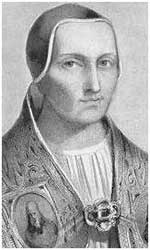 Pope Innocent II, in a papal bull (or major sacred pronouncement of canon law), ordered that Jews, “whether men or women, must in all Christian countries distinguish themselves from the rest of the population in public places by a special kind of clothing.” The rule was interpreted as requiring a badge on clothing as determined by each country. In England, for example, the tablets with the 10 commandments were used.  Read more |
| November 30, 1967 Senator Eugene McCarthy (D-Minnesota) announced that he would run on an anti-Vietnam war platform against President Lyndon Johnson for the nomination of the Democratic Party. McCarthy, though a contender to be Johnson’s running mate in 1964, had since become increasingly disenchanted with U.S. policy toward Vietnam, and opposed the war in his campaign.   McCarthy on the campaign trail “I am not for peace at any price, but for an honorable, rational and political solution to this war; a solution which I believe will enhance our world position, encourage the respect of our Allies and our potential adversaries, which will permit us to get the necessary attention to other commitments . . . and leave us with resources and moral energy to deal effectively with [the] pressing domestic problems of the United States itself.” Read more, see photos Jo Freeman |
| November 30, 1993 The Brady Handgun Violence Prevention Act became law. It provided for a waiting period before the purchase of a handgun, and for the establishment of a national instant criminal background check system to be used by firearms dealers before the transfer of any handgun.The law was named for James Brady, President Ronald Reagan’s press secretary, who became a paraplegic after being shot in the assassination attempt on Reagan. Following his recovery, he and his wife, Sarah, became leading proponents of controlling the proliferation of handguns.  James Brady watches President Clinton sign the bill |
November 30, 1999 Tens of thousands of activists, students, union members and environmentalists demonstrating for global justice shut down the World Trade Organization (WTO) summit in Seattle, Washington. International media coverage ignored both the blockade and the police riot (and an enormous labor-sponsored rally and march), focusing instead on minor property damage committed by a few dozen self-described anarchists.  photo Elaine Brière What the protests were about |
https://www.peacebuttons.info/E-News/peacehistorynovember.htm#november30
Fun, beautiful
Maybe the other way around. Dance, dance! I don’t know a lot of Dua Lipa’s work, but I really, really like the work that I’ve seen and heard of hers. She’s quite talented, and has a neat attitude, too-
This is accurate, and I haven’t swept the floor today, either.
Dark Side of the Horse by Samson for November 29, 2024

Perfect.
Peace & Justice History for 11/29
| November 29, 1864 A U.S. Army cavalry regiment under Colonel J. M. Chivington (a Methodist missionary and candidate for Congress), acting on orders from Colorado’s Governor, John Evans, and ignoring a white surrender flag flying just below a U.S. flag, attacked sleeping Cheyenne and Arapaho Indians, killing nearly 500, in what became known as the Sand Creek Massacre. Captain Silas Soule, however, not only refused to follow Chivington’s lead at Sand Creek, but ordered his troops not to participate in the attack. The Indians, led by Black Kettle, had been ordered away from Fort Lyon four days before, with the promise that they would be safe. Virtually all of the victims, mostly women and children, were tortured and scalped; many women, including the pregnant, were mutilated. Nine of 900 cavalrymen were killed. A local newspaper called this “a brilliant feat of arms,” and stated the soldiers had “covered themselves with glory.” At first, Chivington was widely praised for his “victory” at the Battle of Sand Creek, and he and his troops were honored with a parade in Denver. However, rumors of drunken soldiers butchering unarmed women and children began to circulate, and Congress ordered a formal investigation of the massacre. Chivington was eventually threatened with court martial by the U.S. Army, but as he had already left his military post, no criminal charges were ever filed against him Eyewitness Congressional testimony of John S. Smith, a white Indian agent and interpreter   Two different paintings of the Sand Creek Massacre |
November 29, 1963 Earl Warren and LBJ U.S. President Lyndon B. Johnson establishes the Warren Commission to investigate the assassination of President John F. Kennedy. More about The Warren Commission |
| November 29, 1967 U.S. Secretary of Defense Robert McNamara announces his resignation during the Vietnam War.  Robert McNamara The Fog of War a movie about the Vietnam War |
https://www.peacebuttons.info/E-News/peacehistorynovember.htm#november29
Needs No Intro
I hope each and every reader is having a fine day today! 🌞 ☮
Enjoy!
Poetry: Meetings
Twice on other travels a wolf stood on the periphery of lamplight.
Our eyes intensified in the silent distance between sanctity.
There is one who appreciates secondhand revelations of wolves.
Sparrow hawk waves fast hinges of small capture in its apex of watch.
Where are the absent coyotes of Willamina?
Winter-sleepy mice are slow.
The salmon pass the fishers’ drift into deadline.
The count is a button pushed in the rapture of instinctual homing.
An eye squint records the shrapnel glimpses of Chinook.
Our river’s low, as manly winds blur the edges of inland clouds.
Aspiring rain is a sleepy feminine whisper.
Grasses sweep patterns of mock celestial visitations.
Otter pelts feel soothingly moist in the rich depth of velvety pelage
Small bare edged ears are symbolic of ocean’s chill.
One secret otter strip is owned for future weaving.
Otter woven into a 1Ravenstail robe is royal and tide riddled.
The otter dances on prominent lineage hidden through survival.
Copper light resumes ceremony from absence to embrace our shoulders.
1. Tlingit weaving and a form that nearly died out.
Copyright © 2024 by Elizabeth Woody. Originally published in Poem-a-Day on November 27, 2024, by the Academy of American Poets.

