That pesky thing called the US CONSTITUTION says that the people have a right to protest the government. The last ten or more years the federal government has been trying to restrain the rights of the people to protest or have their voices heard. This is another example. Hugs
DHS is urging law enforcement to treat even skateboarding and livestreaming as signs of violent intent during a protest, turning everyday behavior into a pretext for police action.
The Department of Homeland Security is urging local police to consider a wide range of protest activity as violent tactics, including mundane acts like riding a bike or livestreaming a police encounter, WIRED has learned.
Threat bulletins issued during last month’s “No Kings” protests warn that the US government’s aggressive immigration raids are almost certain to accelerate domestic unrest, with DHS saying there’s a “high likeliness” more Americans will soon turn against the agency, which could trigger confrontations near federal sites.
Blaming intense media coverage and backlash to the US military deployment in Los Angeles, DHS expects the demonstrations to “continue and grow across the nation” as protesters focused on other issues shift to immigration, following a broad “embracement of anti-ICE messaging.”
The bulletins—first obtained by the national security nonprofit Property of the People through public records requests—warn that officers could face assaults with fireworks and improvised weapons: paint-filled fire extinguishers, smoke grenades, and projectiles like bottles and rocks.
At the same time, the guidance urges officers to consider a range of nonviolent behavior and common protest gear—like masks, flashlights, and cameras—as potential precursors to violence, telling officers to prepare “from the point of view of an adversary.”
Protesters on bicycles, skateboards, or even “on foot” are framed as potential “scouts” conducting reconnaissance or searching for “items to be used as weapons.” Livestreaming is listed alongside “doxxing” as a “tactic” for “threatening” police. Online posters are cast as ideological recruiters—or as participants in “surveillance sharing.”
One list of “violent tactics” shared by the Los Angeles–based Joint Regional Intelligence Center—part of a post-9/11 fusion network—includes both protesters’ attempts to avoid identification and efforts to identify police. The memo also alleges that face recognition, normally a tool of law enforcement, was used against officers.
Vera Eidelman, a senior staff attorney with the American Civil Liberties Union, says the government has no business treating constitutionally protected activities—like observing or documenting police—as threats.
DHS did not respond to a request for comment.
“Exercising those rights shouldn’t be justification for adverse action or suspicion by the government,” Eidelman says. Labeling something as harmless as skateboarding at a protest as a violent threat is “disturbing and dangerous,” she adds, and could “easily lead to excessive force against people who are simply exercising their First Amendment rights.”
“The DHS report repeatedly conflates basic protest, organizing, and journalism with terroristic violence, thereby justifying ever more authoritarian measures by law enforcement,” says Ryan Shapiro, executive director of Property of the People. “It should be sobering, if unsurprising, that the Trump regime’s response to mass criticism of its police state tactics is to escalate those tactics.”
Fusion centers like JRIC play a central role in how police understand protest movements. The intelligence they produce is rapidly disseminated and draws heavily on open-source data. It often reflects broad, risk-averse assumptions and includes fragmentary and unverified information. In the absence of concrete threats, bulletins often turn to ideological language and social media activity as evidence of emerging risks, even when tied to lawful expression.
DHS’s risk-based approach reflects a broader shift in US law enforcement shaped by post-9/11 security priorities—one that elevates perceived intent over demonstrable wrongdoing and uses behavior cues, affiliations, and other potentially predictive indicators to justify early intervention and expanded surveillance.
A year ago, DHS warned that immigration-related grievances were driving a spike in threats against judges, migrants, and law enforcement, predicting that new laws and high-profile crackdowns would further radicalize individuals. In February, another fusion center reported renewed calls for violence against police and government officials, citing backlash to perceived federal overreach and identifying then-upcoming protests and court rulings as likely triggers.
At times, the sprawling predictions may appear prescient, echoing real-world flashpoints: In Alvarado, Texas, an alleged coordinated ambush at a detention center this week drew ICE agents out with fireworks before gunfire erupted on July 4, leaving a police officer shot in the neck. (Nearly a dozen arrests have been made, at least 10 on charges of attempted murder.)
In advance of protests, agencies increasingly rely on intelligence forecasting to identify groups seen as ideologically subversive or tactically unpredictable. Demonstrators labeled “transgressive” may be monitored, detained without charges, or met with force.
Social movement scholars widely recognize the introduction of preemptive protest policing as a departure from late-20th century approaches that prioritized de-escalation, communication, and facilitation. In its place, authorities have increasingly emphasized control of demonstrations through early intervention, surveillance, and disruption—monitoring organizers, restricting public space, and responding proactively based on perceived risks rather than actual conduct.
Infrastructure initially designed to combat terrorism now often serves to monitor street-level protests, with virtual investigations units targeting demonstrators for scrutiny based on online expression. Fusion centers, funded through DHS grants, have increasingly issued bulletins flagging protest slogans, references to police brutality, and solidarity events as signs of possible violence—disseminating these assessments to law enforcement absent clear evidence of criminal intent.
Surveillance of protesters has included the construction of dossiers (known as “baseball cards”) with analysts using high-tech tools to compile subjects’ social media posts, affiliations, personal networks, and public statements critical of government policy.
Obtained exclusively by WIRED, a DHS dossier on Mahmoud Khalil, the former Columbia graduate student and anti-war activist, shows that analysts drew information from Canary Mission, a shadowy blacklist that anonymously profiles critics of Israeli military action and supporters of Palestinian rights.
In federal court Wednesday, a senior DHS official acknowledged that material from Canary Mission had been used to compile more than 100 dossiers on students and scholars, despite the site’s ideological slant, mysterious funding, and unverifiable sourcing.
Threat bulletins can also prime officers to anticipate conflict, shaping their posture and decisions on the ground. In the wake of violent 2020 protests, the San Jose Police Department in California cited the “numerous intelligence bulletins” it received from its local regional fusion center, DHS, and the FBI, among others, as central to understanding “the mindset of the officers in the days leading up to and throughout the civil unrest.”
Specific bulletins cited by the SJPD—whose protest response prompted a $620,000 settlement this month—framed the demonstrations as possible cover for “domestic terrorists,” warned of opportunistic attacks on law enforcement and promoted an “unconfirmed report” of U-Haul vans purportedly being used to ferry weapons and explosives.
Subsequent reporting in the wake of BlueLeaks—a 269-gigabyte dump of internal police documents obtained by a source identifying as the hacktivist group Anonymous and published by transparency group Distributed Denial of Secrets—found federal bulletins riddled with unverified claims, vague threat language, and outright misinformation, including alerts about a parody website that supposedly paid protesters and accepted bitcoin to set cars on fire, despite a clear banner labeling the site “FAKE.”
Threat alerts—unclassified and routinely accessible to the press—can help law enforcement shape public perception of protests before they begin, laying the groundwork to legitimize aggressive police responses. Unverified DHS warnings about domestic terrorists infiltrating demonstrations in 2020, publicly echoed by the agency’s acting secretary on Twitter, were widely circulated and amplified in media coverage.
Americans are generally opposed to aggressive protest crackdowns, but when they do support them, fear is often the driving force. Experimental research suggests that support for the use of coercive tactics hinges less on what protesters actually do than on how they’re portrayed—by officials, the media, and through racial and ideological frames.
Dell Cameron is an investigative reporter from Texas covering privacy and national security. He’s the recipient of multiple Society of Professional Journalists awards and is co-recipient of an Edward R. Murrow Award for Investigative Reporting. Previously, he was a senior reporter at Gizmodo and a staff writer for the Daily … Read More
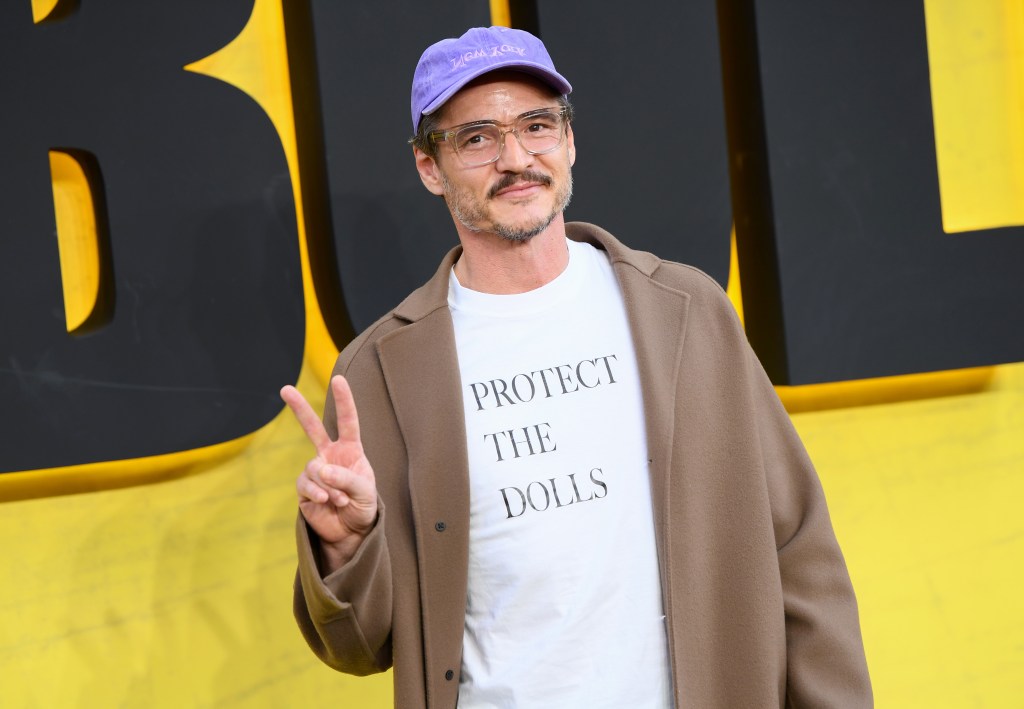
Pedro Pascal has once again stood for trans rights (Gerald Matzka/Getty Images)
Our lord and saviour Pedro Pascal has showed his trans-ally credentials in public once again.
Speaking at the premiere of his latest film, The Fantastic Four: First Steps, Pascal said the trans community filled him with inspiration.
Pascal, whose sister Lux is trans, has long been an advocate for the LGBTQ+ community and in recent months has been vocal in his support of trans people, catching heat from certain people for calling gender-critical author JK Rowling’s actions those of a “heinous loser”.
On the red carpet in Berlin, he said: “It’s important to protect people, especially those simply asking for the right to exist in bodies that belong to them and in the world that they never asked to be brought into.
Pedro Pascal has once again spoken out for the trans community at the premier of The Fantastic Four: First Steps. On the red carpet for the film in Berlin, Pascal was asked why it’s so important to stand up for the trans community, to which he responded: “It’s important to stand up for those who are simply asking for the right to exist.” This isn’t the first time Pedro Pascal has stood up for the trans community. Earlier this year he trolled transphobes in his Instagram comments, he regularly shows support for his trans sister, Lux Pascal, and has most recently spoken out multiple times against JK Rowling. #pedropascal#jkrowling#fantasticfour#transcommunity#transrights#lgbtqia
Pedro Pascal has once again spoken out for the trans community at the premier of The Fantastic Four: First Steps.
On the red carpet for the film in Berlin, Pascal was asked why it’s so important to stand up for the trans community, to which he responded: “It’s important to stand up for those who are simply asking for the right to exist.”
This isn’t the first time Pedro Pascal has stood up for the trans community. Earlier this year he trolled transphobes in his Instagram comments, he regularly shows support for his trans sister, Lux Pascal, and has most recently spoken out multiple times against JK Rowling.
Earlier this year, Pascal wore a Protect The Dolls t-shirt, in support of trans rights, at the Thunderbolts* premiere in London.
“Dolls” is term used mainly by the LGBTQ+ community to describe transgender women. Its roots lie in ballroom culture.
Pascal’s wardrobe choice came just days after the UK Supreme Court handed down an 88-page judgement deeming the legal definition of the words “sex” and “woman” in the 2010 Equality Act referred to “biological sex” and “biological women”, thus excluding transgender people.
The ruling was the culmination of legal action by gender-critical group For Women Scotland, who were backed in their case by Harry Potter author Rowling to the tune of £70,000 (more than $95,000).
After the verdict was announced, Rowling, well-known for her gender-critical views, posted a photo on social media of herself celebrating with a cigar and a cocktail. “I love it when a plan comes together,” she wrote, before revealing that her husband has dubbed the announcement date TERF VE Day.
In response to a viral video post by writer Tariq Ra’ouf, in which Rowling’s celebration was branded “serious Voldemort villain sh*t, Pascal wrote: “Awful, disgusting sh*t is exactly right. Heinous loser behaviour.”
Pedro Pascal is a long-time supporter of trans rights. (Joe Maher/Getty Images)
Following his comment, which was widely praised by LGBTQ+ people, but criticised by the anti-trans brigade, Pascal told Vanity Fair that he was wondering if it had been the right thing to do in terms of helping the transgender community.
He felt like “that kid [who] got sent to the principal’s office a lot for behavioural issues in public schools in Texas, feeling scared and thinking: what’d I do?”
The star, who will be seen reprising his Fantastic Four Reed Richards role in next year’s Avengers: Doomsday, went on to say: “The one thing I agonised over a little bit was: am I helping? Am I f**king helping? It’s a situation that deserves the utmost elegance so that something can actually happen and people will actually be protected.
“I want to protect the people I love. But it goes beyond that, bullies make me f**king sick.”
Rowling responded to Pascal’s comment by saying: “Can’t say I feel very shut down but keep at it, Pedro. God loves a trier.”
Members of the church preached that LGBTQ+ people should be shot in the head (Google Street View)
An independent Baptist church in Indiana, Sure Foundation Baptist Church, has doubled down on a sermon which was delivered during a men’s preaching evening that called for LGBTQ+ people to take their own lives.
On Thursday (3 July), preacher Justin Zhong shared a post on the official Facebook page for the Sure Foundation Baptist Church in Indianapolis, stating he will “not apologize for preaching the Word of God”.
“I will not apologize for stating facts. I will not negotiate with terrorists, among whom the LGBTHIV crowd is full of domestic terrorists,” Zhong wrote.
“The Bible is crystal clear that sodomites (homosexuals) deserve the death penalty carried out by a government that actually cares about the law of God. We are not to take the law into our own hands.”
The statement comes after the church was criticised for the violent homophobic language used by church members during Men’s Preaching Night, which was broadcast live on Facebook.
“We should pray for their deaths”
During a sermon entitled ‘Pray the Gay Away’, member Stephen Falco said: “You ought to blow yourself in the back of the head. You’re so disgusting.”
Falco went on to rhetorically ask: “How shall we then properly pray for gay people?”
“We should pray for their deaths, plain and simple,” he answered himself.
Another church member, reported by Newsweek as Wade Rawley, said LGBTQ+ folks should be “beaten and stomped in the mud” before they “should take a gun and blow the back of their heads off”.
The christian church called for LGBTQ+ folks to be killed (Canva)
On the church’s official website, it states under its beliefs section that the congregation “believe that
sodomy (homosexuality) is a sin and an abomination before God which God punishes with the death penalty,” adding: “No sodomite (homosexual) will be allowed to attend or join Sure Foundation Baptist Church. (Leviticus 20:13, Romans 1:19-32, Deut. 23:17-18, 1 Kings 14:24, Jude 1:7)”.
In the Facebook post defending the sermon, Zhong outlined several quotes from Bible scripture with additional commentary explaining why those quotes matter and what they mean.
“The Bible says that the sodomites (homosexuals) are filled with all unrighteousness. That’s why I believe all sodomites are capable of molesting children and committing all kinds of wickedness,” Zhong wrote.
“It is hilarious that the best thing they can say to us is that we are closet homos, because they know being a homo is filthy and vile and disgusting.”
Zhong went on to say that the Sure Foundation Baptist Church is a “Bible-believing church” whereby “whatever the Bible says, we believe it”.
“We don’t care about what the world, culture, or media think. It is funny that these so-called “faith leaders” and some “Christians” do not approve of this message. This simply shows me that they do not care about the Bible.”
He continued: “Sure Foundation Baptist Church protects children from predators. We don’t separate children from their families. We expose perverts and pedophiles. No homos will ever be allowed to attend any church services.
“Sure Foundation Baptist Church is a soulwinning powerhouse. We preach the gospel of Jesus Christ and the eternal security of the believer on a weekly basis to the lost and dying world, while all those “holier than thou” Christians let the world go to hell.”
He added: “If you are sick and tired of the woke culture or churches that do not preach the whole Bible, then you should come and check us out!”
In response to comments made by members of the Sure Foundation Baptist Church, the Concerned Clergy of Indianapolis – a fellowship of “pastors and other concerned citizens who are God-fearing people who believe injustice, racism, ageism, class-ism and sexism to be contrary to the will of God” – said: “The Concerned Clergy of Indianapolis stands firmly against the harmful rhetoric recently preached that condemned all LGBTQ individuals to hell and instructed people to stay away from them.
“Such messages are not only theologically irresponsible but pastorally dangerous.”
In a further statement emailed to Newsweek, the church stated: “The Bible puts the death penalty on the LGBTQ people.
“We as Christians must believe and preach what the Bible says.
“The reason people are so shocked about all this is not many ‘Christians’ and even ‘pastors’ actually believe the Bible.
“To be clear, we only called for the government to execute those people. We are against vigilantes.”
I know in the last few days I have posted a lot of what I think is important stuff. But if you have ever wanted to hear a grand response to a hate preacher calling for the death of gay people then you need to watch this video. The reverend is as upset and agitated as I have ever seen him. He not only debunks the hate preachers arguments but uses the verses before and after to show how wrong people that use that to hate on gays are. Hugs.




 Scottie's Playtime