Josh Johnson is on tonight’s Jimmy Kimmel Live, at whatever time and channel you receive Jimmy Kimmel Live (ABC affiliates.)
That is all.

Josh Johnson is on tonight’s Jimmy Kimmel Live, at whatever time and channel you receive Jimmy Kimmel Live (ABC affiliates.)
That is all.
Because my brain needs this & I’ve not seen it before in life, plus the only other thing on is football, & just no on that, for me. I hope everyone enjoys their evening pursuing whatever you pursue!
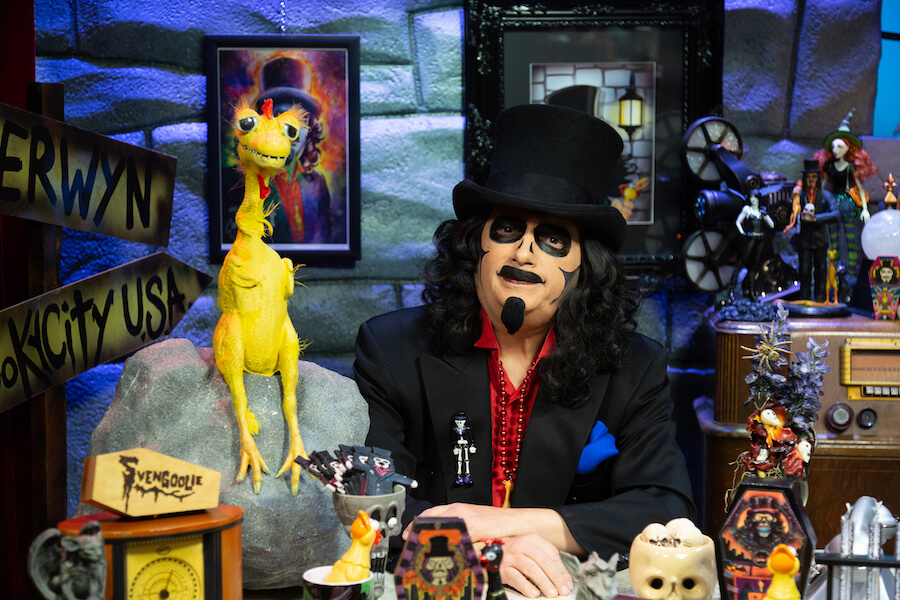
Posted on September 6, 2025
Tonight on MeTV- we kick off September with a film we haven’t run in a while-the final part of the Universal Gill Man trilogy! This conclusion to the saga of the strange amphibian missing link takes him several steps further up the evolutionary scale- as the aquatic terror unwillingly becomes an air-breathing denizen, dwelling on land, in “The Creature Walks Among Us”!
The story starts with us sharing a car ride with a wealthy couple -Dr. William Barton and his lovely wife Marcia. They’re headed to the docks to meet up, aboard their boat, with an expedition team they’ve assembled. It seems Barton has heard tales of the legendary Gill Man having survived his supposed demise down in the Everglades- and put together this team to see if the Creature is indeed alive- and if it can be captured! Among his crew- geneticist Tom Morgan, a couple biologists, and an arrogant young guide named Jed ( no, not Clampett). They set out to track down the Gill Man, but onboard tensions are already rising- Mrs. Barton is unhappy with her abusive and somewhat maniacal husband- and is having to combat the unwanted advances of Jed. That, along with some fundamental disagreements on the reason for capturing the Creature, creates an uneasy atmosphere that can – and will- only get worse! (snip-MORE)
The 31-year-old actor says he faced a particularly “scrutinizing” audition.
By Abby Monteil / August 12, 2025
Wednesday star Hunter Doohan is opening up about the pressure he once felt to hide his sexuality in Hollywood.
During a recent appearance on the Zach Sang Show, the 31-year-old actor — who’s best-known for playing barista Tyler on the hit Netflix series — recounted the process of auditioning for the Showtime series Your Honor in 2019. Although Doohan was openly gay and already in a relationship with his now-husband, Fielder Jewett, he noted that the audition marked “the first time I’d done a network test and they were really scrutinizing.”
“I really was trying to hide it,” he said. “I went and hid pictures of us on Instagram, archived them.”
After Doohan booked the role, he found himself coming out once again to his co-star Bryan Cranston at 26.
“I was at lunch one time with Bryan and I said, ‘Grace called again,’ and I was like, ‘Oh, she’s my friend Grace,’” the actor recalled. “And he’s like, ‘Oh, just a friend?’ And I thought, ‘Oh God… I’ve been out for eight years and I have to come out of the closet again.’ It was so unsettling and awful. I was like, ‘I’m never going to do that for a role again.’”
Sang asked Doohan why he felt the need to hide his sexuality, he replied, “[My partner] was like, ‘Oh yeah, are you worried about this?’ But yeah, I don’t know.”
“I’ve never played a gay role and I’ve auditioned for them,” Doohan added. “But all the characters I’ve played have been straight.”
The Wednesday star pointed to openly gay star Jonathan Bailey as an example. “I read this Jonathan Bailey interview the other day that was so inspiring, like, the way he talks about [his sexuality] and just how he’s totally released all perceived limitations around it,” Doohan said. “We’re lucky to be living in a different time where we can [play non-gay roles] and people can watch it and suspend their disbelief like that.”
These days, the actor has other concerns — namely, the fact that he missed out on meeting Wednesday guest star Lady Gaga on set.
“I’m the one gay guy on the show, and I didn’t get to meet Gaga,” Doohan joked during a recent appearance on the Just for Variety podcast with Marc Malkin. “It might be a hate crime.”
Colm Tóibín, Alan Hollinghurst, Adam Mars-Jones and more recall the high style and libidinous freedom of a writer who ‘was not a gateway to gay literature but a main destination’

British novelist
Edmund White’s luminous career was in part a matter of often dark history: he lived through it all. He was a gay teenager in an age of repression, self-hatred and anxious longing for a “cure”; he was a young man in the heyday of gay liberation, and the libidinous free-for-all of 1970s New York; he was a witness to the terrifying destruction of the gay world in the Aids epidemic in the 1980s and 90s. All these things he wrote about, in a long-term commitment to autofiction – a narrative adventure he embarked on with no knowledge of where or when the story would end. He is often called a chronicler of these extraordinary epochs, but he was something much more than that, an artist with an utterly distinctive sensibility, humorous, elegant, avidly international. You read him not just for the unsparing account of sexual life but for the thrill of his richly cultured mind and his astonishingly observant eye.
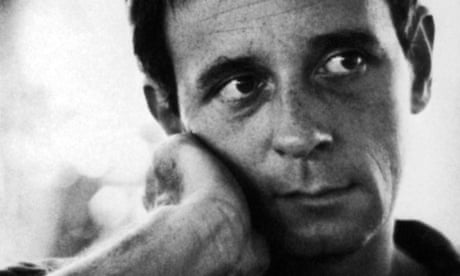
What amazed me about A Boy’s Own Story, when it came out in 1982, was that a stark new candour about sexual experience should be conveyed with such gorgeous luxuriance of style, such richness of metaphor and allusion. This new genre, gay fiction, could also be high art, and almost at once a worldwide bestseller! It was an amazing moment, which would be liberating for generations of queer writers who followed. These younger writers Edmund himself followed and fostered with unusual generosity – I feel my whole career as a novelist has been sustained by his example and encouragement. In novels and peerless memoirs right up to the last year of his life he kept telling the truth about what he had done and thought and felt – he was a matchless explorer of the painful comedy of ageing and failing physically while the libido stayed insatiably strong. It’s hard to take in that this magnificent experiment has now come to a close. (snip-MORE)
=======
Ian Casey BBC News
US actor Jonathan Joss, known for his roles in King of the Hill and Parks and Recreation, has died aged 59.
Joss was shot dead, in what his husband called a homophobic hate crime, although police in Texas say there is no evidence of this.
Joss’s broad career spanned different genres and platforms, appearing in films, sitcoms, animations, stage productions and more.
He has been credited with increasing representation of Native Americans on screen. Here are three of the notable performances he will be remembered for.
In the animated sitcom King of the Hill, Joss voiced the character of John Redcorn, a Native American “licensed New Age healer” from season two onwards.
The sitcom centres around the Hill family and is set in the fictional town of Arlen, in suburban Texas.
For the first four seasons, Redcorn is having an affair with Hank Hill’s neighbour, Nancy Gribble. Nancy’s husband Dale is oblivious.
While a flawed character, Redcorn is known for his kindness and calm persona, and for championing his Native American heritage.
In season four, during perhaps his most notable storyline, Redcorn reveals an ongoing battle between his tribe and the Bureau of Indian Affairs, saying he hoped to regain Native American land from the government.
Considering Redcorn a “true friend”, Dale decides to help him with the lawsuit filed against the government, by introducing him to the Freedom of Information Act.
Redcorn then permanently ends his14-year affair with Nancy, out of respect for Dale. The affair is not revealed to Dale and he happily heads home with Nancy.
Author Dustin Tahmahkera once described Redcorn as “arguably the most developed and complex indigenous character in US sitcom history, thanks in critical part… to the on-and-offscreen work of Joss”. (snip-MORE)
now that I have access (I think I do now) to it. But here is this to read-enjoy!
Doctor Who is the best show ever made. Here’s why.
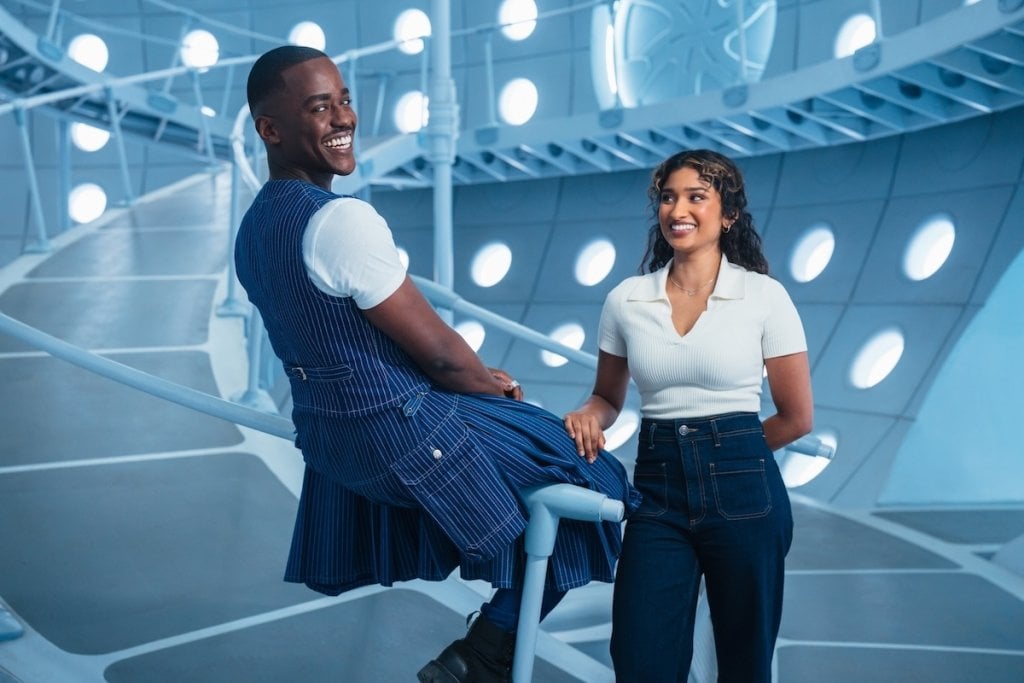
The world is full of darkness. So much is going wrong. Experts agree that America has succumbed to right-wing authoritarianism; call it fascism or something else, these are extraordinarily difficult times.
This post is a break from all of that. At least kind of.
In this piece, I will try and convince you that Doctor Who is the best TV show ever made, explain to you why it matters, and why it’s particularly important in our current context. In a time when cruelty and fear dominate headlines, it’s worth celebrating a show that insists on the power of kindness, intellect, and hope.
Bear with me. Let’s go.
You’ve probably heard of Doctor Who, but you might not have watched much or any of it. That’s okay.
The core of every story is this: there is a problem, somewhere in time and space. There might be vampires in Venice in 1580; a plot afoot to steal the Mona Lisa in modern-day Paris in order to fund time travel experiments; a society of pacifists on a far-away planet locked in a generations-long war with warlike, genocidal racists. The Doctor, a strange traveler who carries no weapons, helps solve the problem using intelligence and empathy. They bring along friends who are our “in” to the story, but who also remind the Doctor what it means to be human.
There’s a lot of backstory, but unlike other science fiction shows, it doesn’t matter all that much. There’s canon and history, but it’s constantly evolving. And because it’s squarely aimed at a whole-family audience, and is almost but not quite an anthology show, it’s accessible, fun, and very diverse in its approach. One story might be incredibly silly; the next might be a tense thriller. If you don’t like the tone of the one you’re watching, the next one might be a better fit.
There are a few more constants, but not many: The Doctor’s time and space machine, the TARDIS (Time And Relative Dimension In Space), is stuck as a 1963-era British police box on the outside, and is radically bigger on the inside; every time they die they are “regenerated” in a new body; they stole the TARDIS and fled their people.
Oh, and it’s been running since November 23, 1963: 62 years and counting. It’s the longest-running science fiction show in the world — which makes its accessibility and freshness all the more remarkable. In its original run, it launched the career of authors like Douglas Adams. And in its most recent incarnation, it’s been an early career-launcher for actors like Andrew Garfield, Daniel Kaluuya, Carey Mulligan, Felicity Jones, and Karen Gillan.
Okay, fine. So that’s what the show is. Why does it matter?
In 1963, the world was only eighteen years out from the end of World War II. The end of the Holocaust and the closing of the camps was as close as the release of Spider-Man 3 is to us now. Enoch Powell, who would later give the notoriously noxious “rivers of blood” anti-immigrant speech, was the Minister for Health. Homosexuality was illegal.
Waris Hussein, a gay, immigrant director, helmed An Unearthly Child, a story about a teenage girl who obviously didn’t fit in and the teachers who were worried about her. (If the subtext to this story isn’t intentional in the writing, it certainly emerges in the direction.) In the end, her grandfather turned out to be a time traveler who lived in a police box that was more than meets the eye, and the rest is history.
The very next story was about a society of pacifists, the Thals, who were locked in a struggle with a race of genocidal maniacs, the Daleks. It’s a more complicated story than you might expect: in the end, the Doctor and companions help the Thals win by teaching them that sometimes you need to use violence to defeat fascism. The morality of it isn’t straightforward, but it’s an approach that was deeply rooted in recent memories of defeating the Nazis, and that had a lot to say about a Britain that was already seeing the resurgence of nationalism. In a show for the whole family!
When the main actor, William Hartnell, fell into ill health, the show could have come to an end. Instead, the writers built in a contrivance, regeneration, that allowed the Doctor to change actors when one left. In turn, the show itself was allowed to evolve. It was created by necessity rather than as some grand plan, but in retrospect laid the groundwork for Doctor Who to remain relevant for generations.
By the 1980s, the show was still going strong — and still slyly subversive. In The Happiness Patrol, the Doctor faces off against a villainous regime obsessed with mandatory cheerfulness, clearly modeled on Margaret Thatcher’s Britain. The episode includes thinly veiled references to the miners’ strike and the inequality many Britons faced under her leadership.
It also didn’t shy away from queerness. One male character leaves the main antagonist for another man, and at one point, the TARDIS is painted pink.
Eventually, it was canceled, in part because the BBC controller at the time, Conservative-leaning Michael Grade, hated it. (The Thatcher thing, and that Colin Baker, one of the last actors to play the Doctor in the classic run, was in a romantic relationship with Grade’s ex-wife, probably didn’t help.)
When it came off the air in 1989, scriptwriters and fans alike began to write novels under a Virgin Books New Adventures banner that took the subtext of the show and made it text. They told complex stories that could never have been televised — they weren’t as family-friendly, and didn’t fit within a 1980s BBC budget. But they collectively expanded the lore and the breadth of the show. (snip-MORE, and it’s good and not too long to read. Author definitely deserves the clicks!)
https://werd.io/2025/doctor-who-is-the-best-show-ever-made-heres-why
Or else, “Happiness is a Warm Puppy.”
It was cold out in Ollie’s potty area this morning!

Later this evening and overnight, we should get between 2-4 in. of snow, which is fine, then the temps will be below 20 degrees for a few days. Poor little guy’s gonna have to chase his favorite ball inside for a while.
———–Other Thoughts————————————–
I enjoy spicing my oatmeal differently each morning. I think I especially like ginger with a dash of vanilla, but my top favorite is cocoa and cayenne pepper. It’s really awesome, and puts a fine shine on the day, for me. Ollie can’t clean my bowl for me, though, when I do that one.
Our kid’s birthday is this week. I have no good ideas; he himself has no good ideas; we’re all sort of at the place where if we need something, we just get it. I’m thinking of something to cook. And trying to decide between ice cream cake, or lava cake, both of which are his favorites.
I’ve been really relishing a TV show on Tuesdays, now at 8PM but used to be at 9PM on ABC, called “High Potential.” It’s really good, and I don’t want to spoil it for anyone who might try it; it’s a mystery show with a high IQ neurodivergent (show’s description) woman who becomes a detective while juggling family life and a missing husband. I really like it, and recommend it to anyone with an hour at 8PM on a Tuesday night! They stream it on Hulu, too.
I know no one thinks it’s much justice for We The People to see the FBI reports on the stolen documents found at Mar-A-Lago. It isn’t, really, except we’ll know if we want to, and will be yet better informed as we go about our civic duty of directing our government. And he’s still a convicted felon, as well.
I hope everyone’s got sun today, at some point. I usually prefer cloudy days with temps between 35-48 degrees, but since the election, for some reason, I’ve noticed I prefer a sunny day after a cloudy day, and maybe slightly higher temps, like between 42-60. Go figure.
That’s what I’ve got. I need to sweep the floor to make room for the new dog hair!
in Film | February 7th, 2025
It’s Friday, which means that tonight, many of us will sit down to watch a movie with our family, our friends, our significant other, or — for some cinephiles, best of all — by ourselves. If you haven’t yet lined up any home-cinematic experience in particular, consider taking a look at this playlist of 31 feature films just made available to stream by Warner Bros. You’ll know the name of that august Hollywood studio, of course, but did you know that it put out True Stories, the musical plunge into tabloid America directed by Talking Heads’ David Byrne? Or Waiting for Guffman, the first improvised movie by Christopher Guest and his troupe of crack comedic players like Eugene Levy, Fred Willard, Catherine O’Hara, and Parker Posey? (Snip-MORE info/programs on the page!)
 Scottie's Playtime