Ukrainian President Volodymyr Zelensky denounced what he called Russia’s attempt to eliminate “the whole nation” during an appearance Sunday on CBS’ “Face the Nation,” saying, “this is genocide.”
Driving the news: The International Criminal Court last month launched an investigation into allegations of war crimes, crimes against humanity and genocide committed in Ukraine.
Zelensky has previously called certain acts of Russian aggression, such as the shelling of a children’s hospital and maternity ward in Mariupol, proof of genocide.
As Ukrainian forces retook the Kyiv region on Saturday, officials and independent photographers have reported bodies of civilians — some with their hands tied behind their backs — strewn in the streets of the city of Bucha.
What they’re saying: Asked if Russia’s actions amount to genocide, Secretary of State Antony Blinken told CNN’s “State of the Union” on Sunday that the U.S. “will look hard and document everything that we see, put it all together, make sure the relevant institutions and organizations looking at this — including the state department — have everything they need to assess what took place in Ukraine, who’s responsible and what it amounts to.”
U.K. Foreign Secretary Liz Truss said in a statement Sunday that Russia’s attacks on civilians in Ukraine “must be investigated as war crimes,” adding that the U.K. will support any efforts by the ICC to do so, the Guardian reported.
“It is a brutality against civilians. We haven’t seen in — in Europe for decades and it’s horrific and it’s absolutely unacceptable that civilians are targeted and killed, and it just — underlines importance that this war must end and that is president Putin’s responsibility to stop the war,” NATO Secretary General Jens Stoltenberg said Sunday on “State of the Union.”
“Is this genocide?” @margbrennan asks Ukrainian President Volodymyr Zelenskyy.
“Indeed. This is genocide,” Zelenskyy says, adding that Ukraine is being “destroyed and exterminated” by Russian forces.
U.S. Rep. Lisa McClain (R-MI) speaks at a rally hosted by former President Donald Trump on April 02, 2022 near Washington, Michigan. Scott Olson/Getty Images
Rep. Lisa McClain wrongly claimed Osama bin Laden was caught during the Trump administration.
Bin Laden was killed during a 2011 raid under the Obama administration.
McClain also falsely claimed unemployment is at a 40 year high, calling the Biden administration “weak.”
“Well, President Trump was in office. We didn’t have a war and I think he made three peace treaties,” McClain said during her speech. “Caught Osama – Osama bin Laden and Soleimani, Al Baghdadi. And this President is weak. And I’ll tell you weakness breeds aggression. We need strength.”
Qasem Soleimani, an Iranian general, and Abu Bakr al-Baghdadi, a leader of ISIS, were both killed during military operations completed during the Trump administration.
The 2011 raid that killed bin Laden, however, was conducted during President Barack Obama’s first term in office. Joe Biden was serving as vice president at the time. Trump was hosting “The Apprentice” – a reality/game show on NBC.
During her remarks, McClain also said unemployment is at a “40-year high” while there is “a labor shortage.”
McClain falsely claimed Osama bin Laden was caught during the Trump administration. Bin Laden was killed during a 2011 raid under the Obama administration. McClain also falsely claimed unemployment is at a 40 year high. It is actually at a 40 year low. McClain is running on lies https://t.co/goILRfm5v9
Texas woman who said 3-year-old son was killed because of road rage is arrested
The mother is charged with concealing a handgun and having a weapon accessible to children. Police said they haven’t found evidence of a road-rage incident.
In Bucha outside Kyiv today, I met this amazing Food Fighter! He’s a chef…now on the front lines as medic and helping @WCKitchen bring meals & food to formerly occupied towns. His restaurant in normal times? Cafe Peace!! #ChefsForUkraine 🇺🇦 pic.twitter.com/n1kS7Wh9qp
Breaking: US is expected to help facilitate transfer of tanks from NATO allies to Ukraine, according to senior US officials. The tanks will be Soviet-era T-72 tanks, which Ukrainian military has experience operating and will be delivered “within days, not weeks,” I’m told.
“We found 18 bodies in there. They had been torturing people. Some of them had their ears cut off. Others had teeth pulled out. There were kids like 14, 16 years old, some adults. They just took the bodies away yesterday.” #UkraineRussiaWarhttps://t.co/7UOX3QNk9Q
As a clinical geneticist, Paul James is accustomed to discussing some of the most delicate issues with his patients. But in early 2010, he found himself having a particularly awkward conversation about sex.
A 46-year-old pregnant woman had visited his clinic at the Royal Melbourne Hospital in Australia to hear the results of an amniocentesis test to screen her baby’s chromosomes for abnormalities. The baby was fine—but follow-up tests had revealed something astonishing about the mother. Her body was built of cells from two individuals, probably from twin embryos that had merged in her own mother’s womb. And there was more. One set of cells carried two X chromosomes, the complement that typically makes a person female; the other had an X and a Y. Halfway through her fifth decade and pregnant with her third child, the woman learned for the first time that a large part of her body was chromosomally male. “That’s kind of science-fiction material for someone who just came in for an amniocentesis,” says James.
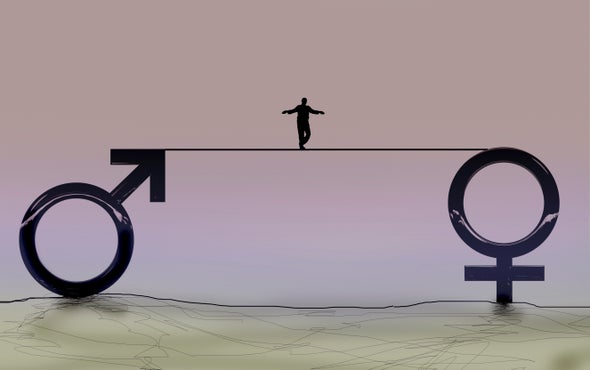
Sex can be much more complicated than it at first seems. According to the simple scenario, the presence or absence of a Y chromosome is what counts: with it, you are male, and without it, you are female. But doctors have long known that some people straddle the boundary—their sex chromosomes say one thing, but their gonads (ovaries or testes) or sexual anatomy say another. Parents of children with these kinds of conditions—known as intersex conditions, or differences or disorders of sex development (DSDs)—often face difficult decisions about whether to bring up their child as a boy or a girl. Some researchers now say that as many as 1 person in 100 has some form of DSD.
When genetics is taken into consideration, the boundary between the sexes becomes even blurrier. Scientists have identified many of the genes involved in the main forms of DSD, and have uncovered variations in these genes that have subtle effects on a person’s anatomical or physiological sex. What’s more, new technologies in DNA sequencing and cell biology are revealing that almost everyone is, to varying degrees, a patchwork of genetically distinct cells, some with a sex that might not match that of the rest of their body. Some studies even suggest that the sex of each cell drives its behaviour, through a complicated network of molecular interactions. “I think there’s much greater diversity within male or female, and there is certainly an area of overlap where some people can’t easily define themselves within the binary structure,” says John Achermann, who studies sex development and endocrinology at University College London’s Institute of Child Health.
These discoveries do not sit well in a world in which sex is still defined in binary terms. Few legal systems allow for any ambiguity in biological sex, and a person’s legal rights and social status can be heavily influenced by whether their birth certificate says male or female.
“The main problem with a strong dichotomy is that there are intermediate cases that push the limits and ask us to figure out exactly where the dividing line is between males and females,” says Arthur Arnold at the University of California, Los Angeles, who studies biological sex differences. “And that’s often a very difficult problem, because sex can be defined a number of ways.”
THE START OF SEX
That the two sexes are physically different is obvious, but at the start of life, it is not. Five weeks into development, a human embryo has the potential to form both male and female anatomy. Next to the developing kidneys, two bulges known as the gonadal ridges emerge alongside two pairs of ducts, one of which can form the uterus and Fallopian tubes, and the other the male internal genital plumbing: the epididymes, vas deferentia and seminal vesicles. At six weeks, the gonad switches on the developmental pathway to become an ovary or a testis. If a testis develops, it secretes testosterone, which supports the development of the male ducts. It also makes other hormones that force the presumptive uterus and Fallopian tubes to shrink away. If the gonad becomes an ovary, it makes oestrogen, and the lack of testosterone causes the male plumbing to wither. The sex hormones also dictate the development of the external genitalia, and they come into play once more at puberty, triggering the development of secondary sexual characteristics such as breasts or facial hair.
Changes to any of these processes can have dramatic effects on an individual’s sex. Gene mutations affecting gonad development can result in a person with XY chromosomes developing typically female characteristics, whereas alterations in hormone signalling can cause XX individuals to develop along male lines.
For many years, scientists believed that female development was the default programme, and that male development was actively switched on by the presence of a particular gene on the Y chromosome. In 1990, researchers made headlines when they uncovered the identity of this gene, which they called SRY. Just by itself, this gene can switch the gonad from ovarian to testicular development. For example, XX individuals who carry a fragment of the Y chromosome that contains SRY develop as males.
By the turn of the millennium, however, the idea of femaleness being a passive default option had been toppled by the discovery of genes that actively promote ovarian development and suppress the testicular programme—such as one called WNT4. XY individuals with extra copies of this gene can develop atypical genitals and gonads, and a rudimentary uterus and Fallopian tubes. In 2011, researchers showed that if another key ovarian gene, RSPO1, is not working normally, it causes XX people to develop an ovotestis—a gonad with areas of both ovarian and testicular development.
These discoveries have pointed to a complex process of sex determination, in which the identity of the gonad emerges from a contest between two opposing networks of gene activity. Changes in the activity or amounts of molecules (such as WNT4) in the networks can tip the balance towards or away from the sex seemingly spelled out by the chromosomes. “It has been, in a sense, a philosophical change in our way of looking at sex; that it’s a balance,” says Eric Vilain, a clinician and the director of the Center for Gender-Based Biology at the University of California, Los Angeles. “It’s more of a systems-biology view of the world of sex.”
According to some scientists, that balance can shift long after development is over. Studies in mice suggest that the gonad teeters between being male and female throughout life, its identity requiring constant maintenance. In 2009, researchers reported deactivating an ovarian gene called Foxl2 in adult female mice; they found that the granulosa cells that support the development of eggs transformed into Sertoli cells, which support sperm development. Two years later, a separate team showed the opposite: that inactivating a gene called Dmrt1 could turn adult testicular cells into ovarian ones. “That was the big shock, the fact that it was going on post-natally,” says Vincent Harley, a geneticist who studies gonad development at the MIMR-PHI Institute for Medical Research in Melbourne.
The gonad is not the only source of diversity in sex. A number of DSDs are caused by changes in the machinery that responds to hormonal signals from the gonads and other glands. Complete androgen insensitivity syndrome, or CAIS, for example, arises when a person’s cells are deaf to male sex hormones, usually because the receptors that respond to the hormones are not working. People with CAIS have Y chromosomes and internal testes, but their external genitalia are female, and they develop as females at puberty.
Conditions such as these meet the medical definition of DSDs, in which an individual’s anatomical sex seems to be at odds with their chromosomal or gonadal sex. But they are rare—affecting about 1 in 4,500 people. Some researchers now say that the definition should be widened to include subtle variations of anatomy such as mild hypospadias, in which a man’s urethral opening is on the underside of his penis rather than at the tip. The most inclusive definitions point to the figure of 1 in 100 people having some form of DSD, says Vilain.
But beyond this, there could be even more variation. Since the 1990s, researchers have identified more than 25 genes involved in DSDs, and next-generation DNA sequencing in the past few years has uncovered a wide range of variations in these genes that have mild effects on individuals, rather than causing DSDs. “Biologically, it’s a spectrum,” says Vilain.
A DSD called congenital adrenal hyperplasia (CAH), for example, causes the body to produce excessive amounts of male sex hormones; XX individuals with this condition are born with ambiguous genitalia (an enlarged clitoris and fused labia that resemble a scrotum). It is usually caused by a severe deficiency in an enzyme called 21-hydroxylase. But women carrying mutations that result in a milder deficiency develop a ‘non-classical’ form of CAH, which affects about 1 in 1,000 individuals; they may have male-like facial and body hair, irregular periods or fertility problems—or they might have no obvious symptoms at all. Another gene, NR5A1, is currently fascinating researchers because variations in it cause a wide range of effects, from underdeveloped gonads to mild hypospadias in men, and premature menopause in women.
Many people never discover their condition unless they seek help for infertility, or discover it through some other brush with medicine. Last year, for example, surgeons reported that they had been operating on a hernia in a man, when they discovered that he had a womb. The man was 70, and had fathered four children.
CELLULAR SEX
Studies of DSDs have shown that sex is no simple dichotomy. But things become even more complex when scientists zoom in to look at individual cells. The common assumption that every cell contains the same set of genes is untrue. Some people have mosaicism: they develop from a single fertilized egg but become a patchwork of cells with different genetic make-ups. This can happen when sex chromosomes are doled out unevenly between dividing cells during early embryonic development. For example, an embryo that starts off as XY can lose a Y chromosome from a subset of its cells. If most cells end up as XY, the result is a physically typical male, but if most cells are X, the result is a female with a condition called Turner’s syndrome, which tends to result in restricted height and underdeveloped ovaries. This kind of mosaicism is rare, affecting about 1 in 15,000 people.
The effects of sex-chromosome mosaicism range from the prosaic to the extraordinary. A few cases have been documented in which a mosaic XXY embryo became a mix of two cell types—some with two X chromosomes and some with two Xs and a Y—and then split early in development. This results in ‘identical’ twins of different sexes.
There is a second way in which a person can end up with cells of different chromosomal sexes. James’s patient was a chimaera: a person who develops from a mixture of two fertilized eggs, usually owing to a merger between embryonic twins in the womb. This kind of chimaerism resulting in a DSD is extremely rare, representing about 1% of all DSD cases.
Another form of chimaerism, however, is now known to be widespread. Termed microchimaerism, it happens when stem cells from a fetus cross the placenta into the mother’s body, and vice versa. It was first identified in the early 1970s—but the big surprise came more than two decades later, when researchers discovered how long these crossover cells survive, even though they are foreign tissue that the body should, in theory, reject. A study in 1996 recorded women with fetal cells in their blood as many as 27 years after giving birth; another found that maternal cells remain in children up to adulthood. This type of work has further blurred the sex divide, because it means that men often carry cells from their mothers, and women who have been pregnant with a male fetus can carry a smattering of its discarded cells.
Microchimaeric cells have been found in many tissues. In 2012, for example, immunologist Lee Nelson and her team at the University of Washington in Seattle found XY cells in post-mortem samples of women’s brains. The oldest woman carrying male DNA was 94 years old. Other studies have shown that these immigrant cells are not idle; they integrate into their new environment and acquire specialized functions, including (in mice at least) forming neurons in the brain. But what is not known is how a peppering of male cells in a female, or vice versa, affects the health or characteristics of a tissue—for example, whether it makes the tissue more susceptible to diseases more common in the opposite sex. “I think that’s a great question,” says Nelson, “and it is essentially entirely unaddressed.” In terms of human behaviour, the consensus is that a few male microchimaeric cells in the brain seem unlikely to have a major effect on a woman.
Scientists are now finding that XX and XY cells behave in different ways, and that this can be independent of the action of sex hormones. “To tell you the truth, it’s actually kind of surprising how big an effect of sex chromosomes we’ve been able to see,” says Arnold. He and his colleagues have shown that the dose of X chromosomes in a mouse’s body can affect its metabolism, and studies in a lab dish suggest that XX and XY cells behave differently on a molecular level, for example with different metabolic responses to stress. The next challenge, says Arnold, is to uncover the mechanisms. His team is studying the handful of X-chromosome genes now known to be more active in females than in males. “I actually think that there are more sex differences than we know of,” says Arnold.
BEYOND THE BINARY
Biologists may have been building a more nuanced view of sex, but society has yet to catch up. True, more than half a century of activism from members of the lesbian, gay, bisexual and transgender community has softened social attitudes to sexual orientation and gender. Many societies are now comfortable with men and women crossing conventional societal boundaries in their choice of appearance, career and sexual partner. But when it comes to sex, there is still intense social pressure to conform to the binary model.
This pressure has meant that people born with clear DSDs often undergo surgery to ‘normalize’ their genitals. Such surgery is controversial because it is usually performed on babies, who are too young to consent, and risks assigning a sex at odds with the child’s ultimate gender identity—their sense of their own gender. Intersex advocacy groups have therefore argued that doctors and parents should at least wait until a child is old enough to communicate their gender identity, which typically manifests around the age of three, or old enough to decide whether they want surgery at all.
This issue was brought into focus by a lawsuit filed in South Carolina in May 2013 by the adoptive parents of a child known as MC, who was born with ovotesticular DSD, a condition that produces ambiguous genitalia and gonads with both ovarian and testicular tissue. When MC was 16 months old, doctors performed surgery to assign the child as female—but MC, who is now eight years old, went on to develop a male gender identity. Because he was in state care at the time of his treatment, the lawsuit alleged not only that the surgery constituted medical malpractice, but also that the state denied him his constitutional right to bodily integrity and his right to reproduce. Last month, a court decision prevented the federal case from going to trial, but a state case is ongoing.
“This is potentially a critically important decision for children born with intersex traits,” says Julie Greenberg, a specialist in legal issues relating to gender and sex at Thomas Jefferson School of Law in San Diego, California. The suit will hopefully encourage doctors in the United States to refrain from performing operations on infants with DSDs when there are questions about their medical necessity, she says. It could raise awareness about “the emotional and physical struggles intersex people are forced to endure because doctors wanted to ‘help’ us fit in,” says Georgiann Davis, a sociologist who studies issues surrounding intersex traits and gender at the University of Nevada, Las Vegas, who was born with CAIS.
Doctors and scientists are sympathetic to these concerns, but the MC case also makes some uneasy—because they know how much is still to be learned about the biology of sex. They think that changing medical practice by legal ruling is not ideal, and would like to see more data collected on outcomes such as quality of life and sexual function to help decide the best course of action for people with DSDs—something that researchers are starting to do.
Diagnoses of DSDs once relied on hormone tests, anatomical inspections and imaging, followed by painstaking tests of one gene at a time. Now, advances in genetic techniques mean that teams can analyse multiple genes at once, aiming straight for a genetic diagnosis and making the process less stressful for families. Vilain, for example, is using whole-exome sequencing—which sequences the protein-coding regions of a person’s entire genome—on XY people with DSDs. Last year, his team showed that exome sequencing could offer a probable diagnosis in 35% of the study participants whose genetic cause had been unknown.
Vilain, Harley and Achermann say that doctors are taking an increasingly circumspect attitude to genital surgery. Children with DSDs are treated by multidisciplinary teams that aim to tailor management and support to each individual and their family, but this usually involves raising a child as male or female even if no surgery is done. Scientists and advocacy groups mostly agree on this, says Vilain: “It might be difficult for children to be raised in a gender that just does not exist out there.” In most countries, it is legally impossible to be anything but male or female.
Yet if biologists continue to show that sex is a spectrum, then society and state will have to grapple with the consequences, and work out where and how to draw the line. Many transgender and intersex activists dream of a world where a person’s sex or gender is irrelevant. Although some governments are moving in this direction, Greenberg is pessimistic about the prospects of realizing this dream—in the United States, at least. “I think to get rid of gender markers altogether or to allow a third, indeterminate marker, is going to be difficult.”
So if the law requires that a person is male or female, should that sex be assigned by anatomy, hormones, cells or chromosomes, and what should be done if they clash? “My feeling is that since there is not one biological parameter that takes over every other parameter, at the end of the day, gender identity seems to be the most reasonable parameter,” says Vilain. In other words, if you want to know whether someone is male or female, it may be best just to ask.
“So, this administration is standing up for you. And those are words that every American is grateful to hear. But in this case, there’s a caveat.
“‘You’ means trans seniors. Now, wait a second, you may wonder, as you sit down with your family to celebrate the joy of transgenderism on transgender appreciation day, how many trans seniors are there in this country?
“No offense, but the trans thing seems pretty new. And if it’s not new, how come no one had ever heard of it before, say, four years ago?
“And is securing trans rights really the biggest problem that old people in America now face?” – Tucker Carlson, responding to Biden’s message of support yesterday for the Transgender Day Of Visibility.
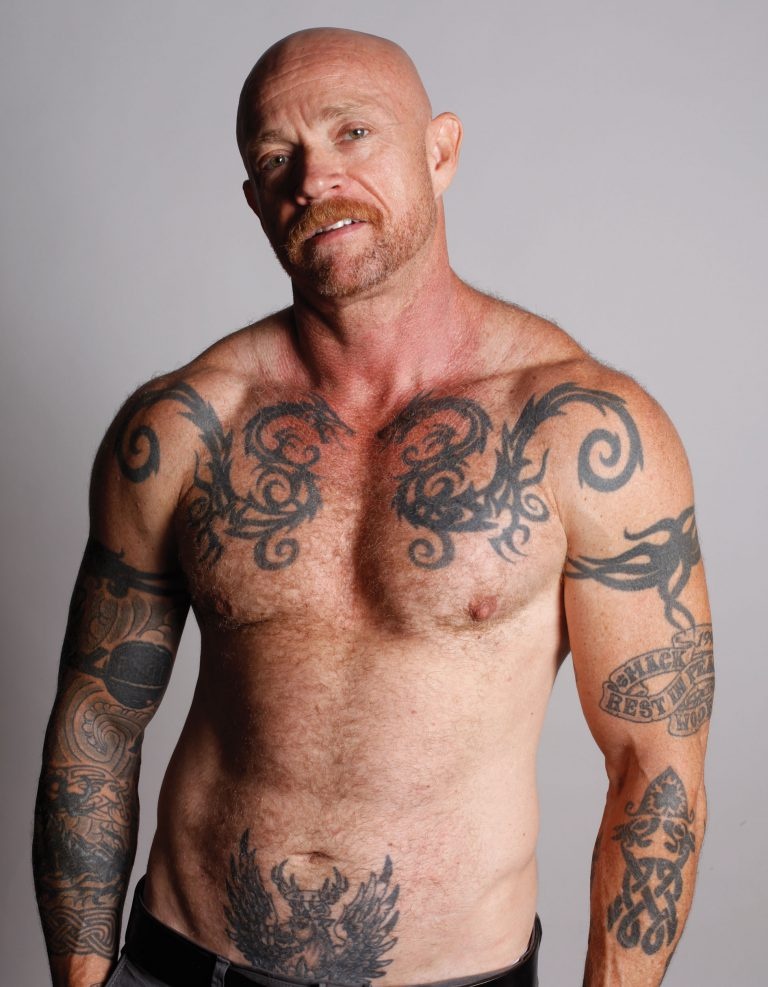
The man below is a transman. The Republicans want him to use the woman’s public bathrooms. I keep hearing how women are not comfortable with men in the bathroom they use. How about him, do you think women are going to feel comfortable with him walking in if that bothers them? See how the bathroom bills going on birth presentation makes no sense?
An Alabama bill that would require all women between the ages of 13 and 50 to show a negative pregnancy test before being able to buy medical marijuana is “unprecedented” and “clearly unconstitutional,” advocates say.
The bill, introduced by practicing OB/GYN and state Sen. Larry Stutts, R-Tuscumbia, would require “all women of childbearing age” to either test negative on a doctor-administered pregnancy test or show documentation from a “certified medical lab” that they are not pregnant.
The legislation, which passed the Senate Children, Youth and Human Services Committee on Thursday, would also ban breastfeeding women from obtaining medical marijuana.
The bill would allow breastfeeding women to obtain medical marijuana for someone else if they are doing so as a registered caregiver.
“I’m still not in favor of the marijuana bill, but it is in place. I think it can be improved and one of the ways it can be improved is to limit pregnant people, limit their availability to it,” he said on the Jeff Poor Show.
“There’s a lot of data about marijuana and pregnancy … and recommending not to do it. I counsel patients all the time that are pregnant about not taking drugs and not smoking marijuana during their pregnancy, not smoking cigarettes during their pregnancy.”
While the state legislature passed medical marijuana and Gov. Kay Ivey signed the bill into law last year, licenses have yet to be issued and there are no active marijuana dispensaries in Alabama.
Emma Roth, a staff attorney with the National Advocates for Pregnant Women, said no state has a law mandating women show a negative pregnancy test before obtaining medical marijuana.
“This is completely unprecedented because it is so clearly unconstitutional,” she said.
Roth said Oklahoma considered a similar provision in 2018 through executive order but backed off amid the high possibility of a legal challenge.
“We have serious concerns, just from a constitutional perspective and a public health perspective” about Stutts’ bill, Roth said.
“We are very concerned that this is an invasion of the privacy of Alabama women and their right to equal protection under the law.”
Roth noted that a home pregnancy test would not be sufficient under the bill’s language.
Legal issues aside, the legislation is also “not grounded in science,” she said, pointing to a 2020 study that found evidence does not suggest that prenatal cannabis use leads to cognitive impairments.
There are several conditions where medical marijuana is helpful for pregnant women, such as epilepsy and hyperemesis gravidarum — a severe form of morning sickness that can lead to weight loss, studies show.
Katie Darovitz, an Alabama woman with epilepsy, was told by her doctor to stop her anti-epileptic medication when she became pregnant because of their links to birth defects. She turned to marijuana to prevent her seizures.
Alabama was one of a handful of states where mothers can be prosecuted for exposing an unborn child to illicit drugs under the state’s chemical endangerment of a child law at the time.
In part because of Darovitz’ case and an AL.com and ProPublica investigation into the drug arrests of pregnant women with legal prescriptions, the Alabama Legislature amended the chemical endangerment law to exclude such women from the chemical endangerment
Darovitz’ charges were ultimately dropped, but Roth said her case showed that the decision on whether to obtain medical marijuana should be up to a woman and her doctor, not the Alabama Legislature.
“This legislation would prevent pregnant women from getting medical marijuana even when she and doctor agree it’s in the best interest of her health and the health of her baby,” she said.
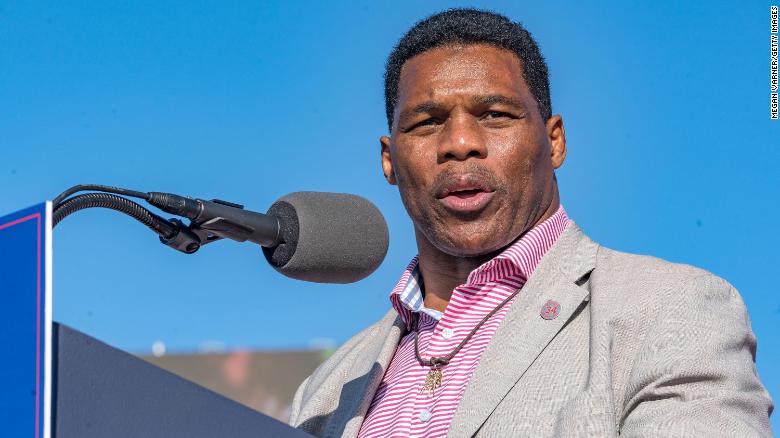
Former Heisman Trophy winner and candidate for US Senate Herschel Walker (R-GA) speaks to supporters of former President Donald Trump during a rally on March 26, 2022 in Commerce, Georgia.
For years, Herschel Walker has told the same inspiring story: that he graduated in the top 1% of his class at the University of Georgia. He’s told the story, according to a review of his speeches by CNN’s KFile, during motivational speeches over the years and as recently as 2017. The only problem: it’s not true.
Walker, who is a candidate in the Republican primary race for US Senate in Georgia, acknowledged in December that he did not graduate from Georgia after the Atlanta-Journal Constitution first reported that the false claim was listed on his campaign website.
But a CNN KFile review found that Walker himself has been repeating the claim for years. Walker’s comments in 2017, and others made over the years, show the former football star repeatedly misrepresented his academic credentials.
“And all of sudden I started going to the library, getting books, standing in front of a mirror reading to myself,” Walker said in a 2017 motivational speech. “So that Herschel that all the kids said was retarded become valedictorian of his class. Graduated University of Georgia in the top 1% of his class.”
Walker also made the claim in another interview in 2017.
“I also was in the top 1% of my graduating class of college,” Walker told Sirius XM radio.
Walker did not graduate from Georgia, where he was a star running back after entering as a prized high school recruit. A profile of Walker from 1982 in the Christian-Science Monitor and an article in The New York Times said he maintained a B average at the school. Walker himself told The Chicago Tribune in 1985 he maintained a 3.0 before his grades dropped. He left to play professional football before graduating and, though having repeatedly said he was returning to obtain his degree, he never received a diploma.
The Walker campaign did not provide proof of Walker’s claims when asked by CNN, but they defended his record as a professional athlete.
Walker is endorsed by former President Donald Trump and is expected to be the Republican nominee to run against Democratic Sen. Raphael Warnock in November.
The claim was removed from his website between December and January, according to screenshots from the Internet Archive’s Wayback Machine.
That was not the only claim about Walker’s education that was adjusted on his website at the time. After a review of the revised site, CNN’s KFile found another little-noticed claim was removed that said Walker graduated valedictorian of his high school. The website now says that Walker graduated “top of his class.” The claim still remains on the Heisman Winners page for Walker.
While Walker was a top student at his high school and the president of the Beta Club — he maintained an “A” average to be in the school’s Beta Club — CNN’s KFile found no evidence he was the class valedictorian.
Walker has mentioned in numerous speeches over the years, including in the 2017 speech where he claimed to have graduated in the top 1% of his college class, and in his 2008 autobiography that he was class valedictorian at Johnson County High School. The street where Johnson County High School resides was officially renamed “Herschel Walker Drive” in 2017 in honor of Walker’s football achievements.
“If I’m proud of anything I did in my high school career, it’s what I did in the classroom that I reflect on and relish the most. I did more than just shed the “stupid” label placed on me as a result of my speech impediment. I shed it, erased it, and rewrote it with the titles: Beta Club president and class valedictorian,” wrote Walker in his 2008 “Breaking Free: My Life with Dissociative Identity Disorder.”
CNN’s KFile reviewed Walker’s high school yearbooks and coverage of him in local newspapers at the time.
According to the local newspaper The Wrightsville Headlight, at Walker’s 1980 graduation he was not given the award for the student with the highest GPA in any academic subject. He did tie with another student for a leadership award based on participation in clubs and his GPA, and won numerous awards that year for his football achievements. While Walker was one of the ceremony’s honor graduates, the article does not mention the school naming a valedictorian or a salutatorian.
A 15-year review of local press coverage did not find the school naming a valedictorian until 1994 — when the paper acknowledged the school was naming a valedictorian and salutatorian for the first time in “many years.”
Walker’s campaign did not provide evidence that Walker graduated as his high school’s valedictorian other than pointing to news articles from the early 1980s after he began his career at the University of Georgia making the claim.
“There is not a single voter in Georgia who believes that whether Herschel graduated at the ‘top of his class’ or as Valedictorian 40 years ago has any bearing on his ability to be a great United States Senator,” Mallory Blount, communications director for the campaign, said in a statement.
The campaign also did not provide an explanation for why it removed the claim that Walker was valedictorian from his website. When repeatedly asked if the campaign stood by the since-removed claim from his website, the Walker’s campaign manager Scott Paradise sent the same statement three times in a row which did not address KFile’s questions.
“Multiple reporters wrote about this 40 years ago. If you have a problem with what they wrote, please contact them. If you have a difficult time getting in touch with them, ask yourself why you are asking such a stupid question,” said Paradise to CNN.
Johnson County Schools declined to comment and directed questions to Walker’s campaign when asked if they named a valedictorian that year or if Walker was the top student.
An evolving claim
It’s unclear when Walker began claiming he graduated from Georgia, and press accounts began listing him as returning to get his degree as early as 1983 after he left to join the United States Football League, a rival to the National Football League in the 1980s. Walker joined the New Jersey Generals, which was owned by then-businessman Trump. Over the years, Walker repeatedly told interviewers he had gone back to Georgia during the off-season to take classes. A 1986 article from The Dallas Morning News on his football career states Walker completed his degree in criminal justice and features a quote from Walker talking about his degree.
“Getting a degree is one of the paths you can take on the way to becoming an FBI man,” Walker said. “Of course, my life is not going in that direction right now, but I think police work, especially the FBI, would be my choice if I wasn’t a pro football player.”
Speaking on a YouTube show in 2008, following the release of his book, Walker told the interviewer he went back to get his college degree from University of Georgia
“You know it was said whether I leave or stay in school. It came up that I leave — and what was weird about that is people said, ‘Why would you leave college so early?’ And that’s like guys, ‘I went back to get my degree which is what you’re supposed to do.'”
Press reports from the time of the book’s publication listed Walker’s website for his book and subsequent speaking on mental health as HerschelWalker.net — which also said Walker returned to college and completed his degree.
The claim is brought up in interviews with Walker, on at least two separate occasions — with the host saying he returned to get his degree. In neither instance did Walker correct interviewers.
Is it really news that a Republican running for office lies constantly? I thought that was their standard operating procedure.
.@KFILE also found no evidence for Walker's claim, on his website and in his autobiography, that he was high school valedictorian: https://t.co/AG6taRKinD
When we noticed the claim was changed from "valedictorian" to "top of his class," we looked into the coverage of the graduation. Walker was not the top GPAed student in any subject, according to the now-defunct local paper.https://t.co/uCPQ7rnVnmpic.twitter.com/yZnYsqPFc2




 Former Heisman Trophy winner and candidate for US Senate Herschel Walker (R-GA) speaks to supporters of former President Donald Trump during a rally on March 26, 2022 in Commerce, Georgia.

 Scottie's Playtime